
Rohan Monteiro's Blog
April 18, 2026
An excerpt from Small Gods -Terry Pratchett
But you … you’re omnicognisant,’ said Brutha.
‘That doesn’t mean I know everything.’
Brutha bit his lip. ‘Um. Yes. It does.’
‘You sure?’
‘Yes.’
‘Thought that was omnipotent.’
‘No. That means you’re all-powerful. And you are. That’s what it says in the Book of Ossory. He was one of the Great Prophets, you know. I hope,’ Brutha added.
‘Who told him I was omnipotent?’
‘You did.’
‘No I didn’t.’
‘Well, he said you did.’
‘Don’t even remember anyone called Ossory,’ the tortoise muttered.
‘You spoke to him in the desert,’ said Brutha. ‘You must remember. He was eight feet tall? With a very long beard? And a huge staff? And the glow of the holy horns shining out of his head?’ He hesitated. But he’d seen the statues and the holy icons. They couldn’t be wrong.
‘Never met anyone like that,’ said the small god Om.
‘Maybe he was a bit shorter,’ Brutha conceded.
‘Ossory. Ossory,’ said the tortoise. ‘No … no … can’t say I—’
‘He said that you spoke unto him from out of a pillar of flame,’ said Brutha.
‘Oh, that Ossory,’ said the tortoise. ‘Pillar of flame. Yes.’
‘And you dictated to him the Book of Ossory,’ said Brutha. ‘Which contains the Directions, the Gateways, the Abjurations and the Precepts. One hundred and ninety-three chapters.’
‘I don’t think I did all that,’ said Om doubtfully. ‘I’m sure I would have remembered one hundred and ninety-three chapters.’
‘What did you say to him, then?’
‘As far as I can remember it was “Hey, see what I can do!”’ said the tortoise.
Brutha stared at it. It looked embarrassed, insofar as that’s possible for a tortoise.
‘Even gods like to relax,’ it said.
‘Hundreds of thousands of people live their lives by the Abjurations and the Precepts!’ Brutha snarled.
‘Well? I’m not stopping them,’ said Om.
‘If you didn’t dictate them, who did?’
‘Don’t ask me. I’m not omnicognisant!’
Brutha was shaking with anger.
‘And the Prophet Abbys? I suppose someone just happened to give him the Codicils, did they?’
‘It wasn’t me—’
‘They’re written on slabs of lead ten feet tall!’
‘Oh, well, it must have been me, yes? I always have a ton of lead slabs around in case I meet someone in the desert, yes?’
‘What! If you didn’t give them to him, who did?’
‘I don’t know. Why should I know? I can’t be everywhere at once!’
‘You’re omnipresent!’
‘What says so?’
‘The Prophet Hashimi!’
‘Never met the man!’
‘Oh? Oh? So I suppose you didn’t give him the Book of Creation, then?’
‘What Book of Creation?’
‘You mean you don’t know?’
‘No!’
‘Then who gave it to him?’
‘I don’t know! Perhaps he wrote it himself!’
Brutha put his hand over his mouth in horror.
‘Thaff blafhngf!’
‘What?’
Brutha removed his hand.
‘I said, that’s blasphemy!’
‘Blasphemy? How can I blaspheme? I’m a god!’
‘I don’t believe you!’
‘But – but,’ said Brutha, ‘you’re saying the prophets were … just men who wrote things down!’
‘That’s what they were!’
‘But if you’ve been down here as a tortoise, who’s been listening to the prayers? Who has been accepting the sacrifices? Who has been judging the dead?’
‘I don’t know,’ said the tortoise. ‘Who did it before?’
‘You did!’
‘Did I?’
Brutha stuck his fingers in his ears and opened up with the third verse of Lo, the infidels flee the wrath of Om.
After a couple of minutes the tortoise stuck its head out from under its shell.
‘So,’ it said, ‘before unbelievers get burned alive … do you sing to them first?’
‘No!’
‘Ah. A merciful death...


April 12, 2026
Hanuvar
Finally read 3 of Howard Andrew Jones Books titled the Hanuvar trilogy - meant to be a series of 5 books but unfortunately he died midway.
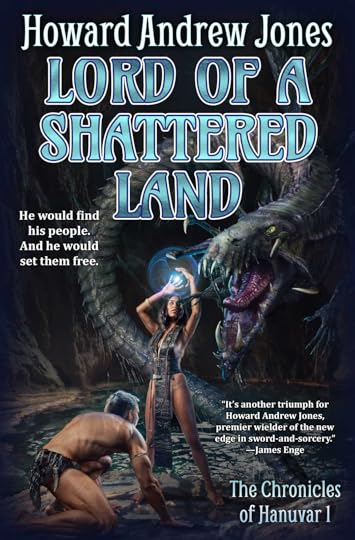
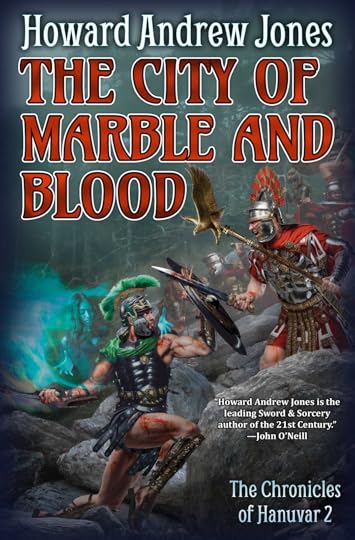
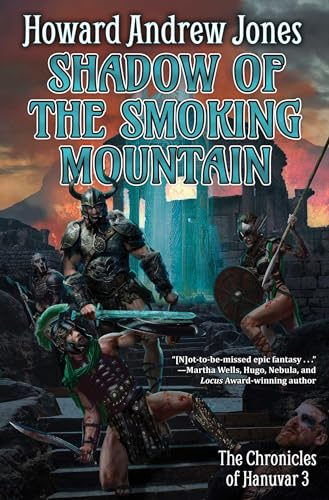
So, as you might have guessed, I quite enjoyed the books. If you've ever read Savage Sword of Conan or just Conan in general, it has a very similar sword and sorcery feel.
I have been a fan of Howard Andrew Jones ever since I read his excellent Ring-Sworn trilogy.
The very broad plot? This is the story of Hannibal (the general, not the cannibal) after the fall of Carthage. Except, instead of consuming poison and dying like the one in our world, Hanuvar goes around the Roman empire rescuing his countrymen who have been enslaved and shipping them towards a new island home.
What this story did is made me want to read a lot more about Hannibal. And so I now have Adrian Goldsworthy and Philip Matsyzak on my to read list.
March 11, 2026
Good Reddit -Explaining the Israel -Palestine conflict
On occasion while I am doom scrolling Reddit, i come across a post that makes me stop, read and then re-read again, because of how insightful it is.
The following was on r/AskHistorians . It felt like a well-explained summary and I decided to save it and re-post it here. I did not write the below, though I wish I did.
*****
Can someone explain the history of theIsraeli-Palestinian conflict?
Hi, I’ll takea stab at giving a relatively short explanation that tries to get to the rootof the problem. While people often make the mistake of thinking the IsraelPalestinian conflict is ancient, you don’t have to go back thousands of yearsto understand it, but you do have to go back over 100, to the late 1800s inEurope to really understand the origins of the Israeli Palestinian conflict. Inthis time period, the majority of the world’s Jewish population lives inEurope. While in lots of parts of Europe Jews are integrated into society andrelatively successful, basically everywhere they are seen as the default“other” in Europe—the question of if Jews can really be part of a modernnation-state (IE can Jews really be French, or Polish) is an active debateacross the continent, so much so that “the Jewish question” is a common phrase,a shorthand used to express this uncertainty over how Jews can possibly fitinto European states. In some parts of Europe, this debate is mostly“intellectual” and in other parts, its active violence, but all over EuropeJews face exclusion, discrimination, and an uncertain future.
Jews of coursearen’t passive actors in this debate, and they try a variety of means to securesafety and security. MANY especially from Russia and Poland (where antisemitismcan be more violent, and there are fewer paths to acculturation in the dominantsociety) move to the United States. Others in Western Europe acculturate andtry to prove their loyalty by proudly proclaiming their national identity to bethat of the state they live in and Judaism to be merely their religion, or evenconvert to Christianity. Many become socialists, hoping a socialist revolutionwill replace the nations that reject them (some even become explicitly Jewishsocialists in a group called the Bund, and hope for a socialist revolution butto maintain a national identity). And of course, some turn to religion,rejecting the secular world and hoping that messianic redemption will be theirsalvation.
The vastmajority of European Jews try one of the above “solutions,” however, a smallgroup of Jews takes another approach. Hoping that some form of autonomy will bea solution to the Jewish problem a small group of Jews in the Russian empirebegins to advocate a return to a land they see as their ancestral home,Palestine. At this point, Palestine is part of the Ottoman Empire, amultiethnic empire which, until at least 1908 largely rejects the framework ofEuropean nationalism. So while Palestine’s population at this point is mostlypeople who speak Arabic, they don’t necessarily see themselves as Arab, ratheras Muslims in the Ottoman empire (there were also Jews and Christians inPalestine but less). This description of identity in the Ottoman Empire somethingof an oversimplification, and my point isn’t to say that some people living inPalestine had formed a sort of Palestinian identity, just that Palestine atthis point wasn’t an independent state, and national identity was not the majorvector of identity.
So back tothese Jews in Russia, some of them start moving to Palestine and trying tosetup farms. While these Jews have essentially been rejected by Europe they’vestill absorbed a lot of European thinking about “the East” so In their mindPalestine is basically empty and those that live there are just a bunch ofprimitive people who will be happy that Jews are bringing superior Europeantechnology, right!? Of course they're wrong, right away there is conflict,Muslims in Palestine as well as the Ottoman administration are highlysuspicious (and with good reason) of any European incursion, and right awaythere are skirmishes between Jews and Muslims in Palestine. And that Europeantechnology? It turns out the Jews who came didn’t know a ton about farming inPalestine and end up having to hire Arab laborers to support their agriculture.This only increases conflict as these European Jews aren’t only unwelcomenewcomers, but suddenly bosses, employing Arabs in large cash crop farms.
All of thisheats up quite a bit when Theodore Herzl, a Vienanese playwriter comes to asimilar conclusion that the solution to the Jewish problem will be autonomy.Herzl had been one of those Jews who had advocated assimilation, and he waspart of the bourgeois circles in Western Europe. However, he becamedisillusioned with the possibility that assimilation will solve the Jewishproblem, and instead comes to his next conclusion, in order to be accepted Jewsneed their own autonomous state (when Herzl said state he probably meant asemi-autonomous unit inside a larger empire, but this is beside the point). Atfirst, he’s not set on Palestine as necessarily being the location for thisstate, but when he learns that there’s a group of Jews already settling there,he ends up deciding that’s the best choice.
Herzl brings alot to this movement for Jewish autonomy to Palestine (now called Zionism). Asa Western European assimilated Jew he has access to a lot more money. Perhapsmore significantly he has access to Western European ideas, specifically, ideasof colonization. Herzl proposes solving the Jewish question through a movementto colonize Palestine—they’ll secure a colonial charter, form land purchasingorganizations, move Jews in mass etc. While today colonization is rightfully adirty word, at the time Herzl wasn’t shy about it. In proposing having Jewscolonize Palestine he simply thought Jews would be doing what other goodEuropeans were doing all over the world. Like so many Europeans he had noconception that the native population of Palestine merited the same sort offreedom and control over their destiny as Jews did. He hardly bothered tomention the non-Jewish population in Palestine, and when he did (which heespecially did in the years before his death) he imagined they would gladlywelcome the Zionist settlers and the advanced, secular, European stylecivilization they brought.
Herzl’smovement didn’t develop exactly as he imagined, but it more or less did. AsJews started arriving in Palestine in increasing numbers, and as the nativepopulation realizes these Jews intend to colonize their land resistanceincreases. It doesn’t help that the Jews in Palestine often buy up land thatwas being rented to Arab farmers (who would work the land for generations butnever own it) and then kick these farmers off. Partially in response to thethreat posed by these Jewish settlers the Arab population of Palestine (bothMuslims and Christians) begin to see themselves as a single group, and thisidentity hardens as conflict and exclusion with the Jewish population continuesover generations.
Ultimatelythis pattern of Jewish immigration, tension and violence plays out over andover. In the background conditions for Jews in Europe, are getting worse in therun up to World War II, so more Jews, even those who couldn’t care less aboutZionism are moving to Palestine (Ruled by the British since WWI) to escapeNazism. Arabs in Palestine, who mostly couldn’t care less about this Hitlerfellow just see more Jews arriving and the Zionist movement getting stronger.Jews, meanwhile see the destruction of European Jewry as proof that Zionistswere right and an independent state capable of defending itself is the onlyreal solution to “the Jewish problem.”
Following WWIIthe world doesn’t know what to do with Jewish survivors in Europe. They can’tleave them in displaced person's camps forever, but they still mostly don’twant to take them back into their home countries. In a way, the path of leastresistance is to let them move to Palestine. Recognizing that the majority ofthe population is still Arab the UN decides to partition the land into twostates, one for the Arab population and one for the Jews. For Jews, this is asomber victory (Jerusalem, which is kinda a big deal traditionally for Jewswasn’t to be in the Jewish state which symbolically difficult to stomach). Forthe Arab population this seems absurd, what did they do to deserve this? Theyhadn’t been part of the war why were they being punished, and how were worldleaders discussing an end to colonialism while simultaneously handing overtheir land to colonizers?
Notsurprisingly a war breaks out, first between the two communities, but then,when Israel declares independence, the newly formed surrounding Arab states,looking to cement their position in the Arab world fight what they see as acolonial invader and defend Arab honor attack too. Israel wins this war andcaptures more territory in the process (Jordan and Egypt take areas that wereoriginally intended for the Arab Palestinian state and claim it for theirnations). In doing so Israel engages in a sort of ethnic cleansing forcinghundreds of thousands of Arabs from their homes. After the war, peace is neverofficially reached, and Israel is unwilling to accept these refugees back. Theycontinue to see Arabs in the state as potentially dangerous and a threat bothphysically and demographically to the Jewish states. The parts of the statethat are still populated by Arabs are initially put under military rule untilthe state can figure out what to do with them.
19 years lateranother war is fought and Israel conquers the areas of Palestine that Jordanand Egypt had taken in 1948. Suddenly Israel finds itself in control of thebiblical heartland, the areas that have the most historic significance forreligious, and frankly many secular Jews as well. But they also find themselvesin control of many many more Arabs, many of whom had been expelled from Israelin 1948. Israel has never decided what to do with this land or these people. Ina way Israel has always wanted its cake and to eat it too, not wanting to giveup the land, but also not wanting to take these people on as full citizens.Israel has at times shown a real willingness o exchange the land for peace, butalso taken action, like allowing Jewish settlers to move onto this territory,that make such a deal much much less likely.
In a way this is the core of it, the tragic irony ofthe Israeli Palestinian conflict. The internal other of Europe seeks to controltheir own destiny, but in doing so reproduces a European system of oppressiononto another people.
I think it’s somewhat important to highlight just howinescapable and tragic this is—many of the Jews in Europe who rejected Zionismand instead believed they had a future in a multiethnic Europe ended up dead(of course others moved to the US and survived).
Those that moved to Palestine,even if they didn’t do so for ideological reasons inevitably ended upparticipating in oppressing another people. And in a way this oppression wasinevitable, there has never been a benevolent, or even benign form ofcolonialism
March 3, 2026
10 commandments 2.0
I was chatting with my 10 year old on the bus to school and the 10 commandments came up. for context, my daughter age 8 has a quiz at church and I wanted to make sure she was up to date.
His question " Why do the commandments not include something like " don't torture people?"
Which honestly is a great question that I never thought of when I was a kid.
I explained it with the rationale about how all bronze age religions were a bit bloodthirsty - he's been listening to 'Greeking out' and so he knew specific examples of human sacrifice in Greek mythology as well - Agamemnon's daughter, the offering to the minotaur etc.
But it got me thinking - the original draft was actually not too great - it focusses mainly on worship rules and a few core social prohibitions (murder, theft, adultery, lying). They do not explicitly address several ethical issues modern societies consider fundamental—such as slavery, torture, equality of persons, or treatment of outsiders.
Would it have made the world a very different place if a better written code of justice existed? Possibly not, because people have always been dickish about religion. Still, its an exercise worth considering.
So, i got back home and decided to write my own version of the commandments version 2.0 Quite a few of these are influenced by the Iron code of Druss the Legend from the fantasy novels of David Gemmell.
Here they are.
I think this covers everything. Will revisit in a few days.
February 10, 2026
Atomic Habits
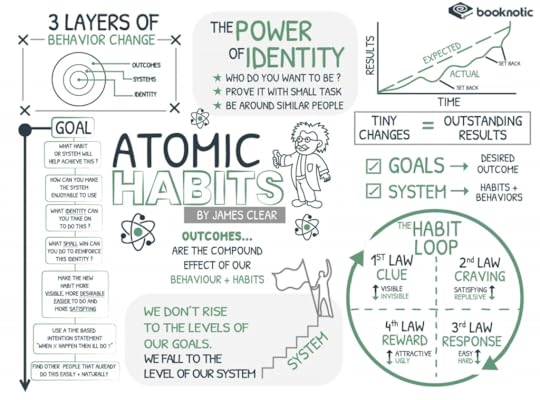
Lifehack #5
Build Systems, not habits.
This advice was given by james Clear in Atomic habits. I love the idea.
I used to try building a habit to write 1000 words every day. It didn't work. It annoyed me . And it was very easy to give up.
A habit is the thing you do. A system is the setup that makes you do it.
Most of us obsess over habits. We say we’re going to wake up early, write every day, exercise more, save money. Those are all behaviors. They sound concrete, but they rely heavily on motivation, and motivation is fickle. Some days you have it. Most days you don’t.
Clear’s argument is that focusing on the habit alone is backwards. Instead of trying to force yourself to behave better, you redesign the environment around you so the behavior becomes the path of least resistance.
If you want to write, the habit is “write 500 words.” The system is having a fixed time, a clear desk, your document already open, and your phone out of reach. If you want to work out, the habit is exercising. The system is laying out your clothes the night before and choosing a gym on your commute so skipping feels inconvenient. If you want to save money, the habit is restraint. The system is automatic transfers that happen before you even see the cash.
In other words, habits feel like discipline. Systems feel like design.
Clear’s broader point is that discipline doesn’t scale very well. You can’t rely on willpower forever. But a well-designed system quietly carries you along even on bad days. You don’t have to fight yourself; you just follow the setup.
That’s why he says you don’t rise to the level of your goals, you fall to the level of your systems. Goals describe the outcome you want. Habits are the actions you hope to repeat. Systems are what actually determine whether those actions happen at all.
So the difference isn’t philosophical. It’s practical. Habits are what you’re trying to change. Systems are what make change stick.
Iim not usually a fan of most productivity books because (and I've said this before), a great many books feels like a single piece of insights repeated over a dozen times (Looking at you Malcolm Gladwell - Tipping point, Blink)
The examples make it interesting, sure, but a great many of them could be a long article in a a magazine and do just as well.
Atomic habits felt genuinely useful. I would rank it among my top 10 non fiction books. Please read it!
February 3, 2026
My Views on AI writing
I am seeing a lot of current competitions that are banning the use of AI completely, and I have mixed feelings about this.
On one hand, I see what they are trying to do. The rise of AI-generated slop, not to mention the disturbing level of AI use even on forums like Reddit and Quora, in emails and in social media posts, is annoying at best and a serious concern at worst. Scammers are more sophisticated with their phishing. I miss the Nigerian princes. And the American soldier in Iraq who found a ton of gold. Some of those tales were actually pretty good.
Fake news, which was always a concern, now requires even lower effort to generate, and the content is really mind-numbingly stupid.
In this environment, it makes sense to carve out a space for ourselves and declare this off-limits to AI. To insist that writing is exclusively for humans.A place where writing is supposed to come from sweat, misery, caffeine, and years of craft. Soulless machines have to wait by the door.
Noble. Slightly medieval. utterly doomed to fail.
Here’s the problem.
AI is here to stay.
The genie escaped the bottle, set up a premium subscription service, and is now offering you personalized recommendations.
Expecting people to honor an AI ban because they promised they wouldn’t cheat is… adorable? These organizers seem to have a touching faith in human nature that’s wildly inconsistent with, say, the entire history of human nature.
But let's set that aside for a moment. let's understand the nuance behind what constitutes AI use.
If you’ve used Grammarly, is it okay?
What if you’ve used AI to clean up punctuation, grammar, and typos? Does that count?
What if you've asked it to help you with a couple of similes or metaphors? Is that considered a problem?
LLMs are not, at this point in time, sophisticated enough that they can write full-fledged stories anyway. Most of the time, they produce something that reads like it was written by a competent intern who has never actually experienced emotions. You still have to do the real work.
The actual danger isn’t that AI writes masterpieces.
It’s that it gets just good enough that we can’t reliably tell the difference anymore. With every successive iteration, our ability to distinguish between AI-generated content and genuine human writing becomes blurrier.
Mark Lawrence ran an experiment asking people to separate AI-written stories from human ones. Many of us — myself included — couldn’t do it with any confidence. Turns out our finely tuned artistic instincts are about as reliable as a coin toss.
A blanket ban doesn’t solve anything. It just encourages people to get sneakier.
If you really want to limit the use of AI, make two categories — one for AI writing and one for non-AI writing. You’ll still have a few Charlies smuggling their work into the wrong bucket pretending to be human. Humanity has always produced Charlies. That’s tradition.
But you have another bucket full of AI slop and maybe an occasional diamond in the metaphorical trough.
Feed both piles into detection models. Train better classifiers. Use each contest to improve the next one. Crowdsource the problem-solving.
Fight fire with fire.
Or more accurately: fight statistics with slightly more sophisticated statistics.
It’s not perfect. It won’t be clean. But it’s a lot more practical than pretending a strongly worded rule will keep technology at bay.
Because history suggests that when humans meet a new tool, we don’t abstain.
We give it a gentle poke. Then a prod.
We might start praying to it and sacrifice a few goats in it's name, if we dont understand it. That's also depressingly normal for humans.
And if it makes life moderately easier, we build our whole civilization around it.
You know.
The way evolution intended.
February 2, 2026
Lifehacks -#1
There are several things that we know we need to do, but somehow we don't get around to doing them. Multiple reasons - we are lazy, we forget, it doesn't seem important but at some level we know its the right thing to do and we resist it.
I see this with my kids when its time to brush their teeth. On some level, I get it - When you are a teenage boy, hygiene isn't really a top concern- which also probably explains why I was a virgin for so long.
The point of this post is for me to list down a few things that work for me - I'm going to call them lifehacks because that's how I think of them. They aren't unique ideas - you probably have heard of them or even implement them occasionally. But these have often helped me the most.
Lifehack #1 - Goal Setting
I set up 2 or 3 goals for the year in January. These are written down and revisited once a month.
My Goals for 2026
And that's it. 1 big hard goal, I time intensive goal and one synopsis that im not sure about yet, but it worth at least attempting so my mind can focus on the idea.
These goals should be things that push you forward. I have a goal on Goodreads to read a 100 books a year and usually I come pretty close, but that's a fun goal. The goals should be productive.
Lifehack #2 - Eat the Frog
Got this from a self help book called 'Eat the Frog.' Essentially, do the hardest task you have for the day first and the rest of the day looks easier.
In 2026, i discovered that my back really isnt in good shape. Inflamed nerves, a weak muscle near the spine and the only thing that can really do the trick is to swim and lose weight.
Now, i like swimming provided the water is nice and warm. But if I wait for it to be warm, I tend to get lazy and eventually end up skipping the swim. Also, i like the idea of swimming when I know its not necessary-Im doing it for fun. being told its essential for my flexibility make it feel like a chore.
That's where this lifehack comes in. For the past month, I drop the kids to school , get to Delta swimming complex which is close to where i live and plunge into the Olympic sized pool and refuse to exit until I've finished at least 12 lengths - which is about 600 meters. The water is a bit cold, but I keep muttering 'eat the frog' and I power through. At the back of my head, it still feel like a task I need to check off my list, but after this one chore, the rest of the day feels so much better
Lifehack #3 - Eliminate distractions
Id love to own a PS5, but I know I'll be on it all the time. So I haven't bought one.
I've also set myself a rule - No TV in the morning - Instead after my swim, I read
It links up to the next life hack as well - when there are chocolates ,biscuits and chips in the house, I tend to munch on those. If they aren't around, I eliminate the distraction
Lifehack #4 - How to lose weight
This one's highly effective but I'll just save this for my next post
Lifehacks
There are several things that we know we need to do, but somehow we don't get around to doing them. Multiple reasons - we are lazy, we forget, it doesn't seem important but at some level we know its the right thing to do and we resist it.
I see this with my kids when its time to brush their teeth. On some level, I get it - When you are a teenage boy, hygiene isn't really a top concern- which also probably explains why I was a virgin for so long.
The point of this post is for me to list down a few things that work for me - I'm going to call them lifehacks because that's how I think of them. They aren't unique ideas - you probably have heard of them or even implement them occasionally. But these have often helped me the most.
Lifehack #1 - Goal Setting
I set up 2 or 3 goals for the year in January. These are written down and revisited once a month.
My Goals for 2026
And that's it. 1 big hard goal, I time intensive goal and one synopsis that im not sure about yet, but it worth at least attempting so my mind can focus on the idea.
These goals should be things that push you forward. I have a goal on Goodreads to read a 100 books a year and usually I come pretty close, but that's a fun goal. The goals should be productive.
Lifehack #2 - Eat the Frog
Got this from a self help book called 'Eat the Frog.' Essentially, do the hardest task you have for the day first and the rest of the day looks easier.
In 2026, i discovered that my back really isnt in good shape. Inflamed nerves, a weak muscle near the spine and the only thing that can really do the trick is to swim and lose weight.
Now, i like swimming provided the water is nice and warm. But if I wait for it to be warm, I tend to get lazy and eventually end up skipping the swim. Also, i like the idea of swimming when I know its not necessary-Im doing it for fun. being told its essential for my flexibility make it feel like a chore.
That's where this lifehack comes in. For the past month, I drop the kids to school , get to Delta swimming complex which is close to where i live and plunge into the Olympic sized pool and refuse to exit until I've finished at least 12 lengths - which is about 600 meters. The water is a bit cold, but I keep muttering 'eat the frog' and I power through. At the back of my head, it still feel like a task I need to check off my list, but after this one chore, the rest of the day feels so much better
Lifehack #3 - Eliminate distractions
Id love to own a PS5, but I know I'll be on it all the time. So I haven't bought one.
I've also set myself a rule - No TV in the morning - Instead after my swim, I read
It links up to the next life hack as well - when there are chocolates ,biscuits and chips in the house, I tend to munch on those. If they aren't around, I eliminate the distraction
Lifehack #4 - How to lose weight
This one's highly effective but I'll just save this for my next post
December 10, 2025
November 6, 2025
The Role of Writers in Society
I truly believe our role as authors , artists and content creators in this digital age is to push the boundaries of what is and isn't culturally acceptable. To shape narratives and promote new ideas because that's the only way a society can grow.
Whether you are a stand up comedian using satire or a debut author with the social media footprint of a gnat, your role is to stand up and question. To be the voice of dissent. Not for the sake of dissent, but because what you truly believe in, matters.
I have posted the below comic page a few different times. In large part, it is because of how those words resonate with me. I hope you feel the same way.


