Marci Darling's Blog
March 19, 2026
The Blank Page Breakthrough: Free College Essay Webinar!
Stop Staring at the Blinking Cursor and Embrace the Magic!
The most important 650 words of your life shouldn’t feel like a chore—they should feel like an opportunity. But let’s be real: sitting down to “summarize your entire soul” for a total stranger is intimidating.
In this high-impact webinar, The Blank Page Breakthrough, I’m stripping away the stress by unlocking the mystery of the college essay. I’ll show you how to move from a blank screen to a compelling narrative that makes admissions officers stop, read, and remember who you are.
Writing your college essays should be stress-free and dare I say… fun?!
What You’ll Walk Away With:Where to Start: What colleges are seeking in an essayHelp!: How do I decide on a Topic?The Surprising Truth: Examples of effective essays that helped get students admitted into their top choice school.The “Hook” Strategy: How to grab attention in the first three sentences.The Cliché Killer: How to ensure your topic isn’t “just another soccer/mission trip/grandparent” essay.Watch those Pitfalls: What NOT to doBeyond the essay: Turbo-Overview of ways to stand out in the college application processWho Should Attend?Parents who want to support their student without “taking over” the writing process.
Stressed Juniors who suddenly realized college applications are just around the corner.
Superplanner freshmen and sophomores looking for tips on preparing for a stand-out college application
Meet your Essay Whisperer:
Marci Darling’s career coaching students from around the globe on college admission essays spans three decades with a 98% success rate of students getting into one of their top choice schools. With essays ranging from werewolves to Comic-Con costumes to the challenges of taming curly hair, Ms. Darling’s students have gained admission to many top schools including Stanford, MIT, Harvard, Princeton, Brown, Cornell, Yale, Columbia, U Chicago, Penn, Oxford, St. Andrews, and more. Additionally, her teen writing students from around the globe have won many prestigious competitions including the NYTimes, Scholastic, Young Arts, and the John Locke Essay Competition.
In addition to consulting, Ms. Darling is an award-winning filmmaker and the author of 5 bestselling books. Her writing has appeared in many esteemed publications including the Boston Globe, NYTimes and most recently, her research on 1920’s dancers, Nita & Zita was published in an academic journal. Her past as a performer touring with bands like The Go-Go’s, the B-52’s, and Paul McCartney means she knows how to integrate art into teaching strategies, AKA she knows how to shake and shimmy an unforgettable story out of any student.
With degrees from Harvard, Stanford, and UCLA, Ms. Darling’s life mission is to innovate, inspire, educate, and illuminate.



March 1, 2026
Hedy Lamarr, My Mom, and “The Book”
After the recent passing of my Mom, my state of being has become that of a floating balloon set adrift in a cold indifferent sky. She was my string-holder. Now I’m like a balloon without a string, a pink one if you must know, wondering what to do now that my string-holder is gone.
It is my longing for her that led me to “the book.” When my Mom gifted me the book, I smiled and pretended to be grateful, but secretly rolled my eyes and put it on a bookshelf and never opened it again.
But I carried it around with me.
For three decades.
Here’s the thing with the book.
When my Mom gave me this Mother-Daughter book in 1995, I immediately hated it for several reasons.
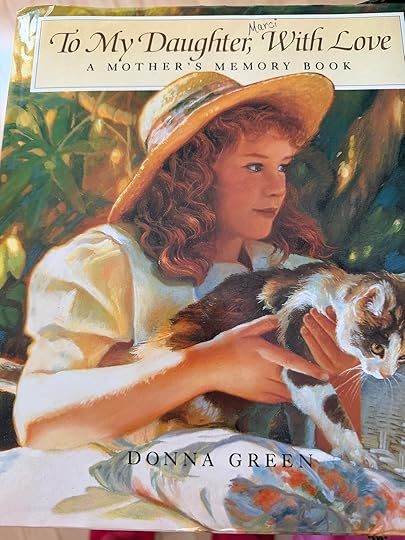
The Cover: It had a picture on the front of a young girl wearing a Little House on the Prairie dress and a hat, holding a cat in her arms. My style has always leaned more towards “can-can dancer in red ruffles” than “pioneer girl wearing a dusty brown dress and a bonnet” so I was immediately repelled.
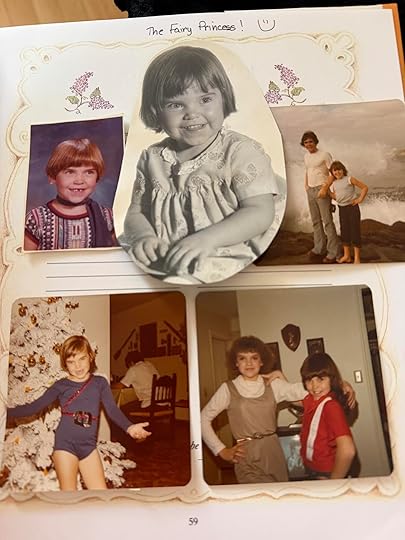
The Pictures: To make matters worse, my Mom had filled the book with hideous pictures of me in my youth. You know the kind–eyes closed, nostrils flared, a few missing teeth, an ill-fitting leotard and to top it all off, a haircut that was more “bully in A Christmas Story” than “cute little girl.” My Mom was famous for only keeping family pictures where she looked good, even when the rest of the family looked like we went out that morning for a morning bullfight and the bull won. Then again, when recently going through family photo albums, I laughed at all the blurry closed-eyes photos she had put into albums. Especially the ones where she thought she looked fat and wrote under the picture “Jenny Craig here I come.” So there you have it. The story I had always understood–that she only kept pictures where she looked good–wasn’t even true. She kept all the pictures–even the ones she didn’t like– and had the 200 photo albums to prove it.
The Memories: My Mom had answered all the prompts inside with memories I skimmed over but wasn’t remotely interested in.
But one recent Winter night, I was longing for my Mom. I glanced over at the bookshelf, remembering the book. I padded over in my pink fluffy champagne slippers and pulled it off the shelf. I laughed out loud at the terrible pictures of myself and ran my fingers across her handwriting in adoration.
Every memory became a revelation. The first third of the book is my Mom writing about her Mom, Grandma Lupe. The second section is my Mom’s memories of growing up in San Diego, and the final section is about my own childhood.
Now I read it more enrapt than a recent thriller, texting my siblings things I never knew, or had known but forgotten:
“Did you know Grandma Lupe had 5 mexican restaurants around San Diego and a Drive-Inn and Mom used to wash dishes there for 10 cents an hour?
“Did you know Grandma Lupe had 5 marriage proposals and she chose Grandpa because he was “big and handsome”?
“Did you know Grandma Lupe’s favorite musician was Jorge Negrete, a mariachi singer and Mom went to visit him when she visited Mexico?”
And I know why–she was longing for her own Mom.
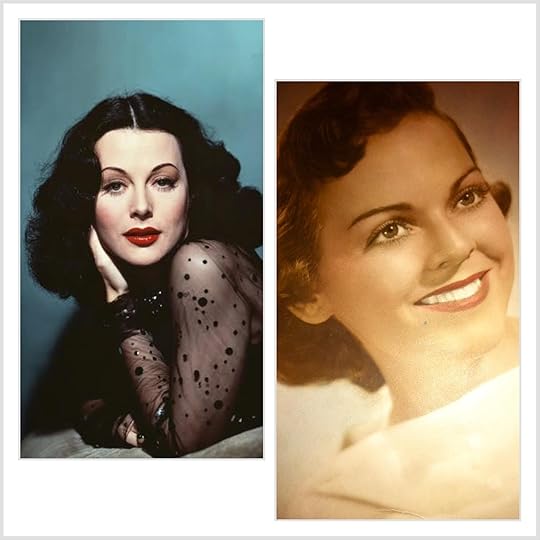
But my biggest humdinger so far was yesterday’s revelation. My Mom wrote about how Grandma Lupe always wanted her to be a movie star, and that since Lupe’s favorite starlet in the 1930’s was Hedy Lamarr, she switched the last name around and named her baby girl Marla.
Crack! Lightning! What?
How could I have never known my Mom was named after Hedy Lamarr? I myself have been fascinated by Hedy for years, not only for her glamour and beauty but for her genius. Hedy acted in movies by day and invented things by night. She was an expert on radio frequencies and invented technology that would later be used for military communications and the development of WIFI.
In the book, my Mom wrote how she never wanted to be a movie star because she never liked Drama. She said the Drama department at her high school was full of “weird” students and her one main memory was when a Drama student named Dennis Hopper (yes, that Dennis Hopper) came into her classroom and pretended he was stuck on a submarine and couldn’t get off. She said he acted crazy, banging on the chalkboards and screaming.
As someone who LOVES drama and would have LOVED to go to school with someone who would enter my classroom and bang on the walls (anything to break up the monotony!), I could never understand why she wasn’t delighted by this display of excessive drama.
But my Mom liked order and stability and people who acted civilized (the opposite of me who seems drawn to chaos, instability, and wild people). She wrote in the book that she had always wanted to get married, have children, be a schoolteacher and work in a doctor’s office, all of which she did.
But even so, being my Mom, she wrote about how much she loved my dramatic flair, my passion for performing and my courage in traveling around the world by myself. She even wrote how she could never do such a thing, but then in parenthesis she said, “(maybe some day).”
I loved reading those words, and about how Grandma Lupe would especially love my glittery theater and dancing career, the costumes, the makeup, the glamour.
As my fingers traced her looping Ms and Ls, I felt a connection: Lupe to my Mom to me and now to my own daughter, Annabelle.
And I thought I should do this kind of book for Annabelle, one she can roll her eyes upon receiving. One that can sit on her shelf gathering dust for decades until she’s ready, with the hope that when she finally opens it, maybe after I’m gone, she will hear my voice and feel my own hand upon her heart.
She can be the girl lighting a candle on a snowy day, sitting on the floor of her bedroom, opening the book like it’s a sacred tome. She can read my words, trace my handwriting, maybe even hear my voice, and know my love will always wrap around her like a soft blanket.
Maybe my words will surprise her with things she never knew about me, or her grandmothers, and help her know that even if she can’t see me, I’m never letting go of the string.
And my Mom hasn’t either.
February 16, 2026
Pop the Champagne! My Research is Published!!
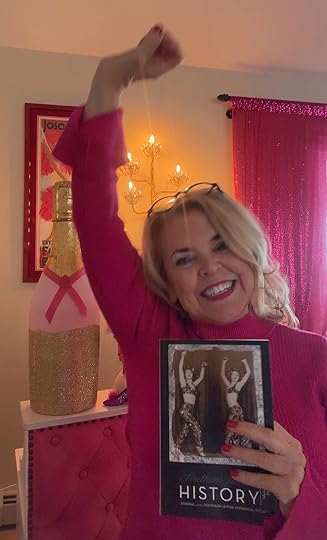
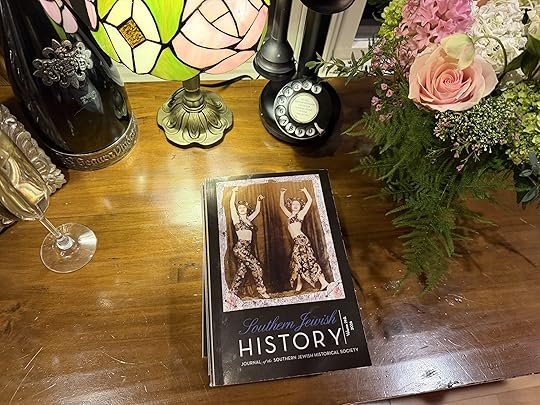
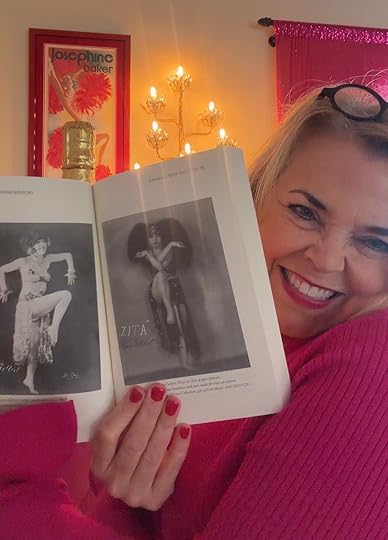
I can’t believe it but after many years of intense research that felt a lot like wrestling a minotaur, my research on the Gellert Sisters is finally published!!
I must confess I cried when I opened up the box and saw my work in print!
Of course I didn’t do it alone. The work is the result of MANY interviews, researching different databases, visiting NYC, the Historic New Orleans Collection, the French Quarter, the New England Genealogical Society, etc.
As an academic research scholar covering a niche topic with little to no previous published research, it’s been a long arduous road of research and years of obsession with the dancing Gellert sisters AKA Nita & Zita.
I’m thrilled to add Nita & Zita to the academic canon so they can be remembered and so that other researchers can take my research and expand and continue as more and more of the performing arts gets digitized.
Artists like Nita & Zita are rarely covered in academia for several reasons including things like–they were outsider artists who made art out of what we now call “found objects” (previously called trash) and while we now consider this a beautiful thing, in previous years this was considered “low art” if it was called art at all.
In this category of “low art” would be burlesque dancing, which has been the bawdy hidden sister of “high art” dancing like ballet or modern dance. What was the difference between “high art” dancing and “low art” dancing? Isadora Duncan made up her own style of dancing in various stages of undress and so did Mata Hari, but they managed to do so on bigger stages and in museums. Nita & Zita made up their own style of dancing and performed in cabarets, restaurants, and nightclubs, all venues for a lower income audience. Is it the venue that made the difference? The income of the audience? Which audience considered themselves higher class vs. lower class?
Added to this controversy is the fact that the sisters made so many of their costumes from found objects which are obviously fragile and wouldn’t survive unless someone knew how to protect them. I’m sure there were other dancers and artists who made costumes from found objects, however their work didn’t survive. Nita & Zita spent the last 40 years of their lives as recluses and as such, their creations survived and were sent out into the world by their neighbor, Betty Kirkland, who held the 5-year yard sale. We have more people to thank for preserving the sisters’ legacy like Judy of Judy’s Collage, Jane Blevin, and Cyndi MacMurray who had shops in the French Quarter where people like me could discover the remarkable sisters.
As for my own research, I could never have completed this wild beast of an article without my editor and publisher of the journal Mark Bauman, who believed in me and my capability. When I turned in my initial 100 pages of topsy-turvy-knock-on-doors-in-New-Orleans oral interviews, Mark didn’t toss them out like I thought he would. Instead he advised me how to rewrite them with more of my own analysis. He waited an entire year for me to think (lol) with the occasional gentle nudge “Am I ever going to get this article?” email. I wrestled, I thought, I continued researching, I forced myself to sit down and write when I didn’t want to and finally got another draft sent to him. My writing tends to lean towards the more colorful rollicking kind and shies away from the more formal academic kind. Like a gladiator, Mark slashed, edited, added, advised, and turned my wild beast of massive research into something more streamlined for the academic mind. He helped me put it into context with his own massive troves of research and then sent it out to peers for more feedback.
Did he returned it to me finished? No. He returned it to me with a list of around 50 books for me to read for my final research round. Weirdly, I was thrilled! I LOVE to read and it felt like the perfect moment to read all the niche history around this era for performers, dancers, Jewish women, caribbean tourism, New York dancers, the emergence of cabaret dancers, vaudeville, burlesque, saloon dancers, New Orleans history, Hungarian history, Jewish women in Hungary in 1919…I lit my fire, pulled out highlighters and my cappuccino machine and got to work diving into even more minute details bout the era preceding, during, and after Nita & Zita. A few more final edits, revisions, and proofreading and… it was done.
But then I went to Romania with my team and learned even more. With Sharon (producer), Stefanie (composer), and Courtney (Asso. Producer), I was able to walk streets the Gellert sisters walked (the town hasn’t changed much since medieval times). I was able to visit the closed-up synagogue, the school Flora attended up to 8th grade, and even walk the street they lived on. I wanted to add more into my article but it was ready for press, so I just added a couple sentences (Thank you Mark and Bryan Stone!). Visiting the town of Baia Mare didn’t significantly change the research, but it did significantly change me and gave me more to think about.
In addition to Romania, we were recently able to go interview a neighbor who knew the Gellert sisters in New Orleans. Sharon asked why we are still researching if the film and article are complete? I could only answer that my obsession continues…
So for now, the result of my obsession is here in this article. It is the culmination of all my film interviews with the addition of history books, an excellent editor, and more!
You can read it for free in the following databases and order a copy for yourself at the Journal of Southern Jewish History:
https://www.jewishsouth.org/contents-southern-jewish-history-volume
January 1, 2026
Lusquiver, Yumtober, Sunshiftmania… Traveling and The Dictionary of Obscure Sorrows
I live in “lusquiver.” No it’s not a town in New England you have never heard of, nor is it a kingdom springing from a fairy tale. It’s a word I stumbled upon in my current favorite book, The Dictionary of Obscure Sorrows.
“Lusquiver” is defined as “caught in the monotonous drudgery of life, as mediocrity weaves itself into the fabric of the everyday, the soul aches for an escape, yearning to shed the weight of the drearily familiar and step into realms unexplored.” From Latin, ‘luscus’ meaning ‘wanting, lacking’ and English, ‘quiver’ meaning ‘to tremble’.
So for me, I live in a constant “yearning to tremble for something beyond the mundane,” something delicious, extraordinary, something that makes my heart beat like mad.
What do I yearn for?
The one thing made of delicious yearnings, the one thing I can only find on a train as it rumbles across a mountain in a faraway land with waterfalls and meadows of wildflowers out the window and the occasional stop to dance barefoot under the moonlight.
That one thing is traveling.
By the time I was a teenager, I knew what I needed to do– I needed to hold the world in my hand and crack it open so I could see it all–the wonder, the magic, the marvelous, the yearning, the ache, even the pain.
It wasn’t a desire, it was as necessary to me as breathing. I didn’t come from a family who traveled. I didn’t come from money. What I did come from was a childhood filled with unwavering curiosity about the world. I had to travel or I would die, it was that simple. I wanted to experience the meaning of the words “wonderful,” “magical,” “extraordinary.” I wanted to pluck stars from the sky in faraway lands and weave them in my hair as I walked cobblestone streets surrounded by people speaking a language I didn’t understand. I wanted to see for myself the things I’d only read about in books, to take the world by the tail and shake it and see what fell out.
I’ve often written about my childhood memories of warm summer nights sitting on my parent’s porch in Utah, listening to the rumbling of the Southern Pacific train in the distance.
It turns out the Dictionary of Obscure Sorrows has a name for this too, this “half-forlorn, half-escapist ache of a train whistle howling in the distance at night.” The author calls it ameneurosis, combining “amen” meaning “so be it” plus “neurosis” meaning an anxious state, and amaneunsis, “an assistant who helps transcribe newly composed music.”
I might call it “symphonache,” a symphony of ache felt when looking up at the night sky, or holding an old tattered map in one’s hands, or getting on one’s knees to look closely at an old globe, carefully turning it to see the delectable names of all the marvelous places still to be explored.
Of course this ache grows even sharper, more jagged, with my other constant yearning, the one to put my arms around the ones I’ve loved so much that aren’t here anymore, the exquisite memories that live and take root in the wilderness of my mind, growing into a raving and rapturous forest of transcendent stories. Sometimes I imagine a forest of magical beings living in little cottages with smoke coming out of the chimneys while they stitch together tapestries of my favorite stories, leaving out the painful ones.
But then I think… what if transcendence ONLY comes with tragedy? What if my aching sadness is always surrounded by the soft velvet knowing that it only exists because I loved?
Fearless love, the kind of love that gallops wildly through thunderstorms, screaming with delight;
the kind of love that invites me to run up and down the spiral stone steps of a chateau in Bordeaux while wearing a long pink skirt with tiered, ruffles (I love the skirt rustling and draping behind me down the steps);
the kind of love that whispers to hop a boat on the Danube just so I can run from side to side, marveling at the magnificent lights of Budapest;
the kind of love that pulls me to jubilantly swing dance in the old torture chamber in Paris with friends I just met, the same chamber where I danced as a student 35 years earlier and as I threw my arms up into the air and shook my hips, it became very clear that time doesn’t exist at all. Someone made it up.
I’m still me, the same girl I’ve always been and will always be, with the same heart that craves wandering, the same heart that seems quite willing to love so much, even though it knows with that kind of love, sorrow isn’t far behind.
I tell myself I know quite a bit about sorrow, which is to say of course, that I know nothing. It’s difficult to explain, but essentially, if someone came along and said “Marci, I can take away your sadness if I just remove the love. A fair trade–every moment of sadness for every moment of love.” I would reply, “No thank you. I will keep all my sadness so I can keep all the love.”
Am I even making sense?
The Dictionary of Obscure Sorrows starts by saying that “the word sadness originally meant fullness,” from the same Latin root satis that gives us the words sated and satisfaction.” The author writes that the word sadness does not mean “without hope.” It means “the opposite, an exuberant upswelling that reminds you how fleeting and open-ended life can be.” The author takes words from multiple languages and stitches them together to create new words in an attempt to name emotions we all feel as human beings, but that we have no words for. I love this.
I was recently standing on a small bridge in a tiny town in Romania on one of those glorious October afternoons where the air is a bit crisp but you don’t feel cold because you can actually feel the sun soaking into your skin like hot maple syrup poured over pecan pancakes. (My made-up word for this moment might be “Yumtober.”)
I had spent the morning searching for the lost history of forgotten showgirls, a passion of mine. I spun under centuries-old stone archways with dear friends after listening to ghost stories of old alchemists and art-filled streets mixed with the heartbreaking stories of the ones who never returned after the war.
I tilted my face to the sunlight like the secret sunflower I am, and just sighed as I felt something shift in my soul. I’ll call this moment “sunshiftmania.”
A day later, I was climbing into bed when I blurted out to my fellow globetrotters, “I feel changed. Something about Romania changed me. Does anyone else feel changed?”
Each of my glittering globetrotting glamour girls answered: “Me too. I feel changed,” but none of us could explain why or even how we were changed. We just knew it was so.
I returned home after this grand journey and tried to write about the soul shift. I didn’t want to stuff and squeeze the experience into mundane words, but I also didn’t want the “changing” to disappear into the chimerical land of things that can never be named.
I’m still searching for the words and if you have any ideas, please let me know. But in the meantime, I’m living in “lusquiver,” yearning, trembling, quivering with longing for more adventures.
But wait, for me “lus” doesn’t just mean lack, it also is the beginning of one of my favorite words, “luscious.” My luscious lusquiver state has me agreeing to plunge into my velvet pillows of sadness so I can also exuberantly embrace “yumtober,” “sunshiftmania,” and the deep deliciousness of all the love.
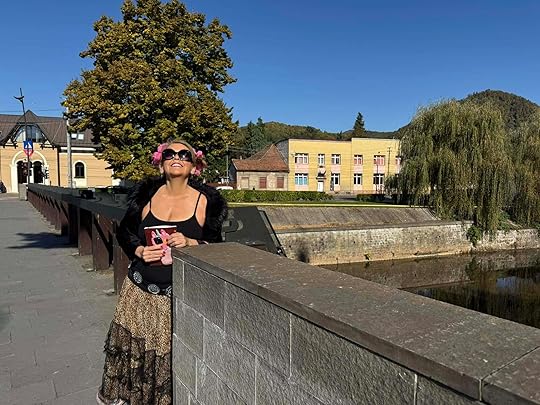 A tiny bridge in Baia Mare, Romania
December 14, 2025
The Osmonds and Marlina
Every Friday night from 1976-79, I watched the Donny and Marie Show. My sisters and I had pretend silver microphones and sang duets in front of our bedroom mirrors, songs like Paper Roses, Puppy Love, and our favorite, “I’m a little bit country, I’m a little bit of rock and roll.” We laughed at Donny’s purple socks every time he raised his pant legs and one Christmas we received Donny and Marie Barbie Dolls from Santa and played for hours, until one day Donny’s head popped off and I decided it was taken by a ghost because I never found it.
Because Donny and Marie were Mormon and lived in our town we felt like they were almost part of our family. My cousin dated Marie and brought her to our house before a date once. Back in those days, we had orange shag carpeting on the stairs, and it was popular to cover the carpet on stairs with thick plastic nailed into the steps. I remember Marie walking up those plastic stairs in our split-level house with her megawatt smile and shaking all our hands.
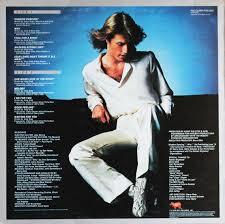
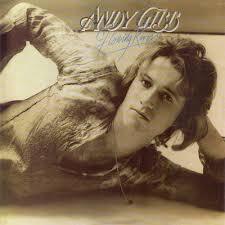
Osmond Studios opened in Provo and as Donny and Marie recorded their TV show there, their famous friends came into town often, like the BeeGee’s and my childhood crush, Andy Gibb.
I was only 7 at the time, so limited in my ability to attend the show unless someone drove me. My older sister Marlina happily stepped into that role. Marlina was obsessed with fashion as evidenced by the stacks of Vogue and Cosmo she kept around her room. She loved the Osmonds and cut her dark hair and curled it under just like Marie. She was especially skilled at lip syncing Osmond songs and would perform them for Family Nights along with Liza Minelli and Barbara Streisand songs. Because I was obsessed with Andy Gibb, Marlina took me to my first concert in Salt Lake City. I was in 2nd grade and we were sitting so far away from the stage that my only memory is the clouds of hairspray Marlina kept spraying in my face in an effort to cement her hair in place.
I covered my wall in posters of Andy Gibb and listened to his records nonstop: I Just Want to Be Your Everything, Shadow Dancing, Thicker Than Water… I danced around my room holding his album covers and pretending he was doing The Hustle right in front of me in his tight white satin pants. I would stare at my posters and weep with desire, my insides jiggling like the green jello we ate every Sunday for dessert. My Mom made the jello fancy by adding canned pineapple to it and serving it in goblets with a dollop of cool whip on top. My Sunday job was to add the spoonful of Cool Whip.
In one especially delicious poster, Andy was wearing only a vest and a gold chain nestled into his hairy chest. I shared a room with my little sister, Marlise, and the day she took a pair of scissors to my poster and Andy off at the shoulders, a war nearly broke out. She said she couldn’t stand to look at his furry chest for one more minute. My Mom had to separate us. Andy Gibb came to Osmond Studios more than once, and my fabulous older sister made sure we got tickets. In one memory, we are walking down the side of the studios outside when we spotted Andy Gibb 10 feet away, standing next to his motorcycle. I stopped in my tracks, frozen like a Dairy Queen Dipped Cone. I couldn’t move or feel my sisters pulling on me to keep moving until one of them slapped me across the face to snap me out of my reverie. That slap had to have come from Marlina. After the taping, Marlina escorted me onto the stage to get Andy’s autograph, and my hands shook as I handed him a piece of paper and the only pencil we had–a half-size purple pencil with no eraser and teethmarks up and down all sides. I carried that pencil home like it was the crown jewels, and slept with it under my pillow until one day it disappeared, probably joining the mysterious land where Donny’s handsome head had ended up.
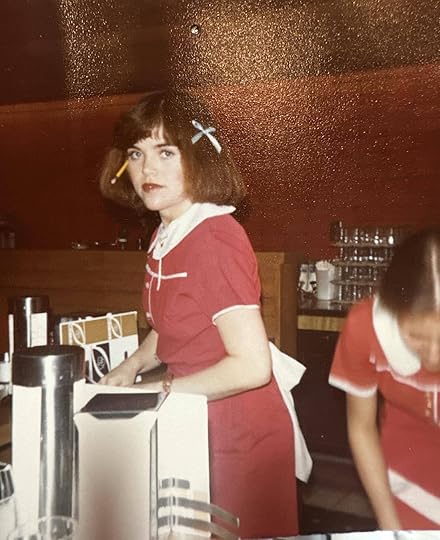
Marlina waitressed for a time at The Tiffin Room, located in the ZCMI department store at the Orem University Mall. One Saturday she dressed all 4 of us sisters up in our matching red dresses made by my Mom in her sewing room and took us to the Tiffin Room for lunch. She brought out her waiter friends to meet us as the restaurant patrons whispered and stared at us, wondering who we were.
Marlina had a rich fantasy life and was full of stories. She would come home from her shift at the Tiffin Room and tell us things like the BeeGees had come in and asked her to babysit their kids the following weekend. She would tell us what Barry ordered, or how Maurice and Robin joked with her. I believed everything she said, and it was only later when I grew up that I questioned whether these stories were even true.
It’s entirely possible the Gibb brothers ate at the Tiffin Room, but it’s highly unlikely she actually babysat for them. I started to question her stories after one family trip to Disneyland when she came back to the hotel much later than the rest of us, telling us that someone had pulled her out of the crowd and asked her to be Cinderella in the Electric Parade that night because she was so pretty. I believed her at the time, but later I realized the entire story probably had more to do with the perfume she always wore–Eau de Vodka.
One of my favorite Marlina field trips was when she took us to see Donny and Marie tape their Christmas special at Sundance. Everyone knew that Marie loved dolls, so Marlina bought Marie a beautiful doll to give her as a gift. Or maybe it was my Mom who bought it– she also loved dolls. I don’t remember a lot about that Christmas special except the the gorgeous singing, the impossible Osmond glamour, and my sister carrying that doll backstage.
Somehow my memories of the Osmonds and Marlina are all intertwined, and maybe that’s why I feel a burst of love and fondness when I come across memorabilia like the Jimmy Osmond Halloween Costume I saw at Bananas Vintage Shop last year. I didn’t buy it, but it did bring back a flood of memories of Friday night magic laughing at corny jokes with my sisters and singing the grand finale song from the show on road trips with dramatic gusto:
“May tomorrow be a perfect day/May you find love and laughter along the way/May God keep you in his tender care/Til he brings us together again.”
Then we’d smile, wave to our pretend audience, and shout, “Goodnight Everybody!” I still remember every word, and it always makes me miss my sisters.
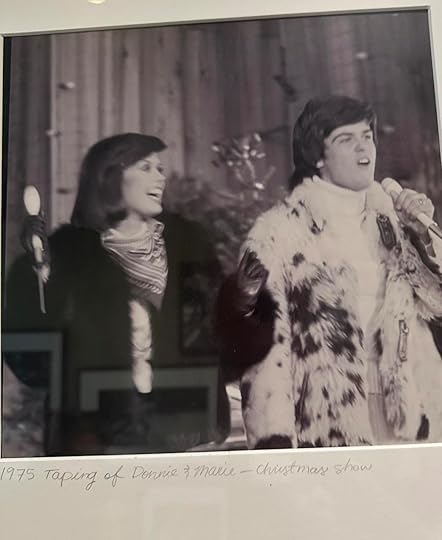

November 28, 2025
Holidays for the Aching
I’m still waiting for a holiday to roll around that doesn’t make my heart ache.
I thought it might be this one but I woke up this morning to that old familiar ache, the one that makes me want to pull the covered over my head and only emerge when the holiday is over, the kind of ache that feels like searching, yearning, for what was and will never be again.
I miss the shared language of my Beloveds and the way they anchored me to this world, shaping who I am.
The old me I used to know is long gone, and every time it feels like I might be “becoming,” maybe even “healing,” grief cracks open the sky and the shattered pieces of my soul run in every direction, stampeding wild horses.
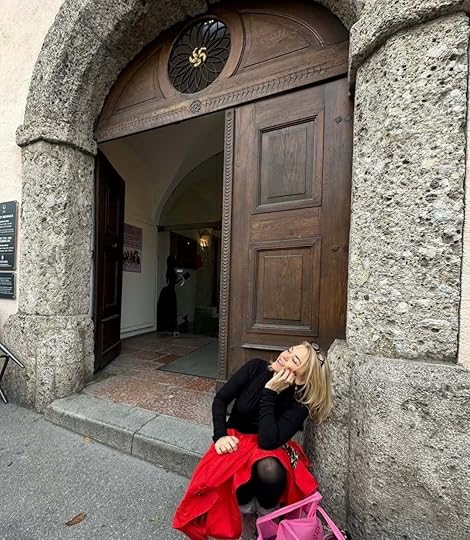
Is it strange that I feel the most like me when I’m sitting on the stoop of a centuries-old-house in a quaint little town on a river halfway across the world? Its the kind of town that belongs in fairy tales, and the kind of house that held the fire of creation, music and moonlight, the kind of place that gently holds the yearning and makes it alright.
I wrap myself in my red raincoat lined in leopard print, and pretend there’s such a thing as protection against the rain.
Even so, even with the storms and the ache, I would not trade the love for a single second of peace. This love was and is the kind of love that softens the edges of the world and makes you believe in magic.
Did you know there’s a flower called Queen of the Night? For 364 days of the year this member of the cactus resembles a dead bush. But for one night in the middle of summer it opens with trumpet-shaped, creamy-white flowers.
Things are always blooming and dying and blooming again.
I once had a pot of dirt that sat in the dark storage room for 5 years until one day I noticed a green stem emerging and another day a purple orchid spread its petals, sprouting beauty right out of the cold hard dirt.
If the Queen of the Night and my purple orchid can do it, surely I can too.
I don’t like thinking of the loss, but I do like thinking of the love and wild horses and blooming flowers and someone making music.
In the meantime, I’m choosing to embrace the ache and focus on swimming in the love that remains.
November 15, 2025
A Carpathian Cultural Tour
Dearest Gentle Readers,
(Please bear with me while I am in my Lady Whistledown moment)
The scholarly social whirl continues for The Nita & Zita Project. While we couldn’t resist partaking in the scandalous intrigues of the Parisian salon and the Bordeaux Chateau, we soon traded those in for a deliciously exotic location —the wild and untamed land of Romania, home of our favorite glittering globetrotters Nita & Zita.
Traversing the foothills of Transylvania in a tiny Honda, 4 intrepid voyagers in the form of Marci Darling (Director), Sharon Gillen (Producer), Stefanie Naifeh (Film Music), and Courtney Mico Nelson (Associate Producer), set off an an adventure of the wildest variety.
This town of Baia Mare was called Nagybanya, Hungary at the time of the sister’s residence, a completely different language and culture, but the history is the same and hang onto your hats, gentle readers, we learned all sorts of historical tidbits that could have, would have, shaped our beloved dancing duo.
Baia Mare is a locale, one might observe, that has exchanged its gilded cages for literal, though now-closed, gold mines. How perfectly fitting that a city whose very name means “Great Mine” has built a new reputation on burying its industrial past beneath a verdant layer of green space.
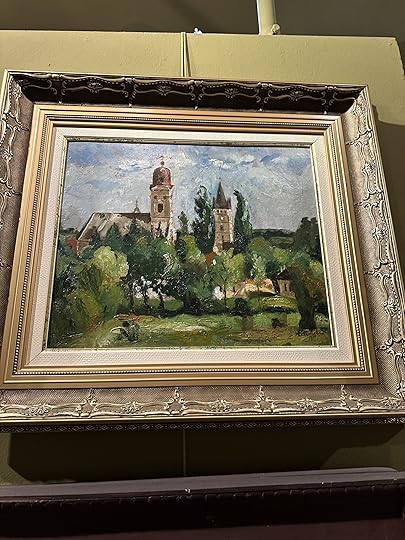
It is said that a town’s history is written in its people, and a fleeting glance suggests the residents of Baia Mare have long been acquainted with hard work. Yet, beneath their stalwart exterior, one finds a surprising devotion to the arts. Where once the earth yielded mineral treasures, the town now mints artists from its renowned colony, who paint en plein air amidst the Gutâi Mountains. Such a dramatic shift from subterranean labor to sun-drenched canvases is enough to make even the most cynical observer marvel. In other words, the mayor of Nagybanya invited celebrity artist Simon Hollosy to return to his hometown to paint. He accepted this invitation and from 1896-1901, brought hundreds of artists to paint around the town. As you may remember, 1896 is the year of Flora’s birth, and she would have grown up seeing artists set up with their canvases all over her town. In 1901, the tradition grew, with several schools of art popping up and thousands of artists from all over the world coming to this tiny town to paint. Artists blossoming among the miners…how utterly perfect for a pair of starry-eyed dancing sisters. There is even a set of statues of artists in the town square!
Perhaps the girls were inspired by this painting of a spanish lady …
Piroska, born in 1904 into this rich tradition, would also have grown up in this enchanted environment. We learned that the Gellert family listed their residence on a charming little cobblestone street called Lendvay Street, leading straight to the original town mint, now the Museum of History.
Lendvay Street–Flora listed this street as her address on school records
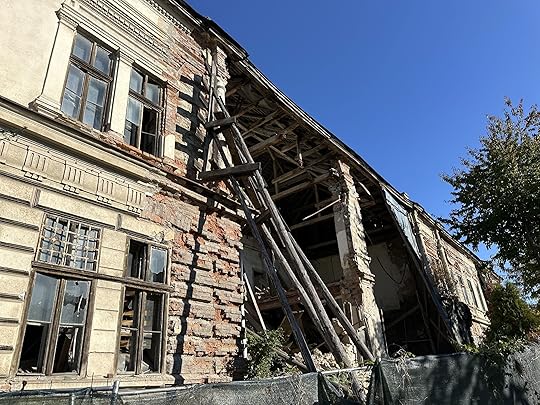
We recently learned that Flora completed her education in a school for girls that taught handiwork or trades called Polgari Leanyiskola and we were able to visit this school. Flights of fancy filled our heads as we imagined young Flora running up and down the stairways while learning her sewing skills and staring out the windows imagining a different kind of life for herself, one of glamour and travel, whimsy and wonder. The school is now collapsing under age, but has plans for renovation.
Upon our recent visit, we could not help but notice the peculiar blend of old and new. The preserved medieval old town and its iconic Stephen’s Tower, a clock tower said to have been built in the 1300’s, provide a charming backdrop for the new breed of citizen who, rather than toiling underground, now indulges in fine dining at a culinary soiree. We drank cappuccinos in sparkling new coffee shops run by pretty young people, and tried not to be deterred when we invited the coffee-maker to our screening at the local university and he replied, “There is no university in Baia Mare.” Of course there is a university in Baia Mare, churning out serious scholars, Fulbright scholars, and many history-loving young people who now run the museums and work in the town politics trying to change things. Bravo young people!
Of course, no exposé would be complete without a hint of scandal, and Baia Mare is not without its own skeletons, and I mean literally. We ate twice at a beautiful restaurant in the old town called Shakespeare. We asked the owner if there were ghost stories. Of course! He led us to the medieval cellar with its secret chambers and stone archways where he found a skeleton while renovating for his restaurant and regaled us with tales of hidden rooms, broken ancient stones with the initials of an infamous demon, a singing monk strangled by said demon, and rumours of alchemy from medieval times.
A sordid affair that makes for delicious storytelling. Nowadays, it appears the town’s true worth is measured not in precious metals, but in the vibrancy of its festivals, the artistry of its painters, its ample surrounding mountains and of course, its legacy of two dancing girls who would grow up to change the world. At least they changed my world…
Perhaps the most fascinating gossip lies just beyond the city’s verdant parks—in the nearby Merry Cemetery. Here, death is not a source of sorrow, but a colorful and humorous tale etched onto wooden crosses. What a refreshing contrast to the hushed and mournful funerals of the high society! It seems that while the London elite hide their scandals in the grave, the Transylvanians delight in announcing them to the world in a riot of color. Can you think of any other towns or cities who do the same with their sacred dead? Perhaps one with brass bands, fringe umbrellas, and Second Line parades?
I know I’ve kept you all waiting with bated breath for a review of our actual screening, and I must say it was wonderful. Many locals from surrounding towns showed up and a professor from the (nonexistent?) university had added Romanian subtitles to the film.
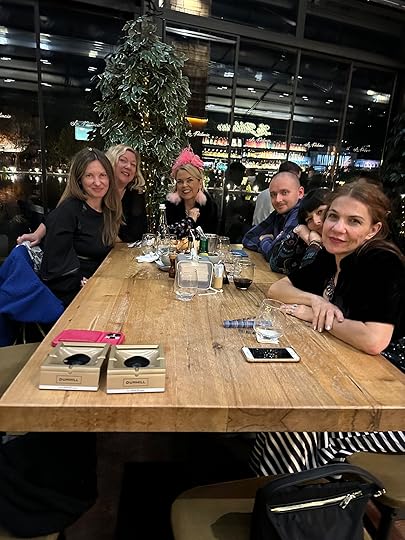
On a more serious note, we were deeply moved by the people who came to our screening, and by visiting the now-empty synagogue which stands locked up, a testament to the thousands of Jewish families who were taken to concentration camps, never to return. Heartbreaking. Our host, Robert Cotos, (pictured below at dinner) created a nonprofit to find the names of these lost local families and we were honored to be part of his work. Our world is so sad, gentle readers, an ever present reminder to me to forge ahead and tell the stories of those who can not tell their own.
This author, for one, finds this all a most intoxicating mixture. A society seems to always be attempting to scrub clean its past, for better or for worse, while its deep-seated nature continues to bleed through the fine linens of modernity. It is a masquerade of the highest order, and if I am being quite honest, I emerged from Romania changed, transformed in some way that is difficult to be put into words.
But here I sit, quill in hand, aching to learn more, to honor, to celebrate, to experience it all.
Yours in perpetual observation,
Lady Scrumptious
AKA Marci Darling
Please be sure to check our society pages: @nitazitaproject for images from our voyage AND we would be forever grateful if you could please leave us a review on Rotten Tomatoes!
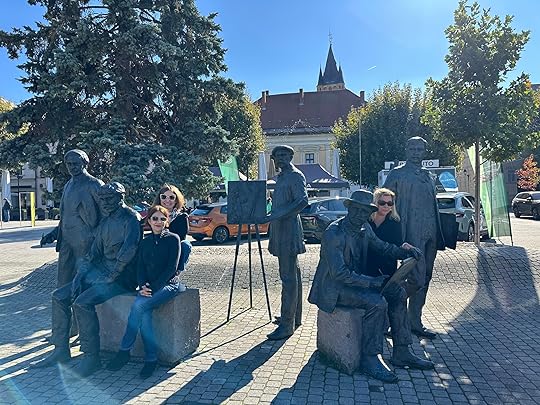
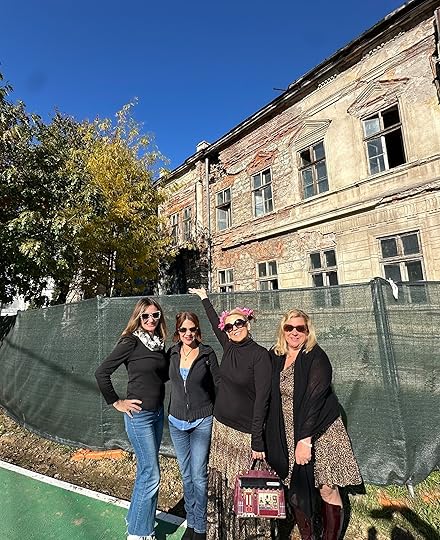
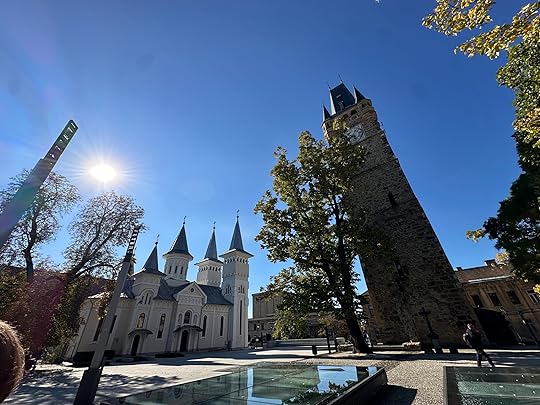
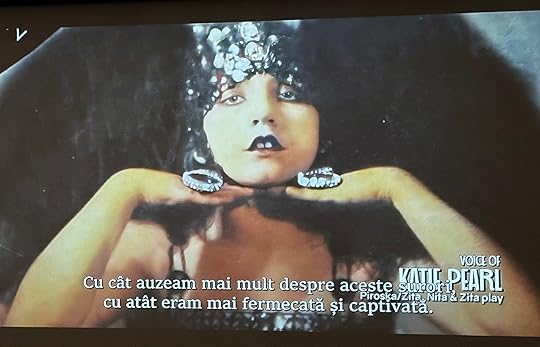
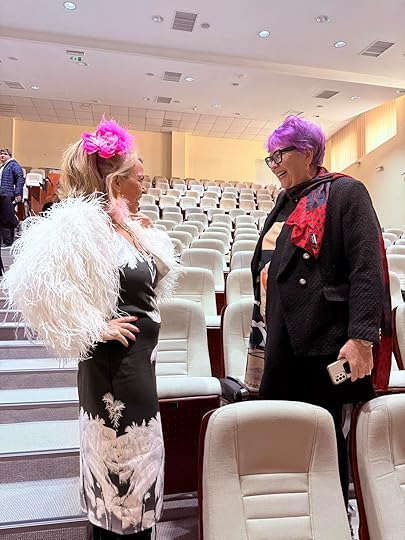
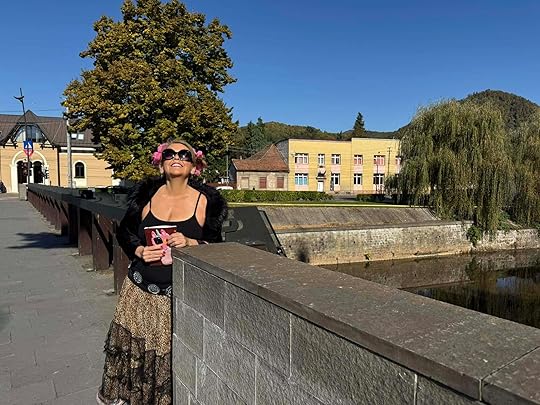
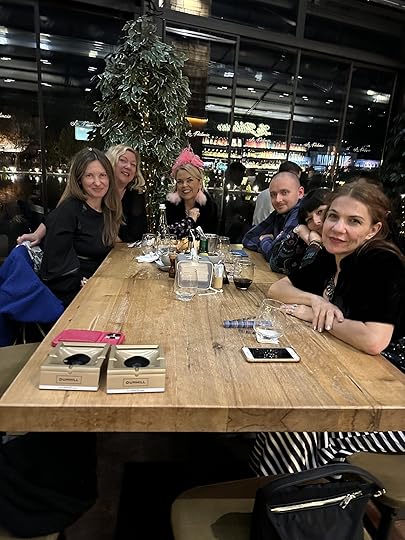
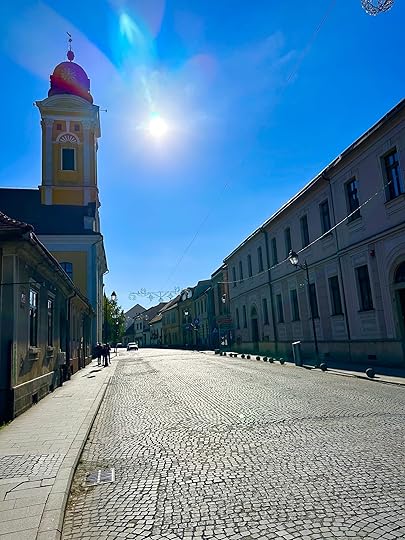
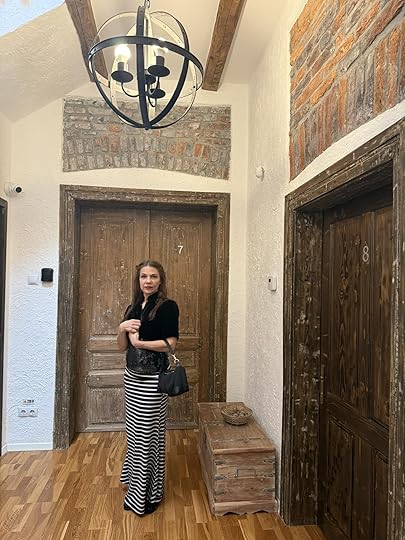
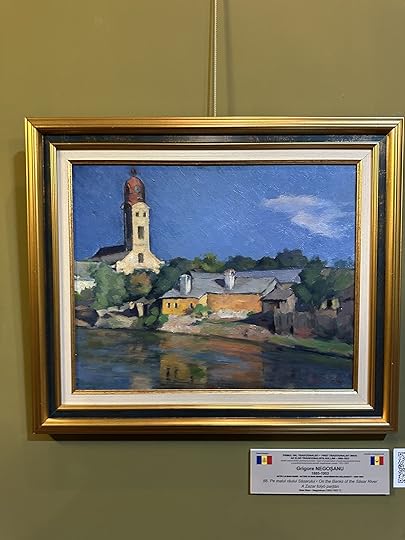
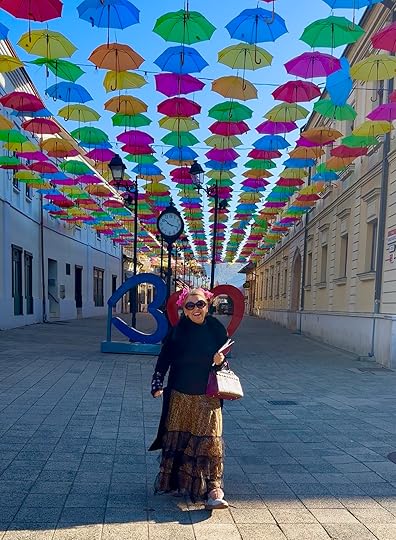 The Director Lady Scrumptious deep in research for The Nita & Zita Project
September 16, 2025
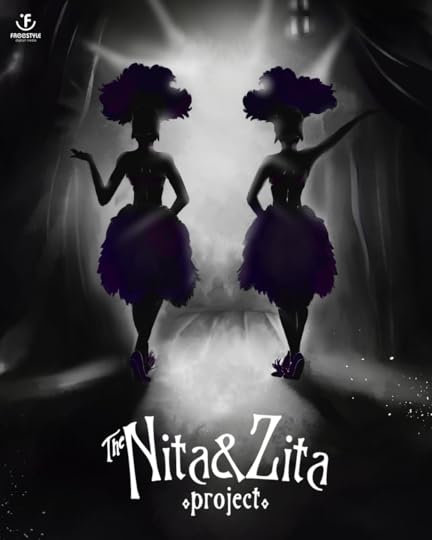
The Nita & Zita Project is streaming!!
And it’s finally here!! Launch Day for The Nita and Zita Documentary!
For all my life, September 16 was just a normal day but from this day forward, it will now be known as the day my dream came true!!
Superstar Actress Wendi McLendon Covey attended our New Orleans screening and said, “This tiny gem of a movie is a love letter to dreamers, performers, and soulmates everywhere.”
How could she know the film was made as an actual love letter to my own dreamer and soulmate Kim?
It’s been a magical journey from the day I woke up from a dream knowing what I must do, tell the story of these remarkable trailblazing women. I call it Grey Gardens meets Gypse Rose Lee meets Sisterhood of the Traveling Pants with a dash of Fiddler on the Roof.
It’s now available to rent or own on all cable, satellite, and digital platforms like @appletv and @primevideo
Freestyle Digital Media is calling it “The documentary you didn’t know you needed.”
Watch it here:
https://tv.apple.com/us/movie/the-nita–zita-project/umc.cmc.120yzdq5apt6srhbhkz04j28i
Or here:

September 3, 2025
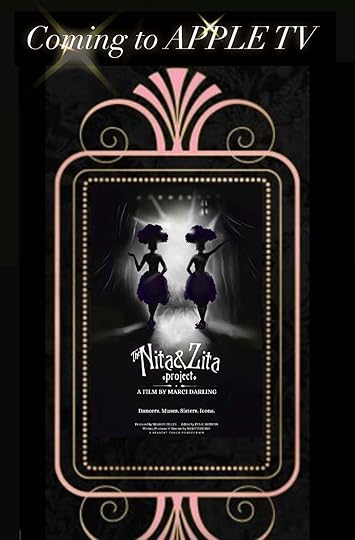
The Nita & Zita Project is Coming to APPLE TV!
Darlings!
The Nita & Zita Project is heading to APPLE TV on September 16!!
It is available to pre-order RIGHT NOW! Link below (or just search the film on Apple!)
For those who don’t have Apple, it will also be available on AMAZON, FANDANGO AT HOME, GOOGLE PLAY, and YOUTUBE MOVIES, Satellite and Cable (DISH, DIRECTV, Sling, In Demand)
AND for those of you who do it old school, the physical DVD will be available for purchase on Amazon.
Our hearts are bursting with gratitude and amazement that our handmade tale of wonder about these extraordinary iconic sisters keeps connecting to audiences.
Pinch me! (No don’t! If this is a dream I want to keep on dreaming!)
Link to pre-order:https://tv.apple.com/…/umc.cmc.120yzdq5apt6srhbhkz04j28i
August 24, 2025
Empty Nest = Emptiness
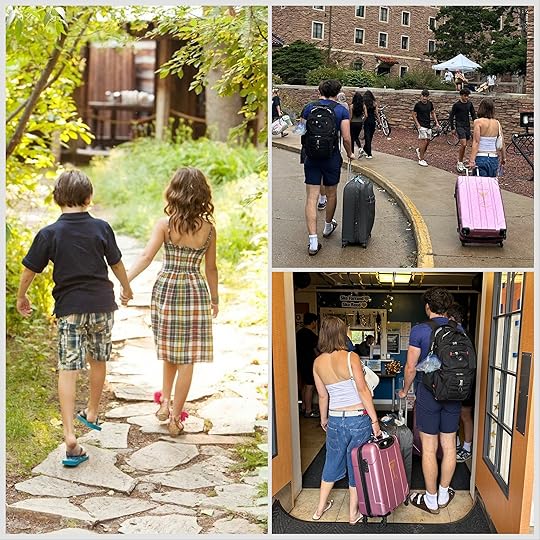
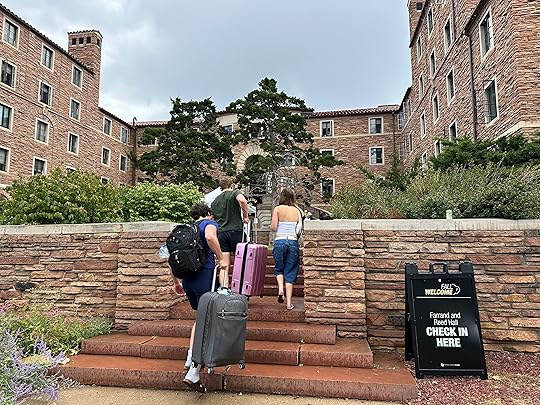
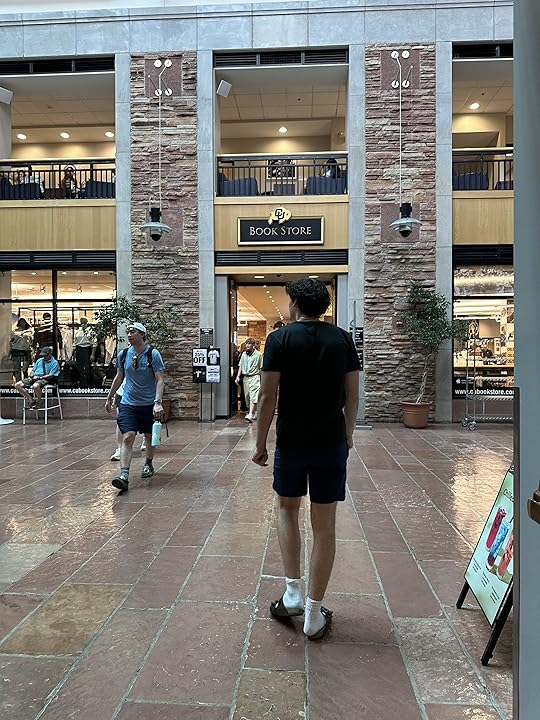
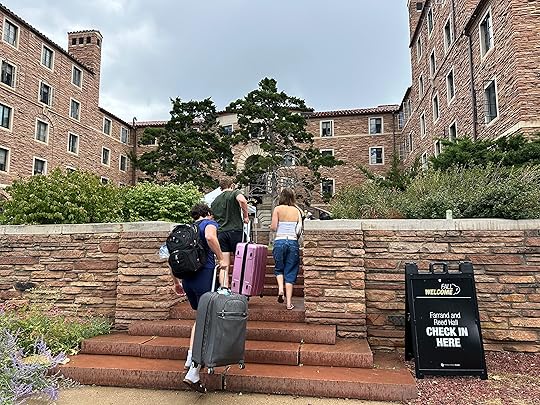
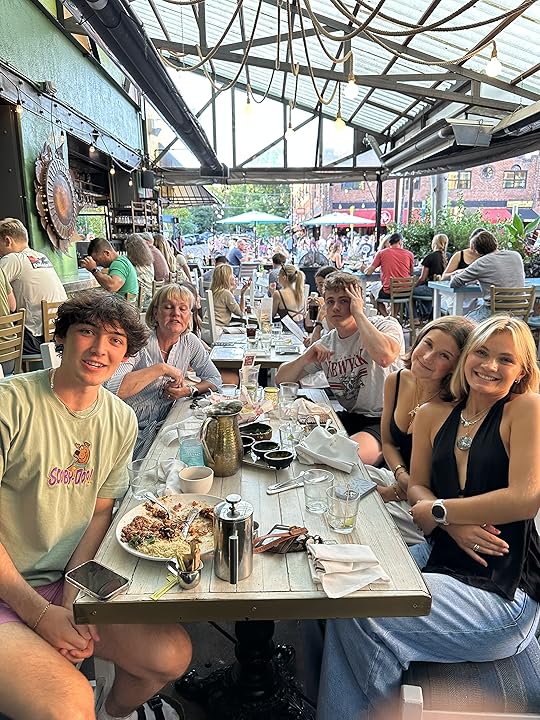
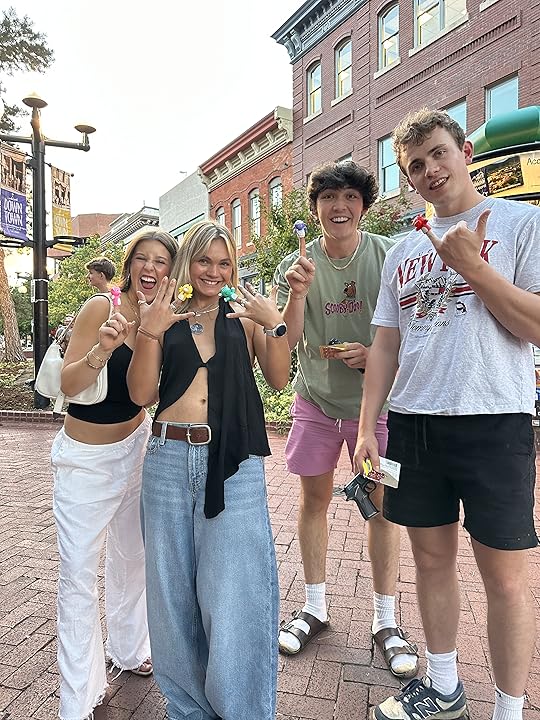
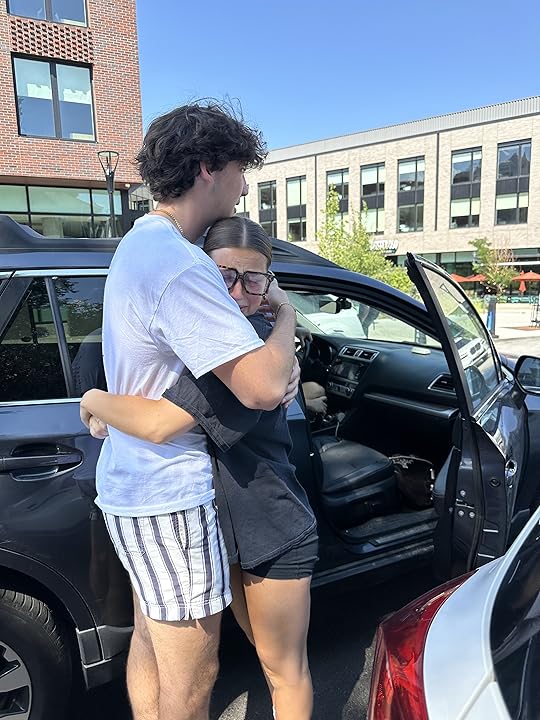
I have figured out why they call it an empty nest–because it sounds like emptiness. This occurred to me the other day as I moved my son into college across the country. How had I never known this? I of course have heard about Empty Nest for years. I’ve seen the tears on parents’ faces, watched them shake their heads in bewilderment… but no one said a word about emptiness. They said things like, “It’s hard. It took me a week of nonstop crying, a month, a year…”
Empty Nest-Emptiness.
So, let me get this straight–we create nests to nurture new life, to create a soft place for our littles to grow, protected from the wind and rain, from predators, knowing all along that the entire point is for the nest to be abandoned once they are strong enough. What is this madness?
I have them in my body, on my hip, in my arms, all day every day– worrying, loving, laughing, drying tears, running a hand over a soft forehead after a nightmare or a bad night of the flu- every waking moment focused on them- are they safe? Are they going to be okay? Are they kind? Are they getting enough sunshine, enough food, enough love? How close can we hold them while still allowing them to grow strong?
All knowing the purpose is for them to grow their wings and fly to their next adventure, abandoning the nest I spent decades building, while I wave from the branch they just left.
If nests are vessels of growth, rebirth, and learning, they are also ephemeral.
Imagine that–the entire point of parenting is loving while KNOWING abandonment is on its way.
It’s life. It’s right… it’s good?
Is it?
They learn to strengthen their wings.
We learn the terrifying knowledge that keeping anyone safe is an illusion.
They learn how to build their own nest.
We learn, as nests around us are exploding, imploding, torn apart by unpredictable storms knocking down trees and leaving destruction in their wake, that our little ones might be okay if we are one of the very very lucky ones. My own nest has been torn apart more than once and I rushed to rebuild it, still trying to protect them.
But now they are both gone and the house feels too empty. I remind myself nests were never meant to be permanent–and really, what is? Nothing is permanent. Even actual “permanents” like the ones my sisters and even my brothers got every 6 weeks in the 70’s and 80’s to try to turn our fine straight hair into curls weren’t permanent.
And there’s nothing I can do about any of this but love love love, encourage, and try not to break down in front of the children.
“You are going to grow so much! I’m so excited for you!”
All spoken from tattered twigs and the oppressive silence of an empty nest.
Walking into a silent house and knowing he’s not going to come running in with a group of friends, shouting, laughing, one friend heading to the piano to play “Come On Eileen,” another spinning a basketball on his finger, my son disappearing into the pantry while asking me to make him chocolate chip protein pancakes. I call him the “Joy-maker” of the house. Wherever he goes, he leaves a wake of joy, asking me if I want to watch a movie, dancing around the kitchen, lifting me 5 feet in the air to “crack my back.”
I can think of only one thing to do–I’ll expand my empty nest and into a big invisible one– I’ll make it out of love and they will know that wherever I am, they have a soft place to land, a nest I carry in my hair ready to welcome them home any time.
That made me feel better for the 10 seconds it took me to write it, and then the empty nest came hurling back and knocked me in the head.
Sigh.
I guess if you see me stumbling around airports as I plan endless travel as a way of running from the emptiness, with twigs and grass sticking out of my hair, just know it’s not because I’ve lost it- though I definitely have- it’s because I’m busy building a bigger nest with my mind- so I can pretend I am still holding them, keeping them safe, warm, and wrapped in my wings.