Kestral Gaian's Blog
October 2, 2025
Playing with Poetry, Riding the Lines
Today is National Poetry Day, and this year’s theme is play.
I’ve always thought that poetry is one of the best forms of play we’ve got. It’s a chance to toss words in the air and see where they land. To turn the world into a stage. To take the odd, the everyday, the fleeting, and find the rhythm that makes it sing.
That’s the spirit that shaped Tubelines. For five years I carried notebooks on the Underground, writing down half-conversations, stray glances, and the tiny theatres unfolding between strangers. The poems that came out of those journeys aren’t heavy manifestos or grand declarations. They’re playful, intimate, and sometimes absurd. They’re the moments that make a city human.
One of my favourites, The Karma Kid, is about a boy in a “GOOD KARMA” t-shirt who actually was unironically spreading good karma. Just a small act of almost unintentional kindness that somehow felt extraordinary. To me, that’s poetry. Finding the play in the serious, the joy in the ordinary, the magic in the mundane.
So it feels right that Tubelines is stepping into the world this week. The book launches this Saturday, 4th October, at the Poetry Café in London with readings, a Q&A, and plenty of time to raise a glass. Then I’ll be in Glasgow on the 8th to celebrate with another event. Both events are completely free to attend, and at accessible venues with food, drink, and merriment for all.
And if you can’t be there in person, pre-orders are open now. Those early copies don’t just help me, they help queer authors and small publishers like Reconnecting Rainbows Press get seen.
So, wherever you are, I hope you find a little space to play today. Read a poem, scribble a line, notice something ordinary and make it strange. Poetry is for everyone, and today’s as good a day as any to remind ourselves of that.
Onwards!
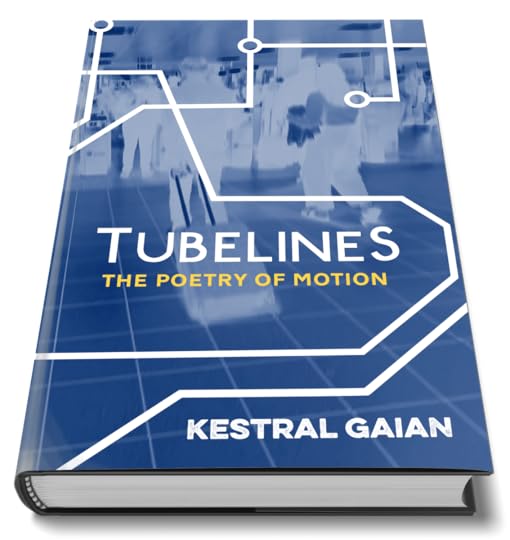
A book full of poems that are not just a love letter to the London Underground, but a poetic map of movement, memory, and meaning across half a decade of living in the capital.
Pre-order Tubelines Here

August 24, 2025
Rock On
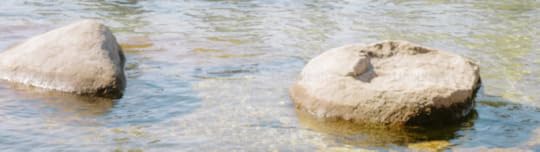
First, you put in the big rocks. Then the gravel. Then the sand. If you do it the other way around, nothing fits. The lesson was simple: get your priorities straight.
For years I thought I knew what rocks looked like. Paying the rent on time. Making the deadlines. Moving house. Keeping the lights on. The stuff that keeps the jar looking full. The things you could point to on a checklist and claim to be successfully adulting.
But this weekend at Southampton Pride, I was reminded that my idea of rocks was wrong. I was there signing books as part of a queer author showcase, surrounded by colour and noise and vibrant hairstyles that I got jealous of, and I bumped into a couple of friends I hadn’t seen in years. It wasn’t planned, but it felt like something settling back into place. The kind of friendships where you pick up mid-sentence, where years dissolve in an instant.
And standing there, catching up, I realised something important: friendship isn’t the sand. It’s not the little filler that drifts into the gaps between “real” responsibilities. It isn't even the gravel. That's the rent, the bills, the things that stick uncomfortably in your shoe.
Friendship is, quite simply, a rock.Because what good is a jar full of rent payments and utility bills if you’ve no one to laugh with about the ridiculousness of it all? What’s the point of cramming in gravel-sized obligations if the big stones of kindness, love, and connection are missing?
It's been a year-or-so of big life changes for me, with nothing moving as fast as I'd like it to, and things never quite lining up - all the while I've been head down, trying to keep the practicalities straight. And yes, those details matter.
But they’re not the foundation.The real foundation is the people I can call at midnight when the world feels too heavy, or the ones who remind me who I am when I’ve forgotten. Even the ones who, after years, can give me a hug at an event and instantly settle back into laughing with.
Of course, rocks can crack. Life's waters run constant and deep. Rocks need attention, patience, work. They need to be held, and sometimes mended. But rocks are what make the jar worth filling in the first place.
So here’s my reminder to myself (and maybe to you, too): don’t mistake the gravel for the rocks. The big things aren’t always the loudest. Sometimes they’re just the quiet, steady presence of friendship that stands firm after half a decade or so.
And if it’s been a while since you reached out to an old friend, maybe this is your nudge to do it - especially if that old friend happens to be me.
August 5, 2025
Write Like Nobody's Watching
When I was eight, I used to sit under the dining room table and write stories on scrap paper about my life. These stories usually featured talking animals and children who ran away to join the circus, too, but they always seemed to be about the world and how I engaged with it. I didn’t know what plot structure was. I hadn’t been taught about voice or pacing or stakes. But I knew how it felt when the spark hit. I knew the thrill of a blank page that was blank no longer.
No one told me I needed permission. I just wrote. Because I could. Because I wanted to.
That feeling never really left. But over timethe world built fences around it. We get told there’s a proper way to do things. That creativity is a privilege. That writing only counts if someone pays you for it, edits it, publishes it, applauds it. We hesitate. We wait. We hold back.
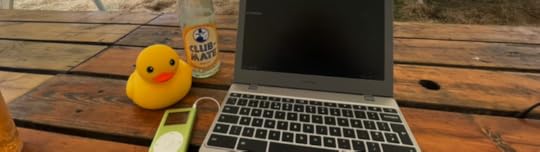
At EMF in 2024, I ran a beginner’s writing workshop — a joyfully chaotic couple of hours with people who had forgotten they were allowed to make stuff up. I handed out story prompts on lollypop sticks using a method I call CAPS: Character, Action, Prop, Setting. If you didn’t have an idea, great — now you do. If you already had one, even better — here was a new way in. In the run up to the event, lots of people tooted at my to ask me if I'd include my "rules of writing". So I made a slide with five bullet points.
There are no rules to writing.And if there were, there wouldn’t be five. Standardised lists of rules never work. Also: quack.
People laughed. Then they scribbled. Then they surprised themselves. And honestly? That’s the only magic trick there is. The only rule I've ever been able to find when it comes to writing. It's just... start. Then keep going. You'll always end up surprising yourself.
I’m about to publish my fifth book. I’ve written plays, poems, novels, blogs, screenplays, and the occasional slightly over-dramatic post-it note. And still, every single time I start something new, I have to fight off the voice that says, "but what if this is rubbish? What if I’ve forgotten how to do it?"
But I write anyway. Because writing isn’t about brilliance. It’s about breath. It’s about taking a moment to pull something out of your chest and say, here, look, I made this.
So if you’ve been waiting for a sign to start? This is it.Write like nobody’s watching. Write like I did when I was eight. Write like you’re under the dining table with shit crayola felt-tip and a head full of strange ideas. Write badly. Write joyfully. Write something that makes you laugh out loud, or weep, or both. Write even if you think no one will ever read it.
Because writing doesn’t belong to professionals, or publishers, or some elite group of creative masterminds. It belongs to humans. It belongs to you.
The world is weird and loud and overwhelming. Stories make it bearable. Stories make it breathe. So, please remember, you don’t need permission. You don’t need credentials. You don’t need a plan.
All you need to do is pick up a pen, and start.
August 2, 2025
Books That Built Me: Station Eleven
I wrote in my last post that I feel a bit like I'm living in limbo, and that it wasn't the first time I've felt like this. The last time was in 2016. I'd just stepped out of four intense years working at an early-stage tech startup with the sort of wide-eyed blinking that happens when you leave a nightclub and it’s suddenly morning. My long term relationship had just ended, the UK had just voted for Brexit, I was burned out, and I had no real idea what to do with myself.
I picked up Station Eleven by Emily St. John Mandel.
It was one of those books that landed in my life at exactly the right time. A story about a world after collapse, yes, but also a story about art, memory, survival, and what we hold onto when everything else falls away. It didn’t feel like dystopia. It felt like a kind of strange, glittering truth. One that saw me, soothed me, and maybe even gave me permission to start again.
There’s a quote from Jeevan, one of the characters in the book, that burrowed its way under my skin and never left:
“First we only want to be seen, but once we’re seen, that’s not enough anymore. After that, we want to be remembered.”I think about that a lot.
Because yes, I want to be seen. And yes, I want to be remembered. And no, I don’t think that makes me vain or dramatic or impossible. I think it makes me human.
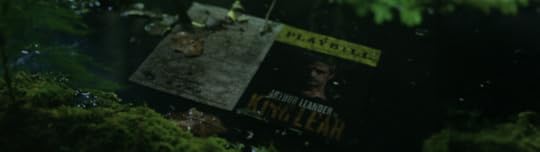
What Station Eleven does so beautifully is hold space for that kind of humanity. Not just in the big, emotional arcs, but in the quiet, strange, absurd little moments too. A comic book passed from hand to hand. A museum of everyday objects. A line from Shakespeare echoing across a broken world: “Survival is insufficient.”
It was also the first book I’d read in ages that didn’t seem to care about fitting into a neat genre box. It wasn’t really sci-fi. But it wasn’t not sci-fi either. It had queer characters, humour, grief, art, storytelling, theatre: so many of the same elements I was beginning to explore in my own writing. And it didn’t apologise for the messiness. It celebrated it.
That was a gift. That was a green light.And of course, after 2020, Station Eleven hit different. I remember when lockdown first started and we were all confused and scared and pretending banana bread was going to save us. This was the first book that came to mind. Not because I thought we were about to descend into post-apocalyptic caravan parks, but because it had already taught me how fragile and strange the world can feel when the rules stop applying.
I clearly wasn’t alone in that. The book got adapted for screen by HBO in 2021 with Mackenzie Davis, who I absolutely adore as an actress, and a whole new wave of people started reading it for the first time. Watching that happen was weirdly comforting. Like we’d all been handed the same torch in a power cut and were trying to figure out where the edges of the room were again.
Now, in 2025, the COVID-19 pandemic feels both recent and impossibly distant. Life’s mostly back to normal. People still cough all over you on the underground. Deliveroo drivers still roam the streets like it’s a musical number from West Side Story. Well, if West Side Story was set in Zone 3 and everyone wore hi-vis. But something of the pandemic definitely still lingers.
I think Station Eleven reminds me that we’re never really guaranteed the old normal. That even when things do return to some kind of familiar rhythm, we’re changed. Quietly. Subtly. Like gold seams in a cracked pot. Like the feeling of stepping back into your home and knowing it’s the same, but you’re not.
More than anything, this book taught me to keep looking for the light in the cracks. The things worth carrying forward. The art worth making even when no one’s watching. The weird, beautiful resilience of people who keep telling stories — not just to survive, but to matter.
I think we all want that, really. To matter. To leave a mark. To make someone feel a little less alone in the dark. And for me this book did exactly that.
Station Eleven was one of the books that built me. I can't wait to share more with you next time.
July 30, 2025
Breathe
Like I'm stuck in a waiting room with nothing but dog-eared magazines from the late 90s. I used to hate this feeling, but something's different this time. I think I’m starting to feel like maybe limbo is a natural part of life. Not a gap to rush through, but a strange, offbeat chapter that asks you to sit down, stay a while, and see what shows up when the noise dies down.
Right now, my life is one big in-between. I’m midway through a nomadic summer. Between homes, between projects, between versions of myself. I’m still adjusting to the strange quiet that follows loss. Nearly four months on from my mum’s death, I still find myself half-expecting a text or an eye-roll at something I’ve done. Her ashes are waiting to be scattered. I’m still figuring out when. Still figuring out everything, really.
And yet, something about this in-betweenness feels oddly familiar. I’ve had moments like this before... leaving a job without a plan, ending something before the next beginning appears. Times when I didn’t know what came next, just that something would.
Back then, I handled it poorly. Nervous waiting, second-guessing, hoping someone else might hand me the answer. This time, I’m trying to do it differently. Not perfectly. Just with a little more awareness. A little more grace.
I go on walks. I write messy thoughts in my notebook. I talk to friends about what I’m feeling, even when what I’m feeling is mostly “???”. I uninstall the apps that demand too much of me. Reinstall them. Uninstall them again. It's like a digital version of pacing a room.
I try to remember that being lost isn’t the same as being broken.And then there's hope. Hope is weird. It's the quiet flatmate who doesn’t say much but always makes sure there’s oat milk in the fridge. It's just here, giving me somewhere to stand when everything else is moving.
It reminds me that I don’t need the full map to take the next step. Just a direction. A hunch. A heartbeat. And the tiniest sliver of solid ground.
I don’t know if I believe in signs or fate or divine timing. But I believe in paying attention. I believe in the people who show up when you least expect it. I believe in the power of admitting, “I don’t know.” Because sometimes that’s when the real answers start to surface.
This season has taught me that you don’t have to rush your way through uncertainty. You can live with it, even in it. Build campfires in the fog. Make toast. Text someone you miss. Write stories that don’t have endings yet.
Maybe limbo isn’t a failure of progress. Maybe it’s the part of the story where the main character stares out of a train window and something quietly changes.
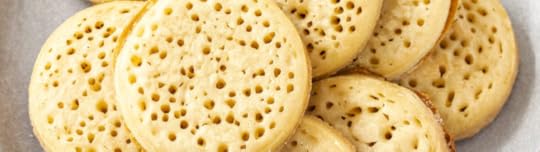
Maybe being lost is just the start of being found.So if you’re somewhere in the middle too, between griefs, between plans, between what was and what might be, consider this your gentle reminder: it’s okay to exhale before you have the next answer. It’s okay to be uncertain and hopeful at the same time. It’s okay to sit with the pause and see what it becomes. You don't have to hold your breath until it's all figured out. You’re allowed to toast crumpets at midday and call it progress. You’re allowed to be beautifully, bravely unfinished.
It's okay to breathe.
July 25, 2025
The Age of Verification
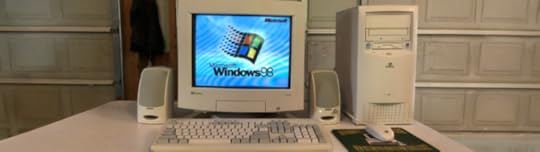
Before TikTok. Before facial recognition. Before every website needed your phone number, your postcode, and a blood sample just to show you a list of biscuits, there was a quieter internet.
I met the internet on a DOS machine at a friend’s house. Usenet felt like a secret attic: text-based, unpretty, and absolutely electric. Then my school got a single modem for a Windows 3.11 computer and I used it to build my first personal website on FortuneCities, a Geocities rival that never got the love it deserved.
Then we got the internet at home and I discovered IRC. ICQ. LiveJournal. I started telling the internet who I was — or at least who I might be.
For a closeted queer kid in a small town, that was like discovering fire in the mountains. Life went from 2D to 3D almost overnight, and I went from thinking there was something wrong with me to knowing that I belonged. That I wasn't alone. That I was okay.
But of course, it was also messy. Taking off the rose-tinted glasses, the internet of the mid-90s was slow, filled with mostly static pages and forums with ten layers of nested replies. I could be weird and anonymous and loud and experimental and terrified — but above all, I was naive. The safety I felt in these nascent online spaces was entirely fictional. That's something that tech companies and governments have spent years trying to "fix".
But all they've done is broken more.Whatever nostalgia tells us, the internet of the 90s and early 00s wasn’t a utopia. It had trolls and scams and spaces that were anything but safe. But the answer was community. Context. Moderation. Teaching kids how to navigate danger. This seemed like the obvious path forward as the internet grew to be a bigger part of all of our lives.
Instead, we've ended up treating every user like a criminal in waiting. Rather than protecting each other by showing up, we've normalised a locked down experience that expects us to give up our privacy and our data in the process.
And so I’m in mourning. Not for the rose-tinted nostalgia internet of the late 1990s, but for all the possibilities that we haven’t managed to realise. At least not yet. Because here we are in 2025, and the UK’s new age verification law has arrived. It sounds innocuous, even responsible: keep kids off harmful sites, check everyone’s age. Simple, right?
Except it’s not simple. It’s sweeping. It’s vague. It’s invasive. It’s the kind of legislation that treats privacy like an inconvenience and trust like a flaw in the system.
Under the new rules, websites may be required to check your ID just to prove you’re old enough to access certain content, or any content at all. Not just porn. Not just gambling. Everything. It’s a system that outs vulnerable people, opens the door to mass surveillance, and hands the keys to the digital kingdom over to whoever can afford to manage the checkpoints.
All in the name of “protection.”But protection without freedom isn’t safety. It’s just control in a nicer outfit.
I miss the belief that a digital community could come together and figure all this out as a collective. I miss the days when we hadn’t given up yet. It was full of promise, even when it was full of problems. And I still believe we can reclaim some of that. Not by turning back the clock. But by fighting for something forward-looking and humane.
If you’re in the UK, I strongly encourage you to write to your local MP. Read up on the new law age verification law. Support organisations like the Open Rights Group and Privacy International. Ask awkward questions. Make noise. And, crucially, question any site that asks you to give up your privacy in the name of protection.
We should not have to give up anything in order to be protected.If you’re building things, whether websites, games, platforms, or art, please build them for humans. Resist control, make weird corners and leave space for pseudonyms. Let people breathe.
We don’t need a perfect web. We just need one worth logging into. One that treats people like people. One that gives space to self-discovery and information exchange over profits or pandering.
At the end of the day, we're all in this together. Let's build a future that's safe, warm, and above all, human.
July 15, 2025
I Drove All Night
There was a time when you could slip off the radar and nobody would even know. They wouldn't panic, or think you’d vanished off the face of the earth, and they'd listen with vague interest when you’d come back with stories, sunburn, or new questions you’d found only because nobody could ping you with theirs. I've been thinking about that a lot lately.
About the silence we’ve lost.Years ago, I was stuck in a rut. The kind that feels like you’re moving physically, but your mind is just pacing the same old room. So one morning, I woke up and said "fuck it" aloud to absolutely nobody. I shut my phone off, threw some clothes into a bag, and left my laptop and chargers on the kitchen table. I grabbed my keys, sat in my car, and turned on the engine.
I sat there for a few minutes, wondering if I should make a plan. I almost turned my phone back on three times. But after a while I sighed, once again exclaimed "fuck it" to absolutely nobody, put my phone in the glove box, and started heading north.
The landscape changed every hour. Hedgerows gave way to motorways, motorways to moors, moors to mountains, A roads to single tracks barely wide enough for two cars to pass. I didn’t turn the phone back on. I didn’t need to. I'd stopped thinking about it at all somewhere north of Birmingham.
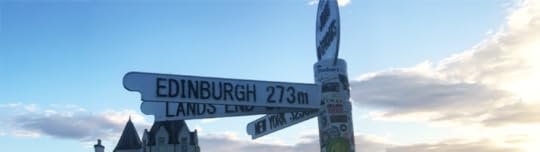
After more than a day of driving, I finally ran out of island. I had reached John O’Groats, the last strip of the mainland, and realising I was in need of sleep and a shower I booked a cabin on a whim. No “Let me just check the reviews.” No “Where’s the best local restaurant?” Just me, a stranger at a reception desk, a mixture of accident and intent.
I spent days there. I watched the sun rise and set, swam in the freezing cold sea, and talked to strangers like they were old friends. I scribbled in my notebook, not for an audience but for the sheer pleasure of seeing thoughts I didn’t know I’d had land on paper. I listened to the wind more than the radio. I ate fresh food cooked by someone I’ll never meet again. I remember how it felt in my bones. Like all the noise I’d mistaken for connection had stepped out for a bit, leaving room for real questions to echo.
When I finally switched my phone back on, my mother was livid. No emergencies, no news, just a gap she didn’t know how to hold. A gap that, even a few years previously, we wouldn't have given a second thought to.
We’ve forgotten how to mind the gap.These days, silence feels unnatural. If you’re not instantly reachable, it must mean something’s wrong. If you don’t reply within five minutes, are you angry? Have you ghosted someone? Are you unwell? We seem to measure love, friendship, reliability in read receipts and typing bubbles, like some digital proof that we’re still here, connected, and online.
But before the grid, there was the gap. There was time. You’d wait to tell someone about your day until you saw them. You’d miss people more because you couldn’t just drip-feed affection through a handful of blue ticks. You’d save up stories. Sometimes the waiting made the stories even better.
I miss that. I miss not knowing things immediately. I miss being unreachable, not as a rebellious act but as a completely normal one. I miss how curiosity used to unfold in layers, not in tabs opened all at once.
When I look back at my creative process before smartphones, I remember how much of it was spent simply staring out of a window. Walking without a podcast or an audiobook to justify the miles. Sitting with a thought long enough for it to rot into something better. Some of the writing I’m proudest of came from those gaps. They didn’t feel productive at the time. Heck, sometimes they felt pointless, indulgent, even boring. But that’s where the real work hid.
Now, when I try to recreate that quiet, it feels like swimming upstream. The whole world is engineered to interrupt you. A ping, a nudge, an alert telling you you haven’t closed your rings or answered that email. Sometimes my best friend messages me to ask how my day has been when he’s literally on the way to see me.
We can’t even hold a thought for fifteen minutes anymore.So what is digital quiet now? I wish I could say I switch off for a week every month, but the truth is that, for me, it's far more mundane. It’s small rituals. I uninstall apps that don’t earn their keep. I leave my phone on silent in another room when I write. I try to walk without my headphones at least once a week, something I hated at first, but have come to really love. I stare out of train windows and refuse to feel bad for not using that time “productively.”
Most of all, I try to protect that hush inside my head. The one that lets me daydream badly, sloppily. The one that lets me write half a line and cross it out and come back to it three days later. It’s not a system. There’s no "life hack" for it. It’s just a decision to be unreachable.
Some days it works. Some days it doesn’t. But on the days it does, I write something true, something I didn’t know I needed until the silence let it through.
So if you’re reading this and any of it resonates, maybe take this as your gentle permission slip. You’re allowed to turn your devices off. You’re allowed to drift out of range. You’re allowed to let the world wait for you, just for a while.
You might not always be able to drive until you run out of island. But maybe go for a walk until you get bored and then, for a few more minutes, keep walking anyway.
Sit on a bench with your notebook and nobody else’s voice in your ear, and see what ends up on the page. I have a feeling the world will fill that silence for you if you let it.
July 8, 2025
AI? We Need a Human Rebellion
I want to be clear: I don’t hate AI any more than I hate a hammer.
But throw the hammer at my face? Yeah, I might have an issue with that. It's the same with AI. What I hate is the obsession with it. The smug rush to stuff “AI” into every creative corner like we’re duct-taping the future together with predictive text.
Because let’s be honest: all these "AI" tools are not actually artificial intelligence. They're glorified autocorrect. A souped-up probability machine that doesn’t know anything, and can’t feel anything (even if you project your own emotion onto it).
It's a prediction model guessing what you want to hear, trained on the words of humans who do know things, who do feel things.
And yet the world keeps nodding along, acting like the ghost in the machine is the next Shakespeare. What does it say about us as humans - about how little we value our own weird, messy, inconvenient brilliance - that so many of us would rather hand over our best work to a few lines of code running on a server?
It started out with noble promises.LLMs and AI tools are here to help make our lives easier! To augment our existence! “You’ll have more time to dream! More time to make real art!” they said.
And what did we get? CEOs laying off editors, writers, designers. Not because AI is better, but because AI is cheaper. “Good enough” is the new genius. Good enough, fast enough, no sick pay, no pensions, no union, no inconveniently human meltdown over originality or ethics.
Meanwhile, the LLMs are scraping our books, our poems, our microfictions and stray Tumblr posts, hoovering up our fingerprints, flattening them into a generic experience of vaguely average facsimile.
Of course, there's no such thing as a completely original thought for humans either - but there’s a huge difference between being inspired by a story, entwining it with all of your own context and life experience, and simply copying it pixel for pixel. Humans understand that. Machines don’t. They just guess.
The best tools don’t do the work for you. They make you work better. They push you back into the drafts with sharper questions, not cookie-cutter scripts.
It’s like Hollywood reboot culture, but worse.There's another completely new rebooted Superman movie coming out this month. How many times can you blow up Metropolis before it feels like a tax write-off?
Don't we deserve more than just the same bland, safe, recycled noise? Imagine the budget for this new Superman film funding ten, twenty, thirty movies from new voices. They might be messy, unpolished, and their box office takings are impossible to predict - but fuck, wouldn't it be nice to have some original storytelling in mainstream cinema again?
Generative AI is the same. It gives you an okay enough draft, a franchise reboot of ideas scraped from someone braver than you. And we eat it up because it’s familiar. Nostalgia sells, but it's cheap popcorn. There's not a meal's worth of nourishment there, no interesting flavour combinations. No tasting as you go along.
(And yes, as a human I get to mix metaphors until the cows come to roost.)
I want friction. I want plot holes. I want the lines that don’t work until you sleep on them for three weeks and rewrite them on a napkin. I want my poems to be bad before they’re better. I want my stories to have my fingerprints all over them, not just the echo of a thousand other people’s.
I want more "bad" art.The promise was that these tools would make us more human. So far, they’ve stripped humanity from art, and stripped employment from artists.
We need a rebellion. Not a technophobic rebellion, but a human one. A rebellion for the stutters, the typos, the bits that don’t add up until they do. A rebellion for the jokes no algorithm would dare attempt, the weird genre-bending plots that flop before they fly. Let's agree that it's okay for things to be a bit more rough around the edges. A bit more punk and a bit less polished. Let's get back to embracing the unknown.
More sweat, fewer shortcuts. More spice, less blandness. More story, less franchise. More surprises. More sentences you’ll never predict.
Who’s with me?
July 4, 2025
Books That Built Me: Toast
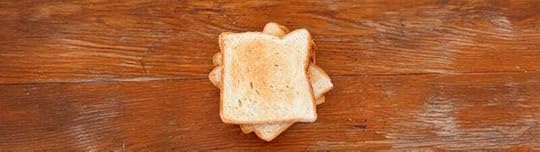
I stole Toast from my mum’s bookshelf the summer I turned twenty. We didn’t tend to read the same things. In fact, I don’t think I’d ever taken a book recommendation from her before. But something about the spine and simple title caught me. Maybe it was the fact that I was deep in my pasta-and-beans university cooking era, or maybe it was just that I’d heard Nigel Slater’s name and wanted to see what all the fuss was about.
I was expecting the story of yet-another-nepo-baby-chef. What I found was the total opposite. This wasn’t some glossy food memoir from a life of privilidge. It was a delicate, sharp, funny, and deeply personal story of a slightly odd, slightly lonely queer kid who cooked his way through grief, confusion, longing, and adolescence. I recognised more of myself in those pages than I expected to. The crushes not quite spoken aloud. The way food became language, comfort, and sometimes armour. The subtle seasoning of memory through meals.
Slater’s structure was genius. Each chapter orbiting a specific food, each bite soaked in time and place and emotion. It was the first time I’d seen food used not just as flavour, but as plot, framing. As a quiet act of resistance.
I’d written a few autobiographical pieces before this, mostly to untangle my own feelings, but Toast gave me a new way to think about personal narrative. How you can theme a life through something tangible, simple, and relatable. How sense memory can say more than exposition ever could.
I’ve re-read it a few times over the years. Once when the 2010 film came out (it’s good, but the book is better), and again during moments where I’ve found myself reflecting on family, pressure, and how we unpick the stories we’ve inherited. Toast reminds me that survival doesn’t have to be loud or dramatic. Sometimes it’s just finding a way to make something warm, and share it.
There are lines and moments that have lingered. Let’s be honest, if you’ve read it, you’ll know exactly why I can't look at a Walnut Whip without a giggle and a sigh. But what’s stayed with me more than any individual scene is the quiet determination that runs through it. A life lived gently, but with defiance. A refusal to be anything other than oneself, no matter how strange or soft that self might be.
Toast was both comforting and transitional. It met me at a moment where I was still baking and had no idea what kind of cake I'd end up being. It offered comfort, humour, and a kind of soft permission to keep figuring it all out in my own time.
Toast was one of the books that built me. Which one shall we devour next?
July 1, 2025
Hello From 'In-Between'
I didn’t plan on being nomadic this summer. It wasn’t some Eat, Pray, Love moment of realisation. I wasn’t chasing a sunset or a dream. I was evicted.
Well — not evicted-evicted, more that my landlord wants his house back. After years of renting, he’s decided it’s his turn to live in it again. Fair enough. So now, I’m in that strange in-between: sale agreed on a place of my own, but nowhere to put my furniture in the meantime. Which means everything — my desk, my guitars, my cookbooks, my annoyingly ergonomic keyboard — is going into storage.
And yet, as much as I’ll miss my stuff, there’s something unexpectedly refreshing about the idea of not having it.
I’ll have a base of sorts. Somewhere post can land and the cat will be safe. But for the next few months, I’ll mostly be on the move. Visiting friends, haunting cafes, recharging in corners of the country I haven’t seen in years. A little bit of wandering, a little bit of wondering.
It’s a homecoming too, of sorts. I’ll be spending some of that time back where I grew up. There’s something oddly poetic about returning there now, in this temporary, transient way. It feels like a chance to revisit old ground, but not to get stuck in it.
And of course, I’ll be writing. I suspect a lot of it will be about this in-between-ness. This feeling of being untethered, but not lost. There’ll be stories from unfamiliar tables, thoughts scribbled in borrowed notebooks. Poetry, probably. That tends to bubble up when everything else is packed away.
It’s funny. When I went on my gap year, years ago before I went to university, I packed light without really noticing. I didn’t have much. A few (too many) years later, putting my life into boxes feels heavier. But also a little freeing. Maybe it’s good to let go of your stuff now and then. To remember that you’re still you without the matching saucepan set.
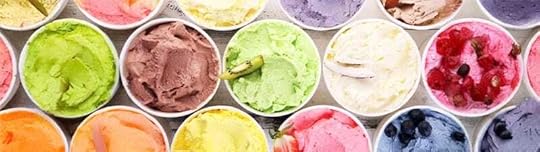
This isn’t just a logistical blip. It’s a kind of pause. A deep breath. A sorbet between courses. I don’t know exactly what this chapter of my life has in store for me, but I know I’ll write my way into it, and out the other side!
This is just the sorbet course. Grab a spoon!