
Tricia Goyer's Blog
November 30, 2025
How the Bible Rewires Your Heart
 Tricia GoyerThe Scripture, Science, and Simple Habits That Changed My Life
I can still picture that 600-square-foot apartment in Anderson, California. The living room was so small that you could step across it in five steps. We had a pink couch, a small dining room table, and a high chair. And it’s on that couch, in that space, that I studied God’s Word for the first time.
Truthfully, I had no idea that starting the habit of reading my Bible would change my life. I had no idea that I was rewiring my brain every time I read God’s Word. I didn’t realize I was developing a habit I’d come to cherish. I was 21, married, and a mom of two. All I knew back then was that I was struggling, and I hoped that God would meet me there—help me.
I didn’t start reading the Bible because I wanted to become a neuroscience experiment. I opened it because I was a young mom desperately in need of peace. Back then, my days were simple, sort of. We only had one car, so I was home most of the day. I had a toddler and a baby. I also babysat my friend’s kids, who were the same ages, during the week. The preschoolers played and squabbled. The babies cried and needed feeding and changing. The dishes piled high, and I had started taking Bible classes at my church.
I remember thinking, If I’m going to make it through this day, I need something stronger than my own strength. So one morning, I woke up before my little ones, and I cracked open my Bible, not out of discipline, but out of need. What I didn’t know then—and what I can clearly see now—is that every time I opened Scripture, God was not only calming my heart. He was also reshaping my mind.
How the Bible Rewires Your BrainScience has a name for the reshaping of our minds: neuroplasticity. This is a fancy word for your brain’s God-given ability to rewire and renew itself. Of course, long before scientists studied brain scans, God explained it through His Word:
“Let God transform you into a new person by changing the way you think.” —Romans 12:2, NLTI used to think “changing the way you think” was purely spiritual. Now I understand that it’s much more. Neuroplasticity is both spiritual and biological. Scripture shapes the soul and rewires the brain. When we sit down with the Bible, more is happening than we think!
The Bible + Your Brain: What Research Is RevealingOne of the things I love about God’s Word it that its truth is confirmed through both Scripture and science. Modern brain research has taught us a few things.
First, prayer and meditation strengthen the prefrontal cortex—the part of your brain responsible for decision-making, calm thinking, and focus. According to Gayle D. Beebe, Ph.D., President of Westmont College, “12 minutes of personal reflection and prayer each day makes a profound impact on our brain.” (Source: How Faith and Prayer Benefit the Brain, Westmont College)
These practices also calm the amygdala. This is your brain’s built-in alarm system that fires during fear, stress, and anxiety. This research shows that regular spiritual meditation increases neuroplasticity, strengthening your brain’s ability to regulate emotions and build resilience. And who doesn’t need more resilience?
What does this mean? When we rehearse God’s truth, peace (not panic) becomes our brain’s practiced response.
Christian neuroscientist Dr. Caroline Leaf has spent decades studying this connection. She says the brain changes in response to what we think about most. Her research shows that just 12 minutes of focused prayer a day for eight weeks can produce measurable changes in the brain tied to emotional health. This means each time you sit with your Bible, you are doing more than “reading.” You may start frazzled, tired, and overwhelmed, but when we allow God’s Word to fill your thoughts, you’re partnering with God in a slow and holy transformation. How amazing is that?
Scripture Calls It “Renewing Your Mind”I love how God’s Word speaks in simple, human terms what science now explains with diagrams and journals. Researchers describe it as “rewiring neural pathways,” but Paul says “renew your mind.”
Romans 12:2 says, “Do not conform to the pattern of this world, but be transformed by the renewing of your mind. Then you will be able to test and approve what God’s will is—his good, pleasing and perfect will.”
Where studies describe “strengthened connectivity,” Psalm 1 paints a picture our hearts can feel:
“They are like trees planted along the riverbank, bearing fruit each season.Their leaves never wither, and they prosper in all they do.”
—Psalm 1:3, NLT
In other words, the person who meditates on God’s Word day and night becomes rooted, steady, nourished, and resilient—just like those neural connections growing stronger with every moment we spend in Scripture.
And where neuroscientists talk about forming new thought patterns, 2 Corinthians 10:5 says: “We capture their rebellious thoughts and teach them to obey Christ.”
This means that God has given us the ability—through His Spirit—to shift harmful thoughts and build healthy ones. What one group of people calls neuroscience, we will discover as personal transformation through Jesus.
My Story: How Scripture Quietly Rewired My Inner WorldI wish I could tell you that when I first committed to daily Bible reading, everything changed overnight. It didn’t. Instead, day after day, something subtle and holy began to happen.
When a challenging situation came up, and I wanted to quit, God’s Word reminded me I could keep going. When I made a bad choice, God’s Word reminded me to repent. More than that, God’s promises of a “hope and a future” steadied my emotions. And that was just the beginning. No matter what my daily challenges were, God’s Word provided the answers, and I started to see the problems differently.
Looking back, I realize that God was slowly building new pathways of peace where old patterns of panic used to run. My circumstances didn’t change right away. (We lived in various small apartments over the next three or four years.) Still, my internal responses looked different.
That’s the quiet miracle of Scripture: God doesn’t just change our situations. He changes us.
 Three Ways Daily Bible Reading Rewires Your Heart and Mind1. It Trains Your Brain Toward Peace Instead of Panic
Studies show that prayer activates the same part of your brain responsible for calm, focus, and problem-solving, while reducing activity in the fear center. No wonder Paul tells us:
“Don’t worry about anything; instead, pray about everything.”—Philippians 4:6–7, NLT
He wasn’t minimizing our anxiety. Paul was showing us the way out. Every time you shift your focus from fear to prayer, your brain is learning a new rhythm:
Worry → Worship
Fear → Faith
Stress → Scripture
That’s neuroplasticity… powered by the Holy Spirit.
2. It Strengthens Healthy Thought PathwaysYour brain loves habits. The more you think a thought, the easier it is to think it again. Science confirms that regular meditation strengthens the areas of the brain tied to emotional stability and resilience.
How do you build these pathways?
Memorize ScriptureSpeak God’s truth out loudWrite verses in a journalReplay Scripture verse throughout the dayEach one of these carves new “spiritual trails” in your mind. God’s Word doesn’t just float through your thoughts. The Bible builds new paths.
3. It Shapes Your Identity and StoryNeuroscientists tell us that our brains form a “sense of self”—a story we tell ourselves about who we are. Scripture gives us a new story:
You are chosen (Ephesians 1).You are God’s masterpiece (Ephesians 2:10).You are a new creation (2 Corinthians 5:17).As you meditate on these truths, your brain begins shifting from old labels: Not enough, too late, and too broken. To God’s truths: Loved, redeemed, strengthened, and deen. The Bible doesn’t just speak about you. If you let it, God’s Word speaks into you.
Simple Habits That Make a Big DifferenceWhen I started reading God’s Word, I read a chapter at a time. And that’s okay! You don’t need to read for an hour. Dr. Leaf’s research shows that small, consistent daily practices create actual physical change in the brain.

Here’s what I do, and what I encourage you to try:
1. Pick a Place and a Time.Same chair. Same mug. Same moment of the day. Your brain learns the cue: It’s time to meet with God.
2. Keep It SimpleI love tools like the One Year Bible for Women because they remove the guesswork. You just open and read.
3. Linger Over One VerseMeditation is simply “staying with God’s Word long enough for it to stay with you.” If there is one verse that sticks out, stay with it. There’s a reason.
4. Pray HonestlyDon’t feel you have to pray “right.” Instead, pray real. Tell God the truth about your heart, and let Him reshape it. God knows everything anyway. He just wants to be invited into the situation.
A Final Encouragement from My Heart to YoursIf you feel stuck in anxious thought patterns, overwhelmed by life, or frustrated by your emotions, I want you to know this: You are not stuck. Your mind is not fixed. Your story is not over.
God designed your brain with the capacity to heal, grow, and become new—and He gave you His Word as the daily tool to do it.
I’ve lived this. I’ve watched God use Scripture to soften my fears, steady my emotions, and rewrite the story I believed about myself. And He can do it for you. Open your Bible today. It’s not a “should” thing. It’s a “get to” thing. God stands ready to renew, restore, and rewire your heart and mind today. And tomorrow? Open it again. That’s how transformation begins: one small, surrendered moment at a time.
P.S. — A Simple Way to Begin Your Own TransformationP.S. If you’re ready to start (or restart) a daily Bible habit but feel overwhelmed about where to begin, I want to share the tool that has helped me stay grounded year after year. The One Year Bible for Women and The One Year Bible for Men make Scripture simple, accessible, and genuinely doable, especially on the busy days when you need the Bible the most.
Each daily reading includes:
A portion from the Old TestamentA portion from the New TestamentA PsalmA ProverbPlus a short, heartfelt devotional written specifically with you in mindYou don’t have to plan anything or guess where to read next—you just open to today’s date and start. It’s the same rhythm that helped shape my spiritual life, renew my mind, and carry me through some of the hardest seasons of motherhood, marriage, and ministry.
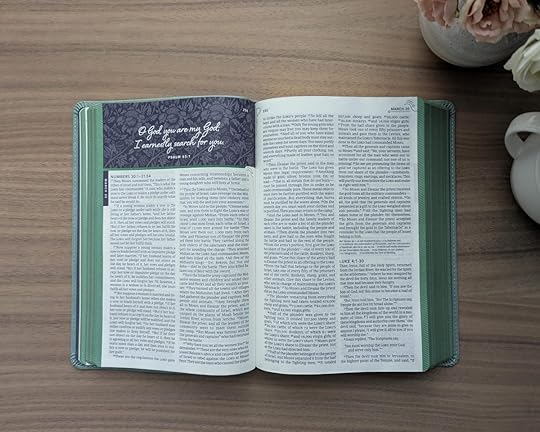
If you want a Bible that meets you where you are but doesn’t leave you where it found you, this is it.
Whether you’re beginning your Bible-reading journey or returning to it with new hope, these are beautiful tools to help you stay rooted—day after day, verse after verse.
And who knows? That simple habit you start today may be the very thing God uses to rewire your brain, strengthen your faith, and shape your story for years to come.
Want more insight? Join us on the Daily Bible podcast!  LISTEN &
  WATCH
WATCH
 Introducing the Daily Bible Podcast
 Audio Player!

Immerse yourself in God’s Word like never before with the MegaVoice Daily Bible Podcast Audio Player—a solar-powered, portable way to listen to the entire NIV Bible and the Daily Bible Podcast with Tricia Goyer and Michelle Hill!
 Unplug & Listen – Step away from digital distractions and enjoy an uninterrupted discipleship experience. Simple & Accessible – With easy controls, it’s perfect for all ages, including kids, seniors, and the visually impaired. Listen Anywhere, Anytime – Solar-powered with up to 14 hours of battery life, plus a USB charging option for cloudy days.
 Whether you’re at home, on a mission trip, or enjoying quiet time in nature, this MegaVoice Audio Bible Player helps you stay connected to God’s Word—without a screen!
Get yours today and experience the Bible in a whole new way!
2 Corinthians 11:1-13:13, Acts 20:7-12
 Overcoming Our Thorns
Paul’s Suffering and Strength in Weakness (2 Corinthians 11–12)
Overcoming Our Thorns
Paul’s Suffering and Strength in Weakness (2 Corinthians 11–12)Paul’s letters to the Corinthians remind us of his tireless devotion to the Gospel. Despite false apostles leading the Corinthians astray, Paul defends his ministry not with pride but through humility.
2 Corinthians 11:30:“If I must boast, I will boast of the things that show my weakness.”
Paul highlights his hardships: shipwrecks, beatings, hunger, and dangers from all sides. Yet, in these trials, he found Christ’s strength.
In 2 Corinthians 12, Paul reveals a personal struggle—a “thorn in the flesh” given to keep him humble. Despite pleading with God to remove it, Paul receives this answer:
“My grace is sufficient for you, for my power is made perfect in weakness.” (12:9)This profound truth encourages us to embrace our weaknesses as opportunities for God’s strength to shine through. Paul even declares:
“For when I am weak, then I am strong.”Final Exhortations and a Miraculous Resurrection (2 Corinthians 13, Acts 20:7–12)Paul’s final words to the Corinthians include an urgent call to self-examination:
2 Corinthians 13:5:“Examine yourselves to see whether you are in the faith; test yourselves.”
Paul desires maturity and unity among the believers, encouraging them to stand firm in truth, live in peace, and grow in harmony. He concludes with this blessing:
“May the grace of the Lord Jesus Christ, and the love of God, and the fellowship of the Holy Spirit be with you all.”In Acts 20, Paul preaches late into the night as he prepares to depart. During this extended session, a young man named Eutychus falls asleep, tumbles from a third-story window, and dies. But Paul, through God’s power, brings him back to life. Amazingly, Paul continues preaching until dawn.
This episode reminds us of the urgency and dedication with which Paul shared the Gospel, even amidst miraculous events.
Word of the Day: ThornLessons from ThornsDefinition: Something that causes distress, irritation, or challenge.
In 2 Corinthians 12, Paul’s “thorn” teaches us the profound impact of trials in our lives. Thorns can humble us, refine us, and draw us closer to God.
Thorns serve two key purposes:
Hindering Pride: Paul’s thorn kept him grounded despite extraordinary spiritual experiences. It reminded him that his strength was in Christ alone.Deepening Dependence: Thorns can force us to rely on God’s grace. In our weaknesses, we experience His strength.Paul’s response to his thorn is a model for us:
He did not let it hinder his faith.He viewed it as discipline that kept him on the path of righteousness.He found joy in knowing God’s grace was sufficient.2 Corinthians 12:10:“For Christ’s sake, I delight in weaknesses, in insults, in hardships, in persecutions, in difficulties. For when I am weak, then I am strong.”Embracing Our Weaknesses
Be a Comforter: Just as Paul forgave and encouraged the repentant, extend grace and comfort to others.
Acknowledge Your Thorns: Reflect on the struggles that keep you humble and dependent on God.
Rely on Grace: Trust in God’s promise that His grace is sufficient for every trial.
Find Strength in Weakness: Recognize that your limitations are opportunities for God’s power to work through you.
December 2Acts 20:13-21:36
 Entrusting All Things to God
Paul’s Journey and Farewell (Acts 20:13–38)
Entrusting All Things to God
Paul’s Journey and Farewell (Acts 20:13–38)Paul’s journey to Jerusalem was marked by urgency and purpose. His stop in Miletus to address the Ephesian elders was filled with emotion and truth.
Paul reminded them of his ministry, emphasizing humility, trials, and the need to finish the task God had given him:
Acts 20:24:“However, I consider my life worth nothing to me; my only aim is to finish the race and complete the task the Lord Jesus has given me—the task of testifying to the good news of God’s grace.”
He also warned them of the challenges ahead, urging them to remain vigilant:
Acts 20:28:“Keep watch over yourselves and all the flock of which the Holy Spirit has made you overseers.”
Paul entrusted them to God, knowing that only God and His Word of grace could sustain them. As they prayed and said tearful goodbyes, it was clear that Paul’s ministry left a deep impact on their hearts.
Paul’s Resolve and Arrest (Acts 21:1–36)Paul pressed on to Jerusalem despite repeated warnings of the suffering awaiting him. Prophecies from fellow believers confirmed the trials he would face, yet Paul’s resolve was unshaken.
Acts 21:13:“Why are you weeping and breaking my heart? I am ready not only to be bound but also to die in Jerusalem for the name of the Lord Jesus.”
Once in Jerusalem, rumors and lies about Paul’s teachings stirred up hostility. Accusations of defiling the temple by bringing Gentiles inside led to a riot, with a crowd shouting, “Kill him!”
In the chaos, Paul was arrested by Roman soldiers for his own protection, reminiscent of Jesus’ arrest in Jerusalem. Paul’s unwavering commitment to his mission—even in the face of such opposition—is a powerful reminder of his faith and trust in God’s plan.
Word of the Day: EntrustEntrusting to GodDefinition: To give someone a thing or duty for which they are responsible, putting it in their care for safekeeping.
Paul’s words to the Ephesian elders show his deep trust in God’s care for His people:
Acts 20:32:
This act of entrusting acknowledges that God is the ultimate protector, provider, and guide. It’s a call to release control and trust Him with the people and situations we hold dear.
What or whom have you entrusted to God?
A child leaving for college or a mission field?A prodigal loved one?A family member in the military?When we entrust someone to God, we recognize His greater power to sustain, guide, and transform them.
Pray this over those you love:
“Heavenly Father, I entrust _______ to You and the message of Your grace. Build them up and guide them to Your inheritance among Your people.”
Paul’s faithfulness to God’s mission reminds us of the generational impact of entrusting others to God. Tricia shares a beautiful testimony of her husband’s love for God’s Word, passed down from his mother’s faithfulness in reading Scripture to him.
Likewise, the prayers of her grandmother and mother-in-law for her salvation bore fruit in God’s timing.
Whether through prayer, teaching, or simply pointing someone to God, the seeds we plant today may bloom into a legacy of faith for generations.
December 3Acts 21:37 – 23:35
 Knowledge Guided by the Holy Spirit
Paul’s Defense Before the Jewish Crowd (Acts 21:37–40, Acts 22)
Knowledge Guided by the Holy Spirit
Paul’s Defense Before the Jewish Crowd (Acts 21:37–40, Acts 22)Paul finds himself in the center of a riot in Jerusalem, accused of defiling the temple by bringing Gentiles into it. Before being taken into custody, Paul requests permission from the Roman commander to address the angry crowd. Speaking in Aramaic, Paul recounts his Jewish upbringing, his zealous persecution of Christians, and his transformative encounter with Jesus on the road to Damascus.
The crowd listens intently—until Paul mentions his mission to the Gentiles. At this, their fury reignites, demanding his execution. The Roman commander, confused by the uproar, orders Paul into the barracks and prepares to flog him for answers. However, Paul reveals his Roman citizenship, halting the interrogation. The next day, Paul is brought before the Jewish high council to clarify the accusations against him.
Paul Before the High Council (Acts 23)Standing before the Sanhedrin, Paul tactfully divides the council by declaring his belief in the resurrection—a point of contention between the Pharisees and Sadducees. This sparks a heated debate, turning their focus away from Paul and onto each other. The uproar leads to another riot, and Paul spends another night in jail.
That night, God encourages Paul with a clear promise:
Acts 23:11:"Be encouraged, Paul. Just as you have been a witness to me here in Jerusalem, you must preach the Good News in Rome as well."
Meanwhile, a plot arises among some Jews to kill Paul. His nephew overhears the plan and alerts the Roman commander, who arranges for Paul to be transferred to Governor Felix in Caesarea under heavy guard. Escorted by 470 Roman soldiers, Paul is safely taken out of Jerusalem, demonstrating God’s faithfulness in protecting His servant.
Word of the Day: KnowledgePaul’s Knowledge and God’s GuidanceDefinition: Facts, information, and skills acquired through experience or education; the theoretical or practical understanding of a subject.
Paul’s reliance on the Holy Spirit enhanced his natural knowledge:
Knowledge of the law: Paul used his Roman citizenship to avoid illegal flogging.Defense strategies: He eloquently addressed both the commander and the high council, skillfully navigating tense situations.Spiritual insight: In the jail cell, Paul drew strength from God’s presence and promise.Others also demonstrated knowledge under God’s guidance:
Paul’s nephew: Alerting the Roman commander of the assassination plot.The Roman commander: Protecting Paul with extraordinary measures, ensuring his safe journey to Caesarea.True knowledge, as Paul demonstrated, goes beyond facts and figures. It is the ability to apply understanding and discernment for God’s glory, defending the faith and advancing His kingdom.
Lessons from Paul’s KnowledgeSeek deeper knowledge: Go beyond surface-level understanding to develop a robust foundation in God’s Word and truth.Rely on the Holy Spirit: Let the Spirit guide your thoughts, actions, and words, especially in challenging situations.Use knowledge for God’s purposes: Shine as a light in a dark world, using what you’ve learned to uplift others and point them to Christ.Paul’s story is a reminder that knowledge, when entrusted to God, becomes a powerful tool for transformation, protection, and fulfilling His plans.
December 4Acts 24:1-26:32
 Standing Firm in the Face of Accusations
Paul’s Defense Before Felix and Festus (Acts 24; Acts 25:1–22)
Standing Firm in the Face of Accusations
Paul’s Defense Before Felix and Festus (Acts 24; Acts 25:1–22)Paul faces accusations brought by Jewish leaders, spearheaded by the skilled lawyer Tertullus. The charges are serious: Paul is accused of being a troublemaker and a leader of the Nazarene sect. Yet, Paul defends himself with eloquence and truth.
He declares his purpose in Jerusalem was to worship God and bring alms, not to incite rebellion. Paul admits his affiliation with “The Way” but asserts his belief in the resurrection of the dead. Felix, intrigued but unwilling to act, postpones a verdict. Two years pass before Felix is succeeded by Festus, and the Jewish leaders again seek to have Paul tried in Jerusalem.
Festus, wary of their schemes, insists on a trial in Caesarea. When King Agrippa and Bernice visit Festus, they express interest in hearing Paul’s testimony. This sets the stage for one of Paul’s most powerful defenses of the gospel.
Paul’s Testimony Before King Agrippa (Acts 25:23–26:32)Paul recounts his life, from persecutor of Christians to preacher of the gospel. He shares his Damascus Road encounter with Jesus and his mission to proclaim repentance and forgiveness.
Festus interrupts, calling Paul insane due to his intense study and testimony. Undeterred, Paul turns to King Agrippa, challenging him to believe the prophets. Agrippa, caught off guard, evades the question, saying he is not ready to be persuaded.
Charles Spurgeon insightfully notes:
Festus feared the truth, dismissing Paul as “crazy.”Agrippa resisted conviction, unwilling to sacrifice his sinful relationships and reputation.Paul, despite being in chains, stood boldly as an ambassador of Christ.The trial concludes with Agrippa and Festus agreeing on Paul’s innocence. However, because Paul had appealed to Caesar, he must continue his journey to Rome.
Word of the Day: AccusationsPaul’s Example in the Face of AccusationsDefinition: A charge or claim that someone has done something illegal or wrong.
Paul’s unwavering integrity shines as he faces false accusations. His patience during years of legal limbo and his boldness in proclaiming the gospel serve as a testament to his faith.
When accusations come your way:
Stand firm in your integrity: Like Paul, remain steadfast in your character.Trust the process: Justice may take time, but God works all things for good.Use the opportunity: Shine a light on God’s truth and grace, even amidst trials.Truth Will PrevailAccusations cannot extinguish truth. In time, God’s truth will shine through, dispelling the shadows of falsehood. When facing challenges, lean on these Scriptures:
Psalm 25:5: “Guide me in your truth and teach me, for you are God my Savior, and my hope is in you all day long.”Proverbs 12:19: “Truthful lips endure forever, but a lying tongue lasts only a moment.”Isaiah 61:3: “They will be called oaks of righteousness, a planting of the Lord for the display of his splendor.”Trust in God’s ultimate justice and His ability to turn ashes into beauty.
Lessons from Paul’s TrialsPaul’s journey teaches us how to navigate adversity with faith:
Embrace boldness: Share your testimony even when it’s unpopular or met with opposition.Rely on God’s timing: He is working behind the scenes to fulfill His promises.Remain humble: True strength is found in depending on God’s grace.Paul’s story inspires us to live as ambassadors of Christ, trusting in His truth and grace no matter the circumstances.
December 5Acts 27:1-44
 Lessons in the Storm
The Voyage to Rome (Acts 27:1–26)
Lessons in the Storm
The Voyage to Rome (Acts 27:1–26)Paul embarks on his journey to Rome as a prisoner, accompanied by Luke and others. Sailing in the fall—a risky time due to seasonal storms—the crew encounters rough seas, making slow progress. Paul, guided by God, warns of the dangers ahead, but his advice is ignored.
As they continue, a fierce storm, like a typhoon, batters the ship for days. The crew jettisons cargo in a desperate attempt to stay afloat. Amid the chaos, Paul encourages the crew, revealing a message from an angel: though the ship will be lost, all lives will be spared. Paul’s unshakable faith inspires hope among those aboard.
Paul’s confidence wasn’t grounded in the circumstances or human strength but in God’s promise. As EnduringWord.com notes, Paul’s faith echoes Job’s words: “Though He slay me, yet will I trust Him” (Job 13:15). In the storm, God’s presence was more real to Paul than the peril around him.
Shipwrecked on Malta (Acts 27:27–44)After two harrowing weeks, the crew senses land nearby. They drop anchors, praying for daylight. Paul encourages everyone to eat, breaking bread and sharing a meal, offering hope amidst the storm.
At dawn, they attempt to beach the ship but run aground. The waves break the ship apart, and the soldiers plan to kill the prisoners to prevent escape. Yet the centurion, favoring Paul, intervenes. True to God’s promise, all 276 aboard make it safely to shore.
This story demonstrates God’s faithfulness and His ability to protect His people, even in the direst circumstances. As EnduringWord.com points out, “God’s word never fails.” The storm was fierce, but God’s hand guided Paul and all aboard to safety.
Word of the Day: StormFaith Amid the StormDefinition: A violent disturbance of the atmosphere with strong winds and usually rain, thunder, lightning, or snow.
Storms in life are inevitable, but Paul’s journey teaches us how to navigate them with faith:
Storms Are Inevitable: Trials and hardships will come, but God is always with us.Trust God’s Promises: In the chaos, hold tightly to His words; His promises never fail.Keep Faith: Even when circumstances seem dire, proclaim, “I believe God.”Be a Beacon of Hope: Like Paul, encourage and uplift others in their storms.God’s Deliverance is Certain: No matter how fierce the storm, God will see us through.A Song for the StormScott Krippayne’s song reminds us:
“Sometimes He calms the storm, with a whispered peace be still…
And other times He calms His child.”
Paul knew both sides of this truth. Though the storm raged on, God’s presence calmed Paul’s heart, enabling him to be a source of hope for others.
Trusting God in Every StormPaul’s declaration, “I believe God,” wasn’t just a statement; it was a lifestyle. Even in fear, he sought God’s assurance. His faith became a light for everyone around him—believers and non-believers alike.
When storms hit your life, remember these lessons:
Seek God in Prayer: Trust His guidance and promises.Encourage Others: Be a source of hope and peace in their storms.Proclaim Faith: Say with confidence, “I believe God,” and trust in His plan.Storms refine us, revealing God’s power and drawing us closer to Him. No matter how fierce the winds, remember, God’s deliverance is certain.
December 6Acts 28:1-31, Ephesians 1:1-2:22
 Persuaded by Grace
Shipwreck and Sovereignty (Acts 28:1-10)
Persuaded by Grace
Shipwreck and Sovereignty (Acts 28:1-10)Paul and the shipwreck survivors find themselves on the island of Malta. Demonstrating his servant’s heart, Paul gathers wood for a fire but is bitten by a viper. The locals expect him to die, but when he suffers no harm, they shift from seeing him as cursed to considering him a god.
God’s protection over Paul is evident, fulfilling His promise that Paul would reach Rome. Paul’s survival and the miraculous healing of the chief official’s father lead many on the island to seek healing, showing that even in adversity, God works through His faithful servants to bring His glory.
Arrival in Rome and Ministry Under House Arrest (Acts 28:11-31)After months of hardship, Paul finally arrives in Rome. Though under house arrest, he continues preaching and teaching about Jesus to all who come to him.
Paul’s faithfulness is highlighted in Acts 28:23-24 (NLT):"So a time was set, and on that day a large number of people came to Paul’s lodging. He explained and testified about the Kingdom of God and tried to persuade them about Jesus from the Scriptures. Using the law of Moses and the books of the prophets, he spoke to them from morning until evening. Some were persuaded by the things he said, but others did not believe."
Despite his circumstances, Paul uses every opportunity to share the Gospel. His life and words work together to persuade others of the truth of Jesus Christ.
Blessings in Christ (Ephesians 1)Paul writes to the Ephesian believers from his Roman imprisonment, sharing the profound blessings found in Christ. He emphasizes:
Chosen by God: “Even as he chose us in him before the foundation of the world…” (Ephesians 1:4, ESV).Adopted as His Children: “He predestined us for adoption to himself as sons through Jesus Christ…” (Ephesians 1:5, ESV).Lavished with Grace: “In him, we have redemption through his blood, the forgiveness of our trespasses, according to the riches of his grace…” (Ephesians 1:7, ESV).Paul prays for the Ephesians to grow in their knowledge of God, emphasizing spiritual enlightenment over physical needs. His prayer reminds us of the incredible inheritance we have as believers, uniting us with Christ and empowering us to live for Him.
Made Alive in Christ (Ephesians 2)Ephesians 2 underscores the transformative power of God’s grace. Paul writes, “For by grace you have been saved through faith. And this is not your own doing; it is the gift of God, not a result of works, so that no one may boast” (Ephesians 2:8-9, ESV).
We are God’s masterpiece, created in Christ Jesus for good works prepared for us. Spurgeon beautifully reflects on God’s grace, noting, “He has as much grace as you want, and he has a great deal more than that.”
Through Christ, we are no longer dead in sin but alive with a purpose—to glorify God and share His grace with others.
Word of the Day: PersuadedLiving a Life of PersuasionDefinition: To cause someone to do something through reasoning or argument.
Paul’s life and ministry exemplify the power of persuasion rooted in truth and grace:
Persuading with Words: Paul tirelessly proclaimed the Gospel, using Scripture to explain the Kingdom of God.Persuading with Life: Paul’s faith and perseverance testified to God’s transformative power, persuading others through his example.Persuaded by God’s Grace: Our faith is not self-generated but a response to God’s work in our hearts.In Acts 28, Paul persuades others to believe. In Ephesians, he reminds us that our persuasion begins with God choosing us. Let us live “out loud,” allowing our words and actions to testify to the love and grace of Jesus.
Convinced of God’s LoveRomans 8:38-39 declares,"And I am convinced that nothing can ever separate us from God’s love. Neither death nor life, neither angels nor demons, neither our fears for today nor our worries about tomorrow—not even the powers of hell can separate us from God’s love. No power in the sky above or in the earth below—indeed, nothing in all creation will ever be able to separate us from the love of God that is revealed in Christ Jesus our Lord."
This unshakable conviction inspires us to live persuaded by God’s truth, grace, and love.
December 7Ephesians 3-4, Ephesians 5:1-14
 The Depth of God’s Love and Humility
God’s Eternal Plan Revealed (Ephesians 3)
The Depth of God’s Love and Humility
God’s Eternal Plan Revealed (Ephesians 3)Ephesians 3 reminds us of God’s ultimate rescue plan—crafted since the beginning of time. This plan of salvation included both Jews and Gentiles and showcases a God who has never panicked or doubted His purpose.
Paul beautifully articulates the blessings of this plan, emphasizing the confidence and boldness believers have to approach God because of Christ’s sacrifice. This chapter also contains a profound prayer for the Ephesians:
"I pray that from his glorious, unlimited resources he will empower you with inner strength through his Spirit. Then Christ will make his home in your hearts as you trust in him. Your roots will grow down into God’s love and keep you strong. And may you have the power to understand...how wide, how long, how high, and how deep his love is." (Ephesians 3:16-18, NLT)God’s love is boundless, and He empowers us with inner strength, anchoring us in His love and enabling us to live lives that glorify Him.
Unity and Transformation in Christ (Ephesians 4)Paul urges believers to live lives worthy of their calling. This includes humility, gentleness, patience, and love, characteristics that foster unity within the body of Christ.
Unity: Paul highlights the importance of maintaining the Spirit’s unity through peace. Though believers have diverse spiritual gifts, these are meant to build the Church, creating maturity and stability.
Transformation: Paul calls believers to shed their old selves, marked by sin, and embrace the new self created in God’s image. This transformation manifests in truthfulness, kindness, forgiveness, and Christ-like character.
Imitating Christ (Ephesians 5:1-14)Ephesians 5 continues the theme of holy living, urging believers to imitate God in all they do:
"Imitate God, therefore, in everything you do, because you are his dear children. Live a life filled with love, following the example of Christ. He loved us and offered himself as a sacrifice for us, a pleasing aroma to God." (Ephesians 5:1-2, NLT)This sacrificial love of Christ calls us to live lives marked by goodness, righteousness, and truth, shining as children of light and dispelling the darkness of sin.
Word of the Day: HumilityThe Balance of HumilityDefinition: A modest or low view of one’s own importance; humbleness.
Humility is both recognizing our sinfulness and understanding our immense worth in God’s eyes.
Paul’s prayer in Ephesians 3 reminds us of God’s glorious resources, empowering us to live in His love. True humility acknowledges Christ’s sacrifice on the cross and compels us to walk in love and obedience.
As Philippians 2:8-11 states:"And being found in appearance as a man, He humbled himself by becoming obedient to death—even death on a cross! Therefore, God exalted him to the highest place and gave him the name that is above every name..."
Christ’s humility is the ultimate example. He invites us into a relationship with God, offering boldness and confidence to live as His chosen people.
Living in Love and HumilityEphesians 3-5 challenges us to:
Recognize the boundless depth of God’s love.Live lives worthy of our calling with humility and love.Embrace transformation, putting on the new self in Christ.Shine as children of light, dispelling darkness through goodness and righteousness.God’s rescue plan and Christ’s sacrificial love compel us to live boldly and confidently, fully rooted in His love. Let’s honor Him today by embracing humility and living out His love in every aspect of our lives.
The post How the Bible Rewires Your Heart appeared first on Tricia Goyer.

November 26, 2025
Finding Light in Dark Seasons
 Tricia GoyerFaith, Friendship & Fantasy That Heals Featuring Sons of Day & Night by Mariposa Aristeo
There are seasons when darkness presses close—when uncertainty, deadlines, caregiving, and emotional weight swirl like clouds that won’t lift. This is one of those seasons for me. Maybe you’re in one too. And in times like these, I’ve found two surprising lifelines:
chatting with friends who inspire mereading imaginative fiction that lifts my spirit back toward hopeRecently, I got to talk with YA fantasy author Mariposa Aristeo about her debut novel, Sons of Day & Night. In the middle of a heavy week, that conversation lit a small lamp inside me.
Sometimes that’s all we need—just enough light for the next step. “Even in the darkest times, there’s light,” says Mariposa Aristeo.
As believers, we know this isn’t just poetic. It’s biblical: “The light shines in the darkness, and the darkness has not overcome it,” we read in John 1:5. So, today’s post is part devotional, part self-care guide, and part story of love—because God often uses beauty and imagination to pull us back into hope again.
Why Stories Matter in Dark SeasonsWhen I asked Mariposa about her inspiration for her debut novel, she said her story grew from a childhood love of The Princess and the Pauper—and a single spark: “The what-if question was: What if everyone in the world had a double?”
From that seed came the world of Twinsbane, where everyone has a “double” whose life is tied to theirs. As one character discovers: “We all were created by one Creator… Even though people are vastly different, we’re also very much alike.”
That truth hits deep, doesn’t it? All made by one Creator. All carrying light and shadow. All needing grace. This is fantasy—but it’s also theology. And sometimes fiction helps us see God’s truths more clearly than nonfiction ever could. C.S. Lewis used to say we need fairy tales not to escape reality—but to remember that dragons can be defeated.
The Novel’s Theme: Light vs DarknessIn Sons of Day & Night, society is split into two groups:
Sons of Day — the humble, lower classSons of Night — the powerful, eliteThey fear each other. Mistrust. Misjudge. But beneath it all? “We share similarities… We’ve all gone through pain. We’re more alike than we think,” the author says.
And when a wicked ruler uses a mysterious ability to control life and death, a mirror-opposite hero rises to stop him. Think:
Prince and the Pauper retellingOpposite twins tied by fateWorld where half the map is day & half nightStrength, sacrifice, identity, destinyEmotional depth born from real-life griefMariposa wrote this book during her mother’s battle with cancer. “God was teaching me that even when times are hard, there’s still light.” That’s not just fiction fuel—that’s testimony.
A Faith-Forward Action Plan for Dark WeeksHere’s a gentle, grace-filled rhythm I use—especially on days when life feels like too much.
1. Name Your NightDarkness doesn’t surprise God—and it shouldn’t shame us. One of the most spiritual things you can do in a hard season is simply tell the truth about where you are.
Too often, we rush to fix feelings instead of feeling them before God. We say, “I’m fine,” when our souls whisper, I’m drowning a little today. But healing begins with honesty. Light starts by acknowledging the dark.
So pause. Breathe. And name what hurts.
“I’m overwhelmed by everything on my plate.”“Lord, this waiting feels endless.”“I don’t know how to carry this grief.”“I need You more than I understand how to say.”Say it out loud. Whisper it if you must. Write it in a journal or on a scrap of paper. Pray it slow enough that your heart can catch up.
“Pour out your heart before Him; God is a refuge for us.” —Psalm 62:8When you name your night, you remind your spirit: I am not navigating this valley alone. You invite Jesus, the Light of the World, right into your overwhelm—not after you tidy it up, but in the middle of it.
He doesn’t wait for morning to love you. He meets you in the midnight of your worry, the twilight of your confusion, the dusk of disappointment. So start here, friend:
“Lord, this is heavy. Meet me here.” And He will. Every time. The night has a name—but so does the Light.
2. Light One Small LampWhen the world feels dim, don’t wait for emotional sunshine to show up—create a spark, even a tiny one. God began creation by speaking, “Let there be light.” Sometimes we get to echo Him in the smallest of ways. And yes, I mean literally light something.
Switch on a lamp in the quiet morning before the house wakes.Strike a match and watch a candle glow warm against the shadows.Tape a Scripture card where you brew your coffee.Open your curtains, even if the sky outside is gray.These aren’t just cozy habits. They are soul cues—physical reminders that darkness does not have the final say. Because sometimes your heart doesn’t feel hope yet, but your body can help lead the way.
We preach truth with our rituals before our emotions are ready to believe:
“The Lord is my light and my salvation—whom shall I fear?” —Psalm 27:1Light a lamp and whisper it. Turn on a bedside light and breathe it in. Let the glow steady you. Let it be prayer in action. It might feel small—almost too simple—but small lights have always defied vast darkness. Jesus didn’t call us to become stadium floodlights. He first called us candles, lanterns, city-on-a-hill glow-bearers. Because in the Kingdom, small light is still real light.
So when heaviness presses in, don’t wrestle it in the dark. Flip a switch. Strike a match. Look at the gentle flame and say, “Hope lives here, too.” And let your heart warm slowly—like morning breaking through a window.
3. Reach for a StoryWhen life feels heavy, reach for a story—first God’s story in Scripture, then stories that stir your imagination back to life.
The Bible is full of people walking through impossible nights—Joseph in a prison cell, David in the cave, Ruth gleaning in foreign fields, disciples trembling in a storm. Every page whispers, You are not alone. God meets His people in the dark.
So start there. Let His Word steady your breathing and remind you that valleys do not last forever. But don’t stop there.
God wired our souls to respond to the story. Jesus Himself taught through parables—truth wrapped in imagination and meaning. Sometimes a novel is the warm blanket our hearts didn’t know they needed.
So after Scripture, choose soul-good fiction—the kind that slips hope into the cracks and lets you breathe again.
This week? I reached for Sons of Day & Night by Mariposa Aristeo. Not because life is simple right now—but because it isn’t.
In our conversation, she told me, “I love writing adventures with heart, humor, and hope.” And you feel that on every page. In the light-and-dark world she created. In the characters who wrestle with identity, loss, courage, and calling. In the truth that rises like dawn across her story: Even in broken places, light finds a way.
That mirrored my heart—because isn’t that what we all long for when life feels overwhelming? A reminder that darkness does not win? Fantasy has this beautiful way of telling the truth slant, as Emily Dickinson said—so it slips past our defenses and touches our spirit. In Mariposa’s world, imagination becomes a sanctuary. Conflict becomes refining. Courage becomes contagious.
Hope is healing. Imagination is medicine. Sometimes, when it feels like real life is pressing in, escaping into a world of faithful heroes and brave hearts helps us return to our own battles with renewed strength. We don’t read to avoid reality.
We read to remember that goodness still rises and light still conquers night. So when your chest tightens from the weight of it all:
Open your Bible.Then open a book that breathes light.Let Scripture ground you. Let the story lift you. Let both remind you that even here—even now—God is not finished writing yours.
“When I wrote Sons of Day & Night, I was grieving—but God showed me there is still light,” Mariposa said. And sometimes that’s all we need: one story to spark hope again. So reach for one. Turn the page. Let God meet you there.
4. Connect With a Life-Giving FriendHard seasons can trick us into isolation. We tell ourselves, I don’t want to burden anyone… I’ll reach out when I feel better. But that’s darkness talking. Scripture reminds us:
“Two are better than one… If either of them falls down, one can help the other up.” —Ecclesiastes 4:9-10Tiny connections make big room for hope. This week, talking with Mariposa, was that gift for me. We chatted about story, creativity, and the beauty of light pushing back against darkness. And in the middle of my own full and tender week, her encouragement felt like sunshine through blinds.
Her joy? Absolutely contagious. Her passion for creativity and faith? Inspiring. Her reminder that “even when times are hard, there’s still light”? Exactly what my heart needed.
God uses people as lantern-bearers in our lives. Sometimes we can’t see the road—but God lets us borrow someone else’s torch for a moment.
And friend? That’s not weakness. It’s wisdom. It’s biblical courage. So today, try one connection that breathes life instead of draining it:
Invite a friend to walk or pray with you.Send an honest voice memo: “Today’s heavy. Can you pray?”Share a funny meme and let laughter crack open the dark.Tell someone, “Your presence means more than you know.”“Hope grows best in shared soil.”
Even five minutes of good conversation can shift the atmosphere of your soul. Because sometimes God’s comfort comes wrapped in another person’s voice, smile, or gentle me too.
Reach out. Let someone lift you. And when you have light to spare? Reach back for someone else.
Why Faith-Rooted Fantasy Can Revive Your SpiritMariposa told me: “Our faith still comes into play in stories—even if God’s name isn’t mentioned.”
Just like the Book of Esther. Stories plant seeds. Especially fantasy. It bypasses defenses and touches the heart. And when you’re walking through hardship, imagination can oxygenate your faith.
Meet a Story That Carries Light: Sons of Day & NightIf you’re craving:
hope-filled fantasydeep themes without preachinessadventure with heartmirror-twins, mystery, light vs darknessa map (yes! she drew it herself!)This is your next read. It’s YA fantasy—but adults will love it, too. Think Narnia meets Tangled energy with emotional depth.
Find it wherever books are soldAsk your library to order itGrab Mariposa’s newsletter for a free novellaA Prayer for the Weary HeartFinal TakeawayJesus, Light-Bringer—fill our dark corners with quiet grace. Give us stories that remind us who You are, and friends who speak life. Help us take the next step, even if it’s small and trembling. And let Your light win in every place it feels like shadow has settled. Amen.
If today feels heavy, here’s your gentle reminder: “Hope grows best in shared soil.” Reach for Scripture. Reach for stories. Reach for a friend. Light doesn’t have to flood in all at once to be real. Sometimes it starts as a flicker—and still, darkness cannot overcome it.
1. Want to go deeper in grace and healing?Subscribe to my weekly devotional email for hope-filled encouragement, Scriptures, and resources to strengthen your faith — one gentle step at a time.
Join here!
My books share real-life testimonies of God meeting us in our mess, restoring broken places, and writing new chapters we never expected.
Browse my books!
Listen to The Daily Bible Podcast — real encouragement from God’s Word, especially for busy women walking through real-life pressure and real-life grace.
Listen here on YouTube
Join: https://substack.com/@dailybiblepodcoffeeclub1?
4. Want to read a great novel?The post Finding Light in Dark Seasons appeared first on Tricia Goyer.November 25, 2025
Reading the One Year Bible
 Tricia GoyerThe Simple Habit That Changed My Life
I didn’t grow up reading the Bible, and it wasn’t something modeled at home. My mom became a Christian when I was in elementary school, and Bible reading wasn’t a habit in my growing-up years. Yet when I became a mom, I wanted this to be part of my day. Let me rephrase that. I needed it to be part of my day. But there was a problem … my Bible sat on my shelf. And on the days when I did pick it up, I didn’t know what to read. Where would I even start in this great big book?
Then I was given a One Year Bible. My daily readings were laid out for me. I loved the flow of the daily readings. Soon, Bible reading became part of my routine.
Of course, there were days that I missed—when we went on vacation or when a child was sick. Yet, with my bookmark in place, I knew just what to read.
Sure, it always took me longer than a year to do my Bible reading, yet that didn’t matter. That one small, ordinary habit that suddenly becomes holy ground.
For me, reading the One Year Bible gave me a solid foundation of truth to stand on.
Year One turned into Year Two. I didn’t start on January 1. I didn’t wait for a perfect moment. I just started.
I also didn’t have a color-coded plan or a beautifully curated morning routine. I was simply a woman seeking God in a chaotic season. (Okay, the truth is that almost every season seems chaotic!) As a mom of ten, my kids need me. More than that, deadlines press in, and laundry piles grow into a mountain range. I kept reading because I was a mom who desperately needed anchoring. God’s Word became my anchor.
So I opened my Bible, one day at a time. Slowly, quietly, beautifully, my whole year began to shift. The best part is, my heart did too.
When Life Feels Chaotic, the Bible Becomes a LifelineDid you notice above that I’m a mom of ten? Yes, ten. I didn’t have all ten in the house at once, but we did have eight kids under one roof. I’ll let you pause and picture just how noisy that is. Yet, I discovered that when the world feels loud, God’s Word can become the quiet that steadies you.
There were mornings when my house was loud enough to register on the Richter scale. There were days when my emotions were scattered like Legos on the living room floor—sharp, unexpected, and painful to step on. But every morning, the One Year Bible took me by the hand and led me back into truth.
One day’s reading. One simple invitation. One steadying word from God.
As Psalm 119:105 says, “Your word is a lamp to guide my feet and a light for my path” (NLT).Some days it was a floodlight. Other days, a spotlight. Many days, God’s Word was just enough light forthe day’s step. And it was enough.
The Habit That Builds a Heart of ExpectancyThe Bible is not a book to read once and place on the shelf. It is a book to use, to live, to love. Bible teacher Henrietta Mears once wrote: “Let the Bible fill the memory, rule the heart, and guide the feet.”
And that’s what the One Year Bible gave me:
• a rhythm,
• a framework,
• a gentle daily push toward the presence of God.
Each day’s small faithfulness builds to big expectations. As I sat with my open Bible, I knew that God would meet me there. And instead of wondering where to read, I simply showed up. Ten to fifteen minutes a day—just like these Bibles were designed for.
And something surprising happened. My little habit created a big hunger. I began waking up excited—yes, excited—to open God’s Word, because it felt like God was already waiting for me there.
 Scripture Quieted My Emotions and Re-ordered My Days
There were days I cried over the Old Testament prophets. Days when Proverbs read me more than I read it. Days when Jesus’ words in the Gospels felt like soft hands on my shoulders, lifting me up again. My heart and mind need the constant cleansing of the Word of God. Without it, I am in danger of losing perspective.
Once we recognize our need for Jesus, then the building of our faith begins. It is a daily, moment-by-moment life of absolute dependence upon Him for everything.
Catherine Marshall
That’s exactly what happened to me.
The One Year Bible became a daily cleansing—a spiritual reset before the world could pile on its weight. And slowly…
my stress softened,my perspective lifted,my reactions grew gentler,my heart felt steadier.The Bible doesn’t just change your day. It changes the way you live your day.
Approachable Habit-Building (Even for the Busy and the Weary)Here’s what surprised me most as I read my Bible each day: I didn’t fail if I missed a day. I didn’t need long stretches of time. I didn’t need deep scholarly understanding. I just needed to begin. It’s the Bible we turn to again and again that roots us in the truth. In other word, you don’t have to master Scripture overnight. Just return to it. Daily. Simply. Honestly.
And the One Year Bible makes that possible—one small reading, every day, with passages from the Old Testament, New Testament, Psalms, and Proverbs organized so you can jump right in. This is good news for all of us. You don’t fit your life around Bible reading—you invite Bible reading into your real, messy, beautiful life.
A Habit That Can Start TodayFriend, I’d love for you to join me in reading the One Year Bible! You don’t need a new year. You don’t need a fresh journal. You don’t need a detailed plan. You can just begin today.
If you want structure… it’s there. If you want simplicity… that’s there, too. If you want spiritual transformation… it starts with a single step. Reading the One Year Bible was my way of coming close. God did the rest.
“Come close to God, and God will come close to you.” —James 4:8 (NLT)Ready to Start the Habit That Could Change Your Year Too?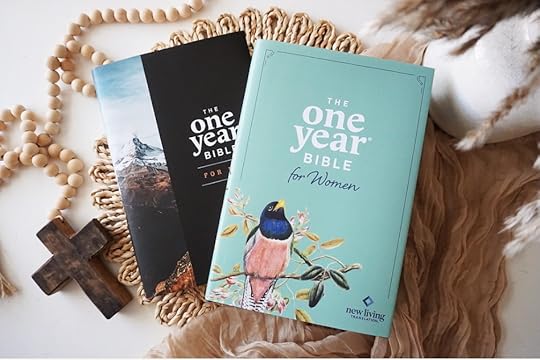
If you want a simple, doable way to stay anchored in Scripture. If you’re hungry for clarity in a chaotic season. If you long for practical and emotional grounding. Grab your One Year Bible for Women, One Year Bible for Men, or even the One Year Bible for Children to get your kiddos involved. Begin the journey of Scripture shaping your days, your heart, and your year.
Open the Bible. Open your life.
I’ll be reading right alongside you. Let’s grow together—one day, one reading, one simple habit at a time.
Additional ResourcesJournal Through the Bible in 2026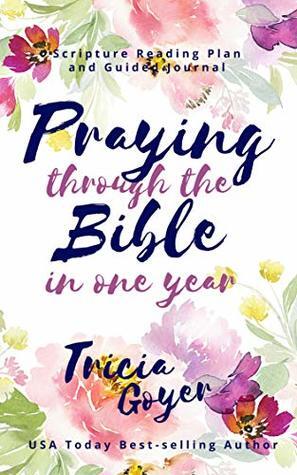
Have you ever wanted to read through the Bible but found yourself giving up? Or even worse, you read the chapters and at the end question how they apply to your life. Tricia Goyer understands. For years she felt frustrated that she couldn’t stick to her commitment to read God’s Word all the way through. Things changed when she found a doable plan and wrote out a daily prayer. Tricia’s heart changed. Her life did, too.
God can bring real transformation into your heart and life when you daily commit to reading your Bible and praying through God’s Word. Praying through the Bible in One Year offers a guided reading plan and a daily prayer starter to help you make God’s Word applicable to your life. Discover the inspiration for real-life transformation.
Purchase a copy of Praying Through the Bible in One Year HERE.
The post Reading the One Year Bible appeared first on Tricia Goyer.November 24, 2025
A Not-So-Grumbly Thanksgiving
 Tricia GoyerFun Homeschool Ideas for a Season of Gratitude
I’ll never forget the Thanksgiving when one of my kids announced, “I don’t like turkey. I want pizza.” Meanwhile, another child asked—very seriously—why we couldn’t just “be thankful quicker” so they could go play Minecraft. Real life, right?
In The Grumble-Free Year, our family set out to learn the discipline (and joy!) of gratitude — on high-energy days, hard days, and yes… holidays when half the potatoes burn and someone cries because the rolls aren’t the right shape. And you know what? Homeschooling through Thanksgiving gives us the perfect opportunity to PRACTICE gratitude, not just teach it.
Here are some fun, faith-filled, slightly silly, and absolutely joy-boosting Thanksgiving homeschool ideas to help your family laugh, learn, and lean into gratitude this season.
1. Start a “Gobble of Gratitude” Scavenger HuntSend your kids hunting around the house for things that make them thankful.
Give prompts like…
Bible tie-in:
“Give thanks to the Lord, for he is good!” (Psalm 107:1, NLT)Make it a race. Winner gets first slice of pumpkin pie — or gets to choose the family game later!
Grumble-Free Tip: Let kids help create the list — they’ll feel ownership, not obligation.
2. “Thankfulness Tale” Story ChallengeKids choose a feather (paper, not plucked) from a bowl. Each feather has a silly prompt:
A thankful turkey who forgets he’s supposed to gobbleA pilgrim who loses his shoes but finds something betterA pie-baking adventure gone wrong (and right!)A family who tries to be thankful for EVERYTHING… even burnt rollsSet a timer for 7 minutes. Write. Read aloud. Giggle. Repeat.
(Bonus points for dramatic reading voice and turkey sound effects.)
3. Scripture + Science: The “Gratitude Brain” LessonKids love learning how God designed us — especially when it sounds like a science experiment.
Share this fascinating truth: Gratitude literally changes your brain. Studies show thankful thoughts increase dopamine and serotonin — “feel good” neurotransmitters (Harvard Health, 2021). It’s like God wired us so thankfulness tastes like joy pie.
Ask: What do you feel in your heart when you’re grateful?
4. “Pass the Praise” Dinner GameAt dinner, play this: One child holds a pretend turkey leg and must say something kind or thankful about the person on their right. Then pass the “turkey.”
Cue giggles when someone says, “I’m thankful Jeremiah didn’t drop the cranberry sauce this year.” (Hypothetically. Yes, Jeremiah, we remember.)
5. The Grumble-Free Challenge JarPrint little challenge slips:
Say three thankful things before breakfastThank someone for something tinyTurn one complaint into gratitudeHug someone and say “I’m thankful God gave me you”Pull one slip each morning this week. Research shows gratitude habits improve emotional resilience in kids (Greater Good Science Center, UC Berkeley, 2020). And… we saw that in our home, too. Slowly… then suddenly.
As we practiced gratitude, complaints softened. Smiles came easier. Peace settled in.
Not because life got easier — but because our hearts opened wider.
Let kids build edible turkeys out of:
tortillascarrot stickscheese slicesolives for eyespeanut butter “glue” (or sunbutter!)apple slices for feathersThen take pictures like it’s the Great British Bake Off: Homeschool Edition.
Award categories:
Most realisticMost hilarious“Bless its heart… it tried”7. Gratitude Walk + Psalm Reading
Take a family walk. Every time someone sees something beautiful or fun, they shout “Thank You, God!”
Scriptures to read after:
1 Thessalonians 5:18 — “Be thankful in all circumstances.”Psalm 100 — “Enter his gates with thanksgiving.”James 1:17 — “Every good and perfect gift is from above.”Simple. Joyful. Anchored in truth.
Final EncouragementThanksgiving is not about perfect food or peaceful children or Pinterest-worthy tables.
It’s about remembering the Giver. And if your Thanksgiving looks more like: crumbs, crayon-covered “turkey art” and someone yelling, “He TOOK MY ROLL!” …you’re not failing. You’re living real life.
And real grateful hearts are formed right there. One small “thank You” at a time. One grumble turned into grace. One joyful memory (and funny story!) at a time.
Happy homeschooling — and happy gobbling! 

What’s one new gratitude idea your family will try this Thanksgiving?
Tell me in the comments!  I can’t wait to cheer you on.

Need more ideas and advice on homeschooling? Pick up a copy of Homeschool Basics. Receive tried-and-true homeschool advice from veteran homeschooling moms Tricia Goyer and Kristi Clover. We dish out practical help on getting started and staying the course. Homeschool Basics will remind you that the best homeschooling starts with the heart.
Packed with ideas to help you push aside your fears and raise kids who will grow to be life-long learners. Kristi and I believe that homeschooling can transform your life, your home, and your family. Mostly, we believe homeschooling can truly prepare your children for the life God’s called them to live. Don’t let doubts hold you back any longer.
Get Homeschool Basics on Amazon Now!
The post A Not-So-Grumbly Thanksgiving appeared first on Tricia Goyer.November 23, 2025
A Christmas Cherub, a City’s Memory, and a Miracle of Hope
 Tricia GoyerFeaturing Dr. Ronda Wells & her post-WWII holiday novel, The Christmas Cherub
Hello, friends! Tricia Goyer here. You’re in for a treat today. I sat down with Dr. Ronda Wells—physician by training, storyteller by calling—to talk about her sparkling new historical Christmas novel, The Christmas Cherub. It’s an Indianapolis love letter set in 1946, where a city landmark, a courageous heroine, and one small stone cherub become heralds of hope.
The Real-Life Spark: Indianapolis’s Cherub on the ClockSince 1946, a cherub has appeared each year on a downtown department store clock in Indianapolis. It arrives on Thanksgiving Eve to signal the start of the Christmas season, then vanishes on Christmas Eve. That true tradition is the heartbeat of Ronda’s story. In her novel, the cherub is a signpost pointing hearts toward wonder, waiting, and the possibility of a miracle.
This is why I love historical fiction: Nostalgia isn’t just pretty—it reminds us that God has been faithful through many winters.
Meet Clara: Art Director, Dreamer, Woman of GritOur heroine Clara heads the store’s art department. She’s talented and whimsical, but also practical—trying to keep her job in a postwar economy when inventory is scarce and catalogs have more white space than product. Her solution? Sketching cherubs to fill those gaps—images that capture the town’s imagination and quietly preach hope.
Clara’s personal life is just as layered. Her fiancé, Jack, went missing in action during the final weeks of the war. Meanwhile, a handsome Navy hero—and part-owner of the store—takes an interest in her. Is Clara supposed to wait? Move forward? Believe in a Christmas miracle? Her faith doesn’t hand her easy answers—but it does give her courage to ask honest questions.
The History Thread You’ll Feel in Your BonesRonda did her homework. The novel steps into the messy, uncertain world after V-E Day—when not every soldier came home at once, POW camps were liberated unevenly, and some prisoners were marched across harsh terrain as borders shifted and armies advanced. The result? A story that honors the ache of waiting while holding onto light.
Why we love historicals: They let us stand in yesterday’s shoes long enough to understand today’s hope.
Faith Woven Through Every PageBoth Clara and Jack are believers. Their conversations with pastors and prayers in the quiet places don’t feel preachy; they feel lived-in. The book doesn’t promise God will do what we demand—it shows how He meets us while we’re waiting, steadies our loyalties, and reshapes our desires.
Remember, when you can’t see what God is doing, remember that He often works like Advent—quietly, faithfully, right on time.
The Department Store as a CharacterIf you love settings that breathe, you’ll adore this one. The grand old emporium practically winks at you—bridal gowns returning to the windows, Santa-land memories, elevator chimes, and catalog art that had to out-create a thin supply chain. It’s Macy’s-at-Christmas energy with Midwestern heart.
Why Readers Will Love The Christmas CherubA true-history hook (the cherub tradition) that gives the story instant warmth.A resilient heroine balancing calling, conscience, and career.Authentic postwar stakes—romance threaded through real historical tension.A faith arc that honors unanswered prayers and the courage to hope again.Christmas glow without saccharine—nostalgic, but honest.Book Club / Buddy-Read QuestionsWhere do you see Clara’s faith most tested—and most strengthened?
What does the cherub symbolize for different characters (and for the city)?
How does the postwar setting complicate the romance—and make it richer?
When have you had to choose between waiting and moving forward?
Which scene most captures the meaning of Christmas for you?
Try ThisLight a candle and read Luke 1–2.
Write one paragraph about a “cherub moment” in your life—a small sign that reminded you God was near.
Pray for someone who is waiting this Christmas season.
About the Author
Ronda Wells has been writing for three decades. She’s also the brain behind Novel Malpractice, a resource helping authors get medical details right—because nothing pulls a reader out of a story faster than a botched hospital scene! She’s penned across genres (from medieval romance to medical thrillers) and is currently developing a “Medical Thriller meets Mitford” series set in southern Indiana.
Find her:
Website: RondaWellsBooks.com Writers’ resource: NovelMalpractice.comIf you’re the kind of reader who opens a Christmas book in July (or, let’s be honest, April), The Christmas Cherub belongs on your nightstand. It’s for anyone who has ever stared at a dark street, a silent phone, or a thin catalog and whispered, “Lord, I need a sign.” Sometimes God sends a star. Sometimes—a small stone cherub will do.
May your Advent heart begin early this year—watchful, tender, and ready for wonder.
Want more insight? Join us on the Daily Bible podcast! LISTEN & WATCH
Introducing the Daily Bible Podcast Audio Player!
Immerse yourself in God’s Word like never before with the MegaVoice Daily Bible Podcast Audio Player—a solar-powered, portable way to listen to the entire NIV Bible and the Daily Bible Podcast with Tricia Goyer and Michelle Hill!
Unplug & Listen – Step away from digital distractions and enjoy an uninterrupted discipleship experience. Simple & Accessible – With easy controls, it’s perfect for all ages, including kids, seniors, and the visually impaired. Listen Anywhere, Anytime – Solar-powered with up to 14 hours of battery life, plus a USB charging option for cloudy days.
Whether you’re at home, on a mission trip, or enjoying quiet time in nature, this MegaVoice Audio Bible Player helps you stay connected to God’s Word—without a screen!
Get yours today and experience the Bible in a whole new way!
Romans 2-4
 Righteousness Through Faith
Romans 2
Righteousness Through Faith
Romans 2In Romans 2, Paul addresses the Jews and their reliance on the law for righteousness. He challenges them to understand that God’s judgment is based on truth and is impartial. It’s not simply knowing the law that counts; it’s living it out in obedience. Paul emphasizes that both Jews and Gentiles are accountable to God’s standards, with true obedience being a matter of the heart. He highlights that outward signs, like circumcision, are not enough—God desires a transformed heart, showing that righteousness isn’t about religious identity but genuine faith.
Romans 3Paul continues by underscoring the universal nature of sin. He emphasizes that everyone—both Jew and Gentile—is under sin’s power, and no one can be justified through their own deeds. Paul draws on Old Testament references to show humanity’s inherent sinfulness, affirming that righteousness comes not through works but through faith in Jesus Christ. This righteousness, he explains, is available to all who believe and is God’s gift, made possible by faith, not by the law.
Romans 4Paul then uses Abraham as a powerful example of faith-based righteousness. Abraham, the father of both Jews and Gentiles, was counted as righteous because of his faith—long before the law or circumcision was instituted. Paul emphasizes that this same righteousness through faith is accessible to all. As believers, we’re justified not by works but by faith in God, just as Abraham believed God’s promises. His unwavering trust in God’s word was credited to him as righteousness, setting the foundation for the “faith alone” teaching Paul expands upon in Romans.
Word of the Day: RighteousnessUnderstanding Righteousness Through FaithDefinition: Righteousness is the quality of being right in God’s eyes—encompassing character, conscience, conduct, and command.
Righteousness in human terms is often defined as moral integrity or being justifiable in one’s actions. Yet spiritually, righteousness goes beyond that—it is about being in right standing with God, a gift given to us through faith in Jesus Christ. When we believe in Him, God considers us righteous, not because of our works, but because of His perfect standards fulfilled in Christ.
As we read today, our faith in Christ’s redemptive work makes us righteous before God. It’s like putting on a white garment, clean and spotless, that covers all our imperfections. This purity is a gift that allows us to stand before God, made new and fully accepted in His sight.
November 25Romans 5-7, Romans 8:1-17
 Strength in the Struggle
Romans 5
Strength in the Struggle
Romans 5In Romans 5, Paul unpacks the beauty of justification by faith in Jesus Christ. This chapter highlights the peace and reconciliation that come through faith. While Adam’s sin brought death into the world, Christ’s sacrifice brings eternal life. Paul emphasizes that God’s grace abounds even more where sin increases. This gift of grace not only frees us but also gives us hope for eternal life. Just as sin reigned in death, now grace reigns through righteousness, offering eternal life through Jesus Christ.
Romans 6Paul addresses an essential question: Should we continue in sin so grace may increase? His answer is definitive: absolutely not. When we are united with Christ through baptism, we are joined to His death and resurrection. This means our old selves are crucified, and we rise to walk in newness of life. Sin no longer has dominion over us. Paul reminds us that we are instruments of righteousness, and the wages of sin is death—but the gift of God is eternal life through Jesus Christ our Lord.
Romans 7The law reveals our sinfulness, showing us how deeply we need a Savior. Paul wrestles with the struggle we all face: the desire to do what is right but the inability to carry it out perfectly. He acknowledges the tension between the sinful nature and the Spirit’s work within us. Ultimately, Paul thanks God for the victory found in Jesus Christ, who rescues us from the body of sin and death.
Romans 8:1-17Paul triumphantly declares, “There is therefore now no condemnation for those who are in Christ Jesus.” Through Christ, we are freed from the power of sin and death. The Spirit of God lives within us, empowering us to live according to the Spirit rather than the flesh. As children of God, we are heirs of His glory, but to share in that glory, we must also share in His suffering. Paul reminds us that being Spirit-led means living in alignment with God’s will, allowing His Spirit to guide and transform us.
Word of the Day: StruggleEmbracing Struggle in Light of God’s GraceDefinition: To use great effort to contend with difficulty or adversity; laboring against resistance.
Struggles are an unavoidable part of life. Paul’s words in Romans 7:15 resonate deeply: “I don’t really understand myself, for I want to do what is right, but I don’t do it. Instead, I do what I hate.” Whether it’s the battle against temptation, the weight of challenges, or the persistence of personal shortcomings, we often find ourselves caught in the tension between wanting to live rightly and falling short.
But our struggles are not in vain. James 1:2-4 tells us that trials build endurance and maturity. These challenges are refining moments, much like pressure transforms coal into diamonds. They mold our character and deepen our faith.
Paul’s journey shows us that while struggles are real, so is the hope found in Christ. Romans 8:1 reminds us that there is no condemnation for those in Christ. Even as we wrestle with our sinfulness, Christ’s Spirit empowers us to overcome.
Finding Strength in the StruggleWhen life feels overwhelming:
Rest in the promise of no condemnation. Jesus has already won the victory; your struggles are not a sign of failure but of God’s transformative work.
Acknowledge the tension. Like Paul, recognize the struggle between your sinful nature and your desire to follow God.
Rely on the Spirit. Trust the Spirit to guide you and strengthen you to live righteously.
Embrace trials as growth opportunities. Remember, these moments are shaping you into the person God has called you to be.
November 26Romans 8:18 – 10:21
 Saved by Grace, Living in Hope
Romans 8:18–39
Saved by Grace, Living in Hope
Romans 8:18–39Paul reassures believers that present sufferings cannot compare to the glory awaiting us in Christ. Creation itself eagerly waits for the fulfillment of God’s plan, longing to be set free from corruption. The Holy Spirit helps us in our weakness, interceding for us in alignment with God’s will. Paul’s declaration in Romans 8:28 is a cornerstone of faith: “And we know that in all things God works for the good of those who love him, who have been called according to his purpose.”
He concludes with the unshakable truth: nothing—absolutely nothing—can separate us from the love of God in Christ Jesus. Through Him, we are more than conquerors, assured of victory over any trial or hardship.
Paul expresses deep anguish for his fellow Jews, who, despite their rich spiritual heritage, have largely rejected Jesus as the Messiah. He reminds us that true children of God are not determined by physical lineage but by faith in God’s promise.
Paul uses examples like Isaac and Jacob to demonstrate God’s sovereignty in His plans and purposes. Salvation is not achieved through human effort but is a gift of God’s mercy, extended to both Jews and Gentiles. Paul grieves over those who miss this truth, emphasizing that faith, not works, is the foundation of righteousness.
Paul’s heartfelt longing is for Israel’s salvation, but he recognizes that many rely on their own righteousness rather than God’s provision through Christ. He explains that Christ is the culmination of the law, bringing righteousness to all who believe.
Paul beautifully summarizes the gospel in Romans 10:9: “If you declare with your mouth, ‘Jesus is Lord,’ and believe in your heart that God raised him from the dead, you will be saved.” Salvation is available to all, regardless of background or status, and the message of Christ is to be proclaimed so that everyone may hear and believe.
Definition: To rescue from harm, danger, or judgment; in the spiritual sense, to be delivered from sin and its consequences through faith in Jesus Christ.
The Romans Road: God’s Plan of SalvationThe Romans Road is a straightforward way to share the gospel, highlighting key verses from the book of Romans:
Romans 3:23 – For all have sinned and fall short of the glory of God.Sin separates us from God, leaving us in need of a Savior.Romans 5:8 – But God demonstrates his own love for us in this: While we were still sinners, Christ died for us.
God’s love is unconditional, offering salvation through Jesus’ sacrifice.Romans 6:23 – For the wages of sin is death, but the gift of God is eternal life in Christ Jesus our Lord.
Sin’s penalty is death, but God offers the gift of eternal life.Romans 8:1 – Therefore, there is now no condemnation for those who are in Christ Jesus.
In Christ, we are free from the guilt and punishment of sin.Romans 10:9 – If you declare with your mouth, “Jesus is Lord,” and believe in your heart that God raised him from the dead, you will be saved.
Salvation is as simple as confessing Jesus as Lord and believing in His resurrection.
Through these verses, we see the beauty of God’s grace and the assurance of salvation available to all who believe.
Living as One Who is SavedLive in Freedom: Knowing you are saved by grace, walk in the freedom and joy that comes from a restored relationship with God.
Embrace Assurance: If you have accepted Christ, there is no condemnation for you. You are secure in His love.
Share the Gospel: Just as Paul longed for Israel’s salvation, we too should share the message of hope with others. The Romans Road is a helpful tool!
Trust God’s Sovereignty: God’s plan of salvation is perfect, and His mercy extends to all. Trust Him to work in your life and the lives of those you love.
November 27Romans 11:1-14:23
 A Grace-Filled Life
Romans 11: God’s Plan for Jews and Gentiles
A Grace-Filled Life
Romans 11: God’s Plan for Jews and GentilesPaul reveals the mystery of God’s plan in Romans 11. God has not rejected His people, Israel. A faithful remnant remains, chosen by grace. Paul explains that the hardening of some Jewish hearts has allowed the Gospel to reach the Gentiles. This divine strategy ensures that, ultimately, “all Israel will be saved” (Romans 11:26).
Paul warns Gentile believers not to become arrogant, reminding them that they have been grafted into God’s family by grace. He emphasizes God’s sovereignty, wisdom, and faithfulness, concluding with a beautiful doxology of praise to the depths of God’s wisdom and knowledge.
Romans 12: Living SacrificesPaul shifts to practical application, urging believers to respond to God’s mercy by offering themselves as living sacrifices, holy and pleasing to God. This is true worship. He encourages the renewal of the mind to discern God’s will and outlines the characteristics of a Christlike life:
Using spiritual gifts for the common goodLoving sincerely, hating evil, and clinging to what is goodPracticing hospitality, blessing persecutors, and living in harmonyOvercoming evil with good and leaving vengeance to GodPaul paints a picture of what it means to live transformed lives, reflecting God’s grace in every action and interaction.
Romans 13: Submission, Love, and Living for ChristPaul calls believers to submit to governing authorities, recognizing God’s sovereignty over all rulers and institutions. Even in the face of unjust leadership, God’s purposes prevail.
Paul reminds us that love fulfills the law. By loving others as ourselves, we demonstrate the essence of God’s commands. He exhorts believers to “put on the Lord Jesus Christ” and live in the light, making no provision for sinful desires.
Romans 14: Unity Amid DifferencesPaul addresses disputes within the Roman church, particularly concerning food laws and personal convictions. He urges believers to avoid passing judgment on one another and instead prioritize unity.
Key principles:
Each person is accountable to God, not others.Do not let your freedom cause another believer to stumble.Act in love, building others up rather than tearing them down.Romans 14 reminds us to approach differences with grace and understanding, always seeking to honor God and love our brothers and sisters in Christ.
Word of the Day: GraceGrace in Action: Our Response to God’s GiftDefinition: The free and unmerited favor of God, manifest in the salvation of sinners and the bestowal of blessings.
Romans 11:6 reminds us, “If it is by grace, it is no longer on the basis of works; otherwise grace would no longer be grace.”
Grace is a game-changer. It’s not something we earn through effort; it’s a gift freely given by God. Imagine being handed a priceless treasure you could never afford. That’s what God has done for us through Jesus Christ.
Our response to this grace isn’t about repayment—it’s about gratitude. We become living sacrifices, dedicating our lives to the One who gave everything for us. It’s a life marked by love, service, and transformation, not out of obligation but out of a heart overflowing with thankfulness.
Living a Grace-Filled LifeBuild Up Others: Use your freedom to encourage and support fellow believers, avoiding judgment or division.
Embrace Grace: Remember that your salvation is a gift, not something you earn. Rest in God’s love and favor.
Be Transformed: Let God renew your mind and transform your actions to align with His will.
Live in Love: Demonstrate God’s grace through genuine love, unity, and kindness toward others.
November 28Romans 15:1-16:27, 2 Corinthians 1:1-2:4
 Living and Sharing the Gospel
Romans 15: Building Others Up for God’s Glory
Living and Sharing the Gospel
Romans 15: Building Others Up for God’s GloryPaul opens Romans 15 with a powerful reminder for those strong in faith to support and bear with those who are weaker. He urges believers to build each other up, prioritizing the needs of others over their own.
Romans 15:5–6 captures this beautifully: “May the God who gives endurance and encouragement give you the same attitude of mind toward each other that Christ Jesus had, so that with one mind and one voice you may glorify the God and Father of our Lord Jesus Christ.”Paul also reminds the Romans of his mission to the Gentiles, proclaiming the Good News to open their eyes to the joy found in Christ. He exhorts believers to live for God’s glory, filled with hope, peace, and joy through the Holy Spirit.
Romans 16: Greetings and WarningsIn his closing chapter, Paul greets numerous individuals who supported him in spreading the Gospel. His personal connections with fellow believers, like Phoebe, Priscilla, and Aquila, highlight the importance of community and partnership in ministry.
Paul concludes with a warning: avoid false teachers and divisive individuals. Romans 16:19–20 encourages believers to remain wise and innocent, trusting in God’s ultimate victory:
“The God of peace will soon crush Satan under your feet. The grace of our Lord Jesus be with you.”2 Corinthians 1:1–2:4: Comfort in TrialsPaul opens his second letter to the Corinthians with words of comfort and encouragement, drawing from his own experiences of suffering.
2 Corinthians 1:3–4 reminds us of God’s mercy: “Praise be to the God and Father of our Lord Jesus Christ, the Father of compassion and the God of all comfort, who comforts us in all our troubles, so that we can comfort those in any trouble with the comfort we ourselves receive from God.”Paul explains his change of plans regarding visiting Corinth, expressing his deep love for the church and his desire to spare them further pain. His words reflect a heart of compassion, reconciliation, and the desire to see the Corinthians grow in faith and unity.
Word of the Day: GospelThe Gospel: Good News for AllDefinition: The good news of Jesus Christ’s life, death, resurrection, and the reign of God brought to the world through Him.
The Gospel is central to our faith. It proclaims salvation, peace, and hope to a broken world. Paul, quoting Isaiah, reminds us of the beauty of those who bring this good news (Romans 10:15; Isaiah 52:7).
The Gospel calls us to:
Embrace Hope: Jesus’ victory over sin and death brings hope to the darkest situations.Embody Change: The Good News invites us to repent and live transformed lives.Live with Purpose: Aligning our lives with God’s kingdom purpose brings eternal significance.Share the Light: We are called to be messengers of hope, proclaiming the salvation of our God to all the ends of the earth.Living Out the GospelProclaim the Good News: Share the Gospel with boldness and love, bringing light and hope to those around you.
Be a Support: Like Paul, bear with the weaknesses of others and seek to build them up.
Cultivate Unity: Live in harmony, glorifying God with one voice and one mind.
Embrace God’s Comfort: In trials, remember that God is the source of all comfort. Let His comfort inspire you to comfort others.
November 292 Corinthians 2:5-6:13
 A Priceless Treasure
Restoration and Forgiveness (2 Corinthians 2:5–17)
A Priceless Treasure
Restoration and Forgiveness (2 Corinthians 2:5–17)Paul reminds the Corinthians of the man who had been disciplined for his sin, urging them to forgive and restore him after his repentance. Paul’s counsel highlights a key principle: withholding forgiveness from the repentant plays into Satan’s schemes. Forgiveness and comfort are vital for healing and unity in the body of Christ.
Paul also speaks of believers as part of Christ’s triumphal procession, spreading the fragrance of His knowledge everywhere. Our lives become a testimony, a living evidence of God’s transformative work in us.
Living by the Spirit and Not Losing Heart (2 Corinthians 3–4)Paul compares the old covenant of the law with the new covenant of the Spirit. The new covenant brings freedom, transforming believers into the image of Christ with ever-increasing glory.
Paul describes believers as fragile jars of clay containing the treasure of the Gospel. This metaphor reminds us that the greatness of the Gospel shines through our weaknesses.
2 Corinthians 4:8–9 beautifully captures this truth:“We are hard pressed on every side, but not crushed; perplexed, but not in despair; persecuted, but not abandoned; struck down, but not destroyed.”
Our suffering allows the life of Jesus to be revealed in us. Though outwardly we waste away, inwardly we are renewed daily as we fix our gaze on eternal things.
New Life in Christ (2 Corinthians 5)Paul paints a vivid picture of our heavenly hope, likening our earthly bodies to tents that will one day be replaced with eternal, heavenly dwellings.
2 Corinthians 5:17 declares:“This means that anyone who belongs to Christ has become a new person. The old life is gone; a new life has begun!”
Paul emphasizes reconciliation, explaining that God, through Christ, reconciled us to Himself. Believers are entrusted with the ministry of reconciliation, called to be Christ’s ambassadors, sharing the message of His grace and love.
Holiness and Separation (2 Corinthians 6:1–13)Paul appeals to the Corinthians to receive God’s grace sincerely and live lives of holiness and purity. He shares his own hardships in ministry, showing the endurance and love required to serve Christ faithfully.
In this chapter, Paul also encourages believers to remain spiritually pure, avoiding relationships or influences that could compromise their faith.
Word of the Day: TreasureTreasure in Clay Jars2 Corinthians 4:7 says:Definition: Something of great value, such as wealth or precious items; metaphorically, the immeasurable worth of the Gospel of Jesus Christ.
“We now have this light shining in our hearts, but we ourselves are like fragile clay jars containing this great treasure.”
The treasure is the Gospel—the light of God’s glory reflected in Christ. The earthen vessels symbolize our frailty, reminding us that the surpassing power belongs to God, not us.
This truth encourages us to embrace our imperfections. Our worth isn’t in our outward appearance or abilities but in the treasure within us. It’s in our weaknesses that God’s glory shines brightest.
Embracing the Treasure WithinLive with Hope: Remember the eternal dwelling that awaits us. This hope empowers us to persevere through trials with joy and faith.
Extend Forgiveness: Just as Paul urged the Corinthians, we must forgive and restore those who repent. Withholding forgiveness leads to division and despair, while forgiveness reflects God’s grace.
Shine Through Weakness: Like jars of clay, embrace your imperfections, trusting that God’s power is revealed through your fragility.
Be an Ambassador of Reconciliation: Share the Gospel boldly, inviting others to be reconciled to God through Christ.
November 302 Corinthians 6:14-10:18
 Boasting in the Lord
Unequally Yoked and True Repentance (2 Corinthians 6:14–7:16)
Boasting in the Lord
Unequally Yoked and True Repentance (2 Corinthians 6:14–7:16)Paul begins by urging believers not to be unequally yoked with unbelievers. While this is often applied to marriage, Paul extends the principle to any relationship or environment where we allow the world to shape our thinking.
2 Corinthians 6:17 reminds us:“Therefore, come out from among them and be separate, says the Lord. Do not touch what is unclean, and I will receive you.”
Paul celebrates the Corinthians’ transformation, their godly sorrow leading to repentance. This repentance, far from being harsh, is a vital aspect of the Gospel. Paul rejoices in the report from Titus, who brought news of their renewed hearts and actions.
Excelling in Generosity (2 Corinthians 8–9)Paul commends the Macedonian churches for their generosity despite their poverty, urging the Corinthians to excel in giving as well. Generosity is an act of grace that reflects God’s own generosity toward us.
2 Corinthians 9:7 reminds us:“Each of you should give what you have decided in your heart to give, not reluctantly or under compulsion, for God loves a cheerful giver.”
Giving not only meets others’ needs but also leads to thanksgiving and glory to God. It is an opportunity to reflect His abundance and faithfulness.
Defending Authority and Spiritual Warfare (2 Corinthians 10)Paul confronts critics who challenged his authority, explaining that his confidence and strength come from God. He emphasizes that the weapons of spiritual warfare are not of the flesh but have divine power to demolish strongholds.
2 Corinthians 10:17–18 reminds us where true boasting belongs:“But, ‘Let the one who boasts boast in the Lord.’ For it is not the one who commends himself who is approved, but the one whom the Lord commends.”
Paul encourages believers to focus on the tasks God has assigned them, not on human recognition or comparison.
Word of the Day: BoastBoasting in the LordDefinition: To talk with excessive pride about one’s achievements, possessions, or abilities.
In today’s culture, boasting often revolves around personal success and worldly accomplishments. Paul flips this perspective, reminding us to boast only in the Lord.
When we boast in the Lord:
Our focus shifts from self to God: We recognize that every achievement, talent, and blessing comes from Him.We find purpose in His plan: Our tasks and roles are meaningful because they align with God’s will, not because they bring worldly recognition.We embrace humility: Boasting in the Lord keeps us grounded and authentic, reminding us that His strength works through our weaknesses.2 Corinthians 4:7 beautifully illustrates this:
“We now have this light shining in our hearts, but we ourselves are like fragile clay jars containing this great treasure. This makes it clear that our great power is from God, not from ourselves.”
Engage in Spiritual Warfare: Use the spiritual weapons God provides—prayer, Scripture, and faith—to stand firm against worldly strongholds.
Guard Your Influences: Avoid relationships or environments that lead you away from God’s truth. Instead, pursue what builds your faith.
Practice Generosity: Give cheerfully and willingly, reflecting God’s grace in your life. Your generosity not only blesses others but also glorifies God.
Boast in the Lord: Let your life’s achievements and blessings point back to Him, recognizing that His power is at work in you.
The post A Christmas Cherub, a City’s Memory, and a Miracle of Hope appeared first on Tricia Goyer.November 19, 2025
How Travel Shapes Our Homeschool Journey
 Tricia Goyer
Growing up, I never thought I’d be a world traveler. I loved stories and lived for the adventures I found in books. The idea of boarding a plane to another country? That was as foreign to me as the places I read about.
Back then, I stayed mostly within a 150-mile radius of my Northern California home. A trip to the Oregon coast or San Francisco was a major adventure. And Disneyland? That was practically a pilgrimage. But even as a child, something stirred in my heart when I read stories of far-off lands and cultures—I just didn’t yet realize how God would use that stirring.
Fast forward to today, and I now live in Arkansas with my husband John and our wonderful (and still-growing!) family. And while I never set out to be a traveler, God has graciously unfolded a journey I never could have written for myself.
I’ve now traveled across Europe, Canada, Mexico, and three-fourths of the United States—speaking at conferences, promoting books, and leading mission teams. What started as research for a WWII novel turned into connections with real-life veterans and unforgettable visits to places like Mauthausen Concentration Camp and Normandy. And every step of the way, I’ve seen how travel changes us—especially our kids.
Why Travel Matters in a Homeschool FamilyYou don’t have to leave the country to give your kids a global mindset. Travel—whether a road trip to the next state or a weekend in a new town—invites children into a broader story. It helps them see life beyond their routines and appreciate how big (and beautiful) God’s world really is.
Here’s why travel can be so impactful for homeschoolers:
1. It Brings History to LifeReading about the American Revolution or the Oregon Trail is one thing—but walking the fields of Gettysburg or exploring a real pioneer homestead makes it unforgettable. Travel turns abstract knowledge into real-life connection.
2. It Inspires Curiosity and CourageWhen children step into unfamiliar places, they learn how to adapt, ask questions, and connect with people who live differently than they do. This builds empathy, courage, and curiosity—traits that textbooks can’t teach.
3. It Strengthens Family BondsWhether you’re camping in the Ozarks or walking through the streets of D.C., travel pulls you away from screens and schedules and brings your family face-to-face with shared adventure. These are the memories that shape childhood.
4. It Offers Real-World LearningFrom budgeting road trip expenses to navigating museums or learning local history, travel is full of real-life educational opportunities. It teaches independence, flexibility, and problem-solving—skills our kids will carry into adulthood.
A Fresh Perspective, A Bigger FaithI never imagined God would allow me to travel the way I do now. But it reminds me of Jeremiah 29:11:
“For I know the plans I have for you,” says the Lord. “They are plans for good and not for disaster, to give you a future and a hope.”As a teen mom, I thought my story was over. I didn’t dream big because I couldn’t see beyond my brokenness. But after I surrendered my life to Jesus, He rewrote my story. He gave me peace, joy, a beautiful family, and yes—adventure.
Today, I don’t take a single trip for granted. Each one feels like God whispering, “This is part of the plan too, and you’re going to love it.”
How to Incorporate Travel Into Your Homeschool (Even on a Budget!)You don’t have to fly overseas to give your kids the gift of travel. Here are a few ways to make exploration part of your homeschool rhythm:
Plan Local Day Trips – Visit historical sites, nature centers, or nearby museums.Map It Out – Create a wall map where kids can pin each place you visit.Turn Vacations into Unit Studies – Heading to the coast? Study marine biology. Visiting Colonial Williamsburg? Dive into American history.Take Virtual Tours – When travel isn’t possible, explore the world through online museum tours and documentaries.Let Your Kids Lead – Have older children plan a trip budget, itinerary, or presentation about your destination.Scripture to Reflect On as You TravelLet these verses inspire your family as you venture out into the world:
Psalm 121:8 – “The Lord will watch over your coming and going both now and forevermore.”Proverbs 16:9 – “In their hearts humans plan their course, but the Lord establishes their steps.”Deuteronomy 31:8 – “The Lord himself goes before you and will be with you.”A Prayer for the JourneyDream Big, MamaLord,
Thank You for the gift of travel and the ways You shape our families through adventure. Whether near or far, help us see each journey as a chance to grow in faith and wonder. Give us eyes to see Your creation, ears to hear stories beyond our own, and hearts open to Your leading. As we step into new places, let us be reminded that You go before us and that every journey has purpose.
Amen.
Maybe you’re a homeschool mom who’s never been far from home. I get it—I once thought the same would be true for me. But God has plans for you and your children that reach far beyond what you can see now. Keep walking. Keep dreaming. And don’t be surprised if one day you find yourself somewhere you never imagined—with your kids by your side and wonder in your heart.
So, what are you forever thankful for? I’d love to hear your stories of homeschool adventures, near or far!
Hope and Refreshment for Homeschooling ParentsNeed more ideas and advice on homeschooling? Pick up a copy of Homeschool Basics. Receive tried-and-true homeschool advice from veteran homeschooling moms Tricia Goyer and Kristi Clover. We dish out practical help on getting started and staying the course. Homeschool Basics will remind you that the best homeschooling starts with the heart.
Packed with ideas to help you push aside your fears and raise kids who will grow to be life-long learners. Kristi and I believe that homeschooling can transform your life, your home, and your family. Mostly, we believe homeschooling can truly prepare your children for the life God’s called them to live. Don’t let doubts hold you back any longer.
Get Homeschool Basics on Amazon Now!
The post How Travel Shapes Our Homeschool Journey appeared first on Tricia Goyer.Writer’s Desk: Patricia Johns
 Tricia Goyer
Patricia Johns is a bestselling author who writes from Alberta, Canada, where she lives with her husband their teenaged son. She writes romances and mysteries set in Amish Country that make her readers yearn for a simpler life. You can find her on her website and on social media where she enjoys connecting with her readers. Check out her latest releases on her website, and you might find your next read!
Connect with Patricia on her website, Instagram, X, Facebook, Bookbub, and don’t forget to sign up for her newsletter.
More about Still WatersTheir hidden past brings questions about their future . . . together.
Unsure of her future within the Amish community, Beth Peachy arrives in Lancaster County for the summer to care for her ailing grandmother. Yet with dementia threatening to steal away Mammi’s memories, Beth’s visit quickly evolves into an urgent search for answers to questions that her relatives seem determined to avoid. How can Beth possibly make a lifelong vow to the Amish church when her own family is concealing so much of the past from her?
Beth’s childhood friend Danny Lapp faces his own dilemma as his ex-Amish older brother turns his back on their family upbringing, dishonoring his Plain heritage. Struggling to find some sort of connection with his brother despite their deep difference of opinion, Danny is determined to find a solution before church leadership becomes involved. As Beth and Danny reconnect and seek to help each other in their search for answers, they find themselves stirring up not only surprising revelations about the past, but questions about a possible future–together.
Purchase a copy of Still Waters.
Enter to Win a copy of Still Water!Q&A with Patricia JohnsARCF: Can you share a little about Still Waters and the inspiration behind it?
PJ: Still Waters is the story of a family’s secrets. Generations have a way of moving in lockstep, protecting the embarrassing secrets they’d rather the younger generations never know about, and this is the very challenge that Beth Peachy faces when she comes to stay with her grandmother beside Friesen Lake. Beth’s father recently passed away, and Beth wants to know about his childhood. It should be a simple request, except that her grandmother is reluctant to share anything. Her father had been the same way, and Beth wants to know the truth about her family history before she makes a decision for the faith.
Danny Lapp is one of Beth’s friends from her summer visits to see her grandmother over the years, and he’s has nursed some powerful feelings for Beth over the years, but never seemed to be old enough to do anything about it. But they are both grown now, and Beth takes his breath away. However, he is struggling with his relationship with his older brother who jumped the fence and left the faith, and he needs to sort out some kind of peace in his family before church leadership gets involved. And with Beth’s uncertainty about an Amish future, Danny is trying to keep his heart in check. He needs deep roots, and Beth seems to be growing wings.
As they work together to find their own answers, they discover deeper feelings than just an old friendship. But sometimes families bury secrets for a reason.
The inspiration for this book came from my own family stories. Every family has its history—the respectable ancestors who give us a name to be proud of, and a few unsavory characters we’d rather forget. Mine is no different, but family stories have always inspired me.
ARCF: Beth returns to Lancaster County to care for her grandmother. If you could spend a summer at any fictional location, where would it be
PJ: I’m going to say Avonlea, mostly because I just finished rereading Anne of Green Gables a few months ago, and I thoroughly enjoyed the descriptions of scenery and the gorgeous, rambling Green Gables house. That would be a perfect summer!
ARCF: Beth’s grandmother suffers from dementia. If you could ask her one question about the past, what would it be?
PJ: I would ask the same question Beth asks… who is Beth’s grandfather? Beth never heard anything about him—no name, no profession, nothing. So who is he? And why all the secrets?
ARCF: The novel explores family secrets. If you could uncover one secret from your own family, what would it be?
PJ: I wouldn’t mind discovering a secret fortune somewhere! I don’t think there is much hope of that, though. My family is full of juicy stories, but we don’t have a lot of connective material. Did my great-grandfather on my mother’s side really own a brothel? How on earth did that come about? How did my grandparents on my father’s side actually meet? Family lore has it that my earliest ancestor on Canadian shores came because he had murdered a man in France… Who did he kill and why? And what about the First Nation ancestry that everyone is so certain we have, but there is zero information about? We don’t have secrets so much as plot holes! I’d love to figure out how it all connects!
ARCF: The book is set in a lake house. If you could live in any type of house, what would it be?
PJ: I’d love to live in a big, rambling Victorian house (with a big enough bank account to keep up with renovations!) I love those gorgeous old houses, but it would have to be one that wasn’t connected to slavery or something else truly awful, because I believe that evil can linger in places, and I wouldn’t be able to enjoy the fireplaces and sweeping verandah if I knew it was all built with blood. So it needs to be a cheerful old Victorian house with a benevolent history, polished wood floors, a huge library I could fill myself, and room after room with pooling sunlight and antique furniture… Too much to ask? Honestly, it might not even exist
ARCF: The novel delves into the past. If you could time travel to any era, which would you choose?
PJ: This is a tough one, because I need to be able to leave the era after our visit! I don’t want to deal with doctors or medical systems in the past–*shudder!* And I need money—I need to be able to do this trip in comfort. But I’d love to travel to Victorian England and wear those gorgeous, strangling dresses for a day! (No more than a day. I don’t think I could handle corsets for longer than that.) Or maybe be the beloved daughter of a kindly laird in a castle in fifteenth-century Scotland for a week or so, just so I could explore the place. But mostly, I’d like to take a quick visit into a hundred years in the future. I want to see where we end up! Are we better off? Are we worse off? And what kind of technology is part of everyday life? That would just be neat to know!
ARCF: You’ve written numerous books. If you could write a crossover novel featuring characters from all your series, who would be the main protagonist?
PJ: All of them? Oh, wow! That’s a lot of books, and a lot of drama. So if we’re bringing them all together, the main protagonist would have to be an elderly Amish lady who just keeps asking all the young people, “Can’t you all just settle down?”
ARCF: Do you have a favorite writing snack or beverage that fuels your creativity during intense writing sessions?
PJ: I absolutely love popcorn with a drizzle of olive oil on top (a little healthier than butter!) and with nutritional yeast sprinkled on top. (And by “sprinkled,” I mean spooned. Ladled. Shoveled. LOL!) It is so delicious! I realize it’s a weird snack, though, and it’s very much a love-it-or-hate-it flavor. I happen to love it. In fact, now that you’ve reminded me of it, I’m about to make myself some!
ARCF: If you could swap lives with any character from Still Waters for a day, who would it be and what would you do?
PJ: I think I’d swap places with Tabitha Schrock—but I’d need her veterinarian skills, too! I’d love to visit farm after Amish farm, helping sick and injured animals, and chatting with the Amish families who live there.
ARCF: If you were to write a sequel to Still Waters, what would the title be and what would it be about?
PJ: I actually have written a sequel to Still Waters! It’s called Through the Valley, and it wraps up the whole miniseries. In Through the Valley, the story kicks off with two funerals—one that brings shock and surprise, and one that grants freedom. That’s all I’ll say for now, but if you’ve wondered about Tabitha Schrock, and whether or not she’ll find her own happily ever after, you’ll want to pre-order that book!
ARCF: If you could have any fictional detective’s skills, whose would you choose and why?
PJ: I’d love to have the intelligence and impeccable manners of Hercule Poirot. He’d just so endearing, and so brilliant. I love his genteel politeness as he sleuths out the killer.
ARCF: And finally, can you share what’s coming up next?
PJ: As I mentioned, Through the Valley, the third book in the Amish of Shepherd’s Hill miniseries comes out in the spring of 2026, I believe. I’m very excited about that story! It was so satisfying to wrap it all up and I really think my readers will love it. I also have more regular releases coming out through Harlequin books, so if you love Amish romance with a bit of mystery and a lot of heart, check out my website and sign up for my newsletter.
Save, Pin, Share
 The post Writer’s Desk: Patricia Johns appeared first on Tricia Goyer.
November 18, 2025
When Scripture Comes Alive
 Tricia Goyer
There have been seasons in my life when my Bible sat unopened longer than I care to admit. Maybe you’ve had those seasons, too?
The newborn days when sleep is measured in minutes and coffee becomes a food group. The ministry seasons when you pour out and pour out… until you realize you haven’t refilled your own cup in days. Or the caregiving years—like when my sweet grandma lived with us and I would sneak away to read Scripture in the bathroom because that was the only quiet moment I got.
Yes, those seasons. And yet—every time I returned to Scripture, even with tired eyes and a scattered mind—God met me there. Not because I came perfectly, but because He is faithful.
I’ve learned that understanding the Bible doesn’t come from having more time or more theology degrees. It comes from showing up and letting God speak, one small moment at a time.
Here are the rhythms that have carried me through busy motherhood, caregiving, writing deadlines, and everything in between:
1. Ask the Author for Help
Years ago, when I had three little ones under the age of five, I’d wake up early, open my Bible… and immediately hear crying upstairs. I remember one morning whispering, “Lord, I can’t do this. I need Your help.” And I felt the Holy Spirit answer, not in a loud voice, but in a gentle reminder: You’re not doing this alone.
That simple prayer before I read— Holy Spirit, teach me— has become my oxygen. Understanding Scripture isn’t about us being smart enough. It’s about inviting the Author to sit beside us.
2. Come With Curiosity, Not Guilt
For years, guilt followed me like a shadow: If I miss a day, I’m behind. If I forget my reading plan, I’ve failed. Then one day, while feed a baby and helping a teen with math and editing a manuscript all at once (yes, that was real life!), I opened my Bible randomly to Psalms.
I wasn’t “caught up.” I wasn’t following a plan. But I was hungry.
And there it was.
Psalm 63:1 in the NLT: “I earnestly search for You; my soul thirsts for You.”That day, I realized something freeing: God doesn’t meet us because we checked all the boxes. He meets us because we come hungry.
3. Watch for God’s Character
When my kids were younger, we went through a season where everything felt like a battle—schooling, emotions, laundry, life. During one particularly exhausting week, I was reading through the book of Exodus. I expected more rules and battles, and wilderness frustration.
Instead, I saw it: A God who rescued, provided manna, led with light, spoke tenderly, and stayed close even when His people were stubborn and tired.
It felt like God whispered, “This is who I am for you, too.” That day changed how I read Scripture.
Before asking, “What does this say about me?” I began asking, “What does this tell me about Him?” The Bible becomes richer when we look not for information, but for relationship.
4. Capture What God Speaks
I keep stacks of journals—messy ones, tea-stained ones, ones scribbled with prayers from when my teens tested every ounce of patience in me, and ones full of gratitude as I watched them grow.
One journal from years ago has a simple line written on a hard day: “Lord, make me gentle today. My kids don’t need a perfect mom. They need a present one.” That came after reading Galatians 5 and looking at the fruit of the Spirit—especially gentleness.
Journaling isn’t about perfection. It’s about remembering. Because ink remembers what the heart forgets.
5. Read in Community
Some of the best Bible moments have happened around crowded tables—kids giggling, teens rolling their eyes, dinner dishes stacked in the sink. I’ve had deep, holy conversations in the most ordinary moments: after youth group pickup while folding laundry on the couch with a child who asks, “Mom, does God really hear me when I’m scared?”
When we talk about God’s Word together, hearts soften. Faith multiplies.
A Final ThoughtThe Bible was never meant to be understood alone. It’s a family Book, a friendship Book, a church Book. God speaks in community in ways He seldom does in isolation.
Friend, if you feel behind, you’re not. If you feel unqualified, you’re the perfect candidate. If your Bible has tear stains or sticky toddler fingerprints, you’re in good company. This walk with God is not about perfection. This walk is about drawing closer and closer to Jesus.
So come tired. Come joyful. Come curious. Come thirsty. Just come.
Because the God who wrote the Word is the same God who holds you as you read it. The Bible isn’t simply a text to study— it’s a love story to live.
I’d love to hear:
What Scripture has encouraged you most lately?
Drop it in the comments — your verse might be the exact one another mama needs today.
1. Want to go deeper in grace and healing?
Subscribe to my weekly devotional email for hope-filled encouragement, Scriptures, and resources to strengthen your faith — one gentle step at a time.
2. Looking for stories of redemption and God’s faithfulness?
My books share real-life testimonies of God meeting us in our mess, restoring broken places, and writing new chapters we never expected.
Browse my book shop here.
3. Need daily hope and truth to anchor your heart?
Listen to Daily Bible Podcast — real encouragement from God’s Word, especially for busy women walking through real-life pressure and real-life grace.
Listen here on YouTube and don’t forget to join us here on Substack!
4. Want to know more about Walking out God’s Word? You’re not alone.
More of my story in my book Walk It Out (find it here).
The post When Scripture Comes Alive appeared first on Tricia Goyer.November 17, 2025
Living a Grateful Life This Thanksgiving (and All Year Long)
 Tricia Goyer
It’s hard to believe it’s been over seven years since our family embarked on the adventure of living a grumble-free life. We started in August 2017, and by Thanksgiving of that year, our lives took an unexpected turn—Grandma broke her back. Then came a healing season and our long-anticipated cruise in August 2018, followed by the release of The Grumble-Free Year in November 2019.
Since then, I’ve been asked one question over and over again:
“Have you kept going?”
And the answer is yes—though not perfectly.
If anything, writing about living with less grumbling helped me place gratitude at the front of my mind and gave our family a language to return to when things get hard.
And as homeschoolers, we’ve learned that a grateful life is a powerful lesson—one best lived out loud, especially during the Thanksgiving season.
Turning “Less Grumbling” Into a Homeschool LifestyleWhether you’re knee-deep in read-alouds or managing teens with packed schedules, here are practical ways to cultivate a culture of gratitude in your home—no matter the season.
1. Start With God’s WordGratitude begins in our thoughts, and that’s where Scripture leads the way. Paul reminds us:
“We take captive every thought to make it obedient to Christ.”— 2 Corinthians 10:5 (NIV)
Our minds naturally look for problems, especially when life feels chaotic (hello, homeschool mornings!). When I feel that familiar grumble rising—whether it’s about messy rooms, missed assignments, or my to-do list—I try to:
Pause and pray.Look for a solution.Turn my mind toward gratitude.That might mean thanking God for healthy kids even in the mess, or for the chance to disciple my children, even when the day feels long.
2. Make Gratitude Part of Your Homeschool DayMorning Gratitude Journals: Start your day with each child writing or drawing one thing they’re thankful for.Gratitude Memory Verse: Choose a verse to memorize together. Try Psalm 100:4: “Enter his gates with thanksgiving and his courts with praise; give thanks to him and praise his name.”Thankful Circle Time: Before lunch or during morning basket, go around and share one blessing.3. Spend Time With Someone You LoveWhether it’s one-on-one time with a child or an afternoon tea with Grandma, these moments fill our love tanks—and help us live more joyfully.
4. Plan a Small AdventureEven if it’s just a fall walk or baking pumpkin muffins together, planning something “extra” helps build excitement and connection. Gratitude often grows in the soil of shared experience.
5. Pray for Someone ElseLift up friends, family, or even those you don’t know well. Helping your kids create a Thanksgiving prayer list gives them perspective and reminds them how much they’ve been given.
7 More Ways to Grow Gratitude in Your Homeschool HomeSeek 5 Minutes of Quiet – Step outside. Take a breath. Reset.Spend Time in Nature – Point out God’s creation. Let wonder lead to worship.Thank Your Kids – A simple “thank you” for chores or cheerful attitudes models appreciation.Thank Your Spouse – Gratitude between parents is powerful for children to witness.Read Aloud Books About Gratitude – Fiction and nonfiction stories shape hearts.Listen to Worship Music – Let praise set the tone in your homeschool.Offer Praise to God – Even when it’s hard.“Through Jesus, therefore, let us continually offer to God a sacrifice of praise—the fruit of lips that openly profess his name.”— Hebrews 13:15 (NIV)
Praise is a sacrifice—it costs us something. Our time. Our attention. Our control. But when we lay down those things, what we gain is far greater: a heart aligned with Christ.
Create a Thanksgiving Gratitude PrintableI love visuals. They help keep truth front and center. Create a gratitude board with your kids where they can:
Add sticky notes of things they’re thankful for.Draw pictures of blessings.Record answered prayers or family milestones.You can also download this free printable PDF as a daily reminder to live a grateful life.
Listen to the Gratitude of OthersWant more encouragement? I chatted with Yvette Hampton on the Schoolhouse Rocked Podcast a few years ago about having a Grumble-Free Homeschool. The tips are simple, practical, and helpful for any home—especially during the holidays.
Listen while you:
Fold laundryWait in the carpool lineChop veggies for Thanksgiving dinnerA Thanksgiving Prayer for Grateful HomesKeep the Grumble-Free Life GoingDear Jesus,
Thank You for the gift of this home and this calling to homeschool. When the days feel long and the noise feels loud, help me choose gratitude over grumbling. Teach me to take my thoughts captive, to pause, and to praise. Grow in my children hearts that are tender, joyful, and thankful. Let this Thanksgiving season be more than a holiday—it’s a lifestyle of thankfulness for all You’ve done.
Amen.
If you’ve read The Grumble-Free Year, you know we didn’t get it perfect—but we learned a lot. And we’re still learning.
Let this Thanksgiving season be a fresh start toward a home marked by peace, joy, and hearts that give thanks in all things.
“Give thanks in all circumstances; for this is God’s will for you in Christ Jesus.”— 1 Thessalonians 5:18 (NIV)
You’ve got this, mama. One thankful thought at a time.
Suggested Resources: The Grumble-Free Year by Tricia Goyer Balanced: Finding Center as a Work-at-Home Mom The One Year Book of Amish Peace – daily devotions to foster quiet heartsThe post Living a Grateful Life This Thanksgiving (and All Year Long) appeared first on Tricia Goyer.November 16, 2025
When Small Towns Keep Big Secrets
 Tricia GoyerFaith, Grit, and the Heart Behind On the Edge of Trust
Well, hello, Avid Readers! Today I’m sharing a conversation that lit up my Southern-loving, mystery-reading heart. I sat down with romantic-suspense author Patricia Bradley to talk about her newest release, On the Edge of Trust. It’s a story steeped in small-town nuance, true-crime tension, and the kind of redemption arcs that make you whisper, “Okay, Lord…You really are enough.”
Patricia writes what she knows: Southern communities where people wave from pickup trucks with a single finger lift, hairdressers ask the questions you didn’t know were public, and sheriffs weigh justice with wisdom because they actually know your mama. In that world, danger hits closer to home—and faith has to be more than a bumper sticker. It has to hold.
Why the South?When we moved south sixteen years ago, I walked into a tiny salon my first week—brand-new town, brand-new everything. Worship music floated over the hum of hairdryers while women compared casserole recipes and chatted about holiday shopping. I sat down, a stranger, and within ten minutes the stylist asked me a question so personal I nearly choked. I remember thinking, Do these women really care? Or are they just being nosey?
But now I call those ladies friends! That day I learned what Patricia writes so well: in small towns, people may know your business—and that’s often how God makes sure you’re not carrying it alone.
So when I entered Logan Point on the page, I recognized it. The porch-light kindness. The slow, steady justice. The way community nudges and shelters. (Yes, both!) It reminded me that the very closeness that once felt uncomfortable has become one of God’s sweetest gifts.
The Setup: Cold Cases, Second Chances, and Real StakesTori, a cold-case podcaster, returns to Logan Point (her hometown) to dig into a murder.Scott, a once-broken teen we met years ago in Shadows of the Past , steps into the story as a grown man walking out of redemption.A teen nephew pulls family into the center of the case—raising the stakes and forcing hard conversations about addiction, regret, and responsibility.And in true small-town fashion, everybody knows. The whispers, the watchful eyes, the unspoken “we take care of our own”—all of it becomes part of the investigation.Patricia confessed that she lays the suspense down first—the crime, the motive, the “why now?”—and layers romance later. Why? Because (her words!) “It’s much easier to kill them off than to get them together.”
The result? Pacing that hums, relationships that feel plausible, and a story world where consequences matter.
What This Story Says to Christian Women1) God is enough—especially when life isn’t.Patricia wrote this book through deep personal loss. That ache tenderized the story, especially Tori’s struggle with a God who could have stopped tragedy… but didn’t. The turning point? Tori discovering the timeless truth many of us have whispered through tears: God is enough—even here.
“My flesh and my heart may fail, but God is the strength of my heart and my portion forever.” — Psalm 73:262) Community refines us—sometimes with sandpaper.You don’t have to make sense of everything to stand on Someone. Bring Him your honest questions; let Him hold your bruised faith.
In the South (and in most close communities), people don’t just know your name—they know your story. That can feel intrusive… but it can also be a quiet safety net. In Logan Point, that connectedness slows reactions, tempers judgments, and keeps folks accountable.
3) Family history isn’t destiny, yet sometimes it does demand courage.Let trusted people into your process. Healing accelerates in healthy community. Boundaries aren’t unchristian; they’re wise. But isolation rarely helps.
Tori’s past includes a father in recovery, a brother caught in addiction, and grief she’d rather avoid. Loving her nephew forces her into the mess—where grace + truth have to walk side-by-side.
4) Calling can carry you through hard seasons.You can love someone fully without carrying what only Jesus can heal. Pray. Set boundaries. Hold the line with compassion. Ask for help.
Patricia admits writing this book “saved her sanity.” Deadlines, teaching, marketing, well, none of it erased grief, but creating gave structure to sorrow and turned pain into purpose.
Takeaway: Your gifts are not trivial; they’re tools. When life fractures, keep showing up to the work God put in your hands. Creativity can be a lifeboat.
“Let the favor of the Lord our God be upon us, and establish the work of our hands.” — Psalm 90:175) Plausibility matters in fiction and in life.Patricia’s editor is her “plausibility police,” reminding her you can’t wax poetic about blue eyes while bullets fly. That same wisdom helps us in real life: we can honor our emotions and choose the next right step.
Thoughts to Carry Into Your WeekWhen the plot of your life tightens, God doesn’t loosen His grip.Community isn’t perfect, but isolation is brutal. Choose people.You don’t have to answer every “why” to say a brave “yes” to God.Your calling won’t erase pain, but it can give your pain a purpose.Ask, “What is the most faithful and plausible step right now?” Not ten steps from now. This one.
Book-Club / Small-Group QuestionsWhere have you wrestled with God’s “could have” and “didn’t”? What changed when you brought that honestly to Him?
How has community acted as both sandpaper and safety net in your life?
Which boundary would honor both truth and love in a complicated family situation right now?
What creative or vocational practice helps you process grief or stress?
If your town “knew your business,” what would you hope they’d say—and how might that shape your next faithful step?
A Short Prayer
Why You’ll Love On the Edge of TrustSouthern charm + real stakesA redeemed hero you’ll root forA heroine learning that honest faith can hold heavy griefSmall-town textures that feel lived-in and trueA mystery that turns pages and moves heartsLord, when our stories twist in ways we never wanted, be our portion and our peace. Give us courage to tell the truth, humility to receive help, and grace to love our people well without wearing what only You can carry. Establish the work of our hands—and write Your redemption through our ordinary, small-town days. Amen.
If you read it, let me know what you think!
Want more insight? Join us on the Daily Bible podcast! LISTEN & WATCH
Introducing the Daily Bible Podcast Audio Player!
Immerse yourself in God’s Word like never before with the MegaVoice Daily Bible Podcast Audio Player—a solar-powered, portable way to listen to the entire NIV Bible and the Daily Bible Podcast with Tricia Goyer and Michelle Hill!
Unplug & Listen – Step away from digital distractions and enjoy an uninterrupted discipleship experience. Simple & Accessible – With easy controls, it’s perfect for all ages, including kids, seniors, and the visually impaired. Listen Anywhere, Anytime – Solar-powered with up to 14 hours of battery life, plus a USB charging option for cloudy days.
Whether you’re at home, on a mission trip, or enjoying quiet time in nature, this MegaVoice Audio Bible Player helps you stay connected to God’s Word—without a screen!
Get yours today and experience the Bible in a whole new way!
1 Thessalonians 5:12-28, 2 Thessalonians 1, 2 Thessalonians 2, 2 Thessalonians 3, Acts 18:4-23
 Standing Firm in God’s Guidance
1 Thessalonians 5:12-28
Paul concludes his first letter to the Thessalonians with a powerful charge: honor your leaders, live in peace, rejoice always, pray without ceasing, and stay away from every form of evil. Paul emphasizes the importance of community, encouraging the believers to lift each other up in love and respect. He calls them to live in alignment with God’s will, embodying joy, gratitude, and holiness as they await Christ’s return.
2 Thessalonians 1–2
Between Paul’s first and second letters, persecution and false teachings spread, creating confusion about Christ’s return. Paul reassures the Thessalonians, reminding them that enduring persecution is a testimony to their faith. He emphasizes that trials are temporary and encourages them to look forward to God’s justice and rest. He then addresses the second coming of Christ, urging the believers to hold firmly to the truth and resist any false teachings. Paul’s guidance here is not only to inform but to strengthen their resolve to stand firm in the truth of the Gospel.
2 Thessalonians 3
Paul continues to address challenges within the Thessalonian church, specifically concerning idleness. Some had stopped working, relying on others for support. Paul calls them to follow his example of hard work, reminding them that those unwilling to work should not expect to be provided for. He urges the community to pray, live responsibly, and encourage one another to stand strong in their faith.
Acts 18:4-23
The story moves to Corinth, where Paul ministers alongside Aquila and Priscilla, fellow tentmakers, and preaches the Gospel with vigor. Despite opposition, Paul receives a vision from the Lord encouraging him to stay in Corinth, assuring him of protection. Paul continues his ministry with boldness, laying the foundation for a thriving church community. Later, he embarks on a journey that takes him briefly to Ephesus and eventually back to Antioch.
Standing Firm with God’s GuidanceDefinition: The direction provided by a guide; the act of leading or showing the way.
Today’s passages remind us that God’s Word is the foundation for all guidance. Paul instructs the Thessalonians to cling to the truth they have been taught, as it serves as a solid anchor amidst trials and confusion. God’s Word is described as a “lamp to our feet and a light to our path” (Psalm 119:105), a steady source of clarity when life feels uncertain.
In 2 Thessalonians 2:15, Paul tells the believers to “stand firm and keep a strong grip on the teaching.” Just like soldiers standing ready for battle, we are called to stand firm in the Truth. Ephesians 6 reminds us to put on the “belt of Truth,” which grounds and guides us. In our own lives, God’s guidance may come as a still, small voice, or as a timely reminder through His Word, reminding us to hold fast.
When we align ourselves with Scripture, we gain the mind of Christ, allowing us to navigate life with divine wisdom and assurance. Guidance isn’t just about knowing the next step; it’s about allowing God to direct our thoughts and intentions. With each step, we grow in trust, knowing that God’s Spirit empowers us to live boldly, as we see through Paul’s ministry.
November 18Acts 18:24-28, Acts 19:1-20, 1 Corinthians 1-3
 The Power of Daily Faithfulness
Acts 18:24-28
Today, we meet Apollos, a passionate Jewish believer from Alexandria. Apollos arrives in Ephesus with a deep knowledge of the Scriptures and a fervent spirit but only knows the baptism of John. When Priscilla and Aquila hear him speak, they lovingly guide him to a fuller understanding of Jesus, including the Holy Spirit’s role. Apollos receives their instruction and even travels to Achaia, where he powerfully aids believers, showing how God’s work in our lives often involves learning from others and being open to growth.
Acts 19:1-20
Paul arrives in Ephesus, where he finds twelve believers who had only experienced John’s baptism. After explaining the fullness of Christ’s work, Paul lays hands on them, and they receive the Holy Spirit. Paul then spends two years teaching daily in the hall of Tyrannus, dedicating hundreds of hours to making disciples. The power of the Gospel spreads so profoundly in Ephesus that people are healed even through items that have touched Paul. Yet, as often happens, opposition arises. Local craftsmen, fearing the loss of business due to Paul’s message, incite a riot. Still, the church is growing, and Paul’s faithful daily teaching plants seeds that will continue to flourish.
1 Corinthians 1
Paul writes to the church in Corinth, addressing concerns of division. He urges believers to focus on Christ, not on their leaders. Corinth was a city of wealth, pleasure, and diverse beliefs, yet Paul calls these believers to unity and wisdom in Christ. He reminds them that the wisdom of the cross may seem foolish to the world, but it’s the true power of God. Even those who consider themselves “wise” by worldly standards must recognize their need for God’s wisdom.
1 Corinthians 2
Paul contrasts worldly wisdom with spiritual wisdom, which the Spirit reveals to believers. True understanding comes not through human effort but through the Spirit’s work. He emphasizes that faith does not rest on human wisdom but on God’s power, encouraging believers to rely daily on God’s Spirit to deepen their understanding and guide their lives.
1 Corinthians 3
In this chapter, Paul addresses the immaturity in the Corinthian church, urging them to grow spiritually. He explains that some plant, others water, but God is the one who makes things grow. Paul uses the metaphor of building on a solid foundation—Christ. As believers, our daily actions build on this foundation, and we are called to choose wisely what we build, allowing God’s wisdom to direct us rather than the ways of the world.
The Power of Daily FaithfulnessDefinition: Done, produced, or occurring every day or every weekday.
Today’s readings remind us of the importance of daily dedication to our faith. Apollos taught boldly and received correction daily, growing into an even more effective witness. In Ephesus, Paul spent hours each day teaching, guiding, and discipling, resulting in a powerful, Spirit-led movement that changed lives and impacted an entire city.
Paul’s letters to the Corinthians emphasize that growth in faith and wisdom isn’t instantaneous. It takes time, commitment, and a willingness to build on the foundation of Christ. Daily, we are invited to choose God’s wisdom over the world’s, cultivating unity, humility, and spiritual maturity.
A daily walk with Christ keeps our hearts soft to His voice and strengthens our relationship with Him. Just as we rely on daily routines to maintain our physical health, our spiritual health thrives through daily time in God’s Word, prayer, and fellowship with other believers. In doing so, we experience the Spirit’s renewing presence, equipping us to live out our faith with courage and conviction.
November 191 Corinthians 4-7
 Honoring God with Our Body
1 Corinthians 4
Paul starts by addressing how he and other leaders should be viewed: as servants of Christ and stewards of God’s mysteries. He reminds the Corinthians that his primary accountability is to God, not to them. Paul endures hardships, a lack of basic needs, and constant trials, yet he remains steadfast in his calling. He urges the Corinthians to imitate him—not because of his struggles but because he perseveres despite them, allowing the power of Christ to shine through his life.
1 Corinthians 5
Paul addresses a specific situation in the Corinthian church involving serious sexual sin that is going unchallenged. He warns that allowing open sin within the church can affect the entire community, like yeast spreading through dough. Paul calls the church to address the issue by removing the person who is blatantly sinning, reminding the Corinthians that the church must uphold its purity and integrity in Christ.
1 Corinthians 6
Paul emphasizes the importance of handling disputes among believers within the church instead of in secular courts. He then turns to the issue of sexual immorality, emphasizing that the Corinthians’ bodies are temples of the Holy Spirit. They are no longer their own but belong to God, bought with the price of Christ’s sacrifice. The message is clear: glorify God in your body and flee from anything that defiles it, as our physical bodies are significant in God’s sight.
1 Corinthians 7
In this chapter, Paul provides guidance on marriage, singleness, and relationships. He acknowledges that marriage is a gift and a way to fulfill each other’s needs but also sees singleness as an advantage for focused devotion to God. Paul encourages everyone to live contentedly in their circumstances, whether single or married, emphasizing that our ultimate calling is to serve God faithfully.
What You Do with Your Body MattersDefinition: The physical structure of a person or animal, including bones, flesh, and organs.
Today’s readings are a powerful reminder that “what you do with your body matters.” Paul calls the Corinthians to a higher standard, challenging them to honor God through their physical lives. He reminds them that their bodies are temples of the Holy Spirit, sacred spaces meant to reflect the holiness of God.
In 1 Corinthians 4, Paul describes the life of a servant of Christ, marked by humility and faithfulness. Our bodies are the vessels through which we serve God and each other, and we’re called to use them in ways that reflect the gospel. Then, in 1 Corinthians 5, he stresses the importance of purity within the church community, as our bodies are part of Christ Himself. Sexual sin affects not only us individually but also the entire body of Christ, which we are part of.
In 1 Corinthians 6, Paul speaks directly to the issue of sexual immorality and emphasizes that our bodies are not our own. We’ve been bought with the precious blood of Christ, and we’re called to live in ways that honor Him, including in our relationships and interactions. Finally, 1 Corinthians 7 teaches that our physical relationships—whether in marriage or singleness—are meant to reflect our commitment to Christ. Whether we’re married or single, what we do with our bodies impacts our relationship with God and others.
As followers of Christ, let us remember that our bodies belong to Him. Whether in worship, in our relationships, or in daily decisions, may we seek to glorify God in everything we do.
November 201 Corinthians 8-10, 1 Corinthians 11:1
 Pursuing What’s Beneficial for All
1 Corinthians 8
Paul addresses the topic of eating food sacrificed to idols, explaining that while idols hold no real power, some believers may still struggle with the association. He emphasizes that knowledge is important, but love should always be our guiding principle. For example, if eating meat sacrificed to idols might cause a weaker believer to stumble, it’s better to abstain. Love for our fellow believers should shape our choices, especially when Scripture’s guidance isn’t a straightforward yes or no.
1 Corinthians 9
Paul shares his approach to Christian ministry by setting aside his rights as an apostle. Although he has the right to receive support from the churches, Paul chooses to work and support himself so he can offer the Gospel freely. Paul compares the Christian life to an athletic race, urging the Corinthians to run to win. “Run with purpose,” he encourages, with the eternal prize of serving Christ in view.
1 Corinthians 10
Paul gives a lesson from Israel’s history, reminding the Corinthians of how some failed to remain faithful in the wilderness. He warns against idolatry, sexual immorality, and grumbling. He brings them back to the question of eating food sacrificed to idols, saying, “Just because something is permitted does not mean it is beneficial.” While the Corinthians wanted to know what they could get away with, Paul redirects them to live fully for God. He encourages them to choose actions that glorify God and build up others, not merely what benefits themselves.
1 Corinthians 11:1
Paul closes his teaching with a powerful exhortation: “Imitate me, just as I imitate Christ.” Paul’s ultimate desire is for every believer to reflect Jesus through their words and actions.
Choosing What’s Beneficial for AllDefinition: Favorable or advantageous; resulting in good.
Today’s reading teaches us to pursue what is beneficial for others, not just ourselves. Paul’s words in 1 Corinthians 10:23 say it clearly: “You say, ‘I am allowed to do anything’—but not everything is good for you. You say, ‘I am allowed to do anything’—but not everything is beneficial.” For believers, this means that even if we have the freedom to act, we must consider how our actions affect others.
1 Corinthians 8 reminds us to choose love over knowledge. Our choices impact others, especially those who are newer or weaker in the faith. Paul encourages us to prioritize what is beneficial by valuing love, humility, and sensitivity toward others’ beliefs.
1 Corinthians 9 highlights the discipline required in Christian life. We’re called to live intentionally, like athletes running for an eternal prize. Developing spiritual discipline is beneficial for our growth and helps us serve others better. Let’s pursue habits that honor Christ and build up our community.
Finally, 1 Corinthians 10 and 11 reinforce the importance of setting an example and doing everything to the glory of God. Whether in decisions about lifestyle, relationships, or faith, we should consider what is truly beneficial—not only for ourselves but for all those around us. Let’s imitate Christ’s love and selflessness daily, keeping our eyes on the prize of becoming more like Him.
November 211 Corinthians 11:2-34, 1 Corinthians 12-13
 Gifts and Love in the Body of Christ
1 Corinthians 11
Paul begins by addressing issues of head coverings in worship. In Roman culture, certain customs distinguished pagan practices, and Paul wanted the Corinthian believers to be set apart. He underscores the complementary roles of men and women, affirming their equal value before God. Paul then turns to a critical issue: the Corinthians’ misuse of the Lord’s Supper. Rather than honoring Christ and fostering unity, their gatherings had become divisive, with some overindulging while others went without. Paul urges the Corinthians to examine themselves, recognizing the Lord’s Supper as a means of unity and remembrance.
1 Corinthians 12
Paul addresses spiritual gifts, noting that each gift is valuable and necessary for the body of Christ. The Corinthians seemed to prioritize specific gifts, particularly speaking in tongues, and felt those without this gift were less significant. Paul uses the analogy of the human body, emphasizing that every part is essential and must work together in harmony. He urges the Corinthians to appreciate the diversity of gifts within the church, each given by God for the purpose of building up His people. Our role, he says, is to exercise these gifts faithfully, serving one another with love and care.
1 Corinthians 13
Known as the “Love Chapter,” Paul elevates love above all spiritual gifts. He emphasizes that love is patient, kind, and selfless, rejoicing in truth and bearing all things. Spiritual gifts are temporary, but love is eternal. Just as the Corinthian believers relied on their mirrors, which only offered a dim reflection, so too is our current understanding of God’s love. In eternity, however, we will see with perfect clarity. Paul concludes by affirming that while faith, hope, and love remain, love is the greatest. It’s the foundation upon which all Christian virtues and actions should be built.
Gifts: Tools for Serving God and His PeopleDefinition: A gift from God is a power or ability bestowed naturally or supernaturally for the purpose of serving God.
Today’s reading takes us into the heart of what it means to live out our faith in the church community. 1 Corinthians 12 reminds us that spiritual gifts are given not to elevate ourselves, but to serve others and build up the body of Christ. Tyndale describes a variety of gifts—administration, discernment, hospitality, teaching, healing, and more—all necessary to the church’s health and growth.
1 Corinthians 13 shows us that love is the essential ingredient. The gifts are tools, but love is the goal. John Piper puts it beautifully: “Spiritual gifts are for strengthening others.” These gifts are not meant to be hoarded but shared. When we use our gifts to serve, we display God’s glory and reflect His love.
Finally, Paul’s analogy of the mirror reminds us of our limited understanding this side of eternity. Our gifts and understanding of love are only partial glimpses of the perfect knowledge and love we will experience one day. Let’s embrace our gifts as opportunities to love, serve, and glorify God, knowing that the best is yet to come.
November 221 Corinthians 14-15
 Standing Strong and Immovable in Faith
1 Corinthians 14
Today, Paul continues to instruct the Corinthians on spiritual gifts, especially emphasizing the power of prophecy. Prophecy, Paul explains, is not only about foretelling future events but about “strengthening, encouraging, and comforting” (1 Cor. 14:3).
Paul wants the Corinthians to prioritize gifts that build up the church, like prophecy, over speaking in tongues, which can sometimes be unintelligible without interpretation. By focusing on prophecy, believers can uplift and edify one another, reflecting God’s love.
Paul also addresses the importance of orderly worship. Everything should be done “decently and in order” so the worship service is clear, reverent, and beneficial for all. He concludes by encouraging the congregation to worship in a way that considers the needs of others, building up the church family.
1 Corinthians 15
Paul then transitions to one of the most crucial doctrines in Christianity: the resurrection of Jesus Christ. He affirms that Jesus’ resurrection is a historical fact, witnessed by many, and the foundation of our faith. Without belief in the resurrection, our faith loses its meaning and purpose. Paul insists that Jesus’ victory over death gives us both hope for the future and strength in the present.
He reminds the Corinthians that, just as Christ was raised, we too will be raised and transformed. This promise of resurrection equips us to live immovably, with the assurance that our lives have eternal significance. As Paul writes:
“So, my dear brothers and sisters, be strong and immovable. Always work enthusiastically for the Lord, for you know that nothing you do for the Lord is ever useless” (1 Cor. 15:58)Word of the Day: ImmovableStand Firm in Christ’s VictoryDefinition: Incapable of being moved; firmly fixed; steadfast.
Today’s reading emphasizes the importance of standing firm in our faith. In 1 Corinthians 15:58, Paul calls us to be “strong and immovable,” grounding ourselves in the Gospel, the resurrection, and the hope of new life in Christ. This conviction isn’t just an idea—it’s a foundation that transforms how we live. We don’t waver because we know Christ’s victory over sin and death is complete.
The resurrection is the motivation for our unity, our pursuit of purity, and our hope for eternal life. With Christ as our cornerstone, we can live immovably, standing for truth and love. Let’s be immovable in building each other up, in offering encouragement, and in standing for the Gospel that transforms lives. This firm foundation gives us the strength to love, serve, and live with a hope that the world cannot shake.
November 231 Corinthians 16, Acts 19:21-41, Acts 20:1-6, Romans 1
 Being a Slave to Christ
1 Corinthians 16
As Paul wraps up his first letter to the Corinthians, he addresses several practical matters and leaves them with encouragement. He instructs the Corinthians to take up a weekly collection for the believers in Jerusalem, emphasizing that giving should be intentional and systematic, not haphazard. By doing so, they support their fellow believers and align their worship with acts of generosity. Paul then plans his future visits but, in the meantime, sends Timothy and encourages the church to respect and love him. Paul ends with powerful words:
Acts 19:21-41; Acts 20:1-6
Next, we see Paul in Ephesus, where a riot erupts due to his preaching. Paul’s message threatens the business of Demetrius, a silversmith who profits from making idols of the goddess Diana. Demetrius stirs up the crowd, fearing that Paul’s message will damage their trade, and a chaotic scene unfolds. However, God uses the city clerk to calm the mob, preserving Paul and the believers in Ephesus. This situation illustrates how the Gospel naturally disrupts idolatry and challenges the status quo.
Paul then heads to Macedonia and Greece, continuing his journey and strengthening the believers. During this time, he writes his letter to the Romans, which brings us to today’s reading from Romans 1.
Romans 1
Romans 1 opens with Paul’s powerful declaration of Jesus as the promised Son of God, confirmed by His resurrection from the dead. Paul explains that the Gospel reveals God’s righteousness and is available to all who believe. This letter to the Romans is different from his other letters—it focuses more on God’s overarching redemption plan rather than specific church issues.
Paul dives deep into humanity’s sinful state and emphasizes that without God, people turn to idolatry, forsaking the Creator for created things. The chapter underscores our universal need for the Gospel and the importance of faith in receiving God’s righteousness. Romans 1 is an invitation to understand the incredible power of the Gospel and a reminder of our dependency on God’s grace.
Word of the Day: SlaveComplete Surrender and PurposeDefinition: A person who is bound to another’s authority or ownership; in the spiritual context, it signifies complete dedication and surrender.
Paul introduces himself in Romans 1 as a “slave of Christ Jesus,” signifying his total devotion to God’s service. The Greek term doulos means someone who is entirely owned by another and serves them for a lifetime. This is not the typical “servant” role; rather, it is a deep, personal surrender to God’s authority and purpose. For Paul, to be a “slave to Christ” means he is entirely committed to spreading the Gospel, regardless of the cost.
When we choose to follow Christ, we are no longer bound by the chains of sin but are joyfully “bound” to serve Jesus. We move from being slaves to sin to becoming willing, devoted slaves to the One who sets us free. This surrender is not about loss but about finding ultimate purpose and freedom in Christ.
The post When Small Towns Keep Big Secrets appeared first on Tricia Goyer.

