Genevive Chamblee's Blog
September 16, 2026
Compassion, Discernment, and the Space Between
Few situations test wisdom more than deciding whether to help someone whose story may or may not be true. Compassion and discernment can appear to pull in opposite directions, transforming what seems like a simple act of kindness into a complicated moral decision. Most people believe helping others is the obvious choice. But what happens when helping may unintentionally cause harm?
She sat on a park bench while her daughter walked the family dog after finishing an outdoor dance performance. The afternoon heat had left them both exhausted. Her daughter’s face was flushed from the sun, and her hair was twisted into a messy bun with more strands escaping the hair tie than secured inside it. She likely did not look much more put together herself, despite the expensive sunglasses she had recently purchased on sale. They were her first pair of expensive sunglasses after years of buying dollar-store versions that rarely lasted. The purchase had felt indulgent, but the glasses had certainly proved their worth.
Across the park, she noticed an unhoused woman walking in her direction.
The woman initially appeared to be approaching her, but she changed course and headed toward two women eating lunch on a nearby bench. Relief washed over her. Hidden behind her sunglasses, she hoped the expression on her face was not obvious. After watching the interaction unfold, however, she realized she was not as detached from the situation as she wanted to believe.
As the woman approached the two women, they exchanged a few hurried words, closed their Styrofoam lunch containers, and stood to leave. As they walked away, the unhoused woman called after them, saying something to the effect that she was not going to bother them. She then sat on a nearby bench.
The two women continued toward their SUV but did not leave. Instead, they remained parked, watching.
After only a few moments, the unhoused woman stood again—perhaps because she realized she was being observed—and began walking toward the bench where she was sitting. Having witnessed the other women’s reaction, she tried not to cringe. She was not entirely successful.
The woman greeted her and asked whether the young woman walking the dog was her daughter. She confirmed that she was.
Their conversation began casually. The unhoused woman mentioned several other dogs in the area, speaking as though she expected her to recognize them. She wondered whether the woman assumed she was unhoused too. She certainly looked worn out, and her daughter, having just finished an outdoor performance, did not look much different.
The conversation remained ordinary until the woman quietly said, “It’s hard to have a good day when you’re unhoused.”
She did not share her entire life story, but she explained that it was refreshing when people did not immediately avoid her as she approached. The comment brought an immediate sense of guilt. The woman continued, saying many people failed to realize they were only two paychecks away from experiencing the same circumstances—a sobering thought that stayed with her.
She asked whether the woman had sought assistance from any local organizations, unknowingly opening a much larger conversation. The woman explained that she had contacted most of the agencies in the area but had not received help. As she spoke, her eyes filled with tears. According to the woman, charitable organizations rarely provided cash assistance, and when they did, it was usually no more than twenty dollars. Some agencies issued checks instead, but she claimed the least expensive motel in town would not accept them.
She mentioned a local organization that she believed paid businesses directly by covering expenses such as hotel rooms, utility bills, or meals. The woman disagreed, insisting that was not how the organization operated. She also claimed that, in that community, openly asking for money or a place to stay could result in legal consequences, including possible jail time.
After talking for several more minutes, the woman thanked her and moved on. A short time later, she watched as the woman searched through a trash bin farther down the street.
Although she only had a few dollars with her, she felt compelled to give them. Before she could decide what to do, another passerby approached. The stranger seemed to recognize exactly what she was considering. He explained that the unhoused woman reportedly earned hundreds of dollars a day through panhandling. The claim seemed difficult to believe, but as he continued speaking, she remembered a story a deacon had once shared about charity and the responsibility to help those in need.
According to the deacon, the woman had approached attendees at a church conference individually, telling each person the same story about being hungry and having no money. Unaware that others had already spoken with her, each person gave what they could. Later, they discovered she had collected several hundred dollars from the group. The situation had not involved refusing to help someone in need; rather, it had involved realizing that indiscriminate giving could sometimes enable a pattern that prevented meaningful help from reaching those who truly needed it.
In response, the church changed its approach. Rather than providing cash, it began paying businesses directly for immediate needs such as hotel rooms, meals, or utilities. Other churches in the area eventually adopted similar practices.
She never learned whether the stranger’s account was accurate. What she did know was that the encounter left her conflicted.
Many people genuinely struggle and need assistance. They are not lazy or seeking handouts. They are hardworking, responsible individuals whose lives have been disrupted by circumstances such as illness, job loss, divorce, the death of a loved one, or financial hardship. The unhoused woman had been right about one thing: becoming unhoused could happen to anyone.
Yet there are also people who exploit the generosity of others, making every act of kindness feel like a gamble and every decision to withhold help feel equally unsettling. The challenge was finding a way to extend compassion while also practicing discernment.
She ultimately walked away without offering money, but she also walked away without certainty.
Years later, she still could not say whether her decision reflected wisdom or fear, compassion or caution. Looking back, she realized the encounter had changed her in ways she did not immediately understand. It forced her to confront an uncomfortable truth: compassion and discernment are rarely tested when the answer is obvious. They are tested when every choice carries the possibility of causing harm.
Perhaps the measure of wisdom is not always whether the decision was right, but whether the heart remained open while making it. Perhaps it begins with accepting that some questions resist simple solutions. Sometimes the greatest challenge is holding compassion and discernment together while acknowledging that certainty may never come.
Now I’d love to hear from you. What books, movies, or characters do you think portray mental health particularly well? Have you ever read a story that changed the way you viewed anxiety, trauma, grief, or another mental health experience? Share your thoughts in the comments! I’d love to know what resonated with you, what perspectives you agree or disagree with, and what topics you’d like to explore next. Would you enjoy more posts that examine the psychology behind the characters and stories we love?
As always, there’s a little more to every person than what we see on the surface—and there’s always room at the bayou.
If you enjoyed this post, please consider giving it a like and sharing it with someone who might enjoy it too. Your feedback helps me create more of the content you want to read, explore new topics, and continue growing this blog community.
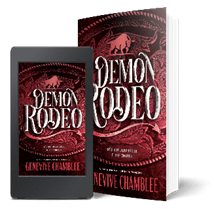
If Brokeback Mountain, 8 Seconds, Poltergeist, and Supernatural had an orgy, Demon Rodeo would be the lovechild.
Demon Rodeo is available now on Amazon. For video book trailers, visit my TikTok page. The full blurb is on my Instagram and Amazon.
Demon Rodeo is the first book in the Chasing the Buckle series, but it can be read as a standalone romance. Set in the world of rodeo, this friends-to-lovers story delivers cowboys unlike the ones you may expect. With a diverse cast of characters and a genre-bending blend of romance, rodeo, and unexpected twists, Demon Rodeo brings together elements that are not often seen in the same story. If you’re looking for something fresh, a little unconventional, and a true palate cleanser from the usual romance formula, this may be the book for you.
Order
⇨ Amazon: https://readerlinks.com/l/4174852
⇨ All Stores: https://books2read.com/u/bP8RG7
Until next time, happy reading and much romance. Laissez le bon temps rouler.
If you’re not following my blog, Creole Bayou, what are you waiting for? There’s always room at the bayou.
NEWSLETTER! Want to get the latest information and updates about my writing projects, giveaways, contests, and reveals first? Click here and sign up today.
Want to chat about writing, mental health, Cajun cuisine, Creole culture, or just spill some tea? If yes, let’s get connected. Follow me on one of my social links. There’s plenty to choose from.
TikTok: CreolegurlNolaBluesky: Genevive ChambleeLemon8: CreolegurlNolaFacebook: Genevive ChambleeInstagram: genevivechambleeauthorThreads: Author Genevive ChambleeBookBub: Genevive ChambleeAmazon Authors: Genevive ChambleeGoodreads: Genevive ChambleeX (formerly Twitter): @dolynesaidso
[image error]LOCKER ROOM LOVE[image error]
[image error] Locker Room Love Series [image error]
Are you searching for a sexy book boyfriend? You’ve come to the right place.
Out of the Penalty Box (book #1) One minute in the box or a lifetime out. Defending the Net (book #2) Crossing the line could cost the game. Ice Gladiators (book #3) When the gloves come off, the games begin. Penalty Kill (book #4) Let the puckery begin. Future Goals (book #5) The future lies between a puck and a net.About the Author:
Hi, I’m Genevive, and I am a contemporary sports romance author. My home is in South Louisiana. If you like snark and giggles with a touch of steamy Cajun and Creole on the side, I may have your poison in my stash of books. Drop by the bayou and have a look around. The pirogues are always waiting for new visitors.


September 9, 2026
Love Isn’t Therapy
Although professional treatment addresses specific mental health needs, love can play a powerful role in a person’s overall well-being. Despite the countless books, movies, and songs insisting that “love conquers all,” healthy relationships offer support, stability, and connection while trauma, depression, anxiety, addiction, and unhealthy coping patterns require their own healing processes. A loving partner can encourage healthy coping strategies, celebrate progress, and gently motivate someone to seek professional help or remain engaged in treatment when needed.
The distinction is an important one. Support plays an important role in healing by providing connection, encouragement, and a sense of safety. Treatment offers the professional expertise and tools needed to address mental health challenges and develop effective strategies for growth. Diagnosing a mental health condition, providing therapy, prescribing medication, and doing another person’s emotional work fall outside a partner’s role in a healthy relationship. What a partner can do is offer a safe place to land, a listening ear, and a steady presence through both setbacks and successes. In many cases, that kind of consistent support becomes an invaluable part of the healing process, even though it is never a replacement for appropriate mental health care.
Love can be a powerful source of comfort, encouragement, and emotional connection, while meaningful healing grows through a combination of support, self-awareness, and personal work. Despite the countless books, movies, and songs insisting that “love conquers all,” healthy relationships provide support and connection, but they do not erase trauma, cure depression or anxiety, overcome addiction, or undo years of unhealthy coping patterns. Love may walk beside a person through those struggles, offering a steady presence through difficult seasons, while the path toward healing must be traveled from within. Healing often requires time, intentional effort, and, in many cases, professional support.
This perspective highlights the importance of love rather than taking away from it. A caring partner can offer understanding, encouragement, stability, and a safe place to be vulnerable. They can celebrate progress, provide reassurance during difficult moments, and offer the comfort of knowing that challenges do not have to be faced in isolation. Their role is to provide support and companionship while each person continues their own path toward healing.
When professional mental health care is needed, love can provide encouragement and support while therapy, medication, and other evidence-based treatments address specific mental health needs. Healthy relationships can complement the healing process by providing encouragement, stability, and emotional support alongside appropriate treatment. Lasting change comes from a combination of personal growth, appropriate support, and the willingness to do the difficult work of healing.
Love remains a meaningful part of the healing process, offering connection, encouragement, and emotional support along the way. On the contrary, healthy relationships can provide many of the conditions that foster resilience and growth. A caring partner can offer encouragement during difficult moments, create a sense of emotional safety, reduce feelings of isolation, and gently encourage healthy coping or continued treatment when appropriate. These acts of love are powerful, but they are powerful because they support healing rather than replace it.
One of the healthiest concepts in any romantic relationship is understanding the difference between supporting a partner and trying to rescue them. Although the two can look similar on the surface, they come from very different places and often lead to very different outcomes.
A supportive partner listens without judgment, respects boundaries, encourages growth, and celebrates progress without expecting perfection. They offer compassion during difficult moments while recognizing that each person is ultimately responsible for their own choices and healing. Support creates a relationship where both people can grow as individuals while strengthening their connection to one another.
Rescuing, on the other hand, is built on the belief that one person is responsible for fixing another. A rescuer may feel compelled to solve every problem, shield their partner from every hardship, or sacrifice their own well-being in an effort to make the other person “better.” While these actions often come from genuine care, they can create unhealthy patterns of dependency, blur personal boundaries, and place unrealistic expectations on both partners.
Healthy love is built on mutual respect, trust, and the understanding that each person remains responsible for their own emotional well-being. Partners can offer compassion, encouragement, and support without becoming each other’s therapist, savior, or sole source of happiness. Healthy love respects boundaries while remaining deeply compassionate.
Instead, healthy love is about choosing to walk beside another person through life’s joys and hardships. It offers support without taking over, encouragement without controlling, and understanding without excusing harmful behavior. A loving partner can listen, comfort, encourage, and stand faithfully beside someone during difficult seasons, but healing is ultimately a journey each person must undertake for themselves. The strongest relationships are partnerships, not rescue missions.
Healing is rarely a straight line. It often involves developing self-awareness, making difficult choices, learning healthier coping skills, and accepting that setbacks are a normal part of the process rather than signs of failure. Growth takes time, patience, and a willingness to face challenges with honesty, effort, and self-reflection.
Although the support of family, friends, or a romantic partner can make that journey feel less lonely, no one else can do the work on another person’s behalf. Healing requires personal effort, reflection, and a commitment to change that must come from within. A partner can walk beside someone, but they cannot walk the path for them.
When I write romance, I avoid writing characters who save each other. Instead, I write characters who choose each other, day after day, despite their imperfections. They challenge one another’s assumptions, celebrate one another’s successes, and provide encouragement during life’s most difficult moments. In doing so, they create a relationship where healing feels possible because it is rooted in trust, acceptance, and emotional safety.
At the same time, neither character is responsible for fixing the other. They may inspire growth, encourage healthier choices, or gently hold each other accountable, offering support while each person takes ownership of their own emotional journey and creating an environment where personal growth can flourish. Through that process, they learn an even more valuable lesson: confronting their own fears, taking responsibility for their healing, and becoming healthier individuals while choosing to build a healthy relationship together.
Partners are still active participants in the healing journey, offering support and encouragement rather than standing on the sidelines while the other person struggles. Healthy love is active. It creates an environment where growth feels possible because people feel supported, accepted, and safe enough to face difficult truths. When people feel accepted rather than judged, they are often more willing to confront their challenges, develop healthier coping strategies, and take steps toward becoming healthier versions of themselves. A supportive partner may be unable to remove every obstacle, but they can provide the reassurance and stability that makes facing those obstacles feel less overwhelming.
Love can be one of the safest places to practice trust, vulnerability, honesty, and hope while offering the emotional support that helps people grow. It can remind people they are not alone while still honoring the truth that healing belongs to the individual. The healthiest romances are rooted in partnership, where each person is free to grow, heal, and love without carrying responsibility for the other’s emotional well-being.
Understanding the connection between love, healing, and mental health adds depth to the relationships we create in fiction and the ones we experience in real life. The strongest romances are built through trust, communication, vulnerability, support, and the willingness of both people to continue growing together.
Now I’d love to hear from you. How do you think stories portray the relationship between love and healing? Have you read a book or watched a movie where a character’s mental health journey or relationship dynamics felt especially realistic? Did any of these ideas change the way you think about love, support, or what it means to stand beside someone through difficult seasons?
Share your thoughts in the comments. I’d love to know what resonated with you, what perspectives you agree or disagree with, and what topics you’d like to explore next. Would you enjoy more posts that examine the psychology behind the relationships, characters, and stories we love?
As always, there’s a little more to every person than what we see on the surface—and there’s always room at the bayou.
If you enjoyed this post, please consider giving it a like and sharing it with someone who might enjoy it too. Your feedback helps me create more of the content you want to read, explore new topics, and continue growing this blog community.
If Brokeback Mountain, 8 Seconds, Poltergeist, and Supernatural had an orgy, Demon Rodeo would be the lovechild.
Demon Rodeo is available now on Amazon. For video book trailers, visit my TikTok page. The full blurb is on my Instagram and Amazon.
Demon Rodeo is the first book in the Chasing the Buckle series, but it can be read as a standalone romance. Set in the world of rodeo, this friends-to-lovers story delivers cowboys unlike the ones you may expect. With a diverse cast of characters and a genre-bending blend of romance, rodeo, and unexpected twists, Demon Rodeo brings together elements that are not often seen in the same story. If you’re looking for something fresh, a little unconventional, and a true palate cleanser from the usual romance formula, this may be the book for you.
Order
⇨ Amazon: https://readerlinks.com/l/4174852
⇨ All Stores: https://books2read.com/u/bP8RG7
Until next time, happy reading and much romance. Laissez le bon temps rouler.
If you’re not following my blog, Creole Bayou, what are you waiting for? There’s always room at the bayou.
NEWSLETTER! Want to get the latest information and updates about my writing projects, giveaways, contests, and reveals first? Click here and sign up today.
Want to chat about writing, mental health, Cajun cuisine, Creole culture, or just spill some tea? If yes, let’s get connected. Follow me on one of my social links. There’s plenty to choose from.
TikTok: CreolegurlNolaBluesky: Genevive ChambleeLemon8: CreolegurlNolaFacebook: Genevive ChambleeInstagram: genevivechambleeauthorThreads: Author Genevive ChambleeBookBub: Genevive ChambleeAmazon Authors: Genevive ChambleeGoodreads: Genevive ChambleeX (formerly Twitter): @dolynesaidso
[image error]LOCKER ROOM LOVE[image error]
[image error] Locker Room Love Series [image error]
Are you searching for a sexy book boyfriend? You’ve come to the right place.
Out of the Penalty Box (book #1) One minute in the box or a lifetime out. Defending the Net (book #2) Crossing the line could cost the game. Ice Gladiators (book #3) When the gloves come off, the games begin. Penalty Kill (book #4) Let the puckery begin. Future Goals (book #5) The future lies between a puck and a net.About the Author:
Hi, I’m Genevive, and I am a contemporary sports romance author. My home is in South Louisiana. If you like snark and giggles with a touch of steamy Cajun and Creole on the side, I may have your poison in my stash of books. Drop by the bayou and have a look around. The pirogues are always waiting for new visitors.
September 5, 2026
How to Go From Best Friends to “Oh Shit, We’re in Love”
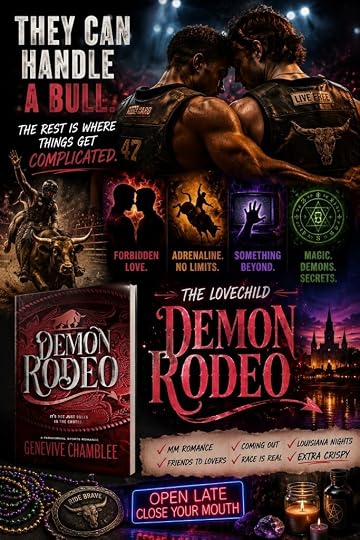
Apparently, I Wasn’t Going to Write a Normal Rodeo Romance. There are books that fit neatly into a genre. Demon Rodeo is NOT one of them.
It’s bull riding and romance. It’s friendship and coming out. It’s Louisiana and supernatural weirdness. It’s snark, sass, humor, spice, and two men who probably should have thought this whole thing through a little better. It’s also proof that sometimes the best books happen when you throw several completely incompatible ideas into a blender and hit PURÉE.
My favorite description still comes down to this: If Brokeback Mountain, 8 Seconds, Poltergeist, and Supernatural had an orgy, Demon Rodeo would be the lovechild.
And honestly? I stand by it. So today, I’m celebrating the book that refused to behave itself. Demon Rodeo. Bull rider. Best friend. Secret crush. Paranormal trouble.
What could possibly go wrong? Well, besides pretty much everything.
Order
⇨ Amazon: https://readerlinks.com/l/4174852
⇨ All Stores: https://books2read.com/u/bP8RG7
Until next time, happy reading and much romance. Laissez le bon temps rouler.
If you’re not following my blog, Creole Bayou, what are you waiting for? There’s always room at the bayou.
NEWSLETTER! Want to get the latest information and updates about my writing projects, giveaways, contests, and reveals first? Click here and sign up today.
Want to chat about writing, mental health, Cajun cuisine, Creole culture, or just spill some tea? If yes, let’s get connected. Follow me on one of my social links. There’s plenty to choose from.
TikTok: CreolegurlNolaBluesky: Genevive ChambleeLemon8: CreolegurlNolaFacebook: Genevive ChambleeInstagram: genevivechambleeauthorThreads: Author Genevive ChambleeBookBub: Genevive ChambleeAmazon Authors: Genevive ChambleeGoodreads: Genevive ChambleeX (formerly Twitter): @dolynesaidso
[image error]LOCKER ROOM LOVE[image error]
[image error] Locker Room Love Series [image error]
Are you searching for a sexy book boyfriend? You’ve come to the right place.
Out of the Penalty Box (book #1) One minute in the box or a lifetime out. Defending the Net (book #2) Crossing the line could cost the game. Ice Gladiators (book #3) When the gloves come off, the games begin. Penalty Kill (book #4) Let the puckery begin. Future Goals (book #5) The future lies between a puck and a net.About the Author:
Hi, I’m Genevive, and I am a contemporary sports romance author. My home is in South Louisiana. If you like snark and giggles with a touch of steamy Cajun and Creole on the side, I may have your poison in my stash of books. Drop by the bayou and have a look around. The pirogues are always waiting for new visitors.
September 2, 2026
Writing Diverse Love Stories: Beyond Representation
If you were to ask romance readers why they like to read BIPOC (Black, Indigenous, and People of Color) or POC (People of Color), many would list representation as the reason. This is because many readers enjoy seeing characters who share aspects of their own identity and that they can relate to. For some, that can make the emotional journey feel especially meaningful. But this is not the only reason writers should consider writing POC characters.
First, it reflects the real world. People of every race, ethnicity, and culture fall in love. A diverse cast can better reflect the societies many readers live in.
Second, diversity expands the possibilities available to a writer. Because POC characters remain underrepresented in many areas of fiction, including them can open opportunities to tell stories that have not been told as often. Different cultural backgrounds, family structures, traditions, and histories can create unique relationship dynamics and conflicts without changing the core promise of romance: two people finding love.
Third, it can broaden readers’ experiences. Readers often enjoy inhabiting perspectives different from their own. Romance, like other fiction, can build empathy by inviting readers into another person’s life.
Fourth—and perhaps the most obvious reason, yet one that is surprisingly easy to overlook—the story may simply call for it. The character who best fits the story may be African American, Asian, Indigenous, Latino, multiracial, or another identity entirely. The writer does not need a special justification beyond the fact that this is the character who belongs in the story.
Finally, it may challenge assumptions. Historically, mainstream romance centered Caucasian protagonists. Writing BIPOC leads can expand ideas about who gets to be the hero or heroine of a love story.
However, representation alone is not enough. A character’s presence on the page does not automatically make that representation meaningful or authentic. A writer can include a character from an underrepresented background and still reduce that character to a stereotype, a plot device, or a symbol of diversity. The goal, therefore, is not simply to add characters from different racial, ethnic, or cultural backgrounds. It is to write them as complete people—people with individual personalities, desires, flaws, relationships, histories, and experiences that may be shaped by their identity without being wholly defined by it.
When writing BIPOC characters, authors should be mindful to write them as fully realized people by avoiding stereotypes. A stereotype is an oversimplified, generalized belief or assumption about a group of people that is applied to individuals regardless of their unique traits or experiences. In other words, a stereotype treats people as representatives of a category rather than as distinct individuals. In writing, it would be reducing a character to clichés or cultural assumptions.
Likewise, writers should refrain from tokenism. Tokenism is the practice of including a person from an underrepresented group primarily to create the appearance of diversity or inclusion, rather than giving them meaningful presence, influence, or individuality. Basically, it is a means for a writer to say they are inclusive without truly being inclusive. It’s like inviting someone to a house party but having them remain in the basement while everyone else is in the backyard. Tokenism also borders on exploitation.
Other area that writers should be cautious is making race the entire identity of a character. Instead of giving the characters goals, flaws, humor, relationships, fears, and interests beyond their racial identity, everything about them is motivated by and centers on their race/ethnicity.
Doing the opposite–erasing culture—is equally as bad. This is when an author writes a character whose identity is mentioned once and then has no influence whatsoever. In the real world, a person’s culture, ethnicity, and backgrounds often shapes their family life, traditions, language, food, values, or community. It would be remiss to completely ignore this for POC characters.
Inaccurate representation Perhaps the biggest faux pas an author can make is not doing their due diligence of properly researching a culture they are not a part of and/or are unfamiliar with. Not properly researching customs, dialects, or experiences cand leading to errors, implausible portrayals, and possibly stereotypes.
Writing trauma (racism or oppression) as the only story. Hint: POC characters are allowed have joyful, funny, adventurous, and ordinary love stories just like non POC characters.
Exoticization occurs when a character’s race, ethnicity, or culture is portrayed as mysterious, unusual, sensual, or fundamentally “other” for the fascination of the reader. Instead of presenting the character as a complete individual, the writing may treat their appearance, cultural background, traditions, or perceived differences as something novel or alluring to be observed and consumed.
A character can be attractive, culturally distinct, or shaped by a unique background without being exoticized. The problem arises when the character’s identity becomes a source of fascination primarily because it is considered foreign or different from the assumed norm. A character should not exist merely to provide readers with an exotic experience. They should be a fully developed person with their own personality, desires, flaws, relationships, goals, and individual experiences.
And there you have it—the foundation for writing more authentic and meaningful POC characters. Representation is important, but meaningful representation requires more than simply placing a character of color on the page. POC characters should be allowed to be complex, individual people whose race, ethnicity, and culture may shape their experiences without becoming the entirety of their identity. They can be shaped by their heritage without being reduced to stereotypes, and they can have cultural identities without being defined solely by trauma, racism, or oppression.
Now I’d love to hear from you. What books, movies, or fictional characters do you think portray POC characters particularly well? Have you ever read a story that introduced you to a perspective, culture, or experience different from your own? What made the representation feel authentic—or, alternatively, what made it feel stereotypical or tokenistic? Share your thoughts in the comments! I’d love to know what resonated with you, what perspectives you agree or disagree with, and what topics you’d like to explore next. Would you enjoy more posts examining the psychology, culture, and character development behind the stories we love?
As always, there’s a little more to every person than what we see on the surface—and there’s always room at the bayou.
If you enjoyed this post, please consider giving it a like and sharing it with someone who might enjoy it too. Your feedback helps me create more of the content you want to read, explore new topics, and continue growing this blog community.
If Brokeback Mountain, 8 Seconds, Poltergeist, and Supernatural had an orgy, Demon Rodeo would be the lovechild.
Demon Rodeo is available now on Amazon. For video book trailers, visit my TikTok page. The full blurb is on my Instagram and Amazon.
Demon Rodeo is the first book in the Chasing the Buckle series, but it can be read as a standalone romance. Set in the world of rodeo, this friends-to-lovers story delivers cowboys unlike the ones you may expect. With a diverse cast of characters and a genre-bending blend of romance, rodeo, and unexpected twists, Demon Rodeo brings together elements that are not often seen in the same story. If you’re looking for something fresh, a little unconventional, and a true palate cleanser from the usual romance formula, this may be the book for you.
Order
⇨ Amazon: https://readerlinks.com/l/4174852
⇨ All Stores: https://books2read.com/u/bP8RG7
Until next time, happy reading and much romance. Laissez le bon temps rouler.
If you’re not following my blog, Creole Bayou, what are you waiting for? There’s always room at the bayou.
NEWSLETTER! Want to get the latest information and updates about my writing projects, giveaways, contests, and reveals first? Click here and sign up today.
Want to chat about writing, mental health, Cajun cuisine, Creole culture, or just spill some tea? If yes, let’s get connected. Follow me on one of my social links. There’s plenty to choose from.
TikTok: CreolegurlNolaBluesky: Genevive ChambleeLemon8: CreolegurlNolaFacebook: Genevive ChambleeInstagram: genevivechambleeauthorThreads: Author Genevive ChambleeBookBub: Genevive ChambleeAmazon Authors: Genevive ChambleeGoodreads: Genevive ChambleeX (formerly Twitter): @dolynesaidso
[image error]LOCKER ROOM LOVE[image error]
[image error] Locker Room Love Series [image error]
Are you searching for a sexy book boyfriend? You’ve come to the right place.
Out of the Penalty Box (book #1) One minute in the box or a lifetime out. Defending the Net (book #2) Crossing the line could cost the game. Ice Gladiators (book #3) When the gloves come off, the games begin. Penalty Kill (book #4) Let the puckery begin. Future Goals (book #5) The future lies between a puck and a net.About the Author:
Hi, I’m Genevive, and I am a contemporary sports romance author. My home is in South Louisiana. If you like snark and giggles with a touch of steamy Cajun and Creole on the side, I may have your poison in my stash of books. Drop by the bayou and have a look around. The pirogues are always waiting for new visitors.
August 26, 2026
The Psychology of Romance
What is romance? That’s actually a huge question—much bigger than it sounds, because romance can mean several different psychological phenomena. Although romance is often discussed as a single experience, psychologists generally understand it as a complex phenomenon made up of several related psychological constructs, including attraction, attachment, limerence, love, and pair bonding. Rather than treating romance as a single emotion or experience, psychologists typically break it down into several interconnected processes that help explain why people fall in love, stay in love, or sometimes confuse one emotional experience for another. From the science of attraction and the components of lasting love to the intensity of limerence, psychology offers a framework for understanding the many factors that shape romantic relationships. Looking at these concepts individually provides a clearer picture of what romance really is and why it can feel so powerful.
Attraction: Attraction raises the question, “Why are we drawn to one person instead of another?” While there is no single answer, research suggests that attraction is influenced by a combination of psychological, social, and physical factors. One of the strongest influences is familiarity—the more often we see someone, the more likely we are to develop positive feelings toward them. Similarity also plays a major role, as people are often attracted to others who share their values, interests, beliefs, and life goals. In some cases, however, complementarity can be appealing, with differences in personality or strengths balancing one another. Other factors, such as physical attraction, perceived competence, a good sense of humor, and kindness, can also increase attraction. Even timing matters; people are more likely to form romantic connections when they are emotionally available and in the right stage of life. Ultimately, attraction is complex, and no single factor can predict whether a romantic relationship will develop. Instead, it is usually the combination of these influences that shapes who we are drawn to and why.Attachment. Attachment is arguably the most influential area of relationship psychology. In psychology, attachment is clinically defined as an organized pattern of emotional and behavioral responses through which an individual seeks proximity to significant others to obtain safety, emotional regulation, and support. In simpler terms, attachment is a lasting emotional bond between two people that provides a sense of security, comfort, and connection, particularly during times of stress or vulnerability. The concept originated with British psychiatrist and psychoanalyst John Bowlby’s Attachment Theory (formally introduced in 1958) and was later expanded through the work of Mary Ainsworth.Based on early attachment experiences, adults often develop one of four attachment patterns: secure (comfortable with closeness and trusting others), anxious, also called preoccupied (fearing abandonment and seeking frequent reassurance), avoidant, also called dismissive (valuing independence and withdrawing when relationships become emotionally intense), and fearful-avoidant, also called disorganized (desiring intimacy while simultaneously fearing it). In other words, attachment is the psychological system that answers questions such as, Who do I turn to when I’m afraid? Who makes me feel safe? How do I respond when someone I care about leaves? Although attachment is closely related to relationships, it is distinct from love, because it is possible to love someone without having a secure attachment to them; dependency, because healthy attachment still allows for independence; affection, because affection is a behavior whereas attachment is an enduring relational system; and romance, because romantic attraction and attachment often overlap but represent different psychological processes.
Attachment serves several important psychological functions throughout life. It helps people regulate their emotions, seek comfort and protection during times of stress, and develop a sense of safety that allows them to explore the world with greater confidence. Secure attachment also promotes resilience by helping individuals recover more effectively from stressful experiences and provides a foundation for building stable, healthy, and supportive relationships with others.
Bowlby believed attachment is an evolutionary survival system. Human infants are born helpless, so staying close to caregivers increased the likelihood of survival. That attachment system continues into adulthood, especially in close relationships.
In adulthood, attachment is reflected in everyday relationship behaviors. It can be seen when someone turns to a partner for comfort after a difficult day, feels distressed during a prolonged separation, trusts another person enough to be emotionally vulnerable, or feels secure enough to pursue personal goals because they know someone “has their back.” These behaviors reflect the sense of safety and emotional security that healthy attachment provides. Attachment theory explains a surprising amount of romantic behavior.
Limerence. Limerence is a term coined by Psychologist Dorothy Tennov. It is used to describe a state of intense romantic infatuation that goes beyond simply having a crush. Limerence is characterized by obsessive thoughts about another person, a deep longing to be with them, idealizing their qualities, and a strong desire for those feelings to be returned. Because the emotions can be so overwhelming, many people mistake limerence for love. However, unlike healthy love, which develops through mutual trust, intimacy, and commitment, limerence is often fueled by uncertainty and emotional highs and lows. The excitement of wondering whether the other person feels the same can make limerence seem even more intense than love, but it is typically centered on longing and fantasy rather than a stable, lasting connection.Love. Psychologist Robert Sternberg believed that love isn’t just one feeling but, rather, is made up of three key ingredients: intimacy, passion, and commitment. According to his Triangular Theory of Love, the way these three components come together determines the type of relationship people experience. For example, passion by itself is often experienced as infatuation, intimacy alone looks more like a close friendship, and commitment without intimacy or passion is what Sternberg referred to as an empty marriage. When all three components are present, they create what he called consummate love, which represents a strong, balanced relationship built on emotional closeness, physical attraction, and long-term commitment.Pair Bonding. Humans are unique in their ability to form long-term emotional partnerships that extend beyond immediate attraction or reproduction. These lasting bonds are shaped by a combination of biology, psychology, and shared experiences. Neurochemicals such as oxytocin and vasopressin play important roles in connection and bonding, while dopamine contributes to feelings of reward and motivation that often accompany romantic attachment. Over time, shared experiences, trust, emotional support, and a sense of security help strengthen these partnerships, allowing relationships to grow from initial attraction into deeper, more enduring connections.Attachment and bonding are terms that often are used interchangeably in everyday conversation, but psychologists distinguish them. Attachment refers to the emotional bond and behavioral system, especially from the perspective of the person seeking security. Bonding often refers to the process of developing emotional closeness between people, particularly from the caregiver’s perspective. So, in psychological terms, attachment isn’t simply “being close” to someone. It’s a fundamental emotional system that organizes how people seek safety, connection, and support throughout life.
Pair bonding is best thought of as the result of several factors working together rather than as a separate part of romance. It develops through a combination of attachment, biological processes, and commitment, creating a lasting emotional connection between partners. Because these elements are so closely intertwined, pair bonding overlaps considerably with both attachment and love instead of existing as its own distinct psychological process.
Psychologically, romance isn’t identical to love. Romance usually emphasizes novelty, excitement, anticipation, emotional intensity, and idealization. Love often shifts toward security, companionship, trust, sacrifice, commitment. Healthy long-term relationships generally contain both, but in different proportions over time.
From a psychological standpoint, romance novels allow readers to experience attachment, hope, emotional intimacy, being deeply understood, safety, conflict followed by resolution, and certainty. Unlike real life, romance fiction almost always guarantees the relationship succeeds in a happily ever after (or happily for now). It’s one of the few genres where the emotional journey is the product. The external plot often exists primarily to test, reveal, and deepen the relationship. That certainty is part of the appeal.
And there you have it—the science behind what makes human connection, attraction, and love so fascinating! Now I want to hear from you. What are your thoughts on the subject? Did anything surprise you, challenge your perspective, or make you see relationships in a new way? Share your take in the comments! I’d love to know what stood out to you, whether you agree or disagree, and what topics you’d like to explore next. Would you like to see more posts like this, or would you like me to dive deeper into one of these ideas?
If you enjoyed this post, please consider giving it a like and sharing it with someone who might enjoy it too. Your feedback helps me create more of the content you want to read, explore new topics, and continue growing this blog community.
Not following me on Creole Bayou blog, yet? What are you waiting for? There’s always room at the bayou.
If Brokeback Mountain, 8 Seconds, Poltergeist, and Supernatural had an orgy, Demon Rodeo would be the lovechild.
Demon Rodeo is available now on Amazon. For video book trailers, visit my TikTok page. The full blurb is on my Instagram and Amazon.
Demon Rodeo is the first book in the Chasing the Buckle series, but it can be read as a standalone romance. Set in the world of rodeo, this friends-to-lovers story delivers cowboys unlike the ones you may expect. With a diverse cast of characters and a genre-bending blend of romance, rodeo, and unexpected twists, Demon Rodeo brings together elements that are not often seen in the same story. If you’re looking for something fresh, a little unconventional, and a true palate cleanser from the usual romance formula, this may be the book for you.
Order
⇨ Amazon: https://readerlinks.com/l/4174852
⇨ All Stores: https://books2read.com/u/bP8RG7
Until next time, happy reading and much romance. Laissez le bon temps rouler.
If you’re not following my blog, Creole Bayou, what are you waiting for? There’s always room at the bayou.
NEWSLETTER! Want to get the latest information and updates about my writing projects, giveaways, contests, and reveals first? Click here and sign up today.
Want to chat about writing, mental health, Cajun cuisine, Creole culture, or just spill some tea? If yes, let’s get connected. Follow me on one of my social links. There’s plenty to choose from.
TikTok: CreolegurlNolaBluesky: Genevive ChambleeLemon8: CreolegurlNolaFacebook: Genevive ChambleeInstagram: genevivechambleeauthorThreads: Author Genevive ChambleeBookBub: Genevive ChambleeAmazon Authors: Genevive ChambleeGoodreads: Genevive ChambleeX (formerly Twitter): @dolynesaidso
[image error]LOCKER ROOM LOVE[image error]
[image error] Locker Room Love Series [image error]
Are you searching for a sexy book boyfriend? You’ve come to the right place.
Out of the Penalty Box (book #1) One minute in the box or a lifetime out. Defending the Net (book #2) Crossing the line could cost the game. Ice Gladiators (book #3) When the gloves come off, the games begin. Penalty Kill (book #4) Let the puckery begin. Future Goals (book #5) The future lies between a puck and a net.About the Author:
Hi, I’m Genevive, and I am a contemporary sports romance author. My home is in South Louisiana. If you like snark and giggles with a touch of steamy Cajun and Creole on the side, I may have your poison in my stash of books. Drop by the bayou and have a look around. The pirogues are always waiting for new visitors.
August 21, 2026
The Ultimate Penalty: When Everything You Built Starts Falling Apart
Happy Book Birthday to Penalty Kill
August 21 marks the release anniversary of Penalty Kill, the fourth book in my Locker Room Love series.
Some books come with a little drama. Others come with a double homicide investigation, a media nightmare, and a hockey superstar whose reputation is hanging by a thread.
Welcome to Penalty Kill.
The Locker Room Love series is filled with hockey players, romance, friendships, and the messy realities that come with relationships. These stories aren’t just about falling in love—they’re about learning how to communicate, how to heal, and how to let someone see the parts of yourself you usually keep hidden.
In Penalty Kill, readers get another chance to step into the world of hockey romance and follow characters who have to face challenges both on and off the ice. Timothée Croneau has everything people think a person could want—talent, money, fame, and a successful hockey career. But when he becomes the number one person of interest in a double homicide, his carefully built world starts falling apart.
Enter Ryker Kitsch, the sports agent tasked with managing Timothée’s image and helping him survive the fallout. What starts as a professional arrangement quickly becomes much more complicated when two people with very different goals find themselves forced to work together.
Penalty Kill is a story about reputation, pressure, trust, and what happens when people are forced to look beyond the image someone presents to the world.
It’s hard to believe Penalty Kill has been out for another year. Writing a book is always a journey, from the first idea to the final edits and eventually placing it into readers’ hands. Each release represents months (and sometimes years) of creativity, frustration, excitement, and determination.
So today, I’m celebrating Penalty Kill celebrating the release of Penalty Kill and the characters who stepped onto the ice and into readers’ hands and a reminder of why I love writing romance.
Happy book birthday, Penalty Kill! 

Have you read the Locker Room Love series? Which book is your favorite?
As always, there’s a little more to every person than what we see on the surface—and there’s always room at the bayou.
If you enjoyed this post, please consider giving it a like and sharing it with someone who might enjoy it too. Your feedback helps me create more of the content you want to read, explore new topics, and continue growing this blog community.

Looking for a romance that’s a little less traditional but a heck of a lot of fun with blend of genres that will stir up spice? There’s abook for that.
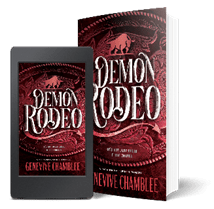
If Brokeback Mountain, 8 Seconds, Poltergeist, and Supernatural had an orgy, Demon Rodeo would be the lovechild.
Demon Rodeo is available now on Amazon. For video book trailers, visit my TikTok page. The full blurb is on my Instagram and Amazon.
Demon Rodeo is the first book in the Chasing the Buckle series, but it can be read as a standalone romance. Set in the world of rodeo, this friends-to-lovers story delivers cowboys unlike the ones you may expect. With a diverse cast of characters and a genre-bending blend of romance, rodeo, and unexpected twists, Demon Rodeo brings together elements that are not often seen in the same story. If you’re looking for something fresh, a little unconventional, and a true palate cleanser from the usual romance formula, this may be the book for you.
Order
⇨ Amazon: https://readerlinks.com/l/4174852
⇨ All Stores: https://books2read.com/u/bP8RG7
Until next time, happy reading and much romance. Laissez le bon temps rouler.
If you’re not following my blog, Creole Bayou, what are you waiting for? There’s always room at the bayou.
NEWSLETTER! Want to get the latest information and updates about my writing projects, giveaways, contests, and reveals first? Click here and sign up today.
Want to chat about writing, mental health, Cajun cuisine, Creole culture, or just spill some tea? If yes, let’s get connected. Follow me on one of my social links. There’s plenty to choose from.
TikTok: CreolegurlNolaBluesky: Genevive ChambleeLemon8: CreolegurlNolaFacebook: Genevive ChambleeInstagram: genevivechambleeauthorThreads: Author Genevive ChambleeBookBub: Genevive ChambleeAmazon Authors: Genevive ChambleeGoodreads: Genevive ChambleeX (formerly Twitter): @dolynesaidso
[image error]LOCKER ROOM LOVE[image error]
[image error] Locker Room Love Series [image error]
Are you searching for a sexy book boyfriend? You’ve come to the right place.
Out of the Penalty Box (book #1) One minute in the box or a lifetime out. Defending the Net (book #2) Crossing the line could cost the game. Ice Gladiators (book #3) When the gloves come off, the games begin. Penalty Kill (book #4) Let the puckery begin. Future Goals (book #5) The future lies between a puck and a net.About the Author:
Hi, I’m Genevive, and I am a contemporary sports romance author. My home is in South Louisiana. If you like snark and giggles with a touch of steamy Cajun and Creole on the side, I may have your poison in my stash of books. Drop by the bayou and have a look around. The pirogues are always waiting for new visitors.
August 19, 2026
The Reality of Other People’s Realities
I loved my father dearly, but one thing he used to do that annoyed me was to deny my limitations without offering assistance. He would scold me when I’d declare I couldn’t do something. He’d say “can’t” is a state of mind and that if I said I couldn’t then I wouldn’t. Later in life, I met a man who is similar but a thousand times worse. His schtick is, “You’re so negative,” and “I choose to focus on the positive.”
Great.
I understand what they mean, and I don’t disagree with the philosophy of speaking something into existence. Many people have adopted that attitude and use it as a motto to live by. And for some people, it works.
Or does it?
My aim isn’t to rain on anyone’s mojo. My problem with this philosophy is that it’s often incomplete. Here’s what I mean.
When I would complain to my father that I couldn’t do something and he attributed my inability to my mindset, I would question him for options. Likewise, when my associate would tell me that I needed to adjust my outlook, I would ask him for suggestions. Chirp, chirp.
There’s an old adage: if you’re not part of the solution, then you’re part of the problem. And that was exactly my issue with the words of my father and associate. The offered no solutions to the problem that I was experiencing. If I said, I couldn’t figure something out, they didn’t help me brainstorm it or propose alternative. No, they left me with nothing other than a blanketed statement of attitude adjustment, and frankly, that never helped.
Putting on a smile and saying, “yes, I can do this,” didn’t actually provide answers. So, saying yes, I can solve a math problem without helping me understand the math problem wasn’t doing squat to help me pass the math test the next day.
The reason I consider my associate to be a thousand times worse is that his extension goes beyond useless words and into ignoring and dismissing—things like, “I wouldn’t worry about it” and “Think about something else.” None of these solves problems.
It is interesting when people weigh in on other people’s problems with statements that reflect their own values and opinions under the umbrella of encouragement. The reality, however, is that these types of statements can allow the person offering them to remain in their own comfort zone rather than doing what is actually best for the person in front of them. While their intentions on the surface may be good, mostly, they are subconsciously being pragmatic. That doesn’t make them “bad” people. It just makes them unhelpful at the least and obtuse in the worse. It is more helpful to acknowledge the problem honestly and then look for a viable solution.
There’s another old saying: actions speak louder than words. Consider this: a hungry person thinking about being hungry does not solve the discomfort of being hungry. Cooking a meal would. So would buying food from a grocery store, ordering takeout, dining in at a restaurant. Those things are real. They address the actual problem. So, if Mr. Happy strolls in eating a lobster po’boy and says something to the effect of, “Well, just think about what a beautiful day it is,” it may be perceived as condescending and shortsighted. Mr. Happy isn’t hungry and doesn’t have to worry about food. Then after delivering his spout of positivity, he merrily saunters off with a full belly.
Now, the obvious argument is the hungry person should solve his own hunger problems himself. Fair enough. But is it too much to ask for people not to volunteer unsolicited, useless commentary? Remember what many mothers often say, “If you can’t say anything nice, say nothing at all.” In this case, substitute “nice” with “helpful.”
However, here is the most important part—the part that is likely the most discomforting and that many people would rather stick their head in the proverbial sand and pretend doesn’t exist. When a person refuses to offer helpful solutions, they forfeit their standing to complain about the solution someone chooses on their own. One can’t hide the road signs and expect others to drive the speed limit.
If the hungry person starts eating a tuna fish sandwich that has been sitting unrefrigerated for three days, then maybe someone should have warned them before they took the first bite. If the position is that it was no one’s responsibility to warn them, that’s a legitimate stance. But then that same person doesn’t get to turn around afterward and say, “They should have known better,” or “They could have come up with another option.” It’s hypocritical to simultaneously refuse to help someone navigate a problem and then condemn the route they take after they’ve been left to navigate it alone. Because sometimes, “I can’t” is a problem to solve and not a mindset to correct.
I’ll close this with a concept I only learned about a few years ago: toxic positivity. Toxic positivity is the tendency to insist on positive thinking while overlooking or dismissing difficult emotions. Rather than encouraging resilience, it can communicate that sadness, anger, fear, grief, or frustration are unacceptable, leaving people feeling unheard or pressured to hide what they are truly experiencing. I don’t believe optimism is inherently bad. I don’t believe that focusing on the positive is inherently bad. And I don’t believe that every person who tells someone to “look on the bright side” is being malicious. But positivity without acknowledgment of reality can become dismissive.
It is not enough to acknowledge that someone is having a difficult time. It must also be recognized that their reality may be different from someone else’s. They may have different resources, different limitations, different opportunities, and different options available to them. It is easy to tell someone to “just do” something when that option is readily available. A person who has never had to consider the barriers another person faces may not understand why an obvious solution is not an option for someone else.
A person who is not hungry may tell a hungry person to go buy food. But does the hungry person have money? Transportation? Access to a grocery store? A safe place to prepare food? The same options are not available to everyone.
And this applies to far more than hunger.
A person may tell someone to leave an abusive relationship without understanding the financial, emotional, physical, or safety-related barriers that make leaving complicated. Someone may tell a person to get a better job without considering transportation, education, childcare, discrimination, disability, or the availability of jobs in that person’s community.
It is easy to prescribe solutions from the comfort of one’s own reality. But one person’s reality is not universal.
People do not all have the same opportunities, resources, experiences, or choices. Sometimes, the solution that seems obvious to one person is completely unavailable to another. This is not shorthand to suggest that people are incapable of solving their own problems. What it does mean is that assuming everyone has access to identical solutions is imprudent.
Now I’d love to hear from you. Have you ever been given advice that sounded positive but completely failed to account for your actual situation? Have you ever been told that a problem was simply a matter of attitude when the real issue was a lack of resources, opportunity, or viable options? What is the most unhelpful advice you’ve ever received—and what would have actually helped instead?
Share your thoughts in the comments. I’d love to hear what you think about positive thinking, personal responsibility, and the assumptions people make about problems they have never personally experienced.
As always, there’s a little more to every person than what we see on the surface—and there’s always room at the bayou.
If you enjoyed this post, please consider giving it a like and sharing it with someone who might enjoy it too. Your feedback helps me create more of the content you want to read, explore new topics, and continue growing this blog community.
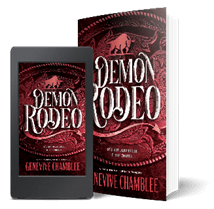
If Brokeback Mountain, 8 Seconds, Poltergeist, and Supernatural had an orgy, Demon Rodeo would be the lovechild.
Demon Rodeo is available now on Amazon. For video book trailers, visit my TikTok page. The full blurb is on my Instagram and Amazon.
Demon Rodeo is the first book in the Chasing the Buckle series, but it can be read as a standalone romance. Set in the world of rodeo, this friends-to-lovers story delivers cowboys unlike the ones you may expect. With a diverse cast of characters and a genre-bending blend of romance, rodeo, and unexpected twists, Demon Rodeo brings together elements that are not often seen in the same story. If you’re looking for something fresh, a little unconventional, and a true palate cleanser from the usual romance formula, this may be the book for you.
Order
⇨ Amazon: https://readerlinks.com/l/4174852
⇨ All Stores: https://books2read.com/u/bP8RG7
Until next time, happy reading and much romance. Laissez le bon temps rouler.
If you’re not following my blog, Creole Bayou, what are you waiting for? There’s always room at the bayou.
NEWSLETTER! Want to get the latest information and updates about my writing projects, giveaways, contests, and reveals first? Click here and sign up today.
Want to chat about writing, mental health, Cajun cuisine, Creole culture, or just spill some tea? If yes, let’s get connected. Follow me on one of my social links. There’s plenty to choose from.
TikTok: CreolegurlNolaBluesky: Genevive ChambleeLemon8: CreolegurlNolaFacebook: Genevive ChambleeInstagram: genevivechambleeauthorThreads: Author Genevive ChambleeBookBub: Genevive ChambleeAmazon Authors: Genevive ChambleeGoodreads: Genevive ChambleeX (formerly Twitter): @dolynesaidso
[image error]LOCKER ROOM LOVE[image error]
[image error] Locker Room Love Series [image error]
Are you searching for a sexy book boyfriend? You’ve come to the right place.
Out of the Penalty Box (book #1) One minute in the box or a lifetime out. Defending the Net (book #2) Crossing the line could cost the game. Ice Gladiators (book #3) When the gloves come off, the games begin. Penalty Kill (book #4) Let the puckery begin. Future Goals (book #5) The future lies between a puck and a net.About the Author:
Hi, I’m Genevive, and I am a contemporary sports romance author. My home is in South Louisiana. If you like snark and giggles with a touch of steamy Cajun and Creole on the side, I may have your poison in my stash of books. Drop by the bayou and have a look around. The pirogues are always waiting for new visitors.
August 12, 2026
How to Cope When Someone You Love Hurts You
Unfortunately, some of the deepest emotional wounds come from the people closest to a person and most trusted. Those who cause harm are not always strangers or obvious enemies. They may be parents, siblings, romantic partners, friends, or other people who once provided a sense of safety. They may betray confidences, withdraw support when it is needed most, manipulate, repeatedly cross healthy boundaries, or make promises they have no intention of keeping. The pain can be especially difficult to process when the person responsible is also someone whose love, approval, or presence still matters.
Even when past experiences have already shown what to expect, it is not uncommon to welcome someone back into life, hoping this time will be different. Sometimes, the person apologizes, or they make promises. Other times, enough time has passed that the pain feels less immediate, allowing hope to dim the memory. There may also be a desire to believe that people can change because sometimes, they can. The problem is not hoping for change, rather, it is confusing the possibility of change with evidence that change has actually occurred.
Here’s several truths that should always be remembered. A person can be forgiven without being given unlimited access. An apology can be accepted without trust being immediately restored. Love can remain without the relationship returning to its previous form. The desire for reconciliation may be based less on what the person has demonstrated and more on who the injured person wishes they would become. That hope can be powerful enough to override what experience has already taught.
When the same pattern repeats, the question may eventually become less about whether the other person deserves another chance and more about whether continuing to offer chances is causing additional harm. A relationship can be important and still be unhealthy. A person can be loved and still be unsafe to trust. Recognizing that reality does not make someone bitter, unforgiving, or incapable of love. Sometimes it means finally taking seriously what repeated experience has been trying to say.
Yet lasting change rarely comes from another person’s promises alone. If the same patterns continue, breaking the cycle may require more than waiting for the other person to change. It often begins by reexamining what you are willing to accept, how much access you give that person to your life, and where you choose to invest your emotional energy.
The following are some suggestions that may help.
1. Understand What Is Yours to Control. Whatever is happening with the other person is about them. But what happens next may involve you. This does not mean you deserve to be hurt. It does not mean you caused someone else’s disloyalty, manipulation, or abuse. It means that if you continue allowing the same person back into your life despite a repeated pattern of harm, there may be something worth examining—not to assign blame, but to better understand what keeps the cycle going and how to protect yourself.
The reasons are often deeply personal. Hope, love, guilt, loyalty, fear, and a desire to see the best in people can all make it difficult to walk away. The pervasive series of perhaps begin. Perhaps you hope they will change. Perhaps you love them. Perhaps you feel responsible for their well-being. Perhaps you believe this time will be different. Or perhaps the thought of closing the door feels more frightening than leaving it open. Understanding those motivations is often the first step toward breaking the cycle.
Once those patterns become clear, it becomes easier to recognize when healthy boundaries are needed. People rarely leave the front door unlocked for someone they know intends to cause harm. Emotional wounds, however, are seldom preceded by such obvious warnings. They are often inflicted by people who apologize, make promises, and ask for another chance. When the pattern continues despite those chances, protecting yourself may mean closing the door instead of opening it once again.
2. Do not let someone else’s actions consume the life that remains. When a person hurts someone, they may cause the damage and then continue living. They go to work. make plans, attend parties, go skiing with friends, etc. Meanwhile, the person they hurt may remain emotionally trapped in the moment of what happened, continuing to surrender time, energy, experiences, and peace to an event that has already ended.
Several years ago, a former coworker informed me she had refused to attend a family party because she believed a relative who had wronged her would be there. She stayed home because of one person. The relative never attended the party. He went skiing with friends instead. As a result, she missed an event where other people who loved and supported her had gathered. The person who hurt her spent the day enjoying himself on the slopes. Years later, she continues to talk about the party she missed.
That is one of the cruelest things about unresolved hurt. The person who caused the pain may have long since moved on—or may never have been affected by the incident to the same degree at all—while the person who was hurt continues paying the emotional cost. The other person gets to live their life while the person whose feelings were hurt misses the party.
A person cannot always control what someone else did to them. They cannot undo the harm, force an apology, or make another person understand what they caused. At some point, however, the question becomes: How much more of a person’s life should be surrendered to something that has already taken enough? The past may always be part of a person’s story. It does not have to remain the place where that person’s life is happening.
3. Understand what forgiveness does—and does not—mean. Forgiveness is often misunderstood. Forgiving someone does not mean forgetting what happened or pretending the harm was acceptable. It also does not require reconciliation, renewed trust, or continued access to your life. Sometimes forgiveness simply means acknowledging: This happened. It hurt me. I cannot change it. And I refuse to let it consume the rest of my life.
Hurt can leave a person emotionally anchored to the moment of injury, returning again and again to what happened and what was taken from them. Forgiveness does not erase that moment, rewrite the past, or require forgetting. It can, however, create room for experiences that are not defined by the injury. The person may never forget what happened. Trust may never be restored. The relationship may be over permanently. None of that prevents a person from eventually deciding that anger no longer deserves unlimited space in their life. Forgiveness can mean acknowledging that the harm occurred while refusing to let the person who caused it continue occupying the present.
4. Do not make healing dependent on receiving an apology. Some people who hurt you will sincerely acknowledge what they did and express genuine remorse. Others will never apologize. Even when an apology comes, however, the motivation behind it may not be as straightforward as it appears. A person may be seeking forgiveness because they truly regret their actions, or because they want the discomfort of the situation to end. They may even be trying to regain access to someone they have repeatedly harmed.
Words alone are not evidence of change. A person can apologize after every incident and continue repeating the same behavior. When that happens, the pattern often reveals more than the promise to do better. Genuine remorse is generally reflected not only in what a person says but in what they do differently afterward.
Healing cannot always wait for accountability from the person who caused the harm. The apology may never come. Even when it does, it may not provide the closure, understanding, or change that was hoped for. The person who caused the injury may never acknowledge its full impact, accept responsibility, or express genuine remorse. Healing, however, does not require permission from the person who caused the wound. It does not require acknowledgment, an apology, or an admission of wrongdoing. A life cannot remain indefinitely suspended, waiting for someone else to provide the words necessary to begin moving forward. The person who caused the harm may control whether an apology is offered. They do not have to control whether healing begins.
5. A person gets to decide who has access to them. Self-worth is not determined by whether someone else treats a person well, although an understanding of personal worth may influence what a person is willing to tolerate. Relationships can be maintained at different levels of closeness, and not every relationship has to be all or nothing. A person may remain part of someone’s life without being given the same access once granted.
Being family does not entitle anyone to unlimited access. A friend once described her strained relationship with her adult child by saying, “It hurts that she isn’t there like before, but it hurts worse when she is. I love her from a distance. If she needs anything, I’m there for her. However, she is not someone I allow my guard to drop around.” She said this with tears in her eyes.
The decision was not easy. But she had come to understand that loving her child did not require allowing herself to be repeatedly harmed. She could care about her without enabling destructive behavior. She could remain a mother without forgetting that she was also a person with other relationships, responsibilities, and needs. Love does not always require closeness. A person can care deeply about someone and still recognize that continued access comes at too high a cost. Love may remain, even when the relationship must change.
6. Be Careful That Hurt Does Not Consume Everything Else. When a person is hurt, withdrawing inward can feel almost inevitable. Laughter becomes less frequent. Invitations go unanswered. Messages remain unread. The mind circles what happened, replaying conversations and searching for an explanation. In focusing so intensely on the person who caused the pain, a person may unintentionally begin withdrawing from the people who still love and support them.
A man once told me about the end of his marriage after discovering that his wife had been having an affair. He spent months trying to understand what had happened and questioning everything she said and did. Trust disappeared. Intimacy became uncomfortable. He stopped going anywhere except work and home, and when he was home, he found reasons to be alone. In the process, he also began withdrawing from his children.
Eventually, he realized that his pain had consumed so much of his life that he was losing time with the people who still needed him. His marriage ended. The betrayal remained part of his story, but healing did not require pretending it had never happened. It required finding his way back to the rest of his life. Pain deserves acknowledgment. It deserves time, attention, and space to be processed. However, it does not have to take everything else with it.
7. Remember that every season eventually changes. Ecclesiastes offers a reminder that life is not a single, unchanging experience. To everything there is a season, and a time to every purpose under the heaven. There may be a season marked by grief. Another may be defined by anger, loneliness, confusion, or the need to withdraw and recover. A season of pain can feel endless while it is being lived, particularly when the future is impossible to see clearly from within it. But seasons change. The end of one season does not require pretending that it never happened. Grief may leave a person changed. Betrayal may alter the ability to trust. Loss may permanently reshape a life. Even so, the pain does not have to define every season that follows.
8. Make room for new memories. Make room for new memories. Sometimes, the person who caused the hurt leaves a void that may never completely disappear. That does not mean there is no room for something new. The good times can be remembered with fondness and gratitude. Something can have mattered deeply and still be over. A cherished memory does not have to remain an open wound. It can be placed where it belongs: in the past. Then, when the time is right, new memories can begin.
9. Respect a person’s decision to leave. Just as the right exists to close a door to someone who repeatedly causes harm, the same right belongs to the person on the other side of that door. If someone has moved on, that may have to be accepted. There is no reason to spend a lifetime knocking on a door someone has chosen to close. Rejection hurts. Losing someone hurts. But sometimes the most dignified response is accepting that a relationship has ended and continuing forward.
10. Do things that bring happiness. It sounds simple, but it is often overlooked. When someone causes pain, attention can become so focused on the person and what happened that everything else begins to disappear. Interests are neglected. Routines change. Activities that once brought laughter, peace, or a sense of identity may slowly fall away. Make a list. Include items such as: What brings laughter? What creates a sense of peace? What makes a person feel most like themselves? What was once enjoyed before the pain took up so much space? What has been stopped because there was too much time spent being hurt? Start there.
It does not have to be anything dramatic. It may be listening to music, watching a favorite movie, reading a book, cooking a meal, spending time outside, visiting a favorite place, or doing something that has not been done in years. The activity itself may seem small, but small things can still matter. As opposed to a dramatic transformation, happiness may arrive with one small thing that is a reminder that life is still here. There are still interests, preferences, possibilities, and moments that belong to the person living the life. The pain may have taken up space. It does not have to keep taking all of it.
11. Write the letter will never ever be sent. Write everything. Say everything you wish you could say. Just let it rip. There are no rules about grammar, length, or even whether the letter makes sense. The point is simply to get the thoughts out of your head and onto paper. When you are finished, you can burn it if you wrote it by hand or delete it if you wrote it electronically. The goal is not to send the letter. The goal is to release some of what you have been carrying.
Of course, one friend once suggested joining a gym and taking it out on a punching bag. I have a Bobo doll sitting on my office desk. So I am not going to disagree with him completely.
The person who hurt you may have taken your trust, a relationship you believed would last, or time you can never get back. But you do not have to let them take everything that comes after.
At some point, healing becomes less about what happened to you and more about what you choose to do with what remains. You may still be hurt. You may still be angry. You may still miss someone who was bad for you. You may never receive the apology you deserved. You may never get an explanation that makes what happened make sense. But you can still choose to protect yourself. You can still choose to live. You can still choose to make room for something beyond the hurt. And sometimes, that is where healing begins.
And there you have it—the foundation for beginning to move forward after being hurt.
Healing does not require forgetting what happened, pretending the pain did not matter, or denying the importance of a relationship that has ended. It does not require an apology that may never come, an explanation that may never make sense, or closure from the person who caused the hurt. Moving forward is not always a straight line. Some days may feel easier than others. A memory may unexpectedly bring back sadness, anger, or longing. Progress does not require never thinking about what happened again. It means the past gradually becomes less powerful.
What has helped with moving forward after being hurt? Has writing an unsent letter, creating distance, reconnecting with old interests, or making new memories helped? What has made healing more difficult—or unexpectedly easier? Share your thoughts in the comments. Sometimes, hearing how other people have navigated pain can remind someone that healing does not have to look the same for everyone.
As always, there’s a little more to every person than what we see on the surface—and there’s always room at the bayou.
If you enjoyed this post, please consider giving it a like and sharing it with someone who might enjoy it too. Your feedback helps me create more of the content you want to read, explore new topics, and continue growing this blog community.
If Brokeback Mountain, 8 Seconds, Poltergeist, and Supernatural had an orgy, Demon Rodeo would be the lovechild.
Demon Rodeo is available now on Amazon. For video book trailers, visit my TikTok page. The full blurb is on my Instagram and Amazon.
Demon Rodeo is the first book in the Chasing the Buckle series, but it can be read as a standalone romance. Set in the world of rodeo, this friends-to-lovers story delivers cowboys unlike the ones you may expect. With a diverse cast of characters and a genre-bending blend of romance, rodeo, and unexpected twists, Demon Rodeo brings together elements that are not often seen in the same story. If you’re looking for something fresh, a little unconventional, and a true palate cleanser from the usual romance formula, this may be the book for you.
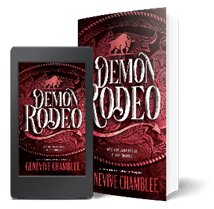
Order
⇨ Amazon: https://readerlinks.com/l/4174852
⇨ All Stores: https://books2read.com/u/bP8RG7
Until next time, happy reading and much romance. Laissez le bon temps rouler.
If you’re not following my blog, Creole Bayou, what are you waiting for? There’s always room at the bayou.
NEWSLETTER! Want to get the latest information and updates about my writing projects, giveaways, contests, and reveals first? Click here and sign up today.
Want to chat about writing, mental health, Cajun cuisine, Creole culture, or just spill some tea? If yes, let’s get connected. Follow me on one of my social links. There’s plenty to choose from.
TikTok: CreolegurlNolaBluesky: Genevive ChambleeLemon8: CreolegurlNolaFacebook: Genevive ChambleeInstagram: genevivechambleeauthorThreads: Author Genevive ChambleeBookBub: Genevive ChambleeAmazon Authors: Genevive ChambleeGoodreads: Genevive ChambleeX (formerly Twitter): @dolynesaidso
[image error]LOCKER ROOM LOVE[image error]
[image error] Locker Room Love Series [image error]
Are you searching for a sexy book boyfriend? You’ve come to the right place.
Out of the Penalty Box (book #1) One minute in the box or a lifetime out. Defending the Net (book #2) Crossing the line could cost the game. Ice Gladiators (book #3) When the gloves come off, the games begin. Penalty Kill (book #4) Let the puckery begin. Future Goals (book #5) The future lies between a puck and a net.About the Author:
Hi, I’m Genevive, and I am a contemporary sports romance author. My home is in South Louisiana. If you like snark and giggles with a touch of steamy Cajun and Creole on the side, I may have your poison in my stash of books. Drop by the bayou and have a look around. The pirogues are always waiting for new visitors.
August 9, 2026
ZoeBub STUFF YOUR KINDLE DAY
What happens with the guy you’re supposed to be playing with becomes the guy you can’t stop thinking about?

STUFF YOUR KINDLE DAY: Out of the Penalty Box FREE August 9–13!
On August 10, 2026, the ZoeBub STUFF YOUR KINDLE DAY will bring together a whole lot of free romance reads—and Out of the Penalty Box, the first book in my Locker Room Love series, is participating!
But hurry! The ZoeBub Stuff Your Kindle Day is a one-day event on August 10.
And the best part? You don’t have to wait for August 10 to start reading. Out of the Penalty Box will be FREE August 9–13!
Sometimes you don’t know you’re standing at the edge of something that will change your life until you take that first step.
For Aidan Lefèvre, that step comes after being traded to a new team.
He’s already dealing with the fallout from an injury and trying to prove to his coaches, teammates, and himself that he still belongs on the ice. The last thing he needs is a complication in his personal life.
Then there’s Christophe Fontenot.
Christophe is the team captain, outgoing, confident, and very comfortable with who he is. Aidan isn’t quite as certain about himself—especially when the attraction between them becomes impossible to ignore.
Suddenly, Aidan has more than his hockey career to think about.
Out of the Penalty Box is the first book in my Locker Room Love hockey romance series, and from August 9 through August 13, you can grab it FREE.
Hockey Two teammates Attraction that changes everything
 Book 1 of the Locker Room Love series
If you’ve been waiting for a reason to start the series, this is it.
FREE AUGUST 9–13
Download Out of the Penalty Box while it’s free and meet Aidan and Christophe.
STUFF YOUR KINDLE: https://www.romancebookworms.com/
And if you’ve already read it, send a friend who’s a hockey-romance reader my way. There are more stories waiting in the Locker Room Love locker room.
Out of the Penalty Box — FREE August 9–13.
Don’t miss it.
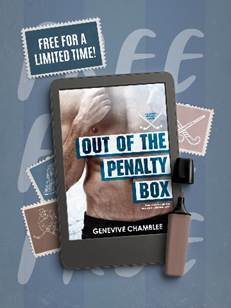
August 5, 2026
Five Things I’ve Learned About Healing from a Character I Made Up
Writing a character’s healing journey is not as simple as deciding what happened to them and then determining how they get better. Characters do not exist in isolation from their experiences, and the process of writing their stories often requires examining how pain, survival, identity, and change shape a person over time.
As I worked through one character’s story, I found myself thinking about healing in ways I hadn’t expected. Not as a simple progression from pain to recovery, but as something complicated, inconsistent, and deeply connected to the way a person understands themselves and their experiences. The more I wrote, the more I realized that I was learning from the process itself.
Here are five lessons I learned about healing while writing a character’s journey.
1. Healing can be difficult to recognize. This is because it often unfolds without dramatic breakthroughs or visible milestones and rarely follows a straight or predictable path. Much of its restoration happens beneath the surface, long before it becomes visible. Healing is the gradual return to wholeness and the courage to keep moving forward, even if it’s at a snail’s pace. A decision to get out of bed, endure another day, and acknowledge pain honestly often requires more strength than anyone else can see.
2. Healing is not a prerequisite for a meaningful life. A person can still build relationships, pursue dreams, laugh, create, and experience joy while carrying wounds that have not fully healed. Experiencing love, happiness, purpose, connection, or other meaningful things in life is not reserved exclusively for a person who is completely healed, emotionally healthy, or “fixed.” People are allowed to be works in progress.
3. The past can explain without having to define. Every experience leaves an imprint, and some leave wounds that take years to understand. it can be acknowledged without allowing it to define identity. Those realities deserve to be acknowledged rather than dismissed. What happened to a person matters, but it does not automatically get to decide who that person becomes. Yet, the past is only one part of the story. It provides context, but it is not a verdict. Pain can influence the future without controlling it, and hardship can leave its mark without determining identity. The experiences that formed a life do not possess the final authority over the person that life becomes. Growth, healing, and the choices made today continue to shape the chapters that follow.
4. Survival is the body and mind’s response to hardship, the instinctive process of enduring what feels overwhelming and finding a way through what is difficult. It is the strength required to keep going when circumstances demand more than feels possible. Surviving is a significant accomplishment, and it often becomes the foundation from which healing, growth, and change can begin. Over time, survival may evolve into a deeper question about what life can become beyond endurance. It can open the door to discovering purpose, connection, peace, and moments of joy that exist alongside the experiences that shaped the journey. The ability to survive creates space for the possibility of a life that holds more than hardship alone.
5. Healing is rarely neat. Healing is rarely a neat or predictable process. It includes setbacks, difficult days, and moments when old wounds resurface without warning. Progress can feel uncertain when a familiar pain returns or when a place that seemed behind suddenly feels close again. These moments are not evidence of failure; they are reminders that healing is not measured by never struggling, but by developing the strength to move through what arises. Part of healing is discovering that a difficult place can be revisited without becoming a permanent home. Each return offers another opportunity to practice resilience, self-understanding, and compassion. Even a fictional character can reveal something meaningful about the human experience, and sometimes those lessons are worth paying attention to.
Now I’d love to hear from you. Have you ever read a book, watched a movie, or encountered a fictional character that taught you something unexpected about healing, resilience, survival, or the human experience? Maybe a character helped you see an experience differently, challenged something you believed, or simply stayed with you long after you finished the story. What lessons have fictional characters taught you? Share your thoughts in the comments! I’d love to know what resonated with you, what perspectives you agree or disagree with, and what topics you’d like to explore next. Would you enjoy more posts examining the psychology, experiences, and character development behind the stories we love?
As always, there’s a little more to every person than what we see on the surface—and there’s always room at the bayou.
If you enjoyed this post, please consider giving it a like and sharing it with someone who might enjoy it too. Your feedback helps me create more of the content you want to read, explore new topics, and continue growing this blog community.
If Brokeback Mountain, 8 Seconds, Poltergeist, and Supernatural had an orgy, Demon Rodeo would be the lovechild.
Demon Rodeo is available now on Amazon. For video book trailers, visit my TikTok page. The full blurb is on my Instagram and Amazon.
Demon Rodeo is the first book in the Chasing the Buckle series, but it can be read as a standalone romance. Set in the world of rodeo, this friends-to-lovers story delivers cowboys unlike the ones you may expect. With a diverse cast of characters and a genre-bending blend of romance, rodeo, and unexpected twists, Demon Rodeo brings together elements that are not often seen in the same story. If you’re looking for something fresh, a little unconventional, and a true palate cleanser from the usual romance formula, this may be the book for you.
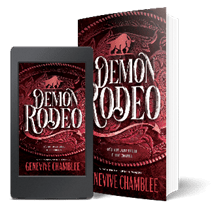
Order
⇨ Amazon: https://readerlinks.com/l/4174852
⇨ All Stores: https://books2read.com/u/bP8RG7
Until next time, happy reading and much romance. Laissez le bon temps rouler.
If you’re not following my blog, Creole Bayou, what are you waiting for? There’s always room at the bayou.
NEWSLETTER! Want to get the latest information and updates about my writing projects, giveaways, contests, and reveals first? Click here and sign up today.
Want to chat about writing, mental health, Cajun cuisine, Creole culture, or just spill some tea? If yes, let’s get connected. Follow me on one of my social links. There’s plenty to choose from.
TikTok: CreolegurlNolaBluesky: Genevive ChambleeLemon8: CreolegurlNolaFacebook: Genevive ChambleeInstagram: genevivechambleeauthorThreads: Author Genevive ChambleeBookBub: Genevive ChambleeAmazon Authors: Genevive ChambleeGoodreads: Genevive ChambleeX (formerly Twitter): @dolynesaidso
[image error]LOCKER ROOM LOVE[image error]
[image error] Locker Room Love Series [image error]
Are you searching for a sexy book boyfriend? You’ve come to the right place.
Out of the Penalty Box (book #1) One minute in the box or a lifetime out. Defending the Net (book #2) Crossing the line could cost the game. Ice Gladiators (book #3) When the gloves come off, the games begin. Penalty Kill (book #4) Let the puckery begin. Future Goals (book #5) The future lies between a puck and a net.About the Author:
Hi, I’m Genevive, and I am a contemporary sports romance author. My home is in South Louisiana. If you like snark and giggles with a touch of steamy Cajun and Creole on the side, I may have your poison in my stash of books. Drop by the bayou and have a look around. The pirogues are always waiting for new visitors.