M. Jahi Chappell's Blog
September 29, 2025
Always read Glenn Davis Stone
The Most Deceptive Graph Ever Made?
So many bangers in this piece. You should read it now-like.


August 18, 2021
Is it time to break up big ag? (Yes.) Also: Trump.
This piece by Dan Kaufman in The Atlantic speaks to some topics I brought up some years back, when Trump was elected:
“Is It Time to Break Up Big Ag?Renewed attention to antitrust has been focussed on Big Tech, but concentration in agriculture may be an underlying source of rural America’s pro-Trump political backlash.
“In the last election, Donald Trump won rural America by a greater margin than he did in 2016, capturing nearly two-thirds of its vote. “Concentration fed and fuelled the politics of resentment, entrenched corporate power, depopulated the landscape, and weakened the autonomy and agency of farmers, consumers, local governments, and communities,” Meine said. “I think this is at the very heart of the rural-urban political divide…
The Ozarks farmer, an enthusiastic Trump voter, is also a staunch supporter of antitrust enforcement. “We need to break up D.F.A.,” he told me.”
Meanwhile, in 2017 I wrote:
“For all the stories going around regarding the Trump victory and “forgotten” white and rural voters, I haven’t seen this one come back ’round, on the Obama Administration’s backing down on agricultural market concentration. Specifically, Lina Khan, the author of a stunning and thorough 2012 piece in Washington Monthly on concentration in agribusiness, particularly contract poultry, says:
It is no stretch to assume that, from the perspective of the White House, the choice to abandon an apparently failed effort to protect independent farmers from such abuses may have seemed politically pragmatic. But over the longer term, it may prove to have been a strategic political failure. By raising the hopes and championing the interests of independent farmers against agribusiness, the administration effectively reached out to the millions of rural voters who don’t normally vote Democratic but whose ardent desire to reestablish open and fair markets for their products and labor often trumps any traditional party allegiance. Instead of translating that newfound trust into political capital, the administration squandered whatever goodwill it had begun to earn. Worse, the administration’s silent retreat amounts to a form of moral failure. Having amply documented the outrageous abuse of fellow citizens, it decided it was not worth expending more political capital to right this wrong.”
Continued food for thought – and reason to continue to be adamant on the centrality of anti-trust and anti-monopoly action in food and agriculture! (And reason to be excited about this same Lina Khan’s appointment as chair of the FTC, one for the most exciting moves of the Biden Administration, imo!)
April 14, 2019
Reblogged from Mosaic: How going hungry affects children for their whole lives
How going hungry affects children for their whole lives
By Chris Baraniuk
09 APR 2019
Food poverty is on the rise in rich countries. And evidence suggests the impact can last for years afterwards.
Kerry Wright didn’t feel hungry. Not in the way you might expect. Her tummy grumbled, yes, she could hear it. She just couldn’t feel it. She called it “starvation mode”. Wright, a mother of three living in Aberdeen, had hit a low point. But she needed to provide for her children, who then were just entering their teens.
By the time she was faced with the prospect of watching her own children go without, she had fallen out of contact with her parents and the rest of her family. She’d wanted a fresh start. Except that at that moment, in 2013, a fresh start was looking pretty far off. Her partner had left and her benefits were falling short. Now and again, she took paid housework jobs but never made enough money. She would scan her cupboards in despair, hoping there would be enough soup or tins of beans to at least get the next lunch together.
Because there was always so little to go round, it didn’t take long before she started skipping meals. The effects soon materialised. She was tired all the time – and yet she couldn’t sleep. She was hungry, but she didn’t want to eat, and, if she did, she would sometimes be sick. Her head was frazzled. It was hard to keep a string of thoughts together.
Wright was exhausted but desperate not to reveal the extent of her fatigue to her children. So she would walk around the house with one hand on the furniture, holding herself steady. A severe iron deficiency, she eventually learned, accounted for the terrible fatigue and it had also made her dizzy. The dizziness was more or less constant, in fact. All of this went on for about two years.
But it wasn’t her own wellbeing that she worried about most. It was her children’s. Try as she might, she couldn’t hide from them the fact that she wasn’t well. They asked her questions: Why was she dizzy all the time? Why was she taking those pills from the doctor?
And one day she came home to find a glass of milk on the table. Her son, worried about her, had poured it. He made her drink it while he watched – to make sure she had it all.
“It shouldn’t be like that,” she says now, remembering. “Kids shouldn’t be worrying about their parents like that.”
Today, her biggest concern is not that her physical health took a hit, but that her children’s mental health did. What psychological scars were left, in the wake of watching their mother starve herself?
What happened to Wright and her family is common to far more households in wealthy countries than some may think. Food insecurity, also known as food poverty, is on the rise in the UK, the ninth-richest country in the world. The exact extent is unknown. But many other countries are struggling with this problem. There are millions of families in Europe, the US and Canada, for example, that are facing food insecurity right now.
Food banks, which hand out free supplies of food to those in need, have become more and more common in places where food insecurity has become a persistent problem. But even the groups that run them, including the Trussell Trust in the UK, say that food banks cannot be a long-term solution. The food they provide can vary in quantity and quality – often it is nutritionally limited. Systemic reform, charitable organisations say, is needed to stop families falling into the hunger trap.
Scientists have shown that hunger isn’t just something transient. Hunger during childhood can have a ripple effect that we are only just beginning to understand. The long-term physical and psychological consequences of hunger are serious and have implications for the health of society itself. Food insecurity may be a ticking time-bomb for today’s hungry generations – just how dangerous is it?
It was at a charity that helped local people find employment that someone first mentioned the term “food bank” to Wright. But she flinched at the idea. “No way,” she thought. She was terrified that, should she seek help at a food bank, social services would take her children away. It was a reflexive reaction, she feels, left over from childhood. Her own parents distrusted outside agencies and told their children that should anyone come to the house, “keep your mouths shut”.
So Wright came up with a plan. She would apply to become a volunteer at the food bank instead. “It felt a bit better,” she says, “for it to be a bit of a trade.”
As a volunteer she might get some support, the odd bit of food. It was worth a shot. During the first few days, she felt awkward and out of place. But then one of the workers, Kelly Donaldson, took her under her wing. She soon learned what Wright was going through so now and again Donaldson would put a small pack of food together for her new friend at the end of the day. “That’s your supper for tonight,” she would tell Wright, encouragingly, handing over the bag.
That food bank was the one in central Aberdeen run by Community Food Initiatives North East – known as CFINE. Besides the food bank, CFINE offers cooking courses and subsidised fruit and vegetables. And it’s at CFINE’s HQ that I first meet Wright in person. I arrive on a busy Wednesday, as people queue up for three-day food parcels. Helpers are passing round specific items as a small queue forms at the door.
The food parcels are presented as nondescript white carrier bags stuffed with milk, several tins of food, cereal, rice or pasta, and sauce. Within about 20 minutes, two rows of the bags stacked on shelves disappear. It won’t be long till they’re replenished. I’m told that a few weeks ago, CFINE gave out 179 of these bags in a single day, the highest number the charity had ever recorded.
Reliance on food banks in Aberdeen is high. There are 20 such services in the city – more than in any other city in Scotland, including the more populated Glasgow and Edinburgh. Food banks are becoming a more common sight in many places – for example in rural US communities, in Canadian cities, and in wealthy European countries. Scotland is by no means an outlier.
Before we get a chance to meet, I spot Wright darting into an interview room to give advice to a young man. He has long hair, camo trousers. His dog has come with him. Wright is now part of the financial capability team. It’s her job to help people manage their finances. The role includes assisting them with benefits applications – exactly the sort of hoops she had had to learn to jump through herself, in order to keep her family fed.
Wright tells me she still worries about what her children have been through.
“My children’s health wasn’t compromised in the physical sense, but I would say in terms of their mental wellbeing, absolutely,” she explains. “They were concerned and worried about their mum. They were anxious about going to school because they weren’t sure about what was going on with my health.”
Food banks are becoming a more common sight in many places – rural US communities, Canadian cities, and wealthy European countries.
Signs are gathering apace that more and more children in rich countries are experiencing hunger and its negative effects. Just over a week before my visit to Scotland, the United Nations special rapporteur on extreme poverty and human rights criticised the British government for the scenes of poverty he had witnessed on a trip to the UK. The extent of child poverty in the UK was, he said, “not just a disgrace, but a social calamity and an economic disaster, all rolled into one”.
“Children are showing up at school with empty stomachs, and schools are collecting food on an ad hoc basis and sending it home because teachers know that their students will otherwise go hungry,” he said.
All of the workers I speak to at British food banks say they have noticed a sharp rise in demand in the past year. One reason cited is changes and cuts to benefits, in particular the new Universal Credit system, which can lead to gaps between payments that leave people unable to pay for essentials.
In February, work and pensions secretary Amber Rudd acknowledged that “challenges” with the implementation of the system had been a cause of the food bank boom.
The situation is no better across the Atlantic. In the US, one in five children go to school hungry. Canada had its own visit from a UN special rapporteur in 2012. He too found food insecurity to be a growing problem.
Wherever hunger is rising, the implications are bad. The Royal College of Paediatrics and Child Health and the Trussell Trust are among those concerned about how food insecurity may be affecting children’s health. But what, specifically, would those effects be?
§
In a phone call to Valerie Tarasuk at the University of Toronto, I mention Kerry Wright’s experience and her worries about her children’s mental wellbeing.
“The woman’s obviously very astute,” says Tarasuk. “That’s exactly what we need to be concerned about amongst those children.”
Tarasuk is a professor of nutritional sciences and an expert on the relationship between food insecurity and health. She and colleagues have analysed national data on tens of thousands of Canadians to show that the more severe a person’s experience of food insecurity, the more likely they are to seek help from healthcare services. But she also tracks research that explores the long-term effects on children who live in food-insecure homes.
Studies by a team at the University of Calgary, including Sharon Kirkpatrick and Lynn McIntyre, have shown that going hungry just a handful of times is associated with poorer physical and mental health. It also means that children are less likely to finish school.
In one six-year study, McIntyre and colleagues found that young people who had experienced hunger had a significantly higher risk of developing depressive symptoms. And another large analysis showed that children who went hungry were similarly at risk of developing some kind of health problem within the next ten years. Hunger, the researchers wrote, had a “toxic” effect:
“Higher odds of chronic conditions and of asthma were observed among youth who experienced multiple episodes of hunger compared with those who were never hungry.”
These findings held up even when other things that could influence health were factored in – hunger really does appear to play a defining role.
“The exposure that children have leaves an indelible mark on them,” says Tarasuk. “It’s really a bad idea to be leaving so many languishing in this situation.”
The team are initially focusing on young people who present with one of four “tracer” conditions – eczema, constipation, asthma and epilepsy.
In the UK, long-term data like that used by Tarasuk and her colleagues is hard to come by. But there are efforts to broaden our knowledge of how food insecurity is related to health, albeit within quite localised contexts.
A major research effort led by King’s College London is currently under way in two large boroughs in the south of the capital, Lambeth and Southwark. It’s led by Ingrid Wolfe, who is also a paediatric consultant. She says that part of the motivation to take the approach she has was seeing more children admitted to A&E with seizures caused by vitamin deficiencies. “Very, very acutely significant malnutrition,” she says.
The Children and Young People’s Health Partnership (CYPHP, ironically pronounced “chip”) is Wolfe and her colleagues’ effort to study the biopsychosocial context for young people who use healthcare. In other words, it’s an attempt to understand what things going on in a young person’s life may have influenced the condition that brings them to the doctor.
The team are initially focusing on young people who present with one of four “tracer” conditions – eczema, constipation, asthma and epilepsy. There are now around 1,000 CYPHP participants and the programme will add more in the coming years.
Wolfe says that participants fill in a detailed online questionnaire about their home life. The questions include things about the stability of the home environment, food and young people’s social lives.
There are already indications that food insecurity may be a bigger factor in young people’s health than was previously known. Among the participants with constipation, for instance, food insecurity has turned out to be a concern in 90 per cent of their cases.
Ultimately, CYPHP seeks to improve children’s health by finding out what factors can affect wellbeing so that they can be tackled – rather than waiting for children to get to the point of requiring medical treatment. By then, the compounding issues could be far tougher to correct.
The fact that food insecurity in a rich country can be so detrimental to a child’s long-term health is troubling. Even more unnerving is the realisation that, while Canada and the US have made efforts to track food insecurity across the population, there is no equivalent measurement in the UK. However, this will soon change: the Department for Work and Pensions is to include questions about food insecurity in its annual household survey of living standards. The first data will be available in 2021.
§
Conditions associated with food insecurity are already very visible to doctors, however. One who regularly sees the effects of hunger in children is Ronny Cheung, a consultant general paediatrician in London. Being a consultant, if children are referred to him with health issues related to malnutrition, that generally means the malnutrition is severe.
He sends me data that shows how, in the past 20 years, England has seen a noticeable rise in rickets cases that have required hospitalisation. There are now more child hospitalisations for rickets than at any time in the past five decades. Rickets may not always be tied solely to diet, because the vitamin D deficiency can also be caused by a lack of sunlight. However, “nutritional rickets” is diagnosable when it becomes clear that a child’s food intake has been sub-par.
When I meet him in a tiny office in a central London hospital, Cheung recalls the case of an 18-month-old boy he treated recently. The boy’s mother had taken him to the GP because he was having difficulty learning to walk. When Cheung brought him in for more detailed examination, it became clear why. He was severely bow-legged, a distinctive symptom of rickets. Not only that, but the boy had developed bony nobbles at the ends of his ribs all the way up, known as a rachitic rosary.
“This is really rare,” Cheung tells me. “This is like textbook stuff that no one sees, and this kid had them because the deficiency was so severe.”
Once he had talked to the boy’s mother about his diet, it became clear this was a case of nutritional rickets. After a course of supplements followed by an improved diet plan, the boy’s rickets reversed. At such a young age, children are growing so quickly that their bones can correct themselves – so long as the body starts receiving the right nutrients.
Cheung thinks we shouldn’t view such cases as anomalies. “When we’re seeing spikes of rare diseases, that’s telling us that there’s a whole issue underneath that we’re not testing for or that we don’t know about. This is a beacon, right? That’s what that is.”
We know that poor nutrition can affect children’s health. But what’s actually happening in the body here? Besides lowered vitamin D levels, what else may be different about a malnourished child’s nutrient intake?
While under-nourishment is a form of malnutrition, obesity is another. It’s just the other end of the scale.
In a home where parents or guardians are relying on cheaper food, children’s consumption of sugary and fatty foods will usually increase. Diets may become less balanced and so intake of micronutrients will decrease as a result. Some of the first deficiencies to emerge might be iron deficiency – as experienced by Kerry Wright – along with vitamin A and iodine deficiencies.
Iodine – plentiful in white fish and dairy products – is particularly important for brain development. The British Medical Association says iodine deficiency is “the primary cause of preventable mental retardation and brain damage, having the most devastating impact on the brain of the developing foetus and young children in the first few years of life”.
A poor diet, particularly one high in sugar, can also lead to dental problems. Between 2013 and 2018 there was an 18 per cent rise in extractions of multiple teeth among under-18s in England. In 2017/18 there were 45,000 such extractions – which in total cost £38.9 million. This is also associated with food insecurity: dental caries is more common in deprived areas.
And let us not forget obesity. People sometimes hear the word “malnutrition” and think that it means a lack of food resulting in someone becoming wan and emaciated. In fact, while under-nourishment is a form of malnutrition, obesity is another. It’s just the other end of the scale.
The Royal College of Paediatrics and Child Health says that obesity is correlated with deprivation. “In England it appears that overweight and obesity may be reducing over time in the least deprived but not amongst the most deprived.”
The thing is, micronutrient deficiencies, tooth decay and even obesity may never provoke a response from doctors unless the problems they cause become severe. Kelly Donaldson, Wright’s friend at CFINE, says she and her three children became obese as a consequence of relying on cheap, easy-to-cook food. “It was easy enough to get like a bag of chips and a bag of sausages rather than going out and buying healthier stuff,” she explains. “The doctor says they were healthy enough children, just a bit ‘pudgy’ I think was the word he used.”
When Donaldson learned just how transformative a healthy diet could be while working at CFINE, she changed her cooking habits at home. She has already noticed weight loss in her youngest boy.
Improving diets can’t just be done by food banks. Even the organisations that run them say that. But there is another way – what’s called a “person-centred approach”.
This is currently unfolding across the UK, although not in hospitals or doctors’ surgeries. It’s the work of charities.
“I like talking to folk,” says Sheena Boyd, with a big smile. “You’ll understand that by the end of the day.” She laughs heartily. She is a project leader at a charity called Centrestage, which is based in the town of Kilmarnock, south-west of Glasgow. Her job is to manage two programmes: one that provides fresh meals to people in deprived areas and another that runs community cooking courses.
Before she worked here Boyd was employed by a bank. Then her friend, who worked for Centrestage, took her on a tour of the charity’s activities. She was overwhelmed. Her friend announced that there was a job opening – it was Boyd’s if she wanted it. She didn’t have to think twice before accepting.
“I just saw the help that’s here for these people, that I wasn’t able to do in the bank,” she explains. The spark had ignited in her mind: “I can go out and help these people.”
When Centrestage was launched, 13 years ago, its founders had no intention of feeding people. They wanted to provide a theatre group for locals. The idea was to put on big shows with a bit more buzz and pizzazz than is possible for, say, school drama departments. Plus, anyone would be able to join in, no matter their age or background.
It was only as the leaders started working more closely with local communities that they realised food insecurity was such a problem – indeed, it could even be a barrier to people taking part in something like a theatre project. If you’re hungry, you can’t be expected to perform in front of hundreds or work for hours backstage.
Centrestage continues to put on community shows, but filling bellies is now a key objective. The group’s slogan is “Fun, food, folk.”
“That’s our motto,” says Boyd. “Everything is fun, everything is making sure people are relaxed, they feel welcome, they don’t feel intimidated, they don’t feel judged.”
She has seen for herself how a lack of food can take its toll on young people. Children may become fatigued due to hunger – but they may also experience the opposite effect. For children with ADHD, for example, hunger can trigger hyperactivity. At one cooking course, Boyd’s effort to start the class was hampered by a boy running around the room. She handed out sandwiches. “Once he’d eaten, he calmed down,” she says.
Centrestage continues to put on community shows, but filling bellies is now a key objective.
Centrestage’s On the Road project is a double-decker bus that travels around and dishes up meals. Boyd is eager to show me the bus, which today is in an area called Shortlees, in the south of Kilmarnock where, shockingly, 37 per cent of children live in poverty. But before I see the bus, I need to witness the kitchen that churns out thousands of prepared meals every week, says Boyd.
We pull up to a big grey warehouse unit on an industrial estate. The sky is grey too. But when the door beeps as we enter Centrestage’s unit, the smell of cooking suddenly provides colour. Chefs hurry about, all in black and comfy walking shoes, with jugs of various mixtures or huge trays for the ovens.
The food portions cooked here are given to people at Centrestage locations. You can also buy them, for just a pound or so, in the café. I try one later – pasta with roast vegetables, a tasty sauce and some cheese sprinkled on top. A genuinely enjoyable meal. Also available that day was paneer curry with rice, and pots of red pepper soup.
Boyd introduces me to the head chef, catering manager Kevin Alexander. He’s the one in charge of kitchen operations – and is ultimately responsible for turning food donations into meals. The raw materials largely come from a country-wide scheme called FareShare, which redistributes surplus food from farms, food suppliers, supermarkets and other food industry businesses – the same programme is also used by CFINE up in Aberdeen. Alexander never knows what he’s going to have to work with from one week to the next. Today, he has a range of things he’s trying to use up – from pastry tartlet cases to fresh beetroot.
It’s a short drive from the kitchens to Shortlees. The double-decker bus is parked up and, even on a chilly November day, local people are gathered round, sitting outside and having something to eat, or simply enjoying a chat.
On the upper level of the bus there’s a soft play area where parents can bring their kids. Here I meet two mothers, each with a young daughter making avid use of the play area. One of the women explains that she has osteoarthritis in her wrist, so cooking at home isn’t always easy. Despite this, she has never wanted to use a food bank.
“I kind of thought that’s what this was,” she says. “I didn’t really want to take anything off the bus. Then I heard it wasn’t a food bank.”
As the bus’s driver, Ian Maconochie, says, food banks often ask for vouchers – or “chitties” – before handing out supplies. “Nae chitties here,” he says, “nae chitties.”
Volunteers will happily hand out food for free, though they do ask if people can try to budget each week and make a small donation, say a pound or two pounds. Either way, Maconochie says, no one gets turned away. The number of people that make use of the bus and Centrestage’s other food distribution points is staggering. Between July and September 2018, adults received food nearly 6,000 times and children on about 2,200 occasions.
The other part of Boyd’s role involves helping people to learn to cook so they can better fend for themselves. Centrestage has acquired an old school in Kilmarnock, which in the next few years will be remodelled to become the charity’s headquarters. The old canteen will become a café serving low-cost meals. The assembly hall will be converted into their flagship theatre space. Classrooms will be let out to local initiatives seeking to teach people skills, such as hairdressing.
And the old home economics department will be where Boyd organises her cooking courses. The first time she saw the rows of sinks and hobs, she was overwhelmed. “I just burst out crying,” she recalls.
Boyd and her co-workers, along with many volunteers, are trying to tackle poverty in an intentionally holistic way. People’s wellbeing can very quickly be affected by hunger, but that’s never the whole story. So besides the cheap meals and cooking workshops, Centrestage staff and volunteers aim to help with benefits forms, or housing applications, or employment issues. The woman bringing her daughter to the bus was right: this isn’t a food bank. It’s much more than that. As Boyd puts it, “We can say, ‘Right, what’s going on? We can help you in any other way.’”
§
Kerry Wright and her colleagues at CFINE in Aberdeen also find themselves providing a wide range of support to local people. Charities like this aim to get under the skin of something much bigger: deprivation itself. Food might just be the first thing that brings someone through the door.
CFINE’s chief executive, Dave Simmers, would like his organisation to focus on helping people to help themselves. But the level of crisis he sees people in means running the food bank as well is essential.
“We don’t like food banks at all,” he says, as the workers hand out the food parcels just a few feet away from his office door. “They’re not helpful, they erode dignity, they create dependence and they change nothing.
“But, essentially, people are hungry.”
Wright’s life may have been saved by CFINE’s food bank, even though she came to it ostensibly as a volunteer rather than a user. And yet Simmers’s point about food banks being unhelpful makes sense in the wider context of a hungry nation. Improving the fairness of the benefits system and monitoring and safeguarding child nutrition would be some first steps that could move families away from reliance on food banks.
For Wright, it was working for a food charity that really got her back on her feet. Not access to free food. Today, she expresses a true zeal for the job she does. She now works 29 hours per week at CFINE. She finally has a steady flow of income. This year, she says, she will become debt-free for the first time in a long time. She’s being very cautious, though. If it’s a bit chilly, she tries not to put an extra £10 in the gas meter – in case it means she gets low on food the following week.
But her children’s physical health is good. They have become more active. Now they play sports and one goes to cadets.
And meeting her at CFINE, I get a sense that Wright, like her friend Kelly Donaldson, has found a role that doesn’t just help her in the here and now – it’s something she can build on.
“I’ve got a loyalty to here,” she says. “Because they are genuinely helping people transform their circumstances. That has an effect on physical health, mental health and life situations.”
Donaldson pipes up and points out how Wright is clearly happier now. She gets up every day. Puts her make-up on. Goes to work. That makes a huge difference – for the whole household.
“It does,” says Wright. “It has an impact on your children.”
Wellcome, the publisher of Mosaic, is funding research into food poverty and food aid at the London School of Hygiene and Tropical Medicine.
[image error]This article first appeared on Mosaic and is republished here under a Creative Commons licence.
March 12, 2019
The Power to End Hunger
Max Ajl’s piercing & perceptive review of Beginning to End Hunger–don’t know how I missed it before, but important questions for further consideration and thought.
 Agroecology and Rural Economics Research Corps
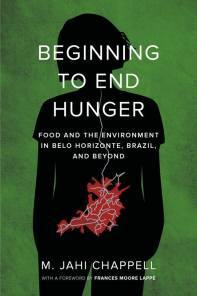 It has become counterintuitive for people that the issue of hunger is almost never one of an absolute lack of food, whether we’re talking cascading harvest failures, war-induced famine, or workaday poverty.
From poor and agriculturally de-developed Yemen suffering amidst a catastrophic U.S.-Saudi war, to India under colonial Britain’s Late Victorian Holocausts, if someone is starving, it is not because there is no food.
Yemenis are so poor because U.S. bombing has so leveled the agricultural economy as to reduce salaries to nothing, making merchants’ food unaffordable. Bureaucrats in colonial India exported grain while the gaunt perished on the side of streets.
Scarcity is social.
View original post 1,155 more words
February 14, 2019
True Dat: “What has [critical social science of sustainability] research shown us that we didn’t already know?”
Great, provocative question by sustainability scientists Alicia Harley and William C. Clark on Twitter:
Good question. Virtually all the groups working on sustainability acknowledge that we have been slow to grapple with actors, agency and power differentials. But now that we are trying what has research shown us that we didn’t already know? https://t.co/nhBLVjBoY1
— William C. Clark (@william_c_clark) February 13, 2019
Arun Agrawal’s succinct list of answers is an excellent starting point:
Five I can think of:
Preferences are not fixed
“Empty” talk/communication changes behavior away from rat. choice predictions
Norm activation alters choice
Individual-focused extrinsic incentives crowd out pro-social motivations and behaviors
Behavior does not reveal intent https://t.co/sK505VBlyQ
— Arun Agrawal (@gotonura) February 14, 2019
I would perhaps also add the corollary to the last point, that therefore “intent” does not necessarily manifest in behavior, particularly when looking at only a small section of time. This is important because to me, a key insight of institutional theory is that assessing or changing people’s beliefs does not necessarily tell you their behavior, or how/if their behavior will change. Beliefs can be part of behavior change, and certainly are related to overall behavior, but in some cases behavior changes beliefs. That is, to minimize cognitive disonance when our actions don’t match our beliefs, sometimes we change our beliefs instead to allow for the actions we’ve already taken, thus alleviating us of the disonance!*
And I suppose lastly, I might add the importance of the thorough rethinking of the “deficit model” of education (where people with “high knowledge”, like scientists, simply transfer/communicate information to people with a “knowledge deficit”). Many alternatives, critiques, and refinements have been offered, and it’s increasingly recognized that simple one-way “education” (e.g. “I, the expert, tell you the right things”) is an ineffective and otherwise faulty way to approach affecting people’s beliefs and behaviors.
What’s your favorite thing that this kind of research has shown us in sustainability science?
*NB: It might be equally or more fair to say that “identity changes beliefs”, e.g., identifying as a Democrat or Republican then can lead us to change our beliefs to fit in better with our partisan identification. However, there is evidence of behavior causing alterations in beliefs rather more directly. See e.g. “The Experience of Cognitive Dissonance Can Create Attitude Change” and “We Reduce Dissonance by Decreasing Dissonant or by Increasing Consonant Cognitions” a bit less than halfway down this page of Principles of Social Psychology. There is more recent research verifying and expanding on these findings, but I don’t have time to look them up now. However, Ellis and Stimson’s Ideology in America is required reading for looking at some parallel elements of partisanship and beliefs.
December 11, 2018
Update – Publish AND perish: how the commodification of scientific publishing is undermining both science and the public good

(since this post appeared 10 days ago it has been updated a few times which is why I am re-posting it)
Key messages
“Everybody is writing, nobody is reading, everybody is writing for nobody.”
Academics are spending hundreds of hours a year, getting their work published, in peer-reviewed journals, providing free labor to commercial publishing companies.
The pressure to ‘produce’ and grow is huge, both in academia and in the publishing industry; this undermines quality and the university’s ability to serve the public good and, indeed, public trust in science.
Open access journal Sustainability publishes over 4000 contributions in its current Volume 10 – where most contributors will have to pay 1400 US Dollars* to have their work published. Its publisher MDPI has close to 200 journals working in a similar vein.’
Sustainability has 561 associate-editors from mostly public universities all working for free for the journal.
Of all industries…
View original post 1,859 more words
December 4, 2018
Sharing research findings in Ethiopia
Results from my colleagues in Luneburg on their work in Ethiopia. Echoes of my former Cornell colleauge Stephanie Hufnagl-Eichiner in her work on agriculture and hypoxia in the Gulf of Mexico, where even experts and government figures agreed on what could help (roughly, agroecological approaches) but because no-one thought they were politically possible to implement, no-one systematically agitated for policy support for them…

By Joern Fischer
My last blog post spoke of a number of planned activities to distribute our research findings to date in Ethiopia. Let’s start today … with the last of all events during that trip, a mini-conference with government and non-government stakeholders from the zonal, regional and federal levels.
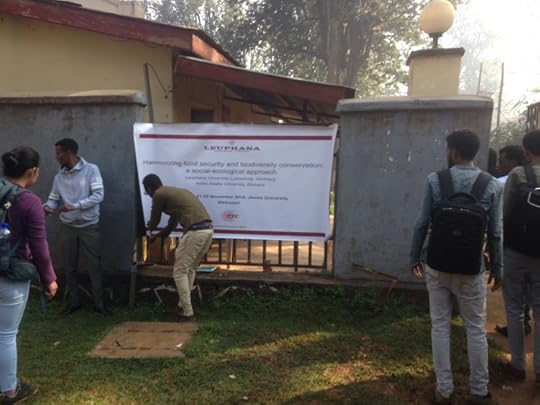
We had about 50 participants, who we engaged through numerous talks, discussions and in breakout groups. We covered topics of biodiversity conservation, ecosystem services and disservices, human livelihoods, gender and equity, governance, and future scenarios – all based on our original research over the last few years (see our project website).
Together, our findings tell a story of a rapidly changing landscape. The biggest challenges for local people relate to land scarcity (owing to population growth), crop raiding by wild animals (especially baboons; see here) and unhelpful policies around fertilizer use. We learned that especially the poor…
View original post 403 more words
November 22, 2018
Why “Warning to Humanity” gets the socio-ecological crisis (and its solutions) wrong
Masterful blog entry on the real challenges & potential solutions to achieving a more sustainable and just planet: “Scientists should analyse the roots of the socio-ecological crisis and join the grassroots struggles pushing for structural changes from local to global.”
 ENTITLE blog - a collaborative writing project on Political Ecology
by Salvatore De Rosa and Jevgeniy Bluwstein
The “Warning to Humanity” signed by more than 15.000 scientists calls for action to save the planet proposing elitist environmentalism and missing the real target. Instead, scientists should analyse the roots of the socio-ecological crisis and join the grassroots struggles pushing for structural changes from local to global
 (Source: Enrique Baeza for Art Discover)
A recent “Warning to Humanity” by Ripple et al, signed by more than 15.000 scientists, has received globalmediaattention. According to this call for action, the threat of global environmental collapse due to the crossing of several planetary boundaries is the future that awaits all of humanity, unless several “urgent steps” delineated in the article are put into practice as soon as possible. These steps can be synthesized in nature conservation, preservation and restoration (including rewilding), education of people to appreciation of nature, reduction of fertility rates…
View original post 1,342 more words
November 19, 2018
Quick post: Not-so-deep thoughts on social change [dust yourself off and try again, try again]…
To me, a key insight from my book, from Multiple Stream Analysis, and from looking at history more broadly, is that it’s not enough to be “right” about an issue (like, say, the equal fundamental dignity deserved by all human races, classes, creeds, genders, and more; or the fundamental value and dignity deserved by non-human nature). It’s also not enough to “do” the “right things” (e.g. get the tactics, strategy, appeal, mobilization, etc. right). We have to recognize that we’re gonna have to have both of those things, and do them again and again. Failure doesn’t necessarily mean we did something wrong (though it can mean that), because systems don’t change just because you’re right and have done the right thing. They change when people keep doing the “right things” (or as close as we can) again and again.
A difficult corollary of this is that urgency doesn’t change this dynamic. That is, even when a problem is of the utmost, even existential importance (say, climate change), that doesn’t mean we can afford to think of changing society to address it in a “one big moment” mentality.* No matter how urgent, and no matter how well-planned and executed, there are going to be a lot of moments where we’ll need to try again, dust ourselves off, and try again, try again…
*”We must resist a “one moment” mentality. These folks are not scared of us having one rally. They
will actually have a picnic while you having a rally. You have one great big rally; they have a picnic
sit right there. And when you leave, they’ll go right back inside and pass whatever bills they want to.
But if we come together in a fusion movement, I believe we can reshape the political landscape and
shift the center of political gravity. Somebody say Together. (Together) That’s the power together
when our protests and our legal arguments and our movements look like this room, in all of this
beauty and all of this diversity and when farmers are standing with teachers and teachers are standing
with farmers and environmentalists are standing with healthcare advocates and healthcare advocates
are standing with LGBT community and LGBT community is standing with the Civil Rights
community, and the Civil Rights community is standing with the immigrant community and the antiwar
folks are standing with those who are anti-unjust tax policy, when we ALL get together, that‟s
when we win. That is when we change America. Not just change one election, but we change the very
consciousness of this country.” — Rev. William Barber, II; see also the important, exciting work of the Poor People’s Campaign
November 11, 2018
Food and biodiversity: a research update
Really important, impressive update on Joern Fischer’s research group reporting back on their work to the communities in Ethiopia they’ve worked with.
By Joern Fischer
As many readers of this blog know, the primary focus of my research group at present is on the intersection of food security and biodiversity conservation. How can these two societal goals be harmonized? A major part of this work is a detailed case study in southwestern Ethiopia. Here, I summarize a bit where things are at with this research. All materials I refer to below can be found on the project website, linked here, or if you have trouble finding something, you can email me.

The most exciting news is that we’re planning a visit to our study area in November this year to systematically communicate our findings to key stakeholder. Some years ago, my research group organized a similar “outreach tour” in Transylvania, Romania – some videos and other materials documenting that event can be found on the website for that project. Things in…
View original post 625 more words