A.J. Reilly's Blog: Stories and Stogies
January 30, 2018
Far Too Easily Pleased: The Hypocrisy our Society has Created over Sexual Assult
 The double standard we’ve created in our society is like standing on the edge of the Grand Canyon, either rim, and looking to the other side. The harrowing death that awaits a fall from either foothold is the noose around our neck that’s been created in the wake of the #MeToo movement and grossly all-too-common reports of sexual abuse.
These causes are right and fair. These women need to be heard and the monsters that harassed them dealt with. But on that side of the canyon, one can see from the other side a world where this type of behavior is seemingly acceptable — though not based in reality.
The problem lies in what C.S. Lewis would label as our penchant, as human beings, to be far too easily entertained. Lewis takes his cues from the Christian worldview, and whether Christian or not, the truth of what he says spans the vast expanse of all humanity. This is not a theological or religious discourse, it is simply a humanitarian undertaking. Though spoken with a spiritual undertones, the words of Lewis ring very true in our current cultural paradigm.
Here’s his quote,
“We are half-hearted creatures, fooling about with drink and sex and ambition when infinite joy is offered us, like an ignorant child who wants to go on making mud pies in a slum because he cannot imagine what is meant by the offer of a holiday at the sea. We are far too easily pleased.”
In light of the recent sexual abuse scandal that occurred at Michigan State University, and among the barrage of victims in Hollywood that have recent found their voice to speak out against their terrorizers, it seems as though we have a cultural pandemic.
But have we been conditioned to be this way?
This is not meant to excuse the behavior of these horrible people; monsters that devalue the humanity of someone else for their own pleasure, but a simple question. Does our entertainment, ironically produced in the place that is the main source of these #MeToo issues, create for us a hypocritical approach to sexual abuse.
Again I ask you to envision the Grand Canyon.
On one side of the canyon are the horrific and dehumanizing acts of these men that have violated their countless victims. On the opposite side are Hollywood productions of shows that almost celebrate characters that are nothing more than one-and-done womanizers.
Now, it must be stated from the outset that I have found enjoyment in some these shows too, but, at the same time, have also been uncomfortable with the outpouring of sexual abuse in our culture.
But maybe that’s the problem. I am the hypocrisy.
I am not trying to take the the moral high ground here and point fingers at society, while forgetting that I am a part of the problem. I love shows like How I Met Your Mother, Mad Men, and Friends. And, I will even continue to laugh at the characters on those shows that are intended for comedic purposes. But there must be some kind of correlation between the entertainment we partake in and the calloused nature we’ve approached sex with.
Take for instance, Barney Stinson — the King Player of New York City — on the show How I Met Your Mother. His entire character is built around the idea of casual and non-consequential sex. We laugh at his jokes, because they are funny — and because Neil Patrick Harris’ delivery is perfect — but, why do we celebrate his actions?
Have we become far too easily entertained?
I am not saying we should boycott shows that promote such a calloused sexual message, but what I am saying is maybe we shouldn’t be so surprised when it actually starts to jump from our television screens and “alternate realities” into the forefront of our true realities and culture.
We celebrate playboys, look nonchalantly toward one night stands — because we’re simply sowing our wild oats — but yet, wonder how anyone could act or do what these terrible men have done. By oversexualizing our culture we have become a walking hypocrisy.
The fix is in a changed mindset — and it starts with the men in society.
Recently, the Wall Street Journal wrote an article about the lack of gentlemen in our society. Maybe this is where our issue starts. And, I might argue that our lack of gentlemen stems from a lack of simply good men. And, now raising a young boy in this world, this concerns me the most.
Being a good man is simply about respect. Respect for yourself, respect for your culture, but also, respect for your fellow man — especially women.
“A gentleman is good to women because he has his own dignity and sees theirs.”
Gone are the days where the notches on your bedpost count. Who cares about notches on a bedpost when your name has been dragged through the mud, your reputation sullied, and your life ripped to shreds because your actions were less than honorable.
Honor and respect should be the name of the game that any gentleman plays, because it is about the humanity of the other person and the value they bring to a given situation, rather than their performance in the bedroom, that matters most of all. And this should also be true of the entertainment we partake in or produce.
It is time we take up for these victims and do our best to help them heal, as a society. But it is also on us, as that society, to stop celebrating the “little boys” who can’t keep it in their pants; truly celebrating the best of the men among us. “Where have all the good men gone?”, the old questions asks. They’re still around, just being overshadowed by the ridiculous lifestyles of the little boys — who live louder and flashier (which makes for good social media posts) than most — who are constantly acting like they have something to prove. Something, a gentleman never has to do.
It is time we raise our standards for entertainment and social decorum. Because if we continue to feed the beast of hypocrisy, epidemics will continue to flourish. The standard must be raised and it must be raised by all of us. For what a sad epitaph will be written for this society that all that can be said about us is that we were “far too easily pleased”.


January 7, 2018
Book Review: Casino Royale by Ian Fleming

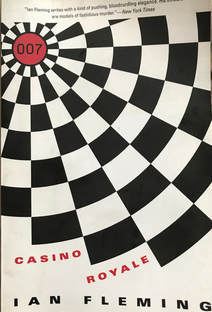
Start Date: October 12, 2017
Finish Date: January 7, 2018
When I first decided to read Ian Fleming’s James Bond series, I came to it with a preconceived notion. That notion was the man I had seen portrayed as James Bond on the silver screen of Hollywood. However, I would soon learn that this was not the James Bond of Fleming’s books.
Naturally I started with the first book, Casino Royale, because I’m kind of O.C.D. about things like that. I always try to start with the first book an author wrote, especially in a series — which I know may be the most obvious thing to people. I can hear you now, why wouldn’t you start with the first book in a series? Trust me, there are some maniacs who don’t.
So I called my local Half Price Books, and they had a copy; I went that night to pick it up. It should be noted that I have a bad habit of starting multiple books at once. When I picked up Casino Royale I was currently reading Hank Greenberg: Hero of Heroes and John Steinbeck’s Travels with Charley. Both of which took a bit of a backseat to James Bond — naturally.
Fleming writes in a way that is easily captivating. The chapters are short — something you notice right away. This allows one to read a chapter at a time before bed, rather quickly — which is how I attacked it, until the last day. The fact that Fleming is an Englishmen also took a bit of getting used to, as some of the grammatical structures we’re used to in America do not hold for British grammar. However, this is merely an observation.
Almost immediately the reader is introduced to the spy we all have come to know, especially if you had the N64 GoldenEye game. From the outset the spy we are introduced to showers in cold water, places a hair over dresser drawers to ensure no one has spied on him, and dresses to the nines — just like in the movies. Yet, it is here that most of the similarities ended.
Not once did Mr. Bond introduce himself, “Bond. James Bond.” Nor, did he ever order his patented Martini, “shaken, not stirred.” Nor, did Bond exuded the kind of confidence that the actors from Sean Connery, to Pierce Brosnan, to Daniel Craig possessed. But, once the reader comes to this conclusion, the book is thoroughly enjoyable.
The tension is palpable throughout the entire book. The reader picks up with James Bond at a casino, preparing to face of with Le Chiffre, the villain of the book. The action builds to their showdown, where the reader is introduced to the first difference between Fleming’s Bond and that of Hollywood.
During a game of Baccarat, Bond loses. He is demoralized, not exuding the usual Bond confidence, and is reeling, believing to have lost his job. He then is handed a second chance, beats Le Chiffre, and then places the winnings in his hotel room. It is after this victory that Bond decides to take a run at his partner, the beautiful Vesper. She denies his advance — another difference — and is kidnapped by Le Chiffre. All of this action happens by the middle of the book.
The rest of the book is Bond’s pursuit of Vesper and Le Chiffre, where one would expect a typical Bond move — freeing the girl and winning her affection. The former happens, while Bond is captured himself, and the latter eventually comes to be.
While in pursuit of Vesper and Le Chiffre, Bond is eventually overtaken by Le Chiffre’s goons, and taken captive. He does try to free himself, but is bested by the bigger of the two goons — yet again not what I knew Bond to be. Eventually Bond wins his freedom, through the vehicle of someone else, and he and Vesper ride off into the sunset for a couple day stay at a beach-side inn.
It is here that the last of the conflicts take place as Vesper and Bond are locked into a rather high schoolish on-again-off-again sexual relationship. It is during this time that the climax of the book happens, and Bond is left once again by himself calling into headquarters.
This book contains Constant action and a very easily read story. It is hard to put down once the reader becomes invested.
Fleming’s Bond is different than the Hollywood version, but that doesn't make it a worse version. Fleming’s version of Bond is portrayed as an actual human being. He has flaws, falls in love, and isn’t immortal. In short, Fleming’s Bond is accessible to the reader. And that makes the entire book worth it.
As someone who has enjoyed the Bond movies, there is always a little piece inside of me that wanted, or rather wished, that he was James Bond. The ultra-suave talker, the man who wears his tux, and orders his martinis “shaken, not stirred.” It’s pure fantasy, and maybe that’s why it was always so attractive. We tend to always be moved and inspired by those things which are fantastical.
But Fleming’s Bond is an everyday spy, that does have special training, but is someone that you could model yourself after. The realism in his character is evident from the start of the novel, and that always makes for the best type of literary character. One that we, as the reader, can relate to; the type of guy we could actually see ourselves being — with a particular type of training, of course.
So to Ian Fleming’s Casino Royale, I would definitely raise a glass. It’s a wonderful read that grabs the reader and never lets them go. I am excited for the second book, Live and Let Die, as I sip on my martini while reading — shaken not stirred, of course.
Memorable Quotes:
“…patriotism comes along and makes it seem fairly all right, but this country-right-or-wrong business is getting a little out-of-date. Today we are fighting communism. Okay. If I’d been alive fifty years ago, the brand of conservatism we have today would have been damn near called communism and we should have been told to go and fight that. History is moving pretty quickly these days and the heroes and villains keep on changing parts.” — James Bond
“Surround yourself with human beings, my dear James. They are easier to fight for than principles.” — Mathis
December 8, 2017
Why I Write


I can remember that night vividly. I was sitting at my now deceased grandparent’s kitchen table in Springfield, Missouri, at about two in the morning. It was quiet, my grandparents — if I remember correctly — were out of town, and I was house-sitting; my younger brother Jordan was in visiting from the University of Michigan. Why was I up so late on a Thursday? It was the night before “sudden death” — my college’s way of extending grace to the slackers, allowing us to turn our assignments in before the semester ended. And, not being the most dedicated student at the time, I was taking full advantage of that.
I was, among many other things, tasked with writing my own chapter of, or scene of — I’m not entirely sure — The Lion, the Witch, and the Wardrobe. After placing my last period on my work, I remember a certain feeling bubbling up inside of me: I had just created something (for the first time) that hadn’t existed before. It was a feeling I hadn’t experienced since the first home run I hit as a Little Leaguer, and I wanted more of it. However, I just didn’t know it at the time.
Fast forward six years. In the time between that night in 2008 and 2014, both of my grandparents passed away, I moved back to Michigan to work my first career at my father’s church, and dabbled in writing. Most of that writing, however, was done in the form of theological essays or responses to matters taking place in and around the church; but none of it as a creative outlet to satisfy the hunger I’d created that night around the kitchen table. When I attended my Grandfather’s funeral in 2014, the fires of passion I didn’t even know were burning, started to fan into flames.
The Kindling --
I consider myself to be a pretty simple man. I don’t need extravagance to be happy. Hell, I’d wear the same thing every day just to not have to make a choice. But, don’t mistake “simple” for “unmotivated.” When I set my mind to something, I like to see it through to completion. In the weeks after my grandfather’s funeral, and having the privilege of talking to his older brother, I woke up one morning and told my wife, “I want to write a book.” I grabbed my tools of the trade: a cigar, my legal pad, and my coffee and wrote, “Hello. I’m Raymond…” and thus The Askren Boys was born; it will be published September 1st of 2018.
After I wrote the first chapter I showed it to a few trusted people and told them, “Let me know what you think, even if it’s terrible, I won’t be upset. Don’t sugarcoat it, please.” I’ll never forget what one of them said to me, “Usually I’ll read something and think this person shouldn’t continue. But, I’ll say this, I never once thought that and am intrigued to read more.” That was the push I needed. So I kept writing.
 Fueling the Fire —
 Then, on my birthday 2015, I woke up for church and grabbed my cell phone off the night stand. For some reason I hopped on Twitter and started to scroll through the timeline. I saw a paid ad for Waldorf Publishing calling for co-authors who could assist to write books to be published. Let me say this now: I never take chances. I’m pretty calculated in my decision making and am insecure enough to not just put myself out there. But for some reason on this day, I was grabbing the bull by the horns.
I drafted an email to the address listed on the ad and explained that I’d just started in the writing “game,” that I have my own blog (it was called Stories and Stogies at the time) and that I would be more than willing to get my feet wet. I pressed “send” and then headed off to church. In the middle of service I got an email back saying they liked what they saw on my website and to give them a call. Nine days later I had my first publishing contract, working with a gentleman named Butch Rutt to help write his book High School Dropout: Stories of a Navy Pilot .
After a few months of working with Butch the owner of Waldorf called me and said, “I have the perfect guy I want you to work with. He’s from Detroit, just like you, and I think you guys will be perfect.” His name was Jon Dwoskin, and by April of 2016 I had my second book, The Think Big Movement: Grow Your Business Big. Very Big . Mind you, I had a full time job as a history teacher, was coaching three sports, working a once weekly cigar shop job, and had a newly minted marriage. But sometimes you can’t help but get wrapped up in things you love. With two books under way, I was no longer “getting my feet wet” in the writing game, I had jumped in the deep end with no life preserver. It was sink or swim, and I refused to sink.
As I was working on those two projects, fate intervened, again. Sitting at the cigar shop one day, and of course wearing my Detroit Tigers hat, a couple walked in and the guy told me he actually wrote for a sports blog that covered the Tigers. I told him that would be the dream and he told me to apply. So I did and quickly became a regular contributor on Detroit Sports Nation . I was teaching school during the day and writing at least 1,000 words a night, it was a great and exciting time.
On a trip home to Detroit I received another call from the owner of Waldorf Publishing. She told me that another co-writer had gone MIA and that she needed me to pick up a third contract. I told her I would do it on two conditions: first, I could not start this project until one of the others was done. And, second, if I was going to be taking on another project, I’d like her to listen to a pitch for one of my own books. While I was having fun getting to know the guys I was working with and thoroughly enjoying the writing aspect, I knew that I didn’t always want to write someone else’s book—I wanted to write my own. She obliged on both, and within a month I had two more contracts: one for Damaged Wings and the other on The Askren Boys -- my novel.
This wouldn’t be the last time she’d need to me to help her out either, and by the time the ball dropped and 2017 rolled in I had four book projects for Waldorf Publishing, Fighting Monsters: SWAT Life being the fourth, and my own novel releasing the following year. To say that I was going full steam ahead would be the most grotesque understatement ever.
I literally did not sleep during the month of February 2017; teaching all day, coaching basketball, then working on the last two projects (they were due by the end of February) until about two or three in the morning. It was a whirlwind but it was one hell of a ride. I finished all four projects on time, hit my word count goals (a total of nearly 250,000 words) and then began work on my novel. By July 31, 2017 I put the last period on the first draft of The Askren Boys, completing a five book barrage and introduction to the writing profession. The Fires of Passion —
Why? That’s a question that I do get pretty often. “Why would you do that to yourself?” they’ll ask. Well, to be honest, because I wanted to. I have found something that I love to do and I’m chasing it ferociously like a lion chases a gazelle.
When I was growing up my passion was sports. I still love them, but at 30-something years old, I no longer play them. Regardless of how old I get, I’ll never lose the passion and drive that fueled me as a student-athlete. I’ve found a way to challenge myself, compete against myself, and enjoy what I’m doing.
I write, quite simply, because there’s nothing else I can do to satisfy the hunger and drive I feel within myself.
I write because it allows me to create something that has never existed until I start typing.
I write because it allows me to think and express my voice.
I write because the fires of passion burn within me to chase something bigger than myself.
Just like the prophet Jeremiah who said, “If I say, ‘I will not mention him, or speak any more in his name,’ there is in my heart as it were a burning fire shut up in my bones, and I am weary with holding it in, and I cannot.”
Sure, my message isn’t eternity altering, but like Jeremiah, I cannot keep it in any longer. I write because, well, it burns within my bones to do so. I have goals and dreams that have only begun to be realized, and until they are — I’ll keep chasing them.
That’s why I started my website, so I can share the journey with you. I want to share the process, the ups and the down, the victories and the defeats, because I believe that together people can go farther than they ever could individually.
So join me for the journey — I guarantee it’ll be a fun ride.
March 27, 2017
Book Review: Harry Potter and the Socerer's Stone
To be honest up front, I never thought I would ever read Harry Potter. Then a couple of people changed that. First my wife, Jessica. She is my best friend, my first reader, and an inspiration -- she, also, loves the Harry Potter series. Being a fan she wants to watch the movies, but I have to read the books first. So I accepted.
Secondly, Stephen King. Over the last year, Mr. King has been a constant companion for me -- in print. I have read 4 of his books, almost finished with a fifth, and plan to read more. He is, in short, my favorite writer. Well, as it turns out, he's constantly talking of how Ms. Rowling is one of his favorites. So how do I better myself as a fan of literature and writing? I read the author that is my favorite author's favorite author.
That's how I came to Harry Potter.
After having read Harry Potter and the Socerer's Stone, I can see why both of the above individuals are enamored with Rowling. First, there is the storytelling, which is wonderful. The pace of the book is captivating, to the point you can put away pages easily, without even knowing you're reading as much as you are. It's quite amazing. The story grabs you, keeps you, and doesn't let you go. Another thing about Rowling is simply the idea for this book that she had. A mind that can create the world in which she did, is the mind of a genius, plain and simple. There are no other words to describe exactly what she did with this world, that is straight from her imagination. I'm a bit jealous to tell you the truth.
I was not a fantasy fan before I read this book, which is probably why it took me so long to pick it up. I never really, truly enjoyed it, nor was I very interested in such types of literature. My mind simply does not work in that way. I am a very black and white kind of guy. I like my drinks to be stiff, not mixed. I enjoyed literature in much the same way, real life stories -- though maybe fictional -- where I could imagine the setting, the time period, all without too much creativity. Rowling changed that, she challenged be to think "other-worldly" and for the first time in my life, I enjoyed it.
I will soon be cracking the second book to this series, but first, I have to watch The Socerer's Stone with my wife!
Secondly, Stephen King. Over the last year, Mr. King has been a constant companion for me -- in print. I have read 4 of his books, almost finished with a fifth, and plan to read more. He is, in short, my favorite writer. Well, as it turns out, he's constantly talking of how Ms. Rowling is one of his favorites. So how do I better myself as a fan of literature and writing? I read the author that is my favorite author's favorite author.
That's how I came to Harry Potter.
After having read Harry Potter and the Socerer's Stone, I can see why both of the above individuals are enamored with Rowling. First, there is the storytelling, which is wonderful. The pace of the book is captivating, to the point you can put away pages easily, without even knowing you're reading as much as you are. It's quite amazing. The story grabs you, keeps you, and doesn't let you go. Another thing about Rowling is simply the idea for this book that she had. A mind that can create the world in which she did, is the mind of a genius, plain and simple. There are no other words to describe exactly what she did with this world, that is straight from her imagination. I'm a bit jealous to tell you the truth.
I was not a fantasy fan before I read this book, which is probably why it took me so long to pick it up. I never really, truly enjoyed it, nor was I very interested in such types of literature. My mind simply does not work in that way. I am a very black and white kind of guy. I like my drinks to be stiff, not mixed. I enjoyed literature in much the same way, real life stories -- though maybe fictional -- where I could imagine the setting, the time period, all without too much creativity. Rowling changed that, she challenged be to think "other-worldly" and for the first time in my life, I enjoyed it.
I will soon be cracking the second book to this series, but first, I have to watch The Socerer's Stone with my wife!
March 26, 2017
Book Review: Harry Potter and the Socerer's Stone
To be honest up front, I never thought I would ever read Harry Potter. Then a couple of people changed that. First my wife, Jessica. She is my best friend, my first reader, and an inspiration -- she, also, loves the Harry Potter series. Being a fan she wants to watch the movies, but I have to read the books first. So I accepted.
Secondly, Stephen King. Over the last year, Mr. King has been a constant companion for me -- in print. I have read 4 of his books, almost finished with a fifth, and plan to read more. He is, in short, my favorite writer. Well, as it turns out, he's constantly talking of how Ms. Rowling is one of his favorites. So how do I better myself as a fan of literature and writing? I read the author that is my favorite author's favorite author.
That's how I came to Harry Potter.
After having read Harry Potter and the Socerer's Stone, I can see why both of the above individuals are enamored with Rowling. First, there is the storytelling, which is wonderful. The pace of the book is captivating, to the point you can put away pages easily, without even knowing you're reading as much as you are. It's quite amazing. The story grabs you, keeps you, and doesn't let you go. Another thing about Rowling is simply the idea for this book that she had. A mind that can create the world in which she did, is the mind of a genius, plain and simple. There are no other words to describe exactly what she did with this world, that is straight from her imagination. I'm a bit jealous to tell you the truth.
I was not a fantasy fan before I read this book, which is probably why it took me so long to pick it up. I never really, truly enjoyed it, nor was I very interested in such types of literature. My mind simply does not work in that way. I am a very black and white kind of guy. I like my drinks to be stiff, not mixed. I enjoyed literature in much the same way, real life stories -- though maybe fictional -- where I could imagine the setting, the time period, all without too much creativity. Rowling changed that, she challenged be to think "other-worldly" and for the first time in my life, I enjoyed it.
I will soon be cracking the second book to this series, but first, I have to watch The Socerer's Stone with my wife!
Secondly, Stephen King. Over the last year, Mr. King has been a constant companion for me -- in print. I have read 4 of his books, almost finished with a fifth, and plan to read more. He is, in short, my favorite writer. Well, as it turns out, he's constantly talking of how Ms. Rowling is one of his favorites. So how do I better myself as a fan of literature and writing? I read the author that is my favorite author's favorite author.
That's how I came to Harry Potter.
After having read Harry Potter and the Socerer's Stone, I can see why both of the above individuals are enamored with Rowling. First, there is the storytelling, which is wonderful. The pace of the book is captivating, to the point you can put away pages easily, without even knowing you're reading as much as you are. It's quite amazing. The story grabs you, keeps you, and doesn't let you go. Another thing about Rowling is simply the idea for this book that she had. A mind that can create the world in which she did, is the mind of a genius, plain and simple. There are no other words to describe exactly what she did with this world, that is straight from her imagination. I'm a bit jealous to tell you the truth.
I was not a fantasy fan before I read this book, which is probably why it took me so long to pick it up. I never really, truly enjoyed it, nor was I very interested in such types of literature. My mind simply does not work in that way. I am a very black and white kind of guy. I like my drinks to be stiff, not mixed. I enjoyed literature in much the same way, real life stories -- though maybe fictional -- where I could imagine the setting, the time period, all without too much creativity. Rowling changed that, she challenged be to think "other-worldly" and for the first time in my life, I enjoyed it.
I will soon be cracking the second book to this series, but first, I have to watch The Socerer's Stone with my wife!
February 5, 2016
The Problem with Tin Gods
The greatness of literature can be found in the characters. When you read a story you become enamored with the actions of the antagonist and the protagonist, and even the secondary characters that carry the story along. The goal of any good writer is to create characters that the reader can identify with and if given the chance in real life could spend an afternoon kicking around town.
Fitzgerald did this with Jay Gatsby and Nick Carraway. The reader identifies with Nick because we have all had that one person in our life whose lifestyle we have longed for. While at the same time, the reader wants to be best friends with Jay Gatsby. My favorite character in The Great Gatsby is Jay Gatsby himself. His self-made, American Dream, rise to riches is something in my own life I have had moments of longing for.
The same is true when I read To Kill A Mockingbird by Harper Lee. Her only published book, until 2014, was a wonderfully crafted piece of art. I love, to this day, To Kill A Mockingbird, and I will forever love it. The reason I love this book is because of one character: Atticus Finch.
In To Kill A Mockingbird Atticus Finch stood as the typical embodiment of manhood. He had lost his wife previously in his marriage; exactly when, we are not specifically told. All we know is that he is raising his two children, Jem and Jean Louise or Scout. Throughout the story, as told through the eyes of Scout, Atticus is positioned as a hero to his young daughter. She is constantly relaying to the reader her fondness of her father, as he sits in their family room reading, often reading to her, or the way that he relates to others around town. It is from a decision that Atticus makes in choosing to defend a Negro who is accused of rape, that the reader is endeared to Atticus. His attitude and belief that all men were created equal, and should be treated as such under the law is a tremendous take away from To Kill A Mockingbird.
After having read To Kill A Mockingbird, I fell in love with and carried a deep respect for the man that Atticus Finch was. He was portrayed as a very even-keeled, well educated, rarely emotional and strongly valued man. It was these values he is continuously teaching to young Scout as she makes her way through life in Maycomb County. In To Kill A Mockingbird you leave the pages of that book believing that Atticus Finch was a man that is a great example to all men.
When the estate of Ms. Lee decided to release the "parent novel of To Kill A Mockingbird", it was met with a tremendous amount of controversy. People recalled Ms. Lee's desire to have nothing else published, or pointed to the fact that Go Set A Watchman would smear the legacy of the beloved To Kill A Mockingbird. The controversy pushed me to the fringes on the book; I was ecstatic to have another possible masterpiece from Harper Lee, but after reading the news that surrounded it, my vigor turned more to apathy.
Being in a Target around Thanksgiving, waiting for my family to finish some shopping, I saw the book, a Starbucks at the front, and decided that there was no better way to pass the time. Needless to say, I bought the book, read three pages, they finished shopping and I did not pick it up again until January of this year. After starting again, it took me thirteen days to finish it.
The big question that I think needs to be answered as we approach what I believe to be possibly the best message in any book I have read, is does Go Set A Watchman smear the legacy of To Kill A Mockingbird? Bringing in no other controversy, such as "did Harper Lee even write it?” I can say in my opinion this book not only kept the legacy of To Kill A Mockingbird intact but, almost unbelievably, enhanced it.
Watchman is set in Maycomb County nearly two decades after Mockingbird concluded. Readers are introduced once again Jean Louise "Scout" Finch as she travels back from New York to Maycomb, Alabama. The reader is also introduced again to Aunt Alexandra, the beloved Atticus Finch and finds out within the first chapter of the book that her brother Jem died, seemingly of a heart attack. Jean Louise is a grown up version of Scout, who continuously is reminded of her days of yore in Maycomb.
As the story progresses, Jean Louise becomes aware of the fact that Maycomb has become gripped in the middle of a divisive, civil rights initiated, government ordinance. Exasperated by the frequent ambulance chasing of the NAACP, the citizens of Maycomb, unknown to Jean Louise upon her arrival, have splintered. Even her beloved Calpurnia is affected by the actions of her fellow Maycombians and treats Jean Louise upon a visit to her with a cold, dismissive attitude.
This dismissal comes after Jean Louise has followed her father and pseudo-boyfriend to a City Council meeting, which is basically a cloak and dagger Klan meeting. The meeting, in fact, is the springboard off which the action of the book jumps. Thrown into confusion, Jean Louise goes on a mission to discover what the hell happened to her hometown. And it all culminates in a meeting with her father.
After having had lunch with her uncle, Dr. Finch, a new character introduced in Watchman, who becomes the wise old sage that sets Jean Louise straight, she quickly sets off to her father's office and the stage is set for the showdown between father and daughter.
In the dialogue between Jean Louise and her father, the reader is torn between the Atticus Finch they were endeared to in To Kill A Mockingbird and the one that persists on the pages of Watchman. Throughout a reading of Watchman one will be consistently aware that due to the Civil Rights Movement and actions taken by the Federal Government, race relations in Maycomb have been strained.
The showdown in Atticus' office comes to a head when Jean Louise accuses her father of being a racist and having never truly loved her. The basis for these accusations is the fact that she has witnessed him at the meeting where a known Klan member addressed them. Also, she is confused on how he could have let her grow up thinking the things she did towards those of another color, knowing full well the way he felt towards the race. She jumps to conclusions and really attacks her aging father on this issue. How dare he feel the way he felt and let her ignorantly grow up treating everyone equally? The rug has been quickly removed from under her feet, and the childhood to which she so desperately clung is beginning to crumble. Not only has her childhood been ruined, but also the one person she so adamantly admired, and nearly worshiped, her father, is not the man she thought he was. While reading this portion of the book, I became Scout. I completely sympathized with her and thought, there is no way the Atticus Finch that I idolized could think this way. The man who had stood at the forefront of a racial controversy in To Kill A Mockingbird, and had been the symbol of one of the greater literary lesson ever written is a fraud. Jean Louise leaves the office in a hurry, heads back to the house to pack her things and leave. And I wanted to leave with her.
Before heading to the lesson that I think was so wonderfully taught to Jean Louise and the reader towards the end of the book, a further discussion needs to be had on the title, Go Set a Watchman. Early on in the book, the reader is in church with Jean Louise and she hears the preacher read a passage from the book of Isaiah, chapter 21, verse 6, that states, "For thus hath the Lord said unto me, Go, set a watchman, let him declare what he seeth." (p.95). In the biblical context, the Israelites were being told to set a watchman on their city walls to recount all of the good or bad that is taking place in the cities surrounding them. In the passage, the watchman sees the destruction of Babylon. Thus, the premise laid out in chapter five of Go Set a Watchman subtly explains that worldviews and heroes will mostly likely come crumbling down, just like Babylon did.
Picking back up in the saga of Jean Louise and her father, the reader finds Jean Louise quickly packing her things and leaving the house. As she is about to enter the car from which she will depart, her uncle, Dr. Finch, stops her. Unwilling to listen to him and calm down, Dr. Finch gives her the old right hook and knocks her out. Once he has her inside, and she comes to, he begins to explain this new world she has so quickly found herself in.
Dr. Finch gathers Jean Louise into the family room of the house, gives her a glass of whiskey to wake her up and then begins to explain, "every man is an island Jean Louise, every man's watchman, is his conscious. There is no such thing as a collective conscious." (p. 265) He continues to explain that somewhere when she was younger, presumably the time that she witnessed Atticus defend Tom Robinson in To Kill a Mockingbird, she fastened her conscious to her father’s, "like a barnacle" (p. 265). Scout has been, to this point in her life, living with her father's conscious, and viewed the world through the lens that he had held in front of her eyes. Now with this new revelation in front of her, she did not know how to function in the world. Her worldview and her hero had all been a creation of her living and thinking like her father.
Dr. Finch went on to explain that he and Atticus both knew there would come a day that would set Jean Louise free of her bondage to her father's conscious, and he states that essentially her old conscious would have to die, or Atticus would have to kill it himself. Thus, when she came across that City Council meeting, Atticus did not try to stop her, nor did he quiet her when she was berating him in his office. That was her moment of death to her old conscious, and her new conscious being birthed.
Jean Louise was not wrong about her father, the book is very clear that Atticus was not happy with the Civil Rights Movement, and to a sense did consider those of color to be of a lesser standing than he. However, Dr. Finch, in explaining to Jean Louise tells her, your father went to Klan meetings in order to know exactly who it was under the hoods, and he does not condone their actions of beatings and hangings. Dr. Finch states,
"...the Klan can parade around all it wants, but when it starts bombing and beating people, don't you [Jean Louise] know who'd be the first to try and stop it...The law is what he lives by. He'll do his best to prevent someone from beating up somebody else, then he'll try to stop no less the Federal Government...but remember this, he'll always do it by the letter and by the spirit of the law." (p. 269).
To end their conversation, Dr. Finch compares Jean Louise's actions her that of her father’s, and tells her that just like her daddy tackles injustice, so too did she "[turn] and tackled no less than her own tin god." (p.269). And in this statement shows Jean Louise and the reader the simplest, yet most profound of all literary lessons: tin gods will fail you.
Tin is one of the weakest metals known to exist. It has the lowest melting point of any other metal. The use of tin as an example of the heroes we place on a pedestal is a great analogy. Even though in life there are people we should look up to and aspire to be, even if they are literary characters, we must remember they are still human. No man or woman is entirely perfect and if we attach our conscious to theirs and create our own tin gods we will soon be disappointed. When we look at the character of Atticus Finch, does he stand for good? Clearly that answer is yes. But is he perfect? Obviously no. He is a tin god that, when faced with the fire of societal equality, melted. It is important that we have heroes, and it is necessary that we only allow these heroes to influence us, yet not let them control our entire thinking. Every man and woman is an island, we establish our own convictions and our own worldviews and this is the beautiful thing about being alive. We function each and every day in the world because of the diversity that we share; it is something that we should be celebrating and enjoying, not fighting and berating each other over.
I sincerely hope that you will read Go Set A Watchman because in it the reader learns that each one of us has a life to live and that life is the responsibility of no one else but ourselves. We all have tin gods, and most of them well deserving, but we must be careful that when faced with the fire of controversy and they begin to melt, that we are prepared for it and seek to exude grace towards them. In this, you can love uninhibited and fully appreciated each man, woman, or child that has been placed in your path. And really, that is what life is all about.
Fitzgerald did this with Jay Gatsby and Nick Carraway. The reader identifies with Nick because we have all had that one person in our life whose lifestyle we have longed for. While at the same time, the reader wants to be best friends with Jay Gatsby. My favorite character in The Great Gatsby is Jay Gatsby himself. His self-made, American Dream, rise to riches is something in my own life I have had moments of longing for.
The same is true when I read To Kill A Mockingbird by Harper Lee. Her only published book, until 2014, was a wonderfully crafted piece of art. I love, to this day, To Kill A Mockingbird, and I will forever love it. The reason I love this book is because of one character: Atticus Finch.
In To Kill A Mockingbird Atticus Finch stood as the typical embodiment of manhood. He had lost his wife previously in his marriage; exactly when, we are not specifically told. All we know is that he is raising his two children, Jem and Jean Louise or Scout. Throughout the story, as told through the eyes of Scout, Atticus is positioned as a hero to his young daughter. She is constantly relaying to the reader her fondness of her father, as he sits in their family room reading, often reading to her, or the way that he relates to others around town. It is from a decision that Atticus makes in choosing to defend a Negro who is accused of rape, that the reader is endeared to Atticus. His attitude and belief that all men were created equal, and should be treated as such under the law is a tremendous take away from To Kill A Mockingbird.
After having read To Kill A Mockingbird, I fell in love with and carried a deep respect for the man that Atticus Finch was. He was portrayed as a very even-keeled, well educated, rarely emotional and strongly valued man. It was these values he is continuously teaching to young Scout as she makes her way through life in Maycomb County. In To Kill A Mockingbird you leave the pages of that book believing that Atticus Finch was a man that is a great example to all men.
When the estate of Ms. Lee decided to release the "parent novel of To Kill A Mockingbird", it was met with a tremendous amount of controversy. People recalled Ms. Lee's desire to have nothing else published, or pointed to the fact that Go Set A Watchman would smear the legacy of the beloved To Kill A Mockingbird. The controversy pushed me to the fringes on the book; I was ecstatic to have another possible masterpiece from Harper Lee, but after reading the news that surrounded it, my vigor turned more to apathy.
Being in a Target around Thanksgiving, waiting for my family to finish some shopping, I saw the book, a Starbucks at the front, and decided that there was no better way to pass the time. Needless to say, I bought the book, read three pages, they finished shopping and I did not pick it up again until January of this year. After starting again, it took me thirteen days to finish it.
The big question that I think needs to be answered as we approach what I believe to be possibly the best message in any book I have read, is does Go Set A Watchman smear the legacy of To Kill A Mockingbird? Bringing in no other controversy, such as "did Harper Lee even write it?” I can say in my opinion this book not only kept the legacy of To Kill A Mockingbird intact but, almost unbelievably, enhanced it.
Watchman is set in Maycomb County nearly two decades after Mockingbird concluded. Readers are introduced once again Jean Louise "Scout" Finch as she travels back from New York to Maycomb, Alabama. The reader is also introduced again to Aunt Alexandra, the beloved Atticus Finch and finds out within the first chapter of the book that her brother Jem died, seemingly of a heart attack. Jean Louise is a grown up version of Scout, who continuously is reminded of her days of yore in Maycomb.
As the story progresses, Jean Louise becomes aware of the fact that Maycomb has become gripped in the middle of a divisive, civil rights initiated, government ordinance. Exasperated by the frequent ambulance chasing of the NAACP, the citizens of Maycomb, unknown to Jean Louise upon her arrival, have splintered. Even her beloved Calpurnia is affected by the actions of her fellow Maycombians and treats Jean Louise upon a visit to her with a cold, dismissive attitude.
This dismissal comes after Jean Louise has followed her father and pseudo-boyfriend to a City Council meeting, which is basically a cloak and dagger Klan meeting. The meeting, in fact, is the springboard off which the action of the book jumps. Thrown into confusion, Jean Louise goes on a mission to discover what the hell happened to her hometown. And it all culminates in a meeting with her father.
After having had lunch with her uncle, Dr. Finch, a new character introduced in Watchman, who becomes the wise old sage that sets Jean Louise straight, she quickly sets off to her father's office and the stage is set for the showdown between father and daughter.
In the dialogue between Jean Louise and her father, the reader is torn between the Atticus Finch they were endeared to in To Kill A Mockingbird and the one that persists on the pages of Watchman. Throughout a reading of Watchman one will be consistently aware that due to the Civil Rights Movement and actions taken by the Federal Government, race relations in Maycomb have been strained.
The showdown in Atticus' office comes to a head when Jean Louise accuses her father of being a racist and having never truly loved her. The basis for these accusations is the fact that she has witnessed him at the meeting where a known Klan member addressed them. Also, she is confused on how he could have let her grow up thinking the things she did towards those of another color, knowing full well the way he felt towards the race. She jumps to conclusions and really attacks her aging father on this issue. How dare he feel the way he felt and let her ignorantly grow up treating everyone equally? The rug has been quickly removed from under her feet, and the childhood to which she so desperately clung is beginning to crumble. Not only has her childhood been ruined, but also the one person she so adamantly admired, and nearly worshiped, her father, is not the man she thought he was. While reading this portion of the book, I became Scout. I completely sympathized with her and thought, there is no way the Atticus Finch that I idolized could think this way. The man who had stood at the forefront of a racial controversy in To Kill A Mockingbird, and had been the symbol of one of the greater literary lesson ever written is a fraud. Jean Louise leaves the office in a hurry, heads back to the house to pack her things and leave. And I wanted to leave with her.
Before heading to the lesson that I think was so wonderfully taught to Jean Louise and the reader towards the end of the book, a further discussion needs to be had on the title, Go Set a Watchman. Early on in the book, the reader is in church with Jean Louise and she hears the preacher read a passage from the book of Isaiah, chapter 21, verse 6, that states, "For thus hath the Lord said unto me, Go, set a watchman, let him declare what he seeth." (p.95). In the biblical context, the Israelites were being told to set a watchman on their city walls to recount all of the good or bad that is taking place in the cities surrounding them. In the passage, the watchman sees the destruction of Babylon. Thus, the premise laid out in chapter five of Go Set a Watchman subtly explains that worldviews and heroes will mostly likely come crumbling down, just like Babylon did.
Picking back up in the saga of Jean Louise and her father, the reader finds Jean Louise quickly packing her things and leaving the house. As she is about to enter the car from which she will depart, her uncle, Dr. Finch, stops her. Unwilling to listen to him and calm down, Dr. Finch gives her the old right hook and knocks her out. Once he has her inside, and she comes to, he begins to explain this new world she has so quickly found herself in.
Dr. Finch gathers Jean Louise into the family room of the house, gives her a glass of whiskey to wake her up and then begins to explain, "every man is an island Jean Louise, every man's watchman, is his conscious. There is no such thing as a collective conscious." (p. 265) He continues to explain that somewhere when she was younger, presumably the time that she witnessed Atticus defend Tom Robinson in To Kill a Mockingbird, she fastened her conscious to her father’s, "like a barnacle" (p. 265). Scout has been, to this point in her life, living with her father's conscious, and viewed the world through the lens that he had held in front of her eyes. Now with this new revelation in front of her, she did not know how to function in the world. Her worldview and her hero had all been a creation of her living and thinking like her father.
Dr. Finch went on to explain that he and Atticus both knew there would come a day that would set Jean Louise free of her bondage to her father's conscious, and he states that essentially her old conscious would have to die, or Atticus would have to kill it himself. Thus, when she came across that City Council meeting, Atticus did not try to stop her, nor did he quiet her when she was berating him in his office. That was her moment of death to her old conscious, and her new conscious being birthed.
Jean Louise was not wrong about her father, the book is very clear that Atticus was not happy with the Civil Rights Movement, and to a sense did consider those of color to be of a lesser standing than he. However, Dr. Finch, in explaining to Jean Louise tells her, your father went to Klan meetings in order to know exactly who it was under the hoods, and he does not condone their actions of beatings and hangings. Dr. Finch states,
"...the Klan can parade around all it wants, but when it starts bombing and beating people, don't you [Jean Louise] know who'd be the first to try and stop it...The law is what he lives by. He'll do his best to prevent someone from beating up somebody else, then he'll try to stop no less the Federal Government...but remember this, he'll always do it by the letter and by the spirit of the law." (p. 269).
To end their conversation, Dr. Finch compares Jean Louise's actions her that of her father’s, and tells her that just like her daddy tackles injustice, so too did she "[turn] and tackled no less than her own tin god." (p.269). And in this statement shows Jean Louise and the reader the simplest, yet most profound of all literary lessons: tin gods will fail you.
Tin is one of the weakest metals known to exist. It has the lowest melting point of any other metal. The use of tin as an example of the heroes we place on a pedestal is a great analogy. Even though in life there are people we should look up to and aspire to be, even if they are literary characters, we must remember they are still human. No man or woman is entirely perfect and if we attach our conscious to theirs and create our own tin gods we will soon be disappointed. When we look at the character of Atticus Finch, does he stand for good? Clearly that answer is yes. But is he perfect? Obviously no. He is a tin god that, when faced with the fire of societal equality, melted. It is important that we have heroes, and it is necessary that we only allow these heroes to influence us, yet not let them control our entire thinking. Every man and woman is an island, we establish our own convictions and our own worldviews and this is the beautiful thing about being alive. We function each and every day in the world because of the diversity that we share; it is something that we should be celebrating and enjoying, not fighting and berating each other over.
I sincerely hope that you will read Go Set A Watchman because in it the reader learns that each one of us has a life to live and that life is the responsibility of no one else but ourselves. We all have tin gods, and most of them well deserving, but we must be careful that when faced with the fire of controversy and they begin to melt, that we are prepared for it and seek to exude grace towards them. In this, you can love uninhibited and fully appreciated each man, woman, or child that has been placed in your path. And really, that is what life is all about.
February 1, 2016
The Problem with Tin Gods
The greatness of literature can be found in the characters. When you read a story you become enamored with the actions of the antagonist and the protagonist, and even the secondary characters that carry the story along. The goal of any good writer is to create characters that the reader can identify with and if given the chance in real life could spend an afternoon kicking around town.
Fitzgerald did this with Jay Gatsby and Nick Carraway. The reader identifies with Nick because we have all had that one person in our life whose lifestyle we have longed for. While at the same time, the reader wants to be best friends with Jay Gatsby. My favorite character in The Great Gatsby is Jay Gatsby himself. His self-made, American Dream, rise to riches is something in my own life I have had moments of longing for.
The same is true when I read To Kill A Mockingbird by Harper Lee. Her only published book, until 2014, was a wonderfully crafted piece of art. I love, to this day, To Kill A Mockingbird, and I will forever love it. The reason I love this book is because of one character: Atticus Finch.
In To Kill A Mockingbird Atticus Finch stood as the typical embodiment of manhood. He had lost his wife previously in his marriage; exactly when, we are not specifically told. All we know is that he is raising his two children, Jem and Jean Louise or Scout. Throughout the story, as told through the eyes of Scout, Atticus is positioned as a hero to his young daughter. She is constantly relaying to the reader her fondness of her father, as he sits in their family room reading, often reading to her, or the way that he relates to others around town. It is from a decision that Atticus makes in choosing to defend a Negro who is accused of rape, that the reader is endeared to Atticus. His attitude and belief that all men were created equal, and should be treated as such under the law is a tremendous take away from To Kill A Mockingbird.
After having read To Kill A Mockingbird, I fell in love with and carried a deep respect for the man that Atticus Finch was. He was portrayed as a very even-keeled, well educated, rarely emotional and strongly valued man. It was these values he is continuously teaching to young Scout as she makes her way through life in Maycomb County. In To Kill A Mockingbird you leave the pages of that book believing that Atticus Finch was a man that is a great example to all men.
When the estate of Ms. Lee decided to release the "parent novel of To Kill A Mockingbird", it was met with a tremendous amount of controversy. People recalled Ms. Lee's desire to have nothing else published, or pointed to the fact that Go Set A Watchman would smear the legacy of the beloved To Kill A Mockingbird. The controversy pushed me to the fringes on the book; I was ecstatic to have another possible masterpiece from Harper Lee, but after reading the news that surrounded it, my vigor turned more to apathy.
Being in a Target around Thanksgiving, waiting for my family to finish some shopping, I saw the book, a Starbucks at the front, and decided that there was no better way to pass the time. Needless to say, I bought the book, read three pages, they finished shopping and I did not pick it up again until January of this year. After starting again, it took me thirteen days to finish it.
The big question that I think needs to be answered as we approach what I believe to be possibly the best message in any book I have read, is does Go Set A Watchman smear the legacy of To Kill A Mockingbird? Bringing in no other controversy, such as "did Harper Lee even write it?” I can say in my opinion this book not only kept the legacy of To Kill A Mockingbird intact but, almost unbelievably, enhanced it.
Watchman is set in Maycomb County nearly two decades after Mockingbird concluded. Readers are introduced once again Jean Louise "Scout" Finch as she travels back from New York to Maycomb, Alabama. The reader is also introduced again to Aunt Alexandra, the beloved Atticus Finch and finds out within the first chapter of the book that her brother Jem died, seemingly of a heart attack. Jean Louise is a grown up version of Scout, who continuously is reminded of her days of yore in Maycomb.
As the story progresses, Jean Louise becomes aware of the fact that Maycomb has become gripped in the middle of a divisive, civil rights initiated, government ordinance. Exasperated by the frequent ambulance chasing of the NAACP, the citizens of Maycomb, unknown to Jean Louise upon her arrival, have splintered. Even her beloved Calpurnia is affected by the actions of her fellow Maycombians and treats Jean Louise upon a visit to her with a cold, dismissive attitude.
This dismissal comes after Jean Louise has followed her father and pseudo-boyfriend to a City Council meeting, which is basically a cloak and dagger Klan meeting. The meeting, in fact, is the springboard off which the action of the book jumps. Thrown into confusion, Jean Louise goes on a mission to discover what the hell happened to her hometown. And it all culminates in a meeting with her father.
After having had lunch with her uncle, Dr. Finch, a new character introduced in Watchman, who becomes the wise old sage that sets Jean Louise straight, she quickly sets off to her father's office and the stage is set for the showdown between father and daughter.
In the dialogue between Jean Louise and her father, the reader is torn between the Atticus Finch they were endeared to in To Kill A Mockingbird and the one that persists on the pages of Watchman. Throughout a reading of Watchman one will be consistently aware that due to the Civil Rights Movement and actions taken by the Federal Government, race relations in Maycomb have been strained.
The showdown in Atticus' office comes to a head when Jean Louise accuses her father of being a racist and having never truly loved her. The basis for these accusations is the fact that she has witnessed him at the meeting where a known Klan member addressed them. Also, she is confused on how he could have let her grow up thinking the things she did towards those of another color, knowing full well the way he felt towards the race. She jumps to conclusions and really attacks her aging father on this issue. How dare he feel the way he felt and let her ignorantly grow up treating everyone equally? The rug has been quickly removed from under her feet, and the childhood to which she so desperately clung is beginning to crumble. Not only has her childhood been ruined, but also the one person she so adamantly admired, and nearly worshiped, her father, is not the man she thought he was. While reading this portion of the book, I became Scout. I completely sympathized with her and thought, there is no way the Atticus Finch that I idolized could think this way. The man who had stood at the forefront of a racial controversy in To Kill A Mockingbird, and had been the symbol of one of the greater literary lesson ever written is a fraud. Jean Louise leaves the office in a hurry, heads back to the house to pack her things and leave. And I wanted to leave with her.
Before heading to the lesson that I think was so wonderfully taught to Jean Louise and the reader towards the end of the book, a further discussion needs to be had on the title, Go Set a Watchman. Early on in the book, the reader is in church with Jean Louise and she hears the preacher read a passage from the book of Isaiah, chapter 21, verse 6, that states, "For thus hath the Lord said unto me, Go, set a watchman, let him declare what he seeth." (p.95). In the biblical context, the Israelites were being told to set a watchman on their city walls to recount all of the good or bad that is taking place in the cities surrounding them. In the passage, the watchman sees the destruction of Babylon. Thus, the premise laid out in chapter five of Go Set a Watchman subtly explains that worldviews and heroes will mostly likely come crumbling down, just like Babylon did.
Picking back up in the saga of Jean Louise and her father, the reader finds Jean Louise quickly packing her things and leaving the house. As she is about to enter the car from which she will depart, her uncle, Dr. Finch, stops her. Unwilling to listen to him and calm down, Dr. Finch gives her the old right hook and knocks her out. Once he has her inside, and she comes to, he begins to explain this new world she has so quickly found herself in.
Dr. Finch gathers Jean Louise into the family room of the house, gives her a glass of whiskey to wake her up and then begins to explain, "every man is an island Jean Louise, every man's watchman, is his conscious. There is no such thing as a collective conscious." (p. 265) He continues to explain that somewhere when she was younger, presumably the time that she witnessed Atticus defend Tom Robinson in To Kill a Mockingbird, she fastened her conscious to her father’s, "like a barnacle" (p. 265). Scout has been, to this point in her life, living with her father's conscious, and viewed the world through the lens that he had held in front of her eyes. Now with this new revelation in front of her, she did not know how to function in the world. Her worldview and her hero had all been a creation of her living and thinking like her father.
Dr. Finch went on to explain that he and Atticus both knew there would come a day that would set Jean Louise free of her bondage to her father's conscious, and he states that essentially her old conscious would have to die, or Atticus would have to kill it himself. Thus, when she came across that City Council meeting, Atticus did not try to stop her, nor did he quiet her when she was berating him in his office. That was her moment of death to her old conscious, and her new conscious being birthed.
Jean Louise was not wrong about her father, the book is very clear that Atticus was not happy with the Civil Rights Movement, and to a sense did consider those of color to be of a lesser standing than he. However, Dr. Finch, in explaining to Jean Louise tells her, your father went to Klan meetings in order to know exactly who it was under the hoods, and he does not condone their actions of beatings and hangings. Dr. Finch states,
"...the Klan can parade around all it wants, but when it starts bombing and beating people, don't you [Jean Louise] know who'd be the first to try and stop it...The law is what he lives by. He'll do his best to prevent someone from beating up somebody else, then he'll try to stop no less the Federal Government...but remember this, he'll always do it by the letter and by the spirit of the law." (p. 269).
To end their conversation, Dr. Finch compares Jean Louise's actions her that of her father’s, and tells her that just like her daddy tackles injustice, so too did she "[turn] and tackled no less than her own tin god." (p.269). And in this statement shows Jean Louise and the reader the simplest, yet most profound of all literary lessons: tin gods will fail you.
Tin is one of the weakest metals known to exist. It has the lowest melting point of any other metal. The use of tin as an example of the heroes we place on a pedestal is a great analogy. Even though in life there are people we should look up to and aspire to be, even if they are literary characters, we must remember they are still human. No man or woman is entirely perfect and if we attach our conscious to theirs and create our own tin gods we will soon be disappointed. When we look at the character of Atticus Finch, does he stand for good? Clearly that answer is yes. But is he perfect? Obviously no. He is a tin god that, when faced with the fire of societal equality, melted. It is important that we have heroes, and it is necessary that we only allow these heroes to influence us, yet not let them control our entire thinking. Every man and woman is an island, we establish our own convictions and our own worldviews and this is the beautiful thing about being alive. We function each and every day in the world because of the diversity that we share; it is something that we should be celebrating and enjoying, not fighting and berating each other over.
I sincerely hope that you will read Go Set A Watchman because in it the reader learns that each one of us has a life to live and that life is the responsibility of no one else but ourselves. We all have tin gods, and most of them well deserving, but we must be careful that when faced with the fire of controversy and they begin to melt, that we are prepared for it and seek to exude grace towards them. In this, you can love uninhibited and fully appreciated each man, woman, or child that has been placed in your path. And really, that is what life is all about.
Fitzgerald did this with Jay Gatsby and Nick Carraway. The reader identifies with Nick because we have all had that one person in our life whose lifestyle we have longed for. While at the same time, the reader wants to be best friends with Jay Gatsby. My favorite character in The Great Gatsby is Jay Gatsby himself. His self-made, American Dream, rise to riches is something in my own life I have had moments of longing for.
The same is true when I read To Kill A Mockingbird by Harper Lee. Her only published book, until 2014, was a wonderfully crafted piece of art. I love, to this day, To Kill A Mockingbird, and I will forever love it. The reason I love this book is because of one character: Atticus Finch.
In To Kill A Mockingbird Atticus Finch stood as the typical embodiment of manhood. He had lost his wife previously in his marriage; exactly when, we are not specifically told. All we know is that he is raising his two children, Jem and Jean Louise or Scout. Throughout the story, as told through the eyes of Scout, Atticus is positioned as a hero to his young daughter. She is constantly relaying to the reader her fondness of her father, as he sits in their family room reading, often reading to her, or the way that he relates to others around town. It is from a decision that Atticus makes in choosing to defend a Negro who is accused of rape, that the reader is endeared to Atticus. His attitude and belief that all men were created equal, and should be treated as such under the law is a tremendous take away from To Kill A Mockingbird.
After having read To Kill A Mockingbird, I fell in love with and carried a deep respect for the man that Atticus Finch was. He was portrayed as a very even-keeled, well educated, rarely emotional and strongly valued man. It was these values he is continuously teaching to young Scout as she makes her way through life in Maycomb County. In To Kill A Mockingbird you leave the pages of that book believing that Atticus Finch was a man that is a great example to all men.
When the estate of Ms. Lee decided to release the "parent novel of To Kill A Mockingbird", it was met with a tremendous amount of controversy. People recalled Ms. Lee's desire to have nothing else published, or pointed to the fact that Go Set A Watchman would smear the legacy of the beloved To Kill A Mockingbird. The controversy pushed me to the fringes on the book; I was ecstatic to have another possible masterpiece from Harper Lee, but after reading the news that surrounded it, my vigor turned more to apathy.
Being in a Target around Thanksgiving, waiting for my family to finish some shopping, I saw the book, a Starbucks at the front, and decided that there was no better way to pass the time. Needless to say, I bought the book, read three pages, they finished shopping and I did not pick it up again until January of this year. After starting again, it took me thirteen days to finish it.
The big question that I think needs to be answered as we approach what I believe to be possibly the best message in any book I have read, is does Go Set A Watchman smear the legacy of To Kill A Mockingbird? Bringing in no other controversy, such as "did Harper Lee even write it?” I can say in my opinion this book not only kept the legacy of To Kill A Mockingbird intact but, almost unbelievably, enhanced it.
Watchman is set in Maycomb County nearly two decades after Mockingbird concluded. Readers are introduced once again Jean Louise "Scout" Finch as she travels back from New York to Maycomb, Alabama. The reader is also introduced again to Aunt Alexandra, the beloved Atticus Finch and finds out within the first chapter of the book that her brother Jem died, seemingly of a heart attack. Jean Louise is a grown up version of Scout, who continuously is reminded of her days of yore in Maycomb.
As the story progresses, Jean Louise becomes aware of the fact that Maycomb has become gripped in the middle of a divisive, civil rights initiated, government ordinance. Exasperated by the frequent ambulance chasing of the NAACP, the citizens of Maycomb, unknown to Jean Louise upon her arrival, have splintered. Even her beloved Calpurnia is affected by the actions of her fellow Maycombians and treats Jean Louise upon a visit to her with a cold, dismissive attitude.
This dismissal comes after Jean Louise has followed her father and pseudo-boyfriend to a City Council meeting, which is basically a cloak and dagger Klan meeting. The meeting, in fact, is the springboard off which the action of the book jumps. Thrown into confusion, Jean Louise goes on a mission to discover what the hell happened to her hometown. And it all culminates in a meeting with her father.
After having had lunch with her uncle, Dr. Finch, a new character introduced in Watchman, who becomes the wise old sage that sets Jean Louise straight, she quickly sets off to her father's office and the stage is set for the showdown between father and daughter.
In the dialogue between Jean Louise and her father, the reader is torn between the Atticus Finch they were endeared to in To Kill A Mockingbird and the one that persists on the pages of Watchman. Throughout a reading of Watchman one will be consistently aware that due to the Civil Rights Movement and actions taken by the Federal Government, race relations in Maycomb have been strained.
The showdown in Atticus' office comes to a head when Jean Louise accuses her father of being a racist and having never truly loved her. The basis for these accusations is the fact that she has witnessed him at the meeting where a known Klan member addressed them. Also, she is confused on how he could have let her grow up thinking the things she did towards those of another color, knowing full well the way he felt towards the race. She jumps to conclusions and really attacks her aging father on this issue. How dare he feel the way he felt and let her ignorantly grow up treating everyone equally? The rug has been quickly removed from under her feet, and the childhood to which she so desperately clung is beginning to crumble. Not only has her childhood been ruined, but also the one person she so adamantly admired, and nearly worshiped, her father, is not the man she thought he was. While reading this portion of the book, I became Scout. I completely sympathized with her and thought, there is no way the Atticus Finch that I idolized could think this way. The man who had stood at the forefront of a racial controversy in To Kill A Mockingbird, and had been the symbol of one of the greater literary lesson ever written is a fraud. Jean Louise leaves the office in a hurry, heads back to the house to pack her things and leave. And I wanted to leave with her.
Before heading to the lesson that I think was so wonderfully taught to Jean Louise and the reader towards the end of the book, a further discussion needs to be had on the title, Go Set a Watchman. Early on in the book, the reader is in church with Jean Louise and she hears the preacher read a passage from the book of Isaiah, chapter 21, verse 6, that states, "For thus hath the Lord said unto me, Go, set a watchman, let him declare what he seeth." (p.95). In the biblical context, the Israelites were being told to set a watchman on their city walls to recount all of the good or bad that is taking place in the cities surrounding them. In the passage, the watchman sees the destruction of Babylon. Thus, the premise laid out in chapter five of Go Set a Watchman subtly explains that worldviews and heroes will mostly likely come crumbling down, just like Babylon did.
Picking back up in the saga of Jean Louise and her father, the reader finds Jean Louise quickly packing her things and leaving the house. As she is about to enter the car from which she will depart, her uncle, Dr. Finch, stops her. Unwilling to listen to him and calm down, Dr. Finch gives her the old right hook and knocks her out. Once he has her inside, and she comes to, he begins to explain this new world she has so quickly found herself in.
Dr. Finch gathers Jean Louise into the family room of the house, gives her a glass of whiskey to wake her up and then begins to explain, "every man is an island Jean Louise, every man's watchman, is his conscious. There is no such thing as a collective conscious." (p. 265) He continues to explain that somewhere when she was younger, presumably the time that she witnessed Atticus defend Tom Robinson in To Kill a Mockingbird, she fastened her conscious to her father’s, "like a barnacle" (p. 265). Scout has been, to this point in her life, living with her father's conscious, and viewed the world through the lens that he had held in front of her eyes. Now with this new revelation in front of her, she did not know how to function in the world. Her worldview and her hero had all been a creation of her living and thinking like her father.
Dr. Finch went on to explain that he and Atticus both knew there would come a day that would set Jean Louise free of her bondage to her father's conscious, and he states that essentially her old conscious would have to die, or Atticus would have to kill it himself. Thus, when she came across that City Council meeting, Atticus did not try to stop her, nor did he quiet her when she was berating him in his office. That was her moment of death to her old conscious, and her new conscious being birthed.
Jean Louise was not wrong about her father, the book is very clear that Atticus was not happy with the Civil Rights Movement, and to a sense did consider those of color to be of a lesser standing than he. However, Dr. Finch, in explaining to Jean Louise tells her, your father went to Klan meetings in order to know exactly who it was under the hoods, and he does not condone their actions of beatings and hangings. Dr. Finch states,
"...the Klan can parade around all it wants, but when it starts bombing and beating people, don't you [Jean Louise] know who'd be the first to try and stop it...The law is what he lives by. He'll do his best to prevent someone from beating up somebody else, then he'll try to stop no less the Federal Government...but remember this, he'll always do it by the letter and by the spirit of the law." (p. 269).
To end their conversation, Dr. Finch compares Jean Louise's actions her that of her father’s, and tells her that just like her daddy tackles injustice, so too did she "[turn] and tackled no less than her own tin god." (p.269). And in this statement shows Jean Louise and the reader the simplest, yet most profound of all literary lessons: tin gods will fail you.
Tin is one of the weakest metals known to exist. It has the lowest melting point of any other metal. The use of tin as an example of the heroes we place on a pedestal is a great analogy. Even though in life there are people we should look up to and aspire to be, even if they are literary characters, we must remember they are still human. No man or woman is entirely perfect and if we attach our conscious to theirs and create our own tin gods we will soon be disappointed. When we look at the character of Atticus Finch, does he stand for good? Clearly that answer is yes. But is he perfect? Obviously no. He is a tin god that, when faced with the fire of societal equality, melted. It is important that we have heroes, and it is necessary that we only allow these heroes to influence us, yet not let them control our entire thinking. Every man and woman is an island, we establish our own convictions and our own worldviews and this is the beautiful thing about being alive. We function each and every day in the world because of the diversity that we share; it is something that we should be celebrating and enjoying, not fighting and berating each other over.
I sincerely hope that you will read Go Set A Watchman because in it the reader learns that each one of us has a life to live and that life is the responsibility of no one else but ourselves. We all have tin gods, and most of them well deserving, but we must be careful that when faced with the fire of controversy and they begin to melt, that we are prepared for it and seek to exude grace towards them. In this, you can love uninhibited and fully appreciated each man, woman, or child that has been placed in your path. And really, that is what life is all about.
December 4, 2015
My Discussion with a Communist
This post was created because of a friend of mine who placed an article in front of me and asked me to read and respond. My friend is a self-proclaimed Communist, a great guy, and an even better friend. The link to the article is posted below. Quotes from the article are italicized for deference.
Mistakes Were Made: A Talk With the Head of the Communist Party USA
Todd:
First, thanks for sharing the article, it was a fascinating read. Most of the time when people hear the terms “socialism” or “communism” it conjures up ideas of a militaristic dictator who levels wages and takes the profit. And history has proven this point. Looking at places like the Soviet Union, Hitler’s Germany, and more recently Cuba—which they discuss in the article—it is clear that this “type” of communism is not beneficial.
What I appreciate about this type of exercise is that fact that we hold differing viewpoints. Too often people find themselves unwilling to converse with people of differing opinions and no meaningful conversation takes place. We have both stated previously that this is why our friendship works, and we do believe that more conversations like this must take place. Our American culture will continue to be hostile as long and people on the left and right fail to discuss matters of importance. Hopefully this can be the start of something.
Here’s my take on some of the things said in the article:
“There’s [sic] a lot of great ideas being put forward that we totally support, and have actually been promoting for many years. Beginning with income redistribution in the country, taxing the wealthy and corporations, eliminating all the corporate welfare subsidies, ending privatization of public services and assets…We’re of course for a massive shifting of the federal budget away from military spending and pouring that money into a massive project to rebuild cities and towns all across the country, a high speed rail system from coast to coast, a transition to a sustainable economy, completely divesting off of coal, and pouring money into healing the environment.”
You and I have had this conversation before, but this is my fundamental problem with the communist/socialist system, “…income redistribution, taking from the wealthy…shifting from military spending and pouring that…into healing the environment.” I completely understand and agree that our tax system is broken, and should be fixed. But what I do not hear them talking about is taxing everyone. Now I will assume that he meant this, and did not plan on only taxing the select 1%, however, if that is the case, then he should not politicize so much as to just go after the wealthiest individuals. Can they help? Yes. Should they help? Probably.
The issue becomes this: is it the responsibility of those who have to support those who have not? Yes, I agree there is a certain “moral obligation” to those who have less, and some would even argue a religious obligation; however, I disagree, to an extent. First, for those who are down on their luck, I firmly believe they should be given support. For the father of 3 who has lost his job because he was laid off, yes give him welfare while he searches for more work. But when welfare recipients lean on government checks to support their life, without incentive to get off the program and find work, that is where the line must be drawn. When they become so dependent on the government and are enabled to not work, it no longer becomes the responsibility of those who do work to support them.
Second, “love your neighbor as yourself” and “do unto others as you would have them do to you” are true statements from Jesus himself. And I firmly believe in them. What I do not believe is that to love my neighbor, I must work and earn a living and then also pay so they do not have to work. This is where I draw the line. Is welfare beneficial? Yes. Does it enable people to become dependent and entitled? Usually. So yes, we should help those that need help; however, our help should spurn them towards bettering themselves and not enabling them to do nothing.
The other issue I have with this comment is cutting back funding for military spending. I love our veterans; they have chosen a life of sacrifice and service. They protect our borders from “all enemies foreign and domestic” and we are in the position we are in, as Americans, because of their service. Now, I will concede the point that it is not our responsibility to involve ourselves in every other countries issues, but when those issues threaten our country, we are responsible to the citizens of America to protect our homeland.
This bring up another point that I have to get off my chest—this is not accusatory of anyone but the rhetoric I keep hearing, please understand. Mostly the rhetoric comes from liberal minded folks, but it is the idea that continues to be permeated that America’s history is dark, awful, and nothing to be proud of. Granted, we did come into a land, and Andrew Jackson’s handling of the “trail of tears” was indictable; however, we must look at the men of history, like Washington, Adams, Franklin, and others who stood for what they believed in and created a nation that since its inception has won. I am damn proud to be an American, I will always be proud to be an American, and I will not apologize because I was blessed enough to be born in this great nation. Call it “American Arrogance”, but we are the leaders of the free world for a reason, and we can continue to be that, if we take pride in who we are. But I digress.
Moving on, he also said this:
“…But also this idea that you have to have incentives. And that I think was one of the fundamental mistakes—it was a mistake for the Soviet Union and the other socialist countries that collapsed, that they leveled income, and they didn’t see the need for rewarding work…but at the same time, we do see a need for the range of wages depending on a person’s contribution to society or their ability to produce. They should be rewarded for that…I think there will be a big role for small businesses, and farmers, and even middle-sized corporations. We’re not about advocating taking people’s personal property. That’s not anything we believe in. We call it “Bill of Rights Socialism,” by the way. It’s kind of an expansion”
This is a point that I agree with. I can see how socialism could work if something like this were to be instituted. But, I think two commentaries need to be made. First, this would settle the wage disparity in America. And it would level the playing field. I do not necessarily have a problem with this, as long as there are clear cut levels to show higher reward for skills, to promote a sense of competition. Competition makes everyone better. In competition you either better yourself or you get left behind. So someone who labors at a craft—whether writing, art, business or something other—should be paid a higher wage than someone who is not as skilled in that particular area. The CEO who has an MBA should not make the same wage as the mail-room clerk in his building with no education. They are not skilled the same way.
The second commentary is the idea of regulations. There would have to be strict regulation on the levels of income, to protect against the problem we have currently, but also to ensure that someone does not come into power and convert the landscape to a Soviet Union or Hitler’s Germany. The basic rule of humanity is that people look out for number one and number one only. So in a system with regulated wages, someone is going to try and beat the system and control everything. Historically this has been the downfall of communistic societies. My fear with leveling the playing field for all participants is that it does not take into account the human element of someone, and there’s always at least one, looking for the edge. It feels as if this ideology springs from a utopian type thought process where people are generally good and looking out for each other, which is usually never the case.
“We see our socialism in the United States as being very unique. At the same time we have to examine the mistakes and errors that happened, including the overcentralization [sic] and the totality of the state sector and the leveling of wages and so on. I think most would agree those were big mistakes which compounded and helped to lead to the collapse, or was a factor in the collapse of socialism. …The Bill of Rights... making the right to a job part of the Constitution. The right to a free education, free health care, free child care, access to affordable housing and mass transit. All those things should be basic rights that are enshrined in the Constitution.”
This sounds great. It really does. It is kind of like that Oprah moment where she stands up and says, “You get healthcare, and you get healthcare, and you get to go to college for free, and so do you…everyone gets college”. It sounds great, but is it reality? How many people built a life in America without a college education? Now, I agree that it is much more difficult today—unless of course you are Bill Gates or Steve Jobs—but again it flows from this utopian thought process. Who pays for all of this? The common argument is it comes from taxing the wealthy. Which again I ask, is it their responsibility?
The point can be stated again: it is not the responsibility of the few to make sure the whole is taken care of. That is not real life. The Constitution guarantees certain unalienable rights: life, liberty and the pursuit of happiness. We cannot change our governing documents to read: “all men are created equal and endowed by their Creator with certain unalienable rights: free healthcare, college and a guarantee that the state will take care of you if you fall on hard times”. When people become dependent upon the government to take care of them it creates no incentive for others to work hard.
In conclusion, the ideas of socialism-if executed properly-could be beneficial. It just does not seem rooted in reality. Too many factors, the biggest being human nature, detract from the possibility of it ever successfully working. Can it work? Probably. Will it work in America? Doubtful. That is not a knock on American society, it is just a simple statement of reality: life has winners and losers, some people will never be as successful as others. That does not mean it is necessarily right or wrong; but one thing is sure: it is true.
Mistakes Were Made: A Talk With the Head of the Communist Party USA
Todd:
First, thanks for sharing the article, it was a fascinating read. Most of the time when people hear the terms “socialism” or “communism” it conjures up ideas of a militaristic dictator who levels wages and takes the profit. And history has proven this point. Looking at places like the Soviet Union, Hitler’s Germany, and more recently Cuba—which they discuss in the article—it is clear that this “type” of communism is not beneficial.
What I appreciate about this type of exercise is that fact that we hold differing viewpoints. Too often people find themselves unwilling to converse with people of differing opinions and no meaningful conversation takes place. We have both stated previously that this is why our friendship works, and we do believe that more conversations like this must take place. Our American culture will continue to be hostile as long and people on the left and right fail to discuss matters of importance. Hopefully this can be the start of something.
Here’s my take on some of the things said in the article:
“There’s [sic] a lot of great ideas being put forward that we totally support, and have actually been promoting for many years. Beginning with income redistribution in the country, taxing the wealthy and corporations, eliminating all the corporate welfare subsidies, ending privatization of public services and assets…We’re of course for a massive shifting of the federal budget away from military spending and pouring that money into a massive project to rebuild cities and towns all across the country, a high speed rail system from coast to coast, a transition to a sustainable economy, completely divesting off of coal, and pouring money into healing the environment.”
You and I have had this conversation before, but this is my fundamental problem with the communist/socialist system, “…income redistribution, taking from the wealthy…shifting from military spending and pouring that…into healing the environment.” I completely understand and agree that our tax system is broken, and should be fixed. But what I do not hear them talking about is taxing everyone. Now I will assume that he meant this, and did not plan on only taxing the select 1%, however, if that is the case, then he should not politicize so much as to just go after the wealthiest individuals. Can they help? Yes. Should they help? Probably.
The issue becomes this: is it the responsibility of those who have to support those who have not? Yes, I agree there is a certain “moral obligation” to those who have less, and some would even argue a religious obligation; however, I disagree, to an extent. First, for those who are down on their luck, I firmly believe they should be given support. For the father of 3 who has lost his job because he was laid off, yes give him welfare while he searches for more work. But when welfare recipients lean on government checks to support their life, without incentive to get off the program and find work, that is where the line must be drawn. When they become so dependent on the government and are enabled to not work, it no longer becomes the responsibility of those who do work to support them.
Second, “love your neighbor as yourself” and “do unto others as you would have them do to you” are true statements from Jesus himself. And I firmly believe in them. What I do not believe is that to love my neighbor, I must work and earn a living and then also pay so they do not have to work. This is where I draw the line. Is welfare beneficial? Yes. Does it enable people to become dependent and entitled? Usually. So yes, we should help those that need help; however, our help should spurn them towards bettering themselves and not enabling them to do nothing.
The other issue I have with this comment is cutting back funding for military spending. I love our veterans; they have chosen a life of sacrifice and service. They protect our borders from “all enemies foreign and domestic” and we are in the position we are in, as Americans, because of their service. Now, I will concede the point that it is not our responsibility to involve ourselves in every other countries issues, but when those issues threaten our country, we are responsible to the citizens of America to protect our homeland.
This bring up another point that I have to get off my chest—this is not accusatory of anyone but the rhetoric I keep hearing, please understand. Mostly the rhetoric comes from liberal minded folks, but it is the idea that continues to be permeated that America’s history is dark, awful, and nothing to be proud of. Granted, we did come into a land, and Andrew Jackson’s handling of the “trail of tears” was indictable; however, we must look at the men of history, like Washington, Adams, Franklin, and others who stood for what they believed in and created a nation that since its inception has won. I am damn proud to be an American, I will always be proud to be an American, and I will not apologize because I was blessed enough to be born in this great nation. Call it “American Arrogance”, but we are the leaders of the free world for a reason, and we can continue to be that, if we take pride in who we are. But I digress.
Moving on, he also said this:
“…But also this idea that you have to have incentives. And that I think was one of the fundamental mistakes—it was a mistake for the Soviet Union and the other socialist countries that collapsed, that they leveled income, and they didn’t see the need for rewarding work…but at the same time, we do see a need for the range of wages depending on a person’s contribution to society or their ability to produce. They should be rewarded for that…I think there will be a big role for small businesses, and farmers, and even middle-sized corporations. We’re not about advocating taking people’s personal property. That’s not anything we believe in. We call it “Bill of Rights Socialism,” by the way. It’s kind of an expansion”
This is a point that I agree with. I can see how socialism could work if something like this were to be instituted. But, I think two commentaries need to be made. First, this would settle the wage disparity in America. And it would level the playing field. I do not necessarily have a problem with this, as long as there are clear cut levels to show higher reward for skills, to promote a sense of competition. Competition makes everyone better. In competition you either better yourself or you get left behind. So someone who labors at a craft—whether writing, art, business or something other—should be paid a higher wage than someone who is not as skilled in that particular area. The CEO who has an MBA should not make the same wage as the mail-room clerk in his building with no education. They are not skilled the same way.
The second commentary is the idea of regulations. There would have to be strict regulation on the levels of income, to protect against the problem we have currently, but also to ensure that someone does not come into power and convert the landscape to a Soviet Union or Hitler’s Germany. The basic rule of humanity is that people look out for number one and number one only. So in a system with regulated wages, someone is going to try and beat the system and control everything. Historically this has been the downfall of communistic societies. My fear with leveling the playing field for all participants is that it does not take into account the human element of someone, and there’s always at least one, looking for the edge. It feels as if this ideology springs from a utopian type thought process where people are generally good and looking out for each other, which is usually never the case.
“We see our socialism in the United States as being very unique. At the same time we have to examine the mistakes and errors that happened, including the overcentralization [sic] and the totality of the state sector and the leveling of wages and so on. I think most would agree those were big mistakes which compounded and helped to lead to the collapse, or was a factor in the collapse of socialism. …The Bill of Rights... making the right to a job part of the Constitution. The right to a free education, free health care, free child care, access to affordable housing and mass transit. All those things should be basic rights that are enshrined in the Constitution.”
This sounds great. It really does. It is kind of like that Oprah moment where she stands up and says, “You get healthcare, and you get healthcare, and you get to go to college for free, and so do you…everyone gets college”. It sounds great, but is it reality? How many people built a life in America without a college education? Now, I agree that it is much more difficult today—unless of course you are Bill Gates or Steve Jobs—but again it flows from this utopian thought process. Who pays for all of this? The common argument is it comes from taxing the wealthy. Which again I ask, is it their responsibility?
The point can be stated again: it is not the responsibility of the few to make sure the whole is taken care of. That is not real life. The Constitution guarantees certain unalienable rights: life, liberty and the pursuit of happiness. We cannot change our governing documents to read: “all men are created equal and endowed by their Creator with certain unalienable rights: free healthcare, college and a guarantee that the state will take care of you if you fall on hard times”. When people become dependent upon the government to take care of them it creates no incentive for others to work hard.
In conclusion, the ideas of socialism-if executed properly-could be beneficial. It just does not seem rooted in reality. Too many factors, the biggest being human nature, detract from the possibility of it ever successfully working. Can it work? Probably. Will it work in America? Doubtful. That is not a knock on American society, it is just a simple statement of reality: life has winners and losers, some people will never be as successful as others. That does not mean it is necessarily right or wrong; but one thing is sure: it is true.
October 18, 2015
America the Beautiful
 Image Source: http://cdn.theatlantic.com/assets/med... America the Beautiful
  President Bush throwing out first pitch at Yankee Stadium a few months after 9/11 Image source: http://www.theblaze.com/wp-content/uploads/2013/04/life_wbush_576.jpg A few Saturdays past Jessica and I had the privilege of experiencing our first Presidential Library. Admittedly we went so I could take part in an exhibition they were holding there called America’s Presidents, America’s Pastime. The exhibit displayed memorabilia from the great game of baseball and showed the relationship that our Nation’s leaders had with the game. It was one of the best experienced I have ever had. A letter was written from Eisenhower to Honus Wagner celebrating Wagner’s 80th birthday, a baseball that was signed by both Joe DiMaggio and Ted Williams, and a political cartoon referencing Abe Lincoln’s desire to free slaves while using baseball analogies. It was in a word: awesome.
 As awesome as the exhibit was, there was a different take away that Jess and I had while walking through the library. Let me begin by saying everyone has their opinion about the 43rd President's tenure as Commander-in-Chief. People blame him for being incompetent, misspeaking, and finishing daddy’s war and taking out Saddam. On the other side of the aisle, people champion him as almost a messiah figure that could do no wrong. I fall somewhere in the middle. I felt (in the beginning) that we turned Iraq into Afghanistan and were essentially going after the wrong people. Placing our men and women who serve our country fearlessly into unnecessary harm. But on the other side of that coin, I felt that Bush was a capable leader. When our backs were forced against the wall, he was there to lead fearlessly into a situation that no one, not even himself, wanted to be in; yet that is where we found ourselves. And his response was necessary and right.
As I sat in an introductory video where President and Mrs. Bush were introducing themselves, explaining their upbringing and how they made decisions while they resided in the White House, I gained a new perspective on Bush’s tenure. I came away from my experience thinking one thing: Bush loved America; and whether you hated him or loved him, you cannot fault him for that.
On September 14, 2001, Bush visited Ground Zero, three days after the attacks on our country. While making a speech to the people gathered around, someone from the crowded shouted out, “We can’t hear you George.” Bush’s response was a perfect summation of the legacy he would leave on the office of President. Bush responded, “Well, I can hear you. These people here can hear you. And I tell you what, the people who knocked down these buildings, they will soon be hearing from all of us.”
America needed to stand up for itself. We were attacked, a war had been declared and just like a playground fight, you either fight back or get the hell beat out of you. Bush was not about to let the nation he loved, the nation he served, the nation he led be bullied or beaten and so he fought back. And, as an American citizen, I’m glad he took action.
I love America, and I have a completely different respect for George W. Bush now. I liked when he was in office, but now, fourteen years later I can easily say that I deeply respect him. There is one reason that I can say that: Patriotism. I am a Patriot, President Bush is a Patriot and countless others are Patriots.
Today it seems as if that word “patriot” has taken on a negative connotation. Ideas of an ole boy, with a beard to his shoulders, hair pulled back in a ponytail, cut off shirt sleeves and a 4x4 truck, shotgun optional, is what maybe comes to mind when you hear the word patriot. And, if that image did pop in your head, you have proved my point. We have started to use the word in such a way that it is something not to be desired, and almost resisted. As if someone who loves America--in the context we are talking about now--is less than enlightened and not as evolved as the person who despises our values and resists our history.
Admittedly, America’s history is not spotless. No history is. History can be an ugly thing sometimes. History is essentially written by the winners, and sometimes the way in which they won was not necessarily the prettiest. Yet, we are where we are today, good or bad, because of that history. And not to sound Trump-esque but America has won a lot, and that is why it is ingrained in the hearts of millions as the greatest country in the world. And I’m proud of that--damn proud. Bush was proud of this too; he knew the greatness of America and what it stands for, so he championed the fight against terror, stood up for the country he loved and led us.
The funny thing and failure in the logic of the people outspoken about our great land is they’ll protest flags, burn them and stomp on them not realizing (or maybe they do!) they have the right to act that way because of their right to free speech, which is protected by the beautiful stars and stripes they’re stomping on. Therein lies the beauty of this great country. The beauty can be seen in the freedom each individual enjoys which has been endowed to them by the Creator, and protected by the founding principles of this great nation. And on September 11th when those towers were attacked it was because of those principles, thank God we had a leader who would go to bat for us.
On that September day, I was reminded again of how great this country is. A country I’m proud to have been born in and loved for a long time. I will always love America, even through her ups and downs, for the guiding principles she was founded on. Go ahead, call me Patriotic. I’m ok with that.