Rachel Coverdale's Blog
November 23, 2024
A plea from Santa

Dear Parents and Carers,
Thank you for your support over the years. I am always made to feel welcome in your homes – glasses of milk or something stronger, cookies or slices of Christmas cake, oats for my reindeer…
However, there’s something I’ve been uncomfortable with that has built up over the years. Despite only leaving one or two small presents in each child’s stocking, children are crediting me with huge mountains of expensive presents. The parents are misguidedly thinking it’s a good idea to give all the credit to me. You need to understand two things:
I only give a couple of small presents to each child. Please do not pretend all the presents are from me. If children whose parents cannot afford to buy tonnes of presents think Santa doesn’t like them as much as rich kids, this is very damaging.Children need to understand who is spending money on them and be grateful for whatever that parent can afford. Whether it’s big or small. They need to understand that it is not the value of the presents but the thought that goes into them, for them to grow up to be appreciative, decent adults.I have a small favour to ask: When posting your proud photographs of your children on social media on Christmas morning, in the spirit of Christmas, can you please photograph your child with one favourite present rather than a mountain of unwrapped presents. This way children and parents do not feel pressured to spend money they do not have on things their children do not want.
Thank you for your understanding,
Santa
(Aka Father Christmas / Saint Nicholas)


August 26, 2023
Why I Wrote About a Puppy Farm in my Children’s Book.
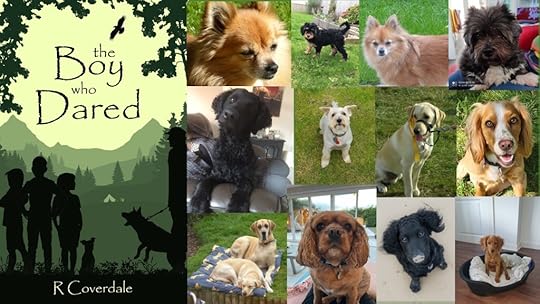
Dogs are amazing: cuddly companions, snuggling up to us on a night, greeting us with enthusiasm every time we enter the home – even if we were only two minutes while we put the bins out. Furry friends, not judging our awful decisions or fashion sense and forgiving us for our mistakes. Peaceful pals who never say nasty things to people or behind their backs. Dogs are so well tuned into us, they can be trained to guide visually-impaired people, alert people who are about to have an epileptic fit and intuitively protects us from danger.
Most of us spoil our dogs rotten. Our gorgeous girl has the best quality raw feed, carefully chosen natural shampoo and conditioner which is free from parabens and sulphates and a tailor-made dressing gown for after her baths. (I don’t have any of the above for myself!) I even pick up her poos for her. Really, she’s a puppy princess and I’m just her devoted servant!
I have always been concerned with animal welfare and sadly aware of the need for charities such as the RSPCA to fight animal cruelty. During the pandemic, there was a huge glut of people wanting dogs. Respectable breeders, as always were careful who they were sending the puppies to and limited the amount of times the dogs could have puppies according to both the legal and moral law.
However, puppy farms (sometimes called puppy mills), began raking the money in. The exhausted females were bred repeatedly whilst being fed low quality food, and kept in dirty cages or crowded pens. Puppies were given no toys or socialising and certainly no medical care. Even the stud dogs didn’t have it easy as not only do the puppy farmers not want to “waste” money on good quality food, they also don’t want to “waste” time on exercising their dogs and they definitely never show them any affection – quite the opposite. Many breeding dogs on puppy farms never see the light of day. The mother dogs often have the puppies removed too early causing extreme distress as well as health problems for the mothers and the puppies. But what do the puppy farmers care? They are making lots of money and that is all that matters to them. If a dog dies, they’ll get another one (often somebody’s stolen pet!)
When our beloved goldendoodle, Monty died last year, at just three years old, we were as devastated as if he had been a human member of our family rather than a furry one. There’s little difference. The sad irony was, that when I’m upset, I snuggle into my dog, but I had no dog to snuggle into while I wept for him. My only comfort was knowing that he had the best three years any dog could ever wish for. I would much rather he had three perfect fun-filled years living with his doting family, than twelve years of utterly cruel, puppy-farm torture.
Frequently, I donate to local animal charities, but I wanted to do something more. I wanted everyone to be aware of puppy farms. Not only of the cruelty to the helpless animals held captive there, but also the high risk of the poor puppy having a variety of medical conditions which at best cost money and at worst cause death. So I wrote a children’s story to highlight their plight: “The Boy Who Dared” Three boys stumble across a cruel puppy farm. Foolishly, they try to rescue the puppies themselves, but of course the types of people who run puppy farms, are not the types of people young children should cross. Things go terribly wrong and the boys find themselves in extreme danger, having to dig deep inside themselves to find the wit and courage to survive.
It is my belief that most people would not willingly support cruel, criminal puppy farms. Sadly, the public’s ignorance allows these criminal gangs to be able to continually profit from their heartless enterprises. Therefore, I hope that when children read “The Boy Who Dared”, as well as enjoying the exciting adventure, they will also be gently alerted to the sad state of countless puppies and breeding dogs, resulting in the readers never accidentally supporting a puppy farm themselves.
I hope you and your children enjoy my book which can be ordered from any online or physical bookshop and is stocked on the shelf at a fabulous indie bookshop: The Book Dragon in Stockton.
You can read my interviews with two reputable puppy breeders here and here.
If you would like advice on how to buy a puppy safely without accidentally supporting a cruel criminal puppy farm, the RSPCA gives some valuable information here.
July 19, 2023
ORACY
Has Your School Recognised the Importance Yet?

You might be forgiven for thinking oracy is the “new” buzzword, but it has been around since the 1960s. However, it is currently enjoying a well-deserved, renewed focus.
Why is it so important? Because as the educationalist, James Britton, said in 1976: “Reading and writing float on a sea of talk.” In other words, our children need to have strong oracy skills as a foundation for reading and writing. I would add to that – our children need to have strong oracy skills as a foundation for learning. In the Bloom’s Taxonomy, the top level includes evaluating and analysing. This requires a high level of oracy to be able to carry out effectively. Having a large, sophisticated vocabulary, being able to articulate your thoughts and ideas clearly, is a necessity to be able to achieve high grades in exams, succeed at interviews and win at life.
The ability to converse meaningfully and eloquently is also highly important for socialising, which in turn helps with mental health. Too many of our children spend time staring at screens rather than playing out where conversation can happen more naturally, therefore we need to make sure we fill that gap in school. When a person is unable to put their point across effectively, they feel undermined, marginalised and unheard. A lack of oracy can cause misunderstandings and frustration, often resulting in arguments or violence, ultimately impacting negatively on the child’s self-esteem.
Most of us know our rights. We know we have the right to be heard, we have the right to voice our opinions. Sadly, that does not necessarily mean that people know how to express that voice. All five of Maslow’s hierarchy of needs involve the person being able to express that need. To be able to explain what is wrong, why they are falling short of the minimum requirements and to be able to ask for help.
Therefore, for all of the reasons above, oracy is an incredibly important skill to develop. There is some information about oracy interventions on the EEF website: https://educationendowmentfoundation.org.uk/education-evidence/teaching-learning-toolkit/oral-language-interventions However, simply inserting oracy as an intervention is not enough. Oracy should be taught explicitly, and it should also become an integral part of teacher pedagogy. Look out for my future blog on how to do this. In the meantime, wherever you currently are in your oracy improvement plan, here are ten fun games you can use to enhance oracy within lessons:
Power Line: When given a controversial statement, students line up according to how much they agree or disagree with the statement. They must then try to persuade people to join them from the other end. This promotes cognitive and social and emotional oracy skills.Swapsy: After the Power Line, teachers select the more able students to swap sides, so they have to think of arguments and reasoning against their own ideas. This helps to stretch and challenge higher ability students.Pass the Panda: Only the person holding the panda (or any other soft toy or even a soft ball) can speak. This helps prevent people talking over each other. The person speaking chooses who to pass the ball to. This helps self-regulation and turn-taking.Rip it Off: Each student has a small card divided into three. Each time they contribute to the debate they remove one of the sections. This prevents the same person taking over too often. It also encourages and allows quieter students to take part.Rocket Ship: When a question is posed, nobody is allowed to talk or put their hands up for 10 seconds. The teacher puts a silent countdown clock on the whiteboard. This allows and promotes thinking time.Steal a Stem: Sentence Stems are put in the middle of the table. Students choose which sentence stem they want to use within the discussion. Once a stem is used it is gone from the table. This encourages students to vary and further sophisticate their sentence openers.Balloon Debate: Everyone is in a hot air balloon but it is losing height. They need to get rid of weight. They can choose to be themselves or a famous person or a character from a book, play or film. Each person needs to persuade the others that they should be allowed to remain in the balloon and somebody else sacrificed over the side. This promotes cognition and social and emotional oracy.Why?: One student in a group explains a fact or an opinion. Another student holds up a card saying “why?” The student needs to explain further or pass on to another student. The aim is to be able to answer as many “why?” questions in a row as possible. This extends thinking, improving cognition.Erm… You’re Out: A student has to talk about a topic for two minutes. They cannot say filler words such as “erm”, “err” “um”, nor can they use phrases such as “you know what I mean”. Neither can they not speak for more than two seconds. This improves fluency.Sell it to Me: The teacher gives a very boring object to each student on the table except for one who is the purchaser. Each student then has to try to persuade the purchaser to buy their object. The purchaser can only buy one. This contributes to cognitive and social and emotional oracy skills.May 19, 2023
Why Your School Should Have an Intervention Menu

When you visit a restaurant with your friends or family, the waiter doesn’t force you all to eat the same meal. Instead, you choose something appropriate for your individual wants and needs. Aunty Ann has a small appetite so selects a meal from the children’s menu, Cousin Yassa is vegetarian and selects a cheesy pasta. Big Dave is into body building and looks for the large steak. Grandma isn’t hungry but fancies a sugary desert.
Likewise, when a student’s reading age falls below their chronological age, we shouldn’t dish out the same literacy fodder to all the students. The intervention teacher will need to diagnose each student’s individual needs and satisfy that requirement.
Students who have a standardised score of 85 or below, often need a phonics intervention, but not always. Therefore, they should have a diagnostic assessment to ensure that is the right intervention for them. Similarly, if they have already had one particular intervention and it has made little or no impact on their progress, there is no point in repeating the same intervention. Therefore, schools need to have a menu of interventions to choose from, matching the appropriate intervention to the students’ specific literacy needs.
Recommendation 7 in the Education Endowment Foundation’s “Improving Literacy in Secondary Schools” guide states “provide high quality literacy interventions for struggling students.” It further recommends “tiers of support.” Over the years, I have used a variety of different literacy interventions. As a result, I have cooked up a menu from which I can select the best intervention to meet the needs of each student. There are four important considerations when selecting an appropriate intervention:
M = Measurable: You must be able to measure the impact of the intervention to truly know if it is working and therefore worth the time and money spent. In addition to the intervention specific assessments, I always cross reference against reading tests to check they correlate.
E = Explicit: The intervention should explicitly teach what the student needs, rather than a blanket intervention for all.
N = Number of sessions: Intervention is a big commitment from the student’s point of view – if they are missing subject lessons or using up their own free-time, they need the time to be spent efficiently. Therefore, the length of individual sessions and how many sessions they need to make progress, is an important factor.
U = Useful / Ubiquitous: Literacy is in all subjects, including non-academic subjects. Consider whether the intervention is positively impacting literacy across the whole curriculum.
Literacy InterventionStars out of 5Target and DurationMy Comments Accelerated Reader & STAR Reading
*****Reading
20+ minutes per day, 5 days per week.
 This is the cuckoo in the nest. I dispute that this is an intervention. Rather, it has two different but incredibly important uses: The STAR reading test is a diagnostic tool to discover, not only their reading age but also which areas of literacy they need to work on to make progress so that you can select the appropriate intervention from the menu. There is lots of additional data which can be taken, including growth/progress and zone of proximal development. Through the use of quizzes, Accelerated Reader is a fantastic monitor of whether students have actually read and understood the texts and also how many words read which indicates an estimate of time spent reading. After all, practice is an important component of intervention. Most students find the short quizzes fun. I recommend Accelerated Reader and STAR Reading to be used in conjunction with any and all interventions being run in your setting.
  Must be delivered correctly and closely monitored to be effective. Can be time consuming for the administrator and can be costly. Initial set up is a huge task for the librarian. Limits the choice of books although there is still a very wide choice. Often administered incorrectly. See my blog here on how to use it effectively: https://rachelcoverdale.com/2020/11/23/accelerated-reader-the-marmite-of-reading-programmes-across-the-uk-and-possibly-the-rest-of-the-world/
Inference Reading
Must be delivered correctly and closely monitored to be effective. Can be time consuming for the administrator and can be costly. Initial set up is a huge task for the librarian. Limits the choice of books although there is still a very wide choice. Often administered incorrectly. See my blog here on how to use it effectively: https://rachelcoverdale.com/2020/11/23/accelerated-reader-the-marmite-of-reading-programmes-across-the-uk-and-possibly-the-rest-of-the-world/
Inference Reading
****Inference
40 minutes x twice weekly for 12 weeks. Groups of 4 students.
This is designed for students who are able to read well but appear to misunderstand what they’re reading. Inference is a common difficulty for students with ASD. Students are explicitly taught the reading skills of advanced readers. Enjoyable, snappy and easy to set up. No measure of progress.
Lexia
***Word study, grammar, comprehension
Personalised but ideally 20-30 minutes every day.
Computer based engaging game-based learning. Can be continued at home. Excellent for differentiation for mixed ability groups as students are given moving individual goals. Students enjoy building streaks and reaching goals. Lots of data and progress reports available. Close screen usage. Headphones required if more than one student in the group. Missing human interaction where an adult can explain in a way that students with individual learning styles can understand. Yearly licence fee applies.
Lexonik Advanced
*****Disciplinary vocabulary, fluency, automaticity, prosody, morphology
6 weeks (one session per week). Sessions 40-60 minutes long. Groups of 4 students.
Used for coasting middle ability and stretching higher ability. Can also be used as a follow on from Lexonik Leap. Highly engaging. Greek and Latin roots of words, prefixes and suffixes, morphology, subject specific vocabulary (Tier 3 words), building academic language. Intervention has own assessment to measure and, in my experience, has consistently had a huge positive effect on reading ages. Delivering staff must be trained by the company and there is a yearly licence cost.
Lexonik Leap
*****Phonics, prefixes, suffixes and some morphology
6 weeks (one session per week) Sessions 40 minutes long. Groups of 4 students
Ideal for very weak learners. Students love it. Short, snappy activities, particularly good for ADHD, Dyslexia and EAL. Intervention specific progress assessments which in my experience have been reflected in reading tests. Deliverers need to be trained by the company and there is a one-off cost for purchase of resources.
Lexonik Spell
****Spellings
12 x 15-20 minutes. Groups of 4.
Fun quick. Lots of light bulb moments. Rules to learn and follow for life. Repetitive and short, ideal as a starter. Intervention-specific assessment for progress measurement. Not available yet.
Ruth Miskin / Read, Write, Inc.
****Phonics / Reading
20-30 minutes per day, 4 days per week. Up to one year depending on starting point. First 4 modules 1:1 then groups of 4 thereafter.
This gives the new phonic sounds first and then uses them in the short text followed by short activities. It is extremely thorough, cementing students’ learning. Students use lots of booklets which need to be bought from the company. Training and licence costs also.
Pace Reading
***Reading engagement and comprehension. Prosody
20-30 minutes twice per week.
No cost except purchase of books of your choice: everyone reads the same text. The difference is that only the teacher reads out loud because the point of it is that students hear the story read correctly with pace, intonation and expression. It’s best combined with Reciprocal Reading. No specific measure of progress. Should be aimed just slightly above students’ current level so difficult to be effective for everyone in mixed ability settings.
Rapid Plus
****Reading and comprehension
One hour per lesson. 44 lessons available depending on starting point.
A fantastic reading programme, very easy to use, suitable for small groups and with rapid results. Each day’s book is spit into fiction and non-fiction with relevant questions at the end. Once bought, can be used again and again. User friendly. Regular assessments to measure progress. Large initial outlay.
Reciprocal Reading
***Reading engagement and comprehension
30 minutes x 2 days per week.
Free. Excellent for engaging students in the text and developing interest. Repetitive and dry on its own – needs to be combined with something like Pace Reading.
Toe by Toe
***Phonics / Reading
30 minutes x 5 days per week. Approximately 5-6 months.
Designed for students with dyslexia. Works well for EAL. Great for very low ability Students work at own pace. Should be taught 1:1 so not as many students can benefit.All opinions are my own, informed by 8 years of delivering literacy interventions and 5 years of teaching English. I am not sponsored by any of the above. Links provided are for your ease of use and not affiliate links.
April 5, 2023
The Grandparent Effect on Reading
 Image by Richard Duijnstee from Pixabay
Grandparents are magic. Fact.
Whereas your children might be fighting with each other at your house, they go their grandparents and act like little angels. Whilst they might argue at the dinner table with you, eating at the grandparents is a relaxed affair. Even though they will refuse or cry about having to read to you, they’ll pick up a book voluntarily to read to their grandparents.
What is this strange phenomenon?
It’s time. Plenty of time.
Those retired oldies don’t have the stress of managing the cleanliness, education, nutrition, mental-health, physical exercise and everything else you have to manage for your children.
Grandma and Granddad have been there and done that. Now they’re retired: relaxed, chilled, taking it easy.
So, when you’re trying to listen to your unwilling child read painstakingly slowly, whilst cooking a guilty but fast, non-nutritious meal and simultaneously trying to remember what important appointment you needed to make and for which one of your children… Grandma and Granddad are pottering around their immaculate home looking for something to do.
You arrive at their picture postcard bungalow early Saturday morning with your PJs on under your outer coat, your wet freezing hair piled on top of your head, hoping desperately it looks like a trendy “scruffy-bun” dragging three half-dressed, sleepy, crying children along with you. The grandparents are already at the door and delighted to see you all. As you leave, the stress and frustration that is part of being a parent and house manager, leaves with you. The door slams shut and the tranquil peace of Grandma and Granddad’s home wraps itself around your children.
Instead of their usual arguing and fighting, the children sit down together and tell their doting grandparents about all the mundane things that interest them. Grandma and Granddad who were bored and frustrated and stressed when you were a child are now relaxed and genuinely interested in what the children have to say. The children pick up on that: there’s no competing for attention because they know their grandparents have time for all of them.
Grandma and Granddad give your children biscuits and juice for breakfast. “Where is the nutrition in that?” you berate them down the phone. “They’ll be off their nuts running around screaming and fighting!” But they’re not. Because they’re at Grandma and Granddad’s. Grandma and Granddad are magic.
After a while Granddad sits in his chair to read the paper. The smallest child sits on his lap so Granddad reads her a story book instead. Middle child comes and listens. Eldest child asks Grandma if he can read to her. “Whaaaat?” you stutter down the phone, “but I can’t get him to read anything, we fight every night, the school’s constantly nagging me.” Grandma didn’t have the boring school reading books. She had some picture books that were written for parents to read to children, not the other way around. If you asked the school, they would tell you the words are far too difficult for such a young child. Grandma doesn’t know this. Eldest child doesn’t know this. Eldest child believes he can read this. It’s his favourite book at Grandma’s that she has read to him a million times before. He knows every detail of every picture. He is able to remember or guess most of the words. Those he doesn’t know Grandma fills in. She doesn’t care about breaking the phonic sounds down. She doesn’t know about graphemes, phonemes and split diagraphs. She’s just enjoying spending time with her grandchild.
Later Granddad shows all the children a new book his neighbour dropped off for them. They all look excitedly at the cover and try to guess what the story might be about. Granddad reads the first page with all the children looking over his shoulder at the words and pictures. The youngest doesn’t quite understand what is going on, so the middle child, patiently and importantly explains it to her. He then guesses what is going to happen next. Granddad reads on and middle child is delighted to find out he was right.
Grandma and Granddad have just used a combination of Pace Reading, Reciprocal Reading, Modelling and Scaffolding. But they didn’t know it. Grandma and Granddad had time. Time to read to the children. Time to let the children read to them. Time to talk with the children. Time for the children to take their time. This is the magic of grandparents. This is the secret: Time.
Schools are catching on to this Grandparent-effect. Recently a 100 year old WWII veteran was awarded a British Empire Medal in recognition of his volunteer work helping young children to read at his local primary school. https://www.bbc.co.uk/news/uk-england-manchester-65113207 As he points out – the benefits go both ways. He began to volunteer after his wife passed away and it brought joy back into his life. Sometimes people are short of conversation when visiting elderly relatives in care homes or hospitals, having the grandchild read to them is a pleasurable space filler for all present and then stimulates conversation around the book. There is a charity that asks school children to read to elderly people who don’t have visitors https://silverstories.co.uk/ showing that it is both sides who benefit.
So next time you berate yourself because you weren’t patient enough when they refused to read or read really badly to you, cut yourself some slack, and pack them off to their grandparents for a couple of hours. The grandparents and grandchildren will love spending time with each other and you can sit down for ten minutes with a cuppa, knowing everyone is happy and safe, before you return to tackling the one million jobs you assigned yourself this weekend!
September 20, 2022
Ethical Dog Breeder Interview #2
Thank you for agreeing to this interview. I love following the antics of your various puppies as they adventure around your farm.

My next book, “The Boy Who Dared” will reveal the horror of unscrupulous puppy farms, (also known as puppy mills) where dogs are treated as commodities, their welfare is neglected resulting in many of the puppies born with life-limiting defects and illnesses. People often think the only alternative is rescue dogs, but there is a case for ethical dog breeders such as yourself also. What are the positives of buying a dog from a breeder?
In October 2018 it became the law for breeders of dogs to have a breeding licence issued by their local council. In order to obtain a licence numerous high standard conditions must be adhered to. The premises are inspected by the council and the dogs by a vet. By purchasing a puppy from a licensed breeder you know that checks have been made and standards met. Many breeders will health check their dogs and only breed if the health is up to breed standard. Great care and research goes into choosing the correct mate for both health and temperament reasons.
Can you tell me, what made you decide to breed puppies and how often do you have a set of puppies to take care of?
Back in about 2003, I acquired a two year-old black Labrador from a friend I worked with. She and I had the most amazing bond and she was the most loving loyal girl I’ve ever had. I decided it would be lovely to have a puppy from her to keep and so it was decided to find her a suitable mate, and that is where it all began. Raising the puppies was an amazing experience and such a privilege.

Just as puppy mills can be a bad start for puppies, a bad owner can be a terrible life for these fur-babies. What checks did you do to make sure that your puppies were going to safe homes?
As a breeder it is important that the puppies go to the best homes. On first registration of an interest in our puppies we like to talk over the telephone and get a feel of the family and find out the work commitments, family members and previous puppy experience. Once our puppies are four weeks old we invite interested families to visit, this gives us a good opportunity to start building that bond of trust. After this visit families may visit again (sometimes this is not possible due to distance).
You have been breeding for a lot of years now. If somebody reading this interview wanted to breed their dog, what would you warn them about that people often underestimate or get wrong?
Many people think that breeding dogs is easy money and easy to do. It’s not as simple as just putting the two together. Firstly, there is the health checks that need to be done, hip and elbow X-rays and eye tests and blood samples for genetic DNA testing. All these tests are costly. There is the licence to apply for and again this is costly. There are risks all along the journey, risks in the mating process where the bitch or dog could get hurt even though it is a natural process. There is the risk of the bitch losing her puppies and the big risk and worry of the whelping. It is not uncommon in a litter for a puppy to be stillborn. Then the first ten days are very important as it is during this time when the bitch can easily lie on a puppy and squash it. You must have plenty of time to spend with the bitch to watch this doesn’t happen. Once the puppies are up and about, they need to be socialised and follow an enrichment program to prepare them for moving on to their new homes. From four weeks the new families start to visit and this also helps the puppies socialise. A written puppy information pack is prepared and given to new families to assist them with raising the new addition. All the puppies are health checked by a vet prior to leaving us.

Many people miscalculate the time, cost and commitment of adding a dog to their family. Do you have any advice to help in any of these areas?
The most important things you can give a puppy is your time and love. The value of your house and belongings is not important to them. We don’t like our puppies to go to homes where they are going to be left alone for long periods of time. Puppies do well with routine and boundaries and you should start as you mean to go on. As well as having play time and exciting times, puppies also need to have calm and quiet times. Puppy classes are a good way of learning how to teach your puppy and it’s important that every house member follows the same training rules.
If you could change something about the breeding process, what would it be?
If I could change something about the breeding process I would like the Kennel Club to only register litters from parents that have been health checked and met the breed standards. I would also like potential puppy purchasers to be more educated about the Breeders Licence requirement.
Thank you so much for your time and wisdom. I’m so pleased there are ethical breeders such as yourself. Especially as we will be looking to purchase our next puppy soon. With your advice, we can make sure that we give our new puppy the best start.
“The Boy Who Dared” will be published 1 October 2022 and can be bought here
James has just one chance to save his dad, his friends and a hundred starving dogs. Can he face his greatest fear, before the criminal gang track him down?
September 11, 2022
In Loving Memory
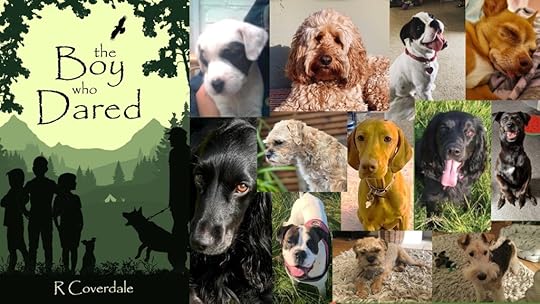
Last week on 8 September, we in the United Kingdom and all the Commonwealth countries lost our queen. She was a renowned dog lover. Indeed, whenever a corgi is spotted most people immediately think of the queen. She also had Labradors which I’m sure she loved just as much. Anyone who has owned a Labrador can tell you they are quite impossible not to love!

The month before, on 8 August, my family and I lost our cherished family dog Monty (aka The Lord as named by his beloved dog walker). The devastation this caused especially at such a tender age – just three years old – feels irreparable. But I know that one day the pain will ease.

The month before that, on 8 July, I lost one of my closest friends, Judy (Judge Judy I sometimes jokingly called her). She was my confidante, book geek, dog-obsessor. She, more than anyone, would have understood my pain of losing Monty.
It would be easy for all this to overwhelm me and for a while it did. I’m still crying lots. But in between the tears there are cherished memories.
The queen, I can come to terms with. She lead a privileged and long life. Of course she had troubles and difficulties but overall, I think it’s a fair judgement that hers was a life well lived.
For me it was harder to deal with the loss of my friend Judy. Although older than me, she hadn’t finished living her life. Not even close. She found her beloved husband late in life and her two Westies were still young and are missing her. She was a wonderful person, although the most useless driver I ever met. She was fun and whacky and we needed at least another 20 years of putting the world to rights. But the positives I take is that she did meet her beloved John. She did have lots of dogs. She did experience being an adored grandma. She did read a million or so books. She was so loved.

And then there is the loss of Monty. We loved him so very much and were determined to make sure he was the healthiest dog in the world so that he would live a long, healthy happy life. He died at three years old. It wasn’t our fault and it wasn’t his fault. A tragic accident (he apparently ate rat poison or an animal recently deceased from rat poison). Initially I struggled to draw any positives. Three years is so short. But I can draw positives. Monty never knew cruelty. He never knew loneliness or neglect. He never knew fear. All he knew was love, fun and joy. From us and from his doting dog-walker.
Fittingly, he was with me as I wrote my book “The Boy Who Dared” designed to teach the readers how cruel and dangerous puppy mills are. My research was harrowing. I learnt about dogs who lived their whole lives never seeing the light of day. Giving birth to litter after litter of puppies in dark dirty pens, only hearing aggressive shouts and the only touch, a hard fist. The puppies born in these dingy conditions were often born with genetic defects causing long-term health issues and early death bringing deep sorrow to their new owners.
 Illustration by Michael J Carr
As my initial grief over losing Monty began to settle down, I compared his life to these poor unfortunate dogs. I realised that quality is more important than quantity. He only had three years, but those years were top quality. He lived like a royal. He was happy and loved every single second of his life. I have nothing to regret about the way we raised him. It has made me more determined than ever to spread the word, in Monty’s name: please, for the love of dogs, never, ever buy a puppy from a puppy mill. They are in it for profit only, so if they can’t sell the dogs they will close their business. There are plenty of ethical dog breeders (see interview here) and of course there are lots of wonderful rescues. Please in Monty’s name, learn how to recognise a puppy mill breeder. There is information here from the RSPCA. Make sure you see the lactating mum with the puppy and make sure you see the puppy in their home – not in a pub or car park. Click here for RSPCA information on how to find a good breeder.
In Monty’s memory, in my dog-doting friend Judy’s memory and in our dog-loving queen’s memory – let’s all make sure that we never support a cruel puppy farm.
September 2, 2022
Rosie Raja: Churchill’s Spy
by Sufiya Ahmed
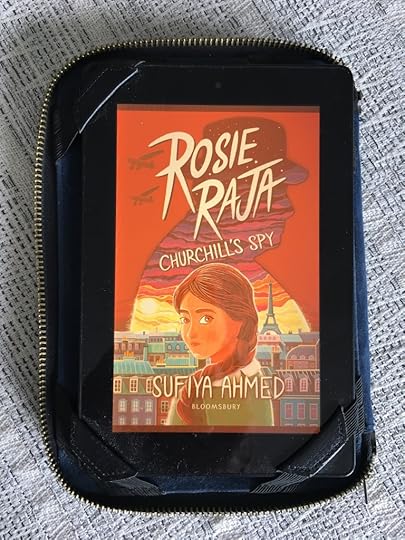
How wonderful to have an exciting espionage story set during World War 2 which is written for children. Even more exciting is that the main, heroic protagonist is a mixed race, British Indian, Muslim girl. A fabulous role model!
Despite being born to royalty, Rosie Raja behaves without presumptuous expectations. She is gutsy, fiercely loyal and passionate. Despite being a child and against her father’s protective misgivings, she joins the French Resistance where she learns exciting things such as secret codes and terrible things such as betrayal. As a reader, it was fun to decipher the secret codes along with Rosie and her friend Jean.
As well as being an entertaining story, the reader also learns more about The Raj, Indian royalty and people’s attitudes to Ghandi during that time. Furthermore the reader glimpses an insight into the different ways people, especially parents handle grief and the unintentional damage it can cause if we do not talk to one another openly.
Sufiya Ahmed is a wonderful story-teller. I found myself routing for Rosie throughout and terrified on her behalf as the action unfolded.
If you haven’t already read “Noor-Un-Nissa Inayat Khan” which Sufiya Ahmed wrote about a real-life female British Indian World War 2 secret agent, then I thoroughly recommend you read that too.
You can buy “Rosie Raja: Churchill’s Spy” by Sufiya Ahmed online whilst still supporting local bookshops by clicking here.
August 8, 2022
Seven Surprising Ways to Break Through Writer’s Block
Don’t panic! It happens to almost everyone. There are ways through. Deep breath…

Walk through nature
The more you panic about your writer’s block, the more uptight you become which just adds to the mental immobility. Go for a walk. Make sure there is nature around you. If you’re lucky enough to be close to open countryside, that is perfect, but if you are in a city, head to the nearest park or graveyard. It is important to understand that you haven’t gone there to think up solutions to your block. You are purely there to allow yourself to unwind and your mind to expand. Engage all your senses: look up at the sky, look around you at the flowers, bushes and trees, listen for the insects and birdsong, smell the flowers, touch the leaves and the petals. Remove your shoes and press your bare feet into the earth to really connect. If you have an animal with you, stroke it. Lots.
Clean the windows/floors/vacuum/exercise
Mundane jobs take no thought but occupy you enough to stop you hyper-fixating on your writer’s block. Moreover, if you’re trying to enjoy writing, knowing that you have visitors tomorrow and your house is a state, it puts you into what Prof. Steve Peters (of The Chimp Paradox) calls “the dark playground” – you are trying to do something pleasurable, but it is ruined by the nagging guilt at the back of your mind that you should be doing something else. This definitely contributes to writer’s block. Just think – if it doesn’t work, at least your house will be gleaming! Exercise can have exactly the same effect – did you tell yourself you would run twice a week but haven’t done it? Get out for that run, you’ve ticked a task off your list and allowed your mind to run free with you.
Sentence starters / Writing prompts
You can internet search thousands of sentence starters and writing prompts, but here are just a few from me:
Henry had an unsettling feeling he’d been here before…It was 2am, too early for sunrise, yet the room was bathed in a bright light…The two old ladies, held on to each other as they laughed and laughed…Just around the corner, Jack’s life would be changed forever…The two girls skipped down the beach hand in hand, never to be seen again…It was the same coffee shop. The same street. The same time of day. Yet there was one big difference…Deep under the ocean, something was stirring…“Two people can see and hear the same thing, yet interpret them very differently,” the detective thought to himself.The apparent strangers exchanged a brief look. Somebody else at the airport noticed that look too…Angela arrived unusually late for work, her face red and her usually immaculate hair wild. She rushed into her office, slamming the door behind her…Read similar books
Know your genre and age group, know your target audience. Then pop to the library and borrow lots of books in that genre. Allow yourself a break from writing to read, but keep a notebook and pen handy. Sometimes a book will inspire new ideas, sometimes you will think of how you would have written that book differently. Either way, ideas will start swimming around inside your head.
Guess
Have you ever sat somewhere for a period of time with nothing to do? Like a train station for example? I like to “people watch” I look at them and try to guess their story. Who are they? Where are they going? Why are they going there? What are they like at home? I get clues from the way they dress, their body language and interactions, what they have with them and so forth. I’m probably wrong 100% of the time – I’ll never know, but they give me great writing material. You can do the same by visiting your local library and looking at book covers in your genre, then try to guess the story. Or visit a local art museum. There is inspiration all around, once you tear your eyes away from the screen/paper you’re using to write your story.
Chat to your book friend about favourite books
We all have that one geeky book friend to whom we can chat overly-enthusiastically about books for hours upon end and they don’t look at us like some kind of weirdo. Go visit them – in person preferably, but over Zoom if necessary. Ask them what they’re reading, tell them about what you recently read, let the conversation go wherever it wants. You’re not asking them for help. You’re just enjoying chatting about books – any genre. Oftentimes that’s enough to unplug the blockage.
Write Rubbish!
Honestly. NOBODY is going to see it. You set yourself a time and start writing. It only needs to be 30 minutes. No matter how bad it is, it’s more than nothing. Be as ridiculous as you like. Take the mic and write something atrocious. It’s okay, because it’s like a leaky tap, it starts dribbling and then all of a sudden it just gushes the words out. And somehow, they start to get better all by themselves. You can fix the beginning later – just go with the flow.
July 24, 2022
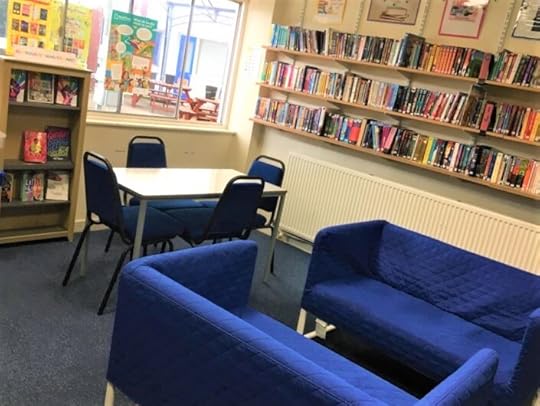
Seven Reasons Why a Library is so Important in a Secondary School
L = LITERACY. “About 90% of vocabulary once children get older is actually learnt through reading” (Gill Jones HMI, Deputy Director, Schools and Early Education, Ofsted). How often have you noticed the vocabulary of a person and judged them on it? When one person comments the weather is volatile and another comments it’s p!$$!ng down, we judge the first to be more intelligent than the other. It isn’t necessarily true, but it becomes a self-fulfilling prophecy. The more students read, the more words they learn and become familiar with and eventually use. They also begin to spell more accurately and construct their sentences in a more sophisticated manner. This helps with more than just exam grades – it lifts their quality of life.
I = INTELLIGENCE. “Reading enjoyment has been reported as more important for children’s educational success than their family’s socio-economic status” (OECD, 2002). Obviously, reading a lot of non-fiction will teach the reader a great deal about each subject they’re studying, but readers learn a surprisingly large amount from fiction too. Authors research carefully – if the book students are reading is set during Victorian times, they may learn a lot about the different types of horse-drawn carts or how the upper-classes socialised. If a book includes a badger clan, the writer will weave all sorts of badger facts into the story (I should know – you can read my book “The Boy Who Couldn’t” here. Spoiler alert: it has badgers in it.)
B = BELONGING. = Librarians are empathetic, compassionate, kind and understanding. The world can be a complicated and scary place for many teenagers. They often feel awkward, like they don’t know where they fit in. The library is a great social space for people who want to mix on their own terms. They can go in to choose a book and stay buried in it, or they can begin to make friends with like-minded students, often over a same taste in books, or playing a board game or card games such as Uno. An experienced librarian is able to recognise when to help students to begin to mix with their peers and when they just want to be left to themselves. The pastoral role of a librarian should not be underestimated.
R = READING FOR PLEASURE. “There is no such thing as a child who hates to read, there are only children who have not found the right book” (Frank Serafini). It doesn’t matter how much we dangle carrots or chastise, if a child does not enjoy reading and does not see the value in it, they will only ever read the minimum, while the teacher or parent/carer stands over them. However, an expert well-read librarian, can help children find the right book for them (in interest and level), once the student finds “that one book” it leads to another and another. It is possible to convert previously reluctant readers into voracious readers. Thanks to public libraries, they’re also set up with a free hobby for life.
A = ACTIVE. School libraries never stand still. They are constantly changing and evolving according to latest research, best practices, new releases. A good librarian will be up to date with prize winning novels, interests and trends such as books relating to the latest NetFlix series. Libraries are vibrant places for students to spend time in.
R = RESEARCH. Whether discovering the capital cities of countries, the life cycle of a humming bird or understanding their own sexuality, the library should be seen as a safe place to ask questions. However, the librarian cannot be expected to be the expert in all areas, or sometimes, the student may be embarrassed to ask their question to an adult, therefore, the library should be well stocked with a wide selection of non-fiction books covering all areas of the Dewey Decimal System. Children who know how to research properly and not rely on social media, will develop into well-informed adults.
Y = YOUTH. Young people need to feel seen and heard. They need to be able to relate to the characters in the books they are reading. Therefore a well-managed school library will ensure there is a diverse range of characters within the books, such as main characters being black, or from a working class background or LGBTQ+ or different religions or having a disability and so forth. They should also ensure that the authors who write the books and visit the school are also diverse.
In summary, all schools should have a well-stocked school library with a dedicated school librarian. This gives every child an equal chance to develop a love of reading, discover a source of reliable information and all the benefits that accompany such resources.