Kelly DiBenedetto's Blog
June 25, 2021
Sharing LGBTQ Resources with Pride

In honor of PRIDE month, we wanted to take a moment to highlight some important resources to help support the LGBTQIA individuals and families in the post-adoption community. It is our mission to provide support, resources and education so that everyone in the adoption constellation can feel safe and valued and be able to live healthy, productive lives. We also know that as providers, it is our responsibility to continue to educate ourselves and build our clinical and non-clinical resources for our community.
Below is a list of recommended resources compiled by our clinicians. Additionally, we are excited to be able to offer an LGBTQIA adult adoptee support group in the Fall (subscribe to BPAR’s newsletter or check our Group Therapy page later this summer for details!).
LGBTQIA ResourcesFenway Health — The mission of Fenway Health is to advocate for and deliver innovative, equitable, accessible health care, supportive services, and transformative research and education. “We center LGBTQIA+ people, BIPOC individuals, and other underserved communities to enable our local, national, and global neighbors to flourish.” Website link
OUT MetroWest — OUT MetroWest builds communities where LGBTQ+ youth thrive. We offer multiple programs each week for LGBTQ+ youth as well as programs for families and educational offerings for the community. Website link
Gender Spectrum — Organization that provides support and resources to parents and families of LGBTQ+ children. Website link
Family Acceptance Project — Resources/training for families, providers, etc. Website link
GeMS (Gender Multispecialty Service) – This program, located at Children’s Hospital, provides individualized, safe, and affirmative care to gender-diverse and transgender individuals ages 3 – 25 and their families. The program takes a team approach and provides a variety of services including primary care, medical support, individual, family and group therapy, and school support. Website link
Kaleidoscope, serving LGBTQ+ children, youth, young adults, and their families -. Program also specializes in working with individuals with Autism Spectrum Disorder, ADHD, LD, and social and emotional challenges and their families. Website link
Scarleteen — Sex education “for the real world.” Website link
AMAZE — “AMAZE takes the awkward out of sex ed. Real info in fun, animated videos that give you all the answers you actually want to know about sex, your body and relationships.” Website link
The Trevor Project — “Founded in 1998 by the creators of the Academy Award®-winning short film TREVOR, The Trevor Project is the leading national organization providing crisis intervention and suicide prevention services to lesbian, gay, bisexual, transgender, queer & questioning (LGBTQ) young people under 25.” Website link
Dr. Sharon Saline — Dr. Saline discusses parenting children and youth with ADHD, exploring their gender and sexuality. Website link
Trans-Parenting — Trans-Parenting is an organization dedicated to providing support and educational resources to parents and their advocates (pediatricians, mental health professionals, lawyers, schools, friends, family, and churches) for raising a gender-independent child. Website link
ADD and Gender — ADDitude magazine explores the relationship between ADD and gender. Website link
Written by Kelly DiBendetto
Boston Post Adoption Resources
The post Sharing LGBTQ Resources with Pride appeared first on Boston Post Adoption Resources.


February 2, 2021
New Year New . . . What? Creative Ways to De-Stress
 2020 was rough, and the emotional toll that it has taken is heavy. As we move into this new year, it’s more important than ever to have a self-care routine and a support system to help manage the enormous amount of stressors that are compounded upon us. There is hope that some of the stressors will dissipate, but even when they do, they can leave residual effects that continue to have an impact on your system.
At BPAR, our team relies on several resources that we come back to over and over again, especially in times of stress. We believe in the importance of practicing what we preach. Our clinicians are just as dedicated to working on themselves and ensuring their own well-being as they are of taking care of you. There is no secret to self-care. It takes effort, it’s an active process, and sometimes it needs adjusting. As Carl Jung, the great psychiatrist and psychologist said, “The shoe that fits one person pinches another; there is no one recipe for living that suits all cases.” We have assembled a list of resources provided and used by our clinicians that help us with our own self-care. We encourage you to explore and try several different resources to find what works best for you!
Self-Help Resources to Help You De-StressBooksMan’s Search for Meaning by Viktor Frankl
In his book, Frankl, a Holocaust survivor, writes, “When we are no longer able to change a situation, we are challenged to change ourselves.” Viktor was able to find meaning while experiencing one of the most horrific experiences of suffering of all time. He reminds us that even if everything else is taken from us—we always have the choice of what to do with our thoughts and feelings and to find meaning in our lives.
The Gifts of Imperfection by Brené Brown
Brené writes, “Wholehearted living is about engaging in our lives from a place of worthiness. It means cultivating the courage, compassion, and connection to wake up in the morning and think, ‘No matter what gets done and how much is left undone, I am enough.'” So many of our clients are lacking in self-worth, feeling as though they are not good enough and not deserving of love and care. This book does a great job of challenging those beliefs and helping the reader connect to their own worth.
Tools for Releasing or Expressing Your FeelingsTHERAPYTherapy can be a great resource for self-care. It can be used in a variety of ways depending on your personal goals. Despite the type of therapy you choose, you are bound to gain insight or awareness into yourself. You can begin to notice patterns in your thoughts and feelings which will help you look at your behavior in relationships, at home, and at work. When you really get to know yourself, you can then start to feel more in control of yourself.
Therapy can help to validate the difficult experiences you’ve been through and help you learn to articulate your feelings. It’s an opportunity to be vulnerable so that you can live your life in a way that feels safe and healthy for you.
Finding a therapist can be difficult. It’s important to shop around and make sure you feel it’s the best fit for you. Think of finding the right therapist as finding the right car for your needs. Ask about:
their training;their style;what a typical session looks like;whether they require homework;how they give feedback;how they set goals; andif they have had experience with clients who have had similar challenges.How do you feel meeting with them? Do you think you can be honest with them? The fit of a therapist is a personal choice for the client, but not for the therapist—we will not get offended if you feel like you might be comfortable with someone else! If you need help finding a therapist, you can contact us for support.
EXERCISE/ MOVEMENTPhysical activity can help relieve stress and also produce endorphins which are the neurotransmitters in your brain that help you feel good. Our BPAR clinicians engage in a variety of movement exercises such as lifting weights, running, yoga, stretching while breathing, cycling, hiking, dancing and walking.
BREATHING EXERCISESWe breathe involuntarily—our bodies and brains do it automatically to keep us alive. However, the way in which we breathe has a huge impact on our bodies and our emotions. Both shallow, fast breathing or holding our breath can increase anxiety and panic as either extreme triggers our fight-or-flight response (sympathetic nervous system). Breathing deeply, particularly with long, slow exhalation, activates the calming part of our bodies (parasympathetic nervous system), signaling to our brains that we are safe.
Some recommended breathing techniques from BPAR clinicians:
“Star” or “figure 8” breathing: air tracing (or actually drawing/tracing) the figure and focusing on inhale/exhales while doing that bilateral movementDiaphramatic breathingIn addition to breathing, another great tool for expression is through intentional screaming or yelling. Find a safe space—like your car—and have a good scream or cry to help release some of the anger, rage or grief you are feeling.
CONNECTION — PHYSICAL AND EMOTIONALHuman beings are wired for connection. It helps us feel safe and assures us that we will be okay. If it’s available to you, a 20-second hug from someone you love or feel safe with can have a positive impact on your stress response. If you live alone or are isolated or in quarantine, try a weighted blanket, petting your animals and hugging yourself. Emotional connection is just as important here, too. Try calling a friend who is going through a similar situation. Getting an empathetic response is validating and important. We like Brené Brown’s short animated video that explains the important difference between empathy and sympathy.
GET ORGANIZEDMany of our clinicians talk about the benefits of getting organized. Making to-do lists, cleaning the house, organizing a bookshelf, doing some laundry while working from home—all of these activities can help you feel focused as well as productive, which can boost energy and decrease feelings of being overwhelmed.
CREATIVE EXPRESSIONEngaging our creative parts is a great way to release stress. It helps us tap into our centered part of ourselves. The creative possibilities are endless! Try some of these activities:
Write: Pick a topic and write about it for 15 minutes, or free-write for 1-5 minutes, or journal until you feel a shift of energy and or mood.Create art: Abstract scribbles or moving paint around on canvas. Get playful with it! Buy an adult coloring book, use clay, or find some markers that you love and just make marks on the paper.If you enjoy music: Put on some headphones and listen to a favorite song, make a playlist based on your mood, or practice an instrument. One of our clinicians who loves music highly recommends doing a Group Session on Spotify; you can invite your friends or family (they have to have a premium account) to collaborate on a playlist and listen to music together. Take turns adding a song to the playlist, and you can listen to what everyone else contributes. A nice way to be “together” if you can’t< actually be together.Increase play and fun: Many of our clinicians like to personify inanimate objects in order to stay playful and lighthearted. Give voices and personalities to the things around you. What does your refrigerator sound like? How about your cat?INTERVENTIONS THAT HELP TO SOOTHEAnother great option to help in times of stress is to engage in soothing activities. These activities help us move into the present moment, which can help take us out of our thinking brain. Here are some of our favorite soothing activities that we use on a regular basis:
Epsom salt bathsEssential oils (rub on pressure points or use in a diffuser)Lighted candle (scented or unscented)Weighted blanketTeddy bears and stuffed animals (any object that brings comfort/joy/play)A warm beverage (Tension tamer or herbal tea, hot water with lemon)Position fresh bloom or flower or crystal in front of yourself20-second hugs (or 10-second kisses!)Reruns of your favorite TV showsPower naps (20-30 minutes)Insight Timer app for soothing music, guided meditation, etc.In silent meditation, hum to notice the vibration of your own voiceDeep belly breathingSELF-COMPASSIONSending kind, loving, forgiving thoughts to yourself can go a long way. Pay attention to how you talk to yourself—would you talk to your best friend that way? At our office, we have a no-talk-trash policy that we implement and support each other with. If we hear a colleague say something negative about themselves like “Ugh I’m so stupid, I can’t believe I did that!” etc., one of us will gently suggest, “Now say something nice about yourself.” You can ask someone at home to do this for you, or set a reminder in your phone with a positive message that pops up at certain times during the day. The more you practice this, the easier it gets!
Summary: One Step At a TimeSelf-care seems to have become this big term that has been thrown around all over the Internet—especially during the pandemic. But when it comes down to execution, many people feel overwhelmed or defeated even thinking about the concept. Our advice is to break the goal of self-care down into very small, tangible steps and also to think of it as an active process. Our needs are always changing, so we need to listen to what our bodies and minds are telling us in the moment. “Maybe today I need to numb out and watch Netflix for a few hours, but tomorrow I might need to go for a walk and get fresh air and maybe even that evening I might need to take a bath or call a friend.” The key is to have many tools in your belt that you can keep handy and take out at the right time.
Written by Kelly DiBendetto
Boston Post Adoption Resources
The post New Year New . . . What? Creative Ways to De-Stress appeared first on Boston Post Adoption Resources.
January 14, 2021
Images and Talk of Violence — How Parents Can Help Kids Cope
 It has been nearly impossible these past days and months to shield our children from seeing vivid images and alarming predictions of violence, instability and unrest. These traumatic events can disrupt our children’s sense of safety both physiologically and emotionally. We know that adoptees have already experienced different forms of trauma. This is a theme that we commonly address in our therapeutic work at Boston Post Adoption Resources. Here we offer some thoughts and resources for adoptive and foster parents and caregivers to help kids cope during these uncertain and frightening times.
Explain that the adults in your child’s life are there to protect them, and that your home is safe. Kids hearing and seeing threats of violence might be anxious about what they might encounter when they leave the house to attend school in person and what might happen to their parents while they are away. The National Association of School Psychologists suggests how to discuss school safety procedures in a developmentally appropriate way. You might point out that school “staff works with parents and public safety providers (police and fire departments, emergency responders, hospitals, etc.) to keep you safe.”
Look for Signs that Your Child Wants to TalkSometimes questions serve as clues that a child would like to talk through their thoughts, but often parents have to watch for more subtle signs like hovering while you are doing chores. When you sense they are ready, be careful not to assume you know what they want to discuss. Ask your child what they’ve heard, how they feel about it, and if they have any questions. Listen to their response while you give them your full attention. Do your best not to minimize or downplay their feelings; they are real, and they can be intense. If they struggle to articulate their feelings verbally, consider drawing, writing, or imaginative play as ways to explore what they are thinking.
Let Your Child’s Questions Guide YouLet your child’s questions be your guide as to how much information to provide. Giving kids information in an age-appropriate way can help them feel safe and gain a better understanding of what is happening. When it’s your turn to talk, it’s okay to admit you are sad or angry. In fact, your honesty plays a role in helping your child feel safe and to feel more connected to the family. Teens, in particular, need to know they can have open conversations with parents. Model that you can speak genuinely about your own feelings, without telling your child what to think.
Keep a RoutineMake sure your family gets enough sleep and eats three balanced meals a day. Encourage regular stretch breaks and physical activity even if it means walking up and down stairs a few times. Schedule games and other activities that don’t involve watching a TV. We’ve written before about the Benefits of Hide and Seek for an Adoptee and about the Magic of Baking, something we actually have done in therapy at BPAR. If your child has trouble falling asleep, try simple breathing exercises. These healthy habits will help decrease stress and enable all of you to better cope. Maintaining a familiar routine will also help to regain a sense of normalcy and control.
Look for Signs that Your Child Might Need Professional HelpMany of us react to stress and anxiety with behavioral changes, loss of appetite, and altered sleep patterns. If you see these changes in your child, pay careful attention. Seek help from a mental health professional if you are concerned. Note that adoptees with past traumatic experiences, special needs, or a history of depression have a higher risk of a severe reaction to the events we have been witnessing.
Take Care of YourselfYour needs matter. If you’re not taking care of yourself, you will not be helpful in taking care of others! We offer creative self-care ideas in our blog on the Importance of Self Care for Parents.
Print out BPAR’s Caregiver Bill of Rights and review it often. Set boundaries, accept that it’s okay to make mistakes, and allow yourself to lean on friends and others for help.
And don’t forget, the team at BPAR is here to support you.
If you or someone you know is in crisis, call 800-273-TALK or 911 immediately.
For crisis support via text message, text LISTEN to 741741.
Written by Lucy Davis and Kelly DiBenedetto, LMHC, ATR
Boston Post Adoption Resources
The post Images and Talk of Violence — How Parents Can Help Kids Cope appeared first on Boston Post Adoption Resources.
May 6, 2020
Loss on Mother’s Day – How to Cope in the Post Adoption World
 Mother’s Day is often a loaded day for individuals in the adoption constellation. With the current pandemic, the weight of this day can be exacerbated. For individuals who have experienced loss, holidays like these (Mother’s Day, Siblings Day, Father’s Day, etc.) can be a reminder of that loss. Depending on where you are on our healing journey, this reaction can manifest in a variety of ways such as a subtle feeling of loss; joy when remembering positive times; anger; disappointment; or even a gut-wrenching pain that makes your body shut down or feel ill. And all of those reactions are okay and are normal. When it comes to loss, there are no guidelines or timelines for healing—the pain ebbs and flows, and at times it can feel unbearable.
Adoption Begins with a Loss
Adoption always begins with a loss. Adoptees lose their birth parents (among lots of other things). Birth parents lose their child and are often forced to cope alone as they may face judgment or feel shame or guilt about the placement of their child. Adoptive parents must grieve the loss of miscarriages, failed adoptions, or even the fantasy of what they thought their child might be like. Foster parents grieve the loss of children coming in and out of their home.
How to Cope with Loss
So now that we know a feeling of loss is normal … what is the best way to cope? How do we get through it? The first step is always to acknowledge and honor. Adoptive parents can focus on providing validation and normalizing their child’s feelings. Adoptees may not have the words to express how they feel, but their behaviors can definitely be indicative of their internal experience. Remind them that this day can be hard, that you are there for them if they want to talk. You could light a candle or plant something. For adoptees who don’t have contact with their birth mothers, this pandemic can also bring up fears of the unknown—does my birth mother have the COVID virus? Did she die? Will I ever be able to see her?
For adult adoptees, it’s equally as important to acknowledge and honor your feelings. Loss can show up as irritability, exhaustion, sadness, confusion, anxiety and dissociation. Feelings can show up physically as well, in the form of stomach pains, rashes, nausea, headaches, etc. If you find yourself feeling bad, pause a few minutes and tap into yourself. Do a body scan from toe to head and home in on how each part of you is feeling. Do you need to release tension? Do you need to take a nap? Do you need to call a friend and cry?
It’s Okay to Be Sad
The ways we can find comfort and cope with loss during the pandemic are different from the options we might normally have. We can’t turn to a lot of our go-tos like getting out of town, taking a trip, going to see live music, or even eating at our favorite restaurants. An altered version of these coping mechanisms might not bring us the respite that we are seeking. It’s okay to be disappointed, it’s okay to be sad, it’s okay to not know how to cope—just accepting this can be helpful. During these times, we need to turn to the basics of self-care: moving our bodies in a way that feels good, getting rest, eating nourishing food, drinking lots of water, and connecting with others. Another valuable tool is using gratitude. Sure, we can focus on what we don’t have—but if you can spend two minutes writing down what you do have, it can make a huge difference.
Our society struggles to tolerate pain and difficult emotions. We numb ourselves, are masters at avoidance, and bury our feelings deep down. At BPAR we believe in the power of acceptance and acknowledgement. We know that things aren’t always easy and that life can be very challenging. We want you to know that we recognize and see the pain that Mother’s Day can bring. We want you to know that you are not alone in this. We are here for you.
Written by Kelly DiBenedetto
Boston Post Adoption Resources
The post Loss on Mother’s Day – How to Cope in the Post Adoption World appeared first on Boston Post Adoption Resources.
June 26, 2019
Tips for Supporting LGBTQ Kids in Adoption
 At BPAR we recognize, respect and honor diversity and inclusion. All of our clients are touched by adoption in some way and are working on and through the joys and complexities that arise on this journey. In addition to working with the specific emotional challenges related to adoption (i.e. race, loss, identity, rejection), many of our clients are facing the additional difficulty of exploring their gender and sexual identity. In honor of our clients, our mission to educate the community on adoption awareness, and Pride month, this blog will focus on discussing the connection between adoption and the LGBTQ+ (Lesbian, Gay, Bisexual, Transgender, Queer or Questioning) community.
Research is beginning to show that there is a direct correlation between adoption and SOGIE (Sexual Orientation, Gender Identity, Gender Expression) issues. Here are some of the facts:
Statistics show that somewhere between 1 in 5 and 1 in 6 youth in the foster care system identify as LGBTQ+¹
19 percent of the surveyed youth in foster care identified as LGBTQ+.²
Research suggests that adopted kids and teens are overrepresented in gender speciality clinics.
Some of the potential factors contributing to this overrepresentation are that adoptive parents may have access to resources and may be more likely to seek out support for their child. Older adopted youth may have been rejected by their birth family because of their gender issues. Identity exploration is already a very common issue in adoption, which may lead to children exploring this aspect of their lives sooner.²
Given the correlation between adoption and LGBTQ, it is vital for foster and adoptive parents, social workers, mental health workers, teachers and other individuals who work with fostered or adopted children and teens to be aware of the challenges, needs and best practices for working with SOGIE issues. According to Dr. Laura Anderson², without support LGBTQ kids are:
8 times more likely to attempt suicide
6 times more likely to experience depression and anxiety
3 times more likely to struggle with substance use
3 times more likely to engage in high-risk sexual behavior
These statistics are alarming. The good news is that the biggest predictor of a child doing well is the amount of family support that they receive. When a child has their emotional and physical needs attended to, they are more likely to have higher self-esteem, feel more connected, hold hope for the future, report that they want to have their own family someday, and have better overall health.
What can you do to support LGBTQ+ kids?
Create a safe SOGIE environment: Become familiar with the SOGIE language so your child/teen or client feels comfortable coming to you for support. Educate yourself around the laws as well as specific language and SOGIE issues. This will allow you to engage in safe and respectful conversations.
Get support from LGBTQ+ competent therapists: SOGIE issues are complex. Even loving and supportive families can struggle with SOGIE. Feelings of guilt and grief are normal. If you and/or your child are feeling overwhelmed or uncertain, it is important to find a competent therapist who can help navigate and support you and your child. SOGIE issues are specific and require a specific competence, so make sure you are selective in who you see.
Advocate at schools and in the community: “Research shows that students who are perceived as gay, lesbian, or transgender (whether or not they are) are much more likely to experience bullying than students who are not.”³ It is important to work with your child’s school to understand their anti-bullying policies. You can also educate them about your child’s needs and strategize together ways to help them feel safe at school.
Always “Safety First:” Allow your child/teen to have access to gender neutral toys and clothes and provide them room for exploration. However, always remember that safety comes first. Some communities and environments can be dangerous for individuals with SOGIE issues. Talk to your child about this and do the best you can to anticipate challenges. Have a game plan around how to get out of difficult situations and identify safe places to go if needed. Discuss specific language to use when talking to others about SOGIE.
No child or teen should have to navigate these challenges alone. For kids who are in foster care and don’t have a safe and supportive family to emotionally support them, it’s vital that social workers, foster parents and other childcare workers become LGBTQ+ educated and competent. We need to continue to help connect these children/teens to safe adoptive families and/or help them connect with safe members of their birth family who will continue to support them.
Written by Kelly DiBenedetto
Boston Post Adoption Resources
More information and resources on SOGIE:
https://fenwayhealth.org/ (local specialty clinical)
https://www.genderspectrum.org/
SOGIE Definitions:
Sex: The biological sex we are assigned at birth.
Gender Identity: Our Internal felt sense of whether we are male, female, both or neither.
Gender Expression: How we express our internal felt sense of gender to the world. This can change daily but it is typically shown through clothing, hairstyles, and physical presentation.
Sexual Orientation: Who a person is attracted to romantically and sexually.
Other Definitions:
Gender expansive: When a persons behavior, interests or clothing are different from what is expected from the sex they were assigned at birth.
Cisgender: When your internal sense of gender matches your sex assigned at birth.
Transgender: When your sex assigned at birth does not align with your internal felt sense of gender.
Non-binary: A broader term for gender identities that are not exclusively feminine and masculine.
The Gender Unicorn infographic is another helpful tool at http://transstudent.org/gender
References:
¹ North American Council on Adoptable Children (NACAC) 2019, Issue 1 Adopttalk, Issue 1, pg. 3
² Referenced by Dr. Laura Anderson in her online training Supporting Gender Expansive and LGBTQ+ Youth In the World of Foster Care and Adoption
³ Adopttalk Issue 1, pg. 6, paragraph 3
The post Tips for Supporting LGBTQ Kids in Adoption appeared first on Boston Post Adoption Resources.
March 3, 2019
The Art of Art Therapy

Words are a vital component to communication. But sometimes there really are no words that can describe a personal experience. For those who have experienced severe pain, neglect, trauma, or loss, emotions can be become too overwhelming to discuss.
Many of the clients we see at BPAR have experienced some form of trauma or loss that they are trying to manage and heal from. For the children and adolescents we see who have unfortunately had this experience, the thought of discussing these events and feelings in therapy with a total stranger can be overwhelming, unsafe, and terrifying.
One of the ways in which we help clients feel more comfortable sitting with us is through the use of art therapy.
Art therapy is based on the idea that creative expression and the creative process aid in healing and serve as nonverbal means of communication. Creativity allows people to explore their emotions and beliefs without having to say a word. In this way it can be very safe and containing. Through the use of metaphors, art therapy can provide the distance that clients need from their personal experience in order to process safely. Perhaps the client’s worry can be made into worry dolls and placed in a box at night to help the client gain control over his or her overwhelming thoughts.
Many people, adults and children alike, are seeking healthy ways to feel and have control in their life. Art therapy can help. The art therapist can suggest mediums and materials that help a person have physical control, such as creating a collage or using colored pencils or markers. Art therapy allows people to protect their own interpretation and meaning of their artwork. It can also be a cathartic experience in which individuals can create images of their feelings or experience and destroy it or turn it into something new.
Many of the families we see struggle to communicate, leaving each person feeling unheard and misunderstood. In family therapy, art therapy can assist families in learning how to share space, communicate without words, and allow each individual’s experience to be heard. It can also be a positive experience for the entire family to engage in together.
At BPAR we incorporate a variety of creative approaches into individual, family, and group therapy. We see the benefits of art therapy on a daily basis through stress reduction, self-exploration, and growth in self confidence, and we hope that through art therapy you may experience these things, too.
By Kelly DiBenedetto, LMHC, ATR
Boston Post Adoption Resources
The post The Art of Art Therapy appeared first on Boston Post Adoption Resources.
September 12, 2018
DNA Testing Part 1: What to Think About Before You Do a Test

It is well known that technology has completely changed the search and reunion process in adoption. The recent surge in popularity of DNA testing sites has created even more opportunities for forging connections and uncovering information. With these opportunities come a whole new set of complexities and challenges. Through the use of these tests, individuals can discover their genetic background, ethnicity, potential health concerns, and even potentially connect to other living relatives. In the post adoption world, this can be an amazing opportunity for anyone who is trying to search for birth family members or attempting to find more personal genetic information.
On the other hand, there are several potential difficulties with completing these tests that are often not addressed. Individuals may be disappointed if they discover no new information or they learn upsetting or overwhelming information they were not expecting.
Here are just a few examples of some of the search and reunion calls from adoptees that we've handled at BPAR over the past year.Many of these individuals have received ongoing support and/or consultation at BPAR to help manage new information and new relationships. (All names were changed to protect confidentiality.)
"I’ve been searching for my birth family for years without any luck and almost gave up on finding anyone. But then, through DNA testing I was able to track down a distant cousin who eventually led me to my birth father. I’ve made contact with him and I don’t think my life will ever be the same again..." —Sue
"I did DNA testing and just got the results back. I found out I have 10 siblings and they just contacted me on Facebook and want to meet this weekend. I am completely overwhelmed and have no idea what to do..." —Fred
"I am 35 years old and just received my DNA test results. I just found out that my parents used a sperm donor and that I have two biological siblings. I tried reaching out to them online but haven’t heard anything back. I’m feeling really rejected, lied to and upset..." —Tim
"I was contacted by a woman who said she was my sister. I told her that wasn’t possible, because my mother and father had been married and had 3 of us kids, and no other children. My sister then explained that my father had an affair and we were half siblings. I don’t know what to do with this information and I don’t want to be the secret holder…." —Steve
As you can see, some of these examples are positive and some are negative. On their website, Ancestry.com states: "More than 10 million people have uncovered something new about themselves. You will too." We at BPAR have worked with many clients who did uncover surprises, but we feel there should be an asterisk in there — almost like a side effect warning on a medication label!
We envision it would read:
*WARNING: Retrieving your DNA testing may result in the following symptoms including but not limited to shock, confusion, discovery of family secrets, sudden development of new family members, complex feelings towards current family members, arguments, identity crisis and depression. Please consult a professional if you experience any of these symptoms.
There are a lot of different reasons why people want to do DNA testing. We have found that in the post adoption world, the motivation centers around two main goals: 1) searching for medical information; and 2) searching for biological connections. For years, individuals who are adopted have longed to know their medical history. This lack of knowledge can cause extreme stress when facing new medical complications. Imagine if you find a concerning new medical condition and arrive at an urgent doctor’s appointment only to have them ask if it runs in your family. How stressful and frustrating that would feel to not have that information to help guide medical treatment!
Conversely, we find many adoptees are interested in learning about biological connections, but not sure where to start. Or, they feel they may have exhausted all previous options. Again, what a great opportunity that DNA tests offer in both of these scenarios. We have even heard from some clients that testing companies acknowledge the complexities of obtaining genetic information and may recommend that individuals consult with a professional for support after receiving new genetic information.
It makes sense that DNA testing sites have become so popular in the post-adoptive world. As word spreads about the possibilities for discovery, there is an understandable sense of urgency to act quickly.
As tempting as it may be to order the kit and get the answers NOW, here are some potential benefits of slowing down the process before you undertake DNA testing:1. Be very clear about your expectations and hopes: Spend some time writing, talking to a friend or a mental health professional about the reasons why you are interested in taking the test. Are you looking for general information about your heritage? Are you trying to ascertain specific medical information? Are you searching for biological connections? There is no wrong reason for doing this test, but it’s important to know why you are doing it. This knowledge can help guide you and allow you to take care of yourself throughout the process. By exploring these hopes, fantasies and possibilities beforehand, you will be able to better handle whatever information you receive.
2. Prepare your First Aid Kit: How have you prepared yourself for the possibility that you won't find the information that you were looking for? How will you handle the disappointment, and who can you talk to? Would it be helpful to have a loved one or a partner present? Do you have an existing therapist with whom you could process the results? If you are already feeling very anxious and stressed, does it make sense to talk to a therapist or professional for additional support or consultation at this time, as some of our BPAR clients have opted to do?
It is important to decide who you feel comfortable sharing this process with. These test results can yield a lot of surprises. What will you do if something unexpected comes up? Remember the above quote from Fred, the client who unwittingly signed up for the testing and discovered he had 10 siblings that wanted to meet him that weekend? That is a lot for anyone to take in and manage. We recommend that you have a game plan of who to talk to afterwards, and how to educate yourself about the test. For instance, there are options to not view all of the information at once.
3. It is okay to change your mind: This is your journey and it is perfectly acceptable to change your mind during the process. We've heard many stories from individuals who are adopted who initially described themselves as ecstatic about sending away for the testing and told most people in their life that they were doing the test. Often, this initial enthusiasm was followed by an intense period of uncertainty, sometimes even resulting in staring at the test results without opening them for months, and not feeling emotionally ready. Remember all of your choices with your First Aid Kit. You drive the process, no one else, and you know how to take care of yourself. If someone asks and you don't feel comfortable sharing, it is okay to say: “Thanks for thinking of me, I'm still working on the process,” or simply, “At this point, I am still processing a ton of information — thanks for checking in.”
At BPAR, we recognize how important and relevant the DNA testing topic is. It is our mission to help anyone who is touched by adoption get the support that they need by providing resources like education, therapy, consultation or appropriate referrals.
Written by KC Craig, LICSW and Kelly DiBenedetto, LMHC, ATR
Boston Post Adoption Resources
The post DNA Testing Part 1: What to Think About Before You Do a Test appeared first on Boston Post Adoption Resources.
DNA Testing – What to Think About Before You Do a Test
“More than 10 million people have uncovered something new about themselves. You will too.” -Ancestry.Com
It is well known that technology has completely changed the search and reunion process in adoption. The recent surge in popularity of DNA testing sites such as 23andMe and Ancestry.com has created even more opportunities for forging connections and uncovering information. With these opportunities come a whole new set of complexities and challenges. Through the use of these tests, individuals can discover their genetic background, ethnicity, potential health concerns, and even potentially connect to other living relatives. In the post adoption world, this can be an amazing opportunity for anyone who is trying to search for birth family members or attempting to find more personal genetic information.
On the other hand, there are several potential difficulties with completing these tests that are often not addressed. Individuals may be disappointed if they discover no new information or they learn upsetting or overwhelming information they were not expecting.
Here are just a few examples of some of the search and reunion calls from adoptees that we’ve handled at BPAR over the past year.
Many of these individuals have received ongoing support and/or consultation at BPAR to help manage new information and new relationships. (All names were changed to protect confidentiality.)
“I’ve been searching for my birth family for years without any luck and almost gave up on finding anyone. But then, through 23andMe I was able to track down a distant cousin who eventually led me to my birth father. I’ve made contact with him and I don’t think my life will ever be the same again…” —Sue
“I did 23andMe and just got the results back. I found out I have 10 siblings and they just contacted me on Facebook and want to meet this weekend. I am completely overwhelmed and have no idea what to do…” —Fred
“I am 35 years old and just received my ancestry DNA test results. I just found out that my parents used a sperm donor and that I have two biological siblings. I tried reaching out to them online but haven’t heard anything back. I’m feeling really rejected, lied to and upset…” —Tim
“I was contacted by a woman who said she was my sister. I told her that wasn’t possible, because my mother and father had been married and had 3 of us kids, and no other children. My sister then explained that my father had an affair and we were half siblings. I don’t know what to do with this information and I don’t want to be the secret holder….” —Steve
As you can see, some of these examples are positive and some are negative. On their website, Ancestry.com states: “More than 10 million people have uncovered something new about themselves. You will too.” We at BPAR could not agree more with this statement, but we feel there should be an asterisk in there — almost like a side effect warning on a medication label!
We envision it would read:
*WARNING: Retrieving your DNA testing may result in the following symptoms including but not limited to shock, confusion, discovery of family secrets, sudden development of new family members, complex feelings towards current family members, arguments, identity crisis and depression. Please consult a professional if you experience any of these symptoms.
There are a lot of different reasons why people want to do DNA testing. We have found that in the post adoption world, the motivation centers around two main goals: 1) searching for medical information; and 2) searching for biological connections. For years, individuals who are adopted have longed to know their medical history. This lack of knowledge can cause extreme stress when facing new medical complications. Imagine if you find a concerning new medical condition and arrive at an urgent doctor’s appointment only to have them ask if it runs in your family. How stressful and frustrating that would feel to not have that information to help guide medical treatment!
Conversely, we find many adoptees are interested in learning about biological connections, but not sure where to start. Or, they feel they may have exhausted all previous options. Again, what a great opportunity that Ancestry.Com and 23andMe offer in both of these scenarios. We have even heard from some clients that Ancestry.Com and 23andMe acknowledge the complexities of obtaining genetic information and may recommend that individuals consult with a professional for support after receiving new genetic information.
It makes sense that these two sites have become so popular in the post-adoptive world. As word spreads about the possibilities for discovery, there is an understandable sense of urgency to act quickly.
As tempting as it may be to order the kit and get the answers NOW, here are some potential benefits of slowing down the process before you undertake DNA testing:
1. Be very clear about your expectations and hopes: Spend some time writing, talking to a friend or a mental health professional about the reasons why you are interested in taking the test. Are you looking for general information about your heritage? Are you trying to ascertain specific medical information? Are you searching for biological connections? There is no wrong reason for doing this test, but it’s important to know why you are doing it. This knowledge can help guide you and allow you to take care of yourself throughout the process. By exploring these hopes, fantasies and possibilities beforehand, you will be able to better handle whatever information you receive.
2. Prepare your First Aid Kit: How have you prepared yourself for the possibility that you won’t find the information that you were looking for? How will you handle the disappointment, and who can you talk to? Would it be helpful to have a loved one or a partner present? Do you have an existing therapist with whom you could process the results? If you are already feeling very anxious and stressed, does it make sense to talk to a therapist or professional for additional support or consultation at this time, as some of our BPAR clients have opted to do?
It is important to decide who you feel comfortable sharing this process with. These test results can yield a lot of surprises. What will you do if something unexpected comes up? Remember the above quote from Fred, the client who unwittingly signed up for the testing and discovered he had 10 siblings that wanted to meet him that weekend? That is a lot for anyone to take in and manage. We recommend that you have a game plan of who to talk to afterwards, and how to educate yourself about the test. For instance, there are options to not view all of the information at once.
3. It is okay to change your mind: This is your journey and it is perfectly acceptable to change your mind during the process. We’ve heard many stories from individuals who are adopted who initially described themselves as ecstatic about sending away for the testing and told most people in their life that they were doing the test. Often, this initial enthusiasm was followed by an intense period of uncertainty, sometimes even resulting in staring at the test results without opening them for months, and not feeling emotionally ready. Remember all of your choices with your First Aid Kit. You drive the process, no one else, and you know how to take care of yourself. If someone asks and you don’t feel comfortable sharing, it is okay to say: “Thanks for thinking of me, I’m still working on the process,” or simply, “At this point, I am still processing a ton of information — thanks for checking in.”
At BPAR, it is our mission to help anyone who is touched by adoption get the support that they need by providing resources like education, therapy, consultation or appropriate referrals. We recognize how important and relevant the DNA testing topic is, and we will be addressing it in an ongoing blog series. Stay tuned!
Written by KC Craig, LICSW and Kelly DiBenedetto, LMHC, ATR
Boston Post Adoption Resources
The post DNA Testing – What to Think About Before You Do a Test appeared first on Boston Post Adoption Resources.
August 16, 2018
Book Review: HEY WARRIOR
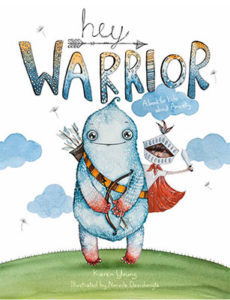 Adoption is a lifelong journey. And sometimes it feels like anxiety is, too. In our work at BPAR we find that one of the most common feelings that can come up around adoption is anxiety. Everyone feels anxious now and again, but for young kids, teens, and adults who are processing their stories, questioning their identities, and struggling with feelings of belonging, anxiety can be a very present and at times recurring and overwhelming emotion.
At BPAR our goal is always to empower our clients, no matter the age, so that each and every person who comes here can develop the skills to live a healthy life. Due to the nature of anxiety and its tendency to be so overwhelming, sudden and confusing, it can be very difficult and scary, especially for kids, to talk about it or be open to learning any skills to manage it.
I was fortunate to stumble upon one of the best resources that I have found for helping kids with anxiety. Hey Warrior by Karen Young is a simple but brilliantly written book for kids that educates them about anxiety and teaches them how to manage it. Hey Warrior personifies the amygdala (the part of the brain in charge of protecting you and keeping you safe ) and turns him into the most adorable little creature that every kiddo is sure to connect with.
Here are what some of our kiddo clients have said after reading Hey Warrior:
“It’s so cute!”
“He has such kind eyes!”
“I love this book!”
The amygdala in the book becomes the fierce warrior who wants to do everything in its power to protect. As the book continues, we learn that the warrior sometimes works too hard and can take over all of the decision making in your brain – leaving your body with physical symptoms of anxiety and feeling overwhelmed. We learn that this is when you need to step in and remind your warrior that you are in charge, not him.
Hey Warrior gives each reader the opportunity to name their own amygdala, learn calming strategies, identify positive traits about their “self,” and develop an understanding of what happens physically and emotionally when anxiety occurs. For instance, when the amygdala experiences a threat, it powers up your body with special fuel like oxygen, hormones and adrenaline. When we experience a real threat, this is very helpful as we use up all the fuel in our bodies by running away, fighting the threat or hiding from it! But our brains can’t always distinguish between a real threat and a false alarm. (Remember: The amygdala’s only job is to see a threat and protect!). When there is a false alarm, the fuel in our body still exists and can make us feel anxious. The pent-up fuel in our system can make kids’ hearts beat fast, give them upset tummies and make it hard to breathe. This is when we need to remind our brains that WE are in charge. You can help our amygdala friend by thanking it for protecting us, but telling it that you are okay and are safe.
For kids, becoming educated about anxiety can help minimize the fear of talking about it and minimize the magnitude of their experience of it physically and emotionally. Kids can feel empowered by knowing what is happening in their bodies is normal and is coming from a place of protection. This can help kids feel less scared and overwhelmed when anxious, ultimately helping them feel more in control of themselves.
Karen Young has created a resource that is so accessible and digestible for kids. The book does a remarkable job tackling a topic that is really difficult. If your child experiences anxiety, I would highly recommend purchasing this book!
Written by Kelly DiBenedetto, LMHC, ATR
Boston Post Adoption Resources
The post Book Review: HEY WARRIOR appeared first on Boston Post Adoption Resources.
May 29, 2018
Book Review: A CHANCE IN THE WORLD
[Kelly first reviewed this book on September 3, 2014. This post is an update in honor of today’s special, 1-day 800-theater release of the movie adaptation of A CHANCE IN THE WORLD and simulcast of Steve Pemberton discussing the book with a panel.]
 A Chance in the World by Steve Pemberton is an incredibly powerful and true story documenting the life of Steve Klakowicz, a child placed in the foster care system and left to his own devices to survive. This inspiring true story highlights the power of the human spirit and what we are capable of experiencing and, more importantly, surviving. The book is at times difficult to read as it details the negligible conditions of child services and the cruel abusive acts that Steve experienced in his foster homes. However, Steve’s spirit, his drive to succeed, and his escape into books and education, provide him with hope that his life will not be defined by the terrible situations in which he has been placed.
Throughout his life, Steve searches for his identity, never knowing any information about his birth parents or reasons why he was placed into foster care. As Steve grows older he eventually learns his birth parents’ identity and is reunited with birth family members and friends. This reunion brings up a whole new set of challenges for Steve including disappointment, rejection, and sadness. As Steve learns the painful secrets and truths behind his story he is able to begin to accept his identity, eventually changing his last name and forming his own family. This allows him to create what he has always wanted and imagined but never felt – a home.
Steve’s determination to survive is a profound theme throughout the book. His persistence to make his dreams a reality is truly inspirational. It is a story of hope and an important reminder that we all have the ability to create a new beginning no matter what we have been through in our lives.
To purchase the book click here.
By Kelly DiBenedetto
Boston Post Adoption Resources
The post Book Review: A CHANCE IN THE WORLD appeared first on Boston Post Adoption Resources.