Jennifer Eckert's Blog
December 5, 2019
Book Review: FROM SCRATCH: A Memoir of Love, Sicily, and Finding Home by Tembi Locke
 We wanted to highlight a book with an adoption theme as we say goodbye to National Adoption Awareness Month and approach the holiday season.
Tembi Locke, an actress, author and advocate, writes a heartfelt memoir entitled From Scratch: A Memoir of Love, Sicily, and Finding Home. This is a personal story of love, loss, adoption and family. Tembi reminds us that life never turns out as we expect it to. The author writes poignantly about healing from a devastating loss as she navigates her husband’s homeland and connects with his Sicilian family.
Tembi, a black American college student from Texas, meets Saro, a white Sicilian chef in Florence, Italy. They fall for each other immediately and the long distance relationship blossoms.Their romantic love story gets weighed down by Saro’s traditional Sicilian family who are unaccepting of the relationship. Without the blessing of Saro’s family, they marry. After they wed, Tembi and Saro continue on a life journey of love and heartbreak. Together they face Saro’s cancer diagnosis and experience infertility. Despite Saro’s health issues, he and Tembi know that having a family is important to them, so they move forward with an adoption plan.
Zoela comes into their lives as a newborn, and Tembi and Saros’ love for each other deepens. Zoela brings them much joy and hope for their future. At the same time, Tembi understands that along with the powerful love that they feel for their daughter, they experience a well of loss and grief as well. Tembi describes her conflicted feelings to an adoption social worker who responds, “Remember what you are feeling right now. Remember, because at the heart of adoption is this love and this loss, all at once. Your daughter will know this feeling one day. It is the realization that she had to say good-bye in order to say hello. That is how your love as a family came to be.” (p. 130)
Tragically, Tembi and Zoela face more devastating loss several years later. After fighting a cancer battle that Saro cannot win, Tembi is left with a small child. Following Saro’s death, Tembi boards a plane for Sicily and visits her mother-in-law, Nonna. Tembi makes peace with her mother-in-law, and she and Zoela make a commitment to spend summers on the island of Sicily with her. The bond between the three females becomes a healing journey for all three. While they navigate the many cultural, class, educational and language differences that each brings to the relationship, they find a common thread that so tightly weaves these relationships in food and a love for Saro. The women and child bond over meals, and Nonna expresses her love through her food. Tembi writes about her mother-in-law: “Her food spoke of malleability and resourcefulness in loss, in love, and in life.” Tembi reminds the reader what truly matters in our lives: our love and relationships with each other and the power of healing the pain so that our relationships can grow even stronger.
Written by Jennifer Eckert, LICSW
Boston Post Adoption Resources
The post Book Review: FROM SCRATCH: A Memoir of Love, Sicily, and Finding Home by Tembi Locke appeared first on Boston Post Adoption Resources.


November 20, 2019
National Adoption Awareness Month

“Your outer journey may contain a million steps; your inner journey has only one; that is the step that you are taking right now.”
—Eckhart Tolle

I have spent a lifetime on my adoption journey and I am still on it. I really don’t think I will ever fully heal from my post adoption issues. Every adoptee’s experience is different. We are all on a unique journey. Like snowflakes, no two journeys are alike.
As a teen and a young adult, I struggled. I masked my anxiety and depression and like many adoptees looked “perfect” on the outside. Internally I was in pain and although my life looked great, it was anything but that on the inside.
I have devoted my life to healing from post adoption issues. I do this daily personally and also professionally. I do believe healing from anything that has hurt us in life is a choice. We make a choice to heal. We make a choice to say: “This is really hard but I want to come through this. I want to make sense of this journey and I want to heal from its impact. I want to live in a better way. I want to move forward.”
For some adoptees such as myself, adoption is with us constantly. We cannot get rid of it. It is like a twin who is always by our side. It is with us all of the time and this adoption twin is not always our friend. This adoption twin can represent the pain, feelings of shame, rejection, unworthiness, loss, anxiety, trauma, feeling invisible and unlovable, feeling as if we were not meant to be born. We have to work on acknowledging and accepting the twin, knowing that the twin is with us on our journey. What is even more difficult is comforting the twin – making sure the twin knows it will be O.K. The twin needs to know that it will be safe.
It takes a lot of courage to help the twin and heal from the wounds of adoption. It can be really scary. Sifting through the layers of adoption can feel overwhelming. It is work, really hard work. It is easier not to work on post adoption issues. It is easier not to heal. It is easier to ignore it. Many of us do ignore it. We can disguise it. We can turn it into anger, rage or fear. We can deal with it by developing unhealthy coping skills such as drugs, drinking, overeating and many other maladaptive behaviors. We can hide from it, run away as far as we can from it. But it always finds us. We can allow it to ruin relationships, sabotage our lives and make everyday living harder.
When we face the pain head on we begin to unpeel the layers and layers of adoption. We then deal with it, make sense of it , work through it and finally accept it only to find more layers and we continue to peel. I believe that we must be on this road to healing. Healing is the key to living a better life. We deserve to lead a better life. This starts from within ourselves. We have to find our own answers. We have all had different experiences, different truths, different belief systems and we must challenge these areas to begin the healing process.
Where do we start? How do we do this? How do we begin to heal? There are many ways and again it is individual and we are each on our own path. I can share with you some of the things that have served me best over the years toward healing my adoption pain.
Ask other adoptees what works for them. How do they heal? What has been helpful?
Get support, there is a lot of post adoption support available. Find adoption groups, individual therapy by an adoption competent therapist, writing groups, journaling, EMDR, expressive arts, mindfulness, body work, books, podcasts, films and other areas that allow you to heal as well as connect with your feelings.
Self compassion is the key to healing. Be good to yourself. I cannot emphasize this enough. Kindness and self compassion have to be a daily practice. This in itself can be life changing and transformative.
Gratitude everyday is critical to healing. This takes a few minutes and the benefits are great.
Acceptance of what is really difficult can ease pain and suffering. There are many good books and podcasts on this topic.
We have no control over the past but we do have control over the future.
Adoption is a lifelong journey and we are all on our own individual path. Stay on your journey. Know that there are bumps and snags in the road but it is the only way to heal.
About Jennifer Eckert: Jennifer Eckert, LICSW, is the founder of Boston Post Adoption Resources. To read her bio, please visit BPAR’s Team page.
The post National Adoption Awareness Month appeared first on Boston Post Adoption Resources.
April 9, 2019
5 Benefits of Group Therapy
At BPAR, we are strong believers in the power of group therapy. Here are 5 of the major benefits of group therapy.
1. Groups allow us to realize that we are not alone. We often think that we are by ourselves with our problems. When we come together in a group, we find that many of us share the same difficulties and challenges. This can be a comfort and a sigh of relief for many of us.
2. We help each other by sharing our experiences. Many of the issues that have been held for so long get released. The feeling of being understood and letting go can be beneficial. Group therapy allows members to provide empathy and support.
3. Group therapy allows us to become more self-aware. Groups provide multiple perspectives on issues. In a group, you may become more responsive to the needs of others. Groups allow you to experience new behaviors and promote genuine interactions with others.
4. Group therapy can help members find new ways to talk about observations and concerns. Within the safety of the group, members can feel confident about sharing freely with others.
5. Group therapy allows individuals to offer hope and provide coping skills to others. Members at different stages in their journey can share what has worked for them when facing difficulties. A new range of strategies can be found to address challenges.
We encourage you to take a look at the groups we're currently running and use our sign-up form if you are interested. We offer groups for adult adoptees, young adoptees, and adoptive parents.
Written by Jennifer Eckert
Boston Post Adoption Resources
The post 5 Benefits of Group Therapy appeared first on Boston Post Adoption Resources.
January 15, 2019
4 Intentions for the Adult Adoptee in 2019
 January is a new start for many of us. We give ourselves permission to plan new beginnings. A new year is upon us and the old year is in the past. We begin hopeful to start fresh and make positive changes in our lives.
An “intention” is defined as a meaningful action. It is a thoughtful commitment that we make to ourselves. It is the understanding of why something we are choosing to do is important or significant to us. It is a starting point for positive change. I recommend having a dedicated journal for setting intentions. By writing your commitments down, you will increase your chances of them happening.
“You will be with you longer than anyone else on the planet, so why not make it a good relationship?” — Louise Hay
As I reflect back on the past year, I think about what is most important for the adult adoptee and how setting intentions can be a catalyst for change.
1. Make a commitment to address adoption challenges.
“Your healing can be likened to an Emotional Root canal, it has to be done, it is painful, but it is often the only road to good health.” — Joe Soll, from his book Adoption Healing.
Making a plan to begin facing our adoption challenges is a critical step. Deciding to address the tougher issues that you may be ignoring or that need to be discovered can be life-transformative. When we face our fears, challenges and the painful past, we grow and move forward. We can shed some of the heavy weight that we have been carrying for years. A good adoption therapist, groups, books, websites and movies can help push you to a better understanding of what you need right now. Working through the core issues of adoption such as loss, grief, shame, rejection, identity, intimacy and control are some areas to focus on.
Paul, a 52-year-old adoptee was going through what he called an “ adoptee mid-life crisis.” His relationships were not working, and he was abusing alcohol and food to cope with his sadness. It wasn’t until he talked with a friend with an adopted brother struggling with similar issues that he realized he needed professional help. Once in therapy, Paul was able to slowly work through the old adoption wounds he had ignored for years. He began attending adoption conferences, which allowed him to meet and build friendships with other adoptees. After a year of working hard inside and outside of therapy, Paul reported that his relationships were much better and that he was no longer using food and alcohol as a crutch.
2. Get support when you need it.
We often go through periods when we are consumed with overthinking an issue. The cause may be adoption-related or a matter that is impacted in some way by adoption. We need a professional to help guide us. Finding an adoption-competent therapist is key. A professional clinician who specializes in post-adoption services can give you the unique supports that you need.
Group support or talking with another adoptee can also be invaluable. In her book 20 Life-Transforming Choices Adoptees Need to Make, Sherrie Aldridge says, “An hour with a fellow adoptee is better than weeks of therapy.”
Being around others who are speaking the same language and expressing similar feelings can help you heal. Knowing that you are not alone and that others support you can make a big difference when you are looking for answers.
3. Remind yourself that you have a choice in your thinking.
“Change your thoughts and you change your world.” — Vincent Peele
By nature we are habitual thinkers and are programed to think in deep-rooted patterns. Most of the time we are not even aware of our programed thinking. Our early belief systems and our old, ingrained thinking patterns can get us stuck. When we challenge our thoughts and begin to pay attention to our thinking, we can ask ourselves if our thoughts are true or not. We are able to assess our thinking and transform it into healthier thoughts.
Emily, a 27-year-old adoptee born in Iowa, came to see me after a break-up with her partner. Emily thought the relationship was going well and was devastated when her partner broke up with her. The feelings of rejection, loss and feeling unlovable came flooding over her. The core themes of adoption flared up once again.
“See, I have proof,” Emily stated. “Maybe I am unlovable. I was given up for adoption, so there must be something wrong with me.” I asked Emily to take a moment and honestly question herself: “Is this really true?” “Do you have loving relationships in your life? Are there people who truly care about you?” Emily talked about the close friendships that she had and the good relationships she had with her siblings and her mother. Emily realized that many people loved her. The break-up triggered numerous past fears, and at the time of the break-up, the fears felt real. Emily could then see how several core adoption issues were related to her fears. After more exploration, Emily was able to let go of some of these fears and know that she was loved. Being able to recognize these triggers can help us move forward after painful events.
Continual negative thinking is like watching an old, terrible movie. We have seen the movie once before and it was not good the first time, yet we continue to watch reruns of this movie over and over. We can learn to stop the movie before it starts. It takes practice, but letting go of adverse thinking is life changing. Take a step back and think about why the old movie is continuing to play. Ask yourself, is it helpful to me? If not, it is time to let it go. A good therapist can help challenge your old unhealthy thought process. Cognitive Behavior Therapy can unpack and ultimately change old unhelpful ways of thinking.
4. Find time to make sense of your personal adoption story.
We all carry our personal narrative with us. Along with challenging our negative thoughts, closely examining our personal adoption story can be helpful and healing.
“I want to remind you to remember the power of your own personal story. It not only describes you. It defines and shapes you. As you explore your narrative, embrace what the struggles have taught you and celebrate what your strengths have given you.” — Dr. Deborah Serani
We as narrators are constantly rewriting our story. Over the years it changes. As we grow, we look at life differently. We allow the story to change. We can reframe our story in a way that supports us. For example, we can learn to accept that we will not have all the answers. But we can piece together and truly own our narrative when we take a step back and look at what we have.
Felipe, 40, was adopted from Colombia as a baby and raised in New Jersey by a large Jewish family who loved children. Filipe recalls a happy childhood but he “always felt like an outsider.” In his early 30’s he started his birth family search. After a few years of searching he found his birth mother’s village. Filipe was excited and waited to hear more from the lawyer who found his information. After several weeks of anxiously waiting, Filipe received a call from the lawyer telling him that his mother had passed away the previous year. Filipe was devastated. He kept asking himself, “Why hadn’t I searched sooner? I could have met her”. Filipe fell into a depression. Several months later, the same lawyer contacted him and told him that he had found his birth father and 4 half siblings. Filipe called his father the next day. He left for Colombia a few weeks after the initial call. When he arrived, his family was waiting to meet him at the airport. He has returned to Colombia several times since the first meeting and is looking forward to another trip next summer. Filipe’s adoption story changed many times over the course of a couple of years. It will continue to change as his relationships with family members evolve. Filipe will tell you that as painful as the search was, he was glad that he did it. He states, “My identity is fluid. It feels like I am forever discovering who I truly am.”
My Own Thoughts About Setting Intentions and the Adoption Journey
 If I could sum up my experience as an adoptee in a few words it would be this: “The search for your truth and identity is similar to taking a roller coaster ride. You must buckle your seat belt and prepare yourself for the highs and lows.” I believe all adoptees are searching in some way or form. We may not be actively looking for our information or trying to reconnect with birth relatives, but we are on the journey. Adoption is deep-rooted in ours lives whether we are consciously aware of it or not. It does have an impact. It is just part of who we are.
I believe that we can become stronger and more resilient by making an intent or commitment to do the hard work. I have seen in therapy many adult adoptees over the years. Not one person has ever said that they wished they had not explored their personal adoption journey, whatever that might look like. Even when they learned painful information or their relationships did not turn out as hoped or fantasized, they were still glad they had sought answers. Each adoptee that I have worked with has a unique and very personal story. What all of these stories have in common is personal motivation for change. After doing the work, they transformed more than they imagined.
Written by Jennifer Eckert, LICSW
Boston Post Adoption Resources
The post 4 Intentions for the Adult Adoptee in 2019 appeared first on Boston Post Adoption Resources.
September 26, 2018
Shame, Secrets, Lies and Adoption
The Home for Unwanted Girls by Joanna Goodman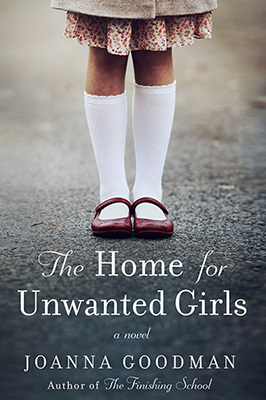 is a stirring historical novel that delves into 1950’s practices for dealing with unwed mothers, orphans, and adoption. Through the eyes of the characters, this moving book brings to life the effects of these illicit practices which, unfortunately, still exist in some communities even today. It also provides insights into adoption-related emotions and questions we encounter every day in our clinical work here at BPAR.
The story is about a teenage girl named Maggie who lives in the farmlands of Canada and helps out at her father’s seed store. Like her father, Maggie has a passion for rare plants and seeds. Customers from all over Canada flock to their small town store to buy the common and unique seeds they supply as well as tap into her father’s expertise on plant life .
Maggie lives with her parents and siblings. Her mother is French Canadian, and her father sternly runs the household with the understanding that the English are superior to the French Canadians. Her father fell in love with Maggie’s mother and although they constantly argue, her mother states that they have always shared a lust for one another.
The children attend English speaking schools, and education is important to Maggie’s father. At 15, Maggie falls in love with a neighbor, a French Canadian named Gabriel. He is a parentless young man from a poor farming family who is being raised by his older sister. Upon learning of their romantic involvement, Maggie’s father sends her away to an aunt and uncle’s home to discourage the love match from continuing. While at their home, Maggie discovers she is pregnant. Maggie’s parents insist that she stay at her relatives’ home during her secret pregnancy and force her to place the baby for adoption. Gabriel does not know of the pregnancy or the birth of their daughter, whom Maggie names Elodie.
Elodie, born prematurely, was to be adopted by a family from the United States. This purported adoption was set up by a corrupt private attorney who makes a living from buying and selling infants. Sadly, this adoption never materializes, and Elodie is placed in an orphanage at a nearby foundling home with the hope of being adopted at a later time. A nun named Tata becomes Maggie’s caretaker, and they develop a strong and caring bond. But the other nuns tell Elodie that since she is so small and pale, she is unadoptable. The visitors want a healthy looking child. When Elodie fantasizes that her mother will come back for her and take her home, she is told that this will never happen. The nuns tell her that she was born of sin and “scandal” and now no one wants her. Their message and the feeling that even at a young age she already has a shameful past, leave Elodie confused and sad.
When Elodie is seven years old, she learns that the children in the foundling home are suddenly called “mental patients” instead of “orphans”. School lessons immediately stop. In fact, during the 1950’s in Quebec, all the orphanages run by the Catholic church were converted into psychiatric institutions because the Quebec government passed a law that paid the church $2.75 per day for a psychiatric patient and only $1.25 for an orphan. 20,000 orphans were labeled and treated as mentally ill and subsequently became known as the Duplessis Orphans, named after the Canadian Premier at the time, Premier Maurice Duplessis. An article written by the Historical Novel Society notes that, due to this change, the Catholic Church was able to raise 70 million dollars in subsidies, and the Canadian government saved 37 million dollars per orphanage. The book’s scenes that mark the severe abuse and neglect that Elodie and her fellow orphans experience in these institutions are heartbreaking and distressing to read.
The story continues with Maggie finding Gabriel and telling him about Elodie. They never give up hope that they will find their daughter. Goodman’s writing speaks to the harsh truth of adoption practices in Canada during the 1950’s. The book delves into the illicit business of adoption and the many participants colluding with the buying and selling of babies. Goodman educates the reader on how the government and the church were able to normalize this atrocity without any conscience.
The novel is beautifully written and allows the reader to see the views on adoption through the eyes of all who have been affected by it. The novel is unique in that it follows the birth mother and the child throughout their journeys. We are given an inside view of the emotions that each grapple with as they struggle to understand the decisions that were made for them. The author poignantly interweaves historical truths as well as some of her own family history.
The sadness, the secrets and the lies are themes in the book that unfortunately are still seen today in some areas of adoption. For instance, it’s still true that the norms for unwed mothers in certain cultures strip them of their rights, force them out of their biological families, and shame them into permanent secrecy. One can only imagine the psychological impact on the birth mother throughout her life. She is on her own, literally and emotionally. She can’t discuss overpowering feelings of loss, rejection, or sadness. She carries a stigma that she will never escape.
Even in cultures that openly acknowledge birth to unwed mothers and discuss adoption, many of the themes in this book resonate today. The words adults choose when talking to a child who was adopted or children in the foster care system carry tremendous weight in how the children view their own worth. The impact of the care that Elodie receives in her placements is poignantly demonstrated throughout the book. She longs to meet her birth mother, and she never gives up hope; however, she is indelibly scarred as she grows to adulthood without a consistent and loving caretaker.
BPAR is one of the few nonprofits that supports all sides of the adoption journey, providing specialized mental health care and resources to adoptees, birth parents, and adoptive parents. We also have a unique model for reuniting families in a safe and carefully planned way. Our mission goes beyond the clinical work in our Brookline office and extends to educating the public about these issues in the hope that someday, worldwide, everyone in the adoption triad will feel safe, supported and understood.
Written by Jennifer Eckert, LICSW
Boston Post Adoption Resources
The post Shame, Secrets, Lies and Adoption appeared first on Boston Post Adoption Resources.
June 14, 2018
Creative Ways Dads Can Take Care of Themselves on Father’s Day
 At BPAR we honor all the men we work with on Father’s Day.
The team at BPAR agrees we are fortunate to be able to support so many remarkable fathers. We would like to honor all of the dads we work with at BPAR. We wish for you a special day of reflection and love. We also wish for you a day of self-care, acknowledging that often dads don’t feel they have the time or the right to focus on themselves. Your needs are important! As an added benefit, by doing this for yourself you model for your children that this is okay and healthy.
As clinicians, we witness the care and love between fathers and their children. We focus on building trust between the therapist and child, therapist and parent, and between family members. As therapists, we get the opportunity to listen to the concerns and joys that fathers bring to us. Adoption and foster care are complex. No two families share the exact same problems or challenges. As families and children grow, so do the challenges. We are able to provide parenting tools and education to help families navigate their growing and changing needs.
Clarke, an adoptive father, brought his thirteen-year-old daughter Emma to see us recently. Emma, who was adopted at age 2 from China, seemed more withdrawn and sad. She was normally outgoing, so this was a red flag to her dad. After several sessions, Emma shared that she was thinking about her birth mother and wanted to know more about her, but hadn’t felt she could talk about her feelings, especially her sadness around not knowing her beginnings. We were able to help Clarke and Emma understand that this was a completely normal challenge for an adoptee. More importantly, we were able to make sure Emma felt supported by her father. It was so helpful for her to learn that he understood and didn’t think she was being disloyal by having these thoughts. Together, Emma and her father learned that their work together would be ongoing and this set the foundation of making this journey safe for Emma, Clarke and the rest of their family.
We get the chance to work with fathers and their children or the entire family together. Often we are able to witness connections, breakthroughs, understanding and sometimes tears. The resiliency and love that we witness in these relationships is why we do the work that we do. To be able to heal and strengthen families is a core piece of BPAR’s mission.
We have been so pleased to see how fathers have helped themselves restore and grow.
Here are a few examples of how some dads are able to take care of themselves in healthy and healing ways:
1. Writing
Steve Pemberton, an adoptee, used writing as therapy. Recently, his powerful movie A CHANCE IN THE WORLD was screened nationwide at a one night event. Steve revealed that he wrote the book it was based on so his son would know his entire story, as he will never be able to know his own father’s story. Steve states: “Telling your story heals lives.” Because BPAR understands the therapeutic value of writing, we have added a writing group for all adults touched by adoption.
2. Therapy
Ron, a foster dad, found that therapy at BPAR provided unexpected benefits of self-care. Describing his experience over the years, he says, “I think it’s all about the really thoughtful approach you take. This is the first place that I have ever gone to where listening seems to be the first objective and response is second… [I have received] really steadfast, honest clear-sighted, intentional, thoughtful advice and that rubs off and helps my own development… I have raised 7 children… The clinicians at BPAR have helped my wife and me guide our kids as they grow into adulthood. We have made it because BPAR exists. When I have gotten help for me, I have helped my family; it is all connected.”
3. Creative Expression
Jonathan Edwards is able to express his feelings and love as a birth father through the gift of song. Using the arts, such as music, painting or drawing, are great ways to express feelings that can be hard to articulate.
Do you know a foster or an adoptive dad, adult adoptee or birth father who might benefit from professional help? Please remember BPAR is here to help support them and those they love.
Written by Jennifer Eckert, LICSW
Boston Post Adoption Resources
The post Creative Ways Dads Can Take Care of Themselves on Father’s Day appeared first on Boston Post Adoption Resources.
May 10, 2018
Adoption Voices on Mother’s Day
 Relationships are complex. Even the best of relationships has its issues. The people who we may feel closest to can also be the ones with whom we have the most delicate interactions at times. For most of us, the relationship we have with our mother can be one of the closest relationships we ever experience as well as the most intricate and challenging.
Adoptees have two mothers, a birth or biological mother and an adoptive mother. As a result, some adoptees have described Mother’s Day as a holiday that brings up a great deal of complex and confusing emotions. Mother’s Day can be the day that many adoptees get triggered by old wounds around their adoption. A frequent theme that I have noticed around this holiday is a resurgence of emotions around how it feels to be adopted. The adoptee often re-experiences the core issues associated with adoption such as loss, rejection, guilt, shame and identity.
For adoptees who have not been reunited with their birth families or have no birth family information, Mother’s Day can become a time of mourning around this loss. Since these adoptees do not have information regarding their early years, they describe to me a sense of “missing a piece of identity,” as if they opened a book and the entire first chapter had been torn out. With no details about their history or heritage prior to being adopted, they feel deprived of an identifiable beginning.
Helena, an adoptee from India, describes it as “a dark void that is part of my early identity… A dark hole remains inside of my body when the rest of the non-adopted world has colorful threads and connections.” Helena adds, “The relationship that I will most likely never have is with the one person who I feel most connected to. Mother’s Day brings up the reminder that the most important person to me, my birth mother, the woman who carried me for 9 months and held me after the delivery, will never have a relationship with me. What others take for granted, I most probably will never get to experience. It is an emptiness that I cannot fill. I cannot fix this. Mother’s Day is a painful reminder of this void.”
For the adoptee who has been in reunion, it can be challenging balancing different relationships with two mothers. Nancy, an adoptee born in the South and adopted and raised on the West Coast of the United States, has been in reunion with her birth mother for the past three years. Nancy states, “My birth mother and I are still trying to get to know each other. We are mother-daughter, yet at times we are strangers. Some days I feel I have to work hard at getting to know my birth mother as well as to reassure my adoptive mother that I love her and that she will not be replaced. It can be exhausting. There are not many people with whom I can talk to about this and who can understand what I am going through. I could not manage this all without therapy.”
Paul, an adoptee from the Northeast, reports always remembering being depressed the weekend of Mother’s Day. Paul shares that he has carried a profound sadness during this holiday since he was a young boy. Paul found out that his birth mother and birth father had married in the years following his adoption. He talks about his recent relationship with them: “I was so happy to finally meet my biological mother and father. I have two full brothers and two sisters. For the first few months it was wonderful. We had so many gatherings and good times together. I then became depressed and sad. I constantly thought about missing out on growing up in a large family with my siblings. I was raised as an only child by my mother as my parents divorced when I was six and my father moved to another state. I rarely saw him; we did not have much of a relationship. I felt very alone growing up. After meeting my biological family, I had to grieve not having the childhood that I had always fantasized about. It was a really hard time for me for a while; I was consumed with thinking about it. I felt cheated and I was not only sad, but angry, too.”
It has been my experience that many adoption issues do not entirely heal or go away completely. The adoptee who faces the challenges of adoption soon finds out that many of the issues of loss, grief, shame, rejection, abandonment and identity wax and wane. I often see this throughout the life cycle of the adoptee.
These issues do not disappear; they can be present for a lifetime at varying degrees of intensity. However, when one adoptee meets with other adoptees, seeks adoption competent therapy, and accepts support from those who care, the challenges can seem less intense and can be examined in a different light. Addressing these issues opens a door to moving forward and cultivating better relationships. Speaking as an adoptee who has sought therapeutic support for myself, I can attest that we can lead healthier and ultimately happier lives. Understanding and owning our adoption challenges can have a positive effect on our lives. A favorite quote I have heard often is, “What is sharable is bearable.” It reminds us that we do not have to walk our path alone.
Kelsey, adopted as an infant from Korea when she was almost two years old, spoke of feeling overwhelmed and sad when she gave birth to her first child: “For the first time I felt that I knew what my birth mother must have felt having to give me away after giving birth to me. I could not imagine how difficult it was for her. Having my daughter was the most joyous time of my life and yet the most painful time for me. I could not imagine how my birth mother was able to move forward after giving me up. Mother’s Day for me is about a year’s worth of stuffing down emotions and feelings surrounding my adoption. They rise up on that day. I feel so blessed having my daughter and celebrating my being a mother, but the grief and sadness of growing up without knowing my birth mother hurts. It all swirls together. It is hard to describe all the weighty feelings that are mixed together.”
Shari, an adoptive mother of 16-year-old Sarah, talks about her daughter’s need to find her birth mother. “Mother’s Day is hard for me. I feel joy and guilt and sadness on that day.” Since Sarah was young she has always wanted to find her birth mother. “I had no idea that she would ever feel this way. I really had no clue when we were in the process of adopting how complicated it could be. Sometimes it is really hard for our family to deal with. I want to be a good mother and help her with this. But I know that it is going to be a difficult path and I worry deep down inside about losing her. I worry about her birth mother rejecting her. I worry about so many things around this.”
Rick, an adoptee who was adopted from foster care at age five and still remembers living with his birth mother states, “I love my adoptive mother. She is my mother, she will always be my mother, but I still need to find my birth mother. I have never stopped thinking about her, and I won’t until I see her again. I need to know the story, what happened. Why couldn’t she take care of me? Did she love me? I have thought about this all of my life. I feel lucky that I have my mother and that we are close, but I will not stop searching for my birth mother. I need to do this for me. I need to figure this out for me.”
Regina, a birth mother who was recently reunited with her son Alex after 35 years, reveals, “I was thrilled beyond imagination when Alex contacted me. It was the happiest day of my life. I never went a day without thinking about him. I never had children after Alex and now I don’t know what to do. I know it sounds silly but I don’t want to mess it up and at times I am frozen on what to do or say next. I think my worst fear is that I may say something to jeopardize our relationship and I will lose him forever. Our connection means the world to me and I am trying so hard to figure it out. Mother’s Day is such a mixed blessing for me as I feel so grateful to have Alex back in my life; however, it brings up all the years I have missed with him and trying to make up for it.”
Adoption is complex: our lives are complex, our relationships are complex. Mother’s Day can remind us of this complexity in our lives. Often, adoptees strive to have “perfect” relationships or ones that they have built up and fantasized about in their minds. In reality, these fantasies will never take place. Fantasy relationships do not exist. When we fail to let go of the fantasy, we set ourselves up for disappointment and continual hurt.
Mother’s Day is a holiday full of meaning and complexities for the adoptee. It is helpful to be aware of this as all members of the adoption triad navigate this day. It is important to view our relationships with ourselves and our loved ones as works in progress and accept them and ourselves exactly as we are at this moment. This in turn allows us to move forward. When we are brave enough to face our adoption challenges and deal with them, we heal. With healing, we can then make sense of our adoption story. Once we have accepted ourselves and our story, we can find some level of peace within ourselves and ultimately within all of our relationships.
Written by Jennifer Eckert, LICSW
Boston Post Adoption Resources
The post Adoption Voices on Mother’s Day appeared first on Boston Post Adoption Resources.
March 22, 2018
How BPAR Could Support the This Is Us Family
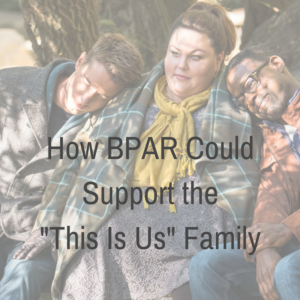 Last week marked the season 2 finale of the popular tv show, “This is Us.” The show follows the lives of the Pearson Family, moving back and forth in time from the courtship of the parents to present day. During the initial episode of this series, viewers learn that parents Jack and Rebecca give birth to triplets, however, one of their babies does not survive. At the same time, another baby is left at the local fire station and brought to the hospital, and ultimately the Pearsons decide to adopt this baby as their third child. The show can be moving and sentimental, and more often than not, the audience needs a box of tissues as they follow the main characters over the years as they grow and change and struggle with issues of loss and family and love. The clinicians at Boston Post Adoption Resources have followed the This Is Us family especially closely these last two seasons due to key plot lines that include adoption and foster care.
Themes of Adoption and Foster Care in “This Is Us”
In the initial episode, of course, we learn that Randall was adopted at birth. This is a transracial adoption, and this issue is addressed openly in several episodes. Powerful themes of abandonment and loss arise from the beginning of the series, as Rebecca and Jack struggle with the loss of a child, and Randall is left at a fire station at birth and grows up not knowing who his birth parents are or why they placed him. As an adult, Randall finds his birth father and develops a relationship with him, but the relationship is short-lived due to his father’s imminent death due to cancer. At the same time, we learn that Randall’s mother, Rebecca, had known who his biological father was for years, and had kept this information from him. These are powerful themes in the world of adoption and foster care: Who am I, really? Who are my people? Why was I relinquished for adoption? Should I search for my birth family? How will my adoptive family react to this search? Add to these the themes surrounding new character Deja, placed in Randall and Beth’s home when they decide to take in a foster child. Throughout this season, we learn about Deja’s history, her mother’s struggles to provide her with a stable home, and the trauma that she has experienced.
Boston Post Adoption Resources provides services for families similar to the characters in “This Is Us.” Our goal is to provide all members of the adoption triad — birth parents, adoptees and adoptive parents — with the support they need to negotiate the complex twists and turns of the adoption and foster care journey. Here are some of the ways that we could help the Pearson family (Spoiler alert – please know that some plot lines are revealed below!):
Parent Support and Family Therapy
PARENTING TOOLS
Adopting a child or taking a foster child into your home is a life-changing decision. BPAR could provide the Pearsons with parent support as well as family therapy to address concerns that arise throughout the different stages of life. If Jack and Rebecca had connected with BPAR when their children were young, they could meet with a therapist for support around parenting three unique and wonderful kids, and planning how to address any adoption concerns that may arise. The Pearsons could have been educated about becoming a transracial family, and they would have had the opportunity to explore any worries about losing Randall if he were to connect with his birth father.
It is not unusual for adoptive parents to be fearful when a biological parent comes back into a child’s life. This fear becomes so powerful and crippling that in many situations the adoptive parents cannot imagine risking the chance of losing their child. At BPAR, we would have been able to talk with Rebecca and Jack about their fears as well as their hopes for Randall. Rebecca might have felt safer and more confident allowing Randall to meet his birth father once William was in a better place and living a healthier life. When William was ready in his own healing to meet with his son, we could have arranged for Rebecca and Jack to meet with William at the BPAR offices, and see that William was a loving father who wanted some connection with his son. After this initial meeting, the fear would dissipate, respect and trust would slowly develop, and a relationship could be built. Perhaps after several sessions with BPAR, Rebecca, Jack and William could arrange for family visits together at BPAR with a clinician present.
Had this happened, Randall could have grown up in a family that had no secrets or shame, and he would have witnessed his family embrace his birth father and celebrate their cultural and racial differences. Eventually, as Randall grows older and begins to think more about his identity, he would have had more information to make sense of his story at an earlier age.
OPEN CONVERSATIONS
During their early and teen years, as the Pearson siblings all struggle with their own developmental and identity issues, family therapy could help address and support sibling and family relationships and dynamics. Over the years, we can see each child adopting a role within their family system. Kevin feels that Randall is loved more than he is, and this results in a very fragile relationship between the two brothers. Kate buries her emotions in food. Jack — and later Kevin — uses alcohol to cope, while Rebecca tries to make up for Randall’s early loss by giving him extra love and attention. Rebecca attempts to keep everyone happy and create an idyllic family life without addressing the underlying issues and challenges that need to be discussed. A family with many needs naturally experiences stress in their relationships. To make matters more complex, both Jack and Rebecca come from families that did not have healthy conversations and relationships. Without these tools, it is harder for them to parent when tough issues arise.
Family therapy at BPAR would be helpful at various stressful times throughout the lives of the Pearson family. In the show, when Randall finally does reunite with his father, they could work together in family sessions to explore why William relinquished his son for adoption, address concerns and feelings around this decision, and process saying good-bye again shortly after father and son finally meet.
UNDERSTANDING THE EFFECTS OF LOSS
As Deja transitions into their home and presents with complex issues around foster care and family, Randall and Beth could meet with a therapist to address providing the best care possible for Deja while at the same time understanding how Randall’s personal history of adoption and loss impacts his reactions and parenting. At the end of season two, when Deja’s mother signs the petition to terminate her parental rights, Deja becomes sullen and angry and begins to act out. A therapist could work with Randall and Beth and help them understand Deja’s behaviors and feelings, and help them strategize how to best support and work with Deja as she struggles with her own feelings of loss and shame.
Individual Therapy
THE LIFELONG JOURNEY OF ADOPTION
Adoption is a lifelong journey. Themes of loss and grief, anger and sadness and identity concerns, to name a few, ebb and flow throughout the lives of all members of the adoption triad. In addition to family work, BPAR could also provide individual treatment at various times during the characters’ lives.
Randall might attend therapy as a child and a teen to explore his feelings around his transracial adoption, his identity issues, and his drive to become the “perfect child” by controlling and organizing his environment. A therapist could help Randall understand his early beginnings and feel comfortable talking with his parents about any questions he had about his early years.
PLANNING A REUNION
If the Pearson family had connected with William and planned a visit, a clinician would work closely with Randall to find out what he wanted to know about his father, and make sure that he felt safe and comfortable prior to and during the visit. As an adult, Randall could meet with a therapist to continue to work through issues related to his adoption history that become triggered as he meets his birth father and becomes a father and a foster father himself. Not long after he meets his birth father, Randall loses him to cancer; individual therapy during this significant and heart-wrenching life event would provide Randall with a place to mourn his father and explore what his brief relationship with his father has meant to him.
Deja could meet with a therapist to talk about her loving but complicated relationship with her mother and her history of trauma. Upon learning that her mother has terminated her parental rights, individual therapy would be essential to provide Deja with a safe place to address her feelings regarding this. If talking is too difficult for Deja, her therapist could use expressive arts to work through her concerns and worries, something BPAR does often with children, teens, and even adults.
Group Therapy
Boston Post Adoption Resources offers group therapy for early teens, teens, adoptive parents, and adult adoptees. These groups provide a safe and supportive space for adoptees and their parents to talk with others who have had similar experiences. Often, adoptees, foster children and their adoptive parents feel isolated and misunderstood, and groups are a unique and wonderful way to connect with others who understand what they are going through.
Imagine how comforting it would have been for a young Randall to walk into a group of adoptees who absolutely “get it” – they understand what it means to look very different from the people who are raising you. Or, consider if Rebecca had met with a group of adoptive parents and had the opportunity to share her fears about allowing Randall to have contact with William. Picture Deja, alone and scared and learning that her mother has signed the petition to terminate her parental rights. When she is ready to join a group of her peers, the support and connections she might feel there could be transformative.
Search and Reunion
NAVIGATING A SEARCH
BPAR supports adoptees when they make the life-changing decision to search for birth parents. The search process can be overwhelming and quite challenging at times, and it can trigger a myriad of feelings in the adoptee and adoptive family.
When Randall decides to search for and connect with his birth parent, BPAR could provide him with a safe place to navigate this journey. Prior to contacting William, Randall would have a place to talk about his feelings and his fantasies around his birth parent and plan a thoughtful reunion. BPAR would be there every step of the reunion process, helping each member navigate the reunion and process the emotions that arise.
“This Is Us” is rich with individual and family dynamics that include issues we frequently see in our clinical work with all members of the adoption triad. Adoptees, adoptive families and birth parents often feel untethered and alone as they try and navigate the challenges and concerns associated with their adoption or foster history that arise throughout their lives. BPAR’s goal is to help individuals and families like the Pearsons feel supported and less alone as they explore their feelings and the complex world of their adoption and foster care.
Written by Jennifer Eckert, KC Craig, and Erica Kramer
Boston Post Adoption Resources
The post How BPAR Could Support the This Is Us Family appeared first on Boston Post Adoption Resources.
February 11, 2018
Who are we? Searching for Identity

Are you a teen? Or do you remember what it was like when you were a teenager?
The teen years can be difficult years for many of us, full of changes in our social lives, at school, often within our families, and even to our bodies and emotions. Middle school and high school are hard enough for any teenager, but when you add in the layer of adoption, the teenage years can be full of unexpected challenges.
The teen years are all about identity.This is a developmental stage in which we are discovering who we are. How does the world see me? Who do I want to be? Every teenager begins to ask these questions, and for the adopted, this can be even more complicated!
Figuring out who we are becoming or want to become can be tricky when we don’t know our past. I read somewhere once that it’s hard to start a book on chapter two. That hit home for me. If we skip chapter one, how do we jump to chapter two? Chapter one is important—it lays the foundation of the story. The book always begins with chapter one. We build the story from the beginning. It takes root and the book grows.
Missing information, family secrets, or even lies just complicate the matter. For many adopted teens there are more questions than answers. Confusion, anger, and frustration can develop as they try to figure out their identity with missing information. It can be a very lonely time for some.
Who do you talk to about this?Who would understand? Who would really care? It’s vital that we all know our story—from the beginning, including all of the good and the difficult pieces. To know chapter one is vital as we search to become whole.
So, as adopted teens begin to ask these questions, what can family members and friends do? How can they help? Listen. Just listen as they process their thoughts and questions out loud. Ask thoughtful questions of your own. There’s no need to offer advice unless asked. Just be there. Accept that this person that you care so much about is trying to put together this complicated puzzle.
Take away: Consider a peer group.Many adopted people of all ages find comfort in adoptee groups with people of similar life stages and ages. Being able to talk about adoption with other adopted people can help to normalize and validate feelings. Having support along the way can make the journey easier. Check out the peer groups we offer at BPAR, and consider joining one that fits you best!
Written by Jennifer Eckert
Boston Post Adoption Resources
The post Who are we? Searching for Identity appeared first on Boston Post Adoption Resources.
January 25, 2018
Book Review – FAR FROM THE TREE by Robin Benway
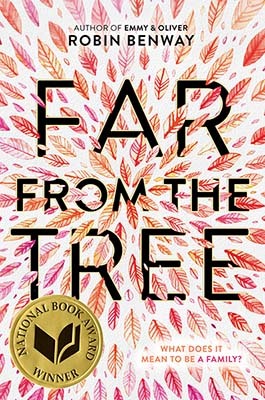 Far From the Tree by Robin Benway is the winner of the 2017 National Book Award for Young People’s Literature. Grace, Joaquin and Maya, the three main characters in Far from the Tree are biological half siblings.
Although they share the same birth mother, each child has followed a different path and they only reconnect as older teens. Far From the Tree is told from multiple perspectives, and each child has a unique story to tell. All three are linked together by secrets, shame, and a desire to know more about their identity.
There are very few well-written Young Adult books that understand the world of adoption as well as Far from the Tree does. What makes author Robin Benway even more interesting is that she does not have a personal connection to adoption. Benway spent a year doing her research on adoption and in my opinion, similar to the popular and well-done T.V. show This Is Us, she is able to tell this story from a realistic and respectful adoption platform.
Today, the word “family” has many definitions. It is no longer confined to the dated perspective of a mother, father and biological children. We see now that families are made up of many constellations. Sexual orientation, DNA or formal paperwork no longer defines what it is to be a family. Far From the Tree respects these many definitions and presents the reader with several different family make-ups.
Benway also writes about a common theme for adoptees: their desire to know their history in an understandable way. Adoptees often have a gap in their early histories, and she is able to explain through the characters why they have such a strong need to know this initial “Chapter 1” in their book of life.
Early in the story, Grace discovers she is pregnant by her high school boyfriend. She makes an adoption plan and places her newborn daughter into an adoptive home. This event pushes Grace to find her siblings and, eventually, their birth mother.
Joaquin has unique struggles of his own. He is the only one who has not been formally adopted and is still in foster care, and he is close to aging out of the system. Joaquin carries with him a secret past that has caused him to put up walls and he resists letting others get close. We see this young man eventually take a risk and allow himself to take a chance at opening his heart and be loved.
Maya has a sister who is the biological child of her adoptive parents. She is the only one in her family who has dark hair and is not “blood” related. Maya’s family looks perfect from the outside, but beyond the facade it is quite the opposite. This complicated family situation forces Maya and her sister to grow up quickly as they face their family falling apart.
Once the siblings build a trusting relationship with one another, they make a plan to find their birth mother. It is during this time that they are forced to share what feels most vulnerable to them.
The book addresses almost every topic that comes up in the world of adoption: identity, race, culture, fitting in, grief, loss, abandonment, trust, shame, and feeling misunderstood, to name a few. Benway is able to weave these topics together in a heartfelt way and give the reader a true understanding of how the adoptee may view their world.
We do know that the journey of adoption is complex and each adoptee carries their own truth and perspective. While being adopted or in foster care can be complex and challenging, Benway gives hope to all those touched by adoption as her characters move forward on a path of healing from the hurts of the past.
Written by Jennifer Eckert, LICSW
Boston Post Adoption Resources
The post Book Review – FAR FROM THE TREE by Robin Benway appeared first on Boston Post Adoption Resources.