Tzvee Zahavy's Blog
November 14, 2025
Is Caroline Kennedy's Husband Edwin Schlossberg Jewish?
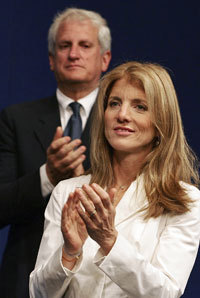 Yes, Edwin Arthur Schlossberg is a Jew.
All four of Schlossberg's grandparents were Russian (Ukrainian) Jews born near Poltava and arrived in the United States at Ellis Island.
In 1986 Schlossberg married Caroline Kennedy, the daughter of President John F. Kennedy and Jacqueline Kennedy Onassis at Hyannis Port when Caroline was 28 and Ed was 41.
Their afternoon wedding ceremony was held at the Church of Our Lady of Victory in Centerville, Massachusetts and did not include a mass.
How Jewish is Schlossberg? Nate Bloom refers to "American Legacy: The Story of John and Caroline Kennedy" by C. David Heymann as follows:
Heymann writes that Schlossberg was raised in a "devout Orthodox Jewish family" that belonged to a modern Orthodox synagogue in Manhattan. He attended Hebrew School and had a bar mitzvah ceremony.Bloom adds some of the speculation regarding Schlossberg's current religious practice:
The harshest comment about Edwin Schlossberg and religion came from film producer Susan Pollock. She is a relative of Edwin's and has dined now and again with Edwin and Caroline. Pollack told Heymann that she believed Ed actually converted to Catholicism to marry Caroline and "I know he [Ed] takes Holy Communion which means he would have to convert?..."UPDATE: See the comment below signed by "Edwin Schlossberg" denying the Bloom account. ["I have never had a conversation with Susan Pollack. I have not converted to Catholicism and have not taken Holy Communion.I am proud to be Jewish and am disappointed that this misinformation has been presented on this site and hope that you will remove it immediately." Edwin Schlossberg -- Posted to The Talmudic Blog at 3/10/2009 1:59 PM].
/classic blog post from 2009 - reposted/


September 26, 2025
A Happy St. Patrick's Day Recollection: When a Little Boy Met the Jewish Lord Mayor of Dublin Ireland
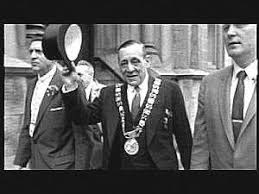
One St. Patrick's day, when I was a little boy, I met Bobby Briscoe, the Jewish Lord Mayor of Dublin Ireland, at my father's synagogue in New York City on East 67th Street.
I vividly remember his top hat and the big medal around his neck which swung out at me when he bent down to shake my hand.
It was a grand day for the Jewish and the Irish!
The New York Times wrote up the visit. A wonderful New York story of a previous innocent age.
New York Times. Published: March 17, 1957
BRISCOE ATTENDS PRE-PURIM RITES
Lord Mayor Prays at Altar in Traditional Shawl - Pays Visit to Cardinal
By IRVING SPIEGEL ·
The Lord Mayor of Dublin devoted forty minutes yesterday morning to being plain Robert Briscoe and worshiping in the Orthodox Jewish faith of his ancestors.
He prayed at a Sabbath of Remembrance and pre-Purim service at Congregation Zichron Ephraim, 163 East Sixty-seventh Street. With the prayer shawl he brought with him for the service around his shoulders, he received the Orthodox honor, aliyah - an invitation to the altar.
Then he recited the traditional prayers in Hebrew before and after readings from the Torah. The aliyah was also extended to City Council President Abe Stark and Kings County District Attorney Edward S. Silver, who had of accompanied Mr. Briscoe to the synagogue.
Because of a heavy schedule, Mr. Briscoe and his group did not stay for the entire service. Rabbi Zev Zahavy, spiritual leader of the congregation said that the Lord Mayor's presence at the services was "an inspiration to all Jews in America and throughout the world."
In keeping with the Orthodox custom of not riding on Saturday, the Lord Mayor and his group walked from the Pierre Hotel, where he is staying, to the synagogue. In addition to Mr. Silver and Mr. Stark, Mr. Briscoe was escorted by two detectives of Jewish and Irish extraction, Ely Kerner and John O'Hagan.
Wears Kelly Green Tie
The Lord Mayor wore a cut-away coat, a black topper, a Kelly green tie with a golden harp embroidered in it.
As he strode up Fifth Avenue to attend synagogue services. he passed a group of policemen awaiting their parade assignments and remarked: "Top o' the morning. It's a fine day."
He paused to talk to a group of policewomen. Holding his prayer shawl, he told one young policewoman that, if she saw her commanding officer, "tell him I'm on my way to say my prayers."
Leaving the synagogue, he stopped at Engine Company 39, at 157 East Sixty-seventh Street, and told Lieut Joseph Kennedy, the commander: "No fires today, it's St. Patrick's Day."
Earlier in the morning, he had visited Cardinal Spellman at the Roman Catholic prelate's reidence at 452 Madison Avenue. Mr. Briscoe delivered a personal greeting in behalf of Archbishop John Charles McQuade of Dublin, and gave the Cardinal forty-five sets of Rosary beads, three boxes of chocolates and a glass bowl - all products of Ireland.
Cardinal Spellman told his guest: "There has not been as much excitement here since the Dionne quintuplets." Mr. Briscoe remarked that he was going to attend synagogue services.
"Be sure to leave all those Rosary beads here," the Cardinal replied with a laugh.
Mr. Briscoe laughed. "That's very good, very good," he said.
He returned to the Pierre, but not before being hailed by storekeepers, taxicab drivers and pedestrians. There was a brief rest and then he set out for the synagogue. Mr. Briscoe had originally intended to attend services at Congregation Rodeph Sholom on West Eighty-third Street but decided against it because of the long walk.
He returned to the hotel at noon for a brief visit with James A. Farley, chairman of the parade, and out again - this time for the St. Patrick's Day Parade with a ringing declaration of: "What a beautiful day!"
And fast forward to 2025 - my son and two grandsons are lifting a pint to celebrate the family ties in Dublin - visiting to cheer on the Minnesota Vikings football team!


 [Repost]
September 21, 2025
Is Jimmy Kimmel Jewish?
 No, comedian Jimmy Kimmel is not a Jew. He is a Catholic. Wikipedia explains, "He is Roman Catholic and, as a child, served as an altar boy. Kimmel is of German and Irish descent on his father’s side and Italian descent on his mother’s side."
Kimmel was a smash hit host of the 2017 Oscars show.
Kimmel performed 4-28-2012 at the White House Correspondents' dinner where he poked fun at Washington politicians.
Kimmel had a relationship with the Jewish comedian Sarah Silverman that started in 2002. Wikipedia reports:
She referred to the relationship in some of her comedy, "I'm Jewish, but I wear this Saint Christopher medal sometimes; my boyfriend is Catholic — but you know... it was cute the way he gave it to me. He said if it doesn't burn a hole through my skin, it will protect me." In July 2008, Vanity Fair reported that the couple had split, ending their relationship of five years. However, in October 2008 it was revealed by Fox News and People magazine that they were on "the road back to being together." The couple attended the wedding of Howard Stern and Beth Ostrosky together, but split again in March 2009.Talmudic Books for Kindle on the Talmud, Bible, Kabbalah and Prayer
The Kindle Edition of the Classic Soncino Talmud in EnglishTzvee.com
[Repost from 2017]
May 18, 2025
My Great Grandfather was Harris Epstein the Great Inventor of a Patented Folding Umbrella, Extension Ladder and more

I am named after my great-grandfather, Harris (Tzvee) Epstein, aka, Epstein the Inventor, who lived in New York City and Spring Valley. I probably inherited my technical curiosity from him.
He was the inventor and patent holder of many practical items, a folding umbrella, an extension ladder, a double sided toothbrush, a vegetable grater and more.
Here are of his patents with their links from Google Patent search:
FOLDING UMBRELLA Patent number: 1666692 Filing date: Jan 29, 1927 Issue date: Apr 17, 1928
SIGNALING APPARATUS US Pat. 1060898 - H. EPSTEIN. SIGNALING APPARATUS, APPLICATION PILED JAN. 26, 19.11. Patented May 6,1913.
EXTENSION LADDER US Pat. 949529 - Filed Feb 10, 1909
VEGETABLE GRATER US Pat. 1799963 - Filed Apr 4, 1930... UNITED STATES PATENT OFFICE HARRIS EPSTEIN, OF ROCKAWAY BEACH, NEW YORK VEGETABLE GRATER
GAS-CONTROLLING DEVICE US Pat. 968457 - Filed Jan 11, 1910
TOOTH BRUSH Patent number: 1111144 Filing date: Oct 4, 1913 Issue date: Sep 22, 1914
Papa Epstein, as he was called by his grandchildren, sure would have liked the age of the personal computer and the Internet, especially the iPad and smart phone.
[Augmented repost from 12/17/06]
April 27, 2025
Transgender Kids, Covert Convert Bat Mitzvah and Vintage Necktie Aliyah Quandary - Dear Rabbi Zahavy - Your Jewish Standard Talmudic Advice for July 2017 (A classic oldie but goodie column!)
Dear Rabbi Zahavy,
I recently asked my friend how her young grade-school kids — a boy and girl — were doing. She replied that they are fine, and they have new names. The boy now has a girl’s name and the girl has a boy’s name. I asked why? She matter-of-factly replied that they both are transgender.
I was dumbfounded to hear this. I said nothing to her. Should I ask her more about this? Should I discuss this with a responsible authority?
Worried About Trans Kids
Dear Worried,
Yes, you have every right to ask the parent for more details, and to seek out, with sensitivity, more information on this topic from friends or experts or from your own counselors. The mother makes no secret of the facts. She is open and proud of her children and their gender identities.
Gender dysphoria is a seriously hot topic this year in social and political discussions, and in the media (2017). You will find many experts and pundits out there willing to share advice and counsel on the subject.
Complex gender anomalies are as old as human culture. The Torah sets forth strict lines of demarcation in this area, banning what it considers to be divergent behavior such as cross-dressing and homosexuality. The Talmud dealt with gender ambiguities when it addressed the status of the Tumtum, whose physical genitalia were indistinct, and the Androgyne, who possessed genital traits of both male and female. Today’s discussions of gender identity delve more into the inner states and statuses of someone’s personality.
We all do understand that sexual preferences and gender identity are personal to each one of us, across a rainbow spectrum of options. And to many of us, the motives and drives in our own gender preferences and sexual appetites are mysteries when we are young and first discovering them, and for some of us they can remain confusing and evolve throughout life.
Gender proclivities may be evident in young children. We conventionally presume that sexuality and sexual preferences emerge later, during puberty. The revolutions in psychology in the twentieth century helped remove our inhibitions about the public discussion of sexuality and more lately of gender identification.
Yet, even in our frank and open age it’s odd to us to hear that a parent publicly announces that her younger children are transgender.
Since 2014, Amazon has broadcast the Emmy award-winning series “Transparent,” about a parent who comes out to his family as transgender. Because it had so much Jewish content, I’ve watched a bunch of episodes. For sure, though, that does not make me any kind of expert in the area.
Yes, to put your own mind at ease, you ought to discuss this situation with people who have greater expertise in this area, so you can better understand your friend’s choices as she navigates through the biological and societal challenges posed by her children’s transitions.
People on the whole spectrum of gender identity existed throughout history, but lived often in the shadows, in denial and in emotional stress. We should be happy to live in an era where this no longer has to be the case.
Dear Rabbi Zahavy,
My neighbor’s daughter is having a bat mitzvah soon. I heard from her friends that she is going to have an added enhancement for the occasion. She will go to the mikvah and accept the commandments. That seemed odd to me. When I asked her mother, she told me confidentially that her daughter was adopted as an infant from a non-Jewish family. As is the practice, a beit din court accepted Judaism on her behalf at the time. Her parents never have told her that she was adopted. And now the family’s rabbi asked about the circumstances of the child’s conversion. When told that the court had a woman rabbi as a judge, he ruled that she must be reconverted in the mikvah with a new court of three men present.
First, I am startled that the parents have not told the child that she is adopted. And second, I am upset to hear that a rabbi demands a redo of the conversion.
Should I express my concerns to the parents or to the rabbi?
Concerned About a Covert Child Conversion in Closter
Dear Concerned,
I am still shaking my head in disbelief. First, I cannot approve of, or even imagine, not telling your child that she is adopted at an appropriate early age.
And beyond that I cannot sanction or envision a rabbinic charade that supports requiring a new conversion and promotes keeping the child in the dark on this significant personal fact of life.
Why would parents hide this information? Are they fearful that an adopted and converted child will be treated differently in our community? Are they worried that a child who knows she is adopted will not love her parents?
No matter what the motives, I cannot condone this parent–rabbi conspiracy to hide these realities. Moreover, it’s customary to have a child who was converted as an infant reaffirm her Jewishness when she reaches adulthood. If she does not know the facts, how can that confirmation take effect?
Yes. The critical particulars will come out in public at some point in this family’s future.
No. It’s not your job to be the catalyst for that to happen. However, you certainly should feel free to express your reservations and opinions discreetly to the parents or to the rabbi.
Dear Rabbi Zahavy,
I read in the Jewish Standard two weeks back that you published your fiftieth Talmudic advice column. I am a huge fan. I wonder if you have one column that you consider your favorite?
Talmudic Admirer in Tenafly
Dear Admirer,
Thanks for asking and for your kind words. I choose as the favorite my column about neckties in shul, published in June 2013, because it was so down-to-earth in looking at an issue that displayed a friction between an individual and an institution, and it generated a good deal of discussion and controversy in our town. I’m reproducing it below.
Dear Rabbi Zahavy,
I am sad for my good friend, a respected community leader and a member of a local Orthodox synagogue for many years, who does not like to wear a tie. His synagogue follows an idiosyncratic rule that no matter how nicely dressed he may be, a man who does not wear a tie cannot receive an aliyah to the Torah on a Shabbat or a holiday. So my friend has not received an aliyah to the Torah on any of those days for many years, even on the special occasions of his parents’ yahrzeits. It hurts me to see him suffer this arbitrary form of petty ostracism and humiliation. What should I do?
Fit To Be Tied in Teaneck (June 2013)
Dear Fit,
Common sense would dictate that you and your friend not go to places where you feel uncomfortable, even if it is a mere trifling practice that creates a sense of annoyance and intimidation for you. You know that an Orthodox synagogue must follow the many laws and customs that govern who should receive an aliyah. For example, a kohein receives the first aliyah, and a Levite gets the second. A man who has a yahrzeit often gets precedence, and so does the father of a newborn child and a groom before his wedding. Major donors to a synagogue get some preferential treatment, as do important rabbis. I’ve noticed also that the gabbai who allocates aliyot gets his fair share of them too. And a woman is not called to the Torah at all.
You may know that some non-Orthodox Jews find the exclusion of women from this process of public honors to be troubling or even offensive. Orthodox spokesmen point out that women receive due respect and honor in their community, just not by receiving aliyot.
Forty years ago, when I asked Rabbi Joseph B. Soloveitchik about the possibility of women receiving aliyot in an Orthodox minyan, he quipped to me, “When women write the checks, then they will receive the aliyahs.” The Rav dodged my inquiry. I understood his reply to be a clever observation or a social comment, but not any halachic guidance.
Now, the synagogue that you describe in your question definitely created for itself a heightened odd character when it adopted an additional “tie rule” to further govern its members’ roles and aliyah rights. Even if its eccentric practice is an approved requirement of synagogue committees, officers, and boards, it still fits the category of a socially undesirable “because-we-say-so” intimidation.
That said, you and your friend may be able to ignore and rise above this nonsense if you keep in mind that Moses, King Solomon, Jeremiah, Rabbi Akiva, Maimonides, the Vilna Gaon, and many other great non-tie-wearing-Jews would not be offered a Torah honor if they somehow, via time and space travel, showed up in your suburban shul.
The Dear Rabbi Zahavy column offers mindful advice based on Talmudic wisdom. It aspires to be equally open and meaningful to all the varieties and denominations of Judaism. You can find it here on the first Friday of the month. Please mail your questions to the Jewish Standard or email them to zahavy@gmail.com.

Deep Dives Podcasts into Jewish Scholarship
Popular Podcast:Rabbi Joseph Baer Soloveitchik's 1932 doctoral dissertation, "Pure Thinking and the Constitution of Being in Hermann Cohen’s Work," critically analyzes the epistemology and metaphysics of the prominent neo-Kantian philosopher Hermann Cohen. The unpublished English translation text includes a foreword by the translator, Tzvee Zahavy, providing biographical context for Soloveitchik's time in Berlin and Cohen's intellectual significance. The dissertation itself, as suggested by Mark Smilowitz's overview, examines Cohen's "scientific idealism," which posits that objects are constituted by thought, particularly mathematical thought. Soloveitchik's work identifies limitations in Cohen's system, particularly in accounting for individual experience, sensation, and consciousness, hinting at Soloveitchik's own developing philosophical positions like epistemological pluralism. The text also features excerpts from Soloveitchik's dissertation chapters, such as those discussing the law-scientific character of thinking, consciousness, and the concept of being and reality within Cohen's framework. Ultimately, the sources offer insight into a significant engagement with neo-Kantian philosophy and the early intellectual development of a major 20th-century Jewish thinker.
September 28, 2024
Yalla Ya Nasrallah - A Rhythmic Serenade from Israel (2006)
It is quintessentially Israeli. And somehow... well just watch it.
October 31, 2023
Understanding the Extensive Connections Between Religions and Terrorism?
 In light of the awful terrorist attacks that have been launched once again in Israel I thought it urgent to repost this item.
What are the connections between religions and terrorism?
That's a big question. I tried to answer, explain and understand it in the past through my extensive scholarly research and my academic teaching.
Here is a selected list of my blog posts of study resources in the analysis of the connections between terrorism and religion (compiled when I taught a course on religion and terrorism at FDU a few years ago). Click on each one to read it.Questions about American Christian TerrorismReligion and Jewish Terrorists (and see the JTA report)What is a Religious Culture of Violence and Terror? Who were Shoko Asahara and the Buddhist Aum Shinrikyo Religious Terrorists? How did Religion Motivate Sikh Terrorists? What is the Logic of the Theater of Religious Terror? Why Do Religious Terrorist Martyrs say that they aim to kill the demons? What do Sexuality and Humiliation have to do with Terrorism? Will the War Against Religious Terrorism Ever End? From Kahane to Osama: How Do Men Make Religious Terrorism Into Cosmic War? How can we end religious terrorism and achieve the peace of God? Concluding Questions on Religion and Terrorism
I have studied this subject at great length and taught courses in the area because I believe that understanding can help us resolve tragic conflicts. I also believe in the power of prayer to help us bring peace to the world.I recommend to you all of my books: My Home Page

October 30, 2023
Life Advice from a Long-time Swimmer: Swim 100 laps every day
Let's play with the word for blessings. They are berakhot ברכות in ancient Hebrew. Okay then. In modern Hebrew the laps that one swims in a pool are called berechot בריכות. A blessing is a berachah and a pool - and a lap in a pool - is a berechah.
I playfully read the ancient Talmud this way: Don't say 100 berakhot (blessings), say 100 berechot (laps).
Footnote about Meir from Wikipedia: Meir was buried in a standing position near the Kinneret. It is said that he asked to be buried this way so when the Final Redemption occurs, Rabbi Meir would be spared the trouble of arising from his grave and could just walk out to greet the Jewish Messiah. He requested that he be buried in Israel by the seashore so that the water that washes the shores should also lap his grave (Jerusalem Talmud, Kelaim 9:4).And so I have crafted some Talmudic encouragement for myself to swim 100 laps a day. On many days each year, I do get to that goal.
Here are a few of my past reflections on swimming...
Some time ago, JTA reported that "Liberal men take the plunge into ritual immersion, slowly" -- Conservative, Reform and Reconstructionist Jewish men were going to mikvah pools and finding it meaningful. Sue Fishkoff wondered why and so did I.
She ended her article with a quote from mikvah user and attorney Merrill Hassenfeld, “We’re always doing things for others, why don’t we set aside time to go to the mikvah?” he asked. “It prepares us to go out into the world and start yelling and screaming again.” (Has a greater non-sequiteur ever been uttered?)
Now, my confession. I am a pool addict. I am a lap swimmer.
Starting in 1982 my aim was to try to swim a mile - 64 laps every day. Finding the time. Finding a pool. Finding the energy. Not easy. Since 2013 I raised the lap level to 100 a day - a mile and a half. About 400 miles a year.
When I come out of my pool, I find that I feel healthier, more centered and completely relaxed. Swimming a mile in around 30 minutes is hard, aerobic work. That is what I have to invest to get results from my "mikvah" experience. I'm happy to observe that others can achieve their own "incredible" positive benefits from splashing around in a state of heightened imagination.
I have sought out pools to swim my laps all over the world. My most favorite pool was the old Gordon Pool on Tel Aviv beach near the Sheraton, pictured below from a few years ago (c. 2007).
It was one of the wonders of the world. Each night they emptied the entire 50 meter pool, cleaned it and refilled it from underground saltwater wells 120 meters below. The pool opened at 5 AM at 24 degrees, which was just fine for us lap swimmers.

Suddenly, the Gordon pool was leveled in 2008 without warning by the city of Tel Aviv. Happily, they rebuilt and reopened it as a more modern facility. I swam there in 2011. It's wonderful.
 I admit that 100 laps is an arbitrary goal. But for me, most days, it's exhilarating!
2023 update: Sorry Rabbi Meir - most days I now swim 80 laps - 2000 yards. My aim now is for a good pace and an efficient stroke. I try to keep my workout to under 1000 strokes and under 40 minutes.
Is it a blessing to continue swimming daily? Yes, it is like 100 blessings!
[reposted with enhancements each year from 5/20/09]
September 15, 2023
My Jewish Standard Dear Rabbi Zahavy Column for October 2016: Binging at Weddings and Not Believing in Sin
Binging at Weddings and Not Believing in Sin
Dear Rabbi Zahavy,
I went to a big Orthodox Jewish family wedding recently in Williamsburg, Brooklyn. The music was so loud that some of my relatives, who had expected it, brought along earplugs. There was so much food at the smorgasbord and the main meal that the next day I weighed myself and saw I had gained more than three pounds in one night.
I’m tempted to turn down invitations to future frum family simchas just to keep my hearing intact and my waistline under control. Is that a reasonable course of action?
Binging in Bergenfield
Dear Binging,
Sure you can skip family weddings to preserve your health and well-being, and you should do that if you have no other solution. But some of your kin seem to have found modalities that allow them to participate and preserve their hearing. Surely ear plugs are an option for you too. Why not avail yourself of them?
And regarding the food, you know that you do not have to eat all of it! One possible alternative is to attend the smorg and the chuppah and gracefully decline the elaborate dinner that follows. Who needs to drive home at midnight from Brooklyn anyway? Of course, doing that you will miss the chance to bond and share at greater length with your family. But with such loud bands, how much schmoozing could you do with the relatives anyway?
You are challenged with the fact that some Jewish weddings are overly loud and can be exercises in excess eating. If you do go to one, use as much self-restraint and wisdom as you can.
Dear Rabbi Zahavy,
This time of year, around the High Holidays, I have some troubling religion questions. First one, I don’t believe in the religious idea of sin. I guess that makes me a heretic. And I saw that recently that a theologian gave a seminar at a local synagogue on the topic of whether a heretic is eligible at all to repent.
Second, I ask myself at this time of year, Why do we so overemphasize these 10 days between Rosh Hashanah and Yom Kippur? Why do we not continually work on repenting all year long?
Sinful in Secaucus
Dear Sinful,
Sin exists, of that I am sure. The Hebrew word for sin is chet, which implies missing the target. Actions are sins if they are not hitting the norm, not adhering to the highest level of behavior, as judged by one’s peers, community, society or religion.
When you say, you don’t believe in religious sin, I surmise that means you do not accept the narrative that there is a God, the heavenly accountant, who keeps records in a big book (or perhaps if it were written today, the narrative would refer to a giant data storehouse in the cloud), the all-in-one policeman, judge, and jury, who tracks each person’s actions and metes out rewards and punishments accordingly.
The moving High Holiday Unetaneh Tokef prayer assures us that such accounting is the case. That liturgy assures us that fasting, repentance, prayer, and charity all facilitate the mitigation of the punishment for the sins that are tracked.
But you don’t believe that story and you think that makes you an apikores, a heretic who denies the reality of sin. And therefore, you cannot repent.
And indeed, the medieval philosopher Maimonides makes clear his view that we cannot ever accept the repentance of a heretic (Mishneh Torah, Laws of Idolatry 2:5).
Surely you could argue against that standpoint. Who better would we want to return to the fold than the outright rejecter? But it seems that the tough line prevailed in the medieval view. Like a spurned lover, the rabbi says to the heretic, once you walk out that door, you are not welcome ever to come back in!
Now I expect that you are a serious and thoughtful person who wishes to return to a better circumstance, to improve yourself morally and ethically. And as such, you can and should “repent of sin” in the conceptual framework that makes sense to you.
Let me give you an alternative repentance narrative that may fit your personality and beliefs better than the classical one that we sing and chant in the synagogue.
In the 10 days from the New Year to Yom Kippur you could take some extra time to consider how to get your life on a better track. Over the course of the year, everyone gets diverted or even derailed in one way or another from the direction that they set as optimal for themselves.
We fall short of personal goals. We mess up our interpersonal relationships. We may violate societal expectations. We may break laws. We may do terrible rotten things that we regret in retrospect and wonder what in the world motivated our missing the mark?
We often end up beating ourselves up for being bad, or lazy, or mean or thoughtless. And then there we are. In a place we don’t want to be, feeling lousy about our lives.
What to do? How to go forward? In the secular scenario, the path is not so mysterious. You need to have compassion for yourself. You need to forgive yourself of your shortcomings — to free yourself from all your bad vows of the past. And you need to chart a course going forward to get back to a better, safer, calmer place.
And let me tell you, all that is easy to say, and yet it is utterly hard to do. To accomplish that you likely will need help. Perhaps talking with good friends, family members, or a professional; a talented therapist can assist you along this road.
But many of us do turn to religion to seek support in this process. The whole dramatic arc of repentance in the Rosh Hashanah to Yom Kippur liturgy unfolds in two acts. In act one we meet the Lord, King of the Universe, the creator of heavens and Earth. He is no stranger to us having forged a relationship with us through several covenants. And we have proven our faithfulness, passing many tests along the way from the testing of Abraham and onward.
The Lord revealed to us his Torah, the template for a proper life. And here we are, unable to rise to the requirements of the revealed law, falling short of our assigned tasks and goals. Curtain falls — end of Act One.
Act Two opens at Kol Nidre with us, the subjects, standing in dejection and sin, wanting a way out of our sad situation. Before we address the Lord, we seek legal redress, we ask that our vows be released, that our bad habits be nullified. And throughout the Day of Atonement we ask repeatedly for our Lord’s compassion, mercy, forgiveness and pardon.
And at the end of a long day, and a lengthy 10-day period of seeking God’s compassion, we blow the shofar and we are sure that our sins are forgiven.
In the classical liturgical telling we rely on our belief that our great Lord will grant us forgiveness, release us from our past mistakes, and clean our slates to start over.
I hope you can value how the religious modality affords a strong means of assisting a way out of “sin” by calling on a higher power to help us, to forgive us.
The secular story arc puts the burden more on you to find the way forward to absolve yourself of bad actions. It seems simpler at first, but may end up being more complex to achieve.
And finally yes, I agree that self-betterment not be confined to one annual intensive 10-day period. Constant activity over the year to forgive yourself and fix what is broken in your life makes perfect sense to me. Go for it.
Tzvee Zahavy of Teaneck received his Ph.D. from Brown University and his rabbinic ordination from Yeshiva University. He is the author of many books about Judaism, including “Jewish Magic,” a new Kindle eBook on Amazon, and he also has published “The Book of Jewish Prayers in English,” “God’s Favorite Prayers,” and “Talmudic Advice from Dear Rabbi,” which includes his past columns from the Jewish Standard and other essays.
The Dear Rabbi Zahavy column offers mindful advice based on Talmudic wisdom. It aspires to be equally open and meaningful to all of the varieties and denominations of Judaism. You can find it here on the first Friday of the month. Please mail your questions to the Jewish Standard or email them to zahavy@gmail.com