Russel D. McLean's Blog
November 5, 2025
Free book (Limited time only!) and other updates!
This weekend (the 8th) at 6 pm, I’ll be in Glasgow for the Aye Write Festival. Myself, Andrew Lowe and Marion Todd will be chatting with the awesome Arusa Qureshi about our books as part of the resurrection of Glasgow’s original book festival. It’ll be great fun… and of course there are loads of other events for you to check out, too! Tickets are available at the website, although its worth noting they’ve misspelt my name online!
But the headline promised FREE BOOKS, didn’t it?
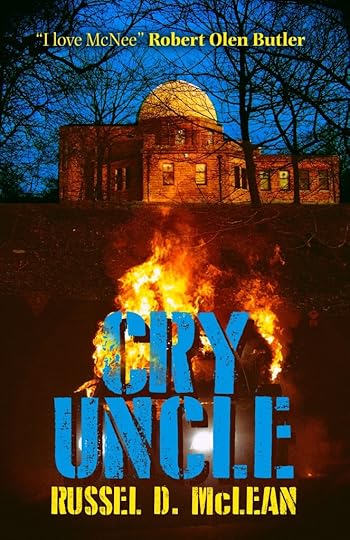 Cry Uncle, J McNee book 5
Well, it’s now ten years since my fifth J McNee novel, CRY UNCLE, was released. And so, from the 5th to the 10th November, you can grab the Kindle edition ABSOLUTELY FREE at Amazon. It should be available in all marketplaces, but due to listing errors, please make sure you’re on the page with the cover you see on this page as its the most recent publication and the only one available digitally. I’m currently experimenting with kindle-only editions (although PBs are available and should be through wider distribution channels) at the urging of a few friends who self publish to try and experiment. We’ll see how it goes, anyway…
By the way, the above link is an affiliate link, meaning that if you click on it, I may get a small commission from any sales made through the Amazon website.
And speaking of affiliations, I don’t want to affiliate myself with just one place — as a former bookseller, I want to support bookshops where I can and so I thought you’d also like to know that I’ve become an affiliate with Bookshop.org, where I’ve set up a storefront including links to physical copies of my books as well as lists and recommendations of my own books. Shopping from my storefront gives me a small commission from each sale, but also guarantees an amount from each sale also goes to UK independent bookshops, too! Win-win for everyone! Go, take a look, and see my recommendations from books I love, books I’ve been reading, and books I think are dead useful for those who want to write!
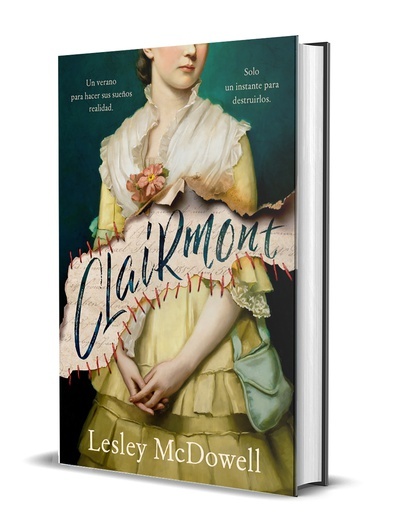 The Spanish edition of Clairmont is absolutely beautiful, isn’t it?
Other than that, things at the moment are relatively busy. I’m working hard on a sequel to THE FRIDAY GIRL and hoping my agent and publishers like it, as well as continuing with other projects. I’m also working hard on edits, and have helped my wife, Lesley McDowell take first steps towards her own website, which has been fun! Speaking of Lesley, we were in Madrid recently to celebrate the release of the Spanish edition of her novel, CLAIRMONT from Stefano editions.
So, some small updates, some little ways to support me through affiliate links, and a push for my awesome wife (whose latest UK book, LOVE AND OTHER POISONS is available right now!) — hope you find something of interest in some of these links, and I’ll maybe even see some of you at Aye Write over the next few weeks!


September 1, 2025
An Experiment in Self Publishing! — Plus! An event missed in my previous post!
For a while now, I’ve had the rights back to my first five books (The J McNee series), and have been self publishing these on various platforms. Sales have been… interesting. Certainly I noted that the Amazon sales far outweighed other platforms, and so after a discussion with a bestselling Scottish author who part self-publishes at a recent festival, I have decided to experiment with putting the full series digitally on Amazon (the paperbacks should be in wider distribution, although I am checking that is the actually the case).
I wanted the books to be available more widely as a general principle, but since I have next to no sales on other platforms, it made sense to see if this author was right and putting them exclusive to Kindle and on the Kindle Unlimited program would make any difference in readership (Mine is, admittedly, small, but hopefully growing). This means if you are a KU member you can download and read them as part of the program and I’ll get paid for each page you read (to put it in simple terms).
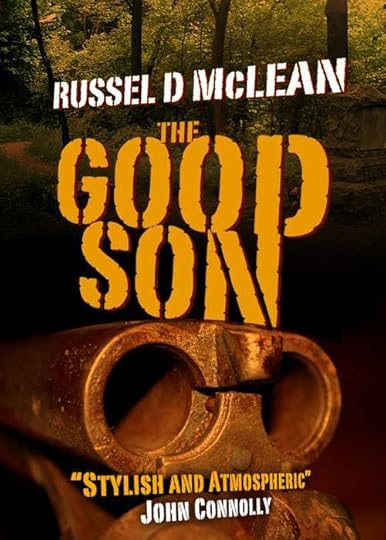 The Good Son: J McNee book #1
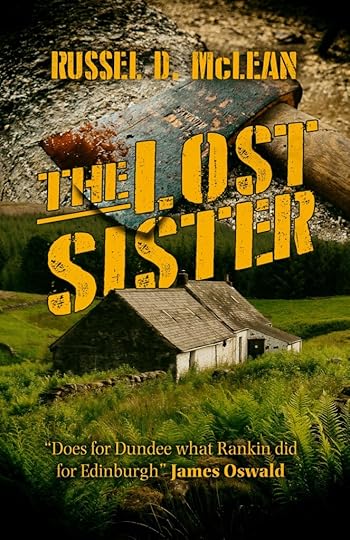 The Lost Sister (J McNee book #2)
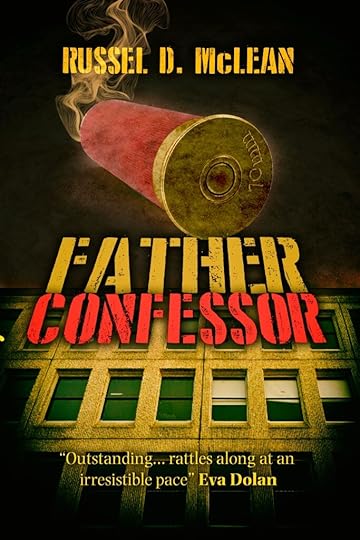 Father Confessor (J McNee #3)
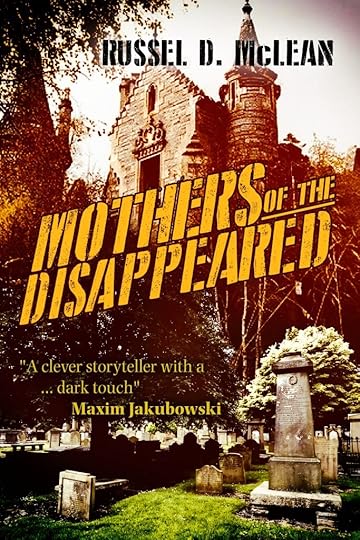 Mothers of the Disappeared by Russel D McLeanCry Uncle, J McNee book 5
At the moment, the delisting from other sites is a little slow, and so only The Lost Sister, Father Confessor and Cry Uncle are in the program. Hopefully The Good Son and Mothers of the Disappeared will join them soon. These books were all written between 2008 and 2015, and you know I’m still massively proud of them even if I was clearly learning my craft as I went along! And if you have enjoyed The Friday Girl, you may even find a few easter eggs that connect the Dundee of Elizabeth Burnet’s era to the more contemporary J McNee timeline. I will update things when the other books are on KU but in the meantime you can go to Amazon’s J McNee series page here (that’s an affiliate link — meaning I may get a small payment if you follow it and buy something) to check ’em out.
In other news, I realised when I was talking about my recent travels, I completely forgot one of the best new-to-me festivals I’ve attended in a while — the magnificent Bute Noir!
This takes place each year on the Isle of Bute, and while it is a smaller festival, my word it is brilliantly attended and such a huge amount of fun! Lesley and I were both there to speak about our books on different panels, and both events had a great reception from packed audiences. And Bute itself is a fascinating wee island — we took a little trip out to Mount Stuart, which is a mad monstrosity of a mansion with a brilliantly storied history and amazing grounds.
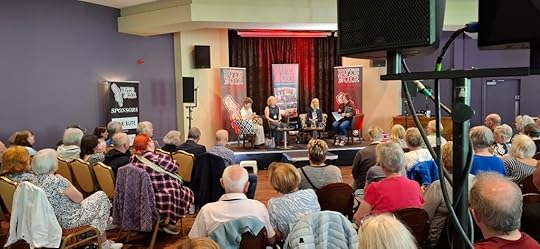 Lesley with Ambrose Parry and Myra Duffy chaired by Louise Fairbairn
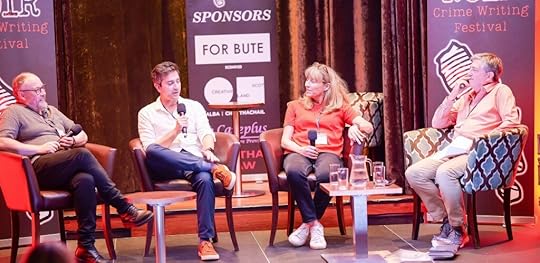 Me, with Tairq Ashkanani, Heide Amsinck, and chaired by Doug Skelton
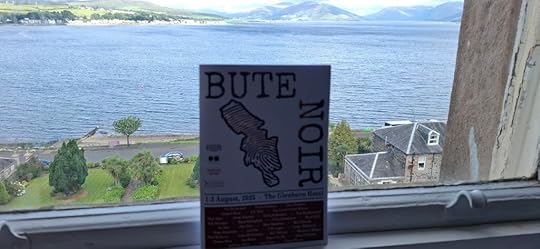 The Bute noir program looks out at the brilliant view from the hotel
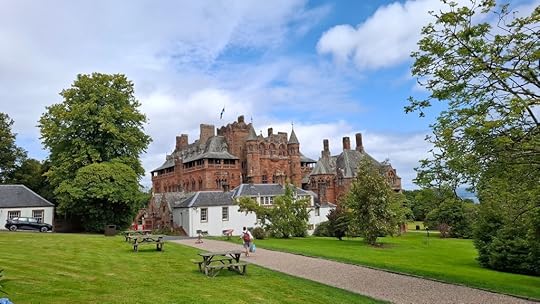 The madness of Mount Stuart
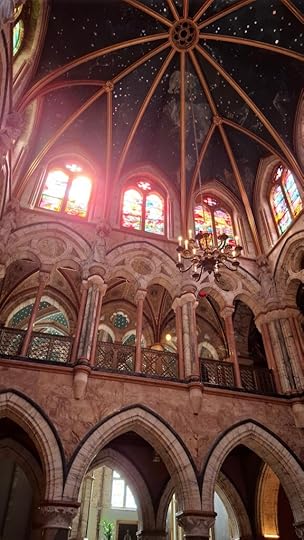 What even were they thinking when they built Mount Stuart — straight out of a Hammer Horror!
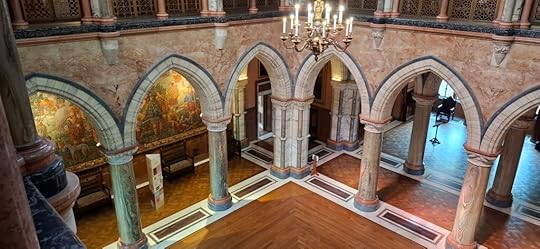 More from the inside of Mount Stuart
If you get a chance to go to Bute Noir, you absolutely should — it’s a superb festival, brilliantly run, and in a spectacular location!
Until next time —
Russel
August 31, 2025
On the Road Again (and Doing some Damage!)
It’s been a while, I know, since I’ve posted here — a lot of time lately has been spent on the road for THE FRIDAY GIRL and assisting Lesley (McDowell, my wife, and author of LOVE AND OTHER POISONS, which you should all be reading!) by carrying the bags on her book tour… on top of the usual workload with editorials for various people and trying to work on what I hope will be the second Elizabeth Burnet novel…
And the touring isn’t over yet! If you don’t know already, I’ll be at Bloody Scotland this year on the 13 September at 1600 — tickets available here — and Lesley will also be there on the same day but at the earlier time of 1000 — tickets here!
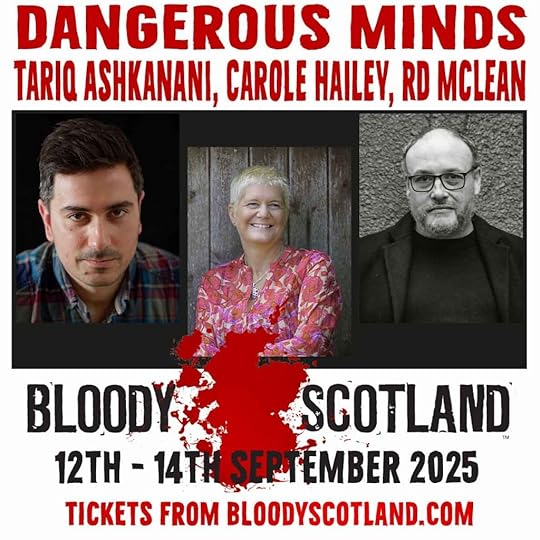
But September isn’t the only month where I’ll be living it up at festivals, oh-no! In October, I’ll be at Chiltern Kills, a superb one day festival down in the southernest reaches of England… in fact, further south than I have ever been in this country! Which is slightly terrifying, but it’s going to be brilliant fun as I will be protected by several other hardy Scots for the journey, as you’ll see from the promo below.
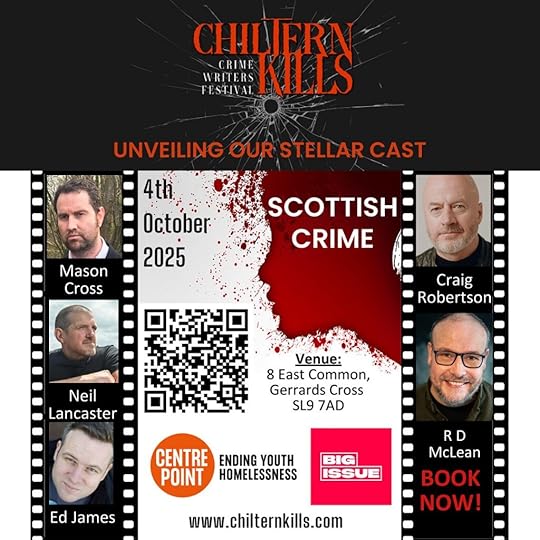
Chiltern Kills is a one day festival with ABSOLUTELY BLOODY LOADS OF THINGS happening, and it’s all in aid of a superb cause, so if you’re down that way I suggest you get your tickets now!
It won’t be the first time I’ve taken THE FRIDAY GIRL over the border, though. Earlier in August, I was down in the city of Hull to be interviewed by the incredible Nick Triplow of Hull Noir in front of a brilliantly engaged audience both on and offline (Although apologies to those online who got cut off before the event’s end due to a weird wifi gremlin in the library!)
 Image of author and his books, courtesy of JE Books booksellers in Hull
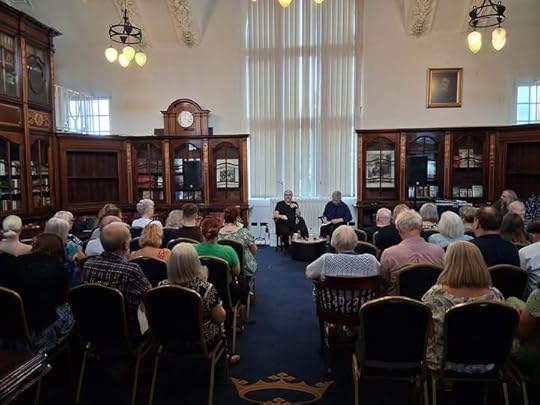 Image of the interview courtesy of Nick Quantrill of Hull Noir
And as if that isn’t enough, I’ve decided to get back on the group blogging circuit by rejoining Do Some Damage. I was (I think?) one of the founding members of this brilliant group crime blog about three centuries ago, but now it has returned as a substack and I have a regular monthly column where I’ll talk about…. ooo, whatever I like… So far topics have included Imposter Syndrome and the terrible pull of nostalgia, but even if you don’t fancy reading more from me check out the blog for writing from brilliant minds like Steve Weddle, Beau Johnson, Holly West, Scott Parker, Scott Adelrberg, Claire book and Kristi Belcamino.
So yeah, its been a busy few months, and its about to get even more packed. But I’m going to try and keep you all way more up to date than I have… and no doubt I’ll have some things to say about the upcoming festival appearances in due course, along with updates on the writing…
Until then…
Take care!
Russel
May 20, 2025
On Tour with #TheFridayGirl – signings, talks & sell-outs, oh my! (catch up from March/April)
If you missed it, after eight years, I finally have a new book! Yes, THE FRIDAY GIRL is finally loose on the world. Check back on some previous posts to learn more about this book, but let’s just say that my return to publishing has been so much fun — with special thanks to my publishers, Black and White for making the experience brilliant!
The book launched two days early at Waterstones, Sauchiehall Street, Glasgow, where I was in the very capable hands of not just the brilliant booksellers (Special thanks to James for making sure everything ran smoothly on the night!) but also being interviewed by Scotland’s finest journalist (He didn’t make me say that!), John Dingwall. John made his name interviewing musicians, but his passion for all forms of entertainment is incredible, and as an interviewer he makes you feel very comfortable even when he decides to ask the cheekiest questions he can think of…
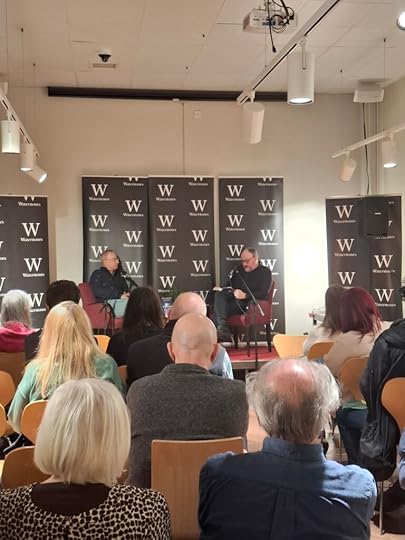 John prepares himself to hear my “dramatic reading”…
 Being grilled by Mr Dingwall…
 About to tell another very very bad joke…
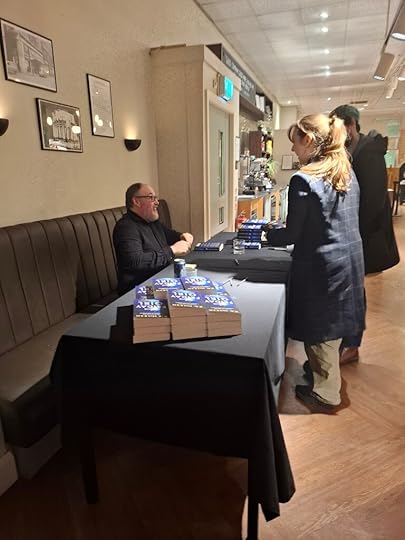 Doing a big of signing here for some of the brilliant people who came out….
 Look at that! Books! Books for me to sign!
 The not-at-all intimidating sight of the chairs ready to be deployed…
 James from Waterstones Sauchiehall introduces us…
After the event, a few of us went on to the amazing THE LAST BOOKSHOP for some post-launch drinks. Its a stunning wee bar in the centre of Glasgow, situated in what was once a John Smith’s bookstore, and the place is decked out with books, as you might expect, creating a great atmosphere to have some cocktails.
After this, I went on a small tour of Glasgow, signing in some great stores including Waterstones’ on Byres Road and Argyle Street, and the excellent (unrelated) Bigglestones in the Merchant City, which is a superb independent bookstore you should definitely be supporting!
 Booksellers at Bigglestones were excited!
 D From Waterstones on Argyle Street hauls out copies for me to sign!
 It’s still on the promotion at the time of posting!
 Caught in the act of sneakily signing!
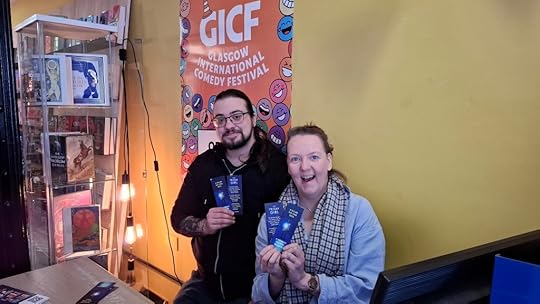 Told you Bigglestones Booksellers were excited!
 A customer caught in the act at Waterstones Sauchiehall Street (actually a dear friend, but still…)
But we all know that THE FRIDAY GIRL isn’t a Glasgow book, even though I’m resident here — which is why the tour moved to my original stomping grounds for a great evening with masterful James Oswald (also launching his latest!) at Waterstones in Dundee.
It was a fantastic evening, with some surprise guests (including the former landlord of my old drinking hole, The Phoenix Bar) made even more special by the fact that Waterstones, Dundee, is where I worked for about eight years as a bookseller, specialising in — you guessed it! — crime fiction!
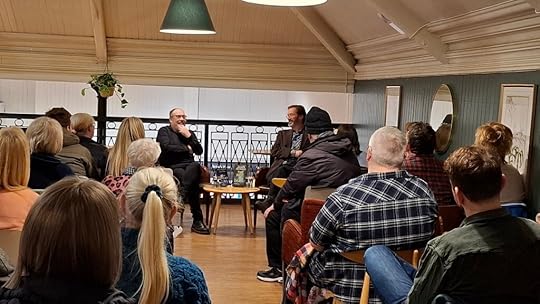 I think… I think one of my jokes made James laugh…
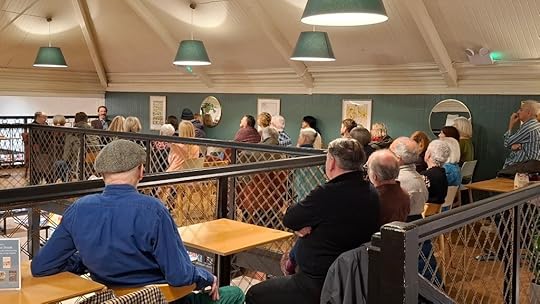 A surprisingly healthy turn out of wonderful readers…
 Getting ready to sign…
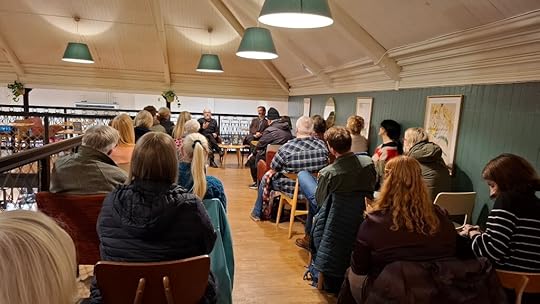 “And here’s why Godfather III is actually way better than you think it is…”
From Dundee (after a lovely night catching up with friends) it was time to head off to signings in St Andrews, where Waterstones and Toppings provided excellent hospitality, and a quick side trip to Broughty Ferry’s The Bookhouse (a brilliant wee independent store!) revealed that — shockingly — everyone in Brought Ferry had been out the night before and bought copies! But I’ll be back there again soon, I know it!
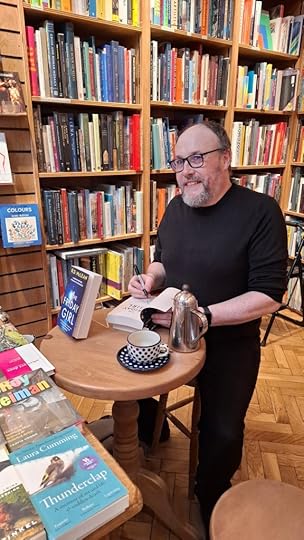 Toppings served me proper coffee and everything (and not just cos one of the booksellers there is my ex-boss!)
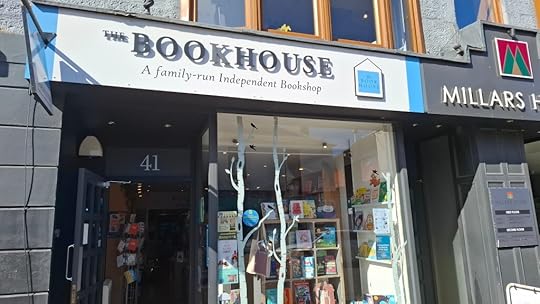 The brilliant THE BOOKHOUSE in Broughty Ferry is a proper and brilliant indy bookstore…
 At this point in the tour I was losing my grip on reality, judging by that expression…
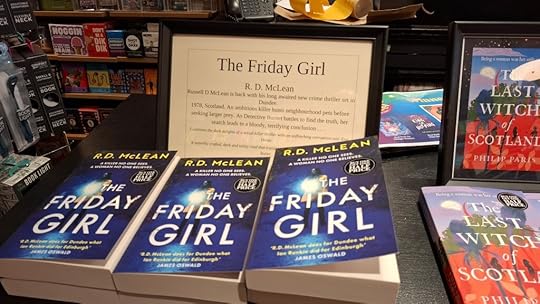 A lovely till display in Waterstones St Andrews… but the sign was changed soon after due to a wee typo… a wee typo made by someone I used to work with, too!
So that was a lot of work! But totally worth it, especially when the tour was punctuated by a lovely interview with The Courier in Dundee (by a local journalist I went to school with!) and a superb review in the Herald newspaper…
By the end I was so tired I needed a little lie down, which is partially why my next appearance was a few weeks later in the brilliant Waterstones Kirkcaldy, where Bookseller James does incredible events for a loyal and enthusiastic army of Fife Readers…
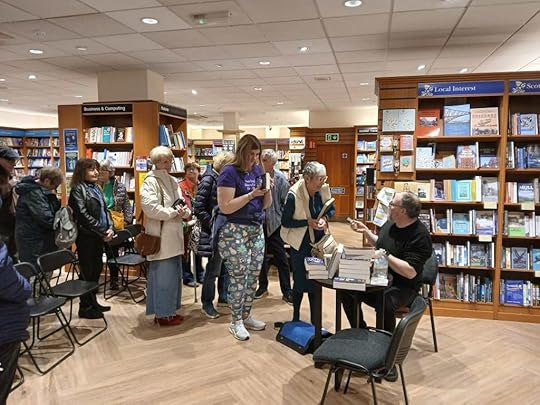 Kirkcaldy readers are brilliantly friendly…
 Trying to remember how to spell my own name…
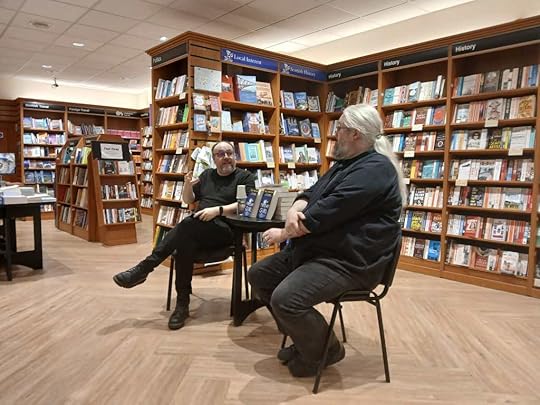 James asks brilliant questions, to which I ramble incoherent answers…
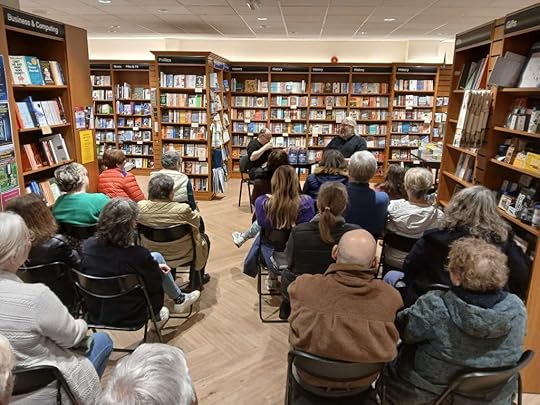 Whatever it looks like in this image, I am not snorting anything…
It was a delight of a mini-tour. So many brilliant readers, so many superb booksellers, so many great reactions. And there’ll be more to come over the years with some festival appearances (including a south of the border trip to Chiltern Kills later in the year, as well as others I’ll be able to mention nearer the time) so I hope, dear reader, I see you at some of these…
March 7, 2025
The Friday Girl is on her way… (And so are events to promote the book!)
I’ve been talking about it on Bluesky and Instagram (but no longer X/Twitter because, while my account is still there, it is now essentially inactive thanks to the fact the site has become… well… everything it has become lately…) But just in case you need to know:
There’s a new book coming soon! On the 13 March!The Friday Girl is my first book since 2017. I’ve wanted to write a version of it for a long time, knowing that I wanted to write a period piece set in the late 70s in Dundee and looking at police corruption, changes in society, and all kinds of darkly fun stuff that also references very true crimes that took place during that period. It was only in 2019, though, that I finally realised what the book was about — a young woman entering a world where she wasn’t expected to be. A young woman proving to be a brilliant homicide detective in a world where mediocre and corrupt men were the order of the day.
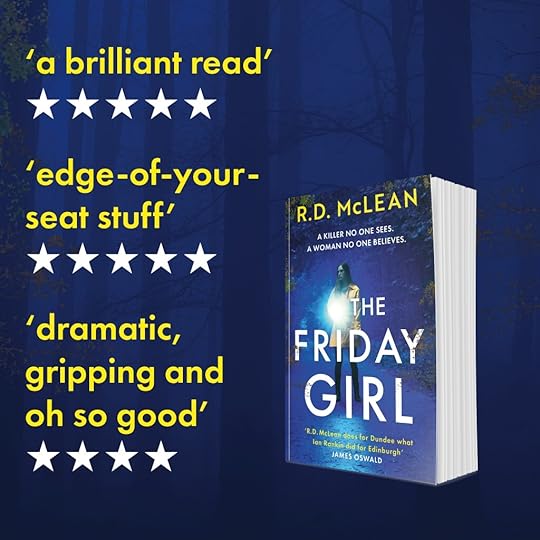
Not that Dundee was like that, necessarily (I have extrapolated based on attitudes at the time and of course fiction is not intended to be documenatray etc), but it created the conflict I needed to really get the book moving as young WPC, Elizabeth Burnet finds herself the only person who believes a serial killer is on the loose in Dundee’s Templeton Woods.
Anyone from Dundee will know why the Templeton Woods are important. In early 1979, the body of Carol Lannen was found there. Her murderer was never caught. Just over a year later, Elizabeth McCabe was found in the same area. Her murderer was never caught, and was very likely the same man. While there have been arrests (and even, a few years back, a trial), no one has ever actually been sentenced for the murders, and there are a number of reasons that the case never came to a proper conclusion.
But while those murders informed the background to what I wanted to write about, they were never the focus of the book. I didn’t want to write a book in which that killer was caught, or where I identified a conspiracy to kill these women. In part this was about respect to the victims. I didn’t want to deny the emotional reality of these real life crimes for so many people. But I did want the events to inform what I was writing about. And I realised that there were other cases, too, that really affected the city around this time period.
A few years earlier, former soldier, Robert Mone had taken a class of schoolgirl hostages. He killed one of their teachers. He was taken to a hospital and locked away due to his mental state. As far as I am aware he is still alive but will never be released (although there has been controversy over his sentencing through the decades). This event shocked the city and would go on to have even more unsettling consequences when his father was also arrested for murder several years later. In the book, THE LAW KILLERS (By Alexander McGregor), I read about how the police who entered the classroom following the release of the hostages had found Mone sitting there, laughing. Again, I didn’t want the event to form the plot of the book, but I knew that it was likely one of my older characters might have been among the officers who witnessed this and used it to inform his character.
The true crime aspects of the book form a background, but the main plot — with the “werewolf killer” stalking the woods in 1978 — is pure fiction. There are subplots about corruption — again, fictional that are intended to explore the topics of police overreach and what it means to give men such power who perhaps may not be best suited for it.
It’s a dark novel, I think — maybe the darkest I’ve written. It weaves the fiction through certain real events, which was a first for me as a writer and resulted in my finding elements that really added a little depth, and sometimes even fun to the book. I loved finding out that an oversold screening of JAWS at one of Dundee’s many cinemas accidentally led to a riot where the police had to called out! And of course I get to have a bit of fun with that Scotland were in the world cup during ’78, and expected to win (they — spoiler alert — most definitely did not, despite some early promise)
You promised us events?Yes, yes I did.
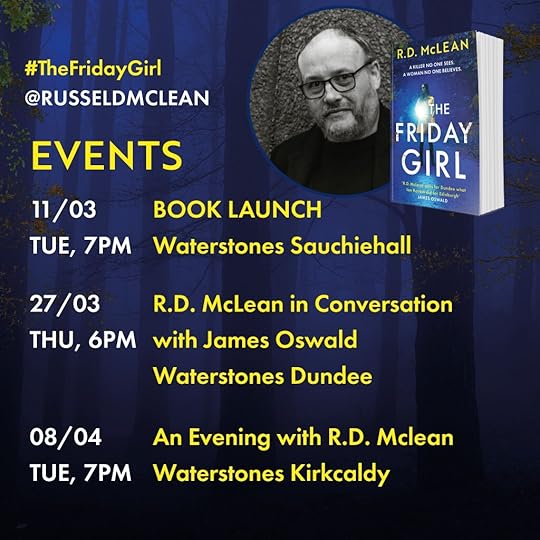
The events will start just before official publication day, with a launch in Glasgow Sauchiehall Street (since I live on the west coast these days) on 11 March at 7 p.m. Tickets are available instore and online, and more details are here:
Then, I’ll be off on a drop in tour of Glasgow bookstores on the 13th so you may find some signed copies around the city…
On the 27 March at 6 p.m. , I’ll be back in my old stomping ground of Dundee at the Waterstones on Commercial Street (where I also used to work as a bookseller about a decade ago…) appearing with James Oswald, whose new book — THE REST IS DEATH — will be launched that day. I’ve known James since before his first book came out and he is, genuinely, one of the loveliest people (albeit with one of the darkest imaginations!). I’ve had a chance to read the new book, by the way, and it is PHENOMENAL. This event is free but ticketted, so get onto the website and in store to let ’em know you’re coming!
On the 8th April, I will be in Kirkcaldy in my old homeland of Fife for another ticketed evening at 7 p.m. Once more go book your place, folks, and come on out to say hello! I love being back in Fife. It is, after all, where I grew up!
There are more events coming, too, including some festivals later in the year, and I’ll update you on those later — but in the meantime, please do come along and say hello at these events and help me celebrate my new book… and here’s hoping the gap between this and the next isn’t as long as it was between ED’S DEAD and now…
January 12, 2025
Confronting The Fear (of publication)
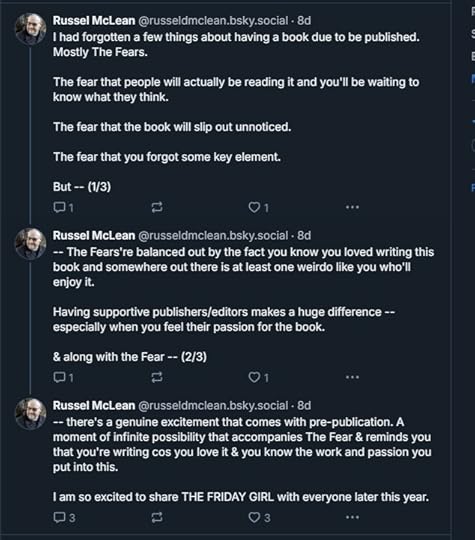
The above thread comes from my new social media home (Yes, I’ll update the links on the main page ASAP) on Bluesky (I decided to leave Twitter for many reasons, mostly that it had become quite unpleasant on there with lots of fake accounts and a great deal of cruelty being amplified by the new ownership… it was no longer the place where I could mostly ramble about books and movies, or trade bad jokes and puns with other writers). And I posted it because I wanted to be honest about the fact that publishing a novel is scary. And that, yes, I am a little scared about the upcoming publication of THE FRIDAY GIRL.
For those who prefer to have text, the posts read as follows (edited to allow it to appear in one block, where it originally appeared across three posts):
I had forgotten a few things about having a book due to be published. Mostly The Fears. The fear that people will actually be reading it and you’ll be waiting to know what they think. The fear that the book will slip out unnoticed. The fear that you forgot some key element. But The Fears’re balanced out by the fact you know you loved writing this book and somewhere out there is at least one weirdo like you who’ll enjoy it. Having supportive publishers/editors makes a huge difference — especially when you feel their passion for the book. & along with the Fear there’s a genuine excitement that comes with pre-publication. A moment of infinite possibility that accompanies The Fear & reminds you that you’re writing cos you love it & you know the work and passion you put into this. I am so excited to share THE FRIDAY GIRL with everyone later this year.
And The Fear, as mentioned, is genuine. I have had it every time I publish a new book. Because in the lottery of the publishing world, it can feel like there are more books than readers, and that books are competing for readers’ attentions so hard that no matter what you do or how good you believe your work to be, it is still likely to simply below some people’s radar.
I’m a big reader. I read for my day job (as an editor) and I read for pleasure. I was known, when I was a bookseller, for reading at least seven books in a week (there was a different one in my bag for every lunch hour), and this wasn’t even scratching the surface. But I still can’t catch up on all the books I want to read. There are books I intend to read and forget about, or buy, and then keep keep pushing back down the pile because another feels more urgent. There are books I want to read by authors I love that I have to balance against authors who are new to me (because we really can’t just read the same authors over and over again — the real joy of reading comes from opening ourselves to a multitude of voices and points of view, as long as those voices connect with us on some emotional level).
So I understand how it can happen — and that’s what The Fear is about. You worry that what you wrote might not be noticed or might not connect with readers. And, as an author, you need to power through that, and to trust in the process. In this case, I have an editorial team who’ve been bloody wonderful and hugely encouraging, and a whole network of people who’ve helped me write what I consider one of the most ambitious books I’ve written yet. I’m really hoping it will connect with readers, but I also have to shake that fear off and trust in the process.
Even more, I have to remember that I am the author, and that I am proud of my work. I worked hard on this book — I sweated through the difficult moments, made every effort to create a world and a cast of characters who live and breathe in ways that feel real. I wrote a story that gets to heart of its drama, that creates a sequence of events that escalate and end on a moment of shock. I wrote a story that conveys its anger and joy at the world. And, God, I’m proud of it. And I should be.
Will it be enough?
I don’t know. But it helps me overcome The Fear. The rest.. its in the hands of readers. But I do believe that if you crack open the cover of THE FRIDAY GIRL (Or any of my books) you’ll find something that will keep you turning those pages…
January 6, 2025
What is a crime novel, anyway?
Last year, I taught a workshop for the lovely Erskine Writer’s Group, where I talked about “writing the crime novel”, which of course meant that I started off by talking about what it mean to write a novel generally, and more generally, what it means to write a story.
I talked about finding a character with a strong need that was both specific to them, and universal for the audience. I talked about how plot really is about conflicting desires from characters, and how all of this can be applied to just about any genre.
But I also talked about what makes a crime novel unique. What is the “essence” of the crime novel. And to do this I asked people to try and define it.
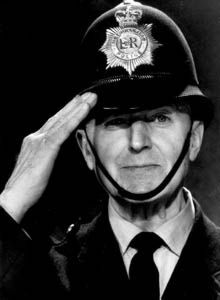 Dixon of Dock Green, the archetypal British Police Officer and upstanding arbiter of morality
 As always when I asked this question, the main answer was, “There’s a crime that needs to be solved by a detective/police officer.”
And this is how many people view the genre, primarily because the driving popular force of the crime novel has been the detective story, and in particular the police detective story. In Britain, especially, we have become used to the idea of the crime story being one where a crime is solved and order is restored by the police office (a figure of authority, which is one reason why one can make the argument for crime fiction actually being quite conservative in its mainstream form — but that’s a post for another time).
But a crime novel is so much more than that (in potential, anyway). Yes, a very popular part of the genre is the police procedural, but beyond that you have stories where the criminals are the focus (heist novels), where ordinary people get caught up in bad situations (noir novels or domestic suspense, mainly), where serial killers tell their own stories (The “You” novels, American Psychopath etc), and even ones where murder isn’t part of the story, but rather criminal activity forms a central component of the novel (I used to make an argument that Trainspotting is actually a crime novel in its own way, albeit in a very on-the-edge kind of way!)
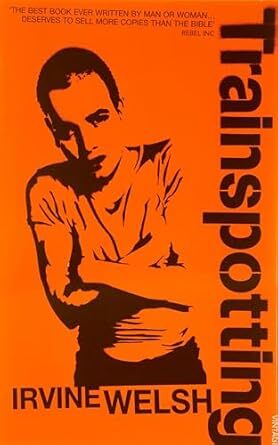 Choose your genre, choose your readers, choose to do an inept parody of a famous bit of writing, choose to write a caption that is definitely way too long…
In essence, then, the crime novel is one where crime or a transgressive act that could be seen as a crime forms a central element of the plot. That is, a crime novel is a book where — without the crime — the story would not happen. And this encompasses a huge range and variety of styles of story, and a massive collection of subgenres. And it shows why crime is such an enduring genre… it can tell so many kinds of stories, explore so many settings and perspectives. All it requires is for the crime or transgressive act to be central to the book’s premise.
To believe that a crime novel is merely about “solving” a crime or restoring order is to really limit the genre. There’s room for these kind of books, of course (some of them are brilliantly well done), but I also think that as readers, writers, and lovers of the genre we need to start to expand our ideas and think more about the crime novel really is and what it can do. If we limit our crime stories to those where a a sense of “order” is restored or those where a police officer or person of authority must resolve a crime and in doing so represent the absolute moral authority of the story, then we are limiting the genre massively… and don’t start me on those genre purists who think that crime novels can’t exist with SF or fantasy novels, or those that think you can’t mix up a good bit of horror in there.
On that last point, horror and crime share a lot in common. Again, we limit horror by thinking of it as purely monsters and frights, but often horror is really about confronting our fears in ways that allow us to unpack them. Silence of the Lambs is both a crime and a horror novel. And Then There Were None by Agatha Christie is a kind of proto-slasher story in which a group of people in an isolated location are picked off one by one by an unseen killer. And of course John Connolly, James Oswald a number of others mix the supernatural and crime with ease, perfectly fighting against the accusation some people have that using “ghosts” is an excuse of some kind of for lazy plotting (It isn’t, in the same way that using technology doesn’t somehow make a crime novel “easy”).
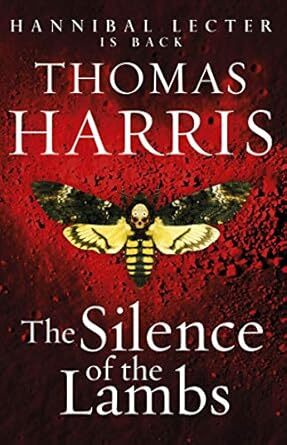 Also, the sequence where Clarice goes down into the cellar to face Buffalo Bill in the dark is pure horror novel material…
Crime novels and horror novels are often really about the same things: testing the boundaries of our sense of safety and confronting what happens when those barriers are removed or pushed against. A killer coming after you or a monster in the shadows? Those push very similar buttons.
I guess what I’m saying is that crime fiction is a broad Church. Despite preconceptions, it can cover a huge variety of stories, characters, themes and approaches. It can show us how the world should be, how the world is, how the world could be. It can show us our darker natures, or how to be better versions of ourselves. The only limit, really, is our imagination, our empathy, our expectations…
December 30, 2024
Emerging from the depths… (and how you can help Russel stay afloat in 2025!)
It’s been a long time since I posted to the website or updated anything. Not because I’ve had a lack of things happening, but perhaps because too many things have been happening, and I’ve just had to put some tasks on the back burner. So, apologies in advance, but this post is a long one including some professional news, a more personal update, and a small request which will really help me out in terms of my books in 2025…
It doesn’t help that I haven’t really had much new to promote since 2017 (Ed’s Dead), apart from the new self published editions of the J McNee novels (with their gorgeous JT Lindroos cover art and layouts by Jay Stringer).
But I have got to live vicariously through my wife, Lesley McDowell, whose book, CLAIRMONT, was published earlier in 2024 and did brilliantly well (It’s about a woman called Claire Clairemont, who was a friend of the Shelleys, but whose own writings and story have been unfairly forgotten by history). If you haven’t read it, you really should, and you need to keep an eye out for her next book, LOVE AND OTHER POISONS, due out in 2025.
 Some Publishing News!
And speaking of 2025, that’s when my own publishing luck is due to change! Earlier in 2024, the fantastic folks at Black and White/Bonnier publishing agreed to take on a project I thought would never see the light of day. Yes, there’s a new book coming — another crime novel. And a return to my old stomping grounds of Dundee!
When people asked me, after the McNee series finished, what I planned to do next, I always said that a passion project I had was to be set in 1978 in Dundee, set in a dark, shadowy underbelly of crime, corruption and violence. It would be influenced by the city’s history, although not directly taking its main plot from any real crimes. And it would the first in a sequence taking the city from ’78 through to ’91, when I feel the city went through some seismic changes that were ideal breeding grounds for crime stories.
But, after the McNee series finished, I couldn’t quite get into the right mode for this project. It felt somewhat… intimidating was the word. The ideas were there, but the story never felt quite right. It needed time to digest. So I took some time away from Dundee to write two standalone novels set in Glasgow…
And then I got a little unwell. I had two rounds of kidney stones (one of which, ironically, was shaped like a dagger!), along with various other issues that got in the way of my writing. I kept starting and stopping projects. I focussed on my editing because that at least kept a roof over my head, and found I didn’t have the energy left to really write.
Until about four years ago when I found that the 1978 novel was still gnawing somewhere at the back of my mind. And then I saw all the chaos at the Met in the wake of the Sarah Everard case, and the exposure of continued misogyny and bullying in a system that should encourage better behaviour. And I began to think about why and how people could be drawn into that culture if they joined up for the right reasons.
Suddenly, I had a character — a young woman — who wanted a better future for the police back in the bad old days, and who would have to struggle between her own ideals and a system that was embedded in bad practice. And I had an opening scene that, unusually, hasn’t changed that much since the first draft as it really sets the book’s tone.
I’m really excited to talk more about this book as we get closer to its release in March. I know that some lucky people have advance, uncorrected copies either with them on on their way to them, and I’m hoping these people enjoy the book. I’m waiting on a final cover to be revealed (which I’m very excited), but it feels so good to be back in the writing game, and to have had great support form my editor, Rachel, who was incredibly supportive of what I was trying to do with THE FRIDAY GIRL. I’m so excited for everyone to read it when it comes out. Current pub date is March 13th this year and I’ll update the site with more details when I have them…
A more personal update…Something else happened during the writing of the book that helped to explain in part why it took me so long, and this was a more personal journey, but one I wanted to briefly acknowledge.
Many writers feel a little distanced from the world, and perhaps even like they’re looking at it askew. Its what helps us to create fiction or art or entertainment or whatever you want to call it. We take things that don’t or shouldn’t exist and we make them feel real. It takes a certain kind of distance and mind to do that, so of course we’re all a little odd. But I’d always felt that as comfortable as I have always been with stories, the real world is something different. Numbers have always confused me, deadlines are things that I knew existed and always met, yet it as always last second, with overnight bursts of sudden creativity or energy that would allow me to complete work and then have me lying around exhausted for days. Simple things (washing dishes!) always seemed to be impossible — no matter how hard I tried, they’d remain filthy! And these are the small things in life, but they exhausted me every time, and ran co-concurrently with a number of other issues I may talk about more one day.
While I was working — in my capacity of editor — on a series of YA books written by the incredible Chris Bonello (Check ’em out, the UNDERDOGS series), I found myself strognly relating to several of the characters. Now, if you don’t know the series, the UNDERDOGS books are about a group of neurodiverse (ADHD, autism and so forth) kids who have to band together as a military force to save the world. Its a brilliantly optimistic series, despite its refusal to pander to “happy” endings, but it also shows neurodiversity in a very honest light, with both the flaws and the benefits such brain wiring can bring. Now, I’m not daft enough, and never was, to say that “we’re all a little autistic on some level” because that’s a strange way of looking at things, but I did begin to wonder why I was identifying quite so strongly with some of the characters.
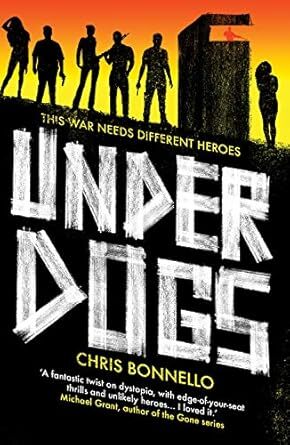
And, as it turns out, after talks with my doctor concerning panic attacks that have stretched all the back to my teenage years, and that we’ve never really been able to resolve, I actually have ADHD. But I was missed in the 80s and 90s, because back then it was seen as “the naughty kid’s” condition. And I wasn’t a naughty kid. But there were some questions I’d always had (especially surrounding my general clumsiness, inability with numbers, and ability to break almost anything by looking at it) that were soon answered by the diagnosis. And while I’m not diving into detail on this post, it also explained why I had stopped writing — my brain was too overloaded with everything else I was trying to do — or why some projects started strong and faded away (The Glasgow Noir at the bar that me and Jay Stringer set up, and that I soon ran out of time to even think about despite our very strong early shows). As I have always done, I was taking on too much at once because my brain thrived on trying new projects, but I wasn’t able to tell when too much was… well… too much.
I debated for a long time whether I would talk about this publicly, but I thought I would do so in order to highlight the fact that many people are or have been in a position such as myself, knowing something’s wrong but unable to specify what it is, even if they’re aware it seems to make their life more difficult than it should be. But getting a diagnosis can be scary. For a start, there’s this idea that maybe we’re somehow “making it up” or imagining something’s wrong; something that isn’t helped by certain newspapers with axes to grind claiming that there’s an “overdiagnosis” of neurodiverse conditions (when in fact, the rise in diagnoses is due to the fact that people whose symptoms would have been ignored are now being noticed). I also wanted to highlight how great my local health team have been despite some huge challenges. Waiting lists for assessment are long. I was put on the list in 2021, and only diagnosed in the latter half of this year. And that was relatively quick. If you go private, then the costs can be extortionate. Services such as the excellent Glasgow Adult ADHD Initiative are underfunded and understaffed because the priority on mental health is low, and this can lead to greater anxiety and worsening of symptoms for those who are undiagnosed. But at the same time, once you get through the team they are really excellent, and the waiting lists are the fault of this in local government who refuse to prioritise mental health services properly.
I’m not an expert in any of this, of course. Just someone with their own experiences. I’m still learning, but have been seeking out advice where I can, including ADHD UK’s pages, and ADD-itude Magazine (Not to be confused with a similarly titled magazine, of course!). But if you suspect you may be neurodiverse and undiagnosed and feel it is affecting your day to day life, please go and talk to your doctor. Ask for help. Don’t be afraid. It really can change your life.
Onwards (and how you can help with the new book!)So I’m moving into 2025 with a better understanding of all this, and a hope I can balance everything better. I’m hoping that Black and White (and readers, too!) might want a sequel to THE FRIDAY GIRL, which I have started writing an outline for. But, dear reader, you can help with this, too… how, you ask? By going to your favourite bookstore, or online retailer and pre-ordering the book. Obviously places like Amazon (affiliate link) and Waterstones will let you do this online (follow the links!) but you can go to your local store or look up your preferred online retailer and do so there, too. The more people pre-order, the more publishers know that readers are interested… and the more I know that readers are interested, too. Because often authors worry whether they’re simply shouting into the void, and pre-orders can help allay that worry!
So with 2025, I hope this website becomes a little busier. I’ll be talking books, films, and all my usual nonsense, as well as posting updates about the book and any events or related activities. I may even have some updates about my script work, who knows?
But in the meantime, I hope, dear readers, that you have a brilliant New Year and may 2025 see you moving onwards and upwards!
Russel
November 14, 2023
SHADOWLANDS — some screenplay news thanks to Filmarket Hub… and thoughts on screenwriting opportunities in the UK…
Although I’ve primarily written novels and short stories, I always wanted to write for the screen. My earliest efforts at writing were (bad) screenplays — mostly rip offs of my favourite movies or spec scripts for Star Trek series. I entered competitions, got nowhere, finally found it much easier to move into prose.
But my love for film and TV never really went away. Then in 2018, I took part in WRITE4FILM, for what was then called the Scottish Film Talent Network (which has since been replace by Short Circuit), a course that took artists from other disciplines and gave em a crash course in screenwriting. From that course, my peers had some great successes. Rachelle Atalla and Leyla Josephine, for example, went on to produce, write and even direct short films (and Rachelle’s feature pitch became her awesome novel, THE PHARMACIST), while Liam Bell adapted his feature treatment for THE SLEEPLESS into a full length novel that was recently released.
 Its me — a semi finalist!
And me? I wound up looking towards TV and developing a pitch (with encouragement from producers I was introduced to by the course) for SHADOWLANDS, which last year took me down to London to pitch at ContentLondon, an international conference of TV execs and production companies (I was part of the final six shortlisted for their Studio21 pilot competition, but didn’t win — I was up against some fierce competition and the two winning scripts from Laurence Turnbull and Jess Edwards were truly deserving winners — they really did blow me away!), and has now been revealed as the semi finalist in the TV Pilot 2023 Screenwriting Contest — WINNER & RUNNERS UP | by Filmarket Hub | Filmarket Hub | Oct, 2023 | Medium.
 Check out my fancy laurel!
So what does this mean? Right now its just a little more bragging rights — but hopefully its another step towards convincing producers to take a little at my script with a view to perhaps talking about how we might develop it towards a series. The show really is something I’m excited about — it has all the elements of a crime drama with the added bonus of a supernatural flavour that’s very much rooted in Scottish history and myth. Imagine if Mulder and Scully turned up in the middle of an episode of Shetland and I think you’ll get the gist! (No aliens, though: I always preferred my flavour of X Files on the supernatural not the SF side…)
I’m also hoping it might help me perhaps make a few other inroads towards some TV work; something I’ve always wanted to do but always felt on the outside of until recently when some of these opportunities came up. And there are so many more than there used to be.
But there’s still that sense I have that screenwriting is much more difficult to crack than publishing. The submissions process in publishing is frustrating but generally a good manuscript will get you in. As I began to look at screen agents and producers, so many of them asked for things like letters or recommendation from within the industry, or even the seeming catch-22 of needing previous credits…
Screenwriting is a foreign country… they do things differently there…If you’re interested in TV/film opportunities, there are a number out there, but you do need to be careful in who/what you apply to as a number do charge entry fees etc. While some of these can be worthwhile (I personally — and your mileage may vary, because of course I placed in 2022! — think Studio21, for example, was worth the relatively inexpensive entry) it is very different from publishing where I would say never pay entry fees at all (The difference comes if you’re taking a course or paying for proper editorial services — for example, from Jericho Writers).
In screenwriting, I would say only pay for entry if you think an opportunity offers something tangible or offers a genuine benefit to the winner. For example, I calculated the Studio21 competition was worthwhile based on the previous winners and connections within the industry (and it was a fee that seemed more in line with being an admin fee than anything else). The filmarkethub seemed a reasonable thing to attempt based on having talked to people I had met in the industry who had used the hub in terms of professional production etc.
But in both those circumstances I really made sure I felt my script had a decent chance of getting somewhere — there was no point entering without feeling like I was simply not going to place. And, although I didn’t place, the BAFTA Rocliffe fellowship seemed a good opportunity as well (and there is a bursary you can apply for to assist with entry), and you have to accept the possibility that even if you think you have something pretty good, you still might not place!
There are also plenty of excellent free opportunities for scriptwriters, too. The BBC writer’s room is a good place to start, and also links to other opportunities on a regular basis. The lovely folks at ScriptAngel tend to link to opportunities on a regular basis, too, and also have some lovely articles full of advice for would-be screenwriters. There are also all kinds of newer programs arising such as this excellent opportunity for working class writers (Unsure if you’re working class? So am I, but they have a link to a pretty good definition of what they mean that seems reasonable upon reading) from Stephen Graham’s production company Home | Birdiepictures, and this recent competition/opportunity Rules – Thousand Films | Scriptwriting contest 2023. Then there’s the brilliant-looking 4Screenwriting course from script editor Phillip Shelley and Channel 4 (massively difficult to place in, but one I would love to take part in someday!). In Scotland, there are still opportunities to find from the likes of Short Circuit who run the Convergence program, which is similar to the write4film series that inspired me to retry breaking into the world of scriptwriting.
I am, of course, focussing on UK links here — the US industry seems even weirder to me, and sorting the pay to play from the useful ops is even more tricky — but I imagine there are opportunities there, too.
But while the rewards of TV and film are greater than in publishing, the road to success is much trickier, I think. The recent writers’ strikes really brough a lot of inequality and poor faith practices to light, and while things should be better moving forward, you can bet there will still be a number of issues that still need to be dealt with in terms of the money people treating the writer’s craft seriously.
I am still learning as I break into a new industry. But so far my experiences have been interesting, varied, and I have my fingers crossed that they’ll pay off properly soon enough.
And if you’re worried that I’ve strayed away from prose? Yes, I’ve had a wee break, but I do have a new book out there with my book agents as we speak… and hopefully some more news soon…
September 11, 2023
Unfiltered Fiction: One key to keeping your reader engaged
 A typewriter — not mine — which as we all know is the symbol of all serious writerists
When I spent a few years reading slush pile manuscripts for a small publisher, I started to realise that the manuscripts which failed to engage all seemed to have something in common: a feeling that the reader was being kept at a distance from the characters, from the story, from the moment.
Writing fiction is one of the trickiest things you’ll ever do (That’s not physically taxing) because it is, as I have said before, a kind of magic or illusion. You need to convince the reader that even though they know that what you’re writing about isn’t real, they should still feel engaged as though it was. This is where film often has it easier — film can use sensation (sound, vision) to engage the audience in a moment and make them feel. But prose is just markings on a page. There is no sensory engagement to enhance or trick the reader. There is only the use of words to create and weave a reality around the reader.
So the writer of prose starts at a disadvantage because the reader is already one step removed from the “reality” of a story. They are sat outside of it. They have no reason to try and engage with it beyond their own inclination. So we need to work harder to make sure that inclination is strong.
And so we need to think about how we bring the reader closer to the world.
There are a number of ways to do this. One of these — and I will try and talk about this in a later blog post — is to ensure the emotional honesty of the book. That is, we need to make the readers feel as close to the interior emotional state of the characters as possible. This is a matter often of instinct and experimentation of the part of the writer to find that way of transmitting their own emotional state onto the page (and removing their own filters along the way).
But an easier method — and one we’ll focus on just now — is that of simply removing filters in your writing. Filters are words that stand between the reader and the direct sensation of a scene, especially as it is already filtered through the point of view of a character. Filters especially tend to remove the reader when reading a manuscript written in close point of view (whether first or third) — a scene experienced directly from one character’s point of view (This is my preferred method of POV, for reasons again we’ll discuss another day).
 Yes, it’s a coffee filter, not a writing filter…
Let’s look at the following (rough and ready, but relatively simple) example:
Russel walked along the woodland path. Above him, he heard the birds singing in the trees.
Simple, right? But we establish from the start of that sentence that we’re “beside” Russel (or in his POV) and thus we know that anything we see or hear is from Russel’s experience. We don’t need need to be told that heard the birds.
Russel walked the woodland path. Above, the birds were singing in the trees.
It’s a small change, but it brings us closer to him and tricks us into experiencing the world more directly through his experience. The filter of “he heard” which adds another layer of distance between the character’s experience and the reader is gone. More subtly by saying “above” rather than “above him” we place the reader directly in Russel’s POV rather than having them one step removed, looking at Russel looking up.
So let’s look at a stronger example from the POV of a protagonist we know nothing about except their direct experience:
They felt their throat become raw as they screamed, feeling the unbearable pain in their leg.
The “felt” and “feeling” here are filtering – distancing us – the reader and the character’s direct experience.
Their throat became raw as they screamed. The pain in their leg was unbearable.
Now, its not Shakespearean, but again, just getting rid of the filters makes it more direct and immediate for the reader.
Basically, any time a POV character — whether in first or third person (or even second!) — experiences something you don’t need to distance the reader from them by telling us that this what the character experienced. The writing itself has already established its POV, and so we can make a logical guess as to who is experiencing the sensation. Removing the filters makes the writing more immediate and more dramatic.
The exception to this would generally be when another character has an experience that is not direct. As in this moment between me and my boy-cat, Mycroft.
Russel looked at Mycroft, whose ears were twitching. Mycroft had clearly heard something nearby.
Here, we can filter Mycroft’s experience because we are experiencing Russel’s experience of Mycroft’s experience (but to filter any further would be a) unnecessarily confusing and b) adding another layer between the reader and the direct effects of the drama.
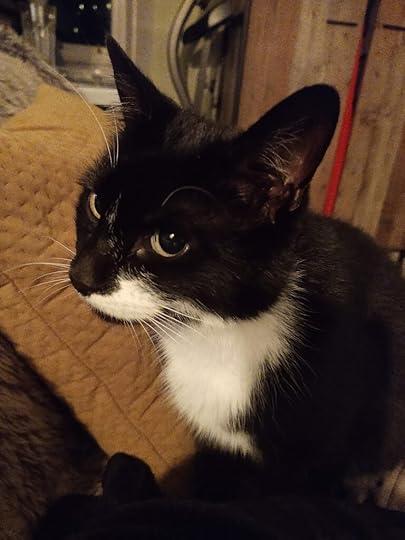 It’s Mycroft, at the moment that made that made me think of the above example… Now you no longer need to ask me “where do you get your ideas from…?”
Dropping filters between the reader and the experience of the characters in your dramatic writing is one of the easiest ways to get “closer” to the action and to bring your reader right into the moment. So try it in your own writing: drop the he/she/I/they “heard” or “felt” or “saw” and see how much more immediate the moments you’re describing become and how much closer you feel to the characters who are directly experiencing those moments.