Brian Meert's Blog
November 18, 2025
Midjourney to Money: Turning AI Images into High-ROAS Meta Ads
 If you can generate world-class visuals in minutes and test them by the dozen, you win more auctions and lower costs… fast. This guide shows how to turn Midjourney images into Midjourney Meta ads that scale profitably. You’ll get a repeatable workflow, prompt frameworks, compliance guardrails, export specs, and a 7-day testing plan designed to lift ROAS without lifting your legal team’s blood pressure.Who This Is ForEcommerce teams that need a steady stream of thumb-stopping creatives.Lead gen marketers chasing cheaper CPLs without cheap-looking visuals.Agencies standardizing an AI → ad pipeline for speed, scale, and consistency.What Are Midjourney Meta Ads?
“Midjourney Meta ads” are Facebook and Instagram ads whose primary image was generated in Midjourney, then lightly edited and exported to Meta-friendly ratios. The power is creative volume: more concepts, faster iteration, and fresher fatigue curves, without expensive photo shoots.
Fast Workflow: AI → Edit → Export → Upload → TestWrite a one-paragraph brief.Include product, promise, proof (review, stat, guarantee), people (who’s in the scene), palette (brand colors), and placement (Feed vs. Reels).Prompt in Midjourney.
Generate 6–12 options per concept. Keep scenes realistic and free of text/logos.Polish quickly.
Fix hands/eyes, color-grade to brand, add subtle grain, light vignette, and natural shadow under the product.Export by placement.
Feed: 1:1 (1080×1080) or 4:5 (e.g., 1080×1350 or 1440×1800). Stories/Reels: 9:16 (1080×1920). Respect UI safe zones.Upload & distribute.
Use Advantage+ placements to find cost-efficient inventory; preview every placement.Test in layers.
Start with concept tests (big idea), then style tests (lighting, background), then micro tests (badges, crops).Prompt Frameworks for Midjourney Meta Ads (copy, swap brackets)
Tip: Keep prompts scene-based and photoreal; remove brand text/logos from the render.
Product Hero (Studio Realism)“[Product] on a [surface] with soft natural daylight from [direction], shallow depth of field, crisp textures, subtle reflection, premium modern look, minimal background with [brand color accents].”Benefit in Context (Lifestyle)
“[Target customer] using [product] in a [setting], medium-wide, authentic candid feel, natural posture, soft window light, contemporary decor, clean negative space on the right for cropping.”UGC-Style (Handheld)
“Close-up of hands holding [product] near [environment], slight motion blur, handheld smartphone angle, natural daylight, imperfect but believable, warm color temperature.”Comparison Without Claims
“Two versions of [product] side-by-side on a neutral backdrop, consistent lighting, simple shadows, editorial product photography style, museum-like minimalism.”Aspirational Mood (Brandable Backdrop)
“[Product] centered against a gradient backdrop of [brand palette], soft rim light, gentle fog, photoreal macro detail, elegant composition, room for top/bottom UI.”
Post-edit overlays (in your editor, not the prompt): tiny corner logo, “New” badge, subtle CTA arrow… never crowd the image.
Compliance Guardrails (So You Stay Approved)Avoid personal attributes in copy or creative (e.g., age, health status). Speak to problems/benefits, not identities.No miracle claims or extreme before/after tropes… especially for health/appearance categories.Design for transparency: platforms increasingly label AI-generated content; make creatives that still perform when labeled.Mind licensing: use a Midjourney plan that grants commercial rights for your company size; don’t commercialize others’ upscales.Export Cheat SheetFeed (FB/IG): 1:1 (1080×1080) or 4:5 (1080×1350 / 1440×1800). JPG/PNG.Stories/Reels: 9:16 (1080×1920). Keep faces, logos, and badges inside safe zones.Aspect ratio tip: 4:5 often wins on mobile Feed for vertical real estate.Placements: Start broad with Advantage+; prune later if needed.The 7-Day Creative Testing LadderNaming: MJ_[Concept]_[Style]_[Crop]_v01 | Budget split: 70% concept, 20% style, 10% micro
Days 1–2: Concept Test (CBO or ABO)3–4 distinct concepts: Product Hero vs. Lifestyle vs. UGC-Style vs. Mood.Metrics: Thumb-stop rate (3-sec views/impressions), CTR, early ATC/Lead.Days 3–5: Style Test (Inside the Top Concept)Lighting (hard vs. soft), background (studio vs. lifestyle), crop (tight vs. wide).Metrics: CPC, CPL/ATC, Quality ranking.Days 6–7: Micro TestBadge/no badge, warmer vs. cooler grade, tiny angle shifts.Metrics: ROAS/CPA on stabilized delivery.Scale rule of thumb: When a variant shows ≥20–30% lower CPA or ≥20% higher ROAS at similar spend for 48–72 hours, graduate it to evergreen and feed it fresh audiences.
Copy & Creative Pairings That ConvertLifestyle + Problem→Solution“Struggling with [problem]? Meet [product]… made for [benefit] in minutes.”Studio Hero + Feature Bullets
“What you’ll love: [feature 1], [feature 2], [feature 3].”UGC Angle + Social Proof
“Trusted by [count] customers. Free returns if it’s not for you.”
CTAs: “Shop Now” (ecom) or “Get Quote” (lead gen). Keep primary text to 1–3 lines.
Measurement: Keep It CausalROAS = Revenue ÷ Ad SpendMER = Total Revenue ÷ Total Media Spend (full-funnel sanity check)Profit model: Profit = (Revenue × Gross Margin) − (Media + Tools + Ops)If your AI/edit stack adds cost, confirm contribution margin still beats control.What to Avoid (and Quick Fixes)Overly “AI” look: lower clarity 10–20%, add subtle film grain, slightly warm white balance.Brand mismatch: weave in brand colors via backdrop accents and consistent shadows; keep logos small and tasteful.Vertical cutoff: preview 9:16 to avoid UI collisions on Stories/Reels.Legal & Licensing SnapshotChoose a Midjourney plan with commercial rights appropriate to your company size.Don’t monetize others’ upscales or remixes you don’t own rights to.Ready-to-Use Creative KitThree Prompts (thumbnail-grade; swap product & palette)“Ceramic countertop, soft morning window light; [product] centered with a gentle shadow; minimal backdrop with subtle [brand color] gradient; crisp macro details; room at top for headline crop.”“Modern living room, medium-wide lifestyle; [target customer] casually using [product]; natural expressions; soft daylight; clean negative space on right for cropping; premium but relatable.”“Editorial lay-flat: [product] with matching accessories on textured fabric; overhead shot; balanced composition; soft diffusion; timeless, premium look.”Alt-Text Templates (accessibility + SEO)“Close-up of [product] on [surface] with soft daylight and minimal backdrop.”“Person using [product] in a bright, modern living room, natural candid scene.”Key TakeawaysVolume wins: AI lets you test more concepts faster; ROAS follows winners.Policy-smart design beats gimmicks… play inside the lines and still stand out.Formats matter: export 1:1, 4:5, and 9:16, respecting safe zones.Iterate weekly: a simple ladder turns images into money… consistently.
Done right, Midjourney Meta ads deliver quick concept velocity, cleaner tests, and durable ROAS gains. Build your pipeline once, then refuel it weekly with small, compounding wins.


November 11, 2025
TikTok Spark Ads: AI Targeting & Creator Collabs to Lower CPL
 Executive Summary
This guide shows how to pair native TikTok Spark Ads with AI-driven targeting and creator collaborations to drive more qualified leads at a lower cost per lead (CPL). You’ll learn what Spark Ads are, why creator content outperforms polished studio ads, how TikTok’s machine learning uses creative and engagement signals, the practical setup steps, and a week-by-week blueprint to validate, scale, and protect performance.
What Are TikTok Spark Ads?Spark Ads let brands run paid media behind existing organic posts (either their own or a creator’s) without losing native features like comments, shares, and profile taps. Because the ad is a real post, social proof travels with it, which generally improves trust, attention, and conversion efficiency.
How Spark Ads Appear In-FeedSpark Ads look and behave like normal TikToks, showing usernames, captions, music, and social actions. That native feel reduces “ad fatigue” and encourages the micro-behaviors (rewatches, taps, saves, comments) that tell the algorithm the content is worth serving to more people.
Organic-to-Paid: Turning Posts into AdsWith the creator’s permission, you authorize a specific organic post for use in ads. The brand can then select that post in Ads Manager and run it as paid media while retaining social proof. It’s the fastest way to convert top-performing organic content into a scalable lead generator.
Why Creator Amplification Often Beats Polished Ads on CostCreator videos mirror how people actually use TikTok, with handheld framing, quick hooks, and casual talk tracks, so they earn attention more efficiently than studio assets. Add visible comments and shares, and you get credibility that reduces friction at each step of the funnel.

Comments, shares, and saves are public receipts of value. When prospects see peers endorsing your message, they feel safer clicking, submitting a form, or booking a demo, which often translates into lower CPCs and a better CPL.
Audience Fit Over Follower CountA niche creator whose audience matches your ICP (ideal customer profile) can beat a macro influencer on lead efficiency. Relevance drives watch time and engagement quality, which in turn feeds the algorithm with the right signals for cheaper delivery.
How TikTok’s AI Delivery Lowers Lead CostsTikTok’s machine learning optimizes delivery based on creative content, viewer interactions, and conversion data. Strong signals help the system find people most likely to complete your lead action, so the right creative and setup matter just as much as your bid.
Signals the Algorithm Learns FromAttention: 3-second holds, rewatches, and completion rate show early interest.Engagement: Likes, comments, shares, profile taps, and saves indicate relevance.Click & Post-Click: CTR, form start rate, and CVR confirm true intent.Conversion Quality: Down-funnel events (qualified lead, booked call, purchase) refine who sees the ad next.Broad vs. Interest/Lookalike ApproachesStarting broad lets the system learn quickly from creative and conversion signals; layering interests or lookalikes can stabilize quality once you have baseline volume. The rule of thumb: earn signal density first, then narrow with data.
Choosing Creators Who Convert (Not Just Create Views)The right partner is credible to your buyer, comfortable with native teaching or demo formats, and open to light direction that keeps the brand promise accurate without killing authenticity.
Selection Criteria & VettingAudience match: Age, interests, pain points, and region align with your ICP.Comment quality: Real questions and peer recommendations beat generic emojis.Collab history: Check for undisclosed ads, conflicts, or brand safety issues.Content consistency: Similar tone and format to how your product should be explained.Briefs That Preserve AuthenticityProvide a simple narrative spine: problem, quick demo or proof, clear payoff, and a specific next step. Supply facts, claims, and disclaimers; let the creator handle phrasing, pacing, and examples in their voice.
Setting Up Spark Promotion: Technical Steps & Best PracticesSolid setup protects signal quality and keeps learning intact. Follow these steps before you push budget.
Permissions, Codes, and Asset LinkingObtain authorization: Ask the creator to authorize the specific post for promotion so you can select it in Ads Manager.Track properly: Confirm your pixel/SDK and events (lead, schedule, purchase) are firing and deduping with any CRM integrations.Select the right identity: Choose the creator’s post in “Use Existing Post” rather than re-uploading as a dark ad.Budget, Bid, and Learning GuardrailsDaily budgets: Start with enough to generate steady conversions; avoid large day-to-day swings that reset learning.Bid strategy: Test lowest-cost vs. cost cap; use cost cap only after you have a reliable target CPL.Attribution windows: Choose windows that reflect your buying cycle; be consistent across tests.Creative That Converts: Hooks, Proof, and CTAsTikTok rewards clarity, momentum, and authenticity. Build for watchability first, then make the next step obvious.
Hook in 3 SecondsProblem first: “If your leads ghost after the demo, watch this.”Surprise stat: Tease a specific outcome or comparison you can substantiate.Before/after: Show the transformation upfront (dashboard clip, inbox, or live demo).Proof & PayoffShow the thing: Quick demo beats claims. Tap, type, toggle, result.Short testimonial: A single, specific sentence from a real user outperforms vague praise.Context captions: Minimal on-screen text to label steps or outcomes; keep it readable on mobile.CTA That Matches the OfferTop-funnel: Lead magnet, quiz, or webinar invite.Mid-funnel: Product tour or recorded demo.Bottom-funnel: “Book a consult” or “Start free trial.”Measurement & Optimization: Lowering CPL Over TimeDefine success, read the right leading indicators, and then iterate in a clean test structure. Precision beats guesswork.
Core Metrics to WatchCPL: Your north star; track by ad, audience, and creative concept.Lead quality: Acceptance rate, MQL rate, show rate, or sales velocity. Don’t chase cheap junk leads.Attention & engagement: Hold rate, rewatches, CTR, form starts indicate creative health.Down-funnel: Cost per qualified lead (CPQL), cost per booked meeting, cost per acquisition (CPA).Testing Plan: Variables & CadenceBaseline creative: Keep a stable control Spark post running for comparison.One change at a time: Hook pattern, proof element, or CTA. Don’t mix signals.Weekly rhythm: Rotate 1-2 new variants per week; pause losers quickly.Scale Without Spiking CPLBudget ramps: Increase gradually to preserve delivery stability.Consolidation: Merge overlapping ad sets to concentrate learning data.Inventory expansion: Add new creator posts or angles before pushing large budgets into one asset.Compliance, Brand Safety, and Usage RightsTreat creator collaborations like any media buy: disclose, document, and define rights so there are no surprises later.
Disclosures & Platform PoliciesClear sponsorship markers: Ensure appropriate ad disclosures are present and visible.Claims and proofs: Substantiate performance statements; avoid unverifiable promises.Vertical rules: Extra care for regulated industries (finance, health, education, housing, employment).Rights, Whitelisting, and RenewalWho can run the post: Specify which accounts, regions, and placements are authorized.How long: Define usage windows and extensions in writing.Derivatives: Clarify whether edits, cut-downs, or cross-platform use are permitted.Case Study Blueprint: From First Test to ScaleUse this 4-week plan to validate Spark promotion with creators, establish a reliable CPL, and scale without breaking what works.
Week 1-2: Validation SprintsCreators: Recruit 3-5 niche creators aligned to your ICP; brief them on problem → demo → payoff → CTA.Posts: Ship 5-8 short, distinct angles (pain point, unboxing/demo, FAQ, testimonial, “how I use it”).Setup: Authorize posts, verify events, choose broad delivery, and define a starter CPL target.Decisions: After 3-5 days of spend per post, keep any unit that shows promising hold rate, CTR, and early CVR.Week 3-4: Consolidate & ExpandScale winners: Gradual budget increases on top performers; consider cost cap once stable.Audience refinement: Introduce interests/lookalikes if lead quality needs tightening.Creative refresh: Add 1-2 new creators and 2-3 fresh hooks each week to prevent fatigue.Guardrails: Pause if lead quality dips; test new angles rather than forcing spend into tired assets.Practical FAQsHow many creators do I need to start?Three to five is plenty for a first test; it gives you diverse hooks without fragmenting budget.
Do I need a large organic following?No. Spark promotion leverages the creator’s credibility and the algorithm’s learning, not your follower count.
What if my CPL drops but lead quality is weak?Add qualification steps (quiz, intent field), refine audiences, and adjust offers; cheap leads that don’t convert aren’t a win.
Key TakeawaysUse native credibility: Spark promotion preserves comments and shares that lower friction and CPL.Let AI learn: Give the system clean signals with strong hooks, clear payoffs, and reliable conversion tracking.Pick creators for fit: Relevance to your ICP beats raw follower count for cost-efficient lead gen.Test methodically: Maintain a control post, change one variable at a time, and scale winners gradually.Protect the brand: Disclose partnerships, document rights, and set renewal terms up front.October 31, 2025
AI‑Powered Ad Creative & Targeting: Boost Revenue 30‑55% in 2025
Executive summary: You get an AI ad targeting & creative revenue boost when audience modeling and modular creative testing move together. When clean signals, disciplined experiments, and simple unit economics line up, brands capture incremental revenue, protect margins, and scale across channels with confidence. This guide explains why it matters, how to run it, and the exact steps to turn machine learning signals into measurable profit.

Today, ad platforms and generative tools change fast. Because of that, the old split (“media handles targeting” and “design handles creative”) no longer works. Today’s models evaluate millions of audience–creative pairings and surface combinations that compound returns.
When both sides of the funnel move in sync, you cut waste and raise yield. Targeting removes low-propensity impressions, while creative turns qualified attention into customers. Together, this alignment produces a durable AI ad targeting & creative revenue boost, not a short-term bump.
Framework to achieve an AI ad targeting & creative revenue boostFirst, follow a repeatable sequence: verify measurement, run controlled tests, then scale with confidence. Treat every change as an experiment tied to revenue, not vanity metrics.
1) Define a single north-star KPINext, pick one KPI that reflects economic truth. Good options include net revenue per new customer in 30 days, blended ROAS, or contribution margin after media and tool costs. When everyone answers to one number, tradeoffs become clear and decisions move faster.
2) Audit data, tags, and signal qualityHowever, models are only as good as their inputs. Confirm that conversion events, product metadata, and revenue values are clean across web and app. Otherwise, inconsistent signals lead to unstable learning and misleading lift.
Verify purchase values, taxes, discounts, and currency alignment.Enable server-side events and deduplicate overlaps with client events.Refresh audience lists often so membership windows don’t go stale.3) Design a 4–8 week pilot with clear cells

To start, isolate targeting from creative so you can see contribution. A simple factorial design prevents misattribution and shows whether gains are additive or synergistic.
Control: current targeting + current creative.A: AI-informed targeting + current creative.B: Current targeting + AI-optimized creative.C: AI targeting + AI creative (combined).If C materially beats A and B, you’re seeing compounding effects: the hallmark of a real AI ad targeting & creative revenue boost. That pattern signals durable alignment between models and messaging.
4) Match tools to jobs (no one-size-fits-all)Also, audience modeling, creative intelligence, and experimentation platforms solve different problems. Choose tools that accept first-party data, fit your ad stack, and support incrementality testing. Avoid pricey suites that under-deliver on the few features you actually need.
5) Scale only on statistical confidence and unit economicsThen, set significance thresholds and verify lift with holdouts or geo splits. Scale gradually while tracking contribution margin and LTV. If returns fade with spend, adjust caps or audience freshness before pushing harder.
Practical tactics that commonly drive 30–55% revenue upliftInstead, use this playbook as a checklist, not a buffet. The gains come from coordination. That’s why the result is a sustainable AI ad targeting & creative revenue boost, not a one-off win.
Audience and data tacticsSegment by intent and value: Isolate high-intent, high-AOV clusters and bid more aggressively on them.Probabilistic lookalikes: Train lookalikes on your top decile by LTV, not on all buyers.Use first-party signals: Feed churn risk, purchase frequency, and category affinity into your modeling pipeline.Recency windows: Keep remarketing windows tight to avoid fatigue and waste.Exclusion logic: Exclude recent purchasers when an upsell path makes more sense than new-customer bidding.Creative and messaging tacticsModular creative systems: Build headlines, benefits, images, CTAs, and offers as swappable parts for rapid recombination.Contextual sequencing: Match messages to stage: cart savers for abandoners, social proof for cold prospects, value stacks for high-intent visitors.Micro-tests that matter: Systematically test price prominence, benefit order, and primary CTA text; roll forward only the winners.Format agility: Design assets for vertical video, feed, in-stream, and discovery placements without changing the core message.Fatigue monitoring: Rotate on predictable cadences and watch frequency by asset, not only by campaign.Measurement and optimization tacticsHoldouts and synthetic control: Keep a control pathway to prove true lift.Attribution guardrails: Pair platform-reported data with modeled incrementality to find the truth between them.Cross-channel consistency: Align themes and offers across paid social, search, and programmatic to avoid message dissonance.North-star dashboards: Put KPI, spend, CAC, LTV, and margin on one canvas so tradeoffs stay explicit.Implementation roadmap: ship value in 8–12 weeksUltimately, speed with rigor beats perfection. Time-box the work so learning compounds quickly and credibly toward an AI ad targeting & creative revenue boost.
Weeks 1–2: KPI alignment, analytics QA, and tool selection.Weeks 3–4: Creative modularization and audience model training.Weeks 5–8: Launch the factorial pilot, collect clean reads, and prune underperformers.Weeks 9–12: Validate with incrementality and scale winners against contribution-margin thresholds.Sample ROI math: simple, transparent, adaptable
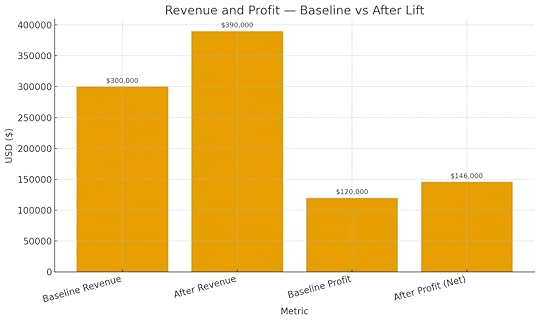
For example, use conservative assumptions and include tool costs in your model. Here’s how a 30% revenue lift affects profit at steady spend:
Monthly ad spend: Baseline $100,000; After 30% uplift $100,000; Delta $0Monthly revenue from ads: Baseline $300,000; After 30% uplift $390,000; Delta $90,000Gross margin (%): Baseline 40%; After 30% uplift 40%Incremental gross profit: Baseline $120,000; After 30% uplift $156,000; Delta $36,000Net incremental profit (after $10k tool cost): $26,000In this example, the AI ad targeting & creative revenue boost increases monthly profit by $26,000 after software costs. Your numbers will vary, so adjust inputs to your margin structure and consider LTV lift from higher-quality cohorts.
Three concise case studies (realistic, anonymized)Case 1: Direct-to-consumer apparelBaseline: $200k revenue from paid social at a 3.0 ROAS; conversion rates were flat despite high spend. Action: Trained lookalikes from the top-decile LTV cohort while creative AI produced 50 modular variations emphasizing fit, seasonal urgency, and returns. Result: Eight weeks later, paid-social revenue rose 42%. CAC edged up slightly, but LTV increased more, enabling 25% budget scale and a durable AI ad targeting & creative revenue boost.
Case 2: B2B SaaS lead generationBaseline: 120 MQLs per month, with trial conversion stuck at 4% and poor activation. Action: Audience modeling prioritized accounts by tech stack and headcount, while ads used integration-led creative and a tight demo video. Result: Trial conversion climbed to 6.5% and qualified leads rose 35%. Sales focused on higher-value accounts surfaced by the model, lifting revenue per lead.
Case 3: Regional home servicesBaseline: Creative was generic and performance plateaued seasonally. Action: Geo-aware messages and first-party booking data trained a propensity model for high-value services; prices and offers adapted dynamically. Result: Bookings from paid channels increased 33% in peak months, while cost per booking fell due to tighter audience focus and more relevant creative.
Common pitfalls and precise fixesImportantly, AI isn’t set-and-forget. These pitfalls often erode lift and stall scale. Apply the fixes early before they get expensive.
Pitfall: Treating AI as autonomous. Fix: Retrain and review every 4–8 weeks with fresh data and creative.Pitfall: Low-quality or missing events. Fix: Prioritize tagging audits and server-side ingestion before any scaling.Pitfall: Chasing vanity metrics. Fix: Anchor decisions in contribution margin, CAC payback, and LTV.Pitfall: Creative fatigue. Fix: Rotate modules predictably and track frequency by asset, not just by campaign.Pitfall: Overfitting pilots. Fix: Use holdouts or geo splits and verify persistence beyond promotional spikes.Tooling and stack: a pragmatic checklistPractically, choose tools that serve the end state: a measured AI ad targeting & creative revenue boost with clear economics. Skip features you won’t use this quarter.
Accepts first-party data (secure server-side ingestion, hashed identifiers).Supports incrementality testing or integrates with a testing framework.Exports modular creative assets compatible with ad platforms.Provides cohort, LTV, and margin-level reporting (not just clicks and CPCs).Pricing aligns with scale (flat, tiered, or performance-based) without surprise fees.Operating model: roles, rituals, and decision cadenceIn short, clear ownership and lightweight ceremonies keep speed high without losing rigor. This structure sustains the AI ad targeting & creative revenue boost after the pilot.
Weeklies: 20-minute standups on experiment health, audience freshness, and creative fatigue.Biweekly: Deep dives on attribution, incrementality reads, and LTV movement.Monthly: Strategy calls to scale winners, retire laggards, and queue the next test slate.RolesData owner: Maintains taxonomy and measurement integrity.Paid media lead: Manages budgets, audiences, and platform levers.Creative lead: Owns the modular library, testing roadmap, and fatigue controls.Analytics lead: Runs incrementality, LTV, and margin analyses and reports tradeoffs clearly.How to validate lift and avoid overfittingCritically, insist on statistical confidence and business plausibility. Use holdouts or synthetic controls to show lift isn’t seasonal or promotional. Then confirm performance persists after novelty fades and that economics stay healthy as you scale.
Finally, compare platform-reported results with modeled incrementality. The truth usually lies between them; that’s where a durable AI ad targeting & creative revenue boost proves out.
Frequently asked questionsWhat budget do I need to see reliable signal?Generally, think in conversions, not dollars. Campaigns generating a few hundred conversions per month usually provide enough signal for classification. If volume is lower, optimize to higher-value events or aggregate similar segments to stabilize learning and still capture an AI ad targeting & creative revenue boost.
How often should we retrain models?Typically, retrain every 4–8 weeks or whenever performance drifts because of new inventory, audiences, or creatives. A steady cadence prevents decay and keeps fit with the market.
Are the tactics platform-specific?No. Clean data, smart audience selection, and modular creative testing work across paid social, search, and programmatic. The mechanics differ by platform, but the principles behind an AI ad targeting & creative revenue boost are channel-agnostic.
Final thoughtsDisciplined marketers turn algorithms into advantage by aligning targeting with creative, validating lift, and scaling only when the math holds. With clean signals, a factorial pilot, and clear unit economics, you can turn model insights into durable margin. Do that consistently, and you’ll earn a defensible AI ad targeting & creative revenue boost that compounds quarter after quarter.
Key TakeawaysPick one revenue-aligned KPI and make all decisions answer to it.Run a clean factorial pilot to separate targeting and creative effects.Feed first-party data, enforce holdouts, and confirm lift with incrementality.Scale gradually on statistical confidence and contribution margin, not clicks.Maintain a modular creative system with a predictable refresh cadence.Adopt a simple operating rhythm so wins persist after the pilot.When audience modeling and modular creative testing move together, you replace guesswork with compounding returns. Follow these steps, and you’ll convert signal quality into a measurable AI ad targeting & creative revenue boost that’s both provable and scalable.
October 24, 2025
OpenAI Company Knowledge: 7 ROI Plays Marketers Can Use Now
Executive Summary: OpenAI Company Knowledge connects ChatGPT to a business’s approved work apps and surfaces answers with citations while honoring existing permissions. Used well, OpenAI Company Knowledge cuts the time from “where is that doc?” to “here’s the decision,” which improves proposal speed, reporting accuracy, and cross-team alignment. The result is faster decisions, fewer rework loops, and measurable return on investment.

OpenAI Company Knowledge is an AI-powered knowledge layer that works across drives, documents, email, CRM notes, tickets, task boards, and chat channels the team already uses. Instead of switching tabs, the assistant searches authorized sources, synthesizes the answer, and cites where facts came from. Access follows current permissions, so people only see content they’re entitled to view.
For revenue and marketing teams, the value is direct. There are fewer context gaps, faster creative briefs, cleaner post-mortems, and better executive updates. Ultimately, those gains shorten decision cycles and reduce rework, two reliable drivers of marketing ROI.
Action to take today: list three high-friction questions that repeatedly stall progress (for example, “What changed in the Q4 promo plan since last Friday?”). Pilot those first and require cited answers by default.
The 7 Highest-ROI Plays to Try This WeekBelow are seven practical workflows that turn this platform into business impact. Each outlines goals, inputs, a simple workflow, and a measurement plan so teams can prove value quickly.
1) Pitch-Ready Client Briefs in MinutesGoal: transform scattered inputs into a one-page brief that includes objectives, constraints, open questions, and citations.
Inputs: client Slack channel messages, the latest strategy doc, key client emails, and CRM activity.
Workflow:
Ask: “Create a client brief for tomorrow’s call using the last 14 days of #client-acme, ‘Q4 Brief.docx,’ and the most recent email thread with subject ‘Promo cadence.’”Require sections for Objectives, Constraints, Open Questions, Risks, and Next Steps, each with source links.Save the output to the shared client folder and tag the account owner for review.Measurement: target a 40–60% reduction in proposal turnaround time without losing accuracy. Track revision counts and time to client approval.
Real-world scenario: an agency team collapsed six tabs and three threads into a single cited brief. What used to take two hours took forty minutes, and the client approved scope the same day.
2) Campaign Post-Mortems That Don’t Miss ContextGoal: extract wins, losses, root causes, and a next-test matrix backed by evidence. Post-mortems often miss details because key facts sit in different tools. The assistant closes that gap.
Inputs: ad account notes, Slack debrief threads, ticket escalations, and CRM opportunity updates.
Workflow:
Ask: “Summarize top five learnings from the Back-to-School campaign. Include root causes and link to evidence.”Require a “What we’ll test next” matrix with hypothesis, owner, and due date.Publish to the campaign folder and share in #marketing-reviews.Measurement: reduce time-to-insight and increase test velocity. Track the number of experiments launched within seven days of the retro.
Example outcome: the assistant cited a support thread explaining a surge in refund tickets from a specific landing-page variant. That single citation redirected the next sprint and recovered a wasted week.
3) Weekly Executive Rollups with Real Recency
Goal: produce concise weekly updates that surface deltas versus targets, owners, risks, and confidence levels—with citations under each metric.
Inputs: performance dashboards, working docs, Slack launch chatter, and support tickets.
Workflow:
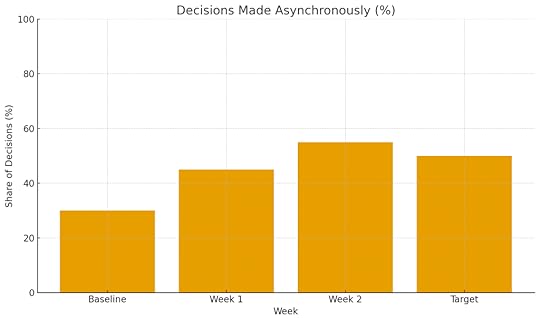
Ask: “Create a weekly rollup since last Friday on the Q4 launch. Highlight metric changes, owner, and confidence level. Cite the source for each metric.”Include a “Risks & Blockers” section with evidence and proposed mitigations.Send the rollup to leadership and store it in /Exec/Weeklies with consistent naming.Measurement: shorten review time and catch blockers earlier. Track how many decisions happen asynchronously versus needing a meeting.
Tip: require a one-line confidence note under each metric so leaders know which numbers are rock-solid versus directional.
4) Voice-of-Customer (VoC) Summaries That Drive RoadmapsGoal: convert scattered customer feedback into themes, representative quotes, and product or offer experiments.
Inputs: support tickets, NPS verbatims, app-store reviews, and the #feedback channel.
Workflow:
Ask: “Cluster VoC themes seen in the last 30 days. Only include themes with at least three corroborated citations. Provide representative quotes and links.”Map top themes to suggested experiments or content updates and assign an owner.Review monthly with product and lifecycle marketing.Measurement: increase the percentage of roadmap items tied to validated insights. Track uplift in conversion or retention for items sourced from VoC.
Example: a spike in “shipping cost confusion” across tickets and reviews triggered a checkout copy test. The fix cut cart abandonment by 8% week over week.
5) Creative QA Checklists Built from Real MissesGoal: reduce rework by turning historical QA misses into preventive checklists embedded in specs.
Inputs: past QA bugs, #design-qa channel messages, client notes about brand issues, and platform policy rejections.
Workflow:
Ask: “From the last 90 days of design QA and client feedback, list common failure modes. Create a pre-flight checklist for paid social assets.”Attach the checklist to every new creative spec and require a check-off on submission.Update monthly as new misses appear.Measurement: track revisions per asset and on-time delivery rate. Aim to reduce preventable revisions by 25% or more within one quarter.
Tip: include platform-specific checks (aspect ratio, safe areas, alt text) and brand-specific items (fonts, logo clear space).
6) Sales Enablement Sheets for New OffersGoal: arm sales with a one-pager talk track, objection handling, and competitor counters—each backed by sources from the assistant.
Inputs: feature PRD, GitHub or Linear issues, pricing docs, support macros, and competitive notes.
Workflow:
Ask: “Create a sales one-pager for the new Starter Plus plan. Include key benefits, three common objections with responses, and three competitor counters with links to evidence.”Export to PDF for easy sharing and keep an editable version in the sales playbooks folder.Review with sales once per sprint and archive versions with changelogs.Measurement: monitor win rate for the new SKU and rep ramp time. Add a CRM field to tag usage of the one-pager in closed-won notes.
Tip: require source citations for each claim to prevent anecdotal comparisons.
7) Release Planning that Aligns Product and MarketingGoal: unify engineering milestones with marketing timelines, risks, and dependencies in one cited plan.
Inputs: GitHub or Linear boards, engineering Slack channels, marketing timeline docs, and content calendars.
Workflow:
Ask: “Create a cross-team release plan for v2.4 using the engineering board and the marketing calendar. List dependencies, owners, and risk owners. Include ‘untracked work to log.’”Publish a single, cited plan with checklists for PR, ads, lifecycle, and support readiness.Hold a 15-minute async review; meet only on red items.Measurement: reduce slipped dates and increase lead time on dependencies. Track how often “untracked work” is caught before launch day.
Quick-Start: OpenAI Company Knowledge Setup in 20 MinutesStart small yet end-to-end. The goal is one working workflow that proves value within days. This simple setup makes the knowledge layer productive without heavy change management.
Connect the right sources: shared drives (Google Drive or SharePoint), Gmail or Outlook, Slack or Teams, CRM (HubSpot or Salesforce), ticketing (Zendesk, Intercom, Jira), and task boards. Use SSO and SCIM where possible.Pick a “pilot pod”: one marketer, one product manager, one customer success lead, and one analyst. Keep scope tight to speed iteration.Create prompt templates: Client Brief, Weekly Rollup, VoC Summary, and Post-Mortem. Save them in a shared folder for reuse and versioning.Enable citations: require the assistant to include links for every metric and claim. Store outputs in a shared location so anyone can audit the trail.Guardrails: adopt least-privilege access, turn on IP allowlisting if supported, avoid copying raw PII into prompts, and respect per-client spaces.Measurement: Prove ROI in the First 14 Days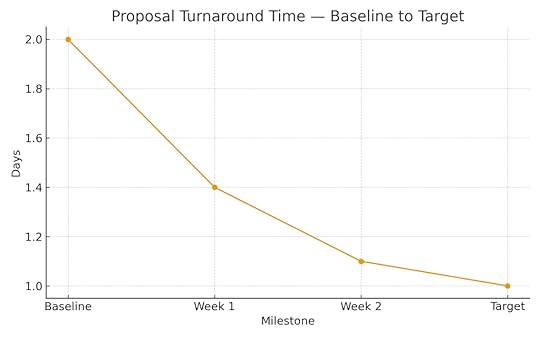 proposal turnaround time trend
Measure time saved and decision quality. Start with a clear baseline, then compare weekly. Blend hours saved with a loaded hourly rate and note any impact on CAC and LTV when signal exists. The platform should show improving operational and quality metrics within two weeks.
Baseline and Weekly TrackingOperational: time to brief, time to report, revision count, number of status meetings, decision latency.Quality: percentage of responses with citations, number of errors caught pre-launch, blockers escalated earlier.Financial: hours saved × loaded hourly rate; secondary lens on CAC/LTV where attributable.Pilot KPI Scorecard (Template)Copy this table into the workspace and update it weekly.
KPIOwnerBaselineTarget (14 Days)Week 1 ActualWeek 2 ActualNotes / Citations Required?Proposal Turnaround TimeAccount Lead2 days≤ 1 dayYes: link to brief and inputsPost-Mortem Cycle TimeGrowth PM5 days≤ 3 daysYes: link to evidence per learningExecutive Review TimeOps45 min≤ 20 minYes: rollup stored in shared folderPreventable Revisions per AssetCreative1.8≤ 1.2Checklist attached to specDecisions Made AsyncLeads30%≥ 50%Require confidence note per metricGovernance, Privacy, and Client TrustTrust accelerates adoption. Make controls visible and consistent so teams and clients can audit how the assistant is used across the organization.
Permissions model: the assistant surfaces only what a user can already access. Do not expand access for convenience; keep least-privilege by default.Admin controls: manage which apps are connected, define group-level access, and verify that compliance logs are available for audits.Client spaces: maintain per-client folders and channels using consistent naming, retention rules, and tagging for sensitive assets.Prompt hygiene: avoid pasting raw PII. Reference records by ID or link rather than copying data inline.Contract language: add a short clause to the MSA/SOW clarifying that an AI assistant synthesizes information with citations and that data access follows existing permissions.Limitations Today: Simple WorkaroundsMode switching: when the platform is enabled, web search or media generation may be limited. If external lookups or charts are needed, toggle that mode off, complete the task, then resume the thread.Operator habit: make it standard to enable the feature at the start of relevant conversations. A pinned checklist helps.Content hygiene: poor source organization creates poor answers. Nominate an owner to maintain a “Source of Truth” index with canonical docs for pricing, calendars, and style guides.Ambiguous prompts: vague asks yield generic outputs. Use tight prompts with required sections and time windows (for example, “since last Friday”).Getting Started: A One-Week Pilot PlanThe objective is a small, auditable win in seven days. Keep scope lean and document everything so the next team can repeat the process.
Day 1–2: connect apps, verify permissions, and select three high-friction questions (brief, weekly rollup, VoC). Capture baseline metrics.Day 3–4: run the three workflows. Require citations for every metric and claim. Store outputs in shared folders with versioned filenames.Day 5: compare against baseline. Did turnaround time, revision count, or blocker escalations improve? Decide whether to expand, iterate, or stop.Packaging: publish the prompt templates, KPI scorecard, governance checklist, and a “What we learned” note in a single folder for future pods.Practical Prompts You Can CopyTailor these to folder names and channels. Always require citations and a date window so answers are fresh and auditable through the platform.
Client Brief: “Create a one-page brief for the Acme Q4 Promo using the last 14 days of #client-acme, the ‘Q4 Brief.docx,’ and recent CRM notes. Include Objectives, Constraints, Open Questions, Risks, and Next Steps. Cite sources inline.”Post-Mortem: “Summarize the top five learnings from the Back-to-School campaign. Provide root causes and a test matrix (hypothesis, owner, due date). Link to evidence in each bullet.”Weekly Rollup: “Since last Friday, list metric deltas, owners, confidence levels, and blockers for the Holiday Launch. Add a Risks & Mitigations section. Include links to spreadsheets or dashboards.”VoC Summary: “From support tickets, NPS comments, and the #feedback channel in the last 30 days, cluster themes with at least three corroborating citations each. Provide sample quotes and recommended experiments.”Case Study: From Scatter to Decision in Under an HourA retail brand needed a rapid creative refresh after performance softened. The team used the assistant to assemble a cited brief from Slack campaign chatter, a pricing FAQ doc, and recent A/B test notes. The assistant highlighted two issues: ad copy mismatched the latest promo terms, and a commonly used image failed safe-area guidelines on a key placement.
Within the same morning, the creative lead pulled the QA checklist derived from historical misses, fixed the safe-area violation, and shipped a new ad set aligned to current offers. The weekly rollup documented the change, linked every source, and recorded an 11% improvement in CTR with a modest CPA drop over the next three days. Everything remained auditable through consistent citations.
OpenAI Company Knowledge won’t replace sound strategy, yet it clears the path for it. By unifying context, enforcing citations, and tightening feedback loops, teams shift from speculation to documented decisions. Start with the three workflows that slow progress the most—briefs, post-mortems, and weekly rollups—then expand into VoC synthesis, creative QA, sales enablement, and release planning.
Final ThoughtStart small and measure fast. Make evidence the default with citations and shared storage. Keep source hygiene tight and expand into VoC, creative QA, and release planning as results compound. Treat OpenAI Company Knowledge as a system with standard prompts, governance, and a weekly scorecard to sustain ROI.
September 5, 2025
How AI Audience Segmentation Drives 3X Revenue Growth for Mid-Sized Companies

In today’s hyper-competitive marketplace, mid-sized companies are constantly seeking innovative ways to boost revenue and gain a competitive edge. One transformative approach that has gained significant traction is AI-powered audience segmentation. By leveraging artificial intelligence to analyze customer data and segment audiences with pinpoint accuracy, businesses can tailor their marketing strategies, improve customer engagement, and ultimately drive exponential revenue growth.
This article explores how AI audience segmentation works, why it’s particularly beneficial for mid-sized companies, and how it can lead to a threefold increase in revenue. Through real-world examples and actionable insights, mid-sized businesses will learn how to harness AI to enhance their marketing efforts and accelerate growth.
Understanding AI Audience SegmentationWhat Is Audience Segmentation?Audience segmentation is the process of dividing a broad customer base into smaller groups based on shared characteristics such as demographics, behaviors, preferences, or purchase history. Traditionally, segmentation relied on basic criteria like age, gender, or location, which often resulted in generic marketing campaigns that lacked personalization.
With the advent of AI, segmentation has evolved beyond simple categories. AI uses machine learning algorithms and advanced data analytics to uncover hidden patterns and insights within vast amounts of customer data. This enables businesses to create highly nuanced segments that reflect real customer needs and behaviors. For instance, a clothing retailer might identify not just the age and gender of their customers, but also their style preferences, shopping habits, and even seasonal buying trends, allowing for targeted promotions that resonate more deeply with each segment.
How AI Enhances Segmentation AccuracyArtificial intelligence excels at processing large datasets quickly and identifying correlations that humans might miss. For example, AI can analyze browsing behaviors, social media interactions, purchase frequency, and even sentiment analysis from customer reviews to build comprehensive profiles.
Machine learning models continuously learn and adapt as new data comes in, refining audience segments over time. This dynamic approach ensures that segmentation remains relevant and responsive to changing customer preferences, which is critical for effective marketing. Furthermore, AI can simulate various marketing scenarios, predicting how different segments might respond to specific campaigns. This predictive capability allows marketers to optimize their strategies, ensuring that resources are allocated efficiently and that messages are tailored to maximize engagement. As a result, businesses can not only anticipate customer needs but also foster stronger relationships by delivering the right message at the right time.
Why Mid-Sized Companies Benefit Most from AI SegmentationBridging the Gap Between Small and Large EnterprisesMid-sized companies often find themselves in a challenging position: they lack the vast resources of large enterprises but have more complexity than small businesses. This makes traditional segmentation methods less effective, as they may not capture the nuances needed for targeted marketing.
AI audience segmentation offers mid-sized companies a scalable solution that doesn’t require massive budgets or teams. By automating data analysis and segmentation, these companies can compete with larger players by delivering personalized experiences that resonate with their customers. Moreover, the integration of AI tools can streamline operations, allowing mid-sized businesses to harness insights from customer data that were previously inaccessible. This leads to a deeper understanding of customer behavior, preferences, and trends, enabling companies to tailor their offerings more precisely.
Optimizing Marketing Spend and ROIMarketing budgets are often limited for mid-sized businesses, making it crucial to maximize the return on investment (ROI). AI segmentation helps by identifying the most profitable customer segments and the best channels to reach them.
Instead of casting a wide net and hoping for conversions, mid-sized companies can focus their efforts on high-value segments, reducing wasted spend and increasing campaign effectiveness. This targeted approach directly contributes to revenue growth. Additionally, AI-driven insights can help refine messaging and creative strategies, ensuring that marketing communications are not only relevant but also compelling. By analyzing customer interactions and feedback, businesses can continuously optimize their campaigns, adapting to changing market conditions and consumer preferences in real-time, which is essential for staying competitive in today’s fast-paced environment.
How AI Audience Segmentation Drives 3X Revenue GrowthPersonalized Customer Experiences Boost EngagementOne of the primary drivers of revenue growth through AI segmentation is the ability to deliver personalized experiences. Customers today expect brands to understand their unique preferences and needs. AI enables companies to tailor messaging, product recommendations, and offers to individual segments.

For example, a mid-sized apparel retailer used AI to segment customers based on style preferences, purchase history, and browsing behavior. By sending personalized emails featuring relevant products and exclusive discounts, the retailer saw a 40% increase in email open rates and a 3X increase in conversion rates. This approach not only fosters a sense of loyalty among customers but also enhances the overall shopping experience, making it feel more curated and less transactional. As a result, customers are more likely to engage with the brand, share their experiences on social media, and recommend it to friends and family, further amplifying the retailer’s reach and impact.
Improved Product Development and Inventory ManagementAI segmentation doesn’t just enhance marketing; it also informs product development and inventory decisions. By understanding which segments are most interested in specific product features or categories, companies can prioritize development efforts and stock inventory accordingly.
This reduces overstock and stockouts, improving cash flow and customer satisfaction. For instance, a mid-sized consumer electronics company used AI insights to identify a growing segment interested in eco-friendly products, leading to the launch of a new green product line that tripled revenue in that category within a year. Additionally, leveraging AI for inventory management allows businesses to predict trends more accurately, ensuring that popular items are always available while minimizing waste on less desirable products. This proactive approach not only saves costs but also aligns with consumer values, particularly among environmentally conscious shoppers who appreciate brands that prioritize sustainability.
Optimized Pricing and PromotionsAI segmentation allows companies to tailor pricing strategies and promotional offers to different customer groups. Price sensitivity varies widely among segments, and AI models can predict the optimal price points that maximize revenue without alienating customers.
Mid-sized companies that leverage AI-driven pricing have reported significant uplifts in sales. One software-as-a-service (SaaS) provider used AI segmentation to identify segments willing to pay for premium features, enabling tiered pricing that increased average revenue per user by over 50%. Furthermore, this strategic pricing approach can also facilitate the introduction of limited-time promotions that resonate with specific segments, creating a sense of urgency and exclusivity. By analyzing customer behavior and preferences, businesses can craft compelling offers that not only drive immediate sales but also enhance long-term customer relationships, as clients feel valued and understood through tailored interactions.
Implementing AI Audience Segmentation: Best PracticesStart with Quality Data CollectionThe foundation of effective AI segmentation is high-quality, comprehensive data. Mid-sized companies should invest in systems that collect customer data across all touchpoints, including websites, mobile apps, social media, and in-store interactions.

Data should be clean, consistent, and compliant with privacy regulations. Without reliable data, AI models cannot generate accurate segments or actionable insights.
Choose the Right AI Tools and PartnersThere is a wide array of AI segmentation tools available, ranging from standalone platforms to integrated marketing suites. Companies should evaluate options based on ease of use, scalability, integration capabilities, and support services.
Partnering with vendors who understand the unique challenges of mid-sized businesses can accelerate implementation and ensure better outcomes.
Align Segmentation with Business GoalsAI segmentation should not be an isolated technical exercise. It must align with broader business objectives such as customer acquisition, retention, or product expansion.
Setting clear goals helps guide the segmentation strategy and measure success. For example, if the goal is to increase customer retention, segments might focus on churn risk and engagement levels.
Continuously Monitor and Refine SegmentsAI segmentation is an ongoing process. Customer behaviors and market conditions evolve, so segments must be regularly reviewed and updated.
Mid-sized companies should establish KPIs to track segment performance and use AI insights to adapt marketing tactics accordingly. This iterative approach ensures sustained revenue growth.
Real-World Success StoriesCase Study: A Mid-Sized Health & Wellness BrandA health and wellness company serving mid-sized markets implemented AI audience segmentation to better understand its diverse customer base. By analyzing purchase patterns, lifestyle data, and online engagement, the company identified three distinct segments: fitness enthusiasts, wellness seekers, and casual buyers.
Tailored marketing campaigns were developed for each group, including personalized content, product bundles, and loyalty programs. Within 12 months, the company reported a 3X increase in revenue, driven by higher conversion rates and improved customer lifetime value.
Case Study: Regional Financial Services FirmA regional financial services firm used AI segmentation to identify customers most likely to adopt new digital banking features. By targeting these segments with customized onboarding and educational content, the firm increased digital adoption rates by 60%, reduced customer support costs, and grew revenue from digital channels by threefold.
The Future of AI Audience Segmentation for Mid-Sized CompaniesAs AI technology continues to advance, audience segmentation will become even more sophisticated and accessible. Emerging trends such as real-time segmentation, predictive analytics, and integration with voice and visual data will provide mid-sized companies with deeper insights and more precise targeting capabilities.
Moreover, the democratization of AI tools means that mid-sized businesses will no longer be at a disadvantage compared to large enterprises. By embracing AI audience segmentation today, mid-sized companies can position themselves for sustained growth and market leadership in the years ahead.
ConclusionAI audience segmentation represents a powerful growth lever for mid-sized companies striving to maximize their marketing effectiveness and revenue potential. By leveraging AI to create dynamic, data-driven customer segments, businesses can deliver personalized experiences, optimize product offerings, and refine pricing strategies — all of which contribute to tripling revenue.

Implementing AI segmentation requires a commitment to quality data, the right technology, and alignment with strategic goals. However, the payoff is substantial: more engaged customers, higher conversion rates, and a stronger competitive position in the marketplace.
For mid-sized companies ready to accelerate growth, AI audience segmentation is not just an option — it’s a necessity.
Take Your Revenue to New Heights with AdvertiseMintReady to unlock the potential of AI audience segmentation and experience the 3X revenue growth discussed in this article? At AdvertiseMint, we’re dedicated to propelling mid-sized companies like yours to success through expertly crafted Facebook advertising campaigns. Our specialized team is equipped to help you tap into the power of personalized marketing, ensuring your brand not only stands out but also achieves measurable results. Don’t let the competition outpace you. Contact Us Today and let’s elevate your business together.
September 4, 2025
5 AI-Driven Facebook Ad Trends You Need to Know for 2025

As the digital advertising landscape continues to evolve at a breakneck pace, Facebook remains a powerhouse platform for brands aiming to connect with their audience. With artificial intelligence (AI) technologies advancing rapidly, 2025 promises to be a transformative year for Facebook advertising. Marketers who leverage AI-driven trends will gain a competitive edge, optimizing campaigns with greater precision and creativity than ever before.
This article explores five key AI-driven Facebook ad trends that businesses and advertisers need to understand and implement in 2025. From hyper-personalization to automated creative optimization, these trends are reshaping how brands engage users and drive meaningful results.
1. Hyper-Personalized Ad Experiences Powered by AIPersonalization has long been a cornerstone of effective advertising, but AI is elevating it to unprecedented levels. In 2025, Facebook advertisers will harness sophisticated machine learning algorithms to deliver hyper-personalized ad experiences tailored to individual users’ preferences, behaviors, and even real-time contexts.

Unlike traditional segmentation, which groups audiences into broad categories, AI analyzes vast amounts of data points — from browsing habits and purchase history to social interactions and device usage — to craft ads that resonate on a deeply personal level. This means users will see offers and messages that feel uniquely relevant, increasing engagement rates and conversion potential.
For example, a fashion retailer might use AI to dynamically showcase different clothing styles based on a user’s recent searches and seasonal trends, while a travel company could serve destination ads aligned with a user’s upcoming holidays or past trips. The result is a seamless, intuitive ad experience that feels less like marketing and more like a helpful recommendation.
Moreover, as AI continues to evolve, the ability to predict user behavior will become even more refined. Advertisers will be able to anticipate not just what a user might want based on their past actions, but also what they might need in the near future. For instance, if a user frequently engages with fitness content, AI could suggest related products, such as workout gear or nutritional supplements, even before the user explicitly searches for them. This proactive approach to advertising could redefine user engagement, making it feel more like a conversation than a one-sided pitch.
How Advertisers Can Implement Hyper-PersonalizationTo take advantage of this trend, advertisers should invest in AI-powered customer data platforms (CDPs) that integrate with Facebook’s ad system. These platforms consolidate user data from multiple sources, enabling granular audience insights. Additionally, leveraging Facebook’s own AI tools, such as the Conversions API and Advantage+ campaigns, helps automate the delivery of personalized content at scale.
Creative teams should also collaborate closely with data analysts to develop adaptable ad templates that AI can modify based on audience signals. This synergy between human creativity and machine intelligence is key to crafting compelling hyper-personalized campaigns. Furthermore, as privacy regulations become more stringent, advertisers must navigate the delicate balance between personalization and user consent. Transparent data practices and clear communication about how data is used will be essential in building trust with consumers, ensuring that hyper-personalized experiences are not only effective but also ethically sound.
2. AI-Driven Creative Optimization and Dynamic ContentCreating multiple ad variations and testing them manually can be time-consuming and inefficient. AI-driven creative optimization is revolutionizing this process by automatically generating, testing, and refining ad content in real time based on performance data.
Facebook’s AI systems can now analyze which headlines, images, videos, and calls-to-action resonate best with different audience segments and adjust ad delivery accordingly. This dynamic content approach ensures that the highest-performing creative elements are prioritized, maximizing return on ad spend (ROAS).
Moreover, AI tools can generate new creative assets by remixing existing content or even producing entirely new visuals and copy using generative AI models. This capability allows brands to maintain fresh, engaging ads without the overhead of constant manual production. The use of AI in this context not only enhances creativity but also allows for rapid iteration, enabling brands to respond swiftly to market trends and consumer preferences.
As AI technology continues to evolve, the potential for hyper-personalization in advertising becomes increasingly feasible. By leveraging advanced algorithms, brands can create tailored experiences that resonate deeply with individual users. For instance, AI can analyze user behavior and preferences to suggest personalized ad content that aligns with their interests, thereby increasing engagement and conversion rates. This level of customization can significantly enhance the user experience, making ads feel less intrusive and more relevant.
Practical Tips for Leveraging AI in Creative OptimizationAdvertisers should embrace Facebook’s Dynamic Creative Ads feature, which automatically combines various creative assets to identify top performers. Pairing this with AI-powered design tools can streamline content creation and experimentation.
Regularly reviewing AI-generated insights helps marketers understand audience preferences and refine their creative strategies. It’s also important to maintain brand consistency by setting clear creative guidelines for AI tools to follow, ensuring that automated content aligns with the brand’s voice and values. Additionally, incorporating feedback loops where human creativity and AI insights intersect can lead to even more innovative ad solutions. By fostering collaboration between AI and creative teams, brands can harness the strengths of both to produce compelling content that captivates audiences and drives results.
3. Enhanced Audience Targeting Through Predictive AnalyticsAudience targeting has always been a critical component of Facebook advertising, but AI-driven predictive analytics is taking it to the next level. By analyzing historical data and identifying patterns, AI models can forecast which users are most likely to engage with or convert from a given ad campaign.
This predictive capability enables advertisers to focus their budgets on high-value prospects, reducing wasted spend and improving campaign efficiency. For instance, AI can predict which users are likely to make repeat purchases or respond to upsell offers, allowing brands to tailor their messaging and bidding strategies accordingly.
In addition, AI can detect emerging audience segments that may not be immediately obvious through traditional analysis, uncovering new growth opportunities and niches.
Maximizing the Benefits of Predictive Audience TargetingTo harness predictive analytics, advertisers should integrate Facebook’s machine learning tools with their customer relationship management (CRM) systems and other data sources. This integration provides a richer dataset for AI models to analyze, enhancing prediction accuracy.
Experimenting with Facebook’s Lookalike Audiences, enhanced by AI insights, can help identify new users who closely resemble existing high-value customers. Combining this with automated bidding strategies that prioritize predicted conversions ensures campaigns are both targeted and cost-effective.
4. Voice and Visual Search Integration in Facebook AdsThe rise of voice assistants and visual search technologies is influencing how users discover products and services online. In 2025, Facebook advertisers will increasingly incorporate AI-driven voice and visual search capabilities into their campaigns to capture these growing user behaviors.

Voice search allows users to find products using natural language queries, while visual search enables them to upload images or scan objects to discover similar items. AI-powered Facebook ads can respond to these inputs by dynamically adjusting ad content or triggering relevant offers.
For example, a user might snap a photo of a pair of shoes they like, and Facebook’s visual search AI could serve ads for similar styles available from various brands. Similarly, voice commands through smart devices could prompt Facebook to display tailored ads aligned with spoken queries.
Strategies for Incorporating Voice and Visual SearchAdvertisers should optimize their product catalogs and ad metadata to be easily discoverable through voice and visual queries. This includes using descriptive, conversational language in ad copy and ensuring images are high-quality and tagged with relevant keywords.
Collaborating with AI platforms that specialize in voice and image recognition can enhance ad responsiveness. Additionally, testing interactive ad formats such as augmented reality (AR) experiences can engage users in novel ways that complement voice and visual search trends.
5. Automated Budget Allocation and Real-Time Performance AdjustmentsManaging ad budgets manually across multiple campaigns can be challenging, especially when market conditions and user behaviors shift rapidly. AI-driven automation is transforming budget allocation by continuously analyzing campaign performance and reallocating spend in real time to maximize outcomes.

Facebook’s AI algorithms can monitor key metrics such as click-through rates, conversion rates, and cost per acquisition, then adjust bids and budgets across campaigns and ad sets without human intervention. This agility ensures that funds are directed toward the most effective ads and audiences at any given moment.
Moreover, AI can predict future performance trends, allowing advertisers to proactively adjust strategies before issues arise or opportunities are missed.
Implementing Automated Budget Management EffectivelyTo benefit from AI-powered budget automation, advertisers should set clear campaign objectives and performance thresholds. Facebook’s Campaign Budget Optimization (CBO) tool is a valuable feature that automates budget distribution across ad sets based on real-time data.
Regularly reviewing AI-driven reports and alerts helps marketers stay informed about budget shifts and campaign health. Combining automated budget management with human oversight ensures that strategic goals remain aligned while leveraging AI’s speed and precision.
Conclusion: Preparing for an AI-Enhanced Facebook Advertising FutureThe integration of AI into Facebook advertising is not just a passing trend but a fundamental shift in how brands connect with consumers. By embracing hyper-personalization, creative optimization, predictive targeting, voice and visual search, and automated budget management, advertisers can unlock new levels of efficiency and effectiveness in 2025.
Staying ahead requires a willingness to experiment with AI tools, invest in data integration, and foster collaboration between creative and analytical teams. Those who adapt to these AI-driven trends will be well-positioned to deliver compelling, relevant ads that resonate with audiences and drive meaningful business growth in the years to come.
Ready to Elevate Your Facebook Ads with AI?Embrace the future of advertising with AdvertiseMint. Our team is at the forefront of AI-driven Facebook ad strategies, ready to tailor hyper-personalized campaigns that captivate your audience and amplify your brand’s success. Don’t miss out on the opportunity to enhance your digital advertising efforts. Contact Us Today and let’s unlock the full potential of your Facebook ads together.
April 10, 2025
How to create custom names for top fans on Facebook

For anyone with a large fan base on Facebook, Meta launched a new feature that allows you to customize the name of your top fans badge. We’re talking Swifties, Beliebers, BeyHive, Arianators, Selenators, KatyCats, Blinks, Parrotheads and Sheerios. Everyone can now highlight their top fans with custom names.
You can change the standard “Top fan” badge name to something unique and meaningful to your audience, like “Foodie Nation”.
Benefits of a custom badge name
Make your top fans feel special: A meaningful custom name for your top fans helps them stand out.Strengthen your community: A custom name fosters a strong community around your brand.Promote your brand: Everyone can see your custom name for your top fans on their profiles and comments on your content.How do I reserve a custom badge name?
On desktop: Go to your business page badge settings on Facebook.On mobile: In FB app, go to your Page (logged in as page) > Tap “…” > Professional Dashboard > Fan Engagement > Settings > Customize Badge NameHow will it work?
You will get notified: We will let you know when your custom name is live.Fans get notified: Top fans can accept the new badge name to display it on their profiles and comments on your content.You have flexibility: You can modify or remove your custom badge name.February 27, 2025
Unlocking Success: How Humor in Marketing Boosts Engagement
 Unlocking Success: How Humor in Marketing Boosts Engagement
In today’s fast-paced, content-saturated world, marketers are constantly seeking innovative ways to engage audiences. One powerful tool at their disposal is humor. When executed correctly, humor not only draws attention but also humanizes a brand, making it more relatable and memorable. This article delves into the benefits of incorporating comedic elements into marketing strategies and how it can enhance brand loyalty and engagement while driving sales.
Key Takeaways– Humor can make your brand more relatable and memorable.
– Understanding your audience’s sense of humor is crucial for success.
– Strategic humor differentiates your brand and enhances customer connections.
Why Humor Works in MarketingHumor is a powerful psychological tool that captures attention and fosters emotional connections. It works by breaking the monotony of daily advertising, engaging viewers in a unique way. According to a study published in “The Journal of Marketing,” humor can significantly increase the likelihood of an ad being shared, thus widening its reach (Gulas & Weinberger, 2006). This diffusion effect means humor can make your brand more relatable and memorable, promoting long-term engagement.
Understanding Your Audience’s Sense of HumorFor humor to be effective, it’s essential to align with your audience’s preferences. What is funny to one demographic might not resonate with another. This makes understanding your target audience’s cultural context and humor sensibilities imperative to avoid missteps. A misjudged joke might not only fail to engage but could potentially alienate your audience. Conducting thorough market research and utilizing feedback mechanisms can help tailor humor effectively.
Creating a Unique Brand VoiceHumor can differentiate your brand in a competitive market, establishing a unique voice that stands out. By consistently using a specific style of humor, you can craft an identity that resonates deeply with consumers. Take brands like Old Spice and Geico, for example, who have leveraged humor to craft distinct personalities in their advertising. This distinctiveness not only enhances brand recall but fosters an emotional bond, leading to increased brand loyalty and preference.
Driving Higher Engagement and SalesUltimately, integrating humor into your marketing efforts can lead to higher engagement rates. Engaged audiences are more likely to interact with your brand, share content, and become repeat customers. When humor resonates, it encourages conversations, shares, and interactions which, in turn, boost sales. According to a Nielsen report, ads that use humor are more likely to generate positive consumer responses and result in a higher purchase intent (Nielsen, 2017).
ConclusionIn summary, incorporating humor into your marketing strategy can be a powerful way to enhance engagement, foster brand loyalty, and boost sales. Understanding your audience’s sense of humor is key to crafting messages that resonate. Have you ever come across a brand’s humorous ad campaign that left a lasting impression on you? Share your thoughts and experiences in the comments below!
February 26, 2025
Unlock the Power of Livestreaming: Tips for Success
 Unlock the Power of Livestreaming: Tips for Success
Livestreaming has become an essential tool for businesses, content creators, and individuals to engage with audiences in real-time. With the right preparation and equipment, your livestreams can reach and interact with audiences effectively. In this article, we’ll go over key strategies to enhance your livestream performance, connectivity, and audience engagement. This guide is designed to help you harness the full potential of livestreaming for maximum impact.
Key Takeaways– Start by clearly defining your target audience and setting goals for your livestream.
– High-quality equipment and stable internet connectivity are crucial for seamless streaming.
– Engage with viewers through interactive features like chats and polls to foster community.
Understanding Your Audience and GoalsBefore diving into livestreaming, it’s important to have a clear understanding of who you’re trying to reach and what you hope to achieve. Identifying your target audience will help tailor your content to their interests and preferences. Additionally, setting concrete goals, whether it’s brand awareness, product launches, or audience engagement, provides direction and purpose to your livestream. Knowing these factors guides the content creation process and ensures your efforts are aligned with desired outcomes.
Investing in Quality EquipmentTo deliver a professional and engaging livestream, investing in the right equipment is essential. High-quality cameras and microphones ensure your video and audio are crisp and clear, significantly impacting viewers’ experience. A stable internet connection is also paramount to avoid lag and disruptions. Consider using livestream software like OBS (Open Broadcaster Software) or Streamlabs, which offer versatile tools for managing and broadcasting your stream, making the technological aspects more manageable.
The Importance of Lighting and StabilityGood lighting can transform the look and feel of your streaming environment. Optimize your lighting setup to highlight your subject and create an appealing visual presentation. Use natural light when possible, but also consider investing in ring lights or softboxes for reliable lighting solutions. Stability is equally important; using a tripod can keep your camera fixed and reduce shaky footage, providing a smoother viewing experience for your audience.
Maximizing Interaction with Your AudienceAudience interaction is one of the defining characteristics of successful livestreams. Utilize tools like live chat and polls to encourage viewer participation and feedback. This not only makes the stream more engaging but also builds a sense of community among viewers. Live responses to comments and questions can create a personal connection, making audiences feel valued and heard. Maintaining this level of interactivity can help foster a loyal following over time.
Promoting Your LivestreamAfter preparing your content and equipment, don’t forget to promote your livestream. Use your social media platforms to announce upcoming streams, create buzz, and attract potential viewers. This can include posting teasers, scheduling reminders, and sharing related content to generate interest. Consistent promotion across channels ensures a wider reach, attracting both new and returning audiences and helping to build a dedicated base.
ConclusionLivestreaming is a powerful medium for connecting with audiences in real time, but it requires planning and the right tools to achieve success. By understanding your audience, investing in quality equipment, and fostering interaction, you can create engaging and effective livestreams that resonate with viewers. Do you have any unique strategies for engaging with your live audience? Share your thoughts with us in the comments!
February 25, 2025
New York Lawsuits Target Vape Companies for Marketing to Minors
The state of New York is confronting major vape companies in 2025 with a series of lawsuits seeking substantial financial damages. These legal actions claim that the companies have employed deceptive marketing strategies aimed specifically at minors, fostering an increase in youth vaping rates. This blog will delve into the details of these lawsuits and their potential implications, shed light on the alleged marketing practices, and discuss the broader public health concerns stemming from them.
Key Takeaways– New York has filed lawsuits against vape companies, accusing them of targeting minors through deceptive marketing.
– Flavored products and social media influencers are cited as strategies that significantly contribute to youth vaping.
– The state seeks substantial financial penalties and stronger regulations to safeguard children from vaping hazards.
The lawsuits filed by New York State claim that numerous vape companies have leveraged tactics that specifically appeal to minors. These include the creation of flavored vape products that mimic candy or popular beverages and the use of social media influencers who have a strong following among teenagers to promote their products. The state argues that these methods are directly responsible for the surge in underage vaping, leading to a public health crisis. According to a study by the National Institute on Drug Abuse, nearly 30% of high school seniors reported vaping in the past year, indicating a significant rise in youth nicotine addiction.
Public Health ConcernsThe increasing prevalence of vaping among young people has raised alarm among health experts who emphasize the risks associated with nicotine addiction at an early age. Nicotine is known to harm adolescent brain development, and early exposure could lead to long-term cognitive and behavioral issues. Furthermore, the use of vapes has been linked to other health problems, including lung damage and cardiovascular disease. The legal action taken by New York aims to not only penalize the companies financially but also to implement stricter regulatory measures to curb the availability and appeal of vaping products to minors.
Legal and Financial ImplicationsNew York’s legal strategy includes demanding millions in damages from vape companies as compensation for the public health burden they have allegedly caused. The financial penalties are intended to serve as a deterrent to prevent similar practices in the future. Additionally, there is a call for the enforcement of stricter regulations around the marketing and sale of vaping products, particularly those that may attract young consumers. This could involve banning flavored products entirely or imposing tighter age verification processes for online sales. Legal experts believe these lawsuits could set a precedent and inspire other states to take similar actions.
The Future of Vaping RegulationsIf New York’s legal action is successful, it might lead to a significant overhaul of how vaping products are marketed and sold across the United States. The vape industry may face more stringent advertising restrictions, potentially altering the landscape of how these products are promoted to the public. While the primary goal of the lawsuits is to reduce youth vaping, the secondary effect might be a change in consumer behaviors due to increased awareness and regulatory scrutiny. The long-term impact could be a decrease in the rates of nicotine addiction and better public health outcomes.
ConclusionNew York’s aggressive move against vape companies marks a pivotal moment in the fight against youth vaping. By seeking financial penalties and enhanced regulations, the state aims to hold these companies accountable for their role in promoting nicotine use among minors. What do you think about the measures New York is taking to combat youth vaping? Do you believe these lawsuits will lead to substantial changes in the industry?