Neil Spark's Blog
January 1, 2020
Myths debunked
This well-argued book is a warning from history. Anyone who wants to understand how the Nazis came to power and how much democracy depends on commitment to making the system work should read it. Hett shows the similarities between the diabolical political situation in Germany in the early 1930s and that of western democracies.He prosecutes a compelling argument about the reasons for the rise of the despicable, despotic and disastrous Nazi regime. By 1930, there was mass disillusionment with...


October 26, 2019
Rights denied
 Australia has a long and proud history of fighting for human rights.Australians fought in both world wars, and many since, against the scourge of tyranny. Australia has a long history of defending human beings’ dignity and worth. Eminent Australian Dr Herbert Vere Evatt helped draft the Universal Declaration of Human Rights and was the United Nations General Assembly President from 1948 to 1949. Diplomat and author Alan Renouf wrote: “The reputation Evatt won for himself as the voice of Austr...
April 23, 2019
Beware mythology
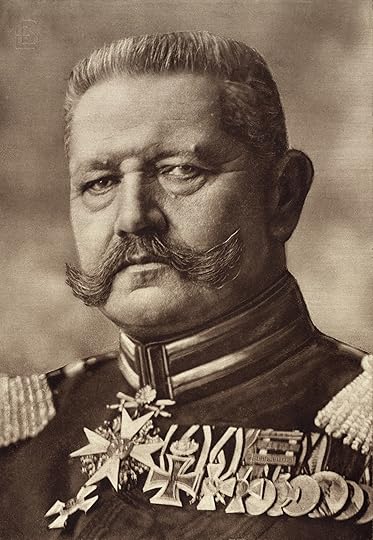 The loss of the Great War, the Great Depression and political catastrophe are often cited as the reasons for the Nazi’s ascension to power in Germany. They were factors but there’s another: Paul von Hindenburg.President Hindenburg appointed Adolf Hitler chancellor on 30 January 1933. But, as Anna von der Goltz says, he had a choice. Hindenburg could’ve declared a state of emergency and put the army in charge. A military dictatorship didn’t rule out a return to democracy but the appointment of...
August 17, 2018
Courage and conviction
Christian theologian Dietrich Bonhoeffer exemplified the characteristics of the man he worshipped. Bonhoeffer was a leading Christian in Germany in the twenties and thirties. Metaxas has written an intimate portrait. His research is meticulous in this readable narrative, some of which is in Bonhoeffer’s own words.Bonhoeffer’s involvement in key historical events is in riveting detail. This biography is a must-read for anyone interested in the Weimar and Nazi period.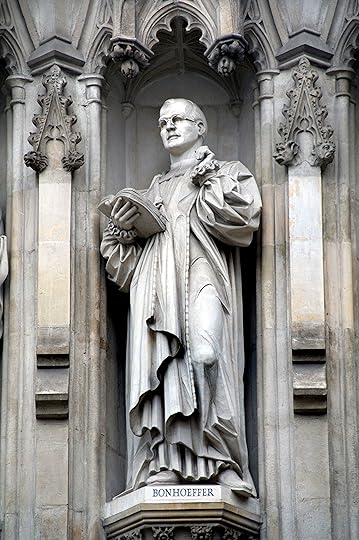 Bonhoeffer’s statue of one...
Bonhoeffer’s statue of one...
May 29, 2018
Democratic defender
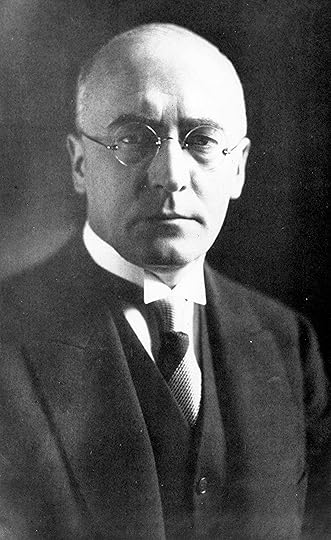 The man who paved the way for Hitler or the last bulwark against dictatorship? That’s the question historians have asked about Heinrich Brüning, the 12th of the 14 Weimar Republic Chancellors of Germany. Eighty-six years ago on 30 May, Brüning, above, was sacked. Most historians are on the side of paving the way. Professor of History at Washington and Lee University William Patch’s 113,500-word book makes a convincing case for Brüning.Heinrich Brüning and the Dissolution of the Weimar Republi...
April 24, 2018
Your privacy protection
 I am writing to tell you about a new European Union law that affects you and I. The internet and the corporations it has enabled has transformed how we live. We have never had the access to as much information as we do today. It’s all at our fingertips. As you would know from recent revelations about Facebook's flagrant abuse of it's users' privacy, our personal information has never been so threatened. The new law is effective from 25 May 2018. The General Data Protection Regulation (GDPR) m...
January 20, 2018
King-maker
Hitler becoming Chancellor of Germany 85 years ago this month was not inevitable. Despite the Nazi’s leader’s mesmeric oratory, despite eight million Germans unemployed – a third of the workforce – and despite political instability. There were three Chancellors in 1932 and two unscheduled general elections.In November and December 1932 Nazi support was on the wane. The extremist party’s vote fell four percent in the 6 November election since the 31 July poll which translated to a loss of 34 seats. In the weeks after the November poll, the party’s vote fell in state and municipal elections. Internal rifts deepened in December. Hitler and Gregor Strasser, one of his closest followers, clashed over the party’s political strategy to gain power. The storm troopers were disregarding orders, there had been resignations from the party and its financial position was dire.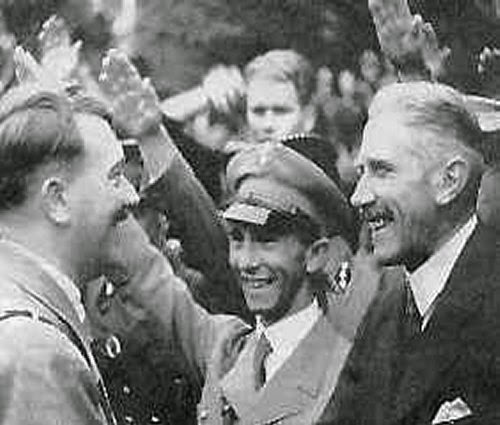 King-maker Von Papen far rightIn his paper, Was Hitler’s Seizure of Power on January 30, 1933, Inevitable? professor Eberhard Kolb writes: “At the end of 1932, numerous intelligent political commentators believed that the danger of a National Socialist seizure of power had been warded off. While there had been a general feeling that Hitler was at the gates in the period before November 1932, there was now a broad shift in public opinion.”Not inevitableYet a month later the mentally unstable Hitler was Chancellor. Historian Marcel Bois argues in Jacobin magazine: “Hitler’s rise to power was by no means inevitable, but rather the outcome of both specific historical conditions as well as the actions (and inactions) of various social forces.” One of the “social forces” was the former chancellor Franz von Papen. He was a career diplomat, dilettante and dealer in duplicity. And he was an aristocrat like the president Paul von Hindenburg. Von Papen ingratiated himself with the 85-year-old president and his inner circle.Get to know people and use them was von Papen’s modus operandi, according to his biographer Tibor Koeves. In his book Satan in Top Hat, he is unequivocal about who is to blame for Hitler’s ascension. “It is a moot question whether National Socialism might or might not have come into power without Franz von Papen’s helping hand. The fact is that a few weeks before he was nominated, Hitler told Goebbels that if the Party (sic) broke up, as seemed possible at the time, he would immediately shoot himself … The man who turned the tables in six weeks’ time transformed a bankrupt, disunited, declining movement into an instrument of power was Franz von Papen.”WealthVon Papen was a wealthy aristocrat with numerous wealthy contacts. Koeves writes von Papen persuaded Nazi party funders to stop when he was chancellor (1 June 1932 – 17 November 1932). In late December 1932, he turned the money flow back on.Von Papen played Hitler and von Hindenburg. As chancellor Kurt von von Schleicher was negotiating the future of Germany's government, von Papen was negotiating with Hitler. The Nazi leader agreed to settle for the chancellorship, and the ministries for Germany’s biggest state, Prussia, the interior and a new one, aviation. He also promised to respect the rights of the president, the Reichstag and the press and to make von Papen vice chancellor.Von Papen persuaded Hindenburg’s advisors his head of office, Dr Otto Meissner, his son and aide de camp Oskar Hitler would deliver a right-wing government that would be in in the interests of the aristocracy. And he claimed he would be the “power behind the throne”.Von Papen had demonstrated throughout his career his interests were paramount. There’s no reason to believe his actions that December-January 85 years ago were motivated by anything other than satisfying his desire for power.Von Papen was aided and abetted by others in bringing the monstrous Nazis to power. The elderly and far from mentally sharp president von Hindenburg was one of the ultimate arbiter whose responsibility cannot be denied. There was another way out of the stalemate – the subject for another post.
King-maker Von Papen far rightIn his paper, Was Hitler’s Seizure of Power on January 30, 1933, Inevitable? professor Eberhard Kolb writes: “At the end of 1932, numerous intelligent political commentators believed that the danger of a National Socialist seizure of power had been warded off. While there had been a general feeling that Hitler was at the gates in the period before November 1932, there was now a broad shift in public opinion.”Not inevitableYet a month later the mentally unstable Hitler was Chancellor. Historian Marcel Bois argues in Jacobin magazine: “Hitler’s rise to power was by no means inevitable, but rather the outcome of both specific historical conditions as well as the actions (and inactions) of various social forces.” One of the “social forces” was the former chancellor Franz von Papen. He was a career diplomat, dilettante and dealer in duplicity. And he was an aristocrat like the president Paul von Hindenburg. Von Papen ingratiated himself with the 85-year-old president and his inner circle.Get to know people and use them was von Papen’s modus operandi, according to his biographer Tibor Koeves. In his book Satan in Top Hat, he is unequivocal about who is to blame for Hitler’s ascension. “It is a moot question whether National Socialism might or might not have come into power without Franz von Papen’s helping hand. The fact is that a few weeks before he was nominated, Hitler told Goebbels that if the Party (sic) broke up, as seemed possible at the time, he would immediately shoot himself … The man who turned the tables in six weeks’ time transformed a bankrupt, disunited, declining movement into an instrument of power was Franz von Papen.”WealthVon Papen was a wealthy aristocrat with numerous wealthy contacts. Koeves writes von Papen persuaded Nazi party funders to stop when he was chancellor (1 June 1932 – 17 November 1932). In late December 1932, he turned the money flow back on.Von Papen played Hitler and von Hindenburg. As chancellor Kurt von von Schleicher was negotiating the future of Germany's government, von Papen was negotiating with Hitler. The Nazi leader agreed to settle for the chancellorship, and the ministries for Germany’s biggest state, Prussia, the interior and a new one, aviation. He also promised to respect the rights of the president, the Reichstag and the press and to make von Papen vice chancellor.Von Papen persuaded Hindenburg’s advisors his head of office, Dr Otto Meissner, his son and aide de camp Oskar Hitler would deliver a right-wing government that would be in in the interests of the aristocracy. And he claimed he would be the “power behind the throne”.Von Papen had demonstrated throughout his career his interests were paramount. There’s no reason to believe his actions that December-January 85 years ago were motivated by anything other than satisfying his desire for power.Von Papen was aided and abetted by others in bringing the monstrous Nazis to power. The elderly and far from mentally sharp president von Hindenburg was one of the ultimate arbiter whose responsibility cannot be denied. There was another way out of the stalemate – the subject for another post.
October 28, 2017
Real leadership
 In the world in which we live there is a lack of true leaders in the positions that require real leadership. Though many may call themselves leaders in all walks of life, most are far from it. Those in charge of countries and the destinies of millions of people appear to be almost clueless, or oblivious to the needs of others. I believe that the words on your business card or next to your name are only words. The same goes with many major corporations where their vision statements are nothing more than words on the wall. Quite often it is who you are – and not what you offer – that matters, which is a fallacy.Recently I went back to New Zealand for a holiday and to catch up with family. There are always many people to catch up with though we never get to see them all. However, I always make time to have a meal or a coffee with my soccer coach, Kevin, from my time playing in New Zealand. This is really important to me and a testament to my respect for what he did for us as a club, and a group of young men.Every time we meet I say the same thing and though 30 years has gone by I still have emotion in my voice when I tell him: “You weren’t the best coach that I ever had but I never wanted to play for anybody more than I did for you”. I am pretty confident that every player in that era thinks the same. Kevin never had all of the coaching certificates or any special gimmicks that supposedly you need nowadays to be a great coach. He didn’t need them because he was a leader worthy of following.Kevin would train us for three hours (yes that long) twice a week and spend the same time with our second team on two other nights. At every home game the whole team would meet at his house and his wife would feed the team, all 15 of us. He also paid for someone to video our games, a rarity in that time, and again would have the team around to his house each week to watch it, again providing food and drink. All he asked in return was for us to do our best and be committed to the team cause.Though I doubt many of us realised at the time his leadership was both inspirational and selfless. It wasn’t about Kevin, it was about the team and the community that surrounded it. It is no coincidence that era was, and still is, the most successful in the club’s long history. Only in reflection do you realise how fortunate you were to be part of that community and how the friendships you forge bond you forever. When I caught up with many of the guys whilst in New Zealand the conversations just continued from where they left off a few years ago.As you look around, there are so many areas of the planet crying out for a Kevin to change their direction and guide people through the quagmire of arrogance and self-interest that abounds. True leaders don’t need to beat their chests and tell others how wonderful they are because real people understand that a leader will care about you first and their needs second.Kevin Moss was just that and we followed. Isn’t that what true leaders should do? Should you have someone like Kevin in your life, appreciate the opportunity that comes from being part of something bigger than yourself and thrive in the community.
October 7, 2017
Shoot the gerrymander
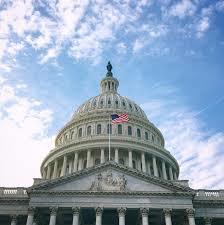 There’s been another mass shooting in the United States. That’s how news reports of these tragedies start these days. Another one. It’s not out of the ordinary anymore. It's almost as if we expect it. And that expectation will be fulfilled because firearm control won’t happen until the US electoral system is reformed to be more representative.When 20 children were murdered at the Sandy Hook Elementary School in Newtown, Connecticut on 14 December, 2012, President Obama cried. Cried in despair, frustration and anger. If the murder of 20 children won’t bring change, nothing will.And since then, there’s been the Washington Navy Yard shooting in which 12 people were killed; San Bernardino, California, 14; the Pulse Nightclub, Orlando, 49; and on 1 October, Las Vegas, 59. And they’re just the ones where there were 10 deaths or more. The firearm death toll is the same as the road toll: 10.3 per 100,000 people. The chances of dying by a bullet are the same as dying on the road. RightThe reasons for Americans’ toleration of massacres are many and complex. They include the high rate of firearm ownership, the unquestioned right to “bear arms” and the need to protect loved ones. Other reasons, opined by University of Alabama Criminologist Professor Adam Lankford, include a 30-year high of suicides and a desire for fame.The National Rifle Association is often cited as one of the reasons for the lack of gun control. The association “buys” members of Congress, the argument goes. But it’s wrong. The NRA’s donations to political parties in 2016 was $1.6 million – cents compared to the billions from corporations and others.Most Americans want gun control. Considering restrictions on firearms, such as bump stocks, is a start but doesn't go far enough. EJ Dionne, Norman J. Ornstein and Thomas E. Mann argue a majority of both parties want universal background checks, a ban on assault-style weapons, and measures to prevent the mentally ill and those on no-fly lists from buying guns. GerrymanderThe barrier to reform isn’t just a lack of willingness but the undemocratic political system. Nothing happens because the minority rules. The United States is a “non-majoritarian democracy” in which the interests of rural areas and small states are disproportionately over represented. It's a Gerrymander. Electoral boundaries are manipulated to favour one party or group of people. Electoral boundaries haven't changed to reflect population changes. In 1960, 63 percent of Americans lived in metropolitan areas; in 2010, 84 percent did. Dione says if the 50 senators from the 25 smallest states voted for a bill and Vice President Pence voted with them, senators representing 16 percent of Americans could overrule those representing 84 percent. It will get worse. Baruch College political scientist David Birdsell has calculated that by 2040, 70 percent of Americans will live in 15 states and be represented by only 30 of the 100 senators. A quarter of the population will be represented by the three-quarters of the senators.Much needed life-saving firearm law reform will not happen until:Electoral boundaries are redrawn by an independent authorityThe president is elected by popular vote and not by the Electoral CollegePolitical campaigns are publicly funded at best, or, at least limits introduced and real-time disclosure requirements are introduced.BoundariesThe redrawing of electoral boundaries is unlikely. The Republicans determine boundaries in key states. Yes, the beneficiaries of the system control the rules. So much for separation of powers and checks and balances – the bedrock of the US Constitution – being at work here. The Republicans had a net benefit in at least 16 seats after the 2010 census, according to the Brennan Centre for Justice.Hillary Clinton won the popular vote in last year’s presidential election – 48.2 percent to 46.1 percent – yet the Republican candidate won the presidency. Her vote was the biggest of any losing candidate.Public funding of election campaigns that have spending limits would mean:Candidates couldn’t be beholden to commercial interestsThere'd be fairnessThere's a chance respect for politicians and the political system may be restored. Stranger things have happened. I’m an optimist, so I am hopeful. In the interim, campaign spending limits should be capped and donations made public. Super Political Action Committees (Super PACs) –that campaign to support or defeat a political candidate – should be abolished. Donations to them aren’t capped or regulated. Until the United States' electoral system becomes democratic by abolishing the gerrymander, there won't be firearm law reform and there’ll be more news reports that begin with: “There’s been another mass shooting in the United States”.
October 1, 2017
Happy birthday
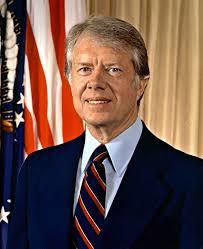 Earnest but ineffective was how my right wing international political professor described the 39th president of the United States. He was replacing his objectivity with his political views. Today, 1 October, is President Carter’s 93rd birthday.By any objective measure, President Carter, in office from 1977 to 1981, was effective. Among other things, he:• Made human rights a fundamental consideration in the United States’ relations with other countries• Suspended economic and military aid to Chile, El Salvador and Nicaragua in protest of those regimes’ human rights abuses• Limited arms sales to military dictatorships• Created the Camp David Accords between Israel and Egypt that lead to an historic peace treaty in which Israel withdrew from the Sinai and the two sides officially recognized each other’s governments• Established the Department of Education• Increased college tuition grants for needy students• Ended federal price regulation of trucking, interstate buses, railroads and airlines• Established the Department of EnergyIntroduced tax incentives for home insulation and for solar energy.Exemplary leader Carter was, and is, a leader. His chief domestic policy adviser, Stuart E. Eizenstat, wrote in the New York Times in 2015: “(Carter’s) defining characteristic was confronting intractable problems regardless of their political cost. His closest aide and confidant, Hamilton Jordan, ruefully joked that the worst argument to make to President Carter to dissuade him from action was that it would hurt him politically.” Eizenstat writes Carter’s determination to do what he thought was right was one of the reasons his term is not seen as favourably as it should. Carter trained as an engineer. He saw his role as finding “comprehensive solutions to fundamental challenges” but the US political system is designed for incremental change. What he delivered didn’t match what he’d promised. “Some presidents have an indefinable quality of making half a loaf seem like a victory, but Mr. Carter did not really recognize politics as the art of the possible. When he won, he looked as if accepting compromise was a loss. Mr Carter did what he considered “the right thing” for his country, and let the political chips fall where they may”. There were failures, of course, as there are with every presidency: the energy crisis and the Iran hostage crisis are the highest profile ones. But Jimmy Carter changed the world for the better.Life’s work And in keeping with his deep commitment to leadership, humanity and doing good, he set up the Carter Center that wages peace, fights disease and builds hope. The Carters’ accomplishments in an out of office are many. President Clinton awarded Jimmy and Rosalynn Carter the Presidential Medal of Freedom on 9 August 1999. Clinton said: “Jimmy and Rosalynn Carter have done more good things for more people in more places than any other couple on the face of the Earth.”The man from the small town of Plains, Georgia, has been fighting for civil rights throughout his public life. He was the only white man in Plains in the mid-fifties to refuse to join the White Citizens’ Council segregationist group. His front door was vandalised with the words: “Coons and Carters go together”. His political career started in 1955 when he was elected to the Sumter County Board of Education which he went on to chair. He ran for a Georgia Senate as a “New Southerner” against local business man Homer Moore who was elected. But voter fraud was obvious. In one precinct, 333 ballots were issued but there were 420 cast. Carter won a court appeal. During his two-terms in the Georgia Senate, Carter earned a reputation as “tough and independent politician, curbing wasteful spending and steadfastly supporting civil rights” .He was a Democratic party candidate for Governor of Georgia for the 1966 election. He finished a distant third in the primaries. White segregationist and restaurant owner Lester Maddox won the nomination and the governorship. He was known for barricading the doors of his restaurant and “brandishing an axe to ward off black customers”.Carter was assiduous in his campaign to win the governorship at the 1970 election. He toned down his liberal position and won over white men he needed to win. “Ignorant, racist, backward, ultra-conservative, red-necked South Georgia peanut farmer” was how the liberal Atlanta Constitution Journal described him. His strategy worked and he beat Carl Sanders to become governor of Georgia.In office, he returned to his values and:• Called for an end to segregation• Increased the number of black officials in state government by 25 percent• Promoted education and prison reform.• Transformed the state bureaucracy into an efficient organsiation.He was the least known candidate when he nominated for the Democratic Party primaries for the 1976 presidential election. He signalled he was going to be a different president from the outset. After his inaugural speech, he got out of his limousine and walked with his supporters to the White House.Delivering his Nobel Lecture in 2002, after being awarded the peace prize, Carter concluded with words that can be seen as both his life mission and his call to action for future generations.“The bond of our common humanity is stronger than the divisiveness of our fears and prejudices. God gives us the capacity for choice. We can choose to alleviate suffering. We can choose to work together for peace. We can make these changes – and we must.”