
Natalie Singer's Blog
June 5, 2018
Best summer beach reads of 2018
Book blogger and president and CEO of Vroman’s Bookstore in Pasadena and Book Soup in West Hollywood, Allison K. Hill, rounded up her 5 beach read picks (plus one surprise podcast!) for 2018. Thanks for including CALIFORNIA CALLING! It is a perfect sun-soaked summer vacation beach book to read!
You know what summer is good for, book lovers? Beach reads (and not long introductions), so let’s get to 5 good ones you won’t want to miss (and a bonus pick to listen to as you head to the beach)…


February 13, 2018
Book launch and upcoming events
[image error]It’s getting close. CALIFORNIA CALLING: A SELF-INTERROGATION launches this March. Here are a few events where I will be reading and/or talking about the book!
Seattle book launch, March 5, Elliott Bay Books
Portland launch, March 9, Powell’s
Seattle Lit Fix reading series, March 13, Chop Suey
Portland’s Why There Are Words reading series, May 20
January 21, 2018
Goodreads giveaway!
[image error]
Readers: My publisher is giving away 10 copies of CALIFORNIA CALLING on Goodreads! The giveaway goes through February 11. You can enter to win a copy here.
October 8, 2017
Under the influence
[image error]
Readers are influenced by the books they love, and writers doubly so: not only do we think for months or years about our favorite books, we refer to them, consciously or unconsciously, when we write. While I worked on my memoir California Calling, I read and referred to a stack of books that deeply informed how I approached my writing. Some of these books influenced the form I used, others helped spur my thinking about my subjects and obsessions. All these writers gave me permission to veer off the mainstream narrative path and push boundaries, and made me feel as though my work was, in some way, in conversation with theirs. This helped me constellate myself in the universe of themes I was investigating and feel slightly less alone during the solitary and often scary pursuit of writing a long creative work.
In the first of two connected posts I touch on six of the books that were most important to me as I wrote my memoir. In a second part, I’ll talk about six more.
The Faraway Nearby, Rebecca Solnit.
“The organizing possibilities of metaphor,” author Leslie Jamison writes in her blurb as a way to encapsulate how The Faraway Nearby experiments with applying “the associative liberties” of essay to an entire book. Solnit’s book, a linked narrative of essayistic chapters, explores “how we might bring the faraway more near” and starts with a central theme: how we build the structure of our lives out of stories. That idea of story is a thread that passes through the entire work, helped to function by a metaphor: a pile of fresh apricots Solnit inherits from her mother’s property. She writes in the beginning about the importance of stories, of Scheherazade and how stories are sometimes life or death, and then lands at: “Sometimes the key arrives before the lock. Sometimes a story falls in your lap. Once a hundred pounds of apricots fell into mine.” This framing, and the deft way Solnit ranges in her associative thinking while hewing all the time to a central theme, driving forward an argument, helped me zero in on my own theme and poetics and create a scaffolding for my book.
Safekeeping: Some True Stories from a Life, Abigail Thomas
This book has stayed within constant arm’s reach for me in part because Abigail Thomas makes the work of the mind and of language that she’s pulling off seem deceptively simple when in fact it’s amazingly complex. Arranged as short vignettes written in telescoping points of view, this memoir makes brilliant use of time and employs one device—conversations with the narrator’s sister—that I studied over and over again as a master class in technique and used to approach my own points of view in my book, including use of second and third person. Safekeeping has an undertow that pulls you in fast and does not let go. Stories and themes are boiled down to the essentials of language, yet the relationships between reader, author, narrator and character are rich and tangled. This spare, incisive writing is drenched in voice and incredibly nimble, elements I referred to again and again while writing California Calling.
When Women Were Birds: Fifty-four Variations on Voice, Terry Tempest Williams
This memoir, about the author’s mother dying and leaving her a set of mysterious journals, helped me crystallize a central theme in my book—silence—and to investigate the ways in which we as women are silenced, the ways in which we silence ourselves, and the power associated with voice and with silence. Terry Tempest Williams studies the journals as an enigma, and attempts to classify them from many different angles and theories. This helped me think about the ways that I was approaching California—as a place, a myth, a disappointment, a metaphor, a dream. The work of trying to pin down what something (a set of journals, a state) means—the attempts and failures and reattempts to figure it out—was a strategy for me to approach my book formally.
The Sparkling-Eyed Boy: A Memoir of Love Grown Up, Amy Benson
I was assigned to read this book back when I was thinking about the earliest start of the earliest version of my book, which was much more of a traditional narrative than it ended up being in its final version. But the The Sparkling-Eyed Boy, which won the Bread Loaf Writers Conference Bakeless Prize, stayed with me for years. I kept referring back to it in part because of the central gambit: memoirist Amy Benson writes a whole nostalgic, desire-fueled reflection of a relationship that in many ways never existed. This reminds me of the device utilized by Lauren Slater in her book Lying, another favorite of mine. The permission I took from the enviably lyrical Sparkling-Eyed Boy as a writer writing memoir and also pushing up against the genre’s boundaries was: it’s not as important that what you write about happened officially as it is that it happened in your mind and heart.
The Vertical Interrogation of Strangers, Bhanu Kapil
It’s impossible to classify this stunning work of prose poetry based on interviews with Indian women, which explores women’s narratives and how our migrations, change and dismemberment factor into our stories. The book’s structure swivels on a collection of 12 questions, and this architecture influenced a lot of my thinking about interrogation—who our interrogators are, how they shape our stories, what are the ways in which we can wrestle control of our narratives back from our interrogators. My ideas about interrogation, voice and silence, and what those represented in my own story of migration and coming of age, came to shape the form of my book.
American Romances: Essays, Rebecca Brown
I was lucky enough to study with Rebecca Brown while working on my MFA, and several of her essay collections, including American Romances, The End of Youth, and The Last Time I Saw You, influenced me. In a review for Lambda Literary, Susan Stinson writes that Rebecca Brown’s writing, from her early work to this essay collection, “makes buried influences visible, old shames palpable.” This idea of unearthing buried influences, which fuel so many of our obsessions as humans and as writers, functioned as a permission for me to write a memoir that could also attempt to interrogate the California myth through reportage, history, other literature, music and pop culture, and even the language of police interrogation tactics. The entire corset of our American romantic ethos, it seems, is in Rebecca Brown’s sight in these fragmented essays. Her investigation of love and romance through lenses as varied as Puritanism, Beach Boy Brian Wilson, and the West, gave me ideas about how I could attempt to define California.
More soon…
In a future post I will cover the other six books that influenced me (follow me on Facebook to get all the new posts). In the meantime, you can now pre-order California Calling.
September 2, 2017
My memoir book cover is here, and it’s so much
[image error]
After a few iterations, my final cover is heading for galley printing! I am blown away by how Hawthorne’s designer, Adam McIsaac, captured the themes and feel of my story in the aesthetics of the book cover. And I feel so lucky to be with a publisher that still values the importance of a high-quality cover with double-scored flaps, a silky nonscuff matte lamination, and a weight that says “this is not what you get on an e-reader.”
Adam’s design house, Sibley House, has been creating Hawthorne’s covers since the beginning. Here is a fascinating and visually stunning retrospective that shows the incredible dedication to the relationship between a reader and the book as an object they hold in their hands. It’s basically book + design porn.
In this Q&A, Hawthorne Books and Literary Arts publisher Rhonda Hughes talks about her perspective on book covers. In it she says, “Books are judged by their covers. It’s one of the most important sales tools. To be more precise it’s the quality of the book, the paper, the binding, the smell of ink as well as the cover design that creates brand identity and generates sales.” Here is a wonderful podcast with Rhonda Hughes and editor Liz Crain about why Hawthorne continues to creates not just books but art objects.
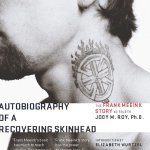
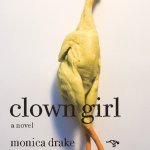
Some of my other all-time favorite Hawthorne covers by Adam:

January 26, 2017
CALIFORNIA CALLING wins First Runner Up in Red Hen Press nonfiction contest
Thrilled to have this recognition for my memoir manuscript!
[image error] Red Hen Press annual nonfiction book contest winners


![[image error]](https://i0.wp.com/nataliesingerwrites.com/wp-content/uploads/2017/09/redhenannounce.png?ssl=1)