Stella May's Blog
October 11, 2026
A Season of Gratitude: Celebrating Canadian Thanksgiving 🍁

By Stella May
There is something magical about autumn. The crispness in the air, the brilliant reds and golds of changing leaves, the comforting aroma of freshly baked pies, and the wonderful feeling of gathering with people we love.
For our neighbors to the north, this beautiful season brings a particularly meaningful celebration: Canadian Thanksgiving.
Tomorrow, October 12, Canadians across the country will gather around their tables to celebrate family, friendship, the harvest, and the many blessings life has given them.
But have you ever wondered why Canadians celebrate Thanksgiving in October, while we Americans wait until the fourth Thursday in November?
And did you know that the history of Canadian Thanksgiving may actually reach further back than the famous Pilgrims’ feast of 1621?
Let’s take a little journey into history.
A Thanksgiving That Predates the Pilgrims?When Americans think about the origins of Thanksgiving, we usually picture the Pilgrims and the Wampanoag people gathering in Plymouth, Massachusetts, in 1621.
But the Canadian story takes us back to 1578, more than forty years earlier.
That year, English explorer Martin Frobisher was searching for the Northwest Passage, a sea route through the Arctic that might connect Europe with Asia.
His expedition faced treacherous waters, dangerous ice, and unpredictable weather. After surviving these hardships, members of his expedition held a religious service of thanksgiving in what is now Nunavut, Canada.
It wasn’t exactly the Thanksgiving feast we imagine today. There were no elaborate tables laden with turkey, cranberry sauce, or pumpkin pie. Instead, the sailors reportedly dined on such humble provisions as salted beef, biscuits, and peas.
Yet the sentiment was familiar: gratitude for survival, safe passage, and the blessings of life.
Of course, the tradition of giving thanks on this continent began long before European explorers arrived. Indigenous peoples had celebrated harvests, nature’s generosity, and the changing seasons through their own ceremonies and traditions for countless generations.
Over the centuries, these different histories and customs helped shape the Canadian Thanksgiving we know today.
Why Does Canada Celebrate Thanksgiving So Much Earlier?
The answer is partly geographical, partly historical, and actually quite logical.
Canada’s harvest season generally arrives earlier than ours.
Because much of Canada lies farther north, its growing season is shorter. By early October, farmers in many regions have already gathered their crops, and the first hints of winter may be just around the corner.
It makes perfect sense to celebrate the harvest while autumn is still in its full glory, rather than waiting until late November, when snow may already be covering the fields.
But there is another interesting reason.
For many years, Canadian Thanksgiving didn’t have a fixed date. It was celebrated at different times, sometimes even in November.
In 1879, Thanksgiving became an annual national observance in Canada. Later, its timing became closely associated with November’s Remembrance Day, a solemn occasion honoring those who served and sacrificed in war.
Eventually, the two observances were separated, allowing each to have its own significance.
Finally, in 1957, the second Monday in October was officially established as Canadian Thanksgiving.
And that is why, while Americans are still planning Halloween costumes and contemplating Thanksgiving menus, our Canadian friends are already enjoying their holiday feast!
Different Dates, the Same Beautiful TraditionsDespite the difference in dates, Canadian and American Thanksgiving celebrations have much in common.
There is turkey, of course, often accompanied by stuffing, mashed potatoes, cranberry sauce, roasted vegetables, and that irresistible autumn favorite—pumpkin pie.
There are family gatherings, long conversations around the dinner table, laughter, memories, and perhaps a little friendly disagreement over who makes the best stuffing.
Some families celebrate on Sunday, others on Monday, but the spirit remains the same.
And isn’t that the wonderful thing about Thanksgiving?
It isn’t really about the turkey or the pies, although I certainly wouldn’t turn down a generous slice of pumpkin pie!
It’s about pausing for a moment in our busy lives and remembering what truly matters.
The people who love us. The friendships that enrich our days. The small kindnesses we sometimes overlook. The challenges we’ve overcome and the opportunities still waiting ahead.
And perhaps most importantly, it’s about recognizing that even in difficult times, there is usually something worth being thankful for.
A Special Thanksgiving Wish to My Canadian Friends
I have quite a few wonderful Canadian friends, and this post is especially for you.
Although we may live on opposite sides of a border, friendship has never cared much about geography. A kind word, a shared laugh, a thoughtful message, or a helping hand can travel any distance.
And for that, I am truly grateful.
So, to all my dear Canadian friends and readers, I wish you a very Happy Canadian Thanksgiving!
May your homes be filled with warmth, your tables with abundance, and your hearts with love and gratitude.
May the coming year bring you good health, happiness, prosperity, and countless reasons to smile.
May your dreams continue to grow, your friendships flourish, and your blessings multiply.
And may you always have someone special beside you with whom to share life’s most precious moments.
Happy Thanksgiving, Canada! 
With warmest wishes and gratitude,
Stella May
P.S. Whether you celebrate Thanksgiving in October or November, I’d love to know: What is one thing you’re especially grateful for this year? Share your thoughts in the comments. After all, gratitude is even more beautiful when we share it.


October 7, 2026
The Stories We Carry Into Autumn

Some books end when we close the cover. Others keep us company for weeks, months, or even years.
We might forget a minor character’s name or exactly how a particular scene unfolded, yet remember how the story made us feel. A conversation comes back to us while we’re driving. A character’s difficult choice crosses our mind when we face one of our own. We look at the book on the shelf and feel the urge to open it again.
As October begins, I’ve been thinking about those stories—the ones that stay with us after we have moved on to something else.
Autumn seems to invite that kind of reflection. Even here in Florida, where the weather doesn’t always cooperate with the calendar, the season offers a lovely excuse to settle in with a book. The evenings grow darker a little earlier. Fall decorations appear. A familiar reading corner becomes especially inviting.
And sometimes, choosing what to read next leads us back to what we have already loved.
When a Character Becomes Someone We RememberWhat makes a fictional person stay with us?
I don’t think it always has to do with how admirable they are. Some of the most memorable characters frustrate us. They misunderstand someone who loves them. They keep a secret too long. They make a choice we desperately wish they would reconsider.
But we understand enough of their fear or longing to keep turning the pages.
We begin to see the person beneath the mistake. We hope they will find the courage to change, and when they finally do, it matters because we have watched them struggle.
That is one of the things I love about reading. A story can bring us close to someone whose life bears very little resemblance to our own. Their circumstances may be unfamiliar, but a particular feeling is instantly recognizable: the ache of missing someone, the embarrassment of being misunderstood, or the hope that a damaged relationship can still be repaired.
A character becomes memorable when something about them feels true.
A Few Books That Have Stayed With MeThere are several books I still think about with affection.
The Extraordinary Life of Sam Hell by Robert Dugoni left me with that wonderful, poignant feeling that comes from spending time with a character whose life has touched you. Even after finishing it, I wasn’t quite ready to put the experience aside.
What the Wind Knows by Amy Harmon appealed to my love of time-travel stories, but its connection between a granddaughter and her grandfather gave it an especially tender place in my heart. I love the possibilities of moving between eras. What holds me, though, is the human connection at the center of the journey.
Then there is Lisa Wingate’s Before We Were Yours. Some stories leave you thinking about the people in them long after you’ve finished, and this was one of those books for me.
More recently, I absolutely loved Charles Martin’s When Crickets Cry. Heartbreaking and uplifting, it reminded me how deeply a novel can affect us when we allow ourselves to become involved in its world.
These books are different from one another, yet I remember each as more than a plot. I remember the experience of reading them, and the feelings that remained afterward.
There are also familiar companions I’m happy to return to, such as J. D. Robb’s In Death series. Following characters across many books brings its own pleasure. We get to know their habits, recognize the way they speak, and become interested in the small changes in their relationships.
Opening another book in a beloved series can feel like arriving somewhere we already know our way around.
The Stories I Carry as a Writer
Of course, I also spend a great deal of time with people who exist only in my imagination.
By the time I finish writing a novel, its characters have occupied my thoughts through countless ordinary days. I’ve considered what they want, what they’re afraid to say, and how they might react when life refuses to follow their plans.
Finishing their story doesn’t immediately quiet all of that.
Nika and Eli, Alex and Abby, Andrew and Scarlett, Maggie, the Rostoff family, Kira and Al—each has asked something different of me as a writer. Their circumstances vary enormously, but I have had to find my way into the feelings behind their actions.
A time-travel story may begin with the question of how someone reaches another century. Soon, though, I’m thinking about what that person has left behind, whom they might learn to trust, and what coming home will mean to them.
A family story may span many years, but its emotional weight can rest in a single encounter: a mother waiting to see her son, or someone standing outside a house with no idea how they will be received.
Those are the moments I continue to carry.
I hope readers find their own moments in my books, too. Perhaps a scene they want to revisit, or a character whose happiness feels especially important to them. It is a lovely thought—that someone I first met in my imagination might become a welcome companion for another person.
Finding the Right Book for the Season
I don’t believe we need to read a certain kind of book simply because it’s October.
Some readers want mystery as the evenings grow darker. Others reach for romance, family sagas, or a familiar favorite. Sometimes we have the energy to enter a demanding new story. Sometimes we want to spend a few quiet hours with characters we already love.
There is room for all of it.
For me, the pleasure is in making a little space to read without hurrying. A comfortable chair, a cup of something warm, perhaps Mozart, Chopin, or Rachmaninov playing softly nearby—and a book I’m eager to open.
Life provides enough reasons to rush. Reading gives us a chance to stay with a moment and see what it holds.
A Place on the Shelf—and in Our LivesWhen I look at the books I’ve loved, I notice how closely some of them are connected to the time when I read them.
We bring our lives to a story. Our experiences influence which character we understand, which scene moves us, and which words we remember. On a later reading, something else may catch our attention. The book is familiar, but we meet it with a little more life behind us.
That is part of the pleasure of keeping treasured books within reach.
This October, I’m looking forward to discovering new stories while keeping a place for the ones that have already given me so much enjoyment. There is always another book waiting, and occasionally an old favorite calling me back.
Which book—or which character—has stayed with you long after the last page? I’d love to hear what you’re carrying into autumn.
With love,
Stella May
October 4, 2026
A Toast to October: Food, Friendship, and Little Celebrations

October has a way of making an ordinary evening feel like an occasion.
A few pumpkins by the door. Something delicious baking in the oven. A table set for dinner, perhaps with a candle or two. Suddenly, staying home sounds like a wonderful plan.
Here in Florida, autumn doesn’t always arrive with crisp air and a landscape of red and gold. Sometimes we have to invite it inside. We bring out the fall decorations, choose something comforting to cook, and enjoy the season in our own way—even if the weather hasn’t quite received the message.
With Oktoberfest celebrations adding to the festive mood, I’ve been thinking about the pleasure of gathering around a table. There is something inviting about a celebration that makes room for hearty food, lively conversation, and another helping.
For my own toast to October, I want to share a recipe that comes with a special connection: chicken pot pie from my late friend Sharon Burke, who wrote under the pen name Sloane Taylor.
A Recipe Worth KeepingWhen someone we love is no longer here, the things they left behind take on a different meaning.
A recipe becomes more than a list of ingredients. We recognize a turn of phrase in the instructions. We notice a practical little tip. We see their name at the top of the page, and for a moment, the distance feels smaller.
That is part of what makes sharing Sharon’s recipe meaningful to me. Readers knew her as Sloane Taylor. I knew her as my friend, Sharon, and I’m happy to make a place for her here.
Her recipe ends with these words:
“May you enjoy all the days of your life filled with good friends, laughter, and seated around a well-laden table!”
What a lovely wish to leave with someone.
It also seems like a wonderful invitation for October.
We can get so caught up in everything that needs doing that we postpone the small pleasures. We’ll invite someone over when the house is tidier. We’ll make a proper dinner when the week is less busy. We’ll sit down and catch up when there is more time.
But a meal doesn’t have to be elaborate to be worth sharing. A warm pie, a few plates, and people who are happy to see one another can be enough.
Comfort Beneath a Golden CrustChicken pot pie feels especially suited to this kind of evening.
There is the golden pastry, of course, and that first spoonful of creamy filling beneath it. There are familiar vegetables, tender chicken, and herbs that make the kitchen smell welcoming while dinner is in the oven.
Sharon’s version uses refrigerated pie crusts, which makes it easier to bring to the table. She also included a homemade substitute for heavy cream—a useful addition for those moments when you discover that the one ingredient you need is the one you don’t have.
This isn’t a traditional Oktoberfest dish, but it fits the spirit of the gathering I have in mind: comforting food and time to enjoy it together.
So today, I’m sharing it with you in Sharon’s memory.
Sharon Burke’s Chicken Pot Pie ChickenCarrot chunks1 pound boneless, skinless chicken breastCelery chunksOnion chunksWater
Place the vegetables in a medium saucepan with enough water to cover the chicken. Bring to a boil, add the chicken, and reduce the heat to a gentle simmer. Cook until the thickest part of the chicken reaches 165°F on a food thermometer.
Remove the chicken to a plate. Discard the cooking water and vegetables. When the chicken is cool enough to handle, trim any excess fat and cut the meat into bite-size pieces.
The chicken preparation above has been adapted to include a temperature check.
Filling⅓ cup butter½ cup sliced celery½ cup chopped carrots⅓ cup chopped onion⅓ cup flourChicken stock: confirm quantity before publishing; attachment may indicate 1⅔ cups¾ teaspoon garlic powder, not garlic salt¼ teaspoon ground thyme½ teaspoon dried sage½ teaspoon dried parsley½ teaspoon saltFreshly ground pepper, to taste⅔ cup heavy cream*1 cup frozen peas; thawed is fineMelt the butter in the saucepan. Add the celery, carrots, and onion. Sauté over medium heat until the vegetables are partly softened and the onion is translucent, about 7–9 minutes.
Stir in the flour and cook for 1 minute, stirring frequently.
Carefully pour in the chicken stock while stirring. Scrape the bottom and sides of the pan to incorporate any flour residue.
Add the garlic powder, thyme, sage, parsley, salt, and pepper. Stir in the cream. Simmer over medium-low heat until thickened, about 5–10 minutes, stirring often to prevent burning.
Add the chicken and peas. Remove from the heat and let the filling cool briefly while preparing the crust.
Assembling the Pie2 premade refrigerated pie crusts1 egg yolk1 tablespoon milkPreheat the oven to 425°F.
Follow the directions on the pie crust package to prepare the pan for a two-crust pie.
Spoon the filling into the bottom crust. Place the second crust over the filling. Press the crusts together around the rim to seal, and trim off any excess pastry.
Mix the egg yolk and milk in a small bowl. Brush the mixture over the top crust, including the rim.
Cut 4–6 small slits in the top crust to allow steam to escape.
Bake for 10–15 minutes. Cover the edges with aluminum foil to prevent them from burning, then continue baking for another 30–35 minutes, or until the top is golden brown and the center of the filling reaches 165°F.
Let the pie rest for 10–15 minutes before serving so the filling can set.
Sharon’s Heavy Cream Substitute¾ cup milk⅓ cup butterPour the milk into a small bowl and let it lose its refrigerator chill.
Melt the butter over medium-low heat or in the microwave. Let it cool until lukewarm while remaining liquid.
Combine the milk and butter with a hand mixer until well blended.
Use the mixture as a one-for-one substitute for heavy cream in cooked dishes. For this pie, measure out ⅔ cup of the prepared substitute.
This substitute will not work as whipping cream.
A Place at the Table
As a writer, I spend a great deal of time thinking about the moments that bring people closer. Often, those moments happen in familiar places. A kitchen. A dining room. A table where someone finally finds the courage to speak, or where laughter makes a difficult day easier.
Food belongs in those scenes because it belongs in our lives. We offer it when we want to welcome someone, celebrate with them, or give them a little comfort.
Sharing Sharon’s recipe is my way of remembering her this October. I hope someone reading this will make her chicken pot pie, enjoy it with people they care about, and pass the recipe along.
So here’s a toast to October—and to Sharon.
May there be something good in the oven, someone welcome at your table, and time enough to enjoy both.
What dish makes autumn feel like autumn to you? And do you have a treasured recipe from someone you miss? I’d love to hear about it.
With love,
Stella May
September 30, 2026
What I’m Reading Between Writing Sessions

When I’m writing a book, my characters have a habit of following me everywhere. I leave my desk, but they don’t leave with the notebook. I think about them while I make coffee, do the dishes, or try to fall asleep. Sometimes a conversation I’ve been struggling to write suddenly becomes clear when I’m doing something else entirely.
I love living with a story that way. I also need the pleasure of stepping into a world I didn’t create.
That’s when I become a reader again. I can open a book without knowing what the author has planned. I can be surprised by a character’s decision, worry about what might happen next, and tell myself I’ll read one more chapter before discovering how late it has become.

I recently finished Mad Mabel by Sally Hepworth, and I am completely in love with this book. I won’t give away the story, because I enjoyed discovering it for myself and would want another reader to have that same experience. I’ll just say that it has stayed in my thoughts since I finished it. I catch myself wanting to return to it, even though I’ve already turned the last page.
As a writer, I can’t help admiring a book that does that. I spend so much time trying to create characters readers will care about. Then I pick up someone else’s novel, forget all about my own work for a while, and remember what it feels like to be carried along by a story. It’s a wonderful feeling.
I also adore J.D. Robb’s In Death series. Reading a book in a favorite series is a different kind of pleasure. Part of the joy is anticipation: I already know I want to be there, and I’m eager to find out what awaits me this time. Even after a busy writing day, I can find myself looking forward to those pages.
I don’t read only to study how other writers tell stories. In fact, the happiest reading hours are the ones when I forget to think like a writer at all. I’m simply curious. I care about the people on the page. I want to know what happens. When a book keeps me up later than I intended, I’m quite willing to forgive it.
There’s usually music in my day, too. I listen to classical music constantly, especially Mozart, Chopin, and Rachmaninov. I’m not sure whether it helps me write. I wish I could say that putting on a particular piece solves a stubborn chapter, but writing has never worked so neatly for me.
Sometimes the music fades into the background while I’m concentrating. Sometimes I notice it and pause to listen. And sometimes I realize I’ve been sitting at my desk for hours and am glad the room hasn’t been silent. Perhaps that’s enough of a reason to keep playing it.

Reading and music each give me something I value during a writing day. A book lets me follow another imagination wherever it leads. Music keeps me company while I find my way through my own. Neither asks me to produce a single word.
I think writers need that freedom as much as anyone does. We need time to enjoy a story without taking it apart, and time to listen to something beautiful without asking whether it’s useful. Then, when we return to the page, we bring all of ourselves with us: the reader, the listener, and the person still wondering what their characters will do next.
So lately, between my writing sessions, you’ll find me thinking about Mad Mabel, returning to J.D. Robb’s In Death series, or listening to Mozart, Chopin, and Rachmaninov. I’m enjoying every minute of it.
What are you reading these days? And do you like to have music playing while you read or work?
September 27, 2026
The Character Who Surprised Me: Maggie Coleman

Sometimes a character enters a story so quietly that I don’t realize how much she matters until I find myself thinking about her long after I’ve closed my writing notebook.
That’s what happened with Maggie Coleman.
When I first imagined Maggie, I thought about the family around her: Nika and Eli, the people who had come before them, and the extraordinary events that had shaped all their lives. Maggie had grown up surrounded by love, but also by questions no one was quite ready to answer. She knew her family. Or at least, she believed she did.
As I spent more time with her, I began to wonder what growing up in that house would be like from her point of view. What little things would she notice? Which conversations would stop when she entered a room? Would she ever sense that the people closest to her were carrying a secret?
A character becomes especially interesting to me when I can see the moment her understanding of the world begins to change. For Maggie, one of those moments comes on her eighteenth birthday.
Nika enters her room carrying two gifts. One is an old tin can filled with Maggie’s childhood “secrets”—the small treasures a little girl once thought important enough to hide away. The other is a jewelry box containing a long string of pearls. On another birthday, those gifts might have led to laughter and happy memories. This time, Maggie has just learned that her mother is a traveler from the future.

I keep returning to the image of the two of them in that room. Nika knows that Maggie has questions. Maggie may not yet know how to ask them. The tin can holds pieces of the childhood she understands, while the pearls come with a family history she is only beginning to discover.
What draws me to Maggie is everything that happens after the revelation. Learning a secret doesn’t instantly tell you what to do with it. Maggie still has to look her mother in the eye. She has to decide which memories feel different now and which ones remain exactly as they were. She has to find her own place in a story that began long before she was born.
I’ve loved writing the people who came before her. Following Maggie lets me see them in a new light, through the eyes of someone who loves them deeply but wants answers from them, too. She has her own hopes, her own fears, and choices that no one else can make for her.
That’s how she surprised me. I thought I knew the shape of her place in the story. Then I pictured her standing before a mirror with those pearls around her neck, looking at a young woman whose future suddenly seemed much larger—and less certain—than it had the day before.
I wanted to know what she would do next.
Have you ever finished a book and wished you could follow one of its supporting characters into a story of their own?
And here is a short except from A Mission In Time Book 6 that will be released on November 17th:
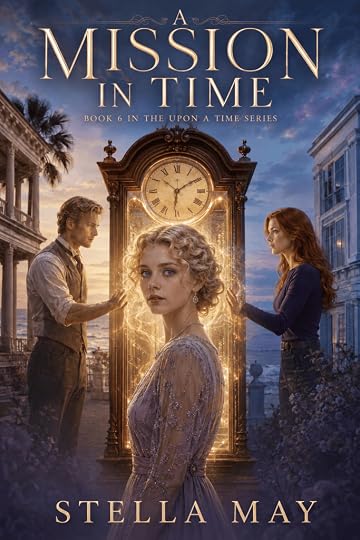
Mesmerized, Maggie stared at her elegant, sophisticated mother, and tried to envision her in jeans, cap, with a toolbelt around her slender hips. Her imagination refused to obey. The picture she struggled to conjure in her mind simply defied that description. Briefly, she wondered if her mother still kept her old clothes. Maybe. Probably. And what of her toolbelt?
“What happened to it? Your toolbelt, I mean.”
“Oh, I still have it. I know it’s not wise to keep any objects from another time, but… I just couldn’t part with it. It’s one of my most treasured possessions.” Daisy curved her lips in a small, sad smile. “Your Uncle Alex gave it to me as a present when I passed my contractor exam.” She cast her eyes downward, as her face grew clouded with melancholy. Even the silence felt sad, mirroring her mother’s expression.
Uh-oh. Time to lighten the mood.
Maggie deliberately switched the subject. “I can’t believe you were a contractor, Mama!”
To her delight, her mother chuckled, then looked at her with a twinkle of humor in her eyes. Her face had lost all traces of sorrow, which pleased Maggie immensely.
“Not just a contractor, mind you, but the best historic restoration specialist in all of northern Florida. They called me the House Whisperer of Amelia Island.”
Unmistakable wistful notes crept into her mother’s voice.
“You miss it,” Maggie murmured softly.
After a moment, Daisy conceded, “Yes. Or I used to. Especially in the early days. I was bored out of my mind, didn’t know how to keep myself occupied. But then I found photography, and it became my passion. Still, once in a blue moon, I admit dreaming about getting involved in the process of restoring some old mansion…”
Her voice trailed off, then she shook her head. “Impossible, I know. But as my grandmother Verochka always said, impossible dreams are the only kind worth having.”
A bittersweet smile flickered on her mother’s lips; a faraway expression on her face hinted at memories of another time and another place.
Growing up, Maggie often heard the name Verochka. It always struck her as endearing and sweet and charming. Like poetry, or a soft melody, delicate and graceful. She wondered about her looks. Was she tall or petite? Blonde or brunette? Or maybe a redhead?
The only thing Maggie knew for a fact—Verochka had violet eyes, just like her, and her mother. She used to pester Daisy with the question: why was there not a single portrait of Verochka, or any of the members of her family? Her mother never answered, stubbornly evading the subject. Today, she finally understood why.
No, they weren’t estranged, as she’d thought for many years. They just existed in another time, in another century. In the distant future… Incomprehensible!
But no matter how much her brain struggled, her heart and her soul had already accepted what her mind refused to believe.
She gazed at her mother in breathless wonder. A time traveler. A woman who followed her heart despite the odds and dangers and fears.
A woman who leaped through centuries, defying science and reality, and tearing through the barriers of time.
A woman who dared destiny. A woman who loved so deeply and purely and selflessly, the Universe itself had to bend to her will.
My mother is a living, breathing miracle.
Maggie desperately wanted to learn about her mother’s family, the people who were related to her as well. But most of all, she wished to know more about Verochka.
“Mama, tell me about her. Tell me about your grandmother. What is she like?”
Daisy slowly lowered her gaze, but not before Maggie caught a glimmer of tears in her eyes.
“She’s wonderful. Amazing. Incredible. Classy and beautiful, adventurous and courageous, witty and spunky, with a wicked sense of humor. But her most endearing assets are her kindness, her fierce loyalty, and her immeasurable integrity.” A broken sigh later, Daisy softly finished, “There’s simply no words to describe her. She is… Verochka.”
September 23, 2026
When a New Book Leaves the Author’s Hands
There is a moment in the life of every book when it no longer belongs entirely to its author.
For months—sometimes years—the story exists in a private world. It lives in scattered notes, unfinished chapters, late-night thoughts, and conversations only the writer can hear. Its characters follow us through ordinary days. They sit quietly beside us while we make dinner, drive to the store, or try to fall asleep. They are never very far away. Then, slowly, the story takes shape. The empty pages begin to fill. Characters make choices we did not anticipate. Scenes we once imagined only faintly become real. A beginning finds its way toward an ending, and eventually, after countless revisions, corrections, doubts, and small victories, the book is finished. Or at least as finished as a book can ever feel to the person who wrote it.
And then comes the difficult part. We must let it go.
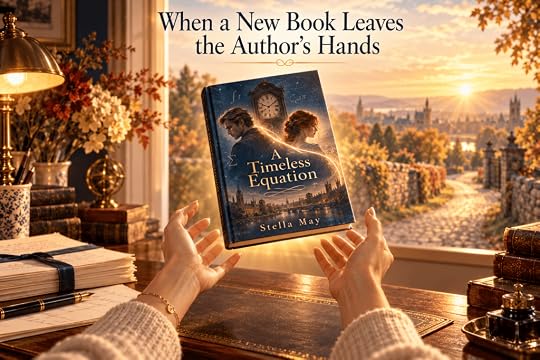
This week, A Timeless Equation left my hands and entered the world.
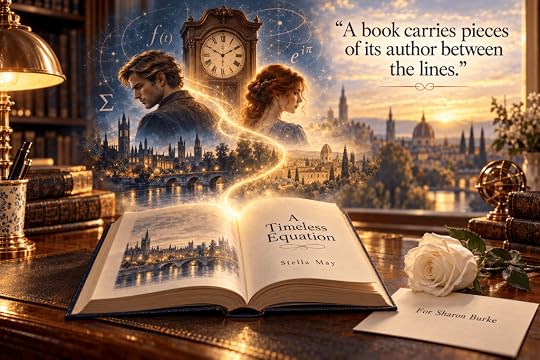
For a long time, Andrew Morris and Scarlett Fitzpatrick belonged only to me. I knew their questions, fears, frustrations, and hopes before anyone else did. I watched Andrew search for the sister who had vanished from his life. I followed him as mathematics led him toward something no reasonable man should have been able to believe. I watched Scarlett challenge him, understand him, and slowly become part of a journey neither of them could have predicted.
Now their story belongs to readers. That realization is both wonderful and a little frightening. Publishing a book is often presented as a moment of pure celebration. There is certainly joy in it—the excitement of seeing the finished cover, holding the first copy, and finally being able to say, “It is here.”
But beneath that joy lies vulnerability.
A book carries pieces of its author between the lines. Not always in the ways readers might expect. The characters are not necessarily reflections of us, and the events may be entirely imagined, but the emotions often come from somewhere real. Our understanding of love is there. Our experience of loss is there. Our questions about courage, regret, destiny, and hope are woven into the story, even when we never planned for them to appear.
Releasing a book means allowing strangers to enter that private world. They may love the characters we created. They may become angry with them. They may notice something we never intended or find meaning in a scene that once seemed small. That is the remarkable thing about stories: they change when they are read.
Every reader brings a different life to the page. A sentence that passes quietly for one person may stop another in their tracks. A character’s decision may remind someone of a road not taken, a person they once loved, or a choice they are still trying to make. Once a story leaves the author’s hands, it begins living many different lives. Perhaps that is not a loss of ownership at all. Perhaps it is the fulfillment of everything the book was meant to become.
A Timeless Equation began with an intriguing idea: What if mathematics could point toward a place where time itself had been broken? But as the story grew, I realized it was never truly about solving time. It was about the things no equation can measure. How far would we go for someone we love? What happens when logic brings us to the edge of the impossible? Can we trust an answer that the mind rejects but the heart recognizes?
Writing this book changed me, too. Every novel teaches its author something. Sometimes, the lesson arrives through research or the difficult work of improving the craft. Other times, it appears unexpectedly through a character’s struggle. Andrew reminded me that intelligence does not protect us from uncertainty. Scarlett reminded me that patience is not the same as standing still. Together, they reminded me that the most meaningful parts of life cannot always be proven before we choose to believe in them.
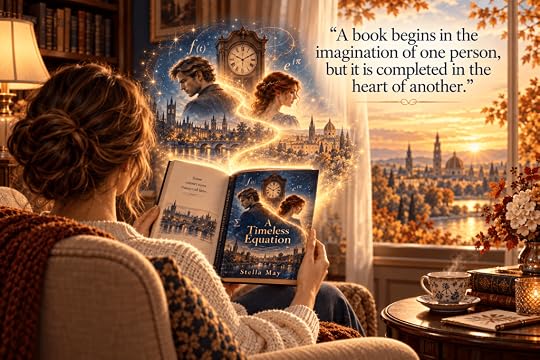
Andrew begins his journey searching for certainty. He wants proof. He wants explanations. Most of all, he wants to find his sister, Nika, who disappeared years ago without leaving him an answer he could accept. But some journeys do more than take us to a new destination. They change the person who began them.
This book also carries a particularly tender piece of my heart because it is dedicated to my dear friend Sharon Burke. Some people leave their presence in our lives so deeply that even after they are gone, we continue to carry them into every new season and every new chapter. Including Sharon’s name in this book was both painful and meaningful. It was my way of letting love remain where loss had created an empty space.
Perhaps that is another reason releasing this story feels so emotional. It carries imagination, memory, friendship, hope, and countless hours of quiet work. And now, all of it rests in someone else’s hands. When readers open A Timeless Equation, I will no longer be beside them to explain what I meant or tell them which scenes mattered most to me. The story must speak for itself. That is exactly as it should be. A book begins in the imagination of one person, but it is completed in the heart of another.
So today, I am letting Andrew and Scarlett go—not because their story matters less to me now, but because it is finally ready to matter to someone else. Their journey is no longer mine alone.
And I cannot wait to discover where it takes you.
September 21, 2026
The First Day of Autumn: A Season for New Stories
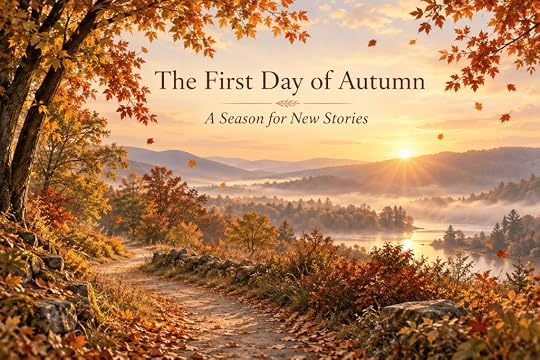
There is something quietly magical about the first day of autumn. The world does not transform overnight. The leaves do not all turn gold at once, and the air may still carry a trace of summer’s warmth. Here in Florida, autumn often arrives more as a promise than a dramatic change of scenery. But somehow, we sense it. The light begins to soften. The evenings arrive a little earlier. And something inside us whispers that one season is ending and another is ready to begin.
Autumn has always felt different from other seasons. Spring bursts into the world with color and possibility. Summer invites us to slow down, escape our routines, and linger beneath the sun. Winter asks us to retreat into warmth and stillness. But autumn encourages reflection. It asks us to look at what we have gathered during the year—and what we may finally be ready to release.
Perhaps that is why the falling leaves never seem entirely sad to me. They remind us that letting go is not always an ending. Sometimes, it is simply how we make room for what comes next. Trees do not cling desperately to every leaf. They release them when the time is right, trusting that bare branches will not remain empty forever. Beneath the quiet surface, life continues. Roots deepen. Strength gathers. A new season waits.

We experience seasons like that in our own lives.
There are times when everything feels bright and certain, when the road ahead appears clearly marked. There are also seasons of waiting, searching, and wondering whether we are moving forward at all. Sometimes, the changes happening within us are too subtle to recognize until we look back and realize how far we have traveled.
Autumn reminds us that transformation does not always need to be loud. It can happen in the quiet decision to begin again. It can happen when we finally put aside something that no longer belongs in our lives. It can happen when we return to a forgotten dream, forgive an old mistake, open our hearts after disappointment, or simply allow ourselves to hope once more.
As a writer, I often think of life in chapters and seasons. Some chapters seem reluctant to end. Others close before we feel prepared. Occasionally, a new story begins while we are still trying to understand the one that came before it. Yet every blank page carries possibility.
We may not know what the next chapter will bring. We may not know who will enter our lives, which road we will choose, or whether the dreams we have carried for years will finally find their moment. But perhaps we do not need to know everything before we begin.
My characters frequently discover this truth before I do. They search for answers, attempt to control the future, and convince themselves that careful plans will protect them from uncertainty. Eventually, however, they must take a step that logic alone cannot justify.
They must trust. They must believe. They must walk into the unknown.
This year, the first day of autumn is especially meaningful to me because it also brings the release of my newest novel, A Timeless Equation.
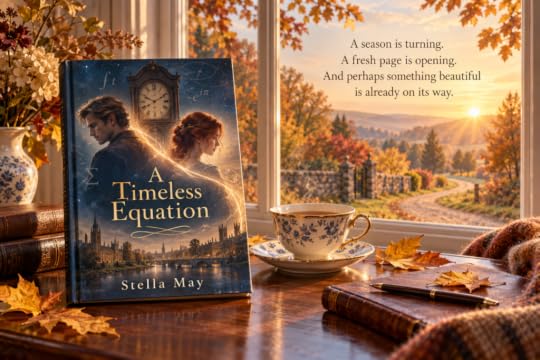
There is something wonderfully fitting about sending a new story into the world on the day a new season begins. Andrew Morris enters his journey believing that every mystery must have an explanation and every problem can be solved. But some truths cannot be contained within an equation—and some destinations can be reached only when we are willing to follow the heart. Like autumn itself, his story is about change, courage, love, and the willingness to cross an uncertain threshold.
Perhaps that is what every new season asks of us. Not to have all the answers. Not to know exactly where the road will lead. Only to take the next step.
So, on this first day of autumn, I hope you will pause for a moment. Notice the softer light. Welcome the faint change in the air. Think about what you are ready to release—and what new story might be waiting to begin.
A season is turning. A fresh page is opening. And perhaps something beautiful is already on its way.
September 16, 2026
Five Things to Know Before Reading A Timeless Equation

A few days before one of my books is released, I always find myself thinking about the journey that brought it into being—and about the readers who are preparing to enter its world for the first time.
By the time a book reaches publication day, I have lived with its characters for so long that they no longer feel imaginary to me. I know their fears, their secrets, their stubborn habits, and the truths they are not yet ready to admit to themselves. Letting readers meet them is exciting, but it also feels a little like introducing close friends and hoping they will be loved.
A Timeless Equation, Book Five in my Upon a Time series, will be released on September 22. Before it arrives, I would like to share five things about the story—without revealing the secrets waiting inside.
1. The Story Begins With a Brother’s LoveAt the center of A Timeless Equation is Andrew Morris, Nika’s younger brother.
Andrew is a mathematician—a man who believes that every problem has an answer if one is patient, disciplined, and clever enough to find it. Numbers follow rules. Equations can be tested. Patterns may be hidden, but they exist. His sister’s disappearance follows no rules at all. Nika seemingly vanished under baffling circumstances, leaving behind questions no one could answer. As time passes, others begin to accept that the mystery may never be solved. Andrew cannot.
His determination to understand what happened to Nika becomes the driving force behind his work. He is not interested in theories for the sake of intellectual curiosity. He is searching for something deeply personal: a path to the sister he refuses to believe is beyond his reach.
Long before this becomes a story about time, it is a story about family—and about the promises we make to the people we love, even when they are not there to hear them.
2. The Mathematics Matters—but the Heart Matters MoreThe title A Timeless Equation reflects Andrew’s world. He trusts mathematics because it offers him order in a life disrupted by the impossible. But what happens when the numbers begin to suggest something that logic says cannot exist? Andrew’s calculations lead him toward a possibility too extraordinary to accept and too compelling to ignore. The equation may offer a path, but mathematics alone cannot prepare him for what waits at the end of it.
Numbers can reveal coordinates. They can expose patterns. They can point toward a door. But they cannot tell Andrew whether he should open it. That decision requires something far less predictable than logic. It requires courage, faith, and the willingness to risk everything for an answer he may not be ready to receive.
This is one of the ideas I loved exploring while writing the novel: even the most rational person may eventually encounter something that cannot be understood by reason alone.
Sometimes, the mind takes us as far as it can. The heart must carry us the rest of the way.
3. Scarlett Has Questions of Her OwnScarlett Fitzpatrick is a curator, a woman trained to examine the past through the objects and stories it leaves behind. She understands that history is never truly silent. It speaks through paintings, documents, photographs, forgotten belongings, and details that seem insignificant until someone looks closely enough.
Scarlett is intelligent, observant, and grounded. Yet she, too, becomes drawn into a mystery that challenges everything she believes she knows about the past. Her connection with Andrew begins amid questions neither of them can answer easily. He is searching for his sister. Scarlett is trying to understand discoveries that should not be possible. Together, they begin following clues that connect mathematics, art, history, and Coleman House in ways neither of them expected.
But Scarlett is not simply waiting beside Andrew while he follows his quest. She has her own voice, her own strength, and her own reasons for needing the truth. Andrew may be determined to solve the equation, but Scarlett helps him understand that not every answer can be calculated—and that finding what we have lost is not the same as knowing what to do once it is found.
4. Coleman House Still Has Secrets to Reveal
Readers of the Upon a Time series already know that Coleman House is more than a setting. It has witnessed love, separation, sacrifice, and reunion. Its rooms carry memories from more than one lifetime, while the grandfather clock at its heart continues to guard secrets that few people would ever believe.
In A Timeless Equation, the house once again becomes part of the mystery.
Andrew approaches it differently from those who came before him. He does not begin with faith in the impossible. He begins with calculations, coordinates, and the conviction that there must be a rational explanation. Coleman House is not particularly interested in rational explanations. There are places that seem to remember everyone who has passed through them. Places where the past never feels entirely gone and where time appears thinner somehow—as though one moment might still be able to reach another.
For Andrew and Scarlett, the house offers both possibility and danger. It may hold the answer they have been seeking, but it will not surrender that answer easily.
And the grandfather clock is waiting.
5. Every Answer Comes With a PriceWe often imagine that discovering the truth will bring relief. Sometimes it does. But answers can also create new questions. They can demand choices we never expected to make. They can change our understanding of the past and leave us standing before a future that suddenly looks very different.
Andrew believes that finding the solution will be the most difficult part of his journey. It is not.
The true challenge begins when the impossible becomes real and he must decide how far he is willing to go—and what he is prepared to leave behind. That is the emotional heart of A Timeless Equation. It is not simply a story about whether time can be crossed. It is about what makes someone attempt the crossing in the first place.
How much would you risk for someone you love? Could you walk away after discovering that the impossible was within reach? And if you finally found the answer you had sacrificed so much to obtain, would it give you peace—or ask even more of you?
The Door Is Almost OpenA Timeless Equation is a story about mathematics and mystery, but it is also about siblings, family, grief, devotion, and a love that appears where it is least expected. It is about the courage to keep searching when everyone else has stopped. It is about the traces people leave behind and the invisible threads that continue to connect us across years, distances, and lives. Most of all, it is about the moment when a man who trusts only what he can prove must decide whether he is willing to believe in something impossible.
The equation has been solved. Coleman House is waiting. And on September 22, the door will open.
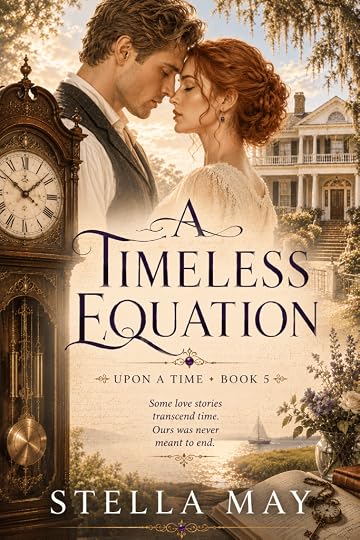
A Timeless Equation Book Five in the Upon a Time series Releasing September 22
September 13, 2026
The Courage to Keep Searching When Everyone Else Has Given Up

There comes a moment in almost every difficult journey when the voices around us begin to change.
At first, people encourage us. “Keep going.” “Don’t lose hope.” “You’ll find the answer.”
But as time passes and nothing changes, their optimism begins to fade. Encouragement becomes concern. Hopeful words give way to gentle suggestions that perhaps it is time to accept what cannot be changed.
And eventually, someone says the words we have been trying not to hear: “You have to let it go.”
Sometimes, they may be right. There are battles that exhaust us without bringing us any closer to peace. There are questions that may never be answered and doors that will remain closed, no matter how long we stand before them. But sometimes, the heart knows something that cannot yet be proven.
Sometimes, giving up would mean abandoning not merely a dream, but a part of ourselves.
When Hope Stops Making SenseIt is easy to keep searching when progress is visible. It is much harder when every road seems to lead nowhere. True perseverance begins after the reasonable amount of hope has run out. It begins when the facts are stacked against us, when other people have moved on, and when we can no longer explain—perhaps even to ourselves—why we still believe.
The world admires determination once it produces results. We celebrate the person who refused to surrender and eventually proved everyone wrong. What we rarely see are the lonely years before the victory—the unanswered letters, failed attempts, closed doors, and quiet mornings when that person had to choose hope all over again.
Continuing to search does not always look heroic. Sometimes, it looks like getting out of bed and trying once more. Sometimes, it means returning to a problem everyone else has dismissed as impossible. Sometimes, it means protecting a fragile thread of hope when even the people who love us are afraid it will break our hearts.
The Difference Between Hope and DenialThere is a delicate line between refusing to give up and refusing to face reality. Denial asks us to ignore the truth. Hope asks us to acknowledge the truth and still leave room for possibility. Hope does not promise that we will find exactly what we are seeking. It does not protect us from disappointment or guarantee that courage will be rewarded. It simply whispers that the story may not be finished yet. Perhaps that is why hope requires so much bravery.
To keep searching is to risk being disappointed again. It is to open the same wounded place in our hearts and admit that we still care. Walking away may sometimes feel easier—not because we have found peace, but because we are tired of hurting. Yet certain questions refuse to release us. Certain people remain part of us, no matter how much time has passed.
And certain mysteries seem to wait patiently for the one person stubborn enough to keep looking.
Searching Is an Act of LoveWe often think of searching as an intellectual pursuit—a quest for facts, proof, or understanding. But some searches begin in the heart. We search because someone matters. We search because a promise matters. We search because accepting the absence of an answer feels too much like accepting that what was lost no longer matters.
That is not always obsession. Sometimes, it is love refusing to become indifferent. Love can make us persistent in ways logic cannot explain. It can send us through old photographs, forgotten letters, family stories, historical records, and memories we have examined a hundred times before. It makes us notice the smallest inconsistency and wonder whether it might be the beginning of an answer.
Love says, “Look again.”
The Man Who Refused to Stop Searching
This kind of courage lies at the heart of my upcoming novel, A Timeless Equation.
Andrew Morris is a mathematician—a man who trusts reason, patterns, and answers that can be proven. But when his sister Nika disappears under circumstances no one can explain, logic fails him. Other people may learn to live with the mystery. Andrew cannot.
He continues searching, not because he knows he will succeed, but because giving up on the search would feel like giving up on his sister. His determination leads him toward an equation that should be impossible, a mysterious house, and Scarlett Fitzpatrick—a woman who may understand more about his journey than either of them initially realizes.
Andrew begins with numbers, believing that somewhere within them he will find the answer he needs. What he does not expect is that the search will ask far more of him than intellect. It will demand faith, courage, sacrifice, and the willingness to step beyond everything he believes he understands.
Because sometimes, the answer we are seeking changes us before we ever find it.
When the World Says It Is Time to StopNot every search ends with a miraculous discovery. Not every unanswered question becomes clear. Sometimes, courage means continuing. At other times, it means recognizing that we have done all we can and allowing ourselves to rest. Only the person making that journey can know the difference. But I believe there are moments when the quiet voice inside us deserves to be heard—even when it cannot offer proof.
The people who keep searching are not necessarily fearless. Often, they are frightened, exhausted, and painfully aware of everything they may never find. They continue anyway. Not because they are certain of the ending, but because something—or someone—is worth one more attempt. Sometimes, the mind declares that all possibilities have been exhausted.
And sometimes, the heart answers: “Not yet.”
As the release of A Timeless Equation approaches, I’d like to share a brief moment from Andrew’s journey—a glimpse of the determination that refuses to let him surrender his search.
The room looked like it had been hit by a hurricane.
Torn pages from his notebook littered every surface—the floor, the bed, the small writing desk. Papers everywhere, covered in frantic scribbles and abandoned calculations.
He sighed. What he wouldn’t give for a whiteboard and a couple of decent markers.
Adding it to his growing list of things to buy, he bent down and began gathering the scattered sheets.
Determined to solve the problem, Andrew had thrown himself headfirst into the formula. But no matter what approach he tried, the calculations refused to cooperate. The numbers made no sense. For days, he had fueled himself with coffee, trying to force clarity from exhaustion.
All he had to show for it was a pounding headache—and pages of meaningless figures.
Time and again, he arrived at the same sequence of numbers.
What am I missing?
He crouched, smoothing one page covered in dense calculations, and studied it again. Twelve digits in the first row. Thirteen in the second. What could that mean?
And then— It clicked. Coordinates. Longitude and latitude.
Of course!
“How did I miss that?” he muttered.
Springing to his feet, Andrew grabbed his iPhone and opened the Google Earth app. His fingers moved quickly as he entered the numbers. The result appeared instantly—a blinking red dot.
He froze. Then entered it again. Same result.
“I’ll be damned…”
If the numbers were correct, they pointed to a location right here on Amelia Island.
Excitement surged through him, sharp and electric. Was it possible? Had the formula actually worked? Had he solved it?
“Yes!” He pumped his fist, riding the rush of victory. “Eureka.”
Numbers never lied. What a fool he had been to doubt them.
Eager, breath quickening, he switched to Google Maps and pulled up the exact location. Then—
Everything inside him went still. The address stared back at him. The Coleman House Museum.
His excitement drained away in an instant. He frowned, staring at the screen.
Of all places…
That was not what he had expected.
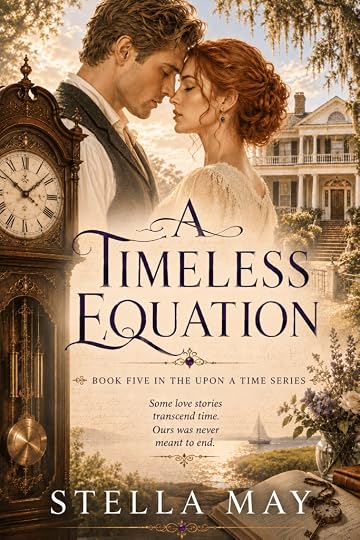
A Timeless Equation, Book Five in the Upon a Time series, releases September 22.
September 9, 2026
When Love Becomes Part of the Equation
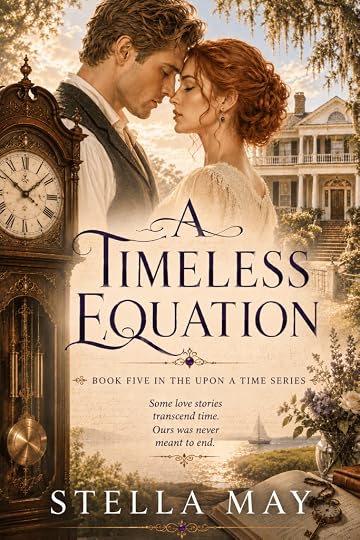
Can love be measured? Can destiny be calculated? And if someone you love disappears without leaving a trace, could mathematics help you find the place—or the time—where they have gone?
These questions lie at the heart of my upcoming novel, A Timeless Equation, the fifth book in my Upon a Time series.
The story belongs to Andrew Morris, a brilliant mathematician who has always trusted numbers more than emotions. Numbers are orderly. Predictable. They follow rules and lead to answers.
But there is one mystery Andrew has never been able to solve: the disappearance of his older sister, Nika.
To everyone else, Nika simply vanished under baffling circumstances. Andrew refuses to accept that explanation. He knows his sister would never leave without telling him, and he cannot bring himself to stop searching for her—even when every reasonable possibility has been exhausted.
Then he discovers a mathematical equation that may prove time is not as fixed as it appears.
For Andrew, the equation is more than an intellectual puzzle. It might be the only path leading to Nika. The only chance to discover what happened to her. And perhaps the only way to bring her home.
His search leads him to Scarlett Fitzpatrick, a museum curator whose knowledge of history may be as important as Andrew’s understanding of mathematics. Scarlett is intelligent, independent, and accustomed to protecting her heart. She has no intention of becoming entangled in Andrew’s impossible quest—or in the life of the quietly determined man behind it.
But some mysteries cannot be solved alone.
As Andrew and Scarlett follow the clues, the boundaries between history and the present begin to blur. Paintings hold secrets they should not possess. An old house seems to remember those who passed through it. And a grandfather clock may be more than an elegant relic from another century.
The closer Andrew comes to the truth, the more dangerous his search becomes. Because finding Nika may require him to challenge everything he believes about time, reality, and love.
I have always been fascinated by time-travel stories, but for me, the true heart of such stories is never merely the journey into another era. It is the reason someone is willing to make that journey.
Andrew’s reason begins with devotion to his sister. He refuses to forget her. He refuses to surrender to the impossible. Yet along the way, his search becomes something more. It brings Scarlett into his life and forces him to confront the one force he never expected to encounter in any equation: love.
A Timeless Equation is a story about family, destiny, courage, and the extraordinary things we are willing to risk for the people we cannot bear to lose.
The book will be released on September 22, and today I would love to share a small glimpse of Andrew and Scarlett’s journey with you.
 An Excerpt from A Timeless Equation
The redhead caught Andrew’s attention the moment he stepped inside the museum. Her dress—long, fluid, almost shapeless—moved around her tall frame like water, concealing more than it revealed. Deliberate? Or simply comfortable? Probably both.
The interior felt warmer than expected, despite the steady hum of the AC. A space this large must be difficult to cool. Uneasy from the strange episode outside—and his lingering reluctance to enter—Andrew nevertheless sharpened, alert and curious. About her.
Surrounded by a small group of tourists hanging on her every word, she smiled as she spoke—but fatigue showed in the fine lines around her eyes. And what a face. Even in profile, it was arresting. Dusky skin. A generous mouth. An upturned nose. That slightly off-center, pointed chin kept it from perfection. Good. Perfection was overrated. And boring.
Nothing about this woman was boring. Her features were vivid. Alive. Impossible to ignore.
A flame.
Her hair—deep, burnished red—caught the light streaming through the tall windows. Pulled into a high ponytail, it revealed the elegant line of her neck.
A swan’s, he thought absently. Beneath the loose dress, her figure suggested curves. Subtle. But unmistakable. His imagination, unhelpfully, filled in the rest. Andrew flushed.
What the hell is wrong with you?
She looked young. Too young. And here he was—thirty-two—mentally undressing her. Pervert.
He tore his gaze away, forcing himself to focus elsewhere. The furniture. The rugs. The grandfather clock. Anything.
It didn’t work.
Like a magnet, his eyes found her again. This time, she looked straight at him. Their gazes locked. Held. For a heartbeat. Two.
The air between them tightened—charged, electric. He felt it. A pulse. Real.
And then—
The clock.
The steady ticking grew louder. And louder.
Until it filled the room—deep, resonant, almost overwhelming.
They both froze. The sound swelled, then stopped. Abruptly. Silence rushed in. Thick. Heavy.
Broken only by the quiet, familiar tick…tock. Andrew held his breath.
What just happened?
Another episode? Or something else entirely? That connection—brief but undeniable—still hummed through him. Real. Too real to dismiss. And the clock…
That sound hadn’t been normal. It had felt like a warning.
He glanced at her. She was already speaking again, smiling at the departing group as though nothing had happened. Unaffected. Unbothered. As if she hadn’t heard a thing.
He exhaled slowly. Ridiculous. A trick of stress. Had to be it. What else could it be?
Shaken, he turned his attention to the clock. Positioned beneath the sweeping staircase, half-shadowed, it appeared perfectly ordinary. Polished mahogany. A gleaming face. A pendulum swaying in calm, measured rhythm. An object. Nothing more. Relief mingled with something else. Disappointment. For a moment there, he had felt…something extraordinary.
Almost—
No. Don’t go there.
His rational mind snapped back into place.
Get a grip, Morris.
He hadn’t come here for ghosts or fantasies. He needed information. Facts. About the house. About its last owner. That was all.
He scanned the room, looking for another guide. Another staff member. Anyone. No luck.
She was alone. Damn. He braced himself. No way around it. He would have to talk to her.
The last of the tourists filed out, leaving the foyer quiet. Empty. Just the two of them.
He slipped his hands into his pockets, stalling.
Move, Morris.
With a quiet curse, he forced himself forward.
She didn’t move. Didn’t smile. Just watched him approach. The light from the windows wrapped around her, soft and bright, obscuring her features. But not her expression. Startled. Guarded. Like a deer caught in headlights.
He slowed.
Is she afraid of me?
Maybe. Especially after the way he’d been staring. He stopped a few feet away. She stepped back immediately.
Message received. Andrew winced inwardly and summoned what he hoped was a non-threatening smile. Her lips remained pressed together. Her posture tense. Wary.
I wish I could see her eyes.
But the light hid them completely.
“Can I help you, sir?” she asked at last.
A Timeless Equation Book Five in the Upon a Time series Coming September 22