
Aditya Bhushan's Blog
June 27, 2024
Vijay Nayudu: A man who lived for cricket
“CK Nayudu par kaun book padhega aaj? (In today’s times, who will read a book on CK Nayudu?)”
 Vijay Nayudu with Nari Contractor
These were the words of Vijay Nayudu when I had spoken to him for the first time in 2017 requesting inputs to write the biography of his famous grandfather and India’s first Test captain Col. CK Nayudu. But once he was convinced of my endeavor, he put his heart and soul into the initiative, and I couldn’t have asked for a better guide than him for my first book. He had not only helped in providing the right contacts who could speak about CK (as he was called) but gave me an access to the treasure trove of articles, photos, letters and books on his grandfather. And when the time for the launch of the book arrived, he was present at each step, right from requesting the presence of cricketers and other eminent personalities to meticulously planning the minutes of the event.
Since, the news of his demise came in yesterday, all those memories are playing in loop in front of my eyes. My association with him happened thanks to my father who had worked along with him in Indian Oil Corporation.
But before joining the corporate world, he had carried on the rich legacy of his illustrious grandfather. Vijay Nayudu began his cricket career under the watchful eyes of CK at Indore. Vijay would score centuries at school cricket and come back home to describe the knock to his grandfather. Being the man that CK was, he would never allow Vijay to get complacent after a good knock and would rather focus on how the boy had been dismissed. The lesson was clear – never repeat the mistake.
With such guidance, Vijay made his Ranji Trophy debut for Madhya Pradesh against Vidarbha at the Nehru Stadium, Indore in 1966 aged 22-years. With a half-century in the second innings of this low scoring match, it was an excellent start. However, he was not able to score runs consistently post this to have a chance of representing India. Nevertheless, he carried on and played 47 First-Class games and also led Madhya Pradesh in the Ranji Trophy. Later, he also played club cricket for Bombay Gymkhana (a place he was fond of) and went on to play well into his 60s. During a function at Bombay Gymkhana in 2017, recalling his first impression of Vijay, noted historian Ramchandra Guha had said, “When I was asked to come and speak here, I agreed because it was about CK Nayudu and the first Test match on Indian soil. But I agreed also in part because of the person who was calling me. The person who was calling thought that I was a big shot and had written books and all. But he did not know that I agreed in part because the first Ranji match which I watched was one in which Vijay Nayudu was captain of Madhya Pradesh. He was one of my first cricketing heroes. I was 10 years old when I had watched him in Dehradun. He stood very close at silly mid-off, and I had never seen that before.”
 With Sunil Gavaskar at a function in Mumbai in 2023
In the Mumbai cricketing circles, he was a well-known and respected figure. He would go any distance to help those connected with his beautiful game. At Indian Oil, he was a pioneer as far as sports was concerned. He helped formulate a policy which would aid budding sportsmen and not just cricketers in their initial years. It is largely thanks to his efforts (and the support that he would have got from others) that several youngsters aspiring to make it big in the world of sports don’t have to worry about their bread and better once they are with Indian Oil.
A humble and down to earth person, he would rarely ask anything for himself. Once, seeing former cricketer Mehli Irani wait for a cab at Bombay Gymkhana, he had asked if I could drop the senior cricketer to Parsee Gymkhana in my car who was in his mid-80s. While we dropped Mehli Irani, Vijay Nayudu refused my request to take him to the station and casually remarked, “Arre main walk karke jaaonga (I will walk and go).” Mind you, he too was into his 70s then.
But for the last year or so, he remained fit throughout his life. In the last conversation that I had with him, his emotional lines were, “I have had my innings now. No regrets.”
Go well Nayudu Uncle, it was indeed one heck of a memorable innings!


March 12, 2024
Fandom amidst serene Dhauladhar
“The atmosphere of a place is like a mirror, reflecting the emotions and energy of those present.”
Amidst the serenity of the snow clad Dhauladhar ranges of Himalaya, the atmosphere at the Himachal Pradesh Cricket Association (HPCA) ground at Dharamshala was anything but calm.
 The picturesque Dharamshala stadium
It was electric. Mind you, this wasn’t a T20 carnival where sixes are hit at the drop of a hat, but it was good old Test match cricket. The key ingredient of this electric atmosphere were the fans – English men and women with their hats on who had travelled across seas to be here, Indian who probably clubbed watching a Test along with a vacation to the hills and last but not the least the locals of Kangra district. The fans were led by the Barmy Army who didn’t allow the failure of Bazball (as the aggressive strategy deployed by the England cricket team is called) dampen their spirits. And then there was the Bharat Army, followed by a newly formed group named as the Team India’s 12th Man Army.

But be it Bazball, presence of fan groups or the spectacular surroundings, it was a pleasant change for those who are used to empty and quiet cricket stadiums for Test matches in India. Now we don’t know if the people present here were purists and if they preferred the oldest format of the game over the T20s, but they did seem to enjoy hits as much as they applauded a solid defense. There was a good mix of fun and light banters. Ben Stokes dismissal in the second innings had Team India’s 12th Man Army sing ‘Bye Bye Bazball’. Well, few were not happy when Ravichandran Ashwin wasn’t brought on to bowl even though he was just one wicket shy of becoming the only bowler in the history of cricket to take 10-wickets in their centenary Test. Nevertheless, all was well as India won the Test comfortably.
Most of the fans stayed on and cheered the team long after the last English wicket had been taken. They left only after the police personnel asked them to vacate the stadium. But with them they had taken memories to cherish.
Even though the match ended in two and a half days as it is said, “A moment lasts all of a second, but the memory lives on forever.”
November 18, 2023
1996-2023: ODI World Cup through the eyes of a Sachin Fan
So, the D-day in the World Cup has arrived!
After a gap of 12 years and two ODI World Cups, the Indian men’s cricket team is in the finals. Incidentally, it was on this day in 1969, that Apollo 12 landed on moon and became the second one ever to do so. Now, it happens to be seen if the Indian team which has been unbeaten so far can take their fans to the moon with a third ODI World Cup title. But how does it feel for someone born in the mid 1980s who also happens to be a diehard Sachin fan?
This is ODI World Cup through the eyes of a Sachin fan…

1996: “Sachin hai kya?”
The first World Cup, that they probably recall is the one in 1996. With due respect to other players, for the Indian fans, that era was mostly about just one question – “Sachin hai kya?” (Is Sachin Tendulkar there?) Well, the great man did have an excellent World Cup scoring 523 runs at an average of 87.16. The fact that the next best scorer from India was Navjot Singh Sidhu with 178 runs just highlights the gulf between Sachin and the other Indian batsmen.
The extreme impact of this was seen in the Semi-finals against Sri Lanka which still remains a thorn in the heart of the Indian fans. When Sachin was still batting, commentator Geoffrey Boycott had remarked, “While he is there, he is making batting look reasonably comfortable.” But with his fall India lost seven wickets for 22 runs and slumped to 120 for eight from 98 for one.
1999: Eat cricket, Sleep cricket

By the time of 1999 World Cup, cricket craze was at its peak and as the Coca Cola campaign said, “Eat cricket, Sleep cricket, drink only Coca Cola”, the Indian fans did indeed eat and sleep cricket. The Indian team had found new stars in the form of Sourav Ganguly and Rahul Dravid who reduced the workload on Sachin. While it was a good team, it failed to qualify for the semi-finals, probably due to the heart-breaking 3-run-loss to Zimbabwe. Oh, by the way, Sachin had to miss this match due to the sad demise of his father. The only solace for the Indian fans was the victory over Pakistan amidst the Kargil war.
2003: “I tried so hard and got so far, But in the end it doesn't even matter.”

Between 1999 and 2003, a lot of changes took place not just in India but in world cricket as well. The match-fixing saga took away many big names. Team India under the able leadership of Sourav Ganguly was like a phoenix rising from the ashes. And after a disastrous start to their 2003 campaign when they were bowled out for 125 against Australia in their second league match, India won eight consecutive matches to enter the finals. Unfortunately, Australia and the number 125 came back to haunt the Indians again. They lost the finals by 125 runs after Ricky Ponting led Aussies had posted 359 for two, an almost unthinkable total to chase if not un-chasable. Of course, Sachin emerged as the highest run-getter in the tournament, and his 98 against Pakistan was a knock for ages. But to borrow from Linkin Park, for Sachin it was like, “I tried so hard and got so far, But in the end it doesn't even matter.”
2007: Shhh..Did it really happen?
As far as the 2007 edition was concerned, the lesser spoken about it, the better. India failed to advance past the group stage after losses against Bangladesh and Sri Lanka.
2011: Dhoni finishes off in style
And then came the 2011 World Cup, being held in India after a gap of 15 years. We all remember Ravi Shastri’s immortal lines - “Dhoniiiiiiiiiii, finishes off in style, a magnificent strike into the crowd…..India lift the world cup after 28 years, the party starts in the dressing room and it's the Indian Captain who has been absolutely magnificent in the night of the final”.
Most of the 90s kids had become grown up men and passed from colleges, but it didn’t stop them from dancing all night long on the Marine Drive in Mumbai or Church Street in Bangalore. They had so far only heard about the 1983 World Cup victory from elders, but to experience it was surreal. The team carried Sachin on their shoulders during the victory lap around the Wankhede making the eyes of many fans moist.
2015: A sans-Sachin World Cup
The 2015 World Cup witnessed something that the 90s kid had never seen in their life – a sans-Sachin ODI World Cup. This was the first time since 1992 that India was playing a ODI World Cup without Sachin Tendulkar who had already retired. Well, the team lived up to the tag of defending champions being unbeaten till the semis where they yet again lost to the Australians.
2019: So near, yet so far
The next edition was a case of so near yet so far. For the second consecutive time, India faltered in the semis, this time against the Kiwis. The direct hit by Martin Guptill had only broken the stumps as MS Dhoni was short of his ground, but it also shattered the hopes of millions of Indians. About the runout, in an interview Dhoni had later said, “To me, that was the last day I played cricket for India (even though) I announced my retirement one year later. But the fact was, that day I retired.”
2023: We are here to rule
So, what is going on in the mind of the 90s Sachin fans in this World Cup? The way in which this Indian team has dominated the tournament is something that these people have never seen in their lifetime. Right from Rohit Sharma, KL Rahul, Shreyas Iyer, Mohammad Shami, Jasprit Bumrah, Ravindra Jadeja, everyone has been phenomenal. Also, Virat Kohli scaled the mountain of 50 ODI centuries, going past Sachin’s 49 which many thought would be ever broken.
Virat did win the heart of Sachin fans by bowing down to the master after reaching the milestone. Since then, the number of people participating in the Sachin vs Virat debate has gone down drastically like the AQI of Delhi after winter rains.
While the haze from Sachin’s Desert storm is still fresh in the memory of his fans, but those who once chanted ‘Sachin..Sachin’ would love to see King Kohli play a World Cup winning knock and Rohit lift the trophy.
Afterall, this King has the God’s blessings!
September 16, 2023
My Dadaji's trusted friend - Reader's Digest
Recently, when my father pulled out one Reader’s Digest book – Quiz Night for my one-year-old son to turn the pages and play with (since it had many colourful photos and cards), I saw Dadaji’s signature on the first page (Dadaji had this habit of signing on the first page of all his books along with the date). While my son turned the pages forward, it took me back on a nostalgic drive.

“A trusted friend in a complicated world” is the tag line of Reader’s Digest. Probably that’s what it was for my Dadaji (paternal grandfather) who was a Professor in Chemistry. Thanks to him that I was introduced to the wonderful world of Reader’s Digest.
One of my early memories of Dadaji’s house in Katihar (Bihar) is seeing my mother read the famous magazine founded by DeWitt Wallace and his wife Lila Bell Wallace. At first, I used to think that since Dadaji is a professor, he reads these, only to realize later that it had nothing to do with his subject of chemistry. In a bid to inculcate a reading habit in me, my mother would sometimes pass it on. The only things that I found interesting at the young age (ten or eleven) were the quotes and the joke section.
“Ee wala kitab bheja hai Reader’s Digest wala is baar"
With time, Dadaji’s collection organically evolved from magazines to hardbound coffee table books. On every visit, my father (an avid reader) would enthusiastically check with Dadaji about the latest addition to his treasure trove. Proudly Dadaji would say, “Ee wala kitab bheja hai Reader’s Digest wala is baar (This is the book that Reader’s Digest has sent).” Hearing this as a kid, I had thought, “Wow! Looks like Dadaji is friends with Reader’s Digest folks.”
Well, not sure about the folks, but Reader’s Digest definitely seemed to be one of his best friends. So much so that once he had refused my father from taking away the World Atlas (which was a new addition to his collection). If my memory serves me right, he had said something like, “Yahin padh lo jitna padhna hai, lekar mat jao (Read how much ever you want here, but don’t take it)”. It required an intervention by my grandmother for dad to have his way. Finally, a reluctant Dadaji had said with a smile, “Dekho le to jaa rahe ho, lekin sambhaal kar rakhna (Now that you are taking it, keep it properly).” Although, I never read it completely, but in the pre-google days, it did help me a lot in my school geography.
“Dekho le to jaa rahe ho, lekin sambhaal kar rakhna"
This incident opened the floodgates for my dad and on subsequent visits to Katihar, he would pick one collector’s edition book much against Dadaji’s wishes. At times on the promise that it would be returned on the next visit. But I don’t remember it happening ever. As they say, “Promises are meant to broken”. The only solace for Dadaji was that his books were in good condition and were being taken care of properly. With this new found confidence, sometimes he also gave books to us, like once he had given me one on computers. So, the bookshelf at our house started becoming richer with collections like – Great Mysteries of the Past, The World at Arms and many others.

With time, many more books have been added to our bookshelf. But whenever I look at the Reader's Digest collection, it does remind me of the good times spent with Dadaji. While all those books are special. But the one book which is my prized possession today is Reader’s Digest 50th Anniversary Treasury. Quite surprisingly, I had never seen it when he was around, and I had to do my own negotiation with my uncle to allow me to take it with me post Dadaji passed away. A rare book in itself, it has Dadaji’s signature (dating back to 1965) as well as my father’s name on the first page (written by my father itself).

Speaking of names and signatures, as I was fondly remembering these and telling my wife stories about it that day, my nostalgic journey was suddenly interrupted by my son who was keen on leaving his mark on our hereditary collection. But by then, I had travelled quite a bit down memory lane.
And like Jhumpa Lahiri had written, "That's the thing about books. They let you travel without moving your feet."
June 26, 2022
1983 World Cup Diaries: A Family Wedding or Kapils Devils?
There are days which defines the sporting future of a nation. 25th June 1983 was one such for Indian cricket. As it usually happens with such momentous occasions that one after another stories keep on getting associated with it. So, it’s not a surprise that even after 39 years, we keep on hearing new anecdotes. Every Indian who used to follow sports or even otherwise has something or the other to narrate when Kapil Dev lifted the World Cup on the Lord’s balcony.
Well, it was still two years before I arrived into this world, and I have only listened to the numerous accounts of people about where they were when history was made. One such is of my mother which she told me recently.
Now, I would call my mother a sports follower but surely not a die-hard fanatic. As a result, I found this episode even more intriguing.
The plot of the story is in my mother’s hometown Patna. It was the wedding of her cousin brother and like the rest of the world, no one in the family had given India any chance of making it to the finals, leave alone winning it.

But by the time it became clear that the Indian team would be up against Clive Llyod’s men on my maternal uncle’s D-day, it was too late. All the arrangements had been made and no thoughts to re-schedule the wedding was even remotely entertained. Afterall the auspicious day when all the stars were in alignment had been chosen post consultation with the Pandits. Who knew that the stars were in alignment not just for my uncle and to-be aunt but for Indian cricket as well?
Fast forward to the D-day, my mother was probably more excited about events unfolding miles away in London than the wedding of her brother. But unfortunately, the start of the match wasn’t as per hers or the Indian teams’ expectations. The crowd near the TV in my grandfather’s house slowly but surely started to disperse with the fall of every Indian wicket. There was chaos both in the house as well as in the Indian team dressing room. By the time the Indian innings ended, the Indian fans were disappointed. My mother got ready and had left for the baraat with little hopes of an Indian victory.
While the wedding rituals continues, my mother kept a tab at the score through relatives who were listening to the radio commentary. With the fall of every West Indies wicket, she was getting excited at the same time ruing the fact she was missing live action on television. Of course, had she told anyone that she wanted to stay back in the house to watch the match rather than witness her brother tie wedding knots, she might have been labelled as anti-social if not mad.
By now, most of the guests were equally interested in the happenings on the 22-yards strip in Lord’s. When Mohinder Amarnath cleaned up wicket-keeper Jeff Dujon, the score read as 119 for seven. And now, both the completion of wedding and the decimation of the World Champions was a mere formality.
Probably around the same time, my mother conveyed best wishes to her cousin and decided to rush back home. She told her sister that she wouldn’t miss the moment when Kapil lifts the World Cup for anything. As she reached home, she ran in her saree with heels in her hand to the room on first floor in the house which had TV. She could barely get back her breath to normal, when Amarnath had Michael Holding out LBW. And she jumped in joy!
India had become World Champions in cricket, and she was lucky enough to witness it live on TV. The next thing she recalls is the dejected face of tall Joel Garner as well as a West Indies supporter lying on the ground. Of course, like every other Indian she beamed with pride when Kapil held the World Cup trophy.
In today’s age, I am sure a live streaming would have been arranged the wedding venue, but those were simpler times when even having a TV at home was a big deal. And watching matches in this way had a charm of its own.
Post this she has witnessed India crowned as T20 champions in 2007 as well as ODI champions in 2011, but for her nothing can beat the euphoria of that red-letter day in the summer of 1983.
January 1, 2022
A Tandoori Evening with Nanaji
History of Tandoor food takes us back to the Indus valley and Harappan civilizations. Traces of tandoor cooking has also been found in ancient Egyptian and Mesopotamian civilizations. And then you had the Mughals who were fond of cooking in tandoor. The word tandoor itself comes from the Akkadian word tinuru (tin - mud, uru - fire). But my introduction to tandoor happened sometime in the early 1990s courtesy my Nanaji (maternal grandfather).
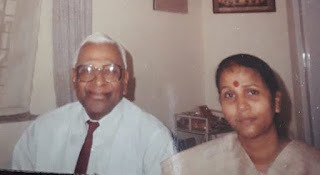 Nanaji with my mother
Chhat par aiye, kuch naya banvaye hain
During one of our visits to Patna, in great excitement he told us, “Chhat par aiye, kuch naya banvaye hain (Come to the terrace, there’s something newly made)”. By then I had been used to seeing something or the other constructed newly on every trip in his two storey house which he had fondly named Ashiana. But even then, tandoor wasn’t something that I was expecting.
Mind you, those were not the days of grill on your table. Although, I do remember having Tandoori chicken or Naan at restaurants. My mother would sometimes cook Litti or Kebabs on charcoal or dried cow dung cakes. But I had not seen an actual Tandoor.
Gunni, Tandoor jalwane ka intezaam karvao
So, what Nanaji showed was a source of extreme amusement for me. He asked, “Kya khaoge baua? (What will you have son?)” Normally, this question would have resulted in a series of demands from me. But this time around, the only thing that I could manage was a smile in response. Of course, I didn't know what all could be cooked in it. Then Nanaji asked one of my Mamas (maternal uncle), “Gunni, Tandoor jalwane ka intezaam karvao (Gunni, make arrangements for the tandoor).”
I jumped in excitement hearing that things like Tandoori Chicken or Naan could actually be made at home. Nanaji went to his clinic and as the day progressed, other elders were involved in the arrangements and a chef was also called from outside to cook in the Tandoor. My cousins and me spent the entire day running around the house and seeing what was happening around the Tandoor.
Honestly, I couldn’t wait to see the tandoor lit up and cooking being done in it. So, when the evening finally came, I was quick to take a position at the centre of action. Nanaji arrived along with my parents and other relatives. He took a stock of the preparations and nodded in acknowledgement. While the Tandoor was being lit up, Nanaji had few rounds of drinks with my dad and uncles.
Seeing me very close to the Tandoor my mother asked me to be a bit away for safety reasons. I might have taken a couple of steps back and then again moved forward as soon as my mother got busy in chitchat. And then for the next few hours, I was engrossed seeing marinated pieces of chicken and paneer enter the hot tandoor in a skewer. Slowly, the atmosphere was filled with the tandoori aroma and my enthusiasm. In between I would run and give updates to Nanaji on the status of cooking.
In my mind, I was witnessing something historic.
The process is more important than the product
Of course, I did enjoy the chicken, paneer and Naan (all of which tasted delicious), but the entire process was more enjoyable than the actual food. The precision with which the chef was undergoing his tasks seemed an art to me. That evening, I was a firm believer in the saying, “The process is more important than the product.”
Thereafter, an evening at Nanaji’s Tandoor would become a norm during our winter visits. On few occasions, I remember him telling my father, “Ek aur din rukiye, aaj Tandoor jalwaate hain (Stay for a day more, will have food cooked in the tandoor today).”
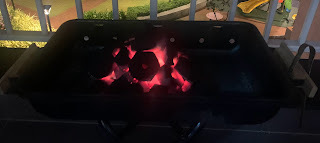
As the years passed, the awe that I had for Tandoor didn’t fade away. Today, I cook in a portable small barbecue at home quite often, sometimes to the dismay of my mother and wife. Both try to convince me to grill in an electric OTG.
Sometimes I agree and on other occasions fight it out with them, but I guess nothing has been able to take away my liking for barbecue. In hindsight, I think the seeds of that love was sown on that winter evening at Nanaji’s house.
Today on his birth anniversary, I am sure that he must be enjoying his Tandoori chicken with few pegs of scotch up there in the heavens and probably smiling at my fascination for Tandoor.
Cheers Nanaji! For the love of Tandoor!
September 17, 2021
Dadaji Memoirs: Kissa Lungi Ka
“Baba ye lungi change kar lijiye aap, koi aa raha hai (Baba, please change this lungi, some visitors are coming)”, said my dad to my Dadaji. In response, Dadaji just laughed and commented “Arre ismein kya dikkat hai?(What’s the problem in this?)”
I vaguely remember this conversation from my childhood when we had gone to visit my grandparents at Katihar. Now my father is not a fan of everything English or British, so he was not asking Dadaji to change to shirt-pant, but he was asking him to at least change to Kurta Dhoti. Of course, Dadaji was not comfortable with this request. He was quite happy with a shirt over his blue lungi.

“Professor ko First-Class compartment se nikala Lungi ke karan”
Then smiling, he opened his cupboard and told us an incident which involved him as well as his beloved lungi. It was a paper cutting with the headline, “Professor ko First-Class compartment se nikala Lungi ke karan”
I couldn’t control my laughter as Dadaji went on to explain what had transpired. It must have been some time in the 1960s or 1970s and Dadaji, a Professor in Chemistry was returning after taking a practical exam in some other city. He was travelling by train in the First-Class compartment. As the train left the station, Dadaji changed into his lungi from Safari suit and lied down to take a quick nap. At the next stop, there was some commotion and he saw a politician entering the compartment accompanied by some of his followers.
“Arre lungi pehen kar kaun First-Class mein safar karta hai? "
Dadaji was told, “Hatiye, hatiye, Netaji baithenge yahan (Move out, our leader will sit here).” At first Dadaji politely told the group that he had a reservation and hence he will not be moving out. “Arre lungi pehen kar kaun First-Class mein safar karta hai? Ticket dikhaiye. (Who travels in First-Class wearing a lungi? Show us the ticket)”, said one supporter.
Dadaji smiled at this statement and showed them the ticket. But they were still not convinced. Apart from showing loyalty to their leader, they were unable to digest the fact that a person in lungi could travel in First-Class. And that’s the reason they had chosen to select Dadaji’s seat. In their mind they were sure that this person would not have a valid ticket.
“Kahin likha hai ki Lungi pehen kar yaatra nahin kar sakte? (Is it written somewhere that First-Class passengers can’t wear a lungi?)”, quipped Dadaji. The politician as well as his supporters were not pleased with the response. It almost came down to manhandling when the Ticket Collector (TC) intervened. The TC requested Dadaji to make way for the politician.

Quite surprisingly, in pre-internet and mobile days, the news reached to some of his students very quickly and in the next stop, there was a huge crowd which had gathered in his support. Some senior Railway officials had to come on the site and placate both the parties. The politician finally apologized to Dadaji.
But Dadaji was still not happy with the treatment meted out to him. Few city journalists came to know about this, and the report was published in the newspaper, much to the embarrassment of the politician. As far as Dadaji was concerned, he was satisfied that now no one could question him on his attire.
Post narrating this story, he asked us, “Kya bolte ho? (What do you have to say now?)” Naturally, no one had any answers.
Today, as he celebrates his birthday up in the heavens, I am sure he is relaxing in his Lungi and shirt. And maybe, his grandkids can perform a lungi dance in his honor.
July 26, 2021
Dadi Maa Memoirs: Food, Ludo, Sweaters and more...
Grandmothers across the world have probably patented the task of feeding delicacies to their grandchildren. The pleasure that they derive in seeing their grandkids enjoy a meal prepared by them cannot be explained in words. And my Dadi maa was no different.
Trips to Katihar, a small town in Bihar where my grandparents lived was always a feasting extravaganza. Most people in my family have a sweet tooth and Dadi maa would make a variety of desserts for everyone. Be it Maal Puas, Jalebis, Sweet Boondis, Lavang Lata, Nariyal or Besan Laddoos, everything was homemade by her. Then there were the usual Bihari trademarks like Pedakia and Thekua. The surprising thing was that she didn’t like sweets herself in her young days.

But her culinary skills were beyond just sweets. Despite being a vegetarian, a variety of non-vegetarian dishes were part of her repertoire. Once she took hours to stitch spices and other ingredients inside the flesh of the chicken to make the most delicious Murg Mussallam that I have ever had. I have also heard stories about how she cooked deer meat or Bageri (Quail) which my grandfather brought from his numerous hunting expeditions. Many of these was then sent to family members in other cities as well. Seeing her cook, I too sometimes acted to cook in my childhood and give her my imaginary dishes which she happily pretended to eat.
I can go on and on about her culinary skills. I think the secret ingredient in her dishes was love for all of us. So yes, food is an integral part of my Dadi maa memories, but then it’s not just about that.
“Tum bhi jua khelne laga hai. Ab ludo nahin khelta hamar saath”
During my school days, she entertained me with a game of ludo or snake and ladders when all elders in the house were playing cards. Of course, she had to lose all the games to make me happy. She hated cards and any game of cards was jua (gambling) for her. As I grew up and started playing cards, she kept herself busy knitting sweaters and occasionally told me, “Tum bhi jua khelne laga hai. Ab ludo nahin khelta hamar saath (You have also started playing cards and you don’t play ludo with me now).”
 Dadi Maa and me
“Bahut sayana ho gaya hai”
Sometimes she teased me and asked whom I loved more – mom or dad. My response to this was to make her choose her favourite child and grandchild. She would laugh and say, “Bahut sayana ho gaya hai (You have become very clever).”
Another of her hobby was stitching and knitting. Most of my childhood days sweaters were hand woven by her. Once she saw me wearing a readymade one and said, “Aisa wala hum bhi bana sakte hain (I can also make like this).” I still have some of the sweaters made by her and I hope to preserve it forever. Till date, most of the cushion covers and tablecloths at the house in Katihar are the ones which were made by her. At one point of time my dad wanted her to pursue this art professionally, but business world wasn’t something that she believed in.
What she believed in was God and a substantial portion of her first half of the day was spent doing pooja. Whenever I asked her to have breakfast with me first and then do pooja, she used to get angry. I also questioned a lot of her rituals, particularly the one of not having non-vegetarian food on poojas and other auspicious days. At first, she would get irritated and blame it on the English education system, only to relent later and agree to have it made once the pooja was over.
 Dadi Maa in her young days
“Hamar pota ko buddhu bolegi”
For a good part of my life till my teenage years, I had seen her very active in the house. So, seeing her rest, on one of my college breaks, I poked, “Kya? Is baar kuch pakwaan nahin khilayeiga? (What? You will not treat me to delicacies this time?)” She immediately stood up and was ready to make sweet boondis for me. What I had not realized was that her health was deteriorating, and she no longer was allowed to work in the kitchen by the doctor. She agreed not to cook only after my mother assured her that she would cook as per her guidance and that I will be served the desired dishes. I remember getting a nice scolding for this from my mom.
Post my marriage, she was extremely pleased when my wife asked her for recipes. In between, when my wife joked with her to tell that her grandson (that’s me) is stupid, her eyes would widen in anger, “Hamar pota ko buddhu bolegi (You will call my grandson stupid?)” Then both enjoyed a hearty laugh about it.
Now, with her having made the decision to move up in the heavens, I have these and many more fond memories to treasure for the rest of my life. I am sure no delicious meal will be complete without me thinking about her and the words, “Theek se kha na (Eat well).”
September 16, 2020
Dadaji and the game of 29
“Mere saath to samajik nyaay hua hai, kya khelenge” (I have been given social justice, how would I play), often used to be the words of my Dadaji (paternal grandfather) while playing the game of 29 in cards (a common card game in the eastern part of India). What he actually meant by these lines was that he had got two cards from each of the four suits. It took me some time to decipher this code unlike my father who had been hearing this line for a longer period.
Cards are war, in disguise of Sport
[image error]
But this was enough to invite the fury of my father who would usually be in the opposite team. As per him, Dadaji was hinting his cards to his partner and in simple terms it was cheating. Before going any further, let me tell you that for Papa, the game of cards is the most serious activity on planet earth. Even today, he can get very angry at a wrong move by his partner or an attempt of cheating by his opponents, be it 29, Bridge or any other card game. Sometimes I feel that the English poet Charles Lamb had seen a game in our house when he wrote, “Cards are war, in disguise of Sport.”
Well, let me take you through a ‘normal’ game of 29 during my childhood in summer vacations at my grandparents’ place. Dadaji and Maa used to be in one team, with Papa and me being in the other. On few occasions my uncle also used to be part of the game replacing one of us. After giving me some leeway for my age, post two-three wrong moves by me, Papa would be angry. At first, Dadaji would just laugh at Papa’s frustration. But a raise in Papa’s voice would be met by Dadaji’s intervention, “Khel hai, ladne marne ke liye nahin khel rahe. Agar aise khelna hai to hum nahin khelenge” (It’s a game, we are not playing for fighting. If we are going to play like this, then I am not playing).
“Dimaag ka khel hai”
[image error]
Of course, my father couldn’t argue with him after a certain point. I used to thank Dadaji from the core of my heart at such moments. Post this, sanity would generally prevail, and we would be talking, laughing over the remainder of the games. This never meant that the same thing won’t be repeated the next day.
While Dadaji was trying to restore the decorum of the house, till today Dadi Maa never likes or plays cards. In fact, at first when I started playing cards, she would say to Dadaji, “Bas yahi baaki hai, bahu aur pota ke saath jua khelo” (Only this is remaining now that you start gambling along with your daughter-in-law and grandson). In response to this, Dadaji would just smile and say, “Dimaag ka khel hai, tumko nahin samajh ayega” (It’s a game of the mind, you won’t understand).
And not just about cards, he would impart other lessons as well while playing. Once I remember, we were in Darjeeling and in between one of the games I asked my mother that why was the salt on the table becoming wet. Being a chemistry professor, explaining the concept of deliquescence, Dadaji said in excitement, “Yahi sab samjhate hue to Jeevan guzra hai” (I have spent my life explaining these concepts).
Today, on his birth anniversary, I am certain that he is restoring peace in some game of 29 upstairs in the heavens along with passing his chemistry knowledge. As far as the game in our house is concerned, disputes still take place over Jacks and Aces.
August 21, 2020
My Padma Aunty - Of Ice Creams and Ayurveda
When we came to Bombay (now Mumbai) from Sambalpur (a small city in Odisha) in the summer of 1995, I was excited to the core. Till now I had only heard about this wonderful city in movies and coming from a small town, I came across something new every day. There were the tall buildings and cars which left me in awe.
Along with all this, the cosmopolitan city also brought me in touch with people from the length and the breadth of the country. One such person was Padma aunty who hailed from Tamil Nadu.

Belonging to the eastern part of the country and having not been exposed to people from the southern states earlier, I had little idea about them. For most of us, they were ‘Madrasi’, which is how my father used to jokingly address his friend and Padma aunty’s husband Col. CS Shankar.
Thanks to her, I was introduced to a Tamil cuisine beyond idlis and dosas
With time, as the friendship between Shankar uncle and my father grew, both the families (she had two daughters – Shruti and Varisha) also got along pretty well. We would often have impromptu dinner together and Padma aunty would treat us to many of her Tamilian delicacies. Thanks to her, I was introduced to a Tamil cuisine beyond idlis and dosas. “Hum curd rice nahin khayenge” (I will not have curd rice), my father always teased her, and aunty would ensure to make some Paranthas and Aloo bhujiya for him.
During those days, I was prone a lot to cough and cold. Seeing my condition for some time, once she gave my mother an ayurvedic powder. To my surprise, it worked, and my cough was cured. From then on, Padma aunty became the provider of ‘Sanjeevani booti’ for everyone in our house. Be it cough, bad throat or fever, she seemed to have an ayurvedic medicine for all of them. Once, when I had got measles and malaria, she comforted my mother, apart from suggesting some home remedies. And it was not just for me, she would really go out of the way to care for people.
But she had her unique ideas as well. She would never stop me from having ice cream even if I had a cold. The refrigerator in her house would always have ice-cream slabs of different flavors. Her view was that ice-cream doesn’t harm the cold and I just used to love her for this ideology. I often used this to convince my mother.
As I went to college, our interaction and meeting reduced. But whenever, I came home, I would definitely make it a point to meet her. She would pack homemade namkeens and sweets for me to take to the hostel. This ritual continued even post my college days and I rarely remember coming from her house without a box full of delicacies.
On one such visit to Mumbai, I recall driving my mother, Padma aunty and Varisha (aunty’s younger daughter) to Chembur for some shopping. I had newly learnt driving and the Mumbai traffic made me nervous. The car would often stop with a jerk as I was unable to manage a smooth shift of gears. During all this, in my impatience, I would quarrel with my mother, but Padma aunty not only stayed calm throughout but also encouraged me.

“Don’t worry, it is good. I will take it out and serve. Let them laugh.”
I have seen her take my side on many such discussions. One of the last conversations that I recollect having with her was post my marriage when aunty had come to our house for dinner. I had made Khowa (Mawa) and unfortunately it had turned out very hard. As a result, it was pretty difficult to scoop it out of the vessel and slice it. Everyone in the house was having a laugh at my expense, but aunty had said, “Don’t worry, it is good. I will take it out and serve. Let them laugh.”
Post this, I recall meeting her only once and by this time she wasn’t keeping too well despite being just in her 50s. Her memory was deteriorating day by day. Though we both spoke, I am not sure if she recognized me. How I wished for one of her ayurvedic medicines to bring her memory back that day.
“Koi baat nahin ji. Arre nahin aaye to kya hua”
After couple of years, I was informed that she was bed-ridden. Shankar uncle and aunty had shifted to Coimbatore. Being close-by in Bengaluru, few months back, I had rung up uncle to tell that I would come to meet aunty.
Unfortunately, I never made that trip and as the news of her passing away came last week, there was a flurry of emotions in front of my eyes. Not having met her for one last time at Coimbatore is a regret that I will carry to my grave. I am sure aunty would have just said with a smile, “Koi baat nahin ji. Arre nahin aaye to kya hua (Don’t worry if you couldn’t come)”.
What response can I give to that? As usual, I would have just looked towards her with a sheepish smile. Now that she starts her journey up in the heavens, the kids there would have a gala time with ice creams and what not.
As far as I am concerned, her fond memories will forever remain with me just like sweetness in ice-creams.


![[image error]](https://lh3.googleusercontent.com/-8xARef8xEqo/X2JeuG-6ksI/AAAAAAAALow/C2I7Kq8Wlq8gC7brrJHNSM_ARdqJm2ExACLcBGAsYHQ/IMG_1676.HEIC)
![[image error]](https://lh3.googleusercontent.com/-uGHs93vZbho/X2Je06b8m1I/AAAAAAAALo0/8Cyy_kVgBGcLNndofxBcnwm0NxSTNSecgCLcBGAsYHQ/IMG_4998.jpg)