Lucas Gabriel's Blog
December 16, 2018
My review of After the Ecstasy, the Laundry by Jack Kornfield
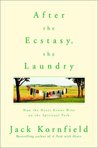 After the Ecstasy, the Laundry: How the Heart Grows Wise on the Spiritual Path by Jack Kornfield
My rating: 2 of 5 stars
First of all, I applaud Jack for the premise of the book, as I feel it is an important subject and I don’t think I have seen anything else devoted to it. I think it is a common and confusing experience when blissful transformative insights don’t last in the way that we had hoped. I liked the first half of the book. I liked hearing about the post-bliss struggles of various spiritual giants. While it is disappointing to know this happens, it is reassuring to know that it is part of the process and that there is not something wrong with you.
While I appreciated the caring tone of the book I was ultimately left disappointed. I was expecting Buddhist guidance in a similar vein as the teachings of Ajahn Chah. I had previously read Jack’s book “The Wise Heart” and was expecting something closer to that. My main complaint revolves around his take on enlightenment, and I would suggest that your beliefs on enlightenment will probably determine whether or not you like this book. While Jack does talk about blissful enlightenment experiences, he does not talk about using these insights as tools to eventually uproot all the causes of mental suffering. He instead talks about just accepting everything as it is, being fully present with your suffering with no need for personal transformation. This goes against what I find so helpful about Buddhism which is the last three noble truths: mental suffering has causes, it is possible to remove these causes, and there is a path that leads to the removal of these causes (the Eightfold Path). The impression I got from his book was that it is not necessary to see through delusions or remove defilements; we only need to accept how we already are and make peace with uncertainty. He also mentions doing spiritual practices just because we enjoy doing them rather than them leading us somewhere. I recognize there are paradoxes surrounding these issues (i.e. we need to let go of attachments without striving to let go of them) but I found his contributions to the subject of enlightenment very disorienting and disheartening from a Buddhist viewpoint. I felt like he was attacking the only real article of Buddhist faith: that the cessation of mental suffering is possible.
There was also no discussion that I recall on the different levels of enlightenment or the distinction between insights, samadhi, and enlightenment. In short, I was looking for some Buddhist guidance regarding post insight hardships and felt like I didn’t get it. To be fair, it is true that the book didn’t promise this type of Buddhist guidance but this was my expectation based on his background (note that the top goodreads genre for this book is “Religion>Buddhism”, so I don’t think I was the only one with this type of expectation).
My other complaints are that it was longer than necessary and seemed to lose its cohesion and direction towards the end. I also felt like it stayed on the surface and seldom dived down into the details or nitty gritty mechanics of our problems. There were a lot of nice stories and quotes but I felt like they were circling around something rather than going deeper and deeper into it. After hours of reading, I would be left thinking, what is the “takeaway” from this?
As an author myself, I dislike leaving bad reviews and appreciate much of the work Jack has done (online and in print). I also have a lot of respect for his background and realize that it’s possible that I have misinterpreted parts of his message (I’m all ears if anyone wants to help clear up my confusion…). However, I wanted to add my 2 cents since I felt like this was such an important topic and that there would be many others approaching this book in situations similar to mine.
All this being said, I do feel like there are some nice stories, quotes, and lessons in the book (the story about the lady eventually adopting her son’s killer was particularly moving!). Unfortunately for me, these nuggets were too few and far between to make up for the complaints I had with the book.
View all my reviews


December 6, 2018
My review of How to Win Friends and Influence People
 How to Win Friends and Influence People by Dale Carnegie
My rating: 3 of 5 stars
A lot of very good practical advice on skillful ways to deal with people. The title sounds a little manipulative and self-centered but this is not how the book actually is. It’s about how to get along well with others and create win-win situations for all involved. He actually advises against ever being insincere. Most of it is very simple and seems like it should be common sense after you hear it but I had been making a lot of the mistakes he points out. Originally published in 1936 but just as relevant today as it was back then. I enjoyed its old fashioned feel. He relies extremely heavily on stories to illustrate his points. Many of the stories and examples are very interesting but in my opinion he tells a few too many as it seems a little longer than necessary at times. Overall I definitely enjoyed it and feel that its lessons were very valuable.
View all my reviews
November 18, 2018
My review of Supernormal
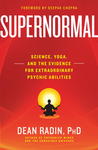 Supernormal: Science, Yoga and the Evidence for Extraordinary Psychic Abilities by Dean Radin
My rating: 4 of 5 stars
I really appreciate the work that Dean Radin is doing. This book is probably the best book I've read at making me realize that society's current views will one day be old and antiquated with future generations discovering errors that we currently take as unquestionable facts.
In regards to the subject matter and questions Radin raises, I give the book 5 stars. However, from a pure literary viewpoint I give the book 3.5 stars. I felt like the beginning part on The Yoga Sūtras of Patañjali went into too great of detail and went on longer than necessary. Since this book seemed to be aimed at the masses, I felt like more could have been done to make it more entertaining, especially when the book dived into the data. However, these are minor criticisms; overall I found the book very enlightening. It amazes me that so much evidence exists for things that the current pervasive world view seems to dismiss out of hand.
View all my reviews
August 29, 2018
Free ebook - How to be Happy and at Peace - ends Sept 1
 Free kindle book promotion! (ends Saturday Sept 1 at midnight)
Do you feel stuck in your search for happiness? Are you looking for a new approach? Do you want to experience why “true happiness comes from within” is a life-changing truth and not just a catchy slogan?
How to be Happy and at Peace will show you how to:
- Regain the natural happiness of your childhood
- Find liberation through understanding your true nature
- Develop clarity that can see through objections to happiness
- Use practical techniques to alleviate depression and anxiety
It also provides links to additional resources (many of which are free) that can further assist you on your journey.
Amazon US: https://www.amazon.com/dp/B078J8JSWP
Amazon UK: https://www.amazon.co.uk/dp/B078J8JSWP
Amazon AU: https://www.amazon.com.au/dp/B078J8JSWP
Amazon CA: https://www.amazon.ca/dp/B078J8JSWP
Amazon IN: https://www.amazon.in/dp/B078J8JSWP
Author website: https://www.lucasgabrielauthor.com/
FB pg: https://www.facebook.com/LucasGabriel...
Goodreads pg: How to be Happy and at Peace: A Guide to Inner Freedom
August 18, 2018
My review of The Geography of Bliss
 The Geography of Bliss: One Grump's Search for the Happiest Places in the World by Eric Weiner
My rating: 3 of 5 stars
I would rate this book 3.5 stars. This book promised to be funny and profound. It was definitely entertaining and funny but moments of profundity were fairly scarce. This read much more like a travel log with a happiness theme than a self help book. However, it was quite enjoyable to read and did offer some interesting insights on how different cultures view and approach happiness. If you are looking for an instructional manual on how to be happy, I would look elsewhere but if you are looking for some fun, light reading mixing travel and cultural experiences with occasional happiness statistics and philosophy then I would recommend this book.
View all my reviews
March 12, 2018
March 12th, 2018
I have found that one of the biggest challenges in making spiritual progress is not understanding the concepts but remembering them when they are most needed. There is a tendency to think that once you have read and understood something that you have progressed from those lessons and are ready to move onto new lessons. You then may be surprised when after a few months you are back to your old ways. Did you believe the lessons you learned at the innermost depths of your being or was it a superficial belief that can change along with your moods?
Be careful of the “more, more, more” tendency that prefers quantity over quality. Quality, in this case, means the degree to which you believe the lessons and have practiced incorporating them into your life. While it may be ok to read a self-help book as a novel initially, eventually I recommend reading it more like a study guide for life. Read just a few pages first thing in the morning and make an effort to focus on remembering and practicing those lessons throughout your day. While it is important for a musician to read books on music theory and performance techniques, one will not become a great musician until they have spent many hours practicing and applying what they have learned. It is not enough for them to understand it conceptually. Their fingers and body must also learn it. They have to become so intimate with it that it becomes natural and they can do it without even having to think about it. I think the same is true of spiritual progress.
Be careful of the “more, more, more” tendency that prefers quantity over quality. Quality, in this case, means the degree to which you believe the lessons and have practiced incorporating them into your life. While it may be ok to read a self-help book as a novel initially, eventually I recommend reading it more like a study guide for life. Read just a few pages first thing in the morning and make an effort to focus on remembering and practicing those lessons throughout your day. While it is important for a musician to read books on music theory and performance techniques, one will not become a great musician until they have spent many hours practicing and applying what they have learned. It is not enough for them to understand it conceptually. Their fingers and body must also learn it. They have to become so intimate with it that it becomes natural and they can do it without even having to think about it. I think the same is true of spiritual progress.