James Victor Jordan's Blog
August 19, 2022
My Lymphoma Year: A Memoir and a Guide by Joel Wapnick, Reviewed by James Victor Jordan
I give it Five Stars! Heartfelt for all, Essential for some.
 Author Joel Wapnick
Several years ago, I read and then wrote a short review of Professor Joel Wapnick’s thrilling, evocative debut novel, The View North from Liberal Cemetery. For months after I’d finished that excellent superbly written book, I continued to think about it and frequently mentioned it and highly recommended it many friends and colleagues, all of whom are avid readers and accomplished life-long students of literature. So naturally when I heard about My Lymphoma Year, I ordered a copy and had the time to read this past weekend. I expect I’ll be thinking and talking about and recommending this book too.
Other than a certainty based upon my having read The View that the writing in My Lymphoma Year would be enchanting, I wasn’t sure what to expect. What I received was a short extremely well-researched book, complete with footnotes detailing and expanding on the research that one would expect from an academic of Mr. Wapnick’s accomplishments. The footnotes manage not to be intrusive in any way. The book is partitioned into four parts: Preface, Diagnosis, Treatment, and Aftermath. Each part is divided into short pithy paragraphs. In part, this book may attribute its brevity to its lack of extraneous words.
At the outset, the heart of the memoir, I was a beneficiary of accomplished writing that came alive with conveyed keen senses of humor and irony, a story lacking melodrama that nonetheless deftly resonated with chords of heartstrings. But as the story moves from philosophical considerations of possible life or death outcomes to the treatment section, I was impressed by the way in which it was told with considerable details, details that brought me into the story, details that would be of considerable importance for those reading this book to take advantage of or to learn from its aspect as a “Guide:” exactly which drugs were used in the chemotherapy, when they were used, what did they do, what were or could have been their side-effects, their dangers, their benefits. Who the numerous doctors were, what were their specialties, what did they contribute to Mr. Wapnick’s treatment.
Mr. Wapnick’s doctors, his wife—who was there for and with him through his entire ordeal—and his daughter—who came with her wife from British Columbia to Cleveland to be near her dad during the latter months of his treatment, are characters whose personalities and the affections for them by the author and by them for him come alive in the story.
Joel Wapnick is a professor of music, emeritus, at McGill University, where he taught for thirty-seven years. He plays the piano and his devotion to his instrument becomes a theme in the story as well as a metaphor, for what is important and sustaining in life. Mr. Wapnick is also a champion Scrabble player, having won the World Championship, the North American Championship, and the Canadian Championship twice. Scrabble, like music, is an essential part of who Mr. Wapnick is, parts that helped him bear and survive the ordeal of chemotherapy.
In short, this memoir has the essence of what every excellent memoir should have: enchanting writing, details that enliven the experiences of the story, themes and metaphors that enrich the story, and interesting well-drawn characters the reader will care about.
The post My Lymphoma Year: A Memoir and a Guide by Joel Wapnick, Reviewed by James Victor Jordan appeared first on James Victor Jordan, Author.


July 22, 2021
Review by Chris Miller of Kirkus Reviews’ Review of “Another Bullshit Night in Suck City” by Nick Flynn
We are grateful to Chris Miller for submitting his review of the Kirkus Review of Nick Flynn’s memoir, Another Bullshit Night in Suck City.
Chris is the author of the terrific short story, “Testicalia” published here. The opinions expressed in this review are Chris’s, not mine. But I will say that this is very creative and bold writing, a literary stream of consciousness that I greatly admire.
1995: I spend a few days in Boston. Fly down with my boss for this huge IBM conference on multi-language support for OS/2. Get my own suite on like the twentieth floor of the Sheridan. It has a Jacuzzi, two queen-sized beds, an amazing panoramic view w/ planes flying in and out of Logan Airport. It makes me feel important and lonely.
“The voice here is boiled just right: tough, articulate, mindful, without self-pity.”—Kirkus Reviews
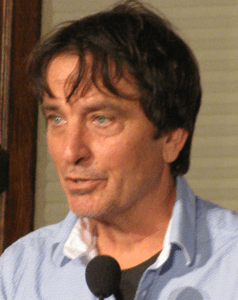 Author Nick Flynn
I was going to only review Flynn’s memoir here. But before I write anything—even a poem—I like to do a little research just to get my head in the right space. That’s how I stumbled across the above Kirkus Reviews review, and sort of flipped.
Geez, the title’s practically longer than their review, and still they manage to screw it up. How can something that has been “boiled just right” be “tough”? My dictionary describes “articulate” as, “characterized by the use of clear, expressive language.” I found Flynn’s vocabulary sparse and his structures simple to almost choppy. Repeated fragments give it a kind of panting feel at times. No subject ever wanders more than a few steps from its verb, no clause lingers longer than a heartbeat for completion. The sections too are short and to the point. Because the prose is so easy to parse and assimilate, it’s a little hard to stay focused when the ideas wander or wane, but which fortunately isn’t often. To me, it reads like the writer’s in pain and doesn’t want to waste words, which, given that he’s “accident prone” and broken pretty much everything from his knees to his nose to his noggin, that his father disappears when he’s a baby and his mother commits suicide when he’s in his early twenties, that he struggles with multiple long-term substance dependencies, booze, grass and downers to mention some staples, that he’s immersed himself in South Boston’s homeless culture, it kind of makes sense though—that he’d be in pain, I mean. So I think “poetic” describes his style better than “articulate.” At times I almost felt like it would’ve worked better formatted in short-lined stanzas, maybe even centered, if only to slow me down.
The Boston Sheridan has hundreds of gift shops and fine restaurants, and plush conference rooms in which to hold enormous boring seminars. Somewhat to my boss’s chagrin and annoyance, I refuse to leave the complex, to ever venture outside. I spend three days in Boston and never once set foot on the street.
Kirkus Reviews reviews 500 titles a month. Apparently they plan to branch out into self-publishing. So anyone with 350$ will be able to have them beat off a few cliché-laden lines ostensibly regarding their work. Given that their website lists only about a dozen employees, most of whom do not function in any literary capacity, it’s not surprising that their above “review” could easily have been produced without anyone there having read the book, that it could (and should) apply to pretty much any well-written manuscript.
If you are expecting technical finesse, fearless style and rich language, then Another Bullshit Night in Suck City might disappoint. Even if you are expecting a story per se, as with a beginning, middle and ending, you might be let down. It’s a memoir written by a young author still close to his material. At times it struck me almost as a blog in the way it incorporated media events like the Patricia Hearst saga, at other times a character study and detached social discourse qua anecdote and reflection—again, almost a collection of poetry.
It’s mid December, just before Christmas. Still brain-dead from an after dinner presentation on entry-field coding considerations for bi-directional languages like Hebrew, prickly from a long hot soft-water soak in the jets, I lie upon one or the other of my big beds-for-two and flip back and forth through a hundred or so TV channels, trying to find something interesting. Twenty stories down and to the south, Jonathan Flynn is freezing on a wooden bench, nursing a mickey and trying to appear lost in thought.
To critique Another Bullshit Night in Suck City from a technical standpoint is to completely miss its greatness. Even to say I enjoyed it would be inaccurate. It did not entertain me, it disturbed me. The father’s, Jonathan Flynn’s, gradual transition to homelessness could be the most disturbing thing I’ve ever read. He’s been evicted from his room, and is living out of a cab that he leases and drives. So to his mind he’s still not really “homeless” per se. At worst he’s “between” places. Even after he loses his cab to drunk driving, he’s not really homeless. He hangs out in the library until closing, then a donut shop, trying to project that he belongs, that he has business there, wherever—that he does not have nowhere to go. Late that night, he sits on a bench. He tries to look absorbed, purposeful. He is not a vagrant. When he spends time in banks’ 24/7 ATM kiosks, he periodically fills out deposit slips for grandiose amounts. He has every right to be there. He is a writer. He has almost completed the great American novel, the one that’ll change everything, the one that’s going very, very well but that no one ever sees, the one he expects a two-million dollar advance on because Kissinger got that much for his—“and he’s not even a writer.” He sits on the bench—all night—trying to be nonchalant and somehow comfortable—every night. In the winter he jostles for position on a crowded warm-air grate (that makes me think of a life raft… his uncle “invented” the life raft). “Grist for the mill,” he says in one of the many letters serving as fodder for his son’s memoir cum his own autobiography. “Another bullshit night in Suck City,” he says. He loses his toes to frostbite.
“The Homeless Pay my Rent” was Flynn’s suggestion for shelter workers’ t-shirts. And it ticked me off a little that his idea got kyboshed. I mean, it’s not just true of shelter workers. We could all wear one. At least that’s kind of how I felt trying to decide which bed to lie on up there in the Sheridan.
“Brothers… I have none / But that man’s father is my father’s son.” This is what Jonathan says to the shelter workers when he applies for a bed. Not wanting to confuse job and family, Nick has requested that his father not stay at the shelter where he works. But Jonathan’s options are kind of limited. That it takes Nick a year to solve this riddle probably speaks to the functioning of his brain then.
I have no brothers either. It’s a little weird and disconcerting and uplifting that I came across Flynn’s memoir in my son’s blog. That man’s father is my father’s son.
There’s a “Gays and Lesbians with AIDS” thing going on at the same time as the OS/2 seminars. I ask half-a-dozen IBM reps if OS/2 is dead. I’ve invested two years porting a QNX XBase compiler to it and am a little concerned for my future. The reps all tell me that OS/2 has a bright future. “You think I’d be here if I thought OS/2 wasn’t viable?” I’m assured in some bullshit afternoon workshop high above Suck City.
My parents are still alive and together. At 53, I’ve never spent a night in a hospital, although I was circumcised at 21 and might have broken my finger once. But, I’ve been down pretty much the same substance abuse road as Flynn. And where Flynn spent a lot of years working for a homeless shelter, both inside and on the street, I spent a lot of years working with society’s spent and dysfunctional in nursing and retirement homes. And also, I can totally relate to his disengaged, sort of ubiquitous, sense of hopelessness and failure. I follow the news. Like my father, and even more like Flynn’s father, I’m a writer too.
There’re a bunch of really stupid questions in an addendum to the book. Some are so stupid, Flynn doesn’t even answer them. For example:
Q: Do you think you shot yourself in the foot with the title?
So please, allow me:
A: No, you moron. Did you even read the book? It won the PEN/Martha Albrand Award for the Art of the Memoir, and has been translated into ten languages. The title is perfect on many levels.
For example:
Q: Do you still blame yourself for your mother’s suicide.
Again, allow me:
A: Of course, you moron. That’s why suicide is called The Cruelest Death.
I have a few moronic questions of my own. For example, I’m kind of left wondering how, or even if, Flynn managed to become substance free. One session with a counselor who threatens to commit him via a simple phone call and demands he join a 12-step program doesn’t seem like it’d cut it. I also wonder how he managed to avoid burnout and its associated cruelties while working all fucked up and underpaid with society’s quintessential derelicts and losers, or if this facet of his career was somehow omitted. I wonder a little why he’s never married. Maybe his mill has enough grist.
There’s a good looking blonde doing Tarot card readings in the lounge prior to some evening presentations. Everyone seems to be ignoring her, so I sit down and ask her, How much? Her services are complimentary. But when I tell her I’m with the IBM conference, she says she’s only supposed to do the AIDS people. I tell her I could have AIDS. I have had unprotected sex in the last three months. She says since she’s not busy she’ll give me a mini-reading on any specific topic of my choosing. I ask her about my relationship future. My big posh empty suite has me wondering if I’ll be single, as in doing the serial monogamy thing, forever. She asks me if I’m looking for a long term relationship. And I tell her that I am, that I’m tired, that I want to settle down. Then the cards inform us that this is just around the bend.
I emailed Nick a link to the above, and he actually replied. He wrote:
hi,
thanks for the review, though at times I was unsure you actually liked it. but thanks anyway.
nick
Okay, not a glowing review of my review, and it made me feel a little anal for using the shift key so much in all my correspondence, but I was blown away that a successful author like Flynn would even reply. And the thing is: Nick—dude—I loved the book. I thought I made that pretty clear, eventually.
Read Chris Miller’s Testicalia here
The post Review by Chris Miller of Kirkus Reviews’ Review of “Another Bullshit Night in Suck City” by Nick Flynn appeared first on James Victor Jordan, Author.
July 13, 2021
This is Happiness by Niall Williams Reviewed by James V. Jordan
I give it Five Stars!
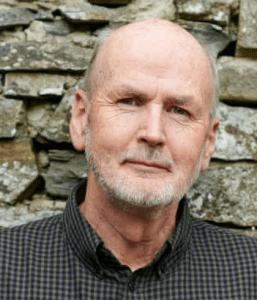 Author Niall Williams
Literary fiction creates and portrays characters and settings that are vivid, poignant if not unforgettable. If does more, of course. It is told with beautiful prosody in a compelling, charming, unique voice. It is dramatic without succumbing to melodrama. It pulls at the reader’s heartstrings without slipping into sentimentality. Each of these literary virtues shape This is Happiness, the ninth novel authored by the Irish writer Niall Williams, whose previous novel, History of Rain, was longlisted in 2014 for the Mann Booker Prize.
This is Happiness is populated with several remarkable characters. The narrator is 78-year old Noe Crowe, who tells the story of a spring and summertime he spent with his grandparents in 1958 when he was 17 in a fictious village known as Faha, County Clare, Ireland. Noe was then a recent seminary-school dropout, mourning the recent death of his mother. Because the narrator reminisces about events six decades in the past, he can credibly make more meaningful observations about these memories specifically and life generally than he could have when he was seventeen. Moreover, the stories do not have to be told in the voice of a teenager but rather can (and do) transition into adult-speak before returning to the believable voice of a youth experiencing the events as they are told. The adult observations and asides contribute to the remarkable voice created and heard in this novel.
Noe comes to Faha from Dublin to live with his grandparents, Ganga and Doady, who live on a farmstead on the outskirts of Faha. In 1958, Faha, County Clare, Ireland, where the novel is set, is a (fictional) village where halfway through the 20th Century “the parish finally steps out of the 19th”. Not one character fits the stereotype of an Irish-country bumpkin. To the contrary, while Ganga and Doady are the first householders to have a telephone in the environs of Faha, they are the only ones who refuse to take the electricity when it arrives in the village toward the end of the novel: a delightful surprise that seems to have been inevitable after the fact.
Faha is made exceptionally vivid by the fact that to get around, Noe usually must walk or ride a bike. Therefor most scenes are described as Noe passes them by at an ambulatory rather than an expressway pace. The pace is so gentle that it’s (almost) as if the reader can taste the dust rising from the unpaved roads in late spring and summer dry heat. At night one can only see by the light of the moon or the flame of a candle as the villagers wait for the promised electrification.
Shortly after arriving in Faha, Noe meets Christy McMahon, who becomes his grandparents’ lodger, sharing a room with Noe. Christy has come to Faha for professional and personal reasons. Professionally he’s there as an employee of the electric company to assist with the sale of electricity to the populace and to assist with the logistics of electrification. Personally, he’s come to try and make amends to Annie Mooney, whom he left standing at the altar decades before. Of course, this brings to the reader’s mind as well a Noe’s, the great Charles Dickens character, Ms. Havisham. But Annie, who is no Ms. Havisham, having moved on to a splendid marriage to another and with no apparent psychological wounds, is distinctly uninterested in meeting Christy again, let alone conversing with him. Noe recalls:
“I was surprised that Christy was not more downtrodden by the impasse with Annie. . . . I asked him why.
“‘Noe,’ he said, and drew a theatrical breath, ‘this is happiness.’
I gave him back the sort of look you give those a few shillings short of a pound.
‘I know,’ he said. ‘Whenever I said that it used to drive my wife mad.
‘You were married?’
‘I was. She left me for a better man. God bless her,’ he said, and nodded down the valley after the memory of her. He smiled, quoting himself: ‘This is happiness.’
It was a condensed explanation, but I came to understand it to mean you could stop at, not all, but most moments of your life, stop for one heartbeat and, no matter the state of your head or heart, to say This is Happiness, because of the simple truth, you were alive to say it.
I think of that often. We can all pause right here, raise our head, take a breath and accept that This is Happiness, and the bulky blue figure of Christy cycling across the next life would be waving a big slow hand in the air at all of us coming along behind him.”
This (a moment in a lifetime) is happiness because at whatever moment in life you choose, you can pause and reflect that you are still alive. This defeats the alternative, usually, and for most of our lives. For in such a moment of reflection, taking stock, one can change course, aiming for a different destination from the one momentum had been taking you. It is therefore in this context that the reader is left to ponder Noe’s first kisses, exchanged with the inestimable, Charlene (Charlie) Troy.
“The time it takes for one face to meet another’s is in fact no time, it’s so charged as to be outside of ordinary measure . . . My kiss is the lightest touch on a surface soft and sticky. It’s a kiss of imagination and worship. . .
“Charlie’s kisses were, I suppose, in The Book of Kisses . . . in the chapter called devouring. There was biting and gnawing and teeth-banging in them, an urgent air of mouth-to-mouth combat . . .”
This is Happiness is, as I hope these brief quotes and my comments show, an exceptional novel. There are, however, passages in the reviews of This is Happiness that are critical of the novel and with which I disagree. The following was said by Elizabeth Graver in The New York Times Book Review:
“Where the book’s digressions sometimes bog down are in its more self-reflective moments: Noe the storyteller defending himself against charges (but whose?) of sentimentality and holding forth on the relationship between story and truth, the real and the imagined, and the enriching merits of the arts.”
It is these self-reflective moments that give life to the extraordinary voice that narrates This is Happiness and to the events, feelings, and insights remembered.
In The Washington Post, the critic Ron Charles wrote:
“If Faha isn’t for everybody, then neither, frankly, is Williams’s novel, delivered in the pensive voice of a man in his 70s recalling his youth. ‘This in miniature was the world,’ he writes, but that demands a kind of attention and patience that’s increasingly scarce. If you’re in a hurry, hurry along to another book.”
I don’t imagine that fans of literary fiction are in too much of a hurry not to linger over the exceptional prose or be stirred by Noe’s sixty-year-old reminiscences. Nor do I agree that the voice is pensive.
After satisfying myself that I’d rebutted such criticisms, I concluded without further hesitation that this novel deserves five stars. If you read it, you will be entertained and enriched.
The post This is Happiness by Niall Williams Reviewed by James V. Jordan appeared first on James Victor Jordan, Author.
June 3, 2021
Uncomfortable Minds by Larry Sorkin, Reviewed by James Victor Jordan
I give it Five Stars!
 Author Larry Sorkin Setting the Mood
Elegant, exquisite, intelligent. These adjectives as well as other modifiers exalting the superlative can be used without overstatement to describe the collection of poems titled Uncomfortable Minds by Larry Sorkin. These poems evoke sensory as well as thought provoking experiences. You meet the poet as you would meet—in his or her own words—the author of an excellent memoir, well written, enriching. These poems are expressions of grace.
In his poem “the Cambridge ladies who live in furnished souls,”—e.e. Cummings writes that these ladies “are unbeautiful and have comfortable minds.” This line appears to have inspired Sorkin’s poem, “Cambridge Ladies and Magic Soap.” This in turn appears to have inspired the title of this remarkable collection. Sorkin writes that as of the time of publication, he was still not comfortable with the title. Given his profound inquisitiveness and his inventive imagination the reader may wonder if there is much that he closely examines with which Sorkin is comfortable.
We meet Sorkin the poet in the first poem “Masquerade,” where, as the poem closes, he pretends to be a small-machine mechanic—which he is not. He thinks that he rarely fools himself, though even a chainsaw sees through his ruse and refuses to start.
Here and throughout the collection we see a poet who is self-effacing, humorous, sometimes unfulfilled, sometimes insecure, sometimes taking life seriously and just as often not. “Masquerade” begins a journey that takes off, skipping along over the valleys and hills of the poet’s life, and lands with the poet describing himself as “a guy getting old/rocking an afternoon on the porch, eyeballing/forever . . .”
The poems poignantly portray the poet and his generation on a journey not to be missed.
The post Uncomfortable Minds by Larry Sorkin, Reviewed by James Victor Jordan appeared first on James Victor Jordan, Author.
March 12, 2021
Dr. Brian Keating Discusses The Speed Of Life with James Victor Jordan
Today, March 12th at 10:15 Pacific Time, I am excited to announce that I will be interviewed by Dr. Brian Keating.
Brian Keating is a Chancellor’s Distinguished Professor of physics at the Center for Astrophysics & Space Sciences (CASS) in the Department of Physics at the University of California, San Diego. He is a public speaker, inventor, and an expert in the study of the universe’s oldest light, the cosmic microwave background (CMB), using it to learn about the origin and evolution of the universe. Keating is a writer and podcaster and the best-selling author of one of Amazon Editors’ ‘Best Non-fiction Books of All Time”, Losing the Nobel Prize.
I’m proud to be included among the hundreds of notable people that Dr. Keating has interviewed including Nobel Prize Winners, Royal Knights, Lords, Billionaires and Brilliant Scientists.
You can watch live and ask questions or watch the recorded interview at https://youtu.be/rSlanRX0OS4?sub_confirmation=1
More to come after the interview!
The post Dr. Brian Keating Discusses The Speed Of Life with James Victor Jordan appeared first on James Victor Jordan, Author.
February 9, 2021
Open Your Mind to the Universe with Dr. Brian Keating
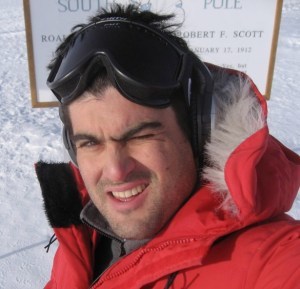 In case you missed my review of Dr. Brian Keating’s book, Losing the Nobel Prize or are not familiar with this brilliant Astronomer, I encourage you to watch his regular podcasts with some of the most successful and enlightening people of our time.
Brian Keating is a Chancellor’s Distinguished Professor of physics at the Center for Astrophysics & Space Sciences (CASS) in the Department of Physics at the University of California, San Diego. He is a public speaker, inventor, and an expert in the study of the universe’s oldest light, the cosmic microwave background (CMB), using it to learn about the origin and evolution of the universe. Keating is a writer and podcaster and the best-selling author of one of Amazon Editors’ ‘Best Non-fiction Books of All Time”, Losing the Nobel Prize.
The post Open Your Mind to the Universe with Dr. Brian Keating appeared first on James Victor Jordan, Author.
February 8, 2021
Communicating Science To Nonscientists with Kip Thorne, Alan Alda, Cailin O’Connor, Brian Greene and April Burke
As a follow up to my post announcing the 2021 APS Annual Leadership Meeting with Nobel Prize Winner Kip Thorne live event, we’re fortunate that the fascinating talk was recorded and is now available for everyone to watch and share.
 This panel was monitored by Brian Greene, an American theoretical physicist, mathematician, and string theorist. Greene was a physics professor at Cornell University from 1990-1995, and has been a professor at Columbia University since 1996 and chairman of the World Science Festival since co-founding it in 2008. Greene has worked on mirror symmetry, relating two different Calabi–Yau manifolds (concretely, relating the conifold to one of its orbifolds). He also described the flop transition, a mild form of topology change, showing that topology in string theory can change at the conifold point.
Greene has become known to a wider audience through his books for the general public, The Elegant Universe, Icarus at the Edge of Time, The Fabric of the Cosmos, The Hidden Reality, and related PBS television specials. He also appeared on The Big Bang Theory episode “The Herb Garden Germination“, as well as the films Frequency and The Last Mimzy. He is currently a member of the Board of Sponsors of the Bulletin of the Atomic Scientists. Greene was also the narrator for the U.S. version of the preschool television series, Maisy. In February 2020 his interview by podcaster Joe Rogan was viewed or heard by millions.
Included on this brilliant panel were: Kip Thorne, theoretical physicist known for his contributions in gravitational physics and astrophysics. A longtime friend and colleague of Stephen Hawking and Carl Sagan, he was the Feynman Professor of Theoretical Physics at the California Institute of Technology (Caltech) until 2009 and is one of the world’s leading experts on the astrophysical implications of Einstein’s general theory of relativity. He continues to do scientific research and scientific consulting, most notably for the Christopher Nolan film Interstellar. Thorne was awarded the 2017 Nobel Prize in Physics along with Rainer Weiss and Barry C. Barish “for decisive contributions to the LIGO detector and the observation of gravitational waves“.
 Alan Alda, well known actor (Most notably as the beloved “Hawkeye” Piece on M.A.S.H.), author and Science Advocate. For 14 years, he served as the host of Scientific American Frontiers, a television show that explored cutting-edge advances in science and technology. In 2010, he became a visiting professor at Stony Brook University. In 2009, he was a founder of the University’s Alan Alda Center for Communicating Science. He continues as a member of its advisory board. He is also on the advisory board of the Future of Life Institute. He serves on the board of the World Science Festival and is a judge for Math-O-Vision. Host of the Science Clear and Vivid podcast.
 Cailin O’Connor, Associate Professor, University of California, Irvine, Associate Professor of Logic and Philosophy of Science and a member of the Institute for Mathematical Behavioral Science at the University of California, Irvine. Author of The Misinformation Age: How False Beliefs Spread and The Origins of Unfairness: Social Categories and Cultural Evolution.
 April Burke, Lobbyist in Washington DC for LIGO, Fermilab and other scientific endeavors. Founder of Lewis-Burke Associates LLC, established the firm in 1992 to combine substantive and political expertise with the goal of advancing federal support for higher education and scientific research.
I hope that you all get a chance to watch this discussion and share with your friends. In this age of social media and false information, scientists have a difficult task in generating trust and believability. The importance of their work affects us all and needs to be understood and supported.
The post Communicating Science To Nonscientists with Kip Thorne, Alan Alda, Cailin O’Connor, Brian Greene and April Burke appeared first on James Victor Jordan, Author.
February 5, 2021
APS Physics Presents: Communicating Science to Nonscientists in Post-Election & Post-Pandemic America
We live in a polarized society in which there is widespread ignorance, confusion, and mistrust of science, as epitomized by our abysmal response to the Covid Pandemic. A major effort is needed to mitigate this – an effort that focuses not only on students, but on American adults and policy makers. We must communicate the beauty, excitement, methods, and power of science not only to those of our fellow citizens who are receptive to science, but perhaps more importantly to those who are highly resistant. The challenge, strategies, tools and methods for this quest will be discussed.
 Nobel Prize Winner Kip Thorne
Wikipedia states: Kip Stephen Thorne (born June 1, 1940) is an American theoretical physicist known for his contributions in gravitational physics and astrophysics. A longtime friend and colleague of Stephen Hawking and Carl Sagan, he was the Feynman Professor of Theoretical Physics at the California Institute of Technology (Caltech) until 2009[3] and is one of the world’s leading experts on the astrophysical implications of Einstein’s general theory of relativity. He continues to do scientific research and scientific consulting, most notably for the Christopher Nolan film Interstellar.[4][5] Thorne was awarded the 2017 Nobel Prize in Physics along with Rainer Weiss and Barry C. Barish “for decisive contributions to the LIGO detector and the observation of gravitational waves“.
Thorne’s research has principally focused on relativisticastrophysics and gravitation physics, with emphasis on relativistic stars, black holes and especially gravitational waves.[3] He is perhaps best known to the public for his controversial theory that wormholes can conceivably be used for time travel.[19] However, Thorne’s scientific contributions, which center on the general nature of space, time, and gravity, span the full range of topics in general relativity.
Don’t miss what is sure to be a thought provoking 35 minute talk following by 40 minutes of spirited questions.
As Kip himself has said, “The right answer is seldom as important as the right question.”
To get yourself prepared, please check out my review of Kip’s book, BLACK HOLES AND TIME WARPS: EINSTEIN’S OUTRAGOUS LEGACY. You can read Kip’s review of The Speed Of Life on this web site’s home page.
I’ll be watching! (If you happen to miss it, hopefully they will repost the recording).
The post APS Physics Presents: Communicating Science to Nonscientists in Post-Election & Post-Pandemic America appeared first on James Victor Jordan, Author.
December 30, 2020
THE ANNOTATED BIG SLEEP by Raymond Chandler Reviewed by James Victor Jordan
Annotated and edited by Owen Hill, Pamela Jackson, and Anthony Dean Rizzuto with a forward by Jonathan Lethem
I’m giving this book 5 Stars.
The Heart and Soul of Raymond Chandler’s fiction
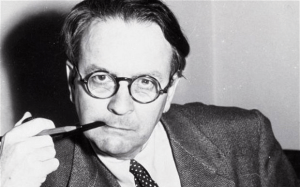 Author Raymond Chandler
If I were ever to teach a course on creative fiction writing, I’d assign The Big Sleep by Raymond Chandler, his first novel published in 1939, and then The Annotated Big Sleep published in 2018. The Annotated Big Sleep eloquently and interestingly takes its readers into the thoughts of the brilliant Raymond Chandler with poignant comments by Chandler and his novels and his responses to his critics and social commenters of his time. The Annotated Big Sleep elegantly and thoroughly addresses the question: What is literary fiction? How does it differ from nonliterary genre fiction (which most noir genre detective fiction is)?
My discussion takes the liberty of commenting at times on, by way of comparison, two recently published collections of stories each by an Irish author who is regarded (though not by me) as a master of literary fiction. I refer to Last Stories by William Trevor (1928-2016) published in 2018 and The Collected Stories of Elizabeth Bowen (1899-1973) published in 2019.
Literary fiction reveals its time but remains meaningful for future generations. E.g. The Adventures of Huckleberry Finn. A Tale of Two Cities
Literary fiction has style, which Chandler deemed imperative. Literary fiction prose has prosody (sound and rhythm) and is resplendent with metaphors that illuminate as Aristotle argued in The Poetics. I loved Chandler’s critique of Ross MacDonald’s simile: The rust on Archer’s car was like acne.
One must have talent to write good metaphors. Chandler’s are brilliant. In TBS Chandler uses the convention of pathetic fallacy seamlessly. Chandler’s references to canonized literature is also nicely done. Think Remembrances of Things Past.
According to the annotated version, Chandler believed that literary style must be elevated over plot. Personally, I don’t see plot and style at war. And I disdain the modern thinking that plot is irrelevant and that the essence of fiction is only the characters. Think William Trevor and other long and boring New Yorker stories. Though some are quite good. Think T.C. Boyle or Alice Munro.
And of course, Chandler’s dialog sparkles. You won’t find exposition in his dialog, meaning he won’t use dialog to tell the reader something that the other character knows. There is subtext in Chandler’s dialog, i.e. the character usually means something other than what she or he says or what she or he says has more than one meaning.
Can any of us remember a quote from a William Trevor or an Elizabeth Bowen story? Months or years later, do we care about what happened to their characters? Or even remember? Chandler’s stories are chockfull of memorable quotes. Think “Dead men are heavier than broken hearts.”
Literary fiction advances or illuminates a moral POV. Think The Divine Comedy.
Nonliterary genre fiction is formulaic no matter who the characters might be. Typical best-selling romance formula: Girl with noticeably large breasts and long silky (usually blonde) hair notices boy with fabulous physique on page 2. Girl kisses boy on page 5. Boy has the opportunity to remove girl’s bikini top on page 10 but refrains from doing so because he respects her. Boy meets girl’s parents and they hate him, order girl not to see him again. And so forth.
Nonliterary genre lacks subtlety.
Marlowe’s character is consistent but he actions aren’t. Chandler’s books thrive on subtext and pretext.
In 2003 in a speech at the annual National Book Award ceremony (I highly recommend it) Stephen King argues, and I agree, that a hallmark of literature is that it illuminates its time. TBS is famous for illuminating the look and feel of Los Angeles in 1939. Sternwood, we learn in the Annotated Version, was likely a surrogate for the L.A. oil baron George Hancock of Hancock Park fame. One had to be wealthy to hire a private sleuth and so Chandler’s characters are the aristocrats and/or the nouveau riche and the grifters who feed upon them. Chandler left the unemployed to Upton Sinclair. As Scott Fitzgerald said: I write about the rich because those are the people I know.
When I was researching Ursula Le Guin in preparation for writing my review of The Dispossessed in case you missed it), I was surprised to learn that Le Guin chose the Sci-Fi genre because it paid well. I suspect that Chandler chose the detective genre because he admired the writing of Dashiell Hammett (perhaps Poe and Conan Doyle as well) and because he liked it.
In How Fiction Works its author James Wood (literary critic for The New Yorker) explains that it is not only attention to details and objects that an author includes in a scene that is important but which details and objects the author chooses. Bad writers choose boring, irrelevant details. The objects in TBS have life and often multiple meanings. Wood uses Madam Bovary to illustrate his examples. Flaubert was exquisite when it came to describing physical details. IMHO so is Chandler. Think of the stained glass above the entry door to the Sternwood mansion.
William Trevor wasn’t terrible when it came to making his scenes vivid. His characters were simply boring because of their passivity and his stories were boring because of their deus ex machinus or lame epiphany endings. Elizabeth Bowen began her stories with vivid descriptions of the landscape but this was boring because the descriptions weren’t integrated into the stories. Those descriptions delayed the introduction to the characters and after all, we read fiction to meet the characters, not the trees.
Chandler’s books, like Arthur Conan Doyle’s, like Charles Dickens’s, have given us cultural icons, and life lessons. Trevor’s stories end with lessons, epiphanies, but they are lessons meaningful to the characters but lost on posterity. Will a William Trevor story ever be made into a motion picture? TBS has been made into how many?
Dickens novels were first published in chapters in pulp-paper magazines. But Dickens novels, resplendent with details, descriptions are about characters that generations of readers have cared about. His long descriptive wonderful iconic opening to A Tale of Two Cities is about the people of London and of Paris in 1780.
Misogyny. I erred last night when I said Marlowe only hit Carmen on one occasion. Not that doing so was okay. Marlowe hits her again when they meet the next day at Geiger’s. Even says she seems to like it. Like the trench coat (not in the book) it’s stereotype, awful stereotype. I don’t think he’d write that today. He does have strong women characters.
The post THE ANNOTATED BIG SLEEP by Raymond Chandler Reviewed by James Victor Jordan appeared first on James Victor Jordan, Author.
December 8, 2020
The Reluctant Messenger Returns by Candice M. Sanderson Reviewed by James V. Jordan
Paul Gauguin famously wrote these words in paint on his painting of the same title: D’où Venons Nous/ Que Sommes Nous/ Où Allons Nous— Where Do We Come From? What Are We? Where Are We Going? These ontological questions have been asked since before the beginning of recorded history and there have been many attempts to answer them spirituality (including religiously) and empirically (scientifically), or both. The first category requires faith: an emotional experience buttressed by strong beliefs. The second requires perception by one or more of our physical senses: which may be intellectually rewarding but emotionally satisfying? perhaps not so much.
[image error]Author Candice M. SandersonNo one, other than Moses himself, for example, saw G-D speaking to him in the form of a burning bush that didn’t burn—a supernatural phenomenon. But Moses’ account has been accepted literally, rejecting disbelief, or metaphorically (the fire representing G-D’s anger). And so it is with the wonderfully written second memoir of psychologist Candice M. Sanderson, The Reluctant Messenger Returns. She writes of supernatural experiences. There is much to be gained whether the reader chooses to accept them literally or as metaphor.
This book and its prequel, The Reluctant Messenger, chronicle the spiritual journey first taken by Ms. Sanderson many years ago, perhaps beginning when she met two angels (though she didn’t recognize them as such at the time) on the day of and shortly before the death of her beloved husband Daryl in 1987. After Daryl’s death Ms. Sanderson moved to the city of Naples in southwest Florida where she worked as a school psychologist until her retirement June 2018. In retirement she’s divided her time between the study of various forms of meditation and spirituality, caring part time for her granddaughters, and writing her memoirs in astonishing short periods of time, inspired by nonphysical muses who brought and to this day bring her spiritually uplifting messages and information about people transitioning from their former physical life on earth to the nonphysical life that is beyond this one.
If readers accept on faith the telling by Ms. Sanderson of her supernatural spiritual experiences or if they are willing to suspend their disbelief until the end of The Return, they will be rewarded with beautiful portrayals of and fascinating insights into being and consciousness.
Ms. Sanderson recognizes her muses as messengers in The Reluctant Messenger but comes to understand and describe many of them as angels in the sequel, the subject of this review: The Reluctant Messenger Returns. The messengers (angels) had been speaking to Ms. Sanderson since 2013, and she recorded what they said. When she retired from her school psychologist career, Ms. Sanderson began organizing the messages into a flowing (flowering Ms. Sanderson might say) coherence, culminating, as I’ve said, with her personal understandings of being and consciousness that the angels revealed to her.
The nexus of the origins of modern psychology in America and spiritualism has a remarkable pedigree. William James and his student at Harvard, G. Stanley Hall, are referred to interchangeably as the fathers of American psychology. Hall considered Mrs. Leona Piper, well known at that time in Boston, to be “without question the most eminent American medium.” This was not meant as a compliment, he said, yet he often patronized Mrs. Piper who in séances related to him the welfare of his deceased wife and daughter.
In 1885, shortly after the deaths of his infant son and his famous father, James first visited Piper. In a trance, Piper related to James the wellbeing of his son and gratitude from his father for publishing his papers. In her March 27, 2011 article in The New Yorker titled “Twilight,” Harvard professor of history, Jill Lapore, wrote of Hall and James’s visits to Piper “In grief, solace, in death, life.” In this article, Professor Lepore quotes Hall writing of Piper’s hold on James: “For years she has been the more or less private oracle of one of our leading and very influential psychologists . . .”
In his volume of lectures titled The Varieties of Religious Experience James writes that “the ordinary religious believer” of mainstream modern religions—and he mentions Christianity, Islam, and Buddhism—that “His religion has been made for him by others, communicated to him by tradition, determined to fixed forms by imitation, and retained by habit.” Whereas the founders of these and most other religions had unique supernatural spiritual experiences from raising the dead, as Jesus did, to listening to angels if not directly to God. Today when people relate supernatural experiences, even if they are spiritual, all too often they are denounced as deluded, as Hall said of Piper despite his repeated visits to her, or even pathological, as James said of the founder of the Quaker religion, George Fox, even though Moses spoke directly to God.
The forgoing is to say that Ms. Sanderson’s experiences with the supernatural can be or become foundational ontological inquiry for those who choose to stand upon it.
I have purchased and read a print version and purchased and listened to the audio version of The Reluctant Messenger Returns. The audio narration is excellent: pitch perfect, just the right tonality in a vibrant and clear performance that is bound to draw the listener into this book and reward him or her as it builds to its astonishing ending of experiences and insights of consciousness and being.
Read Candice M. Sanderson’s review of The Speed Of Life by clicking here
The post The Reluctant Messenger Returns by Candice M. Sanderson Reviewed by James V. Jordan appeared first on James Victor Jordan, Author.