Lesley Wilson's Blog
December 4, 2021
Memories of Cold Climate Christmases and Warmer Festive Seasons Downunder


November 23, 2021
Interview with Jan Selbourne
July 22, 2021
BookLife Prize Critic’s Report for Oric and the Lockton Castle Mystery
April 30, 2021
Albie Makes his Evil Presence Felt
December 18, 2020
The Woman Behind the Mirror by Jan Selbourne
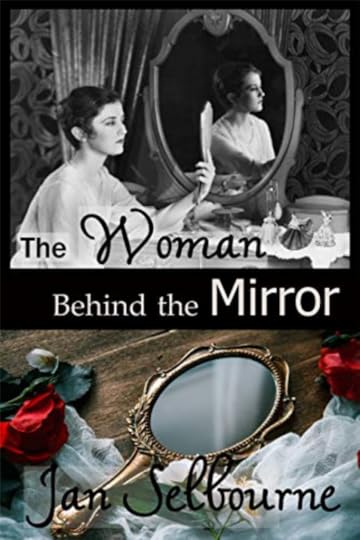
Marry in haste, repent at leisure is the last thing on Sarah Forsythe’s mind when she and the son of a local minister elope to the American colonies. She wasn’t to know abandonment, misery, poverty and shame would follow. As the colonies rebel against British rule and the siege of Boston worsens, alone and afraid, Sarah hides her desperation behind a hard shell. To survive, she is forced to steal from the safe of her employer. Instead of the cash she needs, she finds Bank of England documents. Sensing they might have some value, Sarah protects them through months of deprivation until she finally secures passage home to England. Unknown to her, two men are following, intent on claiming those documents. At any price.
Bank of England fraud investigator Neil McAllister faces the biggest challenge of his career when a woman from Boston demands a reward for returning lost documents to the bank. Then two men with the same name and nearly identical stories arrive in England, each claiming ownership of them. Who is lying? Or are all three accomplices in a plot to swindle the bank? As the obstinate, secretive woman gets under Neil’s skin, he trusts that she was an unwitting witness to the crime of cold-blooded betrayal and treason before the fall of Boston. Now it’s up to Neil to protect Sarah because the traitor wants her dead.
Amazon UK / Amazon US / Amazon AU
About the Author
Jan Selbourne was born and educated in Melbourne, Australia and her love of literature and history began as soon as she learned to read and hold a pen., After graduating from a Melbourne Business College her career began in the dusty world of ledgers and accounting, working in Victoria, Queensland and the United Kingdom. On the point of retiring she changed course to work as secretary of a large NSW historical society. Now retired Jan is enjoying her love of travelling and literature. She has two children, a stray live in cat and lives near Maitland, New South Wales.
My review
The Woman Behind the Mirror is another terrific tale from author Jan Selbourne. Main protagonist, Sarah Forsythe, falls in love with the son of the local minister. Banned from marrying him, by her overbearing father, she elopes with her sweetheart to America. He soon abandons her, and Sarah finds herself alone and destitute against the backdrop of the siege of Boston. To survive she must turn her hand to anything, including prostitution and theft. Hoping to steal money, she raids her employer’s safe to find only documents. From that moment on, her life is endangered. A terrifying cat and mouse chase, all the way back to England, ensues. Not until the end of the book does the reader discover the truth. Many twists and turns kept me turning the pages of this gripping story until the very satisfactory end.

December 14, 2020
The Cockentrice
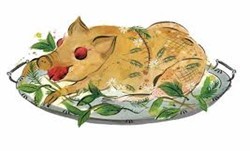
After marrying my husband, I learned about the concoction, half piglet, half chicken, that my father-in-law assembled for a family gathering many moons ago. It was a one-off! Folk who sampled it, talked about it for many subsequent festive seasons. It was their hilarious descriptions of the event, both the cooking and the eating, that got me thinking, and wondering, where the idea of melding a pig with a chicken came from. Fascinated by the concept I did some research and learned that it was a popular Medieval delicacy for the well-to-do. About to embark upon book two in my Medieval adventure trilogy, I wrote the story of the cockentrice into chapter three. Of course, I used a little poetic licence.
As a small Christmas gift from me to you, I have added that chapter for you to read.
Day one of Sir Edred’s tournament produced no fatalities, but knights with broken bones and minor injuries kept both apothecaries busy. The final joust of the day clashed to a halt without incident, and Ichtheus laced up his pavilion.
Long shadows crept across the countryside, and a nightingale sang from the depths of a briar rose. The little bird’s musical trills soothed Ichtheus’ weary soul, but his peace was shattered the moment he entered Bayersby Manor’s hot, steamy kitchen.
“What time do you call this?” Mother Morghan shrieked.
Ichtheus balked at sight of the lumpy, grey mess the housekeeper thrust into his hands. “Is this the best fare you have to offer a hungry apothecary?”
Mother Morghan shrugged. “Take it or leave it! Tripe is all I have left.”
Almost too tired to eat, Ichtheus sat down on the hard bench beside Oric and Dian. “Did you enjoy the fair?” he asked.
“Aye, we di…” Oric’s reply was cut short by the noisy arrival of the Bayersby heir.
Having recently completed his education with the monks at Roxbrough Abbey, Guwain was full of himself. Legs straddled, fists planted firmly on his hips, he confronted Ichtheus. “My father demands that you attend him in the Great Hall at once!”
Ichtheus popped a piece of tripe into his mouth, sure that Sir Edred would have requested, rather than demanded, his presence. “Did your father say what he requires of me?” he asked, chewing slowly upon the gristly mouthful.
“No, he did not,” snapped Guwain indignantly. “But he wants to see you immediately so get yourself upstairs at once.”
Too late, Dian shrank behind Oric.
Guwain reached over Oric’s shoulder and tweaked one of Dian’s lustrous curls. “Follow me, girlie. You can be my serving wench for the evening.” He leered as he smoothed down the front of his scarlet tunic. “If you look after me nicely, I shall reward you well.”
“Send word if Master Guwain misbehaves himself,” whispered Oric as Dian squeezed past. “There is little I can do openly, but I would drug his ale with a sleeping draught rather than see you ill-used.” Snub nosed, short and stocky with brown hair and brown eyes, Sir Edred’s son reminded Oric of a pugnacious dog.
Guwain bounded back upstairs to the Great Hall and Dian reluctantly followed him. She wanted nothing from the high-handed Bayersby heir but she dare not disobey him. To make matters worse she had learned that he would remain at Bayersby Manor indefinitely, to learn first-hand the running of the family estate.
Tension between the two boys was palpable, and Ichtheus worried that trouble was brewing. Sir Edred held Oric in high esteem, for the young apothecary had saved his life during a battle with Esica Fig. But would the mighty lord take Oric’s side against his own flesh and blood? Agonising over what disaster was about to unfold, Ichtheus abandoned his bowl of tripe and climbed the stairs to the Great Hall.
No matter how often Ichtheus entered the Great Hall, he always marveled at the intricately worked tapestries that lined the walls. A massive oak trestle with benches on each side seated many people, but the family and notable visitors dined from a separate table on a dais at the far end of the room. Steps abutted to the wall led up to a minstrels’ gallery where musical instruments lay at the ready for evening entertainment. During winter months a huge log fire blazed on the central hearth, sending smoke and sparks flying high. Soot encrusted rafters supported a straw roof and Ichtheus believed it was a miracle the tiny embers did not set the thatch alight.
Comfortably seated in his carved chair on the dais, Sir Edred beamed down upon his apothecary. “Ah, there you are, Master Ichtheus. I have an interesting challenge for you.”
Ichtheus’ heart sank. More often than not Sir Edred’s challenges caused unnecessary work. “What is your command, my lord?”
“I want you to prepare a Cockentrice for tomorrow’s feast.” Keen to impress his visitors, Sir Edred believed that Ichtheus would do a better job than Mother Morghan and her indifferent cooks.
Ichtheus removed his bonnet and bowed low. “I will do my best, sir.” Irritated beyond measure, he stomped back downstairs to the kitchen. “Oh my giddy aunt,” he cried, throwing up his hands in despair. “I am commanded to concoct a Cockentrice.”
“A what?” Oric tittered. “I have never heard of such a beast.”
“Neither have I,” growled Ichtheus. “I am an apothecary, not a cook!” He rammed his bonnet back on his head and gazed at his rows of medicaments, as if seeking inspiration.
Enjoying the old man’s discomfiture, Mother Morghan drew Ichtheus’ attention to a wooden box in the corner of the kitchen. “Yonder container once belonged to a scribe who liked to cook, but his outlandish experimentations with food brought about an eruption of the master’s bowels. Sir Edred became so ill he threatened to have the fellow hung, drawn and quartered.” Mother Morghan stuck out her tongue and crisscrossed a finger across her ample belly. “The scribe took fright and departed in such a hurry he left his belongings behind.” She smirked nastily, her blackberry eyes almost invisible beneath her heavy lids. “Who knows, you might find the recipe you seek among his abandoned possessions.”
“When am I supposed to concoct this culinary delight?” Ichtheus expostulated, skewing his head around to glare at the housekeeper. “Before, during, or after administering to joust casualties?”
Mother Morghan shrugged. “I neither know nor care, Master Apothecary.” Without uttering another word, she plopped onto her battered chair and promptly fell asleep.
“Fat lot of help she is,” grumbled Oric, “but worry not Master Ichtheus, between us we will organise something.” Undaunted he sifted through the would-be cook’s box and, after a few moments, he brandished a crumpled sheet of parchment. “Here we are –
“Cockentrice… An Easy Recipe for Beginners.
Chop the cooked chickens’ flesh, and mix together with herbs. Cut off the pig’s backside and the front of another large chicken. Stuff the mixture inside each creature and sew the two together.”
Oric’s eyebrows disappeared under his sun-bleached fringe. “The recipe says the finished creation must resemble a mythical monster.”
Ichtheus lit a lantern, and placed it on the table beside Oric. “Read on, lad, and we shall see.”
Oric read aloud, running his finger down the list of ingredients. “We need a suckling pig, and a large chicken.” He looked up, his brow furrowed in consternation. “The next instruction says we must kill and disembowel both creatures, keeping the pig’s head intact, scald them both, and drain them until dry. Not so difficult, Master Ichtheus, would you agree?”
“Surely there is more to the recipe, else what spectacle would there be in that?”
“Aha! Now I see where it’s headed!” exclaimed Oric as the ongoing words proclaimed how the spectacle was to be achieved. First, make a stuffing mixture, using raw eggs, broken bread, some saffron, salt and pepper, and shredded fat. Using both hands, combine it well.
“We must make a forcemeat,” said Oric, triumphantly, feeling that the job was all but done.
“Read on, lad. There must be more to it than that.”
“Aye, I am afraid you are right,” said Oric, allowing his eyes to rest on the following instructions. Next, cut the pig in half, around the waist, then cut the chicken in half around the waist. “This recipe is beginning to sound a little strange. We must cut both the animals in halves, then employ needle and thread to sew the back half of the chicken onto the front half of the pig.”
“Fir pity’s sake, Oric, stop fooling about!”
“I am not fooling, Master! It now says that the front half of the chicken must be sewn onto the back half of the pig! Then we must stuff them, and skewer them on to the spit. We are going to end up with two, very strange, mythical beasties!”
Ichtheus snorted with disgust. “What a waste of time! Why can we not enjoy a simple chicken stew, or a nice roast loin of pork?”
“We had best obey Sir Edred’s orders.” Oric replicated Mother Morgan’s stomach-slitting gesture, his eyes twinkling with mischief. “We do not want you going down the same path as the unfortunate cook.”
Ichtheus was sure that no such thing would happen; nevertheless, thoughts of the night ahead made his head throb. “The sooner we start the sooner we shall finish.”
The corners of Ori’s mouth drooped. “I doubt we shall get much sleep this night.”
Ichtheus snatched the parchment from Oric’s hands, reassuring himself that the boy had spoken the truth. “I suppose we must now raid the henhouse and slaughter the wretched birds.”
“Not to mention a piglet,” mumbled Oric, feeling more miserable by the heartbeat. He pulled a dagger from the cuff of his boot and stropped the blade on a piece of stiff leather. Killing animals was his least favourite pastime but, with the aid of a sharp knife, the poor creatures would die swiftly.
The unsuspecting chickens had already gone to roost, enabling Oric and Ichtheus to grab a large, heavy bird and secure it in a sack. Halfway across the yard to the slaughterhouse Oric tripped and sprawled, full length, on the ground. He lost his grip on the sack and, squawking fit to raise the devil, the chicken made his bid for freedom.
“Quick!” Ichtheus screamed. “Catch the little beggar before he gets away!”
Oric dashed about, and cornered the escapee right where he had perched, with his feathers, all fluffed out with indignation. Taking advantage of the bird’s confusion, Oric nabbed him securely and shoved him back into the sack.
“You need to conserve your energy, lad, to capture and slaughter the piglet. Meanwhile, I shall neck the chicken and take him inside for Dian to pluck. ”
His unsavoury attack on the piglet over, Oric decided that butchery was an occupation he had no desire to pursue. Bathed in sweat and drenched with his victim’s blood, he stepped outside the slaughterhouse to be confronted by Guwain and Joffrey.
Standing next to the two youths dressed in their evening finery, Oric felt like the lowliest of serfs.
Guwain flicked his fingers dismissively. “Hard to believe yon creature was recently promoted to the position of assistant apothecary, ain’t it?”
“Aye, and judging by the fellow’s gory state, some poor wretch has recently fallen foul of his ministrations.” Joffrey sneered nastily slanting his tawny cat-like eyes at Oric. “Should I require medical attention in the future, I shall seek advice elsewhere.”
Disinclined to explain himself, Oric made his way back to the kitchen. Guwain was naught but a braggart and a bully, but Joffrey’s cold confidence was disturbing.
The preparation of Sir Edred’s feast was time-consuming and painstaking. The pig/chicken combinations were dutifully sewn together, filled with forcemeat, and the remaining opening closed over with more thread.
Both of the strange – each now an apparently recognisable Cockentrice – were in position on the spit, and the young boy, seconded to wind the handle, began the onerous chore.
“You had best get some sleep, lad,” said Ichtheus. “I will call you when I am in need of a rest. I will spell the boy every hour or so.” He placed more logs on the fire, settled back in his chair and prepared himself for an uncomfortable night.
Sticky with the residue of his night’s work, Oric wandered outside and drew a bucket of cool water from the well. He removed his blood-spattered tunic and sloshed it about in the bucket. Drawing more water, he washed himself. Too hot to sleep inside the inglenook, he spread his tunic out near the fire to dry and sought a bench beside the open kitchen door. Curled up on his side, he soon nodded off to sleep.
Ichtheus glanced across the room at his assistant. Four and twenty moons had passed since the boy had first arrived at Bayersby Manor. Taught by the Dunburton alchemist, Oric was able read and write and, in need of an apprentice to help lighten his workload, Ichtheus had taken the boy in. Lessons in the application of medicinal herbs had followed over the ensuing months.
A new purpose in life, coupled with a wholesome diet, had swiftly turned Oric from a skinny waif into a well-muscled youth. The lad was possessed of a cheeky wit, but he also honourable and brave. Oric’s golden hair and fair complexion suggested that Saxon blood ran through his veins; whatever his lineage, Ichtheus loved him like a son.
Caedmon, Mistress Myferny’s black and white tomcat, streaked across the kitchen and jumped on to the apothecary’s table. Jars and pots rolled over and crashed on to the flagstones. Ichtheus hurled a boot, missing the cat by a whisker. Caedmon leaped onto an overhead rafter and fixed his aggressor with a malevolent yellow glare. For a delicious moment, Ichtheus toyed with the idea of serving ‘Catentrice’ alongside Sir Edred’s Cockentrice.
The fire crackled, the lantern burned low, and Ichtheus dozed.
A shifting log sent out a shower of crimson sparks. Jerked awake, Ichtheus smacked at several bright embers that landed on his boots and leggings. At this rate, he thought, my appearance will soon match that of Sir Edred’s singed wolfhound. But tonight, Parzifal had abandoned his usual spot by the fire for the cooler and quieter comfort of the stables. Thinking the dog had the right idea, Ichtheus gave Oric a gentle shake. “Stir yourself, lad, ‘tis your turn to watch over Sir Edred’s feast. I am going outside for a breath of air.”
Many moons had passed since a band of marauders had ransacked his former home, but still Oric could not erase the mental picture of Dunburton Manor engulfed with fire. Nor could he forget the death of his former mentor, Master Deveril. The old man had produced a key with a double-knot emblem on the shaft and had used his last breath to issue a warning. “This key will unlock the secret to great wealth. You must promise to keep it safe. If it falls into wrong hands, untold disasters could occur.”
Oric had agonised over the meaning of Deveril’s words ever since. He had almost lost the key on one or two occasions and, for safe keeping, he had hidden it away with Master Ichtheus’ few precious belongings in a specially created cavity under Braccus’ stall. One day, he thought, I will solve the mystery of Deveril’s key; and I will make his killers pay for their crime – however long it takes.
The Cockentrice pair was roasting nicely and smelled delicious. The young boy had been spelled many times, and Oric thought it might be time for Dian to take her turn at watching over the meat. The little maid slept on the far side of the kitchen, one hand curled tightly under her cheek. Her chestnut-gold curls tumbled over the bench on which she lay, and Oric’s heart swelled with love. If only I could find the words to tell how I feel, he thought. Rather than disturb her he decided to soldier on with the Cockentrice. Dian had enough work to cope with during the day, and she needed her sleep.
In-between tending the Cockentrice, Oric dozed, and dreamed, until fingers of pink dawn slanted through the open kitchen door. He rubbed sleep from his eyes, checked the spit, yet again. The meat was done to a turn, and Oric sent the boy off to bed. Donning his dry tunic, he went in search of his mentor.
oOo
Day two of Sir Edred’s tournament continued much the same as day one, and Ichtheus was glad when it drew to a clashing finale. He yawned, stretched, and doused his head with a pannikin of cool water. Refilling the dish from a trough of well water, he passed it over to Oric. “Freshen yourself up, lad. We must now find the energy to serve Sir Edred’s Cockentrice.”
Oric tied on an apron to protect his clothes from spillages, and he assisted Ichtheus to heft the spit with the odd pair onto the bench. They slid the meaty oddities from the spit and prepared to arrange their platter for presentation to Sir Edred.
Still referring to the ancient recipe, it read: When cooked, gild the outside with egg yolks, ginger, saffron and parsley juice, or mallow juice.
Please allow me to make the mixture,” begged Dian; the excitement of the venture now becoming infectious for the three of them.
The ensuing result was spectacular. The creatures gleamed with the glossy brew, side by side, on a silver platter, and looked as if they had always been thus. The head of the pig now held a rosy apple in its mouth, and the chicken was resplendent with an arrogant plume of black and white feathers emerging from its rear end.
Stepping back to view the finished article, Oric’s eyes twinkled mischievously, “Sir Edred would take a fit if he knew where those quills came from,” he chortled.
“And where would that be?” Dian asked, sloshing her sticky hands in a bowl of tepid water.
Oric plunged his hands into the same bowl and tickled Dian’s fingers. “I will tell if you promise to keep it a secret?”
“I promise,” she giggled.
“From the tails of Sir Edred’s prize fighting cocks.”
“Ooh!” Dian gasped. “If he ever finds out you will likely end up as filling for his next Cockentrice.” She dried her hands and wiped up drips of gravy from the platter’s rim with a corner of her apron. “Let Sir Edred enjoy his strange feast; I would rather eat a tasty vegetable stew any day.”
“Aye, and stewed vegetables do not take all night to prepare,” grumbled Ichtheus as he prepared to carry one end of the enormous platter upon which the Cockentrice rested. “Come, Oric, let us present this culinary creation to the folk upstairs.”
Hundreds of flares shed light across the Great Hall. On the gallery above Sir Edred’s dais a trio of minstrels came to the end of a lively tune. The lord of Bayersby, a golden coronet upon his head, beamed down upon his guests. “I have ordered a culinary masterpiece,” he boomed. “My apothecaries are bringing it up from the kitchen as I speak.”
“How exciting my lord,” cried Lady Myferny, clapping her hands in anticipation. Dripping with jewels and dressed in royal purple with a bejewelled cap set upon her pale locks, the lady of the manor looked like a queen. “I can barely wait to see what you have organised, my lord.” She planted a kiss on her husband’s bristly cheek. “You spoil us, and we love you for it.”
Slumped in a chair, Guwain feigned disinterest in his father’s culinary delight. Banned from the tournament because he had disobeyed too many of his father’s commands, Guwain was in a belligerent mood. To add to his misery the scarlet tunic and breeches he wore were uncomfortably tight, for he had gained weight since he had last worn them. “For Heaven’s sake bring on the jester,” he snarled. “I have had my fill of twanging harps and screeching fiddles.”
Lady Myferny made eye contact with her son, trying to still his tongue with the merest shake of her head. The last thing she wanted was another unpleasant altercation between father and son.
Arrogantly ignoring his mother’s warning, Guwain raised his voice. “How much longer must I endure this racket?”
“For as long as I deem it necessary,” Sir Edred snapped. “And, for the benefit of our guests, try to look as if you are enjoying yourself.”
A pre-arranged horn blast announced the arrival of the Cockentrice, and the two apothecaries lowered the platter on to the table before their lord and master. Dagger at the ready, Sir Edred congratulated Oric and Ichtheus on their culinary triumph.
Dian watched the proceedings from the top of the kitchen stairs. Proud of Oric’s achievement, she clapped and cheered along with the rest of the hungry guests.
Twisted with jealousy, Guwain tore the apple from the pig’s mouth and hurled it at Oric with all of his might.
The fruit cracked into the back of Oric’s skull. Momentarily stunned he stumbled to his knees. Sir Edred’s guests guffawed and cheered at the unexpected entertainment.
“More! More! More!” they chorused.
Mustering his dignity, Oric retrieved the apple and returned it to the pig’s mouth. He bowed low and said, “I pray the feast is to your taste my lord.”
Sir Edred inclined his head in appreciation, then he flashed a look of deep anger at his son. The boy is insufferable, he thought. I must address the problem before the situation becomes unmanageable.
Seated at the far end of the top table, Sir Ragnald observed the exchange between father and son. Perhaps young Master Guwain’s dissatisfaction can be exacerbated, he thought. Internal disruption could be worthwhile if wisely deployed. Joffrey had already formed an association with the boy; he needed to expand upon the friendship.
Oric returned to the kitchen, wondering what punishment Guwain would receive for his bad manners. Whatever happened, the Bayersby heir’s ill-feeling would be misdirected, and Oric determined to exercise great care around him in future.
-oOo-
The last day of Sir Edred’s tournament dawned hotter than ever as competitors and spectators endured the most uncomfortable weather in living memory. Regardless of the enervating heat, Lady Myferny trailed into the lists one final time to hand out prizes to the winners. High ranking competitors received golden clasps, small jewels and a gerfalcon or two. Lesser folk were given chaplets of flowers and laurel wreaths.
Sir Ragnald’s loss of face in the tilts was fully restored when he claimed his prize as melee champion. He accepted his award from Lady Myferny and clasped her hand, allowing his wet lips to linger a moment too long on her white skin.
Repulsed by the feel of Sir Ragnald’s fleshy mouth and bristly whiskers, Lady Myferny jerked her arm away. Without thinking, she rubbed the back of her hand on her pale-blue underskirt.
Sir Ragnald looked deeply into Lady Myferny’s violet eyes. When I become Master of Bayersby, he thought, I will teach this beautiful woman to be more respectful.
I hope that you enjoyed.
Have a lovely Christmas and a much better New Year.
Oric and the Alchemist’s Key Amazon US | Amazon UK
Oric and the Lockton Castle Mystery Amazon US | Amazon UK
Oric and the Web of Evil Amazon US | Amazon UK
December 1, 2020
Perilous Love by Jan Selbourne

About the Book
Europe is on the brink of the First World War. Gabrielle and Adrian, their marriage on the rocks, are thrust into a world of territory lies and deceit. Not knowing who to trust, Gabrielle and Adrian find themselves fleeing for their lives across war torn Europe, the brutal German forces are hot on their heels, determined not to let them escape. Adrian is between the devil and the deep blue sea as accused of treason and doesn’t know what awaits him back in England. All he does know is he must reunite his family safely back in England. Will this mend their broken marriage or tear them apart forever? The odds are stacked against their survival. Will they have what it takes to overcome obstacles?
Jan Selbourne was born and educated in Melbourne, Australia and her love of literature and history began as soon as she learned to read and hold a pen.
After graduating from a Melbourne Business College her career began in the dusty world of ledgers and accounting, working in Victoria, Queensland and the United Kingdom.
On the point of retiring she changed course to work as secretary of a large NSW historical society.
Now retired Jan is enjoying her love of travelling and literature. She has two children, a stray live in cat and lives near Maitland, New South Wales.
My Review
This book is a rip-snorting tale of intrigue, espionage, love, lust, adultery, greed and danger, set against the backdrop of WWI.
The main protagonists, estranged husband and wife, Gabriel and Adrian Bryce pay lip service to their sham marriage for the sake of their children – until they are thrown together in a life or death situation.
From a cosseted British country house scenario to the nitty gritty of war-torn Europe, this unlikely couple learn to rely on each other through the worst privations they have ever experienced.
The story culminates in a most unexpected finale.
Well done Jan Selbourne for keeping your reader turning the pages at a rate of knots. I want to see more of this author’s work.
November 11, 2020
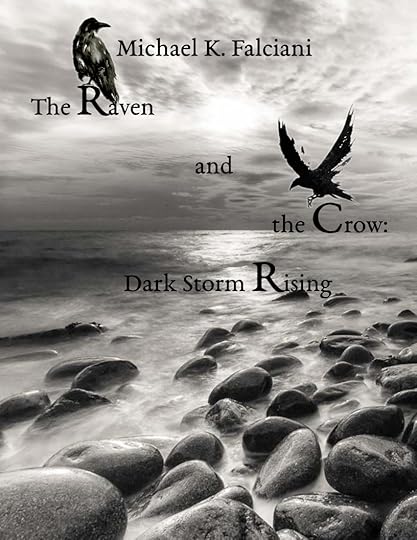
The Raven and the Crow: Dark Storm Rising by Michael K Falciani
About the Book
The story begins with two brothers struggling to find their place in the world. For the elder sibling Kildare, every morning begins with the memory of betrayal. Once governed by the principles of morality, Kildare has become an instrument of blood and steel—where the speed of his sword arm metes out his own brand of justice. Only the strength and resolve of his brother Zedaine keeps him from succumbing to the ever present rage that burns behind his dark eyes.
While employed by the mysterious sage Blade, the pair stumble upon Chameleon, a runaway tribeswoman displaying extraordinary psychic powers. Their meeting however, is no chance encounter. A riddle Chameleon carries will change not only the future of the three, but the fate of the entire world.
Hundreds of miles away, Macklore, a powerful wizard of Brisbane, has been dispatched by the king, to the volatile city of Gallanse. Smitten at the sight of princess Lydia, Macklore defies his orders and finds himself thrust into the middle of a bloody succession. When he openly supports Lydia’s family he is marked for death by a cult of magi working to raise the psychotic prince Dragomir to the throne. With only a reluctant journeyman apothecary and a lone female agent as allies, Macklore must use his wits and innate magical powers to keep Dragomir from the crown and himself alive.
Racing towards Gallanse, Kildare and Zedaine are torn between saving Macklore’s life and extracting terrible vengeance upon the man responsible for their betrayal.
About the Author
I grew up in upstate New York and I’ve been interested in writing since I was in grade school. I published my first novel in April of 2020. I have been an educator for the last 22 years teaching and coaching many different topics and sports. When I’m not working I greatly enjoy the outdoors, whether it’s hiking near Lake Tahoe, or snowshoeing in the Sierra Nevada Mountains. Autumn is my favorite season and walking among the fallen leaves early in the morning makes getting up everyday worthwhile. I am currently working on the second book of my, “The Raven and the Crow,” series and hope to have it published by February.
Links to purchase:
www.goodreads.com/book/show/53866976-the-raven-and-the-crow
Excerpt
Both men halted in astonishment as they watched the figure drop from the top of the waterfall some fifty yards in front of them. The sound of the body hitting the water was lost in the roar of the falls.
“Did you see that?” Zedaine shouted over his shoulder.
“He’ll be lucky to survive the drop,” Kildare replied in answer. He swore under his breath. “Get a fire going,” he yelled to Zedaine, while sprinting forward. “He’ll freeze to death otherwise. Do it now!”
The elder brother shed himself of his pack and ripped off his shirt, tossing it aside. Appearing out of the mist of white water, a body was floating face-down in the current. Ignoring the cold as best he could, Kildare waded quickly into the water and dove out toward the still form. He felt something drag on his left side and cursed himself for not removing his sword. Kildare surfaced only a few feet away from the limp body. Despite the cold, he swam to the listless figure in seconds, with a flurry of powerful strokes. Grabbing the tunic, Kildare roughly flipped the inert form over, only to blink in surprise.
It was a tribeswoman, dressed in a manner he’d never seen.
Recovering his senses, Kildare quickly wrapped his right arm under the woman’s neck and managed to sidestroke them both to shore.
Dragging the girl free of the water, Kildare knelt on the ground and planted his ear to her chest. Her skin was freezing to the touch and for a long moment he heard nothing. Despite his harsh words on the rocky outcrop, Kildare did not want the girl to die. A moment later, he sighed with genuine relief at the sound of her faintly beating heart.
By some miracle, she’d survived both the jolt of the fall and the icy grasp of the water. The immediate danger now was keeping her from freezing to death.
“Zedaine, get that fire going!” he shouted, turning to see where his brother had gone. He was shivering with cold himself, his hands and feet almost numb.
“Zedaine!” he yelled again.
Out from the line of trees strode four snarling Caniadon, each bearing a magada hunter.
Kildare cast his eyes to the edge of the forest. There was no sign of his brother, anywhere. He did notice a pale violet flower growing in a smattering of sunlight to the left of where the magada stood. The same plant they’d been searching for over the last three days.
“Figures,” he muttered bitterly.
Grimly he drew his sword from its scabbard while he could still feel sensation in his fingers. “All right, you bastards,” he spat, rage building inside him. “You want a piece of me? Come and get it! Which one of you sons-of-bitches is first?”
The largest of the beasts shot forward in answer.
September 13, 2020
Author’s Book Receives a Warm Literary Welcome.
 Readers’ Favorite announces the review of the Adventure book “Oric and the Alchemist’s Key” by Lesley Wilson, currently available at www.amazon.com/gp/product/0995422001.
Readers’ Favorite is one of the largest book review and award contest sites on the Internet. They have earned the respect of renowned publishers like Random House, Simon & Schuster, and Harper Collins, and have received the “Best Websites for Authors” and “Honoring Excellence” awards from the Association of Independent Authors. They are also fully accredited by the BBB (A+ rating), which is a rarity among Book Review and Book Award Contest companies.
“Reviewed By Romuald Dzemo for Readers’ Favorite
Oric and the Alchemist’s Key is the opening book in The Oric Trilogy by Lesley Wilson and a spectacular read for fans of adventure. When a band of marauders ransacks Oric’s home, his fatally wounded friend, Deveril, the Alchemist, hands him a key and promises that it can unlock great wealth. He cautions that it can be dangerous if it falls into the wrong hands. But there are enemies who will do anything to get the key. Oric makes new friends, an apothecary and a kitchen maid, and together with a wolfhound, Parzifal, and a donkey, Braccus, they set out on an adventure of a lifetime in a world where nothing is what it seems. Thrust into new and challenging situations, where the least mistake can be disastrous, can he find within himself what it takes to make choices that matter?
Oric and the Alchemist’s Key is hilarious, exquisitely written, and delightful. Lesley Wilson displays a great gift of imagination, creating characters that are believable — even the animals in the story communicate with the characters in a way that readers will enjoy — and a world that is enchanting to navigate. The writing is atmospheric and the seamless blend of action with the setting creates visuals that keep readers focused. Oric and the Alchemist’s Key is a magical tale with extraordinary characters, an enchanting setting, and a gripping plot. The author knows what it takes to make readers care about a character and uses that gift well. Oric and the Alchemist’s Key is transporting and entertaining, the kind of book you want to daydream over to escape the doldrums of everyday life. I recommend it to fans of adventure and fantasy without any hesitation.”
You can learn more about Lesley Wilson and “Oric and the Alchemist’s Key” at readersfavorite.com/book-review/oric-and-the-alchemists-key where you can read reviews and the author’s biography, as well as connect with the author directly or through their website and social media pages.
June 20, 2020
All About Roses
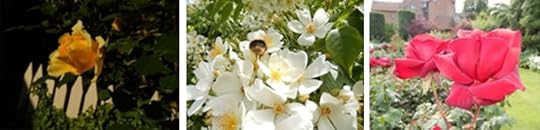
Everybody loves roses and, since the floral emblem for June is the rose, what better time to investigate the origins of the flower? Easy-peasy, I thought. Wrong… Information I came up with boggled my mind. I knew the genus Rosa was an old cultivar, but I didn’t realise garden cultivation began in China 5,000 years ago. Not only that, the discovery of certain fossils suggest that the rose could go back as far as 35 million years. That kind of put paid to my grand idea of writing about the entire history of the rose, unless of course, I’m prepared to explore the subject over at least six more blogs, which I’m not. If I did that, I visualise my lovely followers falling away like rose leaves from their stalks in winter.
What to do? Narrow the information down…
Folk who are regular readers of my blogs will already know about my medieval trilogy, featuring Oric and his mentor, Ichtheus, the apothecary. Apprenticed to the old man, Oric eagerly learns everything he can about the usage of herbs and flowers for curing illnesses. They carried their medicaments in panniers on the back of donkey, Braccus, to a weekly market held in the village of Kilterton. Occasionally, when space allowed, they took rosewater, which they made for lady customers to use as perfume, or for flavouring food. That journey, to and from market rarely went without incident, often because of the donkey’s antics, falling foul of various criminals along the way, not to mention the ongoing, hilarious repartee between Oric and Ichtheus. Please look out for a short passage, describing a sinister encounter the pair experienced on one of those market days, which I have added to the end of this blog.
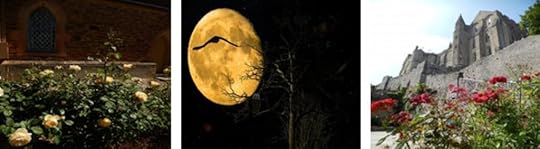
As we already know, roses are woody perennials, which grow as erect shrubs, standard or miniature, climbing or trailing over arches and trellises. Most are armed with sharp, hooked thorns, which help the plant to cling onto whatever it is growing on. Deer and other non-carnivorous species are known to enjoy eating roses and, over the years, a few species of the plant have adapted by growing straight, closely packed prickles along their stems. This method of self-preservation prevents grazing animals from doing too much damage to the mother plant. Nature’s adaptations never cease to amaze me.
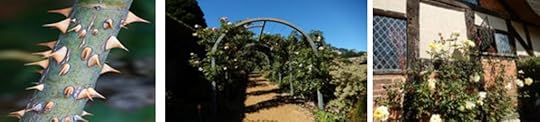
Many roses have heady perfumes. Flowers vary in size and have colours ranging from white through cream, yellow, pink, and red. Some bear clusters of 5 petals others have many more, forming the familiar, tightly packed, whorl of colour. My favourites are wild roses which twine alongside sweet-smelling honeysuckle, along hedgerows that line many of north Yorkshire’s country lanes. These flowers bloom throughout summer and the constant hum of bees fills the air, as they buzz from one pale pink bloom to the next. These busy little creatures create pollination, which, later in the year, causes bright-red hips to form.

In England, during the late nineteen-forties and early fifties, some foods were still rationed, and enterprising folk gathered whatever they could find to supplement their somewhat sparse diets. I well remember tagging along with my grandparents, armed with baskets, scissors, and walking sticks used for dragging down fruits that grew too tall for us to reach. Returning home with baskets full of bright red hips, I compared their colour to my poor skinny, lacerated little arms.
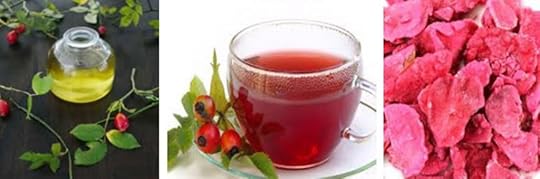
Hips contain vitamin C and, when grandma was able to buy sugar, she made bottles of rosehip syrup and jars of jam. One, taken by the spoonful, purportedly protected us from winter colds, the other, spread on hot buttered toast, was a regular Saturday afternoon treat for as long as stocks lasted.
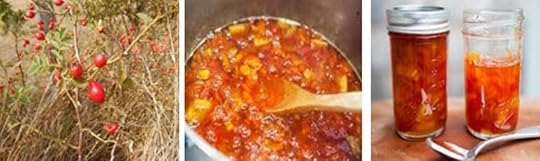
Toast, back then, did not pop of out an automatic machine on the kitchen bench, but was made by impaling thick slices of bread on a long-handled fork, held over an open fire on the hearth in our living room. Many a scorched set of fingers did I suffer, but the discomfort was soon forgotten when I sank my teeth into hot toast spread with butter and rose hip jam. Looking back, the tradition reminded me of the much larger fireplace, known as an inglenook, in the Bayersby Manor kitchens where Oric and Ichtheus lived in the fourteenth century. I spared a thought for the young boys whose job it was to hand-turn whole pigs and other chunks of meat impaled on a spit, over a much larger fire. Their skin was perpetually mottled from close contact with the fiercely hot logs.
Tea can be made from rose hips, though I have never tried it. Candied rose petals are traditionally used as cake decorations and confectionary and are readily available from numerous producers. Other uses include the making of perfume from oil, obtained by steaming and distilling crushed petals. Grandma kept ‘Attar of Roses’ in a fancy glass bottle on her dressing table, which she dabbed behind her ears and on her wrists before foraying out on social occasions. Over two thousand flowers are needed to produce one gram of oil; no wonder Grandma used it so sparingly.
The Romans saw roses as the height of luxury, and they scattered them knee deep on special occasions. At one of Nero’s banquets, high ranking guests were showered with so many petals one or two people suffocated. Maybe they suffered undiagnosed asthma. Rosewater fountains were popular, though some early ascetic Christians abhorred the use of flowers, especially roses and lilies. However, in the fullness of time, the rose symbol led to the creation of the rosary and featured in Christian prayers.
Roses reached the height of popularity, in England, during the twelfth and thirteenth centuries and have continued to be loved by people down the ages. Portraits, illustrations, and stamps regularly include roses and they are often used as decoration on architecture.
Impressionists Paul Cézanne, Pierre-Auguste, and Claude Monet featured roses in their paintings. A few years ago, I visited Monet’s garden at Giverny in France and was enchanted by the variety of roses, which continue to grow in flower beds surrounding his house.
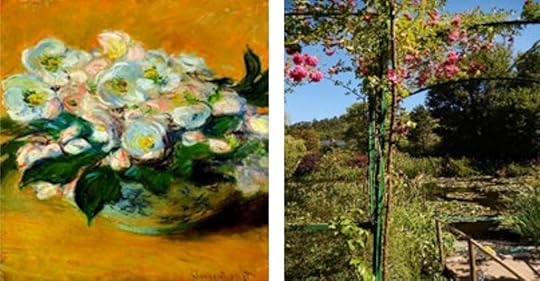
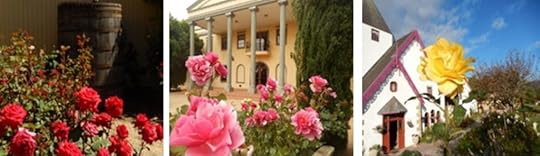
Down the annals of time we continue to grow roses, paint pictures of them, embroider them on table and altar cloths, wedding veils, and evening gowns. Roses in bridal bouquets remain top favorites, and churches are often decorated with them, the perfume exquisite
Last but not least, what would we do on Valentine’s day, Mother’s Day, weddings, funerals, and many other notable dates without roses. They are a symbol of love and long may they continue to bloom and grow.

Excerpt from Oric and the Alchemists Key
Market Day in Kilterton
Next to moneylender Figg’s table, an old crone shoved a lumpish man onto a wooden block. The fellow mouthed a few obscenities at the woman and clanged a handbell. “Come all you sick serfs and villeins. Try our pink potion for pale people,” he shouted.
The old crone fetched her son a vicious clout to the back of his legs with a stick. “You great oaf,” she shrieked. “I could do better than that wi’ me tongue cut out. Shout a bit louder for gawd’s sake; else we will be here all day.”
“Charlatans,” Ichtheus muttered, “I dread to think what their ghastly mixture contains.” He pulled harder on a rotten molar anchored in the lower jaw of his friend Uther Tidwall, the bootmaker. Uther, upon whose chest Ichtheus was kneeling, let out a yell as the offending tooth plopped free. Oric ducked to avoid a spurt of crimson blood and dabbed at the patient with a rag. Ichtheus apologised to Uther, angry that he had allowed himself to be distracted.
A malodorous stench, similar to a fish stall at the end of a hot day, insinuated itself into Ichtheus’ nostrils. He raised his head and glowered at Oric. “What is that fearful stink? Check your feet, boy, to see that you have not stepped in something obnoxious.”
The source of the smell sidled into Ichtheus’ peripheral vision. It was the old hag from the opposing stall across the road. Unhurriedly she picked up, examined, sniffed and prodded every item that Ichtheus had for sale. Oric was about to tell her to be off, but the pressure of Ichtheus’ hand upon his boot reminded him to mind his manners.
“Hey, Uther! Who is that unsavoury woman?” Ichtheus whispered. “Have you seen her before?”