Susan Purvis's Blog
February 29, 2024
K9 Search and Rescue at 30,000 Feet
���How come it���s easier for me to jump out of the side of a helicopter at 13,000 feet with my avalanche dog to look for a dead guy than it is to talk to my husband about our relationship?���
I���m over two gin and tonics into my flight when I confess those words to a middle-aged Latino man sitting next to me inside the dimly lit cabin of the 747. I didn���t know him from Adam. Three-quarters of the way across the ocean from Miami to the Dominican Republic, my subconscious starts to bubble out like froth from a shaken bottle of champagne.
The post K9 Search and Rescue at 30,000 Feet appeared first on Susan Purvis.


April 14, 2021
Finding The Lost and Myself
Digging Deep To Find Your Truth. As an accomplished, adventurous outdoor woman, Susan Purvis was as lost as anyone she���d ever found. Susan and her search dog Tasha became one […]
The post Finding The Lost and Myself appeared first on Susan Purvis.
Recognizing Your Lost Means Finding Your Denial
Unearthing Your True Purpose.
As an accomplished, adventurous outdoor woman, Susan Purvis was as lost as anyone she ever found.
Join Susan as she shares her harrowing story of how over a decade into her successful canine search and rescue career she asks herself, “How did the lost expert get so lost?”
Susan uses breathtaking photos from her expeditions to the hottest, coldest, and highest places on earth and shares the many places we really get lost: in a marriage, a career, an addiction, our health, and in life.
Susan inspires us to dig deep to find the missing parts of our story. She shares how she buried her own missing parts so deep she got lost. It’s only when we move from our denial, to realization, to acceptance that we can find ourselves.
The post Recognizing Your Lost Means Finding Your Denial appeared first on Susan Purvis.
How to Go From InviSible to InvinCible
What happens when you put yourself first? It’s not selfish but a place of strength that allows people to lead.
As adventure tourism explodes in the high country of Nepal, guide fatalities are up 27% in the last year alone)
Sherpa and African guides die while escorting wealthy, privileged clients to the top of the world. Susan Purvis, unwilling to accept these needless deaths, starts a high-altitude medical school where she changes lives—and saves lives—for indigenous peoples; the invisible ones, the poorest and most underserved.
Considered two of the most dangerous and fatal mountains for clients and guides to climb, Susan inspires her audience with stories from the flanks of Mt. Kilimanjaro and Mt. Everest as she trains farmers and yak herders with no education or wilderness medicine experience to become international superstars.
You, too, will be inspired to look for opportunities to help the invisible become invincible which may mean looking at yourself.
Apa Sherpa and I trekked for 6 days near Mt. Everest to recruit top Sherpa students. I was determined to not just teach them basic lifesaving “how to’s,” but important unspoken rules: Put your own oxygen mask on first. Your life matters. It’s not just about what your clients demands but keeping your entire team alive. I discovered ramifications weren’t just safer climbing practices but 15 years later, there are significantly fewer deaths. The Sherpas I’ve taught have gone on to better their lives and communities in ways I could not have imagined at the time.
The post How to Go From InviSible to InvinCible appeared first on Susan Purvis.
The Miracle of K-9 Scent Detection
Every day our canines are telling us something. But because of our lack of understanding of animal behavior, we have no idea what they’re telling us. Thus, we miss great opportunities to grow and connect with our beloved canines.
Join Susan Purvis as she shares fascinating stories of her tenure as a volunteer wilderness canine search and rescue specialist.
She’ll teach you how to understand your dog’s behavior through personal missions and adventures through stories of training and deploying her rebellious, but lovable black Lab, Tasha.
Susan shares stories about how canines detect humans in the water, locate nitrogen in bombs, find accelerants in fires, dig up humans buried ten feet under the snow, and sniff out victims of crime. The audience will use their knowledge, put on their detective hat and participate in the best mission of all, finding a 12-year-old lost in a winter blizzard. She will even teach you tricks to communicate better with both your canine—and human partners.
The post The Miracle of K-9 Scent Detection appeared first on Susan Purvis.
March 22, 2021
Tiny Love Stories

From the New York Times, Tiny Love Stories
“I Didn’t Run”I met David on a blind date. The next day, I invited him over for tea. He appeared on my porch, peeking through the glass, offering me his cupped palms. “It’s all yours,” he said. “What? Sweaty hands?” “No.” He beamed. “My heart.” Typically, this would make me run, but I didn’t. He had picked me to hold his heart. His body was ravaged with cancer, but still, I accepted. We laughed. We cried. We married. Twenty-two months after our eyes met, I stood at the river, cupping my palms with ashes, and let go.
— Susan Purvis
The post Tiny Love Stories appeared first on Susan Purvis.
Wilderness Medicine Abdominal Pain: Serious or Not?
By Susan Purvis
A day at the ski clinic treating more than thirty patients with an assortment of ailments including double wrist fractures, a boot-top crack, an outbreak of herpes simplex viral infection on the lips, and a couple of “I don’t feel so goods,” wears me out.
With minimal time to pee or eat, my patience wanes to the verge of fraying. Two-year-old Tasha, my certified avalanche dog lies on the waiting room carpet with her head between her front paws. “I know. It’s been a long day.”
Hours beyond her normal feeding time, she had already hounded me by nibbling her front teeth up and down on my lower pant leg, as if she is fleecing me or eating corn on the cob. She senses the difficulty of the day.
I look up to our last patient. The young woman coughs up frothy pink sputum into a plastic bucket. By my second season at the clinic that sits at 9500 feet above sea level, I’ve seen the same symptoms plenty of times.
Tasha’s tail thumps the floor once, as she watches me turn back to work on the woman. On this day, Dr. Tom is away in Aspen performing surgery. Dr. Tom, the owner of the clinic trusts me enough to keep an eye on the new guy, the practitioner in charge—Scott Smith, a physician’s assistant, recently arrived from Maine and with years of ski trauma and rescue experience.
Standing at the door of the coughing woman’s room, Scott plans to give her Tylenol for what he diagnoses as a cold or bronchitis. He intends to send her home to her ski condo at 10,000 feet for the night. I foresee tragedy.
“Scott, wait.” I grab his arm before he enters the room. My voice crackles as I summon bravery to tell him something he might not want to hear. After all, I’m an Emergency Medical Technician not a physician.
“Yeah?” He squares his shoulders.
“Um … ah … I know we’ve had a big day, and it’s late. But …” I pull him toward me, so the patient can’t hear my words. To reassure myself, I eye the patient’s chest x-ray hanging in the light box. Healthy lung tissue on x-ray normally looks black. This woman’s tissue is snow white, and the lungs are full of fluid. She lives at sea level, but she’s skiing at 11,000 feet. If I don’t say something, tonight she will drown in her own fluid tonight at her condo.
The sudden raspy cough, pink frothy sputum, fever, weakness, and rapid heart rate confirm my diagnosis: High Altitude Pulmonary Edema (HAPE), an illness we frequently see at the clinic. HAPE happens at high altitude. The only cure is transporting the patient to a lower elevation. The oxygen I have been giving her isn’t helping. The woman must go to the hospital in Gunnison, seventeen hundred feet below the clinic.
I face Scott. The uber-smart, driven perfectionist now carries a streak of Napoleon complex on his tense, short frame. My experience in the clinic doesn’t measure up to his fifteen years as a physician’s assistant, his decade of ski trauma work, and his position as curriculum director at the largest wilderness medical organization in the world. He has preached to thousands of students the dangers of HAPE, yet on this day he fails to recognize a classic example in the coughing woman.
From behind the wall, the young woman sits up to cough. Her inhalation rattles from fluid stuck in her chest. She gasps, coughs again, and falls back into the gurney.
“Scott. That lady can’t stay here. We need to call her an ambulance and get her to Gunnison. She’s got HAPE.” There, I said it. I mustered courage to intervene. I hold my breath for his response.
In the silence, Scott scratches his head. Glancing at the x-ray, he spins from me toward the reception room. His footsteps circle the clinic floor. Tasha’s eyes follow and I prepare for a thrashing. I just questioned his authority, his position, his knowledge. I’m dead. Or at least soon to be unemployed.
He faces me. “You’re right, Sue. I’ve been teaching this stuff for years, and I couldn’t see it in front of me. Respiratory distress! How could I have missed that?!”
The air leaves my body in one big exhale, and my shoulders lower as tension dissipates. A weak smile twitches my mouth.
Scott adds, “You just saved her life.”
The year was 1997 when I first found courage to speak up and save that woman’s life. That was 23 years ago. I was 34, searching for passion and purpose, and questioning my career as a gold exploration geologist in the Dominican Republic with my husband.
Scott became influential in my search for purpose when our friendship and respect grew on that cold and snowy night while we treated the woman for respiratory distress. He saw something in me that I couldn’t see in myself. Over the next decade while I worked at the clinic and became his wilderness medicine teaching assistant, Scott mentored me. “You don’t have to go to medical school to understand medicine,” he told me. I quickly realized knowledge is power and I could help and heal patients using my Emergency Medical Technician skills.
He taught me the general principals of pathology, physiology, structure, and function of the human body. His simple explanations of how the major body systems work empowered me to learn as much as I could about medicine. The application of these principals applies to both urban and wilderness settings.
Scott had a lot to teach me. Little did I know my life would move toward medicine.
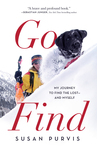
I traded my rock hammer as a geologist looking for gold in Latin America for a pair of skis and a chance to save a life. I chased a career as a wilderness and rescue medicine specialist working in the ski clinic, as a professional ski patroller, an ambulance medic, a search and rescue team K-9 handler, a ski guide, and a wilderness medicine educator. I opened Crested Butte Outdoors, my outdoor education company which specializes in wilderness medicine and avalanche education. My dog Tasha and I became one of the top high-altitude search dogs in Colorado. We found people buried in avalanches, submersed in the water and lost in the mountains. After Tasha died, I wrote Go Find: My Journey to Find the Lost—and Myself about our career together in Colorado and how at the end she saved my own.
Paying It Forward
One of the most useful things I learned from Scott had to with the generic structure and function of the abdomen (the stuff inside your stomach). I’ve been teaching this lecture for twenty years and this knowledge helped me become a more skillful practitioner. I want you to know this because knowledge is power. If you find yourself in a remote area or even in the urban setting and you have abdominal pain, here is a tool to determine if you need to seek immediate medical care.
The TOOL:
The difference between serious and not serious abdominal pain.
When you die you either die of shock, respiratory failure, or brain failure. The woman with HAPE could have died that night of respiratory failure then brain failure had we sent her back to the ski condo. Soon after the HAPE incident, I learned about shock, the other thing that can kill you. It was an early morning at the clinic when a healthy, athletic man in his 40’s stumbled in and groaned, “Help me. I think I’m going to die.” Doubled over in pain, he looked pale, sick and was breathing fast. “This pain won’t go away.”
“What the heck happened to you?” I asked, escorting the patient to the gurney. “Did you fall?” I had no idea what was wrong with him. I had never seen serious abdominal pain before. Upon examination, Scott bumped the gurney purposefully. Immediately, the patient screamed, “What the fuc.?” Then doubled over to protect his lower guts.
“This guy needs bright lights and cold steel,” Scott shouted at me, his signal that the patient needs to see a surgeon now. “Call the ambulance, Sue.”
Later, I asked, “How did you know he had serious abdominal pain?”
“Susan, he presented with most red flags for serious abdominal pain.” As a wilderness medical practitioner, Scott had to be satisfied with the generic assessment; serious or not serious. I did not matter what the cause.
The word abdomen means in Latin means hidden. If you show up into the ER with generic stomach pain, making a specific diagnosis can be a challenge for experienced clinicians, even when using laboratory data and sophisticated imaging equipment. Doctors can’t tell if you are suffering from early cholecystitis, diverticulitis, gastroenteritis, menstrual cramps, an extra helping of Thanksgiving dinner, constipation, or a big ole fat fart. The question is, how do we tell the difference between serious and not serious abdominal pain?
General Principal of Wilderness Medicine– Obstruction to Infection.
I learned there are basically three major structures inside the abdomen: hollow organs, solid organs, and the peritoneum.
If you obstruct a hollow organ long enough it will become infected. Here is why. The human body is full of hollow organs that store, transport, or excrete fluids of all types. These include sweat glands, intestines, bladder, and all the associated ducts. If the drainage from these organs is obstructed by swelling, deformity, or a foreign body, the accumulation and pressure causes inflammation and pain.
If the obstruction persists, any bacteria present can begin to grow out of control in whatever substance is trapped, an infection will develop. Take for an example, a zit on the face. A sweat gland is an external hollow organ infection becoming obstructed. Appendicitis is the more serious example of the same pattern. If that infection is inside your abdomen, like in the case of appendicitis, there is no place for the infection to go except into your abdominal cavity. Hollow organ infection inside the abdomen can kill you and you die of shock. Many illnesses have their origins in obstruction and their cures is in relieving it.
Hollow organs in the abdomen have a lot of nerves and when stretched it hurts. You may have felt it before after your stomach or intestines distend after eating a giant tub of popcorn. You vow to never do it again, but you do. Stretching a hollow organ stimulates muscular contraction, causing the pain of distention to become worse, but temporarily. We call this generalize crampiness that comes and goes. The pain is non-specific, poorly localized at the general level of nerve innervation. Because peristalsis (the excretion and movement of fluids and food through the digestive system using rhythmic muscle contractions) increases the pain in waves, the discomfort tends to be intermittent. This type of abdominal pain–intermittent, non-specific, and generalized is less likely to be serious. This non serious abdominal pain is usually associated with conditions that are well contained within the hollow organs, not affecting the abdominal cavity itself.
Besides hollow organs what else is in the abdominal cavity?
Peritoneum
If you were to dissect the peritoneum from the body, it would fill the surface area of half a tennis court. This huge, beautiful membrane lines the abdominal wall and surrounds the guts allowing them to move around freely. The peritoneal lining can be irritated by bacteria, blood, and digestive fluids that have leaked into the abdominal cavity. When inflamed, the peritoneum gets pissed-off and tells you about it. “It hurts right there.” The patient will complain of severe pain that is localized, constant and aggravated by movement and palpation. With inflammation, a person can lose a large volume of fluid in a short period of time and this causes volume shock. Likewise, if the hollow organ contents continue to spill out of the container, it will spread through the abdomen. Shock and death are often the result. Peritoneal signs indicate a serious abdominal problem regardless of the location or cause.
Solid Organs
The liver, spleen and kidneys are like blood-filled baby watermelons hanging inside of the abdomen. They have a variety of functions and associated diseases, but we worry most about their potential for rupture in abdominal trauma. Unlike hollow organs, solid organs have few nerve endings that sense pain. Most of the discomfort with solid organ problems come from irritation of the organs peritoneal lining due to infection or bleeding. Both are serious. Solid organs if hit hard enough, enough to knock the wind out of you, can fracture and bleed on impact. The abdomen offers a large enough space into which blood can be lost to cause volume shock. This event can be fatal. As a first responder one should be alert to the development of peritoneal signs following significant blunt trauma to the abdomen. With constant pain and localized tenderness, volume shock from internal bleeding is the anticipated problem.
Conclusion: Real problems begin when whatever is happening inside the gut begins to irritate the peritoneal lining inside the abdomen. In the case of our 40-year-old patient, his problem began with obstruction to infection principal of the appendix (hollow organ), in his lower right abdomen. We found in the patient’s history that two days prior, he complained of generalized cramps and discomfort typical of hollow organ stretching. He felt sick, stopped eating and brushed it off to an upset stomach. No need to seek urgent care as a doctor would have said, “Come back in if you have signs of serious abdominal pain.” By the next morning, the crampiness changed to local pain as the appendix continued to swell and slowly leak. Luckily for the patient his hollow organ didn’t completely burst and spill digestive enzymes and pus onto his entire abdominal cavity. That event may have killed him. Instead, he sought medical care just in time. He presented at the clinic with persistent localized pain and signs and symptoms of shock: high heart and respiratory rate, fever, pale, cool and clammy skin. The appendix was swollen, pressing against the peritoneum, perhaps leaking and ready to burst wide open. His quick action to seek medical help saved his life. So it doesn’t matter if you’re in the woods, at home, or in the clinic, recognition of serious abdominal pain is the key to recognizing a life-threatening problem. The treatment of a serious intro-abdominal problem requires a hospital and surgical care. Evacuation should be urgent.
Abdominal Pain Red Flags
Serious:
Persistent feverBloody vomit or diarrheaConstant, localized pain and tendernessFast pulse and respiratory rate, pale, cool and clammy skin.Lasts more than 24 hours
Treatment for Serious Abdominal Pain
AnticipateVolume shockSystemic infectionTreatment
Keep the patient comfortableMaintain hydrationMaintain body core temperatureRestrict foods to easily absorbed sugarsEmergency evacuation
If you’d like to learn more about shock, respiratory distress, changes in brain function or serious abdominal pain and its application in the wilderness, check out one of Susan’s upcoming wilderness medicine courses and special retreats at www.cboutdoors.com.
Interested in Susan’s Wilderness Adventures Newsletter? If so, sign up by logging onto www.susanpurvis.com. The first part of her essay is from an excerpt of her best-selling memoir, Go Find: My Journey to Find the Lost—And Myself published by Blackstone. Susan also narrates her audio book.
A big thanks goes out to Wilderness Medical Associates for the use of their teaching materials.
The post Wilderness Medicine Abdominal Pain: Serious or Not? appeared first on Susan Purvis.
She rescues the dead. Can she rescue her voice?
As seen in “Find Your Voice, Save Your Life”
by Susan Purvis
I’m over two gin and tonics into my flight when I confess those words to a middle-aged Latino man sitting next to me inside the dimly lit cabin of the 747. I didn’t know him from Adam. Three-quarters of the way across the ocean from Miami to the Dominican Republic, my subconscious starts to bubble out like froth from a shaken bottle of champagne.
The conversation begins when the man leans into my shoulder as I doze off and asks with a charming accent, “Why would a pretty blonde be flying to Santo Domingo all alone on a Sunday night?” He shows his palms, an open inviting gesture.
I rock away from him, rattling the ice cubes in my glass, stalling while I think how to answer, or even whether to answer.
“It’s none of your fricking business, you douche-bag pervert. Leave me alone,” I want to scream.
But I don’t.
I am accustomed to Latino men whistling and shouting crude comments at me. I’ve learned to ignore their cackles.
Just like I’ve learned to ignore the relationship issues with my husband Doug. I’ve recently been making excuses not to join Doug in the Dominican Republic to which I’ve been commuting from Colorado for the past fifteen years. My husband and I are exploration geologists and we get hired by international mining companies to search for gold. But over the past eight years, Doug has gotten used to me working from our home in Colorado. I have too. I started my own wilderness medical business teaching students how to save lives by rescuing people from dangerous situations. I have trained my puppy, Tasha, to do search and rescue, too.
Is it my husband or the Dominican job I’m avoiding?
I grit my teeth, thinking about how much I hate commuting to this god-awful place and leaving Tasha, behind. Tasha and I have been partners for ten years now and, increasingly, I feel like she’s the only one who really gets me.
Tasha’s my true love.
This morning, I’ve dumped Tasha on the stairs of my friend’s house. Her dark-brown eyes watch me leave, telling me how abandoned and betrayed she feels. When I say goodbye, she lays there, doesn’t even lift her head from her paws or thump her tail.
Is that how my husband feels when I leave him to pursue my search and rescue work at home in Colorado?
Tasha knows my routine; the blouse, the roller bag, the briefcase, the clackity-clack of my dress shoes, her bed placed in the corner of some friend’s house.
I’ve dumped her twenty-five times or so. Now, I won’t see Tasha for a month. My chest tightens as I remember her pouting eyes and then the faces of the recent victims she found.
I should be elated about our successes the past few days, the successful completion of our two most important search missions. Everyone called us heroes.
One involved a boat ride to look for a kid who’d drowned in a lake and the other, a helicopter transport to a thirteen-thousand-foot Colorado mountain to search for an avalanche victim. When I told my husband about the helicopter ride to 13,000 feet, he said, “Over my dead body. It’s too dangerous. Do not risk your lives for a dead guy.”
Tasha and I went anyway.
My husband is pissed and I dread tomorrow for so many reasons. He and I are partners, but our inability to communicate is buried so deep, I’m afraid to look at our relationship for fear of what other dead things I might find.
I drain the last of my cocktail and gesture to the flight attendant for another as I ponder my role as wife and/or search-and-rescue partner.
I crack open the new bottle of gin and pour it over the ice. I try to dismiss from my mind’s eye the images of the kid ‘s lifeless body stuffed face down in a body bag, and the dead man’s distended, red belly frozen in avalanche debris, what I saw after a three-person rescue team started chipping him out of the snow with an ice ax. My tears don’t relieve the weight pressing on my chest.
As I drink, the cubes clink over the top of the glass and slide down the front of my shirt. My seatmate and I watch the ice slip down my blouse and onto my pants.
The man reaches towards me with his right hand, brushing his fingertips down my bare arm. “I still think you’re an agent,” he says lowering his voice.
This guy with his piercing stare, romantic Spanish accent, and dark-brown eyes momentarily melts me in my seat. I’m dropping the search-and-rescue warrior shell, the protective armor, that makes me invincible. Is it the gin?
I smirk, resting my weary head on the backrest. I avoid his seductive eyes and squint at the seat in front of me and tease. “Like, what kind of agent?”
“A Secret Service agent.”
“Really?” My lips quiver. “Good guess.” I shake my head. “But, no.”
“FBI?”
“Nope.”
“You are nothing like the women in Santo Domingo, Nuev-o York, or Me-am-e.” The words roll off his tongue making my heart speed up. “You seem mysterious to me, that’s all.”
“Funny, I’ve heard that before.” I cock my head to the side. “I’ve trained Secret Service agents, the FBI, and the ATF. I’ve even trained the men who protect George W’s family, but I don’t carry a badge.” My eyebrows arch high. “You’re pretty good. So there, I’ve answered all your questions.” He flicks his wrist at my glass. “Chica. Tell me what you really do?” His accent on the word do lingers, encouraging me to reveal something, anything.
I wish he’d ask me how I feel. I can’t answer the question clearly for myself.
I exhale, blowing a curly blonde hair out of my eyes. My heels bounce up and down on the floor.
The alcohol suppresses my exhaustion and urge to cry. Still, I feel like a wilted flower, even though I’m only forty-three.
“You really want to know what I do?” I exhale fumes of gin.
Another confession tumbles out. “I’m scared shitless. My husband is working in the middle of the country. He’s waiting for me. My husband. Did you hear me? But, he treats me more like an employee than his soul mate. We rarely kiss.” I stumble for words. “Not the lovers we use to be.” I throw back my drink. “And tomorrow, in the sizzling heat, probably a hundred and twenty, I’ll look at rocks drilled from deep underground with a hand lens for itty-bitty specs of gold. I have a mile of core stacked up under a tarp that I have to look through.
“I’m so over this job. The heat. The lack of purpose. I’m just doing it so I can support my search-and-rescue habit and placate my husband. I don’t even know who he is, we are, anymore.” The last words stick in my throat, choking me.
The man interrupts, “You look for gold?” His eyes widen. “There’s gold in my country?”
“Yes, I work with my husband. That’s how we make money. But, I’ve been on the road teaching and rescuing more than I’ve been down here. That’s what I really love to do.”
I eye the gold chain around his neck. “And, yesterday. Do you really want to know what I did yesterday?” It’s too late to stop. I don’t even think I can.
“Yesterday, Tasha and I jumped out of a helicopter to find a missing father buried under an avalanche. Their little plane got caught in an updraft and had its wings ripped off at twenty-thousand feet. This guy, his four-year-old son, and his parents literally fell out of the sky on top of a mountain.” I stare directly into my seatmate’s eyes, expecting him to have empathy and solve my marital problems.
He tips away in disbelief. “Noo-o-oh.”
“The father had been missing for thirty-nine days. Everybody else was found weeks before and my dog Tasha, she found him in one hour. Search crews couldn’t.”
My seatmate doesn’t answer.
“Twenty-hours before that, my dog and I loaded onto a boat and searched for a kid. He fell out of a canoe at midnight and couldn’t swim. His friends couldn’t save him. He sank. Tasha sniffed him out even though he was lying on the bottom of the lake. The divers recovered him, but it was Tasha who found him.”
I smack my drink on the tray table before me. “That’s what I do.” I wipe my “lips with my hand and stare him in the face. My lips stiffen. Like a shaken champagne bottle, the last of my emotional bubbles spill.
“And I love my dog more than my husband.”
Silence sets in as the man searches my eyes.
There. It’s finally out, the shameful secret I’ve been carrying for the last few years, the thing I’ve never let myself say out loud.
“You look for gold in my country?”
“GOLD? Is that all you want to know about?” My body convulses.
I’m torn between strangling the guy or throwing my drink in this face. Instead, I close my eyes, turn away and sob myself to sleep.
I awaken upon landing. The gin’s fog has cleared and I can finally see just how far off the path I’ve strayed. Doug and I are hanging onto a life, a marriage that lacks the passion Tasha and I share. Doug needs to end our marriage. I can’t.
Doug and I exist in our intimate-less marriage for three more years before he realizes what I’ve known but couldn’t admit. He leaves me for another woman and we go our separate ways, abandoning a marriage that never fulfilled its potential.
Tasha dies from a brain tumor at age thirteen, after teaching me the essentials of partnership and fulfillment.
And the search for Dominican gold?
I found it in conversation with a stranger sitting next to me at 30,000 feet.
Fifteen years have passed since Tasha dug up that airplane victim buried high on the mountainside and when I consciously acknowledged an airplane stranger that my marriage was dead.
When asked to participate in Find your Voice, Save your Life, I knew this would be a great opportunity to start a dialogue with like-minded people about how we go through life both finding and losing our voices.
In reflection, I ask, “How can I be fearless and unstoppable in one aspect of my life and not in another even though they are both happening at the same time?” Why is that?
I’ve learned I can find my voice and lose it in any given situation, day, week, or month. For example, the other day I had a plan. I practiced in the mirror how I was going to fight for five dollars more an hour with my new employer. I promised myself I wasn’t going to give in. “Damit, Sue. Stand up for yourself.” Within ten minutes of our phone call, I accepted a low-ball offer. I didn’t even ask for what I wanted. I lost my voice. Now I’m pissed and have to live with my decision.
On the other hand, here I am sharing this story with you which means I am using my strong writing voice.
So, then, is the phenomenon of finding and losing your voice a game of tug of war? We win some, we lose some. Some days we are strong and go to battle, others we just can’t fight?
My mama Dottie taught me how to stick up for myself. She was edgy, confrontational, confident, and didn’t take “crap” from nobody. My friends called her, “Mama Bear.” Dottie passed on her voice to me. By the time I finished high school and moved west on my own to attend University, I had a strong voice and will.
Interestingly, by the time I finished college and stepped into the corporate world, and partnered up with my husband, I began losing my voice. Probably because of fear and feeling less-than in my academic achievements and self-discipline. I blame it on stepping into something way over my head both professionally and personally. But that’s how we grow, right?
In my thirties when I found purpose and passion saving lives on my skis. My once lost true power and voice returned and I launched my own outdoor education business where I was forced to stand up and teach in front of peers, colleagues, and students. Yet, during that same time, I couldn’t stand up to my husband in many aspects of our marriage. Maybe that is why I had to find my writing voice and say on paper what I couldn’t say out loud.
Twelve years ago, when I retired Tasha and struggled to find a way through my collapsing marriage, I sat down to write my memoir, Go Find: My Journey to Find the Lost–And Myself. I had no idea what I was doing and questioned why and how I’d do such a thing. It’s probably one of the reasons my husband left me. “No. You’re not writing a book on my watch,” he told me.
No was a non-negotiable word for me. He left and I began the painstakingly difficult journey of writing not just a short story but a 120,000-word memoir. Early in the process, I remembered asking a successful writer, “What do I need to do to write? I have a book in me.”
He replied, “You must find your voice?”
He meant my writing voice. One of the first scenes I ever wrote was the one I shared with you. It was the only way I knew how to introduce myself and quickly reach the apex of a successful search and rescue career and admission of a failing marriage. I didn’t know it at the time, but I was finding my writing voice, attempting to answer, who am I? What do I stand for? What have I done and become?
When those words flew out of me and onto the page, I had hope. When I finally admitted, I loved my dog more than I love my man, I was taking a stand. Asking myself the question, “how come it was easier for me to jump out of the side of a helicopter to find a dead guy at 13,000’ than to talk to my husband about our relationship,” forced me to search for answers. It turned out that question became a theme in my book.
Sorry to disappoint but that scene on the airplane with the Latino man never made it into my memoir. There was no place for it anymore. What it did do was build and shape my writing voice, something an author must do.
It took me 10 years to write Go Find, not the three months my naïve self thought. After reading my finished manuscript not once, but twice, my literary agent said, “Susan, from the moment you decided to train for rescue you were throwing yourself a lifeline, working to find a way out of the emotional wilderness you weren’t even ready to explore.”
He was right. Facing my truth was the way I regained and re-discovered my 50-year-old voice. The writing process forced me to step out of denial and launch into acceptance.
Finding my voice and writing my story did save my life. Who knows what would have become of me if I didn’t pursue purpose and passion? If I hadn’t trained Tasha and me to save lives? Shared my story? All these accomplishments allowed me to search for the voice I once had and lost.
In conclusion, I pose these questions.
Do we lose our voice when we can’t find our way out of our emotional wilderness? Or simply do we lose our voice when we get lost? Do we then find our voice when we are found?
Let’s start the dialogue.
My memoir, Go Find published in 2018, did leap to the top of the heap becoming a best-selling and award-winning book.
The post She rescues the dead. Can she rescue her voice? appeared first on Susan Purvis.
March 19, 2021
Finding My Purpose and Passion
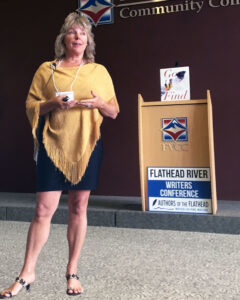 If I can do it, anybody can
In the 1970s, I was a scrawny teenager from the flatlands of northern Michigan with no idea what I wanted to be when I grew up. I didn’t want to follow my mother’s life, raising three kids, working a secretarial job she hated, and smoking unfiltered Pall Malls. She would say to me, “Whatever you do, don’t take shit from nobody. You go after your dreams.”
Except I didn’t know what my dreams were. An indifferent student, I drifted through school smoking pot and ski-racing. No way could I stand an indoor career like being a nurse, secretary, or teacher.
At age fifteen, I went on a month-long backpacking trip to the Bob Marshall Wilderness in Montana. Overwhelmed by the grandeur of the Rocky Mountains, on the first day, I stood at the trailhead with a pack that dragged down my shoulders, hiking boots that rubbed my skinny ankles raw, and a map in my hand full of undecipherable squiggles.
“I don’t know how to read a map.” I whined to the bearded guide. “We are hiking where?”
I really wanted my mommy to rescue me from an adventure far more daunting than I’d anticipated. But mommy wasn’t there. It was time to put on my big-girl pants.
The trip taught me how to read a map, use a compass, and navigate the landscape. It also taught me to refuse defeat, work with a group, and discover the consequences of self-absorption.
Upon my return home, I’d changed. I had fallen in love with great expanse of the west and knew I was destined to live a life of adventure and travel.
But how?
There were no manuals, no female mentors, and no way to make a living for a poor kid from the mid-west in the outdoors.
The mountains called me back for college at the University of Montana in Missoula, where I pursued my outdoor passion. I volunteered as a ski patroller, took an avalanche class, and landed a work-study gig guiding backpacking and ski trips in the US and Canada.
Geology, my topic of study, kept me in the field and forced me to be proficient in map and compass, necessary tools needed for success. I was among a small handful of women in a sea of men in my science courses. I soon learned those male classmates occupied desirable outdoor professions.
To break in, I’d have to find my voice and fight for what I wanted. My mom’s lesson took on new relevance and meaning. Somewhere in my fight to be heard and seen, perseverance and determination blossomed.
I now had a dream and began to chase it.
For the early part of my career, I looked for gold in rocks. I was outdoors but the work didn’t fulfill me.
Then at age 33, I learned about an avalanche that buried three toddlers near their rented condo in Crested Butte, Colorado. They were playing outside while the parents loaded the shuttle bus to the airport. Suddenly, an avalanche barreled down the mountain and completely buried the three children. Two were found within six minutes. The last was located an hour later, under 10 feet of snow and dead. The local avalanche dog had failed to find him.
That horrifying story stuck with me, working deep into my core. I asked myself, “What if I trained a dog to save a life?”
That simple question set me on my journey to serve my community, understand K-9 behavior, ski area medicine, and avalanche search and rescue. With little guidance or formal training, my rebellious black Lab, Tasha, and I learned skills needed to find lost people. We soon discovered most missions were not rescues but recoveries.
We became the search dog team to call in the high country of Colorado. Tasha dug up victims in avalanches, drowned in water, or lost in the woods. She even found victims of crimes. We kept our promise to never leave anyone behind. One mission climaxed in the rare and precious experience of finding a missing boy alive.
I was asked once, what is the best thing I’ve ever done for a human. I answered, “Helping family members find their loved ones.”
Tasha and I received Congressional Recognition for our efforts. Our creative, productive, life-affirming partnership taught me how to find myself, my purpose, my mission in life.
Writing Go FindThe mutual respect, bond, and adventures with Tasha prompted me to write about our search career. Writing a book is like training a puppy. Facts and ideas rambunctiously tumbled and romped through my mind. I had to learn discipline before I could trot out well-crafted story.
Over the past forty years, I’ve carved out a fulfilling and rewarding path as author, wilderness medicine and avalanche educator, desert survival instructor, gold exploration geologist, backcountry risk manager, and K-9 search and rescue handler. And I’m still doing it happily and making a decent living.
I am the consummate traveler and life-long learner having worked on the highest, coldest, and hottest places on earth. For a quarter-century, I’ve led my outdoor educational company, Crested Butte Outdoors, to international acclaim, teaching students from the Secret Service, rocket scientists, and Sherpa guides on Everest.
What I’ve learned about the writing process and my not-so-ordinary career: it’s not a destination you reach one day and you’re there. It’s a path that continues over the ever-changing topography of life. I continue my search, to Go Find better ways to show up as a friend, a writer, an educator, and a mindful leader. I honor the times I’m not connected or energized. I honor the times when I fall behind. Sometimes even the strongest leader must be a follower and I will allow myself to show up as a follower. All roles, equally important.
Looking out my office window today at the snow-covered peaks of the Rocky Mountains, I ask, what would I tell my 15-year-old self who volunteered to go on that hike, in an ill-fitted backpack with bruised and blistered feet, and scared shitless?
I’d tell her, “Good job for sticking it out, taking on the unknown, following a desire, walking with your fears. If I can do it, so can you.”
My unconventional career has turned me into a confident search and rescue leader, an extraordinarily successful business owner, and if I must say so, a pretty compassionate and empathetic human.
Little did I know, I was paving my own wonderful, rewarding way for others to follow.
It’s not too late. You can find your dream and your life’s purpose. I’m here to help.
-The end-
The post Finding My Purpose and Passion appeared first on Susan Purvis.
Safety First! Training��Mt. Kilimanjaro Guides at 19,000 Feet
Safety First! Wilderness Medicine Course and hand washing 101 for the Mt. Kilimanjaro guides in 2005. “Finger in your eye. Ten push-ups. Now!” Those of you who know me are […]
The post Safety First! Training��Mt. Kilimanjaro Guides at 19,000 Feet appeared first on Susan Purvis.