Rachel Walkley's Blog
July 27, 2022
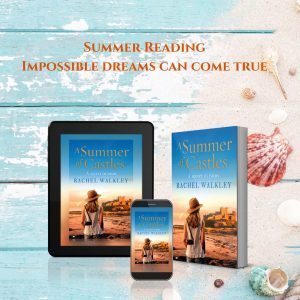
New Release – A Summer of Castles

It’s a scorching summer in the UK and records are being broken. It isn’t the first hot summer and it won’t be the last. In 2003, it was warm, although not to the same degree as this July. The reason for the year? Well, for one thing I needed dry weather, it is crucial for the two key characters in my new book. One is a photographer, the other an artist, and both are required to work outside.
A Summer of Castles captures that heat of summer in the scenic locations of the north of England, specifically ruined castles, some famous, others not so. It’s not the castles that harbour secrets though, but the people who visit them. Robyn is daydreamer with aspirations, and her artistic counterpart has a past he wants to keep hidden. What will happen when they meet each other?
Staying in contact these days is less of an issue, but do you remember the days before social media and Whatapps groups? When mobile signals were poor and WiFi only available in limited locations, like internet cafes. It was much harder to keep connected to friends and family, and the world beyond. So when two people’s paths collide, how do they keep track of each other when they’re not sure if they can trust each other?
A Summer of Castles is my fourth book touching on the themes of love, guilt and family secrets, and magic too. There is that element of the unknown that accompanies my stories. I hope you’ll enjoy finding out what is special about Robyn.
Buy Now AMAZON – Kindle and PrintA Summer of Castles
A secret in ruins.
At the beginning of the sultry English summer of 2003, Robyn Yates quits her job to photograph fifteen castles for a man she’s never met. A man who won’t tell her his real name.
What motivates her is an unusual ability she can’t explain nor understand. Somebody does though and is keen to exploit her secret.
But Robyn isn’t alone on her journey. An artist is painting pictures of the same castles. Wherever she goes, so does he, like a stalker. But is he dangerous? And could this man be the same person who wants her photographs?
She decides to challenge him, never anticipating that the confrontation will change the path of both of their lives.
The stifling summer will eventually end, but will Robyn find out the truth in time?


July 14, 2022
Impossible or improbable? The Chance Encounters
“How unbelievable is that?”
“That would never happen in real-life!”
I’m sure some of us have said these things when reading a novel.
How far should authors go with storylines that rely on remarkable events and coincidences, especially ones that requires readers to suspend their incredulity for the sake of moving a plot forward?
But remarkable events do happen in real-life, including encounters with strangers that turn out to show how connected we all are to each other.
Here are some of my true-life experiences.
While working in the library of a national museum, I got talking to a visitor. I needed his home address for a transaction. I noticed it was somewhere close to where I grew up as a small child. Turns out he was taught by my father, and had strong, very complimentary memories of my dad.
At the start of a new career, I attended a training course for new employees of the company. Sitting next to me was a man a little younger than myself. We discovered we had grown up in the same county on the other side of the country and attended the same high school, although not at the same time. He had been taught by my mother.
After a lovely holiday in Greece, sitting on the floor in Athens airport waiting for my fight, I glanced behind to see a man walking across a plaza. I recognised him immediately. I scrambled to my feet and just caught up with him. He gaped in surprise too. He had been my music and occasional piano teacher and we hadn’t seen each other in years as he had emigrated to the Middle East. I would have missed him but for some reason I had looked over my shoulder at the precise moment he walked by.
On honeymoon in Mauritius, I fell ill with a viral infection. The hotel called the local general practitioner, a young man who had trained as a doctor in the UK. Nothing especially remarkable as many study medicine in the UK, until he said he had worked at a familiar local hospital and lived in a small, rather boring town – the same place I went to high school. (I didn’t disagree about the boring part).
Another airport, this time Chicago. I was transferring flights on the way home. Chicago a big airport, yet my companion and I managed to miraculously bump into the sister of friend. We had no idea the other was on holiday. One person among thousands as we dashed from one gate to another. What are the odds?
Then there were my university days. I was one of twenty-six postgraduates, we came from all over the country and several overseas students too. One turned out to have lived in the same village as myself, though separated by a few years, but we had mutual friends. It’s one of thousands of villages! Another student attended a London spots centre, and while she bounced up and down on a trampoline, I was in the sports hall fencing. Only a curtain separated us. But because I wore a protect head guard, we never recognised each other and only found out when we pinned down the exact location and day of week.
There are over 70 million people in the UK, and yet I have met people I know or whom have strong connections with my family or places I have lived in, and these discoveries are spontaneous, based on chatting or gentle probing.
I like to categorise my books as magical realism because then I can explain away bizarre improbable encounters in my books as ‘magical’. However, perhaps I’m being too cautious. Life is full of such coincidences and we shouldn’t be surprised to read them in a plot. Under a different pen name, I write crime novels. The first in the series is called Chance Encounters. There is no magic in this story. The plot relies on the very thing I make magical in my other books – coincidences.
So, I ask myself, having two strangers bump into each multiple times while travelling, is that entirely feasible? (This is the idea behind my next book, A Summer of Castles). Maybe there is some other force at work – something or somebody that can influence the direction of our lives, would that be far-fetched or a good plot ploy? Well, it probably doesn’t matter anyway. Writers can get away with anything. It is fiction after all!
June 5, 2022
A new book on the horizon
Here’s a sneak preview of my new book, one that combines romance, magical places steeped in history and a mystery involving an artist and a photographer.
Why is Robyn reliving the tragedies of the past in her daydreams?
And who is stalking her as she travels across the north of England photographing castles?
The past is never forgotten, it can only be hidden.
A Summer of Castles
Coming soon!
September 2, 2020
Pick a name, any name.
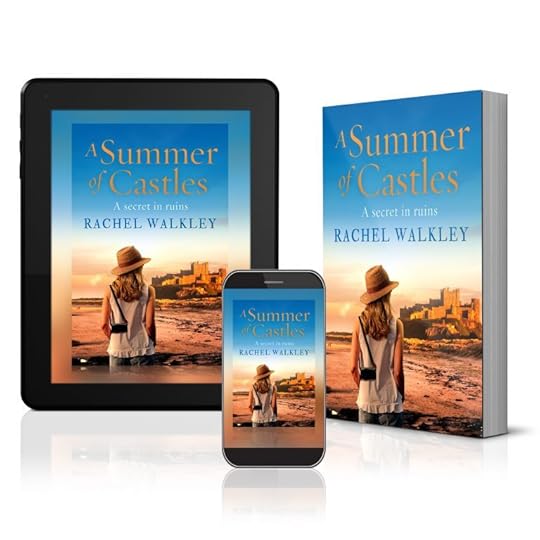
Choosing a character’s name should be a fun part of writing a novel. Whether you have a name you’ve always wanted to use, perhaps even created a story specific to it, or relied on random selection, the book will always be known in your head as ‘so and so’s’ story. The Women of Heachley Hall is Miriam’s book, Beyond the Yew Tree is Laura’s. In The Last Thing She Said, which features three women, I considered Naomi’s tale because she started and ended the story, but it’s just as much Leia’s and Rebecca’s.
I’m currently writing crime novels, and this time the protagonist’s name was established long before the plot solidified. Julianna, and she’s not budging from that name. I have pondered more on her surname, which I changed to reflect her family background, but it features little in the books. First names are heavily used in novels, and there are two things that I always consider before picking one. How easy is it to type? Yes, that’s a fundamental thing for a touch typist. If the combination of characters triggers typos, then why use it? Secondly, if I did change my mind and want to use a different name, how simple is it to use find and replace. I’ve read of author’s troubles when they discover part of the name is intrinsic to other words. For example: Jan, Em, Rich, Will, May, June; all of these words are ambiguously used in text.
When it comes to minor characters, I often play around with random name generators. There are plenty about, and some are incorporated into writing tools. It becomes a great time waster when you’ve run out of steam with the writing. The temptation is to come up with something exotic, or weird combinations of letters, or gender bender names, ethnic mixes or totally made up names with no historical precedence. It’s fun, but dangerous. For at the end of the day, when a reader is immersed in a book, they skim over the letters, noting nothing more than the label of a dialogue tag or the substitution of a pronoun. Keep it simple, and you can’t go wrong.
There is one other dilemma. When writing in first person, how do you drop the name into the text? How many pages from the beginning of the book do you write before you realise there has been not one opportunity to introduce the name of your protagonist into the story? Hello, readers, I’m Ben, this is my character’s name, now keep reading. Of course, there is always the option of never actually giving your protagonist a full name. Think of Rebecca by Daphne du Maurier. I always assumed Rebecca was the protagonist’s name, but no, she’s the first Mrs de Winter, and what we’re reading is the story of the second Mrs de Winter, who is called ‘my dear’ by her husband. Her first name is never revealed, and it adds to the mystery, the tension between husband and wife. Cleverly done.
I don’t think I could be that daring. I’ll stick to my name generators and try to come up with something likeable, and easy to type.
May 14, 2020
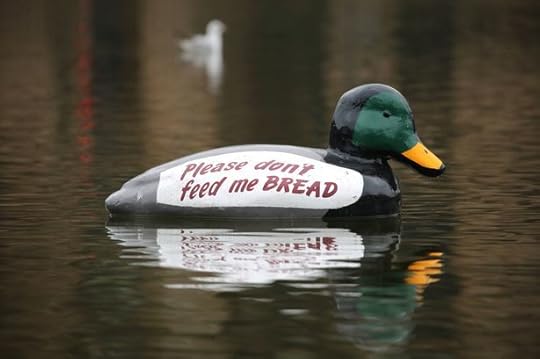
Duck Day – a short story
Between writing novels, it’s refreshing to do something less demanding, and quicker. I keep an eye out for writing prompts, and a while ago, this one caught my attention:
International Stale Bread Day.
The resulting short story, I entitled Duck Day, and begins on a stretch of common land behind a housing estate:
The ducks lined up in rows. The greedy mallards to the front. Behind them, the feathery white ones chased each other, skimming their feet over the water as they scrambled for position, while the sprightly moorhens darted in and out of the reeds. They quacked a tuneless chorus, an endlessly noisy carbuncle on an otherwise serene day.
Stephen rested the basket on the muddy ground by the pond. “Right!” He clapped his hands together. “Time to feed the ducks.”
“Why today, Dad?” Danny kicked a stone. He’d much rather be watching Sponge Bob underwater not ducks paddling above.
“Because…because, it’s International Stale Bread day,” he declared.
“Is that why you went to all those bakeries yesterday?”
Dragging himself out of bed before the night shift, he’d visited three cafes and two enormous garbage bins outside the supermarket. Stephen had scooped out the leftovers with gloved hands, isolated the slices of dry bread, the rock-hard rolls and buns. He’d dug through until he found the half-eaten loaves and shaken out the fillings of the sandwiches. The basket hamper was filled to the brim with dead bread.
“Yep,” he answered, gazing across the expanse of grey water. “This is traditional, son.” One day a year, he had to do this. Some folks hated squirrels, others, foxes or moles. Stephen’s particular foe walked on webbed feet and talked incessantly.
“And we feed the ducks.” Danny swung the scarf around his neck.
“No duck should starve on a winter’s day,” he said. “Now, put your gloves on.”
He slipped on his and stretched his fingers to the tips, rather like a surgeon. He considered it an operation, but more like a military one. Checking over his shoulder, Stephen bent and uncovered the rounds of ammunition. Dozens of balls of bread scrunched into pellets.
“Do not pick at them or eat them,” he reminded Danny.
Danny crouched next to the basket and poked his finger inside. “Yuk. Brown bread.”
“Has plenty of seeds for them.”
“My teacher says you shouldn’t give ducks bread. It swells in their tummies like a balloon and makes them sick.”
Stephen snorted. “Teacher’s wrong. Bread is what they need, especially when there is so much going spare. All that waste.”
Danny’s little nose twitched. “Teacher says we should feed the poor.”
“And the ducks,” Stephen added gruffly.
Danny stood at the waters edge and pointed at the nearest duck. “He’s fat. He’s a fat as Mr Hilliard in No. 5.”
Stephen squinted through his glasses. “Some get lucky. That one other there, look at it, poor thing. Scraggy.” He waved his arm indiscriminately.
Danny’s boots slipped further into the water. Stephen reached out and pulled him back. “Careful, son. They may look harmless, but they have a vicious peck.”
Stephen examined the basket and picked up a handful of bread balls. He slid one foot close to the water, drew back his arm and flung the missiles into the middle of the raft. They squawked and flapped their wings, fighting amongst themselves until waves lapped by his feet.
He smiled. Satisfied the first salvo was a success, he armed himself with more crusty bread. “Come on, son. You aim for them blighters over there.”
The boy wasn’t sure. He picked up one tiny slug of a bun and flicked it into the water. It sank.
“Why don’t they call it duck day, Dad?” He picked up a crooked stick and threw that instead. It drifted into the reeds.
Stephen continued to scatter bomb the pond with showers of bread. Crumbs skimmed over the surface forming a dusty film. The reflection of a man developed behind Stephen. Tall and shimmering, the image grew larger.
He wore a coal black jacket with fluorescent stripes down his arms. His jeans hung like sacks around his legs. Perhaps once a coal miner, he might remember when the pond was an empty pit and the rows of houses had smoke pillowing out of their chimneys. The nature reserve was the council’s idea of rejuvenation.
“What you doing?” the man barked.
Stephen hastily covered the contents of the basket. “Just admiring the ducks.”
Danny emerged from the undergrowth where he’d been hunting for insects. “We’re feeding the ducks with bread, but Dad says it’s okay because the teacher is wrong about bread.”
“Feeding the ducks?” The man sneered. “Why? They’re bleedin fat enough.”
“It’s Stale Bread Day,” Danny rampaged, beating the nettles back with his stick.
Stephen cringed. “He’s excited.”
“Well don’t feed them. They’re a bloody pest.” The man picked up a stone and hurled it at a mallard. Irate quacks bounced back and forth, intensifying as the bird limped away. “They swarm around like bees, and them geese.”
Stephen wondered for a minute if he should tell the truth about the bread, but Danny was always too quick for him.
“Dad. Look at that one. He’s falling over.” Danny gestured with the tip of his stick at one white duck, whose pink beak was tipping into the water.
“Oh, he’s drinking,” Stephen said quickly. They should go. It was happening faster than he thought.
“He’s right. There goes another.” The man strode to the edge of the pond. “And another.”
“Dad, they’re drowning.” Danny’s face chilled Stephen’s bones. His little boy was crying.
Stephen froze, unable to explain. His stomach churned into knots. He should have left Danny at home, but his mum wanted him out of the house while she baked a cake.
“What you been feeding them?” The man threw back the cover and delved his hand into the left-over bread.
“Don’t!” Stephen shouted. “Don’t touch it.” He hurried over.
The nuggets of bread had crumbled apart, revealing dark centres. “What’s this?” asked the man, his nose wrinkling in disgust.
“It’s…” Stephen fumbled, hunting for an excuse. “Chocolate drops. Like you get in French bread.”
“Oh, brioche. Tasty. But you’re right, it’s rock hard.” The man rose to his feet, losing interest. “Well, they don’t like chocolate. Like dogs, perhaps. Don’t feed them chocolate.” He chuckled.
Stephen laughed, half-heartedly, but Danny was wiping his nose. He put a comforting arm around the boy. “Don’t you worry, lad. They just over-indulged.”
“What’s over-indulged?” the boy asked.
“They’re too fat,” the man laughed. “Well, I leave you to it. The more you kill the bleedin better. That infernal quacking keeps me awake at night.”
Stephen watched as he walked off, whistling. Then, he sighed. “Phew.”
“Dad,” Danny picked up his discarded stick and resumed beating the brambles. “Are we killing the ducks?”
“Nah, of course not. But we should go. They do look stuffed.” He picked up the basket. Out of the corner of his eye he saw a moorhen toppled over and floated away.
It took two minutes to walk home. Their thin house overlooked the pond and as Stephen walked in, he smelt the warm flavours of oven baked cake.
His wife kissed his cheek and laid out the plates. “Tea and cake, yes? For my two adventurers. How’s stale bread day going?” She winked.
“Okay,” Stephen admitted. It had gone alright in the end. Last year, the cull had taken out a few dozen, this year, perhaps not as many.
She sliced the cake into generous portions. “You’ve washed your hands, Danny?”
The boy nodded and held out his plate.
“Good. Now tuck in.”
Stephen licked his lips and helped himself to a mouthful of moist cake. “Mm. Tastes good, dear.” He slurped on his tea and took another bite.
Danny was equally quick. His wife pecked at hers.
“Mum!” Danny beamed, holding out his plate. “You put chocolate chips in it.”
“Oh, yes. Found them lying in a bowl. Thought, wouldn’t they make it nice.”
Stephen choked on his mouthful. “Oh, my God,” he gasped. He felt sick. Clammy. Horrified.
Danny’s pallor turned icy white and his wife hung her jaw open, revealing a brownish tongue.
Stephen spat out his cake. “I think, if we’re quick, we might make it to hospital in time.” He shook the arm of his sleepy wife, but she merely nodded. He stumbled to his feet, hunting for his car keys in his pocket. The last thing he heard as the darkness overwhelmed him were the ducks squawking right outside the kitchen window.
A chorus of laughter.
March 30, 2020
Read an extract of Beyond the Yew Tree
Check out the latest posts on the virtual blog tour from the comfort of your sofa…
Satisfaction for Insatiable Readers – a dream – read an extract
Tizi’s Book Review – A story that keeps you on the edge on your seat. Beautifully written about how the truth is the most important thing and understanding one’s action without condemning them. And also that the truth will always come out, even if it may take a longer time than predicted…
Vain Radical book review – I adored this novel. It did what literature should, allowed me to escape, and rekindled my energy. It’s well written, well edited, and packed full of wonderful history.
March 28, 2020
Interviewing the author
It’s day two of my blog tour, and I have a couple of places to visit, so please follow me.
Splashes into Books invited me along for an interview. Faced with questions, it can be a little daunting – what to reveal about myself and my books? However, I actually find that interviews make me realise things about my books, the characters and what motivates me and that in the midst of writing, it’s easy to forget what draws a reader into your book.
Jess Bookish Life enjoyed the dual timeline, and has posted a lovely review explaining why. She also posted this fabulous picture – I hope she doesn’t mind me stealing it!
Beyond the Yew Tree – Amazon Link
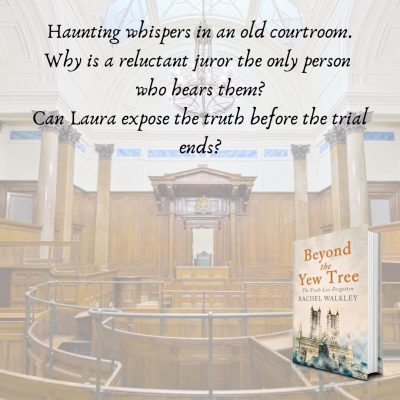
Whispers in the courtroom.
Only one juror hears them.
Can Laura expose the truth before the trial ends?
In an old courtroom, a hissing voice distracts reluctant juror, Laura, and at night recurring nightmares transport her to a Victorian gaol and the company of a wretched woman. Although burdened by her own secret guilt, and struggling to form meaningful relationships, Laura isn’t one to give up easily when faced with an extraordinary situation.
The child-like whispers lead Laura to an old prison graveyard, where she teams up with enthusiastic museum curator, Sean. He believes a missing manuscript is the key to understanding her haunting dreams. But nobody knows if it actually exists.
Laura is confronted with the fate of two people – the man in the dock accused of defrauding a charity for the blind, and the restless spirit of a woman hanged over a century ago for murder.
If Sean is the companion she needs in her life, will he believe her when she realises that the two mysteries are converging around a long-forgotten child who only Laura can hear?
March 27, 2020
Beyond the Yew Tree is live and on tour!
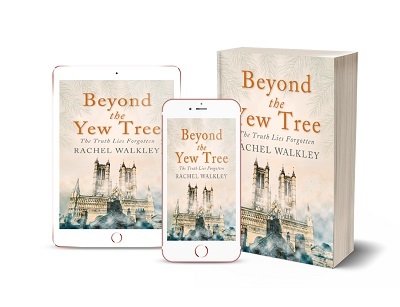
My latest book is out on release and its gone on tour. You can read reviews and a guest post today, so please pop along to the blogs below and meet the fantastic book bloggers and reviewers who help support authors.
Beyond the Yew Tree is out on Amazon on Kindle, and gradually over the coming days in paperback – Amazon doesn’t rush these things!
The link is here: AMAZON
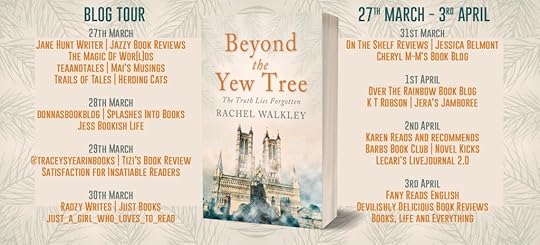
Today the Yew Tree is visiting the following blogs:
The Magic of Worlds – Guest post: Location, location, location.
Mai’s Musing – Review
Trail of Tails – Review
Whispers in the courtroom.
Only one juror hears them.
Can Laura expose the truth before the trial ends?
In an old courtroom, a hissing voice distracts reluctant juror, Laura, and at night recurring nightmares transport her to a Victorian gaol and the company of a wretched woman. Although burdened by her own secret guilt, and struggling to form meaningful relationships, Laura isn’t one to give up easily when faced with an extraordinary situation.
The child-like whispers lead Laura to an old prison graveyard, where she teams up with enthusiastic museum curator, Sean. He believes a missing manuscript is the key to understanding her haunting dreams. But nobody knows if it actually exists.
Laura is confronted with the fate of two people – the man in the dock accused of defrauding a charity for the blind, and the restless spirit of a woman hanged over a century ago for murder.
If Sean is the companion she needs in her life, will he believe her when she realises that the two mysteries are converging around a long-forgotten child who only Laura can hear?
March 20, 2020
Taking my book on a virtual tour
In the current unfortunate situation the world is facing doing as much as possible virtually is the best option. For an author the most rewarding way to celebrate a new book launch is to take it on tour, which I’m doing, but it’s okay, nobody need leave their sofa to find my book. It’s going virtual.
Thanks to wonderful book bloggers and reviewers, my book will be visiting lots of great places across the world. You’ll be able to read extracts and the answers to interview all kinds of interesting questions. If you enjoyed The Women of Heachley Hall, Beyond the Yew Tree is a delightful, uplifting read. You can pre-order it today at Amazon.
Keep an eye out for the first day’s events on the 27th March when my book goes live – you can follow me on Twitter at @racheljwalkley or Instagram @raejcreations
March 18, 2020
Uplift yourself
There’s no such genre as uplift, just as there isn’t one called griplit, which is applied to thrillers, it’s just marketing jargon used to encourage readers to jump on your book. However, it’s at the back of my mind when I write that my books progress to an endpoint that is satisfying for the reader.
In order to reach that ‘uplifting’ moment, I like to think I’m leading a reader into a different world, one they can escape to and forget about their daily worries, or simply enjoy a good read. But in order to achieve that goal, I have to start somewhere less pleasing. Yes, the downside of up, is you have to begin a story at a low point, and that means putting your main character in a difficult place. They might be going through a job crisis, unhappy, struggling with relationships, running out of money, losing friends. Maybe they’re in a rut and need something exciting to happen. That might be the case for Laura, who is on jury service, the starting point of my latest book, Beyond the Yew Tree.
Is it exciting? Well that would be spoiling the story. What is unexpected are the people she meets and the secrets she uncovers. Along the way, will she be ‘uplifted’ and undergo a metamorphosis? Again, that’s for the plot to tell, and certainly she’s going to be challenged, and so will other characters that have surprises in store for her.
The mission of a satisfying read is to leave the reader content. Hopefully I’ve managed to achieve that even if the story might bring a tear or two to your eyes – be warned!
Pre-order today on Amazon Kindle