Jeremy Thomas Fuller's Blog
March 29, 2018
The unusual joy of discovery
Magic. Adventure. Mayhem. Ferrets.
How did the ferrets get involved?
Allow me to explain the planning process—or lack thereof—that resulted in the strangeness of PANTHEON.
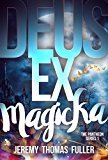
Deus Ex Magicka (Pantheon Book 1)
Jeremy Thomas FullerStarmist EntertainmentKindle EditionEnglish
Buy on Amazon
The testing of the scenes
Every time I write a new book, I start with a test scene. I just sit down and write, and see what happens.
At this stage in the process, I don’t yet have an outline. I do have an idea of the setting, the magic system, the main character, and often some semblance of the conflict. But that’s it—no plot, no character arcs (usually), and often the magic system is fairly ill-defined. Character backstory isn’t necessarily there, yet, and neither are any of the other characters in the book.
The goal is to write the cold open, and to do it with hardly any planning in advance.
I’ll dig into why and how and other questions like where is the spiced tea we were promised, but first let me tell you how successful this method is: out of the 10 test scenes I’ve written to open a book, 9 of them survived until the final draft (albeit revised). The only book this didn’t work for was my very first novel, and that entire novel got rewritten anyway.
That’s a pretty damn good success rate.
The whys and the hows and the wherefores
At first, I did this because I needed to get some words on the page. Now I do it on purpose.
Why?
I’m not a discovery writer—not really. I’m a planner, which means I create detailed outlines and execute them according to my plan. But discovery has a way of seeping in, and there is no better place for it than right at the beginning.
Test scenes are where I have the most fun. They’re where I’m the most fresh, where I haven’t exhaustively brainstormed everything, figuring out the highs and lows and everything in between. I have a blank canvas, with just the seeds of some ideas—and the resulting space to play in is awfully entertaining.
Sure, sometimes I have to modify the results. Usually, in fact. But the stuff I come up with is often incredible, and very, very useful. This is especially the case with PANTHEON. There’s something about writing when there are no lines, no strictures, no requirements. There’s something freeing about it, but I can only do it for so long. Once I’m past that opening scene, I need that structure. I need to know where I’m going. Otherwise I have nowhere to go.
But that opening scene? That opening is gold.
The results
So there I was, sitting in a dark bar, drinking beer that was pitched somewhere between bitter grass and tears, clacking on my laptop like a hyperactive chicken with a proclivity for IPAs. I knew that I had an impossible magic system, but I hadn’t clarified how, exactly, it should work. I knew I needed a character and a villain, but I had no idea who—or what—they would be. I didn’t even know what city I was in, I don’t think. Maybe I did. It’s all a blur.
Maybe that was the ferrets’ fault.
The ferrets, you see, were born out of this test scene. They came from my beer-soaked brain, leaping off that sticky bar like that cockroach I could have sworn hadn’t been there a moment before.
Maybe I should find a different bar.
I hadn’t been expecting the ferrets.
And so the model of PANTHEON was born: strange occurrences from the sky, often involving small animals (for reasons I didn’t know at the time, but would later clarify into the system—see GODS for more detail there), and also involving things like weather, and coins, and Mayan faces, and a lot of stuff I just hadn’t designed yet.
All in all, it was a very entertaining experience.
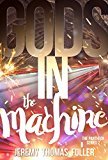
Gods in the Machine (Pantheon Book 2)
Jeremy Thomas FullerStarmist EntertainmentKindle EditionEnglish
Buy on Amazon
The future in that scene
That opening scene became the template for the rest of the series. I took the strangeness I’d developed there, when I’d allowed my brain to just run wild, and I turned it into a system. I turned it into a plot. And sure, I had to adjust and clarify a few things. But overall, that opening scene still survives.
And so does the opening from GODS, albeit revised. That opening—with Bitteric in the subway—was entirely written in discovery mode. I had no idea what the plot of the book was going to be. And so it was that in the dim morning hours, sitting on my now-forgotten leather recliner in an empty apartment, listening to the scritch-scritch sound of my cat’s claws on the hardwood floor, I wrote the rather strange and incredibly run-on opening to book two in this series.
And turned it into an entire plot.
That’s the power of discovery. When you let it happen, sometimes it really runs away from you. Sometimes it turns into a bomb on the subway, with your characters hopelessly behind, and all of Manhattan is about to explode, and also there’s some nonsense about a tutu and glasses and Marge, your secretary who jumped out of the twenty-seventh floor window, even though she wasn’t a wizard, and dammit, where is that spice tea?
Sometimes—maybe even most of the time—that’s exactly what you need.


March 25, 2018
The beautiful lightness of brevity
Novellas: movies you can read.
That’s essentially the pitch. Novellas are books usually in the 20-40k word count range. DEUS EX MAGICKA is 192 pages long in paperback, and GODS IN THE MACHINE is an even slimmer 170. These are books that take 2-4 hours to read depending on your speed. They’re bite-sized chunks of entertainment.
And they’re a hell of a lot of fun.
The story in your head
One of the strengths of novellas is that they can be read in one sitting if you so desire; and, more importantly, the entire plot can generally be kept inside your head at once. Full-length novels are more complicated: there is so much plot, so many characters and complications, that it’s often impossible to remember everything at once as a reader.
In novels, authors like me employ tricks to get you to remember the pertinent things we need you to remember at the moment we need you to remember them. And while I still use these same tricks in my novellas, it’s a lot less necessary. This has benefits both to the author and to the reader. I spend less time repeating things, and you spend less time wondering what in the hell I’m talking about.
It’s a win-win situation.
How to plot a novella
Simple: plot yourself a novel, but with one viewpoint character and no sidequests.
That’ll probably get you there.
We fantasy writers love multiple viewpoint books (and they’re extremely powerful, but I’ll save that for a future post). Just by dint of removing all those extraneous viewpoints, you as a fantasy author have probably gotten yourself down to 50k words of plot or less. Now just leave out all the sidequests, too, and you’ve got yourself the right length.
Deus Ex Magicka (Pantheon Book 1)
Jeremy Thomas FullerStarmist EntertainmentKindle EditionEnglish
Buy on Amazon
Note what I didn’t say to take out: don’t dumb down the conflict. Don’t eliminate the character arc. Don’t alter the structure in any other way, in fact—I still loosely follow the Seven Point Plot Structure even for my novellas (though I tend to simplify it to something closer to Three Act Structure). It’s important that you continue to use foreshadowing, that your character go through a Transformation, that your book contains a Darkest Night, that you solve the plot using a combination of clever (foreshadowed) mechanics and the character lesson that was learned. Do all the same things you do in a full-length novel, just do them with one character and without any distractions.
The upsides
Novellas are a lot easier to visualize in your head. Not just the reader’s head, but your head. And I don’t mean the visuals of the story—I mean the plot. When you can keep the entire plot in your head, it’s a lot easier to craft compelling, compact story arcs that really work.
It’s also a lot easier to spot problems when they arise.
The downsides
Perhaps the primary downside I’ve encountered is the shortened character arcs. There isn’t room for a lot of nuance or lengthy development, which can lead to your Transformation moment feeling a bit unearned. It’s important that you compensate for this by littering the text with pieces of the arc—otherwise, readers aren’t going to buy that Transformation when it happens.
Another downside is the lack of multiple viewpoints. Sure, you could do a multi-viewpoint novella, but then you’re even further limiting your plot and character arcs. For me as an epic fantasy writer, single-viewpoint books are just much, much harder to execute. With a novella, you have no choice. That means you need to get good at pacing, at varying the setting, at keeping things moving and fresh.
It’s good practice.
Where novellas go
Novellas are notoriously hard to publish, or at least they were for a while. They were quite common in the early days: A Christmas Carol, A Clockwork Orange, The Strange Case of Dr. Jekyll and Mr. Hyde, and Of Mice and Men are some prime examples. Even science fiction and fantasy have gotten into the act: The War of the Worlds, Ender’s Game, Dragonriders, and Coraline are or originally were novellas. But the format has struggled to find a place on traditional bookstore shelves—it’s too expensive to produce, and readers aren’t willing to pay enough money to make it profitable.
Enter self-publishing and print-on-demand paperbacks, and you have a winning formula. This is where I’ve placed the PANTHEON series, and it’s where thousands of other authors have found a home for their worlds.
But that’s not where the story ends. The novella and short novel format (let’s call that 50-60k words) is gaining steam out in the real world, but not where you’d expect: James Patterson’s BookShots imprint specializes in small books that go in grocery stores. It’s a marker of what we already knew: that the world is only interested in short experiences, entertainment in a flash, and the novella is perfectly positioned to that end. It gets you much of the complexity of a novel while still being digestible in a short period of time. It’s a distillation of the craft of novelization, and I highly recommend that if you haven’t tried writing one yet, you do.
Sometimes size matters, but not in the way you think.
March 20, 2018
The phenomenal thrill of speed
In today’s fast-paced lifestyle of short attention spans and even shorter patience, readers expect instant gratification. They want fun. They want adventure. They want humor and emotion and plot twists and surprises.
But most of all, they want it fast.
All of my books—and the PANTHEON series is no exception—are written using thriller pacing. This is a technique that first originated in thrillers such as those by James Patterson and Dan Brown, and is now starting to make its way into fantasy. Authors like Brent Weeks and myself are borrowing techniques from crime thrillers and technothrillers, bringing the fantasy world up to speed.
So how does it work?
I’m so glad you asked.
Deus Ex Magicka (Pantheon Book 1)
Jeremy Thomas FullerStarmist EntertainmentKindle EditionEnglish
Buy on Amazon
I’ve covered this on the blog before here, so this time let’s focus on how thriller pacing works in the PANTHEON universe. But first, let’s recap why.
Why?
It all comes down to one word: propulsion. Readers need to feel propelled through the text, turning page after page to find out what happens next. Especially in shorter books like those in PANTHEON, you want readers to not want to put the book down. The idea is to have a single, easily digestible story that feels like reading a movie (and takes about as long).
Thriller pacing is how we get that propulsion going.
Thriller pacing in the PANTHEON universe
The PANTHEON series does something unique amongst my written works: there are no scenes.
That’s right: there are no scenes. Instead, there are only chapters. Typical chapters for me in my other works average 1200-2000 words, and in my other books I include multiple scenes until I hit that word count for the chapter.
Not so in PANTHEON.
350 word scene? Go to a new chapter. 2000 word scene? That’s a chapter. Every scene is a chapter by itself, which leads to plenty of two-page chapters when you look at the paperback spread.
Where have we seen this before?
Oh, yes. With Patterson. And Brown. And every other true thriller writer.
During my redline revisions of DEUS EX MAGICKA and GODS IN THE MACHINE—a revision pass that occurs on paper in manuscript format—I found something interesting. Every time I hit a scene break, the reader in me wanted it to jump to a new page. I wanted that whitespace, that choppy feeling. Something about it kept me going, because chapter headings feel important in a way that a simple scene break just doesn’t.
And so the scene-as-chapter was born.
There’s another reason, though
I had another reason to end my chapters that early.
Too many hooks.
You read that right. I had too many hooks. They were way too good. And rather than waste them, I figured I might as well just use them all. Hooks are the bread and butter of thriller pacing, after all. And as it turns out, humorous super-wacky urban fantasy featuring an impossible magic system is exactly the right environment to produce an endless series of crazy, often hilarious hooks.
So what else is new
There’s one other pacing-related thing I’m doing differently in PANTHEON.
Stingers.
Lots of them.
Sometimes, like, four of them in a row.
Or even five.
It’s crazy, right?
This is a crazy series. And since humor relies on punch lines, and fast pacing relies on whitespace, these “stinger sentences”—sentences on their own as their own paragraph—are one of my most-used tools. I use them in all my books, but PANTHEON uses them all the freaking time. It’s not uncommon to go paragraph-stinger-paragraph-stinger many times in a row.
At first, I resisted this. I’d been trained that stinger sentences should be used sparingly. And in most of my series, that’s still the case. But with PANTHEON, I need speed. I need humor. I need punch lines.
So I need a hell of a lot of stingers.
The humor effect
Thriller pacing and humor go together like peanut butter and jelly. Like kibbles and bits. Like donuts and diabetes. When you’re laughing, you’re turning pages. When your pacing is hot, you’re turning pages. And when you’re turning pages, you’re having fun.
Don’t we all just want to have fun?
Thriller, thriller, on the wall
So that’s it. Those are my thriller tricks. Check out my previous blog post on the subject if you missed it before, and you’ll have a complete picture of what goes into making my books speed along like a bus driven by a frantic Sandra Bullock. Speed is even more important in PANTHEON, and it’s one of the ingredients that helps readers overlook what is quite possibly the stupidest magic system ever committed to the page.
Did I succeed? You’ll have to read and find out.
March 15, 2018
The incredible power of voice
Voice is everything.
As a writer, you’ve probably been told this at every turn. It’s more applicable to literary fiction, but it matters in genre fiction as well. Voice is everything, and sometimes the right choice is to not have a voice. Sometimes you want to write “transparent prose” in the vein of Brandon Sanderson, where the words get out of the way and you just focus on the action and adventure.
This is not one of those times.
Deus Ex Magicka (Pantheon Book 1)
Jeremy Thomas FullerStarmist EntertainmentKindle EditionEnglish
Buy on Amazon
Don’t get me wrong. My prose in the PANTHEON series is still “transparent prose,” or what Sanderson calls “through the window” words. These aren’t flowery words, but they do have voice. Very strong voice.
That’s because this series heavily employs humor, and humor requires voice. But why does it work? How do you do it?
These are good questions.
I’m glad you’re thinking this through.
Humor requires voice
Think of any standup comic you’ve ever seen. They’re in character right from the start, with a well-rehearsed routine that makes extensive use of voice. Voice, see, is that thing you speak with.
Oh, I guess you already knew that.
Voice refers to the word choices, the sentence structures, the particular mannerisms and jokes and the way your character sees the world. Which is really the way you see the world, in the end. Voice is the tone, the rhythm, the sound and feeling of it all. We all have it, and the more we can bring it out, the better.
But the best authors can invent new voices from scratch.
In the PANTHEON series, our main character Bitteric definitely has a voice. He’s sarcastic and self-deprecating. He’s just a little bit of an asshole, especially to his daughter. But mostly he’s bumbling, confused, trying to follow his plan but without any particular skills to speak of. Without these things, the humor wouldn’t work. A lot of the humor in PANTHEON relies on shock value, comedic misdirection, and incongruity. These things work better when the character himself is just as wacky as the style of jokes.
Why voice matters
A character with a strong voice draws you in, makes you feel closer to them. Bitteric feels relatable—even though he often (usually) does the wrong thing, his strong voice means the reader follows along with his process, with his journey, living there in his head. The voice also acts as both a distraction and as a reader surrogate: when crazy things happen, Bitteric often reacts to them in the same way the reader does—with disbelief, or by cracking a joke, or in confusion. This further connects the reader to the story, and allows me to get away with ever-stranger things in the plot.
Don’t be afraid of your voice
Take your inner voice and amplify it. Make it stronger. Don’t be afraid—and particularly don’t be afraid to let loose a little. Or a lot.
You might be surprised what happens.
March 11, 2018
The impossible magic system
When I set out to write DEUS EX MAGICKA, I gave myself one goal: to create a compelling story using a magic system that should not work. At all.
And I may have even succeeded.
The idea is simple. Take the concept of deus ex machina—gods from the machine—and turn it into a magic system. Deus ex machina is a famous literary device originally used in Greek tragedies. Unsolvable calamitous events would stack up throughout the play, until the only solution was a godlike character rising up onstage via an elevator. This god would magically solve the plot, and the play would be over.
It’s immensely unsatisfying.
To this day, deus ex machina is looked at as a failing of plot. Something shows up at the end from completely out of the blue, neatly solving everything in one fell swoop. The moment isn’t earned. It isn’t foreshadowed. It involves no particular cleverness on the part of the characters. It doesn’t use any mechanics that have been previously introduced. It is, in other words, a really stupid idea.
Yup. That’s how magic works in this series.
Deus Ex Magicka (Pantheon Book 1)
Jeremy Thomas FullerStarmist EntertainmentKindle EditionEnglish
Buy on Amazon
One weird trick to a satisfying system
The biggest reason any of this works is simple: humor. When you have gods appearing out of nowhere to solve our characters’ problems, it makes sense to use the strangest, wackiest methods to do so. Like six hundred chattering ferrets, or a flood of Amazonian proportions. Like rabbits, or butterflies, or a big fat guy wearing a little red scarf. I decided to go all-in with strangeness: if I was going to routinely solve impossible situations with nothing but a single Wish, I would do so in the wildest way I could imagine.
The result is a lot of fun.
Okay, two weird tricks
There’s one other reason the magic system in the Pantheon series works: it’s internally consistent, following its own set of rules and mechanics. When you Wish for something, you earn a Consequence. That Consequence will kill you—unless you have the correct Counter. There are other rules involving the interplay of forces, Deus versus Deus. There are more advanced rules introduced in GODS IN THE MACHINE, with more to come as the series unfolds. I took great care to create rules that were as ironclad as possible, although I intentionally left a lot of gray areas to give me plotting flexibility.
Three tricks, okay? Look, I never claimed to be a math wizard
The ending of DEUS is tricky. I wanted to get all meta and actually use a real deus ex machina mechanic to solve the plot. But here’s the thing: I needed it to come out of the blue, but I also needed it to have been fully foreshadowed. It needs to feel like a huge twist that you don’t see coming, but which totally makes sense once you find out about it. Most good endings are like this, but in my case I needed it to work both literally and mechanically. I won’t spoil it here—that’s for you to read and find out.
The impossible turns possible
This magic system shouldn’t work, but I did my best to make it do so. I’ll be covering the other techniques I used in future posts—everything that went into this book is intended to get you to swallow a system that on the face of it should never have been invented to begin with.
Did I succeed? I invite you into the world of PANTHEON to find out.
March 17, 2017
The beauty of fractal arcs
My epic urban fantasy series, THE PRIME SAGA, originally consisted of three books at about 250k words each. (That’s pretty long.) This is the story of how I split them in half (and added two more), ending up with eight ~120k word books.
I invented a term for it that involves fancy math, because I hate myself.
What in the good heck is an arc?
If you’re a writer, you should probably already know what this is. But let’s review for a moment.
Why do we write stories? Because we want to show people overcoming impossible obstacles. We want to see people changing, learning and growing. We want to feel conflict, because the catharsis and adrenaline we get from watching that conflict finally get resolved is a very, very good feeling.
This is the engine that drives stories.
What, then, is an arc?
It’s where we start, compared to where we end. It’s a curve of sorts. Or maybe a mountain. Or maybe a pit full of human excrement.
Let’s use my book FORCEFINDER PHOENIX as an example.
Book-level arcs
There are a few book-level arcs in this book.
The first is Megan finding who she wants to be. An assassin? A girlfriend? A trashboy, a driver, a mage? Or is she something more?
Another book-level arc is the discovery of the nefarious things our enemies—the Planners—are doing to the Citizens aboard the city, and Megan’s fight to reveal and possibly defeat them.
There are other arcs, too. In fact, there are probably 5-8 book-level arcs in this book, depending on how you count, and each one acts as its own propulsion1 for the story.
Everyone knows about book-level arcs. But are there others? As it turns out, yes. This is where my term fractal arcs comes in.
Stop using math terms
Here’s a definition for the word fractal:
A curve or geometric figure, each part of which has the same statistical character as the whole.
Alright. So the small parts equal the larger parts, in other words. This is what I mean.
So let’s explore the smaller parts.
“Part”-level arcs
Every book I write uses a structural element I call a “Part.” I’ve standardized on around 20k words per Part, though this can vary. This is the next-smallest story unit that I tend to naturally plot around, below the book itself.
I structure each Part to have an arc of its own. This doesn’t mean a full problem-climax-resolution, but it does mean a concrete series of steps, stakes, and some form of climax. Most Parts don’t resolve, because then the book would be over. Instead, the climax raises the stakes even further. Then we “hard cut” to the next Part.
Think of the arc as a beginning, middle, and end. The end isn’t a result, but it is an end. You can visualize these arcs as little mountains, plot-wise. We start small—slow—then we rise and rise until we hit our climax. (If you were being really accurate with my books, I’d then drop you off a cliff rather than slope downward. But it’s the same idea.)
“Part” arcs are a very important part of my plotting mechanism when I’m planning books. I think of them as little novellas without resolutions.
Chapter arcs
My chapters are short. Like, really short: 1200-1500 words on average, and many of my chapters of that length will actually consist of several individual scenes. But the chapters still always contain arcs.
Just like with Parts, at the chapter level we’re looking for a beginning/middle/end. Mountains, but smaller ones. And for my style—thriller pacing—you usually want that cliff-like sensation at the end of every chapter.
Scene arcs
Here’s the lowest level. Many chapters have multiple scenes, and these scenes also have plot arcs: a beginning, middle, and end.
Okay, but what really makes an arc?
Now we know that arcs can and should exist at every level. But how do you actually write them? This is a topic far beyond this one post, and it’s really the study of a lifetime of writing. But in general, an arc is something like this:
The viewpoint character wants something, or is doing something for a reason
Something happens to block that character
The character does something to try to overcome that block
Then the author decides to succeed or fail. The character either succeeds BUT, or fails AND 2. This lets you continue into another scene, and another, and another.
That’s how you make an arc at the scene level. Now repeat that at every level, but think on a larger scale every time.
The mountains just keep getting bigger
Everything is an arc, yes. But there’s one more very important thing to keep in mind as you write your book: every arc should probably be bigger than the one before it.
This applies more at the Part level than anything else. In a typical 110k-word book, I’m designing 5 parts. My goal with those is to create five parts where each one is bigger than the last. I mean bigger in every way: the pace, the action, the stakes (oh god, everyone is dying), the magic (characters learning new things about the magic), and—most importantly—the character’s emotional journey.
Visualize it as five mountains, each one bigger than the last, and you’ve got it.
How in the good heck does this help you split a book in half?
Good question. I’m glad you asked. If you’re doing this right, every Part (20k words) of the book is a kind-of-novel in and of itself. And if you’re me, you also wrote A, B, and C villains into every book. Fun!
So—to split a quarter-million-word book in half, simply extricate Villain B from Villain A, and cut the first book right where you defeat Villain A.
And since you have arcs at every level, in general your newly-cut plot should “just work,” or close.
Now, it’s not quite that simple, but it’s nearly there. You do still need to address the other fundamentals of this new, shorter book. Your book needs to have that book-level arc, which means a beginning, middle and end3 that make sense. And you need other things, like strong foreshadowing, a Character Transformation moment, a denouement, and more.
If you did your fractal arcs right, you probably don’t need to invent new conflict. Or new stakes. Or really modify the action much at all. Because whatever Part you cut at should already have driven up to a high point—that mountain peak. Then all you have to do is come back down4.
There’s a whole lot more to this story
This post doesn’t even begin to cover all the intricacies of doing all of this. There is so much involved in producing a good book. But the concept I’m trying to highlight here is that “arcs”—those beginnings, middles, and ends—exist at every level of the story. And if you’re doing it right, readers will love you.
And it will be a whole lot easier to cut your books in half, should the need ever arise.
December 22, 2016
Story development
Ah, process. Some people live by it. But most writers I meet, especially amateur writers, hate process. I’m a software engineer by trade—and I approach writing very professionally—so process is a very important part of things for me. Here, we’ll explore my approach to pre-writing and word-count estimates.
I’m what NaNoWriMo calls a “plantser”—that is, a person who plans but also does a lot of work by the seat of their pants. I’ve adapted my process to reflect this approach, trying to strike the right balance between planning and giving myself freedom to improvise as I go.
Let’s get this out of the way first: everyone approaches this differently. My process will differ from yours, and part of your journey as a writer will be finding the process that works best for you.
Pre-outline
Before I can outline, I have to start with an idea. This must include a setting[1], a character[2], and a mechanic[3]. (Note: I did not say “conflict.”) “Mechanic” often takes the form of “magic system” for me, but it can also be something else, like a Big Idea in science fiction. I call this my internal pitch.
Forcefinder Phoenix internal pitch:
A story about Megan[1], a beleaguered forcefinder mage[3] living in the Framework[2] of New San Francisco, who is the mother of Rylan [one of my Big Four characters in my epic fantasy series The Prime Saga].
The Prime Trees internal pitch:
Trey[1], a human enslaved in the floating city of New San Francisco[2], discovers that elves have been here all along—and are the ones who put him there[3].
Once I have those things in place, I feel it out to see if I’m energized by this combination enough to write a book. This is a gut-check, and I only ever write books that pass this check.
The next step is to find the conflict. I didn’t necessarily find this conflict as part of my internal pitch, but it’s necessary before you have a story. One of the best tricks is to ask yourself this: who has the most to gain, and who has the most to lose by the mechanic idea? That often gives you your protagonist and antagonist and a conflict.
The final step—and this is crucial—is to find an ending. You don’t absolutely have to have this, but I recommend it at this stage. At the very least, you need your ending state—where your character is at the end. Your actual ending needs to have something “surprising yet inevitable” that uses the Character Opportunity (that’s another blog post) and builds on it to solve the problem. I don’t always know this specific thing that happens before I outline, but I usually try to.
Got all that?
Now you can outline.
The brainstorm
The next step for me is to brainstorm a lot of stuff. This is everything—the world, the characters, bits about the conflict, developing the magic, just anything that might go into the book (or might not). This is often structured loosely or not structured at all.
The dotted line
The next phase for me is the “dotted line,” which is a pre-outline. It’s more of a bird’s eye view of the story, where I lay out all the “mountain peaks.” The key here is identifying the big set pieces and the seven Plot Points, if you want to use that structure. When I first started out writing, I stuck slavishly to Seven Point Plot Structure. But now I feel it out more organically, since I am able to instinctively build plots that basically espouse the same concepts without feeling as formulaic.
The one thing structurally that I force myself to always keep to is the 75% point, around which you need both the Character Opportunity and the Darkest Night. Dan Wells explains those (not necessarily using those terms) in the link above.
Now it’s time to outline
The final phase of all this is the actual outline. This is really just an expansion of the dotted line—in fact, I usually start with that document and just add a lot of text to it.
Here’s where things can really vary between different authors. Some will break the outline into chapters and scenes, going as far as to dictate the beginning, middle, and end of each scene. I don’t do this. I don’t even break by chapter.
My outlines get broadly broken by viewpoint and setting, usually, though it depends on what’s going on in the story at the time. This is easiest to show rather than tell, so here are some examples from my most recent outline. One thing I’ll note is that over time I’ve come to outline less, preferring to invent more stuff on the day I write the scene instead. This is just something I’ve developed a feel for.
Here’s a first example, which is a bit on the more detailed side. You can see it took me 150 words to outline an estimated 2000 words. Here I’m calling out specific things that I know I need to include at this point—everything else will be made up on the spot when I write the scene. You’ll see character notes here, too, and this all occurs in a single viewpoint:
Beam and the Remnant of Lusvunub
2k words
– Walking through town, various bits of worldbuilding. Is happy. Ruthless.
– Preparations heightening.
– Show the bourbon.
– Show the fireblade. It reminds her of an old life. She takes it with her, wishing she’d made one for herself. She was thinking of an old friend.
– Preparations heightening more.
– Somehow include mention that dead souls in Lusvunub always stay, wandering forever in the city.
– End the scene with her coming up to the lines of Remnant soldiers moving through the gate. She watches them go, checking her equipment and supplies. Magona is there.
– They talk. Show Magona dying on-screen. A spider walks across her body after she dies. Beam shivers. (Keep this subtle! This is our canonical proof that Cariel does not die.)
– Beam steps through the gate into harsh sunlight. (Don’t forget to have her dazed for a moment due to the gate.)
Here’s how the book looks closer to the middle of the outline, when things are more frantic. I have 10 characters in one place here, and the outline does not say which of them get viewpoints. That’s on purpose—I’ll feel it out when I write it. 255 words for 4000 words:
Rylan, Elanil, Imra, Phoenix, Beam, Dill, Small, Allain, Erodar, Shot:
THE UNITED SKY CITIES
4k words
– Everyone goes into the Framework to check on things. Shot is still there, mustering his troops. The Crew is huge, now. A veritable army.
– They talk about the situation. Can they use the Crew to fight the Twins, somehow? Should they?
– Rylan’s radio perks up suddenly.
– The Twins have actually gotten hold of a transmitter. They’re scientists, after all. They say that they are hunting the man who imprisoned them. If he does not show himself, they will destroy everything around them until he does, up to and including all of Valaralda.
– Wait—one of the Twins grabs the mic. He feels something…a descendant? Someone related to the soul of the Imprisoner. (It’s Dillon!) He says he is going to leave his twin and go to the other planet—Earth—to kill this descendant or hold him hostage until the Imprisoner shows his face.
– Well, shit. Nobody here knows who that is, but they now know a Twin is coming to Earth. They muster the troops.
– Allain wants to make sure Pano Sylrantheas is okay.
– Beam wants to make sure Lusvunub is okay.
– Phoenix leads them to the huntroom, where they port down to the surface. They split up into two parties at this point. A bit of discussion that Rylan wants to stay in the Framework, but Elanil wants to see Pano Sylrantheas. She wins out, because Rylan wants to stay with her above all else. Kiss.
See how there is just enough detail here for me to capture the salient points that I need? Now here’s an example from toward the end of the book. At this point I used 472 words to outline 25,000 words! (Below is just part of that outline.) I’ll explain why later:
Dill:
THE BATTLE OF NEW SAN FRANCISCO / THE END
FENNAS ELENATHON / LUSVUNUB
25k words combined
– The device is finally ready. Dill comes down, drawing his father further toward Fennas Elenathon.
– They activate the device.
– This severely stuns Orym. Now he will finally listen to someone talking.
– But he is still flying, for some reason. Dill is on a fallcar (like in Forcefinder Phoenix), following him.
– They talk as they fly.
– They end up at Lusvunub.
– Orym sees the bourbon. He stops. He loves bourbon.
– There is finally a chink in his armor.
– Dill talks to him, manages to get him to relent, to realize the error of his ways. Very emotional, pull out all the stops.
– Orym is going to be okay.
– They settle to the ground.
– We show Trey, Arra, everyone else arriving at this moment.
And here’s my final example. This is a battle sequence that’s intended to use 10,000 words. But I only put 103 words in the outline for this sequence:
Rylan, Elanil, Orym:
THE BATTLE OF THE SALT SPIRES
10k words
– (blocking, blocking!)
– Lots of interesting magic. This is the part of the book where we pull out all the large-scale stops. All the armies. Everything. This is the only part where the Department of Magical Research gets to do their thing.
– Use: The Army of Mages; the live rylak; the dead rylak; the Army of Souls; the Prime Mage Army; the Lusvunub Remnant; the Devout; the Eglaria and their shadowslaves
– This ultimately ends when Rylan and Elanil convince both sides to stop. [how do they convince the “good guys”?—via dialogue]
Okay. Here we can see me doing a few things. The “blocking, blocking!” bit is your first clue as to why I only used 103 words for a 10k sequence. I use the stage term “blocking” to refer to detailed actions—Trey flies north, encounters Arra, hits her with his staff, gets hit back, falls, casts about for magic, finds his magic, blasts her back, etc. I never do blocking in the outline stage. Instead, I do it just prior to writing the sequence. This keeps me fresh and up-to-date on what’s happening in the book specifically at that time, and it keeps me from getting bogged down in outlining. Blocking for me is almost writing—and I don’t want to do too much of it in advance.
The second thing you’ll see here is the “Use:” line. This is a reminder to myself that I have a whole bunch of different factions that I need to remember here. Without this line, I well may have forgotten one of them when I did the blocking.
The last new piece is the square bracketed statement: “how do they convince the good guys?” Sometimes my outlines include questions like this, where I haven’t quite thought it through just yet. I color-code these: red means “answer now, before writing.” Purple means “answer when you write the scene.” The one above is colored purple. I don’t sign off on an outline until all the red is gone.
Word count estimates
Now we come to the most subjective part of this whole exercise: word count estimates. Yes, I fully estimate out my entire book prior to writing any of it. And my track record is pretty good: THE PRIME SOULS and FORCEFINDER PHOENIX, my last two books as of this writing, both came in with first drafts within 1,000 words of my estimate.
How do I do it? In a word: practice. I’ve written around a million words as of this writing, and when you write that much you get a good idea of how many words it takes you to do a certain thing. I can broadly break it down into categories, like this:
Small connector scene: 500 words
Small scene, not much happens, not a lot to say: 1000-1200 words
A more standard scene where some stuff happens and/or there is a decent amount of dialogue: 2000 words
There are grades to that: sometimes I need 3000 words for a scene
No single scene of mine almost ever gets beyond 3000. (If it does, I need to chop it down with a hook in the middle.) But most of the time, especially in longer books, I’m estimating “sequences,” not scenes. Those largely break down into 4k, 5k, and 10k. A 10k sequence is going to be a very long and complicated battle involving many moving parts.
I’m not always estimating what I think the scene will take—sometimes I’m estimating what the scene needs. There are many times in THE PRIME MAGES outline where I outlined 2k words for a scene that I actually think will take 1k. But by estimating at 2k, I’m signalling my future self that I want to stretch the scene out, to pace it down, to take my time.
I’ve crunched the statistics, and I found that for my outlining style, generally 1,000 outline words equates to about 20,000 words in the book. In the case of THE PRIME MAGES, it’s a bit less—only 11,000 outline words for a 241k word book estimate. This is because fully 45,000 words of this book must utilize complicated blocking—none of which is written at this stage.
The bird’s eye view
With THE PRIME MAGES, I pioneered a new technique for visualizing my outline. I took the broad setting/viewpoint groupings from the outline and distilled them into a list with titles and word count estimates, further broken by part. (There are four parts in each of The Prime Saga books.) Here’s what that looks like for the second part:
PART TWO Estimate
Moonbase 4,000
Lorelei and Elasha 1,000
Allain and Erodar 1,000
The Airon Sea 17,000
The Palace of Memory 3,000
Ilyrion 4,000
The United Sky Cities 4,000
Lusvunub 1,500
Pano Sylrantheas 5,000
The Framework 1,000
The Department of Magical Research 4,000
Lorelei and Elasha (2) 2,000
Turovoite Upper Decks 1,500
Quynn 1,000
The Battle of Lusvunub 10,000
Part Total 60,000
Book Total So Far 128,000
This immediately showed me that I am hopping between settings a lot in this book. I’m okay with this, because it’s sort of my goal. It also gives me a nice overview of where I am and for how long, letting me decide if I think the overall structure works in terms of character and setting.
Software
Scrivener! That’s the only software I use for all this. Even when I tabulate counts for the bird’s eye view, I’m just doing that in a text document with custom tabs. This lets me stay within a single environment for everything. And while Excel is great, I prefer to keep everything in text format.
Some people prefer to outline in dedicated outlining software, such as OmniOutliner. But since I’m a software engineer, I find that I tend to think vertically in text. I prefer the freedom to format the outline any way I see fit, and not be beholden to whatever the software wants me to do.
In conclusion
This rather massive post still only barely scratches the surface of my pre-writing process. I call this process “story development,” because it encapsulates so many more things than just outlining. I’ve spent three years refining it, and it continues to evolve every time. One of the trends I’ve noticed this year is the tendency to outline a little bit less, deferring more invention to the day of writing. I think I gravitated toward this approach because when I outlined more than this, I ended up inevitably changing more of it as I went.
Your process will necessarily differ from mine. How do you outline? What types of work do you do before you start writing the actual words? How much does your outline match the finished product?
September 27, 2016
Revision! Every author’s [least] favorite thing
This past year I’ve done a lot of writing, but I’ve also been heavily focused on revision. I hate revision, but it’s a necessary evil in this business. So I thought it might be interesting to talk about some of the techniques I’ve developed. Now, this isn’t meant to be prescriptive—my methods won’t necessarily work for you—but I thought it could be an interesting exercise.
First, let’s talk about the general process.
Polish as you go
The first step in my revision process involves polishing the text as I go. I aim to write about 2000-3000 words a day, five days a week. Before I can begin writing the next day, I have to do a polish pass on the words from the day before.
Why? Because of the next step: the pacing read.
The pacing read
After I’ve finished writing an entire manuscript, I immediately render it to Kindle and read it as fast as possible. I’m talking fast, ideally 50k words per day. I do this without a laptop in front of me, just a Kindle and a phone. I use the phone to take notes as I read—the phone is a bit tough to type on, which means I only tend to write really brief notes and use a lot of shorthand. This keeps my head inside the text.
This only works if I’ve polished the manuscript first. And I don’t mean polish the whole thing at once, as a second draft. When you do it that way, you aren’t coming back to the book fresh. So I polish as I go, because that’s the only way to forget what I’ve written as I write it. And that’s the entire goal.
The pacing read uncovers most of the problems in the manuscript. Most importantly, it finds pacing problems, thus the name. But it also finds any other sort of development problems, the most important of which are plot and character issues. I also note down any copyedits I see.
After I’ve finished the read, I go and apply all those changes. If there are a lot of changes to make, I might break this up into multiple passes, incrementing the draft number each time. The final result is what goes to beta readers.
The laying down period
Once I ship the book to betas, I put it down and forget about it for six months to a year. I write at least one full book during this period, sometimes more. After this, I come back and do another pacing read, and the process starts all over. The output of that read and its changes is my final draft for submission.
So that’s the process. Now let’s talk about some of the specific techniques.
Revision types
I’ve developed a shorthand for notating what needs to be done in any given scene or chapter. Broadly, this tends to break down into the following types of revision. This will vary for you, but knowing about these techniques might help keep you on your guard for what to look for. Here they are, in order of hardest to easiest.
Plot replacement
Whelp, I screwed up the plot. This doesn’t happen very often. In fact, so far it’s only happened once: in the first novel I wrote. That was a particularly egregious example, where I had to do roughly 60k words of rewrites to replace big sections of the plot. Reasons for this vary, but it usually means I didn’t include enough intention and obstacle.
In-place rewrite
This is a scene that is fine in terms of plot, but sucks in terms of the actual words and/or blocking. (Blocking is a stage term I use to refer to the specific sequence of actions that take place.) In an in-place rewrite, I put the original scene in another window to the side and rewrite the new scene from scratch. I may borrow some language or even whole paragraphs from the original scene, but most of it gets rewritten. This technique can be surprisingly liberating, and doesn’t take as much time as I expected it to.
Global smoothing
This is a new type of revision I had to flag for my sixth draft of my first novel, THE PRIME TREES. A bunch of chapters suffer from over-revision. I can tell this is the case because the sentences are too clipped, too short, and the description is too shallow. Global smoothing could probably be an in-place rewrite, but in this case the scene isn’t quite that bad. I just need to smooth out the sentences, elongating some of them and adding additional description and connective text.
Global trim
Oops, I wrote too many words. This doesn’t happen too often for me, and usually when it does it’s happening in some character’s head. Some of my characters are just too wordy in their minds, so the technique here is to find the irrelevant stuff and snip it out. A trim could also apply to blocking and description, but usually doesn’t for me. Some authors (like Brandon Sanderson) just trim their whole draft, but that’s only because they’re always too wordy across the board. I don’t write like that.
Unflagged continuity fix
This is a continuity error, such as a magic system or timeline inconsistency, where I noticed the problem but did not flag all the places in the text where it occurs. This ranks way up here in terms of difficulty because I have to go through the whole manuscript to find all the problems and fix them. Fixing them is usually easy—finding them is the hard part.
Global polish
This is like a copyedit, where I’m fixing sentence structure and word use, but it also fixes confusing scenes. Unclear wording, bad paragraph structure, bad description—these things are a global polish. My more complex action scenes often need this.
Copyedit
This is a simple language pass: fixing duplicate words, grammar and punctuation, spelling, all that good stuff. It’s pretty mindless for me, since I’m a natural copyeditor.
Flagged continuity fix
This is a continuity fix that I managed to flag every instance of in my notes. This is super easy because my notes will contain the chapter and scene and what to change, so I just have to follow the directions.
What’s done is done
When are you done revising? For me, since I don’t yet have an agent or editor to bounce things off of, I call a book done when I’ve completed the laying down period, done that second re-read, and acted upon all the notes that came out of it. I could keep going, laying the book down again, but life is limited and I have other books to write.
So that’s my story. That’s how I revise. How do you do it? What techniques have you developed over the years?
September 17, 2016
Sometimes you can skip the worldbuilding
I’m somewhat different: I plan my plot and my characters in advance, but I discovery write my setting.
This is somewhat uncommon in the writing world, and it can be very dangerous. But if you have the right mentality, it can work for you.
Iceberg right ahead
The key thing in any speculative fiction novel is the “iceberg” effect. You show the reader the tip of the iceberg—the stuff that’s visible above the water—and you merely hint at everything that’s below the surface. Many times only 10 or 20% of your world is above the water and actually used in your book. Readers love this if it’s done well.
I’ve used this technique to help discovery write my world. I like to constantly play with the reader, to hint at things that even I have no idea about. I’m constantly setting myself up for discoveries that didn’t exist in my planning. These hints tantalize the reader, but more importantly, they tantalize me as a writer.
Promises, promises
Here’s the tricky thing, though. Every time you mention something unexplained, every time you give a hint or ask a question, you are making a promise to the reader.
And readers hate it when you break your promises.
My favorite writers are the best at fulfilling reader expectations, at closing plot holes and answering mysteries. Brandon Sanderson is a great example of this.
But it can be very hard. Notes and outlines are good for this, but luckily I was also blessed with a very good memory. And if I tantalize myself with a mystery enough (which probably means it was a good thing in the first place), I’m likely to remember it. And then I come back to it and answer it. I fulfill the promise I made.
These things are often the coolest and most interesting parts of the book.
And many of them weren’t planned in advance.
Shallow waters
Be careful that you don’t build too shallow of a world. If you don’t build some of your world out in advance, you have nothing to draw from. If you don’t write the mysteries in, the world will be flat and uninteresting. You’ve got to be highly imaginative as you write, constantly inventing new details. You should endlessly strive to drop little hints, little innuendos, into the text as you go.
The iceberg almost writes itself.
Caveat emptor
I’ve been pretty happy with worldbuilding as I go. But there are a few caveats:
Magic systems. Figure this out in advance. That being said, don’t be afraid to improvise a little as you go. I introduced some very important things to my magic system through discovery writing, but I had already figured out all the basics.
Politics. You need to know your factions and what they want in order to build politics into your world. This isn’t a setting thing, but sometimes it can feel like it. Think about this in advance, but you can also just randomly spout stuff off as you write. Just follow up and fulfill those promises.
Religion. Religions tend to manifest themselves throughout every character’s thoughts and actions. They affect the architecture, the way of life, everything. This is one thing you pretty much can’t discovery write effectively, unless you’re a fan of multiple rewrites or have very good instincts.
The overarching world. You should know what your setting is, at least in general terms. If you don’t know this, how did you come up with a plot to begin with? You can work out some of the specifics as you go, but ideally you’ll have strong visuals in your mind and a good starting point.
If you discovery write your world, don’t discovery write your plot or your characters. There will always be an element of discovery writing to everything, but try to only not plan one of the three pillars. You should plan the others. Unless you’re George R. R. Martin, that is.
Summing up
How do you discover your world? Did you plan it all out in advance before you started writing?
January 25, 2016
In praise of thriller pacing
John picked up the gun and checked the chamber—full, of course. Anna hadn’t had time to get a shot off. But what had happened? His head was whirling. He couldn’t make sense of anything. So he did the only thing he could do: he headed for the door at the far end of the chamber. The door with the streaks of blood.
It wasn’t easy to open. It took all his strength, pushing and bulging against the steel, gritting his teeth as he pulled the handle down and leaned his shoulder into the thing. But eventually it budged, and opened.
It opened onto the strangest scene John had ever witnessed in his entire life.
End scene
In many literary circles, “thriller” is a bad word. It connotes pulp—fiction purchased by the masses. The scene above (which I made up) exemplifies the basic problem. The three paragraphs end in a “hook”—the thing that keeps the reader turning to the next page.
The problem is that this is the “open door” hook. This is the bad kind of hook. This is the hook where you are assured that whatever is on the other side of the door is absolutely the most incredible thing you’ve ever experienced, and you must turn the page to find out what it is.
Why is that a problem? Because nine times out of ten, the thing on the other side of the door doesn’t live up to your expectations.
There is a better way, though. Let me demonstrate.
It wasn’t easy to open. It took all his strength, pushing and bulging against the steel, gritting his teeth as he pulled the handle down and leaned his shoulder into the thing. But eventually it budged, and opened.
When he saw what was inside, John almost threw up all over the floor. Anna was there, nailed to the wall, legs splayed out and eyes wide open. Her hair was wet, matted. Her skin was pallid, dotted with sweat. He saw blood dripping from her bare toes. He couldn’t see her breathing. Tears came to his eyes as he fell to his knees, choking. Anna, his best friend. Anna, the love of his life.
Anna was dead.
But then she screamed, and her eyes flashed. It was the most blood-curdling thing he’d ever heard.
Okay, I’ll admit that’s pretty pulpy. But let’s ask ourselves what’s different here. Is this a better way to end a chapter? I think so. Why?
This is the “through-the-door” hook. Instead of opening the door and cutting, we show you what’s on the other side of the door. And what you see through the door is, in fact, the worst thing you can imagine. Then we cut to the next chapter.
#
Thriller pacing. Many revile it, but you can’t deny how well it works. Today, I’d like to discuss something I’ve been thinking about for a long time. I’d like to talk about the advent of e-readers and their effect on reader psychology.
Minutes remaining: 7
Kindle is the new way to read. And Kindle has something physical books don’t have: time estimates. It’ll tell you how much is left in the chapter or in the book. It times you, you see. It knows how fast you read. And this has a profound psychological effect on readers.
See, I read primarily at night, just before bed. I give myself about an hour of dedicated time. And every time I go to a new chapter, I check how much time is left. If it’s short, and I’m interested in the story, I keep reading. If it’s long—say 15 minutes or more—I consider whether to stop. You have to have really hooked me if I’m drawing close to bed and you present me with a long chapter.
So for me, shorter is generally better. I’ll give you another seven minutes of my time. But how long is that, really?
Here’s what I’ve found: 1200-1500 words is about 7-8 minutes of reading. So a 15 minute chapter is probably in the 2500-3000 word range. In my experience, this is a fairly long chapter. You need some pretty interesting things going on if you want to have a scene that long.
Some authors go even longer. They insist on 5,000 word chapters—even 10,000 words! Can you imagine? Epic fantasy is the worst at this.
Thing is, you don’t have to write like that. There’s literally nothing stopping you from cutting it up.
My novel Attention Deficit is a good example. I first wrote it as a novella of 41,000 words, split into four chapters. Now, each chapter had dozens of scenes, but it was still only four chapters.
And as a result, the pacing felt incredibly slow.
So what’d I do? Pretty easy. I chopped the thing up into 1200-1500 word chunks. I tried to cut when there was a hook, but only good “through-the-door” hooks when possible. Sometimes there was no hook at all. Sometimes the scene just came to a nice, emotional end. See, that’s the trick with thriller pacing: variety.
And what happened? Well, with only minimal changes to the actual text, the book now reads incredibly fast. It’s a roller coaster ride. And all I did was change where my chapter breaks were.
In praise of thriller pacing
I’m a fan of this technique. All my books are written like this—especially after my experiment with Attention Deficit. This is the kind of thing that keeps me up at night, reading the book until I can’t keep my eyes open. And why wouldn’t you do it? As long as you don’t pull any cheap tricks on the reader—no open doors that only have dumb things beyond them—you’re doing them a favor. You’re keeping them intensely entertained.
Isn’t that what we all want, after all?