
Harold Davis's Blog
November 28, 2025
Coming Soon: Japan Photography and Garden Tour
Please consider joining us for our new photography tour: Great Gardens of Japan: A Photographic and Botanical Journey with Harold Davis. We’ll be posting a complete itinerary and opening registration in the next few weeks. The dates of the tour are November 9 -21, 2026 (beginning in Tokyo and ending in Kyoto).
To get early notice when registration has opened, keep an eye on my blog, or subscribe to my newsletter.


November 24, 2025
Two Haiku for Kyoto in Autumn
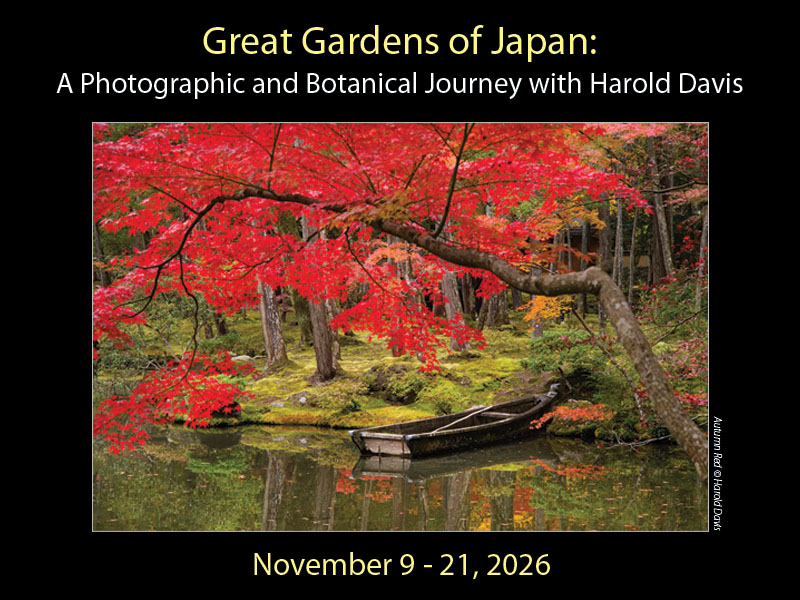
The Japanese maples in autumn are in all their fiery beauty. Wandering around Kyoto with my camera I felt the need to write poetry. Hence these two haiku, the form in English is a reduction to 17 syllables (count ‘em!). I’m sure that much of the subtlety of the Japanese haiku is lost, but one can only do what one can do.
 Arishiyama Yusei-Tei ©️Harold Davis
The first haiku is from the viewpoint of my monochromatic camera, left behind in the hotel room because this is a world awash in color:
In Kyoto autumn colors
Sad mono camera
Stays behind
The second haiku has to do with crossing the Katsura River and taking the path along the river and up through the autumn woods to the Daihikaku Senkoji Temple. Bashi wrote several haikus related to this temple in the 1600s.
The footsteps of Basho
I arrive at Senkoji
Autumn colors
November 22, 2025
Japanese Maples at Saihoji
Saihoji, the serene Zen moss garden in Kyoto, is known—-as you’d expect—-for moss. The Japanese Maples in the garden are also wonderful, and beautifully tended. Here are two photos showing the maples in their autumn finery from my visit yesterday.
 Japanese Maple in Autumn ©️Harold Davis
Note that these two images are directly out of my camera with no post-production. I “reserve the right” to edit and enhance the images if I feel it is necessary once I get home and can use my production computer!
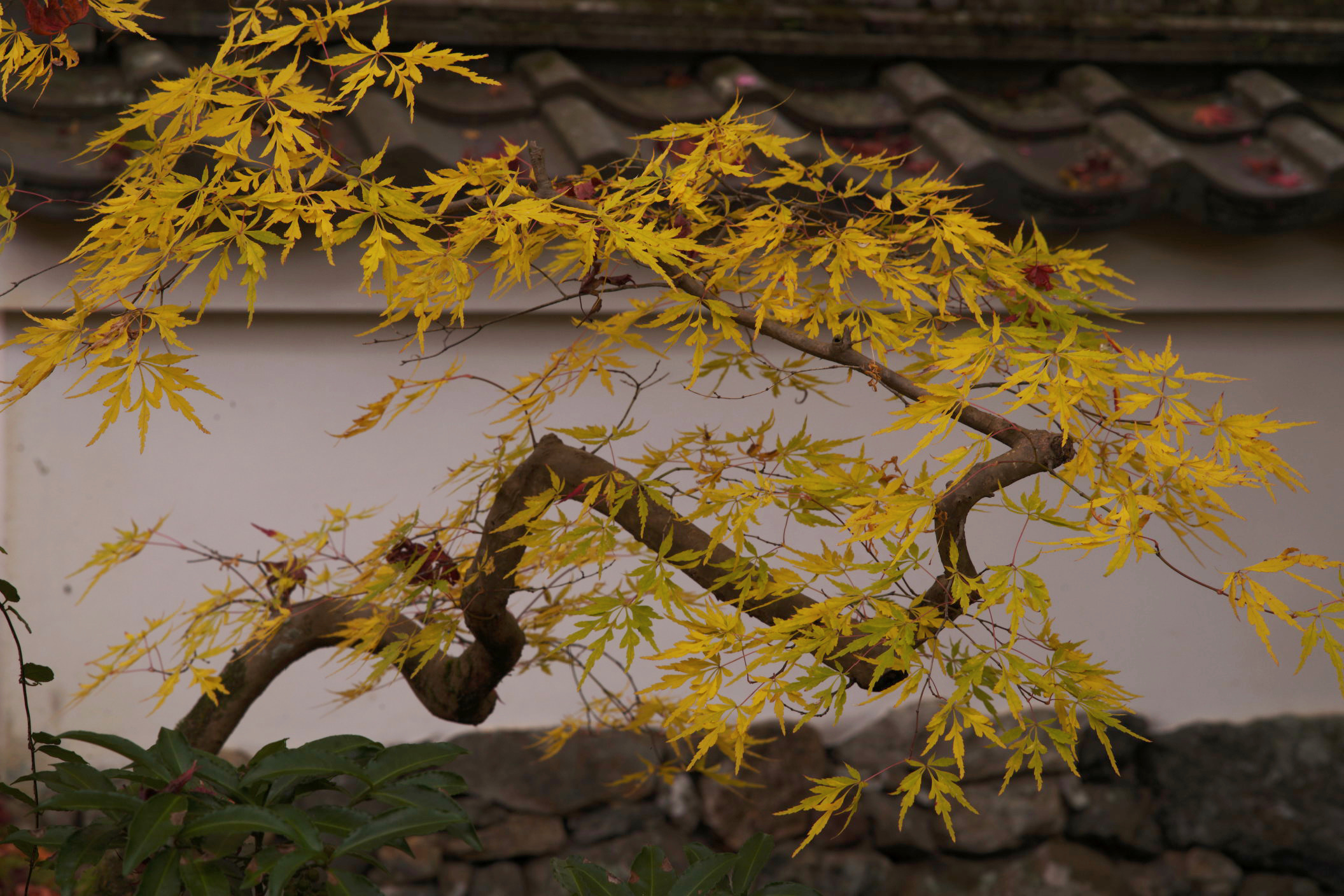 Saihoji ©️Harold Davis
November 16, 2025
Neagiri Goyo-matsu Pine Tree
This Japanese white pine with its imposing roots was originally a bonsai given by the 11th Tokugawa Shogun, Ienari, to the ninth lord of Takamatsu, Matsudaira Yorihiro, in Edo (Tokyo) in 1833. No longer a bonsai, this tree has come a long way, baby!
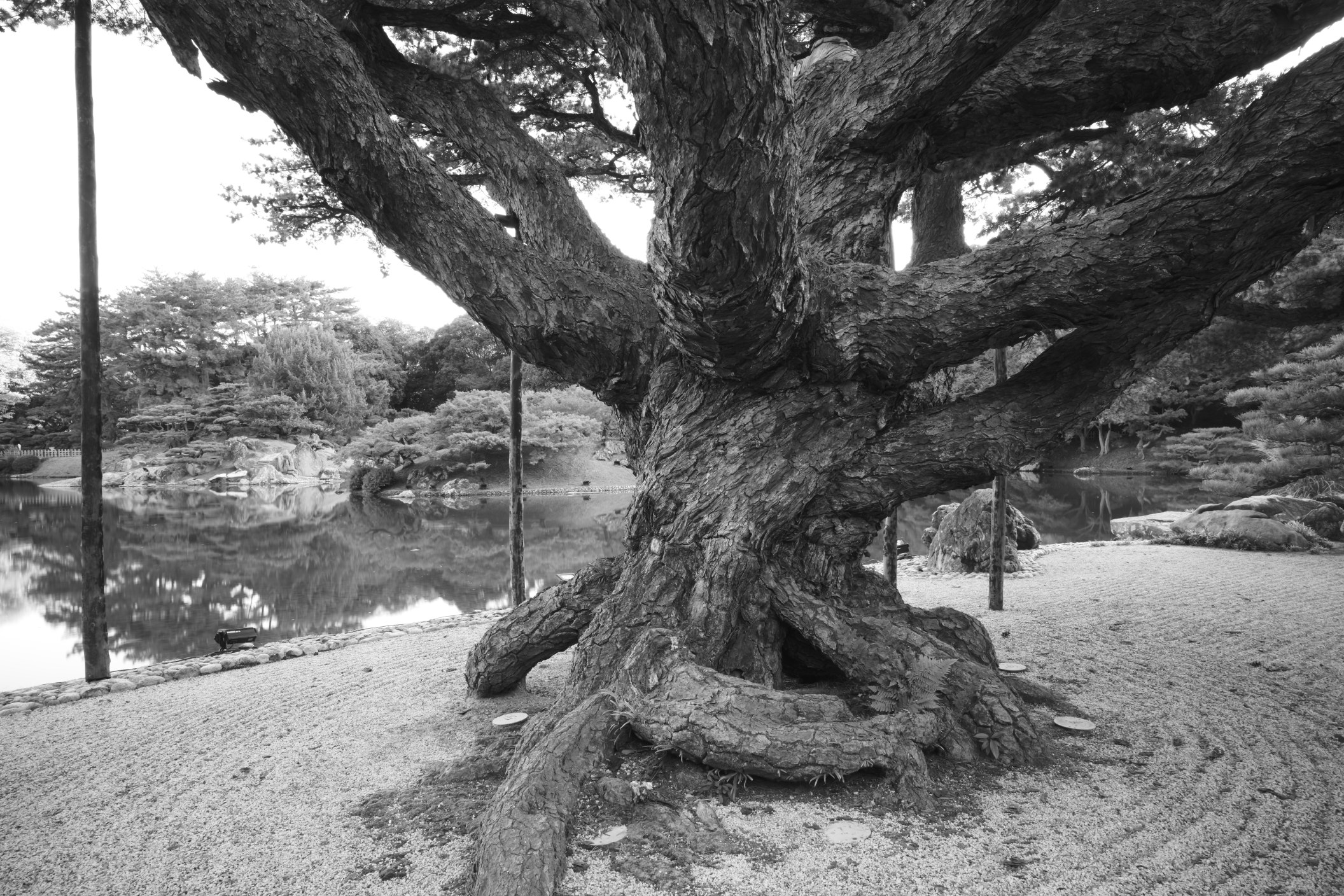 Neagiri Goya-matsu Pine Tree (C) Harold Davis
Biwa-no-Taki
Exiled to remote Shikoku, the sad samurai played the Biwa beneath this waterfall in melancholy melodies of their distant home.
 Biwa-no-Taki (C) Harold Davis
November 7, 2025
Camphor Trees: Still Standing
This pair of camphor trees were standing tall near the epicenter when the bomb fell on Nagasaki. Blasted and burnt they were thought to be dead in the wasteland. In time, new canopy sprouted, and they stood alone and proud in the terrible desolation.
 Camphor Tree (c) Harold Davis
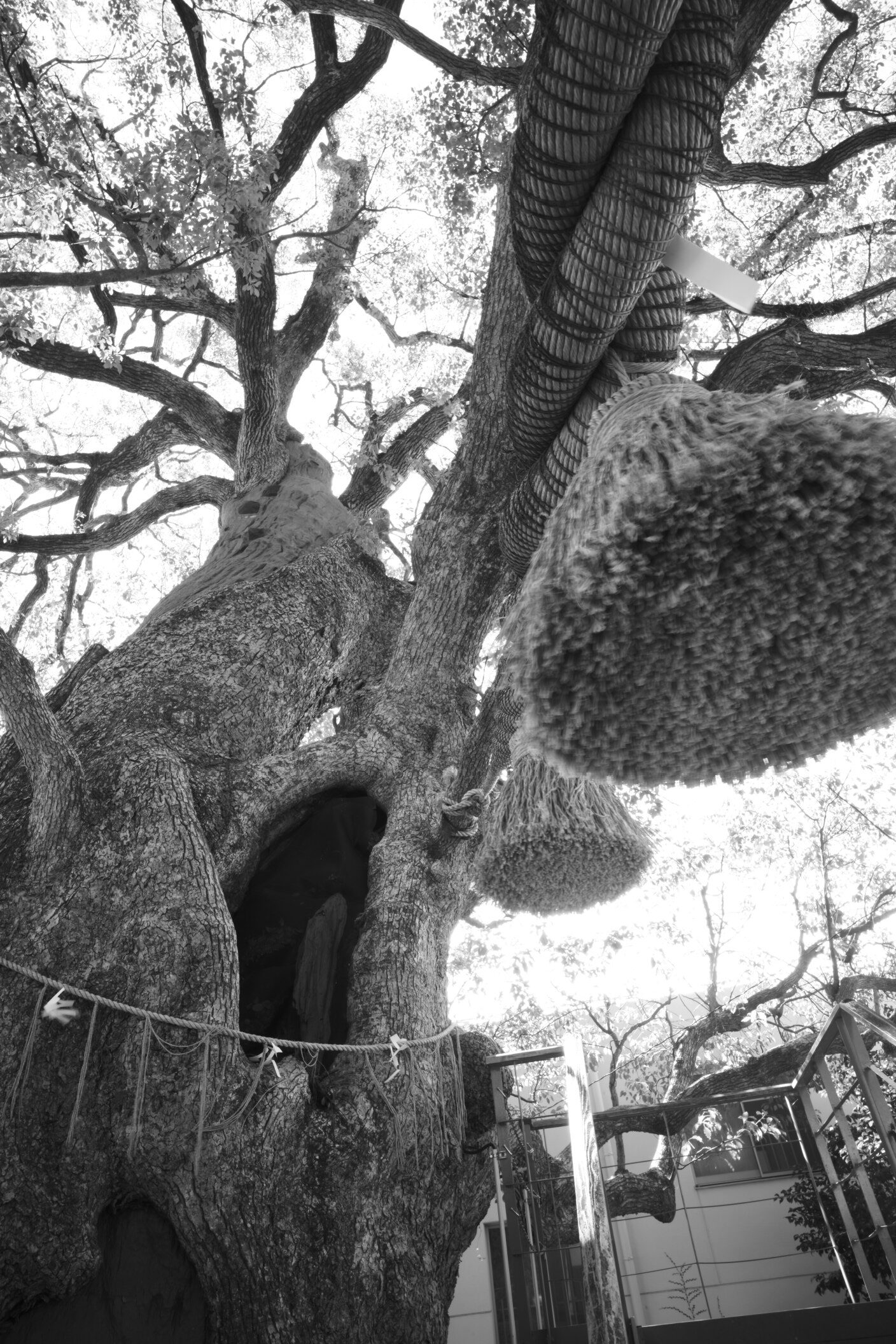 Camphor Tree (c) Harold Davis
Words cannot express the horror of viewing the exhibits here and in Hiroshima. How sad, how pathetic that man can inflict such terrible pain on fellow humans! But these trees are a symbol of hope and renewal.
Turning to an anecdote from the history of my family, around the time I was born my Dad, Martin Davis was on the faculty of the Institute for Advanced Studies in Princeton, New Jersey. J Robert Oppenheimer arrived as he often did in his black Cadillac. While he was eating dinner with the fellows, my Mom, Virginia Davis, left the table, went out, and wrote “Ban the Bomb” in the dusty rear window of Oppenheimer’s car. Brilliant!
October 23, 2025
Creating Compelling Compositions Masterclass
Creating Compelling Compositions Masterclass is an online workshop I will be giving on December 15, 2025 at 10am PT. Click here to register.
My workshop is sponsored by The Nook, and Nook membership is required. The Nook’s mission is to help creatives, makers, artists, and photographers learn, thrive, and create better together. Click here for a free 7-Day trial and 40% discount offer (this is an affiliate link).
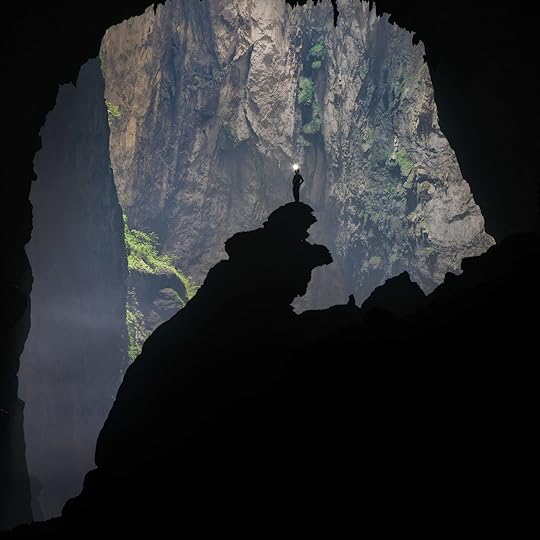 Let There Be Light © Harold Davis
Good composition is a fundamental building block of good photography. It is easy to recognize, but hard to achieve. This masterclass well help guide photographers at any level to improve their work by creating compelling compositions.
Of all the magical elixirs that make up a successful photograph, composition is perhaps the most fundamental, and at the same time the most elusive. What makes a composition “good”? It’s hard to define exactly, but we instinctively recognize good composition when we see it. There is an undeniable emotional response when a composition resonates with and complements the subject matter of an image. But traditional attempts to define “good composition” and to pass on rules for good compositional construction are often doomed to failure. The truth is, there are no hard and fast rules.
Rules eliminate experimentation and spontaneity, which are crucial for creating compelling, dynamic, and exciting compositions. The best compositions contain an element of the unexpected. “Expect the unexpected” is perhaps the only viable “rule” of composition. To create exciting compositions, you must have a willingness to embrace serendipity and change as part of your artistic practice. After all, composition is a process, not a result.
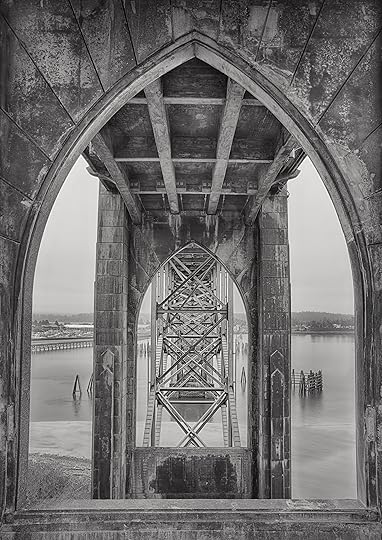 Under the Yaquina Bay Bridge © Harold Davis
Edward Weston once wrote in his Daybooks that “to consult the rules of composition before making a picture is a little like consulting the law of gravitation before going for a walk.” To this, Ansel Adams added “You don’t make a photograph just with a camera. You bring to the act of photography all the pictures you have seen, the books you have read, the music you have heard, the people you have loved.”
This masterclass will consist of an extensive presentation by Harold Davis simplifying many aspects of photographic composition, followed by a wide-ranging discussion.
In this masterclass, you will learn to:
Work with shapes such as lines, circles, and rectanglesUnderstand directionality, entering, and exiting in compositionWork with patterns and repetitionRecognize and use positive and negative spaceUse the various kinds of abstraction in your own workAbout Harold Davis: Harold Davis is a world-class artist and photographer who has expanded the parameters of his field with imagery, new techniques, and as an author and educator.
Honored with the prestigious Photographic Society of America Progress award in 2022 for his development of a unique technique for photographing flowers for transparency, these works have been described as “ethereal” and having “a purity and translucence that borders on spiritual” (Popular Photo Magazine). Previous Progress award honorees include Ansel Adams, Edward Weston, Walt Disney, and Ken Burns.

Click here to buy Composition & Photography (use the discount code HDAVIS40 for a 40% discount at checkout)
Creating Compelling Compositions Masterclass is an online workshop I will be giving on December 15, 2025 at 10am PT. Click here to register.
My workshop is sponsored by The Nook, and Nook membership is required. The Nook’s mission is to help creatives, makers, artists, and photographers learn, thrive, and create better together. Click here for a free 7-Day trial and 40% discount offer (this is an affiliate link).
October 13, 2025
Mandala 101
The other day I set out to create a mandala using flower petals on my light box. The mandala uses petals that I plucked from alstroemeria, with the center formed by a Gaillardia—itself a complete mandala in miniature.
 Mandala 101 Inversion © Harold Davis
The original series I photographed on the light box is shown below, on white. To create the version on black (above) I inverted the L-channel in LAB color.
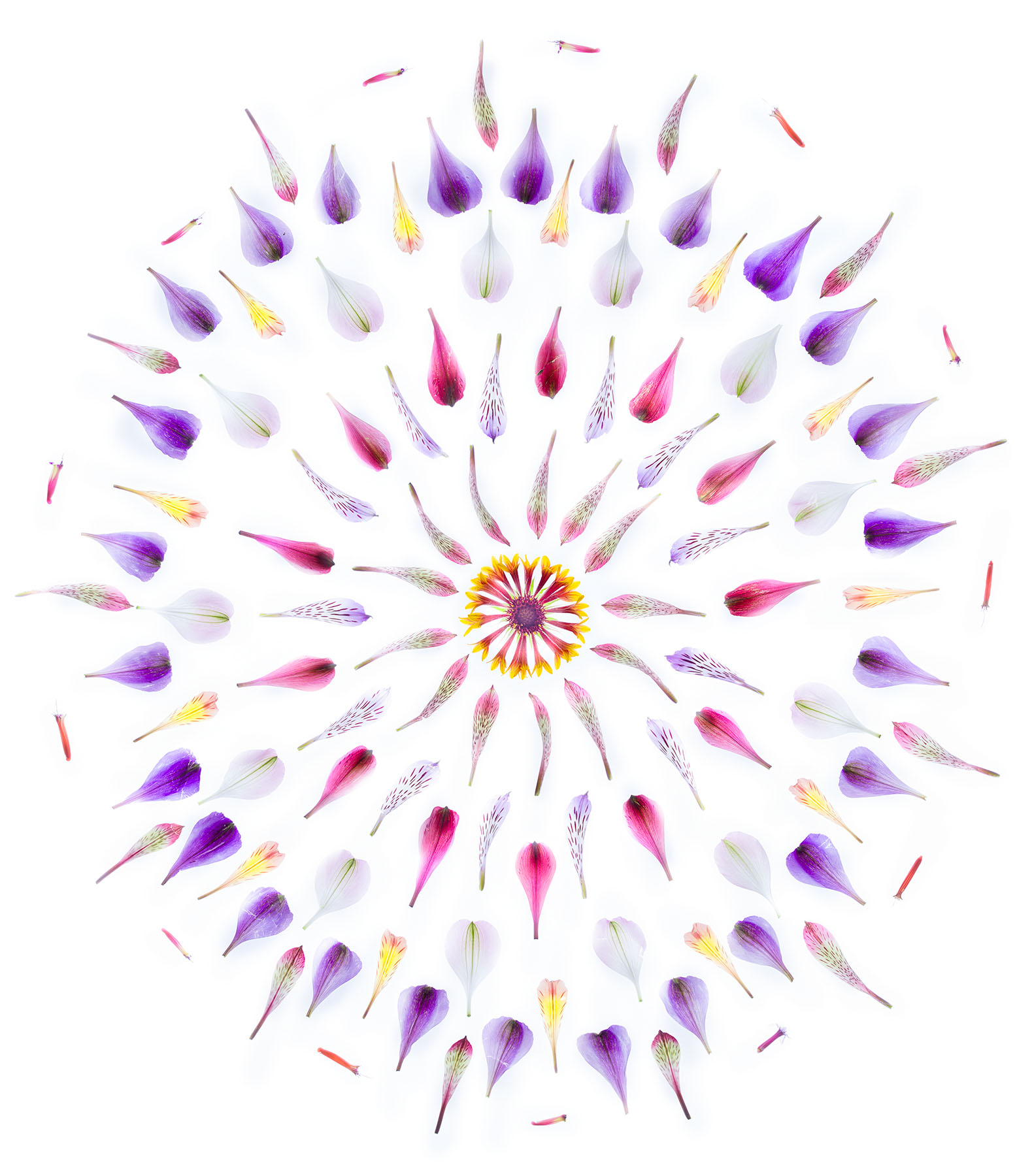 Mandala 101 © Harold Davis
Since one always hurts flowers in the process of this creation, and I hate, hate, hate to hurt flowers—or anything or anyone else—I felt the least I could do was photograph “the remains of the day”: the petals in an ornate dragon-themed bowl (below).
By the way, I don’t promise I haven’t lost count (how is that for a double negative?), but I do think this is literally the one hundred and first mandala I have created (depending on whether you count the glassware or just the flowers)!
 Dragon Bowl of Flower Petals © Harold Davis
September 30, 2025
Raindrops on a Rose: The Natural Way
I had great fun yesterday photographing a rose in my garden after an overnight shower. In the morning, the rose had wonderful, small water drops on its petals. I used my Noctilux 50mm f/0.95 with an extension tube on my tripod at f/0.95 to isolate the wet petal.
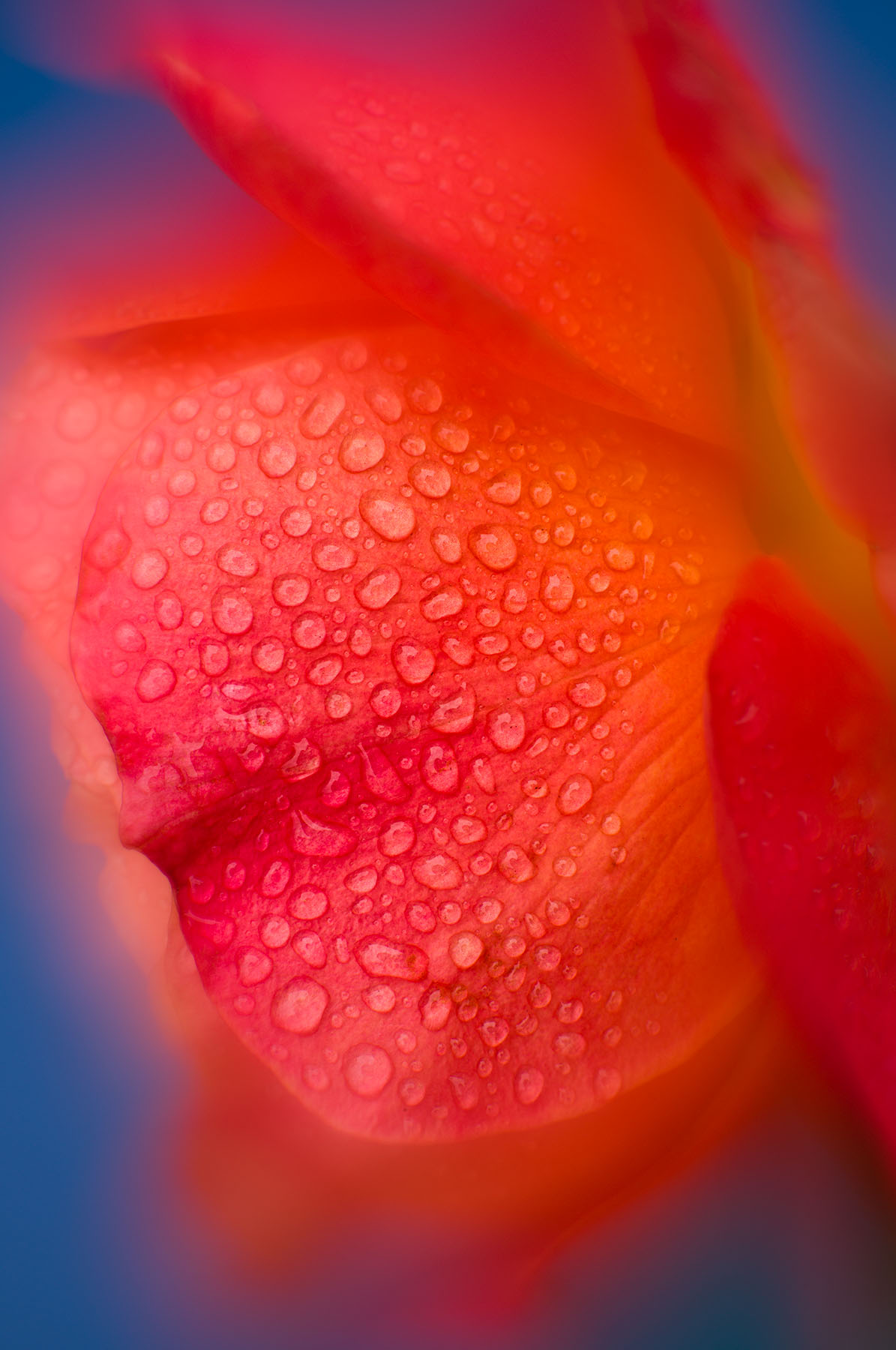 Raindrops on a Rose © Harold Davis
My “joke” is that this lens optically renders subjects the way a Lensbaby does, but with Leica quality! It is kind of true.
In my work on water drops, I have called this kind of photography “natural” water drop imagery. The drops of water are supplied by nature, as opposed to generated in the studio, with motion stopped by a strobe.
September 17, 2025
Wide-Open at f/0.95
I’m lucky enough to have scored a Leica Noctilux 50mm f/0.95 lens (used, but in excellent condition). The lens is most interesting I think wide-open at f/0.95. Yes, you read that aperture correctly—it is an incredibly bright lens that seems to act almost like a funnel for light. When used at more conventional apertures (for example, f/8 or f/16) the lens seems decent, but, well pretty conventional—and nothing so special that it is worth the price or weight. But at f/0.95, this lens is extraordinary!
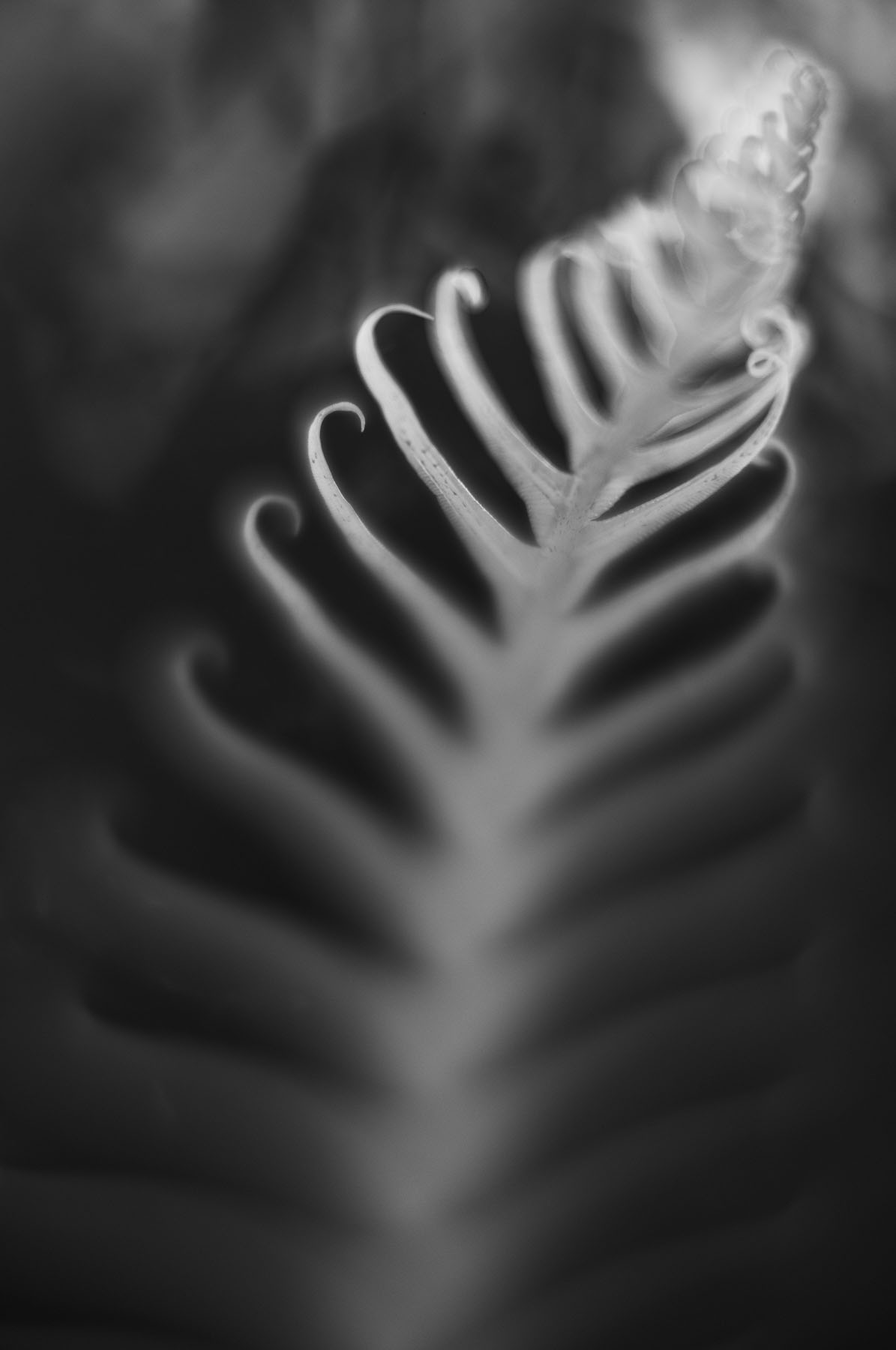 Fern 1 © Harold Davis
When it comes to gear, the craft of photography always involves trade-offs. This is another way of saying, “there are no free lunches!”
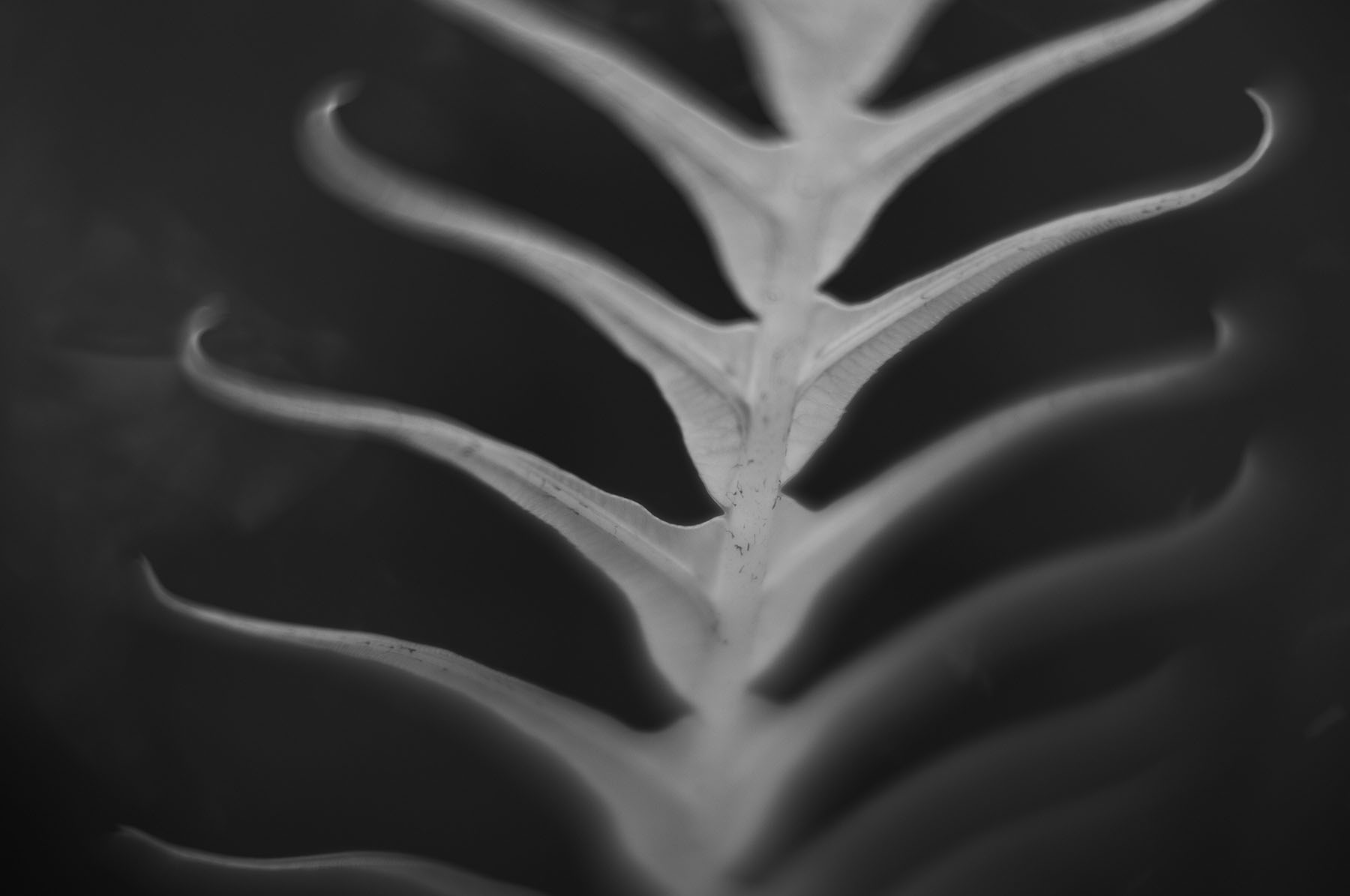 Fern 2 © Harold Davis
In the case of the Leica Noctilux 50mm f/0.95 the obvious baggage includes the price and weight. To my mind, at f/0.95 the lens behaves somewhat like a Lensbaby ought to behave: essentially a “sweet spot” that is in focus is created, and glowing out-of-focus areas are everywhere else. But hitting that critical focus point with the lens where one wants is no piece of cake because of the very feature that is desirable, the extreme light sensitivity of this lens.
With these close-up ferns I found focus wide-open mostly easier to achieve with my Monochrom M11 on a tripod.
 Fern 4 © Harold Davis
Note that I added a variable extension tube to get this close to my subject, and used a focusing rail to make the critical focus possible.
I think the classical use-case for this lens is in portraiture, and possibly street photography. I may well use this lens in these ways. But I also intend to experiment, and use my “Noct” as it has never been used before!
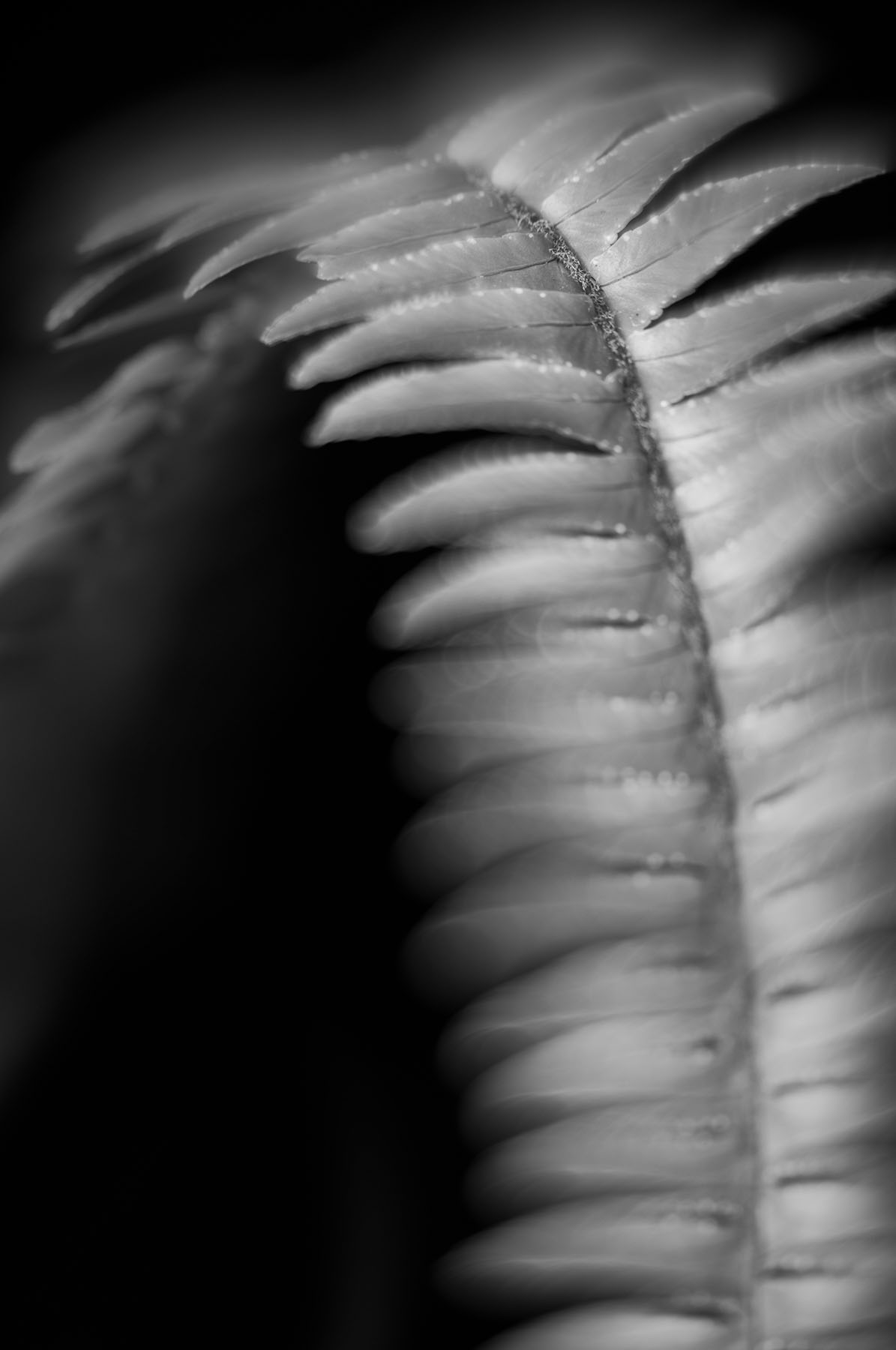 Fern 5 © Harold Davis


