
Juho Pohjalainen's Blog: Pankarp - Posts Tagged "star-wars"
We Fear Spoilers Too Much
What with how pretty much every living human being knows the twist in the relation between Doctor Jekyll and Mister Hyde, reading the original book - where it's still treated as some big mystery - feels a little surreal. And not in a bad way. The book prompts me to revisit the issue of spoilers, and why I never thought much of them.
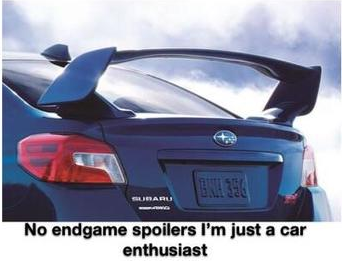
Say you're reading a book with some big twist towards the end - a character dies, reveals they're a traitor or somebody's dad, whatever - that completely redefines everything you'd read so far. Having managed to remain unspoiled by the twist, when you finally do get to this point, what do you feel? Surprise, likely shock, possibly betrayal, a great stab in the heart, rage and tears, deep suffering.
Genuine and gripping emotions, for certain... but none of these feelings last. They're all based on the surprise, and surprise fades away quite quickly - and then you can never be fooled by it again. You know what happens now, and cannot forget. And in order to pull this off, you likely had to go out on your way to avoid them - insisting your friends and fellow forumgoers to not spoil them for you, closing your eyes or ears if it looks like something's up, even isolating yourself from all human contact until you've read the whole thing through. It's such a huge effort for such a short-term thrill.
So what if you were spoiled in advance?

You'd likely be pretty pissed about it for a while - but that too is a transient emotion. Eventually, while still perhaps fuming a little, you would pick up the book... but the whole thing will have changed for you, compared to your friend who was not spoiled by it. There's a new kind of tension there now. New perspectives. A thrill that lasts you throughout the entire reading, however long it will take you, rather than stabbing you in the heart once and then letting you be.
If you know a character is going to die - then he does not have plot armor, and every time he engages in something deadly you will fear for his life. Is this where he will fall?
If you know a character is a traitor - then everything he says throughout the book will have an entirely new meaning to you. You can see beyond the facade he's putting for the rest of the cast. You're on to his lies.
If you know these two characters are brother and sist-

Hoo boy.
I've also found myself being taken far more off-guard by the other, lesser twists when I know of a big one coming. Maybe it's because I focus on the one I know about, thus letting myself be blindsided by the others. Or maybe because I subconsciously think I already got spoilered for the whole thing, and that no other twists exist, and... you get the idea. I get more out of them anyway.
I do not fear spoilers. I often read about books or games on the internet while halfway through, without being horribly fussed if I learn of a big twist before it happens. I've even considered spoiling something of my own books, well in advance, if I ever got a big enough of an audience that it would make any difference. Perhaps one day.
That being the case, it's still everybody's own choice. If you've read this far, given what I've said due consideration, but still think you wouldn't want to be spoiled about anything and will try to avoid them, go for it. And if someone insists on spoiling for you anyway even though you've specifically told them not to, then they're just being a dick.
I guess what I'm trying to say is that everyone just should relax a bit about the whole thing. But that's just me.

Take it easy, kitty. Put down the knife.
Say you're reading a book with some big twist towards the end - a character dies, reveals they're a traitor or somebody's dad, whatever - that completely redefines everything you'd read so far. Having managed to remain unspoiled by the twist, when you finally do get to this point, what do you feel? Surprise, likely shock, possibly betrayal, a great stab in the heart, rage and tears, deep suffering.
Genuine and gripping emotions, for certain... but none of these feelings last. They're all based on the surprise, and surprise fades away quite quickly - and then you can never be fooled by it again. You know what happens now, and cannot forget. And in order to pull this off, you likely had to go out on your way to avoid them - insisting your friends and fellow forumgoers to not spoil them for you, closing your eyes or ears if it looks like something's up, even isolating yourself from all human contact until you've read the whole thing through. It's such a huge effort for such a short-term thrill.
So what if you were spoiled in advance?
You'd likely be pretty pissed about it for a while - but that too is a transient emotion. Eventually, while still perhaps fuming a little, you would pick up the book... but the whole thing will have changed for you, compared to your friend who was not spoiled by it. There's a new kind of tension there now. New perspectives. A thrill that lasts you throughout the entire reading, however long it will take you, rather than stabbing you in the heart once and then letting you be.
If you know a character is going to die - then he does not have plot armor, and every time he engages in something deadly you will fear for his life. Is this where he will fall?
If you know a character is a traitor - then everything he says throughout the book will have an entirely new meaning to you. You can see beyond the facade he's putting for the rest of the cast. You're on to his lies.
If you know these two characters are brother and sist-
Hoo boy.
I've also found myself being taken far more off-guard by the other, lesser twists when I know of a big one coming. Maybe it's because I focus on the one I know about, thus letting myself be blindsided by the others. Or maybe because I subconsciously think I already got spoilered for the whole thing, and that no other twists exist, and... you get the idea. I get more out of them anyway.
I do not fear spoilers. I often read about books or games on the internet while halfway through, without being horribly fussed if I learn of a big twist before it happens. I've even considered spoiling something of my own books, well in advance, if I ever got a big enough of an audience that it would make any difference. Perhaps one day.
That being the case, it's still everybody's own choice. If you've read this far, given what I've said due consideration, but still think you wouldn't want to be spoiled about anything and will try to avoid them, go for it. And if someone insists on spoiling for you anyway even though you've specifically told them not to, then they're just being a dick.
I guess what I'm trying to say is that everyone just should relax a bit about the whole thing. But that's just me.
Take it easy, kitty. Put down the knife.


Narrative Pendulums, Overrides, Cop-outs, and Backsies
A significant chunk of my plotting lately has involved one of the main characters working to undo a Bad Thing - a dramatic, tragic twist that made things worse for absolutely everybody. Looking at how a lot of fiction has dealt with similar, I've summed it up about so: A plot development, and cancelling it, should hold equal narrative weight.

Picture a pendulum (sharp edge and a bound victim optional). To write a dramatic plot event - demise, defeat, twist, even triumph - is to lift the pendulum high up with your hand. To later undo this event - raise the dead, bring back the evil empire, otherwise return to the status quo - is to let go. Then what does the pendulum do? It swings all the way to the other side, almost as high as you brought it in the first place. It takes an appropriate time and effort to get done, holds the equal weight and force to how it once was, and its consequences will be felt for a long while.
None of this should need any saying, I don't think. It's one of those unspoken rules that most of us already know about, at least subconsciously - may even have written down in some book somewhere that I've never read. When something happens, it sticks.
And yet - it's much too common for this rule to be broken, especially in comic books and any other long-runners. Characters are brought back from the dead all the time. No prison ever holds the bad guy. Both heroes and villains switch sides... but only briefly. Romances and love struggles, that took an entire movie or book to go through, are brought back to null before the sequel so that the hero would be free to romance a new girl. The Spellplague. The First Order. Return of Bhaal. This thing:

Great twists and whammy plot events that change everything... only to be brought back to normal with little to no fanfare, usually because status quo is (or feels like) the only thing that sells, the comfortable and familiar that the fans have learned to know and love. The pendulum has been brought high and far - but it is only an illusion, because when it comes down, it does not shift to the other side at all... meaning, by the laws of force and gravity, it could never have gone very high to begin with! Such a cheap resolution undermines all the drama and stakes that were involved in the first place.
Why do these heroes even care if someone dies? Why do they try to put the villains away, knowing it doesn't stick? Why struggle for change, when nothing ever can? What is the point?

This is almost assuredly the biggest reason to why I was always so off-put by the new Star Wars trilogy. The original trilogy represented many years' worth of struggles, of triumphs and defeats, of pain and effort, for so many characters. The Empire was brought low with the blood and sweat and tears of all these heroes, these jedi knights and smugglers and rebels working together, many dead or dismembered in the process. The victory was earned, and it felt that things were getting better now.
Only for the new trilogy to completely pull the rug from underneath them. Han and Leia spent three movies getting together, only for them to break up again and their child turned to a villain. Luke was to raise the Jedi Order from the ashes, only to have completely brought it to ruin. Anakin redeemed himself by destroying the evil Emperor, only for him to have just popped back up in some cop-out. And all of this was done off-screen: if it had followed the rule, and spent a whole trilogy or two plotting this out and slowly bringing everything back to hell, it might have been good, great even - but no, none of that. Shame on all of them.
Done well, undoing something is a springboard for new and wild adventures - which is what I'm doing. I did not start on this journey just to return things how they were, because I regret having the tragedy happen in the first place or because some fans hated it; I went on to it because the characters themselves would like to get it fixed, and I'm getting some good ideas on how to do that. I'm still a bit of two minds on whether to go ahead with it at all, or to have them live with their mistakes and head on into the future with the baggage... whatever creates the best drama and the best new story hooks, I suspect.
So how would I do it? How to undo a tragedy without making it meaningless?
Time travel.
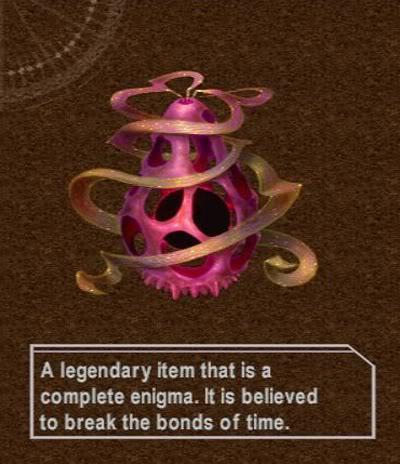
But that's the easy bit. It's already been established as possible in the setting, if difficult, with people nearby to help in the matter. The real rub of the matter is changing what happened without actually changing it - to craft an illusion where what he at first thought to have happened, did not happen at all. This is the only way to avoid time paradoxes.
To do that, he needs a powerful artifact, and to find such an artifact he will need to request one from a cosmic entity. Even invoking this entity is enough to shatter the cosmos a little, form a breach between countless alternate realities - alternate versions of him, each of them having walked different paths in life, each of them under different difficulties, each of them wishing for something entirely different.
And one of them is evil. And what he wishes is for a way to traverse between dimensions, so that he might steal the wishes of all the other versions of himself. The rest of them will, therefore, have to team up in order to do battle with this one evil version of themselves.

I think I'm digressing from the original point a little bit, now. So yeah. Pendulums. Remember them.
Picture a pendulum (sharp edge and a bound victim optional). To write a dramatic plot event - demise, defeat, twist, even triumph - is to lift the pendulum high up with your hand. To later undo this event - raise the dead, bring back the evil empire, otherwise return to the status quo - is to let go. Then what does the pendulum do? It swings all the way to the other side, almost as high as you brought it in the first place. It takes an appropriate time and effort to get done, holds the equal weight and force to how it once was, and its consequences will be felt for a long while.
None of this should need any saying, I don't think. It's one of those unspoken rules that most of us already know about, at least subconsciously - may even have written down in some book somewhere that I've never read. When something happens, it sticks.
And yet - it's much too common for this rule to be broken, especially in comic books and any other long-runners. Characters are brought back from the dead all the time. No prison ever holds the bad guy. Both heroes and villains switch sides... but only briefly. Romances and love struggles, that took an entire movie or book to go through, are brought back to null before the sequel so that the hero would be free to romance a new girl. The Spellplague. The First Order. Return of Bhaal. This thing:
Great twists and whammy plot events that change everything... only to be brought back to normal with little to no fanfare, usually because status quo is (or feels like) the only thing that sells, the comfortable and familiar that the fans have learned to know and love. The pendulum has been brought high and far - but it is only an illusion, because when it comes down, it does not shift to the other side at all... meaning, by the laws of force and gravity, it could never have gone very high to begin with! Such a cheap resolution undermines all the drama and stakes that were involved in the first place.
Why do these heroes even care if someone dies? Why do they try to put the villains away, knowing it doesn't stick? Why struggle for change, when nothing ever can? What is the point?
This is almost assuredly the biggest reason to why I was always so off-put by the new Star Wars trilogy. The original trilogy represented many years' worth of struggles, of triumphs and defeats, of pain and effort, for so many characters. The Empire was brought low with the blood and sweat and tears of all these heroes, these jedi knights and smugglers and rebels working together, many dead or dismembered in the process. The victory was earned, and it felt that things were getting better now.
Only for the new trilogy to completely pull the rug from underneath them. Han and Leia spent three movies getting together, only for them to break up again and their child turned to a villain. Luke was to raise the Jedi Order from the ashes, only to have completely brought it to ruin. Anakin redeemed himself by destroying the evil Emperor, only for him to have just popped back up in some cop-out. And all of this was done off-screen: if it had followed the rule, and spent a whole trilogy or two plotting this out and slowly bringing everything back to hell, it might have been good, great even - but no, none of that. Shame on all of them.
Done well, undoing something is a springboard for new and wild adventures - which is what I'm doing. I did not start on this journey just to return things how they were, because I regret having the tragedy happen in the first place or because some fans hated it; I went on to it because the characters themselves would like to get it fixed, and I'm getting some good ideas on how to do that. I'm still a bit of two minds on whether to go ahead with it at all, or to have them live with their mistakes and head on into the future with the baggage... whatever creates the best drama and the best new story hooks, I suspect.
So how would I do it? How to undo a tragedy without making it meaningless?
Time travel.
But that's the easy bit. It's already been established as possible in the setting, if difficult, with people nearby to help in the matter. The real rub of the matter is changing what happened without actually changing it - to craft an illusion where what he at first thought to have happened, did not happen at all. This is the only way to avoid time paradoxes.
To do that, he needs a powerful artifact, and to find such an artifact he will need to request one from a cosmic entity. Even invoking this entity is enough to shatter the cosmos a little, form a breach between countless alternate realities - alternate versions of him, each of them having walked different paths in life, each of them under different difficulties, each of them wishing for something entirely different.
And one of them is evil. And what he wishes is for a way to traverse between dimensions, so that he might steal the wishes of all the other versions of himself. The rest of them will, therefore, have to team up in order to do battle with this one evil version of themselves.
I think I'm digressing from the original point a little bit, now. So yeah. Pendulums. Remember them.
Pankarp

Pages fallen out of Straggler's journal, and others.
...more
- Juho Pohjalainen's profile
- 349 followers

