
Stacey Chillemi's Blog: The Cards I Was Dealt — Life, Healing and Everything In Between
August 6, 2026
The Real Reason Success Never Feels Like Enough
For thirty years, she came home from work and ran a performance review on herself.
She replayed the whole day like a movie. She should not have spoken up in that meeting. She should have spoken up in that meeting. Someone was probably angry with her.
That is Susan Winchester, a former Fortune 500 Chief Human Resources Officer with more than 36 years of executive leadership experience, a Fellow of the National Academy of Human Resources, keynote speaker, executive coach, and co-author of Healing at Work with Martha Finney. Her last corporate seat was head of HR for a Fortune 150 company in Silicon Valley.
So this is not a story about someone who could not handle pressure. She reached the top of her field while running that audit every single night, and she says the tape never once concluded that she had done enough.
── ✦ ──
Work Is Not the Problem. It Is Where the Problem Shows Up.
Winchester’s first move is to relocate the source. The feeling of never being enough usually predates the client, the launch, the platform, and the revenue target.
That distinction decides where you spend your energy. If the business is the problem, you rebuild the business, and plenty of experts rebrand, repackage, and repivot before noticing the feeling packed itself and came along.
Here is her reframe, and it is the useful one. If the work feels harder for you than it seems to for other people, that is not a verdict on your ability. It is information about what you are carrying into it.
── ✦ ──
The Pattern Has a Name, and Two Thirds of the Room Qualifies
Winchester and Martha Finney coined the term Adult Survivor of a Damaged Past, or ASDP, while writing the book. There was no useful name for it before.
The research behind it is real. In the late 1990s the CDC and Kaiser Permanente, led by physicians Felitti and Anda, surveyed roughly 17,000 people about ten adverse childhood experiences. Nearly two thirds reported at least one. Forty percent reported at least two.
Winchester scored higher than four of the ten, after a lifetime of assuming her childhood was not that bad.
She is also clear that you do not need a single ACE to be shaped by this. People tell her after keynotes that they scored zero and still carry limiting beliefs, and she believes them. Children draw conclusions about themselves from ordinary moments, and those conclusions come to work with them.
── ✦ ──
The Unconscious Wounded Career Path Is Expensive and Invisible
This is her term for the road she was on for thirty of her thirty-six years. You show up every day disconnected from how much your history is shaping the experience, and you settle into victim, villain, or martyr without ever choosing it.
Two things keep it running. A limiting belief, which for her was that she was not good enough. And a nervous system nobody taught you to regulate, so you reach for whatever settles it fastest.
For ambitious experts, that soother is almost always overwork, which is exactly why it stays invisible. Every client, every audience, and every algorithm rewards you for it.
The cost is not just tired weekends. Winchester talks openly about the years she was not emotionally available to her sons while she was consumed with what she had done at work and what might happen tomorrow.
── ✦ ──
The Better Question in a Bumper Car Moment
When a client, a partner, or a colleague sets you off, the reflex is to ask why that person is like that. Winchester suggests asking why it feels familiar.
She and Finney call these collisions bumper car moments. Her read is that a strong trigger is a clue that an unresolved emotional need is being activated by someone who resembles a figure from your past.
Her sequence with coaching clients is short enough to use today. What are you taking this to mean about you? Have you felt that exact way before? Is it possible those earlier experiences are fuel on the fire of what just happened?
She describes a leader who blew up a meeting because a few people were not seated at the start time, then carried the anger into the next day. Asked what he made it mean, he said disrespect, and he immediately named two earlier moments where he had felt the same thing. His body relaxed. He apologized to everyone in the room.
The reaction had never been about the meeting.
── ✦ ──
Why the Next Level Never Fixes It
Every expert building an authority brand has a version of the number that will finally settle things. The book deal, the keynote fee, the client roster.
Winchester’s answer is structural. Achievement buys a short hit of relief, then the stakes rise, the demands increase, and the proving resumes at a higher altitude. The personalities change and the buttons stay the same.
She points to something her mentor Ken Wright told her that explains why nobody questions it. Perfectionism is not a pursuit of success. It is an effort to avoid failure. Markets reward perfectionists, which is why the most exhausting pattern in your business is also the most applauded one.
The diagnostic is fast. Notice whether you are working toward something good or away from something bad. If it is the second, fear is driving.
── ✦ ──
“It’s not that you’re bad at your job. It’s just that you are managing some unconscious dynamics that are really having an influence on you.”
Susan Winchester, former Fortune 500 Chief Human Resources Officer and co-author of Healing at Work
── ✦ ──
What To Take With You
🔍 Difficulty is information, not a verdict on you.
🪞 Ask why it feels familiar, not who is wrong.
⚡ Overwork is a nervous system habit, not ambition.
🎯 Perfectionism avoids failure. It does not chase success.
🧠 Old patterns are pathways, not permanent architecture.
── ✦ ──
The phrase Winchester and Finney keep returning to is that damaged is not doomed, and her reasoning is biological rather than motivational. The brain builds well-worn pathways, and the brain is fully capable of changing them.
If you take one thing into this week, make it the pause. The next time something at work sets you off, skip the blame for sixty seconds and ask what you are taking it to mean about you, and whether you have felt it before.
You will not undo thirty years in one meeting. But you will be standing outside the pattern instead of inside it, and Susan Winchester spent three decades proving how much that one step is worth.
── ✦ ──
🎙️ Listen to the full episode with Susan Winchester:
📺 YouTube:
🎧 Episode: https://www.spreaker.com/episode/workplace-burnout-starts-long-before-your-first-job--73408726
🎙️ Podcast Series: https://www.spreaker.com/podcast/healing-at-work-clock-in-heal-up--7020703
── ✦ ──
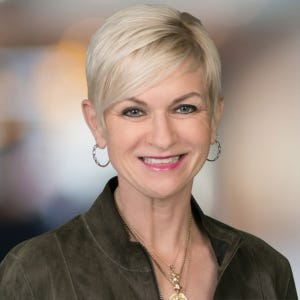
About Susan Winchester
Susan Winchester is a former Fortune 500 Chief Human Resources Officer with more than 36 years of executive leadership experience, most recently leading HR for a Fortune 150 company in Silicon Valley. She is a Fellow of the National Academy of Human Resources, a keynote speaker, an executive coach, and co-author of Healing at Work with Martha Finney, an international bestseller on Amazon in five countries. She helps high achieving professionals and senior leaders see how unresolved patterns are shaping their careers, and gives them practical tools for the moments that used to derail them.
──────────────────────────────────────────
CONNECT WITH SUSAN WINCHESTER:
🌐 Website: https://www.susanwinchester.com
📸 Instagram: https://www.instagram.com/susanjschmittwinchester
💼 LinkedIn: https://www.linkedin.com/in/susanschmittwinchester/
📘 Facebook: https://www.facebook.com/falcorspirit
📚 Book/Resource: Healing at Work, https://www.susanwinchester.com
📊 Free Assessment: https://susanwinchester.com/assessment/ ──────────────────────────────────────────


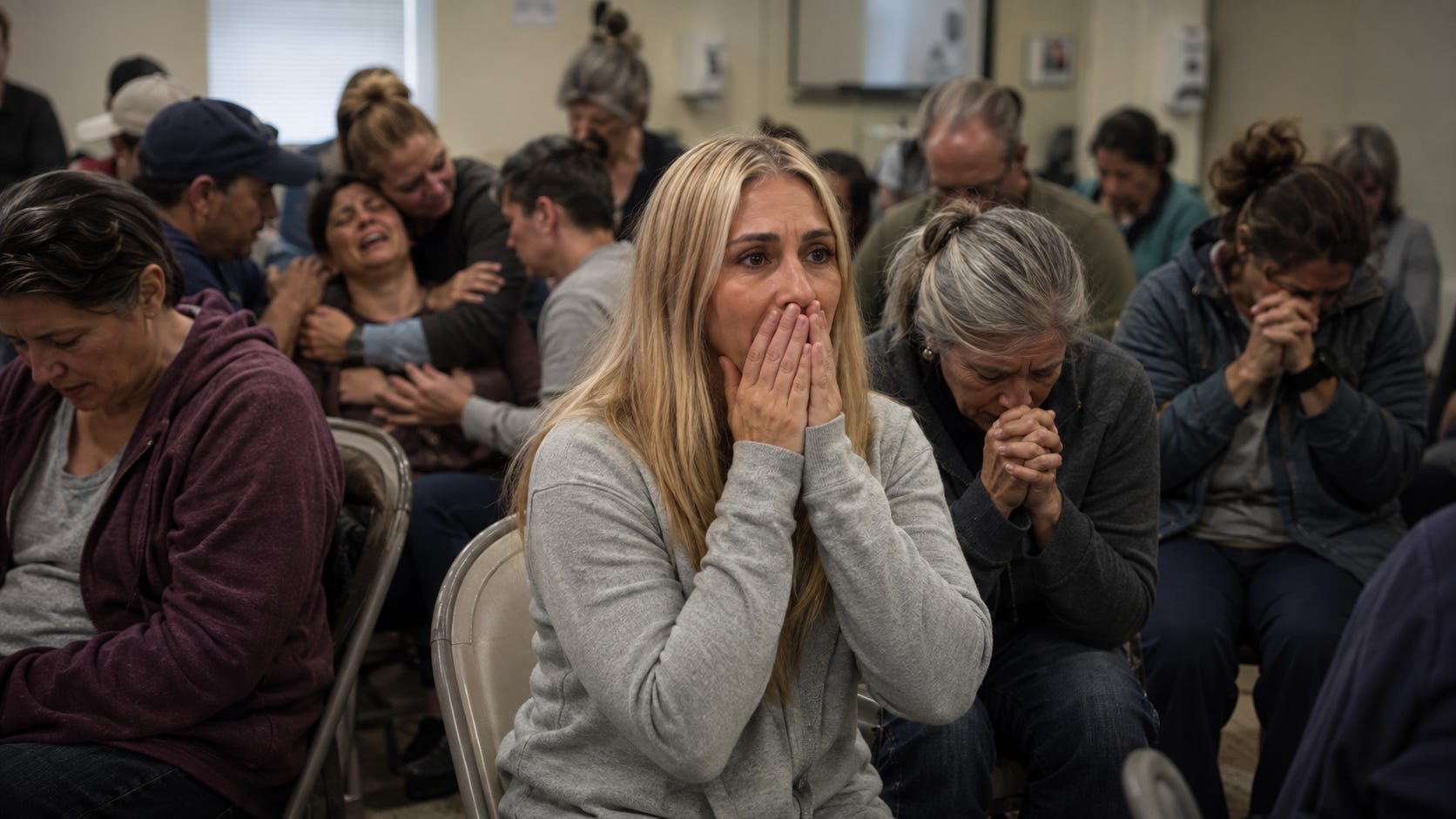
The Room That Ended My Pity Party Forever
Hi friend 💜
I want to share something with you today that I have never written about quite this directly.
There was a room I walked into years ago that changed everything about how I saw my life with epilepsy.
I walked in angry. Furious at every limitation. Furious at every medication that had failed. Furious at everything epilepsy had taken from me.
And then I saw them.
People having 300 seizures a day. Someone who had to be restrained so their own body would not destroy itself.
I remember standing completely still.
And thinking — I can walk out of here on my own.
That single thought rearranged something in me permanently. Not because my situation suddenly became easy. But because for the first time in my life I understood what gratitude actually felt like.
This is the story of that room. And what I carried out of it.
I hope it reaches you wherever you are today. 💜
With love
Stacey
I walked into that room angry.
Not the quiet kind of angry that stays politely beneath the surface. The real kind. The kind that had been building for years through medication after medication, side effect after side effect, limitation after limitation. I was young, and I was furious, and I had decided, somewhere along the way, that epilepsy had stolen something from me that I was never getting back.
I was right about that last part. I just had the wrong understanding of what it meant.
The Medications
Before I tell you about the room, I need to tell you about what came before it.
When I was young, phenobarbital controlled my seizures for years. Then my body changed. Adolescence arrived, and with it, hormonal shifts that medication could not keep up with. The seizures came back. And what followed was one of the most exhausting seasons of my life — a long search for something that worked, conducted entirely inside my own nervous system.
One medication blurred my vision. Another flattened my emotions until I felt like I was watching my own life through frosted glass. One affected my speech so severely that I could hear every word forming perfectly in my mind but could not produce them correctly out loud. I sounded, I was told, like someone who had been drinking heavily. I knew exactly what I wanted to say. My mouth simply would not cooperate.
The process of changing medications was its own particular ordeal. You could not simply stop one and start another. You had to be weaned slowly — a half pill reduction every three or four weeks — while the new medication built up in your bloodstream. For months at a time I existed somewhere between two chemical realities, belonging fully to neither, feeling the side effects of both.
Nothing worked well. Nothing worked for long.
And then a trial group was announced. A new medication. A real chance.
The Room
I did not know what I would find when I walked through that door.
What I found was a room full of people who had epilepsy far more severe than mine. People whose seizures numbered not in the single digits per month, as mine did at my worst, but in the dozens. In the hundreds. Ninety seizures a day. One hundred and fifty. Three hundred.
I had never encountered numbers like that before.
There was a person in that room who had to be restrained. Not restrained the way you restrain a child throwing a tantrum — restrained the way you restrain someone whose body is trying to destroy itself every few minutes. Strapped down so the seizures could not send them to the floor or into the walls. So they would not break bones they had no control over.
I remember my jaw dropping.
I remember standing very still.
And I remember, for the first time in years, feeling something other than anger.
The Shift
I am not proud of how long the pity party had lasted. Looking back, I understand it. I was young. I was frightened. Nobody had given me the tools to understand what was happening to my body or why, and the medications that were supposed to help kept making things worse in different ways. Anger was the only response that felt proportionate to the situation.
But in that room, something broke open inside me.
I looked around at people whose daily reality made my worst months look manageable. I looked at the restraints. I looked at the blank stares of those whose seizures had taken so much that there was almost nothing of ordinary life left.
And I thought: I can walk out of here on my own.
That thought — so simple, so obvious, so entirely new to me — was the beginning of something I had never felt before in connection with epilepsy.
Gratitude.
Not performed gratitude. Not the kind you say out loud because someone tells you to count your blessings. The real kind. The kind that arrives unbidden and rearranges something permanently inside you.
I was not terminal. I was not confined. I had an invisible condition — one that nobody could see when they looked at me, one that I could choose to disclose or not disclose, one that had cost me real things but had not taken everything.
The pity party was over.
What Came After
The medication from that trial turned out to be Dilantin.
My body rejected it completely. Sores appeared throughout my body — external and internal — so severe that I could not move, could not swallow, could not lift my arms. I lost weight rapidly. I could not feed myself.
My father took time off work to care for me. He made chicken broth — breakfast, lunch and dinner — and fed it to me by hand because I could not hold a spoon. He did not talk about what he was doing. He did not ask to be thanked. He simply stayed and fed me and waited for the sores to heal.
That helplessness — complete, physical, humiliating helplessness — taught me something that has never left me. It taught me what it feels like to need another person entirely. To depend on love as a literal survival mechanism.
I have enormous compassion for elderly people for exactly this reason. I know, from inside my own body, what it feels like when your physical capabilities stop matching your mental ones. I learned that in my early twenties, lying in a bed I could not get out of, being fed by a man who never once made me feel like a burden.
What I Carried Out of That Room
I walked into the trial group furious at epilepsy.
I walked out with something I had not expected to find there.
Perspective. Proportion. And a gratitude so specific and so grounded in reality that it has never entirely left me, even on the hardest days.
Yes, epilepsy took things from me. It took fifteen years of driving. It took opportunities. It took an ease of movement through the world that other people never had to think about.
But I could walk out of that room on my own.
I could breathe the air outside.
I could feel grass under my feet and look up at the sky and watch birds cross it.
Those things — the small, unremarkable, invisible gifts of a body that mostly works — are not small. They are not unremarkable. I know that now in a way I cannot un-know.
The obstacles that crossed my path gave me something I could not have earned any other way.
They gave me the ability to be grateful for what most people never think to notice.
And that — more than any medication that ever worked, more than any credential I have earned or stage I have stood on — is the thing I am most grateful epilepsy taught me.
You are not alone in this. You never have been.
Stacey Chillemi has lived with epilepsy since the age of five. She is a 20-time bestselling author, epilepsy advocate, and host of The Advisor with Stacey Chillemi — a podcast reaching 1.3 million listeners worldwide. She testified before the United States Congress on disability rights and has been a HOPE mentor for the Epilepsy Foundation for sixteen years.
Website: staceychillemi.com | Podcast: The Advisor with Stacey Chillemi | Email: media@staceychillemi.com
August 3, 2026
The Real Reason You Still Trade Hours for Income
He had a client who called him in the middle of the night. Woke him out of a dead sleep. To complain.
This was a business Luke Van Der Veer had taken from nothing to a steady stream of leads. He was the reason the phone was ringing at all, and he was still the one getting yelled at.
He shut the entire agency down the next day.
Luke Van Der Veer is a business owner, investor, and the founder of Website Rental Coaching. He left a corporate HR job after teaching himself SEO, reached the point where he could have stopped working entirely at 28, then used the profits to buy an ice cream catering company operating across three states for $1.7 million. He is currently acquiring a paving company valued at roughly $4 million. What he figured out is not really about SEO. It is about who owns the asset.
This is a reader-supported publication. To receive new posts and support my work, consider becoming a free or paid subscriber.
── ✦ ──
You’ve Been Collecting Business Models, Not SkillsBefore anything worked, Luke Van Der Veer tried eBay, Amazon, drop shipping, and affiliate marketing. He paid for coaching on Facebook ads and built a Facebook ads agency. He paid for coaching on Google ads and built one of those too.
Business number eight or nine, he was close to quitting. Every one of them made some money. None of them replaced a job.
Then he saw the pattern. Almost everything he tried was a business model, not a skill. As he put it, selling on Amazon isn’t a skill. You just create stuff and list it.
SEO was different because it was portable. He could use it on his own business, sell it to others, or consult on it, and it stayed valuable no matter which venture died.
Here is the cost of missing this. If your income depends on a platform, an algorithm, or a single offer, you are one policy change away from starting over.
Run the audit today: what would you still have if your current business disappeared tomorrow?
── ✦ ──
If You Don’t Own the Asset, You Own a JobThe agency version of his work looked successful from the outside. Inside, it was a job with more bosses. Send me this report. Fix this image. Upload that.
So he rebuilt it inverted. Instead of ranking websites for clients, he built websites in the same niches and kept them. Then he rented the leads to businesses.
He calls it renting the internet. The mechanics matter less than the power shift.
“They would pay me, but I didn’t have to worry about anything they wanted because I was in control of the assets, not them.”
This is the trap most consultants and coaches never see. You can spend a decade building extraordinary results inside someone else’s business, someone else’s platform, someone else’s account, and walk away with a testimonial.
Ask one question of every engagement: at the end of this, what do I own?
── ✦ ──
Leverage Means Picking the Market Before You Do the WorkLuke Van Der Veer defines leverage in a way you can actually act on. It means setting things up that will pay you without doing future work.
Three moves got him there. He learned the process, documented it, and taught it to virtual assistants so he could manage instead of execute. Then he chose his markets deliberately.
That third move is the one almost everyone skips. He could have chased brutally competitive niches, but he knew that holding those rankings would require constant work forever.
So he picked markets where the effort drops off sharply once the position is earned. A couple of hours a week of monitoring. That was the point.
He calls it working backwards: decide what you want your week to look like, then pick a market that can actually produce that week.
The cost of skipping this is the version of success nobody warns you about. You win, and the win owns you.
── ✦ ──
Stop Pitching. Show Up With the Result Already Delivered.Most local business owners have hired a marketing company and been burned. They are not skeptical of you personally. They are skeptical of promises.
So Luke Van Der Veer stopped making them. He generates the leads first, using a site he owns, then approaches the contractor with customers already in hand.
Not a projection. Not a case study. An actual customer, right now, on the table.
“You don’t have to trust me, here’s the customer right now. Do you want more of these?”
It changes the conversation entirely, because there is nothing left to believe in. For anyone selling expertise, the parallel is direct: the fastest way past a skeptical buyer is to deliver something small and real before you ever ask for the engagement.
── ✦ ──
The Fastest Way to Grow an Asset Is to Buy One That Already WorksThe acquisitions started with a tax bill he did not want to pay. His CPA gave him two options, and buying an existing business was the one that fit his skill set.
He bought an ice cream catering company for $1.7 million on an SBA loan. Ten percent down. With legal fees, roughly $225,000 out of pocket for a company already producing tens of thousands a month in cash flow.
Then he did the part most buyers cannot do. He applied his lead generation skill and raised the valuation by about a million dollars in eight months to a year, because a company’s price is a multiple of its net income.
He also brought his brother in at fifty percent to run it, then built a team until neither of them was needed. Owner independence pushes the multiple higher still.
And he sees a window opening. He expects baby boomer owners to hit retirement age in 2027, 2028, and 2029, flooding the market with businesses for sale. Rough for sellers. Very good for anyone with a skill that raises a company’s value.
── ✦ ──
What To Take With You🧠 Build a skill, not a business model.
🔑 Own the asset, or you own a job.
🎯 Pick low-maintenance markets on purpose.
📞 Lead with proof, not a pitch.
📈 Buying beats building when cash flow exists.
Here is the part of his story that rarely gets told. Once he could stop working, he booked a trip to the Bahamas to celebrate. Two days in, sitting on a lounge chair, he realized he could not do that for forty years.
He went back to work. The difference was that it was his. He also hit the money number he had been chasing and found the feeling did not follow. What actually landed was time, and the ability to decide what a Tuesday looks like.
── ✦ ──
Watch/Listen/Share the Full Episode📺 YouTube:
🎧 Spotify:
── ✦ ──
ABOUT LUKE VAN DER VEER
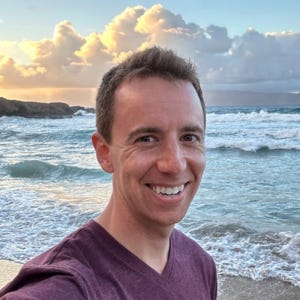
Luke Van Der Veer is a business owner, investor, and the founder of Website Rental Coaching. He built a portfolio of lead-generating websites rented to local service businesses, reached financial independence at 28, and now owns multiple million-dollar companies. Since 2020, he has taught others how to build website rental income and how to use lead generation to raise the value of the businesses they own or buy.
CONNECT WITH LUKE!
🌐 Website: http://www.websiterentalcoaching.com/
📸 Instagram: https://www.instagram.com/lukevanderveer/?hl=en
💼 LinkedIn: https://www.linkedin.com/in/lukevanderveer
📘 Facebook: https://www.facebook.com/websiterentalcoaching/ ──────────────────────────────────────
Final ThoughtsIf you take one action from this, make it the ownership audit. Look at where your best work is going and ask what you keep when the engagement ends. Luke Van Der Veer rebuilt his entire business around that single question, and it is the reason he stopped trading hours before 30.
This is a reader-supported publication. To receive new posts and support my work, consider becoming a free or paid subscriber.
July 30, 2026
Why Your Body May Not Be Healing the Way It Should
He sat down wearing cannulas in his nose and said, almost as an aside, “Just want to make sure people don’t think they’re talking to an invalid. It’s quite the opposite, actually.”
George Wiseman, founder of Eagle Research and one of the world’s leading independent researchers on Brown’s Gas technology, has been inhaling a hydrogen and oxygen mixture every single day for the past decade. His psoriasis is gone. His arthritis is gone. His childhood heart murmur, the condition that killed his grandfather, was confirmed gone by his doctor. He passed two driver’s tests without the glasses he had worn since age nine.
He is in his sixties and says he looks twenty years younger than he did ten years ago.
But here is the thing that stopped me cold: he had access to the technology that produced all of this since 1986. For thirty years, the answer was sitting in his shop. And the woman he loved died without it.
That is the story I want to tell you today.
The Cowboy Who Learned to Question Everything
Wiseman grew up on a cattle ranch in British Columbia. Nine kids, a twenty-five-foot trapper’s cabin built in the 1800s, no electricity, no running water, no radio signal. Up at four-thirty every morning to saddle horses.
There were no mechanics, no veterinarians, no specialists within reach. If something broke, you figured out why, and you fixed it so it would not break again. He called this laziness at the time. He just hated doing things twice.
That instinct followed him everywhere. When he attended mechanics college, he convinced his instructor that six of his answers were more correct than the curriculum. He grew up not knowing that pickup trucks were not supposed to get thirty-six miles to the gallon, because his did, and he had tuned it that way without knowing it was unusual.
The ranch gave him something most of us never get: the habit of trusting what is actually real over what he was told should be real. That habit is the foundation of everything that came next.
How a Combustion Expert Stumbled Into Healing
Wiseman started working with Brown’s Gas in 1986. Not for health reasons. For industrial ones. The gas, produced by running electricity through water in a process called electrolysis, could replace acetylene torches at two percent of the cost. It could improve fuel efficiency. It was a combustion tool.
Then his customers started doing things he never asked them to do.
They bubbled the gas through water and fed it to plants. Plants in soil grew roughly three times faster. Plants in hydroponics grew approximately ten times faster. People started reporting health changes. A man applied Brown’s Gas-bubbled water to a melanoma on his forehead. Three weeks later, it was gone.
Wiseman did not believe him.
He was an explosives expert. He had his blasting certifications. He had once deliberately set off a seventy-PSI explosion in a metal container in his shop just to understand the force involved, and people came running from blocks away because the garage doors had acted like giant speakers. The idea that someone should be inhaling this gas struck him as genuinely dangerous.
So he waited. And he dismissed. And the reports kept coming.
It took until 2005 before he finally tried drinking Brown’s Gas-bubbled water himself. He says he has not been sick since.
The Woman He Could Not Save
Wiseman met his wife Tanaj through Match.com in the late 1990s, back when the platform was just getting started. She was the director of a Montessori school in Ontario, a multimedia artist, someone who looked at the world fresh and made sure life had more in it than work.
Their love emails crossed in the digital mail on the same day, both of them writing the words without knowing the other had done the same.
They married in 1999. And then, slowly, she got sick.
Wiseman became her full-time caregiver. He carried her to the bathroom when she could no longer walk. He slept in thirty-minute intervals so he could check on her through the night. He modified the bed so she could breathe more easily sitting up. He could not leave her for more than twenty minutes at a time, which meant he could not work. Over several years, they went $300,000 into debt.
Her diagnosis, a severe form of lupus, was not confirmed until March 2016, when she was rushed to the hospital because she could no longer catch her breath. She died that month of heart failure.
Wiseman came home and could not enter their apartment. He walked in, saw her things, and had to leave. It took five attempts before he could stay. He says there were moments when he realized he had stopped breathing. His body, he says, was just shutting down from grief.
The Night Everything Changed
A few days after Tanaj died, Wiseman sat on the couch staring at nothing. All five of his cats gathered around him at once, something they had never done before. Animals who normally competed for his attention simply sat with him.
He looked at the Brown’s Gas machine in the corner.
He remembered a video a customer had sent him two months earlier of a Taiwanese hydrogen bar where people were inhaling the gas safely. He finally understood the science: below four point seven percent hydrogen in inhaled air, the gas is non-combustible. At two percent, it is perfectly safe.
He set up a video camera. Set the flow under two percent. And breathed in for fifteen minutes. He did not, as he puts it, care whether he lived or died.
That night he could not sleep. He was wide awake and alert in a way that felt nothing like caffeine. Within weeks, psoriasis that had been with him for years peeled away. Within three weeks, his libido returned with a force that surprised him entirely.
“I can tell you that if you have a strong libido, you care if you live or die,” he says. “That literally saved my life.”
Three months later, a woman emailed him. She had lupus symptoms. She had been inhaling Brown’s Gas for three weeks. They were gone.
Wiseman fell to the floor and sobbed on the carpet and could not stop.
“I had Brown’s Gas in my shop since 1986. I’d been told it had health applications since 1996. I was told by hundreds of people by 2006 that it was good. And here it was in 2016, three weeks time. All the pain and suffering, the financial, the physical, the emotional suffering we went through would totally not have happened.”
George Wiseman, founder, Eagle Research
What Your Body Is Actually Missing
Here is the science Wiseman has spent forty years studying, in plain language.
Approximately sixty-two percent of the human body by volume is hydrogen. Another twenty-four percent is oxygen. Twelve percent is carbon. Everything else, every mineral and compound you have ever read about on a supplement label, makes up the remaining two percent.
“Our most important macronutrient is hydrogen,” Wiseman says, “and it has been ignored for literally hundreds of years.”
His framework for what happens when the body lacks sufficient hydrogen is logical and, once you hear it, difficult to argue with. The body triages. It keeps the immediately life-sustaining systems running and shuts down what it considers expendable. The regeneration system, including stem cell activity, goes first. That is why, Wiseman argues, people age faster than they need to.
If the deficiency continues, immune function degrades. You get sick more easily and recover more slowly. If it goes on long enough, organs begin to fail.
“When I got enough hydrogen,” he says, “my organs healed, my immune systems came back online, my regeneration system came back online.”
The optimal inhalation level, supported by what Wiseman describes as thousands of scientific studies, is two percent hydrogen in the inhaled breath. Going higher produces no additional benefit. Duration matters more than concentration. He compares one hour of daily inhalation to the time most people spend eating. The best schedule, he says, is whatever you will actually stick to.
What To Take With You
🔑 Your body triages when it lacks resources — regeneration shuts down before survival does.
🔑 Sixty-two percent of your body by volume is hydrogen — it is your most overlooked macronutrient.
🔑 Expert syndrome is real — knowing something deeply in one context can blind you to it in another.
🔑 Duration of support matters more than intensity — consistent daily input beats occasional high doses.
🔑 Grief can shut your body down physiologically, not just emotionally — take that seriously.
Wiseman’s business was investigated seven times by government agencies in the United States and Canada during the 1970s and 1980s. His phones were tapped. Packages disappeared. Not one customer complaint was ever found.
He kept going because of what the ranch had taught him: deal with what is real, help people get results, and keep your word.
When asked what he hopes people remember about him years from now, his answer came in two seconds.
“I hope they remember that I helped them.”
He made that decision on the floor of his apartment, surrounded by five cats who had never done that before, on the worst night of his life. A decade later, tens of thousands of people are doing better because he got up off that floor.
Whatever you are carrying right now, George Wiseman’s story is a reminder that the answer you have been looking for might already be closer than you think. Sometimes we just need to stop dismissing what we have not yet understood.
🎙️ Listen to the full episode with George Wiseman:
📺 YouTube:
🎧 Spotify: https://www.spreaker.com/episode/grief-purpose-and-the-healing-that-followed--73071547
🎙️ Podcast Series: https://www.spreaker.com/podcast/breathe-different-the-brown-s-gas-revolution--7060704
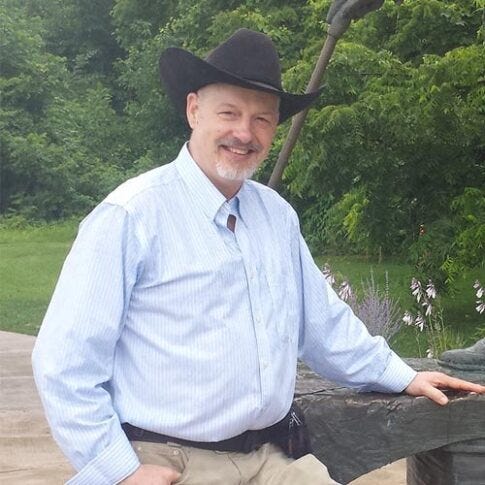
George Wiseman is the founder of Eagle Research, an inventor and researcher who has spent nearly four decades developing practical applications for Brown’s Gas technology, from industrial combustion science to cellular health and wellness. He has written twenty-four books on alternative energy and applied science, holds blasting certifications from his years in industrial mining, and is widely recognized as one of the world’s foremost independent researchers on Brown’s Gas. He has helped tens of thousands of people find options when conventional approaches have run out.
CONNECT WITH GEORGE WISEMAN:
🌐 Website: https://eagle-research.com
📸 Instagram: https://www.instagram.com/georgewiseman1984/
💼 LinkedIn: https://www.linkedin.com/in/george-wiseman-53969814/
▶️ YouTube: https://www.youtube.com/@ecopegasus
🐦 X / Twitter: https://x.com/Eagle_Research
📘 Facebook: https://www.facebook.com/profile.php?id=100054308450085
July 28, 2026
He Stepped Over My Body and Kept Walking. Thirty Minutes Later I Was Fired.
From the outside the television industry looks glamorous. The lights. The studios. The names you recognize walking the halls. People see it and think — what a life.
From the inside it looks very different.
Calm & Grounded with Stacey Chillemi is a reader-supported publication. To receive new posts and support my work, consider becoming a free or paid subscriber.
It is relentless. It is demanding. It will consume every hour you are willing to give it and then ask for more. I gave it everything I had. I walked those halls with purpose, moved between studios with urgency, and showed up every single day ready to do whatever the next production needed.
I loved it. I was good at it. And I believed — with everything in me — that I was building toward something.
I was walking through Rockefeller Center on an ordinary day, moving from one studio to the next, when I felt it.
The tingling sensation.
Anyone who lives with epilepsy knows this feeling. It is your body’s only warning. A few seconds of knowing what is coming without any ability to stop it.
I looked around quickly hoping to find somewhere — anywhere — I could go without drawing attention to myself. I was not the type to make a scene. My seizures were usually brief and I had learned over the years to manage them as quietly as possible.
But there is no managing the ground.
Within seconds my arms and legs gave out completely. I went straight down. No warning. No way to catch myself. Just the floor of a busy hallway in one of the most famous buildings in New York City rising up to meet me.
I opened my eyes.
People were everywhere. Moving fast. Everyone had somewhere to be.
And then an executive walked by with his crew.
He looked down.
He stepped over me and kept walking.
I was conscious. I could see him. I just could not speak yet — those first moments after a seizure the body comes back before the voice does. I lay there on that floor, completely aware of what had just happened, unable to do anything but watch him go.
I kept thinking — how do you see a person on the floor and step over them? Even if you did not see them fall. Even if you do not know what happened. There is a human being lying on the ground in front of you and you step over them like they are something in your way.
That thought has stayed with me for decades.
Thirty minutes later one of his assistants — a young woman who looked like she did not want to be delivering this message — came to find me.
I am sorry, she said. But we are going to have to let you go.
I remember looking at her. I remember the stunned silence that followed. After everything I had given. After every early morning and late night and extra hour. After showing up through medications that made me foggy and seizures that terrified me and a condition I had never asked for and could not control.
He could not even deliver the news himself. He sent someone else to do it.
I do not remember what I said. I do not think I said much. I gathered myself, walked back down that hallway one final time and out the door.
I walked out with my head up.
I want to be honest about what followed though. Because the triumphant exit is only part of the story.
I was devastated.
Not just hurt. Devastated. The kind of devastation that takes years to fully surface because you are too busy surviving to feel it all at once. I built new things — a freelance company, a new chapter, a marriage, a life — but underneath all of it the wound was there.
Epilepsy had done it again.
Every time I walked three steps forward this disorder knocked me two steps back. I knew what I was capable of. I could feel the potential inside me like something banging against a wall trying to get out. And every time I got close to something that mattered a seizure would arrive uninvited and change everything.
It is a particular kind of grief — the grief of knowing what you could do if your own body would simply cooperate.
I carried that grief quietly for a long time.
And then someone from the Epilepsy Foundation called.
He was a director who worked with people living with epilepsy across New Jersey and he invited me to do something I had never imagined doing.
Come to Washington, he said. Speak before Congress.
I remember standing in that hearing room. I remember the faces of the people listening. I remember Congressman Rush Holt of New Jersey — our congressman — sitting across from me as I spoke. And I remember the moment he reached into his pocket, took out a handkerchief and wiped his eyes.
Afterwards he shook my hand.
My sister had epilepsy, he said. You brought back a lot of memories for me.
In the months that followed additional protections were added to the Americans with Disabilities Act — strengthening the rights of people with disabilities in the workplace. Making it harder for an employer to do what was done to me on that hallway floor.
I think about the executive who stepped over me sometimes.
I wonder if he ever thinks about it.
I wonder if he knows that the woman he stepped over went on to build a podcast reaching 1.3 million listeners. To write twenty books. To stand before Congress and change the law.
I do not tell you this to be triumphant.
I tell you this because I spent years believing that what happened in that hallway defined the ceiling of what was possible for me.
It did not.
The floor of Rockefeller Center was not my ending.
It was the beginning of everything I was actually meant to build.
If you have ever been stepped over — literally or figuratively — by someone who should have stopped and did not, I want you to know something.
The people who step over you reveal everything about themselves and nothing about your worth.
Get up.
Keep walking.
Your head stays up.
Read the complete From Seizures to Success series: staceychillemi.com/my-story Book a free strategy call: calendly.com/carecoachingonline/booki...
Stacey Chillemi is an award-winning podcast host, 20-time bestselling author, epilepsy advocate and founder of Advisor Global Media. Featured on ABC, NBC, CBS and five times on The Dr. Oz Show. Her podcast reaches 1.3 million listeners worldwide and won the NYC Podcast Award for Best Host. She testified before the United States Congress on disability rights and job discrimination.
Explore how we can work together: staceychillemi.com/work-with-me
Calm & Grounded with Stacey Chillemi is a reader-supported publication. To receive new posts and support my work, consider becoming a free or paid subscriber.
July 24, 2026
You're Not Getting Old. Your Body Is Running Low on Energy.
There is something Dr. Hany Demian stopped doing years ago.
He stopped guessing his patients’ ages.
Not because he lost interest. Because he was wrong too many times. A patient would walk in and he would think, forty, maybe forty-five. Then he would look at the chart. Sixty-two. Another would look sixty and turn out to be thirty-eight. After enough of those moments, he stopped guessing entirely.
Dr. Demian is a board-certified spine surgeon, CEO, healthcare entrepreneur, and longevity specialist running twelve clinics. He has spent years studying what separates people who age well from those who do not. And what he has found is not what most people expect.
── ✦ ──
Aging Is Not a Timeline. It Is an Energy Problem.Dr. Demian describes aging as multi-organ energy failure. That phrase is worth sitting with.
It means the reason you feel exhausted, foggy, stiff, or just off is not simply that time has passed. It is that your tissues are not getting enough energy to repair and recover the way they should.
The culprit is the mitochondria — the power plant inside every cell. When the mitochondria are not adequately fueled, everything downstream suffers. Sleep does not restore you fully. Muscles do not rebuild. Hormones decline because the raw materials to sustain them are gone.
This is not a process that begins at forty or fifty. According to Dr. Demian, it begins far earlier than that.
── ✦ ──
The Science Says Aging Starts at FiveWhen Dr. Demian first says this, it sounds extreme. But the reasoning is grounded in how the body develops.
From birth to age five, every system is directed toward growth. By five, that initial developmental phase stabilizes. And from that point forward, every single choice begins accumulating — how much a child moves, what they eat, how much they sleep — in ways that compound for decades.
Children who played multiple sports during those early years developed what Dr. Demian calls an exercise protein — a cellular and hormonal foundation that persists into adulthood and shapes how their bodies respond to physical stress for the rest of their lives.
The hormonal piece matters just as much. Regular movement in childhood causes estrogen, progesterone, and testosterone to develop earlier and remain active longer. Dr. Demian points to military veterans as the most visible example: people pushed physically from a young age carry a posture and vitality decades later that you can see from across a room.
And if you were active as a kid but fell away from it — the foundation does not disappear. “Even if they stop for a period of time,” he says, “the protein will be there. So it will be easier for them to get back in shape.”
── ✦ ──
The Blood Test Your Doctor Is Probably SkippingDr. Demian spent six months trying to figure out what was wrong with one of his patients.
Everything looked fine on paper. Testosterone levels: normal. Free testosterone: normal. Nutrition: on track. Sleep: evaluated. And yet the patient was not recovering. Something was off and Dr. Demian could not find it.
Then he tested estrogen.
“The minute I looked at his estrogen, my eyes opened,” he says. This was a male patient. And estrogen in men governs joint lubrication, libido, skin quality, and mood. When it is out of balance, the effects ripple through the entire system in ways that can look like almost any other condition.
Dr. Demian now recommends something called a Dutch test — a urine-based hormone panel that does not just check whether your hormone levels fall within a reference range. It examines how those hormones are actually being used and metabolized inside your body. That distinction is enormous.
He is also clear about something the FDA recently confirmed: hormone therapy does not cause cancer. The black box warning suggesting it did has been removed. What actually exposes people to risk is the opposite. “The lack of hormones or hormone deficiency in your system is way more dangerous,” he says. “It exposes women and men to heart attacks, strokes, and blood clots.”
── ✦ ──
“Seventy-five percent of longevity is for free. Everything else — hormones, peptides, supplements — is only twenty-five percent.”Dr. Hany Demian, Board-Certified Spine Surgeon and Longevity Specialist
── ✦ ──
The Simple Stuff Is Still the Most Important StuffWhen someone asked Dr. Demian how to improve health without a $100,000 longevity program, his answer was immediate.
Sleep first. He recommends a dark room — darkness signals the body to direct hormones and nutrients to the tissues that need repair — and waking without an alarm at least twice a week. Not a specific hour count. Just letting the body finish.
On food, he is specific: one to one and a half grams of protein per pound of body weight delivers the highest return of any nutritional approach. Keep carbohydrates and fats to the earlier part of the day when you are most active. Shift toward a protein-dense evening meal.
Exercise does not need a specific format. It needs to match your actual life. Dr. Demian talks about identifying what your body needs to do — climb stairs, carry your kids, stay on your feet for long stretches — and building strength around those real demands. He notes that grip strength is now one of the most reliable long-term indicators of longevity. Simple to train. Almost nobody thinks about it.
The last piece: find a doctor who understands biology, not just pathology. A pathology-focused doctor treats disease after it appears. A biology-focused doctor looks at where you are on the trajectory before it gets there.
── ✦ ──
The Supplements Worth Your Money — and the Ones That Are NotDr. Demian takes a short, deliberate list himself. Here is what he actually uses and why.
NMN and NAD+ are the foundation. These compounds fuel the mitochondria directly. He recommends both because some people lack the enzyme needed to convert NAD on its own — NMN fills the gap. Injections are most effective, but pills and patches work too. The key is adjusting the dose until you feel it working.
Vitamin D3, K2, and natokinase work together to clear cholesterol from the arteries before it calcifies. He contrasts this directly with statins, which calcify soft cholesterol plaques and hold them in the vessel walls — an older mechanism he no longer finds compelling when the option exists to clear the buildup entirely.
Omega-3 or PEA he considers equally essential.
Beyond that, he does not mince words: “Other than that, honestly, you’re just wasting money and time if it’s not done within the context of a program.” Testing reveals what your body actually needs. Without it, supplementation is expensive guesswork.
── ✦ ──
What To Take With You🔑 Aging is not something that happens to you — it is the result of accumulated choices starting in childhood.
🔑 Sleep in a dark room. Wake without an alarm at least twice a week. It is free and it is the highest-return habit you have.
🔑 Eat one to one and a half grams of protein per pound of body weight. Keep carbs and fats in the morning.
🔑 Get a Dutch test, not just a standard hormone panel. Knowing your hormone levels is not the same as knowing how your body is using them.
🔑 NAD+, NMN, D3, K2, and natokinase — these are the core. Everything else needs a reason backed by your own testing.
── ✦ ──
There is a sentence Dr. Demian said near the end of the conversation that I keep coming back to.
“Aging is optional. So what would you choose? To age or to defy aging?”
It sounds like a slogan. But he means it as a real question. The research he is describing is not fringe. It is the direction medicine is moving — personalized, continuous, proactive, and built around where your biology actually is rather than waiting for something to go wrong.
Seventy-five percent of it is free. That is the part most people skip because it does not feel like enough. Sleep, movement, protein, finding the right medical partner. These are not consolation prizes for people who cannot afford the expensive programs. They are the foundation that makes everything else work.
Dr. Hany Demian has twelve clinics worth of evidence that the basics, done consistently, change the trajectory. The rest is optimization on top of a foundation that most of us have not fully built yet.
Start there.
── ✦ ──
🎙️ Listen to the full episode with Dr. Hany Demian:
📺 YouTube:
🎧 Spotify: https://www.spreaker.com/episode/aging-starts-at-5-and-you-can-slow-it-down--72996532
🎙️ Podcast Series: https://www.spreaker.com/podcast/the-healing-hub--6509257
── ✦ ──
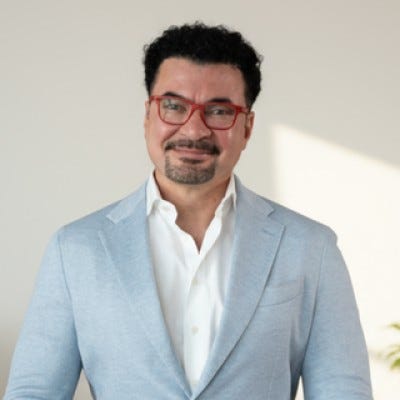
About Dr. Hany Demian: Dr. Hany Demian is a board-certified spine surgeon, CEO, healthcare entrepreneur, and longevity specialist running twelve clinics focused on regenerative medicine and preventative healthcare. His work combines genetic testing, comprehensive biomarker analysis, hormonal optimization, and AI-assisted monitoring to address the biological roots of aging. He works with patients who want to optimize healthy bodies and with those searching for answers that conventional medicine has not found.
── ✦ ──
CONNECT WITH DR. HANY DEMIAN:
🌐 Website: https://drdemian.com/
📸 Instagram: https://www.instagram.com/drhanydemian/
💼 LinkedIn: https://www.linkedin.com/in/hany-demian-5b79b659/
The Parking Lot That Changed Everything

Hi friend 💜
I want to tell you about a parking lot.
Not a dramatic one. Not a parking lot anyone would have reason to remember except me. Just an ordinary stretch of pavement — poorly constructed, uneven, the kind of thing you drive through a hundred times without thinking twice.
I thought twice about this one for four and a half years.
I had just started living again.
After decades of epilepsy — of seizures and limitations and the slow careful work of building a life that felt like mine — I had arrived somewhere that finally felt like freedom. I was seizure-free. I was speaking on stages across the country. I was doing the work that filled me up more than anything else I had ever done.
Then I drove into a poorly constructed parking lot on an ordinary afternoon.
My car hit a bump that should not have been there. In less than three seconds, I went forward and backward. My head hit the steering wheel.
I drove home. Told myself I was fine.
My arms were starting to swell by the time I got there.
What followed was four and a half years of pain, recovery, loss and — eventually — the most unexpected gift.
Within days, I could not move my arms past my hips. I could not hold a coffee cup. I could not get out of bed in the morning without help.
I had spent years asking epilepsy to let me live normally. Now I was asking my arms to do the same thing.
And for four and a half years — they said no.
There were mornings in those years when I lay in bed and asked the ceiling when it was going to stop. I had been through so much. Physically. Emotionally. In ways that left marks you cannot see but can always feel. I kept asking myself when I was going to get a stretch of life that did not cost this much.
But I pushed through anyway. With the same tired resilience I had been carrying since I was five years old.
And something happened in those four and a half years that I did not plan for.
I stopped saying yes to everything.
I had been a people pleaser my entire life. Someone who said yes because no felt dangerous. Someone who absorbed other people’s needs and made them her own. Someone who justified her limitations to people who would never understand them anyway.
When you cannot hold a coffee cup, you have to be ruthlessly clear about what you are going to do with the energy you have. You cannot afford to spend it on things that drain you.
So I started saying no.
I created real boundaries. I chose the people around me based on a simple question — does this person give me strength or take it?
I stopped performing for people who were not worth the performance.
I chose silence when I had previously chosen explanation.
I built a life I could actually live in.
Today my arms are mobile again. Not at full strength — perhaps never at full strength. But moving. Working. Doing most of what I need them to do.
I used to think that helping yourself first was a form of selfishness.
I understand now that it is the only way to genuinely help anyone else.
You cannot pour from arms that cannot lift.
You cannot give what you have already spent.
If you are in a season right now where life has taken something from you that you worked hard to build — I want you to hear this from someone who has been there more than once.
The rebuilding is not just about getting back what you lost.
Sometimes it is about discovering what you never had in the first place.
You are not alone in this. 💜
With love and gratitude,
Stacey
media@staceychillemi.com
staceychillemi.com
calendly.com/carecoachingonline/booking-link
July 15, 2026
The Man Who Grabbed the Wheel
![[image error]](https://substackcdn.com/image/fetch/%24s_!vznq!,f_auto,q_auto:good,fl_progressive:steep/https%3A%2F%2Fsubstack-post-media.s3.amazonaws.com%2Fpublic%2Fimages%2F93215f0d-7668-4243-903d-82fc49847668_1672x941.png)
Hi friend 💜
I want to tell you about the moment my husband saved my life.
Not metaphorically. Literally.
I was in my third year of college. I was dating Michael — the man I met in English class who would eventually become my husband. We were driving back to his house through a stretch of open farmland, everything quiet and spacious the way the world feels when you are young and in love and do not yet know what the next fifteen years are going to ask of you.
I felt the aura.
That tingling sensation. My body’s only warning. I turned to Michael in the passenger seat and said the words as calmly as I could.
Michael. I am going to have a seizure.
I started pulling to the side of the road.
The clock ran out before I got there.
My body stiffened completely. My foot locked down on the gas pedal. My arms stiffened to the wheel. Michael grabbed it with everything he had — his foot all the way down on the brake, my foot all the way down on the gas — the car heading straight toward a telephone pole.
He pulled us away from it.
He told me later that in that moment I had the strength of a male bouncer. That if he had not been in the passenger seat, I would likely have been dead.
Death flashed before my eyes again. And I was not even conscious to see it.
Shortly after, I sat across from my doctor and heard the words I had been dreading.
He asked me to stop driving until my seizures could be controlled.
I told myself it would be a few months.
It was fifteen years.
Fifteen years of medication changes and adjustments. Of my father driving up to my college campus to get me. Of the close friend who lived off campus who took me to the grocery store every week because I had no other way to get there. Of family members reorganizing their schedules around my limitation. Of saying yes to rides I did not want to need from people I did not want to inconvenience.
I was an independent woman. I had always been. I did not want help from anyone. And here I was — needing a ride to buy milk.
When I eventually married Michael, and we had children, the walls became a prison.
I could not take my kids to the toy store on a Tuesday afternoon because the feeling struck me. I could not do the small spontaneous things other mothers did without thinking — the things that feel like nothing until you realize you cannot do them.
I felt depressed.
I felt like an underachieved woman with dreams on hold because of a condition I had never asked for and could not control.
But I did not stop.
I started writing. I wrote an article about epilepsy and sent it to the Epilepsy Foundation. They published it. Three to four hundred letters came back from strangers across the United States and Canada who had felt exactly what I was feeling.
I took those letters and wrote Epilepsy You Are Not Alone.
I built a blog. A writing career. A platform.
And then one day an email arrived from someone who had found my book at a Barnes and Noble.
They wrote to say it had saved their life.
In that moment something shifted in me. Not all at once. Not dramatically. But quietly and permanently. Maybe this life — the one I had built inside the walls of everything I could not do — was not the lesser version of the life I had planned.
Maybe it was exactly what I was supposed to build.
It took fifteen years to get my license back.
It took changing everything. My diet. My stress response. My sleep. Integrative medicine. Yoga. Therapy. Confidence work. Acceptance of the life I actually had instead of the one I had wanted.
And a brilliant doctor who refused to give up.
When I finally got behind the wheel again after fifteen years, it felt like walking through prison doors into open air with no one stopping me and the whole world ahead.
The first thing I did was take my kids to the toy store.
Not because it was important.
Because I could.
And because for fifteen years I could not.
I used to grieve the career I never got to have. The journalism. The television. All the versions of myself that the seizures made impossible.
I understand now that everything I built inside those walls was not the consolation prize.
The book that saved a life was built inside those walls.
The platform that reaches 1.3 million listeners was built inside those walls.
The twenty books. The Congress testimony. All of it — built from inside a prison nobody else could see.
When the life you planned becomes unavailable — you do not stop building.
You build differently.
You work with what you have.
And sometimes what you build inside the walls is more extraordinary than anything you could have built outside them.
You are not alone in your version of this. 💜
With love and gratitude,
Stacey
media@staceychillemi.com
staceychillemi.com
calendly.com/carecoachingonline/booki...
July 14, 2026
Your Family Office Has a Gap Nobody Is Watching
Your family office was built to protect what you spent a lifetime building.
But here is the question almost no one asks out loud: what if the structure underneath it has quietly stopped protecting you and started creating risk instead?
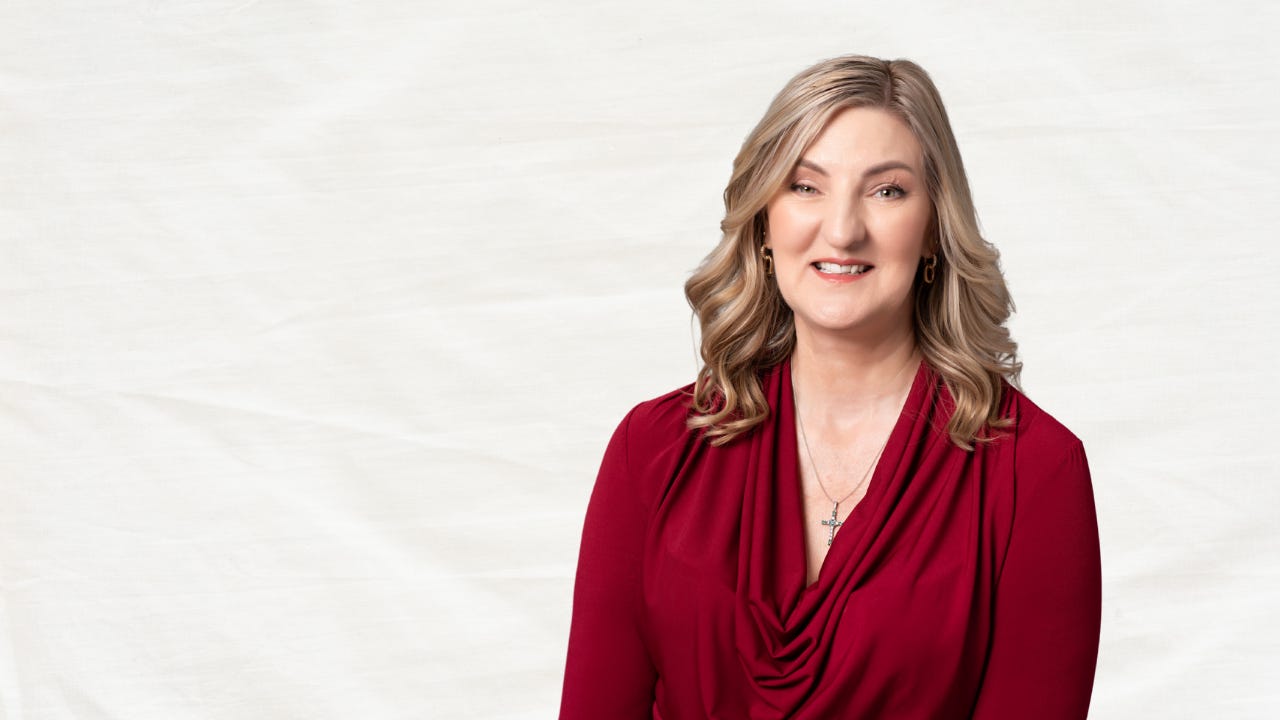
Susan Lindeque has seen it happen more times than she can count. As Founder and CEO of Avestix Group, a Chartered Accountant, and Chief Investment Officer of her own single-family office, who has raised, invested, or managed more than a billion dollars across over a hundred private acquisitions, she knows exactly where the line sits between protection and exposure.
The scariest part? Most families are on the wrong side of that line without knowing it.
This is a reader-supported publication. To receive new posts and support my work, consider becoming a free or paid subscriber.
── ✦ ──
The CPA and Quarterly Review Model Is OverFor decades, a good accountant and a once-a-year financial review were enough. Lindeque says those days are gone, and the reason is simple: the money has moved.
“Previously, a lot of people just invested in public markets,” she explains. “But these days, a lot of people invest in alternative markets. Real estate, venture capital, data centers, art, exotic cars.” Private assets carry private complexity. They sit inside trusts, LLCs, and offshore entities — each with its own reporting obligations, tax consequences, and regulatory requirements.
And families are not just passive investors anymore. They want to sit at the table, make decisions, and co-invest directly. That shift comes with a cost most are not prepared for. “What they don’t realize is that with that comes a lot of requirements in terms of state taxes, federal taxes, and reporting. And that’s where all the problems are starting.”
── ✦ ──
Three Advisors, Zero Integration, and a Gap Nobody is Aware OfHere is the setup most wealthy families have: a CPA for taxes, an attorney for entity structure, a wealth manager for the portfolio. Each does their piece well. The family is still exposed.
Why? Because nobody is watching the space between them.
“If your wealth manager triggers a position and that position creates a tax event, and your tax person is not aware of that,” Lindeque says, “that’s where the problem begins.” A capital call, a liquidity event, a new co-investment — every single one carries reporting obligations at the state and federal level. If no one has a complete dashboard showing exactly what is happening across all of it in real time, the gaps compound quietly.
She has watched this play out at its most painful: when the principal of a family office passes away, and the wealth transfers to a spouse who was never part of the financial conversations. “The women just don’t even know where to start looking. Your CPA, your wealth advisor, and your attorney all work in silos. There’s no crossover between all of them. And that’s really a big, big problem.”
── ✦ ──
The Slow Accumulation Nobody Sees ComingThe real danger is not the one large penalty. It is the pattern that forms when small failures pile up over time.
“If you miss one, you’re okay. If you miss two, you can maybe say that was a problem. But if it’s starting to be continuous, then there’s a real big problem somewhere.“ That pattern, when regulators see it, reads as systemic failure. The IRS can place liens on assets. Banks can close accounts. The consequences of unmanaged compliance gaps can reach into the millions.
Lindeque sees AI as the solution to this accumulation problem. The back-end burden of compliance — forms, reporting, cross-jurisdictional obligations — is exactly where automation changes the picture. “That’s why I’m so passionate about Claude and other AI systems out there, because it will just help reduce that burden and help break down some of the complexity that’s there.”
── ✦ ──
The Whiteboard Before the SystemWhen a family comes to Lindeque and asks her to redesign their compliance from the ground up, she does not start with software. She starts with a whiteboard.
“I literally start and look at where all your investment holdings are, where you have it, where it is from a jurisdiction perspective, and who’s the advisor responsible for all of that.” Public assets are visible. Private assets — the exotic car, the yacht, the Palm Beach property, the gold held somewhere in London, the Bitcoin on a consumer exchange — those are where the gaps hide.
The first move for any principal who feels buried by complexity is the same: get a clear, consolidated view of where everything is. Not a list of advisors. A map. Every holding, every jurisdiction, every person responsible. “If you don’t know your whole holistic picture, then the foundation that you build everything on is so, so weak.”
── ✦ ──
“If you don’t have a complete dashboard that gives you 24/7 exactly what’s happening and where, that’s the big danger — because they inherited some wealth and they’ve got no idea.”
~ Susan Lindeque, Founder and CEO, Avestix Group
── ✦ ──
What To Take With You💡 The CPA and quarterly review model no longer covers alternative asset complexity
💡 Three advisors in silos = three gaps nobody owns — integration is the fix
💡 Map every holding, jurisdiction, and responsible party before building any system
💡 Small missed obligations compound into patterns that cost millions
💡 Compliance is not a cost center — it is the foundation your wealth is built on
── ✦ ──
The mindset shift Lindeque asks for is simple. Stop treating compliance as an invoice to be paid. Start treating it as the architecture your wealth lives inside.
“If you actually consider this — well, this is the foundation on which I built my wealth — then that changes everything the way you look at it.”
That shift does not require a new system or a new advisor. It starts with a whiteboard and an honest answer to one question: do you actually know where everything is?
Susan Lindeque has spent 25 years learning the difference between a structure that protects and one that quietly creates exposure. The families who sleep at night are the ones who built compliance into the architecture — not bolted it on after the fact.
── ✦ ──
🎙️ Watch / Listen📺 YouTube:
🎧 Spotify:
🎙️ Podcast Series: https://www.spreaker.com/podcast/the-wealth-mentor--6955839
── ✦ ──
About Susan Lindeque
Susan Lindeque is the Founder and CEO of Avestix Group, a woman-led, woman-owned fund management firm built around alternative assets and multi-family office services. She is a Chartered Accountant and Chief Investment Officer of her own single-family office, with more than a billion dollars raised, invested, or managed across over one hundred private acquisitions. She helps ultra-high-net-worth families and family offices identify structural compliance gaps and build integrated wealth architectures that protect generational legacies.
CONNECT WITH SUSAN LINDEQUE:
🌐 Website: www.avestix.com
💼 LinkedIn: https://www.linkedin.com/in/susanlindeque
This is a reader-supported publication. To receive new posts and support my work, consider becoming a free or paid subscriber.
July 10, 2026
He Left a $300M Fund to Fix What No One Else Would
There was nothing new on an officer’s belt for 35 years.
Not one new tool. Not one new option. Just guns, tasers, batons, and pepper spray — the same four choices, decade after decade, while the nature of what officers were being called to handle changed completely around them.
Scot Cohen, Founder, Chairman, and CEO of Wrap Technologies (NASDAQ: WRAP), saw that gap. He spent 30 years in capital markets — co-founding a New York hedge fund that reached $300 million in assets — and walked away from all of it to fill it. Not because it was easy. Because it was his.
That decision, and what he built from it over nine years and $175 million, is one of the most instructive authority-building stories you will hear this year.
── ✦ ──
The Lesson Most Experts Miss Before They Build Anything
Cohen thought the product would sell itself.
He assumed 100 body camera videos showing the BolaWrap working would be enough to get the rest of the country to adopt it. They were not. What he discovered — the hard way — is a sequence that applies to every expert trying to build authority in a resistant industry.
Technology without training is useless. Training without policy is unauthorized. You have to go in this order: policy first, training second, technology third. Skip any step and the whole thing stalls, no matter how good the product is.
For your authority brand, the parallel is exact. A great offer without an audience that trusts you means nothing. An audience without a framework they can actually use means nothing. You cannot lead with the tool. You have to lead with the belief system that makes the tool make sense.
── ✦ ──
Why Eight-Hour Sessions Are Killing Your Clients’ Results
Wrap Technologies trained law enforcement agencies the standard way for years. Eight hours, one session, PowerPoint, certification, done.
It did not work. Retention collapsed. Nobody used the device correctly in the field because nobody actually remembered how.
Cohen rebuilt the entire model around two-to-three-minute burst sessions, repeated over time, paired with virtual reality practice. The result was a fivefold increase in usage. Not because the device changed. Because the learning model changed.
If you are a coach, consultant, or educator, pay attention to this. Long workshops and dense programs feel impressive. But completion rates are low and behavior change is lower. The expert who designs for repetition and application — not information delivery — is the one whose clients actually get results. Results are what build your reputation.
── ✦ ──
The Metric Nobody Tracks (That Changes Everything)
Most law enforcement agencies report use of force. Almost none report force avoidance — the arrests made without incident, the situations resolved without escalation, the outcomes that never made the news because nothing went wrong.
Cohen has been pushing for force avoidance tracking nationally. His argument: you cannot build a culture of good outcomes if you only measure bad ones.
For your business, this is the testimonial problem. Most experts collect proof of transformation — the big win, the revenue number, the milestone. Almost none collect proof of prevention — the client who did not make an expensive mistake, the founder who did not burn out, the leader who did not lose the team.
The outcomes that didn’t happen are often your strongest evidence. Start documenting them.
── ✦ ──
What a Resistant Industry Actually Teaches You About Leadership
Cohen went nine years without the traction he knew the product deserved. There were moments, he says, where he wanted to shut the whole thing down.
He did not. And the reason he stayed is the most transferable thing in this entire episode.
“If you can associate purpose with this, with whatever you’re looking to do to make change — if that’s your purpose, your true purpose — don’t let anything stop you.”
When your authority brand is rooted in something you genuinely believe the world needs, the resistance you face becomes data, not defeat. Every slow year, every rejected pitch, every market that was not ready yet — it all becomes evidence that you are working on something real. Easy things do not take nine years.
── ✦ ──
“I want every officer, federal and state, to be carrying a BolaWrap because I know that every day in this country there is resistance, and I don’t want officers hurting themselves or escalating a situation. I want to give them an option.”
Scot Cohen, Founder, Chairman, and CEO, Wrap Technologies
── ✦ ──
What To Take With You
🎯 Lead with policy, not product — build the belief system before you introduce the tool.
📉 Measure what didn’t go wrong — prevention outcomes are your most underused proof.
🔁 Design for repetition, not information — short and practiced beats long and forgotten.
🏗️ Build the ecosystem, not just the offer — customers want end-to-end, not a single slice.
🔥 Purpose is the only thing that survives a nine-year build — know yours before you start.
── ✦ ──
Most experts quit before the market catches up to them.
They build the right thing at the right time, and then they stop six months too early because the resistance felt like rejection. Cohen’s nine years inside one of the most resistant industries in the world is a case study in staying when staying is hard.
The thing worth knowing is that the 100 departments now showing measurable results — force down, litigation down, community trust up — are proof that the system works. Not in theory. In the field, daily, where it actually counts.
Scot Cohen did not just build a device. He built a training model, a policy framework, a counter-drone detection system, and a federal subsidiary. He listened to what his customers actually needed and kept building. That is what authority that scales looks like.
── ✦ ──
🎙️ Listen to the full episode with Scot Cohen:
📺 YouTube:
🎧 Spotify: https://www.spreaker.com/episode/public-safety-technology-just-crossed-a-new-line--72762111
🎙️ Podcast Series: https://www.spreaker.com/podcast/the-no-harm-standard--7125922
── ✦ ──
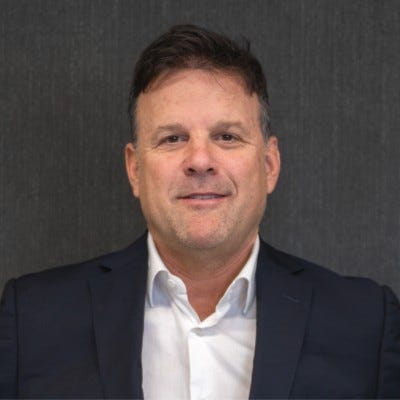
Scot Cohen is the Founder, Chairman, and CEO of Wrap Technologies, Inc. (NASDAQ: WRAP), a publicly traded global public safety company whose non-lethal restraint device, virtual reality training platform, and drone response systems are now deployed across more than 1,000 agencies in 60 countries. He left a 30-year career in capital markets — including co-founding a $300 million hedge fund — to build a company he describes as his higher purpose, leading every round of Wrap’s $90 million in financing and running a foundation that delivers mental health support to law enforcement officials.
── ✦ ──
CONNECT WITH SCOT COHEN & WRAP TECHNOLOGIES:
🌐 Website: https://www.wrap.com
📸 Instagram: @wraptechinc
💼 LinkedIn: https://www.linkedin.com/in/scot-cohen-643181375/
📘 Facebook: @wraptechinc
The Cards I Was Dealt — Life, Healing and Everything In Between

- Stacey Chillemi's profile
- 9 followers
