
Daniel J. Duke's Blog
September 7, 2024
‘Jesse James and the Lost Templar Treasure’ by Daniel J. Duke
 Unveil the Hidden Truths Before They’re Lost Forever!
Discover the Secrets of Jesse James and the Templar Treasure!
ANYWHERE Books are Sold!
Have you ever wondered about the true story behind the legendary treasures hidden across the Americas? What if the key to unlocking these secrets lies within the enigmatic life of Jesse James, the infamous outlaw, and his mysterious connections to ancient orders like the Templars and Freemasons?
Jesse James and the Lost Templar Treasure by Daniel J. Duke offers more than just speculation—it reveals groundbreaking insights into Templar treasures secretly relocated to the Americas. Using his unique position as the great-great-grandson of Jesse James, Duke has cracked open part of the long-hidden mystery, uncovering the methods and connections used to conceal these treasures.
Why You Can’t Afford to Miss This Book:Crucial Knowledge: This book goes beyond mere theories and provides concrete evidence of the treasures’ locations and the ancient methods used to hide them. Don’t be left behind while others unlock these hidden secrets.Historical Accuracy: While many sources speculate about Templar connections and hidden artifacts, Duke’s detailed research and familial insights offer a clearer, more reliable perspective. Ensure you’re getting the most accurate and compelling information available.Valuable Insights: From the sacred geometry of the “Veil” template to the intricate connections between Jesse James and historical secret societies, this book delivers rare insights that other works can’t match. Don’t miss out on the cutting-edge discoveries that could change your understanding of history.Critical Acclaim:Timothy W. Hogan, Templar Grand Master: “Daniel J. Duke’s book is on the cutting edge of revealing some of what has remained hidden. Anyone interested in the Templar legacy and their connection with the Americas will find true gems in this book!”William F. Mann, Author: “Duke’s exploration of ancient mysteries and their connections over time to influential historical figures makes this a key read for anyone fascinated by Southern intrigue and hidden treasures.”Kris Helt, Whiskey & Wit Book Review: “Duke fulfilled this objective all the way to 5-stars. If you love history, mysteries, and treasure hunting, give your full attention to this riveting book!”Rachel Dehning, Seattle Book Review: “A fascinating read that offers in-depth facts about Jesse James and the groups he was affiliated with. Perfect for history buffs and those intrigued by treasure stories and conspiracy theories.”Act Now! Uncover the secrets before they slip away into obscurity. Order your copy of “Jesse James and the Lost Templar Treasure” today and dive into a world of hidden mysteries and historical revelations that could redefine everything you thought you knew!


September 3, 2024
The Jesse James, Knight Templar and the Payseur Conspiracy video series at ‘Esoteric Atlanta’ with Brice Watson
My sister/co-author Teresa Duke and I had a great time on Brice Watson’s show at Estoteric Atlanta! Brice has created a great series of videos about Jesse James and the Payseur Conspiracy. She did a great job and we were very honored to have been her guests.
Now for the videos! Enjoy!
May 30, 2024
The Dark Legacy of Allan Pinkerton and the Pinkerton Detective Agency
Allan Pinkerton, a name often associated with the advent of modern detective work, holds a legacy far more sinister and controversial than popular narratives suggest. Fleeing a checkered past in Scotland, Pinkerton brought his criminal instincts to America, cloaking them in the guise of law enforcement and justice. His Pinkerton National Detective Agency, while pioneering in some respects, is also notorious for its brutal tactics and ethical violations that eventually led to significant public and governmental backlash.
Ah, the classic tale of reinventing oneself—except instead of becoming a better person, he just put on a badge and got worse.
From Criminal Beginnings to American Lawman, or America’s Original Karen?
Allan Pinkerton’s early life in Glasgow, Scotland, was marred by criminal activities. Known for his involvement in radical political movements and possible criminal undertakings, Pinkerton fled to the United States to escape legal repercussions. Settling in Chicago, he initially worked as a cooper (a craftsman who makes wooden barrels, casks and similar products), but a chance discovery of a counterfeiting ring shifted his focus to detective work. This transition marked the beginning of his controversial career in law enforcement, characterized more by cunning and ruthlessness than by adherence to the rule of law.
From making barrels to busting criminals—because what better way to hide your own shady past than by pointing fingers at others?
Founding the Pinkerton Detective Agency
In 1850, Pinkerton established the Pinkerton National Detective Agency, which quickly gained notoriety for its effectiveness in solving crimes and protecting businesses. However, the agency’s success was often built on a foundation of extreme measures and unethical practices. The famous logo, an unblinking eye with the motto “We Never Sleep,” symbolized the agency’s relentless—and often ruthless—pursuit of its goals.
“We Never Sleep”—mostly because we’re too busy making sure everyone else’s lives are a nightmare.
Brutal Tactics Against Labor Movements
One of the darkest chapters in the Pinkerton Agency’s history is its involvement in suppressing labor movements. Industrialists hired Pinkerton agents to infiltrate, disrupt, and violently suppress union activities. During the infamous Homestead Strike of 1892, Pinkerton agents clashed with striking steelworkers in a bloody confrontation that left several dead and many injured. This event starkly illustrated the agency’s willingness to use lethal force to protect corporate interests, fueling public outrage and tarnishing its reputation.
Nothing says “protect and serve” quite like turning a labor dispute into a bloodbath.
Espionage and Ethical Violations During the Civil War
During the Civil War, Pinkerton served as head of the Union’s intelligence operations. While his espionage work was crucial in gathering intelligence, his methods often crossed ethical lines. Pinkerton’s operatives engaged in surveillance, used double agents, and occasionally employed deceptive tactics to achieve their ends. His intelligence reports, known for overestimating enemy strength, sometimes led to strategic misjudgments. These actions highlighted a pattern of behavior that prioritized results over ethical considerations.
Who needs accuracy when paranoia works just as well? Inflated numbers and dubious tactics were the name of the game.
Pursuit of Infamous Outlaws
The relentless pursuit of outlaws like Jesse James and the Wild Bunch further cemented the agency’s brutal reputation. The bombing of Jesse James’ mother’s home, which resulted in civilian casualties, exemplified the extreme measures Pinkerton agents were willing to take. This incident drew significant public criticism and underscored the agency’s often indiscriminate methods.
Why stop at the outlaw when you can terrorize the whole family? It’s all in a day’s work for the Pinkertons.
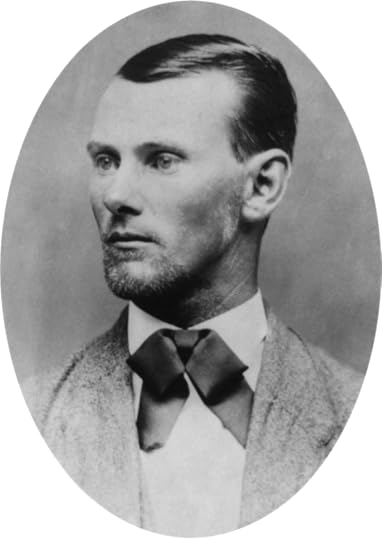 Jesse James
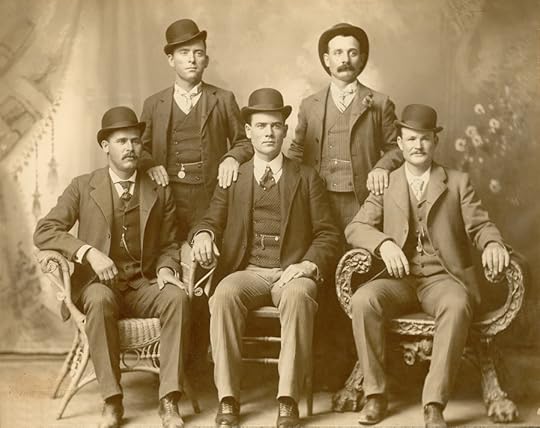 The Wild Bunch
The Anti-Pinkerton Act
The public outcry over the Pinkerton Agency’s brutal tactics eventually led to legislative action. In 1893, the U.S. government passed the Anti-Pinkerton Act, which prohibited the federal government from employing Pinkerton agents or similar private security contractors. This legislation was a direct response to the agency’s aggressive and often violent methods, reflecting growing unease with the unchecked power of private security firms.
When your methods are so extreme that the government steps in to say “enough,” you know you’ve really made a name for yourself.
Ties to Industrial Magnates and Ethical Implications
The Pinkerton Agency’s deep ties with powerful industrialists like the Rockefellers underscored its role in protecting the interests of America’s wealthiest figures. These relationships influenced the agency’s methods, aligning its goals with those of its corporate clients. The agency’s actions during labor disputes and strikes had a profound impact on labor relations, often to the detriment of workers’ rights and safety.
When you’re best friends with the Rockefellers, who needs ethics?
Decline and Legacy
The combined effects of public backlash, legislative restrictions, and internal challenges led to the decline of the Pinkerton Detective Agency’s dominance. Transitioning from a detective agency to a broader security firm, the legacy of Pinkerton’s enterprise evolved, yet the shadow of its controversial past remained.
From detective work to security services—because even villains need to evolve with the times.
Allan Pinkerton’s death in 1884 marked the end of an era. His life, characterized by a blend of criminal brutality and ruthless law enforcement, left a complex legacy. Pinkerton’s story serves as a cautionary tale about the dangers of unchecked power and ethical pitfalls in the pursuit of security and justice. As we reflect on his legacy, it’s essential to consider the balance between effective law enforcement and the upholding of ethical standards, ensuring that the pursuit of justice does not become an excuse for brutality.
Allan Pinkerton: a man who proved that sometimes, the only thing scarier than the criminals is the closet criminal trying to catch them.
February 2, 2024
‘Seven Cities of Gold’: A Treasure Hunt of Epic Proportions
In 1937, a man named Milton Ernest “Doc” Noss stumbled upon a cave in a small mountain called Victorio Peak in New Mexico’s Hembrillo Basin, unveiling a trove of treasures said to have been worth over $3 billion. From chests of coins and jewels to 16,000 gold bars and historical artifacts, the cavern held a captivating fortune.
Doc and his wife, Ova “Babe” Noss, devoted themselves to exploring the cavern, extracting gold bars, a crown adorned with diamonds and a pigeon blood ruby, and ancient documents dating back to 1797. However, a fateful decision in 1939, involving dynamite to expand the cave, led to its collapse, sealing Doc’s only known entrance.

Despite efforts to recover the treasure, the story took a tragic turn. Doc’s life spiraled into paranoia, business betrayals, and a fatal gunshot in 1949. Ova, undeterred, continued her pursuit, only to face challenges when the government extended the White Sands Missile Range in 1955.
In 1958, four airmen claimed to discover gold bars in Victorio Peak but were thwarted from retrieving them. Speculations arose, with some believing the Army removed the treasure. The legend endured, prompting searches and even surfacing in the Watergate hearings in 1973.
After reading the testimonies of Ova Noss, the four US airmen and others, the amount of gold bars claimed to have been found along with jewels and other items, I seriously doubt it was the work of to Chief Victorio‘s efforts against wagon trains of average settlers. The alleged connection to the Knights of the Golden Circle (KGC) seems very doubtful as items said to have been found, predate the groups existence.
A mysterious letter
Doc Noss is said to have reburied in a Wells Fargo chest. The letter was dated 1797, with a translation from a text by Pope Pius III. That date precedes the formation of the Knights of the Golden circle, throwing doubt on some claims that the treasure could be attributed to that group.
The translation from Pope Pius III, who held the papacy for an extremely brief period from September 22, 1503 until October 18, 1503, states the following: “Seven is the Holy number,” the passage begins. It then continues for several lines before ending with a cryptic message. “In seven languages, seven signs, and languages in seven foreign nations, look for the Seven Cities of Gold. Seventy miles north of El Paso del Norte in the seventh peak, Soledad, these cities have seven
sealed doors, three sealed toward the rising of the Sol sun, three sealed toward the setting of the Sol sun, one deep within Casa del Cueva de Oro, at high noon. Receive health, wealth, and honor.” Soledad is said to have been the former name of the peak known as Victorio Peak, and
Casa del Cueva de Oro is Spanish for house of the golden cave. If that is true, then it sounds as if Doc Noss could have possibly stumbled upon at least part of the treasures of Cibola.
The allure of Victorio Peak’s treasure, woven into historical events like the Watergate hearings, fuels ongoing speculation. Former New Mexico Attorney General David Norvell aptly captures the mystery: “There’s too much evidence to discount completely the possibility that there’s something still in there.”
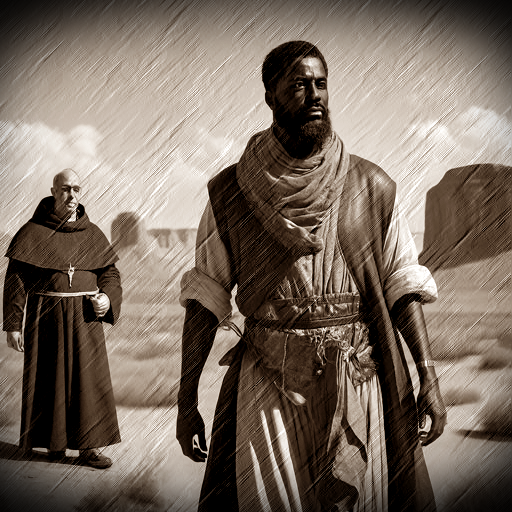
A pivotal figure in this enigma is Estebanico; also known as Esteban de Dorantes and Estevanico the Moor, a Muslim from Morocco, was the first known person from Africa to explore North America. Researching the legend of Cibola, the Seven Cities of Gold, it is claimed that the legend began with Estebanico. In the 16th century, Estebanico provided tales of wealthy cities to Spanish explorers during the Narváez Expedition. His intelligence and multilingual abilities added great credibility to his accounts.
Estebanico’s relationship with Friar di Niza, as documented in di Niza’s diary, reflects his acquisition of great wealth, including turquoise, during the expedition. Estebanico’s reports of seven great cities to the north, known as Cibola, intrigued explorers, marking the beginning of the legend.
The Narváez expedition challenges the timeline presented by those who attribute the treasures to Chief Victorio and/or the Knights of the Golden Circle. The apparent contradiction raises intriguing questions about the origins of the treasures.
As the quest for answers continues, the saga of Victorio Peak, entwined with Estebanico’s legacy, stands as a captivating chapter in the search for the ‘Seven Cities of Gold,’ where history and mystery converge.
As the quest for answers continues, the saga of Victorio Peak remains an enthralling chapter in the search for the ‘Seven Cities of Gold.’ You can read more about this and other treasures in my first book, ‘Jesse James and the Lost Templar Treasure‘, available anywhere books are sold.
January 29, 2024
Unveiling the Hidden Lineage: A Journey from Jesse James to the Knights Templar
My involvement with this story started with my late mother, author and lecturer, Betty Dorsett Duke, and her search for the truth about the outlaw Jesse James and our family lineage. Looking into Jesses life, exploring his diaries and other artifacts passed down through the family, opened doors I never would have known existed. I found myself in a whirlwind of topics ranging from Old West outlaws to secret societies, buried treasures, political figures, esoteric traditions and religions, alchemy, the Knights Templar and more. In my pursuit of knowledge about the treasures associated with Jesse and all the questions that come with that; who, what, when where and why, I found myself returning to the beginning, each revisit adding to my cache of knowledge and understanding. The focal point of chapter 8 in my first book; ‘Jesse James and the Lost Templar Treasure’, was to establish a lineage connecting my research to the Knights Templar. Previous chapters have intricately linked my quest to Williamsburg, Virginia, and traced it back to the influential figure, Sir Francis Bacon.
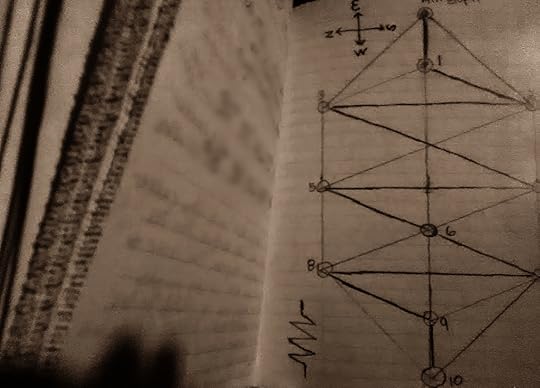 Tree of life Sketch
Connecting the dots from Jesse, through Freemasonry and other organizations and figures led me to three pivotal figures: Thomas Jefferson, George Washington, and Benjamin Franklin. All Freemasons, Jefferson’s ties to the College of William and Mary, and Washington’s pivotal role as its first American chancellor, lay the groundwork for a deeper connection. As for Franklin, his ties to the College of William and Mary reveal a fascinating link to the Rosicrucian community, further cementing the interconnectedness of these luminaries.
The lineage extends to influential minds like Isaac Newton, Christopher Wren, and John Dee, mentors who shared a profound interest in alchemy, mathematics, and the Enlightenment. As the narrative unfolds, the Royal Society emerges as a clandestine meeting ground, providing a safe haven for these thinkers to exchange ideas without fear of persecution.
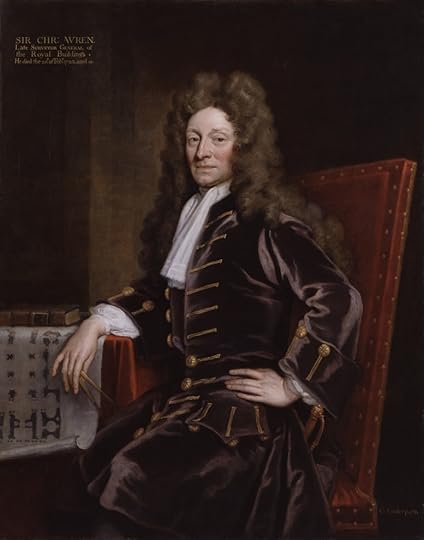 Sir Christopher Wren
The story unfolds further, connecting the Knights Templar to individuals like Abraham Gikatilla, Abraham Abulafia, and Johann Reuchlin. Their shared interests in various forms of Kabbalah and the pursuit of knowledge echo the ideals of secret societies, leading to the birth of the New Atlantis—a dream realized through collective efforts.
A central figure in this clandestine lineage is John Dee, the polymath who served as advisor to Queen Elizabeth I and is hailed as the original 007. Dee’s connections to Gerolamo Cardano and his involvement with the Knights Templar illuminate a fascinating web of historical interplay.
As the narrative weaves through history, the Knights Templar’s legacy endures, shaping the foundations of the New World. The tantalizing question arises: What treasures lie buried, guarded by the Tree of Life and Veil templates? From Victorio Peak, New Mexico to Georgetown, Texas, the enigma persists, suggesting that the secrets hidden by these societies transcend mere material wealth.
In conclusion, the documented lineage presented here serves as a testament to the enduring legacy of those who sought liberty and freedom from political and religious tyranny. The buried treasures become symbols of their quest, safeguarding invaluable documents that could reshape our understanding of history. The New Atlantis, conceived through the struggles of these luminaries, continues to be unveiled, offering a glimpse into the profound mysteries that lie beneath the surface of our collective past.
January 28, 2024
The Mystery of Victorio Peak: A Treasure Trove Shrouded in Legends
Title: Unraveling the Mystery of Victorio Peak: A Treasure Trove Shrouded in Legends
In the annals of treasure hunting, few tales capture the imagination quite like the saga of Victorio Peak. Tucked away in the Hembrillo Basin area of New Mexico, this chapter of history revolves around a man named Milton Ernest “Doc” Noss, who stumbled upon an extraordinary discovery that would spark decades of intrigue and speculation.
The year was 1937, and Doc Noss was on a routine hunting expedition when he made a life-altering find. Seated on a small rock outcropping, he noticed air emanating from beneath the rock. Investigating further, he uncovered the entrance to a cave that reportedly held treasures surpassing $3 billion in value. What followed was a series of events that would confound researchers and captivate the public for years to come.
Doc’s exploration of the cave revealed a trove of riches – chests brimming with coins and jewels, saddlebags, over 16,000 gold bars each weighing more than 40 pounds, Wells Fargo boxes, and letters dating back to 1880. The legend goes on to describe Doc and his wife, Ova “Babe” Noss, spending countless hours exploring the tunnels within the mountain, living in a tent at its base.
However, the tale takes a darker turn in 1939 when Doc, in an attempt to expand the cavern’s narrow passageways, used dynamite and inadvertently sealed the only known entrance. As the story goes, he buried much of the gold in various desert locations, reaching out to black-market dealers due to gold ownership restrictions at the time. Doc’s life spiraled into paranoia, strained relationships, and ultimately tragedy when he was shot in 1949 by one of his business partners.
Ova Noss, undeterred by her husband’s fate, tirelessly sought to recover the treasure. Her efforts faced a significant obstacle in 1955 when the government expanded the boundaries of the White Sands Missile Range, hindering access to Victorio Peak. In 1958, a group of airmen claimed to have discovered gold bars within the caverns, sparking further controversy and speculation.
As the story unfolds, doubts emerge about the origin of the treasure. Chief Victorio, an Apache chief, is traditionally linked to the cache, supposedly amassed through robbing and pillaging. Yet, the sheer magnitude of the hoard, weighing more than 300 tons, raises skepticism. Historical context is crucial, as the Spanish, in over 150 years, shipped far less gold from America to Europe.
The intriguing letter supposedly reburied by Doc Noss in a Wells Fargo chest, dated 1797 with a translation from Pope Pius III, adds complexity to the narrative. The translation hints at the elusive “Seven Cities of Gold,” connecting the legend to Cibola, a narrative that began with the Narváez Expedition in 1527. However, the timing of events raises questions, as Pope Pius III died in 1503, predating the origins of the Cibola legend.
Further research into the legend of Cibola uncovers alternative origins, rooted in the eighth-century Moorish invasion of Porto, Spain. Seven bishops fleeing westward to an island called Antilla are believed to have inspired the legend. The bishops’ communication may have reached Pope Pius III, shedding light on the mysterious connection between the treasure and historical figures.
While the identity of the treasure’s true owner remains elusive, the allure of Victorio Peak endures. Even in the Watergate hearings of 1973, the treasure made an appearance, indicating the enduring fascination and the lingering possibility of hidden riches. Former New Mexico Attorney General David Norvell encapsulated the sentiment best: “There’s too much evidence to discount completely the possibility that there’s something still in there.”
As the enigma of Victorio Peak continues to beckon treasure hunters and historians alike, it remains an uncharted chapter in the rich tapestry of American folklore and unsolved mysteries. The search for answers persists, and the tale of Victorio Peak stands as a testament to the enduring allure of hidden treasures and the quest for the unknown.
You can read much more about Victorio Peak and it’s connections to so much more in ‘Jesse James and the Lost Templar Treasure’, available anywhere books are sold.
January 26, 2024
Book Trailer: ‘Secret History of the Wild, Wild West’ by Daniel J. Duke
• Offers evidence from Jesse James’s secret encoded diaries
• Examines Jesse James’s close ties with other notorious outlaws, such as Johnny Ringo, Jesse Evans, and Billy the Kid
• Shows how Jesse James was related, by blood or marriage, to powerful people in law enforcement and politics, including the elite families behind the Copperheads and the Knights of the Golden Circle organizations
Jesse James and many other Old West outlaws were much more than just wild cowboys. As author Daniel Duke–the great-great-grandson of Jesse James–reveals, Jesse James and other infamous outlaws were part of a larger organization, centuries old, that has affected U.S. history from the small, rural streets of early America to the highest levels of the nation’s government, with continuing influence to this day.
Drawing on his great-great-grandfather’s secret diaries, Duke unravels the hidden history of the Wild West to expose the outlaws, politicians, and secret societies who were pulling strings behind the scenes. He examines Jesse James’s close ties with other notorious outlaws, such as Johnny Ringo, Jesse Evans, and Billy the Kid, and demonstrates not only how Jesse James faked his own death and lived out his life under an alias, but how Billy the Kid did the same. He also details how both Jesse James and Billy the Kid continued their work for the nameless organization after their faked deaths.
Exploring how Jesse James was related, by blood or marriage, to powerful people in law enforcement and politics, Duke details Jesse’s connections to the Baylor family, who founded Baylor University in Waco, Texas, and other elite families who were instrumental in founding and leading the Copperheads and the Knights of the Golden Circle organizations before, during, and after the Civil War. The author shows how Jesse James was connected to former U.S. presidents Lyndon Baines Johnson and Harry S. Truman as well as President Johnson’s man in the shadows, Texas mob figure Billie Sol Estes.
Exposing the secret agenda behind the outlaw gangs of the Wild West, Duke also reveals the stealthy war between the secret organization and its opposition that has been waged in the shadows for centuries.
You can find more about the author and his books at the following links:
Barnes & NobleAmazonBooks-a-MillionSimon & SchusterInner Traditions – Bear & Co.And anywhere books are sold.
Book trailer Music: Credit: https://www.FesliyanStudios.com Background Music
Book Trailer: ‘The Mysterious Life and Faked Death of Jesse James’ by Daniel J. Duke and Teresa F. Duke
A deep investigation into historical documents that prove the notorious outlaw Jesse James faked his own death
• Presents the legend of Jesse James and counters it with the real story, based on family records
• Provides photographic evidence, a journal of Jesse James’s, and historical records that prove James faked his death, verified by experts and civic authorities
• Debunks the 1995 DNA test results of James’s supposed remains
The story of the notorious outlaw Jesse James’s assassination at the hands of Robert Ford has been clouded with mystery ever since its inception. Now, James’s great-great-grandchildren Daniel and Teresa Duke present the results of more than 20 years of exhaustive research into state and federal records, photographs, newspaper reports, diaries, and a 1995 DNA test in search of the truth behind Jesse James’s demise.
Explaining how the accepted version of the history of Jesse James is wrong, the authors confirm their family’s oral tradition that James faked his own death in 1882 and lived out his remaining days in Texas. They methodically unravel the legend surrounding his death, with evidence vetted by qualified experts and civic authorities. They share the journal of their great-great-grandfather, kept from 1871 to 1876 and verified to be written in James’s handwriting. They reveal forensically confirmed photographs of James before and after his supposed killing, including one of James attending his own funeral. Examining James’s life both before and after his faked death, they provide an account of where he lived and who he associated with, including his interactions with secret societies. They compare the contradictory newspaper reports of James’s death with accounts by his family and associates, which support that the man buried as James was actually his cousin, and reveal how James tricked authorities into believing he had been killed.
Further supporting their claim, the authors debunk the DNA test results of the exhumation of James’s body in 1995. The Dukes detail the ways in which the test was fraudulent, an assertion supported by the deputy counselor for Clay County at the time of the testing. Backed by a wealth of evidence, the descendants of Jesse James conclusively prove what really happened to America’s Robin Hood.
You can find more about the authors and their books at the following links:
Barnes & NobleAmazonBooks-a-MillionSimon & SchusterInner Traditions – Bear & Co.And anywhere books are sold.
Book trailer Music: Credit: https://www.FesliyanStudios.com Background Music
Book Trailer: ‘Jesse James and the Lost Templar Treasure’ by Daniel J. Duke
‘Jesse James and the Lost Templar Treasure’ book trailer
Jesse James left behind secret diaries and coded treasure maps. Working to decrypt these maps, Daniel J. Duke–the great-great-grandson of Jesse James–reveals hidden treasures yet to be recovered as well as connections between the infamous train robber and Freemasonry, the Knights Templar, the Founding Fathers, and Jewish mysticism.
An investigation into the lost treasures of Jesse James and the Freemasons and their connections to the Templars, Rosicrucians, and the Founding Fathers
Explains how Jesse James used techniques involving sacred geometry, gematria, and esoteric symbols to hide his treasures and encode mapsProvides instructions for using the encoding template employed by Jesse James and the Freemasons to hide and recover treasure and sacred relicsShows how the encoding template confirms the existence of treasures on Oak Island and Victorio Peak and can be traced to a 16th-century book containing a secret map of the New World and the “hooked X” of the Knights TemplarJesse James left behind secret diaries and coded treasure maps. Working to decrypt these maps, Daniel J. Duke–the great-great-grandson of Jesse James–reveals hidden treasures yet to be recovered as well as connections between the infamous train robber and Freemasonry, the Knights Templar, the Founding Fathers, and Jewish mysticism.
The author explains how Jesse James faked his death and lived out his final years under the name James L. Courtney. He uncovers James’ affiliation with the Knights of the Golden Circle, a secret society that buried Confederate gold across the United States, and shows how the hidden treasures coded into James’ maps were not affiliated with the KGC but with the Freemasons, the Knights Templar, and the treasure of the Temple Mount. Using sacred geometry, gematria, and the Kabbalistic Tree of Life symbol, the author explains the encoded map technique used by the Freemasons to hide and later recover treasures, an esoteric template known as the “Veil”. He shows how the Veil template confirms the locations of Jesse James’ recovered treasures in Texas as well as other suspected treasure locations, such as the Oak Island Money Pit and Victorio Peak in New Mexico.
Tracing knowledge of the Veil template back through the centuries, the author reveals the Veil hidden on the cover of a 16th-century book that contains a secret map of the New World and the “hooked X” symbol of the Knights Templar. He shows how the template was used not only to hide treasures but also sacred knowledge and relics, such as within the Bruton Vault, which originally contained secrets tied to Francis Bacon, the Freemasons, the Rosicrucians, and the founding of the United States. Applying the Veil template alongside the esoteric secrets of Poussin’s famous painting, Et In Arcadia Ego, and Cassini’s Celestial Globe, Duke shows how the template reveals other Templar and Freemason treasure sites scattered throughout America and around the world.
You can find more about the author and his books at the following links:
Barnes & NobleAmazonBooks-a-MillionSimon & SchusterInner Traditions – Bear & Co.And anywhere books are sold.
Book trailer Music: Credit: https://www.FesliyanStudios.com Background Music


