D.R. Coghlan's Blog
February 20, 2022
Volunteer Adventures in Nepal – My First Trip
I had always wanted to visit Nepal. Trekking adventures, Buddhist spirituality. There was even a period where I walked about singing the old Cat Stevens song, “Kathmandu, I’ll soon be seeing you …” In fact, I almost made it in my twenties, but Bangkok, Chiang Mai, and the ornate Buddhist temples won out on that occasion. During this time, it never occured to me to volunteer.
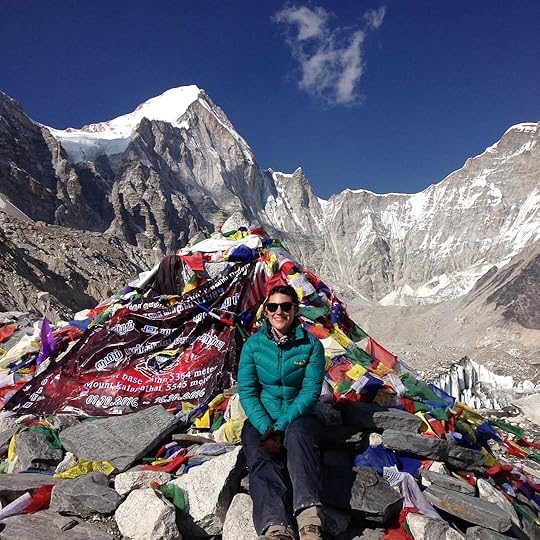 MUM, I THINK I MIGHT GO TO NEPAL
Life went on and the yearning to go was buried under everything else that constituted life. That was until my daughter, Maia, then at university came home talking about a volunteer trip she had read about to a remote Nepalese village.
So many thoughts and emotions tumbled about inside me as she told me about the trip. Her decision was so simple and yet, there I was, entrenched in middle age and still carrying the unfulfilled desire to go. I managed to nod and smile and make all the right encouraging sounds as a soft sadness filled my heart.
LIVING VICARIOUSLY THROUGH MY DAUGHTERBut I quickly replaced that with excitement as I helped her get organised. If I couldn’t go myself, I would have to be happy following her adventure.
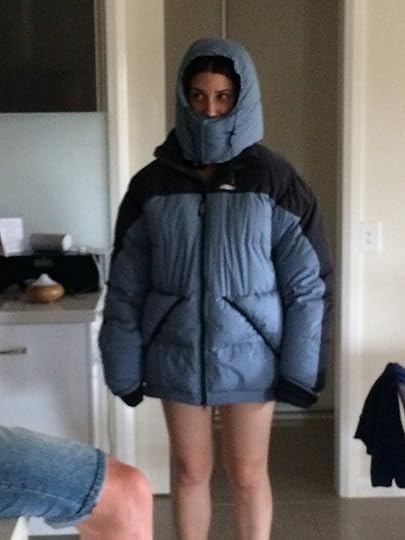
She would be staying in a remote village in the Nepalese winter, so she definitely needed to take warm clothing. The coat in the pic however, kindly donated by a somewhat larger family member, did not make the cut.
I waved her off at the airport with my heart in my throat and waited impatiently for her to contact me on arrival.
The adventurer in me thrilled at her excitement and enthusiasm, and the way she spoke about the people and the country. It really was the next best thing to being there.
THE DEVASTATING EARTHQUAKEA couple of years later, she managed to gather together a group of Education students from Monash university to do an International Teaching Placement at the same area. She was so excited. It was all put together in conjunction with the tour company she had originally volunteered with. The trip was almost organised when, on April 25, 2015, a large part of Nepal was devastated by an earthquake measuring 7.8 on the Richter scale.
Multi-storey buildings in Kathmandu were toppled, ancient temples crumbled and almost nine thousand people lost their lives. With ongoing aftershocks, 3.5 million people across Nepal were left homeless, living in the streets and the fields, too afraid to re-enter damaged and highly unstable buildings.
Of course, the trip was cancelled.
A SURPRISE INVITEOver twelve months later, the Monash Education faculty expressed interest again and suddenly it was all on. I remember so well, her excited call to me.
“Mum, Mum, it’s all organized. We’ve got sixteen volunteers. It’s really going to happen this time!”
I was so happy for her, then she continued, “Everything has fallen into place, the only thing we don’t have is a qualified teacher to act as supervisor, so I thought you might like to go.”
What? Me? Nepal? With you? Would I ever!
BUT COULD I???Then, just like Ronnie in the book I’ve written that is partly based on my experiences, Himalayan Awakening, I got the jitters. How was I going to manage to haul my out of shape, middle aged ass up through the mountains? Me? I had chronic fatigue and fibromyalgia for a start which had both decimated my body confidence, not to mention my fitness level. The other volunteers, would all be young, fit, university students. I broke out in a heart-pounding sweat just thinking about it.
“Yeah, I’d love to – if you think I would be up to it? Do you think?”
My super-fit daughter reassured me I would be fine. Besides, I had a couple of months to work on my fitness. Months? Gawd, I needed way longer than that.
FIRST IMPRESSIONSA lot of Ronnie’s first impressions as she heads off on her grand adventure in Himalayan Awakening are very similar to my own. The view of the snow-capped mountains as the plane circles before landing in Kathmandu, the crazy traffic, the Loving Heart restaurant, are all part of my fond memories of Nepal. And I admit, the extreme breathlessness, climbing, with wobbly knees, till you’re not sure if your lungs will burst or you’ll puke, are also pulled from my own memories.
OFF TO POKHARA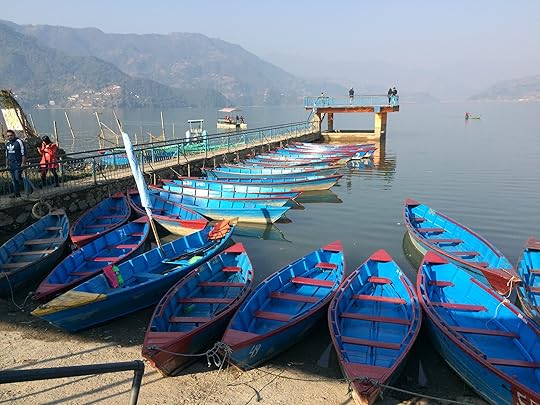 INDEPENDENT ADVENTURES!
When Maia and I first arrived in Nepal, we had a week to ourselves before we joined the rest of the group for the trek in to the village. We spent the first couple of days in Kathmandu and then hopped an early morning bus to Pokhara, out west from the capital.
THE BUS TO POKHARAThe bus took about 8 hours to wind and bump its way along the valley and into the hills. Fortunately, I had been warned and had taken some travel sickness pills or it would have been a very unpleasant trip.It was a realxed journey and the bus stopped several times for us to get out. Each time we would settle our bones back into place, and wander through the roadside stalls buying drinks and snacks. The masala tea was of a consistently high quality and a cup at each stop helped me to keep my strength up and my stomach settled.Our fellow passengers on the bus were a curious mix of westerners, locals and … others. Like the delightful Sri Lankan woman we met, who was on leave from the charity she worked for there. She was on her way to a site high in the mountains above Pokhara to visit another charity.
WELCOME TO POKHARAPokhara, built on the edge of Fewa Lake, is a slightly upmarket version of everything typically Nepali. There are many garishly bright houses, deep potholed roads, rubbish, especially plastics clogging the gutters, and many places catering for a full range of tourist needs.
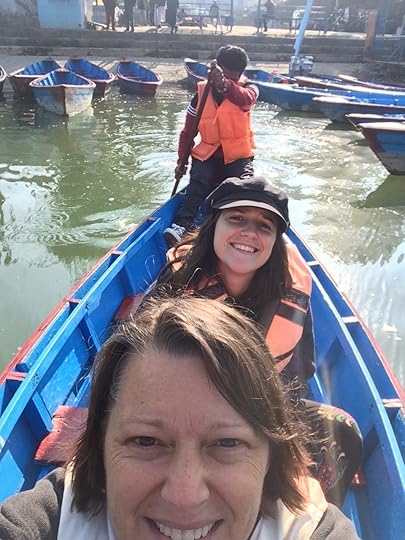
LAKE FEWA (PHEWA) AND THE WORLD PEACE PAGODAAfter a good night’s sleep in our large room in The Mountain House, we had a filling breakfast and were excited for our enxt adventure as we made our way down to the lake. Once there, we hired a little boat and … a umm … rower … driver … oarsman? to take us across to the other side of the lake. It was a peaceful, dreamy experience, one I would recommend to anyone.
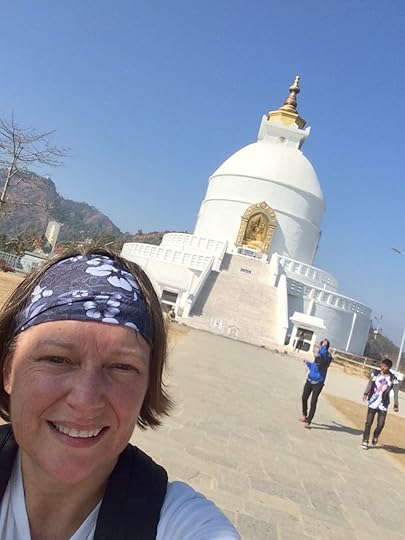
THE PEACE PAGODAOn the other side, we had a strenuous climb up the mountainside to the World Peace Pagoda. It was officially winter, the off season for tourists, but we were perspiring freely in our t-shirts and shorts. The bright white Pavillion was impressive, definitely worth the effort, as was the view back across the lake and the township.
OUR MEMORABLE IF NOT WONDERFUL DINNERThat evening, we chose a local restaurant catering to Westerners for dinner. The chicken coconut curry sounded divine, so I ordered that and Maia ordered vegetarian noodles. I knew I was being brave, ordering meat, but I was relaxed. I had had a wonderful day and my guard was down. That turned out to be my least pleasant adventuere in Nepal.
 TROUBLE DOWNUNDER
Alas! By the time we were ready to turn the lights out a few hours later, my stomach was churning and I spent the night driving the porcelain bus (aka being violently ill). Fortunately, we had an ensuite room, so I didn’t have to share it, unlike many years before when I had had an even worse experience in Yogjakarta in Indonesia—but I digress.
My daughter’s response was half sympathy, half remonstration about how I should have known better than to choose the chicken, which made me feel worse. As the sun lightened the room in the early hours of the morning, however, she raced past me as I came back to my bed from yet another trip. Something in the way she hurried past startled me.
“Not you too?”
NOT SO PLEASANTThirty hours disappeared as we moaned, groaned, heaved and ran our way back and forth to the bathroom until not a skerrick of anything we had eaten remained within. The lovely woman who ran the place realised our fate and delivered hot sweet tea to our room, sympthasing with us. She confessed she had also been caught out on more than one occasion and she was a vegetarian.
What we learned is that, in the off season, everyone has to be very careful to eat where there is a flow of customers to ensure the food is fresh. Simple, sensible. Please do this. Don’t do what Donna did.
SUNRISE ON SARANGKOTWe emerged eventually, weak and feeble for a final wander along beside the lake before crashing back into bed after packing for our flight the next morning back to Kathmandu. Before our flight, however, we were determined not to miss the sunrise at Sarangkot.
THE DRIVE OUT TO THE MOUNTAINThe driver pulled up out the front in the dark right on time and we crammed into his little car. It was a slow trip as he made his way out of the centre. Not all drivers will go to Sarangkot as the roads get progressively worse.
And I mean, they start bad, and become something most western drivers would not even contemplate without a robust four- wheel drive. What an adventure! Even on the outer streets of town there were huge potholes in the road, making driving not only dangerous for the occupants but potentially devastating for the vehicle.
FULL PRAISE FOR THE DRIVERAnd let’s remember, in a poor country like Nepal, having or not having a vehicle can mean the difference between severe poverty or supporting a family. We therefore tried to be as understanding of the driver as we could while he continued to apologise for the roads and for the pace we were travelling at.
For my part, I thought, if only this fat westerner (me) wasn’t carrying so many pounds, we wouldn’t be so close to bottoming out so many times.
The driver urged the little car as far up the mountain as it could safely go, before parking and pointing us towards the track to the top. The higher we went, the more locals and tourists joined us in the push to the summit and we arrived, me seriously out of breath, but with time to spare.
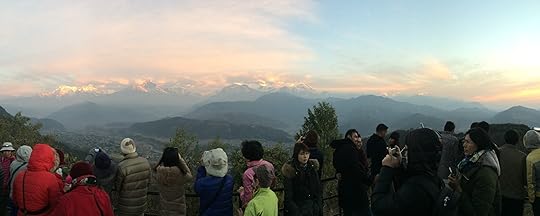
AND THEN THE SUN CAME OUTGasps went up from the crowd as the first golden speck of sunshine landed on the upper reaches of the snow-capped giant of Sarangkot. Watching the dawn slowly unveil the mountains, bathing them in a glorious golden light, was truly breathtaking.
 FLYING BUDDHA AIR
I think I counted eighteen seats divided by a tiny aisle space on the small plane that took us back to the capital, and most of them were full. A lovely young steward greeted us as we boarded and the plane, which quickly and lightly sailed down the runway and into the air. The flight only took half an hour, but in that time, the steward came through firstly with sweets for everyone (yeti mints) and then returned with a tray with tea and coffee, cups and a large kettle. How she managed to serve us all sweets, then hot beverages, then clean it all away and be seated in time for our descent was beyond me. I don’t think I’ve ever seen such clockwork organization and efficiency, always accompanied by the sweetest, most confident smile.
DEFINITELYTHE BEST WAY TO GOThe route took us from west to east with a full view of the snow-capped Himalayas all the way. It was breathtaking. I was so pleased we had bussed one way and flew the other. It was definitely the best way to experience the country.
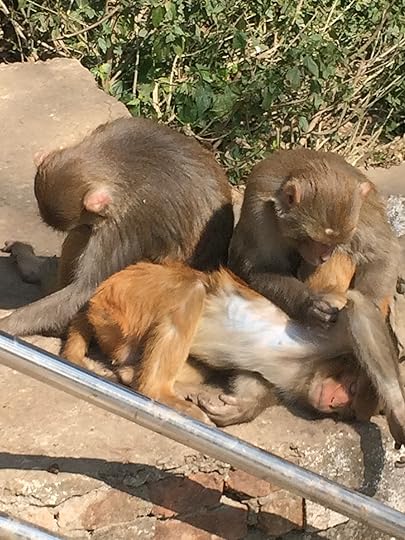
MEETING THE OTHER VOLUNTEERS AND OUR GUIDES AND A VISIT TO THE MONKEY TEMPLEWe met our fellow volunteers the next evening, mostly young, fit and enthusiastic, but with relief, I noted there were a couple among them who looked of only average fitness. Good! The young local guides who would accompany us on the trek joined us the next day as we took in some of the sights of Kathmandu including the Monkey Temple, perched high above the city and accessed by thousands of steps (or so it seemed). There are, in fact, many temples at different levels on the mount, all worth wandering around. I looked about for the monkeys, saw a few, but was told they had not returned in the quantities there had been before the earthquake.
OH, THE VIEW!Meanwhile, the view out across the Kathmandu valley and the city rooftops is totally engrossing. Eagles soar through the sky at eye height and the craziness of the city continues way below.
 BOUDHA
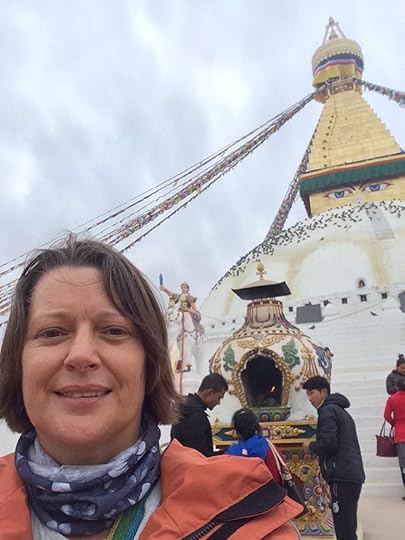
Our adventures in Nepal continued with a visit to Boudha, the enormous Tibetan Buddhist Stupa.
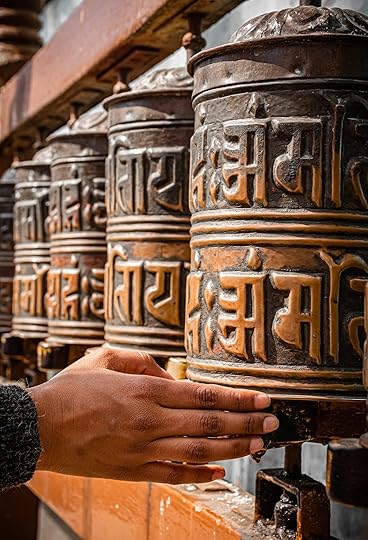
We joined the throng walking around the great Stupa, turning the prayer wheels as we went. Amazing. I would have been happy just to hang out there, watching the genuine Tibetan Pilgrims as they circumambulated the Stupa prostrating themselves on the ground. Most had wooden or leather paddles attached to their hands to protect them.
HOLY MEN AND MANDALASThere were a number of holy men sitting ready to give people their blessings or their wisdom and other monks with their begging bowls. The air was thick with incense and the murmur of mantras or holy prayers. We had an art class in one of the studios where they paint the traditional mandalas. The apprenticeship to become a master lasts for many years and when you look closely at the intricate detail involved, then pull out and study the symmetry and geometry of the design, you can see why.
THE TREK INTO THE MOUNTAINSThe next morning, we were in the bus at dawn, after a quick breakfast, being driven to the edge of civilization to begin our trek into the mountains. The first section consisted of about a million lung bursting steps, straight up. OMG! What I wrote about Ronnie in Himalayan Awakening was my experience exactly. I felt like a burden to the others as I stopped, time after time, to catch my breath and get some strength back into my legs.
THE YOUNG GUIDES WERE AMAZINGEvery time I stopped there were caring, supportive young guides, helping me, encouraging me to keep going. For their sake, I kept my swearing largely to myself even though I’m a firm believer in the power of swearing as a pain reliever and motivator. Asmita, my guide and a teacher at the village school, was already carrying my day pack. There wasn’t much else she or the others could do. Our leader assured me I would be fine, and I knew if I really felt I couldn’t continue on the second day, I could ride in the jeep carrying our luggage via road through to our lodgings.
Step after step, the energy of the young guides definitely helped to keep me going. A few in particular, including Rita, a pocket rocket with such a sweet, loving disposition. We took turns to sing, the foreigners and the Nepalis and each learned some of the lines from the other. I taught them to sing “I am strong, I am invincible (hard word for them ivinstable), I am woman …”
THE LOCAL BOYSThere were more young female guides than males, but the boys who were with us were a little older and had more authority. That tends to happen in Nepal. Anil, Mane and Dinesh were like three brothers, almost like a comedy trio as they entertained us with their hijinks, testing their strength against each other. They surprised us by leaping out of trees, climbing rocks and bouncing around. In the village, Mane and Dinesh proved to be mountain bike mad. They performed hair raising tricks that had us all holding our breaths or laughing, or wincing when they went wrong. And I must say, that happened often as they pushed themselves to go further each time. Anil, on the other hand, was the quieter of the three, the more level-headed. We will learn more about him in a subsequent post. We will also meet Mane and other characters as we go (as I get more posts written).
Just like Ronnie, I was determined to make it to the end and was so happy the following afternoon when we were greeted by a large group of children as we approached the village.
LIFE IN THE VILLAGEWhilst I was in the village, puffing and panting up and down the steep mountainside to the school, I fell in love with the people. They are so resilient and peaceful, so welcoming and generous, so heart-led and so beautiful in their unassuming shyness.
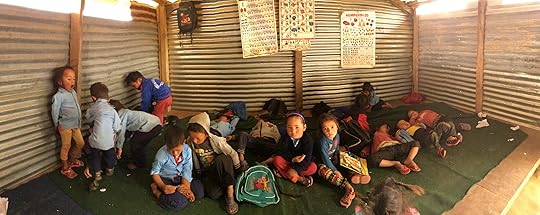
THE SCHOOLThe local school had been reduced to rubble in the earthquake and so classes were being held in makeshift corrugated iron buildings. They had uneven dirt floors and wonky old desks. Each class held up to 45 students, squeezed in, three to a desk. Meanwhile, a whiteboard nailed to a post at the front of each classroom was certainly a welcome sight. Learning was done from dilapidated old text books that some of the children had. Maybe there was a plastic rubbish bin, and maybe a chair for the teacher. It was an exhilarating, very challenging, super noisy environment.
Overall, our time in the village was much as I described in the book. It was filled with chaotic classes, physically challenging outings, lots of time spent with the children, and tears all round when it was time to leave. We were presented with beautiful garlands of scarlet rhododendrons and golden marigolds at a formal farewell in the school grounds. Katas were laid around our necks, and the gratitude from the whole school community was really touching.
 MY GIRLS
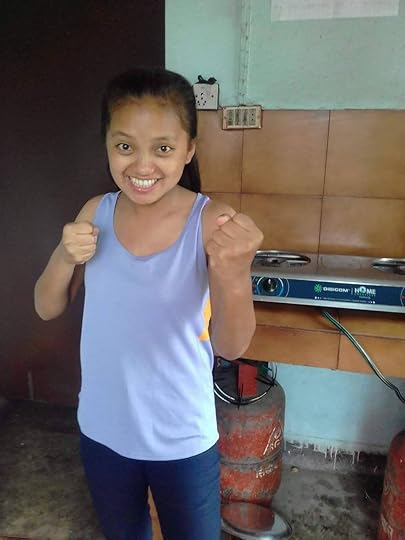
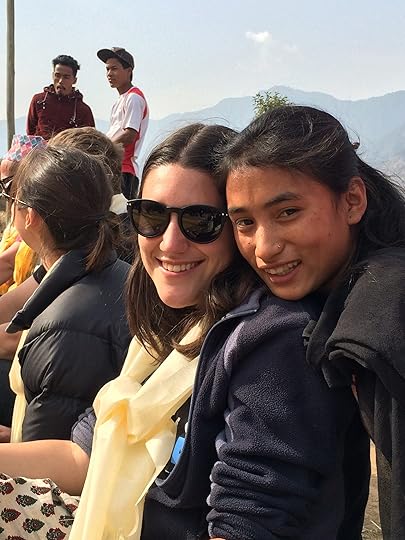
Like Ronnie, I developed a closeness to a couple of young girls in particular who were guiding and assisting us on a day-to-day basis, and many of the young ones were calling me Mum by the time I left.
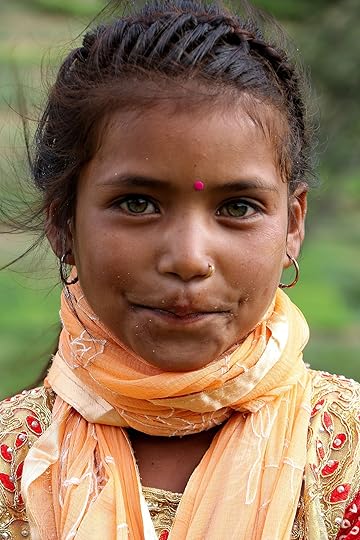
RITAI kept in touch with one young girl in particular, Rita, who was being supported by a charity to finish Year 12 in Kathmandu. Rita’s father had left them when she was small and Rita’s mother had refused to remarry, knowing her daughter would have more chance of gaining an education if she stayed single. This required tremendous strength and determination in a world so completely dominated by men. Rita was sweet, thoughtful, and very helpful. She had dreams of studying business at university. You can read all about Rita’s story and what has become of her very soon.
MANJUAnother young girl, in grade six, hugged Maia and me so tightly when it was time to leave, I wasn’t sure if she would ever let go. Her name was Manju, and I had become very fond of her. Suddenly, she let us go and turned and walked off into the children’s refuge. As we made our way back down to the hostel, I glanced into her room and saw her, face down on her bed, crying. My heart went out to her and my eyes filled with tears, but what could I do? The image and her gentle energy stayed with me long after I returned home. You can read more about what became of Manju in a future post too.
LEAVING KATHMANDUI was in tears when I boarded the plane to come home. I had found such peace and purpose in the simple life lived in the remote mountains. The children, craving love and learning filled me with joy. The simple healthy food and living close to the land were great for my health. And, let’s not forget the breathtaking view of the snow-capped Himalayas ever present in the background.
I have been to many countries over the years, but none has stayed with me, in my heart, quite like Nepal. Since that first visit, I have been back again, taking my husband with me on our own independent trip, and what an adventure that was. Read all about that trip, where we revisit the village and reconnect with a number of locals in another post I have planned.
PLAN YOUR OWN VOLUNTEER AVENTURE IN NEPALThere are many ways you can have volunteer adventures in Nepal, many local and international charities who will take you on a more or less authentic experience. Though most places are sincere in their business, I suggest you do some research to determine the ethics and the reviews of the organisation before booking.
The post Volunteer Adventures in Nepal – My First Trip appeared first on D.R. Coghlan.


November 25, 2021
Himalayan Awakening – A Woman’s Spiritual Journey
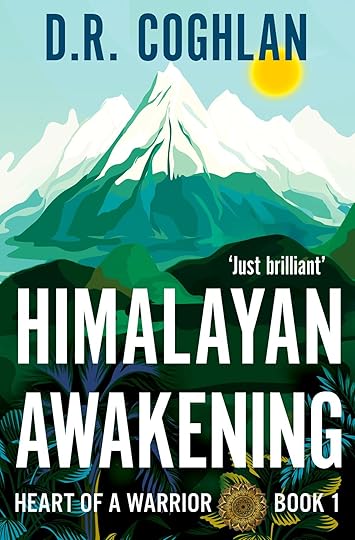
Himalayan Awakening takes us on a spiritual and emotional journey with our middle-aged protagonist, Ronnie. When we first meet Ronnie, she’s all heart and no self-confidence, feeling powerless to effect change in her life. Her marriage has been over for a long time before her husband delivers the final embarrassing blow in public.
Reluctantly, Ronnie agrees to accompany her daughter on a volunteer experience in Nepal where she is both challenged and affirmed at a level, she never thought possible.
 MIDDLE-AGED WOMAN SEEKING SELF THROUGH TRAVEL
SHIRLEY VALENTINE
The main trope of the story, ‘middle-aged woman finds herself through travel’ is one I have always found to be deliciously rewarding. The 1989 film, Shirley Valentine, starring Pauline Collins is a great example of this and I could watch it over and over. We see her slowly emerge as a person, letting herself indulge in a little light romance with the handsome Greek fisherman played by the charming Tom Conti. When my own widowed mother went to the Greek islands on her European tour, I was quick to ask her whether she had had her own experience. I asked her if she went skinny-dipping with a Greek fisherman to which she replied, “Have you seen what real Greek fishermen look like?”
EAT, PRAY, LOVEAnother more recent example was the 2006 memoir, Eat, Pray, Love, by Elizabeth Gilbert. Elizabeth, played well by Julia Roberts in the film version, thought she was happily married until she was hit with a curve ball. Like Ronnie, she found herself suddenly facing the idea of a life on her own.
So many of us get to the point of deep unhappiness and discontentment and stay there, stuck and too afraid to allow ourselves to make bold choices. We don’t want to hurt our partner. We don’t want to hurt our children. We don’t want to let our aging parents down, and we don’t want to appear selfish and scandalous in our community. So, we sit, simmering in our own stagnant juices, going nowhere because we put everyone else before ourselves. Sheesh! Who can relate? Why do we wait until the universe provides us with a solution? How long are we prepared to wait? Is it selfish to put ourselves first?
THE SECRETS WE KEEPHow we face our challenges and thus how we ultimately grow as a person is at the centre of what I love to explore. This can be seen at the heart of everything I write, especially the deeply personal, The Secrets We Keep.
 KEEPING IT ALL HIDDEN INSIDE
I know a woman, let’s call her Beth, who finally confessed to herself in her middle years that she was a lesbian. She had been devoted and more or less happily married for over thirty years. She loved her husband, loved her grown children and grandchildren – loved her whole family too much to speak her truth knowing the hurt it would cause. What did she do? She stayed with her husband, kept that part of herself buried. Eventually he was diagnosed with cancer. She nursed him for months until he passed on. By that time, she was 73.
After a respectable period of time, still in excellent health herself, she came out to her family. Two years later, she fell in love. Now in her late seventies she has remarried, this time to a woman and she is so happy, so vibrant and alive she is a joy to watch.
Did she do the right thing? Should she have broken up the family twenty plus years earlier? I don’t know. We might all have an opinion on this, but more than anything, I think we need to respect each individual’s right to choose their own path forward. Whichever path we choose we can be assured there will be ups and downs and we will make mistakes. That’s how we learn and grow.
THE STORY HAS ROMANTIC ELEMENTS BUT IS NOT A ROMANCEJust like in Shirley Valentine, Himalayan Awakening has a local love interest, Bikram, but it was important to me that the love story not be front and centre. When we fall in love, when all those endorphins are coursing through our brains, we are capable of great change, but not real change. If we are to truly change and grow, we must do it for ourselves, because it is best for us, not to fit in with another person.
Shirley Valentine had a brief romance but realised that was not where her happiness lay. She couldn’t grow and become all she could be by moving from one relationship to another. What does this ultimately mean for Ronnie and Bikram? I guess they will have to work that one out for themselves.
 THE SPIRITUAL SIDE
Tibetan Buddhist philosophy, reincarnation and the spirit world all play a large role in Himalayan Awakening because I believe at a fundamental level that we are all spiritual beings. I have long been interested in Buddhist philosophy and particularly the Tibetan branch. In fact, at the end of the 1990’s I helped set up a Tibetan Buddhist Healing Centre here in Australia. While my deep distrust of organised religion has prevented me from fully immersing myself into Buddhism, I believe it contains a great deal of wisdom that can act as an antidote to our general western malaise.
When it comes to Ronnie’s more psychic experiences, unfortunately I can’t claim to have nearly the connection to the spirit realm that she has. I wish I did.
What we see in all three examples is how life invites us to go on a journey that allows us to find our courage, to find our own value.
THE SETTINGRonnie’s journey through Nepal is largely inspired by my personal experiences in the country. It has then been liberally seasoned by my own deep spirituality, my love of all things psychic as well as my wild imagination.
KATHMANDUKathmandu comes straight from my own experience. It is a fascinating, vibrant, crumbly, polluted old city and I love it. I have been to Nepal twice, the first time trekking out to a remote village with my daughter, just like Ronnie and Dita. I huffed and puffed my way up and down the mountains, just as she did. You can read about my first trip to Nepal and the surprising connections that developed out of that here.
BHAKTAPURIt wasn’t until my second trip to Nepal that I visited other sites included in the story, the ancient city of Bharatpur and the jungle of Chitwan. Bhaktapur is the ancient capital of the Newari people, the original inhabitants of the Kathmandu valley. It is breathtaking in its history, ancient stupas and traditional architecture. I had some pretty crazy experiences in Bhaktapur that Ronnie would not have chosen to be part of, that certainly add colour to my memories.
CHITWANThe Hotel Jungle Crown Ronnie and Bikram stay at in Himalayan Awakening is the hotel I stayed at in Chitwan. It was, as I have described, a beautiful place with great food and first-class spacious rooms. There really was a woman, just before we arrived who was gored by a wild boar and a jungle safari can be every bit as crazy as Ronnie’s adventure. On this second trip to Nepal which you can read more about here, I had my notebook, taking down some details for the story that was forming in my mind.
 HUMAN TRAFFICKING
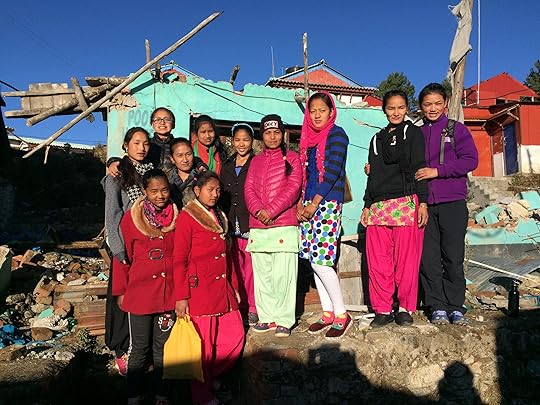
Another thing that is very real in Nepal, is the problem of human trafficking. Even in a remote village, the bars on the windows in the children’s refuge are necessary. Children disappear. According to Not for Profit organisation, Mountain Child (https://mountainchild.org), 23,600 Nepalis are trafficked, missing or victims of an attempted trafficking each year. Most of these are young women and children. Poverty also leads many girls to be tricked by the promise of a better life in India. They willingly go only to find themselves enslaved in the world of prostitution. I would urge you to do your own research and find a way that you can connect and help one of the Non-Government Organisations working in this area.
Just above this is the situation where thousands of uneducated and largely unskilled Nepalis go abroad each year to work in positions that are too often cruel, degrading and inhumane. These jobs are in factories, in domestic service, in mines, all organised by agencies who take a cut. Once abroad, the workers are often unable to return home for years. But this path is often the only way these people can support their families, and so parents can be separated from their children and from each other for years.
 THE WRAP UP
As you can see, I have poured a lot of myself into Himalayan Awakening as I developed and explored our beloved Ronnie. I couldn’t do her story, and her growth justice in one book. I have chosen to write a book that is a deeply satisfying read as a stand-alone story, but with some loose threads to be untangled in the sequel. Ronnie still has a lot of growing to do. How does she reconcile her feelings for Bikram and for Nepal with her life in Australia? What will her new life look like? And where does her best friend, Lacie, fit in?
I have started writing Book 2, but it’s more a series of scenes and ideas at this point. I do know that as Ronnie emerges from her little apartment, she will not be as safe as she thinks she is. She’ll spend time in a Buddhist nunnery where she will have ample time for spiritual pursuits, whether she likes it or not. And her reunion with Bikram? Who can tell? What’s the release date? Sometime in 2022, maybe midyear. Sorry, that’s as close as I can get.
I hope you enjoy meeting Ronnie and reading Himalayan Awakening as much as I enjoyed writing it and that you join my mailing list and keep in touch. If you have read it, I’d love to hear your thoughts.
I invite you to have a browse through my website. You can read about my first journey to Nepal, where I trekked into the Himalayas, and about my second trip to Nepal, where I returned to the village. That was when I also visited Bhaktapur and Chitwan. And, best of all, you can meet Rita, my own beautiful strong willed Nepali daughter.
You can buy Himalayan Awakening in Amazon US or in other Amazon stores in paperback or ebook form.
Namaste
Donna
The post Himalayan Awakening – A Woman’s Spiritual Journey appeared first on D.R. Coghlan.
June 10, 2020
Is Love In The Time Of Corona the Perfect Book Title?
I Was Waiting
I was waiting … waiting. It had to happen, and it did. The perfect book title – or so it seemed. As I write this there are currently sixteen, yes, sixteen books on Amazon titled Love in the Time of Corona. And that’s not counting the variations such as Lust in the Time of Corona, a short term version of the real thing. He he.
Was I tempted? You bet I was.
What stopped me? A few things.
First of all it just seemed too obvious.
Secondly, I had a feeling it might be popular.
Thirdly, I don’t write that quick. I would have had to predict the whole pandemic situation, and … despite the fact I would love to have psychic powers, paranormal abilities, I would say I have … at best, a strong intuition at times, and at worst … yeah, I got nothin’. Where are we up to?
Fourthly (is that even word?) I have too much respect for the writings of Senior Gabriel Garcia Marquez. I love his work. Love in the Time of Cholera, his original and incomparable work is too great a masterpiece to be “franchised” in any way for a quick buck. Okay, maybe I’m a bit of a purist.
Fifthly (that just looks wrong, but hey) I just wanna get through this shite time. I certainly don’t feel like memorialising it with any sort of lasting art work. Furthermore, I absolutely do not feel like channelling my creative energy in that direction.
What Did Readers Think?
From what I’ve heard, I’m not alone. I can’t vouch for the quality of any of these reads. Some may prove to be epic, but the buzz out there in the indie publishing world is that they are not selling well.
Personally, I think Help I Got Stuck With My Psycho Ex in the Time of Corona, or Crazy House Mates in the Time of Corona might be better representations of what has been happening out there with us all in isolation. Or even, Shit Bored in the Time of Corona. Hmm, still not the perfect book title.
My Iso Experience
I started isolation, like a lot of people by finding myself unemployed. Choosing to make lemonade, I threw myself into writing. You see, a little voice had been whispering in my ear, if only I could give up work and write full time. Could I do it? What could I achieve?? So, iso was sort of like a gift from the Corona Gods. I also had my duology Maddie Meets Kara and Maddie and Kara coming out, and my novella, Good Girl Bad Girl to finish and release. This would have been a monumental task if I had been working. Surely it would be easily achievable in my unbounded leisure.
Of course at that stage I was unaware of the time I would have to spend hunting for essentials like toilet paper, eggs and passata. And then, there was (and still is) that nagging little (large?) sense of anxiety about what was happening in the world and where it was all going. Oh, gawd, let me out of here!
I Wasn’t Alone
I breathed a sigh of relief when I read articles from psychologists saying, stop expecting to get as much done as you used to. The message was clear — don’t underestimate the toll this uncertain time is taking on everyone.
This forced me to ease off and respect myself a little more, expect a little less of myself.
The Silver Lining
Possibly one of the best things to come out of all this is the lesson I’ve learned about being kind to myself and others. I learned to listen to that small inner voice urging me to rest, to smell the roses, to listen to some favourite tunes, to facetime with my friends. On top of that I chose to break the rules and have tea with my elderly neighbours.
It wouldn’t surprise me to hear that many of us have learned the same lesson. As the world gets crazier, kindness becomes so much more important.
Maybe Love in the Time of Corona is not the perfect book title, but it is something we all would do well to focus on – a personal mission if you will. I know I need it, the people around me need it and the world sure as eggs needs as much of it as it can get.
** Gorgeous image from Flower photo created by freepik – www.freepik.com
The post Is Love In The Time Of Corona the Perfect Book Title? appeared first on D.R. Coghlan.
May 25, 2019
Book Review: Tipping the Velvet by Sarah Waters
I am thrilled to write about Tipping the Velvet for my first book review on my blog. Tipping the Velvet was Sarah Waters’ first novel. Published in 1998 when she was just 28, it has been rightly hailed as a standout in lesbian Literature. I loved this book. It took me on a journey unlike anything else I have ever read. The language, the style, the story, the pacing, I savoured every page.
What’s Tipping the Velvet all about?
From the first page we are invited through the veil, into Nancy’s personal life. She is the daughter of an Oyster selling family in Whitstable, southern England at the end of the 1880s. Nancy is in her late teens as the story opens and we walk beside her through her coming of age and her coming out.
Nancy discovers both Kitty Butler and the romantic yearnings of her own heart on an outing to the theatre.
Ms. Waters builds their relationship so delicately, so innocently and this lends a great tenderness and fragility to the emerging relationship between the two girls.
Kitty and Nancy travel to London together where they find some success performing on the stage. But nothing runs smoothly for a long. Nancy finds herself broken hearted and in a desperate situation, without the means to support herself. More opportunities present, but each has its own cost.
In Tipping the Velvet, Sarah Waters has recreated the rich tapestry of life in the late 1800’s at various levels of society. Through engaging characters, and a setting rich with social and political detail, we are drawn deep into the story.
A comment on the style
The style is emotionally understated. There were scenes I had to reread to understand and to draw out the full emotional impact of what was happening. At times I wanted Nancy to cry more, to scream, to object more loudly to the turbulence in her life. At other times I found her too stubborn, too forward, or too meek. And yet, I loved her and my heart cried for her, raged for her, as I encouraged her forward.
I really enjoyed the intimate picture painted of the life of women in the Victorian era. And not just young lesbian women. We see women in heartbreaking poverty, and the contempt they are held in by their rich sisters.
There is also a delicious and somewhat surprising sexuality about the story as we are invited into both the desperate life of a rent boy and the hedonistic lives of the rich.
Throughout the twists and turns there is always a hope, a common humanity that brings people together. And all along, we see Nancy grow, not just in her understanding of her sexuality but as a human being. She makes mistakes, bad choices, she suffers, she fails, she gives up — and that is fine because she learns and grows through it all. This, above everything else, is perhaps what is so enchanting, what makes Nancy so absolutely all of us. More than pure escapism, it left me with the feeling that with my own frailties and disfunction, I am indeed in good company.
Final Thoughts
Ultimately, this is a spiritual story of a young woman’s journey to find herself and her place in a world that is not known for it’s kindness or equality. And this is really what I loved most about it. Those who have read any of my novels including The Secrets We Keep will know how drawn I am to the spiritual journey. Nancy, like many of us, starts with a picture of happiness in her mind that is all about a person. In the end, she grows enough to find not only love, but her spiritual purpose. Beautiful.
I am so pleased to have chosen Tipping the Velvet for my first book review. I read a library copy of the novel. The day I reluctantly handed it back to the library, I went straight out and bought the hardback. I just didn’t want to let Nancy go.
The post Book Review: Tipping the Velvet by Sarah Waters appeared first on D.R. Coghlan.
Tipping the Velvet by Sarah Waters
I am thrilled to write about Tipping the Velvet for my first book review on my blog. Tipping the Velvet was Sarah Waters’ first novel. Published in 1998 when she was just 28, it has been rightly hailed as a standout in lesbian Literature. I loved this book. It took me on a journey unlike anything else I have ever read. The language, the style, the story, the pacing, I savoured every page.
From the first page we are invited through the veil, into Nancy’s personal life. She is the daughter of an Oyster selling family in Whitstable, southern England at the end of the 1880s. Nancy is in her late teens as the story opens and we walk beside her through her coming of age and her coming out.
Nancy discovers both Kitty Butler and the romantic yearnings of her own heart on an outing to the theatre.
Ms. Waters builds their relationship so delicately, so innocently and this lends a great tenderness and fragility to the emerging relationship between the two girls.
Kitty and Nancy travel to London together where they find some success performing on the stage. But nothing runs smoothly for a long. Nancy finds herself broken hearted and in a desperate situation, without the means to support herself. More opportunities present, but each has its own cost.
The style is emotionally understated. There were scenes I had to reread to understand and to draw out the full emotional impact of what was happening. At times I wanted Nancy to cry more, to scream, to object more loudly to the turbulence in her life. At other times I found her too stubborn, too forward or too meek. And yet, I loved her and my heart cried for her, raged for her as I encouraged her forward.
I really enjoyed the intimate picture painted of the life of women in the Victorian era. And not just young lesbian women. We see women in heartbreaking poverty, and the contempt they are held in by their rich sisters.
There is also a delicious and somewhat surprising sexuality about the story as we are invited into both the desperate life of a rent boy and the hedonistic lives of the rich.
Throughout the twists and turns there is always a hope, a common humanity that brings people together. And all along, we see Nancy grow, not just in her understanding of her sexuality but as a human being. She makes mistakes, bad choices, she suffers, she fails, she gives up — and that is fine because she learns and grows through it all. This above everything else is perhaps what is so enchanting, what makes Nancy so absolutely all of us. More than pure escapism, it left me with the feeling that with my own frailties and disfunction, I am indeed in good company.
I read a library copy of the novel. The day I reluctantly handed it back to the library, I went straight out and bought the hardback. I just didn’t want to let Nancy go.
The post Tipping the Velvet by Sarah Waters appeared first on D.R. Coghlan.
May 24, 2019
Tipping the Velvet by Sarah Waters
I am thrilled to write about Tipping the Velvet for my first book review on my blog. Tipping the Velvet was Sarah Waters’ first novel. Published in 1998 when she was just 28, it has been rightly hailed as a standout in lesbian Literature. I loved this book. It took me on a journey unlike anything else I have ever read. The language, the style, the story, the pacing, I savoured every page.
From the first page we are invited through the veil, into Nancy’s personal life. She is the daughter of an Oyster selling family in Whitstable, southern England at the end of the 1880s. Nancy is in her late teens as the story opens and we walk beside her through her coming of age and her coming out.
Nancy discovers both Kitty Butler and the romantic yearnings of her own heart on an outing to the theatre.
Ms. Waters builds their relationship so delicately, so innocently and this lends a great tenderness and fragility to the emerging relationship between the two girls.
Kitty and Nancy travel to London together where they find some success performing on the stage. But nothing runs smoothly for a long. Nancy finds herself broken hearted and in a desperate situation, without the means to support herself. More opportunities present, but each has its own cost.
The style is emotionally understated. There were scenes I had to reread to understand and to draw out the full emotional impact of what was happening. At times I wanted Nancy to cry more, to scream, to object more loudly to the turbulence in her life. At other times I found her too stubborn, too forward or too meek. And yet, I loved her and my heart cried for her, raged for her as I encouraged her forward.
I really enjoyed the intimate picture painted of the life of women in the Victorian era. And not just young lesbian women. We see women in heartbreaking poverty, and the contempt they are held in by their rich sisters.
There is also a delicious and somewhat surprising sexuality about the story as we are invited into both the desperate life of a rent boy and the hedonistic lives of the rich.
Throughout the twists and turns there is always a hope, a common humanity that brings people together. And all along, we see Nancy grow, not just in her understanding of her sexuality but as a human being. She makes mistakes, bad choices, she suffers, she fails, she gives up — and that is fine because she learns and grows through it all. This above everything else is perhaps what is so enchanting, what makes Nancy so absolutely all of us. More than pure escapism, it left me with the feeling that with my own frailties and disfunction, I am indeed in good company.
I read a library copy of the novel. The day I reluctantly handed it back to the library, I went straight out and bought the hardback. I just didn’t want to let Nancy go.
The post Tipping the Velvet by Sarah Waters appeared first on D.R. Coghlan.
April 6, 2019
Becoming a Reader
I have always loved reading but I have spent most of my life being what I would describe as a “frustrated reader.” I had a few authors I loved, a few books I loved but generally I struggled to find the next author or the next book that I could truly lose myself in.
Reading novels, I often became impatient with what I termed “the writer’s idea of reality”. This nudged me into the area of nonfiction. I read memoirs, biographies, but often found the writing dry, dense, dusty with self-importance or pretension.
I felt a bit like a literary Goldilocks.
FINDING MY VOICE AS A WRITER
Interestingly, since focusing more on my writing, and becoming an author, I have changed. I think perhaps by exploring my writing I have discovered myself as a reader. In the act of writing, in establishing my voice as a writer I have at long last recognized my needs, my identity as a reader.
I started to read books on how to write, how to edit, how to format and self-publish, how to write more … I have also read specific authors to study their style, their plot lines, their language and the depth of their writing. By persisting with some works that many claim as wonderful, and I found … shite, I started to develop my understanding of what I need as a reader to be satisfied.
COGNITIVE FUNCTIONS INVOLVED IN BOOK READING
I have recently read that reading books involves two processes within the brain:
Deep reading – where we read slowly for understanding of the plot, the characters, the setting, the inner machinations of the characters
Emotional connection – in investing our time in reading a book we invest in the characters, their lives, their trials, their emotional responses
We want heart connection, we want to recognize ourselves within the pages, we want what we read to resonate within our own lives, our own worlds. This may be in the way of a direct comparison or it could be the opposite — an escape from our own dissatisfaction.
These are all personal needs. They differ from one person to the next and so we need to celebrate the incredible variety of books and writers out there that we get to choose from.
WHAT I WANT AS A READER
For myself, I need well developed characters, a good plot, a flawed main character who I can relate to, who will have deep emotions, angst, growing pains and a sense of humour. The story must have a purpose, a direction, emotional intelligence, a satisfactory resolution that leaves an impression on me. When I finish, I want the story to stay with me, I want it to touch me and change me, to challenge me, to make me think. I have a very low threshold for violence but a higher leaning towards spiciness, sassiness, rebelliousness and a sense of adventure. I like a book that challenges me to become more free, more open.
I like to have a cry. I like to feel my heart ache and I love a good laugh.
Perhaps most of all, I want a book to surprise me. I don’t want to know what is going to happen.
THE PROBLEM (FOR ME) WITH THE ROMANCE GENRE
That’s the problem I have with the Romance genre. The rules of writing romance state that the couple are to meet by the end of Chapter One and the book must end with a Happily Ever After (HEA) or a Happy For Now (HFN).
I didn’t know these rules when I released The Secrets we Keep: A Love Story. I put it into the Romance category. Big mistake! It does not abide by the rules of romance writing at all. Fortunately, I took it out before I got any bad reviews. It is a love story, as the subtitle states, but it is definitely not a romance.
IT’S OKAY TO NOT FIT IN
In fact, it doesn’t fit neatly into any particular niche. I’m okay with that because, neither do I. I have found that, when it comes to writing, my needs are the same as when I am reading. I need to write something that surprises me, that challenges me, that takes me on a journey I can believe in, and makes me laugh and cry.
My hope is that when you read it, it will do the same for you.
Enjoy the journey
Donna
The post Becoming a Reader appeared first on D.R. Coghlan.
Writing Made Me Discover Reading
Okay, I didn’t just discover reading, I have always loved the idea of it. The truth is I have spent most of my life being what I would describe as a “frustrated reader.” There were a few authors I loved, a few books I loved but generally I struggled to find the next author or the next book that I could truly lose myself in.
Reading novels, I often became impatient with what I termed “the writer’s idea of reality”. This nudged me into the area of nonfiction. I read memoirs, biographies, but often found the writing dry, dense, dusty with self-importance or pretension.
The whole scene left me feeling a bit like a literary Goldilocks.
FINDING MY VOICE AS A WRITERInterestingly, since focusing more on my writing, and becoming an author with my first published book, The Secrets We Keep (read more about my early author journey and why this book is so deeply personal here), I have changed. By exploring my writing I seem to have discovered myself as a reader. In the act of writing, in establishing my voice as a writer I have at long last recognized my needs, and discovered reading.
There are now a pile of writing books on my shelf – how to write, how to edit, how to format and self-publish, how to write more. I have also read specific authors to study their style, their plot lines, their language and the depth of their writing. By persisting with some works that many claim as wonderful (and I found … ho-hum or worse, shite) I started to develop my understanding of what I need as a reader to be satisfied.
COGNITIVE FUNCTIONS INVOLVED IN BOOK READINGI have recently discovered reading books involves two processes within the brain:
Deep reading – where we read slowly for understanding of the plot, the characters, the setting, the inner machinations of the charactersEmotional connection – in investing our time in reading a book we invest in the characters, their lives, their trials, their emotional responsesWe want heart connection, don’t we? And to recognize ourselves within the pages. On top of that, we want to relate to the characters, for them to resonate within our own lives, our own worlds. This may be in the way of a direct comparison or it could be the opposite — an escape from our own dissatisfaction.
These are all personal needs. They differ from one person to the next and so we need to celebrate the incredible variety of books and writers out there that we get to choose from.
WHAT I WANT AS A READERFor myself, I need well developed characters, a good plot, and a flawed main character who I can relate to. This character will have deep emotions, angst, growing pains and a sense of humour. The story must have a purpose, a direction, emotional intelligence and a satisfactory resolution that leaves an impression on me. When I finish, I want the story to stay with me, I want it to touch me and change me, to challenge me, to make me think. My threshold for violence is very low, but I have a higher leaning towards spiciness, sassiness, rebelliousness and a sense of adventure. The stories that grab me the most are those that inspire me and challenge me to become more free, more open.
Admittedly, I like to have a good cry. And I like to feel my heart ache and also, I love a good laugh.
Perhaps most of all, I want a book to surprise me. I don’t want to know what is going to happen.
THE PROBLEM (FOR ME) WITH THE ROMANCE GENREThat’s the problem I have with the Romance genre. The rules of writing romance state that the couple are to meet by the end of Chapter One and the book must end with a Happily Ever After (HEA) or a Happy For Now (HFN).
These rules were not in my frame of reference when I released The Secrets we Keep: A Love Story. I put my book baby into the Romance category. Big mistake! It does not abide by the rules of romance writing at all. Fortunately, I took it out before I got any bad reviews. It is a love story, as the subtitle states, but it is definitely not a romance. Similarly, Himalayan Awakening, while it has a romance element, it is more about spirituality, action, travel, Nepal, the romance is not front and centre. That, to me would be predictable and boring, sorry.
IT’S OKAY TO NOT FIT INIn fact, it doesn’t fit neatly into any particular niche. And, I’m okay with that because, neither do I. What I have discovered is, when it comes to writing, my needs are the same as when I am reading. I need to write something that surprises me, that challenges me, that takes me on a journey I can believe in, and makes me laugh and cry.
My hope is that when you read what I write, they will do the same for you.
Enjoy the journey
Donna
The post Writing Made Me Discover Reading appeared first on D.R. Coghlan.
Becoming a Reader
I have always loved reading but I have spent most of my life being what I would describe as a “frustrated reader.” I had a few authors I loved, a few books I loved but generally I struggled to find the next author or the next book that I could truly lose myself in.
Reading novels, I often became impatient with what I termed “the writer’s idea of reality”. This nudged me into the area of nonfiction. I read memoirs, biographies, but often found the writing dry, dense, dusty with self-importance or pretension.
I felt a bit like a literary Goldilocks.
FINDING MY VOICE AS A WRITER
Interestingly, since focusing more on my writing, and becoming an author, I have changed. I think perhaps by exploring my writing I have discovered myself as a reader. In the act of writing, in establishing my voice as a writer I have at long last recognized my needs, my identity as a reader.
I started to read books on how to write, how to edit, how to format and self-publish, how to write more … I have also read specific authors to study their style, their plot lines, their language and the depth of their writing. By persisting with some works that many claim as wonderful, and I found … shite, I started to develop my understanding of what I need as a reader to be satisfied.
COGNITIVE FUNCTIONS INVOLVED IN BOOK READING
I have recently read that reading books involves two processes within the brain:
Deep reading – where we read slowly for understanding of the plot, the characters, the setting, the inner machinations of the characters
Emotional connection – in investing our time in reading a book we invest in the characters, their lives, their trials, their emotional responses
We want heart connection, we want to recognize ourselves within the pages, we want what we read to resonate within our own lives, our own worlds. This may be in the way of a direct comparison or it could be the opposite — an escape from our own dissatisfaction.
These are all personal needs. They differ from one person to the next and so we need to celebrate the incredible variety of books and writers out there that we get to choose from.
WHAT I WANT AS A READER
For myself, I need well developed characters, a good plot, a flawed main character who I can relate to, who will have deep emotions, angst, growing pains and a sense of humour. The story must have a purpose, a direction, emotional intelligence, a satisfactory resolution that leaves an impression on me. When I finish, I want the story to stay with me, I want it to touch me and change me, to challenge me, to make me think. I have a very low threshold for violence but a higher leaning towards spiciness, sassiness, rebelliousness and a sense of adventure. I like a book that challenges me to become more free, more open.
I like to have a cry. I like to feel my heart ache and I love a good laugh.
Perhaps most of all, I want a book to surprise me. I don’t want to know what is going to happen.
THE PROBLEM (FOR ME) WITH THE ROMANCE GENRE
That’s the problem I have with the Romance genre. The rules of writing romance state that the couple are to meet by the end of Chapter One and the book must end with a Happily Ever After (HEA) or a Happy For Now (HFN).
I didn’t know these rules when I released The Secrets we Keep: A Love Story. I put it into the Romance category. Big mistake! It does not abide by the rules of romance writing at all. Fortunately, I took it out before I got any bad reviews. It is a love story, as the subtitle states, but it is definitely not a romance.
IT’S OKAY TO NOT FIT IN
In fact, it doesn’t fit neatly into any particular niche. I’m okay with that because, neither do I. I have found that, when it comes to writing, my needs are the same as when I am reading. I need to write something that surprises me, that challenges me, that takes me on a journey I can believe in, and makes me laugh and cry.
My hope is that when you read it, it will do the same for you.
Enjoy the journey
Donna
The post Becoming a Reader appeared first on D.R. Coghlan.
November 8, 2018
The Secrets We Keep: A Love Story
The Secrets We Keep: A Love Story, set primarily in Europe in 1989, was the first novel I published, writing as D. R. Coghlan. The story had been playing around in my head for some time before I finally gave myself the space to write it. As often happens, life circumstances (aka temporary unemployment) gave me the perfect space to devote to this project that I had been so unsure about starting.
What Is The Secrets We Keep: A Love Story About?It’s a deeply personal story, partly autobiographical, about a young woman struggling to make sense of herself and the world around her. Laura doesn’t know where she fits in. She quits her job, sells her car and travels to Europe, only to realise her inner world hasn’t changed with the transformation of her lifestyle. She longs to escape, find belonging and self-confidence, but is afraid to face what lies within. As many of us know, life is a spiritual journey, and the past is not something we can just shrug off. Laura’s choices are influenced by fear and clouded by inner turmoil.
When she arrives in Europe, she is still hurting from an affair with a married man but determined in her search for happiness. She yearns for a life with her true love but confuses love with sex. Laura wants to fit in but is uncomfortable around people. She connects at a deep level with nature and solitude, but struggles to form lasting relationships. The Secrets We Keep: A Love Story is ultimately more about Laura’s inner journey than it is about her wondrous travels through Europe.
Why I Wrote The Secrets We KeepI am intensely curious about the theme of overcoming what is holding us back from success, from true love, from healthy relationships. In fact, I have spent my life pondering on what stops us from being happy, light-hearted, at peace in our own spirit? I mean, how many people have the strength and persistence required to delve into their own murky depths? Imagine what we would be capable of if we could release our childhood trauma, our inner torment? The truth is, I have had periods in my life, driven by my own desire for healing, where I have researched obsessively what really works to help us do that.
Unfortunately, this is the messy, murky matter that lies deep within all of us. And the truth is, we all crave love, peace, happiness. We all want to be whole. So, I hope The Secrets We Keep resonates with you and encourages you to dig down into your own interior to find the freedom that awaits.
If you are interested in learning more, The Secrets We Keep is available on Kindle or in paperback from your local Amazon store. If you have read it already, I’d love to hear your feedback and would really appreciate it if you wrote a review (Amazon, Goodreads, Bookbub).
I’d love you to share your thoughts and experiences in the comments below.
Stay grounded
Donna
The post The Secrets We Keep: A Love Story appeared first on D.R. Coghlan.