
Mark Reece's Blog
April 19, 2026
Review- 'Quarry' by Jane White
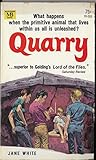 Quarry by Jane White
My rating: 4 of 5 stars
Quarry tells the story of three boys who have a plan to kidnap a younger boy and keep him captive in a quarry. Once that happens, the boys continue with their lives, which are not noteworthy other than that their friendship group is closed and they speak to few other people other than their families.
The boys are clearly distinguished, with Todd being precocious and a natural leader, Randy a hypocritical Catholic who is abusive and sexually aggressive, whereas Carter is the youngest and more innocent. There is a repeating structure to the novel, with the first part alternating between scenes at the quarry followed by descriptions of the three boys in turn. Later on, scenes at the quarry are interspersed with the boys visiting the quarry before the denouement.
The structure is effectively at establishing the personalities of the boys while also giving the story a surreal tone, with the vignettes concentrating on the boys almost like phycological case studies. This tone is heightened by the younger boy, who is never named. He is studiedly childish, misinterpreting aggression as attempts to play and is easily led, although also strangely adult and capable. In one scene, Randy tries to fight him but The Boy is easily able to fight him off, and his commentary on what is happening seems mocking. The Boy appears out of nowhere and doesn't seem to attract any attention, implying that he might be a violent fantasy of the others, although that is belied by the physical impressions he leaves on the world: eating food, defecating, and leaving ruffled sheets.
Whether or not The Boy is real, Todd and Randy seem dangerous, with Randy being sexually aggressive towards a number of girls, and prone to violence and theft. Todd seems happy when planning violence and has an odd relationship with his mother, which extends to her referring to him as 'darling' in an almost sexual tone and insisting that she go on honeymoon with her.
There were points where I wished for more narrative hints about how to interpret the story, but overall, the author is very successful in creating both effective character studies and a sense of subtle dread.
View all my reviews


April 12, 2026
Review- 'Ants' by Gary Skinner an Andrew Jarman
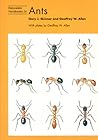 Ants by Gary J. Skinner
My rating: 4 of 5 stars
I enjoyed this book, which summarises the biology of ants and the organisms that have a close relationship to them. It had limitations as a field guide though, as the maps showing the biology of the different species were too zoomed out to identify the areas with any clarity. Moreover, the guide to the various morphological features was hard to follow.
View all my reviews
March 21, 2026
Review- 'The return of the native'.
 The Return of the Native by Thomas Hardy
My rating: 5 of 5 stars
Although there are some powerful characters in this book, Eustacia and Clym Yeobright predominant amongst them, The return of the native felt like a much more complete world than was the case with Hardy's earlier novels. The passionate scenes between these characters were strong and memorable, they were intercut with equally striking descriptions of other residents of Egdon, creating a world that felt multi-faceted and resilient to such romances.
Aside from the theme of resident vs alien suggested by the title, the novel, as many of Hardy's works, focused on the impact of the romantic and sexual choices. The structure was a little reminiscent of Wuthering Heights, where the dubious choices made by the first generation of characters had a series of long-term impacts that were only reversed by the more appropriate marriages towards the end of the book.
That being said, there was a degree of ambiguity in the promotion of stability, as exemplified by Diggory Venn. On face value, he is a straightforwardly honourable man who protects Thomasin Yeobright even after being rejected as a potential suitor. However, his propensity to effectively stalk Thomasin and her lovers, together with his almost supernatural good luck and symbolically red skin (as a result of his profession as a reddleman), makes him an odd, perhaps sinister figure.
Questions of class and the social roles between men and women are present in the novel but are less explicit than is the case in Hardy's other works. The importance of being a 'good woman' is accepted largely wholesale in Egdon, but being a 'good man' is somewhat more ambiguous, accepting of a broader definition. The social standing of Eustacia is widely accepted, whereas Venn's 'promotion' from a reddleman to a diary farmer makes his second proposal to Thomasin more legitimate. These facets of the social world are not explicitly criticized, but there is an oddity to them nevertheless.
Another feature of the book similar to Hardy's other works is his elevated language, with regular references to classical literature and comparisons of the characters to heroic figures. This seems a deliberate artistic choice and has the result of imbuing the lives of the characters, which are, in truth, 'ordinary', revolving mostly around commonplace questions of work and marriage, with an elevated quality. It is this feature of Hardy's writing more than any other that suggests where his sympathies lie.
View all my reviews
February 25, 2026
Review- 'Far from the madding crowd'.
 Far From the Madding Crowd by Thomas Hardy
My rating: 5 of 5 stars
A great novel, although I wonder whether it would have a limited appeal for modern readers due to its slow pace. There were times when the setting seemed to become as important as the plot, whether intentionally or not, and when each of the main protagonists are introduced, a chapter is given over to describing them in painstaking detail.
The novel concerns the young farmer Bathsheba Everdene and the three men who court her. The prose is stormy and replete with dramatic figurative language that is not common in nineteenth century fiction when describing lower class characters. It is also somewhat sexually explicit by the standards of the time, particularly for its female protagonist in a way that gives the story a strong sense of realism.
There was little surprise as to which suitor ultimately marries Bathsheba, and this novel struck me as having a somewhat more conservative tone than Hardy's later books, given the focus it gives to Bathsheba's character and the periodic asides about her 'womanly nature'. However, there were also some scenes that offered social critique, including, memorably, when Bathsheba visits a farmer's market and is met with considerable attention by the other (male) farmers.
There is often something amusing about how nineteenth century authors depicted 'rogues', and that is also present in this novel. I found one of Bathsheba's suitors, Sergeant Troy, to be unintentionally comedic at times as his gambling was described in shocked tones and his moral collapse being demonstrated by him joining a circus. Nevertheless, even with Troy, there were scenes that were psychologically intense in a way that felt unusual in a novel of this type and also very evocative.
I enjoyed the book throughout; despite the plotline being in many ways typical of nineteenth century fiction, the authorial voice was very strong, with skillful characterization being a key aspect of it.
View all my reviews
February 24, 2026
Review- Birmingham Royal Ballet's Don Quixote
I recently saw the Birmingham Royal Ballet's interpretation of Don Quixote for the first time at the Birmingham Hippodrome. It was a very vivid and lively performance, skillfully creating the tone of a Spanish village through a combination of costume and fine acting. The comedic sequences were also very well done as Panza was chased by villagers, creating a contrast with the more serious scenes.
Many of the scenes involving Don Quixote were very poignant. His manner of dress and his armaments were incongruous both to the setting and to the other characters, meaning that although his character was often marginal to the main plot, he was always highly visible. The sequences in which he imagined an idealized version of womanhood, and the final image of him leaving the village in search of further adventures, were highly memorable.
Given that the ballet was performed by the BRB, the dancing and music were peerless. The atmosphere of the venue is always such that three hours melt away like spring snow.
Many of the scenes involving Don Quixote were very poignant. His manner of dress and his armaments were incongruous both to the setting and to the other characters, meaning that although his character was often marginal to the main plot, he was always highly visible. The sequences in which he imagined an idealized version of womanhood, and the final image of him leaving the village in search of further adventures, were highly memorable.
Given that the ballet was performed by the BRB, the dancing and music were peerless. The atmosphere of the venue is always such that three hours melt away like spring snow.
February 16, 2026
Review- livestock
 Livestock by Hannah Berry
My rating: 5 of 5 stars
Livestock is an absolute riot. The story has two connected plots, the first of which concerns a group of The Thick of It style political advisors, who are trying to help the government of the day draw attention from the problems caused by a law that has legalized human cloning. The dialogue has a strong air of realism, and is simultaneously harshly cynical. The tone is set in the first scene, where the advisors discuss ways to draw attention from a minster's missteps. They consider whether he should release a charity single or find religion, before agreeing that he will buy a three legged dog with a sad backstory.
The other plot involves Clem, an entirely vapid pop star who also works as a government spokesman, supplying soundbites about how cool cloning would be and how everyone should support her 'gas aid' concert. Berry has a fantastic sense of comedic timing. In one sequence, a minister on Newsnight is being berated by a representative of a civil society group that has researched the funding of a group benefiting from human cloning. Clem sits in silence as the minister becomes more and more flustered. Suddenly, without warning, she announces that she's pregnant, which makes the presenters forget about the cloning scandal and ask her about motherhood instead. It's a brilliant sequence.
Most pop stars are signed up to political parties. With heavy irony, the main opposition to the government comes from an independent singer, Nina Malick, who annoys the government advisors by not being willing to sign up.
There is a crudity about the characterization and the plot. In particular, Clem gives every indication of being precisely what she seems: an empty headed puppet. Also, the government advisors do not show the distorted idealism that made the characters of The Thick of It so interesting. For that reason, it is probably wise that the story is kept short.
I liked the drawings, which are often bright and gaudy, accurately reflecting the mood of the book. There seem to be a plethora of grinning faces on every page, which has a somewhat disturbing cumulative effect.
I strongly recommend this graphic novel. It has the two essential qualities of successful satire, being both funny and apt. It can be easily read in one sitting, but can be enjoyed many more times, which is what one might wish of any short book.
View all my reviews
February 9, 2026
Review- 'Two cheers for anarchism'.
 Two Cheers for Anarchism: Six Easy Pieces on Autonomy, Dignity and Meaningful Work and Play by James C. Scott
My rating: 3 of 5 stars
I often liked this book and it contained some interesting arguments and anecdotes. However, there were many instances when I wondered whether much of what was being said could be categorized as 'anarchism', and at several points, the arguments seemed somewhat shallow. Near the start of the book, the author says that he is not writing a systematic defense of anarchist philosophy, and not all political works need to be philosophically broad in that way. However, towards the end, I started to wonder what, if anything, held the essays together other than tone.
A central theme of the book is the way in which the rules that formally govern human behaviour often result from a codification of actual behaviour, rather than abstract rules applied by authorities. For example, Scott describes walkways created by footfall, which are then delineated as the 'official path'. This is an observation that philosophers from a variety of political traditions have made, including, for example, Hannah Arendt and Michael Oakenshott. Scott clearly approves of the creativity and agency this confers on 'the people' through spontaneous action and organisation.
The argument is reasonable but also raises numerous problems. The examples of rule breaking that Scott gives are ones progressives would favour, but there are many examples of rule breaking that they would not. Other examples of spontaneous organisation include lynch mobs, for example. Many organisations are not as unified and ordered as they appear; police officers engage in 'noble corruption' by framing criminals to serve what they consider to be the wider interests of justice; businessmen open Swiss bank accounts to avoid what they see as unjustified taxation. This is perhaps why Scott doesn't write a more systematic philosophy- as soon as one starts to consider what the governing structures to prevent the negative effects on spontaneity might be, then it isn't obvious what a whimsical appeal to rule breaking would offer.
The essays later in the book offer a strong argument and give many examples of the ways in which official metrics can often be self-defeating and start to alter the behaviour they are supposed to only measure. For example, Scott talks about the way in which school testing and ways to evaluate the impact of academic research have significantly warped behaviour in educational settings in a counter productive way. One is here reminded of the arguments that Weber put forward around instrumental reasoning. No explicit solutions are given to this problem, save that it might often be better to rely on local knowledge rather than to measure and audit too comprehensively. For example, it might be best to rely on teachers' assessments of their students based on their interactions, even if this has the potential to create inconsistencies.
Again, this is a perfectly reasonable argument, although one of struck by the limited nature of what is being suggested. Organisations should use fewer metrics and rely more on the judgements of professionals and others. I agree, but it is hard to avoid the sense that a lot of argumentation has been made to advance mild social democratic themes.
This is nothing wrong with this, save for my original observation, that when anarchism is considered in this more tonal sense, it doesn't seem to amount to a great deal. This isn't a decisive criticism, as there is value in pointing to the dangers implicit in too much systemisation and abstraction. I was sometimes reminded of Conservative authors who praise 'eccentricity' in defiance of state authority, which would not seem out of place in this book.
Overall then, although the book was often interesting, I thought that the arguments advanced, and their implications, were often made better elsewhere.
View all my reviews
January 25, 2026
Review- Ocean Sea by Alessnadro Barrico
 Ocean Sea by Alessandro Baricco
My rating: 3 of 5 stars
Ocean Sea had the most traditional structure of the books I've read by Baricco, whose work tends towards a prose poetry style.
The novel comprises a set of interconnected stories relating to the sea, based around the Almayer Inn, which is situated on a beach front. Many of the stories are extremely striking, such as the princess who is sent to the sea by a priest, who believes that only the water can cure her illness. The fantastical nature of the narrative gives it a lyrical quality, and the imagery used is often remarkable and highly memorable. I thought that the best sequence of the novel was the second part, which describes the conflict that ensues after a group of sailors are forced to abandon ship. The officers prioritize their own welfare, forcing the lower ranks to fight to survive. The author uses repetition and a close description of the sensations induced by water to make the sequence very vivid.
Although I enjoyed the book, I found some of the sequences hard to follow. There may have been too many characters introduced for the length of the book, and at points, I found the figurative language to be too extended, resulted in me losing the meaning. This may well be a book that improves on re-reading. However, it was certainly enjoyable enough for me to recommend.
View all my reviews
January 10, 2026
Review- Arthur Macken collected fiction volume 1
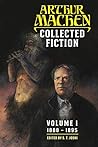 Collected Fiction Volume 1: 1888-1895 by Arthur Machen
My rating: 3 of 5 stars
I found the works in this volume to be very mixed in quality. The first stories are pastiches of medieval stories, the longest of which was 'The Chronicle of Clemendy'. This seemed to be heavily influenced by works such as The Canterbury Tales', although was much lower in quality. Those stories were based around an ancient drinking society, the members of which told each other stories, which sounds like an amusing setup. Unfortunately, the tales were extremely tedious, with long, pointless introductions that were often painful to read.
The collection became much more interesting during the horror themed stories. They were all based around Victorian gentleman discussing experiences they found disturbing, which gave them a much more indirect feel when compared to modern horror stories where events are told directly.
The best stories are those in which a sense of horror or mystery emerges naturally from the events. 'The three imposters' was my favourite story in the collection, which is a series of tales connected by a broad connection to a secret society. The story 'Novel of the dark valley' was particularly evocative, describing a poor man who is hired by a wealthy employer and taken to America, where he is captured by savages in a case of mistaken identity.
By contrast, the author has some annoying habits that become evident in a collected work. Firstly, his political opinions are often crudely stated. Machen evidently believed that 'science' improperly dominated intellectual thought, an idea that is often crassly stated in the narrative. Secondly, characters often come to wholly improbably conclusions based on bizarre leaps of logic that have nothing to do with anything mentioned in the story. In one example, a chemist is given a mysterious powder to examine and when giving their explanation at the end of story, they start with a long, tedious monologue about how scientists are prejudiced for not believing in the 'supernatural', before giving their description of what the powder is that is both nonsensical and not referenced anywhere else in the story; the other characters believe the explanation for no obvious reason to conclude the narrative.
Despite that I was often annoyed by the author's faults, the best scenes in the collection were memorable, and I intend to read the next collection to see how Machen developed in his more mature works.
View all my reviews
December 8, 2025
Review- Without Blood
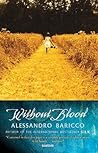 Without Blood by Alessandro Baricco
My rating: 4 of 5 stars
This short novel comprises of two parts. In the first half of the story, a man and his son are gunned down by a group who accuse him of committing war crimes. However, one of the killers decides to not tell the others that the man's daughter is also hiding in the house, allowing her to escape. The setting isn't made apparent but the circumstances imply a civil war; some of the details indicate that the story could be set in the aftermath of the Spanish civil war.
In the second part of the story, the surviving girl, now an old woman, finds the man who spared her. They talk about the events and what happened subsequently in their lives and the man tries to work out whether she will kill him; it is strongly implied that she has killed the rest of the group.
Baricco has a style that feels classical in its terseness and concision. This is a short work, with each sentence beautifully crafted. I enjoyed it a great deal although I thought the subject matter didn't completely mesh with the tone. The events described in the second part of the story felt a little too fantastical when set against the realism of the first part, making me unsure how seriously I should take the story. Moreover, the ending felt willfully absurdist. Nevertheless, I would recommend this book, which will likely benefit from repeated reading.
View all my reviews


