Mike Moyer's Blog
April 13, 2026
Startup Equity is a Bad Motivator

Luke, you are the motivator, stop whining.
Using equity to motivate startup founders and early employees is a bad idea. Yep, I said it: equity is a bad motivator. I’m sure there are plenty of smart, successful, experienced people who would vehemently disagree with me, but I stand by my opinion.
Too many founders think that giving equity to an employee is going to magically transform their rag-tag team of renegade entrepreneurs into a well-oiled, money-making machine. I wish it was that easy!
At best, equity is a blunt instrument for creating incentives. There is simply too much uncertainty, volatility and misconceptions about what it’s going to be worth and what an individual can actually do to impact its value. In a startup, the equity could ultimately be worth $0.00 (most likely) to unicorn billions (least likely, unless your name is Elon Musk). When things are going well, owning equity is fun. When bumps in the road to success arise—and they always do—owning equity is pointless and even demoralizing. Watching your employee share value lose thousands or even millions of dollars doesn’t cultivate strong company-employee relationships. Trust me, I’ve been there and it sucks.
Interest in Equity = Interest in Company
Think about your own thought process when it comes to how you might invest in a publicly traded stock. You would be attracted to the investment if you believed in the company’s product, mission, vision, management team, financial performance and whatever other ways you measure potential. The more you believe in the company, the more you will invest. Furthermore, you will retain the investment if you continue to believe that the value of holding it is worth more than the value of selling it. So, your willingness to invest reflects your belief in the future potential of the business.
Now, think about how much owning stock in a public company influences your personal behavior? Sure, if you own Coca Cola stock (KO) you might pick Coke vs. Pepsi (if there is a choice) at a restaurant, but you’re probably not going to start drinking daily 12 packs of Coke, getting the Coca Cola logo tattooed to your forehead, or holding “Drink Coke” rallies. At best, you will probably get a warm fuzzy feeling when you order a Coke knowing that you’re supporting your investing in your own little way. And that is okay. Your ownership doesn’t have to turn you into a full-time fan. Yes, people who are full-time fans are likely to own Coke stock. But owning stock reflects their fandom, it’s not the reason. I like Coke, so I own Coke stock not I own Coke stock, so I like Coke.

Still unmotivated.
The Believers and Non-Believers
Investing in stock, therefore, separates the believers from the non-believers. If you do not believe in the future potential of a business owning shares in it is pointless. Most founders want to surround themselves with co-founders, employees and other participants who believe in the business which is why Slicing Pie works so well. Slicing Pie reflects their belief in the company relative to each other. The biggest believers get the biggest share.
Similarly, when you are part of a Pie, your willingness to forgo all or part of your fair market compensation reflects your belief in the future potential of the startup. If you stop believing, you can quit and relinquish your slices which is fine because why would you care about owning shares in a company if you don’t believe in the future payoff? Sure, you may want to keep them “just in case,” but that’s a far cry from being a true believer. You can’t have your Pie and eat it too!
Slicing Pie ends when everybody is getting paid at fair market rates. If someone is getting paid his fair market rate, that person owes the company his full commitment and should perform to the best of his abilities. Given this, how could giving him shares possibly motivate him to do a better job? In reality, if you’re paying a fair market rate you should be getting a person’s best work whether they own equity or not.
Attract and Retain
My distaste for equity as a motivational tool does not mean I don’t think equity isn’t an incredibly valuable and essentially tool for attracting and retaining employees. Because the act of investing in or otherwise acquiring ownership in lieu of cash compensation separates the believers from the non-believers it will ensure that your startup team is filled with people who have an aligned vision and passion for the company mission. First, because the opportunity to attain an equity position in the business will help you attract the right people. And second, because their interest in maintaining their ownership will help you retain the right people.
It is highly beneficial, therefore, to give employees or other participants, the opportunity to acquire equity in the company. You can achieve this in the early days using the Slicing Pie model and later through employee stock purchase programs.
But, just don’t give away equity. That would be simply dilute the ownership of the people who actually care.
A Person’s Best Work
This brings us to another problem: If throwing equity at them doesn’t work to motivate employees what does? How do managers ensure that a person is, indeed, doing their best? In startups, you may not have a clear picture of a person’s potential, especially in a new job at a new company. You never know what is going to happen in a startup and this applies to the people working in the startup. They all made promises of what they are going to do, but you need a way of not only ensuring that they deliver, but also that you don’t wind up wasting your money if they don’t (or, at least conserve as much as you can).
Getting What You Pay For
So, once you have the right people (the believers) on the team you need to make sure they are living up to the expectations you had when you hired them and set their fair market salaries. A good employee who is underpaid will get lured away by the competition. A bad employee who is overpaid will drain the company resources.
Similarly, a good employee who is overpaid will unnecessarily infringe on company profits. Some companies like to boast that they pay above-market salaries and bonuses to keep good people. As admirable as this sounds, it is done at the expense of the shareholder. (Which, in a Slicing Pie company is you!) In basic economic theory, the act of overpaying isn’t a rational. Sure, you might say, “I pay a premium to get the freshest vegetables at the grocery store.” Yes, the best tomatoes cost more than the regular boring tomatoes and you may have to bribe the grocer or the farmer to be first in line, but you wouldn’t throw in extra cash just for fun. The bribe reflects the additional cost.
YES: Cost of Tomato Cost of Quality + Cost of Bribe
NO: Cost of Tomato + Cost of Quality + Cost of Bribe + Extra Cash for No Reason
Get a premium product, pay a premium price. But why pay more than what it’s worth?
A bad employee who is underpaid is a waste of space and time. You need to move these people off the team without paying extra for the right to terminate. A bad employee, underpaid or overpaid, simply needs to be removed. Many bad employees have a knack for blaming others or making excuses. Most entreprenuers and managers live in fear that they might hire and have to live with deadbeats.
HeaderOVERPAID
UNDERPAID
GOOD EMPLOYEE
Cuts into profits
Will leave to join competition
BAD EMPLOYEE
Drains resources
Waste of time and space
Ideally, we want people who perform at their best and paying them exactly what they deserve for that performance. People who perform better than others will be paid more than others. In order to do this, however, we need a way to monitor performance and make it obvious to everyone involved.
Creating a Lens for Performance and Pay
In the USA, and many other countries, it is not customary for companies to be transparent regarding salaries and bonus payments to employees. Benefit packages are fairly standard and well known, but other compensation is obscure. Slicing Pie implies a certain level of transparency that people sometimes find uncomfortable, but once people see the value and importance of this kind of openness extending into performance and compensation isn’t a big leap.
Lacking a logical structure, however, will make compensation decisions seem arbitrary and unfair. If coworkers can’t define, monitor, and assess performance they will be skeptical of the outcomes. So, confidentiality is a good defense against a poorly designed or lazy compensation structure. You can do better!
In some positions, like sales, the top salespeople make the most money and everybody understands why. In fact, the high performers are often celebrated in their companies. In other positions, like product management, performance is less clear.
Implementing a Logical Performance Structure
In order to get what you pay for (meaning people who perform at their best and paying them exactly what they deserve for that performance) you will need to implement a program that provides visibility into performance and adjusts compensation to reflect performance.
Bonus Programs
Many companies implement bonus programs to reward high performers. This is certainly a step in the right direction but be careful not to confuse a bonus program with motivational programs. Remember, people who are paid a fair market salary should be performing at their best, so implementing additional incentive bonus programs shouldn’t be necessary.
Yet, we are drawn to them nevertheless and we they may feel like they work. However, I think the more pragmatic view of these programs is that they allow managers to get closer to the right compensation given the potential variability in performance. In other words, because we have to set fair market values in advance of work being performed, we can’t be sure we are paying the right price unless we can adjust the amount we pay to match the performance we get.
A basic foundation of Slincing Pie is that nobody can predict future events so it's impossible to predict a fair equity split. Similarly, we can't predict how a person will perform in a job so we need to be able to understand a person's performance in the context of the goals of the startup.
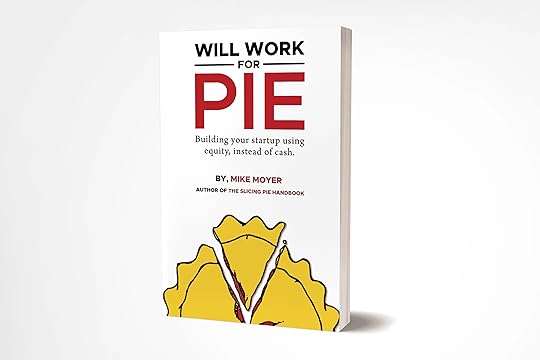
If you want to learn more about how to to this, I have outlined a performance program that provides not only incentives for those who go above an beyond expectations, but also provides consequences for those who fall short of expectations in my Slicing Pie folllow up book called Will Work for Pie. You can buy the book here.


October 10, 2025
Slicing Pie in the Operating Room: A Medical Innovation Story
While completing his PhD program, Gert Nijenbanning developed a scoliosis brace. He spun the project out of his university to pursue commercialization. Although it wasn’t as successful as he had hoped, he learned the complicated process of bringing a medical device to market—and he enjoyed the work enough to turn it into a business.
In 1999, he founded Baat Medical, a company that specializes in helping bring new medical devices to market. “We made every mistake you can imagine,” said Nijenbanning, “but we learned from it and today our process focuses on getting products to market quickly and at the lowest possible cost.”
Since then, Baat Medical’s 35-person team has helped developing launch more than 400 medical devices worldwide.
I met Nijenbanning at a NASS medical conference in Chicago, where I was presenting the Slicing Pie concept to a large audience of spinal surgeons. During the Q&A, he stood up and said, “We have used the Slicing Pie model to develop a new medical device. The model really works!”
The device he was referring to was a solution for midshaft clavicle fractures that promotes faster recovery and reduces unsightly bumps and scarring.
The inventor of the device came to Baat Medical for development, but his funds were limited. “Doctors have a lot of great ideas, but not a good system for initial funding. They are often concerned about getting taken advantage of,” explained Nijenbanning. “We offered to help develop his concept using the Slicing Pie model. He agreed, we closed a slicing pie agreement and our partnership began.”

Gert Nijenbanning

The basis of a Slicing Pie approach is correct time tracking. Medical was accustomed to project management and tracking time and expenses, but along the way we noticed that this is not a normal way of working for doctors. We had to find a good approach that worked for all parties but in the end everyone was pleased with the results.
Together, the inventor and Baat Medical developed an MVP and took the product through the medical approval process. They ultimately brought it to market under the brand name Anser Implants (AnserImplants.com).
“Slicing Pie made it possible for each of us to receive shares in the company that reflected our contributions. There are always obstacles along the way that make it impossible to predict the final investment required. Slicing Pie accounted for the changes, and it was fair for everyone,” said Nijenbanning.
“I think the Slicing Pie model needs to be more well-known. It works!" he said
April 22, 2025
Fixed vs. Dynamic Equity: Which Model Is Right for Your Startup’s Success?
Starting a company is like jumping out of a plane and building your parachute on the way down. The thrill? Unmatched. The risk? Sky-high.
And among the dozen things that can make or break your landing—equity decisions sit right at the center. You’ve got talent, co-founders, sweat equity, and probably a blurry understanding of how ownership should be sliced.
That’s when it’s time to make your first decision: fixed vs. dynamic equity.
Which one makes the most sense for your startup’s success? Buckle up—we’re going in.
What Are We Even Talking About?Okay, first things first. When we say “fixed equity,” we’re talking about the traditional startup model.
Picture this: you and your co-founder agree that you’ll each own 50% of the company. It’s locked in—etched in your founding documents, maybe even celebrated with champagne. Sounds fair, right?
Until six months down the road, your co-founder bounces. Or worse, sticks around but contributes next to nothing while you’re pulling all-nighters and maxing out credit cards.
Fixed equity doesn’t move with effort. It’s, well… fixed.
Now contrast that with dynamic equity. In this setup, ownership adjusts based on what each person actually brings to the table—hours, cash, resources, relationships, brainpower, you name it. It's like splitting a pie based on who helped bake it, not just who showed up with a fork.
The Romance (and Risk) of Fixed Equity
Let’s be real. Fixed equity feels comfortable. There’s something reassuring about having your piece of the pie written down in black and white. Everyone knows where they stand. No surprises, no math.
But here's the kicker—startups are unpredictable. People flake. Roles shift. One founder might become the heart of the company, while another fades into the background. Yet their equity? Still sitting pretty.
And when that happens, resentment doesn’t knock politely. It kicks down the door.
Suddenly, you're grinding it out while someone with the same ownership stake is nowhere to be found.
Not only is that demoralizing—it’s dangerous. Investors notice. Future hires notice. Morale tanks. And what began as a handshake agreement now feels like a slow-motion implosion.
Fixed equity punishes the people who stay and rewards those who leave early. That’s not just unfair—it’s bad business.
 Why Dynamic Equity Feels Scary (But Probably Shouldn’t)
Now, dynamic equity sounds like a dream, doesn’t it? Everyone earns what they deserve—no more, no less. So why isn’t it the default?
Honestly, because it’s new and unfamiliar. And at first glance, a bit complicated.
Founders worry about keeping track of contributions. They imagine endless spreadsheets and awkward “value” conversations. There’s also this fear: “What if I end up with less equity than I planned?”
That fear is rooted in ego, not logic. Because in a truly fair system, you’ll get exactly what you’ve earned. Not less, not more—just fair.
Dynamic equity makes your company more agile, transparent, and resilient. It recognizes that work—real work—is what builds value, not promises or job titles.
Once you strip away the fear of doing something different, you're left with a system that actually reflects reality.
Talking Timing: When Equity Models Matter MostMost people mess this up because they’re trying to plan too far ahead with too little information.
In the beginning, your startup’s value is probably zero. You haven’t raised funds. You haven’t nailed product-market fit. You’re rich in sweat, poor in cash. And yet, you're out here making forever-decisions about who owns what.
It’s like dividing up lottery winnings before you even bought a ticket.
This is where the fixed vs. dynamic equity debate gets real.
A dynamic modelgives you time to figure it out and see who’s really committed. It allows you to track actual contributions. It evolves with your business, rather than guessing what the future will look like.
And when you're ready for institutional investment? You’ll already have an ownership breakdown that makes sense—one investors can trust.
How Do You Even Measure Contributions?Ah, the million-dollar question (sometimes literally).
The key to making dynamic equity work is assigning fair values to different types of inputs. That could mean:
Time: What’s your hourly rate or salary based on market standards?Cash: Are you paying for tools, legal docs, or developer help?Intellectual Property: Did someone bring in critical tech or code?
Relationships: Are they landing meetings you couldn’t dream of?Reputation: Does their name lend credibility to your venture?
You don’t have to get it perfect. But you do have to get it honest.
Transparency matters, so document everything. Use tools designed for this kind of tracking.

Once you get the hang of it, it becomes second nature. That’s also less stressful than awkward equity renegotiations when the company’s five steps down the road and nobody remembers who did what.
A Quick Reality CheckHere’s a hard truth: not everyone’s going to like the idea of dynamic equity. Especially those who plan to coast or value titles more than output.
But for founders and teams who are building something together? It’s empowering.
No more wondering if you’re being taken advantage of. No more drama about fairness. No more “but I had the idea first” arguments. Just a clean, evolving snapshot of who’s carrying the load—and who deserves the reward.
And if you think dynamic equity means no structure, think again. It’s not chaos, it’s just a smarter structure.
Which Model’s Right for You?If you’re a solo founder, fixed equity is moot. You own it all—at least until you bring in a co-founder or early team.
If you’re building something with partners? Ask yourself:
Are our contributions going to stay even over time?Do I want to lock in equity now, or let it evolve with effort?How will I feel if someone walks away with half the pie after doing 10% of the work?
Be honest. Fixed equity might work if you and your co-founder have known each other for a decade and already survived a startup together.
But if this is your first rodeo? If things are still forming? If you’re figuring each other out? Then it can be too soon to lock things in.
That’s why dynamic equity doesn’t just make more sense—it protects your company.
Don’t Just Guess—Track the PieHere’s the kicker: you don’t have to build this system yourself.
Slicing Pie offers a real-world, tested dynamic equity framework. Our startup equity calculator has helped thousands of startups figure out who deserves what, without the drama or guesswork.
You don’t need a crystal ball—just a way to track the recipe while the pie is baking.
And remember: the goal isn't just to survive your startup—it’s to build one you want to stick with. One that feels fair, sharp, and ready for growth.
Final Slice: Choose the Equity Model That Moves With YouChoosing between fixed vs. dynamic equity isn’t just a legal decision—it’s an emotional, cultural, and strategic one too.
Fixed equity is easy until it’s not. Dynamic equity is unfamiliar until it’s fair. The difference? One is static—the other breathes.
If you want a model that reflects real commitment, protects relationships, and grows with your company, dynamic equity is the way forward.
And if you're looking for a place to start, sign up today and discover how Slicing Pie can be your secret ingredient.
Now, go ahead and bake something worth sharing.
December 27, 2024
Hustlers, Hipsters, Hackers and HOMYHUB

“Isn’t there an app for this??” Thought an exasperated Enzo Zamora as he rifled through his belongings searching for his garage door opener. He was riding his bike, so he had it tucked away in one of his bags or pockets. This was his Aha! moment. He decided then and there that the garage remote control problem had to be solved with 21st century technology and he was the guy who was going make it happen.
But he was alone.
Zamora had just moved to Spain and did not know anyone. “I set out to build a team,” he recalled, “I remembered the three H’s of building a startup team: a Hustler, Hacker, and Hipster.” He knew he was a Hustler. He could bring the team together and work hard to make connections, find users, generate sales, raise money and all the Hustler type work. He needed a Hacker, someone to engineer and figure out how to build the product. And lastly, he needed a Hipster, some to create his marketing and brand image.

Zamora and the startup team for HOMYHUB
Networking the Startup WorldHis first step was networking like crazy. He went to university tech centers, maker spaces, coworking spaces. He attended startup events and meetings. He posted on job boards and social media. He interviewed 52 people in all searching for the right mix of founders who believed in the vision of making the garage a convenient, safe access point for homes.
“From the beginning equity was part of the discussions,” said Zamora. He was not a rookie, he had created startups before, but this was the first time he had brought on a team of cofounders right away. “I found Slicing Pie on Google and bought the book. It was an easy read, but I read it 2-3 times to be sure I understood everything.”
Everyone agreed right away to the Slicing Pie model. “The model was fair to everyone, and they all got it,” Zamora reflected, “at first I was afraid that nobody would want to keep track of their time, but most of the people I spoke to were already tracking their time as freelancers so it was not an issue.”
The Changing Startup TeamAfter building a team of five co-founders, HOMYHUB was born. The concept was an app and device that can replace an old-fashioned garage remote control and allow users to control, monitor and manage access to their garage, anytime, anywhere using their smartphone.
Slicing Pie isn’t just for allocating equity to participants, it also provides the logic for recovering equity, if appropriate, when someone leaves the company. Not long after getting started one of the team members quit to join his family’s business. This was considered resignation without good reason, or a bad leaver. This means that the participant must face the consequences of their action, specifically they lose their slices in the Pie from non-cash contributions and cash contributions are paid back prior to the distribution of any dividends. “The guy left the company on good terms knowing the impact of his decision. We are still friends today. I don’t think that would have happened without Slicing Pie,” said Zamora. Some months later another team member felt burned out and left facing the same consequences. The Slicing Pie formula kept it fair for everyone.
The team terminated the Slicing Pie model when it raised a substantial round of financing. Slicing Pie ends when there is enough cash on hand to pay people fair market rates for their contributions.

The HOMYHUB team today
Now when Zemora rides his bike up to his house his garage door opens automatically. He can provide access to guests, housekeepers, dog sitters, even the delivery guy (so long porch pirates!) Thousands of happy users enjoy the benefits of HOMYHUB everyday.
“We used Slicing Pie for almost three years until our funding round. It was a key ingredient to our success,” said Zemora. Now a frequent guest at local universities in and around Madrid, he mentions Slicing Pie to all of his students!
November 8, 2024
Grappling with the Problem of How to be Fair
All of us at GrapplApp are honored to be a case study with Slicing Pie, as it is a huge part of why we are able to be such a daily success story...we all love Slicing Pie!
Retired Marine Major Michael Cragholm moved to Space Coast, Florida with dreams of joining one of the many aerospace companies in the area. An avid Jiu Jitsu enthusiast, he decided to do a little 1:1 coaching while looking for a job.
One afternoon, after grappling with a client, he was packing up his gear and the client said, “Dude, I just got a personal lesson from a decorated marine corps officer with five tours of Fallujah and a blackbelt in Jiu Jitsu in my own garage! It doesn’t get much better than that!”
At that moment it clicked. “Who needs the aerospace industry?” Cragholm thought, “why not just start a mobile Jiu Jitsu instruction business? Less than a week later Space Coast Mobile Jiu Jitsu was up and running. “I formed the business, set up a web site, got insurance coverage and I was rolling!”
“Guys don’t have time to go to the gym during the day and they don’t want to leave their wives looking after the kids while they are out,” explained Cragholm, “why not bring the gym to them?”

Left to right: Eric Dykert, Aaron Bird, Michael Cragholm
Cragholm, while well-versed in Jiu Jitsu and kicking terrorist ass in Afghanistan, needed help with marketing, branding, and technology. For this he turned to his lifelong friend, Aaron Bird. “I’ve known this guy since the sixth grade. I’m closer to him than anyone with the possible exception of my wife! He’s the real deal, into fighting, excellent with marketing, he even works at the hospital literally saving babies’ lives as a respiratory therapist,” said Cragholm.
Bird was eager to help a friend, but hesitant to commit to any formal business relationship. “I have had previous business relationships go bad because of disputes over equity. Michael is my friend. I didn’t want to damage our relationship over a business relationship,” Bird reflected.
As a friend, Bird helped Cragholm set up a web site and marketing program for Space Coast Mobile Jiu Jitsu and it took off. Cragholm and Bird started reaching out to other instructors and teaching them how to set up their own mobile businesses.
It became clear that they were going to be in business together and needed to form their partnership in a way that would not jeopardize their friendship as Bird feared.

US Marine Major Michael Cragholm (retired)
Cragholm found the Slicing Pie model.
“It was exactly what we needed,” explained Bird, “my previous deals were all fixed-split equity deals. As soon as the work became uneven among my partners tension got high and disagreements damaged relationships. The dynamic Slicing Pie model perfectly accounted for our different contributions so we would each get exactly what we each deserved.”
Cragholm and Bird engaged Slicing Pie-friendly attorney Matt Rossetti to put together a Slicing Pie LLC Agreement and the two were officially partners in a new business called GrapplApp.io.
They quickly realized there was more than just pent-up demand for access to mobile instruction. Jiu Jitsu grapplers were eager to connect with others and build a community. The two decided to design the GrapplApp as a free app that helps grapplers cut through the clutter in finding open mat and private instruction opportunities at home or on the road.
But neither of them were developers. So, they set out in search of a CTO. The Slicing Pie model gave the two a basis for working with other partners. “We met a developer who wanted to build our app for a fixed 50% share and didn’t want to learn about Slicing Pie…that was an easy ‘no,’” said Cragholm.
Rossetti, introduced the two to Eric Dykert, a CTO and fellow grappler who understood the Slicing Pie model and wanted to be part of the company. With Dykert’s help they launched the app in April of 2024.
Each member of the team has different levels of commitment but provides regular input to the company. Cragholm has set up reoccurring allocations of Slices in the Pie Slicer software, but team members log additional contributions if they spend extra time in any given week. They are generating revenue, but all the cash goes back into the company for marketing and growth.
The vision is to create a community of Jiu Jitsu enthusiasts all over the world and to give instructors the tools they need to monetize their talents. “Right now we’re all doing this because we love Jiu Jitsu,” Cragholm explained, “but, Slicing Pie gives us the framework we need to keep things fair as we build the community and the business. Hopefully we’ll all make money, but that’s not the focus right now. We all know we’ll get what we deserve in the end.”
To learn more about Grappl App and join the growing Jiu Jitsu community visit them at www.grapplapp.io or on Instagram
To learn more about Space Coast Mobile Jiu Jitsu visit www.spacecoastmobilejiujitsu.com You can also contact Michael Cragholm to set up your own mobile business.
October 31, 2024
Dictators and Democracy: A Slicing Pie Primer on Corporate Governance
I often get questions about how Slicing Pie affects control and decision-making rights. This question usually comes from a person who is afraid of losing control of their “baby” and wants to know how to keep control.
The Short Answer
The person who owns 51% gets to be in control.
The Short Slicing Pie Answer
It’s reasonable to assume that the people with the most to lose should have the largest influence on how decisions are made. With that in mind, at any given time the Pie will dictate how many votes a person has. Still, the rules of Slicing Pie prevail. For example, if someone gets enough votes to “vote” to fire someone the Recovery Logic of Slicing Pie would still provide the correct treatment of that person. Having voting rights isn’t a license to stop playing fair.
The Longer Answer
Many startups have a primary owner who makes the majority of the decisions. Once a startup begins to have multiple founders, partners, employees, etc., things change. The topic of corporate governance can get pretty complicated but in this post I’ll attempt to break it down for you in simple terms.
The Dictator
Most startups begin as dictatorships where one person, usually the original founder, makes all the decisions no matter how small. Subsequent co-founders are generally okay with this because they believe in the founder’s vision and accept their leadership. During the bootstrapping days this works because not much is at stake. No real revenue, small amounts of investment. Not much to lose.
Some dictator-led companies become large companies. Their owners make all the rules and reap all the rewards. Employees usually accept this because the boss is the boss and he or she is the owner and controls the purse strings.
The Committee
The next step beyond the dictator is when there are several co-founders who consult one another on decisions. The dictator may still have majority ownership, but a dictatorship doesn’t lend itself to productive partnerships, especially those who intend to use equity, instead of cash, to build their business using the Slicing Pie model. People who are part of the team usually want some kind of influence on how decisions are made. Committees are usually informal from a legal standpoint and consist of the senior managers in the company.
The Manager
In some cases, control can be consolidated to one person or persons contractually. For instance, in a manager-managed LLC a manager can have decision-making rights regardless of their ownership.
Managers are essentially empowered to make decisions by the owners of the business who can remove the manager under certain circumstances, usually by a 2/3 vote AKA a “super majority”.
Decisions that Matter
Most decisions, like what kind of copy paper to use or which hotel you will stay at for a business trip are more or less immaterial to the ultimate success or failure of a business and, therefore, shouldn’t be considered mission critical. Important decisions are those that have a significant impact on the business. Such decisions include things like:
Hiring or firing senior leadershipLeadership compensationSignificant changes in strategySignificant financial decisions such as taking on debt or raising money by selling sharesAnything that would change the control of the businessSetting spending limits for executivesPaying dividends to shareholders vs. retaining earnings for future investmentOther stock matters like splits or issuing new sharesMost of these decisions matter more to companies that are more established than a bootstrapped startup. In other words, when the money gets significant, certain decisions matter.
There are a variety of stakeholders who have a vested interest in which decisions are made and how they are made including investors, employees, and even customers in some cases.
The Appointed Board
A board of directors becomes relevant when the company starts bringing in large investors. When there is money on the table the owners of the money have a vested interest in exerting some control over how that money is used. When raising money, founders make promises about what they will do with the money and the investors will want a board to represent their interests when it comes to decisions that matter.
The first type of board will be an appointed board meaning the dictator and/or committee will relent to oversight on their decisions to a group of people. Typically, there are three to five. The dictator serves as the chairman of the board, the primary investor serves as a board member, and a neutral third party, like a trusted advisor, is the third. Boards are always an odd number to ensure there are no ties when it comes to voting.
Appointed boards do have some vulnerabilities because they are appointed. The person or people who have the power to appoint the board often have the power to remove the appointee and replace him or her with someone else. However, investors still have leverage because they can pull out their investment or sue if they think their interests are being properly represented.
Democracy
As the company grows and takes on investment the dictator may have difficulty maintaining control if he or she doesn’t have controlling interest (51%). Many founders fight tooth and nail to maintain controlling interest even if it means being unfair. Sooner or later the dictator may have to yield power to the shareholders.
In Slicing Pie companies this would mean each slice grants one vote to the owner of the slice so the people with the most to lose have the most influence.
After Slicing Pie terminates if there are other shareholders—usually converted angel investors or venture capitalists—in the mix they, too, will want a vote. Most VC deals still prefer an appointed board but if the base of shareholders is diverse enough they will demand a vote. Enter democracy!
The Elected Board
When shareholders are given the right to vote they will choose the people to represent their interests by electing a board. The elected board serves the same basic function as the appointed board, but without the risk of being replaced at the whim of the person with controlling interest. Elected boards are usually larger than appointed boards. Most startup companies won’t have an elected board because startups usually have a small group of investors who can drive any votes that might take place making voting for a board useless. Public companies, however, usually have elected boards. The average number board members in a public company is around 11…according to ChatGPT.
The Decentralized Autonomous Organization (DAO)
Boards are a form of centralized governance. Centralization makes it nimbler so decisions can be made quickly. Holding a vote for everything can become an administrative nightmare. However, with the rise of Blockchain, voting can be more practical, and some companies opt to skip the board and vote directly on issues as they arise.
Slicing Pie lends itself to evolving into a DAO because the shares are generally held by the employees rather than major outside investors. In a DAO people vote in proportion to the number of shares they own. Those with more shares hold more sway over the direction of the company than those with fewer shares.
The Cooperative (Co-op)
The last type of corporate governance organization I want to mention is a co-op. The main difference between a co-op and a DAO is that each member of the co-op gets one vote regardless of their ownership. They may not have to have ownership at all. Co-ops are intended to reflect the interests of the community rather than the investors.
It would be difficult for a co-op to turn back into a dictatorship because it would be pretty much impossible to consolidate controlling interest. A dictator would probably have to buy the who company outright and pay off members and investors to get them out of the co-op leaving only dictator-friendly members to cast votes.
It’s More Complicated
Actual corporate governance is more complicated than described above but this is the basic idea. There are all sorts of ways of managing control including contracts, special classes of shares, financing rounds. As companies grow, they become more and more complicated.
Getting Control Back
In a democracy the dictator relinquishes his or her control and will not get it back. When a company converts to a democracy the dictator is gone. The only way to get control back is to somehow consolidate outstanding voting rights to one person. In a small company the person who wants control can buy shares from shareholders one-by-one. You may have heard of the term “hostile takeover”, which is someone buying control of a company.
Different structures work at different stages of development. Dictators are fine for startups that only have a few participants where the vision of one person is being followed and there is a need for speed and agility. As a company grows the needs of the stakeholders also grow and shifting to a more democratic system is inevitable.
April 25, 2024
Slicing Pie is So Simple Even Rocket Scientists Can Use it!

Sascha Deri, CEO of bluShift Aerospace, a Slicing Pie company that launches stuff into space using an efficient, environmentally friendly propulsion system.
“Environmentally-friendly” probably isn’t the first thing that comes to mind when it comes to launching stuff into space…but why not? That’s the question Sascha Deri asked himself when he was experimenting with rocket engines on his brother’s farm in Maine. “everyone uses petroleum-based fuels, but we thought we could make rocket fuel with plants grown on the farm. I made a plant-based rocket fuel hoping that it would work. Not only did it work, it worked better than traditional formulas.” That was the moment bluShift was born.
My first question: why was he experimenting with rocket engines in the first place? Is that a thing that people do in their spare time?? Maybe not most people, but Deri had a vision to create an environmentally safer solution for launching low Earth orbit small payloads like science experiments and cube satellites into space. “You can get into orbit on a Space-X rocket but that’s like using a freight train to deliver a UPS package to your front door - most freight trains don’t stop at your house,” he says.
The Right Rocket for the JobIn the coming years, bluShift would develop a reusable, sub-orbital rocket that uses a cheaper, more efficient, “green” propulsion system that isn’t available from other providers. “Since we started dozens of competitors have come and gone. They can’t compete using old technology. We are poised to succeed by making simpler solutions than others and being more vertically integrated,” explains Deri.
Rocket Science Takes StaminaGetting there wasn’t easy. “Building rocket technology isn’t a short-term game. It takes stamina and I had been burned with bad equity deals at previous startups,” recalls Deri, “I discovered the Slicing Pie model, and I knew it would help us over the long haul.” People came and went in the coming years and Slicing Pie allocated equity to the right team members and, more importantly, it allowed the company to recover equity from those who couldn’t deliver. So far, 19 people have left the company and Slicing Pie self-adjusted to recover equity. “Slicing Pie allowed us to get the right people on the team without giving equity to those who weren’t a good fit.”
Today bluShift has a team of eight. Each had their fair share of the equity. They have raised millions of dollars from private investors, crowdfunding, and grants—including grants from NASA. With some successful launches and paying customers, bluShift is ready to start delivering payloads into space. “With our technology it is possible to deliver student science projects into space for less than it costs to buy new football jerseys,” says Deri.
Slicing Pie is a universal model. Whether you’re starting a farm or a farm-to-table restaurant or a farm-to-rocket fuel aerospace company, it always creates a fair split!
January 23, 2024
Slicing Pie in Poland
Standard slicing pie cofounder agreement templates for pre-incorporation phase is now customised for Poland.
Great news to start the year - Poland joined as yet another country whose founders are able to use the dynamic equity split based on the slicing pie method, as developed by Mike Moyer.
Dynamic equity split based on the slicing pie method are very popular with founders as an alternative to the traditional fixed equity splits. Why? Because they are transparent, fair and future proof. And - they provide an understandable and transparent methodology. They also accommodate for the uncertain future, which is the main blind spot of the fixed splits.

Jędrzej Szymczyk
Warsaw/Wroclaw: thanks to the efforts of Jędrzej Szymczyk, Partner at Lewczuk Łyszczarek Szymczyk, who customised for Polish founders the Cofounder Agreement template using the dynamic equity split. The dynamic equity split is based on Mike Moyer’s slicing pie method. This is great news for Polish early stage founders, as it gives them the opportunity to use the ‘fairest equity split tool’ and avoid many potential issues that are caused by fixed equity split in too early stages.
Jędrzej Szymczyk, Partner at Lewczuk Łyszczarek Szymczyk: Dynamic equity split based on the slicing pie method provides an effective tool for solving a significant issue discussed within the Polish startup ecosystem. At the same time, it does it in a simple, transparent and very fair way. I am glad that we had an opportunity to support implementation of the slicing pie method in the Polish legal system.
The solution is based on the standardised templates developed by Jana Nevrlka, the founder of Cofounding, who coordinates the development of the slicing pie solution for European founders together with great help and support of Mike Moyer and other local slicing pie experts.
Mike Moyer, the US-based inventor of the Slicing Pie model, was pleased to hear the development “Slicing Pie is used by thousands of companies all over the world and most countries encourage fairness, but it is always nice to give founders that extra certainty that the model is aligned with the local rules and have local Slicing Pie expertise available.”
Jędrzej Szymczyk, LL.M., Partner in Lewczuk Łyszczarek Szymczyk (LLW)
Jędrzej is an attorney-at-law who advises in venture capital and private equity deals, as well as on capital market law and M&A transactions. He also advises in providing legal services for entities of the new technologies sector and for public companies.He works with startups from incorporation stage, throughout the fundraising and supports them in relations with VC funds and angel investors. Jędrzej advises institutional investors on their investments and exit transactions on local and international markets. He is a graduate of Illinois Institute of Technology - Chicago Kent College of Law in Chicago, where he earned an LL.M. degree in International & Transnational Law.
Lewczuk Łyszczarek Szymczyk (LLW) is an experienced law firm with robust VC, M&A and financial markets practices. Should it be for equity or debt financing transaction, regulatory proceeding, distribution or IP protection strategy, LLW aims to become a firm of choice for fast-growing startups as well as ma-jor venture capital and private equity funds in Poland.

About Cofounding
Cofounding is creating tools and know how for founders, which include cofounder agreement templates, equity split tools and courses, and a proven 7 steps of cofounding the right way methodology, developed by Dr. Jana Nevrlka. It is summarised in an international bestseller, Cofounding The Right Way. Jana is driven by the mission of “No more failed business partnerships!” .. that could have been prevented. She is focused on helping founders build cofounding teams that win and last.
About Slicing Pie
Slicing Pie is a universal, one-size-fits-all solution for the allocation and recovery of equity in an early-stage, bootstrapped company. It is a formula that allows founders to divide equity based on the fair market value of each participant’s contribution. It is a fair, logical and structured way to align everyone’s interests and incentives. Slicing Pie is used all over the world. It is, by far, the fairest way to split equity in an early-stage, bootstrapped startup! Developed by Mike Moyer.
November 9, 2023
How to Fire a Co-founder

Who Can Fire Who?
An excerpt from Will Work for Pie
People often ask me who can fire who in a start-up. It is a source of much consternation and people often want to boil it down to a question of control.
Slicing Pie simply keeps track of the equity split. It does not specify or dictate organizational structure or replace managerial responsibilities. Slices in the Pie do not carry voting rights per se; those rights are generally outlined in the company's organizational structure. At a basic level, slices convert to equity, which usually does have voting rights, so the person with the most slices tends to consider themselves “in control.”
The number of slices each person has in the Pie represents their risk relative to others. It is reasonable to respect the interests of those with the most to lose. But, in theory, in a Slicing Pie company, anyone can technically fire anybody else.
It may be difficult to understand why this is fair. As a solo founder firing a co-founder, you might feel uneasy knowing that your new partner could one day have the power to remove you from your own company.
The Slicing Pie model’s recovery framework keeps things fair even when a person has more slices than the other.
Here is how things would play out if a person with the most slices separated from the company. We will call this person the “Big Slice” person, and the person or people with fewer slices are the “Little Slice” people.
Firing a Big Slice Person
Slicing Pie does not favor one person over the other; it favors the business's survival. When a team member is not pulling their weight or is engaged in gross negligence, Little Slice people should be able to hold the Big Slice people accountable. The Little Slice people need to provide two warnings before termination.
If you have an organized plan with goals and milestones, it will be obvious when there is a problem with any individual that they will start to miss goals and milestones. So, this isn’t a subjective “feeling.” The performance problem will not be ambiguous.
Many Big Slice people are dismayed by the prospect of getting fired by people with fewer slices. But just because a person has a big slice does not mean he or she can slack off and miss milestones or goals. Other people depend on the Big Slice people.
If the Big Slice person does not care enough to get back on track, he or she will take the whole organization down. With Slicing Pie, the two-warning protocol will give ample time for discussion and corrective actions.
If the Big Slice person does not correct the behavior, a second warning will be issued, and termination should follow if the second warning does not work. This should probably be okay with the Big Slice person who did not care enough to remedy the situation.
Big Slice Resigns
If there is a problem with the Big Slice person and the Little Slice people think he or she would be better suited to a different role, the team can adjust the Big Slice person’s responsibilities. For example, the Big Slice person may have been the founder and CEO but does not have enough time to dedicate to the business. The Little Slice people can fire Big Slice for good reason, or Big Slice can resign for no good reason with the same consequences.
Or, if the Little Slice people want Big Slice to stick around, they can ask Big Slice to stay on as an advisor. This new position is a change the Big Slice person can either accept or reject. By accepting the new role, he or she would keep slices and carry on in the business. He or she can also reject the new role and keep the original position but with the expectation to improve performance or risk termination.
If the Little Slice people insist the Big Slice person changes roles, this would provide a good reason for Big Slice to resign and retain slices subject to future dilution as more slices are added. It is still fair.
Pulling Rank
A Big Slice person could “pull rank” on the Little Slice people and stay in the business despite the performance problems. But now the Little Slice people would have good reason to resign because the Big Slice person, who promised to work hard and treat them fairly, did not keep the promise. The Little Slice people can resign for a good reason, keep their slices, and start a competing firm.
This is logical. It would not be fair for the Little Slice people to be taken down by the Big Slice person.
Of course, if the Big Slice person is not doing the job, the Little Slice people can step up and fill in. In this case, they may contribute enough slices to become Big Slice people themselves.
The benefit of the Slicing Pie recovery logic is that the right conversations can take place, and logical consequences apply. Instead of jumping into a fight, participants can use the model's logic to determine the right course of action.
No matter what happens, people will be treated somewhat based on their decisions. Nobody has to feel inadequate about their choices, and nobody has to accept an unfair outcome.
If you want to learn more about our startup equity calculator, please contact us today to discover how Slicing Pie can help you achieve a fair and dynamic equity split.
How to Fire a Cofounder

Who Can Fire Who?
An excerpt from Will Work for Pie
People often ask me who can fire who in a start-up. It is a source of much consternation and people often want to boil it down to a question of control.
Slicing Pie simply keeps track of the equity split. It is not intended to specify or dictate organizational structure or replace managerial responsibilities. Slices in the Pie do not carry voting rights per se; those rights are generally outlined in the organizational structure of the company. At a basic level, slices convert to equity, which usually does have voting rights, so the person with the most slices tends to consider themself as “in control.”
The number of slices each person has in the Pie represents their risk relative to others. It is reasonable to respect the interests of those who have the most to lose. But, in theory, in a Slicing Pie company anyone can technically fire anybody else.
It may be difficult to understand why this is fair. As a solo founder taking on a cofounder it can be disconcerting to think your new partner could terminate you from your own company!
The Slicing Pie model’s recovery framework always keeps things fair even when a person has more slices than the other.
Here are how things would play out in the event that a person who has most of the slices were to separate from the company. We will call this person the “Big Slice” person and the person or people with fewer slices the “Little Slice” people.
Firing a Big Slice Person
Slicing Pie does not favor one person over the other; it favors the survival of the business. When a team member is not pulling their weight or is engaged in gross negligence, Little Slice people should be able to hold the Big Slice people accountable. The Little Slice people need to provide two warnings before termination.
If you have an organized plan with goals and milestones it will be obvious when there is a problem with any individual—they will start to miss goals and milestones. So, this isn’t a subjective “feeling.” The performance problem will not be ambiguous.
Many Big Slice people are dismayed by the prospect of getting fired by people with fewer slices. But just because a person has a big slice does not mean he or she can slack off and miss milestones or goals. Other people depend on the Big Slice people.
If the Big Slice person does not care enough to get back on track, he or she will take the whole organization down. With Slicing Pie, the two-warning protocol will give ample time for discussion and corrective actions.
If the Big Slice person does not correct the behavior a second warning would be issued and termination should follow if the second warning does not work. This should probably be okay with the Big Slice person who did not care enough to remedy the situation.
Big Slice Resigns
If there is a problem with the Big Slice person and the Little Slice people think he or she would be better suited in a different role, the team can adjust the Big Slice person’s responsibilities. For example, the Big Slice person may have been the founder and CEO but does not have enough time to dedicate to the business. The Little Slice people can fire Big Slice for good reason or Big Slice can resign for no good reason with the same consequences.
Or, if the Little Slice people want Big Slice to stick around, they can ask Big Slice to stay on as an advisor. This new position is a change the Big Slice person can either accept or reject. By accepting the new role, he or she would keep slices and carry on in the business. He or she can also reject the new role and keep the original position but with the expectation to improve performance or risk termination.
If the Little Slice people insist the Big Slice person changes roles, this would provide good reason for Big Slice to resign and retain slices subject to future dilution as more slices are added. It is still fair.
Pulling Rank
Yes, a Big Slice person could “pull rank” on the Little Slice people and stay in the business despite the performance problems. But now the Little Slice people would have good reason to resign because the Big Slice person, who promised to work hard and treat them fairly, did not keep the promise. The Little Slice people can resign for good reason, keep their slices, and start a competing firm.
This is logical. It would not be fair for the Little Slice people to be taken down by the Big Slice person.
Of course, if the Big Slice person is not doing the job, the Little Slice people can step up and fill in. In this case they may contribute enough slices to become Big Slice people themselves.
The benefit of the Slicing Pie recovery logic is that the right conversations can take place and logical consequences apply. Instead of jumping into a fight, participants can apply the logic of the model to determine the right course of action.
No matter what happens, people will be treated fairly based on the decisions they make. Nobody has to feel bad about their choices and nobody has to accept an unfair outcome.