Tess Martin's Blog
February 5, 2022
American Math: Black + Female = Unqualified
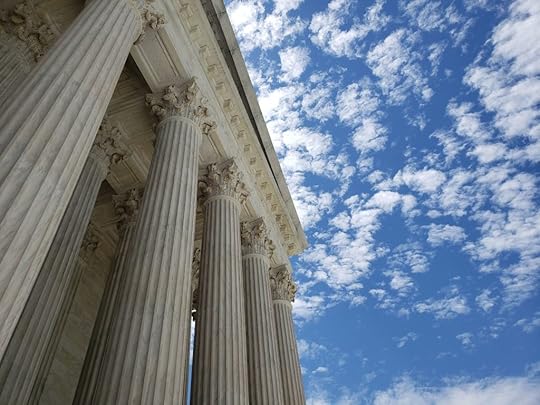
After Justice Breyer announced his resignation last week and President Biden confirmed he planned to keep his campaign promise of nominating the first Black woman to the Supreme Court, I knew I’d need to brace myself for the next couple of weeks. Call it stacking up ample frustration in advance of what is going to be an emotionally trying process. Battening down my mental, physical, and emotional hatches. Slamming, then locking the steel door to my internal storm shelter. I could definitely go on but am choosing to spare y’all any additional rhetorical flourish….
One helluva storm’s brewing, and we’re about to experience intense thundershowers of racism and sexism for a solid couple of months. Get ready for power outages. Flash floods. Devastating wind. Y’all might recall a similar storm that raged for weeks on end during the 2020 election after President Biden announced his pick for Vice President: a category five hurricane of racist, sexist bullshit that spread from sea to shining sea, leaving no community untouched.
It’s a tale as old as time in this country. When white and male are the default (yet invisible) standards, no one deviating from those unspoken criteria can ever hope to measure up, no matter how objectively qualified. And if someone different does manage to get into a position of power, the collective snap judgment is that it had to be because of a quota that needed filling, Affirmative Action, charity, or outright dishonesty. In other words, long suffering white people getting the shaft in favor of goldbricking Black folks, all in the name of diversity, or whatever we’re calling it now.
Before we go any further, let’s arm ourselves with a few facts. In the Supreme Court’s 232 year history, there has never been a Black female justice. In that 232 years, the court has had 115 justices total. 108 of them have been white men. There have only been 3 justices of color in our nation’s history, and two of them are serving right now. The other is Thurgood Marshall.
Now, some might argue that we didn’t get the first Black Supreme Court justice until 1967 because there just weren’t any smart and capable Black folks in existence before that time. It just so happened that only white men were intelligent and accomplished enough to be part of an institution created by other intelligent, accomplished white men. It couldn’t have had anything to do with 400 years of categorizing Black people as literal property followed by a system of laws implemented after Reconstruction that purposely excluded Black folks from most civic, educational, and professional life, could it? That’s crazy talk, right? Clearly, Black people just weren’t good enough to sit on the bench…or be doctors…or hold elected office…or teach white children…
Nothing invites intense public scrutiny quite like a Black person breaking down a barrier that has kept folks that looked like her/him from doing exactly what she/he is now doing. Questions abound about qualifications, preferential treatment (this is laughable, given our country’s history, but here we are), and — GASP — reverse racism. This latter charge comes with a quickness as soon as it’s made clear that the position will intentionally be filled by a person of color.
WHY ARE WE SO FOCUSED ON RACE? (mostly unqualified) white folks wail. Shouldn’t the most qualified candidate be chosen, regardless of race???
Well, yeah, in a perfect world, that would be great. In said perfect world, everyone has an equal shot, no bigotry of any kind exists, and one race of people never held another race of people in bondage and then abracadabra-ed racial terror into a system of laws that kept that formerly enslaved group of people from rising too far above what was deemed to be their station. In a perfect world, we wouldn’t be looking at a statistic like this: 93% of Supreme Court justices have been white men while only 2% have been people of color. And, just to reiterate, 0% have been Black women.
So, we don’t quite live in that perfect world of lollipops, rainbows, and equality, now do we?
Also, here’s another fun fact for your reading pleasure: Republican’s political superhero Ronald Reagan made a point of announcing that he planned to nominate the first woman to the bench before naming Sandra Day O’Connor in 1981. Reverse sexism, amirite? Where’s the public outcry at this obvious injustice?
Here’s a radical idea: how about we have a high court that reflects what our country actually looks like? And ICYMI, that’s not 93% white and male.
Let’s bring in a few more numbers to break this down, shall we? According to data from the 2020 Census, the racial makeup of the United States is only 76.3% white. But a whooping 93% of SCOTUS justices have been white men. And while the racial makeup of the U.S. is 13.4% Black, there have only been 2 Black justices in the history of the court, a mere 1.7%. I’m the polar opposite of a numbers person, yet even I can see this doesn’t add up.
Some might argue that when entire groups of people have been systematically excluded from positions of power for centuries, making space for more of those excluded groups of individuals — Black people, women, Hispanic people, members of the LGBTQ community, etc. — is imperative. It isn’t like President Biden is going to pluck the names of random Black women out of a hat and appoint one of them, regardless of their qualifications. In fact, you can bet that whoever is nominated, she will be one of the most, if not the most, qualified individual to ever sit on the bench, man or woman. Because that’s how it works in this country. If you aren’t white and male, you’d better be twice as good if you even hope to be considered for a job that has never been done by someone that looks like you. Actually, make that three times as good, just to give yourself some wiggle room.
Here’s my ultimate question: what’s so wrong with a Supreme Court that looks more like America? It has taken over two centuries to get to this place. To me, that’s way too long. For others, it’s just not long enough, and there’s really nothing a Black woman could do to show she’s sufficiently qualified. Because it’s not about her qualifications, is it? It’s about her race and her gender. It always comes down to that in America. If you aren’t white, every single one of your achievements can be written off as a consequence of Affirmative Action. And there’s no way to prove otherwise.
Suffice to say, I’m buckling in for some rough weather over the next few months. Whoever the eventual nominee is, I’m sending her nothing but good vibes and strength. But I’m sending that to future me too, because this is going to be a frustrating ride, full of microaggressions, impassioned soliloquies on the scourge of reverse racism, and a boatload of misogynoir.
But when those high winds stop howling, the drenching rain subsides, and the sun shines again in a clear blue sky, we’re going to have a Black woman on the Supreme Court. And I’m going to raise a glass to her. But I’m also going to raise a glass to getting one step closer to what this country should be: a place that truly represents us all.


January 29, 2022
When History Hurts Your Feelings
We’re arguing a lot about history lately, which seems odd to me, at least on its face. After all, history is nothing more than a narrative we share as a culture about what happened in the past. It’s not definitive or infallible, of course, because someone had to write it, actually more like multiple someones, and the agreed upon version based on those narrow viewpoints is what gets spread far and wide to eager students in kindergarten through 12th grade and beyond. And not just here, but all over, in every culture across the globe. Without history, we would be untethered as a people, anchorless, unknown.
So, why all the recent hubbub over our history here in America? It’s just what happened, right?
Years ago, when my elementary school teachers told me that a group of founding fathers courageously broke free from British rule and created this nation in order to give us all the right to life, liberty, and the pursuit of happiness, I bought that narrative, hook, line, and sinker. Of course, those teachers neglected to mention that most of those founding fathers so thirsty for their own freedom actually owned enslaved Black people, considered women second class citizens, and completely wrote off indigenous people along with all other people of color. So, that original brand of freedom turned out to be pretty limited, and it stayed that way for a long time. It didn’t even really include poor, non-land owning white men. Probably would have been worth lifting that up in class, don’t you think?
I’ve always had a soft spot for history, because it’s a story, and there’s little I adore more. As a writer, I think about the mechanics of storytelling quite a lot. As the author, I have complete control over what gets included and what gets left out. This isn’t usually a problem, because folks reading my work understand it as reflecting my unique and admittedly narrow viewpoint. But if I could somehow manage to pass off my subjective judgments about prior events as objective facts that then get taught to millions of impressionable others, what then? Think about the facts I could have unwittingly failed to include, given the limitation of my life experience and point of view. Even more problematically, what if my motives were darker and I purposely crafted a narrative that didn’t even bother to reflect what actually happened?
This is essentially what’s happened in the construction and retelling of our history. When I was growing up, teachers didn’t spend any time discussing the authors responsible for crafting the history they were teaching us. We were simply learning the facts, Jack. No need to question it or imagine historical events told from alternate viewpoints (imagine the glory of manifest destiny told from the P.O.V. of indigenous people; the American Revolution told from the P.O.V. of enslaved Black folks). It was only much later that I wondered how the authors of our shared, agreed upon history were chosen. Had anyone ever questioned their subjective judgment about the events and people “important” enough to get written into the narrative they cobbled together? Because it sure seemed like a lot of Black folks, women, and other POCs fell short of making the cut decade after decade. Why was that?
I’ve written a lot of fiction. In the little worlds I create, I possess godlike abilities. I choose the lens through which the story itself is filtered. I choose the heroes and the villains, the main characters and the supporting cast. I choose what gets included, and what isn’t important enough to mention. But, again, this doesn’t rise to the level of problematic because when you read a novel, you know it’s not real. However, history is taught in a way that discourages the questioning of its authors’ motives. You are just supposed to accept it as what happened. Period.
Since history is a sweeping story of all the things that have come before the present day, it’s natural that material gets omitted. We couldn’t possibly include everything and everyone. So, isn’t it also natural that we are perpetually revising the story to include things that were either omitted due to the authors’ good faith ignorance or, worse, purposely erased in favor of a much rosier narrative? One would think so, unless one were watching the news unfold in the present day. And then one would think that kind of revision is a threat to the very fabric of our nation and wellbeing of our children.
It seems that the story of what happened in America — the good, the bad, the ugly — hurts some (white) folks’ feelings, and they don’t want it to hurt their children’s feelings too. Now, I’ve raised a child, and I can tell you that she never came home emotionally destroyed because of something she learned in history class. Kids don’t really take that kind of thing personally. I’ve also been a child, and let me just say that math routinely caused me undue emotional distress because I hated it and it was hard. Under no circumstance would I suggest we remove math from the curriculum because some students can be made to feel bad about themselves.
To this, some might reply:
This is different! My child is being taught to be ashamed of being white because of slavery or…
Yeah, I let that trail off at the end because it’s such bad faith B.S and repeating it here would just make me tired all over. Feel free to fill in the blanks, y’all.
Let’s get real: the whitewashed version of history, written by white historians, is what we all grew up learning (America is the very best nation in the world and has NEVER done anything wrong), and anything else is a threat to the collective psyche. We can point a finger at the Nazis for the horrors they inflicted upon millions of innocent people, but we can’t accept that our own country imprisoned Japanese people in internment camps during that same period. The systematic genocide of indigenous people is barely discussed. Slavery is mentioned in our childhood history books, but we’re quickly taught that Abraham Lincoln took care of that evil, and the Civil Rights Movement tied up whatever loose ends remained. Problem solved! We didn’t learn anything about the legacy of slavery and how that echoes into the present day, codified in law, attitudes, and culture.
Why is a more robust and truthful version of our history so scary to so many? Why is the inclusion of those that were purposely left out of earlier versions of the story we tell ourselves about America creating such chaos in the modern day?
History isn’t therapy, friends. It’s not a support group. It’s not supposed to soothe your feelings and shore up your self esteem. But it’s also not a personal attack or a value judgment about who you are or aren’t. It should be an account of what happened, and when new events or accounts come to light, we add them to what we already know to improve the accuracy of our shared story.
If what happened in history hurts your feelings, dig into why that is. Because it’s not really about you, is it? Or, at least it shouldn’t be. It’s not about your kids, my kids, or anyone else’s. It simply is what it is.
We really have to ask ourselves: do we want to do better as a nation? Do we want to continue moving closer to the promise laid out in our founding documents? Because if we do, we have to know and reckon with what came before us. There’s no doing better without knowing better. Isn’t that a lesson worth teaching our kids?
January 17, 2022
Miss Me with Your MLK Quotes if You Don’t Support Voting Rights
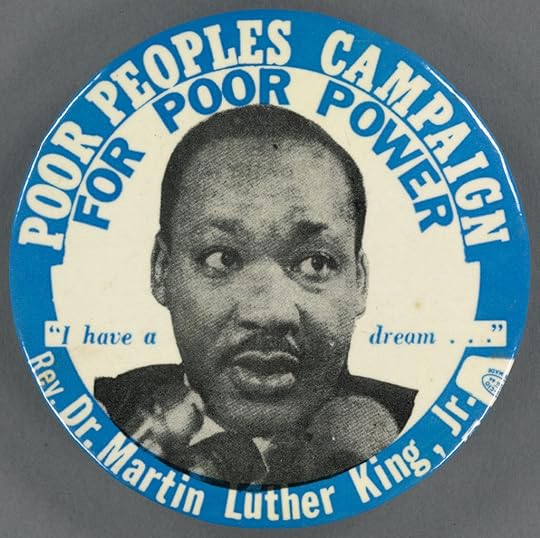
Another Martin Luther King Jr. Day is upon us and, once again, I’m bracing myself for the dizzying, day long onslaught of self-serving hypocrisy. Ah, yes, the annual online showmanship of Republicans posting key quotes from MLK’s “I Have a Dream” speech (because they’ve never read or heard anything else by the man) while they actively work to strip voting rights away from people who look like Dr. King. If the times in which we’re currently living weren’t so terrifying, this would almost be hilarious. Almost.
I’m just here to say: miss me with your fake fuzzy feelings for Dr. King if you spend the other 364.9 days of the year suppressing voting rights, undermining our democracy, or promoting the Big Lie.
It feels good to get that off my chest. Not that I expect anyone to dial down their hypocrisy on my account. But it just seems especially bad this year, doesn’t it, considering these “leaders” could vote on bills at the federal level to secure the voting rights of every eligible American and instead are choosing to do nothing while a slew of states pass legislation making it even harder to vote.
That’s exactly the world Dr. King was talking about in his famous speech, though, right? The one in which he mentions doing whatever’s necessary to concentrate power in the hands of the wealthy few while the lowly masses go unheard and uncounted.
I don’t find it hyperbolic to say that I fear for our democracy. I worry about how weak it has been revealed to be in the stark light of day, how easily it could crumble beneath the jackboots of those who are willing to resort to shocking violence in order to subvert an election and get what they want. These people, and the politicians who purposely whip them into a nationalist frenzy, are the ones who wouldn’t have stood with Dr. King when he was alive and advocating for the Voting Rights Act of 1965. They are no great supporters of equality, or voting rights, or racial justice. Are we supposed to believe that they care about the words of Dr. King or what he stood for, even for a single convenient day out of the year?
We’ve run a terrifying, demoralizing gauntlet of death and disease over the last 2 years. In that time, these so-called “leaders” have more clearly revealed and defined themselves, their motives and beliefs on display in a way we’ve not seen before. Some of these “leaders” have stopped even giving lip service to the sacred ideal of one person, one vote. They no longer bother with pretense. I have to admit, I appreciate their candor, though I find it chilling, because if these people had their way, I would lose the ability to cast a ballot, as would millions who look like me. But, despite their cheerful chipping away at the foundation of our democracy, these people (or their staff) will still find a few seconds to indulge in performative reverence for one of the greatest Civil Rights leaders this country has ever known.
To them, I ask: why bother, after everything you’ve done and said? After everything you are doing and saying right now, in this moment? Leave the duty of remembering the brave Americans who fought for freedom and equality under the law to those of us still fighting to bring these ideals even closer to fruition. If you don’t love what Dr. King stood for, then stop pretending to love the man himself, even if it is the carefully whitewashed version. You would have been repulsed by who he was in life, and he would have been repulsed by what you are: people who would oppress anyone, tell any lie, tear down any cherished institution in order to cleave to power.
So instead of playacting respect for Martin Luther King, Jr., just keep his name out of your mouth. Leave the celebration of his legacy to those of us who actually celebrate it with our whole hearts and weary bones besides. Those of us who are the beneficiaries of the work he did in his lifetime. Those of us who cherish his legacy and strive to honor it in all we do. Those of us who are in this struggle and won’t stop until justice rolls down like waters, and righteousness like a mighty stream. Until one person really does mean one vote.
August 28, 2021
A Journey Through Time and Space
History is a funny thing. It’s behind us by definition, but it also never leaves us, even when we willfully shy away from it. And there are times you can feel the weight of centuries taking up space, intruding on the present, a physical force that quickens your heartbeat and cools the blood rushing beneath your skin.
A few years ago, I found myself in Washington DC for several months for work. I’d never spent much time in our nation’s capital, and I decided to make the most of it. That meant an aggressive schedule of museum visits and as many trips to historical monuments as I could muster in 90 days. My second weekend there, I booked a boat ride to Mount Vernon, the famous home of George Washington. I’m a history nerd going way back, so I was truly excited to finally visit the sprawling estate of a central founding father. I also possess the ability, fostered by 12 years of public K — 12 whitewashed education, to fawn over our country’s rich history with one breath and then criticize it with the next. You can’t grow up in this country without developing this ability, a kind of compartmentalizing that allows me to bask in the carefully crafted glory of our collective past while also acknowledging that I, as a Black woman, wouldn’t have lived very well outside of the last 50ish years. Even within those 50 years, it can be a crapshoot.
The morning was brisk, but the boat ride on the Potomac was lovely as experienced from my warm seat nestled safely below deck. Upon our arrival, I stepped out into the chill air and took stock of my surroundings. Besides the boat, everything was much the way it might have looked back in the 1700s when Washington was still alive and kicking. I felt transported hundreds of years into the past, which was thrilling, and then I felt something else as we disembarked. It was visceral, and it stayed with me for the rest of the trip, niggling at my insides, casting shadows in the far corners of my eyes, as though the very space I inhabited was crackling with all that had come before this moment.
I had to walk up a path through the trees to get to the mansion at the top of the hill. I went quickly, stepping around groups of people as I tried to identify that nagging feeling. It twisted in my gut and settled on my shoulders, a heavy sensation that followed me as I climbed higher. By the time I reached Washington’s tomb, I knew where the feeling was coming from, though I couldn’t name it. The heaviness trembled in the air around me. It was everywhere.
I wasn’t welcome here.
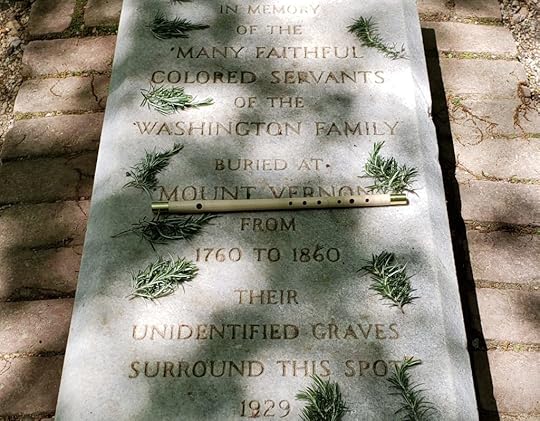
No one was yelling at me or telling me to leave. No one was even looking in my direction. And why would they, when the grand, brick-enclosed tomb of our nation’s first president was right in front of us? But the unsettling un-at-homeness of the place was filling my lungs as I inhaled, and it didn’t leave me when I exhaled. I wandered away from the tomb, craving a bit of separation from the cluster of tourists excitedly snapping pictures of Washington’s final resting place. In a shadier, much quieter spot, I found a more modest marker, dedicated in 1929, which read:
In memory of the many faithful colored servants of the Washington family buried at Mount Vernon from 1760 to 1860. Their unidentified graves surround this spot.
I glanced around where I stood, alone, my eyes tearing. In that space was no trace of the generations of men, women, and children that had toiled on this land. No marker naming them. No place for flowers or remembrance.
Faithful colored servants.
It struck me that the biggest difference between these Black folks and myself was the passage of time. There was another difference that weighed on me: I had come here willingly and would leave without obstacle as soon as my tour of the main house was completed.
I went on to the house at the top of the hill and my tour, that sense of being unwelcome, of sharing space with the nameless, faceless people that had come before me never lifting. It had been these people, bound in slavery, that made Washington’s life possible. Beneath his every success, the ones we read so much about in school, there were these folks, tending the land, cleaning the house, cooking the food, caring for the animals, making the place hospitable for a never ending stream of guests. Yet, the history I learned in the first 12 years of my education never made a single mention of these so-called faithful colored servants. They stayed in the background of history, and, upon their deaths, were buried in unmarked graves, taking their names and stories with them. But I could feel them in that space, on that land, where I wandered, a little stunned to be in a place where they had walked, and lived, and wept, and dreamed. A place that had not been their home, not really. A place that was never meant for me to visit, free as any white person.
On my way back to the boat, I stopped again by the hallowed ground where so many people had found their harsh freedom from a life of forced servitude. I stood near the marker, sharing space with them one final time, letting the air vibrate with that feeling of unwelcomeness. These men and women had built this place, had turned it into a thriving estate, a destination for millions to come and stand in reverence of the great George Washington. But I would never know their names. History would never tell their stories. Still, I could feel them as that heaviness pressed into my shoulders, a sense of the past bleeding into the present, of hands reaching across the void of time.
I went back to the boat, and my life, that otherworldly feeling staying with me long after I returned to DC. In many ways, that visit mirrors the experience of being a Black American. People that looked like us toiled for centuries, building a country that was never meant to belong to us. And, yet, here we Black folks are today, left to reconcile the brute expanse of history with the realities of our daily lives. It catches us off guard, rising up and settling heavily onto our shoulders: millions of stories, of lives, of experiences and shared spaces that bind us together, but are unknowable. What else can we do, besides carry the weight of that shadowy past along with us into the future?
August 4, 2021
Open Letter to Those Ruining it for the Rest of Us
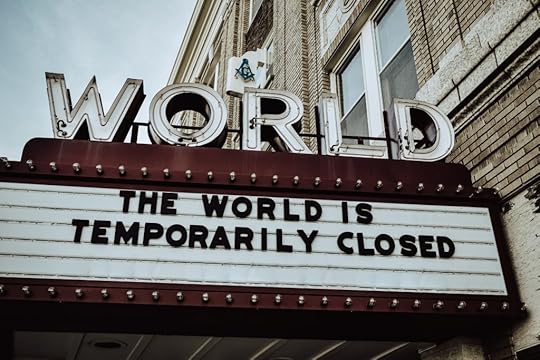
When I was in school, there was little I looked forward to less than the dreaded group project. Teenaged me operated beneath a relatively simple directive: get all schoolwork done and behind you so you can move on to the things you actually enjoy doing, like hanging out with friends or reading for pleasure. That’s not to say I wasn’t also a habitual procrastinator, but it helped that neglecting schoolwork wasn’t an option. The crackdown from my folks would have been swift and all encompassing if I brought home poor grades, so I chose to simply handle my business, even if I was handling it at 2 AM the night before an assignment was due. But group projects added a layer of complication to this straightforward formula of powering through until I reached the lightweight feeling of momentary freedom at the end of a pile of homework. I (mostly) had control over myself. But I had zero control over the actions of others. When they decided not to shoulder their share of the work, there was very little I could do about it besides just pick up the slack if I wanted a good grade.
Think of American society as the ultimate group project. First, no one has a choice but to be part of the group. Second, no matter how much you keep your head down and focus on simply handling your business, someone else can come along and fuck the whole thing up. Then we all get a failing grade. Now we’re all grounded! Or, worse, we get stricken with a deadly virus…
So, yeah, this is for those of you who are actively fucking things up for the rest of us.
Just a point of clarification before I lean all the way into my tirade: this is directed squarely at those who have adopted a loud and proud me first and fuck everyone else mentality, not those immuno-compromised folks that can’t actually get vaccinated. Herd immunity is what’s supposed to protect these folks, so it’s even more infuriating that perfectly (and momentarily, TBH) healthy people are selfishly refusing to protect them and all kids under 12 years old that can’t yet get the shot.
Okay, back to the rant.
We were forced to start a new and rather challenging group project in the beginning of 2020. No one was given a choice, but we were all fully in control of how we responded to the unique parameters of the project. I responded by going into self-imposed quarantine and wearing a mask for my biweekly trip to the grocery store. For months, I did very little outside of the house besides shop for food at 7 AM when the store opened and was not busy. I didn’t travel. I didn’t see friends outside of Zoom happy hours. I worked from home and waited for it to be over. It wasn’t fun, but it was necessary. Yes, I was protecting myself and those I lived with, but I was also making sure I didn’t get sick and spread the virus to others in my community.
As soon as the vaccine was made available to my age group, I got it. Two weeks after my second shot, I reentered the world as though exploring an exotic locale. I went to in-person meet ups with friends. I ate at a restaurant for the first time in over a year. Cases were going down and things were opening up again. It felt like we’d lived through the worst of the pandemic and were finally coming out on the other side. It felt really good, like all my (admittedly minimal, in the grand scheme of things; no one was asking me to parachute into a warzone or anything) sacrifices had been worth it. This was a once in a century pandemic, and we made it through. We had our lives back. Praise science!
Sure, it wasn’t great to see folks refusing to get vaccinated or continuing to turn this into an unnecessary political debate, but I felt hopeful we could still get to herd immunity without them. But then the Delta variant rolled onto the scene and it seemed like we were right back where we started, even despite the vaccines.
And you know why?
Because some of y’all didn’t do your part of the project. And your selfish bullshit is now taking down the rest of us.
And don’t come at me with that freedom nonsense.
I value my freedom as much as the next person, but we live in a society. My freedom extends only insofar as it doesn’t infringe upon yours. And, last I checked, giving you a deadly virus that might land you in the hospital counts as infringement. Your ‘freedom’ to be a dumbass might result in a variant that my two shots of the vaccine can’t protect me from. You aren’t free to drive drunk, because you could hurt or kill someone. How is this any different?
Living in a society means we sometimes have to do things we don’t want to do. That’s just how it goes. The world does not revolve around you, me, or any other single individual. When you do or don’t do things, it affects others. If those effects are negative, you need to stop, and this has nothing to do with freedom. And, anyway, freedom has never been absolute, even in this so-called Land of the Free. There are laws, social norms, expectations, guidelines, and common courtesy.
We’re stuck doing this group project. There’s no getting out of it. We can succeed together or we can fail, dragging your dead (perhaps literally, because this is a deadly virus!!!) weight behind us. Unlike the group projects I quickly learned to despise in high school, this is a matter of life and death. My 2 shots of the vaccine protect me, you, and those that can’t get the shot, either because of health reasons or because they’re too young to receive it right now. Can we set aside the B.S. and just get this done? There are millions of people in other countries who would kill to have the easy access to vaccines that we’re actively taking for granted as a society.
Vaccines are safe and they work. There’s no disputing that. We just need everyone who can to get one. Let’s get an A on this project, y’all, so we can move on to the things we’d rather be doing.
May 31, 2021
A Year of Living at Work
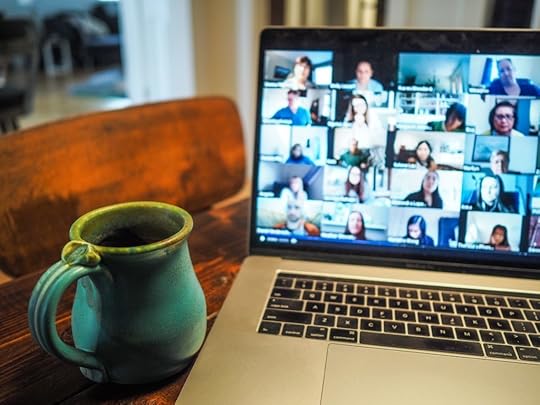
The beauty part about working from home is that you never have to stop working!
Seriously. It. Never. Has. To. End.
Before we dig in, let’s set the table: I’m extremely privileged to have a job that allowed me to work from home, burrow into a cocoon of safety with the folks I love most, continue to pay my bills, and generally keep my head down while a pandemic raged outside my door. Believe me, I don’t take this for granted.
Now that I’ve put that out there, I can start on the rest.
I worked from home long before the pandemic and loved it: the freedom and flexibility, the nonexistent commute, the sound of my dog snoring lightly in the little bed I set up next to my desk for her. I traveled quite a bit throughout the week for meetings and work related events, so it was rare for me to spend two full days in a row in my home office. So, I carved out Sundays as my day to catch up on emails, research, and other writing intensive tasks, setting up at my desk around 8 AM and working peacefully until about noon, no other people in sight. An introvert’s dream.
When COVID-19 closed down the country in March of 2020, working remotely was nothing new to me. It was odd not to travel to meetings, conferences, and other professional get-togethers, but I didn’t miss them that much at first. What did change was that everyone else with whom I interacted throughout my workday was now working from home too. Suddenly, as though by some dark sorcery that managed to enchant us all simultaneously, what could have been a 10 minute phone call was now an hour long Zoom meeting complete with slide deck, round robin intros, breakout rooms, and icebreakers about what was getting us through the lockdown. And, unlike in person meetings, there was no longer any time built into our shared schedules that allowed for eating, bathroom breaks, or, you know, time to do our actual jobs. It was common practice to have meetings begin at 9 AM and go until 4 or 5, each one an hour, each one starting immediately after the one before it. The Zoom Industrial Complex rose quickly at the beginning of our self-imposed lockdown and loomed large over just about every single professional interaction I’ve had over the last 15ish months.
I get it. We were all missing in person meetups. But did that mean things that definitely could have been handled via email now needed to be a 45 minute long on camera meeting?
The answer is no. And yet…
Just an FYI: if you’ve been on a Zoom with me where my camera is off — despite the constant peer pressure to be visible, always — then you have most definitely accompanied me to the bathroom, to the kitchen to refill my water bottle or fix a snack, around my house as I sweep/dust/scrub (when the hell else am I supposed to get cleaning done?), on the elliptical (only for Zooms after 5 PM), or to the floor to stretch out a body that aches from crouching over a computer all day.
Just to reiterate, I fully understand how fortunate I am to have been able to continue working from the safety of my home during a global pandemic, but, goddamn, it quickly felt less like working from home and more like I was living at work.
The line between working and not working is always a little blurry when you work from home. But, last year, that fuzzy line completely disappeared. Calls happened at night and over the weekend. I worked every day, all day, because it’s not like I could safely do anything outside my house, right? Plus it was an election year, and those are always crazy af in my line of work. It seemed like my mind never clicked from work to home. It was exhausting, but also guilt inducing, because it wasn’t like I was risking my life by working a 16 hour shift in an emergency room. I didn’t have to worry about getting infected with a deadly disease as I rang up groceries for unmasked customers that couldn’t care less about my health and safety. I was sitting at home, safe, in front of my computer. Besides, I wasn’t going anywhere anyway, so I might as well answer those emails, do that research, jump on that weekend Zoom meeting, put together that memo.
I’ve been fully vaccinated for a few weeks. By and large, I’m still working from home, but I had my first in person meeting in well over a year earlier this month. While it was great to see other vaccinated people in person, albeit a little freaky, we’re all still inhabiting an in-between space where we’re expected to live at the office and also leave the house to get work done. Granted, it’s the home office, but, still, we’re living at work. It took several days of plugging away at home to catch up after a day of meetings spent untethered from my computer. You can’t travel for meetings and still manage to get 9 solid hours of screen time, which is the minimum amount you need to get enough work done to justify stopping for the night.
As we collectively emerge from this year like no other in our lifetimes, I’ve begun to set boundaries, even if they are uncomfortable at first. During the weekend, I make a point to do things with family or friends that don’t involve work. Some of y’all might be thinking: how is that a boundary? Isn’t that just normal life?! Well, when you’ve worked 7 days a week for so long, only coming up for air when you’re climbing into bed at night, this is huge. During the week, unless I have to finish a task that can’t wait until morning, I’m done at 5 PM, no exceptions (well, some exceptions, but this is a work in progress). I don’t take work calls in the evening and I don’t set up meetings over the weekend. I do take a few hours on Sundays to catch up on emails and research, like old times, but I’m not on a goddamned Zoom meeting, so it feels a little like the sleepy hours just after dawn when you’re on vacation and no one else is awake yet. Just you, a mug of coffee, the promise of the rest of the day, and a little bit of time to do whatever the hell you want to do in that moment.
I’m taking it step by step and giving myself grace. It’s hard to break bad habits, and working 7 days a week, taking phone calls whenever, and waking in the middle of the night sure you’ve dropped a ball somehow, somewhere are all bad habits. I’ve planned 2 vacations for later in the year. I see friends and family often. I regularly disconnect from my computer for hours at a time.
Most importantly, I refuse to continue living at work.
I love my job, but not enough to do it 15 hours a day, 7 days a week. Not enough to keep sacrificing time with family and friends. I still have to beat back guilty feelings when I reach for a book instead of a work related task, when I schedule lunch with friends on a Saturday instead of doing that extra research, when I keep watching Netflix instead of taking that 7 PM phone call. I remind myself that, when I worked in an office, stepping out into the parking lot meant I was finished working, that the rest of the day was mine to do whatever I wanted. I felt no guilt then. I shouldn’t feel guilt now, just because my office is nestled inside the rest of my house. All the lines are still there. I just have to enforce them. So, that’s what I’m doing: tracing over the blurry, indistinct lines between work and my personal life until they become bold again.
January 11, 2021
America, This is Exactly Who We Are
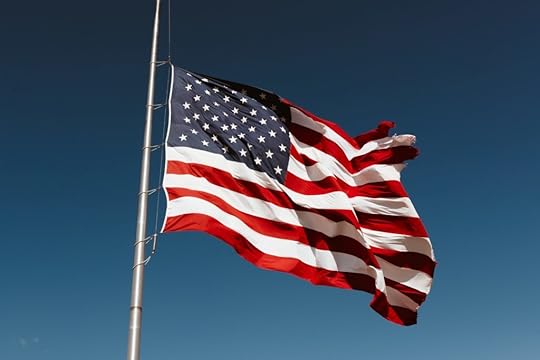
Last week, I watched an angry white mob storm the heart of our nation’s capital in an attempt to subvert the will of millions of voters. These people came armed, not just with weapons, but with an innate sense of entitlement endowed by their skin color, a certainty swimming in their blood that they could livestream what they were doing with no fear of repercussion. I watched in horror and fury as the foundation of our fragile democracy trembled beneath thousands of angry footfalls, unsure if it would hold after the last four tumultuous years.
In the wake of this failed insurrection, I watched dozens of public figures proclaim that we are better than this as a country, that this is not who we are. There were social media posts aplenty making similar pronouncements, such that they became a persistent drumbeat that was impossible to ignore. Unfortunately, these hearty arguments and entreaties were little more than feel good bullshit.
America, this is exactly who we are.
I’m not sure what part of our history these folks are referring to when they make sweeping judgments that we, collectively, are better than whatever terrible event just occurred. The hundreds of years of chattel slavery? The horrors inflicted upon indigenous people, including genocide, land theft, and broken treaties? Jim Crow? Redlining? The War on Drugs? Internment camps during WWII? Women treated as second class citizens? The exclusion of the LGBTQ community? Lynchings?
Stop me when I get to the parts that prove what we’ve always been wasn’t on full display when hundreds of terrorists invaded the Capitol Building the other day.
Listen, I think America is the land of endless promise. It’s something on which the Founding Fathers and I are in complete agreement. The country is at its greatest during the times when we inch closer to its founding promise, the one that says everyone is entitled to a life lived freely and with dignity. But we are not that country all the time. We need to accept that, because lasting change doesn’t occur unless we do. Pretending that we are better than we’ve proven ourselves to be throughout our history is disingenuous and self-defeating. The idea of America is a shining beacon of freedom and equality recognized across the globe. The reality of America is much less hopeful, though not completely hopeless. Therein lives the motivation so many of us feel to make the reality of this country finally live up to its promise.
This country is comprised of millions of people living their lives within its borders. Many of these people are good. But there are also many that aren’t. Thousands of the latter kind were in the nation’s capital the other day, attempting to disenfranchise about 81 million of their countrymen and women. I could go on for a few hundred paragraphs about the kind of deep seated entitlement one must feel — that this country is yours and always has been — in order to do that kind of thing, but that’s not the point of this. The point is to pull us around to a collective mirror and invite us to really look at what we see there: good, bad, hate, love, forgiveness, stubbornness, hope, fear, entitlement, and pain.
This country isn’t just one thing, good or bad. It’s many things. We are the people that stormed the Capitol Building, armed and determined to keep a failed president in office by any means necessary. We are also the people that peacefully protested for Black lives after the death of George Floyd and Breonna Taylor. We can be both, and a million other things, at the same time. What we can’t do is pick and choose the parts that we use to define ourselves. We’ve done that for far too long, and it’s gotten us into the mess we’re experiencing now.
Refusing to reckon with our complicated past is as American as apple pie. We cleave to the good things, holding them up like gleaming, hard won trophies, and forget the rest. But history repeats itself when we refuse to learn from it the first time, or when we refuse to even acknowledge it. That’s where we are right now: relearning lessons we resisted initially. Pretending the actions of these fellow Americans don’t reflect the country that birthed, coddled, and empowered them just continues this unfortunate cycle. We can be better — I truly believe that — but only if we embrace our collective faults and commit to changing them.
Our democracy suffered a real hit this week after years of repeated blows, and it troubles me to know how delicate it is, how unstably it sits atop layers of air and convention, how much of what we understood to be foundational to the health of our way of governing is more akin to a gentlemen’s agreement. I can honestly say the events of last week shook me to my core, but they also infuriated me. This is my country too. I see it clearly, and still love it, for all it could be if only we keep pushing. But I refuse to suffer those that indulge in revisionist history in order to view this country through the rosiest of rose colored glasses.
We are not better than what happens within our borders or on our watch. We are not better than the things we do. But we can be better. That’s what keeps me going.
December 31, 2020
Close the Door on Your Way Out, 2020
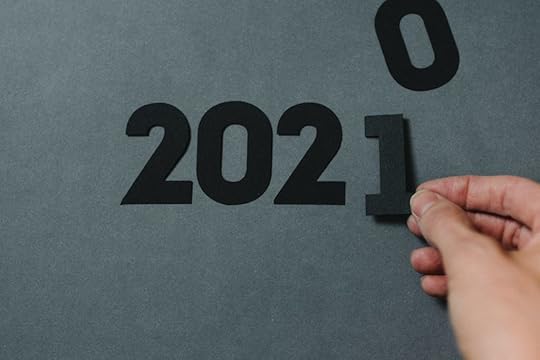
What can I say about 2020 that hasn’t already been growled between gritted teeth by someone, somewhere on this planet? It’s certainly been a year that defies simplistic definitions. A time warp. A lengthy, shimmering interlude between one moment and the next. A dumpster fire. An extended period of forced, yet not altogether unpleasant calm. A struggle. A hazy, indeterminate dream state. A nightmare. Never ending. Lightning fast. Upheaval incarnate.
In other words, it’s been one hell of a year.
Living through a global pandemic wasn’t something I had on my Bingo card last New Year’s Eve, and the year I thought I was strutting into on January 1st, 2020 didn’t even begin to resemble the year I’m looking back on during this final day of December. But the one thing I’m left with at the end of this strange 12 months is just how damned lucky I am. I did more than live through a year that saw close to 350,000 Americans die and millions more lose their livelihoods. I was able to spend 2020 quarantining with the people I care about most in the world while working full time in the safe, comfy cocoon of my own home. I didn’t struggle with food insecurity. I didn’t worry about being evicted in the middle of a health crisis. I kept my medical insurance and was able to seek care whenever I needed it.
This year has been horrible in so many ways, but I can’t deny how fortunate I am. So instead of shooting 2020 a double bird as it rides off into the blazing sunset, I’m going to give thanks. It just seems warranted, doesn’t it? And it’s an extension of the practice I began at the beginning of the year whenever I started to lament at how awful and uncertain things seemed.
I had all my people with me
At the end of December, I like to write out a list of my goals for the upcoming year, and then I read over them every morning to keep myself focused as the months pass. I did this for 2020 as well. Why am I telling you this? Well, my job is the type that normally keeps me on the move. Florida’s a big state and I’m often driving hundreds of miles every week for meetings, events, and conferences. So, in January, one of my goals was to prioritize spending quality time with my family. Remember that old adage: be careful what you wish for? Seems 2020 came equipped with jokes and thought that it would grant my wish by giving me nothing but family time. Although there have been a few moments when we all considered killing each other, this time together has truly been a gift. COVID slowed my ass down, kicking travel out of bounds and shutting down my usual get togethers with friends. I’m grateful to have been able to weather this stormy year with the people I cherish most. I know not everyone had that, and many now have empty chairs at their dining room tables.
I got by with a little help from my friends
Shockingly, my introverted ass has quite a few friends. And despite my critical need of alone time at regular intervals, hanging with these folks improves my life beyond what I might have earlier believed possible. I’m doubly fortunate that many of the people I consider close friends are also work associates, meaning we see each other at conferences and meetings that then transition into happy hours at various restaurants (yes, all my friends like food; you can’t hang with me if you don’t). My final work related trip in 2020 was for a big conference in DC the first week of March, just before everything shut down. We had a large group from Florida, which resulted in a good time during and after the conference, and a few of us stayed extra days to have unencumbered fun in the city. Before leaving for DC, I’d gotten the chance to see several other friends throughout February, which proved fortuitous, considering the world slammed shut the week I returned home, clearing my calendar of all in person events, both professional and social.
I fell into a virtual happy hour that first Friday of my self-imposed COVID quarantine that became a regular occurrence throughout the remainder of the year. It quickly transformed into the highlight of my week, a wine soaked therapy session that always started with complaints and ended with maniacal laughter. I had many other virtual get togethers with other sets of friends too, and meandering chat threads filled with frustration, profanity, jokes, and memes about politics and the pandemic. I missed seeing my friends in person, sharing appetizers and desserts over drinks, watching movies in the theater, or driving into the city for events or shows. But it never felt like they were that far away, even the ones from out of state. This year would have been insurmountable without each and every one of these folks. We got each other through this, with humor and humility. I can’t wait to see them all on the other side of this long, strange trip that was 2020.
Home was where the work was
I spent years as a freelance writer, followed by work on different political campaigns and then nonprofit organizations, including one I co-founded. Suffice to say, I’m used to working from home. But I’m also used to being able to leave when I want (or even when I don’t want, holding a knife to my own throat to force my feet out of the door), so it was pretty weird to never need to attend in person meetings or events. And it took time to fully assimilate into the Zoom industrial complex wherein what normally could have been a 20 minute phone call transformed into a 60 minute video conference complete with slide deck and unnecessary icebreakers and breakout groups (the horror). But even during the days stacked high with 6 plus Zoom meetings, I knew how fortunate I was.
I live in a state that buckled immediately under the pressure of the COVID-19 fueled unemployment crisis. To this day, there are still thousands of people that never received any unemployment benefits and are facing complete financial destruction as they hover on the edge of eviction, unable to afford their basic needs. There are other folks that managed to keep their jobs, but were forced to work outside of their homes. This wasn’t without risk, considering our state never had any discernible leadership from our incompetent governor or something as simple and obvious as a mask mandate. Unsurprisingly, our COVID-19 infection rates soared.
But somehow, inexplicably, I was okay. I stayed employed. I didn’t fall into financial ruin. I could afford food, a roof over my head, medical care. What made me so lucky when millions of others spiraled into poverty, their livelihoods and peace of mind evaporating in an instant? I don’t have the answer to this question. But I do feel an obligation to continue working to create an America that’s freer, fairer, and better for all of us. One with safety nets that actually catch us when we fall…or when we’re pushed. It goes without saying that I don’t want to struggle, but, here’s the thing: I don’t want you to struggle either.
I let words be my refuge
Before I fell ass over teakettle into the exhilaratingly frustrating world of politics, I used to read north of 60 books each year. I just ran through them. I’ve always been a voracious reader, preferring the comfort of tucking into the pages of a book over most everything else. This year, I set a modest goal of reading 30 books, but by May, I had yet to read a single one. What can I say? The year started at a gallop with work and then took a turn into the surreal when the pandemic started, washing everything else away. It was all I could do to keep my head above water. Eventually, I had a come to Jesus meeting with myself, and kicked my own ass into gear. Once I actually got started, I never stopped. I had some great adventures this year, humming along in the colorful space between my ears. I finished my 30th book just the other day. And, more importantly, I rekindled the love of reading that I’ve had since I was a little girl. That’s something I plan to bring with me into 2021.
We flipped the goddamned White House
Y’all know I can’t end a list about all the things I’m grateful for in 2020 without including this one. I’ve been living in a state of persistent dread for the last 4 years, a weight I forgot I was lugging around until it lifted, as though by magic, the Saturday after Election Day when Joe Biden was officially named President-Elect. I’ve never felt more relieved in my life, and I’ve given birth to a child. It’s strange to wish the last 4 years had never happened while also feeling deep, unshakeable gratitude for the person I became because of the gauntlet of stress and terror the Trump presidency forced me to cross. I didn’t have a purpose before this, not really, and now I do. Thanks to the work that millions of us did over the last 48 months, I get to keep the purpose while Trump has to vacate the White House. Beautiful, right?
As we show 2020 the door and lock up securely as soon as it crosses the threshold, lest it change its fickle mind, let’s take a moment to celebrate the small victories and soaring triumphs. If you’re reading this, you made it. You survived one of the worst years in living memory. I hope you also found pockets of joy, had those you loved close at hand, and found other small pleasures that made these odd days pass more easily. On the eve of 2021, here’s to many more years together doing what we love. Here’s to better times. Here’s to you, to me, to us.
November 2, 2020
On Being Black, Female, Terrified, & Hopeful in 2020
I’m pretty anxious about the upcoming election. That’s both the understatement of the century and an accurate description of my current state of being. I spend my day ping ponging between nausea-laced despair and regular despair — despair zero: all of the flavor without any of the pesky calories. If I’m awake, I’m worrying about a few hundred things at once, each one enormous, the cacophony beating along the inside of my skull.
And, yet, I still feel hopeful for some reason.
This is despite being a Black woman at this moment in America.
This is despite all evidence to the contrary.
In fact, let’s take a handful of seconds to go through some of that evidence, and then I’ll make my case for why we should keep on trucking in the direction of the light I’m looking forward to finding one day at the end of this long, strange, narrow tunnel.
After limping through the last four years of an incompetent megalomaniac occupying the White House (when he’s not occupying various golf courses, that is), there appears to be nothing to look forward to, no reprieve, no magic bullet, no hope of any kind. We’re living through a global pandemic that has killed more than 230,000 people in this country and sickened many more, kept us away from family and friends, turned our economy upside down, and financially destroyed millions of American families. Even before the pandemic bulldozed its way across the country, we lived in a state of perpetual dread at what irresponsible, bigoted, and/or outrageous thing the so-called leader of the free world would do next. Racism isn’t new, but Trump sure has managed to make it great again, hasn’t he? Ditto for sexism. And homophobia. And transphobia. And Islamophobia. And xenophobia. You get the point, right? It’s a truckload of isms and phobias. Not to mention the courts are packed to the rafters with conservative judges, we’re not doing one goddamned thing about climate change, and we’re the butt of every joke on the international stage.
But, here I am, hopeful. Nauseous as I maniacally check every election related metric imaginable, but still hopeful.
Part of this hope is directly related to what I do for a living. Back in 2016, as I watched the political train careen off the track and into the canyon below, I had absolutely no way to influence the process past my vote. Don’t get me wrong. One person’s vote is important. But back then I believed voting was all an American needed to do in order to claim engagement in the process.
I learned how wrong I was the hard way.
I felt hopeless and scared the morning after Election Day, and when that despair turned to anger, I didn’t really know what to do about it. By the middle of November, I’d found my people — other pissed off folks (mostly women) that hadn’t been involved before but wanted to fix that lack of engagement in a hurry — and that started me on a path I’m still traveling to this day.
Another reason I’m hopeful is that I finally understand the full extent of my power now, how it’s amplified when I stand shoulder to shoulder with other people like me who want things to be different, fairer, better. Not just a return to the pre-Trump era, but a reimagining of what we could be as a country if only we eradicated racist and sexist systems that have been in place since the nation’s founding.
Every time we lose a fight or take a hit that should leave us down for the count, I feel that abiding, stubborn flicker of hope intensify, and we get back up again. If you’d told me 4 years ago about this persistent little flame, I’d have waved you off, disbelieving. How could such a thing exist, I’d ask, given everything that’s wrong? But now I think it only exists because of what’s wrong. The fixing is fuel, and there’s so much that’s broken.
So, what about this election?
I voted weeks ago, and we’re shortly running out of work that can be done that might influence the direction of this election. But I’m going to keep pushing. I plan to leave it all on the field this year.
Before getting sucked into the world of politics, I’d never experienced the feeling of helping to shape history. Of being part of a movement that could bend the arc of the moral universe a little further towards justice. I feel that now. We’re making history, all of us, together. And we’re a few short days away from the fruits of our labor. I really believe that. I have to. That little flame demands it.
And after Election Day?
We keep going, fighting, pushing to create the country as it should be. There’s so much damned work to do, but I’m grateful to be able to do a small part of it, and I’m even more grateful for the people that are doing the work right along with me.
August 30, 2020
The 19th Amendment: 100+ Years of Black Women on Their Own
First, let’s set the table.
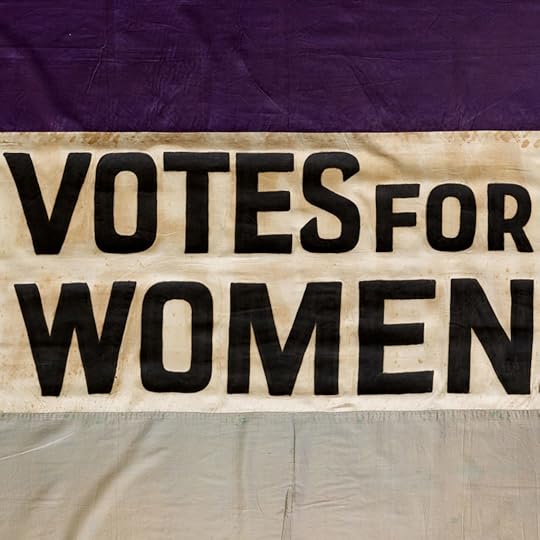
Yes, I am that person that interjects with white women whenever someone mentions that it’s been 100 years since women gained the ability to vote. And if I don’t interject, I’m definitely thinking it. That might cause some folks to roll their eyes, but that doesn’t make my clarification any less true. We can celebrate an achievement while also pointing out how that same achievement fell well short of enfranchising the diverse range of women that lived in America in 1920.
History is a funny thing, isn’t it? Especially in this country. Instead of learning from it, we stubbornly choose to sand down its rough edges in order to draw our collective gaze to the loveliest smoothed over parts, completely avoiding the dry rot underneath that just keeps spreading. Maybe it’s because human beings are the kinds of creatures that crave rich narratives with beginnings, middles, and (happy) ends. Sweeping tales of heroes and heroines, all white, with the occasional person of color in a supporting role. The movement for women’s suffrage is no different.
Growing up, the story I learned about women’s long fought battle for what would become the 19th Amendment was fully housed in towering white champions like Susan B. Anthony and Elizabeth Cady Stanton. My small eyes scanned pictures of women in flowing white dresses and sashes, marching and demanding equal access to the ballot box, not a Black or brown person among them. No one mentioned Black women, who absolutely did not get the right to vote, despite their contributions to the movement. No one mentioned indigenous or Asian women either, who weren’t even allowed to be U.S. citizens at the time. Latinas were also left completely out of this victory for all women, as we’re taught to celebrate it today. This was a movement powered by white women, my history books assured me, without ever explicitly stating it. But you’ll be a woman one day, and so this was your victory too. Cool, right? I didn’t question this narrative, because what kid does? We ingest what we’re fed, until we’re old enough to realize that some crucial ingredients have been left out of the stew.
Throughout the month of August, folks have been talking about the 19th Amendment, leaning heavily into the Stanton-Anthony industrial complex, as they’ve always done. So I suppose it’s no surprise that this centennial of white women gaining the ability to vote has me lowkey annoyed, an undercurrent of unrest that buzzes directly behind my eyes. All month, I’ve been thinking about feminism’s historical inability to negotiate the intersection of race and gender. And this unwillingness to embrace intersectionality persists to this day, carried forth by generation after generation of women. I left a rather famous women’s organization in 2017 because of the blatant racism and toxic white feminism I saw and experienced there, a suffocatingly clique-ish environment dressed up as ‘sisterhood’. It was okay to have Black women and other women of color toiling for the organization and peppered into group photos, but it wasn’t okay for them to be in leadership roles or to ever point out racism within the ranks. In that way, it was very similar to the movement for women’s suffrage.
The betrayal of Black women by their so-called white suffragist ‘sisters’ caused a fissure in the feminist movement that’s still a gaping hole to this day. It always seems a little too easy for the concerns of Black women and other women of color to get indefinitely delayed or outright ignored so the group can focus on more pressing matters. Pressing always means what’s deemed important by the white women in charge.
When we learn about the battle for women’s suffrage in school, we never hear about the deep seated racism of its white leaders. We don’t hear about the tokenization of Asian and indigenous women, or the erasure of Latinas. We don’t hear about how it was just fine for Black women to do the work, but unacceptable for them to expect a seat at the table. Back in the day, ladies like Stanton were enraged at the thought of Black men getting the right to vote before white women. This is despite the fact that Frederick Douglass was an avid and vocal supporter of women’s rights, even showing up at the convention at Seneca Falls.
Racism was in the DNA of this movement. That much was evidenced by the racist rhetoric of its leaders. And the scope of the movement was narrow: push just enough to enfranchise white women, then stop. In the same way that Black men weren’t magically able to practice the voting rights set forth for them in the 15th Amendment until the Voting Rights Act of 1965, Black women also weren’t able to access their right to vote after the passage of the 19th Amendment. But did newly enfranchised white women continue to fight for them? Of course not. Because this was never about the rights of all women. Black, Latina, indigenous, and Asian women were on their own, despite how hard they’d labored to make the ratification of the 19th Amendment possible.
The 19th Amendment didn’t do anything about the intimidation, poll taxes, literacy tests, and violence Black women faced when they tried to register to vote, just like the 15th Amendment didn’t protect Black men from such treatment. But Black folks had to figure this out alone. No help arrived from white suffragists. And, years later, these same white women would be lauded as heroines that contributed to the great American story while the suffragists of color were fully erased from my history books.
As so often happens in my adult life, I feel terribly cheated out of learning crucial parts of the American story during my first twelve years of education. It wasn’t until I was in college that I learned about Ida B. Wells, Mary Church Terrell, and so many others. I lived nearly two decades without understanding the crucial role Black women played in a battle for equality that I’d been led to believe was fought only by white women. American history is a story of white achievement, and all but a few people of color are erased by the centuries of white folks that have carefully constructed that narrative, from the ships arriving on Plymouth Rock to the present day.
Racism played a central role in the movement for women’s suffrage, and I’m not here to celebrate that. What I celebrate are the thousands of Black women and men that never stopped fighting for voting rights until they were signed into law in 1965. I celebrate the folks still fighting for these rights to this day, because the suppression never stops, it just takes another form: purging of the voter rolls, voter ID laws, polling locations closed without notice, etc. This month, I celebrate the perseverance of Black women, the way they keep rising, no matter how hard this country shoves them down or erases them from its history. We have a long way to go, but we’ve also come so far. I celebrate that too.