
Kenneth L. Gentry Jr.'s Blog
August 14, 2026
THE KEY FOB TO OLIVET

PMW 2026-062 by Kenneth L. Gentry, Jr.
Matthew 24 is a well-known text that speaks of great prophetic judgments. Who has not heard of “wars and rumors of wars” (v. 6)? “False prophets” (v. 11)? “Enduring to the end” (v. 13)? “The abomination of desolation” (v. 15)? “Great tribulation” (v. 21)? “The powers of the heavens shaken” (v. 29)?
Unfortunately, for the most part, futurism controls the popular approach to Matthew 24 today. Futurists place all the events of Matthew 24:4ff thousands of years off from Jesus’s day and into our own approaching future. This is categorically wrong for various reasons that flow readily from the text itself. I am offering this running survey as a sample of a modern preterist exegesis. You will see many agreements with Grotius, but also some areas of disagreement. Preterism is not monolithic.
The most significant key for interpreting the Discourse is the Lord’s own express declaration in Matthew 24:34 regarding the timing of the “great tribulation” and other judgment events. In fact, this is a key fob that controls all things automatically. For that verse declares: “Truly I say to you, this generation will not pass away until all these things take place.” Here we have an authoritative, clear, and compelling pronouncement of the time of the events recorded in 24:4-33.
The Lord’s Dogmatism
Regarding this verse we should note, first, that Christ is dogmatic when he begins a statement with “truly” (Gk.: amen). Thus, Christ emphatically draws the disciples’s attention to what he is about to say — just as he does in 24:2, where he makes the statement about the destruction of the Temple that leads to the whole discourse: “Do you not see all these things? Truly I say to you, not one stone here will be left upon another, which will not be torn down.”
The Book of Revelation Made Easy
(by Ken Gentry)
Helpful introduction to Revelation presenting keys for interpreting. Also provides studies of basic issues in Revelation’s story-line.|
See more study materials at: www.KennethGentry.com
Second, Christ further underscores his dogmatism. He does not simply tell them; he emphatically introduces what he is about to say with the declarative “I say to you.” The Lord does not leave the temporal expectation as a casual remark, hoping they will catch it. He alerts them to what he is about to say.
Third, the literal rendering of the Greek reads: “Truly I tell you that by no means passes away generation this until all these things happen.” The “by no means” is a strong, double negative (Gk., ou me); and it is put early in his statement for added emphasis. He is staking his credibility, as it were, on the absolute certainty of this prophetic pronouncement. He even positively contrasts the durability and integrity of his prophetic word here with that of the material universe: “Heaven and earth will pass away [!], but My words will not [ou me] pass away” (24:35).
But what does he so dogmatically and carefully declare? Whatever the difficult apocalyptic imagery in some of the verses preceding this dogmatic statement (e.g., vv. 29-31), Jesus clearly asserts that “all these things” will occur before “this generation” passes away.
The Lord’s Meaning
Actually a simple reading of 24:34 leaves the inescapable impression that these things are to occur in the generation of the original disciples to whom Jesus was speaking (Matt. 24:1-3). Contextual exegesis helps us to clarify the meaning of Matthew 24:34. The phrase “this generation” appears in the very context intimately related to and ultimately introducing Matthew 24. We can see this by simply comparing Matthew 23:36-38 with 24:1-2.

Have We Missed the Second Coming:
A Critique of the Hyper-preterist Error
by Ken Gentry
This book offers a brief introduction, summary, and critique of Hyper-preterism. Don’t let your church and Christian friends be blindfolded to this new error. To be forewarned is to be forearmed.
For more Christian educational materials: www.KennethGentry.com
In Matthew 23:36 “this generation” unquestionably speaks of Jesus’s contemporaries. Here Jesus is condemning his adversaries, the scribes and Pharisees (23:2, 13, 14, 14, 16, 23, 25, 26, 27, 29). He specifically observes that these his opponents will “fill up, then, the measure of the guilt” of their predecessors (23:32). They will do this by persecuting his followers (23:34), so that “upon you [scribes and Pharisees] may fall the guilt of all the righteous blood shed” (23:35). Then the Lord concludes: “Truly I say unto you, all these things will come upon this generation.” This employs some of the identical terms as Matthew 24:34, clearly functioning as its semantic equivalent:
Matthew 23:36: amen lego humin, hexei tauta panta epi ten genean tauten
Matthew 24:34: amen lego humin hoti ou me parelthe he genea aute heos an panta tauta genetai
So then, Jesus expressly teaches that the prophetic events of verses Matthew 24:4-31 [vv. 32-33 record a parable affirming the nearness of the event] — “all these things” (24:34) — will occur in “this generation.” And just forty years later the Jewish War with Rome brings the total and final destruction of the Temple (24:2). The temple’s destruction is a well-documented event occurring in AD 70 (see Josephus, Tacitus, and others of that era).
Thine Is the Kingdom
(ed. by Ken Gentry)
Contributors lay the scriptural foundation for a biblically-based, hope-filled postmillennial eschatology, while showing what it means to be postmillennial in the real world.
See more study materials at: www.KennethGentry.com


August 11, 2026
GROTIUS AND GENTRY ON MATTHEW 24
PMW 2026-061 by Jay Rogers

Gentry note: The following comparative summary is taken from the recently published commentary on the Olivet Discourse by Hugo Grotius. Jay and I were co-editors highly motivated to get this first-ever English version of Grotius’ The Sign of His Coming (2026).
Rogers writes:
This is a journal-style comparative article, integrating Grotius and Kenneth L. Gentry Jr., highlighting agreements, differences, and why those differences do not undermine the shared preterist framework.
Introduction
Few passages in the New Testament have generated more sustained debate than Matthew 24. In modern scholarship, one of the most influential defenders of a preterist reading is Kenneth Gentry, whose detailed survey argues that the bulk of the Olivet Discourse finds fulfillment in the first-century destruction of Jerusalem.
Great Tribulation: Past or Future?
(Thomas Ice v. Ken Gentry)
Debate book on the nature and timing of the great tribulation. Both sides thoroughly cover the evidence they deem necessary, then interact with each other.
See more study materials at: www.KennethGentry.com
Yet long before the rise of modern preterism, Hugo Grotius had already laid much of its intellectual groundwork. His Annotationes on the Gospels offer a historically grounded, linguistically precise reading of Matthew 24–25 that anticipates many of Gentry’s conclusions while also introducing important distinctions that sharpen and stabilize the preterist approach.
What emerges from a comparison of these two interpreters is not contradiction, but deep convergence with meaningful refinement. Grotius and Gentry stand in substantial agreement on the historical fulfillment of the discourse, even where Grotius’s nuances prevent the system from becoming reductionistic.
Shared Foundations: The First-Century Fulfillment
Both Grotius and Gentry insist that the controlling interpretive key to Matthew 24 is Christ’s declaration: “This generation will not pass away until all these things take place” (Matt. 24:34).
For Gentry, this statement is decisive: it fixes the fulfillment of verses 4–31 within the lifetime of Jesus’ contemporaries. Grotius, though writing centuries earlier, operates with the same assumption. The signs Jesus lists—wars, famines, false prophets, persecutions—are not vague generalities but historically verifiable realities culminating in the Jewish War and the destruction of the Temple in AD 70.
Here the agreement is striking:
THE SIGN OF HIS COMING
A Preterist Commentary on the Mount Olivet Discourse
Newly translated from the Latin, edited by Kenneth Gentry and Jay Rogers
This groundbreaking volume presents the first English translation of Grotius’ Latin commentary on the Olivet Discourse – Matthew 24-25 and the parallel passages of Mark 13, Luke 17 and 21. This allows modern English readers to encounter firsthand one of the great intellectual architects of early Protestant biblical interpretation.
For more information on this new Grotius translation, or to order it, see:
https://www.kennethgentry.com/the-sign-of-his-coming-a-preterist-commentary-on-the-mount-olivet-discourse/
In these matters, Grotius may rightly be seen as a forerunner of Gentry. What Gentry demonstrates with extensive historical documentation, Grotius had already established through philological and comparative analysis.
What makes Grotius unique is not simply that he connected Jesus’ prophecy to the destruction of Jerusalem in AD 70. Many readers already know that argument. What makes this work extraordinary is the depth of historical insight behind it. Grotius combines mastery of Scripture, Roman history, Jewish sources, geography, classical literature, philology, and prophetic typology in a way few modern commentators can rival. Long before contemporary prophecy debates.
Historical Method: Evidence and Context
Another major point of convergence lies in method. Both interpreters insist that Scripture must be read in its historical context.
Gentry appeals extensively to sources such as Josephus and Tacitus to show that the predicted events occurred in the first century. Grotius does the same, but with even broader scope, incorporating not only Jewish and Roman historians but also classical Greek literature and linguistic parallels.
The result is a shared conviction:
✔ Prophecy is not detached from history; it unfolds within it.This commitment guards both interpreters from speculative futurism and anchors their readings in verifiable events.
The Meaning of “Coming” (Parousia)
Where Grotius begins to refine Gentry is in his treatment of the “coming” of the Son of Man.
Gentry strongly emphasizes that Christ’s “coming” in Matthew 24 refers to His coming in judgment against Jerusalem—a historical event manifested in AD 70. Grotius agrees, but adds an important layer: the term “coming” is multivalent.
For Grotius, the “coming” includes:
• the vindication of Christ• the manifestation of His royal authority• the historical judgment on JerusalemThis broader definition does not contradict Gentry—it grounds his interpretation more securely. By recognizing that “coming” need not always mean the final visible return, Grotius provides the linguistic and conceptual basis that makes Gentry’s reading possible in the first place.

Olivet Discourse Made Easy (by Ken Gentry)
Verse-by-verse analysis of Christ’s teaching on Jerusalem’s destruction in Matt 24. Shows the great tribulation is past, having occurred in AD 70, and is distinct from the Second Advent at the end of history. Provides exegetical reasons for a transition from AD 70 to the Second Advent at Matthew 24:36.
See more study materials at: www.KennethGentry.com
The Sign of the Son of Man (Matthew 24:30)
A similar pattern appears in the interpretation of Matthew 24:30.
Gentry argues that the “sign of the Son of Man” is not a visible appearance in the sky but the historical destruction of Jerusalem, which reveals Christ’s enthronement. Grotius concurs, emphasizing that the “sign” points to the reality that the Son of Man is in heaven exercising authority.
Both reject a literalistic reading. Both interpret the mourning of the tribes as referring to Israel. Both connect the imagery to Old Testament prophetic language.
Grotius’s contribution here is primarily grammatical and exegetical: he carefully distinguishes between the “sign” appearing and the Son of Man Himself appearing. This strengthens, rather than weakens, the preterist reading.
The Gathering of the Elect
In Matthew 24:31, both interpreters again align in seeing the gathering of the elect not as a literal end-of-the-world event, but as the worldwide expansion of the gospel.
Gentry connects this to the proclamation of the gospel throughout the Roman world. Grotius interprets it in terms of the Jubilee imagery of redemption and the ingathering of God’s people from all nations.
Here again, Grotius deepens the theological dimension without altering the historical framework.
[image error]For more information and to order click here." data-image-caption="" data-large-file="https://i0.wp.com/postmillennialworld..." class="wp-image-211" style="width: 75px; height: auto;" src="https://postmillennialismtoday.files...." alt="" />Perilous Times: A Study in Eschatological Evil (by Ken Gentry)
Technical studies on Daniel’s Seventy Weeks, the great tribulation, Paul’s Man of Sin, and John’s Revelation.
See more study materials at: www.KennethGentry.com
The Critical Difference: The Transition at Matthew 24:36
The most significant difference between Grotius and Gentry concerns the transition at verse 36.
Gentry maintains that there is a shift from the sign-filled judgment of Jerusalem to the signless, unknown Second Coming. Grotius agrees—but articulates the transition with greater structural clarity.
For Grotius, Matthew 24 answers three distinct questions:
• The destruction of Jerusalem• The manifestation of Christ’s kingdom• The final judgmentVerse 36 marks the decisive move to the third.
This difference is not a contradiction but a clarification. Grotius provides the structural explanation for a transition that Gentry affirms but does not always formally systematize.
Do the Differences Undermine Gentry?
On the contrary, Grotius’s differences strengthen Gentry’s approach in three key ways:
Linguistic groundingGrotius shows why terms like “coming” can legitimately refer to historical judgment.Structural clarity
He explains how multiple themes can coexist without confusion.Theological balance
He preserves a future, visible final judgment while affirming first-century fulfillment.
Rather than weakening preterism, these distinctions prevent it from collapsing into an overly rigid system.

Political Issues Made Easy by Kenneth Gentry Christian principles applied to practical political issues, including the importance of borders, the biblical warrant for “lesser-of-evils” voting, and more. A manual to help establish a fundamentally biblical approach to politics. Impressively thorough yet concise. See more study materials at: www.KennethGentry.com
Conclusion
When Hugo Grotius and Kenneth Gentry are read together, the result is a remarkably coherent interpretation of Matthew 24. Both affirm that Jesus’ prophecy was fulfilled in the first-century destruction of Jerusalem. Both insist that the time indicators must be taken seriously. Both interpret prophetic language in light of its Old Testament background and historical context.
Yet Grotius stands as the deeper architect. Where Gentry argues forcefully, Grotius explains fundamentally. Where Gentry demonstrates fulfillment, Grotius defines the categories that make such fulfillment intelligible.
In this sense, Grotius does not merely anticipate modern preterism—he stabilizes it. He shows that a faithful reading of Scripture requires attention not only to history, but to language, structure, and the layered nature of prophetic discourse.
And in doing so, he offers a model not just for interpreting Matthew 24, but for understanding how God’s Word operates in history: not as a flat prediction of distant events, but as a living revelation unfolding in time, where past judgments become patterns, present realities confirm divine authority, and future consummation remains certain.
August 7, 2026
HELPFUL WORKS ON ORTHODOX PRETERISIM
PMW 2026-060 by Ken Gentry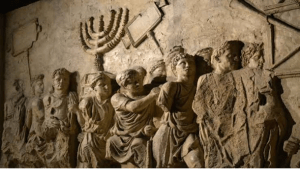
Preterism has certainly developed a following among evangelicals. Unfortunately, a cult-like version of historic preterism is turning off some people to the proper preterist exegesis of certain passages. Hyperi-preterism is developing a cult following, though thankfully is still small. I therefore would like to recommend some helpful orthodox works that my reader might appreciate and find helpful in their own studies. The more important academic works are marked with an asterisk (*)
Adams, Jay E. Preterism: Orthodox or Unorthodox? Stanley, N.C.: Timeless Texts, 2003.
Adams, Jay E. The Time Is At Hand. Nutley, N.J. Presbyterian and Reformed, 1966.
Bahnsen, Greg L. and Kenneth L. Gentry, Jr., House Divided: The Break-up of Dispensational Theology. 2d. ed.: Tyler, Tex.: Institute for Christian Economics, 1997.
Ball, Larry E. Blessed Is He Who Reads: A Primer on the Book of Revelation. Chesnee, S.C.: Victorious Hope, 2022.
*Brown, Jeannine K. The Disciples in Narrative Perspective: The Portrayal and Function of the Matthean Disciples. Boston: Brill, 2002.
*Brown, Jeannine K. Matthew (Teach the Text). Grand Rapids: Baker, 2015.
*Brown, Jeannine K. and Kyle Roberts. Matthew (THNTC). Grand Rapids: Eerdmans, 2018.
THE APOCALYPSE OF JOHN
by Milton S. Terry
This book is Terry’s preterist commentary on the Book of Revelation. It was originally the last half of his much larger work, Biblical Apocalyptics. It is deeply-exegetical, tightly-argued, and clearly-presented.
For more study materials: https://www.kennethgentry.com/
Chilton, David. The Days of Vengeance: An Exposition of the Book of Revelation. Fort Worth: Dominion, 1987.
Eberle, Harold R. The Comings of Christ: Why I am a Partial Preterist Not a Full Preterist. 3d. Ed.: Yakima, Wash.: Worldcast, 2022.
Fowler, Harold. The Gospel of Matthew. Jooplin, Mo.: College Press, 1972.
*France, R. T. Luke (TTC). Grand Rapids: Baker, 2013.
*France, R. T. The Gospel of Mark (NIGTC). Grand Rapids: Eerdmans, 2002.
*France, R. T. The Gospel of Matthew (NICNT). Grand Rapids: Eerdmans, 2007.
*France, R. T. The Gospel according to Matthew. Grand Rapids: Eerdmans, 1987.
*France, R. T. Mark (PBC). Oxford: Bible Reading Fellowship, 1996.
BEFORE JERUSALEM FELL
Doctoral dissertation defending a pre-AD 70 date for Revelation’s writing (459 pp; paperback). Thoroughly covers internal evidence from Revelation, external evidence from history, and objections to the early date by scholars.
For more study materials: https://www.kennethgentry.com/
*Garland, David E. Reading Matthew: Literary and Theological Commentary on the First Gospel. New York: Crossroad, 1992.
*Garland, David E. A Theology of Mark’s Gospel: Biblical Theology of the New Testament. Grand Rapids: Zondervan Academic, 2015.
Gentry, Kenneth L., Jr., The Beast of Revelation. Chesnee, S.C.: Victorious Hope, 2002.
*Gentry, Kenneth L., Jr. Before Jerusalem Fell: Dating the Book of Revelation. 3d ed.: Fountain Inn, S.C.: Victorious Hope, 2010.
Gentry, Kenneth L., Jr. The Book of Revelation Made Easy. Powder Springs, Geo.: American Vision, 2008.
*Gentry, Kenneth L., Jr., The Divorce of Israel: Redemptive-Historical Interpretation of Revelation. Acworth, Geo.: Tolle Lege with The Chalcedon Foundation, 2024.
Gentry, Kenneth L., Jr. Have We Missed the Second Coming? Critique of the Hyper-Preterist Error. Chesnee, SC: Victorious Hope, 2016.
Gentry, Kenneth L., Jr. He Shall Have Dominion: A Postmillennial Eschatology. 3d. ed.: Chesnee, SC: Victorious Hope, 2009.
Gentry, Kenneth L., Jr. Navigating the Book of Revelation: Special Studies on Important Issues. 2d. Ed.: Fountain Inn, S.C.: GoodBirth Ministries, 2010.
Gentry, Kenneth L., Jr. The Olivet Discourse Made Easy. Chesnee, SC: Victorious Hope, 2010.
Gentry, Kenneth L., Jr. Perilous Times: A Study in Eschatological Evil. Chesnee, S.C.: Victorious Hope, 1999.
The Divorce of Israel: A Redemptive-Historical Interpretation of Revelation
This commentary is an 1800 page, two-volume deeply exegetical, academic commentary on the Bible’s most mysterious book. It takes an orthodox preterist approach, giving serious attention to the details of John’s many visions.
Click: The Divorce of Israel
See more study materials at: www.KennethGentry.com
*Gibbs, Jeffrey A. Jerusalem and Parousia: Jesus’ Eschatological Discourse in Matthew’s Gospel. St. Louis: Concordia Academic Press, 2000.
*Gibbs, Jeffrey A. Matthew 21:1-28:20 (Concordia Commentary). St. Louis: Concordia, 2018.
Gregg, Steve. Why Not Full-Preterism: A Partial-Preterist Response to a Novel Theological Innovation. Maitland, Fla.: Xulon, 2022.
Grotius, Hugo. The Sign of His Coming: A Preterist Commentary on the Mount Olivet Discourse. Ed. By Kenneth L. Gentry, Jr., and Jay Rogers. Clermont, Fla.: Media House Int’l, 2016.
*Kelly, Douglas. Revelation. Cornwall, Eng.: Mentor, 2012.
*Kik, J. Marcellus. An Eschatology of Victory. Nutley, N. J.: Presbyterian and Reformed, 1971.
Kimball, William R. What the Bible Says about the Great Tribulation: Future or Fulfilled? Grand Rapids: Baker, 1983.
*Letham, Robert. Systematic Theology. Wheaton, Ill.: Crossway, 2019.
Mathison, Keith A. Postmillennialism: An Eschatology of Hope. Phillipsburg, N.J.: Presbyterian and Reformed, 1999.
*Mathison, Keith A. When Shall These Things Be?: Reformed Response to Hyper-Preterism. Phillipsburg, N.J.: P & R, 2004.
Four Views on the Book of Revelation
(ed. by Marvin Pate)
Helpful presentation of four approaches to Revelation. Ken Gentry writes the chapter on the preterist approach to Revelation, which provides a 50 page survey of Revelation .
See more study materials at: www.KennethGentry.com
Menn, Jonathan. Biblical Eschatology 2d. Ed.: Eugene, Ore.: Resource, 2018.
Orr, Brian J. The Olivet Discourse: A Preterist Reading. n.p.: Kingdom Press, 2024.
*Quarles, Charles L. Matthew (EBTC). Bellinghom, Wash.: Lexham Academic, 2022.
*Quarles, Charles L. Matthew: Exegetical Guide to the Greek New Testament. Nashville: B & H Academic, 2017.
*Reymond, Robert L. A New Systematic Theology of the Christian Faith. Nashville: Thomas Nelson, 1998.
*Rogers, Jay. In the Days of These Kings: The Book of Daniel in Preterist Perspective. Clermont, Fla.: Media House, 2019.
Rogers, Jay. The Prophecy of Daniel in Preterist Perspective: The Easy Parts and the Hard Parts. Clermont, Fla.: Media House Int’l, 2021.
*Sproul, R. C. The Last Days according to Jesus: When Did Jesus Say He Would Return? Grand Rapids: Baker, 1998.
Sproul, R. C. Matthew: An Expositional Commentary. Orlando, Fla.: Reformation Trust, 2019.
*Stein, Robert H. Jesus, the Temple and the Coming Son of Man. Downers Grove, Ill.: IVP Academic, 2014.
Storms, Sam. Kingdom Come: The Amillennial Alternative. Ross-shire, Scotland: Mentor, 2013.
*Terry, Milton S. The Apocalypse of John: A Preterist Commentary on the Book of Revelation. Ed. by Kenneth L. Gentry, Jr. and Jay Rogers. Chesnee, S.C.: Victorious Hope, 2021.
*Wilson, Alistair I. When Will These Things Happen? A Study of Jesus as Judge in Matthew 21-26. Eugene, Ore.: Wipf & Stock, 2004.
Wilson, Douglas. When the Man Comes Around: A Commentary on the Book of Revelation. Moscow, Ida.: Canon, 2019.
August 4, 2026
THE MAN IN GLORY
PMW 2026-059 by Jason Bradfield

Gentry note: The following article in the transcript of an insightful sermon presented by Jason Bradfield at the Reformed Presbyterian Church General Assembly’s annual assembly. Jason is acting President at Whitefield Theological Seminary.
The Man in Glory
The Continuing Incarnation of Christ and the Redemption of Creation
I. The Forgotten Hinge
Our Lord’s whole life comes to us in the Creed as a string of verbs, and you have said them a thousand times. Conceived, born, suffered, crucified, dead, buried. Descended, rose, ascended, seated. Then the Creed turns and looks forward. He shall come. He shall judge.
Nine verbs lie behind us, and the whole story leans on the last of them before it can reach the future at all.
He ascended into heaven.
Strike that line out and the narrative dies at the mouth of the empty tomb, because a resurrection without an ascension leaves the story without an ending. The tomb is empty, but the throne is vacant. There is no enthronement, no intercession, no return. And without the ascension, the resurrection is unfinished. Gerrit Dawson is right that the resurrection needs the ascension to finish it.
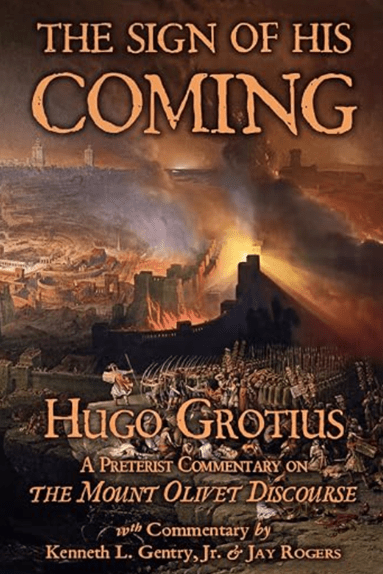
THE SIGN OF HIS COMING: A Preterist Commentary on the Mount Olivet Discourse
Newly translated from the Latin, edited by Kenneth Gentry and Jay Rogers
This groundbreaking volume presents the first English translation of Grotius’ Latin commentary on the Olivet Discourse – Matthew 24-25 and the parallel passages of Mark 13, Luke 17 and 21. This allows modern English readers to encounter firsthand one of the great intellectual architects of early Protestant biblical interpretation.
What makes Grotius unique is not simply that he connected Jesus’ prophecy to the destruction of Jerusalem in AD 70. Many readers already know that argument. What makes this work extraordinary is the depth of historical insight behind it. Grotius combines mastery of Scripture, Roman history, Jewish sources, geography, classical literature, philology, and prophetic typology in a way few modern commentators can rival. Long before contemporary prophecy debates.
For more information on this new Grotius translation, or to order it, see:
https://www.kennethgentry.com/the-sign-of-his-coming-a-preterist-commentary-on-the-mount-olivet-discourse/
And here is the trouble with us. The ascension is the doctrine we confess on the Lord’s Day and misplace by Tuesday. We say it in the Creed and then let it quietly evaporate, and when a doctrine evaporates, the imagination does not leave the space empty.
C. S. Lewis put his finger on the thing we do in his book Miracles. “We also, in our heart of hearts, tend to slur over the risen manhood of Jesus, to conceive Him, after death, simply returning into Deity, so that the Resurrection would be no more than the reversal or undoing of the Incarnation.”
Beloved, that is not a harmless picture. It is the seed of every Christology that ever rotted, and it fuels a number of heretical ideas, not least full preterism, which we will come to later. So let me say plainly where we are going, and then let Paul prove it.
The Son of God did not rent our humanity for thirty-three years and hand it back. He took it, and he has it still. At this hour, on the throne of heaven, he is bone of our bone and flesh of our flesh. And because he is still a man, the world he made still has a future.
His humanity and the redemption of creation are tied in one knot. Pull on either rope and the whole thing comes loose. Lose the continuing incarnation and you lose the redemption of creation, and the man who keeps only half of Christ has kept the half that cannot save him.
Half a Christ saves no one.
That said, please open your Bibles to Colossians 1.
II. Reading the Hymn
Hear the word of God, Colossians 1, verses 15 through 20.
He is the image of the invisible God, the firstborn of all creation. For by him all things were created, in heaven and on earth, visible and invisible, whether thrones or dominions or rulers or authorities. All things were created through him and for him. And he is before all things, and in him all things hold together. And he is the head of the body, the church. He is the beginning, the firstborn from the dead, that in everything he might be preeminent. For in him all the fullness of God was pleased to dwell, and through him to reconcile to himself all things, whether on earth or in heaven, making peace by the blood of his cross.
The Beast of Revelation
By Ken Gentry
A popularly written antidote to dispensational sensationalism and newspaper exegesis. Convincing biblical and historical evidence showing that the Beast was the Roman Emperor Nero Caesar, the first civil persecutor of the Church. The second half of the book shows Revelation’s date of writing, proving its composition as prior to the Fall of Jerusalem in A.D. 70. A thought-provoking treatment of a fascinating and confusing topic.
For more study materials, go to: KennethGentry.com
This section we just read is as concentrated as Paul ever gets, and we will not spend our entire time here, but I want to build from this text outward, because everything I have to say tonight is rooted in what Paul says in these six verses. Once you see how he built it, you cannot unsee it.
There are two movements here:
The first runs through verse 17 and concerns the old creation.The second runs from verse 18 to verse 20 and concerns the new.And Paul has bolted the two together with a single word, set at the head of each.
Verse 15, firstborn of all creation.Verse 18, firstborn from the dead.One Son, firstborn in both worlds. That is the hinge of the passage, and it is the hinge of everything I have to say tonight.Look at the title first. He is the image of the invisible God. The God no eye can see has made himself seen, and the place he chose to be seen is a man. Paul does not say the Son is rather like God. He says he is the image, and the rest of the chapter will not let us drain that into metaphor. The image is the man Christ Jesus. Now, keep that close by, because when the full preterist tells you the embodiment was a passing phase, Paul has already answered him in the first clause.
Then comes the phrase the cults have always loved. Firstborn of all creation. Arius read it as first created thing, and the man at your door with the magazine reads it the same way, as though Paul had signed the Son up as creature number one. The next word kills that reading dead. Verse 16 opens with one small word, “because.”
Why is he firstborn over all creation? Because by him all things were created.
You do not prove a man is a creature by saying that everything was made in him. The word translated “firstborn” is not telling you when he was born. It is telling you who is heir. It is the language of Psalm 89:27, where God says of David, “I will make him the firstborn, the highest of the kings of the earth.” David was not the first baby born in Israel. He was the son with the rights, the rank, the inheritance. So with Christ. He is firstborn over creation as its Lord, not firstborn inside it as its oldest item.
Then Paul stacks three little prepositions: All things were created in him, and through him, and for him. He is the one in whom creation was conceived, the agent through whom it was made, and the goal toward which all of it moves. Creation is not a machine the Son was later assigned to manage. It was built with him in view from the first line of Genesis.
And watch how wide he throws the net. Things in heaven and on earth, visible and invisible, thrones, dominions, rulers, authorities. He is naming the very spirit-powers the false teachers were busy flattering, and he stamps every last one of them with one word. Created.
Reformed Eschatology in the Writings of Geerhardus Vos
Ed. by Ken Gentry and Bill Boney
This is a collection of several key eschatological studies by the renowned Reformed theologian Geehardus Vos. We have modernized Vos’ grammar and syntax and updated his layout style according to modern publishing conventions (shorter sentences and paragraphs). We did this without changing any of Vos’ arguments.
For more information on this new Vos work or to order it, see:
https://www.kennethgentry.com/reformed-eschatology-in-the-writings-of-geerhardus-vos/
James Ware offers us a help right here. Paul’s world, and ours, wants to file reality in two drawers, spirit on the top and matter on the bottom, the unseen prized and the seen despised. And if that is your filing system, then the thrones and dominions float up toward God while the dirt sinks down toward worthlessness.
Well Paul throws the whole cabinet out.
His one great line does not run between spirit and matter. It runs between Creator and creature, and every contrast in the verse, heaven and earth, seen and unseen, throne and footstool, lands on the creature side of it. Only the Son stands on the far side, with God.1
That is what makes the phrase “all things” so large. It is the whole of everything that is not God, the seen and the unseen together. Paul is not surveying a county. He is surveying the cosmos.
So, remember the width of that phrase, because in four verses he is going to reach for it again to measure redemption, and the two measurements have to match.
Verse 17 keeps him in the present tense. He is before all things, and in him all things hold together. And note the verb Paul chose, for it keeps right on working. The cosmos does not merely owe him its birth certificate. It is being held in one piece by him at this very second. Every orbit, every atom, every law that keeps the universe from coming apart at the seams is his ongoing labor. And here is what should stop your breath. The hand that holds the galaxies in place is a pierced hand, because three verses on, this same Son is the one making peace by the blood of his cross. The one in whom all things cohere has a body.
Now the hinge turns. Verse 18. He is the head of the body, the church. He is the beginning, the firstborn from the dead. Now we have crossed out of the first creation and into the second, and Paul reaches for the same title he used at the top. As he was firstborn over the old world, he is firstborn of the new, the head of a new race of men, the first man out of the grave who never has to go back into it. And you cannot turn firstborn from the dead into a figure of speech either.
That is resurrection, and resurrection in Paul means a body or it means nothing. The firstborn from the dead walked out of the tomb in the body that was carried in, changed but continuous, and he took that body up into the heavens. In everything he might be preeminent, Paul says. First in creation, first out of the grave, first in the church, first, full stop.
And then the last two verses give the reason and the goal. In him all the fullness of God was pleased to dwell. Turn the page and Paul says it again and in the present tense. In him the whole fullness of deity dwells bodily (Col 2:9). Note that the present tense is clear: dwells, not dwelt.
The Book of Revelation Made Easy (by Ken Gentry)
Helpful introduction to Revelation presenting keys for interpreting. Also provides studies of basic issues in Revelation’s story-line.|
See more study materials at: www.KennethGentry.com
Now, I am not unaware that various men have understand this differently. The word translated bodily has been read various ways. Calvin took it to mean essentially or substantially, pointing to the fullness and reality of the divine presence in Christ over against the partial, figural manifestations of the old covenant.
Beza, however, read it as anchoring the two natures in one embodied mediator, the second Adam who is both truly human and truly divine, the fullness of deity dwelling in real flesh.
The Heidelberg Catechism cites this very verse as proof that the Godhead, though beyond the bounds of the manhood, remains personally united to it.
And the Westminster Larger Catechism, question 36, cites Colossians 2:9 alongside Hebrews 7:24-25 as proof that Christ “continues to be God and man, in two entire distinct natures, and one person, for ever.” Continues. The Westminster divines read this verse as a text about the permanent, ongoing two-natured person of Christ, which is the continuing incarnation in confessional form.
I believe that is the reading the flow of the passage itself supports, but we can dive into those details some other time.
The main thing is this: The fullness of deity is permanently and completely at home in Christ, in a body, on the throne.
And the goal, verse 20. Through him to reconcile to himself all things, whether on earth or in heaven, making peace by the blood of his cross. There is that phrase, all things, a second time. The same all things made in him are the all things reconciled through him, the whole created order brought back under his lordship…not every person saved without exception…but the cosmos itself redeemed from its bondage.
Redemption is cut to the exact measure of creation. And the instrument is as physical as a wooden beam and a man’s blood. Paul simply will not let redemption drift loose from the body any more than he will let creation drift loose from the Creator.

As It Is Written: The Genesis Account Literal or Literary?
Book by Ken Gentry
Presents the exegetical evidence for Six-day Creation and against the Framework Hypothesis. Strong presentation and rebuttal to the Framework Hypothesis, while demonstrating and defending the Six-day Creation interpretation.
See more study materials at: www.KennethGentry.com
So hear the whole argument before we leave the text: The maker of the world became flesh. He died in that flesh and rose in that flesh, and as the embodied firstborn from the dead he reconciles the whole created order.
With that in place, now you can do a little experiment that exposes a counterfeit gospel every time. Reach into this passage and pull the standing humanity of Christ out of it, and watch what falls.
There is no firstborn from the dead, because a ghost was never in a tomb.There is no blood of the cross with any lasting power, because the one who shed it has thrown away the nature that bled.There is no cosmos reconciled, because the Reconciler has walked out on half of what he came to mend.Take the flesh out of Colossians 1 and the entire hymn falls apart. Paul’s Christ is embodied, permanently, gloriously, with no expiration date.Paul has established two columns: the continuing incarnation of the Son, and the redemption of the creation he made and keeps. Now let’s follow each in turn.
III. The Incarnation That Does Not End
If the Son peeled off his humanity somewhere past the clouds, then whoever is sitting on that throne is not the carpenter the disciples touched and ate fish with and watched rise into the air. He is the eternal Son who paid humanity a visit and has since moved on….
To finish this article, click on: https://www.reformation.blog/p/the-man-in-glory
To subscribe to Bradfield’s The Reformed Ember Lounge (which I highly recommend), click on:
https://www.reformation.blog/subscribe?simple=true&next=https%3A%2F%2Fwww.reformation.blog%2Fp%2Fthe-man-in-glory
July 31, 2026
HAVE TONGUES CEASED? A REFORMED ANSWER
PMW 2026-058 by Anthony Faggiano
Gentry note:
This is an excellent article explaining the cessation of tongues in the first century. The following material is all written by Anthony Faggiano, an elder in a United Reformed Church congregation.
Have Tongues Ceased?
When I first became a Christian, I found myself caught between two worlds at my workplace. On one side were solid evangelical believers who nurtured my early faith with Scripture and sound doctrine. On the other was a small but vocal group of charismatic Pentecostals who handed me cassette tapes by Benny Hinn and Kenneth Copeland, insisting that their practice of speaking in tongues was the essential evidence of the Holy Spirit’s work.
What troubled me the most was their warning: if I rejected what these “faith teachers” were doing, I risked committing the unpardonable sin, blasphemy against the Holy Spirit. As a young believer, I faced a question that felt dreadfully urgent: was the gift of speaking in tongues still given to the church today, or had it ceased with the apostles?
This article is especially for those coming out of the charismatic movement and exploring Reformed theology. The answer I found in Scripture transformed not just my theology, but my peace in Christ.
Tongues-speaking: Meaning, Purpose, and Cessation
 by Ken Gentry
The position presented within is that tongues-speaking allowed the gift person to speak in a known human language without previously knowing it; tongues brought inspired revelation from God; the gift was a sign confirming the apostolic witness and warning of the coming destruction of Jerusalem; and therefore the gift ceased in the first century.
See more study materials at: www.KennethGentry.com
Acts records the day of Pentecost like this:
“Suddenly there came from heaven a sound like a mighty rushing wind, and it filled the entire house where they were sitting. And divided tongues as of fire appeared to them and rested on each one of them. And they were all filled with the Holy Spirit and began to speak in other tongues as the Spirit gave them utterance” (Acts 2:2–4).
The visitors to Jerusalem each heard the apostles speaking and asked: “How is it that we hear, each of us in his own native language?” (Acts 2:8). The miracle is called xenoglossy1: real human languages, supernaturally given to Galileans who had never learned them.
The gift of speaking in tongues, as the New Testament describes it, has ceased. That isn’t a novel claim. It belongs to the Westminster Standards and the Three Forms of Unity, to John Calvin, Francis Turretin, Herman Bavinck, Louis Berkhof, and R. C. Sproul, and to the major cessationist works: B. B. Warfield’s Counterfeit Miracles, John Owen’s Pneumatologia, and Richard B. Gaffin Jr.’s Perspectives on Pentecost. The Reformed witness on this point is consistent across the tradition.
Perspectives on Pentecost (Richard Gaffin)
A careful examination of the New Testament teaching on the gifts of the Spirit. Makes a case for the cessation of tongues at the close of the apostolic era. Gaffin is professor emeritus of biblical and systematic theology at Westminster Theological Seminary, Philadelphia.
See more study materials at: www.KennethGentry.com
Pentecost and the Miracle of Real Languages
Calvin frames the Acts 2 miracle:
“The disciples spoke indeed with strange tongues; otherwise the miracle had not been wrought in them, but in the hearers.”2
The function of speaking in tongues was redemptive-historical. Pentecost reversed Babel. At Babel, God scattered languages to restrain human sin (Genesis 11:7–9). At Pentecost, God redeemed tongues to deliver the gospel to every nation under heaven. The same Spirit who baffled the builders now brings Jews and Gentiles together by the gospel. With that founding complete, the need for the gift of tongues ended.
Paul at Corinth: The Gift Tested and Tamed
By the time Paul wrote 1 Corinthians, the gift had come to a congregation that mishandled it. He ranks tongues at the bottom of the gift list (1 Corinthians 12:28), requires interpretation for public use on pain of silence (1 Corinthians 14:27–28). Paul even framed the gift’s covenantal function as a sign of judgment on unbelieving Israel, citing Isaiah 28:11–12 (1 Corinthians 14:21–22).
Charles Hodge identifies four marks of the biblical gift:
“It is clear, 1. That the word tongues in this connection means languages. 2. That the speaker with tongues was in a state of calm self-control. 3. That what he said was intelligible to himself, and could be interpreted to others. 4. That the unintelligibleness of what was said, arose not from the sounds uttered being inarticulate, but from the ignorance of the hearer.”3
Paul himself sets an expiration date. In 1 Corinthians 13:8 he predicts the gift’s termination:
“Love never ends. As for prophecies, they will pass away; as for tongues, they will cease; as for knowledge, it will pass away” (1 Corinthians 13:8).
A continuationist will reply that “when the perfect comes” (v. 10) is Christ’s return, so tongues continue until then. Reformed exegetes read “the perfect” two ways: some as the Parousia (Second Coming), others as the closing of the canon.4 The cessation case stands either way.
Theological Analysis of Tongues
(6 mp3 sermons by Ken Gentry)
This six part sermon series covers the key issues for understanding tongues-speaking
as intended by Scripture.
Very helpful even for eschatology, given tongues-speaking serving as
a sign of covenant curse upon Israel.
See more study materials at: www.KennethGentry.com
Paul tells us in Ephesians 2:19–20 that the apostles and prophets are the foundation of the church, with Christ as the cornerstone. A foundation is laid only once. The revelatory and credentialing gifts (gifts that authenticated the apostles as God’s messengers) were given to lay that foundation. These included prophecy, tongues, and knowledge in the apostolic sense.
A continuationist might object that non-apostles also spoke in tongues, at Pentecost, in Cornelius’s household, at Ephesus, and in Corinth. Each instance happens within the apostolic age, under apostolic ministry (Acts 8:17, 19:6) or at a redemptive-historical milestone authenticating the apostolic mission (Acts 2, 10).
Once the foundation was laid and the canon closed, the gifts had served their purpose. The Reformation Study Bible note on 1 Corinthians 13:8 reads it this way:
“The revelatory function of the apostles and prophets…was a foundation-laying activity like Christ’s ministry, death, and resurrection. Thus, as with Christ, when the foundation-laying activity is accomplished, the activity is so unique that it ceases.”5
Calvin agrees:
“Hence love must be preferred before temporary and perishable gifts. Prophesyings have an end, tongues fail, knowledge ceases.”6
The Cessationist Case in Five Points
1. A Credentialing Gift, Not an Ordinary One
The gift was a credentialing gift (tongues, prophecy, apostolic miracles), not an ordinary one (teaching, mercy, hospitality). Hebrews 2:3–4 frames the apostolic miracles as God’s witness to “such a great salvation,” and 2 Corinthians 12:12 names “the signs of an apostle” as a distinct mark of a definite class. With the apostolic deposit completed and inscripturated, that function is fulfilled. No one today can claim the office of apostle.
2. The Foundation Has Been Laid
Ephesians 2:20 places the apostles and prophets at the foundation of the church. A foundation is laid once. What rises on it is the building, not another foundation.
The Divorce of Israel: A Redemptive-Historical Interpretation of Revelation
This commentary is an 1800 page, two-volume deeply exegetical, academic commentary on the Bible’s most mysterious book. It takes an orthodox preterist approach, giving serious attention to the details of John’s many visions.
Click: The Divorce of Israel
See more study materials at: www.KennethGentry.com
3. The Canon Is Closed
Jude 3 speaks of “the faith that was once for all delivered to the saints.” Hebrews 1:1–2 contrasts the former prophetic mode of revelation with God’s final speech in his Son.
After the Book of Revelation was complete, any prophecy or speaking in tongues offered as new revelation would, by definition, add to a closed canon (Revelation 22:18). The Westminster divines stated this directly: “those former ways of God’s revealing his will unto his people being now ceased” (WCF 1.1).
4. The Covenantal Sign-Function Has Been Fulfilled
Tongues were a sign of judgment to unbelieving Israel for refusing the prophetic word (1 Corinthians 14:21–22, citing Isaiah 28). With the destruction of Jerusalem (A.D. 70), the sign-function exhausted itself. The gospel had irrevocably gone to the Gentiles.
5. Paul Predicted the Cessation
Calvin, Hodge, and the broader Reformed tradition read 1 Corinthians 13:8 as predictive of the gift’s natural termination once it had served its purpose.
When the Gift Ceased
To complete reading the full article along with footnotes, please go to:
https://reformeddogmatika.com/cessationism-tongues-ceased/
[image error]For more information and to order click here.
" data-image-caption="" data-large-file="https://i0.wp.com/postmillennialworld..." class="alignright wp-image-495" src="https://postmillennialismtoday.files...." alt="" width="86" height="133" />God Gave Wine (by Ken Gentry)
A biblical defense of moderate alcohol consumption. Considers all key biblical passages and engages the leading objections.
See more study materials at: www.KennethGentry.com
July 28, 2026
OLIVET’S TWO QUESTIONS (2)
PMW 2026-057 by Kenneth L. Gentry, Jr.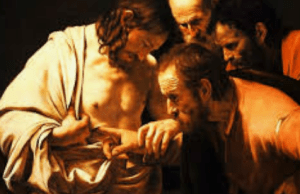
I am continuing my presentation of the evidence that the Disciples of Christ ask him two questions in Matthew 24:3, not three questions. See preceding posting.
Eighth, disciples’ confusion tendencies. In their question the disciples confound two separate issues. In their interaction with Jesus in Matthew 24:1–3, their tendency to confusion leads them to associate the destruction of the temple with “your parousia and the end of the age.” And this despite the fact that they had already heard from the Lord that “the end of the age” was the end of time brought about with the final judgment (Matt. 13:39, 40, 49). Of course, the implied reader would also know of Jesus’ soon-coming great commission reaching to “the end of the age” (Matt. 28:20). And the disciples’ confusion on this matter becomes even more evident to us in that Jesus’ prophetic statement (which gives rise to the disciples’ question) focuses solely on the temple’s destruction.
As Donald Hagner (Matthew) explains, the two parts of their question asked in the same breath shows they “could not disassociate the destruction of the temple from the end of the age.” That is, “the disciples …. were unable to separate the two events in their minds: the destruction of Jerusalem must entail the end of the age and the parousia of Jesus, inaugurating the eschaton.”
God’s Law Made Eas y
y
(by Kenneth Gentry)
Summary for the case for the continuing relevance of God’s Law. A helpful summary of the argument from Greg L. Bahnsen’s Theonomy in Christian Ethics.
See more study materials at: www.KennethGentry.com
We know from the Gospel records that the disciples are frequently confused. For instance, the disciples are even confused about Jesus’ approaching death — despite his having clearly informed them of his looming death and resurrection several times before they occur (Matt. 16:21; 17:22–23; 20:7–19; 28:6a; Mark 8:31–32; 9:9–10, 30–32; 10:32–34; Luke 9:21–22, 43–45; 18:31–34; 24:6–7; John 12:7–8; 14:27–29). In fact, to show the enormity of their confusion, on one of those occasions after he mentions his coming death (Mark 8:31), we read: “He was stating the matter plainly. And Peter took Him aside and began to rebuke Him. But turning around and seeing His disciples, He rebuked Peter and said, ‘Get behind Me, Satan’” (Mark 8:32–33). And they so missed what he meant that when he was resurrected they were surprised (John 20:3–9; cp. Luke 24:36–40).
Indeed, Gibbs notes that in Matthew’s Gospel, when the disciples approach Jesus with a question, only on one occasion is the question reasonable: in 26:17 when they ask where they are to prepare the Passover meal. But in every other instance they show their ignorance (13:10, 36), flawed thinking (14:15; 15:12, 23; 18:1, 21; 20:20), or lack of faith (8:25; 17:19).
And in light of the Lord’s recent judgmental cleansing of the temple (21:12–13), cursing of the fig tree representative of Israel (21:18–22), debating the officers of the temple (21:23–27), parabolically denouncing the temple overseers (21:33–45), lamenting over Jerusalem (23:37), and declaring the temple “desolate” (23:38), why would the disciples approach their Master “to point out the temple buildings to Him” (24:1), declaring “behold what wonderful stones and what wonderful buildings” (Mark 13:1)? As Osborne (Matthew) argues: “impending judgment has been the dominant theme since the symbolic actions of the cleansing of the temple and cursing of the fig tree in 21;12–22. This theme culminates in the Olivet Discourse.” Yet the disciples do not anticipate this at all.
So, here in Matthew 24:3, after the Lord declared the temple’s approaching destruction, the disciples questions bring up two issues Jesus was not even talking about. They simply assumed that “when” the temple was destroyed this necessarily required that it occur at “your parousia and the end of the age,” i.e., the end of time. Consequently, in answering their confused inquiry Jesus begins by warning them: “See to it that no one misleads you” (24:4). Then he reissues this warning a little later when he urges them not to believe reports that he is present at any particular place (24:25–26).
Greatness of the Great Commission (by Ken Gentry)
An insightful analysis of the full implications of the great commission as given in Matthew 28:18-20. Impacts postmillennialism as well as the whole Christian worldview.
See more study materials at: www.KennethGentry.com
Regarding a narrative critical analysis of this interaction, “both the record of the disciples’ mistaken point of view throughout the story [of Matthew] and Jesus’ opening response [warning against being misled, 24:4] alert the implied reader to reject the disciples’ joining together of the predicted ruin of the temple and the consummation of the age.” (Gibbs, Jerusalem and Parousia). The bipartite structure of the Discourse (see fifth and sixth points above) supports this narrative critical concern.
And the warning against being deceived does not just occur in this one, opening statement. Jesus will shortly warn that many will fall away as false prophets arise to mislead them (Matt. 24:10–12). Then he later warns that such deceptive false Christs and fall prophets would be so persuasive they could almost mislead, “if possible, even the elect” (v. 24). But, thankfully, “I have told you in advance,” says the Lord (v. 25).
Ninth, the disciples’ apocalyptic outlook. The disciples’ social context and religious outlook had been fed by apocalyptic expectations since childhood. As Calvin states: “since they had considered from childhood that the temple would stand to the end of time … they had not thought that the temple could fall down as so long as the world created order stood” (Matthew). The apocalyptic prophecies expected the end of the temporal order and the final establishment of the messianic-nationalistic kingdom. From 200 BC to AD 100 the great mass of popular Jewish apocalyptic literature was produced. As France (Matthew) comments regarding “the end of the age”: “The ‘end of the age’ … is a familiar Jewish expression for the crisis which was expected to bring the present world order to a close and to inaugurate the ‘age to come’…. Here its specific concern is with the judgment that concludes the present age and determines people’s status for the age to come.”
Have We Missed the Second Coming: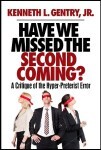
A Critique of the Hyper-preterist Error
by Ken Gentry
This book offers a brief introduction, summary, and critique of Hyper-preterism. Don’t let your church and Christian friends be blindfolded to this new error. To be forewarned is to be forearmed.
For more Christian educational materials: www.KennethGentry.com
As Hebraist John Lightfoot explains regarding Matthew 24:3: “See here the doctrine of the Jews concerning the Messiah…. From hence we easily understand the meaning of this question of the disciples …. When he will come in the evidence and demonstration of the Messiah, raising up the dead, and ending this work and introducing a new; as they had been taught in their schools concerning his coming.” Osborne speaks of the disciples’ confusion about Jesus’ prophecy of the temple’s destruction: “The disciples … are most likely thinking of the expected moment when Jesus will become conquering Messiah…. They do link this with the final ‘consummation of the age.”
We see the influence of apocalyptic hopes exposed in several New Testament passages. For instance, after he miraculously fed the 5000 we read: “Jesus, perceiving that they were intending to come and take Him by force to make Him king, withdrew again to the mountain by Himself alone” (John 6:15). As D. A. Carson (John) notes: “they had witnessed or heard of Jesus’ miracles of healing, and they had been fed from food provided by his miraculous power. Surely nothing could prevent such a person from being the powerful liberator that so many children of Israel longed for.” Klink (John) agrees: “Although the crowd was correct in what they declared (unknowingly) about Jesus, what they imported into that role and therefore onto Jesus became their error. For the crowd, Jesus as the Prophet was a warrior-king…. Therefore, they intended to make Jesus king so that he would lead Israel to political dominance over the world (i.e., Rome).”
He Shall Have Dominion
(paperback by Kenneth Gentry)
A classic, thorough explanation and defense of postmillennialism (600+ pages). Complete with several chapters answering specific objections.
See more study materials at: www.KennethGentry.com
Elsewhere when Jesus entered Jerusalem for his last Passover, we read that the crowds “spread their coats in the road, and others were cutting branches from the trees and spreading them in the road” (Matt. 21:8). “The spreading of garments and palm branches on the road marks the festive acknowledgment of Jesus’s kingship (cf 1 Kings 1:32–40; 2 Kings 9:13; 1 Macc. 5:45–54; 13:51; 2 Macc. 10:7)” (Turner, Matthew). Then they praise him by shouting out the last of the Hallel psalms: “Hosanna to the Son of David; / Blessed is He who comes in the name of the Lord; / Hosanna in the highest!” The last two stanzas are from Psalm 118:25–26, but the first stanza referencing the “Son of David” is added by the crowds. Osborne (Matthew) well comments: “This is the coronation procession of the royal Messiah. The people are calling out divine blessings on their expected deliverer, but they will be delivered by the suffering Servant rather than a conquering king.” Or as Hagner (Matthew) puts it, due to the approaching Passover (Matt. 26:19–30) “with the entry of the king into Jerusalem, eschatological salvation (conceived of in national-political terms) was about to be experienced.” Once again the crowds were moved with messianic-nationalistic fervor prompted in part by Jesus’ miraculous power, for he had just healed the two blind men (Matt. 20:30–34).
This apocalyptic hope for the sudden and glorious appearance of the Messianic kingdom was expected by those associated with Zaccheus whom Jesus befriended: “He was near Jerusalem, and they supposed that the kingdom of God was going to appear immediately” (Luke 19:11). Jesus had just declared “Today salvation has come to this house” (19:9) and he was headed to Jerusalem (19:11a). Thus, Garland (Luke) suggests that those present had realized “awakened traditional expectations about Jerusalem’s redemption (2:38). The audience may assume that God’s reign will take on an earthly manifestation after the manner of earthly kings and kingdoms.”
We even see this apocalyptic expectation among his closer disciples. The two Emmaus road disciples lamented Jesus’ death because they “were hoping that it was He who was going to redeem Israel” (Luke 24:21). Garland (Luke) surmises that “they probably understood [this] in terms of messianic liberation from Israel’s enemies ….. Their apocalyptic expectations embraced hopes for a national ‘ruler and deliverer’ (see Acts 7:35), and these false hopes have also blinded them.”
House Divided: The Break-up of Dispensational Theology By Greg Bahnsen and Ken Gentry
This book presents and defends Christian Reconstruction theology, particularly theonomic ethics and postmillennial eschatology. It does to by responding to dispensationalism’s social and exegetical theology.
For more educational materials: www. KennethGentry.com
In Mark 10:35–45 we are presented hope-filled apocalyptic pride overtaking two of Jesus’ closest disciples, James and John. In v. 37 they audaciously ask of Jesus: “Grant that we may sit, one on Your right and one on Your left, in Your glory.” They ask this as Jesus is on the way to the royal city of Jerusalem (v. 32) and as they were anticipating his kingly “glory” (v. 37). And underscoring (once again) their tendency to confusion, they ask this immediately after he says he is going to Jerusalem to be condemned to death (vv. 33–34)! And yet they expect “apocalyptic victory of the divine warrior” (Garland, Mark).
Just before his ascension we also see the yet unextinguished hope for national redemption by Jesus’ closest disciples: “Lord, is it at this time You are restoring the kingdom to Israel?” (Acts 1:6). The disciples’ expectations “will not be fulfilled in ways that the disciples might expect or prefer. The kingdom of God has noting to do with establishing Israel as a mighty kingdom that will rule the world with an iron fist as Rome does.” (Garland, Acts).
Tenth, the disciples’ temple expectation. The disciples appear to assume that the temple will stand to the end of time. We do not discern this simply on the basis of their architectural awe regarding the seeming impregnability of the temple’s massive stone structure (e.g., Mark 13:1–2). Philo commented regarding the temple: “that “the buildings of it are of most exceeding beauty and magnificence” (Spec. Laws 1:13). In the Letter of Aristeas (at 100–101) we read: “ It is situated on a lofty site, fortified with a number of towers, which in their turn are built of sizable stones right up to the top, according to our information, for the protection of the area around the Temple, so that, in case of any assault or revolt or enemy attack, no one could force his way into the precincts surrounding the house.”
In fact, Titus himself was amazed that he could overcome the temple’s massive fortifications, for Josephus records his words: “When Titus entered the city, he marveled at its fortifications and towers, which the tyrants had abandoned in their folly. Observing their immense height, the size of each stone, and the precision of their construction, he said: ‘We have fought with God on our side, and it was God who drove the Jews from these strongholds; for what can human hands or machines accomplish against such towers?’” (J.W. 6:9:1). Indeed, even today a portion of the massive foundation platform on which the temple stood still exists. The visible portion is 1600 feet long and 100 feet high. Most of its stones weigh between four and eight tons, though one of them, known as Wilson’s Arch, is forty feet long and weighs 570 tons. For the Jews, “the massive stones of the temple buildings … appeared to be built for eternity” (Luz, Matthew).
[image error]For more information and to order click here.
" data-image-caption="" data-large-file="https://i0.wp.com/postmillennialworld..." class="alignright wp-image-209" src="https://postmillennialismtoday.files...." alt="Navigating the Book of Revelation: Special Studies on Important Issues" width="90" height="136" />Navigating the Book of Revelation (by Ken Gentry)
Technical studies on key issues in Revelation, including the seven-sealed scroll, the cast out temple, Jewish persecution of Christianity, the Babylonian Harlot, and more.
See more study materials at: www.KennethGentry.com
However, rather than simply personal awe in viewing the temple, we can read of the Jewish expectation that the temple was destined by God to stand until the end of time. The Jewish philosopher Philo (d. AD 50) comments: “the temple will always be preserved, being coeval in their duration with the universal world” (Spec. Laws 1:14). In the later Sibylline Oracles 5:401 (ca. AD 100) we read of the destruction of the temple: “the ever-flourishing, watchful Temple of God / made by holy people and hoped / by their soul and body to be always imperishable.”
Therefore, the disciples wrongly assumed that the temple’s destruction must signal the end of history. And Jesus must correct their false apocalyptic assumptions by separating the two issues: (1) the temple’s destruction and (2) the parousia introducing the end of the age. What the disciples joined together, the Lord put asunder.
Closing note:
For bibliographic documentation for this and the preceding article, see Kenneth L. Gentry, Jr. and Jay Rogers, The Sign of His Coming: Hugo Grotius: A Preterist Commentary on the Mount Olivet Discourse.
July 24, 2026
OLIVET’S TWO QUESTIONS (1)
PMW 2026-056 by Kenneth L. Gentry, Jr. 
The Olivet Dscsourse is prompted by the Disciples questioning Jesus about his prophesying the destruction of the temple (Matt. 24:2–3). It is important to understand their questions in order to follow Jesus’ answer. I believe the evidence is clear that they ask only two questions, not three (as per John Walvoord and some others). The exegetical support for the two-question view is as follows.
First, lexical observation. Lexically the disciples’ questions present only two interrogatives, not three. They ask “when” (Gk., pote) and “what” (Gk., ti): “when [pote] will these things happen, and what [ti] will be the sign of Your coming, and of the end of the age?
Second, syntactical observation. Syntactically the two nouns parousia (“coming”) and sunteleia (“end”) are “linked as a single subject by the lack of a resumptive article before” the second noun (France, Matthew NICNT, 894). As Charles Quarles points out with more detail: “The use of the sg. art. noun semeion with two gen. modifiers parousias and sunteleias both sharing the same def. art. suggests the disciples assumed a single sign would announce both events and thus that the parousia and the end of the age would be concurrent” (Quarles, Matthew: Exegetical Guide). Dana and Mantey state that this is the Granville Sharp rule of the article, “where the copulative kai connects two nouns of the same case” so that when “the article … is not repeated before the second noun or participle … it denotes a farther description” of the first noun (A Manual Grammar of the Greek Testament).
 The Climax of the Book of Revelation (Rev 19-22)
Six lectures on six DVDs that introduce Revelation as a whole, then focuses on its glorious conclusion. Provides an important, lengthy Introduction to Revelation also.
See more study materials at: www.KennethGentry.com
Third, grammatical observation. Grammatically the second question is united by the fact that “the sign” (to semeion) is a singular noun that governs both “Your coming” (ho ses parousias) and “the end of the age” (sunteleias tou aionos) (Quarles, Matthew: Exegetical Guide).
Fourth, noun distinctions. The Discourse, as reported by Matthew, employs two different nouns for “end”: sunteleia (v. 3) and telos (vv. 6, 13, 14). This variation suggests two different ends are in view and that they are to be distinguished. Elsewhere Matthew’s Gospel reserves sunteleia for references to the consummation of all things (Matt. 13:39, 40, 49; 28:20). But in the Discourse telos (which has a wider semantic range) appears to refer to the end of something else. And in this context that “end” regards the temple (per Jesus’ prophecy, v. 2). Thus, Quarles states that “the expression ‘the end’ (to telos) is different from the expression ‘the end of the age’ (sunteleia tou aionos) in 24:3, and the two references must not be confused. Although the ‘end’ in 24:3 refers to the end of the current age and beginning of the eschatological kingdom, the ‘end’ here [in 24:6] refers to the destruction of Jerusalem and its temple” (Quarles, Matthew (EBTC). Thus, Brown and Roberts well note that “Matthew takes care to distinguish this temporal horizon (… telos) from ‘the end of the age’ (… sunteleia tou ainos; 24:3).” (J. K. Brown and Kyle Roberts, Matthew).
The Book of Revelation Made Easy
(by Ken Gentry)
Helpful introduction to Revelation presenting keys for interpreting. Also provides studies of basic issues in Revelation’s story-line.|
See more study materials at: www.KennethGentry.com
Fifth, transition indicator. Matthew records a distinct break in the Discourse that supports the two-question view. Matthew 24:36 (cp. Mark 13:32) has Jesus state: “But of that day and hour no one knows, not even the angels of heaven, nor the Son, but the Father alone.” As I note in my exposition of Matthew 24 elsewhere in this work, the grammatical structure of the new section suggests a change of subject as we see in the phrase introducing this new section: peri de (“but of” or “but concerning”). Indeed, France (and many others) insists verse 36 “marks a deliberate change of subject,” thereby transitioning from Jerusalem’s approaching temple judgment to the distant final judgment that AD 70 anticipates [France, Matthew, TNTC].
Sixth, content distinction. The content of the section before 24:36 is quite distinct from that which follows beginning at v. 37 ( Gibbs, Jerusalem and Parousia). Before verse 36 we read of historical precursor events leading to the destruction of the temple signifying its approaching end (e.g., 24:4–15, 24–25; cp. vv. 32–33). So, Jesus warns that these precursors to the siege of Jerusalem could be misconstrued as the end itself (cf. 24:8, 26). But with this statement at v. 36 Jesus surprises us with a declaration regarding “that day and hour” (i.e., “the end of the age,” v. 3): “But of that day and hour no one knows, not even the angels of heaven, nor the Son, but the Father alone.” Thus, the time of “the end of the age” is wholly unknown (e.g., 24:37–41, 42–44). If Jesus did not know when “that day and hour” was to come, when the end of the age was to come, how could he confidently declare that it was to occur in his very own “generation” (24:34)?
Covenantal Theonomy
(by Ken Gentry)
A defense of theonomic ethics against a leading Reformed critic. Engages many of the leading objections to theonomy.
See more study materials at: www.KennethGentry.com
Seventh, social circumstance distinction. The social circumstances of the early portion of the Olivet Discourse dramatically differ from those of the latter portion (Kik, An Eschatology of Victory). In the first section (up to Matt. 24:36) all is confused, chaotic, and catastrophic. This period is laden with wars and rumors of wars (vv. 6–7), famines and earthquakes (v. 7), betrayal and persecution (v. 10), false prophets (vv. 11, 24), lawlessness (v. 12), desolation (v. 15), fearful flight (v. 16), and great tribulation (v. 21). Thus, woe upon woe befalls men in the calamitous first portion of the Discourse.
But in the second section all of this upheaval and danger is absent. Social activities are tranquil, allowing business as usual while the commonplace activities of life continue. People are marrying and eating and drinking (Matt. 24:38), working in the field (v. 40), and grinding at the mill (v. 41). The wholesale chaos leading up to AD 70 (24:4–31) stands in stark contrast to the tranquil conditions at the time preceding Christ’s parousia and the end of the age (24:36–25:46).
There are other evidences to come. Check my next installment.
July 21, 2026
INAUGURATED ESCHATOLOGY IN PAUL
PMW 2026-055 by Thomas R. Schreiner

Gentry note:
The following few paragraphs are cited from: Thomas R. Schreiner, Magnifying God in Christ: A Summary of New Testament Theology (Grand Rapids: BakerAcademic, 2010), 28–30. This is a helpful work for students of the New Testament and eschatology.
Inaugurated Eschatology in Paul
The tension between inaugurated and consummated eschatology identified in the Synoptic Gospels, and in the Johannine literature also informs the remainder of the NT. Indeed, the prominence of the already – not yet in Paul confirms that eschatological tension was a characteristic feature of NT theology.
Jewish thought, distinguished between this age and the age to come. This age is marred by sin, disease, and death, whereas the age to come, brings life, abundance, enjoy (2 Esd. 2:36, 39; 4:27; 7:113; 9:18-19). The distinction between the two ages, as we have already observed, is found in the Gospels. Matthew contrasts “this age “ with “the age to come “ (12:32). Mark and Luke place eternal life in the age to come (Mark 10:30; Luke 18:30). Jesus contrasts the “sons of this age” who marry with those who “attain” the coming age, where marriage is no longer practiced (Luke 20:34–35). Those who belong to “this age” are consumed with wealth (Luke 16:8 NRSV), and hence Jesus speaks of the worries and concerns that animate people during this age (Matt. 11:22; Mark 4:19). Since there is an age to come, the present age is temporary and will come to an end (Matt. 13:39–40, 49; 24:3; 28:20).
Thine Is the Kingdom (ed. by Ken Gentry)
Contributors lay the scriptural foundation for a biblically-based, hope-filled postmillennial eschatology, while showing what it means to be postmillennial in the real world.
See more study materials at: www.KennethGentry.com
The term “kingdom “and the phrase “kingdom of God “ are not common in Paul, and yet the instances where they do occur, indicate that he already – not yet theme, so characteristic of the teaching of Jesus, is present in these Pauline texts as well (Rom. 14:17; 1 Cor. 4:20; 6:9–10; 15:24, 50; Gal. 5:21; Eph. 5:5; Col. 1:13; 4:11; 1 Thess. 2:12; 2 Thess. 1:5; 2 Tim. 4:1, 18). In most instances the “kingdom of God” refers to the future kingdom that awaits believer (see esp. 1 Cor. 6:9–10; 15:24; Eph. 5:5), but in Col. 1:13 believers are now transferred to God’s kingdom, and Rom. 14:17 suggests that the power of the kingdom is now at work because believers enjoy the gift of the Spirit, and hence righteousness, joy, and peace are theirs.
Paul also believed in two ages: this present evil age and the coming age of righteousness. The clearest example is found in Eph. 1:21, where he specifically differentiates between “this age” and “the one to come,” claiming that Jesus rules over all during the present age and will continue his reign in the coming era.
Paul often contrasts the values and behavior of those living in this age with those of coming one. Satan is described as the god of this age (2 Cor. 4:4), indicating that those under dominion of the devil engage in false worship. Since Satan rules as the god of this age, it follows that unbelievers live in accord with the standards of this world (Eph. 2:2). The impact of the old world order displays itself in the domain of scholarship and the intellect. The rhetoricians and debaters of this age are celebrated (1 Cor. 1:20). Those endowed with rhetorical ability are deemed wise (1:20; 3:18–19). But Paul was unimpressed with the dazzling skills of orators because the rulers of this age, with all their so-called wisdom, crucified the glorious Lord (2:6, 8), demonstrating their failure to grasp true wisdom.

Three Views on the Millennium and Beyond (ed. by Darrell Bock)
Presents three views on the millennium: progressive dispensationalist, amillennialist, and reconstructionist postmillennialist viewpoints. Includes separate responses to each view. Ken Gentry provides the postmillennial contribution.
See more study materials at: www.KennethGentry.com
Paul taught that Christians live in between the times inasmuch as the present evil age lingers, even as the new age has invaded history. “The ends of the ages have come” (1 Cor. 10:11 NRSV), signifying the fulfillment, at least in part, of God’s saving promises. The cross and resurrection of Christ are the turning point in history. Believers have been set “free from the present evil age” by virtue of the death of Christ (Gal. 1:4 NRSV). The form of this present world is passing away (1 Cor. 7:29–31), so that the activities of everyday life are relativized in light of the coming eschaton. Joy and sorrow, buying and selling, marriage and education – all must be viewed in light of the shortness of the time, the temporary character of human history (see Schreiner 2008: 755–801). Therefore, Paul did not criticize riches per se, but he did warn the rich in the present here not to pin their hopes on that which is fleeting (1 Tim. 6:17).
Christians live in, so to speak the twilight zone, for they have experienced the saving power of the age to come, and yet they still reside in the present evil age. Even now Jesus reigns, but the consummation of his rule and the destruction of every enemy have not yet occurred (Eph. 1:21; 1 Cor. 15:26–28). Because of the cross of Christ, believers are in a new creation (Gal. 1:4; 6:14–14; 2 Cor 5:17), and yet the redemption that they enjoy (Rom. 3:24) is not yet completed, for they endure the anguish of death and await the redemption of the body (8:23; cf. Eph. 1:14). In the meantime, as believers inhabit the interval between inauguration and consummation, they must resist the blandishments of this world (Rom. 12:2). The world, allures, and captivates, even those who have the firstfruits of the Spirit, those in whom the Spirit dwells must surmount fleshly desires and live in the realm of the spirit (8:13).
The Spirit constitutes the “firstfruits” of God’s work (Rom. 8:23). Just as Christ is the firstfruits of the resurrection (1 Cor. 15:20), guaranteeing the physical resurrection of believers, so the gift of the Spirit ensures that God will fulfill the remainder of his saving promises. The Spirit constitutes a pledge (arrabon) that God will redeem the bodies of believers by raising them from the dead on the last day (Eph. 1:14; cf. Rom. 8:23; 2 Cor. 1:22). All of this fits with the main point being argued here: the presence of the Spirit indicates that the new age has dawned, but believers have not yet obtained all that God is promised.
Tongues-speaking: Meaning, Purpose, and Cessation
by Ken Gentry
The position presented within is that tongues-speaking allowed the gift person to speak in a known human language without previously knowing it; tongues brought inspired revelation from God; the gift was a sign confirming the apostolic witness and warning of the coming destruction of Jerusalem; and therefore the gift ceased in the first century.
See more study materials at: www.KennethGentry.com
The inauguration of the new creation in the present age (2 Cor. 5:17; Gal. 6:15) points forward to the future, for Christians, anticipate with confidence and joy, the life of the age to come, when they will enjoy eternal life (e.g., Rom. 2:7; 5:21; 6:23; Gal. 6:8; Titus 1:2). As the messianic and Davidic king (Psa. 110:1), Jesus now rules over every enemy (Eph. 1:19–23; 1 Cor. 15:26–28). But the fullness of this power will be evident on the final day of judgment and salvation. Then believers will celebrate and commemorate forever the grace bestowed on them in Christ Jesus (Eph. 2:7).
Order from Amazon: https://www.amazon.com/Magnifying-God-Christ-Testament-Theology/dp/080103826X
July 17, 2026
DEALING WITH OLIVET’S PAROUSIA (3)
PMW 2026-054 by Kenneth L. Gentry, Jr.

This is my third and final response to Gary DeMar, regarding his May 7, 2026 American Vision internet post titled “Should the Olivet Discourse Be Divided?” In that brief article he made a series of mistakes in critiquing me that I felt required a reply. But now:
Back to the Three Questions
By now, my first two postings have highlighted the confusion Gary has about my views. But now I want just briefly to note a months-long debate that has raged since he was originally sent a set of three questions to answer, with a “yes” or “no.” (See: “An Open Letter to Gary DeMar.”
Those three questions were:
Do you believe in a future bodily, glorious return of Christ?Do you believe in a future physical, general resurrection of the dead?Do you believe history will end with the Final Judgment of all men?Four Views on the Book of Revelation (ed. by Marvin Pate)
Helpful presentation of four approaches to Revelation. Ken Gentry writes the chapter on the preterist approach to Revelation, which provides a 50 page survey of Revelation .
See more study materials at: www.KennethGentry.com
We who composed and sent the (originally) private letter to Gary recognized these as important matters, since each one has been held by true Christians since Christianity was established in the first century. Not only so, but we framed the questions succinctly to get directly to the point in order not to confuse matters. We felt these three questions were very basic and easy to answer with a simple “yes” or “no.”
Unfortunately, Gary refused to affirm the questions and has since shown that he denies each of these doctrines as stated.
[image error]For more information and to order click here." data-image-caption="" data-large-file="https://i0.wp.com/postmillennialworld..." src="https://postmillennialismtoday.files...." alt="" class="wp-image-495"/>God Gave Wine (by Ken Gentry)
A biblical defense of moderate alcohol consumption. Considers all key biblical passages and engages the leading objections.
See more study materials at: www.KennethGentry.com
His Ministry’s Statement of Faith
Gary is not only denying historic Christian doctrines that have defined the faith, but he is also denying his own ministry’s perfectly acceptable Statement of Faith, which can be seen here: https://americanvision.org/about/statement-of-faith/
In AV’s Statement of Faith the following eschatological issues are clearly and succinctly affirmed:
“We believe in the personal, bodily return of our Lord Jesus Christ at the consummation of history. The dead, consisting of believers and non-believers, shall be raised up in final judgment. Those who are saved shall be raised up unto everlasting life and those who have rejected Christ unto eternal damnation.”
God’s Law Made Easy
(by Kenneth Gentry)
Summary for the case for the continuing relevance of God’s Law. A helpful summary of the argument from Greg L. Bahnsen’s Theonomy in Christian Ethics.
See more study materials at: www.KennethGentry.com
And just above AV’s Statement of Faith” in American Vision’s “About” section is listed a doctrinal statement called “What Is the Gospel?” This can be seen here: https://americanvision.org/what-is-the-gospel/
There we read:
“At death, believers are made perfect in holiness, and they spiritually live to enjoy the very presence of God. At the general resurrection of all men, when Christ returns in glory for the Final Judgment of the world, believers are resurrected in redeemed bodies, glorified like unto the Savior.”
A Quick Concluding Comparison
As my two previous posts have shown, Gary challenges me regarding my change in my understanding of one verse, Matthew 24:27. He even applies wrong motives for my changing. But I would note that my change is a mere alteration of my understanding of one verse. I have always held to the basic doctrines of the historic Christian faith, even taking ministerial vows affirming such. I have always held to the foundational ecumenical creeds defining Christianity, as dreadful as that sounds to hyper-preterists. I could easily go into the church that Gary attends and join with the congregation’s public reciting of the Apostles’ Creed — without mental reservation or re-interpretation.
Gary, though, not only denies his own ministry’s Statement of Faith, but the historic orthodox views that have defined Christianity since its beginning: the physical return of Christ, the physical resurrection of the dead, and a physical final judgment. This is not system-tweaking. It is wholesale rejection of historic Christian beliefs.
For some excellent analyses of Gary’s views check the following on-line articles, written by Jason Bradfield who once was a leader in the hyper-preterist movement. I highly recommend your subscribing to The Reformed Embers Lounge.
When Refusal Becomes a Confession: Gary DeMar
https://www.reformation.blog/p/when-refusal-becomes-a-confession
Clear Water, Shallow Dive: A Response to DeMar
https://www.reformation.blog/p/clear-water-shallow-dive-a-response
July 14, 2026
DEALING WITH OLIVET’S PAROUSIA (2)

PMW 2026-053 by Kenneth L. Gentry, Jr.
In this posting I am providing my second response to some of Gary DeMar’s posted misconceptions regarding me and my approach to the Olivet Discourse. He presented these on May 7, 2026 in his American Vision online posting titled “Should the Olivet Discourse Be Divided?”
In my last article I introduced Gary’s response to the public notice that Jay Rogers and I are editing a newly translated English version of Hugo Grotius’ preterist work on the Olivet Discourse. Grotius was born in Delft, Netherlands in 1583 and died in 1645, dying in Rostock, Germany. He was an internationally prominent scholar in many fields in his day.
In that article I noted my frustration with people speaking (as Gary does) of “Gentry’s view” on this or that exegetical point that I make in explaining the Olivet Discourse. Usually the point cited by my critic is something I picked up from (and even quoted from!) someone else. I am usually promoting the views of noteworthy scholars who have impacted my thinking, particularly those listed in my previous posting.
Confusion Over My Changes
After Gary’s opening paragraph (see my last posting), he writes:
“Matthew 24:27 and 24:37 presented a problem for Gentry because they use the same language related to Jesus’ coming.
• ‘For just as the lightning comes from the east and flashes as far as the west, so will the coming of the Son of Man be’ (24:27).
• ‘For the coming of the Son of Man will be just like the days of Noah” (24:37).’”
This is not the case at all! Not even close! I did not hold the view that v. 27 referred to AD 70, only to later see theological problems that forced me to change my view. For I clearly stated my reason for my change of view. I stated in the very footnote that Gary himself cites (!) regarding my original view of v. 27 as referring to AD 70: “This is certainly possible, given the dramatic nature of prophetic language.” Thus, I stated that the view that Jesus’ catastrophic (metaphorical) judgment-coming against Jerusalem in AD 70 could theoretically be pictured as a destructive lightning bolt.

The Truth about Postmillennialism
By Ken Gentry
A group Bible study guide for explaining the optimistic prophetic hope for this world to be accomplished before Christ’s Second Coming. Establishes the postmillennial system in both the Old and New Testaments. Touches on key eschatological issues, such as creation, covenant, interpretive methodolgy, the great tribulation, the Book of Revelation, the Jewish Temple, and more. It presents and answers the leading objections to postmillennialism.Twelve chapters are ideal for one quarter of Sunday School.
See more study materials at: www.KennethGentry.com
I did change my view, however. But not for reasons cited by Gary. I did not see a “problem.” And I certainly did not respond in the way in which Gary psychoanalyzes me. Gary says that I “had to postulate two comings to avoid being charged with aiding and abetting full preterism.”
Now I do admit that I do not like it when people call me a full preterist. I consider it an insult to my commitment to orthodox Christianity throughout my entire adult life and biblical ministry. But my reason for changing my view was clearly and succinctly stated in my aforementioned footnote:
“I should note that my interpretation of this verse [Matt. 24:27] has changed recently. In earlier works (Perilous Times; The Great Tribulation: Past or Future?) I argued that the lightning flash could refer to his spiritual judgment-coming in AD 70. This is certainly possible, given the dramatic nature of prophetic language. But I now reject that view because of grammatical and contextual reasons. The ‘for’ (grammar) in v. 27 clearly gives the reason (context) why they should not expect that he may be off somewhere in a wilderness. His physical return will be visible to all. After all, the original question (24:3) shows the disciples’ conflating of the two events: AD 70 and the second advent. Just a few verses later (24:36ff), Jesus will begin focusing on that more glorious event.”
And notice this. Gary asks:
“How does Gentry’s interpretation square with his interpretation of Matthew 24:34? If one item before verse 34 has not been fulfilled, then why not the other items? This is quite the dilemma.”
Olivet Discourse Made Easy (by Ken Gentry)
Verse-by-verse analysis of Christ’s teaching on Jerusalem’s destruction in Matt 24. Shows the great tribulation is past, having occurred in AD 70, and is distinct from the Second Advent at the end of history. Provides exegetical reasons for a transition from AD 70 to the Second Advent at Matthew 24:36.
See more study materials at: www.KennethGentry.com
Correcting DeMar’s Confusion
But there was no dilemma for me whatsoever! When I noted my change of view, I clearly stated how the second coming could be mentioned in the Discourse prior to v. 34. It is a parenthetical aside! It is a forewarning for his disciples, encouraging them not to believe false claims about a secret coming of Jesus in the wilderness or his hidden presence in a room somewhere. Why? Because as v. 27 clearly says, his second coming will be as noticeable as a lightning flash!
What was the problem? There was no problem squaring this with my interpretation of v. 34. I simply saw the contextual argument presented by J. M. Kik, R. T. France, J. A. Gibbs, D. E. Garland, A. I. Wilson, J. K. Brown, K. Roberts, and other orthodox preterists as more suitable. I did not desperately “postulate two comings” of Christ in the Discourse. And it is absurd to think that was the motive for Kik, France, et al. Thus, I followed the argument from a number of evangelical scholars before me and from some who came after I adopted this position. These certainly did not “postulate two comings” in facing a “dilemma.”
Political Issues Made Easy
by Kenneth Gentry
Christian principles applied to practical political issues, including the importance of borders, the biblical warrant for “lesser-of-evils” voting, and more. A manual to help establish a fundamentally biblical approach to politics. Impressively thorough yet concise.
See more study materials at: www.KennethGentry.com
For instance, consider just three samples of scholars holding the view that I presented after noticing their contextual arguments:
R. T. France (Matthew in NICNT, p. 917) states of v. 27:
“This verse is a sort of ‘aside’ which draws a sharp distinction between the events during the siege and the still future parousia. The real parousia, when it comes, will not be like the claims of impostors during the siege. The ‘for’ which introduces this saying indicates how it fits into this context.”
Charles L. Quarles (Matthew in the Evangelical Biblical Theology Commentary, p. 624, 625) states of v. 27:
“Jesus refers to his parousia at this point in the discourse only to warn his disciples that the emergence of messianic claimants in the wilderness and in the storerooms soon before the fall of Jerusalem is very different from his own glorious Advent…. The second advent will not require a sign because it will be obvious to everyone.”
Jeannine K. Brown and Kyle Roberts (Matthew in the Two Horizons Commentary, p. 217) states of v. 27:
“In what we understand as a parenthetical comment, Jesus reassures his disciples that, in contrast to the difficulties of disambiguating harbingers from the event of Jerusalem’s capture by Rome, his own reappearing (parousia) will be as clear as lightning across the sky (24:2).”
Clearly, then, I changed my position based on a review of grammatical and contextual exegetical considerations. My changed view was prompted by reading J. Marcellus Kik, R. T. France, Jeffery A. Gibbs, and David A. Garland’s exegetical arguments. Their arguments opened my eyes to the insufficiency of my earlier view. I did not change my view because I “had to postulate two comings.” That is a psychological guess by Gary that goes contrary to what I state and that Gary cites.
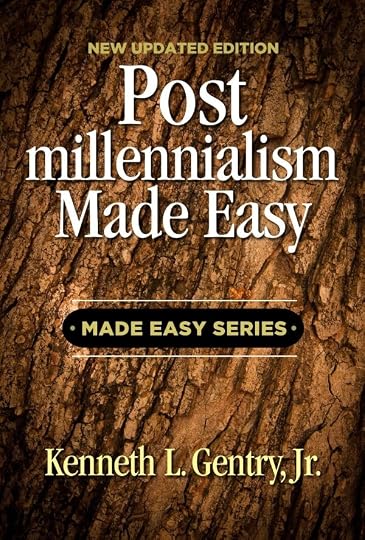
Postmillennialism Made Easy (by Ken Gentry)
Basic introduction to postmillennialism. Presents the essence of the postmillennial argument and answers the leading objections. And all in a succinct, introductory fashion.
See more study materials at: www.KennethGentry.com
Not only so, but Gary’s argument does not make sense! For even while holding the view that v. 27 referred to AD 70, I still saw the second advent in the Discourse — beginning at 24:36. This is clearly and forcefully stated in Perilous Times (on pp. 89–93) and in the original version of The Olivet Discourse Made Easy. I did not make the change because I had to “postulate two comings” of Christ in the Discourse. I already affirmed two comings in the Discourse.
I will continue my response to DeMar’s confusion over my views in my next posting.
Reformed Eschatology in the Writings of Geerhardus Vos
Ed. by Ken Gentry and Bill Boney
This is a collection of several key eschatological studies by the renowned Reformed theologian Geehardus Vos. We have modernized Vos’ grammar and syntax and updated his layout style according to modern publishing conventions (shorter sentences and paragraphs). We did this without changing any of Vos’ arguments.
For more information on this new Vos work or to order it, see:
https://www.kennethgentry.com/reformed-eschatology-in-the-writings-of-geerhardus-vos/
Kenneth L. Gentry Jr.'s Blog

- Kenneth L. Gentry Jr.'s profile
- 88 followers
