Mer Brebner's Blog
February 12, 2020
Dear Mom, Please Write Your Book
Every three weeks or so, I see some over-worked writer-mom who is juggling SO MUCH tweet about how guilty she feels taking time to write. (Sorry men, I'm not including you in this because I have never once in my decade on twitter seen a man express this emotion. Ever.) So here's my love letter to you writer-moms.
Right now, it probably feels like if you turn your head for a second, I change so much that you don't want to look away. Maybe you want to cherish every single second while I am small. Maybe you're afraid I'll think you don't love me if you ask for a few hours to yourself to write that novel that's been living in your heart. But the truth is? I'll survive.
You've told me where the snacks are. I have a book or an art project or a friend to keep me busy. And, if there's an emergency, I know I can always scream for help and you'll come running. I'll be fine for a few hours. I drew this when I was 4 or 5, during one of my mother's writing afternoons. My mother named it Bluebirds of Happiness and framed it. I wasn't sure why. Thirty years later, I found a published essay she wrote about this afternoon. (My sister must have been 3.) A little independence is a good thing for both of us and seeing you prioritize something that you're passionate about is more valuable than you know. It will stay with me for decades. It will also teach me by example that parents are whole people, that everyone is complex, with countless interests and sides to their person, and that everyone deserves to have time to themselves to focus on what matters to them.
It's also not all about me. Kids have to learn that eventually. We learn that our parents were people before they had us, that, often times, they had really crazy lives that we'll spend our teen years trying to reconcile with our own experience of our boring parents! But you're a person, a whole person, and I shouldn't stop you from being a big part of yourself for two decades. That's insane!
So, Mom? Please write your book. And when it's published, and you maybe win an award for it, please invite me to the party. I want to see that part of you, the non-mom part, the whole-person part, the award-winning writer part, even if I whine that I'm bored after a couple hours...
You have no idea how much that will convince me that it's possible to accomplish all my dreams: from having any career I want, to being a parent, to doing both and being great at both. And not just me, but my brother too. It's so important for him to see you this way, for him to grown up with the inherent assumption that women can do whatever they want and kick ass at it. He'll have healthier relationships with his female friends, colleagues, and romantic partners (if he's interested in women) because he grew up watching you. He won't underestimate his female co-worker who has a toddler at home, or stop calling his female friends once they have children, he'll know that there's more to any life than just one part of their life. He'll have you to thank for that.
So, take those few hours. Tell us to occupy ourselves. We have toys or games or dress-up clothes or art supplies. Write that book. The book you don't want me to read for a decade, if ever. One day, I will read it, and I will know you a little better for it.
And, should the absolute worst happen, and something happens to you, please know that your books will become almost incalculably valuable to me. They will be a part of you forever, a piece of you printed onto the pages, a key to knowing your adult self the way I didn't get to as a child.
So, please, Mom, write that book.
Love,
Your Kid(s)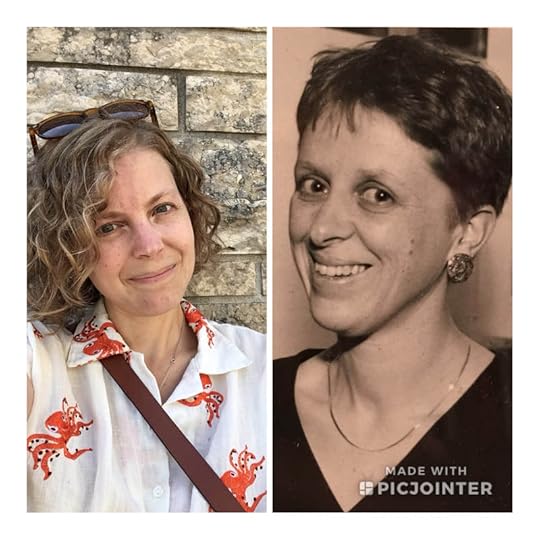 Myself at 35 and my mother, Diana, at about the same age, in the early 90s. My own mother, Diana, was a work-from-home-mom, who published three books of poetry throughout the 1990s while my sister and I were growing up. Each of those books won an award. (She also battled two bouts of breast cancer in those years. She was an utter rockstar. I genuinely have no clue how she did it. I look back and I'm stunned by what she accomplished in those years.)
She routinely gave us coloured pencils and paper, some crackers and cheese and closed the door for a couple hours. She took her writing seriously. She forced us to take it seriously. If we bothered her during those hours, she was never awful to us, but she was not kind about it. It taught us both the value of letting people have the time they need to do what is meaningful to them and to respect the space people tell you they need. That has never left me.
Obviously, the bar is different with one child or four, with a toddler or children who are six or seven. There's no one way to do this. There's a sliding scale, but it is possible to carve out these chunks of time in age appropriate ways. Sadly, it's not always possible (financially, medically, etc) for everyone, and I regret that I don't have the answers to those struggles. Here, I'm speaking to those moms who are struggling most with the GUILT.
I worshipped my mother as a child. (Ironically, it was not what made me want to be a writer. For the longest time, I didn't want to ever be a writer because she was SO accomplished and it was her wheelhouse.) It made a selfish child (me!) a lot more compassionate about other peoples' needs. It made me respect people when they want time for hobbies or passion projects. It made my impatient little heart see how the long game starts.
Play the long game with your kids. The fear of missing out is immediate, but the patience and respect I learned has lasted decades. At the end of the day, be the whole person you are, and show your kids how valuable and powerful that can be.
They'll thank you for it.
I promise.
Right now, it probably feels like if you turn your head for a second, I change so much that you don't want to look away. Maybe you want to cherish every single second while I am small. Maybe you're afraid I'll think you don't love me if you ask for a few hours to yourself to write that novel that's been living in your heart. But the truth is? I'll survive.
You've told me where the snacks are. I have a book or an art project or a friend to keep me busy. And, if there's an emergency, I know I can always scream for help and you'll come running. I'll be fine for a few hours.
 I drew this when I was 4 or 5, during one of my mother's writing afternoons. My mother named it Bluebirds of Happiness and framed it. I wasn't sure why. Thirty years later, I found a published essay she wrote about this afternoon. (My sister must have been 3.) A little independence is a good thing for both of us and seeing you prioritize something that you're passionate about is more valuable than you know. It will stay with me for decades. It will also teach me by example that parents are whole people, that everyone is complex, with countless interests and sides to their person, and that everyone deserves to have time to themselves to focus on what matters to them.
It's also not all about me. Kids have to learn that eventually. We learn that our parents were people before they had us, that, often times, they had really crazy lives that we'll spend our teen years trying to reconcile with our own experience of our boring parents! But you're a person, a whole person, and I shouldn't stop you from being a big part of yourself for two decades. That's insane!
So, Mom? Please write your book. And when it's published, and you maybe win an award for it, please invite me to the party. I want to see that part of you, the non-mom part, the whole-person part, the award-winning writer part, even if I whine that I'm bored after a couple hours...
You have no idea how much that will convince me that it's possible to accomplish all my dreams: from having any career I want, to being a parent, to doing both and being great at both. And not just me, but my brother too. It's so important for him to see you this way, for him to grown up with the inherent assumption that women can do whatever they want and kick ass at it. He'll have healthier relationships with his female friends, colleagues, and romantic partners (if he's interested in women) because he grew up watching you. He won't underestimate his female co-worker who has a toddler at home, or stop calling his female friends once they have children, he'll know that there's more to any life than just one part of their life. He'll have you to thank for that.
So, take those few hours. Tell us to occupy ourselves. We have toys or games or dress-up clothes or art supplies. Write that book. The book you don't want me to read for a decade, if ever. One day, I will read it, and I will know you a little better for it.
And, should the absolute worst happen, and something happens to you, please know that your books will become almost incalculably valuable to me. They will be a part of you forever, a piece of you printed onto the pages, a key to knowing your adult self the way I didn't get to as a child.
So, please, Mom, write that book.
Love,
Your Kid(s)
Myself at 35 and my mother, Diana, at about the same age, in the early 90s. My own mother, Diana, was a work-from-home-mom, who published three books of poetry throughout the 1990s while my sister and I were growing up. Each of those books won an award. (She also battled two bouts of breast cancer in those years. She was an utter rockstar. I genuinely have no clue how she did it. I look back and I'm stunned by what she accomplished in those years.)She routinely gave us coloured pencils and paper, some crackers and cheese and closed the door for a couple hours. She took her writing seriously. She forced us to take it seriously. If we bothered her during those hours, she was never awful to us, but she was not kind about it. It taught us both the value of letting people have the time they need to do what is meaningful to them and to respect the space people tell you they need. That has never left me.
Obviously, the bar is different with one child or four, with a toddler or children who are six or seven. There's no one way to do this. There's a sliding scale, but it is possible to carve out these chunks of time in age appropriate ways. Sadly, it's not always possible (financially, medically, etc) for everyone, and I regret that I don't have the answers to those struggles. Here, I'm speaking to those moms who are struggling most with the GUILT.
I worshipped my mother as a child. (Ironically, it was not what made me want to be a writer. For the longest time, I didn't want to ever be a writer because she was SO accomplished and it was her wheelhouse.) It made a selfish child (me!) a lot more compassionate about other peoples' needs. It made me respect people when they want time for hobbies or passion projects. It made my impatient little heart see how the long game starts.
Play the long game with your kids. The fear of missing out is immediate, but the patience and respect I learned has lasted decades. At the end of the day, be the whole person you are, and show your kids how valuable and powerful that can be.
They'll thank you for it.
I promise.


January 13, 2020
Minding the Gap: When Will The Road Finally Be Paved?
If you pay any attention at all to... well, me as a human being, you know I love hockey.
More to the point, I love women's hockey. A lot. I will happily set alarms for the wee hours to watch Canada's Under-18 women's team play for consecutive gold medals, or find the sketchiest streams imaginable just to watch games the sports stations see no value in broadcasting. That I disagree with them about the value of those games is its own blog post, but not the focus of this one. This post is all about one of the first times in a decade that I finally had the opportunity to see women's hockey live, in person. The last time I got to go to women's hockey games was the Vancouver Olympics.
Yup. You read that correctly. Vancouver 2010, ten years ago. I've watched games online, the few they have had on TV, but live pro women's hockey is few and far between in many places, including where I live. I bought a Saturday Pass to the Secret Showcase in Toronto on January 11th and a ticket to the PWHPA's Closing the Gap event on the Friday.
On Friday evening, I attended the Closing the Gap event as part of the #SecretShowcase stop of the Dream Gap Tour in Toronto. It was fascinating, and I am unpacking what I heard and saw. Because there was a lot to unpack.
The event was relatively small. Under a hundred people, I think. I am bad at guessing but it felt intimate, which was really nice. That said, it was a mix of teenage girls, women involved in girls or women's hockey, hockey/sports industry types, female players, sponsor representatives, and a few random fans. The event had a very "house party" sort of feel with players mingling with everyone and schmoozing. The panels themselves -the whole point of the event- were very good, with a couple standout participants.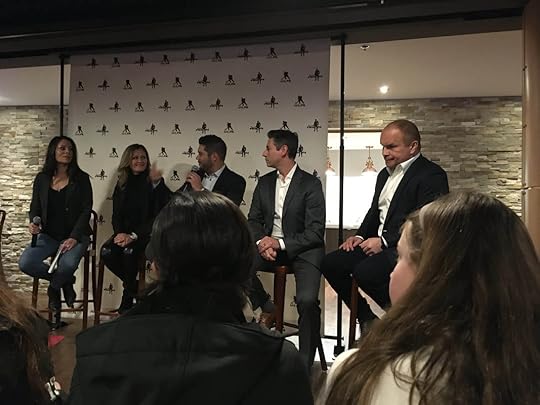 Tara Slone was the MC for the evening, and brought her passion and familiarity with hockey and hosting events to her role, which added a really casual and easy-going professionalism to the proceedings.
The first panel of "industry professionals" included NHLPA's Mathieu Schneider, and reps from BioSteel and Budweiser who were informed and very blunt about their motives (all very positive) for sponsoring women's hockey. The panel also included "last minute addition" -Tara Slone's words- Tie Domi who BY HIS OWN ADMISSION had no place on that panel. He dominated conversation, unaware that there were 2 other panels after theirs and spoke with the eloquence of a bad used car salesman. He was all hustle and it felt like a lot of empty promises and buzz words with no idea, let alone a plan, how to back it up. While I do believe that Domi cares about women's hockey in his own way, he came off as uninformed and unprepared. While he spoke, I noticed that the women there supporting him and excited to see him boosting women were all white women. (I think there were only a handful of women of colour there, including Sarah Nurse.)
I have never been a particular fan of Domi (I mean, he was a LEAF, friends!) and before, during the #SecretShowcase weekend, and in the days after the Dream Gap Tour stop in Toronto, he said some truly concerning things about women's hockey, ignoring the American NWHL, bad-mouthing the only alternative to PWHPA membership. Picking fights with fans of women's hockey is not a good look, even for a former NHL player who made his living as a pugilistic enforcer.
Domi has said other problematic things in the past (which I will not go into, but they are well documented and easy to find if you are curious). While I understand the appeal of having a recognized, boys-boy name like Domi's attached to a movement, I'm worried it will do the PWHPA more damage in the long term than good. Some of his past actions also concern me because they don't bode particularly for women of colour in hockey, who are woefully under-represented as it is.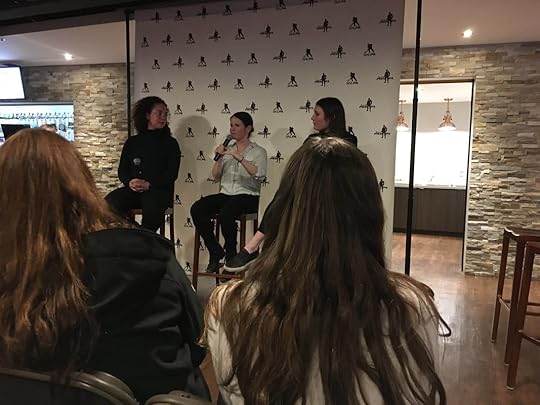 The second panel was of female non-hockey athletes (soccer players Diana Matheson, Carmelina Moscato, and... I feel horrible, but I didn't catch the last speaker's name, she spoke less than the other two. Fail.) was really interesting and informative, but it really highlighted that one of the main struggles a pro women's hockey league in North America faces is not helped by some of the strongest arguments for other sports' domestic leagues. (Canada and USA already dominate international women's hockey, the improvement in standings of which is often used to justify better domestic pro leagues for other sports.) It was really fascinating and the speakers were really passionate and happy to inform the audience about their own experiences.
 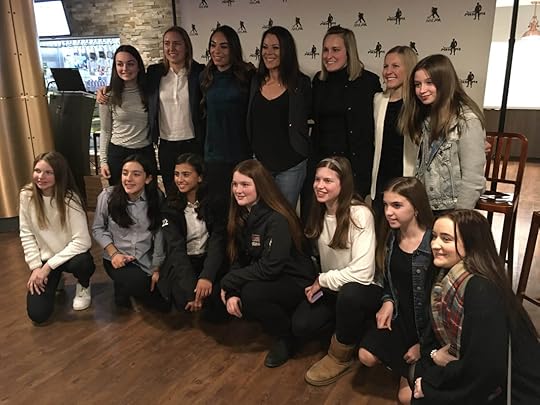 The third panel was the most exciting, because it was made up of Brianne Jenner, Sarah Nurse, Marie-Philippe Poulin, and Kendall Coyne. They spoke largely about the realities of living life while playing the CWHL and the NWHL and Kendall Coyne specifically spoke to the egregious disparity she witnessed between her (NFL player Michael Schofield) husband's support (trainers, medical support, transportation) and her own experiences.
While all of them were strong speakers, Kendall Coyne had a remarkable magnetism that you cannot buy or learn. She was passionate but matter-of-fact, an eloquent and articulate ambassador for women's hockey. As an American friend of min put it: COYNE 2020! Coyne was an standout all weekend, on and off the ice, but her calm ferocity that women are worth more than the leagues they have had to play in was perhaps the most poignant moment for me.
"The leagues are pro in name only," Coyne said, "We are worth a lot more than that." The players are fighting for a platform in which they can perform day in, day out, like their male colleagues, with trainers and medical support, physio, and maintenance so they can stay in peak form. They said this, repeatedly speaking to the front two rows of the crowd made up almost entirely of teenage girls aged twelve to seventeen. Some of the biggest names in contemporary women's hockey spoke directly to these girls, knowing that this fight will not be over soon even if this current "gap" of women's pro in Canada is closed soon and that these girls need to be prepared for that fight.
For generations, there has been repeated, often aimless talk about "paving the road" for women's hockey, but Maria Dennis of the NHPLA asked the vital question at the beginning of the night, the question that no one seems to have an easy answer to: "When will the road finally be paved?"
As Brianne Jenner put it (reiterated by everyone on the panel at least once), "We want to leave the game better than we found it." And they will. Maybe not a perfect game, but better than what previous generations have had.
There's no easy way for a room full of Olympic medalists (because most of them WERE) to say "The issue here is that men don't want women to succeed," but at the root of it, that's one of the main issues. Not all men, of course. But enough of them. Enough men are threatened by the prospect of professional female athletes having a league that they've decided no one needs it. Luckily, it seems like the tide may finally be turning. Women having a professional league where they can make an actual sustainable living will not take away from men's ability to play in the NHL for ludicrous salaries. It will add to what we all have to be proud of. It will increase the amount of quality hockey on our television screens. Which would be a win for all hockey fans, not just the girls and women who deserve to watch their heroes and peers, but to the boys and men who would see just how talented girls and women are.
Now, if we could only convince major broadcasters that women's hockey deserves to be on TV...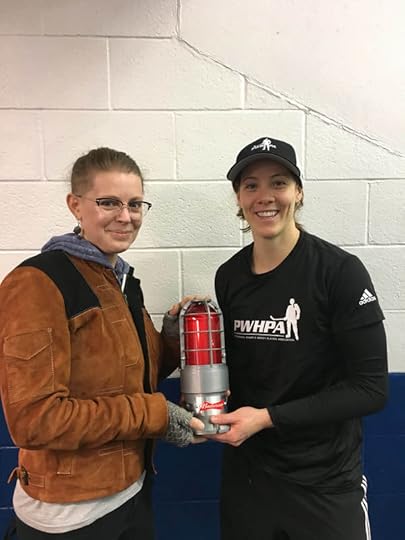 On Saturday, I got to watch three incredibly awesome, well-attended hockey games, and what struck me was that the only thing making these games "less exciting" was the fact that there weren't fifteen thousand screaming, invested fans in the stands and the fact that female pro players do not have the liberty to take some of the changes that NHL players take because they do not have the financial and medical safety net NHL salaries provide. The games were fast, exciting, and included clear rivalries, fights, and the physicality that those who do not actually WATCH women's hockey claim women's hockey lacks. It was a joy to watch these women play, not for political reasons, but because they are talented and they play amazing hockey! I want more of it in my life and on my television screen, and so should you.
As a silly aside, on the Saturday, I won Fan of the Game for Game 1 (Team Larocque vs. Team Kessel) got to meet Erika Howe, and won a hilarious Budweiser goal light. (I never "win" anything so it was really lovely!)
The next stop on the Dream Gap Tour is Philadelphia, PA the weekend of February 29th through March 1st. If you are in the area, I absolutely encourage you check it out!
More to the point, I love women's hockey. A lot. I will happily set alarms for the wee hours to watch Canada's Under-18 women's team play for consecutive gold medals, or find the sketchiest streams imaginable just to watch games the sports stations see no value in broadcasting. That I disagree with them about the value of those games is its own blog post, but not the focus of this one. This post is all about one of the first times in a decade that I finally had the opportunity to see women's hockey live, in person. The last time I got to go to women's hockey games was the Vancouver Olympics.
Yup. You read that correctly. Vancouver 2010, ten years ago. I've watched games online, the few they have had on TV, but live pro women's hockey is few and far between in many places, including where I live. I bought a Saturday Pass to the Secret Showcase in Toronto on January 11th and a ticket to the PWHPA's Closing the Gap event on the Friday.
On Friday evening, I attended the Closing the Gap event as part of the #SecretShowcase stop of the Dream Gap Tour in Toronto. It was fascinating, and I am unpacking what I heard and saw. Because there was a lot to unpack.
The event was relatively small. Under a hundred people, I think. I am bad at guessing but it felt intimate, which was really nice. That said, it was a mix of teenage girls, women involved in girls or women's hockey, hockey/sports industry types, female players, sponsor representatives, and a few random fans. The event had a very "house party" sort of feel with players mingling with everyone and schmoozing. The panels themselves -the whole point of the event- were very good, with a couple standout participants.
Tara Slone was the MC for the evening, and brought her passion and familiarity with hockey and hosting events to her role, which added a really casual and easy-going professionalism to the proceedings.The first panel of "industry professionals" included NHLPA's Mathieu Schneider, and reps from BioSteel and Budweiser who were informed and very blunt about their motives (all very positive) for sponsoring women's hockey. The panel also included "last minute addition" -Tara Slone's words- Tie Domi who BY HIS OWN ADMISSION had no place on that panel. He dominated conversation, unaware that there were 2 other panels after theirs and spoke with the eloquence of a bad used car salesman. He was all hustle and it felt like a lot of empty promises and buzz words with no idea, let alone a plan, how to back it up. While I do believe that Domi cares about women's hockey in his own way, he came off as uninformed and unprepared. While he spoke, I noticed that the women there supporting him and excited to see him boosting women were all white women. (I think there were only a handful of women of colour there, including Sarah Nurse.)
I have never been a particular fan of Domi (I mean, he was a LEAF, friends!) and before, during the #SecretShowcase weekend, and in the days after the Dream Gap Tour stop in Toronto, he said some truly concerning things about women's hockey, ignoring the American NWHL, bad-mouthing the only alternative to PWHPA membership. Picking fights with fans of women's hockey is not a good look, even for a former NHL player who made his living as a pugilistic enforcer.
Domi has said other problematic things in the past (which I will not go into, but they are well documented and easy to find if you are curious). While I understand the appeal of having a recognized, boys-boy name like Domi's attached to a movement, I'm worried it will do the PWHPA more damage in the long term than good. Some of his past actions also concern me because they don't bode particularly for women of colour in hockey, who are woefully under-represented as it is.
The second panel was of female non-hockey athletes (soccer players Diana Matheson, Carmelina Moscato, and... I feel horrible, but I didn't catch the last speaker's name, she spoke less than the other two. Fail.) was really interesting and informative, but it really highlighted that one of the main struggles a pro women's hockey league in North America faces is not helped by some of the strongest arguments for other sports' domestic leagues. (Canada and USA already dominate international women's hockey, the improvement in standings of which is often used to justify better domestic pro leagues for other sports.) It was really fascinating and the speakers were really passionate and happy to inform the audience about their own experiences. The third panel was the most exciting, because it was made up of Brianne Jenner, Sarah Nurse, Marie-Philippe Poulin, and Kendall Coyne. They spoke largely about the realities of living life while playing the CWHL and the NWHL and Kendall Coyne specifically spoke to the egregious disparity she witnessed between her (NFL player Michael Schofield) husband's support (trainers, medical support, transportation) and her own experiences.While all of them were strong speakers, Kendall Coyne had a remarkable magnetism that you cannot buy or learn. She was passionate but matter-of-fact, an eloquent and articulate ambassador for women's hockey. As an American friend of min put it: COYNE 2020! Coyne was an standout all weekend, on and off the ice, but her calm ferocity that women are worth more than the leagues they have had to play in was perhaps the most poignant moment for me.
"The leagues are pro in name only," Coyne said, "We are worth a lot more than that." The players are fighting for a platform in which they can perform day in, day out, like their male colleagues, with trainers and medical support, physio, and maintenance so they can stay in peak form. They said this, repeatedly speaking to the front two rows of the crowd made up almost entirely of teenage girls aged twelve to seventeen. Some of the biggest names in contemporary women's hockey spoke directly to these girls, knowing that this fight will not be over soon even if this current "gap" of women's pro in Canada is closed soon and that these girls need to be prepared for that fight.
For generations, there has been repeated, often aimless talk about "paving the road" for women's hockey, but Maria Dennis of the NHPLA asked the vital question at the beginning of the night, the question that no one seems to have an easy answer to: "When will the road finally be paved?"
As Brianne Jenner put it (reiterated by everyone on the panel at least once), "We want to leave the game better than we found it." And they will. Maybe not a perfect game, but better than what previous generations have had.
There's no easy way for a room full of Olympic medalists (because most of them WERE) to say "The issue here is that men don't want women to succeed," but at the root of it, that's one of the main issues. Not all men, of course. But enough of them. Enough men are threatened by the prospect of professional female athletes having a league that they've decided no one needs it. Luckily, it seems like the tide may finally be turning. Women having a professional league where they can make an actual sustainable living will not take away from men's ability to play in the NHL for ludicrous salaries. It will add to what we all have to be proud of. It will increase the amount of quality hockey on our television screens. Which would be a win for all hockey fans, not just the girls and women who deserve to watch their heroes and peers, but to the boys and men who would see just how talented girls and women are.
Now, if we could only convince major broadcasters that women's hockey deserves to be on TV...
On Saturday, I got to watch three incredibly awesome, well-attended hockey games, and what struck me was that the only thing making these games "less exciting" was the fact that there weren't fifteen thousand screaming, invested fans in the stands and the fact that female pro players do not have the liberty to take some of the changes that NHL players take because they do not have the financial and medical safety net NHL salaries provide. The games were fast, exciting, and included clear rivalries, fights, and the physicality that those who do not actually WATCH women's hockey claim women's hockey lacks. It was a joy to watch these women play, not for political reasons, but because they are talented and they play amazing hockey! I want more of it in my life and on my television screen, and so should you.As a silly aside, on the Saturday, I won Fan of the Game for Game 1 (Team Larocque vs. Team Kessel) got to meet Erika Howe, and won a hilarious Budweiser goal light. (I never "win" anything so it was really lovely!)
The next stop on the Dream Gap Tour is Philadelphia, PA the weekend of February 29th through March 1st. If you are in the area, I absolutely encourage you check it out!
January 1, 2020
Hell Yes 2020!
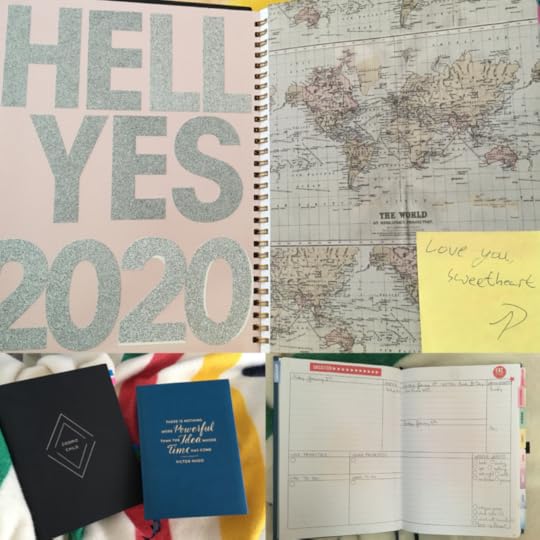 You know that friend you have who just STOCKPILES notebooks like that's the one item they need to get through the apocalypse? Yeah. That's me. I'm that friend. I started that black bullet journal with the sparkly Hell Yes 2020 stickers in ... July of 2018. I really wish I was joking.
I did not come to Bullet Journaling via the usual means (... ie. Pinterest or Instagram, these days). I was handed a small booklet by my psychiatrist the day I was formally diagnosed with bipolar and told to get in the habit of filling it out. Being the Type A perfectionist who actually LOVED homework and bubble-sheet tests as a child, I took to it like a duckling to water.
It helped me not only because having concrete information is always useful but because one of my major issues (as a person, but also in my romantic relationships) is that my mood episodes affect my perception and having a written record of the last time I felt happy was a good thing. (It only FEELS like three weeks since you were happy, Mer, it's really only been two days. Depression is a jerk. Do not ever underestimate it.)
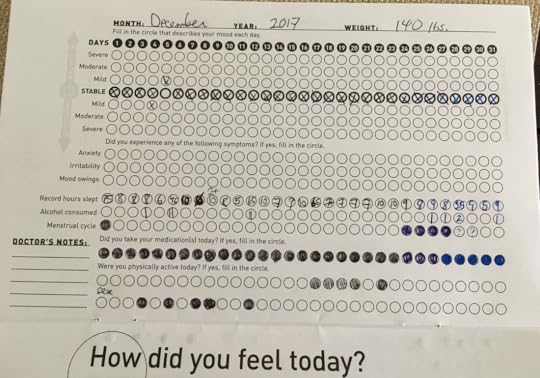 That was given to me in February of 2017. When I knew it was running out, my sweetie, Paul, began explaining how big of a Thing bullet journaling is. How varied it can be. How there are spreads and trackers for just about anything and artistic ways to do it all. There are also incredibly simplistic ways to do it. I began experimenting and, over the past two-ish years, I've figured out what works for me in my personal life. But I also spent the past few years trying to figure out better ways to organize my work-life. ADHD is a demon that makes it necessary for me to have used day planners since seventh grade, but they've never worked better than maybe 70% of how effectively I felt they really could. So I started playing with that too.
Recently, while discussing how UTTERLY EXCITED I AM about how I've refined my system to work at about 90% of potential, Paul mentioned how a lot of posts or videos about bullet journaling don't talk about How They Got There. I've also had several friends ask me, in the past few weeks, what I do and how mine work and what they look like, so I figured I would share a little.
My system is For Me. It will not work for everyone, but one of the best parts of bullet journaling is poaching the ideas you see that WILL work for you and using them. Cobbling together a collection of trackers and systems to create a journal that works for you is the objective, not making it pretty. Mine are NOT that pretty. Some people have incredibly gorgeous journals and I encourage you to check out Pinterest if that idea appeals to you because you will be gobsmacked by some peoples' creativity.
I am creative, but after a couple of years of experimentation, I've realized I'm much more concerned with function and efficiency. This is how it's all evolved.


 A few months after I started bipolar medication, I was feeling more stable than I ever had in my adult life and I took the win. I dove back into my desire to write (which had become a near-impossible feat the way my moods were cycling prior to medication).
 We all begin writing in a new notebook thinking it's going to be The Book That Changes Your Life. Right? Just me? Well, I began this notebook with incredible optimism. I had lists of goals. I had projects divided into tidy columns. I have timelines. And then...
To be perfectly frank, I got pregnant. We like to pretend that personal lives and professional lives can live in separate bubbles, but they never can. When I miscarried a short time later, I sank into a pretty bad depression. It was nothing compared to some of my depressive episodes (I'm looking at YOU, 2010), but I was devastated. We wanted that baby. We were excited. And then... we were heartbroken.
It took me about a year to really get back to a place where I could focus on my writing. (I mean, we also bought a house that winter, I painted the house myself, we moved, got a demon kitten. Life did go on.) That summer I tried again. I tried trackers, and found that the system I'd devised didn't really work for me in this context.
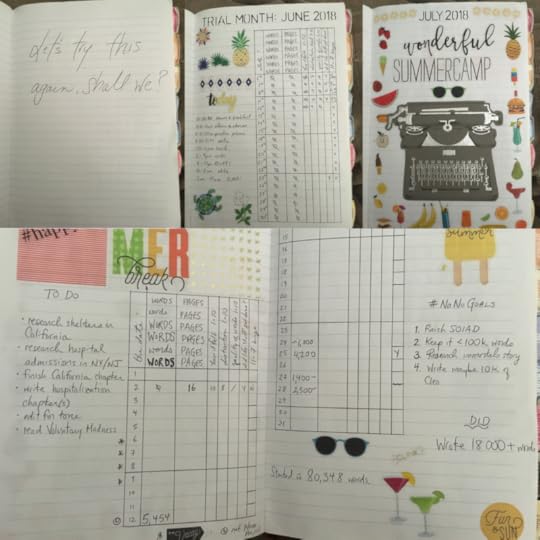 You've probably noticed that I like stickers. A lot. Yes, I am a five year old. Yes, it works for me. I don't care how professional it looks because these books are For Me. As any planner or bujo you, dear reader, will be For You. The most important thing Paul drilled into me -because he's been bullet journaling for a lot longer than I have, and his look like a different SPECIES of notebook than mine- is that you MUST be willing to adapt, and that no system works for everyone so you must experiment and learn what works for you.
By the end of the summer, I realized I needed a more comprehensive accountability system. I needed PLANS. I needed a SCHEDULE. I ... had this really adorable idea that structuring my days like high school would help me stay on task.
It worked to a point. This is what it looked like the first few months.

 The 5 Questions thing was something else Paul introduced me to. Apparently it has military origins, but it's insanely helpful in approaching problems or failures in a constructive way. Eventually I decided to do it less frequently, but for the first few months that I did it weekly, it taught me a lot about what threw me off and what derailed my plans, and what actually worked to get back on the rails.
 In October 2018 I attended Can*Con and -after being on the fence about self-publishing a project for YEARS- I made the decision to self-publish... on January 4th, 2019. Because I am a crazy person, apparently. But it WAS mostly done so it was just getting all the formatting, covers, etc. done. It did get done, but what I tracked and how I organized my pages slowly shifted. I needed more space for some things. I dropped things that weren't working for me. The whole "school classes" idea was abandoned.
I published the second book in my series in May. I will not lie: it was a terrible plan. But it got done. And by the time it was done, I was burnt out and struggling to show up every day.
Around that time I realized I also needed to consolidate my actual day planner and my work bullet journal. Some days I wouldn't even open my day planner. I forgot a couple appointments. *BIG CRINGE*


 I'd used planners for decades, but it was time consuming to split my life into two books, to make sure I had all my appointments written down in both places and... I liked my work bullet journal better. I took a few months to undertake my new mission: to combine the two. To effectively have one book that managed my daily and weekly life and work meetings, appointments, tasks and responsibilities. I needed to find a way to keep my to do lists manageable, visible, but also separate.
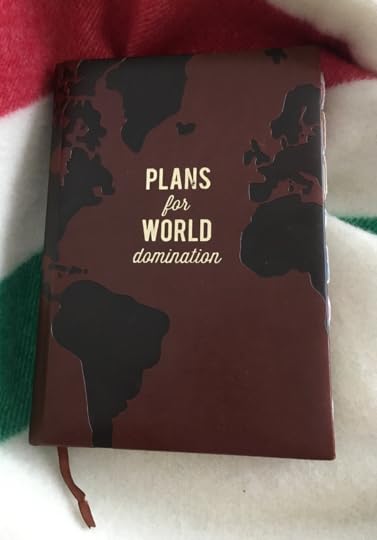
 I have all my personal goals, big tasks, chores, and all my personal and medical trackers in a large book that almost never leaves the house. (The black "Cosmic Child" book above is 2020's Personal Bujo.) Over the course of 2019, my term goals in my work bujo (I do three four-month terms: January 1 to April 30, May 1 to August 31, and September 1 to December 31.) and monthly goals became second nature. I reflexively do regular check ins with myself and alter goals if my health dips or life gets busy.
When planning, I tend to start with my bigger, longer-term goals: yearly, 3-year and 5-year goals. (I know a lot of people like to do 10-year goals but... I don't find them productive at all. For me. Do them if you love them!) Then I try to breakdown those goals over the course of the upcoming year to see just how bonkers it seems in context. They always seem bonkers. Results may vary.


 Then I break down those goals into term goals...


 And then further into monthly goals, which are then organically broken down into weekly and daily goals. The separated Life and Work to do lists and goals lists on my weekly layout are helpful and I keep them deliberately small-ish to not induce my own self-destruction that tends to result from me taking on too much and breezily thinking It Will Be Fiiiine. (Narrator: It is never fine.)


 I have a lot of charts and things mostly because if I don't write something down, I will forget it in 17.4 seconds. I also find it helps me to start big and break it down. It helps to maintain some semblance of realistic expectations, be it how many hours a day you'll need to work, or how many words a human being can reasonably copy edit in a 40-hour work-week.
A lot of the lovely photos above of pristine pages are from my new work bujo that begins today! (The blue note book pictured at the beginning of the post.) Happy New Year to me! But that first notebook I mentioned? The one I began so optimistically in 2017? The one I kept coming back to, as I desperately tried to find a system that worked for me? It served me so very well, and my use of it ended yesterday, its pages all full of weekly spreads, lists of goals, pages full of brain dumps and more organized info, its spine broken twice over.
There's nothing quite like Finishing A Notebook. Especially not when it's seen you through publishing your first two books. I may not have taken over the world, but I definitely regained control of my own world since the summer of 2017. All it took was time, and flexibility, and a little self-reflection... and a kick-ass bullet journal!
December 31, 2019
Yet Another Best Books of 2019 List
Of the fifty-five books I read in 2019, some stood out a little more than others. I decided to do a "Best" list... of qualities rather than by genre or author nationality or any of the more usual qualities. (There are more than enough of those out there.)
There were a lot of books I wanted to read in 2019 that I simply didn't get to, or didn't finish because my mind just wasn't in the right headspace. This list is only books I did read, and did love, and do feel really confident telling other people to read.
Not all these books will be for every person, but maybe one or three or five will pique your interest. I generally try not to recommend any book that has problematic representation and most of these books are very current, but if I have missed any iffy content (by which I mean racist, ableist, or otherwise, NOT sex, etc.) please let me know so I can adjust accordingly.
If nothing else, 2019 was a really good reading year for me. Hopefully 2020 will be just as much fun!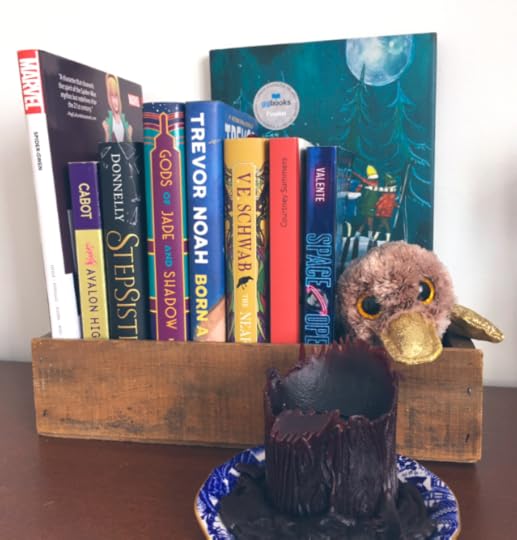 Best First Page
- A Princess In Theory by Alyssa Cole (2018)
Yes, Cole's first Reluctant Royals book has maybe the best first page (and chapter) I have ever read... but it only works as well as it does because the WHOLE BOOK is just as funny and well-written as that very first page. It delivers.
I'll say this and only this: Nigerian prince email scams. I literally spat my Coca Cola out reading the first page. All over the iPad I was reading on. On the bus.
The book itself is unapologetically intelligent. Cole writes whole people with varied interests and jobs that actually affect the plot, which, sadly, is not always a given in women-centred fiction.
I read this early in the year and ended up reading twenty romance novels this year, but Cole set a high bar that was not always reached. A Princess in Theory is the beginning of a 'collection' (more than a series) and the next book, A Duke By Default , hit me even harder in the feels for strict identifying-with-the-heroine's-mental-health-situation reasons. It was equally amazing if a little less hilarious. I plan to read the rest of the series this year.
Best Voice(s)
- Sadie by Courtney Summers (2018)
Sadie is perhaps the most unique book I read all year. It alternates narration between the protagonist, Sadie, and a podcaster investigating her disappearance. Courtney would most likely be flattered if I said this was by far the creepiest book I read this year. It was unsettling, gutting, uncomfortable and perfectly executed.
Sadie's voice is angry, frustrated, and determined. The podcaster's chapters - with the confusion and pain of hindsight - are desperate and impotent. The contrast is powerful, as is Sadie's own refusal to let go of her (totally legitimate) rage. I wouldn't read this book on a bad day... unless you (like me) are sometimes galvanized into feeling better by allowing your rage to boil over a little. Sadie is not a comfortable book. It's rightfully furious. It asks a lot of ugly questions and you may not get the answers you want. But it is one of the top five books I read this year.
Sadie was the first of Summers' books I've read, but I'm planning to re-read it in French this year and I'm also hoping to pick up her 2008 debut, Cracked Up To Be, that's being re-released in February of 2020.
Best Escape
- Gods of Jade and Shadow by Silvia Moreno-Garcia (2019)
I won't even lie: I bought this book on pre-order last winter when I saw the cover reveal because it was too gorgeous not to own. It arrived four days before it was supposed to be released (whoops?) the day I was heading to the spa. I read a solid half of it at Le Nordik. It was perfection.
The single best word for Gods of Jade and Shadow is TRANSPORTING. It transports you to a different time (the 1920s), a different place (Jazz-era Mexico), and, for many of us, to a different belief system. It is masterful and fun, at once easy to read and vivid in how it describes Casiopea's world and her perspective.
But then, how could a road trip with the Mayan god of death be anything less that fun?
Best Gift
- SpiderGwen by Jason Latour, Robbi Rodriguez, Chris Visions (2015/2017)
Paul got me this for Christmas in 2018 and it was sooooo good!
I have been a pretty chill spidey-fan since the mid-nineties when I was inducted into the fold by the nine-year-old boy I babysat after school three days a week. After years of being disappointed by screen versions of Spiderman, we were blessed by Spiderman: Homecoming and then Into the Spiderverse. I've never read a ton of comic books for reasons I've only been able to articulate in the past few years as I've hit my thirties, so I wasn't really aware of Miles or Gwen until the film. Since then, I have become a bit obsessed.
As much as I love Peter Parker (especially Tom Holland's iteration), Gwen Stacey was a revelation. This collection of comics is gorgeously drawn and written and an amazing addition to the Spiderverse. I haven't had the TIME, or I'd have already read all the rest of the SpiderGwen comics (including those by Seanan McGuire!) but they are on my To Read for 2020.
Best Shameless Canadiana
- When The Moon Comes by Paul Harbridge (2017)
I feel a special compulsion to buy books about hockey, especially gorgeous books like When The Moon Comes, which is written and illustrated by two incredibly talented creators.
Reading this books is eerie and atmospheric, incredibly nostalgic for those of us old enough (or remote enough) to remember or have experience skating on ponds, rivers or lakes, and illustrated in a way that highlights how much this experience borders on spiritual for some of us.
Absolutely perfect for children and adults alike, it will make you long for outside ice and full moons and the first perfect game of the season.
Best Re-read
- Avalon High by Meg Cabot (2006)
I'm a long-time Meg Cabot fangirl. Her books got me through some of the roughest years of my early twenties, but the book of hers I always find myself re-reading (though I don't own it! I keep stealing my sister-in-law's copy!) is Avalon High.
There's something so sweet about this book that always hits the spot on a day when I am in serious need of unwinding and recharging. I just finished re-binge-watching BBC's Merlin and the ending left me... wanting. Cabot's Arthur retelling is a delightful high school version of the return of the Once and Future King.
There aren't a lot of books I've read more than three times, but I think I've read Avalon High about eight times now. It's a safe, sweet place and, it never disappoints me. Somehow I *always* forget how utterly cute it is, and how strangely healthy the relationships are between all the main characters; they provide much-needed scripts for how to deal with uncomfortable situations and, blessedly, maturity and honesty that are (often) seriously under-represented in YA.
For a book that was published nearly 14 years ago, it hold up pretty decently to re-reading.
Best "Late to the Party" Discovery
- The Near Witch by V.E. Schwab (2011)
Admittedly, I had read two of Victoria Schwab's YA novels, but I had not read her adult books until this year. I read the A Darker Shade of Magic series, which was good, but I really loved The Near Witch. It was a strange, quiet little book that we absolutely need more of.
I got a copy of the re-released book (which is gorgeous!) thanks to my wonderful friend Deets, who got me the Barnes & Noble -only copy I really wanted that I could not get in Canada for less than 80$ (WUT?!). Bless you, Deets, you gorgeous creature.
It is uneasy and loaded and the build up is probably too quiet for a lot of people, but I found it wonderful. The stakes are high from the start, the suspense is the kind that makes you want to scream at certain characters. Strangely, I keep finding myself hoping that her forthcoming novel, The Invisible Life of Addie Larue, is more like The Near Witch than ADSOM. Guess I'll get to find out in October!
Best Book Club Book
- Born A Crime by Trevor Noah (2017)
You don't always get a say in what you read in Book Club, but last winter Noah's memoir was my pick for my book club and it was a pretty solid favourite. It is HARD not to be enchanted by Trevor Noah's stories which, even when they leave your jaw on the floor are often told with his usual flare for words, making them hilarious, or, in the very least, incredibly well told. His childhood is dramatic
Best Got-It-Off-My-TBR/Finally Finished It
I did not.
This was a bad year for this. What I did succeed at has been not beating myself up for not finishing books that were too much for me or not the right time to read. I read a lot of romance novels this year because I *NEEDED* the escape. I was stressed. With two books and diving into the deep end of self-promotion, I have never, in my entire life, been so healthy but so stressed.
Maybe in 2020 I will finish a couple of the books that have been sitting on my Unfinished Pile since 2014. Maybe not. But I'm not a bad person if they are still there in 366 days. Because life happens. And some years are about launching two books and a series and learning a lot about how to sell books and growing All The Veg in a giant garden and then getting married. Those books of my Unfinished Pile will be there when I am ready to read them.
The "Better Than It Had Any Right To Be" Award
- Stepsister by Jennifer Donnelly (2019)
Giving Donnelly the "Better Than It Had Any Right To Be" honours is not me throwing shade. I've seen and read a lot of fairy tale adaptations and very few of them ever go DEEP. The concept - the story of one of Cinderella's stepsisters- could have been so shallow, so pithy; instead it has a soul.
I don't generally hold out a ton of hope that a book will do something unexpected and moving, especially not with something like a fairy tale retelling, but Jennifer Donnelly wrote one of my top five favourite books of ALL TIME (Revolution, 2010) which I have read several more times than Goodreads would lead you to believe. (I read it several times before you could log multiple reads.) Revolution ripped my heart out, and I've been meaning to read more of Donnelly's work, so when I saw that she had a fairy tale retelling coming out, I pounced on it!
Isabelle is an ugly stepsister, but you love her right from the start. She *knows* she's living her life wrong... but she's gotten so far from her own self that she can't seem to find her way back anymore. You love her, despite her flaws, and you root for her because she is all of us, trying to find our truest self. Trying to be happy, trying to find the lost pieces of our heart.
It is a fairy tale in the spirit of the original fairy tales: dark, ugly, not particularly easy to swallow. But it is also so much more than that. Donnelly weaves mythology and history, real places and fictitious events, the familiar and the fantastical into a stunning whole that leaves you desperately hoping that the movie adaptation doesn't hit any snags. This story is stunning in so many ways. There's no way I will only read this book once.
Best Ending
- Space Opera by Catherynne M. Valente (2019)
Okay, this book is my instinctive answer to everyone who keeps asking "What's the single best book your read this year" so saying it wins the "best ending" accolades is a total cheat.
Space Opera is amazing start to finish; so much so that I live tweeted the first few chapters From The Bath the night I started it because I was laughing so hard. I keep recommending it because there is something so universal about it. It's also insanely funny, sometimes bordering on ludicrous, reminiscent of Terry Pratchett or Douglas Adams... only a Xennial American woman. You might not think that makes that much of a difference, but it DOES. It matters a lot. Valente is my rough contemporary and I genuinely felt like the book was written For Me.
Space Opera is bonkers, it is queer, it is almost hallucinogenic, like if David Bowie and Freddie Mercury and Bjork tried to run an intergallactic Eurovision after doing LDS.
The reason I've crowned it "Best Ending" is because the ending really does MAKE the book. On the whole, Space Opera is life affirming, giving readers a strange pat on the back even if they aren't exactly who or what or where they want to be in their life. It's a testament to the eternal truth that you can never predict how life will go, and that there is always hope, even in the darkest hour.
And now, I may need to go re-read this book tonight so that I go into 2020 feeling like miracles are coming my way!
There were a lot of books I wanted to read in 2019 that I simply didn't get to, or didn't finish because my mind just wasn't in the right headspace. This list is only books I did read, and did love, and do feel really confident telling other people to read.
Not all these books will be for every person, but maybe one or three or five will pique your interest. I generally try not to recommend any book that has problematic representation and most of these books are very current, but if I have missed any iffy content (by which I mean racist, ableist, or otherwise, NOT sex, etc.) please let me know so I can adjust accordingly.
If nothing else, 2019 was a really good reading year for me. Hopefully 2020 will be just as much fun!
Best First Page- A Princess In Theory by Alyssa Cole (2018)
Yes, Cole's first Reluctant Royals book has maybe the best first page (and chapter) I have ever read... but it only works as well as it does because the WHOLE BOOK is just as funny and well-written as that very first page. It delivers.
I'll say this and only this: Nigerian prince email scams. I literally spat my Coca Cola out reading the first page. All over the iPad I was reading on. On the bus.
The book itself is unapologetically intelligent. Cole writes whole people with varied interests and jobs that actually affect the plot, which, sadly, is not always a given in women-centred fiction.
I read this early in the year and ended up reading twenty romance novels this year, but Cole set a high bar that was not always reached. A Princess in Theory is the beginning of a 'collection' (more than a series) and the next book, A Duke By Default , hit me even harder in the feels for strict identifying-with-the-heroine's-mental-health-situation reasons. It was equally amazing if a little less hilarious. I plan to read the rest of the series this year.
Best Voice(s)
- Sadie by Courtney Summers (2018)
Sadie is perhaps the most unique book I read all year. It alternates narration between the protagonist, Sadie, and a podcaster investigating her disappearance. Courtney would most likely be flattered if I said this was by far the creepiest book I read this year. It was unsettling, gutting, uncomfortable and perfectly executed.
Sadie's voice is angry, frustrated, and determined. The podcaster's chapters - with the confusion and pain of hindsight - are desperate and impotent. The contrast is powerful, as is Sadie's own refusal to let go of her (totally legitimate) rage. I wouldn't read this book on a bad day... unless you (like me) are sometimes galvanized into feeling better by allowing your rage to boil over a little. Sadie is not a comfortable book. It's rightfully furious. It asks a lot of ugly questions and you may not get the answers you want. But it is one of the top five books I read this year.
Sadie was the first of Summers' books I've read, but I'm planning to re-read it in French this year and I'm also hoping to pick up her 2008 debut, Cracked Up To Be, that's being re-released in February of 2020.
Best Escape
- Gods of Jade and Shadow by Silvia Moreno-Garcia (2019)
I won't even lie: I bought this book on pre-order last winter when I saw the cover reveal because it was too gorgeous not to own. It arrived four days before it was supposed to be released (whoops?) the day I was heading to the spa. I read a solid half of it at Le Nordik. It was perfection.
The single best word for Gods of Jade and Shadow is TRANSPORTING. It transports you to a different time (the 1920s), a different place (Jazz-era Mexico), and, for many of us, to a different belief system. It is masterful and fun, at once easy to read and vivid in how it describes Casiopea's world and her perspective.
But then, how could a road trip with the Mayan god of death be anything less that fun?
Best Gift
- SpiderGwen by Jason Latour, Robbi Rodriguez, Chris Visions (2015/2017)
Paul got me this for Christmas in 2018 and it was sooooo good!
I have been a pretty chill spidey-fan since the mid-nineties when I was inducted into the fold by the nine-year-old boy I babysat after school three days a week. After years of being disappointed by screen versions of Spiderman, we were blessed by Spiderman: Homecoming and then Into the Spiderverse. I've never read a ton of comic books for reasons I've only been able to articulate in the past few years as I've hit my thirties, so I wasn't really aware of Miles or Gwen until the film. Since then, I have become a bit obsessed.
As much as I love Peter Parker (especially Tom Holland's iteration), Gwen Stacey was a revelation. This collection of comics is gorgeously drawn and written and an amazing addition to the Spiderverse. I haven't had the TIME, or I'd have already read all the rest of the SpiderGwen comics (including those by Seanan McGuire!) but they are on my To Read for 2020.
Best Shameless Canadiana
- When The Moon Comes by Paul Harbridge (2017)
I feel a special compulsion to buy books about hockey, especially gorgeous books like When The Moon Comes, which is written and illustrated by two incredibly talented creators.
Reading this books is eerie and atmospheric, incredibly nostalgic for those of us old enough (or remote enough) to remember or have experience skating on ponds, rivers or lakes, and illustrated in a way that highlights how much this experience borders on spiritual for some of us.
Absolutely perfect for children and adults alike, it will make you long for outside ice and full moons and the first perfect game of the season.
Best Re-read
- Avalon High by Meg Cabot (2006)
I'm a long-time Meg Cabot fangirl. Her books got me through some of the roughest years of my early twenties, but the book of hers I always find myself re-reading (though I don't own it! I keep stealing my sister-in-law's copy!) is Avalon High.
There's something so sweet about this book that always hits the spot on a day when I am in serious need of unwinding and recharging. I just finished re-binge-watching BBC's Merlin and the ending left me... wanting. Cabot's Arthur retelling is a delightful high school version of the return of the Once and Future King.
There aren't a lot of books I've read more than three times, but I think I've read Avalon High about eight times now. It's a safe, sweet place and, it never disappoints me. Somehow I *always* forget how utterly cute it is, and how strangely healthy the relationships are between all the main characters; they provide much-needed scripts for how to deal with uncomfortable situations and, blessedly, maturity and honesty that are (often) seriously under-represented in YA.
For a book that was published nearly 14 years ago, it hold up pretty decently to re-reading.
Best "Late to the Party" Discovery
- The Near Witch by V.E. Schwab (2011)
Admittedly, I had read two of Victoria Schwab's YA novels, but I had not read her adult books until this year. I read the A Darker Shade of Magic series, which was good, but I really loved The Near Witch. It was a strange, quiet little book that we absolutely need more of.
I got a copy of the re-released book (which is gorgeous!) thanks to my wonderful friend Deets, who got me the Barnes & Noble -only copy I really wanted that I could not get in Canada for less than 80$ (WUT?!). Bless you, Deets, you gorgeous creature.
It is uneasy and loaded and the build up is probably too quiet for a lot of people, but I found it wonderful. The stakes are high from the start, the suspense is the kind that makes you want to scream at certain characters. Strangely, I keep finding myself hoping that her forthcoming novel, The Invisible Life of Addie Larue, is more like The Near Witch than ADSOM. Guess I'll get to find out in October!
Best Book Club Book
- Born A Crime by Trevor Noah (2017)
You don't always get a say in what you read in Book Club, but last winter Noah's memoir was my pick for my book club and it was a pretty solid favourite. It is HARD not to be enchanted by Trevor Noah's stories which, even when they leave your jaw on the floor are often told with his usual flare for words, making them hilarious, or, in the very least, incredibly well told. His childhood is dramatic
Best Got-It-Off-My-TBR/Finally Finished It
I did not.
This was a bad year for this. What I did succeed at has been not beating myself up for not finishing books that were too much for me or not the right time to read. I read a lot of romance novels this year because I *NEEDED* the escape. I was stressed. With two books and diving into the deep end of self-promotion, I have never, in my entire life, been so healthy but so stressed.
Maybe in 2020 I will finish a couple of the books that have been sitting on my Unfinished Pile since 2014. Maybe not. But I'm not a bad person if they are still there in 366 days. Because life happens. And some years are about launching two books and a series and learning a lot about how to sell books and growing All The Veg in a giant garden and then getting married. Those books of my Unfinished Pile will be there when I am ready to read them.
The "Better Than It Had Any Right To Be" Award
- Stepsister by Jennifer Donnelly (2019)
Giving Donnelly the "Better Than It Had Any Right To Be" honours is not me throwing shade. I've seen and read a lot of fairy tale adaptations and very few of them ever go DEEP. The concept - the story of one of Cinderella's stepsisters- could have been so shallow, so pithy; instead it has a soul.
I don't generally hold out a ton of hope that a book will do something unexpected and moving, especially not with something like a fairy tale retelling, but Jennifer Donnelly wrote one of my top five favourite books of ALL TIME (Revolution, 2010) which I have read several more times than Goodreads would lead you to believe. (I read it several times before you could log multiple reads.) Revolution ripped my heart out, and I've been meaning to read more of Donnelly's work, so when I saw that she had a fairy tale retelling coming out, I pounced on it!
Isabelle is an ugly stepsister, but you love her right from the start. She *knows* she's living her life wrong... but she's gotten so far from her own self that she can't seem to find her way back anymore. You love her, despite her flaws, and you root for her because she is all of us, trying to find our truest self. Trying to be happy, trying to find the lost pieces of our heart.
It is a fairy tale in the spirit of the original fairy tales: dark, ugly, not particularly easy to swallow. But it is also so much more than that. Donnelly weaves mythology and history, real places and fictitious events, the familiar and the fantastical into a stunning whole that leaves you desperately hoping that the movie adaptation doesn't hit any snags. This story is stunning in so many ways. There's no way I will only read this book once.
Best Ending
- Space Opera by Catherynne M. Valente (2019)
Okay, this book is my instinctive answer to everyone who keeps asking "What's the single best book your read this year" so saying it wins the "best ending" accolades is a total cheat.
Space Opera is amazing start to finish; so much so that I live tweeted the first few chapters From The Bath the night I started it because I was laughing so hard. I keep recommending it because there is something so universal about it. It's also insanely funny, sometimes bordering on ludicrous, reminiscent of Terry Pratchett or Douglas Adams... only a Xennial American woman. You might not think that makes that much of a difference, but it DOES. It matters a lot. Valente is my rough contemporary and I genuinely felt like the book was written For Me.
Space Opera is bonkers, it is queer, it is almost hallucinogenic, like if David Bowie and Freddie Mercury and Bjork tried to run an intergallactic Eurovision after doing LDS.
The reason I've crowned it "Best Ending" is because the ending really does MAKE the book. On the whole, Space Opera is life affirming, giving readers a strange pat on the back even if they aren't exactly who or what or where they want to be in their life. It's a testament to the eternal truth that you can never predict how life will go, and that there is always hope, even in the darkest hour.
And now, I may need to go re-read this book tonight so that I go into 2020 feeling like miracles are coming my way!
March 11, 2019
26: when, not if.
 Ten years ago this past weekend, I did maybe the most bonkers thing of my twenties and, given how much of my twenties I was hypomanic and doing bonkers things, that's saying a lot.
It was the Most Bonkers Thing not because I did it, but because I somehow convinced a number of others to do it with me. Back in 2009 I had a blog and, while it never got to be anything to really crow about, it had a few dozen loyal readers and modest number of regular commenters. For a number of reasons, that January I had decided that, in late-February and early March, I was going to go to an AHL game in Upstate New York followed by a trip down to Washington, DC to attend my first NHL game. A few weeks in advance of the trip, I put a call out to any of my blog followers to let me know if they wanted to join me. To my surprise, several of them responded. One lived in DC and had season tickets and suggested we meet up for lunch before the matinee game. Others drove from Pennsylvania, Ohio, Virginia, and Kentucky. I flew from British Columbia. All to attend a hockey game.
None of us had ever met in person before that weekend.
Nowadays, saying "I'm going to meet someone I met online" is oddly familiar and comes with perhaps a couple of polite safety questions ("Do you need me to check in on you?" "Are you meeting somewhere public?"), but in 2009? Only two people told anyone the truth. I, for one, lied to Homeland Security. Several people lied to friends or family. (One of the two who didn't was only 18 at the time and told her father, who insisted on meeting us before she ran off with us. He was lovely about it. None of us minded.) We had a lovely day the lot of us (if you can call a visit to the Holocaust Museum lovely... we were all big nerds, so even if it was an emotionally powerful place, we were all moved by the experience and glad we'd taken the time to go) followed by a fantastic hockey game. Penguins versus Capitals in 2009? How could it be anything but?!
But perhaps the most powerful part of the weekend was the part I didn't plan.
Three of us had split a hotel room. That evening, after the game, one of us had to leave to get back home for commitments the following morning, so Lauren and I had a couple drinks at the hotel bar and chatted late into the evening. The following morning, I had arranged to see an old friend from high school, Jim, who I hadn't seen in the the nearly seven years since we'd graduated. He met me at the hotel and asked Lauren if she wanted to join us. It hadn't occurred to me to ask her; I'd simply assumed she had no more time to spare and had to go home. I was wrong. And I ended up being so glad I was wrong.
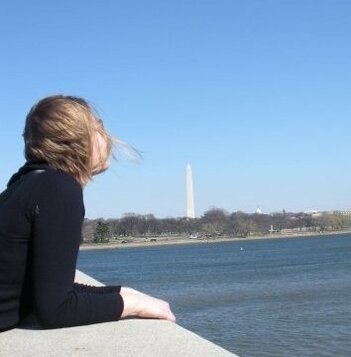
Jim and Lauren and I went out to the Pentagon to see the 9/11 memorial and then to Arlington National Cemetery. We wandered in silence, unknowingly all looking out for the headstones of any Muslim soldiers. Jim eventually had to go, but Lauren and I ended up going to see the Lincoln monument and a few other things things that didn't make quite the same impression. A moment I didn't know she'd captured on film was a moment we took to stare out over the Potomac as it rushed under us. She sent me the photo a few days later, captured truly candidly, a moment when I was letting the day settle in my heart. She captured a moment of true serenity in my soul, a flash of calm in the personal storm I was the eye of, a deep breath when I was flooded with gratitude that I could have perfect, magical days. The day seemed like a gift from the gods, a promise that if I followed my heart, there were more to come. The true gift was her time, her quiet enthusiasm, and her mutual fascination with cemeteries.
It was one of the few days of my life where I knew exactly how important it was as it was happening. I was so grateful for it because I had been on the verge of going down a much darker path. Lauren kept me in the light without ever realizing what she was doing.
That night, I wrote in my journal: "What made me happiest was the fact that, as we hugged goodbye, she said what I was thinking: we have to do this again sometime."
We did. Lauren and I have birthdays on consecutive days and, two months later, we celebrated our birthdays together with a number of other friends in Pittsburgh. That August, a group of us took a trip to Toronto. The following Christmas, I spent the holidays just outside Pittsburgh with Lauren and several others. And in February of 2010, Lauren and two others came to Vancouver to take in the Olympic festivities.
Things tapered off after that largely because people began graduating and getting jobs and a few of us had tapped out our savings a little, but what was built 2009 began largely that weekend in DC, but was cemented by that bonus day I spent with Lauren.
That weekend heavily influenced the next three years of my life, which ultimately led me to where I am now. There are several friendships that were solidified that weekend that have lasted a full decade now, and that is nothing short of magical for me. There have been ups and downs, there have been periods of radio silence, there have even been falling outs, but there have also been bridges rebuilt, channels of communication reopened, and amends made. (Shockingly, like they're real relationships or something?!)
If anyone ever tells you that the internet is no place to make real friends, you can tell them to stuff it on my behalf.
And Lauren? That day in DC remains one of the most perfect days of my life. Thank you for all of it.
January 3, 2019
Dear 2008-Mer...
Dear 2008-Mer,
If memory serves, January 4th is the off-day between the semi-final and the Gold Medal Game of the 2008 World Junior Championship in Pardubice.
Last year was a doozie. 2007. It sort of sucked. But was also bonkers? You did two semesters of full time university, went to the UK to visit J because it was cheaper than going home (and why would you want to do that anyways?), then did emergency medicine training between summer classes, work, moving, and that trip to Mexico City to see the man of the hour. You didn't sleep much. At first that was okay, but it began to wear you down. You're trying to do it all. (And you'll keep trying for another few years because you don't learn lessons quickly.) But it did blow up. That relationship ended, this past semester bombed, and you were so done with it all that you tried to just relax on Christmas Eve and bake and read Harry Potter and have a really quite day.
Then the phone rang. The ex. The one you dumped two months ago. Begging you to forgive him, to give him another chance, to ignore the fact that he has not changed and is not actually promising to change. He wants you back. "I need you. I want you. My life isn't the same without you." You didn't think men said those words outside of Hallmark movies. You tell him you want three days to think about it. (In your head, you are a hard NO.) He calls two days later. Nope, nope, nope. You go drinking with a friend, see an ad for the very first NHL Winter Classic starring non other than the 20-year-old it boy of hockey (and your favourite team's captain), Sidney Crosby.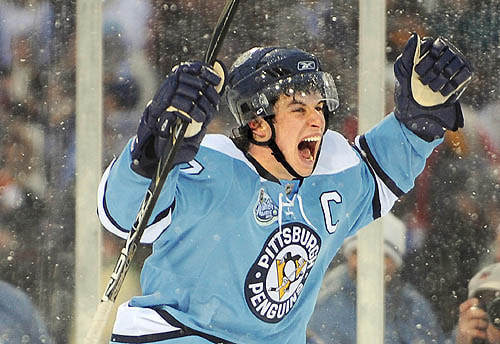 You joke that, forget real men, you're simply going to admire Crosby from afar since you will never meet him (Vancouver is a ways from the Burgh) therefor he can never disappoint you. Your friend jokes back that by the laws of RomCom you are now destined to meet him and have him fall for you. You laugh, but concede that that might be the most Canadian RomCom plot you've ever heard. Your friend tells you to write it.
It's December 26th. You are on winter break. It's not like you have anything better to do, so you start writing it that evening after the opening games of the 2008 WJC.
Here's the thing... by January 4th, you've picked favourites on the Junior team. You don't know this now, but two of them will go on to have great NHL careers, one will have a record-breaking run as a rookie and fall victim to the dreaded sophomore slump, and your absolute favourite will, sadly, never play a game in the NHL. But he will still be your favourite. You'll fly across a continent to see him play, you will dare him to score for you (AND HE WILL), and years later, when he's retired and coaching, he will remember you. And he will still be your favourite. Not because he sent you a present one time when he missed a road trip to your city due to an injury, but because you immortalized something you saw in him in writing. You put that fire you saw down on paper and gave it a name and a different face and made other people fall in love with him: with a fictional character who had the same spark you saw in him. Something you admired so fervently because you so desperately wanted it for yourself.
By January 4th, 2008, you have over a hundred pages in a word document. You don't know it then, but that itch in the back of your mind? You're going to listen to it. You want to finish this, just to prove that you can write a novel, but what you don't know is what this story is going to do to you, to your life, or where it will take you.
You're going to publish it on a blog, just to see if anyone likes it. And they will. Just enough people are going to LOVE it, that it convinces you that maybe this story has merit, maybe you can write something other than academic essays about security studies and genocide. This story is going to make you friends that you will have for years to come. Sure, you lose touch with a few. Sure, you fight with a few others. And, in time, you reconcile with all but one because sometimes even good writers can't find the words to fix things.
The thing is? Eleven years from now, in 2019? The anniversary of the day you realize that maybe you should finish writing this story? You're going to actually publish it.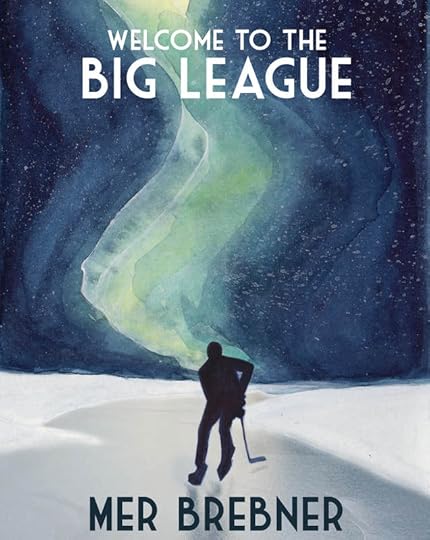 You're going to sit at your computer crying your face off because, for most of the past decade, this was not a day you could have imagined. You couldn't do it. You were too sick. Too unstable. Too depressed. Too discouraged. You're crying because this feels like EVERYTHING all at once: all the fears, all the hopes, all the dreams, all rolled up in a novel that is now out in the world.
And I need to tell you right now that it is 100% worth every second you're going spend on this. This feeling, as painful as it is, is - I can only imagine (but I'm pretty good at that) - an emotional equivalent to giving birth. I'm ugly-crying at my desk at 2:56 a.m. and I am not sure I have ever felt happier. It's a complicated happiness, one rife with terror and uncertainty and apprehension because it's very possible that this book will not sell very many copies.
But that's the kicker: THIS is the Win. Not sales. Not the NYT Bestsellers List. Publication. Plain and simple. Everything else is gravy. No matter what bipolar-distorted daydreams 2008-you had about what being a published author meant, I can promise that you never imagined it felt quite like this. And, to be perfectly honest, I don't think you ever imagined it feeling THIS MUCH.
So, no matter where you think this story is going to lead you? I promise you that where it takes you is so much better than you imagine. The road will not be easy, but you will get there, and when you do, you'll finally have something to balance out the worst day of your life.
Because this might be the best day of my life so far.
If memory serves, January 4th is the off-day between the semi-final and the Gold Medal Game of the 2008 World Junior Championship in Pardubice.
Last year was a doozie. 2007. It sort of sucked. But was also bonkers? You did two semesters of full time university, went to the UK to visit J because it was cheaper than going home (and why would you want to do that anyways?), then did emergency medicine training between summer classes, work, moving, and that trip to Mexico City to see the man of the hour. You didn't sleep much. At first that was okay, but it began to wear you down. You're trying to do it all. (And you'll keep trying for another few years because you don't learn lessons quickly.) But it did blow up. That relationship ended, this past semester bombed, and you were so done with it all that you tried to just relax on Christmas Eve and bake and read Harry Potter and have a really quite day.
Then the phone rang. The ex. The one you dumped two months ago. Begging you to forgive him, to give him another chance, to ignore the fact that he has not changed and is not actually promising to change. He wants you back. "I need you. I want you. My life isn't the same without you." You didn't think men said those words outside of Hallmark movies. You tell him you want three days to think about it. (In your head, you are a hard NO.) He calls two days later. Nope, nope, nope. You go drinking with a friend, see an ad for the very first NHL Winter Classic starring non other than the 20-year-old it boy of hockey (and your favourite team's captain), Sidney Crosby.
You joke that, forget real men, you're simply going to admire Crosby from afar since you will never meet him (Vancouver is a ways from the Burgh) therefor he can never disappoint you. Your friend jokes back that by the laws of RomCom you are now destined to meet him and have him fall for you. You laugh, but concede that that might be the most Canadian RomCom plot you've ever heard. Your friend tells you to write it.It's December 26th. You are on winter break. It's not like you have anything better to do, so you start writing it that evening after the opening games of the 2008 WJC.
Here's the thing... by January 4th, you've picked favourites on the Junior team. You don't know this now, but two of them will go on to have great NHL careers, one will have a record-breaking run as a rookie and fall victim to the dreaded sophomore slump, and your absolute favourite will, sadly, never play a game in the NHL. But he will still be your favourite. You'll fly across a continent to see him play, you will dare him to score for you (AND HE WILL), and years later, when he's retired and coaching, he will remember you. And he will still be your favourite. Not because he sent you a present one time when he missed a road trip to your city due to an injury, but because you immortalized something you saw in him in writing. You put that fire you saw down on paper and gave it a name and a different face and made other people fall in love with him: with a fictional character who had the same spark you saw in him. Something you admired so fervently because you so desperately wanted it for yourself.
By January 4th, 2008, you have over a hundred pages in a word document. You don't know it then, but that itch in the back of your mind? You're going to listen to it. You want to finish this, just to prove that you can write a novel, but what you don't know is what this story is going to do to you, to your life, or where it will take you.
You're going to publish it on a blog, just to see if anyone likes it. And they will. Just enough people are going to LOVE it, that it convinces you that maybe this story has merit, maybe you can write something other than academic essays about security studies and genocide. This story is going to make you friends that you will have for years to come. Sure, you lose touch with a few. Sure, you fight with a few others. And, in time, you reconcile with all but one because sometimes even good writers can't find the words to fix things.
The thing is? Eleven years from now, in 2019? The anniversary of the day you realize that maybe you should finish writing this story? You're going to actually publish it.
You're going to sit at your computer crying your face off because, for most of the past decade, this was not a day you could have imagined. You couldn't do it. You were too sick. Too unstable. Too depressed. Too discouraged. You're crying because this feels like EVERYTHING all at once: all the fears, all the hopes, all the dreams, all rolled up in a novel that is now out in the world. And I need to tell you right now that it is 100% worth every second you're going spend on this. This feeling, as painful as it is, is - I can only imagine (but I'm pretty good at that) - an emotional equivalent to giving birth. I'm ugly-crying at my desk at 2:56 a.m. and I am not sure I have ever felt happier. It's a complicated happiness, one rife with terror and uncertainty and apprehension because it's very possible that this book will not sell very many copies.
But that's the kicker: THIS is the Win. Not sales. Not the NYT Bestsellers List. Publication. Plain and simple. Everything else is gravy. No matter what bipolar-distorted daydreams 2008-you had about what being a published author meant, I can promise that you never imagined it felt quite like this. And, to be perfectly honest, I don't think you ever imagined it feeling THIS MUCH.
So, no matter where you think this story is going to lead you? I promise you that where it takes you is so much better than you imagine. The road will not be easy, but you will get there, and when you do, you'll finally have something to balance out the worst day of your life.
Because this might be the best day of my life so far.
November 15, 2018
When the Fog Clears
My fog crept in over years, receding for short bursts but settling in for good in 2007. I know the day it settled in. It was late November. It was a Friday, around dinner-time and everything just unravelled. I spun out. I lost control of my lungs. A friend too wrapped up in studying for university finals to realize that I wasn't just being a drama queen called the paramedics and sent them to my apartment because she was too busy. When they arrived half an hour later (my apartment was weirdly hard to find), I was still hyperventilating. I spent that night in the ER, and was sent home at dawn with nothing more than instructions to see my therapist more often (I couldn't; she was too busy to see clients more than once every two weeks).
The thing about fog is that it creeps in on you, gradually, until you can no longer get your bearings. You don't always notice it roll in. Sometimes it rolls in while you're sleeping on while you're consumed with a task that distracts you from the weather outside. I know now when the fog set in, but I didn't know it then. I *knew* but I didn't recognize it for what it was, or have the words to explain it. All I knew was that something in me didn't work the way everyone kept insisting it (I) ought to work. I was wrong.
I didn't know how wrong until October 17th, 2013. I hadn't slept in three days. At all. I couldn't. My chest was too tight to allow sleep. I couldn't take a deep breath. For days, I couldn't relax enough to do so. I didn't know yet to call it crippling anxiety. I did a few days later after I saw a doctor who prescribed the same anti-depressants I'd been on from mid-2006 through mid-2009. They didn't help this time, not like they had a few years earlier.
By this point, the fog was so thick I couldn't see my own feet.
I kept trying though. I kept trying to work, trying to write, trying to be a normal human. Deep down I knew why it never seemed to work for long: I was wrong. There *was* something wrong with me. I wasn't a normal human. I was not neurotypical.
When a lot of people are diagnosed with mental health disorders (especially psychiatric disorders), it's common for them to have a period of denial. The way those who lose loved ones or face their own mortality go through relatively predictable phases, the same is true for psychiatric diagnosis. Or so I am told. My mother was diagnosed with cancer when I was a child. She died a decade later, when I was days shy of my eighteenth birthday. I didn't experience denial when she died. I didn't because I'd worked through that years earlier; I'd come to accept her mortality before she died. I mourned her, but her death was simplified by a decade of preparation, or contending with the idea of her one day dying. In a similar way, I experience absolutely no feelings of denial the first time someone first seriously suggested that I might have bipolar disorder. (I say 'seriously' because I'd had people use the word before, derisively, like the insult they believed it to be, like it would somehow convince me to behave the way they wanted me to.) It was late November (again). It was 2015. I'd spent all of 2014 and 2015 in a pea soup fog and it was the first time in nearly two years that I felt like myself. Only... not. I felt wild. Energized. The way I had for half my twenties. I explained my feelings to a friend, told her how I felt like I was falling down the rabbit hole again and I knew it wouldn't last, that I'd crash and burn eventually and feel awful for weeks after.
She'd known me since 1997. Since ninth grade. Since I was a flawless little blonde bop of a girl who ran from class to class because she couldn't siphon off her energy fast enough. She was a doctor now, on maternity leave with her first child. And she diagnosed me while breastfeeding her baby in her living room.
There was no denial. There was research. There were tears. There was relief. I felt like everything finally made sense. Like I'd found the answer to a question no one had ever thought to ask and I had never known needed asking.
The fog didn't lift then. It was still there, but I could see it better now, and I knew it was a thing that wasn't necessary. I knew there was a way to live without it. Different medications cleared the fog a little, enough to show me a rough path, to keep me going until I was finally able to see a psychiatrist, be formally diagnosed, and properly medicated.
The fog cleared in late February of 2017. It feels like a lifetime ago, but it's only been 21 months. All but one of my romantic relationships have been shorter than that span of time. (The outlier is my current sweetie, who has been with me nearly five years and has seen me through the last stretch; he's a bit of a saint.) My meds are dead simple. I'm a textbook case. My psychiatrist is amazing. We geek out about pharmacology and he talks to me as an equal. The skies are mostly clear now. I have begun to use bullet journaling to keep track of symptoms and trends. On the rare occasions that the fog rolls back in, I have proof that it won't last, that it's not forever, that I just have to keep getting through the days, that there are ways to make the fog dissipate, ways to help it along into oblivion.
The hardest thing has been regaining my confidence. I was a naturally gifted and talented child. I found most things easy as a teenager (even if I feel in love with the one sport that challenged me beyond reason). In my twenties, I slept rarely and got more done in a week than I feel I get done now in a month. I got good grades, I had an easy way with people (most charitably called my obsessiveness "passion"), and I had an unnatural ability to make things the way I wanted them to be. Diagnosis would teach me that this overconfidence was a symptom of hypomania, that it wasn't healthy. It's taken me the better part of two years to figure out how much of those traits were inherently my personality (a lot, it turns out), and how much were truly hypomania (maybe the most extreme 20%?).
I began writing just after the fog rolled in for good in 2007. I'd always been creative. Drawing, sewing, acting, writing poems or plays. I wrote my first novel in 5 weeks. My therapist's eyes widened at that. She thought I had ADHD. (I honestly probably do; my dad was diagnosed in his 60s after I explained how his behaviour was classic ADHD.) I know now that it was the beginning of what would be a very long, very intense series of hypomanic episodes. I was rapid-cycling because of my anti-depressants. It's very common. I spent most of 2008 through to February 2010 cycling through moods before crashing into the longest depression I'd ever had. I was deeply depressed from February of 2010 through to the spring of 2011 when I began to level off. All the while, I was writing. Ideas swimming through my head, me just trying to keep up by getting them down on the page fast enough.
After my provisional diagnosis in late 2015, I thought it was enough to get me to a place where I could begin planning my future again. In the summer of 2016, I decided to self-publish a book, made myself a website, commissioned cover art, set up professional social media accounts and then... I chickened out. Or, more to the point, the fog rolled in again.
The fog isn't permanently gone now, but it hasn't rolled back in for longer than five or six days since my psychiatrist put me on proper medication and off the old stop-gap solutions I'd been taking. In 20 months of being properly medicated, I've only spent two weeks in mood episodes. It took some getting used to. It took me a year to trust that it wasn't a fluke, that I'd keep waking up feeling okay every morning. I spent most of 2017 rushing myself into feeling okay and trying to play catch up in my life. I've spent most of 2018 slowing down and settling into myself. (Okay, and buying a house.) I'm comfortable in my self. For the first time in my adult life, I trust my own mind, that it isn't messing with me, lying to me, playing some kind of game, lost in the fog and just trying to dance its way out.
Maybe normal people out there, neurotypical people who've never questioned their sanity (or had others repeatedly question it), are reading this wondering what the point of this is... My point is that getting here, finding my way out of the fog, to 'normal' took me 17 years. I can't take it for granted. I also won't pretend to take it for granted. Or pretend that the road to get here was easy. Or pretend that I'm anything other than I am. No one should ever have to pretend to be something they aren't.
I'm no longer lost in the fog, but I remember how it felt. One day, I'll write about it. In a way, I already have. In a way, I think it works its way into everything I write. After all, we're all lost at points in our lives, looking for the way out of the fog.
Me? I'm going to do what I've always done: I'm going to write my way out of the fog.
The thing about fog is that it creeps in on you, gradually, until you can no longer get your bearings. You don't always notice it roll in. Sometimes it rolls in while you're sleeping on while you're consumed with a task that distracts you from the weather outside. I know now when the fog set in, but I didn't know it then. I *knew* but I didn't recognize it for what it was, or have the words to explain it. All I knew was that something in me didn't work the way everyone kept insisting it (I) ought to work. I was wrong.
I didn't know how wrong until October 17th, 2013. I hadn't slept in three days. At all. I couldn't. My chest was too tight to allow sleep. I couldn't take a deep breath. For days, I couldn't relax enough to do so. I didn't know yet to call it crippling anxiety. I did a few days later after I saw a doctor who prescribed the same anti-depressants I'd been on from mid-2006 through mid-2009. They didn't help this time, not like they had a few years earlier.
By this point, the fog was so thick I couldn't see my own feet.
I kept trying though. I kept trying to work, trying to write, trying to be a normal human. Deep down I knew why it never seemed to work for long: I was wrong. There *was* something wrong with me. I wasn't a normal human. I was not neurotypical.
When a lot of people are diagnosed with mental health disorders (especially psychiatric disorders), it's common for them to have a period of denial. The way those who lose loved ones or face their own mortality go through relatively predictable phases, the same is true for psychiatric diagnosis. Or so I am told. My mother was diagnosed with cancer when I was a child. She died a decade later, when I was days shy of my eighteenth birthday. I didn't experience denial when she died. I didn't because I'd worked through that years earlier; I'd come to accept her mortality before she died. I mourned her, but her death was simplified by a decade of preparation, or contending with the idea of her one day dying. In a similar way, I experience absolutely no feelings of denial the first time someone first seriously suggested that I might have bipolar disorder. (I say 'seriously' because I'd had people use the word before, derisively, like the insult they believed it to be, like it would somehow convince me to behave the way they wanted me to.) It was late November (again). It was 2015. I'd spent all of 2014 and 2015 in a pea soup fog and it was the first time in nearly two years that I felt like myself. Only... not. I felt wild. Energized. The way I had for half my twenties. I explained my feelings to a friend, told her how I felt like I was falling down the rabbit hole again and I knew it wouldn't last, that I'd crash and burn eventually and feel awful for weeks after.
She'd known me since 1997. Since ninth grade. Since I was a flawless little blonde bop of a girl who ran from class to class because she couldn't siphon off her energy fast enough. She was a doctor now, on maternity leave with her first child. And she diagnosed me while breastfeeding her baby in her living room.
There was no denial. There was research. There were tears. There was relief. I felt like everything finally made sense. Like I'd found the answer to a question no one had ever thought to ask and I had never known needed asking.
The fog didn't lift then. It was still there, but I could see it better now, and I knew it was a thing that wasn't necessary. I knew there was a way to live without it. Different medications cleared the fog a little, enough to show me a rough path, to keep me going until I was finally able to see a psychiatrist, be formally diagnosed, and properly medicated.
The fog cleared in late February of 2017. It feels like a lifetime ago, but it's only been 21 months. All but one of my romantic relationships have been shorter than that span of time. (The outlier is my current sweetie, who has been with me nearly five years and has seen me through the last stretch; he's a bit of a saint.) My meds are dead simple. I'm a textbook case. My psychiatrist is amazing. We geek out about pharmacology and he talks to me as an equal. The skies are mostly clear now. I have begun to use bullet journaling to keep track of symptoms and trends. On the rare occasions that the fog rolls back in, I have proof that it won't last, that it's not forever, that I just have to keep getting through the days, that there are ways to make the fog dissipate, ways to help it along into oblivion.
The hardest thing has been regaining my confidence. I was a naturally gifted and talented child. I found most things easy as a teenager (even if I feel in love with the one sport that challenged me beyond reason). In my twenties, I slept rarely and got more done in a week than I feel I get done now in a month. I got good grades, I had an easy way with people (most charitably called my obsessiveness "passion"), and I had an unnatural ability to make things the way I wanted them to be. Diagnosis would teach me that this overconfidence was a symptom of hypomania, that it wasn't healthy. It's taken me the better part of two years to figure out how much of those traits were inherently my personality (a lot, it turns out), and how much were truly hypomania (maybe the most extreme 20%?).
I began writing just after the fog rolled in for good in 2007. I'd always been creative. Drawing, sewing, acting, writing poems or plays. I wrote my first novel in 5 weeks. My therapist's eyes widened at that. She thought I had ADHD. (I honestly probably do; my dad was diagnosed in his 60s after I explained how his behaviour was classic ADHD.) I know now that it was the beginning of what would be a very long, very intense series of hypomanic episodes. I was rapid-cycling because of my anti-depressants. It's very common. I spent most of 2008 through to February 2010 cycling through moods before crashing into the longest depression I'd ever had. I was deeply depressed from February of 2010 through to the spring of 2011 when I began to level off. All the while, I was writing. Ideas swimming through my head, me just trying to keep up by getting them down on the page fast enough.
After my provisional diagnosis in late 2015, I thought it was enough to get me to a place where I could begin planning my future again. In the summer of 2016, I decided to self-publish a book, made myself a website, commissioned cover art, set up professional social media accounts and then... I chickened out. Or, more to the point, the fog rolled in again.
The fog isn't permanently gone now, but it hasn't rolled back in for longer than five or six days since my psychiatrist put me on proper medication and off the old stop-gap solutions I'd been taking. In 20 months of being properly medicated, I've only spent two weeks in mood episodes. It took some getting used to. It took me a year to trust that it wasn't a fluke, that I'd keep waking up feeling okay every morning. I spent most of 2017 rushing myself into feeling okay and trying to play catch up in my life. I've spent most of 2018 slowing down and settling into myself. (Okay, and buying a house.) I'm comfortable in my self. For the first time in my adult life, I trust my own mind, that it isn't messing with me, lying to me, playing some kind of game, lost in the fog and just trying to dance its way out.
Maybe normal people out there, neurotypical people who've never questioned their sanity (or had others repeatedly question it), are reading this wondering what the point of this is... My point is that getting here, finding my way out of the fog, to 'normal' took me 17 years. I can't take it for granted. I also won't pretend to take it for granted. Or pretend that the road to get here was easy. Or pretend that I'm anything other than I am. No one should ever have to pretend to be something they aren't.
I'm no longer lost in the fog, but I remember how it felt. One day, I'll write about it. In a way, I already have. In a way, I think it works its way into everything I write. After all, we're all lost at points in our lives, looking for the way out of the fog.
Me? I'm going to do what I've always done: I'm going to write my way out of the fog.
September 25, 2016
Welcome!
There's no clever way for me to start, so I'll jump right in: this is a writer's blog but it will be about whatever the heck I care about, not just writing. I've had a blog before (lifeispeachy83.blogspot.ca/) and it was intentionally vague in its premise because I like the freedom to rant and rave about whatever I wish, which is pretty much what I'll do here.
I will, of course, publish news about my work and my writing, and maybe even have some contests and giveaways, so stay tuned!
I will, of course, publish news about my work and my writing, and maybe even have some contests and giveaways, so stay tuned!