Sherilyn Decter's Blog
August 24, 2026
The Women Who Kept the Books
The office has emptied out by the time she finds it. One lamp still burning, the adding machine gone quiet under its cover, the great tower around her going dark floor by floor as the last of the day’s clerks ride the elevators down to the street. She has run the same column three times now, and three times it has come up wrong — not wildly wrong, not the kind of wrong that announces itself, but wrong by a few dollars in a place a few dollars have no business being. She could go home. Everyone else has. Instead she sharpens her pencil to a fresh point and starts the column again, because a figure that will not reconcile is a splinter, and she has never once in her life been able to leave one alone.
By the 1920s you would have found her in almost every large building in Chicago — the woman at the ledger, keeping the books. And the ordinary fact of her sitting there, a woman doing that work in that chair, was newer than it looked.
The Business GirlsChicago is where you can watch it happen. The city put up the first skyscrapers, and the new towers filled with what the papers cheerfully called business girls — thousands of them, riding the elevated in every morning to type and file and answer the telephones and keep the accounts of a city that was getting too big to run out of one man’s head. The historian Lisa Fine gave them a whole book, The Souls of the Skyscraper, and the arc she traces is the one that put my bookkeeper in her chair: over a single lifetime, office work went from a man’s occupation to a woman’s. Nobody voted on it. It simply moved, desk by desk, decade by decade, until the sight of a woman running a column of figures under a lamp was so common it stopped being a sight at all.
But bookkeeping sat in a stranger place than the typing pool, and the strangeness is worth pausing on, because it is the whole shape of the thing.

Three young women at work in a Washington, D.C. office, c. 1922; the woman at left operates an addressograph. National Photo Company Collection, Library of Congress. No known restrictions on publication.
A Man’s ChairTyping and stenography went over to women fast and without much argument — they were new kinds of work, attached to a new machine, and no man had ever held them to lose. Bookkeeping was older, and it had been a man’s chair. In the last century the bookkeeper had sat near the center of a firm’s whole life; he knew what came in and what went out, and a merchant trusted him the way you trust the person who has seen your true accounts. That chair did not empty easily. Women came into it later, and slower, and against more resistance — and the resistance broke, in the end, for the least romantic reason there is.
They cost less. One employer told the government’s Women’s Bureau, in as many words, that he had replaced his male ledger clerks with women because the same work came out the other end at a lower unit cost. Some firms went so far as to give the women job titles that didn’t say bookkeeper at all, the better to pay them what a bookkeeper would not have taken. The war of 1917 sped it along — with the men called up, offices that had never seriously considered a woman for the books suddenly considered nothing else — and when the men came home, a good many of those chairs did not come back to them. By 1920 the Department of Labor counted women as nearly half the country’s bookkeepers, cashiers, and accountants. A woman keeping books was no longer a curiosity. She was the expected thing.
Nineteen WomenAnd here is the line that tells you exactly where the chair sat in the world. In that same stretch, accounting was pulling itself up out of the trade it had once been and turning into a profession — examinations, a license, the three respectable letters CPA after the name, guarded by universities that were reluctant to let women into the accounting programs at all. As of 1923, nineteen women in the entire United States held that certificate. Nineteen. Nearly half the bookkeepers in the country were women; nineteen of them, all told, had been let through the door marked accountant. The same figures, the same arithmetic, the same long patience with a ledger — and a line drawn straight down the middle of it, with the men’s side called a profession and the women’s side called a job.
The chair a widow could sit in was on the women’s side of that line, and that mattered more than it sounds.
Most offices in the twenties would not hire a married woman at all. The bar was explicit and it was common; the Women’s Bureau found more married women reporting that they’d been turned away from office work than from any other kind. The logic, such as it was, held that a married woman had a man to keep her and was taking a wage some other family needed. But a widow was another matter. A widow had no man to keep her, and a child or two who ate whether the world approved or not, and if she had a head for figures she could keep a household standing on it — which is precisely the arrangement a great many of them made. The ledger was one of the few honest desks in the new century a woman on her own could count on being allowed to sit at.
The Books Won’t Carry ThatWhat the work asks of a person is the part I keep turning over.
The arithmetic itself goes automatic inside a month; anyone can be taught to add a column. The real skill is quieter and stranger than that. It is noticing — the ability to feel, before you have worked out why, that a figure is wrong. The forty pounds of butter that has quietly become sixty-five. The dollar that appears from nowhere, which means it came from somewhere. The dollar that vanishes, which means it went somewhere. A good bookkeeper does not so much do sums as keep a kind of faith: that everything, in the end, must explain itself, and that there is no such thing as close enough. Bookkeepers of that era talked about the ledger almost as if it were alive, and honest in a way people are not. The books won’t carry that. Those figures won’t stand. It won’t wash. A column was a witness — trustworthy not because numbers are pure, but because, unlike people, they have no reason to lie.
It is a whole way of moving through the world, that faith. Accounts should reconcile. And if accounts should reconcile, then surely families should, and the world should, and a woman who has spent her life making the one come right can be forgiven for expecting the others to follow. Whether they do is another question, and not one a ledger can answer.
I went looking into all of this because of a woman named Ruth, who keeps the books above a Chicago speakeasy in The Velvet Hour. She is one more of the women remaking their lives in early twentieth-century America that I keep writing about — the ones who did the unshowy, underpaid, absolutely load-bearing work while the noisier people got the stories. She came out of these real women: the widows at the ledger, the business girls in the towers, the ones who could tell you to the dollar what the room brought in and exactly where it went, and whom almost nobody thought to thank. The history is theirs. Ruth just gave me somewhere to put it.
The post The Women Who Kept the Books appeared first on Sherilyn Decter.


August 18, 2026
The Question I Couldn’t Outline
I have always been a person who makes plans.
Before I was a novelist, I spent a career in public service — election campaigns, budgets, community projects, and eventually a city. When I ran for mayor, I was asking voters to do something they had never done before: elect a woman, and a decidedly left-of-centre one at that. The landslide that followed had nothing to do with waking up lucky on election day. It came from months of planning — coalition-building, contingency plans, and contingency plans for the contingency plans. You plan the message. You plan the room. You plan for what happens when things go wrong, because if you don’t, they generally do.
Planning has never felt restrictive to me. It has always felt like freedom. The more thoroughly I’ve thought a thing through, the more confidently I can step forward into it.
So when I came to writing, late, in my fifties, I came to it the way I’d come to everything else: with a plan. I am an outliner. Not a loose, few-bullet-points outliner — a deep, detailed, know-the-whole-house-before-you-pour-the-foundation outliner. I like to see the shape of a story before I let myself write a single word of it. The outline is where I do all my worrying, so that the writing can be something closer to joy. For book after book, it worked exactly as I intended.
And then I tried to write The Promise Trilogy, and my method came apart in my hands.
I’ve told the story elsewhere of how Lucie Santoro began — a side character, a foil, a young teacher I invented to stand opposite a hard, solitary woman in another series. (you can check out Why Would She Leave and Moonshiner Mysteries to learn more). What I haven’t said is what it cost me to follow her. Because the moment I sat down to outline her story, I hit a question I could not answer from the safety of a plan.
Why would she leave?
Why would a first-generation Italian daughter walk away from her family, her neighborhood, everything she was raised to be, and cross a continent alone? I could not outline my way to that answer. Believe me, I tried. I built outline after outline, and every one of them rang false, because I was trying to chart the route to a place I hadn’t found yet. The real answer — the only one that could carry Lucie’s weight — couldn’t be reasoned out in advance from the comfort of a planning document. It had to be discovered, in the writing, the slow and graceless way.
So I wrote in the dark. For the first time in my life, I wrote toward a question instead of away from one.
It took more than twenty drafts.
Not twenty drafts because I love revision. Twenty drafts because every time I was sure I’d finally found the book, the book informed me otherwise.
It was never a dramatic collapse. It was exhaustion — the particular exhaustion of repeatedly losing faith and then sitting back down anyway. I’d solve a problem and discover the solution had broken something deeper. I’d fall for a version, spend weeks on it, and slowly realize it wasn’t the book. I wasn’t fighting the work. I was grieving versions of the work.
There was a version where Lucie’s story bent toward romance. I loved parts of that one. Gone. There was a version that wandered happily through the beautiful side streets of the neighborhood — the Giglio festival, the family traditions, all that rich texture. Gone. There was even a fourth book waiting beyond the trilogy, carrying consequences I thought I understood. Gone too. Again and again I’d spend weeks, sometimes months, building a road, only to find it led somewhere Lucie would never have gone. Then I’d tear it up and start again.
There were evenings when shelving the whole thing seemed like the sensible choice. Maybe I wasn’t the writer for this book. Maybe I didn’t know enough yet. Maybe the story needed another decade and another author. But the doubt ran deeper than that, into stranger territory. Some stretches, I wasn’t revising a book at all — I was trying to work out whether the book existed. Was it three books? One? The four I’d once been so sure of? Or not a book yet at all, just a question I’d mistaken for a story? And then the question would come back. Why would she leave? Not louder than before. Just still there. Waiting. So I’d sit back down and try again.
Looking back, I don’t think it was confidence that kept me going — confidence would have quit much sooner. It was stubbornness, and curiosity, and the increasingly uncomfortable suspicion that the answer was in there somewhere, buried in the wreckage of all the versions that hadn’t worked.
What I finally had to accept was that I couldn’t think my way to this book in advance. I had to surrender my certainty about what it should be, in order to find out what it actually was.
Which is, of course, exactly what I was asking of Lucie.
I didn’t see that at first; I was too far down inside the frustration. But somewhere in the middle of all that wreckage, it landed on me that the very thing making this book so hard to write was the thing the book was about. Lucie has to give up the safety of the known path to become herself. I had to give up the safety of the outline to find her. The process and the subject had quietly become the same act. I was writing a story about the cost of becoming, and the price it charged me was my own certainty.
I’ve come to believe something about questions and plans that I didn’t know before this trilogy.
A plan tells you what you already know. It’s a map of territory you’ve at least imagined. That’s its comfort — and it’s a real one; I have no intention of giving up outlining altogether, I’m not so reformed as all that. But a plan can only ever carry you as far as your own foresight reaches, and there are stories — the ones most worth writing — that begin just past the edge of what you can foresee.
A question doesn’t behave that way. A good one — a real one, the kind that won’t leave you alone — refuses to tell you anything. It pulls instead. It draws you somewhere you couldn’t have planned to go, because if you could have planned your way there, you’d never have needed the question at all. Every tidy answer I reached for, the book refused, and every refusal taught me a little more about who Lucie actually was. The question kept turning down my plans until the only answer left standing was the true one.
That may be the most useful thing I know now — about writing, and maybe about more than writing. The plan is where you put what you’re sure of. A question is how you find what you’re not.
I still outline. I expect I always will; it’s how I’m built. But beside every outline now sits a question with no answer yet — the kind that pulls. I’ve learned to trust those questions. They usually know where a story is going long before I do.
Lucie’s story is one story told in three parts — Book One, Book Two, and Book Three. Jump right in at the beginning with Book One, or read about the whole trilogy .
The post The Question I Couldn’t Outline appeared first on Sherilyn Decter.
August 17, 2026
Why Would She Leave? The Story Behind The Promise Trilogy
Lucie Santoro arrived as a supporting character — a foil. I was deep in the Moonshiner Mysteries, where my Delores Bailey is sarcastic, embittered, half-reclusive, and I needed someone to stand against all of that. So I built her opposite: community-minded, nurturing, a teacher people trusted. I made Lucie a teacher because I needed someone who believed in people.
That should have been enough. It wasn’t.Because Lucie refused to behave like a supporting character. She turned up in a remote Montana mining town, teaching school an ocean and a continent away from the East Harlem she came from — and the longer I wrote her, the more one question nagged at me until I couldn’t hear anything else.
Why would she leave?Not “what happens to her” — that’s the easy question, the plot question. The one I couldn’t put down was harder. What could possibly be powerful enough to pull a first-generation Italian daughter away from everything she was raised to be? Away from the family, the parish, the neighborhood that had kept its arms around her since the day she was born?
In the early 1920s, a young Italian woman did not simply pack a bag and cross the country alone. Every norm I could think of — gender, tradition, family duty, even the plain comfort of the familiar — pointed the other way.
So the reason had to be enormous. And every easy answer I reached for fell apart in my hands.
Pregnancy? Too easy. Romance? Not enough. Adventure? Not for this woman — she was never one to run toward excitement. The more I learned about the lives of first-generation Italian daughters, the more extraordinary her leaving became, and the more certain I was that it could only be one kind of reason. The answer had to be something she believed in.
So I went looking — not for a plot, but for something worth believing in. And the years just after the Great War were full of it: labor unrest, the Red Scare, the Palmer Raids, whole immigrant neighborhoods living under suspicion and pressure. And then I found the settlement houses — networks of women organizing their own communities, teaching English and citizenship and the law to families who had no one else to teach them. Women who decided that belonging somewhere meant taking responsibility for it.
That was the moment the pieces clicked. Not as research — as recognition. The settlement houses pulled every thread together at once: family and women and education and immigrants and community and hope. They didn’t feel like a fact I’d dug up. They felt like the ground Lucie had been standing on all along.
And suddenly the story I was chasing wasn’t about why she left.
It was about who she became when she chose to.
Here is the thing most readers expect me to say next: that Lucie left to find her freedom.
She didn’t. That’s not the cost, and it’s not the gift.
Because Lucie already has more freedom than most of the women around her. She has an education. She has a respected profession. She has a family that loves her. What she gives up when she walks through that door isn’t freedom at all.
It’s belonging. And belonging is far more expensive.
She gives up her buon nome — her good name — and not in our modern sense, where reputation is a kind of personal brand you manage. In East Harlem, Lucie does not belong only to herself. She belongs to the Santoros. Every choice she makes reflects on parents, siblings, cousins, the children not yet born. When she steps toward labor activism and public controversy, she is spending something that was never entirely hers to spend. She knows exactly what it’s worth. That’s what makes it cost so much.
She gives up her standing as the good girl — and this may be the deepest personal price. Lucie begins as the woman everyone approves of. The reliable daughter. The respected teacher. The one who does the right thing. Most protagonists begin as rebels. Lucie begins as an achiever. And the hard truth of her story is that becoming herself means disappointing people who are not villains. She doesn’t only defy oppressors. She wounds people she loves.
She gives up her certainty. The Lucie of the first pages believes there is a correct path: study hard, work hard, be respectable, do your duty. The trilogy teaches her, slowly and against her will, that duty can point in two directions at once. You can obey authority and betray justice. You can honor your family and betray yourself. You can keep the peace and abandon the truth. Once she has seen those contradictions, she cannot unsee them, and she can never go back to the comforting simplicity she started with.
And she gives up the future already prepared for her — which is the cost a modern reader is most likely to miss. A respectable future was not a trap she was fleeing. It was valuable: marriage prospects, community standing, professional stability, acceptance. Lucie is not escaping misery. She is walking away from security. That is what makes the choice so much harder, and so much braver.
But the deepest cost is more specific than any of these. Lucie loses the ability to be innocent about power. Once she has seen the machinery of exclusion — how immigrants are treated, how labor is suppressed, how institutions fail the very people they claim to serve — she cannot unknow it. The teacher who wanted to help people becomes the woman who understands why help was ever necessary. Knowledge costs her comfort. She pays in it for the rest of the trilogy.
And here is why I think a reader today can feel all of this in her chest, even if she has never feared what Mrs. Esposito might say at Sunday Mass.
Because almost everyone, eventually, faces a version of Lucie’s decision. Not a labor strike or a Red Scare — a belonging decision. The moment when the people who love you expect one thing and your conscience asks for another. When staying accepted requires staying silent. When the version of yourself everyone applauds is no longer a version you can honestly inhabit.
Most of us have stood in that doorway. Leaving a faith. Changing a career. Ending a marriage. Telling the truth about who you are. Speaking up at work. Moving away from family. Choosing art over security, or caregiving over ambition. The details differ wildly. The emotional mathematics are always the same: you gain the possibility of becoming yourself, and you lose the certainty that everyone will come with you.
That is the engine of Lucie’s story. Not can she change the world? — but what are you willing to risk to become the person you believe you were meant to be?
It is also, I have come to realize, the question underneath all four of my series — the same bill, paid in different currencies by very different women.
And what I love about where the trilogy finally landed is that it refuses to pretend the cost disappears. Lucie pays it. People she loves are hurt. Doors close. Her name is talked over in kitchens and church vestibules. She becomes someone some people admire and others quietly distrust. The book never buys her becoming back at a discount.
It only argues that the cost of not becoming would have been greater.
The particulars are historical. The choice is timeless.
I should tell you something about how this book got written, because it turns out to be the same story. I am an outliner by nature, and this trilogy refused to be written that way — more than twenty drafts, chasing one question through every one of them. I had to give up my certainty about what the book should be in order to find out what it was, which is, of course, exactly what I was asking of Lucie.
There was one more thing I couldn’t outline my way around. I wrote much of this trilogy in years when the history I was researching stopped feeling safely historical. I went into the archives of 1919 and 1920 expecting a closed chapter — and instead I kept finding notes I recognized. Suspicion pointed at immigrants. Fear made useful by the people who stood to gain from it. Demands for conformity. Pressure to stay quiet. The old, hard question of who really belongs, and who gets to decide. Communities turning inward against a threat they’d been taught to see.
I want to be careful here, because The Promise Trilogy is not a political essay, and I never wanted it to be one. It doesn’t point at any one leader or any one headline. It isn’t about government at all.
It’s about courage. Specifically, the particular courage it takes to stay kind, open-hearted, and engaged when fear would be so much easier — when turning inward and pulling the door shut would be the safe and forgivable thing to do.
That is why the settlement-house women moved me the way they did. Faced with exactly that fear, they chose their neighbors. They chose community over division, again and again, in conditions that gave them every excuse not to. That is the choice at the center of these books. It’s why Lucie mattered to me enough to pull her out of someone else’s series and give her three of her own.
We know what we are, but know not what we may be. I kept that line from Hamlet near me the whole time. Lucie knows exactly what she is — daughter, sister, teacher, a respectable young woman with a respectable future already chosen for her. The trilogy exists because I couldn’t stop wondering about the rest of that sentence. What she might be.
She didn’t know, when she took that first step away from home.
Neither did I, when I started writing her.
Lucie’s story is one story told in three parts — Book One, Book Two, and Book Three. Jump right in at the beginning with Book One, or read about the whole trilogy .
The post Why Would She Leave? The Story Behind The Promise Trilogy appeared first on Sherilyn Decter.
Women Adrift Chicago
She had her own key.
It is a small thing, a key — but in a Chicago rooming house in the 1920s, it meant a great deal. It meant a door that was hers to lock, a room no one entered without her leave, a lamp she could keep burning as late as she pleased with no one to say otherwise. For a young woman raised to expect she would pass from her father’s house straight into her husband’s, without a single night of her own in between, a rented room with a private key was something close to astonishing. She paid for it out of her own wages. Under that roof, she answered to no one but herself.
The reformers had a word for her. They called her a woman adrift.
The reformers’ wordIt was not a word these women chose for themselves. It came from the charity workers and the vice investigators and the authors of earnest civic reports — the people whose business it was to worry about the city — and it carried, folded up inside it, a whole set of assumptions. To be adrift was to have come loose from your moorings. It was to float, unanchored, away from the safe harbor where a woman was meant to stay: a family, a household, a husband, the watchful eyes of people who had known you since you were born. The word didn’t really describe where these women were. It described what the reformers feared they had left behind.
And there were a great many of them to worry about. For two generations, young women had been pouring into American cities to take up the new work the modern economy kept inventing — as typists and telephone operators, shop clerks and factory hands, waitresses and bookkeepers. In Chicago they arrived by the thousands, and a good many of them, unable or unwilling to board with relatives, did the one thing that alarmed the reformers most: they got a room of their own.
Not all of them chose itIt’s worth saying plainly, because the reformers’ word rather obscures it: a great many of these women had not chosen this life at all. Circumstance had delivered them into it — a father’s death, a family too poor to keep them, a husband lost to accident or illness — setting them on their own with a suddenness that had nothing to do with restlessness or appetite. And after 1918 there were more of them than ever. The Great War had killed a generation of young men; the influenza close behind it killed more; and the marriage arithmetic that women had been raised to count on simply stopped working out. Britain, which had lost so many men that the 1921 census laid the gap bare, minted its own uncomfortable label for the women left without the husbands they had been promised: the surplus women. Two countries, two uneasy words — and beneath both the same fact: a great many women were now living lives no one had prepared them for, and for a good number of them, that life began with the key to a rented room.
The furnished-room districtsThey gathered in what the city called its furnished-room districts — whole stretches of neighborhood, much of the near North Side among them, given over to rooming houses where a working woman could rent a single furnished room by the week. It was not luxurious. A bed, a dresser, a washstand, a window; meals taken at a lunch counter, or cooked in quiet defiance of the rules on a forbidden gas ring; a bathroom shared with strangers down the hall. But it was cheap — it had to be, because a woman’s wages left almost no margin — and it was, above all, private.
No landlady who had known you as a child. No brothers keeping a tally of your comings and goings. A young woman in a furnished room could come home at an hour of her own choosing, keep company with whom she liked, and spend an evening exactly as she saw fit. The very anonymity the reformers found so sinister was, to a great many of the women living inside it, the whole of the appeal.
No man past the lobbyThe reformers did not merely wring their hands. They built. Alarmed by the picture of young women loose in the city — a fear that ran, in those years, to a genuine panic about vice and the ruin of innocent girls — they raised an entire architecture of protective housing meant to catch the woman adrift before the city could. The YWCA opened boarding homes. Chicago had its Eleanor Clubs, subsidized residences where a respectable working girl could live cheaply among her own kind, under a roof that kept an eye on her.

Eleanor Club One, Chicago, one of the residences created to provide affordable, supervised housing for working women. Curt Teich Postcard Archives/Newberry Library. Public domain.
These homes offered real things: safety, company, a hot supper, a reputation beyond question. They also came with rules — a curfew, a matron, a register at the door, and the one that captured the whole spirit of the arrangement: no gentleman caller ever came past the lobby. A young man might sit with you in the front parlor, in full view of the house, and not one step farther.
For some women, the bargain was worth it. For a great many others, though, the watchful residence was exactly the thing they had left home to escape. Offered the anonymous furnished room or the supervised parlor, the private key or the matron’s register, many chose the room anyway — and thought the freedom worth what it cost them.
The word and the womanAdrift was the reformers’ word, never hers. She had a room, a wage, and a key of her own, in a city that had not yet made up its mind whether to admire such a woman or rescue her. And she went about the plain, daily business of a life she was running herself — paying the rent, keeping the hours she chose, deciding each night how long to leave the lamp burning. It was the most ordinary thing in the world, and it was also, in its quiet way, a woman remaking her life in early twentieth-century America, one week’s rent at a time.
Whether adrift was ever a fair word for her is worth a great deal more than I can give it here. That argument belongs to the fiction — and to the woman living inside it, who had, I suspect, a word or two of her own.
Della, in The Velvet Hour, is one of those women. She has a room of her own, wages of her own, and very little interest in being rescued from either. The world around her might have called her adrift. Della would have called it standing on her own two feet — and probably wondered why anyone thought they had the right to ask.
The post Women Adrift Chicago appeared first on Sherilyn Decter.
June 23, 2026
The Promise Trilogy Is Here: Inside Lucie Santoro’s 1919 East Harlem

Women calling to one another in Italian from the fire escapes. The scratch of push brooms across the sidewalks. Children playing stickball in the street below, their voices drifting up through the open windows of a hot June gymnasium.
This is East Harlem in 1919 — a neighborhood where the old country still clings to everything, even a thoroughly American ceremony like the graduation about to begin. And backstage, waiting for her name to be called, stands seventeen-year-old Lucie Santoro. All around her is the world she has grown up in. It is not, she has begun to understand, the world she means to grow old in.
In the audience sits her mother, who never wanted her daughter to stay in school this long. Past the gymnasium doors waits the future everyone has already chosen for her — marriage, family, duty, the good and respectable life. In a few moments her name will be called. She will walk across the stage and collect a diploma.
It is a small thing. It will change everything.
Because Lucie knows, even now, that crossing that stage is not merely accepting a diploma. It is choosing a different future than the one waiting for her at home. That walk is the first step in The Promise Trilogy.
The neighborhood that made herBy 1919, East Harlem was one of the largest Italian communities in America — families who had crossed the same ocean, often from the same villages in the Italian south, now living within earshot of the same church bells. It was close, devout, and self-aware in ways that are hard to picture now: news traveled stoop to stoop faster than any newspaper, and a family’s good name was its hardest currency. The Italians had a word for the fierce, watchful loyalty that held it all together — campanilismo, loyalty to the bell tower — and it shaped every choice a young woman like Lucie was permitted to make.
This is the world that made Lucie Santoro — and it did make her. The same neighborhood that watched her also raised her, and gave her the language, the faith, and the fierce sense of obligation she would carry the rest of her life. Hers is not the story of a bad world she longs to escape. It is the harder story of two goods pulling against each other — belonging and becoming — and of what it costs a young woman to choose between them.
Because Lucie is no rebel. She begins as the good girl, the reliable daughter, the teacher everyone approves of — an achiever, not an outsider, which is exactly what makes her choice cost so much. To become herself, she will have to walk away not from misery but from a good life: a respected profession, a family that loves her, a future already secured, its terms quietly drawn up around her.
And yet 1919 was a year that made other futures suddenly thinkable. For the first time, women around Lucie were talking openly about things that had never seemed within reach — the vote, won in New York State just two years before; an education; a profession of one’s own. For a girl standing backstage at her graduation, none of it was abstract. It was permission to want.
The Promise Trilogy is one story told in three movements. The books are named simply — Book One, Book Two, Book Three — so there is never any doubt that they belong together: a single arc, meant to be read in sequence. All three arrive together on August 4, 2026, tracing Lucie’s journey through awakening, choosing, and becoming.
Book One is the awakening. It opens inside that close, watchful world and ends somewhere quieter and far more dangerous: with Lucie having seen, clearly and for the first time, the gap between what she is and what she has been told to be. A marriage is being arranged for her; a different future — a classroom of her own — has begun to call. She knows now what she wants, and she cannot unknow it. For a while longer, she is still trying to live in both worlds at once.
Book Two is the choosing. In the late summer of 1919, Lucie leaves East Harlem for the Lower East Side and the real Henry Street Settlement — the institution founded by Lillian Wald, the nurse who walked into a tenement in 1893, called that morning her “baptism by fire,” and stayed on Henry Street for the next forty years. Wald and the women around her had decided that belonging somewhere meant taking responsibility for it: they taught English and citizenship and the law to families who had no one else to teach them, and when the influenza came they ran toward the sick rather than away. By the summer Lucie arrives, the worst of it is a year behind them — but the neighborhood is still counting the chairs it cannot fill.
This is the world that gives Lucie something worth believing in, and worth risking her good name for. But the double life she has been carrying cannot hold. Duty begins to point in two directions at once, and she finds she cannot honor both. The choice, when it comes, costs her nearly everything. Exile is the price of her integrity.
Book Three is the becoming. It arrives as the year turns dangerous: the Palmer Raids, the Red Scare at full pitch, federal agents slipping into the very citizenship classrooms meant to welcome immigrants in — using the promise of protection, or the threat of deportation, to turn neighbors into informants. 1919 was the most turbulent year in American labor history; more than four million workers walked off the job, and the government answered not by hearing them but by calling them Bolsheviks.
Into that pressure Lucie carries the question the first two books have been building toward: what happens when you build a life on truth instead of duty?
The answer is found less on any platform than at a kitchen table — among the women doing the arithmetic of survival in pencil on the backs of envelopes, stretching too little across too many, holding the line when the mounted police advance. It is the story of who Lucie becomes once she has chosen, and of the new world — literal and symbolic — she has to cross to reach it. The trilogy never buys her becoming back at a discount. It only insists that the cost of not becoming would have been greater.
These are books about women who refused to be small — about one immigrant daughter’s decision to become the person she believed she was meant to be, and what it cost her to do it in 1919. The Santoros are invented, and so is Lucie. But the world they move through is real, drawn as faithfully as the record allows: the church on 115th Street, the settlement house on Henry Street, the raids and the strikes, the Triangle fire still throwing its long shadow, the artichoke racket that would come to squeeze every market stall in the neighborhood That is the promise this kind of fiction makes — the people are mine, but the world is true. It all belongs to the larger body of work I’ve been building about women remaking their lives in early 20th-century America, and the cost that becoming always seems to carry.
If you’d like the real history first, step into the world of East Harlem’s Italian immigrant community, the Henry Street Settlement and the women who built it, or the year 1919 itself. And if you’re ready for Lucie, all three books of The Promise Trilogy are available on Amazon.

It’s graduation day. Her name is about to be called. Step inside the East Harlem that made Lucie Santoro — the neighborhood that sees everything, forgives nothing, and loves her anyway.
The post The Promise Trilogy Is Here: Inside Lucie Santoro’s 1919 East Harlem appeared first on Sherilyn Decter.
The Year Everything Stopped: 1919 and the Workers Who Walked Out
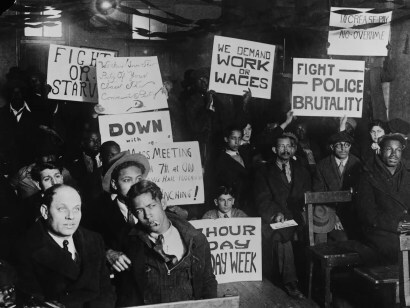
In 1919, one of every five American workers walked off the job.
Let that number settle. Not one in fifty. Not one in twenty. One in five. More than four million people — steelworkers, coal miners, garment workers, telephone operators, police officers, streetcar drivers — decided, in the same impossible year, that the conditions of their work were no longer acceptable. It was the most turbulent year in American labor history, and it’s the year The Promise Trilogy walks directly into.
I didn’t choose 1919 for the drama, though there’s plenty. I chose it because 1919 is the year when all the forces that had been building for decades — the labor exploitation, the immigrant surveillance, the gap between what the country promised and what it delivered — collided at once. Everything that had been simmering boiled over, and the country had to decide what it believed about the people who built it.
The Daily MathThe history books remember the strikes by their names: the Great Steel Strike, the Boston Police Strike, the Seattle General Strike, the coal strikes that shut down mines across Appalachia. The numbers are staggering — 365,000 steelworkers alone, walking out of mills in six states.
But what the history sometimes misses — and what I wanted the novels to capture — is that these weren’t radical revolutionaries. They were men who wanted shorter hours, safer scaffolding, and wages that kept pace with the price of bread.
In The Promise Trilogy, Pavel files a safety report about the scaffolding at his construction site. The report goes nowhere. The scaffolding collapses. Viktor studies for his citizenship exam while working nights in a subway tunnel that could kill him — because the clean jobs don’t exist for men whose names are in federal files. These aren’t dramatic inventions. They’re the daily math of immigrant labor in 1919: the calculation every working family made between the danger of the job and the danger of having no job at all.
The steel mills ran twelve-hour shifts, seven days a week. A steelworker’s annual earnings barely covered the cost of feeding a family of four. When workers asked for an eight-hour day — not a revolution, just eight hours — the companies called them Bolsheviks and sent in the police.
The Machine That Broke SolidarityThe federal government’s response to the 1919 strikes was not to address the conditions that drove workers to the picket lines. It was to call them dangerous and treat their organizing as a national security threat.
The Palmer Raids targeted immigrant workers with particular ferocity. A man who attended a union meeting could find his name on a deportation list. A woman who organized a relief kitchen for strikers’ families could find a federal agent at her door. The machinery of surveillance — Bureau of Immigration agents, Pinkerton detectives hired by the companies, informants recruited from inside the communities — was designed to make organizing so costly that workers would choose silence over solidarity.
Companies exploited ethnic divisions with professional efficiency, using Black workers as strikebreakers against white picket lines and immigrant workers against native-born ones. The strategy worked because the divisions were real — reinforced by hiring practices, neighborhood boundaries, and old-country suspicions that didn’t dissolve at the American shore. The cross-ethnic solidarity that organizers dreamed of — Italian construction workers standing beside Polish steelworkers beside Russian garment workers beside Irish dockmen — was attempted in 1919 and rarely achieved.
In the novel, Lucie writes rally speeches that have to do three things at once: inspire the workers in the room, persuade the public reading about it tomorrow, and give the federal agents taking notes nothing they can use. She frames workers’ demands in constitutional language — the same amendments she taught in her citizenship classroom — because wrapping a labor demand in patriotic cloth is the only way to make federal interference look like overreach rather than protection.
The Women Behind the Line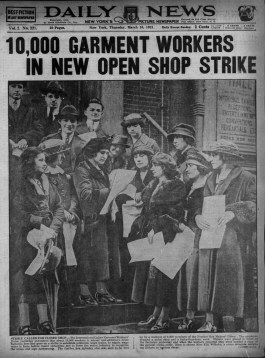 Behind every strike in 1919, there were women doing the work that made the picket lines possible. Feeding the families of striking workers. Organizing childcare so mothers could stand on the line themselves. Tracking which families needed coal, which needed medicine, which needed a lawyer who wouldn’t charge. This infrastructure — informal, dispersed, run out of kitchens and church basements — was as essential to the strikes as the picket signs, and it was almost entirely invisible in the newspapers.
The Women’s Trade Union League, founded in 1903, had been building cross-class alliances between working women and wealthy reformers for more than a decade. But in 1919, the most important organizing happened closer to the ground — in the mutual aid networks that immigrant women had been running since they arrived. Lillian Wald knew these networks existed because her nurses walked through them every day. When she proposed the women’s auxiliary in the novel — officially tasked with flu relief, unofficially a system for documenting what was happening to working families under surveillance — she was describing something that already existed in dozens of kitchens across the Lower East Side.
 A Family Story
I should be honest about something. This history is not entirely abstract for me.
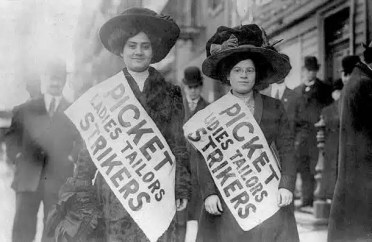
In June 1919 — five months before Lucie’s fictional rally — the Winnipeg General Strike shut down an entire Canadian city. For six weeks, thirty thousand workers walked off the job in solidarity across every trade and craft. Streetcars stopped running. Mail stopped moving. On June 21 — Bloody Saturday — the Royal North-West Mounted Police charged into a crowd of strikers. Two men were killed. Dozens were injured.
My grandfather was a striking streetcar operator, active in the union. The family story — the kind that gets passed down at kitchen tables, polished by retelling but never losing its sharp edges — is that he was injured in the horse charge and had to walk home through the back streets and shadows, trying not to be seen. I don’t know every detail of that walk. I know the family kept the story. I know they thought it mattered enough to tell.
When I wrote the scene where mounted police advance on the women at the docks — when I wrote the women stepping forward instead of back, because a horse trained for crowd control won’t trample a line that holds — I was thinking about Winnipeg. About what it costs to stand still when horses are coming. About the walk home afterward, through the shadows, when standing still has consequences.
What 1919 BuiltThe strikes of 1919 mostly failed, in the narrow sense. The steel strike was broken. The coal miners were ordered back to work by federal injunction. The Boston police who struck were fired and never rehired. The Palmer Raids picked off organizers and terrified their communities into silence.
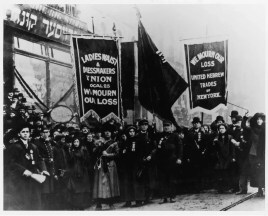 But failure in 1919 planted seeds that grew. Frances Perkins, shaped by the Triangle fire and the labor battles that followed, would become FDR’s Secretary of Labor and the architect of the New Deal. The eight-hour day the steelworkers demanded in 1919 became law in 1923. The social welfare policies that emerged from the Depression — Social Security, the Fair Labor Standards Act, the right to organize — were built by people who had been in those rooms in 1919, who had done the arithmetic on scraps of paper, who remembered what it cost.
In The Promise Trilogy, the rally at the docks doesn’t solve anything. It’s one day. But it’s a day when people who had every reason to stay apart chose to stand together, and the choosing mattered more than the outcome. That’s what 1919 was — not a victory, but a rehearsal for the victories that came later, paid for by people whose names most of us will never know.
The Promise Trilogy launches August 4, 2026.
The post The Year Everything Stopped: 1919 and the Workers Who Walked Out appeared first on Sherilyn Decter.
A Different Parade: Black Labor and the Color Line in 1919
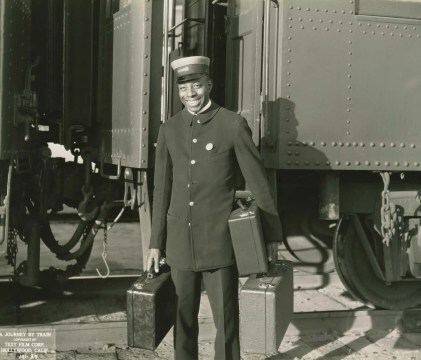
“My unit came home through Newport News. Still in uniform. Marched off the ship and straight into a colored waiting room.” A pause. “Same uniform as your brother, Miss Santoro. Different parade.”
That’s Clarence Washington speaking — a Pullman porter and one of the most quietly important characters in Book Three of The Promise Trilogy. He says it in a basement meeting where Italian construction workers, Polish steelworkers, Russian garment workers, and Irish dockmen are trying to build the kind of cross-ethnic solidarity that has never fully succeeded in New York. Clarence is the only Black man in the room. He’s also the one who understands the machinery best, because he’s watched it operate in places where it wore no disguise at all.
Clarence is fictional. His world is not.
The Red SummerHistorians call 1919 the Red Summer — not for Bolshevism, but for blood. More than two dozen race massacres erupted across the United States between April and November. In Chicago, a Black teenager swimming in Lake Michigan drifted past an invisible boundary into white-designated water and was stoned. He drowned. The violence that followed lasted a week: thirty-eight dead, over five hundred injured, a thousand Black families left homeless. In Elaine, Arkansas, Black sharecroppers who tried to organize a union were met with a massacre that killed as many as two hundred people — the exact number remains disputed because the dead weren’t all counted.
Black veterans who had served in France — who had fought in the same war as their white neighbors — returned home to find that their service had earned them nothing. Not safety, not respect, not even the right to walk freely through the towns they’d left. Some were attacked still in uniform. The message was explicit: the democracy you fought for overseas does not apply to you here.
This was the America Clarence Washington came home to. And it was the same America where four million workers were walking off their jobs in the largest wave of strikes the country had ever seen.
The Arithmetic of DivisionThe connection between racial violence and labor organizing in 1919 was not coincidental. It was structural.
Companies facing strikes had a reliable playbook: hire Black workers as strikebreakers to undermine white picket lines, then abandon those same workers when the strikes ended. The strategy accomplished two things at once — it broke the strike and deepened the racial hostility that kept workers from organizing across the color line. As Clarence puts it in the novel: “Down South, they hire Black men as scabs to break white strikes, then turn around and hire white men to beat the Black organizers. Same company. Same invoice.”
The Great Steel Strike of 1919 — 350,000 workers walking off the job across six states — was broken in part by this tactic. Steel companies recruited Black workers from the South with promises of good wages and steady employment, then placed them in the mills the strikers had emptied. The white strikers, many of them immigrants themselves, saw Black workers crossing their picket lines and drew the conclusion the companies intended: that solidarity had a color line.
It was a lie. But it was an effective one, and it worked because the racism was already there — in the hiring halls that kept Black workers out of skilled trades, in the neighborhoods where housing covenants drew invisible borders, in the unions themselves, many of which excluded Black members by constitution or by practice. The companies didn’t create the division. They weaponized it.
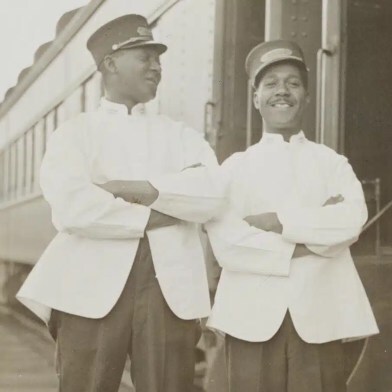
The Pullman Porters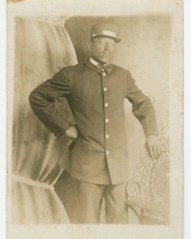 Clarence Washington is a Pullman porter — one of the most distinctive and important positions in Black working-class life in the early twentieth century. Pullman porters staffed the sleeping cars on America’s railroads, serving white passengers with a level of attentiveness that was both professional and enforced. The work required education, composure, and the ability to navigate white expectations with a precision that left no room for error.
The porters occupied a paradoxical position. They were among the most well-traveled and well-connected Black workers in the country — they moved between cities, carried newspapers and ideas across state lines, and built networks that stretched from Chicago to New York to Atlanta. They were also completely dependent on white passengers’ goodwill for their livelihood, working for tips in a system designed to keep them grateful and compliant.
In 1919, the Brotherhood of Sleeping Car Porters didn’t yet exist — A. Philip Randolph wouldn’t found it until 1925. But the porters were already building the relationships and the organizational infrastructure that would make that union possible. They were doing it quietly, carefully, in the spaces between service — the same way women organized in kitchens and attics, under cover of work that was already expected of them.
I wanted Clarence in the novel because the labor story of 1919 is incomplete without the people who were told that solidarity had a color line. His presence at the rally — his men holding the south bays in their pressed uniforms — represents a fragile, imperfect alliance that was real in its aspiration even when it fell short in practice.
The Alliance That Almost Was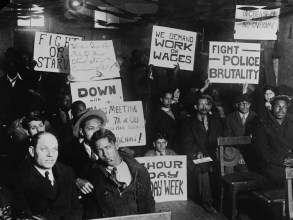 The cross-ethnic, cross-racial solidarity at the heart of The Promise Trilogy‘s final act was the dream of 1919 labor organizing — and its greatest failure. In city after city, the divisions between groups ran deeper than language or neighborhood. Companies exploited those divisions with professional efficiency. Federal agents, surveilling immigrant communities during the Palmer Raids, added another layer of pressure — the threat of deportation made immigrant workers afraid to organize, and afraid workers make poor allies.
But the dream wasn’t entirely a fantasy. In some cities, in some strikes, the lines did hold — briefly, imperfectly, long enough to glimpse what was possible. The 1912 Bread and Roses strike in Lawrence, Massachusetts, brought together workers from more than forty nationalities. The 1919 steel strike, for all its failures, saw immigrant workers from a dozen countries stand together on the same picket lines.
What these moments had in common was someone doing the work of translation — not just linguistic, but moral. Someone standing in a room full of people who had every reason to distrust each other and finding the words that made the common ground visible. In the novel, that’s Lucie’s job: writing rally speeches in five languages that “stir without setting fires,” framing workers’ demands in constitutional language that makes federal interference look like overreach rather than protection.
Clarence understands what Lucie is attempting, and he understands its limits. “Could lift us higher than we’ve ever stood,” he says of the planned rally. “Or it could break us clean in two.” Then, quietly: “And when trouble comes — it won’t come evenly.”
The room hears what he means. Nobody argues.
Why This Story Belongs in the TrilogyI wrote The Promise Trilogy as a story about women remaking their lives in early 20th-century America — Italian immigrant women, specifically, navigating the distance between the old world and the new. But a story about immigrant workers in 1919 that doesn’t include the color line isn’t honest history. It’s a comfortable excerpt.
Clarence Washington isn’t in the novel to check a box. He’s there because the world Lucie moves through — the settlement houses, the union halls, the docks where the rally converges — was shaped as much by the people who were excluded as by the people who were welcomed. The same federal agents who surveilled Lucie’s classroom also surveilled Black organizers. The same companies that exploited her students’ labor also exploited Clarence’s. The machinery didn’t care about the distinction. It only cared about keeping the parts from connecting.
The Promise Trilogy launches August 4, 2026.
The post A Different Parade: Black Labor and the Color Line in 1919 appeared first on Sherilyn Decter.
The Classroom Door: When the Government Came for the Students
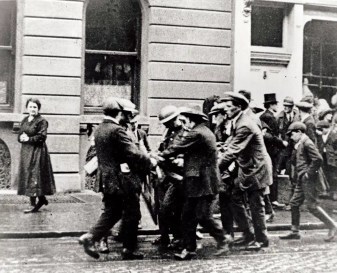 “This amendment you teach — it protects us when authorities ask questions about missing men, ya?”
When, not if. The grammar of experience.
That question comes early in Book Three of The Promise Trilogy, asked by a Russian immigrant studying for his citizenship exam at the Henry Street Settlement in the fall of 1919. His teacher, Lucie Santoro, writes the Fourth Amendment on the blackboard while five chairs in her classroom sit empty — because the constitutional protections she’s teaching haven’t held for the men who used to sit in them.
It’s a fictional scene. The empty chairs are not.
The Raids That Had No Name Yet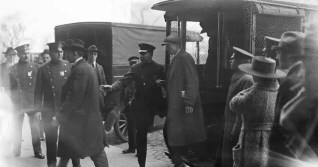 In the fall of 1919, the United States government launched a coordinated campaign to identify, arrest, and deport immigrants suspected of radical political beliefs. The Palmer Raids — named for Attorney General A. Mitchell Palmer — would eventually sweep through more than thirty cities, targeting union organizers, socialists, anarchists, and anyone whose politics could be described as dangerously foreign. In practice, the definition of “dangerous” proved remarkably elastic. Speaking Russian was suspicious. Attending a meeting was evidence. Reading the wrong newspaper was enough.
But the raids didn’t arrive all at once. They were preceded by months of surveillance so quiet that most of the people being watched didn’t know it until the knock came.
What struck me most in my research wasn’t the midnight arrests or the deportation ships — I expected those. What I didn’t expect was how thoroughly the federal government used education as a surveillance tool. Citizenship classes, literacy programs, night schools — the very institutions designed to help immigrants become Americans were infiltrated by Bureau of Immigration agents looking for evidence of radical thinking. A man who learned enough English to organize his coworkers was, in the government’s eyes, a man who had learned too much.
Inside the ClassroomFederal agents attended citizenship classes. They sat in the back rows and took notes — not on the teaching, but on the students. Who asked questions about labor law. Who could read well enough to understand a union contract. Who spoke to whom after class, and in what language. The information went into files, and the files went into folders, and the folders went into the machinery that would produce arrest warrants, deportation orders, and the particular terror of a knock on the door at four in the morning.
The settlement houses where these classes took place — Henry Street, Hull House, and hundreds of others — were built on the principle that education was a public good. Lillian Wald had founded Henry Street specifically to serve immigrant families, and her citizenship classes were among the most respected in the city. But the same classrooms that taught immigrants their rights also made those immigrants visible to a government that increasingly viewed those rights as threats.
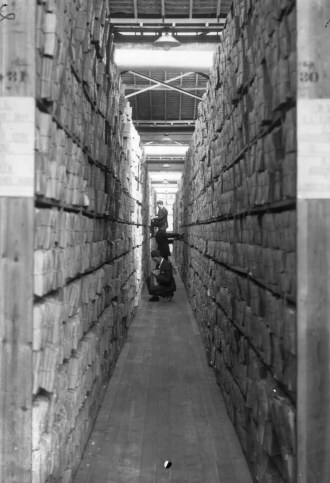 The surveillance followed a pattern that Wald recognized from experience. In the novel, she describes it to Lucie in terms that carry the precision of someone who has watched the machinery operate before: incentives first — funding, credentials, access — the kind of offers that make cooperation look like opportunity. When incentives fail, isolation: discrediting the teacher, pressuring the institution, making the work itself look dangerous. And when isolation fails, removal. Students first. Then the teacher. Then the program.
That scene is fiction. The pattern is not.
The Soviet Ark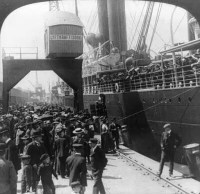 On December 21, 1919, the transport ship Buford sailed from New York Harbor carrying 249 deportees to Russia. The press called it the “Soviet Ark.” Among those aboard were Emma Goldman and Alexander Berkman — genuine political radicals who had spent decades advocating for anarchism and labor reform. But many others on the ship had committed no crime beyond holding political opinions the government found inconvenient, or attending meetings that federal agents had decided were subversive, or simply being foreign-born in a country that had decided foreignness itself was a threat.
The Buford was supposed to be a warning. Instead, it became a symbol of how easily the machinery of deportation could be turned against anyone — not just radicals, but workers, students, teachers, neighbors. The man studying English on Tuesday could be on a list by Wednesday and on a ship by December.
In the novel, one of Lucie’s students tells her he’s been placed on the Buford list. His crime: learning English well enough to organize his coworkers. He asks her what he should pack.
The Ones Who StayedWhat gets lost in the history of the Palmer Raids — what I wanted the novel to recover — is the cost to the people who weren’t deported but who lived inside the surveillance anyway. The teacher who kept teaching constitutional rights while federal agents took notes in her classroom. The settlement house director who answered agents’ questions with careful precision, giving them nothing useful while knowing they’d be back. The student who walked past the man with the notebook on his way to class and came anyway, because the citizenship exam was in three weeks and he had a daughter who needed him to be an American.
The women of the auxiliary kept their records in separate notebooks in separate kitchens across five neighborhoods — looking like nothing more than household bookkeeping. Not because they were paranoid, but because they had watched what happened to centralized records when federal agents came through the door.
The courage in 1919 wasn’t always dramatic. Often it was the decision to show up — to the classroom, to the sewing circle, to the attic meeting — knowing that showing up was being recorded, and showing up anyway, because the alternative was to let the fear do what the government couldn’t quite manage on its own: make people disappear from each other’s lives without anyone having to sign a deportation order.
The Shadow in the StoryI didn’t set out to write a novel about government surveillance. I set out to write about a woman who teaches immigrants their constitutional rights and discovers that the act of teaching is itself considered subversive. But you can’t write about 1919 without writing about the apparatus that decided education was dangerous — and you can’t write about that apparatus without recognizing how familiar its logic remains.
The Palmer Raids ended. Palmer himself was discredited when his predictions of a massive May Day revolution in 1920 failed to materialize. The deportations slowed. The surveillance, however, didn’t disappear — it evolved, changed names, found new targets. The cost of becoming American has always included the risk that the country you’re trying to join might decide you’re joining it wrong.
In The Promise Trilogy, Lucie stands at a blackboard with chalk in her hand and teaches the Fourth Amendment to men who need it to be true. That’s the bravest thing she does in three books — not because the teaching is dangerous, but because she keeps doing it after she learns that it is.
The Promise Trilogy launches August 4, 2026. This post is part of a companion series exploring the real history behind the fiction.
The post The Classroom Door: When the Government Came for the Students appeared first on Sherilyn Decter.
The House That Held the World: Settlement Houses and the Rooms Where Everything Changed
 The air smelled of carbolic soap and fresh bread. Voices echoed off high ceilings — children’s laughter upstairs, chalk scratching on blackboards across the hall. In a former dining room, a black marble fireplace and ornate crown moldings remembered elegant dinner parties, but the china cabinets were stuffed with primers and notebooks now, and a chalkboard hung where a gilt mirror once reflected candlelight.
 That’s the Henry Street Settlement as Lucie Santoro encounters it in The Promise Trilogy — a place where the old world’s architecture holds the new world’s ambitions. A grand house repurposed. Rooms that used to entertain the wealthy now teaching the poor to read, to organize, to claim their rights. Even the children playing in the backyard are part of the experiment — one of the city’s first public playgrounds, built because Lillian Wald looked at kids dodging horses in the street and decided they deserved better.
Henry Street is almost a character in the novels. It has rooms that transform — classroom to flu ward, parlor to meeting hall — and a front door that stays open when everything around it is closing. But the real Henry Street Settlement was part of something much larger: a movement that reshaped American cities from the inside out.
What a Settlement House Actually Was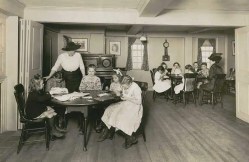 The idea was radical and simple. Instead of sending aid into poor neighborhoods from a comfortable distance, educated young people — mostly women, mostly from comfortable families — would move in. They would live as neighbors, not missionaries. They would offer what they had — language, education, connections, organizing skills — and learn what they didn’t know, which was nearly everything about how their neighbors actually survived.
The first settlement house was Toynbee Hall, established in London’s East End in 1884 by a group of Oxford students who believed that poverty couldn’t be understood from a lecture hall. The idea crossed the Atlantic almost immediately. In 1886, Stanton Coit founded the Neighborhood Guild on New York’s Lower East Side — the first American settlement, still operating today as the University Settlement. Three years later, Jane Addams and Ellen Gates Starr opened Hull House in Chicago, which became the most famous settlement in the country and a model for hundreds that followed.
The numbers tell part of the story: seventy-four settlement houses in 1897, over two hundred by 1905, more than four hundred by 1911, spread across thirty-two states. But numbers don’t capture what happened inside them.
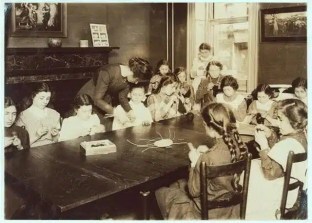
What Happened Inside the Rooms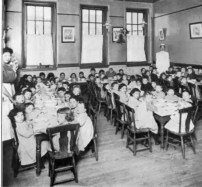 Walk into a settlement house in 1910 and you might find, in the space of a single building, an English class for Italian mothers in the front parlor, a kindergarten in the back room, a visiting nurse packing her black leather bag for afternoon rounds, a lending library on the second floor, a savings bank in the basement, and a theater rehearsal happening somewhere upstairs. In the evening, the rooms would refill — citizenship classes for men coming off construction shifts, sewing circles that doubled as information networks, lectures on hygiene or labor law or the United States Constitution.
Settlement houses weren’t schools, exactly, or clinics, or community centers, or political organizing hubs. They were all of these things at once, held together by the idea that people’s problems didn’t arrive in separate categories and shouldn’t be addressed that way either. A woman whose child was sick also needed English. The man studying for his citizenship exam also needed a lawyer who could explain his employment contract. The mother learning to cook American recipes was also learning which landlords could be negotiated with and which couldn’t — and the women teaching her already knew.
This is the world Lucie walks into in The Promise Trilogy. When she arrives at Henry Street for a teaching interview, the first thing she notices is the building’s double life — the marble fireplace remembering wealth, the chalkboard replacing it. It’s a room that has been repurposed for people the original owners never imagined would sit in it.
The Women Who Built Them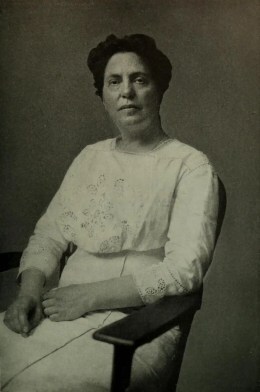 One of the most striking features of the settlement house movement was how thoroughly it was shaped by women. Jane Addams at Hull House, Lillian Wald at Henry Street, Vida Scudder at Denison House in Boston, Victoria Earle Matthews at the White Rose Mission in Harlem — these were women who turned a lack of conventional options into unconventional power.
In the 1890s, a college-educated woman had few professional paths. She could teach. She could marry. She could do charity work under the supervision of a church. The settlement house movement offered something different: a life of serious, self-directed work, surrounded by other women doing the same. Wald called the women who lived and worked at Henry Street “the Family” — nurses, teachers, reformers, and organizers who shared meals and strategies and, in some cases, their lives. The settlement house was both a public institution and a private world where women could build careers, form relationships, and exercise authority that the wider society would not have granted them.
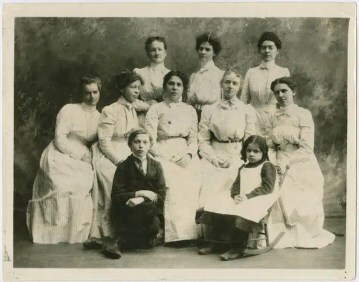 This mattered enormously. The women who ran settlement houses didn’t just deliver services — they became political forces. Addams and Wald lobbied for child labor laws, workplace safety standards, public health infrastructure, and suffrage. Florence Kelley, who lived at Hull House, became the driving force behind the National Consumers League. Frances Perkins, shaped by her experience at settlement houses and by witnessing the Triangle Shirtwaist Factory fire, went on to become the first woman in a presidential cabinet and the architect of the New Deal.
The settlement house was, in this sense, a school for women remaking their lives in early 20th-century America — not just the immigrant women who came for English classes, but the privileged women who discovered, in the act of teaching, what they themselves were capable of.
The Tensions They Couldn’t EscapeThe settlement house movement was not without its contradictions, and honoring the history means acknowledging them.
The women who ran these institutions were overwhelmingly white, Protestant or from assimilated Jewish families, and college-educated. Their neighbors were Catholic, Orthodox, or Jewish immigrants from Southern and Eastern Europe, many with little formal schooling. The power imbalance was built into the structure: the settlement workers decided what to teach, how to teach it, and what counted as progress. “Americanization” was both a service and an imposition — learning English opened doors, but the insistence on American customs often dismissed the traditions immigrants carried with them.
 The movement’s record on race was equally complicated. Lillian Wald was notably progressive — she hosted early NAACP meetings at Henry Street and employed Black nurses at a time when most institutions would not. But many settlement houses, including some in New York, either excluded Black residents entirely or served them in separate facilities. When the Great Migration brought millions of Black Americans north between 1910 and 1930, most settlement houses failed to extend the welcome they offered European immigrants. Victoria Earle Matthews, a Black journalist and activist born into enslavement, founded the White Rose Mission in 1897 precisely because existing settlement houses would not serve the young Black women arriving alone in New York City.
In the novels, I’ve tried to hold these tensions without flattening them. Wald is written as a woman who genuinely believes in what she’s building — but who also operates within systems of donor money, board politics, and institutional survival that constrain what’s possible. Henry Street serves its immigrant community with real commitment, but the terms of that service are set by people with more power and more choices than the families they’re helping.
When the Rooms ChangedBy 1919 — the year The Promise Trilogy is set — the settlement house movement was approaching a turning point. The flu pandemic of 1918 had stretched every institution to breaking. The Red Scare was building, and the federal government was increasingly suspicious of any organization that served immigrant communities, taught them their rights, or facilitated labor organizing. Settlement houses, which had always walked a line between service and advocacy, found that line getting narrower.
 In the novels, this pressure is physical. Lucie watches her classroom at Henry Street — the room she’d spent weeks arranging into a horseshoe so her students could see each other’s faces — get converted into a flu ward. The desks are stacked against the wall. The china cabinets that held her primers now wait for gauze and iodine. The amendments she’d chalked on the blackboard — the Fourth, the Fifth — preside over a room that now exists to keep people alive rather than to help them claim their place in a country.
She asks the nurse not to erase the blackboard. The words stay.
That image — a classroom becoming a hospital, the Constitution on the wall above the sick beds — is fiction, but it captures something real about what settlement houses went through in those years. The institutions survived, but they changed. As activists came to believe that settlement houses alone couldn’t abolish poverty or bridge class divisions, they increasingly pushed for government action — the labor laws, public health programs, and social welfare policies that would eventually become the New Deal.
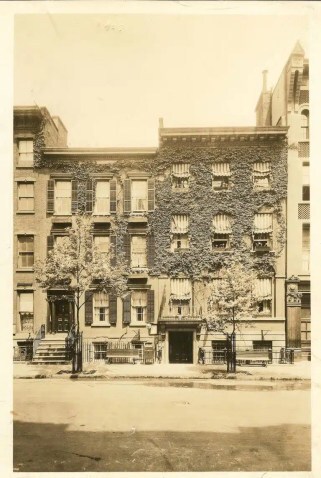
The Rooms That RemainThe buildings at 263, 265, and 267 Henry Street still stand on the Lower East Side — Federal-style townhouses built in the 1820s, their red-orange brick facades and original doorways preserved as New York City landmarks and a National Historic Landmark. The Henry Street Settlement still operates from these buildings and from sites throughout the neighborhood, providing social services, arts programming, health care, and education.
An original kitchen hearth from the 1820s sits next to modern office equipment. Staff work in what was once Lillian Wald’s bedroom, with its sleeping porch overlooking the former playground. The rooms have been repurposed again and again — from wealthy family home to immigrant aid station to administrative office — but they’ve never stopped being a place where someone walks through the door and finds something they need.
The settlement house movement created two new professions — social work and public health nursing — and helped shape the federal policies that defined twentieth-century American life. But its most lasting contribution may be the simplest one: the insistence that showing up matters. That living in the neighborhood, learning its rhythms, listening to its people, is not just charity but citizenship. That a house can hold more than its walls were built for.
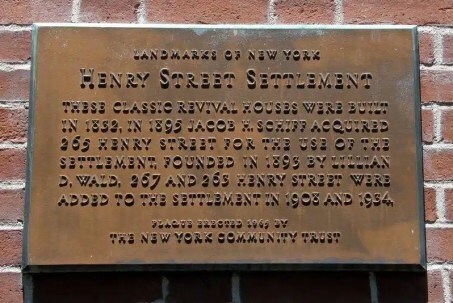
In The Promise Trilogy, Henry Street is where Lucie becomes a teacher, where she learns what she’s willing to fight for, and where she discovers the cost of keeping doors open in a world that keeps trying to close them. The house doesn’t save her — it gives her a room to stand in, and the rest she does herself. That’s what settlement houses were always for.
The Promise Trilogy launches August 4, 2026. This post is a companion to “The Woman Who Built the House: Lillian Wald and the World That Made Lucie Possible.”
The post The House That Held the World: Settlement Houses and the Rooms Where Everything Changed appeared first on Sherilyn Decter.
The Woman Who Built the House: Lillian Wald
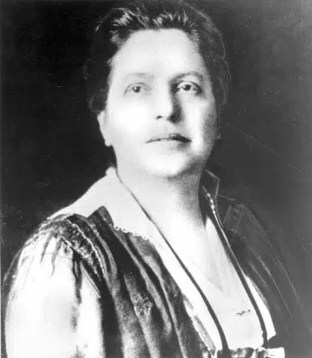
She came down the stairs with the unhurried confidence of someone who owned the ground beneath her feet. Perhaps fifty, tall and angular, silver threaded through dark hair pulled back in a practical knot — no ornament, no vanity, just efficiency. Her hands were a working woman’s hands, square and capable. But her voice, when she spoke, carried the cultured tones of drawing rooms and university lecture halls — the kind of education that cost money she’d chosen to spend elsewhere.
That’s how Lucie Santoro first sees Lillian Wald in The Promise Trilogy — descending a staircase at the Henry Street Settlement, switching between three languages in thirty seconds, reading a room the way a doctor reads a patient. It’s a fictional entrance, but it’s built from a real woman who lived exactly that way for forty years on the Lower East Side.
A Privileged Daughter Who Chose the TenementsThe real Lillian Wald was born in 1867 in Cincinnati to a comfortable Jewish family — her father a successful merchant, her childhood filled with books and music. She grew up in Rochester, New York, attended private school, and spent her early twenties enjoying the social rounds expected of young women in her position. Nothing about her early life predicted what she would become.
At twenty-two, she entered the New York Hospital School of Nursing, graduating in 1891. She worked briefly at a juvenile asylum, then enrolled in courses at the Woman’s Medical College. It was during this period — while teaching a home-nursing class to immigrant women on the Lower East Side — that a child tugged at her sleeve and led her through the tenement streets to a sick mother lying in a filthy room. Wald would later describe that walk as the moment everything changed — not a gradual awakening, but a single, clarifying shock. She left medical school, moved into a tenement on Jefferson Street with her colleague Mary Brewster, and began what would become a life’s work.
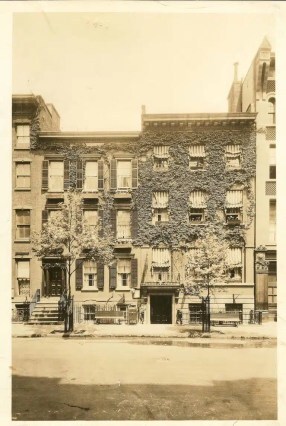 By 1895, she had settled at 265 Henry Street — a building purchased by philanthropist Jacob Schiff — and founded what she called the Nurses’ Settlement. The name mattered. She wasn’t running a charity. She was living in the neighborhood, as a neighbor, offering care to people who couldn’t afford a doctor and wouldn’t have been seen by one anyway. Her nurses carried black leather bags through tenement hallways, and they operated on a sliding fee scale so that no one was turned away.
What Wald built at Henry Street over the next three decades was staggering in its scope. The Settlement offered English classes, job training, a savings bank, a library, clubs for children and adults, and one of the city’s first public playgrounds. She coined the term “public health nurse” and pioneered the profession — by 1913, ninety-two nurses were making roughly 200,000 home visits a year. She persuaded the city’s Board of Education to hire nurses in public schools, launched a school lunch program, and established what became the Neighborhood Playhouse for theater and the arts.
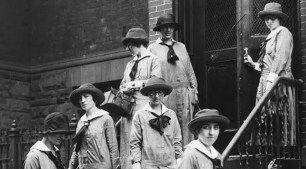 But the nursing was only the beginning. Wald used Henry Street as a launchpad for causes that reached far beyond the Lower East Side. She co-founded the National Association for the Advancement of Colored People, helped establish the National Child Labor Committee and the Women’s Trade Union League, and spearheaded the creation of the federal Children’s Bureau. She campaigned for suffrage, advocated for racial integration at a time when most settlement houses did not, fought for workplace protections years before the laws caught up to the need, and led the American Union Against Militarism during the First World War — a position that would cost her politically when the Red Scare arrived.
She was, in short, a woman who refused to be small — who looked at a system built to keep certain people invisible and decided to dismantle it, one tenement staircase at a time.
When the Flu CameBy the autumn of 1918, when the influenza pandemic swept through New York, Wald and her nurses were among the first to respond. The Lower East Side was already stretched thin — overcrowded tenements, wartime shortages, exhaustion. When the virus hit, Henry Street’s visiting nurses were caring for hundreds of diagnosed cases in the first days of October alone.
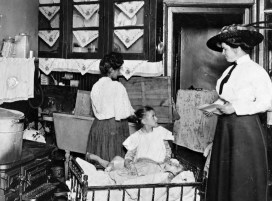 Wald was appointed chairman of the Nurses’ Emergency Council, coordinating the response across the city’s private nursing agencies and public health inspectors. She barely slept. She recruited volunteers by posting flyers outside Altman’s and Tiffany’s on Fifth Avenue, calling for “stern women” to answer humanity’s call. Wealthy shoppers who might have fled to their country homes answered instead — hundreds of them, trained and untrained alike, stepping into tenement rooms where entire families lay sick with no one to bring them soup or change their sheets.
The nurses delivered linens, medicine, and thousands of quarts of soup and custard into homes where the healthy had no energy left to cook. Wald later wrote about the epidemic in an essay she titled “When the City is a Great Field Hospital” — a phrase that captured both the scale of the crisis and her unshakable belief that a city could organize itself to care for its own.
New York City lost over twenty thousand people to the pandemic, but its per capita death rate remained lower than most comparable cities. Wald’s existing infrastructure — the nurses already in the neighborhoods, the relationships already built — made the difference. She had spent twenty-five years preparing for a crisis she couldn’t have predicted, simply by insisting that poor people deserved care delivered with dignity.
The Wald Who Lives in the NovelIn The Promise Trilogy, Lillian Wald is not a historical cameo. She is a major character across Books Two and Three — mentor, protector, political strategist, and the woman who gives Lucie Santoro a chance when no one else will.
When Lucie arrives at Henry Street looking for a teaching position, it’s Wald who reads the room, understands that Joe Santoro has neglected to mention his candidate is a woman, and decides this is no reason to close the door. She extends her hand — firm grip, brief, no nonsense — and says simply, “I’m Lillian Wald.” Then she walks Lucie into a confrontation with a union foreman who doesn’t want her there, offering advice that is practical rather than comforting: Don’t waste his time with modesty. Show him what you can do.
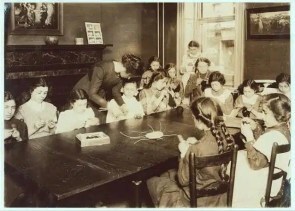
That’s the Wald of the novels — warm but unsentimental, politically sophisticated, always thinking three moves ahead. She stakes her own reputation on Lucie’s teaching program, faces down board members who want to shut it down, and navigates the impossible mathematics of institutional survival during the Red Scare, when federal agents are building files on the Settlement’s teachers and students.
One of the scenes I kept returning to while writing was the moment Wald tells Lucie what’s coming. She lays out the pattern she’s seen before — incentives first, then isolation, then removal — with the stripped-down honesty of someone who doesn’t have time to soften the truth. She’s not trying to protect Lucie from reality. She’s making sure Lucie understands the system well enough to survive it.
That scene is fiction, but the pattern Wald describes is not. During the Palmer Raids of 1919 and 1920, settlement houses across the country came under surveillance. Teachers were monitored, students were questioned, and the line between education and subversion was drawn by men who had never set foot in a classroom. Wald herself was a target — her pacifism during the war, her advocacy for immigrant rights, her insistence that the Constitution applied to everyone made her suspicious in the eyes of an apparatus that equated dissent with disloyalty.
The Cost of Keeping Doors OpenWhat I find most compelling about Lillian Wald — and what drew me to write her as a character — is the tension between her ideals and the compromises she had to make to keep Henry Street alive. She was not naive. She cultivated powerful donors, managed a board of directors with political ambitions, and made tactical decisions about which fights to pick and which to postpone. When the Board voted to convert classrooms into flu wards, she chose to keep the doors open rather than lose everything. When federal agents came to her office, she answered their questions with careful precision, giving them nothing useful while giving away nothing she couldn’t afford to lose.
The real Wald understood something that idealists often don’t: that the money keeping the lights on doesn’t always come from clean hands. Jacob Schiff, her earliest benefactor, was a man of genuine generosity — but not every donor was. Wald navigated those relationships with her eyes open, accepting what she had to accept in order to keep the nurses in the hallways and the teachers in the classrooms. It’s a tension the novels explore directly — what happens when the woman who built an institution for the powerless discovers that the institution’s survival depends on the powerful, and that the powerful have their own reasons for keeping it alive.
This is the cost of becoming — not just for the women who walked into Henry Street looking for a new life, but for the woman who built the house itself. Wald’s legacy isn’t a story of pure heroism. It’s a story of sustained, strategic, often exhausting work done by a woman who understood that institutions survive through compromise, and that compromise is not the same as surrender.
She was connected to everything. The Triangle Shirtwaist Factory fire of 1911 killed women from the neighborhoods her nurses served, and the Settlement became a gathering place for the grief and organizing that followed. The suffrage movement that finally won New York women the vote in 1917 counted Wald among its allies — a woman who believed that political power was inseparable from the right to decent working conditions and clean water.
By 1919 — the year Lucie walks through her doors — Wald had been doing this work for twenty-six years. She was in her early fifties, gray-haired, tireless, and fully aware of how fragile the whole enterprise remained. The laws had improved since the Triangle fire. The nurses were in the schools. The playground was built. But enforcement was uneven, the flu was still claiming lives, and the federal government was rounding up the very immigrants her programs were designed to serve.
She kept the doors open anyway. That’s the woman I wanted to write.
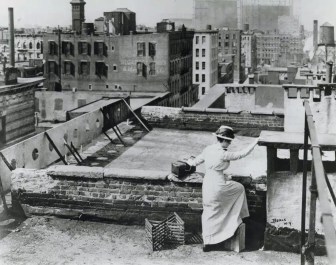 Wald retired from Henry Street in 1933, her health broken by four decades of work that never slowed. She died in 1940 in Westport, Connecticut — far from the tenement rooftops and hallways and the staircase where she’d once descended with the unhurried confidence of a woman who owned the ground beneath her feet. The Settlement she founded still operates on the Lower East Side today, still offering the education, health services, and community support she insisted every neighborhood deserved. The visiting nurse service she created became the Visiting Nurse Service of New York — an institution built from one woman’s refusal to walk past a sick mother’s door.
The Promise Trilogy launches August 4, 2026. Lillian Wald is one of several women remaking their lives in early 20th-century America who appear in the novels alongside fictional characters like Lucie, Carlo, and Mamma Santoro.
The post The Woman Who Built the House: Lillian Wald appeared first on Sherilyn Decter.