Renee Irving Lee's Blog
January 3, 2023
The 3 Reasons for Challenging Behaviours in Children…


Challenging behaviour is defined as persistent, harmful behaviours that may hurt, interfere, or intimidate others. This includes any behaviour that:
 Interferes with children’s learning, play or development
Threatens safety to other children and adults
Interferes with educator or parents’ ability to engage with other children
Puts children at high risk of later social problems
Regardless of whether the challenging behaviour is hitting, biting, spitting, destroying property, invading personal space, tantrums, snatching toys, screaming or foul language; the underlying reasons generally fall into three categories:
1⃣To get what they want
2⃣To avoid or escape something
3⃣To meet sensory, physical, emotional, or developmental needs
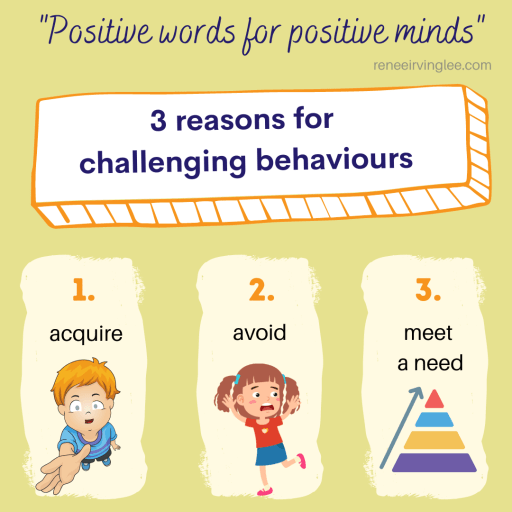 To get what they want
A very simple explanation to a child’s challenging behaviour is often just to “get what they want”. Some common examples are:
 Get a toy or object they desire
Get more time doing something they enjoy
Gain attention from parent, sibling, friend, educator
Gain power, certainty, variety
To fulfill an unmet need
2. To avoid or escape something
Sometimes children engage in challenging behaviours because they just simply don’t want to do something or are trying to avoid a task, responsibility, activity or a particular person. Here are some frequent examples:
Avoid task, responsibility, or activity they don’t like. e.g. pack up time, rest-time, chores, sitting on the mat.
Avoid a certain person or group of people
Escape social demands
Avoid an activity that is developmentally not appropriate (overlaps with category 3)
Avoid noise, light, smell, tastes (overlaps with category 3)
3. To meet sensory, physical, emotional, or developmental needs
Sensory, physical, emotional, and developmental reasons are often overlooked as a cause to challenging behaviors – but in my experience are extremely common. Some typical examples include:
Sensory seeking or sensory avoiding behaviours.
Response to overstimulation or under stimulation
Response to trauma
To release bottled up emotions e.g., sadness, anxiety, overwhelm, anger.
Response to an activity that is not developmentally appropriate
Response to an activity that does not meet their emotional or physical needs
If you need more help to determine exactly what the cause of the challenging behaviour is, check out – A Closer Look at Challenging Behaviours
Once you work out exactly what the underlying cause of the behaviour is, you can start transforming the challenging behaviour into a prosocial behaviour. See Transforming Challenging Behaviours into Positive Outcomes for more information.

Information in this article is based on my experience as a Special Education and Early Years trained teacher with post-graduate studies in Positive Psychology.
The post The 3 Reasons for Challenging Behaviours in Children… appeared first on Renee Irving Lee.


A Closer Look at Challenging Behaviours…
Once upon a time there was a 4-year-old girl who started throwing uncontrollable tantrums right before every swimming lesson. She would refuse to get dressed into her swimwear. She would refuse to get in the car. She would refuse to get into the pool and would call her teacher “dumb and mean”.
Some might say this girl was acting like a spoilt brat, and that her parents should teach her some manners. Some might say that she should learn how to respect her elders, and that she needs some type of punishment.
But some might take a closer look to see what is really going on…
Early childhood is a time of rapid physical, emotional and cognitive development. ALL children regardless of parenting style, family background, economic status or culture will display challenging behaviours during different stages of their development.
The best way to understand these behaviours is to examine why they are happening in the first place.
To get more of an insight into the motivations of the child, we can observe exactly what happens before, during and after the challenging behaviour.
Some helpful questions to ask…
Before the behaviour…
 Are there any environmental events or triggers? e.g. heat, cold, noise, arguments, group dynamics, intrusion of personal space, transition time.
Is there a pattern of behaviours? e.g. rocking, then pacing followed by the challenging behaviour.
Is the time of day relevant?
Does the presence or absence of particular person change the child’s behaviour?
Does it occur during transition between activities or at start/end of activity?
HALT – Is the child hungry, angry, lonely, tired?
How is the mood of the child, play-mate, teacher, parent, visitor?
Are there problems within the family or home at moment?
During the behaviour…
Exactly what does the child do during the challenging behaviour? e.g. do they yell, scream, use violence, bite, meltdown, refusal to do tasks, or run away? The more details the better.
What does everyone else do when the child behaves this way? What do other children do? What do you do? What do other adults do? Sometimes to determine the underlining cause of child’s behaviour, it can be more illuminating when we observe the way everyone else reacts to their challenging behaviour.
After the behaviour…
What does the child get from acting this way?
What function does their behaviour serve?
Regardless of whether the challenging behaviour is hitting, biting, spitting, destroying property, invading personal space, tantrums, snatching toys, screaming or foul language; the underlying reasons generally fall into three categories:
1⃣ To get what they want
2⃣ To avoid something
3⃣To meet sensory, physical, emotional, or developmental needs
For further information, check out – The Three Reasons for Challenging Behaviours in Children.
When a child acts in a challenging way, their behaviour serves as a function. Once you have worked out what that function is, you can begin working out how to decrease the challenging behaviour.
See – How to Transform Challenging Behaviours into Positive Outcomes for more information.
Back to the story of the 4-year-old girl. What if I told you that she generally had an easy-going nature and that tantrums were out of character? She usually loved to go to swimming lessons, and she also had a good relationship with her teacher.
Looking more closely at the behaviour itself, her mother was still bewildered as to why her daughter was behaving this way. After many confusing conversations, one particular exchange, however, revealed the underlying reason for the tantrums.
Girl: “My teacher is dumb and mean!”
Mum: “I haven’t heard her say anything dumb or mean. Can you tell me what she said or did that was dumb or mean?”
Girl: “She thinks that I can breathe underwater and no-one can breathe underwater! She makes me breathe underwater and I hate it!”.
The mother was still confused by this statement, but it didn’t take long to work out the problem. The girl had recently been learning her arm strokes in freestyle and was being taught to take 3 strokes and then breath to the side. The teacher would say “1-2-3, BREATHE”. Her daughter had taken the instructions so literally that she thought that she had to take a breath when her head was under the water instead of turning her head and then breathing. This was fixed when the mother explained the problem to the teacher who changed her words to “1-2-3, TURN”
This is a really simple problem with a really simple fix – but a classic example of how a child’s challenging behaviour can be eased or prevented when we take a closer look at the reason that it occurs in the first place. Looking solely through the eyes of the child, if the teacher was actually asking her to breathe underwater it really would have been DUMB and MEAN!!
If the mother hadn’t taken the time to seek the underlying cause of the behaviour, the problem could have escalated in many ways resulting in breakdowns in relationships, decrease in self-esteem or an impaired ability to learn an important skill.

Information in this article is based on my experience as a Special Education and Early Years trained teacher with post-graduate studies in Positive Psychology.
The post A Closer Look at Challenging Behaviours… appeared first on Renee Irving Lee.
December 27, 2022
Transforming Challenging Behaviours into Positive Outcomes
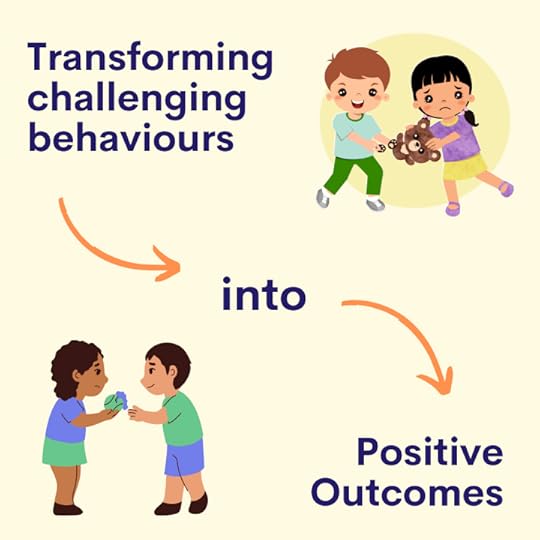
Early childhood is a time of rapid physical, emotional and cognitive development. Children come from a wide range of backgrounds and will experience many developmentally normal social, emotional, and behavioural problems during this period. Many children will also engage in ongoing, persistent, harmful challenging behaviours that may hurt, interfere, or intimidate others. The impact of dealing with these ongoing challenging behaviours can be incredibly stressful for educators, support staff, children, and their families. If not managed effectively it contributes to a higher teacher workload, breakdowns in relationships and consequent feelings of overwhelm and burnout. It also puts the child at a high risk for later social problems, mental health issues and school failure.
In the past, educators would punish children displaying challenging behaviours through reprimand and negative consequences. The intent was to reduce or eliminate the immediate problem, however, it was detrimental to the emotional well-being of the child, and did not give them the skills in pro-social behaviour or the opportunity to practice self-regulation. More recent research tells us that the most effective way to deal with these behaviours is to utilise a positive approach by addressing the underlying cause of the behaviour and teaching children life-long skills in problem solving, communication, independent thinking, and social-emotional competence
In special education settings, complex challenging behaviours are typical on a daily basis and teachers have been trained to use a process called functional behavioural assessment to understand why the challenging behaviour is happening in the first place and how aspects of the environment or situation contribute towards the behaviour. This process is extremely effective as it looks beyond the problem behaviour and instead tries to understand the motivation behind it. The undesirable behaviour is then replaced with a pro-social behaviour which assists with the long-term well-being of all members of the classroom. Functional behavioural assessments can be tedious and time-consuming, as they utilise direct observations, data collection, interviews, and reviews of Individual Education Plans and medical records. Functional behavioural assessment, however, can be simplified and adapted to suit the principles, practices and learning outcomes of the Early Years Learning Framework and still achieve the same positive results.
The following is a step-by-step guide that can be used by early educators to support children engaging in challenging behaviours:
Step 1: List and prioritise the challenging behaviours.
This step involves brainstorming and writing down all the challenging behaviours that the child engages in. The educator should put them in order from most challenging behaviour to the least challenging behaviour. To avoid confusion and overwhelm, it is important to just work on one behaviour at a time. Start with the behaviour that is negatively impacting the learning environment the most.
Step 2: Create a realistic hypothesis of why the challenging behaviour is occurring.
This part of the process involves analysing the first behaviour on the list and trying to understand why it is occurring in the first place. To get more of an insight into the motivations of the child, educators should observe exactly what happens before, during and after the challenging behaviour and keep an accurate record of their findings. For educators to gain a deeper understanding, if possible, they should also seek input from other staff members, support workers, parents, or caregivers. Sometimes children can act differently in the presence or absence of specific people, at varying times of the day or in alternate environments. Having other adults observe and give feedback will give the educator different perspectives and insights into the child’s challenging behaviour.
After analysing the behaviour itself, the educator can identify specific patterns and accurately hypothesise why the child is engaging in that particular behaviour. Regardless of whether the challenging behaviour is hitting, biting, spitting, destroying property, invading personal space, tantrums, snatching toys, screaming or foul language; the underlying reasons generally fall into three categories:
1⃣ To get what they want
2⃣To avoid something
3⃣ To meet sensory or unmet needs
When creating a hypothesis, it is important to understand that this process works on a no blame theory, because accusations seldom lead to positive intervention strategies. The blame for the challenging behaviours cannot be placed on someone or something. Therefore, all adults involved in this process should be objective, self-reflective, and open to change and personal growth.
STEP 3: Create a Positive Behaviour Management Plan (PBMP)
A PBMP involves developing intervention strategies to decrease the challenging behaviours and supporting the child to practice positive, pro-social behaviours instead. These strategies will depend solely on what the educator has discovered in Step Two and why they think the challenging behaviour has occurred in the first place.
The educator should take the following into consideration when constructing the intervention strategies:
 Make necessary adjustments to the environment, activity, time, or communication style used.
Break down the new positive, pro-social behaviour into small chunks of information appropriate to the age and developmental needs of the child.
Use intrinsic positive reinforcement to encourage the new, pro-social behaviour.
Consider connection first as an intervention when the challenging behaviour occurs.
Support natural consequences to discourage the challenging behaviour.
Progress to logical consequences if needed, but ensure they have a meaningful connection to the behaviour (not random, ambiguous punishments).
Step 4: Consider barriers to success.
Potentially there are many barriers that could impact upon the success of the PBMP, including staff training, budget, resources, time available, and/or family support. It is important for the educator to consider all barriers and devise appropriate strategies to counteract or minimise them beforehand.
Step 5: Trial and review the Positive Behaviour Management Plan (PBMP)
Using knowledge of reflective practice, it is imperative for the educator to trial and review the PBMP and reflect upon its efficacy on a regular basis. They should keep relevant records of observations and any changes implemented. If the educator feels like the PBMP is not working, they should return to Step two and consider a different hypothesis.
In conclusion, when educators understand the motivations behind challenging behaviours, they are better equipped to implement positive behaviour solutions appropriate to the individual needs of each child. This five-step positive behaviour approach aligns with the Early Years Learning Framework concept of being, belonging and becoming. With the relationship at the forefront of the solution, both the educator and the child can connect in a safe, respectful, and meaningful way. This allows children to be supported in exploring, growing, learning, and developing their own identity while still maintaining the consistent behaviour boundaries required in an early learning environment.
This article has also been published (with permission) in the following places:
Community Early Learning Australia RATTLER – Issue 139 July 2
Information in this article is based on my experience as a Special Education and Early Years trained teacher with post-graduate studies in Positive Psychology. Additional information for this article was sourced from:
Chandler, L., & Dahliquist, C. (2015). Functional assessment : Strategies to prevent and remediate challenging behaviors in school settings. New Jersey: Pearson.
Cipani, E. (2017). Functional Behavioral Assessment, Diagnosis, and Treatment. New York: Springer Publishing Company.
National Center for Pyramid Model of Innovations. (2018, January). What is challenging behavior in early childhood. Retrieved from National Center for Pyramid Model of Innovations: https://challengingbehavior.cbcs.usf.edu/resources/index.html
Wright, P. (2021). Functional behavioral assessment, behavioral intervention plans and positive interventions and supports. . Retrieved from Virginia Department of Education: : http://www.doe.virginia.gov/support/student_conduct/functional_behavioral_assessment.pdf
The post Transforming Challenging Behaviours into Positive Outcomes appeared first on Renee Irving Lee.
May 2, 2022
Anticipation Makes You Happier
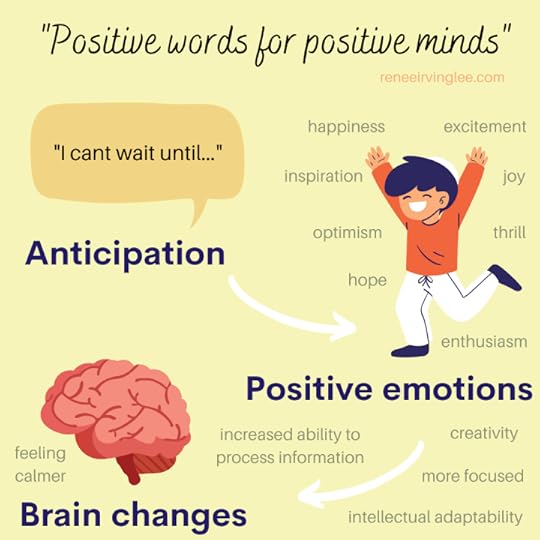
Research shows that anticipation makes you happier! The thrill of the wait, the excitement, the imagination, the build-up, and looking forward to an experience often creates more intense positive emotions than the actual event itself.
Anticipation creates positive emotions.
Positive emotions create changes in the brain – which makes us feel more calm, more focused, and more emotionally stable.
Changes in the brain create intellectually adaptability, creative thinking, and an increased ability to process information.
Anticipation helps us to focus on the positives, rather than the negatives and is an excellent coping strategy to recover and adapt to stressors.
What does this mean for children?
Not only does anticipation increase wellbeing, it also helps develop patience and other important skills needed for positive social interactions.
We live in a world of instant gratification, so learning to enjoy anticipation is particularly hard for children.
You can help children by:
1. Focus on looking forward.2. Talk about upcoming events and why you are excited about them. These events don’t have to be major milestones – they could be simply watching a soccer game on the weekend, eating your favourite meal later that night, or saving for something. Anticipating small events help children to gain an appreciation of the little things.3. Make a conscious effort for children to experience waiting and sharing.The post Anticipation Makes You Happier appeared first on Renee Irving Lee.
December 26, 2021
How is Your Body Feeling Right Now?

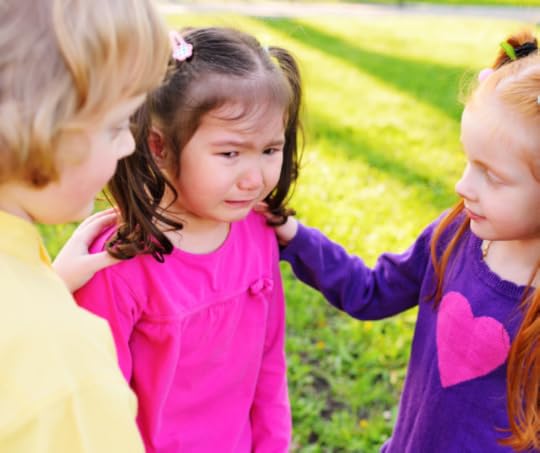
All educators understand the importance of helping children to identify and express their emotions. Self-regulation strategies in early childhood settings often include, naming and taming, scaffolding conversations, role modelling, reading books, playing emotion games, singing songs and role playing.
But on a much deeper level, it’s more empowering if children can also make meaningful connections between their emotions and their bodily sensations.
How well do they understand what is happening to their body when they feel these emotions?
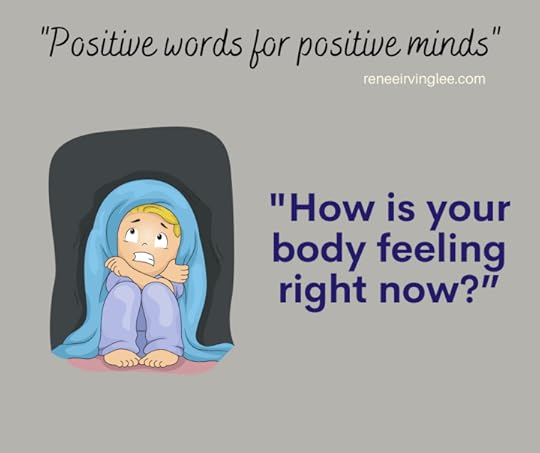
How does their stomach feel when upset or nervous?
What happens to their heartbeat when they get scared?
What events make them cry?
How does it feel when they laugh?
What circumstances make them completely freeze and feel like they can’t move a muscle?
What happens in their body just before falling asleep?
How does their head feel when they have been at a party too long?
What happens inside of them when they see a puppy chase a bug in the long grass?
How does it feel when they give their Mum or Dad a big hug after a long day?
Children should know how their bodies feel when sad, happy, frustrated, angry, tired, calm, scared, worried, overwhelmed, excited, or surprised.
When children are supported in understanding emotions that are linked to their own bodies, we are empowering them to:
Understand that all feelings serve a biological purposeDevelop and trust their gut instincts and intuitionListen to their bodiesSelf-regulate their emotionsHave control over their own bodiesDevelop emotional intelligenceRecognise body clues needed to protect them from anyone that makes them feel scared or uncomfortable.When children are experiencing intense emotions, or even when they are relaxing on the couch – a really important question to ask is…
How is your body feeling right now?

Have you heard about the BODYSMART SERIES?
This year I have collaborated with Krysten Taprell, The Therapist Parent to develop the BODYSMART SERIES picture books.
Titles in this series include:
Smart Kids are Shy
Smart Kids Cry
Smart Kids Get Scared
Smart Kids Get Angry
Smart Kids are Sensitive
Smart Kids Get Worried
Many children (and adults) don’t realise that there is a smart and biological reason for the way our bodies feel when in different emotional states. These books encourage children to listen to their bodies, make the connection between emotions and physical wellbeing, and provide positive language to use when emotions or temperament are perceived by others as negative.
Behind the scenes has also been a team of highly qualified BETA READERS made up of psychologists, counsellors, therapists, and teachers. They have all given valuable insight, feedback, and appraisal to ensure these books can be the most beneficial for children, teachers, and their families.
As you all know, I am passionate about the power of language and finding the right words to speak with children. I’m confident that the words in these books are much needed – and we are hoping to get them out as soon as we can! Stay tuned for more details.
The post How is Your Body Feeling Right Now? appeared first on Renee Irving Lee.
August 27, 2021
How do you start working as a writer who actually gets paid?
This is a question that people ask me all the time.
I have a background in teaching, special education, sport, health, and well-being.
So, I didn’t ever plan to start working as a writer – I just somehow managed to fall into the world of freelance writing!
I have always loved writing and it was something that came easily to me at school and university, but I never thought in a million years that I would become a paid writer!
It started many years ago, when I was a Mum to an 8-year-old daughter and a 4-week-old son, and our family had moved to the Sunshine Coast for my husband’s new job. I had taken maternity leave from teaching, and since I didn’t have any contacts at the local schools here; I had planned to start some casual relief teaching when my son was old enough.
My mind was put into a spin when I started thinking about how I was going to juggle family life, with day-care and school drop-offs, class preparation, and the uncertainty of relief teaching in a town where I hadn’t taught before.
And then out of the blue, I was contacted by a training organisation that I had previously worked for. They wanted to hire me on a casual basis to write all of their course outlines, lesson plans and assessment items. At the time, this seemed like the perfect solution as I could do all my work from home when my son was sleeping. At one point, I got so much work that I needed to hire a Nanny. In the mornings, I would get my older daughter off to school and spend the rest of the time playing with my son. I would start my writing work during his afternoon nap and the nanny would take him for 3 hours in the afternoon until dinner. This arrangement worked really well as I could write without interruption and my son still got to spend the day in his own house.
Then I fell pregnant with our third child, and I was thrust into the world of having a baby, a toddler, and a tween. Life was busy, and I took on whatever writing jobs that suited our family’s schedule at the time. I started writing children’s books, blogs, reviews, and content for many well known early childhood organisations. Although I dabbled with some different forms of teaching along the way, I never returned as a full-time teacher.
I couldn’t believe that I finally found a job that actually paid me to work from home and to write about the things I love the most in the world – child development, education, parenting, inclusion, and social emotional wellbeing.
Over the last 7 years as a freelance writer I have:
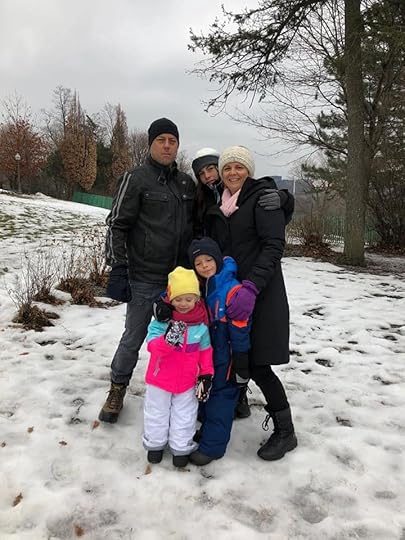
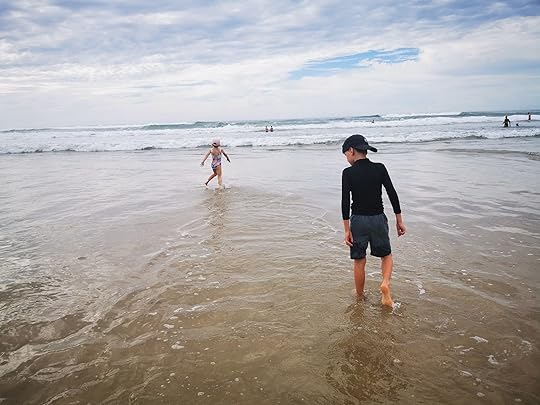
published 2 best-selling children’s books and as a result secured paid author visits and speaking engagements at schools and kindergartens.ghost-written and published numerous children’s books.embarked on a collaboration project with Krysten Taprell, The Therapist Parent to publish a series of SEL picture books (more information to come soon).been awarded as the AusMumpreneur Author of the Year for 2020.won government grants for writing projects.written for numerous early childhood organisations.travelled overseas twice and travelled around Australia for 12 months.and most importantly, I have been to every one of my children’s sports performances, parent teacher interviews, and recitals. Freelance writing has also given me the flexibility to change my timetable quickly when the kids were home sick or when we went into lockdown homeschooling.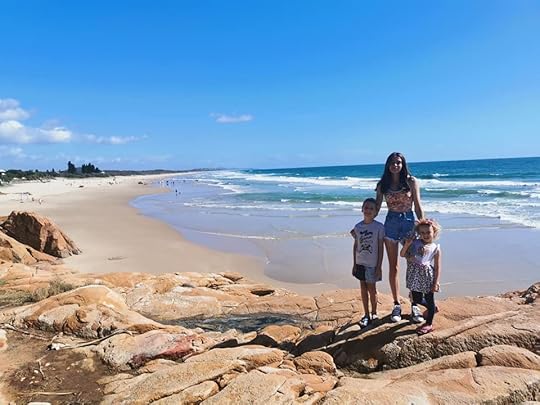


Why are there so many writing jobs available?
Due to social media and increased internet use and consumption, marketing has changed so dramatically in the last ten years. Now there is a really high demand for quality, meaningful content – but no-one has time to write it. As part of their marketing budget, companies are now hiring freelance writers, like myself to do this for them.
What are the benefits of being a freelance writer?
The biggest benefit for me is definitely the flexibility that comes with being a freelancer.
You can work from anywhere in the world!

You create your own schedule and can work whatever hours you want.
If you prefer to work early in the morning, you can do your work then or if you are a night owl, you can work into the night. For me, I would take the children to kindy or school and get most of my writing work done between the hours of 9am and 3 pm. I love the flexibility of always being available to attend appointments, class recitals or sports days and I don’t have to have that awkward conversation with an employer about taking time off when my child is sick.
You have a creative outlet to express yourself and have your voice heard.
Writing is a purposeful way to explore the world and express our opinions and ideas into words. Sometimes I don’t even know what I think about a subject, until I actually sit down to write about it. Writing allows me to make sense of what is in my head, to get clear on my standpoint, synthesise my knowledge and then articulate it in a way that is easy for my target readers to be able to understand.
Writing is a unique way to leave your digital footprint on the world for generations to come.
Just as our ancestors left us stories and messages through cave paintings, etchings on wood and pictorial symbols – we now have the opportunity to do the same through blogs, social media and email. It excites me to know that my grandchildren and great grandchildren will be able to access my writing for many years to come.
You can wear whatever you want!
This is one of my favourites. I’m a casual dresser, so I love being able to wear clothes that are comfortable!
You are the boss.
I really love being in charge of my own timetable. I get to decide how much work to take on, how much to charge clients, when I want to take a break and where I want to work from.
Save time on travel and getting ready for work each day.
I know a lot of people who spend up to 3 hours out of their day getting ready for work and travelling. Imagine if you had 3 extra hours every day!
What do I need to take into consideration?
Freelance writing has been amazing for me and my family, but there are also some other things to take into consideration before contemplating a major career change:
It’s sedentary work and writing or looking at a computer screen all day long can be mentally and physically draining.Money may not always be regular, but it is quite possible to have regular clients and work as well.You work alone (for some this may be a positive).You become open to online criticism, as not everyone will like your work.If like myself, you have never been in business before, you will need to learn a lot about business operation like invoicing, book-keeping, taxes, marketing etc.It takes time to learn how to work from home effectively. There are a lot of distractions like washing, dirty dishes, phone calls, deliveries, visitors etc and it really takes time to learn how to set boundaries and safeguard your working time.The sole responsibility for everything falls back to you.Where do I start?
I know how overwhelming it can be when you want to start something new. The internet and social media are overloaded with information and “experts” offering the latest advice. It can be hard to know who to listen to or what to believe.
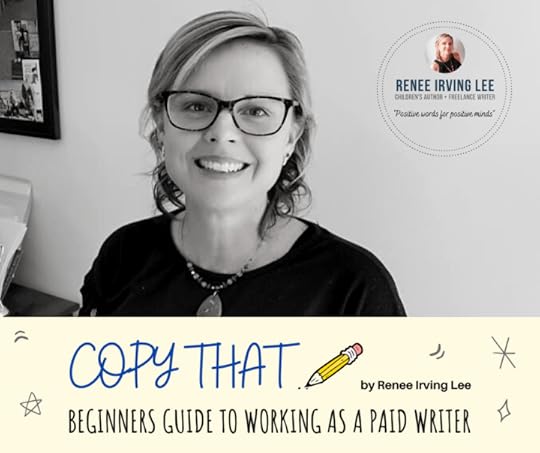
And that’s why I developed my own e-Course : Copy That: Beginners Guide To Working as a Paid Writer.
I will give you the exact blueprint to be able to fast track your way into becoming a paid writer.
The post How do you start working as a writer who actually gets paid? appeared first on Renee Irving Lee.
June 27, 2021
Protected: Transforming Challenging Behaviours into Positive Outcomes
This content is password protected. To view it please enter your password below:
Password:
The post Protected: Transforming Challenging Behaviours into Positive Outcomes appeared first on Renee Irving Lee.
March 20, 2021
Children and Risky Play – Why Risk it?


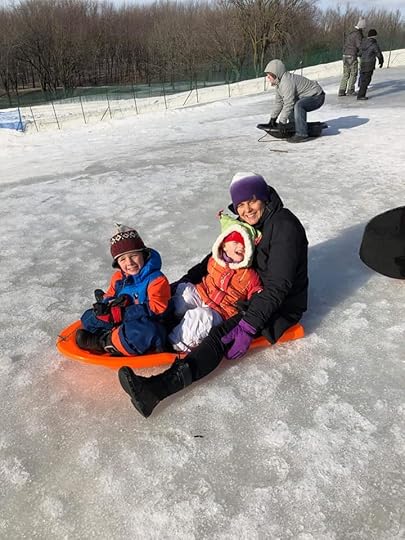
Children are living in a completely different world compared to how we grew up! In the 80’s and 90’s, we roamed the streets until dark, jumped on soapy trampolines without safety netting and played on extremely high monkey bars, teeth breaking see-saws and crazily fast merry go rounds.
Today, unfortunately, a lot of risk-taking opportunities are taken away from children through increased safety measures, rules, regulations, and different parenting styles.
What is risky play?
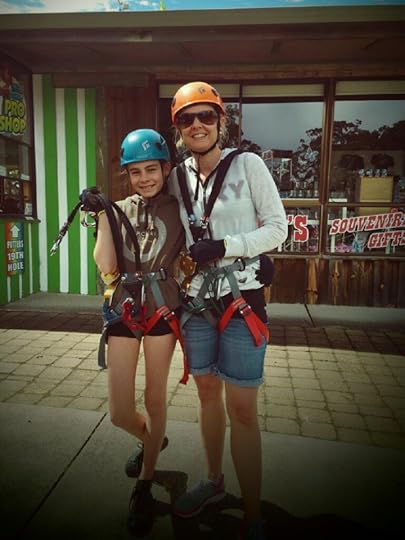
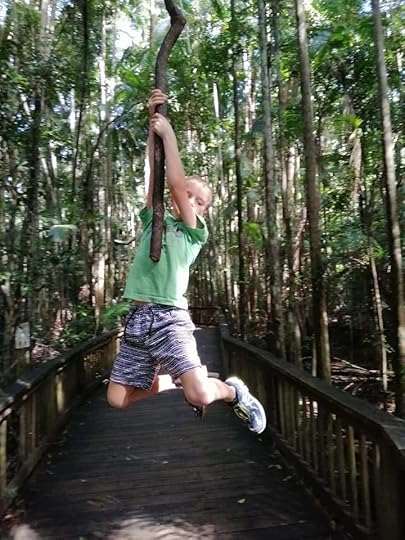
Risky play has been defined as play that is thrilling and exciting, that involves some form of risk of being physically injured. Professor Ellen Bete breaks this definition down even further to describe the six categories of risky play:
1⃣ Great heights
Play that involves children having a birds eye view of the world. e.g. climbing trees, scaling fences, rock climbing and conquering tall climbing frames.
2⃣ Rapid speeds
Play in which children get a thrill from travelling at speed. e.g. swinging on a vine, skateboarding down a hill, jumping from a height.
3⃣ Dangerous tools
Play that involves children handing tools that are sharp, hard or considered dangerous for young children. This can include natural objects like sticks and stones as well as other objects like saws, hammers, screwdrivers etc
4⃣ Dangerous elements
Play in or around elements that pose danger. e.g. playing near fire or a deep body of water.
5⃣ Rough and tumble
When children engage in play with others through chasing, catching, bodily contact or wrestling.
6⃣ Disappearing or getting lost
Play that could potentially risk a child getting lost. e.g. hide and seek, playing in an unsupervised area.
Benefits of risky play
While all of this sounds frightening to us adults, especially when children choose to combine two or more of the risky play categories together! Engaging in risk-taking, however is so important for healthy development in children.
Risky play: gives children a sense of mastery and accomplishment after tackling a tough task. offers children opportunities to observe the environment and make adaptations accordingly.
gives them the confidence to try new things.
helps children understand the consequences of their actions.
provides them the opportunity to determine their own ability in tackling a task.
allows them to learn through their own experience.
empowers children to challenge themselves.
gives them a chance to learn boundaries and make sound judgments.
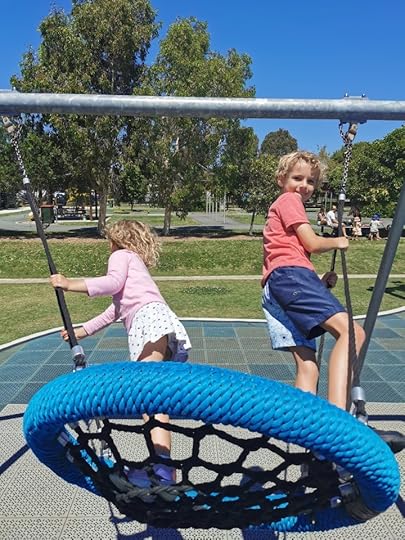
This doesn’t mean we should let children run wild. It just means allowing them the freedom and opportunity to take small calculated risks in everyday life. It starts with jumping, running, climbing, rolling, skipping, tumbling, rough-housing, reaching, exploring, building, creating, experimenting, and supporting them to figure things out for themselves.


Language to help support risky play
Anxious words make anxious children. As parents and teachers when children engage in risky play, the words that often instinctively come out of our mouths are “Be careful. Don’t climb too high. You will fall or you will hurt someone”. Even though well intended, this language often leads to hesitation, second guessing, lapses in concentration, self-doubt, anxiety and ironically a higher chance of getting hurt.
Positive words and careful questioning, however, give children confidence and empowerment in making decisions regarding their own ability.
Before interrupting their play, try to observe your child first. You might be surprised by their ability to safely assess the situation and formulate a suitable plan on their own. If you do have concerns, you can gently scaffold their play with some of the following questions or phrases:
“What’s your plan here?”
“Do you feel safe?“
“I trust that you can make the right decision”
“Does that branch feel secure?“
“How high do you plan to go?“
“Is there anything here you need to watch out for?“
“It’s ok, take your time”
Children who are supported in taking risks during play often end up being brave learners when they enter school. They aren’t afraid to try new things or think outside the box!

 Renee Irving Lee
Children’s Author, Freelance Writer + Educational Consultant
Renee is a children’s author based on the Sunshine Coast in Queensland. She is passionate about creating profound social change by providing children, teachers and parents with the positive language needed for healthy social and emotional development. She is the author of picture books, The Strongest Boy, and Rosie Leads the Way.
/**/(function () { var scriptURL = 'https://sdks.shopifycdn.com/buy-butto... if (window.ShopifyBuy) { if (window.ShopifyBuy.UI) { ShopifyBuyInit(); } else { loadScript(); } } else { loadScript(); } function loadScript() { var script = document.createElement('script'); script.async = true; script.src = scriptURL; (document.getElementsByTagName('head')[0] || document.getElementsByTagName('body')[0]).appendChild(script); script.onload = ShopifyBuyInit; } function ShopifyBuyInit() { var client = ShopifyBuy.buildClient({ domain: 'renee-irving-lee.myshopify.com', storefrontAccessToken: '0412d137be78a14c3d62947cf050efb7', }); ShopifyBuy.UI.onReady(client).then(function (ui) { ui.createComponent('product', { id: '1747582681178', node: document.getElementById('product-component-1594006780317'), moneyFormat: '%24%7B%7Bamount%7D%7D', options: { "product": { "styles": { "product": { "@media (min-width: 601px)": { "max-width": "calc(25% - 20px)", "margin-left": "20px", "margin-bottom": "50px" } } }, "text": { "button": "Add to cart" } }, "productSet": { "styles": { "products": { "@media (min-width: 601px)": { "margin-left": "-20px" } } } }, "modalProduct": { "contents": { "img": false, "imgWithCarousel": true, "button": false, "buttonWithQuantity": true }, "styles": { "product": { "@media (min-width: 601px)": { "max-width": "100%", "margin-left": "0px", "margin-bottom": "0px" } } }, "text": { "button": "Add to cart" } }, "cart": { "text": { "total": "Subtotal", "button": "Checkout" } }}, }); }); }})();/*]]>*//**/(function () { var scriptURL = 'https://sdks.shopifycdn.com/buy-butto... if (window.ShopifyBuy) { if (window.ShopifyBuy.UI) { ShopifyBuyInit(); } else { loadScript(); } } else { loadScript(); } function loadScript() { var script = document.createElement('script'); script.async = true; script.src = scriptURL; (document.getElementsByTagName('head')[0] || document.getElementsByTagName('body')[0]).appendChild(script); script.onload = ShopifyBuyInit; } function ShopifyBuyInit() { var client = ShopifyBuy.buildClient({ domain: 'renee-irving-lee.myshopify.com', storefrontAccessToken: '0412d137be78a14c3d62947cf050efb7', }); ShopifyBuy.UI.onReady(client).then(function (ui) { ui.createComponent('product', { id: '4713432842330', node: document.getElementById('product-component-1594022477527'), moneyFormat: '%24%7B%7Bamount%7D%7D', options: { "product": { "styles": { "product": { "@media (min-width: 601px)": { "max-width": "calc(25% - 20px)", "margin-left": "20px", "margin-bottom": "50px" } } }, "text": { "button": "Add to cart" } }, "productSet": { "styles": { "products": { "@media (min-width: 601px)": { "margin-left": "-20px" } } } }, "modalProduct": { "contents": { "img": false, "imgWithCarousel": true, "button": false, "buttonWithQuantity": true }, "styles": { "product": { "@media (min-width: 601px)": { "max-width": "100%", "margin-left": "0px", "margin-bottom": "0px" } } }, "text": { "button": "Add to cart" } }, "cart": { "text": { "total": "Subtotal", "button": "Checkout" } }}, }); }); }})();/*]]>*/
View this post on InstagramA post shared by Pinky McKay (@pinkymckay1)
The post Children and Risky Play – Why Risk it? appeared first on Renee Irving Lee.
March 6, 2021
Why is Sharing so Hard for Children?
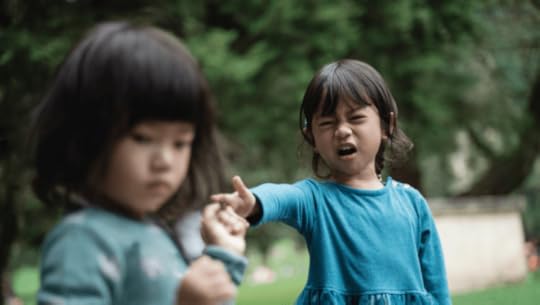
Sharing is such a valuable, life-long learning skill but can be very difficult for children as it involves self-regulation, communication, patience and empathy.
Here are some reasons why sharing can often be so hard:
1⃣ Young children see toys in their possession as an extension of themselves and anyone trying to take a toy off them is trying to take a piece of them too!
2⃣ They may be too young or not quite developmentally ready to understand that other children have thoughts and emotions different from their own. Children are very ego-centric creatures and don’t start to develop theory of mind until 4-5 years old.
3⃣ The endowment effect tells us that children (and adults too) find an object more valuable if they own it, so it becomes harder for them to share their own toys. This is why it is more difficult to host a playdate at your own house! Children are better at sharing objects that don’t belong to them.
4⃣ They may be tired, overstimulated, sick, frustrated, or upset which affects their ability to think about anyone else.
5⃣ They may have just had their quota for sharing for the day – they are expected to share many things including their Mum, so it’s not surprising that sometimes they have just had enough!
6⃣ If they have just recently received a toy (eg as a present) it will be more likely that they will not be able to share it until they feel they have spent enough time playing with it on their own.
7⃣ Older children develop a strong sense of fairness, and can be more reluctant to share when they feel they aren’t getting a fair go.
So how on earth are we supposed to teach children to share?
Sharing is a difficult skill to teach, but here are some tips that I have learnt over the years as both a Mum and a teacher: Give them a heads up! Before playdates or events involving other children, talk to your child about sharing. Tell them about how many children will be there and how they will likely have to share the toys. Children don’t have to share all of their toys. Give them a choice over which toys they wish to share with others. I found this one works really well, especially if you anticipate it beforehand. Regardless if other children are coming to your house or if you are taking toys to the park. I would always say beforehand “Which toys are your special toys and which toys are your sharing toys?” If we were at home, we would put the special toys away until the playdate was over. If we were at the park and other children wanted to join in and play with their toys, I would support them to say “these are my special toys and I am playing with them at the moment, but you can play with these other ones instead”. This really saved us a lot of meltdowns! Play turn-taking and sharing games. Praise your child and others when they share. Read books about sharing.
Role model sharing. A tip I learnt through Montessori for large groups of children playing in one area is for each child to have their own playmat. The children put their playmat down which represents their own sacred play-space. They put the toys they are playing with on their playmat only. Nobody else can enter their play-space unless invited by the child. Children are free to use whatever toys are on the shelves or boxes, but cannot touch the toys on anyone else’s playmat unless invited to do so. This gives children clear boundaries and control over their own play-space but also allows for sharing or playing with other children if they choose to. No child will ever be good at sharing all of the time, so best roll with it and do what you can to support them.
 Renee Irving Lee
Children’s Author, Freelance Writer + Educational Consultant
Renee is a children’s author based on the Sunshine Coast in Queensland. She is passionate about creating profound social change by providing children, teachers and parents with the positive language needed for healthy social and emotional development. She is the author of picture books, The Strongest Boy, and Rosie Leads the Way.
/**/(function () { var scriptURL = 'https://sdks.shopifycdn.com/buy-butto... if (window.ShopifyBuy) { if (window.ShopifyBuy.UI) { ShopifyBuyInit(); } else { loadScript(); } } else { loadScript(); } function loadScript() { var script = document.createElement('script'); script.async = true; script.src = scriptURL; (document.getElementsByTagName('head')[0] || document.getElementsByTagName('body')[0]).appendChild(script); script.onload = ShopifyBuyInit; } function ShopifyBuyInit() { var client = ShopifyBuy.buildClient({ domain: 'renee-irving-lee.myshopify.com', storefrontAccessToken: '0412d137be78a14c3d62947cf050efb7', }); ShopifyBuy.UI.onReady(client).then(function (ui) { ui.createComponent('product', { id: '1747582681178', node: document.getElementById('product-component-1594006780317'), moneyFormat: '%24%7B%7Bamount%7D%7D', options: { "product": { "styles": { "product": { "@media (min-width: 601px)": { "max-width": "calc(25% - 20px)", "margin-left": "20px", "margin-bottom": "50px" } } }, "text": { "button": "Add to cart" } }, "productSet": { "styles": { "products": { "@media (min-width: 601px)": { "margin-left": "-20px" } } } }, "modalProduct": { "contents": { "img": false, "imgWithCarousel": true, "button": false, "buttonWithQuantity": true }, "styles": { "product": { "@media (min-width: 601px)": { "max-width": "100%", "margin-left": "0px", "margin-bottom": "0px" } } }, "text": { "button": "Add to cart" } }, "cart": { "text": { "total": "Subtotal", "button": "Checkout" } }}, }); }); }})();/*]]>*//**/(function () { var scriptURL = 'https://sdks.shopifycdn.com/buy-butto... if (window.ShopifyBuy) { if (window.ShopifyBuy.UI) { ShopifyBuyInit(); } else { loadScript(); } } else { loadScript(); } function loadScript() { var script = document.createElement('script'); script.async = true; script.src = scriptURL; (document.getElementsByTagName('head')[0] || document.getElementsByTagName('body')[0]).appendChild(script); script.onload = ShopifyBuyInit; } function ShopifyBuyInit() { var client = ShopifyBuy.buildClient({ domain: 'renee-irving-lee.myshopify.com', storefrontAccessToken: '0412d137be78a14c3d62947cf050efb7', }); ShopifyBuy.UI.onReady(client).then(function (ui) { ui.createComponent('product', { id: '4713432842330', node: document.getElementById('product-component-1594022477527'), moneyFormat: '%24%7B%7Bamount%7D%7D', options: { "product": { "styles": { "product": { "@media (min-width: 601px)": { "max-width": "calc(25% - 20px)", "margin-left": "20px", "margin-bottom": "50px" } } }, "text": { "button": "Add to cart" } }, "productSet": { "styles": { "products": { "@media (min-width: 601px)": { "margin-left": "-20px" } } } }, "modalProduct": { "contents": { "img": false, "imgWithCarousel": true, "button": false, "buttonWithQuantity": true }, "styles": { "product": { "@media (min-width: 601px)": { "max-width": "100%", "margin-left": "0px", "margin-bottom": "0px" } } }, "text": { "button": "Add to cart" } }, "cart": { "text": { "total": "Subtotal", "button": "Checkout" } }}, }); }); }})();/*]]>*/View this post on InstagramA post shared by Pinky McKay (@pinkymckay1)
The post Why is Sharing so Hard for Children? appeared first on Renee Irving Lee.
February 27, 2021
Teaching Children True Inclusiveness

Did you know that there is no universally accepted definition of social inclusion? The Australian Social Inclusion Board however defines social inclusion as everyone having the resources, opportunities, and capabilities to learn, work, engage and have a voice.
I believe that it goes much deeper than this and true inclusiveness extends to include how you make others feel.
True inclusiveness comes from within.
True inclusiveness comes from a genuine place of kindness, compassion, and understanding.
To truly include someone, you do it because you want to, not because you have to.
Inclusion in the playground
When children feel included and supported through play experiences, they gain countless benefits to their wellbeing, happiness, and social development.
Some people think that inclusion in the playground means that all children should have to play with everyone all of the time. Inclusive play does not mean forcing children to play with everyone. Just like adults, children can prefer independent activities, small groups, or games with particular friends.
While I understand the intent behind “all children should play with everyone”, it does not promote true and authentic inclusiveness. Instead it creates resentment, hostility and children feeling like they are not in control of themselves or their own play.
So, exactly what is inclusive play and how do we achieve it?
In basic terms, inclusive play occurs when children:
Feel included in their play environmentCan include others in their own play experiencesChildren don’t have to play with all children all of the time – but they should be encouraged to make them feel welcome and included. They have the right to choose who, what, when and how they play, as long as they are respectful, considerate, and thoughtful. Inclusive play is about enabling each child to play and express themselves in their own way and supporting them to play together when they wish to. A child can say no to playing with another child and still make them feel included.
Teaching children positive language is a way to do this.
For example:
Tom – “Do you want to play on the fort with me?”
Isla – “No thanks, I want to play with Charlotte at the Playdoh table. I can play on the fort with you after lunch.”
or
Mia – “Can I play snakes and ladders with you?”
Liam – “We are in the middle of a game at the moment, but you can play after this round.”
An inclusive play environment supports both the rights of the child who doesn’t want to play and the rights of the child who does. In a genuinely inclusive environment, however, children are supported in adopting a mindset that openly welcomes others with also the ability to decline play offers in a respectful and thoughtful manner. This ensures that the child who wants to play does not feel hurt or rejected because of their sensed differences and understands that their classmate simply just did not want to play with them in that moment of time.
What do I do when my child doesn’t want to play with another child?
Next time your child tells you that they don’t want to play with someone, instead of forcing them to play with them because you want your child to be inclusive ,try this:
Find out why they don’t want to play with them – is it a reasonable explanation?
Depending on their explanation you can teach them:
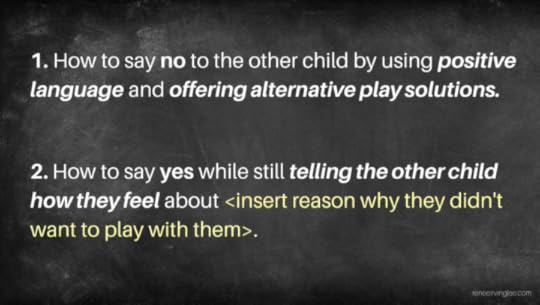
By forcing children to play with other children they don’t want to, we are not valuing their feelings or self-worth. Teaching them self-respect, positive language and how to make others feel welcome is the first step in the right direction towards social inclusion.
In order to help them with this, children need a lot of support, patience, scaffolding and role-modeling from a kind and loving adult.
Do young children have the ability to be inclusive?
When I look around the adult world today, I often feel terrified. I see exclusion in decision making, education, politics, the workplace, on the news, on social media, and during conversations.
When I visit kindergartens, my faith in humanity is always restored.
The most progressive and inclusive people I know are always under 5!!
 Renee Irving Lee
Children’s Author, Freelance Writer + Educational Consultant
Renee is a children’s author based on the Sunshine Coast in Queensland. She is passionate about creating profound social change by providing children, teachers and parents with the positive language needed for healthy social and emotional development. She is the author of picture books, The Strongest Boy, and Rosie Leads the Way.
/**/(function () { var scriptURL = 'https://sdks.shopifycdn.com/buy-butto... if (window.ShopifyBuy) { if (window.ShopifyBuy.UI) { ShopifyBuyInit(); } else { loadScript(); } } else { loadScript(); } function loadScript() { var script = document.createElement('script'); script.async = true; script.src = scriptURL; (document.getElementsByTagName('head')[0] || document.getElementsByTagName('body')[0]).appendChild(script); script.onload = ShopifyBuyInit; } function ShopifyBuyInit() { var client = ShopifyBuy.buildClient({ domain: 'renee-irving-lee.myshopify.com', storefrontAccessToken: '0412d137be78a14c3d62947cf050efb7', }); ShopifyBuy.UI.onReady(client).then(function (ui) { ui.createComponent('product', { id: '1747582681178', node: document.getElementById('product-component-1594006780317'), moneyFormat: '%24%7B%7Bamount%7D%7D', options: { "product": { "styles": { "product": { "@media (min-width: 601px)": { "max-width": "calc(25% - 20px)", "margin-left": "20px", "margin-bottom": "50px" } } }, "text": { "button": "Add to cart" } }, "productSet": { "styles": { "products": { "@media (min-width: 601px)": { "margin-left": "-20px" } } } }, "modalProduct": { "contents": { "img": false, "imgWithCarousel": true, "button": false, "buttonWithQuantity": true }, "styles": { "product": { "@media (min-width: 601px)": { "max-width": "100%", "margin-left": "0px", "margin-bottom": "0px" } } }, "text": { "button": "Add to cart" } }, "cart": { "text": { "total": "Subtotal", "button": "Checkout" } }}, }); }); }})();/*]]>*//**/(function () { var scriptURL = 'https://sdks.shopifycdn.com/buy-butto... if (window.ShopifyBuy) { if (window.ShopifyBuy.UI) { ShopifyBuyInit(); } else { loadScript(); } } else { loadScript(); } function loadScript() { var script = document.createElement('script'); script.async = true; script.src = scriptURL; (document.getElementsByTagName('head')[0] || document.getElementsByTagName('body')[0]).appendChild(script); script.onload = ShopifyBuyInit; } function ShopifyBuyInit() { var client = ShopifyBuy.buildClient({ domain: 'renee-irving-lee.myshopify.com', storefrontAccessToken: '0412d137be78a14c3d62947cf050efb7', }); ShopifyBuy.UI.onReady(client).then(function (ui) { ui.createComponent('product', { id: '4713432842330', node: document.getElementById('product-component-1594022477527'), moneyFormat: '%24%7B%7Bamount%7D%7D', options: { "product": { "styles": { "product": { "@media (min-width: 601px)": { "max-width": "calc(25% - 20px)", "margin-left": "20px", "margin-bottom": "50px" } } }, "text": { "button": "Add to cart" } }, "productSet": { "styles": { "products": { "@media (min-width: 601px)": { "margin-left": "-20px" } } } }, "modalProduct": { "contents": { "img": false, "imgWithCarousel": true, "button": false, "buttonWithQuantity": true }, "styles": { "product": { "@media (min-width: 601px)": { "max-width": "100%", "margin-left": "0px", "margin-bottom": "0px" } } }, "text": { "button": "Add to cart" } }, "cart": { "text": { "total": "Subtotal", "button": "Checkout" } }}, }); }); }})();/*]]>*/View this post on InstagramA post shared by Pinky McKay (@pinkymckay1)
The post Teaching Children True Inclusiveness appeared first on Renee Irving Lee.