Sonya K. Singh's Blog
March 28, 2022
SPOTLIGHT

Steve Oda, a Sansei (third-generation) Japanese Canadian, is well-versed in Hindustani classical music.
By MOHAMED KHAKI
Just a few months after immigrating to Canada in 1976, I attended my first live concert, a performance by one of the most revered musicians of raag sangeet, Swar Samrat (the emperor of notes) Ustad Ali Akbar Khan.
Listening to the legendary sarod maestro, I felt like someone who hit a hole-in-one on a first visit to a golf course. I had always enjoyed raag sangeet on recordings, but watching it performed live by one of its greatest exponents hooked me forever.
At this concert, I saw Steve Oda, a Sansei (third-generation) Japanese Canadian, accompanying Khan saheb on tanpura. It seemed to me rather incongruous at that time to see a non-Indian providing accompaniment. After all, a musician generally asks a trusted senior student to play the drone that serves as a “canvas” on which an artist “paints” raags.
Having just emigrated from Tanzania, I was not aware of the nascent community of raag sangeet aficionados and performers that included many non-Indians across North America.
I found out later that Steve had been a long-time disciple of Khan saheb. Soon I too joined this community of aficionados. I fondly recall many baithaks organized by the percussionist Bob Becker, who subsequently played tabla at Raag-Mala concerts in our early years.
Steve’s parents were born in British Columbia and grew up in the Depression era. However, they lost everything when their homes and business were confiscated by the Canadian government during the Second World War as a result of anti-Japanese hysteria. Following the war, they weren’t allowed back to their homes in BC, and so relocated to Toronto where Steve was born.
Growing up in Toronto (which was 99 per cent-plus Caucasian at the time), Steve loved music and wanted lessons on piano. His parents, however, could not afford them, so he took up the guitar. He entered his teen years wanting to be a musician but his parents insisted on a profession other than music.
Steve graduated in engineering from the University of Toronto, and became a research engineer at Ontario Hydro. His love of music continued.
“It was by far the best way I could express myself,” he says. “This led me to more guitar-playing and to jazz.”
In 1969, when he was struggling to find a sarod teacher in Toronto, Steve came upon this quotation by Khan saheb from the Music College’s pamphlet:
“Our sages developed music from time immemorial for our mind to take shelter in that pure being which stands apart from the body and mind as one’s true self. Real music is not for wealth, not for honours or even for the joys of the mind – but as a path for realization and salvation. This is what I truly feel.”
“This quote exemplifies my feelings on learning this great art music,” he says.
In the same year he had the great fortune of meeting Pandit Ravi Shankar in Toronto. Raviji graciously helped Steve start learning sarod in Los Angeles from his nephew (and Khan saheb’s son), Ustad Aashish Khan. Steve made his first trip to LA in 1970. Raviji had made arrangements for him to stay with the great tabla maestro, Ustad Alla Rakha, who happened to live next door to Ustad Aashish Khan.
Steve started learning from Ustad Aashish Khan in 1971, and then from Khan saheb himself in 1973, making regular trips over the next 20 years to the Ali Akbar College of Music in San Rafael, California, while holding a job in Toronto as an engineer.
In 1996, Steve received a prestigious Canada Council artist’s grant to pursue intensive studies at an advanced level with Khan saheb.
After a career of more than 25 years Steve left his engineering work and began his second career to focus on his passion – music.
He moved to the San Francisco Bay area with his wife Pushpa in 1998 to serve as the Music College’s Executive Director for two years, and currently lives near San Francisco, actively teaching and performing this beautiful music.
I had seen Steve accompany his gurus a few more times in Toronto, however, it wasn’t until January 2020 that I finally got to hear him as a soloist. He performed at the Sarbari Roy Chowdhury Festival at Shantiniketan.
On my Facebook post that day, I mentioned that “he played a beautiful raag Nat Bhairav – the second piece in the jhaptaal was especially lyrical and gorgeous.”
Toronto audiences will have a chance to hear Steve in the spring.
• Mohamed Khaki is a Raag-Mala Toronto team member.


March 24, 2022
HOPE TRIUMPHS

Image credit: DAVID FANUEL on Unsplash.
By REVEREND TONY ZEKVELD
Newcomers, including students, are continually coming to our country with hopes for a brighter future.
The come not only for themselves but for their families whom they hope to sponsor in time. Yet many, also those I know, come and find living here is really, really tough. High rents, high costs of living mean a very frugal budget.
In my previous articles, I weighed in on how many of our international students are being exploited – even offering their bodies – to pay for their keep. We may expand this list to include many newcomers. They can’t rely on family and friends. Who’s going to reach out to them, and help them? So many got lost in the crowd. They get involved in bad relationships, or turn to alcohol and drugs as their way to deal.
Then come the judgmental attitudes of close observers, “They’re bad!” or “Don’t talk to them!” or “They made their bed, let them lie in it” or “No one can help them, they are too far gone!”
I know families who hide their painful secrets out of the fear of harsh judgmental attitudes spreading around like wildfire.
Maybe you are fearing, even hearing, the sounds of harsh judgments.
Is this where it all ends? Is there no hope? Is there no way out? Is there only judgment? Is there no one to turn to?
This does not mean we condone the sin or wrongdoing, whatever that sin or wrongdoing may be. But it does mean there is the offer of forgiveness and redemption. This is the message of Easter.
Easter is celebrated on April 17 this year. It is on a Sunday. On the Friday before Jesus gave His life on the cruel cross as the only sacrifice for sins. This means He took the judgment and curse for sin. For whose sin? For the sin of all who trust in Him to forgive them.
On Easter, that is Sunday, He arose again from the dead – bodily! This shows that God completely accepts the judgment Christ bore for our sin. By believing in Him, we receive a changed life; that is, a new beginning. A new start. With Christ, life does not end in judgment, but with God’s grace and mercy!
Despair breaks out into a hope that never dies out!

If you want to talk more, feel free to phone or text Reverend Tony Zekveld (“call me Pastor Tony”) at Hope Centre at 416-740-0543. His email is hopecentre@primus.ca and website: www.hopecentrebrampton.com.
March 22, 2022
MY TAKE
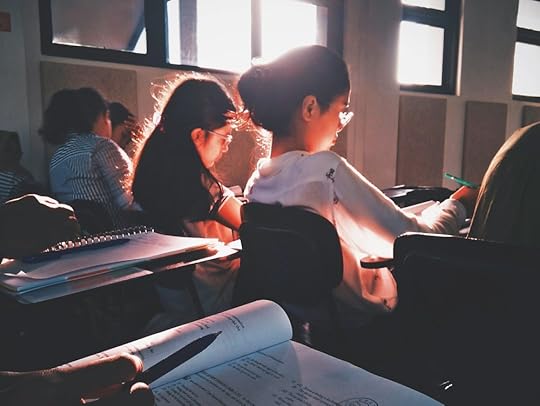
Image credit: YUSTINUS TIJUWANDA on Unsplash.
By SHAGORIKA EASWAR
Remember newspaper reports in Indian media of large-scale cheating with jaw-dropping images of parents climbing through windows to help their offspring cheat?
Or the movie Why Cheat India? The Emran Hashmi starrer about malpractices in the education system?
Or 3 Idiots in which someone pays a bright and underprivileged boy to impersonate him during a four-year course?
In some of the countries we come from, cheating in exams is almost an industry. But it happens here, too.
I remember talking to Grant’s Desi Achiever Dr Hargurpreet Saini back in 2011 about the perfect scores some high school students were presenting to universities. While 100 per cent in the STEM subjects was achievable, how were they coming up with 100 per cent in history or English? Subjects where style mattered along with substance? Where the marking could be subjective?
Currently President and Vice-Chancellor, Dalhousie University, he was Vice-President, University of Toronto at the time.
It was a well-recognized fact, he said, that grade inflation goes on at schools. So now this was schools upping the grades of their students to improve their own ranking.
“We raise the bar, within a year or so, they raise the marks! It makes it harder to differentiate between the genuinely good grades and others, but we are getting better at evaluating. We ask students to write statements. There are interviews to get into elite programs.
“The truth is, this practice doesn’t help anyone. We not only risk the quality of our education system, but students who don’t really deserve the 100 per cent can’t maintain it at university and tend to fall on their face. The system corrects itself.”
As it did in the instance of the recent Law Society exams in which approximately 1100 candidates were affected.
“Licensing examinations cancelled to protect public interest and integrity of examination process.”
An email with this opening line showed up in my inbox.
To protect the public and the integrity of its licensing process, the Law Society has undertaken the decision to cancel the upcoming barrister and solicitor examinations, scheduled to be written from March 8 to 11, and March 22 to 25, respectively. This decision has been made as a result of information the Law Society has received which strongly indicates that examination content has been improperly accessed by some candidates, compromising the integrity of the upcoming examination period. Evidence indicates the potential involvement of third parties in this activity.
I was dismayed to read the news, but sadly, not shocked.
The words of an old song came unbidden: Yeh toh hona hi tha!
This was bound to happen.
This is not anything new. And something many of us are familiar with.
I recall the drama that played out during my grade 12 exams many, many years ago.
It was a tight schedule, one exam after the other, day after day. We’d return form one exam only to swot for the next.
It was also a very demoralizing period for my friends and myself as we observed several students bragging about having the questions in advance.
I’d come home and ask what was the point of studying or answering all the questions to the best of my ability if others were just going to waltz through the process.
In India, we had what were known as countrywide “board exams” and answer sheets were marked by educators in some other part of the country – not by those who knew the performance patterns of their students.
My answer sheets were going to be judged on par with those of someone who had prepared for just the select few questions they knew would be on the exam.
The evening before my Physics exam, my mother came into my room to ask me to go for a walk with her.
“Your father and I have been talking about how you are feeling about these exams,” she said. “We are questioning if we were wrong to instill the values we did in you and your brother.”
I had been very vocal at home about how I hated the system and how it was all so unfair. But hearing those words emerge from my mother’s mouth was unbelievably scary. If my parents stopped believing in what they said, what they inculcated by example, our personal universe was on shaky ground.
Thankfully, that’s not where she was headed.
“But we think that if you get a lower mark than that of someone who cheated, you’ll be disappointed, but you’ll vow to do better next time. However, if you got higher marks than you deserve through some nefarious means, would you not know you had cheated? Would you not wonder what your effort was really worth?”
On our return home she made me a cup of tea with an extra spoon of sugar and poured oil into my hair, massaging it in gently while I went back to studying (and grumbling).
The next morning, my father woke me up holding a copy of the day’s newspaper.
An investigative reporter had sourced the day’s Physics exam paper (the very exam I had been preparing for) by pretending to be a student and they had published it on the front page. The exam scandal blew up. Exams were cancelled. They were rescheduled. We celebrated for a while until we realized that nothing had changed, really. Those “leaking” papers and those buying them had just become smarter.
“We appreciate that this decision is upsetting news to those candidates not involved in improper conduct,” said Law Society CEO Diana Miles. “However, this is a critical and necessary step to protect the integrity of the licensing process and the reputation of those candidates not involved. Most importantly, as the regulator of the legal professions it is incumbent upon us to take immediate action to protect the public interest.”
Examinations were rescheduled with additional measures implemented to further strengthen the delivery of licensing examinations.
In Dark Age Ahead, Jane Jacobs wrote about “credentialling”, when a degree is just a means to a job, not to more knowledge.
It’s hard to say at this juncture how many were involved in leaking the papers or accessing the leaked papers. But wouldn’t their efforts have been put to better use if they had just studied for the exams and owned the result? Then they would have celebrated their success or hunkered down for another attempt, not be left with this hanging over them.
A degree obtained like this does no one any credit.
GET GROWING!
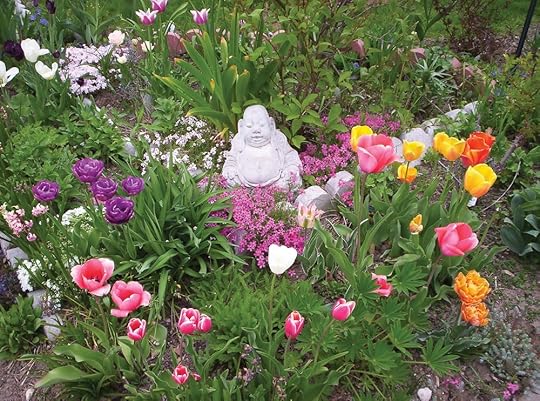
“I have to wait for a few weeks for my spring bulbs to put up a show and at least until early June for the iris to come into its own.”
By LADYBUG
Most people understand the expression six degrees of separation to mean that we are all connected in more ways than we realize.
Wikipedia describes it as the idea that all people, on average, are six or fewer social connections away from each other.
However, for gardeners, six degrees of separation is a measure of the vast differences in the gardens of those who are just a few degrees away from each other – in terms of temperature, that is. A mere six degrees or even less can mean a longer or shorter gardening season.
My friend Jyothi’s garden in New Jersey in late April-early May may as well be on another planet: “Our garden is beautiful this time of year,” she shared in an e-mail last year. “We’ve had several trees and bushes that have bloomed since early spring including tulips, cherry trees, lilacs, a dogwood tree, magnolias, rhododendrons and a flowering pear. Several peony bushes are on the verge of blooming. There is still the flowers of hibiscus, azaleas, day lilies, Japanese lilacs, crape myrtle and the chaste tree to look forward to. I’m sitting on our deck and soaking in the scents and sounds of this golden day. It’s 70 degrees with a light breeze and the birds are chirping cheerfully. All’s right with my world at this moment!”
While I loved her description of her garden, I couldn’t help but feel sorry for myself as I looked out – it was snowing!
It was the same story with Linda, another gardening pal closer home. In an email sent on April 14, she said her garden in Etobicoke was “...getting more colourful. The lungwort, scilla, crocus are just finished, hyacinths and daffodils are now blooming. We got most of the raking done and my beds cleaned up.”
This, when all I could report were cold and windy days in which my lungworts, crocus and scilla were just beginning to make their appearance felt, little nubs of green peeking tentatively out of the ground. .

For gardeners, six degrees of separation is a measure of the vast differences in the gardens of those who are just a few degrees away from each other – in terms of temperature, that is. A mere six degrees or even less can mean a longer or shorter gardening season.
In the very beginning of June, Linda was sending me pictures of lupins in full bloom. Mine, I had to hunt for. Had they made it through winter?
And this, when not so long ago we were neighbours and exchanged (still do!) plants.
Thus many of our plants are babies of or parts of plants from each other’s gardens and I see no reason why mine should be several weeks behind hers except that we “moved north” a few years ago.
A mere 40-minute drive away, but that places us in different gardening zones for plant hardiness.
We are always, but always, a few degrees lower. Doesn’t seem like such a big deal, until I spot lilacs in full, glorious bloom in Toronto while the ones in my garden are just breaking dormancy. My peonies and iris used to treat me to a spectacular show in early May. Now I have to wait until June. It would be bearable if the seasons was just pushed – the show started late, but continued later, too. But of course, it doesn’t work like that. While my friends are still celebrating ripening tomatoes, mine have been hit by a hard frost.
Last year, we had a spell of cold days with lows of 1 and 2. In September. When it was still officially summer. Every time my phone showed a low that hovered just barely above the freezing mark, the first thing I’d do was check what it was for gardening pals in Toronto and Mississauga – misery loves company! But they were always several degrees higher. Let me share the temperatures on September 19, for illustration. While we were at 12 and 1, in Mississauga, they were at 13 and 5 and in Toronto, a positively balmy 13 and 7.
Which was bad enough, until our low of 1 was changed to zero with a frost advisory.
I give in to a bad case of envy periodically, and then in an attempt to shake myself out of it, remind myself that I can enjoy the gardens of friends vicariously. But for my friend Saleem who writes of picking fresh lettuce for his sandwich while we are knee-deep in snow, I have a different response: “Oh, stop showing off!”
But then, he was in sunny Florida. So I guess I should learn to deal with that. And with his jasmine hedge, when all I can lay claim to is a potted jasmine plant.
It does put up a brave show though it spends more than half the year indoors and I am grateful.
But, I mutter in spite of myself, a whole jasmine hedge.
Saleem and Jyothi have both since moved to new homes. Any day now the emails will start showing in my inbox with descriptions of what’s blooming in their new yards.
KITCHEN TABLE
Penny Chawla serves up mouth-watering curries from all over the world in Curry 101 (Smith Street Books, $35).
VEGETABLE TARKARI
Image credit: Curry 101 by Penny Chawla.
2 tbsp ghee
2 onions chopped
1-2 long green chillies, to taste
1 fresh or dried bay leaf
3 garlic cloves, crushed
1-inch piece ginger, finely grated
2 tsp cumin seeds
1 tsp coriander seeds
¼ tsp turmeric
Sea salt
2 potatoes, cut into ½-inch pieces
½ cauliflower, cut into small florets
3 tomatoes, quartered
120 g fresh soybeans (edamame)
Freshly-ground black pepper
Coriander leaves to serve (optional)
Heat the ghee in a large saucepan over medium-low heat.
Add the onion and cook, stirring occasionally, for 8-10 minutes, until golden. Add the chilli, garlic, bay leaf, ginger and spices, along with a good pinch of sea salt and cook for 1-2 minutes, until fragrant.
Add the potato and cook, stirring occasionally, for 4-5 minutes, until the potato starts to brown.
Add the cauliflower, tomato and 1 cup water. Bring to the boil, then reduce heat and simmer for 10 minutes. Add the soybeans and cook for a further 5 minutes or until the vegetables are tender. Taste and season generously with freshly ground black pepper and more salt if necessary.
Scatter the curry with coriander leaves, if using, and serve with steamed basmati rice.
CHICKEN JALFREZI
Image credit: Curry 101 by Penny Chawla.
1 kg skinless chicken thigh fillets, cut into 1¼-inch chunks
1½ tbsp ground cumin
1½ tbsp ground coriander
1 tbsp ground turmeric
80 ml vegetable oil
1 large onion, finely chopped
4 garlic cloves, crushed
1½ piece ginger finely grated
1 red bell pepper, seeded and sliced
1 green bell pepper, seeded and sliced
3 green chillies, finely chopped
4 large tomatoes, very finely chopped or puréed
½ - 1 tsp salt, to taste
2 tsp garam masala
Coriander leaves, chopped, to serve (optional)
Combine the chicken with the spices in a large bowl. Set aside for 10 minutes.
Heat the oil in a large heavy-based saucepan or flameproof casserole dish over high heat. Working in two batches, add the chicken and brown on all sides. Using a slotted spoon, transfer the chicken to a plate. Add the onion, garlic, ginger, capsicums and chilli to the pan and cook, stirring frequently, for 5 minutes, until the vegetables have softened. Add the tomato and 1 cup water and simmer over low heat for 5 minutes.
Add the chicken and simmer for a further 15-20 minutes, until the chicken is tender.
Season with the salt and sprinkle in the garam masala.
Scatter the coriander over the top of the curry, if using, and serve with rice and papadums on the side.

Curry 101 by Penny Chawla is published by Smith Street Books, $35.
BOOKWORM
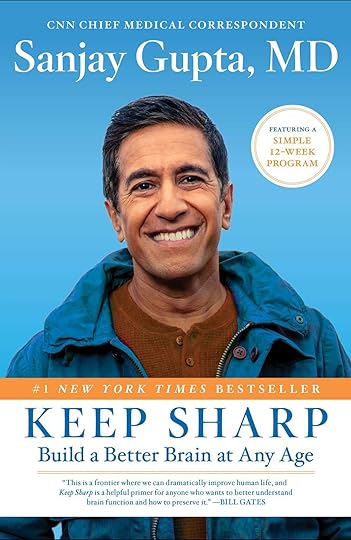
Keep Sharp by Sanjay Gupta, Simon & Schuster, $37. Sanjay Gupta, CNN’s Emmy Award-winning chief medical correspondent and a best-selling author, begins this book on how to build a better brain at any age with a family story.
He was 13 when his grandfather suffered a stroke. He spent a lot of time at the hospital and was “that annoying kid who asked the doctors a lot of questions”. Watching as those doctors were able to return his grandfather to good health, he was hooked.
He explains memory loss in simple terms. While conducting research for this book and writing it, he tried everything he recommends and says his brain has never been sharper.
Hope lies in what is, on the face of it, a scary piece of information – that cognitive decline can begin years, if not decades before symptoms emerge. Because one can, therefore, start taking steps towards a sharper brain before the need shows up.
He underscores what many of us refer to as information overload. If your brain remembered every single thing it noticed, its memory system would be overwhelmed to the point you’d find basic functioning difficult... It’s a beautiful paradox: In order to remember, we have to forget to some degree.
He busts several prevalent myths. Among them: Dementia is an inevitable consequence to old age, that we use only ten per cent of our brains or that male and female brans differ in ways that dictate learning abilities and intelligence.
At the same time, he reveals that women are able to hide symptoms of Alzheimer’s better because of superior verbal skills.
He suggests a number of cognitively stimulating activities ranging from learning to speak a foreign language to learning to cook or paint, computer coding or salsa dancing. Anything, really, that gets you out there acquiring new knowledge.
He quotes Canadian researcher Ellen Bialystok who found that “bilingualism can protect adults’ brains, even as Alzheimer’s is beginning to affect cognitive function”.
Good news for all desis, most of whom speak at least one other language apart from English!
And that meditation through yoga, breathing exercises, and repetitive prayer, etc., can help the brain develop stronger memories.
He lists foods that are good for the brain, including a mention of the benefits of good old haldi (turmeric).
There’s lots to learn and process.
I just wish the good doctor hadn’t felt the need to “sell” his book. Think of this as a master class on how to build a better brain, which opens the door to whatever you want to get out of life – including being a better father, mother, daughter or son.
Or, if you’re hoping to gain insights into preventing the cognitive decline or dementia that affects someone in your family, this book is for you.
Sanjay Gupta’s work speaks for itself. And the book has remained on the bestseller list for weeks.
THE JURY’S OUT
The Judge’s List by John Grisham, Doubleday, $39. Jeri Crosby’s father was murdered twenty years ago, and the case remains unsolved.
But Jeri has a suspect: a man who is brilliant, patient, and always one step ahead of law enforcement.
He knows the law. He’s a judge in Florida.
Jeri is obsessed with bringing the judge to justice, and along the way she discovers there are other victims.
The judge is a serial killer, a vengeful, stone-cold individual with a list of people to kill, all of whom have wronged him in some way.
So far so good. It’s your usual Grisham offering packed with well-researched legal wranglings and tidbits and statistics about real-life serial killers in the United States.
But the problem is with the characterization of the judge.
He knows forensics, police procedure, the law – he is a judge and that is to be expected.
But he’s also almost superhuman in his other abilities: he’s able to write software and hack computers, including those that belong to the FBI and the Florida justice system.
And he is able to do this undetected. The FBI doesn’t know it has been hacked. For years.
He is able to buy property and move money around – in total anonymity. In this day and age?
At every single crime scene, he leaves no fingerprints or DNA evidence, even though his murders are gruesome, complicated and bloody.
He even maintains a secret office – “the vault” – in a commercial plaza without anyone ever knowing about it.
In fact, Grisham’s book is reliant on the judge being a Superman.
And that’s the problem, the weakest link in the storyline.
Would John Grisham have written this book a decade ago, I wonder.
SMOULDERING SECRETS
A Slow Fire Burning by Paula Hawkins, Doubleday Canada, $35. A young man’s gruesome murder triggers questions about three women with separate connections to him.
Three women who are simmering with resentment and burning to right the wrongs done to them.
How long can secrets smoulder before they explode into flame?
Paula Hawkins has become synonymous with the psychological thriller genre ever since the international success of The Girl On The Train.
They say perpetrators often follow a pattern. Well, so do some authors, it turns out. Expect the same level of twists and turns-a-minute, with a liberal sprinkling of red herrings. She did it! No, but how? It must have been her! Wait, this means it was obviously her!
At one point one woman describes a book:
It was there somewhere, though not at all easy to find in this novel, whose story jumped about, the point of view occasionally switching from victim to perpetrator, the timeline jumping about all over the place. Very confusing, and if you asked Irene, irritating.
She describes it as “utter drivel”.
Which leaves one wondering if it’s an inside joke – Hawkins thumbing her nose at the kinds of books she writes, or at the very least, the genre she owns.
But fine details differentiate drivel from another wannabe bestseller.
Irene notices the bookshelves in Theo’s home. That’s what real people do, isn’t it? Notice things like bookshelves?
SWING INTO SPRING!
Bloom & Thrive by Brigit Anna McNeill, Pop Press, $19.99. Unlock your power. Your flower power, that is. The natural world has your back – discover how you can unlock its nurturing powers with herbs and flowers.
Brigit Anna McNeill extends an invitation to “see again the beauty of the wild. To reconnect with plants that once were our medicines and to notice the weeds and the tiny flowers growing so strongly and yet so tenderly in the hedgerows, gardens, forests, and riversides, from the cracks in the concrete, beside the roads; growing, blooming and thriving, offering remedy and recovery.”
There it is again, that word, hedgerows. I know it from all the Enid Blytons I consumed as a child, and it instantly transports me to unsullied English countryside.
She includes the all-important safety note about checking with your physician before introducing any new substances to your routine. With that out of the way, we’re off on a magical journey of discovery!
There are useful tips on buying herbs, growing your own and also sourcing from the wild. And recipes for making teas, elixirs and syrups, vinegars, tinctures, balms and salves.
My favourite chapter is entitled For a Happy Home where I find remedies that incorporate familiar flowers – roses, chamomile, calendula, lavender, St. John’s Wort... I can’t wait for my garden to awaken from its winter sleep to explore it again with this handy little guide.
A MUCH-LOVED CLASSIC
Theatre Shoes by Noel Streatfeild, Puffin Books, $16.99. The good folks at Puffin Books are proving that they live by their tagline – Stories that last a lifetime – by republishing all-time classics in children’s books. Among them, books by the much-loved Noel Streatfeild. Theatre Shoes, like her other books, is the story of children who’ve lost their parents and rely on their imagination (very active imaginations!) and the love and kindness of extended family and strangers to achieve their full potential.
It did not, Sorrel decided, matter very much if bits of your life became peculiar as long as there was something somewhere that stayed itself.
In her mother’s childhood room, Sorrel discovers books her mother loved, that she loves, too, like Little Women and Little Lord Fauntleroy. What a particularly beautiful way to connect with a mother you barely knew. And what an insight into books that have been perennial favourites.
Fans of Ballet Shoes will be delighted to discover that the Fossil sisters make an appearance, too. Now all grown-up and successful in their respective careers, Pauline, Posy and Petrova take a keen interest in the lives of the Forbes siblings.
Rediscover the series, or, if you missed them on their first outing, discover them with the little ones in your family!
 BRAMPTON LIBRARY TEEN REVIEW
By MANVEEN GARCHA
Secret Daughter by Shilpi Somaya Gowda, Harper Collins, $31.50. This story starts in the year 1985 in an impoverished village in India. Kavita is giving birth to another daughter. Jasu, her husband, had killed their previous baby as he believed there was no other option as they are extremely poor. Traumatized from the loss of her previous baby girl, Kavita brings the child to a local orphanage to give her a chance. She names her baby Usha, which gets miscommunicated into the name Asha.
Somer and Krishan Thakkar, a biracial couple are trying for a baby in America. Somer cannot conceive and Krishan suggests that they adopt a baby from India. They adopt Asha.
Back in India, Kavita and Jasu give birth to a baby boy, Vijay, and move to Mumbai where they face many hardships.
In the US, Asha decides to major in journalism. This provides her with the opportunity to live in India for a year, in which she plans to look for her biological family. She does not succeed in achieving her goal, and the story ends with the realization that the family you’re born into may not be as important as the family one makes. I think that’s a beautiful message because a lot of people who may be adopted feel like they are not enough or loved because of the circumstances.
• Manveen Garcha is a youth volunteer at Brampton Library.
TRUTH BE TOLD

Image credit: HARRISON HAINES on Pexels.
By DR VICKI BISMILLA
“Another Year in Paradise” is how David MacDonald, Senior Economist at the Canadian Centre for Policy Alternatives describes Canada’s top one hundred CEOs who have had another year of stratospheric pay cheques even though the COVID-19 pandemic resulted in the country’s worst economic downturn since the Great Depression.
Their compensation in 2020 reached its second highest level in Canadian history. These executives got paid an average of $10.9 million in 2020. According to MacDonald, they earned a hundred and ninety-one times more than the average worker makes in a year.
Some of these one hundred business leaders opposed raising the minimum wage of their frontline workers to $15 an hour and have clawed back the $2 an hour pandemic pay. Air Canada paid its top executives and managers $10 million while cutting jobs and negotiating rescue dollars from our tax money.
Canada’s labour market lost 207,000 jobs by April 2021 as COVID raged across the country, leaving families destitute. According to the CIBC Economics report, Statistics Canada data shows that lower wage jobs are being hit the hardest. The bread winners in these families earn less than $27 an hour.
Food Banks Canada’s Hunger-Count 2021 report shows that Food banks across Canada are seeing a twenty per cent rise in usage since the pandemic started (1.3 million visits) with one in four locations seeing a fifty per cent rise. This means that families and children are going hungry and parents are having to turn to food banks for support. According to the report, one-third of those accessing food banks are children, 8.7 per cent are seniors, and half were on social assistance or disability-related supports.
Canada’s National Advisory Council on Poverty 2021 report is a verbose, aspirational document that does not give clear statistics on how the pandemic has affected the most vulnerably poor in our country. The wording is vague and political. “We have made a number of recommendations in our report. First and foremost, our recommendations aim to reduce inequity. They also aim at addressing issues of systemic racism, discrimination and colonialism, to ensure that everyone has equal access to benefits, resources and opportunities. They aim at ensuring that people are treated equitably and with dignity when accessing important benefits and services.”
But if you go to Canada Without Poverty, Just the Facts 2022 document, the facts are shocking.
• Nearly five million people in Canada – that’s one out of every seven individuals – currently live in poverty. The most vulnerable are people with disabilities, single parents, elderly individuals, youth, indigenous, racialized communities, racialized women, children with disabilities, single mothers and their children. They experience food, health, and housing insecurity. Seniors on Guaranteed Income Support (GIS) are given $17,000 in federal support per year while the minimum basic cost of living in Canada is $18,000. Child poverty is stark. In Canada, 1.3 million children live in conditions of poverty (that’s 1 in 5).
• About 1 in 7 of those using shelters in Canada are children.
• Children living in poverty are experiencing food insecurity, reduced access to health and medical prescriptions, precarious housing and homelessness. UNICEF rated Canada 17th out of 29 wealthy countries due to the number of children living in poverty in Canada and 26th out of 35 wealthy countries for overall child inequality.
A City of Vancouver publication titled The relationship between COVID-19 pandemic and people in poverty, August 2020, reported that the pandemic has exacerbated the disparity between high and low-income families. When this occurs, the cost of living generally rises. According to the report, “people in poverty are more likely to work in frontline and service” industries that COVID-19 restrictions most affected.
Maytree Foundation’s Welfare in Canada 2020 Report was published in December 2021. The report’s findings are stunning: Even with some pandemic-related benefits, people who received social assistance continued to live in grinding poverty. The total incomes in these households were so low that even with the small extra support their poverty was virtually unchanged.
How is it that Canada, one of the most admired and coveted places in the world, is stained with these undeniable data sets?
How is it that Canada treats its vulnerable children so badly that UNICEF has slapped the country with its abysmal rating?
There are millions of kind volunteers in Canada, private citizens who are giving time and money toward helping vulnerable people. But how is it that the one hundred listed CEOs in Canada, some of whom grabbed our tax money from the government, are raking in millions of dollars while children starve?
The report, titled Another Year in Paradise, can be found here.
The CIBC Economics report can be found here.
Food Banks Canada’s HungerCount 2021 report.
Canada Without Poverty, Just the Facts 2022 .
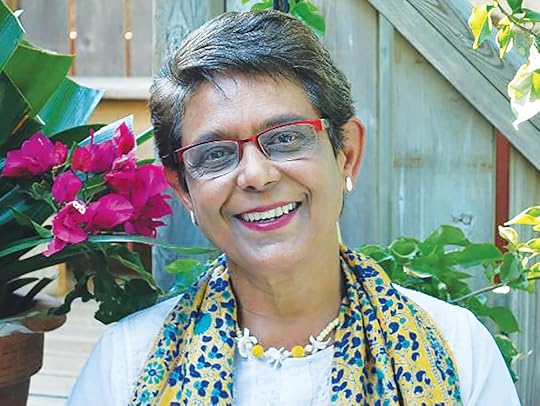
Dr Vicki Bismilla is a retired Superintendent of Schools and retired college Vice-President, Academic, and Chief Learning Officer. She has authored two books.
SCIENCE MATTERS

Image credit: KATIE GODOWSKI on Pexels.
By DAVID SUZUKI
It’s a tragic truth that some people are willing to inflict unfathomable suffering and death for the sake of power and wealth.
From Russia’s aggression in Ukraine to the push for continued climate-altering fossil fuel expansion, selfish gain means more to some than the health and well-being of our children and grandchildren and those yet to be born.
Take the decades-spanning efforts to downplay and deny the evidence of human-caused climate disruption – efforts that have accelerated in recent days, as the fossil fuel industry and its political and media allies cynically use the Russia-Ukraine crisis to advocate for increased development and expansion of the products and infrastructure they tout.
Alberta’s premier tweeted, “Now if Canada really wants to help defang Putin, then let’s get some pipelines built”. He fails to acknowledge that the pipes are largely being made by a company 60 per cent owned by Russian oligarchs – one with close ties to Putin – and that the Alberta Investment Management Corporation (AIMCo) owns half a million shares of a Russian investment fund whose largest holdings are in Russian fossil fuel companies Gazprom, Sberbank and Lukoil.
AIMCo has since committed to divesting its Russian holdings.
He did halt Russian alcohol sales, though (which is mostly just Russian Standard vodka, not really popular in Alberta).
UN secretary-general António Guterres had a more rational take, tweeting: “As current events make all too clear, our reliance on fossil fuels makes the global economy and our energy security vulnerable to geopolitical crises. Instead of slowing down decarbonization, now is the time to accelerate the transition to a renewable energy future.”
The recent Intergovernmental Panel on Climate Change report, Impacts, Adaptation and Vulnerability, explains the dangers of deception: “Rhetoric and misinformation on climate change and the deliberate undermining of science have contributed to misperceptions of the scientific consensus, uncertainty, disregarded risk and urgency, and dissent.”
It adds that “strong party affiliation and partisan opinion polarization contribute to delayed mitigation and adaptation action, most notably in the US but with similar patterns in Canada” and that “vested economic and political interests have organized and financed misinformation and ‘contrarian’ climate change communication”.
It’s not that everyone who denies or downplays climate science is uncaring or, worse, sociopathic. Those with power often exploit the uneducated and uninformed to further their own ends – and in many cases work to degrade education systems to prevent people from acquiring critical thinking and logic skills.
The excuse that the world will need fossil fuels for years to come so it’s better to support our own industries wasn’t a great argument even 34 years ago when the IPCC was established – and fossil fuel development and use have accelerated since then. Failure to heed the evidence has propelled humanity into a climate emergency.
Those who know better have no excuse. The fossil fuel industry’s own scientists accurately warned about the climate consequences of profligate fossil fuel burning 45 years ago. Most opinion writers who sow doubt, confusion and misinformation about climate disruption aren’t ignorant enough to outright reject mountains of accumulating evidence – including what people everywhere are plainly experiencing!
So, why do they so strenuously oppose what is clearly necessary, especially knowing that many measures to shift to cleaner energy, reduce consumption and protect carbon sinks like forests, wetlands, kelp forests and more will also lead to less pollution, improved public health and better, more equitable economic outcomes?
Part of it may be fear – fear of change, of losing illusory power and wealth, of having to think differently. Much of it’s rooted in selfishness, of taking what they can while they can, under the assumption that negative consequences won’t affect them, either because their wealth and power will insulate them, or because impacts won’t kick in until after they’re gone. Some of it is ego. It’s been surmised that Putin is only wreaking such horrible destruction because he wants to cement his imaginary legacy as a great leader who helped restore a failing empire to its former glory.
It’s profoundly sad that we’re being led by so many short-sighted, narrow-minded people. It’s sad that children have to march in the streets and protest for something as basic as survivable conditions. It’s sad that young people are being sacrificed – sent to kill and be killed to protect billionaires’ interests.
It’s time for a radical shift.
• With contributions from David Suzuki Foundation senior writer and editor Ian Hanington. More at www.davidsuzuki.org.
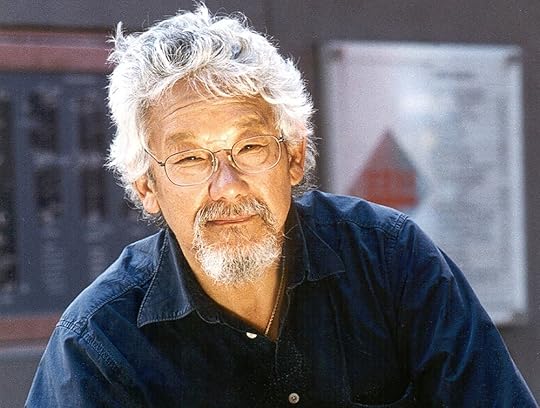
David Suzuki. Image credit: DAVID SUZUKI FOUNDATION.
ARRIVAL LOUNGE
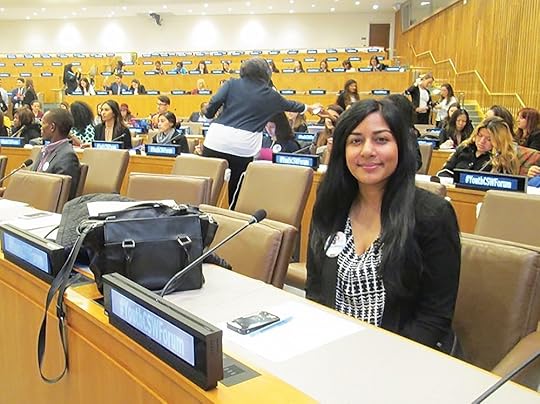
Ashna Jassi at the United Nations.
By LIABA NISAR
Growing up, Ashna Jassi was exposed to differences in expectations for sons and daughters – including expectations around elder care – within South Asian households.
Being attentive to these differences would prove to be more than fruitful for Jassi, a second-generation Punjabi Canadian, as it would guide her PhD research and dissertation focus at the University of Guelph.
After obtaining her BSc (Honours) in Psychology from the University of British Columbia, and MSc in Social and Cultural Psychology from the London School of Economics, Jassi began her PhD in Applied Social Psychology at the University of Guelph, with a focus on cultural psychology, immigration, and gender.
Despite being one of the largest immigrant groups in Canada, Jassi noticed that there was not a lot of research being done with Punjabi (and, more broadly, South Asian) communities within the Canadian academic landscape especially related to gender, family roles, and elder-care.
“Within traditional Punjabi family values, sons are typically expected to handle the majority of elder care for their own parents, while daughters are typically expected to support in elder care of their parents-in-law,” she says. “My parents have no sons, so I was very aware of what this could mean for my family. This made me curious to research this further.”
Her research revealed that contrary to popular expectations, Canadian Punjabi daughters were indeed involved in caring for their elderly parents. Both sons and daughters reported providing a variety of different supports to their parents at the same level, including physical, social, emotional, and financial supports. At the same time, sons were slightly more likely to see themselves as providing cultural transition support to their parents. Jassi argues that further supports and resources are needed for Canadian Punjabi seniors in transitioning to Canada and navigating Canadian society. In addition, further supports are needed for Canadian Punjabi caregivers. These supports will help seniors foster independence, will help both sons and daughters provide care, and will help reduce gendered expectations around elder-care.
Jassi moved to Guelph in 2015, and she has noticed the increasing diversity within the city and the University of Guelph over the years. Alongside her PhD and various campus and community organization commitments, she is also an active founding member of Canada India Research Centre for Learning and Engagement (CIRCLE), which she believes is a vital catalyst to further diversity, inclusion, and community engagement in Guelph.
According to her, CIRCLE’s role in engaging communities is essential to advancing South Asian and Canadian social issues further.
“CIRCLE is a ground-breaking centre that brings together Canadian and South Asian academics, community-based organizations, and wider communities to share knowledge and discuss social issues together,” she says.
Looking ahead, Jassi notices some positive trends regarding attention and discussion around Canadian South Asian topics. Movies, and television shows such as Mindy Kaling’s Never Have I Ever, starring Mississauga’s Maitreyi Ramakrishnan, show a more diverse and varied South Asian representation. More broadly, she notes positive conversations around Canadian South Asian gender issues, as well as South Asian Canadian alliances with different historically marginalized identity groups (i.e., Black and Indigenous) in Canada.
However, she strongly believes there is a need for further growth in attention, conversations, and research on these topics.
Jassi encourages students, and others who are interested, to reach out and learn more about India, South Asia, the South Asian diaspora, and the opportunities that are available with CIRCLE.
• Liaba Nisar, a student-writer with CIRCLE, is a BA graduate in Geography and Theatre Studies from the University of Guelph. This article is an edited version of the original published at the CIRCLE website, canadaindiaresearch.ca.
• Canada India Research Centre for Learning and Engagement (CIRCLE) at the University of Guelph is an interdisciplinary hub for cutting-edge research on India/Indian diaspora, a gathering place for faculty, students and community partners who are interested in research related to India and Indian diaspora. For more on CIRCLE, please visit canadaindiaresearch.ca/connect.
VOLUNTEER CORPS

Image credit: ISMAEL PARAMO on Unsplash.
Ontario citizens 16 years of age and older can help their communities in times of crisis by joining Volunteer Corps Ontario. The new program will register, screen and train volunteers so Ontario is better prepared to mobilize volunteers and safely respond to emergencies from public health crises to natural disasters.
Volunteer Corps Ontario builds on the success of the COVID-19 Volunteer Portal launched last year which matched volunteers to public health units to support vaccine deployment. The new Volunteer Corps Ontario database will be made available to ministries, municipalities, First Nation communities and NGOs in need of emergency volunteers so they can respond quickly and consistently should an emergency arise.
“With the ongoing COVID-19 pandemic, and flooding and fire seasons around the corner, I hope people from all backgrounds and abilities will answer the call to join Volunteer Corps Ontario,” said Parm Gill, Minister of Citizenship and Multiculturalism.
All volunteers would be required to take online foundational courses prior to deployment.
The Ontario government recently recognized the exceptional contributions of volunteers through the June Callwood Outstanding Achievement Award. This year’s award recipients include Ranil Mendis and Rukshan Para. Register online at volunteercorps.gov.on.ca.