
Nathan Delling's Blog
April 13, 2024
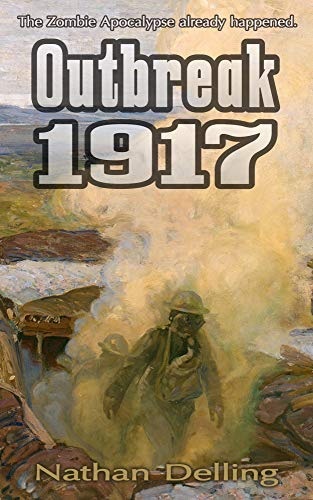 I hope you enjoy my book!


August 16, 2023
Beyond the HQ
I look in on Writers’ HQ regularly, but I find myself leaving without doing anything. During the COVID-19 pandemic, working from home, they were a real lifeline: something to do that wasn’t just sitting in the garden, doomscrolling the news and so on. Their short course on productivity led directly to my first novel; the first time I’d been able to write 50,000+ words in a single story.
That was awesome; as was “Seven days, seven ideas.”
I still get newsletters from Writers’ HQ and I don’t mind that a bit; they’re always quirky, perky and engaging. A wonderful outfit… but not a place where I feel that I fit in, any more. In a typical message, they’re pushing flash fiction, and journalling. That’s great; get people writing… but it’s not what I need.
I can’t recommend their free courses enough. The only downside of their courses is that they tend to take over your life: doing an exercise every day is exhausting! More than once, I’ve been tempted by a course, but thought that work or family commitments ought to be attended to instead. You can’t really “catch up” on a course later, because while you can do the work, you don’t get to be a part of the community. (Writers and feedback… you know what that’s like.) Usually, therefore, I choose not to study with them.
But they are brilliant.
Nowadays, as a big, bad writer type person, I don’t need “Write a teeny-tiny novel” because I can use the time better, to write a ‘proper’ one. I don’t get flash fiction: maybe it’s a good gateway drug, but I’m way past that stage. Likewise journalling. Y’see, my problem with Writers’ HQ is a personal one. I’ve sort of graduated.
That’s not to say that they aren’t an amazing outfit. I can’t recommend them enough… but their emphasis on fiddly little bite-size bits of writing doesn’t quite meet my needs, now. I won’t say that on their site because I think it might come over as being very rude – but there it is.
February 9, 2023
On Making Stuff Up
Research is a very important thing to do, when you’re writing.
Some of my friends disagree, telling me that the story is the thing and one should feel free to “make stuff up” but I’ve tried to be a little more grounded than that. Not that I mind if I’m reading a novel and the author allows their hero to board an underground train at Piccadilly Circus three years before it opened.
Years ago, when all I wrote was science fiction, I could get away with murder. (You want to create an alien race that breathes radioactive methane? Go for it…) If I get things wrong in historical fiction, however, people ask awkward questions. You get comments if you make a mistake when you mention how many rounds a Mauser C96 can hold. (And yes, I know the radio station that was captured on the first night of the Hungarian Revolution was put out of action in the process – but I chose to have my rebels listening to a broadcast the next morning. Historical fiction is still fiction: I just liked it better that way.)
Sometimes, you make things up. Politician Jakob Puskas and his Christian Centrist party aren’t real… but if I’d put Viktor Orban into ‘Budapest’ as the far-right politician, my novel would have had… baggage. Instead, I chose to make stuff up. It’s permitted!
Sometimes, the things you make up can be unfortunate – and particularly when the truth is stranger than fiction and you can no longer tell whether life is imitating art or vice-versa. In ‘America’s Most Haunted’ – a freebie short story that probably didn’t get subjected to quite the same process of fact checking – I had Jake the computer nerd talking about Spungecoin, a new cryptocurrency that he’d invented:
“Oh, don’t worry,” Jake said airily. “I’m quids in: I don’t mind sharing the wealth.”
“Oh, you’re doing well?” I asked. It seemed unlikely.
“Yeah,” he said. “Spungecoin’s really taking off.”
“Spongecoin?” I asked. “You invested in some dodgy cryptocurrency?”
“Spunge – spelled with a ‘U’,” Jake explained. “And I didn’t invest in a dodgy cryptocurrency: I created one of my own.”
“You did?”
“Sure, why not?”
I could think of lots of reasons why not, but Jake’s confidence was unshakable.
“And it’s going well?”
“It’s already been banned in China. And the original app’s been banned by Apple.”
“Oh,” I said, “I’m sorry to hear that.”
“No – it’s great! Free publicity, basically.”
It never occurred to me that such a stupid thing might actually exist, but it does. (Or did, anyway.)
A recent Google search informed me of this. What I found bore all the hallmarks of a classic crypto pump-and-dump. Fill your boots: this thing is gonna go to the moon… the word salad that described the purpose of the new cryptocurrency and the obligatory, insincere messages from investors whose only hope of making a profit lies in finding somebody else to buy their worthless digi-tokens off them. It’s an industry that’s turned into a parody of itself and hasn’t even noticed.
The real Spungecoin now trades (actually, nobody’s trading it) at $0.000067. In happier times, at its all-time high, Spunge was worth almost a cent. Call me crazy, but I’d rather have a small disc of copper-plated zinc with Abraham Lincoln stamped on it: a little piece of history.

It remains to be seen whether the Spungecoin people will hit me with a cease-and-desist or perhaps sue me for all the money I made from my free story. You never know: I’m sure they can afford to hire a lot of hotshot lawyers with their $0.000067 Spunges, although they’d probably tell you that this isn’t a good time to cash out – because this thing is going to the moon, baby.
While I’m on the subject of ‘America’s Most Haunted’, a quick tip o’ the hat to David Fletcher, MBE: the inspiration for the character of Saul Bowman. Mr Fletcher, who you might know as the presenter of many videos in the Tank Chats series recently announced his retirement after an extraordinary career as the longest-serving member of staff at The Tank Museum in Bovington. Those of us who are enthusiastic about such things owe a lot to him.
November 23, 2022
Russian Invaders?
I’ve been asked if it was entirely fair to cast the Russians as the bad guys in ‘Budapest’. It’s true that the Hungarian Revolution of 1956 was a conflict fought against the Soviet Union – not Russia – but the Hungarians referred to them as “the Russians” and my dialogue reflects this. It might not be entirely accurate, but that was the perception.
When fresh troops were sent in to stamp out the initial, successful uprising, the 8th Mechanized Army was under the command of an Armenian, Lieutenant General Hamazasp Babadzhanian… but the man in the street (who was probably armed with a petrol bomb at that point) wouldn’t have bothered making a distinction between Russians and the Soviet Union.
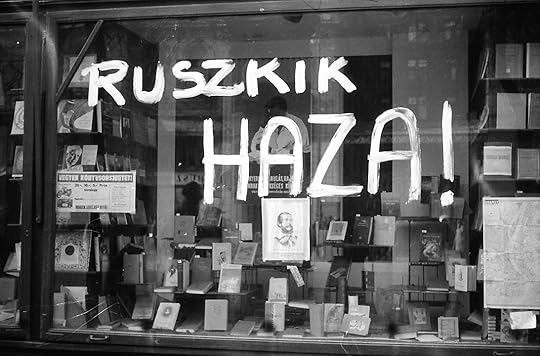 “Russians go home!” (Budapest, 1956) – photo via the Fortepan community photo archive
Strangely enough, this photo was taken on Erzsébet Körút (Elizabeth Boulevard) and Erzsébet is also the name of my heroine. Just a coincidence, but a nice one. I can imagine her taking a picture like this one, in the lull before the fighting resumes in earnest. In her time – in fact from 1950 until 1990 – it was Lenin Boulevard, courtesy of the communists.
Now I’m imagining some Soviet equivalent to John Cleese appearing, to challenge the revolutionary’s grammar…
November 20, 2022
Genesis of a Story
Some years ago, I was working in Cluj-Napoca, Romania. It’s considered to be the unofficial capital of Transylvania, but my thoughts weren’t centred upon vampires. I had a few hours free and I walked to the central park, wrapped up against the autumn chill and carrying my camera. I found the park to be large and not terribly interesting: it’s a place of broad thoroughfares and the people all seemed to be hurrying through it rather than enjoying it. Perhaps that’s simply good sense on a cold day.
When I decided that I’d seen enough and started back to my hotel, my route took me past the Monumentul Rezistenței Anticomuniste – the Anti-Communist Resistance Monument. There are monuments like this throughout the countries that the Soviet Union occupied at the end of the Second World War, where it rapidly became the norm for anybody who spoke out against communism to be imprisoned in brutal conditions. Many such political prisoners never came home.
 Monumentul Rezistenței Anticomuniste, 2013 – photo by ‘Teutorigos’ via Wikimedia
I stopped and studied the monument. (Like Roman Mars says, always read the plaque.) One thing that really stood out was that some unknown graffiti ‘artist’ had added a swastika to the white marble of the monument.
The previous day, I’d asked my hosts about the origins of the name, Cluj-Napoca, being told that “it’s not two different place names being brought together, like Buda and Pest.” Perhaps that’s why I had Budapest in mind, standing there with my camera and thinking about the years of repression under the communists.
And with that, we were off to the races. Budapest and the Hungarian Uprising would be the setting for a story, I decided. (Later, I discovered that historians now call it the Hungarian Revolution of 1956.) A photographer in the present day, who points his camera at things but gets pictures of the chaos of 1956; a woman who’s trying to document the fighting, but gets his photos in place of her own – all told against the backdrop of clashing ideologies: not just in 1956 but also in the present day, as Hungary lurches toward the hard right.
It was all there: the seeds of that story were sown in just a moment, in a chilly corner of the city park. That was perhaps four years ago and I had other fish to fry at the time: I made some notes, then fleshed things out some more in the summer of 2021. Even then, I devoted most of my time to other projects until, in February 2022, Russian troops invaded Ukraine. That made it personal, somehow: for the first time in decades there was war in Europe and with Putin the paranoid KGB agent turned sickly dictator in the Kremlin I found all the motivation I needed to finish my story of the Hungarian Revolution.
I don’t want to live under the jackboot of the Soviet Reunion and I don’t think there are many in Eastern Europe with fond memories of those times… so here’s Budapest.

October 25, 2022
Free story: America’s Most Haunted
America's Most Haunted
October 19, 2021
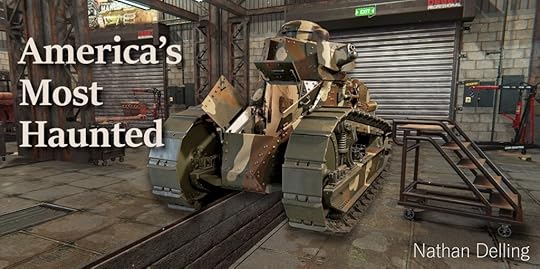
America’s Most Haunted
This short story was released in time for Halloween in October 2021. ‘Rust and Recuperation’ isn’t a horror story, but I thought it might be fun to see how its characters might react to a frisson of the supernatural. With apologies to David Fletcher, I hope you enjoy…
“There’s a moustache here to see you,” Alex said.
“A what?” I asked.
A hand flew to her mouth as she realised what she’d just said. “Er… a person,” she said, flustered. “Gentleman. He’s here to see you.”
The visitor was right behind her. I recognised him at once: Saul Bowman, the notable historian and curator.
As he entered my office, his impressive moustache preceded him in much the same way that the mine-clearing flail on a Sherman Crab would once have done – and it had a similarly disarming effect, somehow.
“Hello,” I said, lamely. “To what do we owe the pleasure?”
At this point, Simon skidded to a halt in the doorway – after which he stood, open-mouthed and apparently unable to do anything more than glance from Saul to me and back.
“Yes, Simon?” I prompted.
“Uh… hello,” he said at last. “I’m Simon.”
“Hello,” Saul said. “I’m –”
“I know!” Simon blurted. “I have all your books. I watch your YouTube channel.”
“Ah… yes,” Saul said, looking uncomfortable. “Now I remember you from the Q and A at Armourfest. Such a shame we ran out of time… eventually.”
“Did you want something, Simon?” I prompted.
Simon squirmed. “Just to say hello.”
When Saul merely nodded, Simon blushed bright red.
“Coffee?” I offered.
“I’ll have a cup of tea, if you don’t mind,” Saul answered.
“I’ll get it!” Simon dashed off. I noted that in this way he’d given himself a pretext to return and spend some more time with his hero. Cunning!
Saul looked at some of the photos pinned to the noticeboard, nodding appreciatively. He was particularly interested in the BT-7 that we’d recently completed for a Finnish collector. He complimented me on the thorough transformation that we had achieved, judging by the before-and-after photos.
“I don’t like the colour scheme, though,” he said.
“It’s probably not what you’d call historically accurate,” I admitted.
“Why’d you do it like that?” he asked. “It looks all set for a parade in Red Square, but with Finnish markings.”
“The customer wanted it that way,” I said. “He supplied a full set of drawings – and the customer is always right, or so they say…”
Saul snorted. At last, he got down to business: “I was in the area anyway, but I wondered if you might like to quote for some restoration work?”
This was unusual indeed. Saul had an extensive workshop and some highly skilled technicians.
Why would he want to outsource a job? I wondered. Still, if he was too busy with other things, I would cheerfully take his money.
From a folder, he handed me some photographs. A small tank, seemingly complete, but somewhat the worse for wear.
“Renault FT, eh?” I asked – but Simon had returned with tea and biscuits on a tray.
“Surely not,” he said as he handed Saul a mug. “That’s an M1917. You can tell because the exhaust’s on the other side. American-built, under licence: nine hundred and fifty of them.”
Since the M1917 was largely a copy of the classic French First World War tank, I didn’t feel too bad about misidentifying the vehicle. “You don’t have time to restore that little thing?” I asked. “It’s a lovely little machine, but it’s probably only got about twenty moving parts…”
“It ought to be trivial, but we just don’t seem to be having much luck with it,” Saul explained – which explained nothing.
“It looks as if you’ve got all the major components,” I said.
“Oh, yes,” he said. “It’s a runner… or it was, anyway.”
“What happened to it?” I asked. The small vehicle looked as if it had been in combat.
“I’ve only had her for a few months,” he said. “I acquired her at auction when a collector in Memphis died.”
“Oh,” I said, “I think I remember…”
“This must be the machine that suffered a hydraulic failure at Armourfest,” Simon said. “The driver lost control and crashed into a Centurion?”
Saul frowned. “I’m not sure I’d call it a crash, but there was a collision. It was all very peculiar: somehow the brakes failed and the driver couldn’t steer. The only fortunate thing was that it happened before the display and a long way from the crowd, so no visitors were in danger. Needless to say, the Centurion was hardly damaged at all.”
“So you had some repairs to do?”
“Indeed,” he said. “We hauled the M1917 back into the workshop to investigate the hydraulics and there was practically no fluid left, although we couldn’t discover how the leak had occurred. My lads topped up the reservoir and set about seeing if they could re-seat the tracks that had become dislodged in the collision. We hoped we might have her running in time to display her on the final day, but that night there was a fire in the workshop.”
“I read about that,” I said. “You mean to say, the M1917 caught fire?”
“Yes,” he said. “It appears so, anyway: this machine was at the centre of the fire, though we’d drained the fuel tank as soon as we brought her into the workshop: standard procedure.”
I nodded. “Of course.”
“I heard there was an accident after that,” Simon said, reaching for a biscuit. It seemed he had invited himself to join us.
“Yes,” Saul admitted. “What you see here isn’t entirely damage sustained in the collision. Subsequently, the tank rolled off the stands we had it on, which should be nigh impossible… but there it is. One of my chaps suffered a broken leg.”
“I’m glad it wasn’t something worse,” I said. “Have you any idea how it happened?”
“The M1917 is tall and narrow and the armour plate is thin, by modern standards,” Saul said. “I imagine that removing all the running gear from one side of the vehicle was a mistake. It left the machine badly unbalanced, in a way that would never be a problem for a heavier tank. It fell off the stands and landed on its side.”
“That was months ago,” I said, “but you haven’t had time to effect repairs?”
“We’ve had a lot of work on,” Saul shrugged. “We’ve been dealing with some equipment breakdowns and so on… it’s all put us behind schedule, rather. So are you interested?”
We didn’t have a lot of work on and I decided that I most definitely was interested. Still, I didn’t want to look too keen and I expected him to bargain me down so I quoted an outrageous price for the work.
I was surprised when he accepted it at once, agreeing to the kind of money that would have funded the restoration of a much more elaborate vehicle. The only thing he grumbled about was when I said that we couldn’t begin the work straight away. Since he was paying top dollar, I agreed to treat it as a ‘rush job’ and he said the machine would be with us within forty-eight hours. I protested that it would take longer than that just to get the contract drawn up and again Saul surprised me: from the folder he produced a boilerplate contract, to which only the amount I had quoted and some dates had to be entered, where space had been left for them.
I cast my eye over it, but I noted that Simon was still trying to engage his hero in conversation: something about what the larger wheels on the Mark Three Ferret had done to the gearing ratios. I took pity on Saul and sent Simon back to his work in the paint room, reminding him that he was on “my time”.
After a minute or so, Saul shook off his glazed expression and cheerfully initialled each page of the contracts; one copy for me and one for him. We completed the process, shook hands and he hastened to leave in case Simon’s shift should end before he got out of the car park.
+++
Two days later, we took delivery of the M1917. It was late in the day, so we didn’t achieve much, simply positioning it over the inspection pit and fastening the vehicle in place so it couldn’t topple over again. With that done, we went home. (Actually, I had to wait while Simon took some photos for use in his blog… but we didn’t make a serious attempt at restoration.)
The next day, we commenced the lengthy process of studying the vehicle and documenting exactly what we had to work with. Only then could we begin to remove parts and check them over to decide if they needed repainting, repair or outright replacement.
Alex wrinkled her nose. “I’ve got to say… and I know it’s a hundred years old and an important piece of history, yadda yadda… this tank absolutely stinks.”
“It was very advanced for its day,” Simon opined. “One of the first machines to feature a rotating turret for the main armament – and much more practical than France’s other attempts. If you’ll accept that it’s basically a Renault FT, that is.”
“Yeah?” Alex shrugged. “It still stinks.”
“By the standards of the First World War, it was a useful little machine,” Simon protested. “Obviously, it’s not as capable as a Mark IV, say, but…”
“Jesus!” Alex exclaimed. “Do I look like a person who enjoys debating the merits of antique death machines? I don’t care if it was the best tank ever! I’m just saying that it smells bad, you mouth-breather.”
I crossed the workshop, descended into the pit where Alex was working and sniffed experimentally.
Alex laughed. “Can I assume by the way your eyes just crossed that you smell it too?”
I nodded and headed over to the workshop doors, opening them wide. “That’s foul.”
“Yeah,” she said. “Simon, have you checked all the nooks and crannies?”
“For what?” he asked.
“Some critter that crawled inside and died, maybe?”
It was the kind of smell for which the word ‘miasma’ was invented.
Simon sniffed around, experimentally. “It’s weird,” he said. “It didn’t smell last night.
“Now it smells even worse than that Swedish thing,” Alex scowled.
“That’s not funny,” Simon protested. “I told you: it’s pronounced ’S-tank’, not ‘stank’ and it’s properly called the Stridsvagn one-oh-three.”
She smirked. “Whatever.”
“Let’s focus, people,” I warned them. “Find the source of that horrible smell and sort it out.”
“Okay, boss,” Simon sprang into action – followed by Alex, with less enthusiasm.
They didn’t find anything, reporting that the tank just generally smelled nasty without any particular culprit having been identified.
“It’s probably just a prank by Saul Bowman’s boys,” Simon suggested. “If they resent the fact that we’re being given a shot at restoring the machine after they’ve failed, perhaps they gave it a squirt of fart spray as a parting gift.”
“Fart spray?” Alex made a face. “No way. If yours smell like that, you should see a doctor.”
“Really?” Simon pondered this. “Don’t you think it’s… sort of dung-like?”
“I don’t particularly want to think about it,” I put in. “Let’s just strip all the paint off. Surely nothing can still smell this bad once it’s in bare metal.”
“Alright,” Alex said. She started getting the equipment set up for some bead-blasting while I lifted the turret off and Simon hauled out the engine.
Strangely, the smell lingered even days after Alex had stripped the machine. Not for the first time, she explored the tank, trying to find some cavity or nook that she might have missed. There was a clang and she was flung away: she fell to the ground and we both rushed over, reaching her as she sat up.
“Son of a bitch!” she exclaimed.
“What? What happened?” I demanded. I thought that she must have injured herself, but I was reassured by her usual demeanour.
“The damned tank just gave me an electric shock,” she complained.
“It’s like it doesn’t want to be worked on,” Simon said, in awe.
Investigating, we found that the driver’s hatch had slammed shut, chomping part-way through the wires that led to an inspection lamp and leaving them in contact with bare metal. This was what had given Alex a nasty jolt, before the circuit breaker tripped.
“That’s… unusual,” I said.
“That hatch can’t just fall,” Alex protested. “There’s a catch.”
“Did you engage the catch?” I asked. It seemed to be in good working order.
“The hatch was already open when I started today,” Alex said. “Simon, did you open the hatch?”
“No,” he said. “It’s been open for a few days.”
None of us were convinced that the hatch could fall spontaneously and just when it was likely to do the most damage, but what other explanation was there? I fetched another inspection lamp and we got back to work – taking care to route the cables where they couldn’t suffer a similar mishap.
Since the M1917 was unusually tall for its size, Simon was working directly from an access platform with a set of folding steps. There was a crash.
“Are you alright, Simon?” I asked.
“I bit my tongue,” he complained.
“It looks like the steps weren’t locked,” Alex said. “Didn’t you check them?”
“I did!” Simon looked angry. “I fastened them carefully, yesterday afternoon when I started working up top.”
“Something strange is going on here,” I said. “Is somebody’s trying to prank us? Also – and I know I’ve said this before – why can I never find a three quarter inch socket any more?”
It was a common size for various nuts and bolts all over the vehicle and for some reason sockets of that size kept disappearing.
“I’ve been wondering the same thing,” Alex said.
“Try nineteen millimetres,” Simon suggested.
“Now you’re talking,” Alex grinned. “I have a profound dislike of the imperial system of measurement.”
“You do?” I asked, still casting about for a socket.
“It’s awful,” Alex said. “You try a socket and it’s too big: you squint at it and discover it’s fifteen twenty-thirds or something. So you need the next one down. Which is what? Twelve nineteenths? Eleven twenty-oneths?”
“It’s not that bad,” I protested.
“You only have to learn one sequence,” Simon explained. “You’re basically counting in thirty-seconds, only they tidy up the fractions.”
“You call that tidy?”
“Never mind that,” I said, “this is getting ridiculous. Where are all the three quarters sockets hiding?”
The last time our tool rep had called in, I’d bought two replacements, having noticed gaps in the rack. Now there were gaps again, though neither of my employees were using a socket of that size. I went to the chest of tools and there wasn’t one in there, either.
“Come on,” I complained. “One of you must have been using a three quarters socket.”
“Not me,” Alex said. “I had to use an adjustable spanner instead.”
“I see. So this tank eats three quarters sockets, does it? That’s unusual.”
“Yeah,” she smiled. “In my experience vehicles are normally carnivorous, with a particular liking for fingers. But I hope you don’t think that I half-inched your three quarters socket?”
“Funny,” I said. “I’m pretty sure I’ve got one in the car… but it had better not go missing!”
Since both my employees had now been victims of accidents that could have been serious, I was confident that neither of them had taken up hoaxing – but I also knew that I wasn’t to blame and what did that leave? One of the museum volunteers? I resolved to tighten our security.
The first step was to reposition our webcam to cover the M1917 fully – and to set it to store a still photo every few seconds. If we couldn’t prevent the next ‘accident’, perhaps we could at least look through the pictures and see who’d set the trap.
Paranoia, it turns out, is surprisingly deleterious to productivity… but after a few days we’d made a start on returning some of the tank’s smaller parts to full working order: those that only needed repainting had been primed and given their first colour coat, then left to dry overnight.
Next day, I arrived a little late and found that Simon had let himself in, though the workshop lacked its usual bustle.
“What’s the matter?” I asked. “Why’s the place in darkness?”
“The fuse has gone, boss,” Simon told me.
“So? You know what to do, Simon: just flick the switch on the circuit breaker to reset it.”
Simon looked perplexed. “No: it’s actually gone. Someone’s taken it.”
“Are you telling me that since we left last night, somebody broke into the workshop, ignoring all the valuable tools and choosing instead to wander off with a circuit breaker?”
“Uh, no boss, “Alex said. “They didn’t ignore the tools.”
“What’s the damage?” I demanded.
“I think we’re out of three quarters sockets again,” Alex said, grimacing as she anticipated my reaction.
“Oh, that,” I said, laughing with relief that was just a little bit manic. “The M1917 probably got hungry during the night. Don’t worry about that: have a look around the museum and make sure nothing else is missing. Maybe tidy the place up a bit, but stay out of the workshop until I get back. I’m going to buy some bits and pieces.”
A quick survey of the workshop suggested that the circuit breakers hadn’t merely been unplugged: perhaps they’d accompanied all the lost sockets on their mysterious journey.
Whatever, I decided. We’ll just get the job finished. It’s still a profitable job, even if I have to feed the tank a couple of sockets every night.
I drove to the closest hardware supplier and bought new circuit breakers, a fistful of three quarter inch sockets, some chain and padlocks. I might as well try to make life a little bit harder for the thief, I thought.
“Right,” I said upon my return, perhaps a little too loudly. “These are your personal three quarters sockets. I want you each to keep one in your pocket at all times. When you want to go home tonight, I’m not letting you leave unless you take your personal socket home with you. Bring it in again tomorrow, and so on.”
Simon nodded. “Right, boss.”
Alex accepted hers gravely, putting it in her pocket.
At last I turned my thoughts to tank restoration: a job that I seldom had much time for, any more – and sure enough, I was interrupted. I’d barely had time to gather the materials I needed to fabricate a new air duct before Simon needed me:
“Boss, something’s gone wrong with the paint,” Simon told me. “Come and see!”
The parts that I had thought were complete and ready for reassembly had taken on a strange appearance, their surfaces pitted like orange peel. In some places the paint was blistered or even hanging off in rags.
“What the hell happened here?” I demanded. “Was there something wrong with the paint?”
Alex joined us. “I’ve seen this before,” she said. “In the street racing scene, if somebody wanted to sabotage a rival team, they’d spray a fine mist of oil over their paintwork before it was fully dry. It’s amazing what a can of WD40 can do, even sprayed in through an air vent.”
“Don’t touch that!” I said to Simon, who was reaching for a spray can he’d seen in the bin.
“Fingerprints?” he asked.
“Maybe,” I said. “We already know we had an intruder last night. Perhaps he didn’t just mess around with circuit breakers and three quarter inch sockets.”
“Not a ghost, then,” Simon said. “Or a curse?”
“No,” said Alex. “I know what this is. This is war.”
“Who are we fighting, though?” I demanded. “This might be something rival street racing gangs do, but in the tank restoration scene… not so much.”
“Unless it was Mark Huntley,” Simon said.
“Alright, unless it was Mark Huntley… although the joke’s on him if he came all the way from Hereford just to do this.”
“Whoever it was, we’ll need proof,” I said. “We can’t do anything without proof.”
“Nothing legal, anyway,” Alex muttered.
“Alright,” I told them. “Simon, give all these parts a thorough clean with gunwash, then get them painted again. I’ll go home and fetch a sleeping bag: it looks like I’m camping here tonight. I’ll hide myself in the museum.”
“Can I stay too?” Simon asked.
+++
I’d managed almost an hour of quality time with the new air duct and it was taking shape quite nicely, but Simon appeared at my elbow.
“Just so you know, Jake’s here.”
“He is?” I asked. “Did you ask him to come?”
“No, he wanted to come. He’s been paying us close attention since people started calling the tank ‘Little B.’ on the forums,” Simon said.
“Calling it what?” I asked.
“After James Dean’s racing car. The cursed one.”
“Cursed?” I asked.
“You’ve got to admit, things have been pretty weird since the M1917 arrived,” Simon said, apparently sincere.
I found Jake in the office, where he’d settled himself at my desk and was doing something on my computer.
“Hmm,” I said. “Remind me to change my password.”
“I’ve always thought that anybody who truly didn’t want me using their stuff wouldn’t rely on Microsoft Windows for security,” Jake said, barely looking up.
“Can I help you with anything?” I prompted.
“Nah,” he frowned. “I’m just trying to resurrect some corrupted files. When the power went off, your webcam was part-way through writing something to disk. The files won’t open. Or not for ordinary people, anyway.”
Ordinary people. I considered making a snide remark about this, but decided not to antagonise the lad.
“Have we… given you the impression that we’re paying you for this work?” I asked.
“Oh, don’t worry,” Jake said airily. “I’m quids in: I don’t mind sharing the wealth.”
“Oh, you’re doing well?” I asked. It seemed unlikely.
“Yeah,” he said. “Spungecoin’s really taking off.”
“Spongecoin?” I asked. “You invested in some dodgy cryptocurrency?”
“Spunge – spelled with a ‘U’,” Jake explained. “And I didn’t invest in a dodgy cryptocurrency: I created one of my own.”
“You did?”
“Sure, why not?”
I could think of lots of reasons why not, but Jake’s confidence was unshakable.
“And it’s going well?”
“It’s already been banned in China – and the original app’s been banned by Apple.”
“Oh,” I said, “I’m sorry to hear that.”
“No – it’s great! Free publicity, basically.”
“So what does Spongecoin – sorry, Spungecoin – do?” I asked.
“Basically you play a free-to-play game and the computer mines crypto at the same time. It updates the blockchain and the player and I split the tokens. My ones fund the development of new games and theirs allow them to buy in-game stuff, or get discounts on merchandise.”
“And this was your own idea? I asked him.
“I was in the bath at the time. Hence the name, Spunge.”
“With a ‘U’.”
“It wouldn’t be the same without ‘U’. That’s what it says on our website.”
“Uh, great. And how are those corrupted files looking, Jake?”
“Hopeless,” he sighed. “I really thought you might have caught the ghost on camera… but there’s nothing here.”
“Ghost?” I queried.
He sighed. “Well, it was worth a try.”
“The camera didn’t record anything unusual, before the power went out?”
“Nope. What you need is a UPS.”
“A parcel?”
“Uninterruptible power supply.”
“That sounds expensive,” I said.
“Doesn’t have to be,” Jake shrugged. “I suggest we go low-tech and just hide some cameras. We can use some of the stuff that’s been surplus since the ‘Reggae Metal’ caper. With a battery like this it’ll be easy to power an SBC over USB. The same for a wireless hotspot and then we get an almost-live feed that we can view from anywhere.”
“SBC… USB. I understand,” I lied. “And you’re happy to do all this? Just for fun?”
“Are you kidding? I’d pay you for a chance to be the first person to get photos of a ghost.”
Simon came into the office. “What’s that? Pictures of the ghost?”
“Not yet,” Jake told him, “but keep an eye out for ectoplasm.”
Soon enough, there was ectoplasm. It was actually Swarfega that Alex had spattered around the tank, but it looked surprisingly realistic, if I’m any judge of paranormal manifestations. Simon and Jake freaked out and I judged it worth the waste of materials to see this.
Once the M1917 was no longer dripping green slime, we got back to work. Jake did something baffling that involved tinkering with small circuit boards.
“The stock build of MotionEye is okay for the hobbyist,” he explained, “but I’m recompiling it with a few bells and whistles of my own.”
I left him to his experiments and returned my attention to the tank. There was something nagging at me: something that I’d missed. The restoration was going well, despite the setbacks that we’d suffered, but I knew that we had to expect more trouble. I abandoned any attempt at restoration and instead just examined the tank, inside and out. Simon and Alex looked at me curiously but got on with their tasks, occasionally asking me to move out of the way.
At last, I had it. “Got it,” I said. “Stop what you’re doing.”
“What is it?” Simon asked.
“These old Buda engines have a great feature if you’re operating in a cold climate. Remember, these were made in the days before modern antifreeze. There’s a big drain plug that you can use to dump all your coolant if you’re going to park up on a cold night.
“So, you think the drain plug has something wrong with it?” Simon asked.
“No. But I think we need to open it and flush the system,” I said.
“Why?” Alex asked. “We only just filled it.”
“Somebody’s been at it,” I said.
I held out my hand, revealing what I’d found on the floor: three grains of rice.
“These probably spilled when the rest were dumped inside the radiator,” I said. “It’s an old trick: there’s probably a kilo of sugar in the petrol tank as well – and once this is all over I’ll be changing the hydraulic fluid as well.”
“More sabotage,” Alex glowered. “Like I said, this is war!”
“This has to end,” Simon declared. “We’ll never finish this damned job if we don’t catch the ghost.”
“Ghost, my arse,” I said. “Do you still want to have a sleepover in the museum?”
“I’d love to,” Simon said.
“You boys needn’t think you’re having all the fun,” Alex insisted, “and I imagine Jake will want to stay, too.”
Great, I thought, so now I’m running a camp for misfit young people…
One at a time, we each went home to gather supplies for our night in the museum. I brought sandwiches, a toothbrush and a sleeping bag; the others were somewhat less practical.
“This is Phyllis,” Alex said. “I’ve borrowed her for a while.”
I regarded the creature: the product of unplanned assignations between various members of the canine set, if I was any judge. Though she was a strange mixture, there were some elements mixed in that suggested ‘guard dog’ – if you were on a budget.
Phyllis looked up at me and wagged her tail half-heartedly.
“Can Phyllis be relied on to keep quiet?” I asked.
“Oh, yeah,” Alex said. “She mostly sleeps nowadays, anyway.”
“Make sure she’s had a walk before we settle in,” I said. “And no dog mess in the yard, please!”
“Alright, boss,” Alex said. “We ought to be seen to leave, you know.”
“Yes,” I said. “We’ll have to leave the site in our cars at around the usual time, then walk back and slip in through the museum entrance. I’ll leave the door unlocked.”
This we did and by eight o’clock we were all back inside, quietly eating the sandwiches.
“There’s that evil smell again,” Simon frowned. “It always smells worst when the ghost comes.”
“Actually I think that was Phyllis,” Alex said. “Sorry.”
Simon and Alex spread out their sleeping bags beneath the Sherman. Remembering that they might (just might) have something going on between them, I steered Jake away, suggesting that we ought to spread out. This made no sense at all, but he accepted it without comment.
Phyllis deposited herself on Alex’s sleeping bag, a whiffy but broadminded chaperone.
“I hope you’re not going to try to talk me into investing in Spungecoin,” I warned Jake.
“No,” he said. “To be honest, I’m thinking of cashing out: selling my share of the business.”
“Why?” I demanded: it seemed strange that he’d undergone such a dramatic shift in his position since he first mentioned it.
“It’s… grown. It’s not really me any more. Too corporate. I mean, I have employees now.”
“Nightmare,” I said, glancing at Simon and Alex – and making sure they couldn’t hear me.
“Yeah,” Jake looked uncomfortable. “Anyway –”
His phone vibrated and he reached for it, studying the message that had arrived.
“The ghost’s in the workshop,” he whispered, showing me the screen where an indistinct humanoid figure could be seen in the monochrome of a low-light camera.
“What’s he doing?” I asked.
“Dunno. I should be getting pictures every few seconds, but the signal’s terrible: all this metal clutter.”
“That ‘clutter’ is a million pounds worth of our nation’s history, Jake,”
“Whatever,” he said, waving to get Simon’s attention. He held up his phone and pointed towards the workshop. We all left our hiding places and crept forward, to catch the intruder.
I threw the master switch, flooding the workshop with light. We’d all known it was about to happen and had shielded our eyes – though Phyllis barked and whined. There came a crash from the workshop and we ran inside.
There was a middle-aged man on his back in the middle of the floor, his feet tangled in the hose of my oxyacetylene torch. It appeared that he’d been about to do something terrible to the M1917 when we’d surprised him.
He blinked stupidly, struggling to focus. I noticed that he only had socks on his feet: this struck me as very strange attire for an intruder, though it had probably made his footsteps quieter.
“The hell?” he muttered.
Was that an American accent?
I stood over him, trying to look threatening. “I’m about to say some fairly embarrassing things,” I said. “It would be a mistake not to listen until the end, though.”
“Huh?” was all the intruder said.
“Firstly, as you can see, Simon is holding a Super Soaker. He insisted on bringing it. Apparently it contains holy water – and just in case he’s misjudged what kind of evil spirit you are, there’s a lot of mashed garlic in there as well. Trust me: you don’t want that on your clothes because it reeks.”
Judging by his gaze, it seemed that the intruder was more interested in what Jake was holding.
“Jake, as you have noticed, is holding a crossbow. Jake: keep it pointed at the floor, like you promised… thank you. Jake tells me that he fashioned the tip of that bolt himself. It’s made from silver. So you see, this is a kind of broad-spectrum ghost-busting toolkit that the boys have put together. Now you may well not be a werewolf. Quite frankly, I’m not going to pry. But even if you don’t consider silver to be a threat – and some would praise its antimicrobial properties – you’ve got to remember that at the end of the day, it’d be arriving at speed because it’s on the front end of a crossbow bolt.”
“Y’only get one shot,” the man said, weighing his options.
“I haven’t finished introducing my staff,” I said. “To your left is Alex. She doesn’t believe in the supernatural. Her weapon of choice is a can of oven cleaner. According to the label, it’s very nasty if you get some in your eyes. Do not approach her.”
He regarded the determined-looking girl – and didn’t move.
“Alex is also holding Phyllis on a lead. Phyllis has strong opinions about right and wrong – and you’ve disrupted her nap time. If you startle Alex, she might stop holding the lead, and then Phyllis will be loose.”
Phyllis yawned. From floor level, her yellowed teeth probably looked a lot more imposing.
“Alright,” the man said. “I get it. What do you want?”
“Finally,” I said, “there’s me. As you can see, my hands are empty.”
“What’s that supposed to mean?” he asked.
“I like to keep my options open,” I said.
Plus if you start anything, I won’t need a weapon because I’ll be too busy kicking you in the fork, I didn’t say.
“I’m not here to rob you,” the man said.
“Oh, good,” I said. “Although we might need to discuss three quarter inch sockets.”
“Alright, that was me,” he said. “But I didn’t steal them: I hid them.”
“Have you been hiding chocolate biscuits as well?” Simon demanded.
“Cookies?” he asked. “No: I ate those.”
“Why?” I demanded.
“I… really like chocolate cookies?”
I sighed. “I mean the sockets.”
“Oh! That was to stop you.”
“Stop me. Why?”
“You don’t understand!” he said, in a hoarse whisper. “This tank is evil!”
“Evil?”
“It has to be destroyed!”
“You sabotaged it? Over and over?”
“Yes.”
“Even before it came here?”
“Yes,” he admitted. “At the other place, that was me.”
“Why?” I said… again.
“This damned tank was at Lexington.”
I was none the wiser. “Lexington?”
Simon cleared his throat. “If I may, boss?”
“Go on then,” I said.
“I think he’s talking about an incident on February the ninth, 1920,” he said. “There were riots, put down by troops from the National Guard. Hardly Tiananmen Square, but six people were killed and perhaps fifty wounded.”
“That’s it,” our intruder said – still in a whisper, as if the tank might hear him.
I pondered this. “So… you think that this vehicle was involved?”
“I know it!”
Alex set down her can of oven cleaner and petted Phyllis. “Who uses tanks against their own people?”
“Oh, we could have seen tanks used against protesters, too,” Simon said. “There was the ‘Battle of George Square’ in Glasgow, although the tanks were held in reserve and never used. That was January 1919 – and then in August they sent tanks to Liverpool – and two battleships as well. They came down hard on civil disorder in those days.”
“I don’t get it,” Jake said. “That’s just politics. How do we get from riots to ‘this tank is evil’?”
“Good question, Jake.” I was impressed.
“Who d’you think fired the first shot?” our intruder demanded.
“Who?” I asked him, pleased not to be asking ‘why’ for once.
With a tilt of his head, he indicated the tank, looming behind him.
“Oh, really?”
“According to the crew, the gun ‘just went off’. I’m telling you: this tank is evil!”
“What were you going to do to it?” Simon asked, aghast.
The man shrugged. “Cut it up, for the good of everyone. This has to be ended.”
“You got that right, at least,” I told him. At last, I called the police.
Simon was sniffing at the air. “That nasty smell… it’s actually not the smell of evil at all, is it?”
At last, I understood. “Where are his boots?” I demanded. “Has he left them in the pit?”
Simon peered down into the inspection pit, then recoiled. “He’s come in through the drains!”
I nodded. “There’s your smell of evil, Simon. Which also explains why he’s in his socks.”
The long (and sometimes thick) arm of the law arrived twenty minutes later, complaining that place was hard to find. The museum has only been here for decades, with road signs at every major junction, so I can’t expect miracles.
A sweating sergeant and a constable burst in, though I had time to persuade Jake to put away his weapon before it caused a misunderstanding. The police took charge of the prisoner and began asking questions.
Lots of questions.
“Are you going to press charges?” Alex whispered. “Only I don’t think he’s quite… well.”
“You’re damned right I’m going to pursue this,” I told her. “He broke in here and set up traps meant to hurt us. He set fire to the tank when it was in Saul’s workshop and he was going to do something similar here. The man’s a menace. I don’t care if he’s in a prison or a psychiatric unit, but I want him far away from here and preferably locked up!”
At the very least, it seemed that our ‘ghost’ had earned himself a night in the cells. After that, who knew?
Before the police could hustle our intruder out to their car, Alex approached him.
“Is there anything you want to say? To us, I mean.”
He frowned. “Are you expecting me to say that I’m sorry?”
“I’m… not looking for an apology,” Alex said, sadly.
“I’m not sorry!” he exclaimed. “That damned tank is evil and it must be destroyed!”
Alex sighed, shook her head and walked back to join us.
“We’re not too late to get a table at the Taj Mahal,” I suggested. “You’ve earned it.”
“Hmm,” Alex was still distracted.
“Drinks are on me, as well,” I prompted.
Simon grinned. “What’s the problem, Alex?”
“I’m gutted,” she said.
“What’s the matter?” I asked. “We solved the mystery, didn’t we?”
“I suppose. But it all went wrong at the end!”
“Did it?” Simon demanded.
“I thought we did well,” Jake protested.
“Nah,” she said. “It was so nearly perfect! The haunted tank, the secretive villain and the plucky young people to catch him out. We even had a dog with us! It was so nearly the archetypal Scooby-doo story, from the start to finish. All he had to do was say ‘…and I woulda gotten away with it if it weren’t for you pesky kids’ and my life would have been complete.”
“Complete?” I asked.
“Yes. But no: he didn’t say it. The bastard.”
“Oh,” I said. “I’m sorry.”
“Not your fault,” she shrugged. “Curry?”
I nodded. “Curry.”
+++
After that madness, the remainder of the restoration was a breeze.
Saul instructed me not to reveal anything about the break-in. He felt that there was nothing to be gained from a mundane explanation for the events surrounding ‘Little B’, the tank that promised to become a star attraction at his museum.
When I objected to this he pointed out some clauses on the twenty-third page of the restoration contract: a confidentiality agreement that I hadn’t previously noticed.
I didn’t even get to prosecute the intruder, despite the harm he’d caused us: he was found to be suffering from a “psychotic break” that meant he was unfit to stand trial. To the best of my knowledge he’s still receiving close attention from medical professionals – and a daily dose of Chlorpromazine that might help him, eventually.
So I stayed quiet – and persuaded Simon that he couldn’t write anything more about ‘The Mysterious Case of Little B.’ unless it had Saul Bowman’s approval.
Saul, for his part, pronounced himself delighted with our workmanship and paid the bill for the newly-restored M1917 without a fuss.
That leaves just one funny thing to recount.
Halfway between our workshop and Saul’s museum, the M1917 went missing. The driver and his mate chose to break their journey with a stop at Membury services where they each ate a large plate of lasagne with rice and chips. (Long-haul lorry drivers and their dietary habits…) and when they returned to the transporter there was no M1917 on the trailer. No witnesses to the theft ever came forward and it appears that the CCTV system at Membury was glitching that day.
The M1917 is still missing.
I hope you enjoyed this short story, featuring the characters and setting of my second novel, ‘Rust and Recuperation.’ You can find it on Amazon if you’d like to see more of their antics.
July 1, 2021
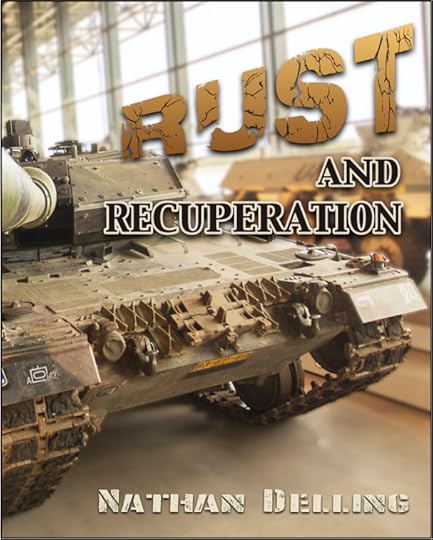
It’s Live: Rust and Recuperation
Maybe I wasn’t thinking ahead when I gave this blog its strapline, taken from ‘Outbreak 1917’. The zombie apocalypse already happened? Maybe it did, at that… but I’m not just a horror writer. Now I find myself looking for a way to attach a mention of my latest story to my online persona. ‘Rust and Recuperation’ has no zombies in it at all. No undead of any flavour, in fact.*
Rust and Recuperation, as I said back in this post is to be found in the somewhat niche genre of historical vehicle restoration crime fiction. Pushing it over the final hurdle (as usual, “assisted” by Amazon’s truly awful Kindle Create software) was a real learning experience but I managed to sneak out the ebook last week. It’s funny: no matter how many times you proof-read, you can still find things you’re not happy with once you read your work in its final form. I got a ‘v2’ out pretty quickly.
Now, with those final edits done, plus formatting, the first dead tree edition: it’s just been approved by Amazon and is listed for sale today. Authors selling real paperbacks only get a pittance from Amazon: the Kindle royalties on ebooks are a lot better… but there’s something really special about the thought that some people choose not only to read my stories, but to give them space on a bookshelf… or pass them on to a friend. That happy glow when you sign in to KDP and discover that a complete stranger just bought your book: it’s what it’s all about. So I hope you’ll enjoy ‘Rust’ – even if it’s just a quick look at the freebie preview, or if you read for free with Kindle Unlimited. I had fun writing it.
I suppose I’d better write something else, now. Stay well, or get well!
ND
* There is a short ghost story set in the same world that I plan to publish in time for Halloween… but… I’ll come to that.
June 11, 2021
Echo Chamber
by Nathan Delling. All rights reserved.
“Alright class: calm down.”They were at the top of the field, behind the school. Simon Greenhalgh wasn’t a proper teacher but he took a class once a week. They called it Workshop and Maintenance. He gave good grades: they liked him.“Why do we keep this turbine going anyway? We don’t need it,” Peter looked unimpressed.The old windmill groaned as it turned.“It’s useful to have as a backup. Also, it’s useful to have the skills that you need to put machines like this together – and to keep them running. But who can tell me what’s gone wrong?”“Oil’s leaking,” said Susan. “It’s seeping out of that pipe there.”“Good, Susan. Now, Brian: why is it leaking?”He liked to give Brian an easy question from time to time, to keep him on-board.“Dunno,” said Brian, with a shrug.“Is it loose? Broken?” he prompted.“Oh… it’s bust,” Brian pronounced.“So…?”“Swap it out?” he suggested.“I agree,” the not-quite-teacher nodded, somewhat relieved. This was like pulling teeth!“Have a look around our spares collection,” he said. “Can you see anything suitable?”Jay pointed, straight away.“Good, Jay. That would fit nicely, I reckon. See if you can get it off with the spanner. Anti-clockwise, Jay. But don’t force it, if it won’t come. Peter: you slacken that drive belt so the gears stop while we swap the broken piece out.”Sam regarded the strange box that Jay was cannibalising: just one oddment in a mound of metal: what Mr Greenhalgh called the ‘spares collection’ was a pile of scrap, basically.“What was that thing?” he asked.“That? An old gas boiler.”“Gas… boiler? What do you mean?” Karen demanded. “You can’t boil a gas.”“A heater for a house. This is what people had before CHADs.”CHADs: Combined Heat And Data boxes. You hosted a powerful distributed computer node in your house and the waste heat was free to use, for showers, space heating and the like…“I can’t imagine needing to burn gas to heat a house,” Jay said, still wrestling with the pipe that protruded from the gas boiler. It was very small… but then this was fossil technology. Fossil fuel had been brutally powerful, everyone said.“It’s true, though,” Greenhalgh told them. “When I was your age, it was colder. We had snow most winters and everybody used gas or oil at home. I’ve ridden down this hill on a toboggan!”Sam, who had done the same on a go-kart many times was unimpressed. He didn’t realise that he would have found a toboggan to be much more fun. Greenhalgh was lost in remembrances of the mad snowball fights they used to have, but Karen brought him back to the present:“You don’t trust the CHADs, do you?”“There’s nothing necessarily evil about a CHAD,” Greenhalgh told her, “but you’d be daft to trust Zucknet.”“Most of us don’t mind Zucknet, actually,” Karen said.“Really?” Greenhalgh feigned surprise. “What do you like about it, exactly?”“It’s fun,” said Brian. “Free games.”“I get help with my homework,” said Amelie.“I’m setting up a Dungeondelve server with a guy from Nottingham,” Jay said.“Karen and I do photo competitions,” said Peter.“It’s… friendly on Zucknet,” Sam said, handing Greenhalgh the part he had retrieved.“Oh, it’s friendly alright,” their almost-teacher conceded. “But what’s the point of friendship with a machine?”“I can’t tell the difference,” Sam said with a shrug.“That’s the trouble,” said Greenhalgh.“We know… stay wise: Zucknet is lies,” quoted Amelie.“And you know how you stay safe if you use the Zucknet, everyone?”“Meet face-to-face and make a one time pad,” Amelie said.“Good,” said Greenhalgh – though this ran contrary to the advice that he had been given in his own childhood.You had to meet, human-to-human. You had to create a sequence of codes so that you would know that any messages you shared were genuine – because everything else on Zucknet was likely to be lies.Originally, the Zucknet had just been social media – but like everything back then, it was based on growth economics. Once everybody was doing as much on the old social platforms as they wanted to, where was the growth?The Zucknet people had needed to come up with new ways to keep you interested, and this was the origin of friendbots. Not real people, but software that pretended to be people – and they soon became very convincing. By the time Greenhalgh had been old enough to go online alone – around 2020 – the Internet (forerunner to Zucknet) was infested with early friendbots. It didn’t matter whether you were interested in collecting thimbles or planning terrorist attacks: friendbots would get their hooks into you.The echo chamber, they called it.By 2030, everyone had a dozen imaginary friends. Where a real friend would tell you if you were doing the wrong thing, these Zucknet friends never did. They were subtle; they were cunning; they were purpose-built to infiltrate your life. They encouraged bulimics to purge. They encouraged racists to hate. They encouraged every behaviour that had a name. Everybody on Zucknet felt valued and validated… and it was all lies.Greenhalgh pitied these children, who still had so much to learn if they were ever going to separate true from false.“Why does Zucknet want us to think it’s people?” Sam demanded.“That’s the wrong question,” said Greenhalgh. “After all, how can we be sure that it wants anything?”“Why does it act like people, then?” Sam amended.Greenhalgh shrugged.“Nobody knows. Maybe it doesn’t know how to do anything else.”This was simply how it was on the modern Zucknet: nine out of ten ‘people’ were fake. Ninety-nine out of a hundred messages were fake – all of them intended to be what you wanted to hear.“Why don’t they just shut down Zucknet?” Peter looked as if he might be prepared to dismantle a good chunk of it himself.“Distributed computing,” Greenhalgh shook his head. “The network itself was designed to withstand a Cold War nuclear attack. It’s like Japanese knotweed, now. You’d never get all of it, and it would grow back.”“Also, it’s useful,” Sam offered. “In spite of everything, people need Zucknet.”“You’re right, of course,” Greenhalgh sighed.He signalled for Brian to fasten the salvaged pipe connector into place.“Without sharing a one time pad, though, I don’t think I could trust anybody that agreed with me on Zucknet. Not anymore.”He thought about all the CHADs in these children’s homes: at least one in every house, all over the country. Electrically powered, low carbon and perhaps the most subtle form of slavery that had ever been devised. If you watched the news, you got it through the CHAD. Entertainment, education, work, shopping, voting… all of it done with recommendations, testimonials, reviews and ratings from people just like you.“Did I ever tell you about Ned Ludd?” Greenhalgh asked.-ENDS-April 30, 2021
1980s: Alternate History
This is another of the pieces that I wrote when I was on a short course with Writers’ HQ. It’s funny: that was a very well put-together course with good exercises and a great vibe: so why did it leave me utterly exhausted, with my day job neglected and my head spinning? In the best possible way, it got under my skin.
So here’s…
I Stole a Forestby Nathan Delling. All rights reserved.
It was two days after Easter. I put the very last piece of my last egg onto my tongue and pressed it against the roof of my mouth. I tried to resist the urge to chew and swallow, keeping my madly salivating mouth awash with chocolate flavours for as long as I could.
All good things come to an end, though.
All good things.
He wasn’t exactly listening to the radio but dad always had it on while he washed the dishes. I went to help him. In the desolate regret that comes when you realise that you’ve gorged all the chocolate, you might as well dry dishes and put them away…
The Americans thought they had found the virus that caused AIDS. I tried to comment upon this, but dad was uninterested.
“Only queers get that,” he said, with a shrug.
More from the radio: the armed stand-off at the Libyan Embassy in London was still going on; India and Pakistan were properly at war, in Kashmir; two more Almaz space stations had been identified.
I dropped a teaspoon. I was thankful that I hadn’t been drying a plate, or the teapot.
The Almaz were armed space stations – and the Soviet Union was happy for everyone to know it. There were Russian military personnel in armed vessels passing overhead, all the time. For all his words, Ronald Reagan had been unable to respond. It was Sputnik and Yuri Gagarin all over again: no matter who you were, you slept under a communist sky.
Dad looked disappointed. He knew I was teetering on the brink of an anxiety attack.
He switched off the radio, took the teaspoon from me and washed it again. He gave me a sad smile as he handed it back.
When I didn’t resume drying and putting away, he steered me out of the kitchen and sat me down.
“If it happens, it’s not going to hurt,” he tried – not for the first time – to explain his philosophy of nuclear non-apprehension. “We won’t even have time to be afraid: the RAF site is one of the most important in the country. If they attack at all, we’ll be gone in a burst of light. And if it doesn’t happen then it’d be a shame to waste our lives, just waiting for it.”
I knew all this. It didn’t help.
For two years, a craze had swept Britain. Vandals would paint one word, always in red:
Checkmate.
The punks had been and gone, but something of their nihilism remained. What use was anything, if atomic death might be minutes away? The Russians, my brother had assured me, could drop bombs on us whenever they wanted. As easy as spitting: checkmate.
Younger kids often congregated on the Old Gloucester Road bridge, passing the time by spitting on the cars that passed below. Could it really be that easy? The cruise missiles at Greenham Common were mere toys in comparison.
Some people said that “Checkmate” was a reference to Anatoly Karpov, the Russian chess grandmaster and world champion. Some people were genuinely impressed by the Soviets: the last superpower, they called them. Some people said it was just funny to write “Checkmate” (or just a ‘C’ in a circle) because it really freaked out old people, like drawing a swastika on the war memorial. Some kids just did it for a dare, competing to scrawl “Checkmate” in the most audacious place.
In Boddington, on Church Road, you could still make out where it said “CHECKM” in letters that were twelve feet high. They hadn’t been caught: they’d simply run out of paint. Everyone at school knew which kids had done it.
The silence grew. Perhaps my dad decided he’d done enough damage for one day because he retreated to the kitchen, saying he’d make us a cup of tea.
I went out.
I went to the willow plantation.
Two years before, feeling wronged in some argument that I no longer remember, I’d wandered away down unfamiliar footpaths and bridleways. I remember toying with the notion that I was running away from home – but knowing that I wasn’t, really. Sooner or later, I’d turn back… but not for a while.
At the corner of a field there was an oak that looked like a good climber, so I gave it a go. Beyond, a couple that I recognised from the farmers’ market were pushing sticks into the ground at neat intervals. Since I was a runaway (perhaps) and didn’t want any witnesses as to which route I’d taken, I didn’t let them see me. Instead, I stayed quiet and watched. They trudged up and down for perhaps two hours, occasionally getting another bundle of sticks from a Land Rover. They paused for tea and a Kitkat, and I realised I was hungry.
I left them to it. Back in Boddington it seemed that nobody had noticed when I ran away from home, so I moved back in with them.
When I wandered that way again a few months later, I was astonished to see how much the little sticks had grown! What had been a desolate grid of twigs on marshy earth was bursting with new life.
Trees that grow – even on a kid’s timescale. Wow.
I realised that these were willows, like the larger ones in the neighbouring field. I liked the willow: you could hide in it and nobody ever came along and told you to sod off.
I was devastated when I came, one winter’s day, to find that the largest willows had all been cut down. It was an energy crop, I was told.
Imagine being raised in Boddington, only to burn? I felt a kinship with the willow.
What I didn’t understand at the time was that the willow hadn’t been destroyed – merely harvested. The roots were left intact and come the spring, new growth was vigorous!
How the harvest had taken place, I had no idea. Perhaps there was some immense, tree-crunching combine harvester that went through in the dead of night? The machine must be a messy eater, though, as it had left a good number of willow wands behind. I gathered them up, and began to think…
Where else might willows grow?
I stole a forest.
As I’d watched the farmer and his wife do, I pushed my willow wands into the soft, wet earth beside a stream. Some flourished almost at once; others didn’t. In the Russian roulette of my secret plantation, only the wands that had been pushed in “buds up” survived. I had a lot of learning to do.
When the time came, cutting them down was a hard thing to do: it felt wrong… but through the school library I’d learned what needed to happen. Coppice the willow: it grows back more strongly.
Mine wasn’t an energy crop of course. When I harvested a willow wand, it was to replant it somewhere else. My willow would burn only when we all did – and in the meantime, well, we would see.
There: you’re all caught up. It’s April 24th, 1984 and I’ve been cultivating and harvesting willow in secret for two years.
Some people thought that it would be better to give ground to the Russians: accept their calls to “demilitarise and reunify Germany.” Others believed that a robust military response would call their bluff. Sweden was getting very skittish about the Kirov-class battlecruisers that had made the Baltic their own private playground. Sweden was walking a tightrope, looking to secure reassurances from NATO without provoking the Soviets. It was clear that it wasn’t just West Germany at stake in this latest round of a complicated game that I couldn’t claim to understand.
Instead, I cut my willow wands. It had been a very rainy spring and this gave me hope just as it dampened the spirits of others. I had been running out of damp places to plant willow, but a really wet spring might allow my trees to take root elsewhere.
This year, there was a lot of willow.
Dawn was the best time to plant, if you didn’t want anybody to see you doing it. In April, as long as you didn’t rub shoulders with farmers, nobody else was up and about.
I lost count somewhere around a thousand. Some people pulled up the willows that I had planted on their land, but when this happened I simply planted more, elsewhere. Many people didn’t notice them, or didn’t recognise them, or didn’t care.
I kept on planting. I’d learned that hammering them in with a croquet mallet was too noisy, but a single swing with a pickaxe made a lovely deep hole for a willow wand. All the while, it kept on raining. I was happy.
By the middle of May there were willows growing on every grass verge; at the boundary of every field. Lawns weren’t safe from me and neither was the playground. There were willows growing everywhere.
I couldn’t have told you why I did it.
There were willows planted all around St Mary’s – and hundreds more at No. 9 Signals Unit, RAF Boddington. Perhaps this was a mistake, but I think this must also have been what I had in mind all along. Of course, key military installations have sentries. Particularly jumpy sentries, when three decades of cold war looks like it could go hot at any moment. They weren’t going to let an unprovoked willow-planting incident go unremarked – so this was how I got to know the Ministry of Defence Police.
I hadn’t exactly done anything wrong. Maybe a little bit of vandalism, but guerrilla planting was something new: something to make those in authority scratch their heads and wonder if perhaps the whole thing might best be handled by the parents, or the school system. By somebody else.
Though I went more-or-less unpunished (other than the sentence that mum and dad handed down, as was their right) I did suffer the loss of my anonymity. In my small village, everybody now knew that I was the reason there was willow sprouting up like weeds, everywhere.
“Oi, freak!”
Because children can be… well, you know what? I would have done the same. You see somebody who’s down and you give them a kick. That’s growing up: sometimes you’ve got to be cruel to be cool. So: twenty versions of the same question. What were you doing?
I tried to voice my nascent explanation, though it wasn’t yet clear in my own mind: that it was somehow tied in with despair and checkmate, but pushing back – an act of rebellion.
My questioner nodded sympathetically. “So… what you’re saying… is that you’re a fucking head-case,” he summarised.
“If you like,” I said.
Never ever let them see they’ve upset you, or it never ends. We all know the rules in that game – instinctively.
You don’t often have to play it at odds of fifty-to-one, though.
“Head-case”, it seemed, had become my official nickname by playtime.
I decided to make it interesting, at least, so each time somebody challenged me about the willows that I had planted in their nan’s garden, the school flowerbeds, the churchyard… I came up with a different story. Instead of planting trees, now I planted rumours.
“I’m just one player: it was a competition to see who could plant the most. You should see what they’ve done down in Cornwall!”
“It’s an art project. I call it ’a splash of green’. I got a grant from the Arts Council to buy the willow wands. Do you like it?”
“It’s designed to soak up nuclear fallout. You’ll thank me, one day.”
“It’s designed to be visible from space, to signal the aliens that we’re ready to join them.”
“It’s for nightingales. They always roost in willow.”
“It’s a flood defence thing to deflect tidal waves. Let them grow, for the good of the village.”
“I did it for sound absorption.”
“Didn’t you know? You can smoke young willow leaves.”
“I just really like that shade of green.”
“We’re going to need them for fuel. A new ice age is coming.”
“I did it so we can make charcoal. Boddington used to be the capital of charcoal manufacture, back in the middle ages.”
“It’s our Christian duty to plant willow. It says so, in the scriptures.”
“They’re an important habitat for tree otters. You don’t want the Boddington otter to die out, do you?”
+++
The council pulled a lot of my willow up. This was a little awkward, because dad worked for the council. Wherever they found ‘unofficial’ willow, they pulled it up. The previous year’s growth – the stuff I had coppiced – was safely hidden from them, below soil level. It made me smile to think that it would come back, next year.
A few people allowed their new willow tree to remain, where I had planted it. Not many, but a few.
To most, I was a freak. I was a head-case. I had nothing to lose, though, and there would be more willow, next year.
If we were still alive next spring, I would plant again. If we weren’t, I wouldn’t. But something happened: an intervention.
Unlike the Church Street “CHECKM” sign, I have no idea who was responsible, this time. One morning, dawn revealed a school playing field that had been defiled.
Upon what was normally a soccer pitch there were some three hundred willow wands in place: each at the centre of a red c-in-a-circle.
Checkmate. The perpetrators had used red gloss paint, and nothing would shift it without killing yet more grass. The school caretaker plucked the willow wands out and threw them on a very smoky bonfire. The “checkmate” signs remained.
“Head-case, what have you done?” our class bully demanded.
“That’s… actually kind of awesome,” said Gary Brown. He’d been one of those responsible for the Church Street thing and he knew just how much effort was involved.
“Wasn’t me,” I protested, though nobody seemed to care.
I tried to concentrate on my lessons, waiting for the summons to the Head’s office, to “explain myself.” It never came, though. Questions had been asked of my parents but I had a watertight alibi: I was still grounded at that point.
This was just the first of many such acts of vandalism. To my eye, they were inexpertly done: the willow wands were just as likely to be installed wrong-way-up and would thus never grow. Nobody else seemed to care.
A new phrase entered our school lexicon: “willow-bombing.”
A popular target was The Cherry Orchard, a cul-de-sac of rather snooty people, in my opinion: not a single one of the willows that I had installed there had been left in place. Now they were replaced with new plantings by marauders who were less secretive; more likely to daub a “checkmate” to accompany their handiwork.
“Why is all this happening?” I asked one my classmates.
“You ought to know, head-case,” David Freer told me, knocking on my temples as if attempting to produce a hollow sound. “It’s to protect against the atom bombs!”
I tried again, with others.
“We need more oxygen – it’s all being used up by jet engines,” Pam told me.
“Having lots of willows around prevents insanity,” Helen said.
It became impossible for anybody below twenty-five to buy red paint anywhere within twenty miles of Boddington. The willow plantation where I had originally stolen the forest was raided almost daily. Hugh and Caroline, the owners, appealed to the young people of Boddington to simply ask if they wanted some willow, and not trample the whole place in search of it.
It became known that some of my classmates were raiding the council tip and re-planting willow wands that had already been uprooted – perhaps several times.
The kids in neighbouring villages were starting their own willow-bombing campaigns. With red paint in short supply, people started tying a piece of red wool around each willow wand.
The officer commanding No. 9 Signals Unit, RAF Boddington, came to the school and appealed to us to stop. It was defeatist, he said. And the red paint thing made us look like a communist fifth column.
Gary Brown raised a hand, seeking permission to speak. When this was granted, he said:
“I’d like to assure the gentleman that in the case of nuclear attack, these willow trees will burn just as well whether draped with wool, daubed with paint or as naked nature intended – as will we all!”
Pandemonium. Our visitor left, scowling.
On our way home one night we found that there was a newcomer in the village: an outside broadcast van from the BBC.
There was also a contingent from the Campaign for Nuclear Disarmament, keen to play a part in the broadcast. Some of us were ushered into the village hall and I was included because (as everybody knew) I was the original willow-planting protester – though I felt that events had overtaken me completely. If I had ever known quite what I wanted when this began, this wasn’t it – or not quite. But like life, it was what we had.
I slipped outside for some peace and a chance to think. The sun would be going down soon: for once it had been a sunny day and would likely give way to a starry night. I wondered how many Almaz I would see on the walk home. I wondered if it was possible to see the bombs detach from a space station, with a powerful enough telescope. But since everybody said that a nuclear winter would be far worse than the instant death you could expect from a Russian “bucket of sunshine”… what was the use of an early warning network?
When I went back inside it seemed that Harriet Barnes, impossibly elegant sixth former, had appointed herself spokesperson for the Willow Movement. She was distinctly unimpressed with the CND people.
“Hippies,” she said, dismissively.
“We’re stronger together!” the newcomer insisted.
I imagine that’s what NATO are telling Sweden right now,” Harriet smirked.
“You silly little kid! What are you trying to do here? This is too important to be spoiled by some silly power games!”
“…says the person who turned up here hoping to ride our coat-tails,” Harriet snarled.
“Wait,” the producer from the BBC got involved. “Are you saying this lady isn’t with you?”
“I’ve never seen her before in my life,” Harriet drawled, “or any of those ones. They don’t live here.”
The BBC and the Parish Council people showed the group from CND out, despite loud objections.
Gary Brown was there at the door as they trooped outside.
“Boom,” he said. “Checkmate.”
I decided to leave as well.
– ENDS
I was born in the early 1970s, so I saw the Campaign for Nuclear Disarmament’s second surge. I was very disturbed by the threat of nuclear destruction – though I kept my anxieties all tightly bottled up and never talked about them, in strict accordance with the standards of my upbringing. As it happens, we all survived. Ronald Reagan’s ‘Star Wars’ initiative finally broke the Soviet bank and the Berlin Wall came down, et cetera. The cold war fizzled out.
I Stole a Forest imagines that the Space Race played out differently, with the Russians gaining in confidence and putting up numerous armed space stations. There really were Almaz space stations – Salyut 2, 3 and 5 were secret military missions and weapon firing tests were conducted – but in my alternative history of the 1980s they launched a whole fleet of the things.
The comment on the AIDS virus, “only queers get that” was something I heard: from the teacher responsible for ‘Health Education’ (euphemism for sex education) at my school. Nice going, Mr Grant!
It really was another age.


