K.A. Miltimore's Blog
November 29, 2020
Folklore and Stories of Winter
Every season has its folklore but winter might have the most. Maybe that is because winter had such an impact on our ancestors - it was quite often the difference between life and death. It makes sense that stories, tales, legends, and lore would be told around the fires that kept the dark nights at bay. Let's explore some of the legends and stories from around the world.
 Jack Frost
Think frost, ice, sleet, and freezing winter days and you think of Jack Frost. Unlike some older Winter myths and stories, Jack Frost is comparatively new on the scene - he was first mentioned in print in the 1700s. In 1889, Margaret Canby published a story called The Frost Fairies (from a book titled Birdie and His Fairy Friends) which may or may not have inspired Helen Keller to write her own short story titled The Frost King. (Keller was accused of plagiarism over this piece.) Controversy seems well placed on a character like Jack Frost - he's often shown as a trickster, causing winter havoc and "nipping at your nose." The origins of this puckish winter elf aren't clear - but he may have originated in Norse legends (although there is a counter-position on this claim). Where ever he comes from, you can find him inspiring writers and everyone who has ever scraped ice from their wind-shields.
Skadi

The Norse goddess of winter, skiing, and hunting, Skadi, first appears in writing in the 13th century. One of my favorite things about Norse mythology is the interaction of the gods and the way they trick each other, hurt each other, and generally make a mess of things. Skadi's father, a giant, is slain by the gods of Asgard (in no small part thanks to Loki's mischief, naturally). Skadi seeks vengeance for this but the gods offer compensation instead. She gets to marry Njord, god of the sea, wind, and fishing, and as a bonus, her father's eyes become stars in the sky. Apparently, this sounds like a good deal to Skadi and she makes the deal. Turns out not to be a good deal after all - Skadi and Njord do not live happily ever after.
The Cailleach

Also known as Beira, Queen of Winter, this Gaelic legend has many aspects but one of them includes winter. Often portrayed as a gray hag, she goes by many names and has been mentioned in writing as early as the 8th century. She rules the land from Samhaim (All Hallows Eve) until Beltane (early May).
Japanese Snow Monsters
Snow Yokai are unique to Japan - and there are many versions. Check out information here about seven variations. Let's look at one, the Yuki-onna, the most famous of the Japanese snow legends. She is called the Snow Woman and she appears in early tales of Japan. Often these tales feature a tall, beautiful woman, perhaps with transparent skin and bluish lips, blending into the snow with her white kimono.

There are versions where she is a snow vampire, where she steals children, where she would freeze people to death. The earliest tales show her more as malevolent than as a lost spirit. I'm on the hunt to find modern versions of this fascinating character, which may portray her in a more sympathetic light.
What are your favorite winter legends? Are you a fan of Old Man Winter or Krampus? What about Gryla from Iceland or Mother Holda from Germany? There are wonderful winter legends out there to keep you entertained during the longer nights.


November 1, 2020
Day One - Nanowrimo
This November, I thought I would post some travel postcards, as it were, from my journey through Nanowrimo. For those not familiar, Nanowrimo stands for "National Novel Writing Month" and it's the time when many writers challenge themselves to complete 50,000 words in 30 days. This is my third Nano outing (you can read Burned to A Crisp, my first novel; it's a product of Nanowrimo) and I am hoping for a hat trick. The new project is titled Evergreen Magic and it is an urban fantasy/magical realism story set in a remote mountain town in the Cascades here in Washington state.

How does one prepare for Nanowrimo? For me, I started jotting down ideas back in September - snippets of things I wanted to include, a rough outline of a map for the town, ideas for character names. I didn't create a large outline for the story - just a rough path that I plan to follow. If I end up deviating from that path, that is fine; I tend to be more of a "seat of my pants" kind of writer than an architect who crafts every turn before I get there. I like the spontaneity of where the story takes me when I don't know exactly what is going to happen along the way.
What platform do I use for Nanowrimo? I use Scrivener for novel writing because I like to take advantage of the virtual notecard feature that lets me keep track of what each chapter is about. I've tried writing a full novel in Google Docs and it wasn't as effective for me, though I do use that platform when I am writing short stories. I feel more organize in Scrivener and anything that helps keep me focused for the month ahead is a good tool in my book.
Do you write every day? I try to write every day during Nanowrimo, which isn't always the case the rest of the year. I know many writers who like to write daily but I don't find that necessary unless I am on a deadline. For Nanowrimo though, I keep the habit because hitting the 50k word count can be daunting if you don't keep up the pace. I tend to write more on the weekends and then around 1k to 2k during the weekdays.
Do you edit as you go? NO! I know people who do, and who are very vocal about the fact, but for me, it is the death of creativity.
Do you edit as you go? NO! I know people who do, and who are very vocal about the fact, but for me, it is the death of creativity.
I don't even like to go back and read what I've done - that's why I use the notes feature to keep track of where I am in the story. If I go back, I get stuck. Stuck in rewrites, stuck in worrying that the story is lagging, just plain stuck. My best piece of Nano advice is to keep moving forward and never look back.

Do you create mood boards, play lists, etc. for inspiration? Yes, I do create these but not as much for "inspiration" as it were but more about just keeping my energy up for the push to the end. Creating moodboards or songlists is something I do for fun, something to keep me plugged into the universe I am creating, and a way to capture whatever vibe I am going for. It doesn't necessarily inspire me, but it keeps the energy flowing.
More reports from the trenches coming. If you are also participating in Nanowrimo, look me up on the website. I am listed there as kamiltimore. If you want to see draft cover images, songlists and moodboards for Evergreen Magic, check out my Patreon page.
October 24, 2020
Writing a Gothic Romance Story
I thought I'd share a few "behind the writer's desk" thoughts with this blog post and delve into my process on creating a gothic romance story.
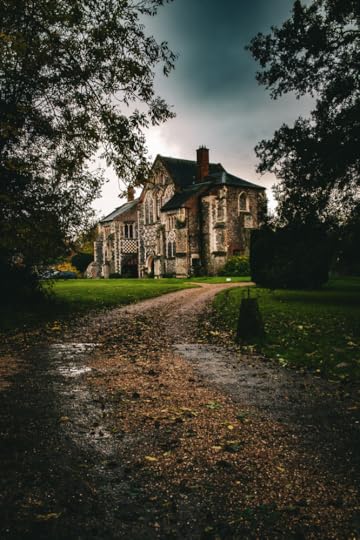
First, let's make sure we define our terms; I love the definition found at The Free Dictionary, describing it as a "...type of novel that flourished in the late 18th and early 19th cent. in England. Gothic romances were mysteries, often involving the supernatural and heavily tinged with horror, and they were usually set against dark backgrounds of medieval ruins and haunted castles..."
Now, let's layer on to that 20th century examples, such as Rebecca by Daphne du Maurier and the work of Victoria Holt, and we are getting a full picture of what makes a gothic romance - women unsteady in new surroundings, a brooding handsome hero with a mysterious past, peculiar characters, unsure brides, remote settings. Gothic romance is one of those genres that I know when I see it, but defining it can take awhile.
Okay, now that we are on the same page, let's get on to how I am tackling writing a short story in this style. I've read some of the classics in the genre before (as mentioned above, Rebecca, is a huge favorite, as is Turn of the Screw by Henry James), so I have familiarity with the tropes. For this story though, I needed to get in the mood, so to speak. The setting - both the literal setting and the atmosphere - is make or break for a gothic romance. You can't think of Rebecca without thinking of Manderley; you can't think of Turn of the Screw without thinking of Blythe. Those houses were characters equal to any others. Just as the placement of the story is key, the atmosphere too is a defining part of what makes a gothic romance delicious. Picture the stormy cliffs of Cornwall, a lonely ruined abbey where a ship from Transylvania lands, the moors of Wuthering Heights, a dilapidated mansion in the bayou. You get the picture - quite literally. A vivid picture of a place at the edge of the world, at the edge of reason.
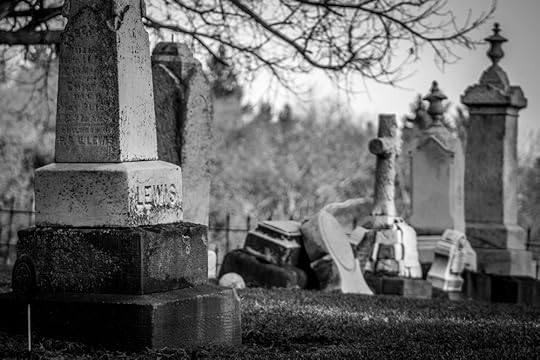
With a location and a setting figured out, I moved on to coming up with the reasons why. Why is my heroine in this place? Why is there danger for her? Why are there secrets? Unlike a lot of my stories (which I usually loosely plot, leaving where the story goes to my mind as I go along), this one felt like it really needed the whys answered before I wrote the first sentence. For me, gothic romance has a mystery (or two) at the heart of it and without those very clearly in mind, I wouldn't be able to keep the story flowing.
Next, I did a bit of trickery while still working on development - I wrote down words I wanted to include in the draft. I never do this, but this list exists to keep me grounded in the genre. If I end up discarding the ideas, no big deal - this is all about experimentation and trying out ideas. Words that ended up my list for the story include: skeleton key, hidden drawer, old diary, a jewel.
With my setting, my "whys" and my key items identified, I was ready to write. Coming up with a good opening is always important but in gothic romance, I think it is ever more so. Great lines like "Last night, I dreamed I went to Manderley again" are quoted by fans decades later. So the pressure is on to get it right. My opening line reads: "Mother was dead. Part of me, the part that felt disloyal and a faithless daughter, knew this. The part of me that gnawed at hope, that fed my nightmares, that ate my peace. Mother was dead. And I was going to find her." It might get tweaked in edit mode, but I'm feeling pretty good about it right now. A mystery, a daughter feeling guilty, a journey. We're getting the story off on a good foot with those elements.
A mystery, a daughter feeling guilty, a journey. We're getting the story off on a good foot with those elements.
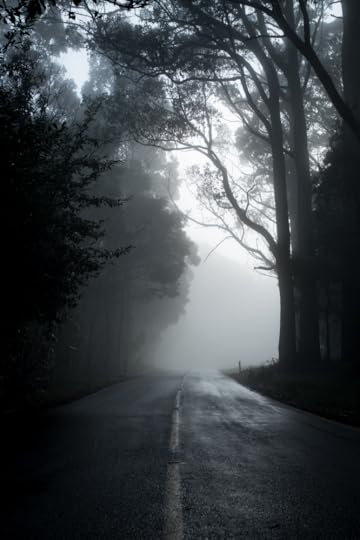
Lastly, the title. I'll be honest - I don't know what it is yet. That's unusual for me because I usually have a rough idea going in what I want the title to be. For this one, I think I need to step back from the drafting and see it from a distance. The story is still being written so I can't quite grab the vaporous ideas swirling around. Famous titles in the genre tend to be shorter - one or two words often. They are often proper names - the names of people or places or even things, such as Jane Eyre, The Picture of Dorian Gray, Jamaica Inn. Names as evocative as the settings themselves.
If you haven't sampled some of the classic and new work out there in the gothic romance genre, October is the perfect month to get swept away to a stormy moor or locked into a dusty old castle. Rebecca is a great introduction, but I'd consider Dracula or Northanger Abbey good for a foray as well. I'll be sure to update readers on the finished product of my own short story and when and how you can judge it for yourselves.
October 3, 2020
The Ghost Girl of Kells Pub
Not all ghost stories have to be scary. In fact, I would wage a pint of Guinness that most ghosts are not malevolent or bent on causing havoc, but rather, want to hang out with their human compatriots just a wee bit longer. Exhibit A is the red-haired girl that reportedly haunts Kells Restaurant and Pub in Seattle.
She's been described as a young girl with ringlets who manifests during the day when the bar is open for children. The bar is located in the old Butterworth building, which back in the early 1900s was built for Butterworth and Sons Mortuary. This mortuary was the first such building made for Seattle, a building built for the dead. Kells Restaurant and Pub is located in the space used for the crematorium and embalming. The building is said to have had the very first elevator on the west coast, for moving the bodies from the loading area to the visitation spaces on the upper floors.
Our friend, the unnamed red-hair girl, is said to appear in a stairwell in the back of the restaurant and rumor has it she is a bit mischievous - moving chairs, sliding glasses and such. One unattributed story says she gave a child a ragdoll while her mother was interviewing for a job there.

Old buildings, especially ones with more macabre histories, have ghost stories attached to them. Having never seen one at Kells myself, I can't say for sure, but I do know I am going to visit again and take a closer look this time, while I eat some Irish comfort food and sample a little whiskey. Win or lose, it sounds like a fun October afternoon to me.
photo by Joe Mabel
August 9, 2020
Retold Stories: Sleepy Hollow
The Headless Horseman, thundering across a covered bridge on Halloween night, chasing the hapless Ichabod Crane. What could be more evocative of the spooky reads we love when autumn chill returns? This story has been giving good fright since 1820 when Washington Irving created his short story masterpiece, "The Legend of Sleepy Hollow". The tale has inspired movies (I love the Tim Burton version) and a television show. And it has also inspired other authors to take on the tale. "The Spellbook of Katrina Van Tassel" by Alyssa Palombo, "Sleepy Hollow: Rise Headless and Ride" by Jason Crane, and "The Hollow" by Jessica Verday, to name a few.
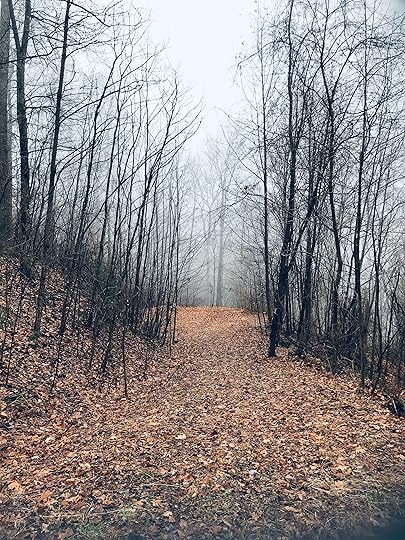
What is it about this story that draws authors to make their own version? I can't speak for anyone else, but for me, the story speaks to the dread of being an outsider - someone new to a tight-knit community who doesn't fit in. It also speaks to the need to escape - in one sense, quite literally, to escape the Horseman, but also I think Ichabod Crane is escaping his old life when he comes to Sleepy Hollow and I'm always curious what he is running from and where he is running to.
For my retelling, which will be coming out in time for Halloween, my protagonist is Isabelle Crane, a young woman looking to escape a stifling life where she is grudgingly tolerated. She jumps at the chance to escape her situation as a schoolmistress in Sleepy Hollow - a post she isn't really qualified for, but nevertheless she takes off into the unknown. Isabelle is going to discover there are secrets she doesn't know and dangers hiding behind the smiling faces of Sleepy Hollow village.
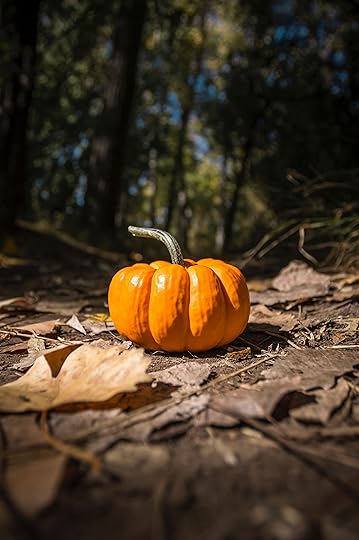
While Washington Irving set his tale in 1790; mine is set in 1890 and that is the beauty of this tale; you can change the time period and come up with a whole new set of challenges for Ichabod. The original story is also ambiguous as to what really happens to Ichabod. Did the Horseman get him? Did Ichabod escape? Did Brom Bones, his rival for Katrina, scare him off? Irving leaves it up in the air for the reader. Not all retellings are as unclear as Irving left it and for myself, I prefer a more clear-cut ending. I also like versions where the monster might just be the humans.
Whether it is the original short story, a modern retelling, a movie version or the animated cartoon featuring Bing Crosby's voice, the characters of Irving's tale endure and inspire. Make yourself a hot cocoa or pumpkin spice latte and curl up with a version when you want a dose of chills and Halloween ambience.
August 4, 2020
Evolution of Legends
Stories change. Myths and legends, the tales we think of as fixtures, are not the same as when first told around the fire or the palace or the cottage. Need an example? Let's take something as basic as Snow White.
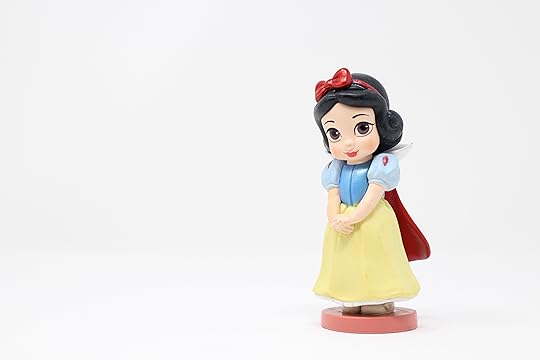
We know the story - the Evil Queen, jealous of her step-daughter, tries to kill her but through the kiss of a prince, she is saved. Snow is a good at heart and it is that good that triumphs over evil, as it always does. The End. Now, what if you heard that in the Grimm Brothers' version, Snow and her Prince invite the Queen to their wedding and force her to put on iron shoes red-hot from the fire. The Queen must dance until she dies. That sounds out of character for our sweet Snow, wouldn't you say?
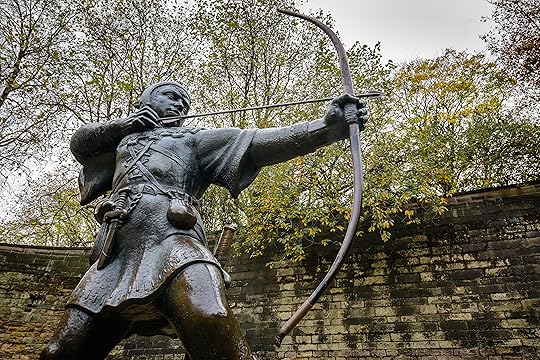
Robin Hood gives us another example of a story that has changed over the years, to reflect the values of the people during that time. For a full chronology of Robin, check out this informative
Fast forward to the 1600s and Elizabethan society wasn't keen on a commoner getting away with such activities. Elizabeth was all about clamping down civil unrest. Now Robin is recast as the Earl of Locksley and his motives are far more beneficent, and less about taking care of Number One.
Each generation finds what they want to amplify in the Robin Hood story and downplay what they don't. Imagine the authors of these stories back in the 1300-1600s deciding to make Maid Marion a feminist, an equal partner to Robin, a bold and daring woman who speaks truth to power. Modern version of Robin's tale do just that because that is what modern audiences want to see in their heroines - plucky, strong, bucking the system that oppresses them.
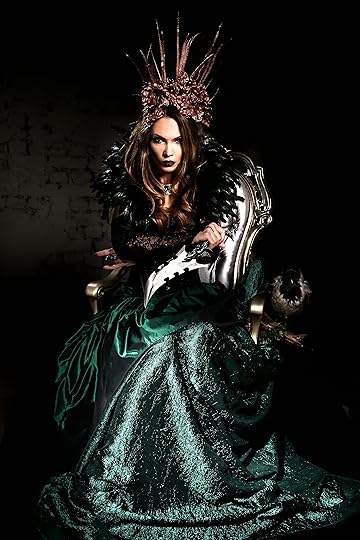
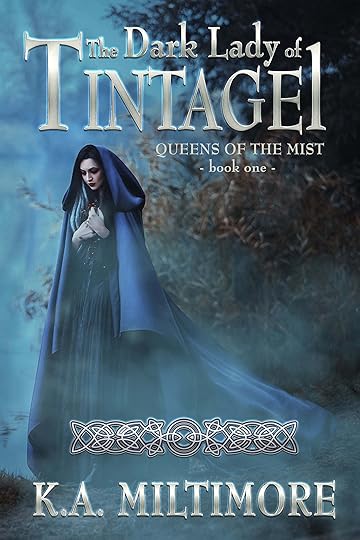
Let's pivot for a minute to Arthurian legend - a topic near and dear to me since I have a new novel coming out set in the time period. Elements of the Arthurian legend have evolved over time as well. Morgan le Fay, often seen as evil, grasping, power-hungry in modern versions, didn't start out that way in the stories at all. In The Dark Lady of Tintagel, I wanted to rehabilitate Morgan a bit but also shake her free of some of the trappings of the legend. In my version, she isn't the half-sister of Arthur; she's the daughter of Merlin. She has no interest in ruling or avenging anyone in my story. She has her own story arc to follow - from being an instrument of her father's plan to a woman making her own choices (and living with the consequences).
There might be those who would say "Well, that isn't in the legend - you've gone too far from the story." To that I say, stories evolve and change and the only way they keep being vital (and not some museum piece) is if we embrace that evolution and change. If the foundational myths can change over time, certainly modern interpretations can also. Do I think my Morgan le Fay is true to the original Morgan? Yes, I do. She makes choices that might seem wrong to many of us, but she's making those choices for her reasons and she'll own those consequences.
Judge for yourself when
July 3, 2020
Washington's Own Stonehenge
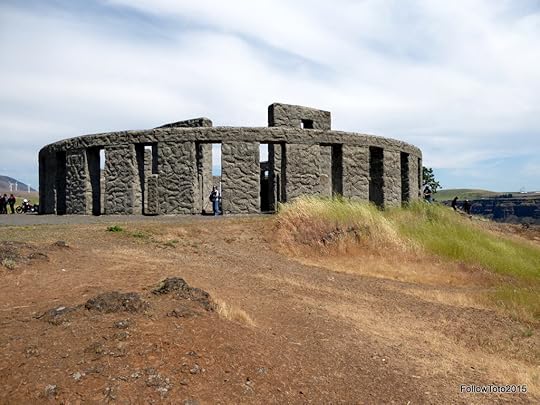
Photo by FollowToto2015
This week's feature certainly hits both of those descriptions. Right here in Washington state we have a recreation of
Back in 1918 - July 4th to be exact - a man named Sam Hill dedicated a memorial for those soldiers killed in World War I. The monument was a concrete replica of Stonehenge, including alignment of the altar to the summer solstice. Mr. Hill's selection of Stonehenge to commemorate fallen soldiers might seem a bit strange but it came from a belief that the ancient Stonehenge served as a place of sacrifice (Druids had bad PR in those days) and the memorial would remind viewers of the sacrifice of humanity to war.
It took eleven years to finish but it has stood the test of time, outlasting even the town of Maryhill where it was built.
Mr. Hill's dedication is worth reading, especially as think about sacrifice - sacrifice for each other's safety no less relevant today than it was in 1918:
"In Memory of the soldiers and sailors of Klickitat County who gave their lives in defense of their country. This monument is erected in the hope that others inspired by the example of their valor and their heroism may share in that love of liberty and burn with that fire of patriotism which death can alone quench."
Author Andretta Schellinger has written about this monument in her work titled
"To me, Stonehenge is not just a monument, rather a reminder of the men who heeded the call in support of our nation in a time of need. Their stories and lives are as important as the monument itself."
It might be surprising to PNW folks to learn this monument even exists, much less that other (albeit less inspiring) recreations also dot the landscape. If you are looking to take a road trip of faux Stonehenges, here are a few to check out:
University of Texas has a replica
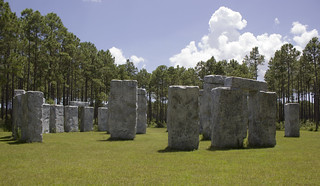
The "Bamahenge" exists in Alabama and it is made from fiberglass
"Foamhenge" stands in Virginia, carved to appear like stone from foam.
"Carhenge" in Nebraska was created with (wait for it) vintage cars
For Australian travelers or residents, you can always check out the only exact, astronomically aligned version, located in Esperance in Western Australia.
 Why Stonehenge?
So why the fascination with recreating Stonehenge? My opinion is that it is both iconic and mysterious and those are two things that lend themselves to both tribute and parody. You might never know with certainty why the great blue stones on Salisbury plain were raised by Neolithic
Bamahenge photo by Dennis Church (Flickr)
people, but perhaps it is that mystery that inspires people to create their own version to mark something as solemn as the war dead or as frivolous as vintage cars.
 Ready to visit the Memorial?
If you want to
"Carhenge" - photo credit: Wikipedia
June 23, 2020
What's in a Name - Choosing Character Names
Some authors share the meanings behind their selections (if there is a meaning) and some never tell. Some names give away their meanings for those savvy (or good with google). For example, Katniss Everdeen, heroine of The Hunger Games, has a first name that roughly translates from Latin as "archer". How many readers versed in Latin plant names got that inside reference, I wonder.
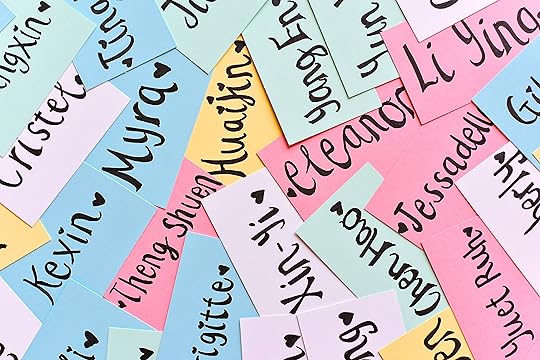
Would a rose by any other name smell as sweet? I'm not so sure.
I can't speak for other authors, but for me, I often choose names for main characters that have some meaning for the story. Hedy Leckermaul, the main character in The Gingerbread Hag series, has a last name that means a person who has a sweet tooth in German. Given Hedy's profession as the baker with a knack for making delicious and strange sweets in her bakery, the name seemed to fit. Similarly, Bren Aldebrand, the fire salamander of the series has a last name that translates to "old fire" from German. Anahita, the water undine, was named after the Persian goddess of water.
I'm not always so literal with names, but I do like to leave Easter eggs for readers.
Those who have read "Pink Moon Rising" might recognize some of names of the members of the Widdershins Circle coven. Each name was inspired by a famous (or infamous) witch from history. In my short story, "My Own Dark Way", those who are familiar with the Jack the Ripper history, might spot a name that rings a bell.
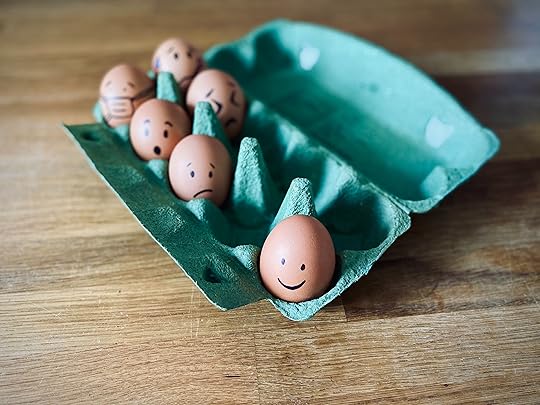
There just might be a few Easter eggs for the savvy reader of my stories.
In "The Dark Lady of Tintagel", there are quite a few characters from the Arthurian legends - Igraine, Uther, Arthur, Merlin and Morgan Le Fay - but others were inspired by historic figures from early Britain. Igraine's father, the King of Dumnonia, is Geraint - who was an early King who ruled the area. Even Igraine's cat gets in on the Easter egg fun; Longshanks was the nickname for an early English king (Edward I), although he lived about 600 years after Igraine's favorite feline. The woman pirate who sails with Igraine's good friend is named Hereca, a nod to the favorite wife of Attila the Hun and Hereca's ancestry.
"A good character is the best tombstone," said Charles Spurgeon, and I tend to agree.
Of the books I love the most, it is usually the characters and their names that stick with me. The witch from "The Lion, the Witch and the Wardrobe" is called Jadis and I've remembered that for more years than I care to recall. Would "Charlotte's Web" be quite the same if the girl was named Edith or Annie? What about Ponyboy from "The Outsiders" or Dracula or Scout from "To Kill a Mockingbird"?
Good character names tell you so much about their persona and what the author was creating with the story. The next time you are reading, take a moment to consider why the author chose that name and does it add to the story in some way. Not all names have to mean something but every now and then, you'll find a name that really clicks, that adds to the story and perhaps creates a character that is indeed the best tombstone.
June 12, 2020
Vampire Jacque: Urban Legend from New Orleans
Little details that are true, could be true, might be true, sound true. They help put over the story. Some tales are horrific, some are funny, and some are tales that intrigue us so much, we secretly hope they are real.
Jacque Ste Germain - Descendent or Immortal?
Which brings me to our topic today - Jacque Ste Germain. Let's set the stage. Back in the early 1900s in New Orleans - some say 1902, some say 1904 - a gentleman comes to town. Mysterious, charming, amusing; a bon vivant known for hosting the crème of New Orleans at his home at 1039 Royal Street in the French Quarter.
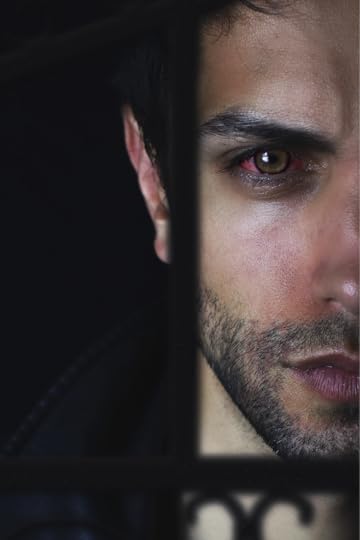
Jacque Ste Germain kept his guests entertained with stories of his travels, of knowledge of events long ago - but he never enjoyed more than a goblet of wine at his parties. How strange, no? No matter, when such an elegant man, who claimed to be direct descendent of the Comte de Ste Germain, confidant of King Louis XV, was throwing the party.
One night in November, the police were called Royal Street. A young woman, allegedly a prostitute, claimed she was forced to jump from the house's balcony in order to escape Jacque's attempt to slash her neck and drink her blood. The police were astonished by this claim and couldn't believe a gentleman such as Jacque would do such a thing. Given the late hour of the incident, they told Monsieur Ste Germain to come down to the station in the morning to give his statement. And what do you know? He never came to give it.
The police then entered the house on Royal street and what do they find but bottles of wine mixed with blood, along with clothing with spots of blood. Apparently, they had a vampire in their midst all along and never knew it. Vampire Jacque had disappeared, leaving everything in his house behind him.
Now not everyone was convinced he was gone because in the 1930s, two women were attacked in the Quarter, their necks slashed and a man was seen fleeing the scene, scaling a 12 foot wall with ease. No doubt it had to be Vampire Jacque, right? Fast forward to the 1970s and a frenchman named Richard Chanfray comes on the scene, claiming he was the
Is the immortal Comte still roaming the dark streets of the French Quarter? And thus, the urban legend was born.
Funny thing about Urban Legends, once you start looking at them outside of the story and from a factual basis, the threads of the tale usually start to fray. I spent quite a bit of time poking around online, looking for articles from The Times-Picayune for any reference to such an event happening in the early 1900s and I came up empty. You'd think such a tale would have been front page news, and yet no record. In fact, I couldn't find any contemporary references to Vampire Jacque anywhere or even when the story first started popping up. Maybe modern day Vampire Jacque is just good at hiding his internet history.
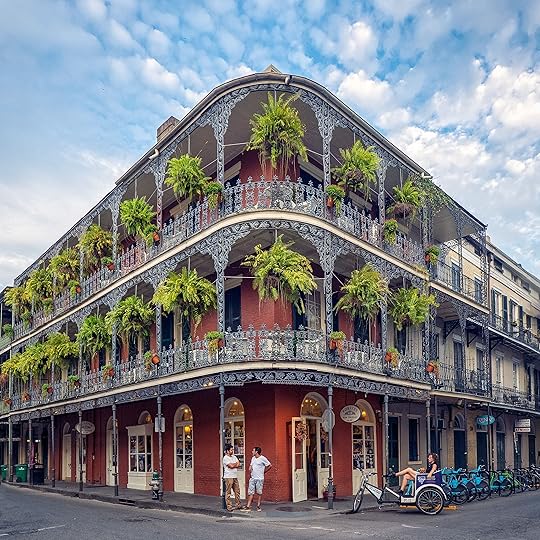
It doesn't hurt that this legend is set in New Orleans, one of the places on earth where we could picture vampires roaming the streets. Tourists still snap pictures of the house of Royal Street and tour companies still tell the tales to Quarter visitors who want chills with their Hurricane drinks. Like any good urban legend, the tale of Vampire Jacque has enough breadcrumbs of truth (his house, the real Comte de Ste Germain) to help bolster the story. This tall tale is one I think we can safely mark as fiction, even if we still entertain a sliver of doubt.
June 5, 2020
Corpse Bird or Wise Teacher - Owl Folklore
They can predict the weather, predict death, prevent alcoholism and cure whooping cough. they can guard against evil or be the shapeshifting form of witches. They can spell victory on the battle field or bring you a letter for wizard school (don't we wish).
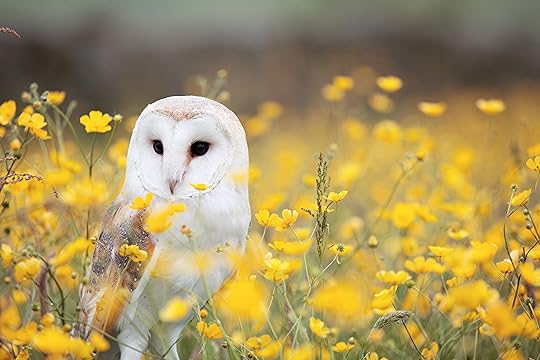 Owl Folklore
We're talking folklore about owls in this edition of Gather 'Round the Fable, with today's post focusing on European, Ancient Greek and Roman stories (Native American tales are rich with stories, as are other cultures; all deserving their own post).
Owls have been on the scene for sixty million years.
They appear in some of the oldest civilizations, featured in tales and appearing in art and even currency. The Greek goddess, Athena, favored the owl and ancient Greeks felt the sighting of an owl brought them victory against their foes.
Ancient Rome wasn't as convinced. True, they associated the owl with Minerva (the Roman equivalent of Athena, who also ruled wisdom and knowledge), but owls had a more worrisome rep. Romans thought the birds were harbingers of death if found hooting on your roof. They also thought an owl's feathers could cause a sleeper to spill their secrets if placed near them while they dreamed. Roman lore also prescribed nailing a dead owl to your door if you wanted to avert evil. Plus, witches could transform into owls, so you never knew who was hooting from you from that rooftop after all.
We'll see these two legends follow poor old Hooty into the middle ages and beyond.
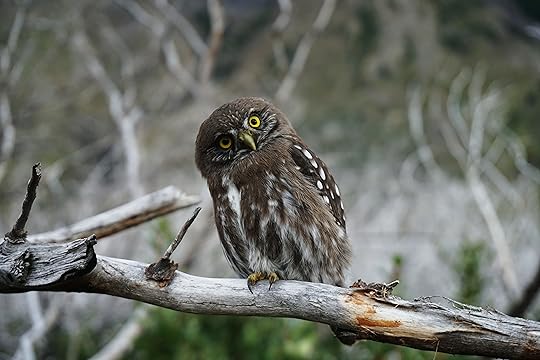
The Celts found owls mysterious as well; they associated the bird with the King of the Fairies (not a bad gig). All over southern England, legends popped up about owls and the magic and mayhem they brought.
Owl based remedies included cooking their eggs to ash to help your eyesight, feeding owl broth to children with whooping cough, and treating alcoholism by eating raw owl eggs. Farmers in England, into the twentieth century, were still nailing dead owls to their doors for protection and seeing owls as warnings for storms.So why all the doom and gloom around owls?
Perhaps it is their nocturnal nature, their frightening shrieks in the darkness that rattled ancient people. Perhaps those large eyes and swiveling heads made them seem supernatural, with their silent flight and habit of leaving mousy pellets as proof of ravenous appetite.
Not all cultures find them scary certainly, and modern times find the owl rehabilitated, if still mysterious and magical. The wise old owl from Tootsie Pop ads; Hedwig with Harry Potter's letter; Archimedes from Disney's The Sword in the Stone. Owls are all over the place; we find them in our art, our stories and our commercial products - just as ancient Athenians did thousands of years ago. Owls have been fascinating humans for millennia and that doesn't seem to be changing any time soon.
More owl goodness: