Matt Kaplan's Blog
January 15, 2025
Buzzing without getting buzzed
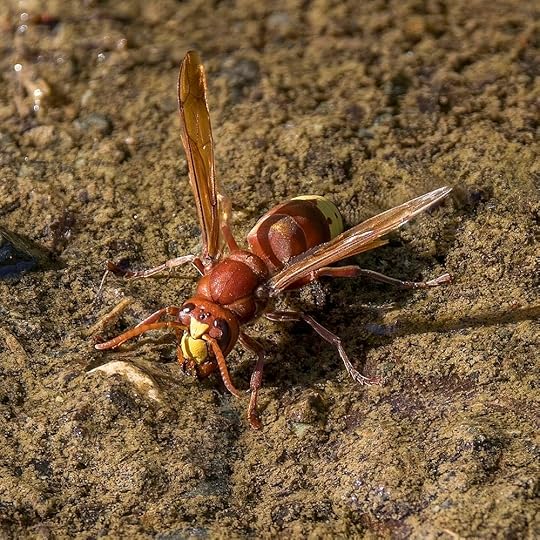
Image courtesy of Sharp Photography.
Like people, animals like having a drink every now and again. Of course, they aren't sipping a glass of brandy or Chablis, they are feeding on fermented fruit, but the effects are the same. While alcohol is rich in sugars, being drunk presents a serious risk to wild animals and they avoid drinking to excess. Then there is the oriental hornet, a bug that loves fermented fruits and is so attracted to human-made alcoholic beverages that it will fight for them. Everyone has assumed that the rules for the hornet were the same as they are for every other species. Now new work is proving that notion wrong. They are immune to becoming drunk. Your can read more in The Economist article that I wrote on this here.


November 12, 2024
Continental division
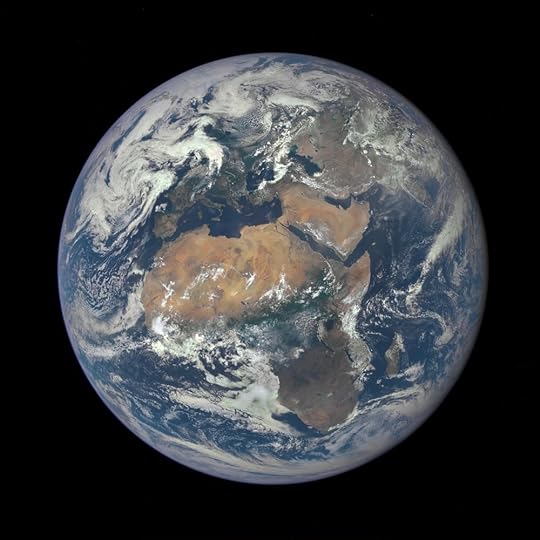
Image courtesy of NASA.
Anyone with a map can see that Asia and Europe are connected. They are often called Eurasia for that reason. The divide is pretty arbitrary, more culturally than scientifically defined. So, is it fair to say that there are actually only six continents? It turns out that this is just the first slippery step on a well-oiled slope. What about North America and Asia? They are connected by the Bering Sea Shelf, once dry land crossed by humans and flooded only in the geologically recent past. Technically speaking, that makes Asia, North America and Europe all one continent. Does that mean there are only five? This is an incredibly complex question that geologists are grappling with. Read on in The New York Times article that I wrote on this here.
September 12, 2024
Faecal finance
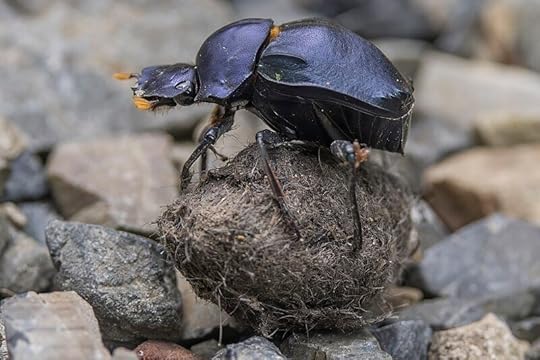
Image courtesy of Sharp Photography.
The notion that the services provided by bugs have a dollar value associated with them is not entirely new, but it has not been much applied to bugs other than pollinators like bees. While the removal of faeces from fields might not have quite the same appeal as pollinating the flowers of fruit trees, it is just as important. Now new work is revealing precisely how important it is by calculating the monetary value of the humble dung beetle. Aside from making fields better for cattle to graze, they also carry valuable anti-fungal chemicals in their saliva that we have only just started to learn about. Read on in The Economist article that I wrote on this here.
March 13, 2024
Saving your morning coffee
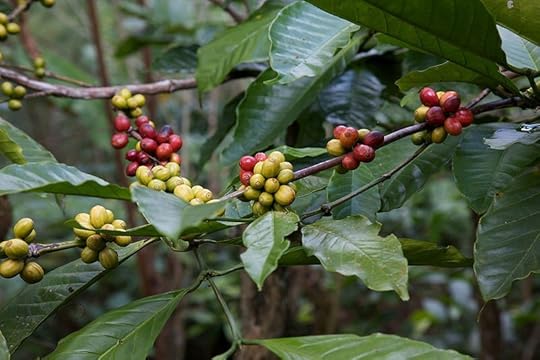
The coffee industry worldwide is concerned about the susceptibility of its crops to climate change for good reason. Coffee plants in general are very sensitive to heat and arabica coffee plants, which produce the beans for pretty much every cup of coffee sold in cafes, are particularly so. Minor changes in temperature, water supply and humidity have the potential to generate huge losses. To make matters worse, coffee diseases are expected to flourish as temperatures climb. Indeed, new work reveals that between 35% and 75% of the land currently used for Arabica coffee plantations will become economically unusable in the decades ahead. This is bad, but the industry is not without options. Read all about how to save your morning espresso in my article in The Economist here.
May 18, 2022
Photsynthetic viagra
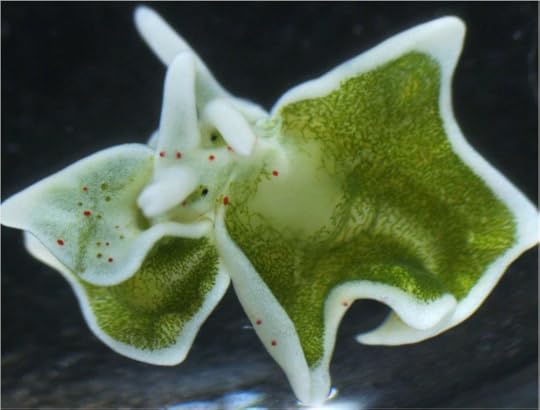
Some sea slugs do not immediately digest the chloroplasts that are found in the algae that they graze upon. Most researchers have argued these captured chloroplasts (often called kleptoplasts because they are stolen) are very slowly digested as snacks. Now a team has explored this odd phenomenon and found that the stolen chloroplasts are functioning like batteries to help enhance the overall fitness of the sea slugs that have captured them.
Ready to reproduce!
Image Courtesy of Sonia Cruz.
To study this, the team radioactively labelled compounds produced by the chloroplasts and tracked them around the bodies of the sea slugs. Amazingly, they found the compounds migrating into slug sexual organs and are playing a part there in the production of compounds that are used in reproduction. Stunned, they wondered what would happen if they interfered with the photosynthetic activity of the these chloroplasts. Sure enough, when the team did this, the slugs that had these stolen chloroplasts reproduced less.
All told, while these slugs are not actually photosynthetic organisms, they get a big sexual boost by stealing chloroplasts from algae and harnessing the nutrients that they generate from sunlight. You can read more in The Economist article that I wrote on this here.
April 12, 2022
Down the hatch
Nobody likes needles. Indeed, it is theorised that a significant portion of those refusing to be vaccinated against SARS-CoV-2 are doing so simply because they do not want to be jabbed. Now a team is revealing that they have found a way to get these people vaccinated with a pill.
The reason why vaccines have always needed to be administered via needles is because they contain fragile nucleic acids that would be quickly destroyed by stomach juices and absolutely must be delivered directly into cells to realise their therapeutic benefits. Aware of these challenges, a team with a history of developing technology that facilitates long term drug delivery in the intestines speculated that they might be able to develop a method for getting mRNA formulations like those used in Covid-19 vaccines into devices that could then painlessly inject them into the lining of the stomach.
The device that the researchers have created, which is the size of a large oral capsule, looks a bit like the shell of a tortoise once its gelatine coat dissolves in the stomach. The device carries a needle but the needle only pops out when the tortoise shell shape has its flat section flush with the lining of the stomach. Yet, this trick alone was not enough to safely deliver the mRNA payload. To get the vital material all the way into cells the team created a range of branched polymers that were then used to encapsulate the mRNA. A few of these esters worked really well when tested on rodents and pigs with both groups of animals showing successful systemic uptake of the mRNA that was delivered. While not yet being used in people, the findings suggest that oral vaccines are a real possibility in the future. You can read more in The Economist article that I wrote on this here.
March 29, 2022
Holy mackerel!
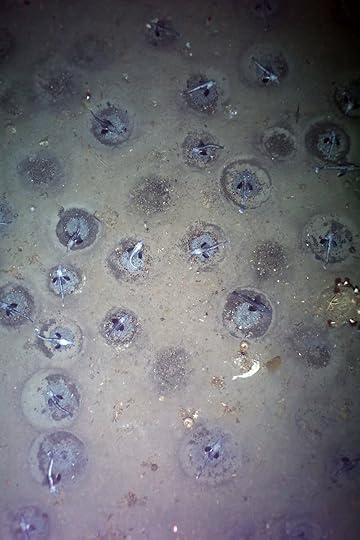
Lots of fish build nests and many do so near one another such that neighbours can help one another out. These nesting neighbourhoods can get quite large but now a new finding is revealing a fish neighbourhood that is orders of magnitude larger than anything we’ve ever seen before.
A busy neighbourhood
The neighbourhood in question is composed of icefish which, as their name implies, dwelling in the frigid Weddell Sea near Antarctica and are highly resistant to bitterly cold temperatures. The researchers saw individual fish guarding bowl shaped nests and noticed that they were rather densely packed together. Further examination revealed that the breeding colony just kept on going and going for as far the divers could see. Realising that casual examination would not be enough to work out the size of the colony, the team arranged for camera arrays to be towed behind four boats. After going back and forth through the ocean for ages they determined the size of the colony to be utterly enormous.
The nesting community covers 240 square kilometres and has 60 million active nests with an estimated 104 billion eggs. The fish biomass is 60,000 tonnes. In short, this is A LOT of fish. Indeed, a colony of this size has to be regionally (if not globally) important... and nobody even knew it was there!
March 15, 2022
Out of thin air
Monitoring animals and ecosystems has historically been considered scut work. Tedious and boring, researchers (usually newbie PhD students) must sit quietly and note the presence of species over the course of many hours. Yet, this is changing. Teams in recent years have found that they can collect DNA from water in aquatic ecosystems to work out which species are around. Known as environmental DNA (eDNA) monitoring, researchers have tried this in terrestrial environments by looking for DNA traces in permafrost, snow and soil but nothing has proved particularly effective. Now a team is revealing that they have found a way to gather eDNA out of thin air.
The researchers behind this new work collected air samples at multiple locations within a British zoo using a pump that moved air through a flexible tube to filters with tiny holes in them. The pump gently ran collected air past the filters for 30 minutes. After this was done, the filters were brought back to the lab for DNA analysis. What they found was pretty impressive.
Not only did the team pick up evidence of eDNA from every animal kept at the zoo but their technology also revealed that cows, pigs and chickens were there too. Given that none of these animals were actually kept at the zoo, the researchers concluded that much of this domesticated animal eDNA was coming from the food being given to the tigers and dingoes at the facility. Squirrel, duck and hedgehog eDNA turned up too which the researchers assume must be coming from these animals living on the zoo's grounds. All told, these findings look set to revolutionise the way in which zoologists conduct their field work. You can read more in The Economist article that I wrote on this here.
February 22, 2022
How parasites use honey bees to infect people
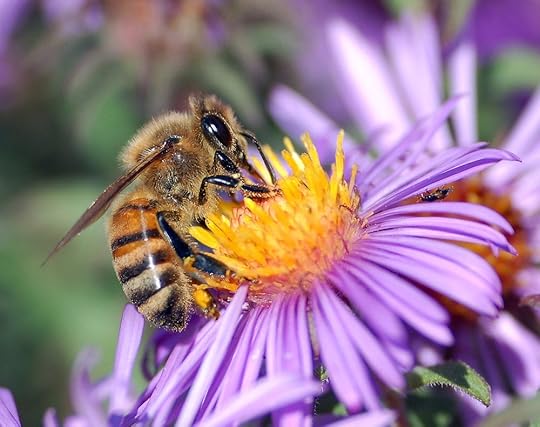
Leishmaniasis is a disease that has long vexed researchers. Spread by biting insects, it causes blood cell production to plummet, enlarges the liver and forces patients into bed for months with weakness and fever. Yet what is really strange is that leishmaniasis is caused by a parasite that really has no business in people. It belongs to the protozoan family trypanosomatida of which just about every member is a parasite of insects. Now new work with honey bees is suggesting that these unique insects may well be responsible for paving the way for parasites from this group to migrate into mammals.
Unknowingly passing parasites your way.
The new work came about in 2019 when a team working with bats in Brazil discovered a trypanosomatid parasite in these flying mammals. The parasite was Crithidia mellificae, a protozooan that was noted in the literature as being solely found in honey bees. They reported the find at the time but were left unsure of how the parasite had made the leap from insects to mammals. To study this, they studied the heat and acid tolerance of C. mellificae and its relatives in mosquitoes. They found that C. mellificae had extraordinary heat and acidity tolerance compared to the rest of its kin. This seems to be because the honey bees that it relies on as hosts, while ectothermic (cold blooded) individually, are colonial endotherms (meaning they create a body temperature through social activity). Hives literally give themselves fevers to drive off parasites but C. mellificae seems that have evolved traits to cope with this. The same is true for the acidity of the honey bee gut. It is much more acidic than the guts of mosquitoes.
That honey bees use these traits to stave off infection is unfortunate because, during the winter, many hives in regions with lots of human disturbance, are experiencing lower temperatures and suffering colony collapse as a result of parasite infection. The researchers reckon that this phenomenon paves the way for parasites in this family to adapt to warmer and more acidic conditions and ultimately make the leap into mammals that depend upon the heat and acidity of their bodies to keep many pathogens at bay. Whether this is the path that leishmaniasis took long ago remains to be determined, but the finding suggests that driving the evolution of new parasitic diseases now needs to be considered among the threats presented by the rampant colony collapse disorder taking place in honey bee hives around the world. You can read more in The Economist article that I wrote on this here.
February 7, 2022
The rise of hamster vigilantes
It sounds like the title of a (bad) Disney film but hamster vigilantes are both real and tragic. Having discovered that some hamsters imported from the Netherlands in late December were infected with SARS-CoV-2, Hong Kong ordered a cull of the animals. Thousands of heartbroken owners have refused to surrender their pets and collaborated with sympathisers to form an underground network whereby their hamsters can be hidden from snooping government officials. It is a very sad situation.
I would like, more than anything, to be done with this pandemic but given the behaviour of this virus I just do not think it is going to recede quietly into the background… because of the hamsters. I should clarify that it is not the infected hamsters that I specifically view as the problem but the fact that this virus seems so remarkably good at migrating into other species. This is not mere speculation. Using modelling technology, a team of zoonotic disease experts led by Barbara Han at Cary Institute of Ecosystem Studies in New York looked at the receptor that the virus likes to bind to in people and found that hundreds of different mammals species are vulnerable to it.
Her work confirms what we knew about cats and mink. These animals can easily catch the disease, harbour it in their populations and then transmit it to others. It also confirms that dogs can catch it . Yet, the research shows that raccoon dogs, white lipped peccaries and skia deer (which are all apparently farmed) have traits that make them very likely to function like cats and mink when they get exposed to SARS-CoV-2. This was particularly true for water buffalo which are widely kept for dairy and ploughing in Asia and had the highest zoonotic capacity for the virus among livestock that were studied. Among hunted species, the duiker, the warty pig and two deer species were identified as threats. These findings too are backed up by the recent observation that the virus is circulating widely in North American deer populations.
It is all rather dire news because once the virus migrates into a new species it faces an entirely new set of challenges presented by that species’ unique immune system that will drive it to evolve in unexpected ways. That alone is bad but where things get particularly nightmarish is when the newly evolved virus then leaps back into people and is suddenly found to be evading the vaccines that we have worked so hard to create. You can read more in The Economist articles that I have written on this here and here.