Sarah Weise's Blog
December 10, 2021
5 Qualitative Research Methods + When to Use Them
A version of this post was included in my super-fun weekly email for marketers with tips, tricks and stories. Click here to sign up and never miss out on the fun!
Holiday season is among us, which means a new year is approaching.
New year = new strategies
In order to create new marketing strategies, though, we must first update what we know about our customers. It only makes sense that after the past two years, the world has completely changed and your customers' needs have likely changed as well.
So how do you find out who your customers are, what they want and what they need?
Ask!
Let’s take traveling over the holidays, for example. Just the thought of visiting loved ones over the holidays takes more steps and considerations than it did pre-COVID. Decisions that might have been a no-brainer two years ago—“Do I fly or drive?” for example—are suddenly being asked again.
Through qualitative research, we can really get into the minds of our customers and tease out decision-making factors and considerations like this—stepping through that wonderfully messy stew of memories, emotions, thoughts, biases, value systems, motivations, and more.
The whole point of qualitative research is to tease out all of this and more, and to put an organized framework on this messiness of life.
It’s a process of finding the connections and running a thread between all of the seemingly random bits of data—tying all the pieces together, in the right order to tell a story that responds to the key questions you want to know. In sequencing this story, we string together a sequence of steps an average user takes when interacting with a brand—a predictive journey that we can follow up and down like a roller coaster, identifying the moments that matter and making sure these experiences are seamless.
Having conversations with consumers is a no-brainer, but did you know that there are 5 different kinds of interview research methods?
Interview Research Methods:In-depth interviews
An in-depth one-on-one interview is incredibly effective for getting to know your customer so that you can make strategic improvements to your marketing. These Interviews provide flexibility, in-depth conversations and an assessment of non-verbal cues and linguistic analysis that provide psychographic trends across personas.

Image-based projective interviews
Image-based projective interviews help us dive into the emotions associated with a product or brand, and learn what will move your customers to take action. In these interviews, we ask participants to bring 10-15 images that describe the feeling of a specific activity related to your offering. By understanding deep emotional drivers that go into purchase, we can create content, messaging, experiences, and products that we know will resonate.

Virtual ethnography
Video diary studies are similar to in-person ethnography, just with the use of video. Instead of being in the same room as your participants, you have them record videos of themselves as they take an action (e.g., shopping for a Christmas gift, brewing coffee at home, or using their voice AI system). It’s an innovative way to unlock environmental insights—allowing you to witness authentic interaction with your product or brand and explore moments that matter, in context.
Virtual Focus Group
When properly structured and moderated, a focus group can be the perfect research tool to gain brainstorming or preference/opinion data from a certain customer persona.
[image error]Usability Testing
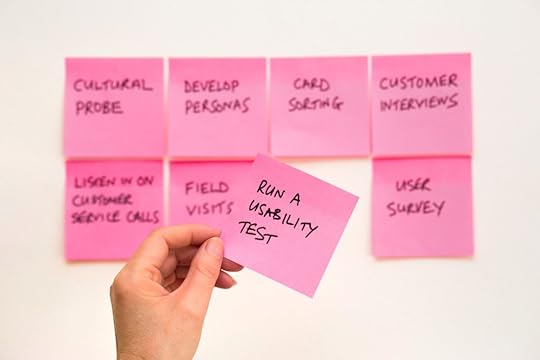
Instead of interview questions, in usability testing, we ask participants to walk through a set of scenarios, or tasks to accomplish. Ask participants to speak out loud as they navigate, telling you what they think and what they’re doing as if they are narrating a YouTube tutorial video. A moderated usability testing session will get you deep insights about your customer and how they use a website, app or any other digital product.
 But how do you choose which one is right for you?
Ultimately this boils down to the:
Goals of your study and the specific
Outcomes you’re looking for
Budget as not all research methods cost the same
There are 5 questions you can ask yourself when figuring out what method or combination of methods are best for your specific project:
What am I trying to improve
Is it a brand, a marketing strategy, a product, a digital experience, a physical experience, or something else?
If you’re trying to improve a product for example, you might want to start with usability testing or screen-recorded video research. If you’re looking to streamline an experience, ethnography, interviews, or video diary studies may be best. If you’re looking to create a marketing strategy and identify campaigns that are likely to provide a great ROI, interviews understanding deep drivers and buying motivations could prove essential.
What am I trying to uncover: perceptions or behaviors?
Are you looking for opinions from your customers -- subjective ratings of satisfaction? Or are you looking for behavior—how they use a product or journey through an experience?
Am I looking for the “what” or “why”
If you’re looking to understand behavior, ethnography or video diary studies could be best. But if you want to know why they’re doing something, an in-depth interview may be better
Do I need vocabulary?
Unmoderated research is better at capturing a participant’s own vocabulary without bias. So if messaging is your primary objective, try unmoderated research like video studies.
What’s my budget?
Not surprisingly, some research methods cost more than others. Moderated studies cost more than unmoderated. This also depends on how niche your audience is. Imagine you’re recruiting a niche audience — say, CFOs at large medical practices. This is actually a recruit I had to do recently. It took a lot of time and money to find a good sample of this niche audience, and to pay them incentives for their time.
The bottom line here is that the goals and outcomes for your study are going to drive how you choose the most appropriate research methods.
The worst thing you can do with a qualitative study is to begin the research without really knowing what you want to achieve. Instead, the key is to formulate the right questions, and then choose the best methods and settings to conduct your research.
***
If you liked this article, you might like…
My “Qualitative Market Research Course” on LinkedIn Learning
InstaBrain : The New Rules for Marketing to Gen Z (grab your free chapter here)
Sarah Weise is the CEO of award-winning marketing research agency Bixa and the bestselling author of InstaBrain: The New Rules for Marketing to Generation Z. For 15 years, Sarah has been a guide to hundreds of leading brands including Google, IBM, Capital One, Mikimoto, PBS, and U.S. Army, to name a few. Sarah helps brands achieve a laser-focus on their customers and build experiences that are downright addictive. She lectures at Georgetown University's McDonough School of Business and speaks at conferences and corporate events worldwide.


December 6, 2021
A Marketer's Christmas List: 2021 Edition
A version of this post was included in my super-fun weekly email for marketers with tips, tricks and stories. Click here to sign up and never miss out on the fun!
Ahhh the Holidays...
When I envision my ideal holiday season, I picture snow flurries, cozying up in my favorite PJs by the fire, playing board games with the kids while drinking a hot beverage (preferably spiked 😉)... You too?
In reality, though, the holiday season tends to translate panic over last minute work to-do’s and struggling to find the perfect gift for everyone on your list.
Around this time everyone asks, “What do you want for Christmas?”
What an awkward question! And one a lot of us struggle with. We have no time in our busy schedules to think about what it is we really want for Christmas.
So this year, let me help you out. I sat down and thought about the top gifts for a marketer today. I hope this sparks inspiration for gift ideas for your own Christmas list, or another marketer in your life. So forward this to your boss, your co-workers, or treat yourself for the holidays!
ReMarkable:
ReMarkable is a super thin, portable paper tablet, which I absolutely love. It gives me the feeling of writing on paper, but has the ease and organization of a computer. I can take notes during interviews or jot down new book ideas from anywhere then easily turn them into text to use for presentations, emails, etc. I love that I can keep all my notes organized on one tablet and then easily transfer them to google drive or dropbox. Seriously, this thing is amazing!

2. Linkedin Learning:
The best marketers are always learning, and with LinkedIn Learning, you can access endless courses from business to photography to drawing, and even architecture courses. I have spent so much time on this platform over the last few years and still find new and interesting courses to take. I also happen to have a few courses on Linkedin Learning that you can take a look at here:
Market Research Foundations
Generational Design
Qualitative Market Research
Journey Mapping
Mobile Diary Studies
Brand Storytelling
Best part: Get a free 3-week trial when you sign up—so no commitments, even though I know you will be hooked once you start!
3. An Audible Membership:
Any marketer will tell you, “I have no time to read.” But they do have time to listen! It’s so easy to put on an audiobook or podcast when you are walking the dog… or listening to your spouse ramble on (kidding!).
That’s why an audiobook membership is the perfect gift. Audible has a wide selection of audiobooks and podcasts and offers a couple different membership packages. Plus, you get a free 30 day trial when you sign up!
4. Yeti Blue Microphone:
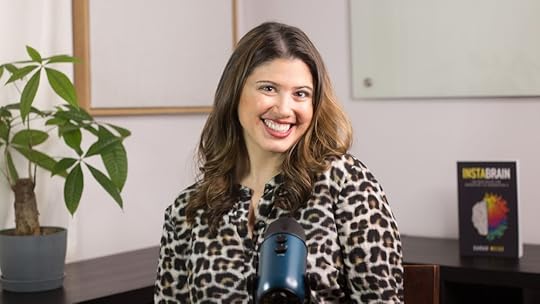
Are you constantly creating videos, courses, speaking at virtual conferences, or hopping on the line as a guest podcaster? That’s my life, and one of my best investments has been a great microphone. I especially like this set because you can attach the arm to the side of your desk and swing it toward you when you need it, and get it out of the way when you don’t!
Yeti Blue Microphone with Shock Mount, Boom Arm and Pop Filter
5. A Ring Light:
Another way I have stepped up my videos this year is with a ring light! It gives me the perfect lighting to make all my videos look amazing. I love both of these variations:
Large ring light for high-quality videos
Small clip-on to light your face on a zoom call or pop in a bag for travel
6. Flodesk:
I am always talking about how great Flodesk is. It is one of the easiest email marketing platforms I’ve tried (and I’ve tried a bunch!). Templates are super easy and always turn out beautifully. This link will give you a no-strings-attached free trial (you don’t have to enter your credit card) and will give you 50% off if you choose to buy after the free trial is over:
https://flodesk.com/c/SARAHWEISE
7. For the Reader:
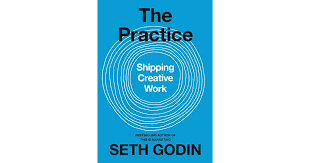
So many of Seth Godin’s books have changed my life. And he has just come out with a new book called The Practice which gives you creative insight and inspiration when you need it. This is number one on my own Christmas list!
12 Week Year by Brian P. Moran and Michael Lennington is another great book that every marketer should read. It’s a guide to achieving your yearly goals in just 12 weeks. It’s the perfect time of year to read this book, as we all are creating our yearly goals for 2022. But imagine you could accomplish your yearly goals in the first 12 weeks of 2022 instead of by next December? Sounds like a great start to the year!
8. For the Organizer:
Staying organized is the number one thing every marketer must do. The best way for me to stay organized is with a planner.
Physical planner: If you enjoy good ol’ pen and paper, the inner-guide planner has calendar basics plus sections to track goals, both personal and professional. It’s one of the only ones I’ve seen that takes a holistic look to planning.
For daily tasks: I love this set of tear-off sheets that keeps you focused on your top tasks of the day.
The holidays are meant to be a joyous and giving time. So, hopefully my Christmas list has helped to relieve a little of the stress that comes with this season and give you more time to enjoy your family, the twinkling lights and a warm beverage… or two. 😉
Happy Holidays!
November 8, 2021
What is Usability Testing?
A version of this post was included in my super-fun weekly email for marketers with tips, tricks and stories. Click here to sign up and never miss out on the fun!
The year was 2004. I was 21 years old.
It was my first day working at a big consulting firm. In my 2-piece black suit, I met my new manager in a big, bright lobby—one that was shared by three gigantic buildings. It seemed so mighty and I was proud to be there, fresh out of school with my sparkling new marketing degree.
As we rode the elevator, my manager added, “We’re excited you’re going to be our new usability expert.”
I stared back blankly, not wanting to disappoint, but had to say it… “Usa-what?”
He reached into his bag and pulled out a thin book—Steve Krug’s Don’t Make Me Think. “It’s not long. It has pictures. You have a client meeting at 2:30, but by then, you’ll know more than they do.”
Over a decade later as a UX Director at that same big consulting firm, I told that story to Steve Krug over dinner. By then I had actually earned that title of “usability expert”—though by that time, it was called “user experience.” The industry figured out that it’s not just about whether someone CAN use your site or app—it’s about whether they WILL.
Regardless of what it’s called today, usability testing is a key form of research designed to understand how a visitor interacts with a product, and how well they can complete what they set out to do.
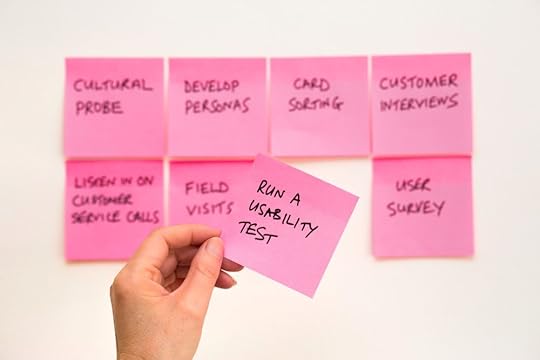
Most usability testing contains “scenarios” where we ask participants to walk us through a set of tasks they’re trying to accomplish. We ask participants to speak out loud as they navigate, telling the researcher what they’re doing and thinking, as if they are narrating a YouTube tutorial video.
One key difference between an interview question and a scenario-based question is that scenarios ask people to DO something, to perform a task.
Usability testing is looking to evaluate the user experience of a system. I usually like to break this down into a few key categories:
Navigation - the organization, information architecture, and how you get around the site or app
Presentation - the images, photos, and overall layout.
Content - whether the content is valuable to your audience and presented in an easy-to-understand way for that specific user
Interaction - how users touch, move, spin, click, search, or otherwise engage with a digital product.
Trust - what signals a user is looking at to really know if they can rely on you, your products, your services. These signals may appear in visuals, video, messaging, interactions, or even the existence of specific features
If you're trying to figure out how someone uses a digital product and if specific scenarios yield positive experiences for them, usability testing is a powerful qualitative technique for your research toolbox.
***
For more training on usability testing as well as other market research techniques, check out my courses on LinkedIn Learning!
***
Have a project in mind you’d like help with? Let’s meet!
***
If you liked this article, you might like…
My blog post on Four Reasons to Use Video in Your Market Research
InstaBrain : The New Rules for Marketing to Gen Z (grab your free chapter here)
Sarah Weise is the CEO of award-winning marketing research agency Bixa and the bestselling author of InstaBrain: The New Rules for Marketing to Generation Z. For 15 years, Sarah has been a guide to hundreds of leading brands including Google, IBM, Capital One, Mikimoto, PBS, and U.S. Army, to name a few. Sarah helps brands achieve a laser-focus on their customers and build experiences that are downright addictive. She lectures at Georgetown University's McDonough School of Business and speaks at conferences and corporate events worldwide.
October 25, 2021
Testing demand for your new product: 4 methods!
Creating a new product can be overwhelming, terrifying, fun and downright exhausting. Take it from me—over the past year, we’ve helped dozens of companies conduct demand testing for their new products.
In one example, a niche SaaS product, we even found out that the demand was not there for the anticipated audience, but was there for a totally different audience the client hadn’t even considered. Once we did demand testing, we had a clear picture of how to shift their Unique Selling Proposition (USP) and funnel strategy and their new software tool was in business.
These types of learnings are critical to your business. And sometimes, when you already have an offer, experiments that go beyond just a survey can be far more effective.
Here are 4 ways to find out if there is interest or need for a new product:In-depth Interviews + Journey Mapping
By understanding and mapping your audience’s journey and what they struggle with along the way. Identifying pain points will help you design solutions that really matter.
Email Marketing Pre-orders or Waiting List
Have an engaged email list who knows and trusts you? Use it to your advantage by sending out an email with your offer. Instead of asking them if they’re interested, ask them to actually sign up. Even if the offer isn’t ready yet, a pre-order or waiting list is the perfect validation for your concept. It’s totally ok to accept money from your customers, even without a product. If you wind up not going through with it, you can always refund and tell them there wasn’t enough interest.
Create a Funnel and “Fake Door” Test It
Fake Door Testing means that you create an ad, offer, landing page—basically map out your whole funnel. Once people sign up, it takes them to an error page or a coming soon page. You will base the demand off the number of clicks. The more click-throughs, the more interest, the more demand there may be.
Google Trends
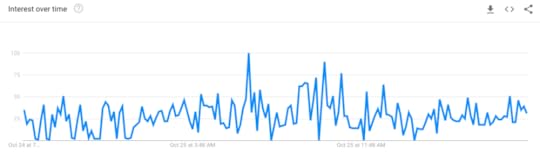
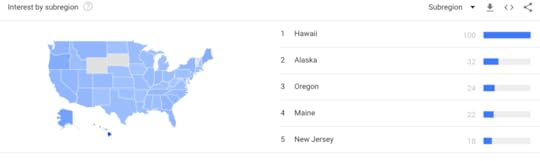
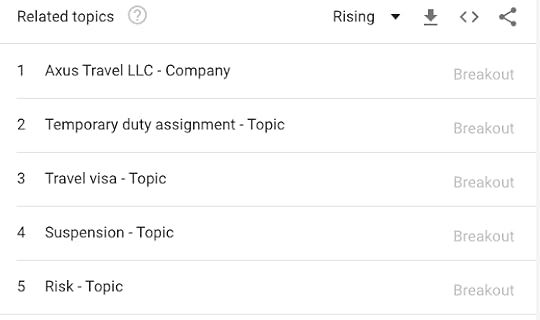
Google Trends will help you to find the number of Google searches for a specific keyword or phrase over time.
For example, if your new product is a travel related app, you can search the keyword phrase “travel app” in the search bar at the top. You can then get more specific by choosing the time frame in which people search (ie. in the last hour, day, month, etc.), the specific country, region or even city you are interested in, and a specific category. You will then be given the specific number of people that searched for your keyword or phrase, what subregion searched for it the most and any related searches, and suggestions for related terms that might be even more valuable for you—especially if you’re in a niche business.
Raise your hand if you’re old enough to remember the Newton from Apple.
The Newton was designed to be your personal assistant on the go: a handheld device that you could take anywhere that could take notes, hold contacts, manage calendars, send faxes and translate hand-writing into text. Yes, I said faxes! This device came out in 1993, before handheld computers were even a thing and before WiFi was accessible from basically anywhere. If Apple had taken the time to do more demand testing, they probably would have seen that customers were simply not ready for this futuristic device.
Of course, the Newton did lead Apple to creating the first iPhone so some may argue it wasn’t a total fail. But in the case that your product doesn’t lead to the next iPhone, rushing a product launch before making sure there is an actual demand for it can be a big loss for your business.
There are many more ways you can test demand for a new product, but these four are a great way to get started. Try them out and see what you find.
And of course, if you need help, the team at Bixa is always here.
***
If you liked this article, you might like…
My blog post on Four Reasons to Use Video in Your Market Research
InstaBrain: The New Rules for Marketing to Gen Z (grab your free chapter here)
Sarah Weise is the CEO of award-winning marketing research agency Bixa and the bestselling author of InstaBrain: The New Rules for Marketing to Generation Z. For 15 years, Sarah has been a guide to hundreds of leading brands including Google, IBM, Capital One, Mikimoto, PBS, and U.S. Army, to name a few. Sarah helps brands achieve a laser-focus on their customers and build experiences that are downright addictive. She lectures at Georgetown University's McDonough School of Business and speaks at conferences and corporate events worldwide.
October 18, 2021
Four Reasons to Use Video in Your Market Research
What if I told you there’s a way to get real-time insights, in the moment, whenever somebody uses your product?
That would be unbelievable, right?
Well… Video diary studies let you do just that.
Let me tell you a story from one of my team’s past projects. When we did a research study for a leading coffee company, we asked people to record videos every time they brewed coffee. The steps to making coffee were predictable, but what we learned about their environment was extraordinary.
People were brewing coffee in their bathrooms!These diary study videos were crucial to discovering this insight. It was something we would have never known to ask about.
Video diary studies are all about recording behavior when it happens. They help you explore the moments that matter, by capturing them at the moment they happen.
You get to witness authentic moments, where they happen, as they happen, no matter what time of day.
Here are four reasons to use videos to understand your customers:Video studies take ethnography to a new level. Even if we did in-home interviews with those coffee-brewers, we would have never sent a research team into people’s bathrooms at 6:30am. This is a peek into real life, in the moment.
You’ll capture authentic customer stories and will be able to uncover complex thoughts and deliver compelling insights faster than ever before—in a way that blurs the lines between qualitative and quantitative research.
Videos also enable you to get closer to what people really think, especially when it comes to hearing and analyzing the linguistic choices different audiences use to describe their experiences. It gives you data on what will resonate with a particular audience, and also the specific wording that will work to get you there. This is vital to understanding your brand or product’s unique selling proposition (USP) and a messaging strategy for each of your customers segments or personas.
Even beyond words, video allows participants to show emotion and express how they feel—pure gold to a researcher trying to figure out emotional drivers for purchases.
Video boosts respondent engagement. People talk much faster than they write so you’ll get responses that are way more detailed than a survey might be. It’s fun, quick ,and easy to use. Respondents can fit it around their busy lives and don’t have to set aside an hour or two to meet with a researcher.
Video is versatile. You can run a quick survey with a video question in it (I’d suggest vurvey.com for this) or a more in-depth, multi-part study (for this, try dscout.com).
You can ask for a selfie video or a screen recording, conduct longitudinal mobile diary studies. Not only that, you can capture hundreds of videos in less than an hour through apps like dscout.

People have their phones with them 24/7, and it’s never been easier to leverage video in your research.
To be honest, I’m surprised that more marketing teams aren’t using this approach because it’s a rockstar way to unlock and share powerful insights—insights that allow you to witness authentic interaction with your product or brand and explore moments that matter.
***
If you liked this article, you might like…
My “Mobile Video Research Course” on LinkedIn Learning
InstaBrain: The New Rules for Marketing to Gen Z (grab your free chapter here)
Sarah Weise is the CEO of award-winning marketing research agency Bixa and the bestselling author of InstaBrain: The New Rules for Marketing to Generation Z. For 15 years, Sarah has been a guide to hundreds of leading brands including Google, IBM, Capital One, Mikimoto, PBS, and U.S. Army, to name a few. Sarah helps brands achieve a laser-focus on their customers and build experiences that are downright addictive. She lectures at Georgetown University's McDonough School of Business and speaks at conferences and corporate events worldwide.
October 12, 2021
The Do's & Don'ts of Interviewing
One-on-one interviews are incredibly effective for getting to know your customers so that you can make strategic improvements to your marketing.
People LOVE to talk about themselves and their experiences, and guess what?
Your customers are people!
… even if you’re selling B2B.
If you can direct the discussion toward your research goals, you’ll be able to uncover deep insights quicker than you ever thought possible.

Here are 3 tips to get the best results out of an in-depth interview… and 3 things you should avoid at all costs!
The Do’s:Focus on your goals
Write down at the top of your discussion guide the key outcomes: what you want to learn about your customers. It’s often helpful to write these in question format so you can focus on getting answers to these questions from participants. You will naturally ask more targeted questions that way, especially in unscripted followups.
Build rapport.
Your interview shouldn’t feel like an interview. It should feel like a very natural conversation.
Building rapport will come with practice, I promise. But in the meantime, you can fake it by getting participants to talk about themselves.
Ask questions about the person, not your brand. Start with easy questions, and keep the wording open-ended to get your participant talking.
Followup questions should center around their motivations, feelings, and pain points.
Asking customers what motivated them to do something is a fine art because many times, they simply don’t know. They may give you a logical response when in fact, emotion was the cause. So dig in, keep them talking, and ask your questions from different angles.
Reflect back on what you hear them say—even if it’s just an emotion you’re picking up on.
You might say, “Wow, that annoys you.” If you didn’t quite nail it, they’ll clarify.
I love when this happens, and sometimes I even reflect the wrong feeling on purpose, just to get them to explain a little more: They might say, “I’m not annoyed. I’m livid!” That right there: researcher gold.
So now that we’ve covered what you can DO, let’s talk about what to AVOID.
The Don'ts:
Don’t talk more than you listen.
The whole point of an interview is to hear from the customer. Ask a question and then stop talking. Your participant will naturally want to fill that awkward silence—hopefully it will be something beautifully insightful.
Don’t use of the word “why”
A question of “why” can come across as attacking, and participants can turn defensive in their responses.
Instead of “Why did you choose that?” ask “What made you choose that?” or “How did you decide to choose that?”
Come from a place of curiosity, and they’ll be happy to answer any question you throw at them!
Don’t skimp on the pilot.
Finally, make sure to pilot your interview questions; run them by lat least a few people to make sure they make sense AND that they make sense TOGETHER as a flow.
Ultimately, your job as an interviewer is to listen, ask probing questions, and gently steer the conversation where you need it to go. If you’re not sure what to ask, ask THEM what you should be asking about.
So the next time you find yourself in an interview, just be you. Relax and build rapport. Remember your goals and steer the conversation there.
Your customers will be sharing authentic, meaningful stories with you in no time.
You can do this!
***
If you liked this article, you might like…
Sarah’s Storytelling Course on LinkedIn Learning
InstaBrain: The New Rules for Marketing to Gen Z (grab your free chapter here)
Sarah Weise is the CEO of award-winning marketing research agency Bixa and the bestselling author of InstaBrain: The New Rules for Marketing to Generation Z. For 15 years, Sarah has been a guide to hundreds of leading brands including Google, IBM, Capital One, Mikimoto, PBS, and U.S. Army, to name a few. Sarah helps brands achieve a laser-focus on their customers and build experiences that are downright addictive. She lectures at Georgetown University's McDonough School of Business and speaks at conferences and corporate events worldwide.
September 20, 2021
How to Successfully Structure a Virtual Focus Group
Imagine a time when meetings were in-person, conferences were held in large spaces, and you actually had lunch in the same place as your coworkers. Seems like a lifetime ago, right?
That’s because life has changed immensely and everything we do these days is over a screen, including market research!
One method of research that can be successfully conducted virtually is a focus group. Focus groups often get a bad rap for being unproductive and full of group-think. And when COVID happened everything had to move virtual, “Zoom fatigue” became a real phenomenon throughout the world, and this situation got even worse.
However, when properly structured and moderated, a Virtual Focus Group can be the perfect research tool—especially when the purpose of the session is to explore new ideas or brainstorm with customers.
Without proper facilitation, focus groups of any kind (in-person or virtual) can easily turn into unproductive sessions… they can easily morph into one person taking over or even a group of people ranting about their past experiences.
6 make-or-break tips that define the success of a virtual focus group
P.S. And not the obvious things that you might think of.
 Keep it small!
In an in-person situation, you can certainly run a 10-12 person focus group effectively. Not so for virtual focus groups. Keep the group to no more than 5 people to make sure you’re hearing from everyone and getting the most out of your participants.
Send out expectations in advance.Lesson learned from opening a zoom call to participants...
with no camera,
without shirts,
on the toilet (yes, really)
Make sure everyone knows that they need to share their video, be in a quiet space, wear a shirt, come prepared with the answer to one question. Send these details out ahead of time.
One mistake we often see is that teams don’t use the features in the virtual tools they have available. For example, no matter what virtual platform you’re on, there’s likely to be a chat feature. That means the moderator can ask questions, and instead of going around the room and calling on people one at a time, participants can be typing their responses in the chat and the moderator can summarize each one as the responses start coming in.
The moderator can also ask participants to upload images that describe something (for example, “Add to the chat an image of how you FEEL when shopping for prepared foods in a grocery store.”)
This is a more efficient way to get ideas out there before you start drilling into a few and calling on people. It gives power to the moderator to choose the direction they want to take the discussion in to keep the conversation on track and pointing toward their research goals.
4. Ensure all perspectives and opinions are heard.In a focus group, you’ll want to hear from all participants to make sure you’re understanding different thoughts, ideas, opinions, and perspectives. It seems like in every focus group, there’s typically 1 super chatty person and a few who don’t want to speak.
At the start of the focus group, set expectations by telling participants that it’s possible you may mute them to keep the conversation on track timewise, and that it’s not personal—it’s just a timing issue. This way if someone it talking too much or too long, you can cut that off and call on someone else. To do this eloquently, make sure to recreate the person speaking by quickly thanking them, paraphrasing to make sure they know you were listening, and then immediately either calling on someone else or shifting the topic.
Don’t be afraid to call people by name and invite them to share, engaging and probing them. After each person speaks, show them that you appreciate their response, no matter what it is. The goal here is to make sure your participants feel seen and heard. If you’re not summarizing the gist of what they say and showing them that you appreciate their participation, you’re going to lose them early, and they won’t want to participate.
It’s a social norm that the rest of the participants will mimic the style of the first person to speak.
As a result, use this moment to teach everyone else what you want and expect from responses. If you want more details, give that feedback to the first person. If they’re talking too much or telling irrelevant stories, cut them off.
Smile. Keep it moving. No dead air/silent time unless they’re all “taking a minute to type/write.” Silent time is often great for in-person sessions, but it’s magnified online and feels awkward in a virtual setting.
Remember a focus group can be a great way to get ideas directly from your customers even at a distance, and these advanced tips will help you run a virtual focus group like a pro!
Did you like this blog post? Sign up for our newsletter and get these and more in your inbox!
Tell us your biggest research challenges, and we’ll help you come up with a plan to tackle them. No strings attached. Schedule a Strategy SessionSeptember 13, 2021
Image-based projective interviews: everything you need to know!
Image-based interviews are a great visual way to understand emotions associated with a product or brand, and learn what will move your customers to take action.
Let’s go through an example to dive into the best way to utilize image-based interviews!
The setup:If you’re over 30, there’s no way you don’t remember Downton Abbey. This TV phenomenon earned 3 Golden Globes, 15 primetime Emmy Awards, and became Britain's largest drama export it the US, with an audience of 120 million viewers.
In the height of its success, Bixa was called to understand why it was so popular. The Public Broadcasting Service (PBS) wanted to see if they could recreate the same magic with other shows—including selling the franchise’s merchandise on ShopPBS.org.
What we knew:We knew viewers didn’t just love Downton Abbey—they were fanatics about it. The emotional connection between characters and audience reminds me of the following of Money Heist today. We knew this was one of the biggest unexpected surprises to hit PBS in years, and one of their biggest revenue-drivers too. We knew the WHAT. We didn’t know the WHY.
Our research goal:We needed to understand WHY people loved this show and how they created such a strong connection with it, including the emotions that compelled them to keep watching.
 The approach:
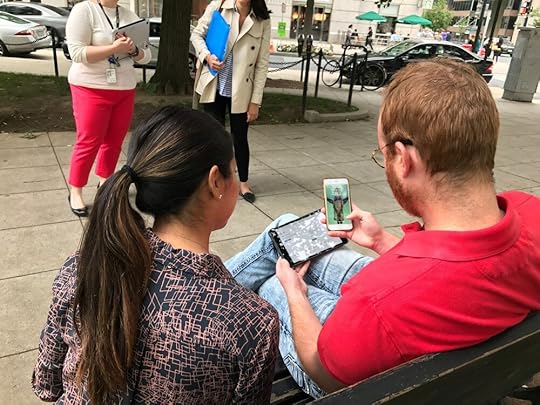
 The way we started to understand this goal was to conduct a series of image-based interviews with Downton Abbey viewers. We asked participants to do some homework prior to our interview. Their assignment was to find 10-15 images of how Downton Abbey made them feel.
This technique works because as humans, our brains tend to link emotional moments with visuals in our minds. And you can leverage this connection by tapping into images that resonate with your customers in order to predict how you may feel about a product, brand, TV show, or anything else.
Using these images, we were able to facilitate a powerful conversation about each image. We started out by asking what made them choose the visual, then dug deeper, asking a series of laddering questions to gather the underlying feelings created by this show.
The conclusion:In the Downton Abbey interviews, a few key emotions kept coming up. And it’s because we identified them with such precision that we were able to create messaging on the PBS website that immediately resonated. We were able to recommend a different mix of eCommerce products for the Shop PBS store, and we were able to document the elements that future shows might need to have in them to draw out the same types of strong emotions in viewers.
 A question list to help you get started with image-based projective interviews:
Here are a few questions you could ask about each of their images. Remember, go with the conversation flow. You don’t have to ask all of them:
What spoke to you about this image?
What made you choose this image?
How does it make you feel?
What is the character in the image doing? What events led up to that?
If the character could talk, what would they say to you? What kind of voice would it be?
Tell me about how the character is feeling. What do you feel as a result?
Tell me about the colors in the image. What do they make you feel?
What is most compelling about this image? Most emotional? Most touching? Most memorable?
Imagine yourself in this image. What would you be doing? Thinking? Feeling?
What noises do you think are going on in this image? How do they make you feel?
What smells would be associated with this image?
Deep down, I wonder if this character is you. What was it exactly that pulled you to this image?
Asking a few of these questions is a good starting point. By understanding deep emotional drivers, we can create content, messaging, experiences, and products that we know will resonate.
Add this skill to your market research toolkit so that you can tap into the emotions that bring value to your customers, and get the research results you deserve.
Did you like this blog post? Sign up for our newsletter and get these and more in your inbox!
Tell us your biggest research challenges, and we’ll help you come up with a plan to tackle them. No strings attached. Schedule a Strategy SessionAugust 30, 2021
Top 5 Marketing Books Every Marketer Must Read!
In the last days of summer while sitting by the pool, what’s a marketer to read? Here are 5 recommendations from someone who reads… A LOT. Check these out if you are a marketer, an ad man (or woman!), or anyone in digital anything really!
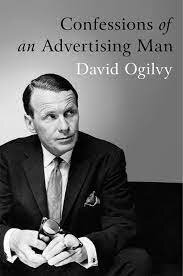 1.Confessions of an Advertising Man by David Ogilvy
 This book is a must-read that many marketers have never even heard of… seriously, you need this in your life. Known as the “Father of Advertising,” British ad tycoon David Ogilvy was trained at Gallup and attributed the success of his ad campaigns to meticulous research into consumer habits.
Even today, Ogilvy is arguably the top advertising agency in the world. Confessions of an Advertising Man has been called a “How to Guide for Advertising”. All I know is that I read this book every few years and each time, I learn something new.
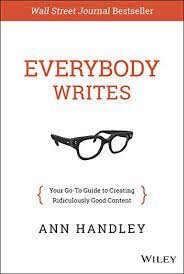 2. Everybody Writes by Ann Handley
Ann Handley doesn’t just explain why you should write, but instead, dives into how to write. Everybody Writes is a how-to manual with all the tips and tools you could never need to become a great (or better) writer. She explains in her book that writing can be taught and that everyone can do it, with these basic tips. In fact, I recommend this book each time I lecture to Georgetown’s MBA program. A must-read for marketers.
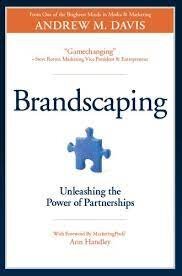 3. Brandscaping: Unleashing the Power of Partnerships by Andrew Davis
Brandscaping is a guide on how to create a content market strategy that actually works. It is all about learning how to focus on your target audience, rather than focusing on your brand. Davis explains how partnering with other marketers within your niche will help you to grow your current audience faster and easier than doing it all on your own. Davis and I have had several conversations about marketing and he REALLY knows his stuff!
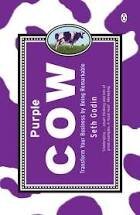 4. Purple Cow by Seth Godin
The year was 2002. I was in college, trying to figure out what to do with my life. Whatever it was, I knew it would be with my own company. I had gravitated toward a squad of entrepreneurs, and was physically living in an entrepreneurship incubator with other students who wanted to do the same. Tony Casalena, who would become the founder and CEO of Squarespace, lived down the hall. Adam Ostrow, former Chief Strategy Officer at Mashable, lived next door.⠀⠀
I was on my second business at the time, and pitch contests were all the rage. My team competed in one, placed second. Instead of the $5k prize, we ended up winning something that was (in retrospect) of much greater value—a new book that had just come out called Purple Cow by Seth Godin.
Purple Cow changed the way I viewed business. It was because of this book that I majored in Marketing and started my career path as a market researcher. I was enthralled (and still am) at how some companies can stand out in a crowded marketplace, while others get swallowed by the noise. Much of my research has centered around that fascination over the years—and over the past couple years, it’s been centered around how companies make a splash when they’re targeting a particular audience (particular in more ways than one!): Generation Z.⠀⠀
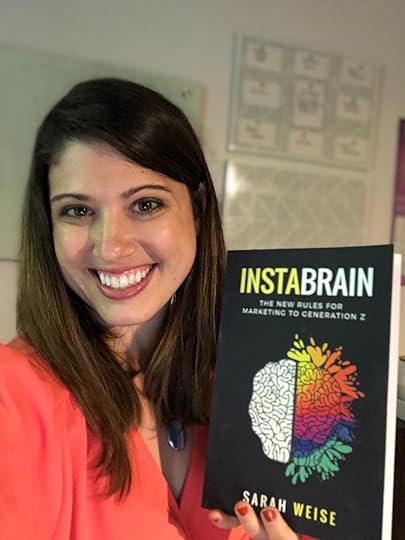 5. InstaBrain: The New Rules for Marketing to Generation Z by Sarah Weise
 And of course I wouldn’t be a good marketer if I didn't promote my own book! 17 years after I read Purple Cow for the first time, I published my own book InstaBrain: The New Rules for Marketing to Generation Z that would also become a #1 bestseller.
Today, Generation Z (ages 13-24) outpaces Millennials by 3M. They represent 40% of consumers and $44B in direct buying power. This generation is wielding their mighty influence on every other generation, in every industry. Yet marketing departments are still caught up in the Millennial whirlwind and missing this potential powerhouse. This generation is an entirely different consumer—one that you need a fresh marketing strategy to reach. This book will teach you how to connect and engage with this new generation in a way that will resonate. Learn what you need to know about how this next generation of customers wants to learn, transact, and engage with brands like yours.
Whether you are a marketing pro or just getting started in the marketing world, you must add these 5 books to your reading list!
Tell us your biggest research challenges, and we’ll help you come up with a plan to tackle them. No strings attached. Schedule a Strategy SessionAugust 8, 2021
Focus Groups vs. One-on-One Interviews: How to choose which method will benefit you the most
A version of this post was included in my super-fun weekly email for marketers with tips, tricks and stories. Click here to sign up and never miss out on the fun!
The #1 way to improve your business or product is simple: ask your customers.
I can’t tell you how many times people have told me something like... “Oh, you’re in market research? One time, I got paid to try a bunch of tequila flavors and tell a company what I thought!”

When it comes to getting qualitative information from your customers, you could try either focus groups and one-on-one interviews. Choosing the right method of primary research depends on what kind of information you are seeking. Many market researchers will say that one-on-one interviews are the number one way to go, however, there is a time and place for focus groups, as well.
Which method is right for you: focus groups or interviews?
Focus GroupsFocus groups tend to get a bad rap in the industry, mostly because they’ve been misused for years. In market research, participants often say one thing and do another. That means when you ask someone to describe what they WOULD do, it’s notoriously unreliable.
However, focus groups are perfect in some situations.
Here are 3 times a focus group is recommended as a part of your research plan:
Brainstorming ideas
A focus group is a good bet when you need to brainstorm ideas, directly from your target audience.
Let’s say you want to brainstorm what new features you haven’t thought of before, that people might suggest for your product, or topic ideas for your podcast, blog, video show, or other content. Focus groups are great to generate lots of ideas.
2. Learning about your audience when you’re just getting started
They’re also a good option when you are starting from scratch in getting to know your customer. With a focus group, you can invite your customers to tell you about their experience with your company, or describe how they felt during different interactions with your brand.
Even if you weren’t at all sure about who your core customers were, after just one focus group, you should be able to make a pretty good hypothesis. A round of behavioral research next can help you hone your personas even more.
3. Knowing how the public will react to a new product or situation.
Hearing people discuss their reactions and bounce ideas off each other helps to gauge what emotions a new product or situation might bring up.
Maybe you want to focus groups to pilot messaging—to get the words right before delivering a press conference or launching new messaging on your site. You might even want to use a focus group to pilot questions for a large-scale quantitative study.
Just remember that focus groups measure reactions, not behavior. They won’t give you answers, but they will help you gather ideas and measure shared sentiments.
One-on-one interviews are incredibly effective for getting to know your customers so that you can make strategic improvements to your marketing.
There are 3 key reasons why interviews are such an important qualitative tool to have in your market research skill set:
Interviews provide flexibility
You can make them as formal or informal as you want. You can deep-dive into pointed questions or facilitate an exploratory conversation.
Moderated interviews provide you with a lot of flexibility in designing the conversation, facilitating where it will go, and space to explore something interesting that a customer brings up that you weren’t going to ask about. You have the flexibility to go down a rabbit hole with a customer, as long as it’s helpful to the goal of your research.

2. People are getting paid to talk—so they’ll talk more
Sometimes you want to hear from a specific customer type, and learn about their personal experience specifically. You can’t do that in a large group. They’re also able to be more honest and open when it’s one-on-one.
You’ll be able to dig deeper in an interview into what they think, how they behave, their past purchases, and emotional drivers and motivations for purchase. This is where you get deep psychographic, behavioral, or emotional insights about your customers and can help you significantly more with audience segmentation, persona creation, and journey mapping.
3. Non-verbal cues
Third, we can learn a lot from non-verbal cues a participant is giving us.
Whether it’s a hesitation before they say something, or a well-placed sigh, or a shriek or excitement—it’s these types of cues that tell us more about the customer and enable an interviewer to respond to and dig deeper.
Even if you’re doing interviews virtually, this is easy to capture with a tool like Zoom.
More often than not, you’ll get the most out of one-on-one interviews. Focus groups are great for some things like brainstorming and participants bouncing ideas off each other, but not for other things like psychographic, behavioral, or emotional insights about your customers.
As a qualitative researcher, interviews are likely going to be one of your most-used skills, but keep focus groups in the back of your mind for new ideas or product testing.
Happy researching!