
Ilchi Lee's Blog
November 26, 2025
Choosing Gratitude When It Matters Most
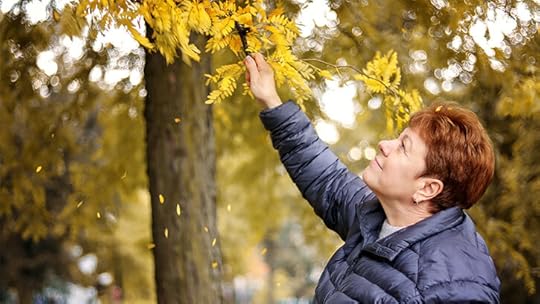 [Photo by Kiwitanya via Envato Elements]
Explore how genuine gratitude can open our hearts, lighten our burdens, and transform even life’s hardest challenges.
The fall, or harvest time, remains a season of thanksgiving in many cultures. In times of abundance, it is easy to feel grateful. However, finding gratitude in hardship is a greater challenge and an even greater gift.
Nothing clears negativity or opens the heart more powerfully than genuine thankfulness. When a deep and sincere sense of gratitude rises from within, it means the heart is fully alive. Even in our hardest times, a grateful heart brings warmth, strength, and quiet joy.
Lacking GratitudeAn absence of gratitude is not due to a lack of wisdom or morality. It comes from focusing only on what we desire and from doubting our own worth. When our consciousness goes down this road, we tend to complain and blame, resenting what is difficult. Doing so only weighs our hearts down.
Yet, the moment we recognize this truth, we have the chance to awaken our hearts again. Rather than judge ourselves for a lack of gratitude, we can take a moment to embrace and love ourselves just as we are. We can remind ourselves that we are a precious piece of life itself, interconnected with all life. As soon as we remember our inherent value, gratitude returns and our hearts find peace again.
Practicing GratitudeWe often look only for special reasons to feel grateful while overlooking the everyday moments unfolding around us. Yet if we pause to notice, we will see that ordinary life itself is miraculous. We can begin by finding just one thing to be genuinely grateful for. As we continue practicing gratitude this way, we will come to realize that everything holds something to be thankful for.
Unconditional gratitude from the heart can transform even the most challenging situations into sources of meaning. It dissolves worry, heals disappointment and sadness, and is the quickest path to filling life with light and positivity.
Every situation, every moment, is a precious opportunity. We can recognize it more clearly when we practice gratitude. When a challenge appears, we can welcome it with the thought, “This is my chance to grow.” Instead of complaining, we can gather our energy with focus and gratitude. When we have gathered so much energy that it finally bursts forth, we will find ourselves beyond the obstacle and beyond who we were.
With each step we take with thankfulness, we can awaken deeper self-respect and uncover our boundless potential. Someone who welcomes every situation with gratitude and a sense of blessing may face misfortune, yet it never stays.
Editor’s Note: Based on Ilchi Lee’s new book, Finding Your True Self: 365 Daily Inspirations for Authentic Living.
Related PostsChakra Gratitude Affirmations to Transform Your Energy, Transform Your LifeA Short Meditation on GratitudeHow to Make the Energy of Gratitude: It’s Already InsideWhat If You Practiced Radical Gratitude?A Video About GratitudeFeatured Video

November 19, 2025
Returning to Nature to Turn from Chaos to Harmony
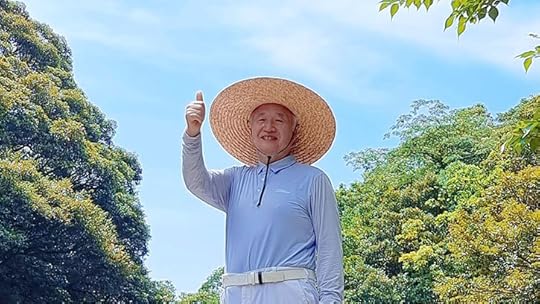
Come with me to nature and some of the lessons it has offered me about hope, harmony, and the direction of humanity.
Like many of us, when faced with upheaval, I turn to nature to clear and center myself. Anytime I do, it has many lessons for me that strengthen my convictions and bring me fortitude. By hiking and meditating in nature, I can clearly see the direction that not only I need to go but all of humanity. It settles my impatience to reach the end and guides my next step.
Remembering a Time of Prayer and ResolveSeveral years ago, after hearing the devastating news of the earthquake and tsunami in Japan, I traveled to Jeju Island in South Korea for a period of fasting and meditation. I wanted to honor the victims and offer comfort to the heart of the Earth through prayer, silence, and the sending of bright, life-giving energy.
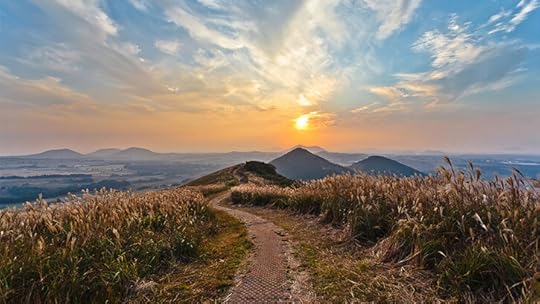 By HiHoHo – Own work, CC BY-SA 3.0, Link]
During that period, I climbed Jeju’s Seobyeol Oreum early each morning. The way up this inactive volcanic cone was steep and demanding. I remember watching others hesitate on the slope, stepping backward with uncertainty. I told them, “Once you choose a direction, do not look back. If you feel fear, don’t stare at the distance. Just look at the step beneath your feet and take the next one.”
Those words became my own internal teaching as I moved up the hill. I passed through the sorrow I felt for the earth toward my vision for the future of a peaceful planet.
When I reached the summit, I prayed for peace—for Japan, for the world, and for all of us living together on this Earth. I reflected on what nature continually teaches: that we cannot talk about human peace without understanding the heart of nature itself. When we recover our humanity, we begin to sense the original brightness within all things—the sunlike essence the ancient Chun Bu Kyung text describes as Bon Shim Bon Tae Yang, the “original heart that shines like the sun.”
Encountering the Ancient Energy of a MountainDuring that same period on Jeju, I climbed another peak—Gunsan. As soon as I reached its ridge, I felt an ancient, uplifting energy running through it, so I named it Dangun Mountain. I greatly admire the line of Dangun kings, who formed a nation in Korea based on the principles and practices of Sundo (Tao). They brought these principles to life, and I could feel this original energy as I walked up Gunsan.
 View from the top of Gunsan on Jeju Island, South Korea [Photo from Jeju Tourism Organization Travel Blog]
Formed long ago through volcanic activity, this mountain has been regarded throughout history as a spiritually auspicious place. In times of drought, people performed rain-invoking rituals there, trusting in the mountain’s life-giving presence. From the summit, Jeju unfolds like a living painting, with Halla Mountain rising in the northeast and the ocean spreading wide to the south.
During that period, I visited the mountain often. I would meditate, pray for Japan’s safety and world peace, and send LifeParticles to support healing across the planet.
A Spring That Never Runs DryHalfway up Dangun Mountain lies a well-known spring. It’s said to have never run dry, even during long droughts. From ancient times, people used its water during rain-invoking rituals for its purity and vitality. When I tasted the water’s clear, bright flavor, I named it Dangun Longevity Water.
Nature holds its own healing. When we pause and receive it sincerely, we remember that life wants to nourish us.
A Lesson in Sweetness from a Tangerine OrchardOn my way down from the mountain one day, I passed a tangerine orchard. Some branches had been pruned so the fruit could receive more sunlight.
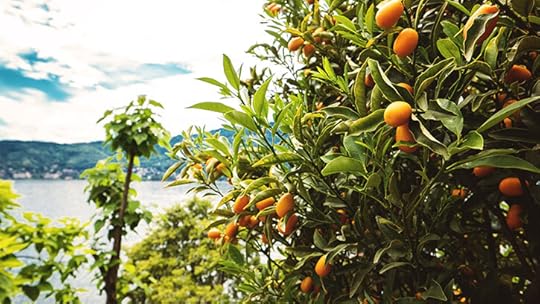 [Photo by stockfilmstudio via Envato Elements]
Seeing it, I reflected on how when the fruit fully receives sunlight, it becomes sweet. People, too, can become sweet or bitter. A sweet person is someone who has fully received the “sun”—the sun of right and true principle, or jeongbeop. A person who receives jeongbeop holds dreams and hope in their heart, and with a steady mind, becomes a source of hope for others.
A tree losing a branch may seem to suffer. But when the tree understands that it is stepping back for the sake of new creation, even that becomes a joyful act. Through letting go, it makes room for something sweeter to grow.
Spiritual growth follows the same rhythm. We grow sweet by releasing what no longer serves life, receiving light. and becoming a source of warmth for the world.
The Path Humanity NeedsThen as now, I could see clearly that humanity has been living in an age of what I call nanbeop. Nanbeop means a way of living that has drifted away from our true nature—a life shaped by materialism, anxiety, and external pressures instead of inner harmony, compassion, and conscience.
In contrast, jeongbeop is the path aligned with our original, authentic nature. It is the principle that leads us toward harmony with ourselves, others, and nature. And it’s the original path of the human heart that honors the dignity of every human being. Whereas nanbeop leads to confusion and imbalance, jeongbeop guides us back to clarity, purpose, and the steady center within.
More than 2,000 years ago, the nation the legendary Dangun kings built followed this path. It embodied the ideal of Hongik: to live for the benefit of all. Hongik is jeongbeop in action, and it expresses humanity’s best direction. Though this ideal faded away, it did not completely disappear. I believe it remains one of the most essential philosophies for our world today. I see its spirit everywhere I turn.
Looking Back with Gratitude and Looking Forward with HopeAs I look back on that time in Jeju, I feel deep gratitude for the clarity nature offered me during a troubled time.
Nature reminds us that sweetness is cultivated, not accidental, that peace begins in our own hearts, and that hope is a light we must choose to receive and share. When we walk with sincerity, guided by life-affirming principles, we can brighten the lives of our families, our communities, and the world.
Related PostsMongolian Adventure: Going Back to the OriginA Healing Day with NatureHow Energy and Purpose Shape Our GrowthIt’s Time to Strengthen Humanity’s CharacterAt Lake PowellFeatured VideoNovember 13, 2025
Meditation for Recovering the Power to Create
 [Photo by Ablozhka via Envato Elements]
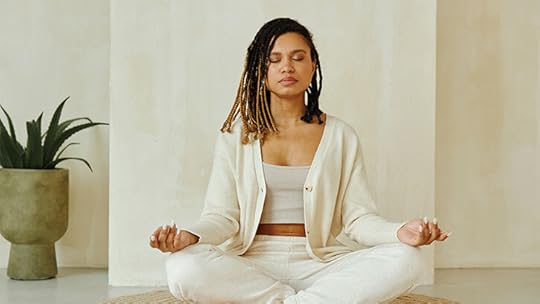
When we can separate ourselves from the situation we’re observing, we can create the life we want without being controlled by it. Meditation makes this possible.
One of the reasons I love meditation is that it helps us recover the power to create. Knowing that I have the power to create and knowing how to use that power are two life skills everyone who wants true happiness needs to develop.
When they’re confronted by difficult situations, many people lose the power to create, being stuck in and controlled by their circumstances. We live our lives immersed in ever-changing situations and environments. Situations and environments are like the weather. Some days are sunny and clear, but others are rainy or stormy. In the same way, we can’t avoid encountering difficult, trying circumstances. Exercising creativity in tough situations is really the life skill everyone wants to have.
Try asking yourself these questions:
Do I proactively manage my life in the direction I want, whatever my circumstances may be?Oppressed by my situation or environment, do I experience difficulty in proactively creating the changes I want?The environment I’m speaking about here is not only the external one. Our thoughts, emotions, habits, and the like are also an environment. We live immersed in continually changing internal and external surroundings. What’s important, though, is that, although our environment surrounds us, we have an awareness that allows us to observe our situation and ourselves separately and simultaneously. I describe this awareness for observing ourselves as “observer consciousness.”
The most significant characteristic of observer consciousness is self-awareness. It watches the situation without becoming mired in it. When you can separate yourself from the situation you’re observing, you can create the life you want without being controlled by it. When you lose observer consciousness, you become stuck in the situation itself, losing the freedom to separate yourself from your environment. You identify yourself with your surroundings, and you forget that you have the creative power to change your circumstances proactively.
Many people, with their heads, are well aware of observer consciousness. But, for the most part, they only understand it as information or knowledge; they can’t really feel it. What can we do to “feel” observer consciousness? Meditation makes it possible. Meditation is about recovering nature within us. Nature is not artificial. The heart of meditation is connecting not with the unnatural, but with what has always been there inside us.
When we’re trapped in our busy, daily life, it’s easy to lose the inborn nature inside us and retain only the emotions, thoughts, habits, and stories we’ve created. We may easily forget our real selves and remember only the shell surrounding it. If we fail to find it, we’ll live as we have been living, according to our habits. We’ll continue merely adjusting ourselves to our environment, not knowing that we have infinite creative power inside us.
I’ll teach you a simple form of meditation that will allow you to connect with nature inside you.

Sit comfortably on the floor or in a chair. Inhale and exhale, focusing on your breath. Feel yourself breathing in and out, without even trying. Inhale and exhale comfortably about five times.
Raise your right hand and place your left hand on your chest. Feel your breathing slowly quiet, then feel the beating of your heart. Your heartbeat is one of your body’s most powerful life phenomena. If you focus on your hands, you will even be able to feel your pulse in your palm. Even concentrating like this on your heartbeat and breathing for just five minutes will bring you more peace of mind.
“Consciously” focus on your body. Have gratitude for your breathing, which happens on its own without you worrying about it, and for your ever-beating heart. Just as you concentrate all of your attention and care on someone you love, try to focus on your body with the same attention and affection.
Now lower your hands and place them on your knees. Close your eyes and focus your attention inside your brain. It’s enough to have a feeling of comfortably concentrating your awareness in the center of your head. Imagine that you have a “mute” button in your head and press it. The noise creating all the thoughts, feelings, and multitude of stories in your brain quiets down, and your mind grows calm.
Feel your life. You’re breathing comfortably, and your heart is beating regularly. Try to sense the life flowing in your body, its power and current. Try to feel nature filling you, its beauty and mystery. Observe your awareness awakening to that nature and life, feeling its beauty and mystery. And, using your observer consciousness, speak to yourself:
“I am nature.”
“I have the power to create.”
Feel with your whole body the truth of this message. Feel the message moving your soul. Inhale and exhale three times deeply, then open your eyes.
The nature inside us wasn’t created; it has always been there. That’s why it can never be destroyed. Our connection with nature within may be momentarily broken, but it can never disappear. So, all we have to do is make up our minds to recover that connection. By switching our concentration from outside to within and quietly feeling our breathing or sensing the rhythm of our beating heart, our vital phenomena, we can restore that connection. When we connect with nature inside us, we can love and create in any circumstance whatsoever.
Related PostsThe Key to Unlocking Your Brain’s Creative PowerHatch Your Inner PowerDo You Do Face Reading?5 Ways Meditation Transforms Your Brain and Your LifeBe the Maker of Your Mind’s MovieFeatured VideoNovember 6, 2025
Supporting Joint Health through Energy and Movement
 [Photo by Image-Source via Envato Elements]
When our joints are stiff or painful, they are asking us to restore the natural flow of energy within.
Many of us experience joint stiffness or discomfort at some point in our lives. It may come from aging, overuse, inflammation, injury, or simply a lack of movement. Whatever the reason, our body is letting us know that it needs more attention and care.
Arthritis is a common cause of joint pain. Common forms of arthritis include rheumatoid and degenerative arthritis. In rheumatoid arthritis, inflammation persists and can lead to swelling, stiffness, heat, and tenderness. In degenerative arthritis, or osteoarthritis, the cartilage that cushions our joints gradually wears down, often with age. Both can make movement difficult and limit our sense of vitality.
From the perspective of traditional Asian medicine, arthritis, like all illnesses and imbalances, also involves stagnant or blocked energy. When qi does not flow freely, tension and heaviness can develop in the body and even in the mind. From this view, restoring balance and flow can complement medical treatment and enhance overall well-being.
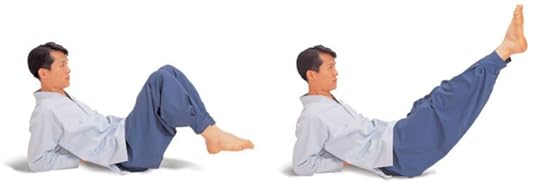
Gentle, flowing movement and vibration exercises help open this flow again. They also improve blood and oxygen circulation while easing stiffness and discomfort. When we combine movement with awareness, we connect mind and body. Our body becomes warmer, our mind relaxes, and our energy begins to harmonize. This sense of flow supports both physical comfort and emotional well-being. Practices such as Meridian Exercise and Qigong embody these characteristics. They combine mindful stretching, postures, rotation, and breathing to help us reconnect with the natural rhythm of life energy in our bodies and bring it back into balance.
If you have joint stiffness, try the following exercises. You can use the ones that apply to the joints that are bothering you, but doing exercises that involve the entire body and improve overall circulation can also be helpful.
Keep up-to-date with weekly wisdom delivered directly to your email inbox.
3. KNEE FLEXION AND EXTENSION

Balanced energy is the foundation of health. When our energy moves freely, our body and mind can function as one harmonious system. By caring for our joints and encouraging gentle circulation, we nurture this balance.
Mind-body practices like Meridian Exercise and Qigong allow us to feel the subtle movements of energy inside us. Through this awareness, we gain confidence in our ability to support our own healing and peace.
Each stretch and breath is an opportunity to open the channels of life energy that sustain us. Healing begins with awareness, and awareness grows through practice. When we move with sincerity and gratitude, our energy naturally returns to balance, and our whole being begins to feel lighter and more alive.
EDITOR’S NOTE: More Meridian Exercises for arthritis can be found in Ilchi Lee’s book, Meridian Exercise for Self-Healing, as well as on the Brain Education TV and Body & Brain TV YouTube Channels. Brain Education and Body & Brain are mind-body practices Ilchi Lee developed that are taught by instructors around the world.
Related Posts3 Mind-Body-Energy Exercises for Easing Low Back PainDiscovering True Peace: TMJ Breathing for RelaxationDynamic Meditation that Instantly Centers YouStart Self-Care at the Root with These 3 Chakra MeditationsPeek Inside My Immunity Boosting ToolkitFeatured VideoOctober 29, 2025
Solving Conflict Through the True Self
 [Photo by ckstockphoto via Envato Elements]
Gain a new perspective that helps us resolve the conflicts in our relationships, or avoid them to begin with.
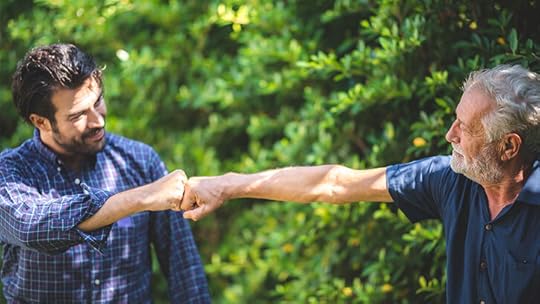
Relationships bring great joy into our lives, but they are also very difficult. All relationships take work and commitment, whether they are with friends, family members, co-workers, fellow citizens, or any other type of person. In all types of relationships, conflict of some sort will eventually arise because we all have different needs and goals, and we have different experiences and knowledge that lead us to different views of the world. Some of these conflicts are easy to work out, while others lead to deep division and even violent behavior.
Did you know, though, that conflicts are actually a great blessing? That may sound hard to believe since conflicts bring up so many negative feelings and behaviors, but they are also great opportunities for us to grow, if we are able to solve them though our true selves.
Recognizing the True SelfGrowing through relationships begins with recognition of our own true selves. It’s feeling clearly that there is some part of us, something that is unconditionally precious and has a deep sense of truth, not affected by our ego or external circumstances. And, it then involves recognizing that the same true self exists in the other person with whom we disagree. If we can do this, we will automatically see the pure essence at the center of the other’s being, no matter how “wrong” they may seem to us in the moment.
Recognizing the true self in ourselves and others will have two positive effects on any conflict we face. First, it will keep our mind and our choices centered in our highest selves instead of in our egoic selves. We will be less likely to lash out or to take actions to hurt the other person. Second, it will allow us to see the whole person that we are dealing with, not just the parts we don’t like. If we recognize that they, just like us, are precious beings on a spiritual journey to learn and grow here on Earth, we will be able to sympathize more readily with their difficulties and their point of view.
Remaining True to YourselfRecognizing the other’s true self does not mean being weak or submissive in the face of conflict. It certainly does not mean giving in to someone else simply to avoid difficulty or to maintain positive emotions. It is possible to remain centered in our true selves while championing the causes and viewpoints that we believe in. The important thing is to remain true to our highest selves as we do so. This means caring for ourselves as we continue to care for the other person involved.
Some of the greatest leaders in human history have illustrated the power of standing strong while also acting from the true self. People like Mahatma Gandhi and Dr. Martin Luther King, Jr., for example, held to their highest spiritual principles of remaining non-violent in the face of great injustice, which allowed them to make great, lasting change in their societies. When we do this—remaining strong while also tapping into our highest being—we become much more powerful than we ever could be using simple, ego-centered force to make changes in the world.
One of my favorite songs is “From a Distance” by Bette Midler. The lyrics remind us of God’s wide view of humanity’s situation and encourage us to take that view. One part of the song says: “From a distance/ You look like my friend/ Even though we are at war/ From a distance/ I just cannot comprehend/ What all this fighting’s for.”
These lines are a beautiful reminder that much of what we fight about is petty and that we shouldn’t forget what we have in common. Ultimately, we are not our nationalities, genders, political parties, races, or any other temporary identity of this sort. Rather, we are all growing souls journeying through a lifetime on Earth; we are Earth Citizens who will benefit more greatly from cooperation and peace than from endless bickering and fighting. Let’s find a way to support each other and to work together for the sake of everyone’s wellbeing, and for the health of the planet and for future generations.
Related PostsHow to Resolve Conflicts by Embracing ContradictionsHumanity at a Crossroads: Why Spiritual Awakening Matters in the Age of AIAttaining True Welfare with Brain Utilization[Video] Set Your True Self Free with Traditional Korean DrummingChant Your Way Beyond Your Self: Flowing with the Chun Bu KyungFeatured VideoOctober 23, 2025
How Energy and Purpose Shape Our Growth
 [Photo by halfpoint via Envato Elements]
Energy always follows purpose, and by aligning our habits with a higher purpose, we open the door to awakening and spiritual growth.
The mind creates energy waves. In that way, our purpose in life, that is, our purpose in using the energy we have, determines the level and nature of our energy waves.
So, if some choice becomes a habit in our brains, our energy will always operate at that level. For example, if we choose to practice Hongik and be of benefit to everyone and that becomes a habit, clear energy will operate. On the other hand, if negative, selfish choices become a habit, then “bad”—dark, murky, sluggish—energy will operate. So, for those who often choose to be angry, the energy of anger operates and accumulates significantly. For those who often make joyful choices, a lot of joyful energy operates and accumulates.
Change Habits to Raise ConsciousnessOur brains hold information of different levels. The strongest information we have becomes a habit. So, without even realizing it, we end up repeating our habitual behavior.
When we choose a purpose in life, that choice alone does not change everything. We need to continue to remain true to that choice. Even if our purpose is lofty, the energy of our past habits continually pulls down our consciousness. Only the power of consistent choice and action can offset the power of our past habits.
Choice and action for a greater goal, a Hongik vision, activate the energy of heaven and earth (Chunjikiun in Korean), and it will go to work for that vision. Chunjikiun acts as a force that pulls our consciousness up.
According to the Law of Energy Resonance, waves of the same frequency attract each other. Our temperament reflects the quality of our energy, which differs according to the choices we’ve been making. That’s why people with similar temperaments gather together. The Law of Energy Resonance says that the class of people we meet often changes when we change our energy, such through qigong, yoga, or meditation. Through energy practice, our energy becomes clearer, and therefore our temperament becomes clearer. The clearer our temperament becomes, the more our habits also change.
Among people with different temperaments, their temperaments become more similar the more time they spend together. This change occurs because they exchange information and feelings as their energy mixes. Their energies start to resonate with each other. However, it’s not a simple blending. They do not even or equal out. Their different energies resonate with the strongest wavelength, and they take on that consciousness.
That’s why the consciousness level of the company, organization, and society to which we belong matters. If it’s not high, it can continuously act to pull our consciousness down.
The Power and Influence of Collective EnergyWhen a whole group of people choose a Hongik vision, it has the power of intense collective energy. That power acts as a force raising the people’s consciousness. It becomes a force defending and protecting people from the waves of the world’s murky, negative energy.
The visible world appears divided into separate entities, but the world of information and energy is all interconnected as one. The energy level of the whole rises to the extent that each individual chooses a benevolent vision and uses Chunjikiun. To the extent that its level rises, the energy of the whole protects each individual and causes them to grow.
When one part becomes brighter, the whole becomes brighter, and the like-minded people who walk the same path become brighter. Before long, the entire world becomes brighter.
Spiritual growth is this process of choosing a Hongik vision and making our energy brighter through our habits for the sake of ourselves, our community, and all of humanity. Our brains rejoice when we declare this choice. For then it knows that we have really found our purpose in using our brain, our purpose in using the life energy within us.
Related PostsExpand Your MindGiving Your AllFighting the Battle of HabitsGo from Imagination to Manifestation in an Energy CapsuleShape Your Destiny by Harnessing the Divine Spark in Your BrainFeatured VideoOctober 15, 2025
Geumchok: Holding Steady Amid Life’s Noise
 [Photo courtesy of Body & Brain Yoga and Tai Chi]
In a restless world overflowing with stimulation, the ancient principle of Geumchok reminds us how to return to our natural state of clarity through stillness, focus, and endurance.
If we look honestly at our lives, we can see how little time we spend being truly still. Even when our bodies are motionless, our minds keep moving—thinking, comparing, worrying, and reacting. Our senses always turn outward, and our attention constantly collides with sights, sounds, and information.
This unending contact with the external world drains our energy and scatters our consciousness. We become restless even in silence, and peace feels far away. That is why we need Geumchok, one of the three pillars of the ancient Korean practice of Sundo: Jigam (stopping emotion), Joshik (balancing breath), and Geumchok (forbidding collision). Together, they form a path back to our natural connection with the universe and to rediscovering who we truly are.
The Study of Principles: Understanding GeumchokThe word Geumchok literally means “to forbid collision.” Perceptions actually form when external physical stimuli collide with our sense organs. Geumchok is a state in which we cut ourselves off from outside information and focus our awareness on a place deep within. In terms of the brain, it’s the process of our awareness going from our neocortex and paleocortex to our brain stem, which governs vital functions and relates to our subconscious mind.
Practicing Geumchok means choosing not to be led around by our senses and desires. We regain mastery over our senses rather than being controlled by them. Through Geumchok, we cultivate inner stillness even amid constant motion.
When the noise of the outside world no longer pulls at our consciousness, we begin to sense the life energy flowing within us. We gain clarity from which our true self appears—not as a thought or an image, but as a feeling of presence and vitality.
The Study of Practice: Experiencing Geumchok through YeondahnUnderstanding a principle is only the beginning. True wisdom comes from experiencing it. We can do that through simple practices such as energy meditation following Brain Wave Vibration and other forms of vibration training. What’s more, methods such as Yeondahn, which involves holding an energy posture for an extended period while breathing into the lower dahnjon (the energy center two inches below the navel), also train our core on an active level.
When we hold a Yeondahn posture, such as Sleeping Tiger or Chukkigong, our body may begin to tremble, heat may rise, or old emotions may surface. These phenomena are signs that stagnant energy is moving. The key is to keep our focus on our dahnjon and persist.
At first, the mind resists. Thoughts arise: “This is uncomfortable,” “How long must I stay like this?” But if we continue breathing deeply and evenly, something begins to shift. The surface noise of the body and mind gradually quiets, and we become aware of a deeper current within us.
Rather than forcing our minds to be empty, we can achieve stillness naturally through persistent, relaxed focus. Just as a pond becomes clear only when the wind dies down and the mud sinks, our inner world clears when we stop reacting and let energy find its balance.
Through such practice, the lower dahnjon grows stronger. The stronger our dahnjon, the steadier our awareness becomes. This is the kind of calm, focused, and unwavering strength the world needs most today.
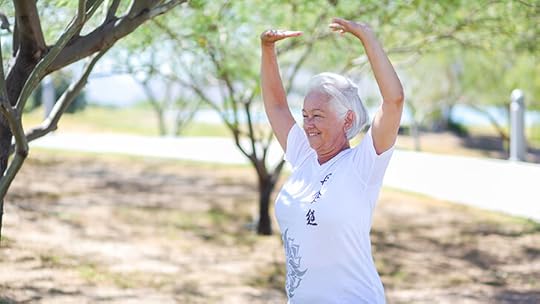
Practice GuideHold a simple Yeondahn posture such as Lung Energizer Posture: Stand with your feet wider than shoulder width apart. Bring both of your arms above your head with your palms facing the sky and fingers pointing toward each other. Bend your knees and elbows slightly as you open your chest and lengthen your spine. Breathe normally as you focus your mind on your lower dahnjon. Hold this posture initially for 5 minutes. With increased practice, you can extend the time you hold this posture up to 30 minutes.
At first, you may feel your muscles tremble or your thoughts race. Instead of fighting them, simply breathe and keep holding the pose. The longer you stay with relaxed awareness, the more your mind and body will begin to harmonize. Over time, you may find it easier to hold the posture, even as it gets harder, because the strength of your focus and the flow of energy will hold you up more than the strength of your muscles.
The Study of Living: Applying Geumchok in Daily LifeThe third step in mastering Geumchok is to bring what we have understood and experienced into how we live. When we walk, eat, speak, or listen, we can practice Geumchok by noticing when our attention wanders outward and gently returning it inward. We can practice it when we choose not to react in anger, when we turn off the screen to feel our breath, or when we pause before responding to someone’s words. Bringing our awareness down to our lower dahnjon in these moments can also help us stay grounded and steady no matter what is happening around us.
Each time we do, we create a small space of awareness. In that space, conscience and creativity can arise. Then, practice becomes life, and life itself becomes meditation.
Bringing the principle and practice of Geumchok into our lives purifies not only our personal energy but also the energy of the world around us. A person who has found their center can naturally calm others and create harmony with their very being.
Rewards of PersistenceInner peace, enlightenment, or just living stress-free may not come easily. Geumchok reminds us that chasing them here and there doesn’t work. It shows us that having faith in our inner core and steadily setting our sights there remains the only way forward.
To remain persistent while everything in us wants to give up is a profound form of strength. Each moment we continue to practice despite discomfort, distraction, or doubt, our inner light grows brighter. Persistence transforms stillness into mastery. Through it, the bright, unshakable mind of our true self is revealed.
The world outside us will never stop changing. But within us is a place that never changes—the bright, calm mind of our true selves. Through Jigam, Joshik, and Geumchok, we can return to that place again and again until it becomes the foundation of how we live.
Related Posts The Movement of Stillness: Expressing Our Souls[Video] Finding Yourself in Stillness5 Ways Meditation Transforms Your Brain and Your LifeWe Can Create PeaceHow Green Breathing Boosts Energy and Deepens ConnectionFeatured VideosOctober 8, 2025
Inspiration: The Need for Speed
 [Photo by YuriArcursPeopleimages via Envato Elements]
When making a new path
Don’t hesitate or look back
You have to move straight forward.
When acting with a sense of speed
Unnecessary thoughts fall away
Your dormant, infinite potential awakens.
With boundless energy and boundless passion
Move forward with courage and perseverance.
In it, great creation takes place.
October 3, 2025
Clap Yourself Awake: Simple Actions to Shift Your Energy
 [Photo by YuriArcursPeopleimages via Envato Elements]
Simple actions such as clapping can snap us out of our memories and return us to our original creative power.
We normally clap our hands in applause or to cheer someone on. Maybe we’re happy or want to get someone’s attention. When we clap this way, we’re giving energy to others. But clapping can also be used to help ourselves.
Clapping as Energy MeditationJust as massaging our feet can affect our entire body, clapping can stimulate and awaken the energy in all our energy channels. It brings our mind to attention and gives us strong stimulation on which to focus. In other words, clapping can be a form of energy meditation.
Try clapping vigorously thirty times, do you feel more alert, maybe even more energized? How are you different from before? A simple action like this can quickly snap us out of a stupor or a spiral of negativity and draw our attention back inside ourselves.
Simple Actions to Shift Our EnergyClapping is one way to return to the present, but it’s not the only one. Other simple actions include:
Smiling and making a happy facial expressionSpeaking in a higher tone using more positive wordsWalking with a spring in our stepThese actions that involve our body can switch our mood and our mindset. They send a signal to our brains that: Now, I will enter my body. And they can go even further: they can open our BrainPhone.
Opening the BrainPhoneThe BrainPhone is what I call the deeper, wiser, creative, more intuitive parts of our brains. It is a direct line to our original nature and inner creativity. Even without being meditation masters, we can use simple actions like clapping, smiling, or walking consciously to access these parts of ourselves.
We open up these abilities when we exist here and now instead of in our memories or information. In the present, we can be the infinitely creative energetic beings we really are, beings who see more possibilities and who are 100 percent positive with zero negativity. Then, our hearts open, and the energy of our original nature, our existence without our bodies, will explode inside us, making waves that awaken our creative abilities.
Returning to the PresentBut these simple actions can only work if we recognize our current state and take them. So we can check ourselves. Check our brains and our bodies. Throughout the day, we can look at our expression, listen to our voice, and notice how we are walking. By adjusting these, we can return to the present moment and turn on our BrainPhones. Then, what seemed annoying or impossible will become simply part of the great dance of life.
Every time we choose to return to the present is like a choice to be reborn. Once, twice, or even ten times a day, we can recreate ourselves anew by returning to our original nature by returning to the here and now. No matter how many times we drift away to memories, worries, or limited information, we can come back to the current moment and begin again.
Choosing Joy in This MomentBirth, aging, sickness, death are not areas we can completely control. However, today, living joyfully is our choice. It’s the only thing we can do. In this way, our day becomes our lives. Walking, voice, expression—changing these means we have the greatest creative power.
So, when we find ourselves lost in the past or trapped in needless worry, we can immediately clap our hands, start walking, or look in the mirror and smile. In that moment, everything changes. We return to the present, we dwell in energy, and we rediscover the joy of being fully alive.
Related PostsIlchi Lee’s 3 Exercises for Better Memory and FocusThe Way to Escape the Shadow of DestinyHow to Change Your BodyIlchi Lee’s 3 Simple Ways to Turn Your Energy Around and Become Your Authentic SelfPoem: I Know YouFeatured VideoOctober 1, 2025
Returning to the Origin
 [Photo by edb3_16 via Envato Elements]
Bohn!
Return to the place of origin!
Bohn is the sun!
It is the conscience within us!
It is the character and integrity of a sincere person!
Make your sun shine.
When each person’s sun shines,
our great sun will be completed.
Everyone, become one. There are no conditions.
Go forward as one.
One heart is love.
There is nothing but love.
If you always stay in the place of origin,
you can break through everything.


