Patrick J. Sweeney II's Blog
February 21, 2021
Audio Version of Fear is Fuel availble for Pre-order now!
The audbile version of FEAR is FUEL is finally here!
One year after the book hit #5 on the Wall Street Journal Best-Seller list, we are releasing the incredible audio version of the book.
The audio version features tons of bonus content:
- 10 Guest Appearances
- One interview at the end of each chapter
- A special Q&A with the author and celebrities
Newly released research and tips to help you have your best year ever.
Pre-order today on Amazon:
or at Fear is Fuel and Patrick Sweeney Website
One year after the book hit #5 on the Wall Street Journal Best-Seller list, we are releasing the incredible audio version of the book.
The audio version features tons of bonus content:
- 10 Guest Appearances
- One interview at the end of each chapter
- A special Q&A with the author and celebrities
Newly released research and tips to help you have your best year ever.
Pre-order today on Amazon:
or at Fear is Fuel and Patrick Sweeney Website


January 10, 2020
How to get out of a rut
Three neuroscience-based tips to change your mindset
One of the biggest deadlines of your career is looming over you like the shadow of the grim reaper, and all you can do is think: “I’m going to fail!”
So what do you do?
Your ability to confidently change your mindset can completely alter the course of your career and personal life. If you shift from a threat-mindset (fearing things as danger to your existence) to an opportunity-mindset (anticipating challenges that help you grow and learn) your happiness and likelihood of success will skyrocket.
Most people are frightened by failure; however successful people learn to use that fear as fuel. Perpetual under-performers continuously succumb to one of the most common forms of fear: procrastination. Yes, procrastination is a fear. Procrastinators see big opportunities as threats, and so they flee in one form or another. Socrates famously wondered why if you judge an action to be the best, you will do anything but that action.
After interviewing more than three-dozen of the world’s top neuroscientists for my upcoming book Fear is Fuel, the Surprising Power to Find Purpose, Passion and Performance, science has proven that it’s our wiring that determines our mindset. The good news is that there is something called neuroplasticity, which allows us to change our brain's wiring at any age. No matter what we were like in the past, we can change. You can change. I can change. Even your pain-in-the-ass boss can change.
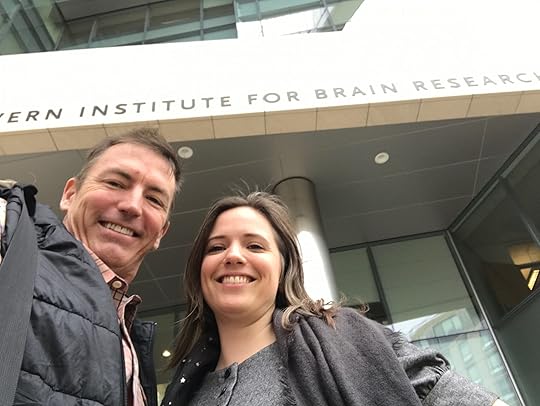
Now back to answering Socrates’ questions. The reason we procrastinate, neuroscientists now know, is due to the two-million-year-old piece of software we run on our lizard brain. That part of our brain only cares about passing our genes on to the next generation – procreation and survival. These instincts or immediate reactions begin with an F... fight, flight, freeze, food or f*ck make up our survival actions. Satiating what we want to do right now is the principle job of the amygdala and limbic system. It’s why we procrastinate and why it’s hard to delay gratification.
The adult-supervision part of our brain is called the pre-frontal cortex (PFC). The PFC can make multi-level decisions into the future. In other words “If I do A, either B or C will happen.” “If I do X, then W, Y or C could happen.” The pre-frontal cortex is the newest part of our brain and it’s also closely related to our courage center. The PFC is newer and less powerful, so it takes practice to override the limbic system to change that mindset rut you’re stuck in. But it is definitely possible.
Here are three ways to take the power from the limbic system also known as your lizard brain:
Reframe what you have to do as an exciting and fun challenge
Challenge yourself to do a little work on your project, knowing that if you just make an effort, you’ll be better off than worrying and procrastinating.
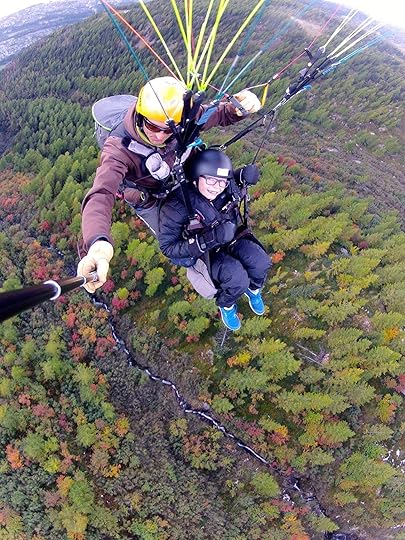
We only decide two ways (as I outlined in my Fear is Fuel book) out of fear or out of opportunity. Make sure you focus on the positive opportunity and how your life will get better by crushing your project. Choose to take advantage of it and grow. Tell yourself you are choosing opportunity even if it feels scary.
Wolf down a shit sandwich
It takes about six minutes to eat even a bad sandwich - so now it's chowtime. Pick the worst task or the thing you are dreading most about the project and do that for the first six minutes of the day, or each hour. Stay focused for six uninterrupted minutes. This forces you to take a bite out of the project in a way you can manage and quickly see the end of. I used this at my companies with sales teams all the time. If they were afraid of cold calling, I’d have them do the first six minutes of every hour that they were at their desk making calls. It works like a charm, just have some Listerine around for when you're done.
Face you fear and ask for help
Announce your project to people you work or live with and let them know your schedule. Tell them what you are afraid of - it will fail, you'll be late, the client won't like it, etc. Ask them to hold you to deadlines and to remind you that you can do a great job. Talk to yourself and say "I won't let them down." Performing difficult tasks is much easier if we are motivated by the ones we love.
Another great tactic that I outline in the book is called the pre-meditation of evil. It’s a Stoic Philosophy that can change your perspective on any situation, but it takes more time to explain and implement. Check it out in Chapter 6, there's some great techniques from the US Olympic Training Center as well.
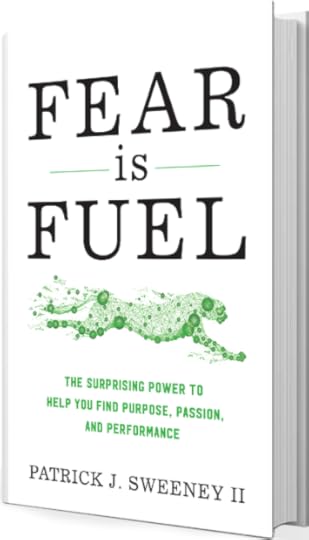
If you liked this article you’ll love the book Fear is Fuel – please invest in yourself and buy it then leave me a review on Amazon! Don’t forget to enter the pre-order contest and win a chance to go for a one-on-one bike ride with Lance Armstrong or an adventure weekend with me facing your fears! It's a great confidence building book.
#fearisfuel #thefearguru #patricksweeney #fearisfuelbook #procrastination #Getunstuck #getoutofarut
One of the biggest deadlines of your career is looming over you like the shadow of the grim reaper, and all you can do is think: “I’m going to fail!”
So what do you do?
Your ability to confidently change your mindset can completely alter the course of your career and personal life. If you shift from a threat-mindset (fearing things as danger to your existence) to an opportunity-mindset (anticipating challenges that help you grow and learn) your happiness and likelihood of success will skyrocket.
Most people are frightened by failure; however successful people learn to use that fear as fuel. Perpetual under-performers continuously succumb to one of the most common forms of fear: procrastination. Yes, procrastination is a fear. Procrastinators see big opportunities as threats, and so they flee in one form or another. Socrates famously wondered why if you judge an action to be the best, you will do anything but that action.
After interviewing more than three-dozen of the world’s top neuroscientists for my upcoming book Fear is Fuel, the Surprising Power to Find Purpose, Passion and Performance, science has proven that it’s our wiring that determines our mindset. The good news is that there is something called neuroplasticity, which allows us to change our brain's wiring at any age. No matter what we were like in the past, we can change. You can change. I can change. Even your pain-in-the-ass boss can change.
Now back to answering Socrates’ questions. The reason we procrastinate, neuroscientists now know, is due to the two-million-year-old piece of software we run on our lizard brain. That part of our brain only cares about passing our genes on to the next generation – procreation and survival. These instincts or immediate reactions begin with an F... fight, flight, freeze, food or f*ck make up our survival actions. Satiating what we want to do right now is the principle job of the amygdala and limbic system. It’s why we procrastinate and why it’s hard to delay gratification.
The adult-supervision part of our brain is called the pre-frontal cortex (PFC). The PFC can make multi-level decisions into the future. In other words “If I do A, either B or C will happen.” “If I do X, then W, Y or C could happen.” The pre-frontal cortex is the newest part of our brain and it’s also closely related to our courage center. The PFC is newer and less powerful, so it takes practice to override the limbic system to change that mindset rut you’re stuck in. But it is definitely possible.
Here are three ways to take the power from the limbic system also known as your lizard brain:
Reframe what you have to do as an exciting and fun challenge
Challenge yourself to do a little work on your project, knowing that if you just make an effort, you’ll be better off than worrying and procrastinating.
We only decide two ways (as I outlined in my Fear is Fuel book) out of fear or out of opportunity. Make sure you focus on the positive opportunity and how your life will get better by crushing your project. Choose to take advantage of it and grow. Tell yourself you are choosing opportunity even if it feels scary.
Wolf down a shit sandwich
It takes about six minutes to eat even a bad sandwich - so now it's chowtime. Pick the worst task or the thing you are dreading most about the project and do that for the first six minutes of the day, or each hour. Stay focused for six uninterrupted minutes. This forces you to take a bite out of the project in a way you can manage and quickly see the end of. I used this at my companies with sales teams all the time. If they were afraid of cold calling, I’d have them do the first six minutes of every hour that they were at their desk making calls. It works like a charm, just have some Listerine around for when you're done.
Face you fear and ask for help
Announce your project to people you work or live with and let them know your schedule. Tell them what you are afraid of - it will fail, you'll be late, the client won't like it, etc. Ask them to hold you to deadlines and to remind you that you can do a great job. Talk to yourself and say "I won't let them down." Performing difficult tasks is much easier if we are motivated by the ones we love.
Another great tactic that I outline in the book is called the pre-meditation of evil. It’s a Stoic Philosophy that can change your perspective on any situation, but it takes more time to explain and implement. Check it out in Chapter 6, there's some great techniques from the US Olympic Training Center as well.
If you liked this article you’ll love the book Fear is Fuel – please invest in yourself and buy it then leave me a review on Amazon! Don’t forget to enter the pre-order contest and win a chance to go for a one-on-one bike ride with Lance Armstrong or an adventure weekend with me facing your fears! It's a great confidence building book.
#fearisfuel #thefearguru #patricksweeney #fearisfuelbook #procrastination #Getunstuck #getoutofarut
Learn Courageous Leadership and Build Confidence with Neuroscience
Do you know how the minds of the greatest leaders work?
There’s a revolution taking place in the world of neuroscience and that’s a good thing for you and a good thing for the world! Over the past five years researchers have collected more data and insight into the working of the human mind than ever before. Knowing how and why fear works will make you more courageous and curious. This will have an amazing effect on your personal success plus making yourself braver brings us closer to world peace. You heard me right, world peace, but first let’s talk about you!
Some recent revelations neuroscientist have discovered:
Traumatic memories are malleable 10 minutes after bringing them into the present (at any time after the event)
Having healthy gut bacteria can help you end a fear response quicker,
Women take fewer risks while they are ovulating
Neuroplasticity proves that we can change our brain’s wiring at any age
Courage is a skill we can learn at any time
After interviewing more than three dozens of the world’s top neuroscientists my biggest revelation is that we need more fear in our life to uncover our hidden fears .
My mission is to help millions of people use fear to transform their lives.
I’ve seen amazing changes when people push out of their comfort zone and discover what’s truly holding them back. If you do the same thing you can live the life of your dreams, but you have to find more fear to get there. The transformation is not just in your personal life either.
You might wonder how much of an impact fear and anxiety have on your professional success? The answer is: A TON!
Courageous leaders who are more open to risk-taking are significantly more successful than their peers.
For example, according to a study from McGill University companies that have licensed pilots as CEOs have twice as many patents as their competitors, show higher innovation and historically have better return on investment.
The five habits of courageous and successful leaders
Here are five habits that you can adopt today to help you become a better leader, think more creatively, develop a better sense of self and be more likely to have your followers trust and believe in you. (Noticeable results will start to show up after 5-6 weeks, so stick with it.)
Scare yourself at least once a week
Boo! There’s one.
When you push yourself out of your comfort zone you engage a gland in your mind called the amygdala. It creates the fight, flight or freeze response and when it activates your body produces a “fear cocktail” that gives us super-human powers to survive. Most people waste this opportunity.
The fear cocktail creates butterflies in your stomach, or shaky knees, or a dry mouth and sweaty palms – we each have different sensations when we are in that heightened state. Getting to know what your physical responses are is critical to knowing when your amygdala activates.
Learn to recognize your personal indications of fear. Scaring ourselves more often allows us to get used to those sensations and reframe our perspective from thinking “something is wrong I’m being threatened” to a more useful mindset of “I’ve got some super powers now, I can use them to make better decisions, act quicker and win! This is excitement I’m feeling.” The bottom line is fear is something you can adapt to feeling, and then use not for pre-historic survival but for modern-day success.
Practice positive self-talk
One of the biggest secrets of world-class athletes is self-talk. When I was training for the Olympics I spent a lot of time at the Olympic Training Center (USOTC) in Colorado Springs working with the nation’s top sports psychologists. Our focus was how to visualize different race outcomes and learn to constantly talk positively to myself.
Most of us don’t realize we have a constant dialogue in our mind, we can let it run wild (fear and negativity) or we can direct it to align with our vision.
At the USOTC I was coaching myself to handle any situation during a race. You must constantly affirm to yourself that you can handle any occurrence, any challenge. Tell yourself that it’s an opportunity and you’ll come out stronger if you stay persistent and positive.
Self-talk can be as simple as repeating a mantra “I got this” or even writing yourself reminders that pop up three or four times a day on your phone, or at your desk. Even stopping to consciously give yourself a pat on the back will make you aware of that voice. It’s effortless to write down a positive outcome you are trying to achieve and put it on your screen.
Cartoonist Scott Adams (Dilbert creator) believes that writing out a goal 15 times a day is a sure fire way to make it come true – that’s affirmation. Add self-talk when you’re under pressure “I got this” and you’ll be unbeatable.
Replace judgment with curiosity
If you judge the world from your own perspective of “right and wrong” you’ll miss out on opportunities for innovation, diversity, revolution and happiness. Most people judge out of fear and weakness. They need to be “right” to feed their weak ego and fragile sense of self.
If something is different it scares them. The status quo is always safer to maintain – even if it is a losing proposition. It’s more enlightening to wonder consciously: “If the opposite of what I’m thinking could be true?”
Our minds are programmed to live within the safety of our tribe – anything different 100,000 years ago was perceived as a threat. Today what might be felt as a threat is more likely an opportunity but it doesn’t always feel that way when our amygdala gets turned on from instinctual response. If you’re used to feeling the amygdala activated (see step 1) you are more likely to be open to curiosity.
Leaders who have the courage to look at different techniques, mindsets and people are the ones who create the biggest innovations. With a curiosity practice, an urge to reveal more of whatever is waiting just out of sight, or just beyond your reach, will open your world.
Along with curiosity comes the wisdom of realizing what you can change and where you should spend your energy. “Experts” judged Elon Musk when he revealed plans to create an entirely-electric car company and take on Detroit (while simultaneously starting the world’s leading private rocket company). Detroit executives judged him as being insane, egotistical, having no experience, etc. Musk courageously ignored them and stayed true to his vision. Now Tesla has a bigger market cap and is more valuable than any other US car maker.
Adopt a creator mindset
There are only two ways to exist: life either happens to you, or life happens by you.
Happy, successful, people create their life. If you are designing your life you take 100% accountability for everything you do and your life is happening by your design. You are the architect of your success an happiness..
The ultimate mindset is that every moment has been created just so that you can learn from it and as one of my mentors Diana Chapman, says everyone is your ally. The world is a very friendly place if you let it be that way, but keep in mind the universe will keep trying to teach you certain lessons until you learn it. If life happens to you, you are constantly a victim and at the whim of anyone and anything that might affect you. This mindset is why unsuccessful people give up control to others without resistance to determine their future. Giving someone else control and not taking 100% accountability is the only way others have the power to make you mad, sad, angry, etc.
I believe 90% of people in the USA have a victim mindset. You hear it all the time at the office; victims are late because of traffic, their blood pressure is high because of genetics, their boss or clients don’t leave them enough time to workout or their kids are keeping them from socializing, etc. Don’t fall for victimhood, design your life your exactly as you want to. It takes courage to do so, and that takes being comfortable with fear – see #1, 2 & 3. You can read a courage book to help get you there, too.
Equally important for leaders is making sure you stamp out a victimhood culture at the office – a victim always needs a villain and a hero. If you think your job is a leader is to be the hero you’re reinforcing your team’s position as victims. If you look at your job not as a hero but as a coach or mentor, and you are a living example of how to look at the world and deal with real-world difficulties your team will be stronger because of it.
As Dr David Ley summarized in a Psychology Today article don’t be an emotional bodyguard trying to protect your team from life’s inevitable challenges, to do so is the ultimate disrespect to them
Stress your mind and your body
Escalators, air conditioned cars and houses, rolling luggage, 24/7 cafeterias, and down jackets are just a few examples of how we are making our life softer and less stressful than ever before, our minds and bodies are on the same express train to marshmallow land.
Our bodies were designed to withstand significant swings in temperature, go long periods without food, work our muscles and minds regularly and deal with discomfort and threats. When we don’t stress our bodies in the way they were designed to our immune system deteriorates because it doesn’t think it’s necessary; our mind loses speed and volume, and our senses dull if they aren’t flexed. The solution is to stress the body and mind. Aerobic exercises is good, add in some skill and strength based activities like rock climbing, dancing, or hockey and the results are even better. Stress your mind as well – learn a language or instrument, write a blog. Once a month fast for a day, it’s no big deal but has huge benefits. Lastly, take a cold shower for 3 minutes everyday (don’t be a wimp, almost everyone I tell this to says “I’m so sensitive to cold I could never do it.” You’re wrong, you can after a week you’ll even start to enjoy it), don’t put on a jacket or sweater at the first sign of cold. Expose yourself to some stress.
These five habits will get you on your way to a life of success, health and happiness. You’ll be writing the story of your life from a perspective of strength and opportunity, not from fear.
Sustain Courageous Leadership
It helps if you have friends with a similar mindset, because courage is contagious. Hang out with people who push themselves, who are healthy and who don’t let others write their story. Victims and timid souls will suck the life out of you, avoid them or tell them to stop.
Remember building courage is like building muscle it takes a bunch of workouts before you start to see results; but if you are consistent in adopting my five habits your results will come in a few weeks and then they’ll come dramatically. You’ll notice the halo effect courage has on your life; you’ll stop making decisions out of fear and start making them based on opportunity. If everyone became as brave and strong as you are about to become we would live in a much more peaceful world. As Gandhi said hate is not the enemy it’s fear. You can also learn to become great at anything when you suspend fear. Thank you for your courage.
Please let me know which one of the five habits you found most helpful and leave your thoughts in the comments below, and if you are interested in learning more pre-order my book Fear is Fuel on Amazon, Barnes & Noble, Books-a-million, IndieBound and where ever books are sold.
PS - For a great keynote speaker ideas check out my speakers demo videos
Patrick J. Sweeney II is the Fear Guru and author of the forthcoming book Fear is Fuel. He hosts & co-produces a television show airing on a major US network in 2018 and is one of the world’s top ranked keynote speakers helping people and companies use fear to make dramatic transformations.
Contact us here, Patrick would love to hear from you.
There’s a revolution taking place in the world of neuroscience and that’s a good thing for you and a good thing for the world! Over the past five years researchers have collected more data and insight into the working of the human mind than ever before. Knowing how and why fear works will make you more courageous and curious. This will have an amazing effect on your personal success plus making yourself braver brings us closer to world peace. You heard me right, world peace, but first let’s talk about you!
Some recent revelations neuroscientist have discovered:
Traumatic memories are malleable 10 minutes after bringing them into the present (at any time after the event)
Having healthy gut bacteria can help you end a fear response quicker,
Women take fewer risks while they are ovulating
Neuroplasticity proves that we can change our brain’s wiring at any age
Courage is a skill we can learn at any time
After interviewing more than three dozens of the world’s top neuroscientists my biggest revelation is that we need more fear in our life to uncover our hidden fears .
My mission is to help millions of people use fear to transform their lives.
I’ve seen amazing changes when people push out of their comfort zone and discover what’s truly holding them back. If you do the same thing you can live the life of your dreams, but you have to find more fear to get there. The transformation is not just in your personal life either.
You might wonder how much of an impact fear and anxiety have on your professional success? The answer is: A TON!
“Through our firm’s work with thousands of executives over 30 years, we have come to believe that unrecognized or unacknowledged core fears are almost always a root cause of professional distress and unattained potential." -FMG Leading
Courageous leaders who are more open to risk-taking are significantly more successful than their peers.
For example, according to a study from McGill University companies that have licensed pilots as CEOs have twice as many patents as their competitors, show higher innovation and historically have better return on investment.
The five habits of courageous and successful leaders
Here are five habits that you can adopt today to help you become a better leader, think more creatively, develop a better sense of self and be more likely to have your followers trust and believe in you. (Noticeable results will start to show up after 5-6 weeks, so stick with it.)
Scare yourself at least once a week
Boo! There’s one.
When you push yourself out of your comfort zone you engage a gland in your mind called the amygdala. It creates the fight, flight or freeze response and when it activates your body produces a “fear cocktail” that gives us super-human powers to survive. Most people waste this opportunity.
The fear cocktail creates butterflies in your stomach, or shaky knees, or a dry mouth and sweaty palms – we each have different sensations when we are in that heightened state. Getting to know what your physical responses are is critical to knowing when your amygdala activates.
Learn to recognize your personal indications of fear. Scaring ourselves more often allows us to get used to those sensations and reframe our perspective from thinking “something is wrong I’m being threatened” to a more useful mindset of “I’ve got some super powers now, I can use them to make better decisions, act quicker and win! This is excitement I’m feeling.” The bottom line is fear is something you can adapt to feeling, and then use not for pre-historic survival but for modern-day success.
Practice positive self-talk
One of the biggest secrets of world-class athletes is self-talk. When I was training for the Olympics I spent a lot of time at the Olympic Training Center (USOTC) in Colorado Springs working with the nation’s top sports psychologists. Our focus was how to visualize different race outcomes and learn to constantly talk positively to myself.
Most of us don’t realize we have a constant dialogue in our mind, we can let it run wild (fear and negativity) or we can direct it to align with our vision.
At the USOTC I was coaching myself to handle any situation during a race. You must constantly affirm to yourself that you can handle any occurrence, any challenge. Tell yourself that it’s an opportunity and you’ll come out stronger if you stay persistent and positive.
Self-talk can be as simple as repeating a mantra “I got this” or even writing yourself reminders that pop up three or four times a day on your phone, or at your desk. Even stopping to consciously give yourself a pat on the back will make you aware of that voice. It’s effortless to write down a positive outcome you are trying to achieve and put it on your screen.
Cartoonist Scott Adams (Dilbert creator) believes that writing out a goal 15 times a day is a sure fire way to make it come true – that’s affirmation. Add self-talk when you’re under pressure “I got this” and you’ll be unbeatable.
Replace judgment with curiosity
If you judge the world from your own perspective of “right and wrong” you’ll miss out on opportunities for innovation, diversity, revolution and happiness. Most people judge out of fear and weakness. They need to be “right” to feed their weak ego and fragile sense of self.
If something is different it scares them. The status quo is always safer to maintain – even if it is a losing proposition. It’s more enlightening to wonder consciously: “If the opposite of what I’m thinking could be true?”
Our minds are programmed to live within the safety of our tribe – anything different 100,000 years ago was perceived as a threat. Today what might be felt as a threat is more likely an opportunity but it doesn’t always feel that way when our amygdala gets turned on from instinctual response. If you’re used to feeling the amygdala activated (see step 1) you are more likely to be open to curiosity.
Leaders who have the courage to look at different techniques, mindsets and people are the ones who create the biggest innovations. With a curiosity practice, an urge to reveal more of whatever is waiting just out of sight, or just beyond your reach, will open your world.
Along with curiosity comes the wisdom of realizing what you can change and where you should spend your energy. “Experts” judged Elon Musk when he revealed plans to create an entirely-electric car company and take on Detroit (while simultaneously starting the world’s leading private rocket company). Detroit executives judged him as being insane, egotistical, having no experience, etc. Musk courageously ignored them and stayed true to his vision. Now Tesla has a bigger market cap and is more valuable than any other US car maker.
Adopt a creator mindset
There are only two ways to exist: life either happens to you, or life happens by you.
Happy, successful, people create their life. If you are designing your life you take 100% accountability for everything you do and your life is happening by your design. You are the architect of your success an happiness..
The ultimate mindset is that every moment has been created just so that you can learn from it and as one of my mentors Diana Chapman, says everyone is your ally. The world is a very friendly place if you let it be that way, but keep in mind the universe will keep trying to teach you certain lessons until you learn it. If life happens to you, you are constantly a victim and at the whim of anyone and anything that might affect you. This mindset is why unsuccessful people give up control to others without resistance to determine their future. Giving someone else control and not taking 100% accountability is the only way others have the power to make you mad, sad, angry, etc.
I believe 90% of people in the USA have a victim mindset. You hear it all the time at the office; victims are late because of traffic, their blood pressure is high because of genetics, their boss or clients don’t leave them enough time to workout or their kids are keeping them from socializing, etc. Don’t fall for victimhood, design your life your exactly as you want to. It takes courage to do so, and that takes being comfortable with fear – see #1, 2 & 3. You can read a courage book to help get you there, too.
Equally important for leaders is making sure you stamp out a victimhood culture at the office – a victim always needs a villain and a hero. If you think your job is a leader is to be the hero you’re reinforcing your team’s position as victims. If you look at your job not as a hero but as a coach or mentor, and you are a living example of how to look at the world and deal with real-world difficulties your team will be stronger because of it.
As Dr David Ley summarized in a Psychology Today article don’t be an emotional bodyguard trying to protect your team from life’s inevitable challenges, to do so is the ultimate disrespect to them
Stress your mind and your body
Escalators, air conditioned cars and houses, rolling luggage, 24/7 cafeterias, and down jackets are just a few examples of how we are making our life softer and less stressful than ever before, our minds and bodies are on the same express train to marshmallow land.
Our bodies were designed to withstand significant swings in temperature, go long periods without food, work our muscles and minds regularly and deal with discomfort and threats. When we don’t stress our bodies in the way they were designed to our immune system deteriorates because it doesn’t think it’s necessary; our mind loses speed and volume, and our senses dull if they aren’t flexed. The solution is to stress the body and mind. Aerobic exercises is good, add in some skill and strength based activities like rock climbing, dancing, or hockey and the results are even better. Stress your mind as well – learn a language or instrument, write a blog. Once a month fast for a day, it’s no big deal but has huge benefits. Lastly, take a cold shower for 3 minutes everyday (don’t be a wimp, almost everyone I tell this to says “I’m so sensitive to cold I could never do it.” You’re wrong, you can after a week you’ll even start to enjoy it), don’t put on a jacket or sweater at the first sign of cold. Expose yourself to some stress.
These five habits will get you on your way to a life of success, health and happiness. You’ll be writing the story of your life from a perspective of strength and opportunity, not from fear.
Sustain Courageous Leadership
It helps if you have friends with a similar mindset, because courage is contagious. Hang out with people who push themselves, who are healthy and who don’t let others write their story. Victims and timid souls will suck the life out of you, avoid them or tell them to stop.
Remember building courage is like building muscle it takes a bunch of workouts before you start to see results; but if you are consistent in adopting my five habits your results will come in a few weeks and then they’ll come dramatically. You’ll notice the halo effect courage has on your life; you’ll stop making decisions out of fear and start making them based on opportunity. If everyone became as brave and strong as you are about to become we would live in a much more peaceful world. As Gandhi said hate is not the enemy it’s fear. You can also learn to become great at anything when you suspend fear. Thank you for your courage.
Please let me know which one of the five habits you found most helpful and leave your thoughts in the comments below, and if you are interested in learning more pre-order my book Fear is Fuel on Amazon, Barnes & Noble, Books-a-million, IndieBound and where ever books are sold.
PS - For a great keynote speaker ideas check out my speakers demo videos
Patrick J. Sweeney II is the Fear Guru and author of the forthcoming book Fear is Fuel. He hosts & co-produces a television show airing on a major US network in 2018 and is one of the world’s top ranked keynote speakers helping people and companies use fear to make dramatic transformations.
Contact us here, Patrick would love to hear from you.