Tara Neilson's Blog
June 29, 2021
WILDERNESS LIFE HACK: OTTER COFFEE
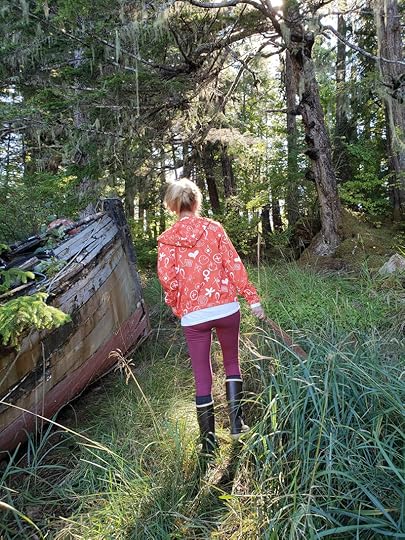 "What did you say?" My sister Megan looked at me like she couldn't believe what she was hearing. As if I'd morphed into a monster (or our older brother) right in front of her. It was just one hour into her visit up here to Alaska this summer and already she looked like she was regretting it. Actually, she looked like she was about to hyperventilate, meltdown, and possibly die. "What do you mean your French Press is broken?"
She stared from the package of ground Starbucks' French Roast in her hand and then to my apologetic face and shook her head. "Nooooooo. That's impossible!" She sounded just like Luke when Vader tells him the truth about his parentage.
"I've got another one coming in the mail," I said soothingly.
Fat lot of good that did. She knew perfectly well that we get mail once a week by floatplane, weather permitting--a whole week, possibly longer, without coffee? I could see she was about to faint, or her head explode, or both at once, so I thought fast.
There was only one thing to do: It was time to pull out my wilderness life-hack super powers!
"Now don't go dying on me," I said encouragingly, in my best Jim Carrey voice. "I've got it covered."
Daring to hope, since her big sister had never let her down and had even saved her from lynchings, stranglings, and other older-brother mayhem in our childhood, Megan watched trustfully as I compiled what I needed on the kitchen table.
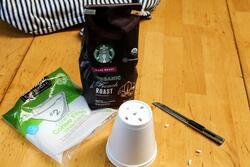 I unearthed the cup filters that I used in the winter when I melted snow for drinking water to filter out pine needles: the Styrofoam cups I had on hand for when water got low and dish washing wasn't possible; and--most importantly--the otter coffee mug that an otter-obsessed reader of my blog had sent me.
With the knife I pierced holes in the bottom of a Styrofoam cup, stuck the filter in it, poured in some of the ground coffee and held the cup above the mug as I poured hot water over the coffee. Voila! Megan was saved!
Unfortunately, there were unforeseen consequences to my life-hacking super skills. As it turned out, the coffee in the mug was about 5 ka-trillion times stronger than any coffee Megan had consumed before.
The next thing I knew she was out on my floating walkway jump roping like mad, water splashing in all directions. Then she had a sledgehammer and was pounding on a foam-filled tire (usually used for dock bumpers). A manic gleam in her eye, she ran to me, panting, and said, "I need more otter coffee! Otter coffee! Otter coffee! I need more otter coffee!"
A litte worried about what was happening, I nevertheless gave her more otter coffee.
Off she went, running back and forth across the beaches, leaping rocks, climbing cliffs (in her rubber boots no less), and racing after whales. She is now known as Runs With Whales.
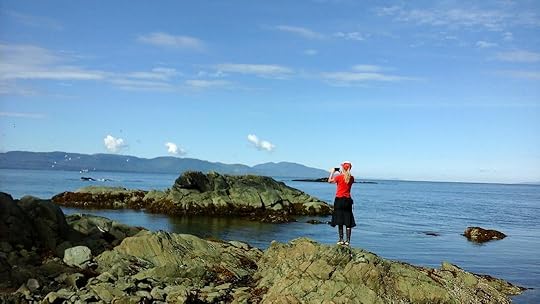 (Runs With Whales pauses to take a picture of her humpback tribe.) "Otter coffee! Where's my otter coffee?" she howled.
Frankly a little fearful now, I gave her more otter coffee.
She starting flinging flour and yeast around and made maple bars, using some very old maple flavoring that had, unbeknownst to me, turned into pure alcohol. The Booze Bars combined with the otter coffee and exploded inside her. She tore off into the teeth of a gale, laughing like a maniac as I followed, more than a little frightened. As she stood on the cliffs of insanity, taunting the waves, I wondered how to wean someone off otter coffee. Maybe, if I could get a good signal, I could Google it?
Before I could do so, she turned to me, with the waves pounding and bursting around her, blonde hair whipping in the wind, and yelled, "I need more otter coffee. By the way, where's the machete?"
I slowly backed away. "Otter coffee? And a machete?" This did not strike me as a good combination.
I was wrong. It was an inspired combination! For the last few years since I started my blog and column the only way to send them off with pictures attached is to go to the one beach where there's a good signal. I have to wade through a sea of entangling salal brush to get there. When it snows or rains I get soaked when I struggle through it.
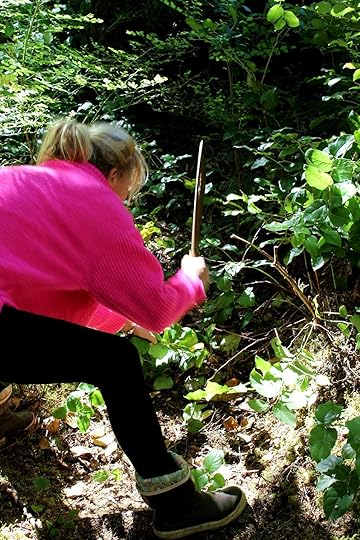 (By Grabthar's Hammer, I hack at thee!) Well, once Megan had juiced up on the otter coffee and snatched up the machete, she went at the salal brush like Alan Rickman goes after the bad aliens in Galaxy Quest. Before I knew it, as she hacked, tossed, and hacked, I had a hallway through the brush that I could stroll through easily.
This time, when she came up for air, eyes wild, I was the one who suggested, "How about some more otter coffee? Oh, and by the way? I could really do with some kindling stocking up. Feel like cutting some?"
"Otter coffee. Kindling. Otter coffee." She nodded, her hands jerking spasmodically.
It was the best wilderness life hack so far! By the time she left, I was set for the coming winter like I'd never been set before.
This blog is dedicated to my otter-obsessed friend. I couldn't have done it without you! It is thanks to you that we got so much accomplished and filmed this summer that we've managed to put it on Megans YouTube channel, you can view it HERE .
(Disclaimer: Do not do this at home. I'm an experienced wilderness life-hack expert.)
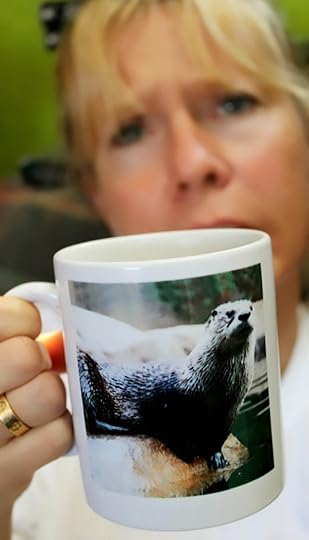 (Already going into withdrawals--Megan's last mug of otter coffee.)


June 16, 2021
Guest Blog: My Sister creating a Painting of my Brothers 49er Themed Alaskan Fishing Boat
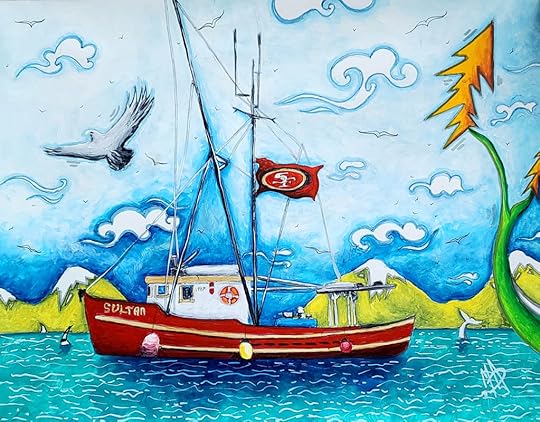 "Sultan" by Megan Aroon Duncanson My brother Robin, who splits his time between Ketchikan, AK and Meyers Chuck, AK, our two Alaskan hometowns, wanted me to paint a special painting of his boat the "Sultan". Hope I did it justice! (Megan Duncanson)
Robin lives in Ketchikan, Alaska, and works at the local shipyard in the winter months, he also has a Salmon troller that he fishes out of in the summers in our little hometown village of Meyers Chuck, AK called "Sultan". He is an avid San Francisco 49ers fan, so of course he had to give ode to them with his boat, haha!! Hence the colors and the flag proudly saluting fellow 49ers fans...or taunting their rival Seahawks fans, all who pass him by on the Alaskan fishing grounds.
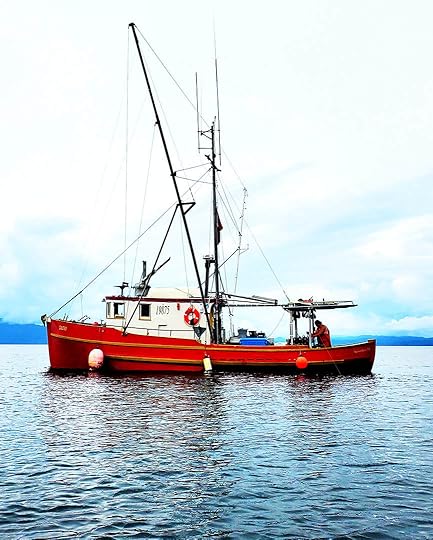 One of the most abundant Salmon fishing grounds in the world, right off MAD Island in Meyers Chuck, AK
 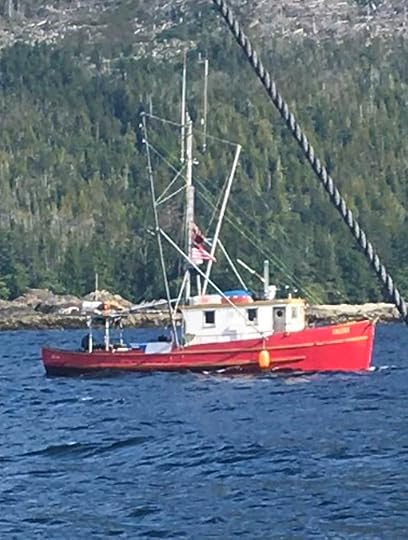 Navigating the temperamental Alaskan waters The "Sultan" is the oldest active troller in Ketchikan, and is being recognized by the Ketchikan Historical society for it's long standing history of fishing the Alaskan waters for almost a century. The wooden boat was built in 1926, in Seattle, WA. Some of the characteristics of the Sultan are: it is a double ended fir planked power troller, OAL 43'' long with a 10' beam and has a 6' draft. It is documented with the USCG, number: 226195, and more information on the boat can be found by entering the doc number on the Coast Guards website.
 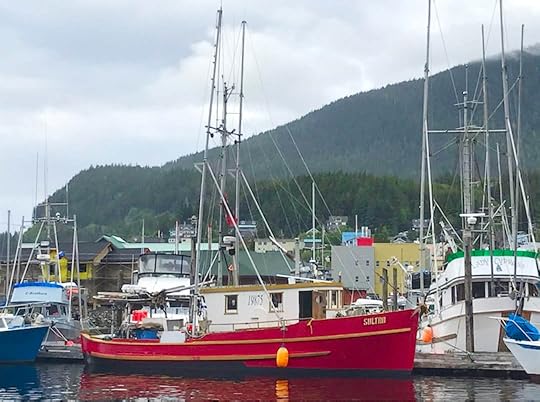 Looking all pretty at her winter home of Thomas Basin
 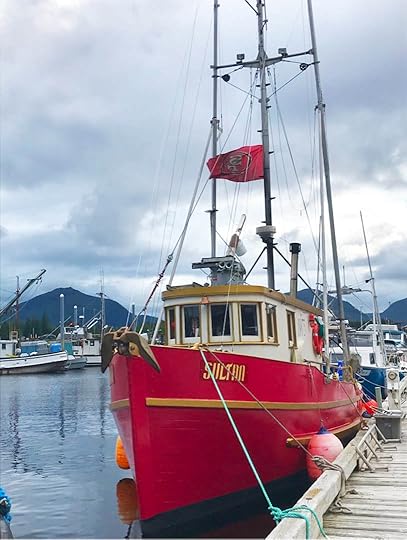 Docked at Thomas Basin, in Ketchikan, AK It's been my brothers dream to own his own fishing boat for as long as I can remember, and in May of 2019 he decided to make his dream come true. He first found a boat in Hoonah, AK that he was interested in, and so him, and our oldest brother James, traveled up there, only to find the boat was in horrible condition. So, back to square one and the hunt for the perfect troller. He then heard about a boat in Sitka, AK and they went to check that one out, hoping it was the perfect dream boat, there he met the "Sultan" and a couple days later she was on her way to Meyers Chuck, AK, her new home.
 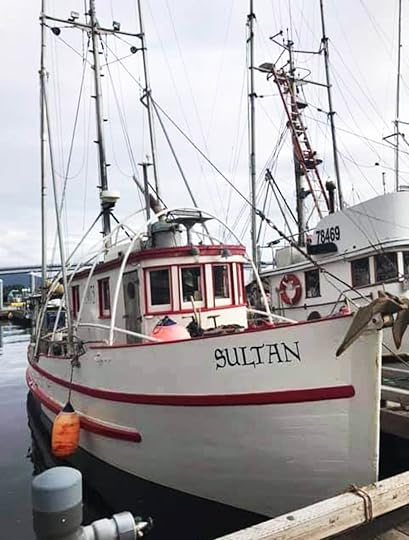 Pre 49ers Paint job, She looks soooo much better now!
 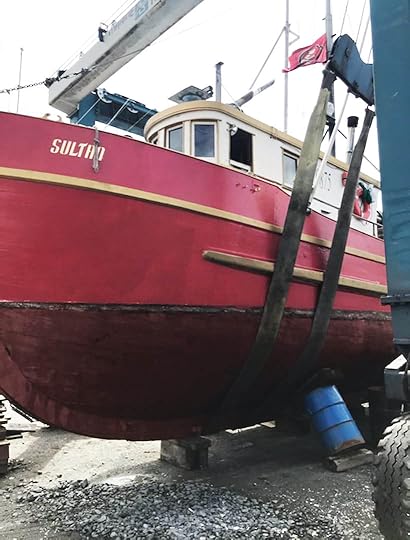 The "Sultan" in the shipyard getting her yearly paint job Of course with a boat that is almost a century old, and made of wood, living in the harsh climate of Alaska the boat requires continuous maintenance and costs to keep it seaworthy, but my brother is up for the task and regularly spends 300 hours, and $5,000 a year to keep her running. But, it is worth it to live out his dream and join the ranks of all the other Alaskan fishermen in our family.
 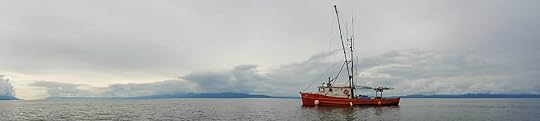 Interesting side note, it is the 2nd red power troller boat in the family that is unmistakeable in Southeast Alaska. Our uncle and aunt, Rory and Marion, also fish the same grounds with their boat the "Isis". Maybe our brother James, and cousin JoDean and her jusband Joe, need to paint their trollers red now too, hmmmmm.
 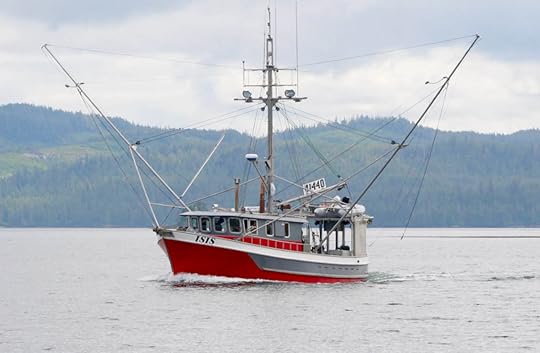 the "Isis" Looking forward to seeing the colorful Sultan pass by in front of MAD Island while I am working up there this summer, building my dream artist retreat and seeing his dream boat fish on by.
 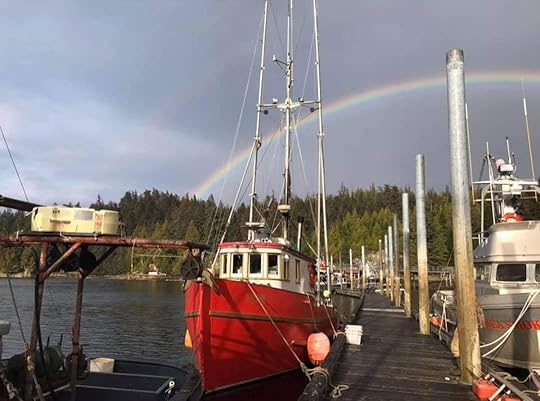 "Showing Off"
 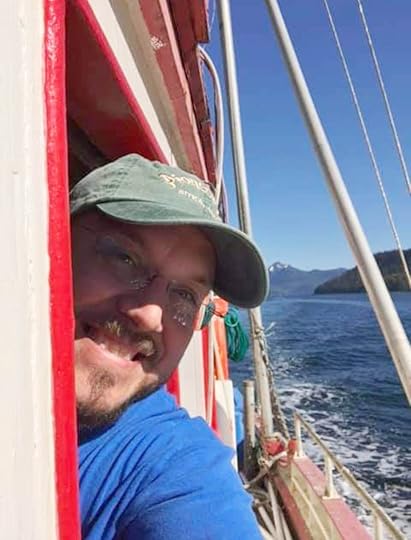 Happy new boat owner! Click on the photo below to watch the making of the original painting on YouTube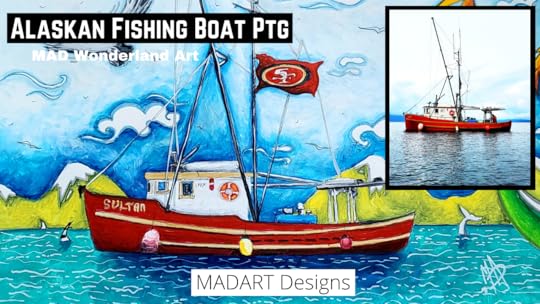
May 17, 2021
The Secret Life of Alaska Fishermen
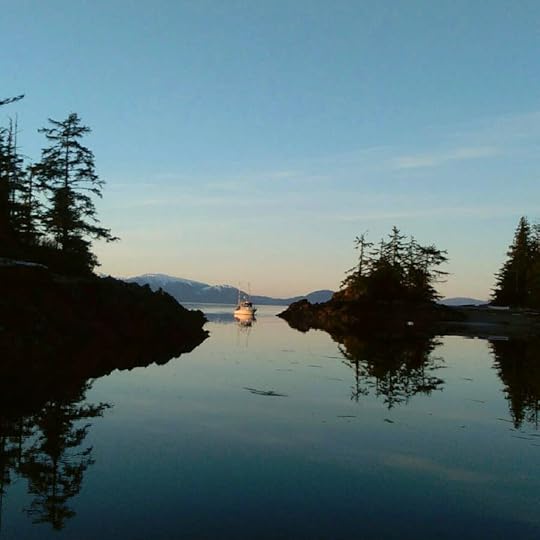 Imagine you're on a trip to SE Alaska in your yacht or your sailboat and you see a fishing boat up ahead of you on a broad bay along the Inside Passage. As you draw closer you realize something's not right. The boat isn't under power and there's no movement on deck, no sign of anyone onboard. What would you do? What made me think about this is something my brother told me recently after he fetched some fuel and groceries for us in his fishing boat. The tides were a mess, they were super low high tides that came in extremely slowly. Our skiff wouldn't float so I wouldn't be able to go out and meet him to offload the fuel and groceries from his boat. He thought he could bring his boat into our little tidal bight later on in the evening just before dark, but even then our skiff wouldn't float. It was decided that I'd walk out on the big breakwater log that stopped the worst northerly swells from assaulting our floathouses to meet his boat. The problem was, the breakwater log had been out there for a long time and had been severely eaten up by wood-boring sea gribbles. It wasn't much more than a floating slab and wasn't as stable as it used to be. It was the only option, though, so when Jamie called and said he would be here in a few minutes, I left my floathouse, clambered over the rocks and stepped onto the big log that was tied to shore. It has a lot of burls and moss growing on it, but wasn't as tippy as I'd feared it might be. I got to the very end of it where it had the least stability and balanced there, waiting for Jamie to arrive. I could hear his boat growling along, but it was taking him longer than a few minutes. I occupied myself by swatting noseeums, taking photos of the sunset, and trying not to fall off the log into the jade green water. Jamie's boat finally entered the bight. He was having some engine problems and I wondered if that had been what had delayed him, but when he finally reached the log and I helped tied his boat to it, he said, "I'm sorry it took so long to get here. I was drifting farther out than I realized." "Drifting?" I asked. He said that he'd shut down his engine and let the boat drift while he slept, waiting for the tide. "It made me think of Ray. He used to do that all the time." Ray was a close family friend who died last year and had been the captain of the large fishing boat Jamie had been a deckhand on for many years. "You mean," I said, "that you guys would just drift around in some bay with everyone sleeping inside?" "Yep. It was super peaceful." I'd never heard of such a thing, but I couldn't see why not when I thought about it. In the more remote areas there's very little traffic, and most of the water is extremely deep out in the middle of bays, and if the weather was nice--why not? As I thought about that he handed me out 9 jugs of gasoline, each weighing around 40 pounds. I had to carry them along the log and line them up, walking back and forth as the log rocked. They took up most of the space on the log so it was tricky getting around them. Finally he handed out a bag of potatoes and assorted other groceries. "Where are you off to now?" I asked as he started the engine back up. "I don't know," he said. "Maybe I'll go back out there and drift some more."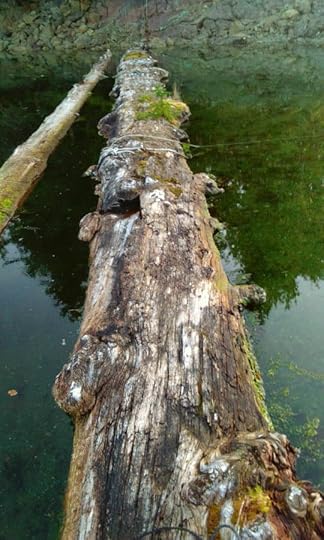
August 18, 2020
GUEST BLOG: Carla Kirkland's Alaskan Adventure
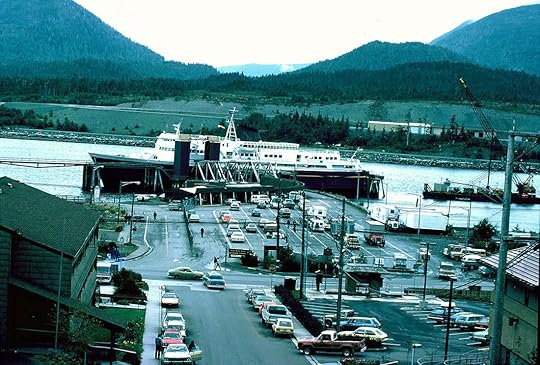 One of the things I've always loved most about Southeast Alaska is the Alaska Marine Highway System. When most towns are on islands unconnected by roads, it only makes sense that the Inside Passage of intertwining waterways would become our road system. On this most scenic of all highways, our ferries--more like small cruise ships--locals and tourists alike travel.
When we were kids, nothing delighted us more than when our entire tiny bush school would go on a field trip to somewhere in Southeast Alaska or to Canada, traveling on the ferry. It was an adventure none of us will ever forget.
Here's the story of a visitor to Alaska who also got to enjoy our unique marine highway during her Alaskan adventure.
****
When I was on Top of the World by Carla Kirkland
It was a clove of seasons when I boarded a train in Thunder Bay, Ontario and rode through some of the most breathtaking natural sites in Canada with the overstuffed backpack I had lived out of, in Minnesota all summer. When I walked onto a ferry in Prince Rupert, BC, it was the closest thing to a cruise ship I had ever been on, then or since. I’d had a magical year at Touch of Nature Environmental Center in Carbondale, IL, and summer at the Environmental Learning Center in Isabella, MN as an intern. When they ended, I was looking forward to fall in southeast Alaska.
I walked off the ferry in Petersburg, Alaska, and for the first time in my life I wasn’t a student. I was 24, full of wanderlust, and free. I wasn’t worried I had no job or place to live. Heck, I couldn’t see past one day at a time. When my boyfriend (later husband), Jim, of five years met me at the dock and told me he had secured a friend’s small 1940s style houseboat for three days before we embarked upon the 33-mile trek along the historic Chilkoot Trail, my problem was solved. Temporarily, anyway.
Jim did seasonal surveying with the U.S. Forest Service for the last three years and had government-issued housing. I couldn’t stay there. I supposed I could always set up a tent in Tent City, where the town’s cannery workers lived, but I’d face those issues when we came back to town from the backpacking trip.
First things first, though. I went down to Hammer’s (Hammer & Wikan) Hardware and bought myself a pair of brick-colored rubber boots known by everyone in the fishing town as red rubbers. The only sure bet about the weather was that it would rain and knee-high red rubbers with pants tucked into them, were a constant fashion staple. By the time I got back to the boat, Jim ran down the hill from the Forest Service office saying someone had quit and they were looking to hire a replacement on a recreation crew. I didn’t know what it would really entail, but since I had just completed my bachelor’s degree in outdoor recreation, it seemed like an answer to a prayer. I went as fast as I could up the hill, afraid someone else would beat me to the job.
The day after I arrived in Petersburg, I had a position on a recreation crew and government housing. I would begin when I returned from the Chilkoot. There were three good months left in the work season and I was on top of the world. Since Jim and I were going to be working on separate crews, it was going to be common to only see each other occasionally.
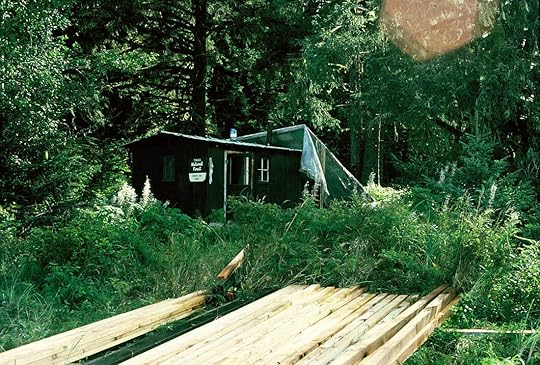 When I came back to town, I met the other two people on my crew: a Vietnam Vet named Jimmy and our crew boss, Doug. We were given the task of building a new recreational cabin at Kadake Bay and doing maintenance at several other recreational cabins within the Tongass National Forest. We traveled by helicopter, ferry, or skiff to the various locations, but most trips were to our camp at the old Kadake Bay Cabin by skiff, loaded with building materials, tools, and groceries. The cabin had bunks, a wood stove, a table, and benches. Jimmy and I stayed in the cabin with no electricity or running water, while Doug preferred to sleep in his own tent outside the cabin.
We worked hard building the cabin, clearing trails, and chopping wood by day and reading by candle or flashlight at night. Jimmy did most of our cooking and I cleaned up the dishes while Doug brushed up on his Spanish in preparation of spending his winter in Mexico. On our days off, we would fish or go back to Petersburg when we could. The fishing was the most incredible I’ve ever experienced. When we were able to smoke the fish, we did. We ate and lived, worked and played together, and became family in some of the most beautiful wilderness I’ve ever seen.
When Jim and I and friends boarded the ferry to leave Alaska to go south at the end of the season, it was Thanksgiving Day, 1983, during the first snowfall. I remember peering into the distance as the town of Petersburg grew smaller and the snow fell harder. I felt confident we would all be going back the following season, not knowing it would be the last time we ever worked and lived in southeast Alaska with the wild abandon that only youth exudes.
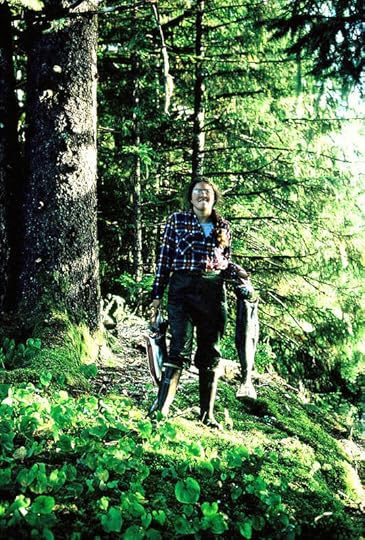 NOTE: All photos courtesy of Carla Kirkland. Carla is a uniquely compassionate and insightful writer who considers the crossroad moments in life in a way that resonates with people who care about the world and each other. Check out her wonderful blog at carlakirklandwriter.com.
May 8, 2020
RAISED IN RUINS: Under Review
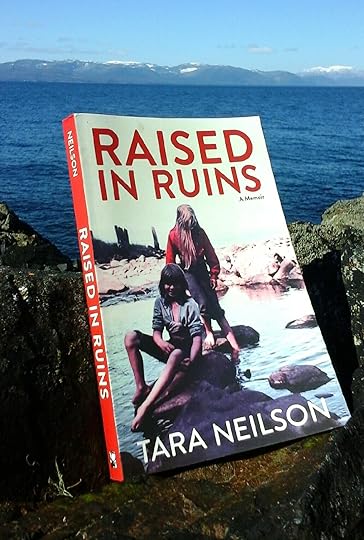 "I forget sometimes," my mom told me recently, "that we'ved lived such a great adventure, and then I read the reviews of your book and it all comes over me again and I think: We really did that!"
My dad calls me on the handheld VHF radio in the mornings and asks if there's been a new review. Since I often can't access Amazon because of my poor signal, a kind friend emails me whenever new reviews pop up and I pass them on to my parents.
In fact, one of my favorite things since getting my memoir Raised in Ruins published, about growing up in the ruins of a remote Alaskan cannery with only my family, is sharing reviews of the book with my parents. It's really the only way I have of thanking them for gifting me with the adventure of a lifetime.
The reviews by women often say something like this one by Cynthia Yoder: "Maybe it's because I'm a mom, but by the end of the book, I found myself awed by the author's mother, who continually worked to protect her children while her husband was away logging."
Male reviewers identified with my dad, such as Benjamin Scribner: 'I could relate to her dad, a Vietnam veteran, as I myself am a veteran of the war in the Persian Gulf. I felt I understood him in ways only another veteran could. Over all, I felt this book down to my soul.'
Nancy Guess focused on both of my parents: "Meet the Neilsons: a father who is a Viet Nam war vet with PTSD and a real-life MacGyver; a young mom of 5 kids who is tasked with protecting her children from the dangers of the wilderness and both parents ensuring that the children have childhoods."
One review is now part of family lore, the one by Ann C, who wrote: "The writing is rich with detail and the personalities of family members are vivid, irritating, lovable and more--in a word real." After I read it I asked my family who they thought was the "irritating" one. Each of us laid claim to it, trying to top each other by pointing out our most irritating traits and actions. I'm sure it will come up in family reunions for years to come.
Like many parents, my parents think their children are the most talented. Many of the reviews didn't mention how I did with the actual writing, so they were pleased when Terry Levin, an accomplished writer himself, wrote: "It gives a very real sense of what it was like to be a kid growing up in the wilderness and how such a kid could develop a profound love of life that, objectively, was filled with backbreaking labor, few comforts of modern civilization, significant dangers to life and limb and a great deal of isolation. And like the best storytellers, she SHOWS us how this happened, not just telling us that it did. In reading her blog, I sometimes noticed upon finishing an entry that I had become so enthralled that I forgot I was reading: that it seemed I had just soaked up information.... There were portions of this book where she achieved this same effect, especially the lengthy chunk about dealing with an invasion of wolves. Writing that seems effortless is, we all know, often the writing that requires the most effort."
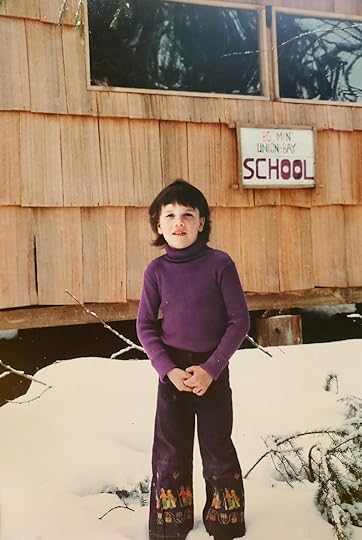 (My brother Robin in front of the homeschool my dad and uncle built. Sign by my mom.) hile I was writing down my childhood memories, I didn't think that much about how those in my family would react to what I wrote about them. I was told repeatedly by the experts, when I researched writing memoirs, that in order to write your truth, you needed to shut out the awareness of family and friends reading and judging it later.
After it was published, I did wonder how my family would receive it. I soon found out how at least one of them felt about it as my second youngest brother, Robin, shared with me his reactions in real time as he read Raised in Ruins.
"You would be amazed at the memories my brain is remembering by reading your book!" he texted me as he read. "You have no idea how emotional I am right now! Good though! I feel young! I have energy I haven't felt in forever."
Twenty years ago, Robin nearly died in a catastrophic car accident that left him with permanent pain and he was put on highly addictive prescription medication to deal with it. Like many in America, he suffered from addiction. "Living in pain every single day of my life for the past twenty years," he texted, "and being drug free for over a month and fighting that battle, I don't feel any pain right now! ...I even remember the smell of finger paint.... This is amazing. It's a roller coaster. Man the ups and downs! I'm crying one minute and laughing hysterically the next. Your writing is awesome! I can't compare it really to any one writer I have ever read. I have never thought of writers as artists but you truly are. You paint a picture of our upbringing. At times I forget I'm in it till my name comes up! Fantastic!"
I had never imagined when I was writing the book that it would affect anyone this way and actually, physically help them, let alone someone I loved. Finally, after he finished the book, he wrote me perhaps the greatest compliment I'll ever receive that left me--and continues to leave me--in tears.
He texted: "Your book has taken me out of deep depression.... Your book is changing my life! What a relief! ...It's amazing how we forget who we were and who we are."
Robin said that he didn't have to be depressed because he realized he was essentially a good person and it was because of how we were raised. I can agree with that. So thank you, Mom and Dad.
I can't imagine any review I receive ever topping that one, but if you read Raised in Ruins please consider leaving a review. I promise to share it with my parents.
Raised in Ruins US link: amzn.to/2UQHxKs UK link: amzn.to/2QMMdxW (or post on whichever site you prefer)
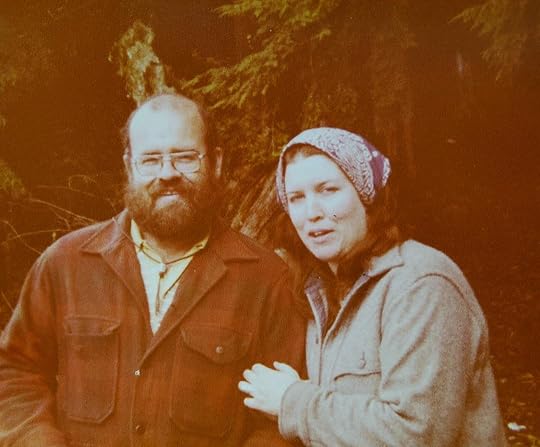 (My remarkable parents, Gary and Romi Neilson, 1980.)
February 28, 2020
How to Survive an Alaskan Winter
 We were let out of school at 2:30 pm because the teachers of the small Alaskan bush school my four siblings and I attended knew that during mid-winter, by the time we made the nearly half-hour skiff ride home, it would be dark.
As soon as the clock’s hands hit 2:30, we donned our cold winter gear, grabbed our backpacks, and ran down to the dock to wait for our dad.
The village kids either took the small, winding trail home (there were no roads in the 29 population fishing community) or accompanied us down to the dock that was lined with our relatives’ trolling boats, to jump in their small skiffs.
They only had to cross the harbor. We had to head out onto the open strait in a sixteen foot, wooden skiff our dad had built himself, and cross an unprotected bay before we reached our home in the ruins of a burned cannery.
We chopped up slimy, iodine-scented bull kelp and flung it at each other as we waited. By the time we heard the distinctive sound of our dad’s 50hp Mercury outboard and saw the silhouette of him at the back of the skiff as he approached the entrance, the sky behind him was ruddy and rapidly darkening.
When he pulled up to the dock we saw his beard was encrusted with frozen salt spray. We glanced at each other before settling into the skiff and braced ourselves for what we knew was going to be a rough, cold ride. We’d be splattered with icy Alaskan water and be so stiff when we climbed out at home we could barely walk. By then dusk had set in and when we crossed the sawdust trail through the forest to get to the house we’d just built, we had to follow our white dogs: the last bit of light made them glow.
We raced each other the last distance to be the first ones in the house to plunge our frozen hands into the canner on the woodstove that was always full of hot water. Sometimes I didn’t bother to jostle my way through the bodies to get to it. Instead, I’d run upstairs to my room and with chattering teeth and numb, shaking hands, I’d light my kerosene lamp and grab the western I’d been reading the night before.
I always chose westerns that were set in the desert. Nothing felt better than putting myself in the hero’s creaking saddle as his horse plodded across the shimmering sand. The more he sweated, the more parched he became, the more I liked it.
As soon as I finished one, I’d pick up another. My two favorites were WANDERER OF THE WASTELAND and THE DESERT CRUCIBLE by Zane Grey. No one wrote with more detail or gusto about the deadly heat of the desert than Grey. I listened to German pop group Nena as I read, and the desert became eternally imprinted on their music.
These days, after shoveling snow off the deck of my floathouse from morning till evening so it doesn’t sink under the weight, I turn to Tony Hillerman. In the middle of an Alaskan winter, I love to read his Navajo mysteries set in a hot and dusty corner of Arizona.
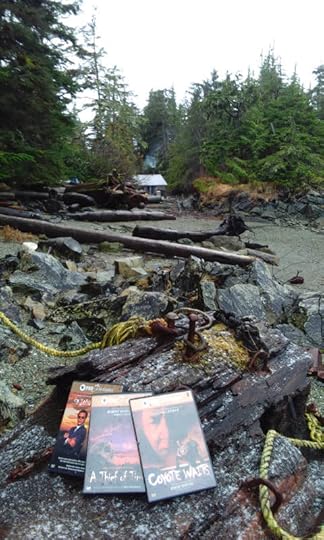
If I’m too tired to read after scraping snow off the roof, or spending hours firewood logging in 20 below wind chill, I’ll watch the three movies PBS made from Hillerman’s novels. My favorite is “Coyote Waits.” The first words spoken in it are: “It’s a hot, hot day on the rez.”
The more arid scenes there are of red-stone rock bluffs, desert scrub plants, basking lizards, and humans complaining about the heat, the better.
It’s no accident that the only house plants I own are a cactus and an aloe vera. When I buy calendars I spurn ones with seasonal photos. Instead, I gravitate towards ones that have titles like “The Tropics” or “American Deserts.”
People often ask me how I cope with Alaskan winters out here in the wilderness, since most people who own homes here make sure to only visit during the temperate summers. I tell them I was fortunate enough to grow up out here so I’m used to it. But the underlying truth is that at a young age I discovered that the key to coping with anything is how well you can manipulate your own mind.
As a child I recognized that if you can engage your mind in an experience that is different from what your body is experiencing, your mind can find a way to free you from the environment and moment you’re stuck in.
Now, on this cold winter day as I sit inside my floathouse with the sleet hammering the roof and obscuring the view out my window, I’m going to find my battered 80s cassette of Nena’s album “99 Red Balloons” to play on the stereo.
And escape to the desert.
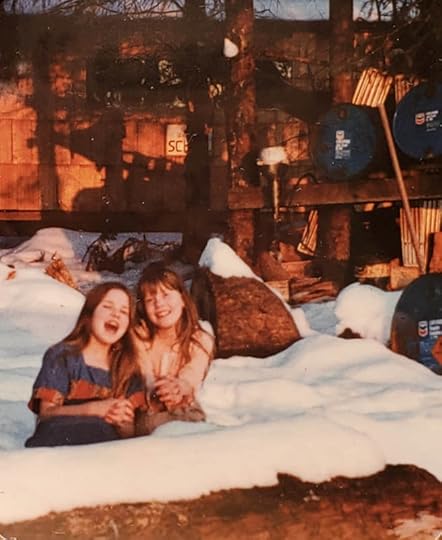 My sister Megan (right) and I during a winter day at the cannery, thinking warm thoughts.
October 21, 2019
ALASKA SHIPWRECK: The Death of Daybreak on Lemly Rock
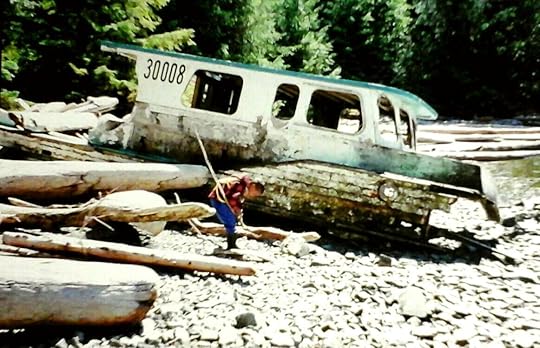 (My nephew Erik playing in front of the wreck in the early 2000s) When we towed our floathouses here and settled in, we found a fishing boat on the beach with its bottom torn out and it's name, "Daybreak" painted on its stern. I'd heard locally that it struck the rocks right outside our little tidal lagoon during a winter storm and was a complete loss. I've always wanted to know more about it and have done research online. I even requested the help of an experienced "shipwreck finder," Captain Warren Good at alaskashipwreck.com. But we found almost nothing.
Until last month when a man reading one of my old columns contacted me by email, introducing himself simply as Dan. He'd wrecked in his fishing boat here in 1988, a year before we moved here.
Dan Pryse's story:
I was only 24 when I lost the Daybreak. I have not even thought about her in years. It was my own fault. It was snowing and blowing about 35 out of the northwest at 2 am on December 13th. We had been up for 2 day's fishing and were greedy for Christmas money. We were setting longline gear south in the direction of Meyers Chuck.
I was on deck helping set up a string in the pitch black lit by deck lights when the rising wind and storm tide pushed me right to the rocks.
I heard a noise and looked around the wheelhouse to see huge breakers. Waves were crashing on rocks that had gotten far too close. I didn't make it back to the wheelhouse in time to turn her. She ran hard aground with a rock right under the stern. She just commenced to beat herself to death. At the time only the tip of the rock was exposed, the size of a Volks Wagon.
I was trying to put out a mayday when the back door blew out, then the seas smashed the window's out. The waves even knocked the Pacific cook stove loose and I never saw it again. A huge swell came in and lifted the whole boat and dropped her... This blew out all the floorboards and I was walking on the frame above the engine.
The Coast Guard cutter Plaintree was passing on the way to Ketchikan and heard my call. The Captain said there were not enough lives in jeopardy and he would not send a boat or crew till morning.
We were not on the same schedule--we needed help NOW.
As I was calling him every choice name I could muster the Post Master from Meyers Chuck, Steve Johnson on the vessel Grizzly Bear, broke in and said he'd help us since the Coast Guard would not. He and another guy in a 16 foot Boston Whaler came out that night in the storm and got us.
When we got to Meyers Chuck a Coast Guard skiff dropped a pump on the dock. A crewman said the Plaintree was going to Ketchikan and was wasting no more time. It would not have mattered as the Daybreak was a total loss.
If not for the Post Master Steve Johnson and Art Forbes I think was the second man, we would for sure have died.The Post Master and his wife Ruth even let me stay in their home before taking me to Ketchikan. What truly kind people.
_____
Dan is correct--the locals he mentions are kind people. Steve and Ruth ran the small market and fish buying station in Meyers Chuck when they lived here in the Eighties. During school we'd run down during the lunch break and buy candy from Ruthie, who was a lovely, generous and supportive woman. Their son, Ryan, was best friends with Noah Forbes, who was the son of the other local mentioned in Dan's story, Art Forbes (we now own his Boston Whaler mentioned in Dan's account).
Art is married to Linda, who features prominently in my memoir Raised in Ruins. I also talk about taking my siblings to school in a homemade 16-foot wooden skiff on this very stretch of water that has caused more than one shipwreck. (My memoir is available for pre-ordering by clicking on the cover of the photo top right, or at https://www.westmarginpress.com/book-details/9781513262635/raised-in-ruins/ )
I asked Dan if he had any photos of the Daybreak and he replied: "No I have no photos. I lived on the Daybreak and only had one boat payment left. I lost absolutely everything including photos. And I had no insurance, just a borrowed pair of boots from [Steve]."
He helped fill out the details, though: The Daybreak was a 36 foot Columbia River freighter for the canneries and logging outfits. It was built in Oregon in 1935 and modified to a pleasure boat in the 70's. Jim and Gayle Eastwood of Petersburg purchased it and made a longliner out of it. Dan bought it in 1985 or 1986.
I asked Dan what he did after the wreck of the Daybreak and he replied: "I fished every fishery from Puget Sound salmon to 14 winters in Dutch Harbor and I was the deckboss on the world's biggest Longliner in Siberia Russia right after communism fell. 7 years in Bristol Bay and every longline season in the Gulf and Southeast salmon and 3 salmon season's in Kodiak. I'm getting seasick just thinking about it."
I'm encouraging him to write his memoir; he has an amazing fund of true life adventure stories to tell. (Dan Pryse also became a tenacious whistleblower whose testimony helped bring down an official seeking a presidentially-appointed position. You can read about it here: https://www.alaskapublic.org/2011/09/26/former-crew-members-attempted-to-turn-in-fuglvog/ )
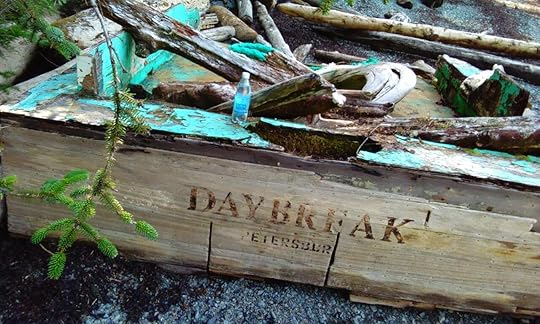 (Today all that remains is the stern, with a bottled water on it from the Japanese 2011 tsunami.)