Derek Belfield's Blog
August 27, 2023
Announcing the Apex Archives: A New Literary Universe
Greetings, dear readers!
I am thrilled to introduce you to my latest venture, a series that has been simmering in the cauldron of my imagination, gradually taking shape and readying itself to step into the world: the Apex Archives.
the first book: echo of the stars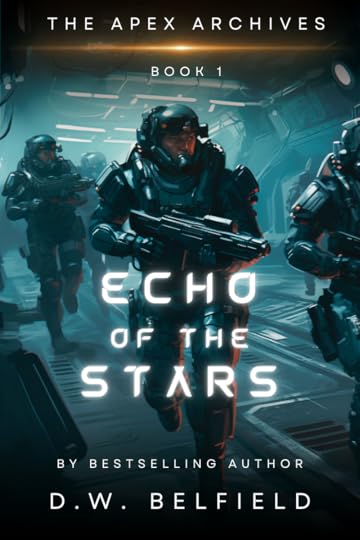
Let's take a quick journey into the first book without giving away too many spoilers. The Apex Archives introduces us to a galaxy teetering on the brink of a new era. Here’s the blurb:
A soldier betrayed. Alien technology exploited. A mission to reach into the stars.
The pandemic of 2044 redrew all the lines on the map and killed off a third of the global population. Authoritarian governments rose to power, and a century of progress was lost while the rest of the world starved and devolved into violent chaos.
After a lifetime of war, Liam Ward joined Valorus, a private military contractor serving the United Nations of America and its Nationalist Party.
In his twilight years, he's assigned to a new contract with the potential to set him up for retirement. Instead, he finds ancient technology that will change the trajectory of his life and the world as a whole.
Now Liam must make decisions that could affect the fate of the human race while beset on all sides by betrayal, geopolitical machinations, and assassination attempts from the forces that wish to maintain their stranglehold on power.
This is a story of conquest, empire, and the progress of the human species as they reach toward the stars and evade the darker spirits of their nature.
A New Literary UniverseBut there's more! This inaugural tale doesn't just set the scene for the books within the Apex Archives. It lays the groundwork for an expansive literary universe, one which will encompass the reimagined best-selling series the Scourge Wars and the RoyalRoad popular System Envoy series. While unique in their stories, these narratives will find threads of connection, intertwining their fates and contributing to a grander narrative tapestry. Expect easter eggs, familiar faces, and lore that bridges across series.
Seeking Beta Readers!And now, an invitation! I believe that stories are a collaboration between the writer and the reader. As I venture further into the Apex Archives, I'm reaching out to a select group of beta readers who would love to embark on this journey ahead of everyone else. I'm keen to gather feedback on the lore's pacing, depth, and coherence and to hear about the tropes you expect, desire, or want to be subverted within the genre.
If you're passionate about science fiction, have a keen eye for detail, and are ready to dive into a new universe (with the added perk of reading ahead of the official release), then this might be your calling. Every beta reader will receive a free epub of the novel.
Let's craft a universe of stories that resonate, captivate, and entertain. I eagerly await the insights, critiques, and perspectives of those willing to undertake this adventure with me.
Royal Road releaseIf you don’t think you can give great feedback in the draft, then don’t worry! I’m also releasing the chapters on RoyalRoad. Even though the website isn’t great for Science Fiction, I’ve still decided to post this story (one chapter a day) to get early feedback. You can find the story here:
Read on Royal RoadUntil then, the stars beckon, and the universe awaits its archivists. I hope you'll join me in unveiling the mysteries of the Apex Archives.
Join discordBest regards,
D.W. Belfield


August 26, 2023
Reimagining the Scourge Wars: An Apex Archives Series
When I first put pen to paper, or more accurately, fingers to keyboard, to bring the world of the Scourge Wars to life, I could hardly have imagined the incredible journey I was embarking on. A journey that was not only mine but shared with each and every one of you. A journey where realms were formed, battles were fought, and villains rose from the shadows. To everyone who has been a part of this adventure by reading and supporting the series, thank you from the bottom of my heart.
But every story, like life, evolves (heh).
While I adored writing the Scourge Wars, I began to feel the weight of certain creative constraints over time. Specifically, the LitRPG genre's rules and the way I relied heavily on game mechanics. In reflection, I've come to believe that, at times, I leaned too much on these mechanics, potentially at the expense of richer, more profound storytelling.
Don't get me wrong, LitRPG has been an exciting playground full of endless possibilities. But as I grew as a writer, I felt an innate desire to pivot, to take a step towards a genre that has always resonated with my creative passion: science fiction.
Science fiction, for me, is a limitless expanse, a genre that allows the exploration of deep philosophical questions, speculations about humanity's future, and the intricate dance between technology and morality. It's where my passion and interest truly lie. You can see this in the Scourge Wars—the way that each evolution was based on real science and genuine depictions of politics and battle.
In a moment of serendipity, the worlds of Scourge Wars began to blend, in my mind's eye, with the universe of the Apex Archives. Merging these two series into a shared universe became an exciting prospect, one that promises richer lore, more intricate plotlines, and characters whose destinies are even more intertwined.
But it wasn't just my passion for science fiction that prompted this change. While rewarding, writing in the LitRPG genre also comes with its challenges. The pace at which new releases are expected can be overwhelming. Readers of this genre are voracious, always hungry for the next installment, and as a writer, it's a lot of pressure to constantly feed that appetite. Over time, this pace can lead to creative burnout, making it challenging to produce quality content that both the writer and the reader can be proud of.
So, it's with a mixture of nostalgia, excitement, and hope that I've decided to rewrite the Scourge Wars series. This new direction will bring it into a shared universe with the Apex Archives and allow me to explore deeper, more nuanced storytelling and fully immerse myself in the genre I love most.
I’m working on the first book of the Apex Archives. It’s been such a fun project that I’m already thinking of multiple spin-off series. I want to write about the intrepid Wardens who act as the special forces of my faction. It would be interesting to explore the Sisters of the Apex Order, something like clandestine nuns. I even want to rewrite The System Envoy and watch as Aidan Steele brings the Apex Order to alien civilizations. And, of course, there’s the Scourge. I wrote Jonathan Slate as a villain, and I would love to see the Scourge spread across the universe and become a feared and implacable enemy.
To those who have been with me from the start, I hope you'll continue on this journey. To new readers, welcome to a universe where the lines between technology, humanity, and destiny blur. The next chapter is being written, and I can't wait to share it with all of you.
Best regards,
D.W. Belfield
November 28, 2019
What Thanksgiving Can Teach Us About Writing
Thanksgiving celebrations have been recorded as early as 1607 in various colonies in the United States but the “First Thanksgiving” happened in 1621 at Plymouth Plantation. What started as an impromptu religious service became a civil tradition in the U.S. today. Some history buffs will claim that Thanksgiving is just merely another form of the fall harvest festival celebrated by most cultures around the world for as long as history has been recorded. While true, I want to examine the background and the traditions of thanksgiving in its current form in America and what it can teach us about writing.
HISTORY:Like I mentioned previously, the first Thanksgiving took place at Plymouth Plantation in 1621. The settlers threw a celebration for a successful harvest after a particularly difficult winter. The Pilgrims (as they are known to be called) settled in a relatively empty area of Plymouth. In the interest of fairness, it should be noted that it was empty because the plague had killed off most of the Native American tribe, the Patuxet Indians. However, such a controversial topic is outside the scope of this post and I think it’s important to focus on what came after.
The Plymouth Plantation didn’t fare very well in its first iteration. It, like many of the settlements that had come before it, had struggled to survive in the New World. In 1620, the Pilgrims had been hit by a particularly harsh winter in its first year that killed more than half of their population. Their colony would likely have been completely eliminated if it weren’t for the assistance of Squanto, Samoset, and the Wampanoag Tribe. Samoset had been the first Native American to meet the settlers in Plymouth. He surprised them by walking up in the spring of 1621 and speaking to them in English. After learning of their struggles, he asked Squanto, the last living member of the Patuxet Indians, to help the settlers.
Squanto taught the pilgrims how to grow their corn, where to fish, where to procure commodities that the settlers could use and where to go to trade their goods for profit. There’s actually a full history about Squanto beyond the Thanksgiving narrative that I encourage anyone to read. Squanto was an esteemed advisor and adept diplomat between the Europeans and the Native Americans. He helped the settlers in this capacity until he died from the plague the following year.
The first Thanksgiving was a three-day feast attended by 90 Native Americans and 53 Protestant Pilgrims as thanks for a successful harvest.
MODERN THANKSGIVING:I’m spending Thanksgiving with my parents this year. It’s the first time in probably three or four years that I have had the opportunity to celebrate it with them. I had been stationed in Okinawa, Japan for most of my time in the military and it had been difficult to spend the holidays with my family. You would think that my family was planning their own three-day feast. My parents cooked and cleaned two and three days prior to the celebration. The house became a whirlwind of festive decorations and artfully folded napkins. It was fulfilling to see my wife and my family working together to prepare for the event. If you’re asking yourself what I was doing during this time, I’ve been feverishly writing book 3, and I’ve probably been a poor guest as a result.
However, I think when someone is writing, they start to look around them and try and see what events they could incorporate into their own writing. In the process of these festive preparations, I realized that there was something to be learned from Thanksgiving. The history is interesting to be sure, but I think the modern version of Thanksgiving is more compelling. It is no longer about being thankful for a harvest. After all, the local grocery store carries everything we need. It has become a celebration of family and of working together to make the holiday happen in the first place. Preparing for Thanksgiving is hard, difficult work. Why do people spend days preparing and making sure their house is clean for the few hours of enjoyment that the labor produces? I think it’s because it’s the labor that makes everything worthwhile. If someone offered to buy everything for Thanksgiving pre-made from the store, most people would scoff at the idea.
“You mean you don’t want to try grandmas’ famous recipe for stuffing?”
This is the time where each family dusts off the time worn recipe cards, penned in with cursive lettering that tells them exactly how to make pumpkin pie, or exactly how to make sure the stuffing is moist. Each family is proud of these traditions. They’re proud of the work they put in and the effort it took to prepare for Thanksgiving. Thinking to give that away in favor of store-prepared food seems almost an insult to the very idea of Thanksgiving. That’s because the act of preparing is truly more about the journey than the destination. It’s about family taking a pause out of their busy lives to prepare the oldest of comradery-building things: food. Eating communally and catching up with each other about our busy lives is one of the oldest forms of love and bonding. It’s the real reason we celebrate Thanksgiving today. It isn’t to honor the Native Americans or to remember the settlers at Plymouth Plantation. No, it’s to work together and enjoy the fruits of our labor.
WRITING:In every one of my books, I say thank you to the team that helped me put the book together. I always say that no book is written alone and its true. There are editors, beta readers, and fans that help make the book become the way it is. Sometimes I don’t feel like I’m actually writing, I’m more just channeling something larger than myself onto the page. At the end of the day, it’s my name that goes on the cover, but I take great pleasure in mentioning the people in the acknowledgements because we went through the difficulties together. It was never a solo project, it was a group event. When I look at the preparations for Thanksgiving and the feeling of working together to create something larger than ourselves, I can see the parallels to my own writing.
For you writers who are worried about your word count today or worried about your deadlines, its especially important that you take this time to refresh and re-center with your families. I’m feeling the strain myself, but I recognize that this Thanksgiving will refresh my soul and make my writing even better when I return to it. For now, I want to give thanks to all of the people in my life who have nurtured and nourished me. It truly takes a village to raise a child. It takes a village to make a man. It takes a village to write a book.
Happy ThanksgivingNovember 15, 2019
What Kind of Cover Should an Indie Author Use?
The first place I need to start is with a disclaimer. Assessing any kind of artwork, including book covers, is something of a subjective experience. I did my best to try and break the data into objective categories, but no true distinction exists. There were times where a book cover could have easily fit into one category or another and I made a judgment call into which category they belonged in.
MethodologyNext, we need to discuss the methodology used. Originally, I thought that I would pull the data from the top 100 books on Amazon but that became a more difficult question? The top-1oo…what? Fantasy? Sci-fi? Romance? Experienced readers know that each genre has common types of book covers they use. If there are beautiful and scantily clad men and women on the front of the cover, then the book is likely going to be romance. If it’s a hand-drawn portrait of adventurers slaying a dragon, then it’s likely to be fantasy.
With that in mind, I decided to pull the 100-best sellers from Amazon in general. This included all kinds of books over a swath of genres. The next thing I noticed was that many of the same books dominated the Amazon charts for much of the year. For example, the refreshed Harry Potter covers have been Amazon Best Sellers since they were published. I looked at every best seller for the entire year of 2019 and couldn’t find a week where Mr. Potter didn’t dominate the list.
CategoriesIn order to gather enough covers to be of statistical relevance, I needed to look at all of the covers for every book ever posted to the Amazon Best Seller in the year 2019. This led to the creation of six separate categories.
Typography-based
Minimalist
Hand-Drawn/Hand Painted Artwork
Photography
Digital Art
Hand-Drawn Realism
Typography-basedTypography-based covers are those covers where the typography is clearly the most important part of the cover. I understand that this is something of an ambiguous distinction because typography is important to any cover. However, there were clearly covers where the typography was the art so to speak. Take, for example, Junk by Les Bohem. Clearly the cover could be considered abstract or minimalist, but the cover is clearly driven by the typography rather than the artwork.
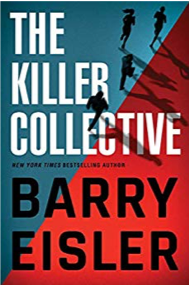
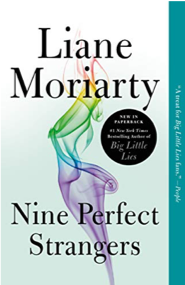
MinimalistCompared to minimalist covers where the typography might be important, but the symbolism in the artwork itself clearly drives the image that readers are supposed to take from the book. A great example of two different kinds of minimalist covers are the Killer Collective by Barry Eisler and Nine Perfect Strangers by Liane Moriarty. Killer Collective is designed with bold, attractive colors. The typography is more pronounced over the comparatively subdued cover on Nine Perfect Strangers, but I wasn’t sure how to create another category of books without making the line between minimalist and typography-based almost non-existent.
Hand-Drawn/Hand-Painted Artwork
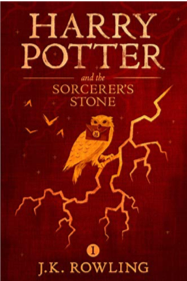
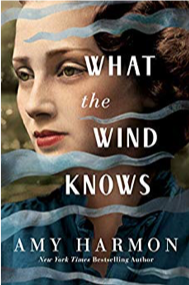
Hand-drawn or hand-painted covers are pretty standard to readers. They’re usually found in fantasy novels. These kinds of books came in a couple of variants as well. Like previously mentioned, the refreshed covers from the Harry Potter series were considered to be hand-drawn/hand-painted in this assessment. Although, the argument could be made that they could count as minimalist covers as well. A more clear example would be What the Wind Knows by Amy Harmon.
Photography
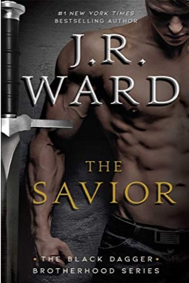
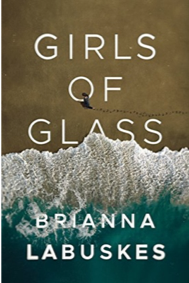
The photography category were marked by those books that used actual photos for their covers. Once again, there were some books that rode the line between one category and another. For example, in The Savior by J.R. Ward, the cover is a photo that has been digitally adjusted to fit the content of the book. It’s something of a counterpoint to the Girls of Glass by Brianna Labuskes where the cover of the book is clearly more photography based. Obviously, every one of these images has been digitally enhanced or photoshopped, but I wanted to make a distinction between these kinds of covers and the next category.
Digital Art
The most popular category by far was digital art. This is almost a catch-all category for many of the covers that readers are familiar with. Redemption by David Baldacci is a perfect example. In my opinion, these covers are usually cheaper looking but they get the point across. There isn’t necessary anything that stands out to me about these covers because they are so prevalent in every genre.
Hand-Drawn RealismMy last category (and the smallest) is hand-drawn realism. There were only a few books that I felt fit into this criteria and it was those books that were designed for the express purpose of looking like a real book or a real piece of paper. The Silent Patient by Alex Michaelides is one such example.
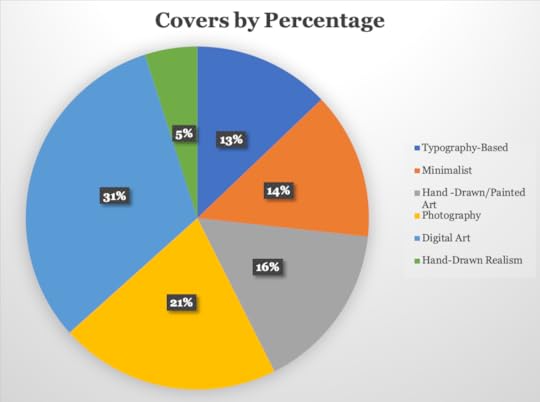
Alright, now that we’ve looked over the methodology and the categories, let’s take a look at what the data had to say. Over the course of 2019, there were only 101 unique books. I may have missed one or two, but most of Amazon’s Charts for the week were dominated by the large publishers or the well known, established authors. It was actually surprising to me that there were so few unique books. There were some books like I mentioned that rode the line between different categories, but I don’t think there were enough of them to skew the data in one direction or another. The data broke down like this:
Typography-based: 13
Minimalist: 14
Hand-Drawn/Hand Painted Artwork: 16
Photography: 21
Digital Art: 32
Hand-Drawn Realism: 05
Assessment
I think that the reason for the numbers is fairly simple: cost. If looked at from the perspective of how much each cover cost, it would look the exact same in from most to least, and more expensive to least expensive. The cheapest covers to produce are digital art. The most expensive is the hand-drawn realist. Minimalist and Typographic-based, and Hand-drawn/Painted Art are similar in price because of the time and creativity required by the artist. Finally, photographic and digital covers are the least expensive. I actually think that photographic images would be more popular if they could have been used in multiple genres. As it stands, it would look decidedly odd for Brandon Sanderson to start using photo-realistic covers for his books.
Which Kind of Cover is Best for Indie Writers?So now that we have the data, what can we do with it? Well, the short answer is not much. I was hoping that the data would present a magic bullet for cover design and to be honest, I don’t think there is one. It looks to me that the percentage of covers has a direct relationship with the cost and genre of the cover. I think overall if an indie author were trying to decide on which kind of cover they wanted to use, they should go with a digital cover. It doesn’t look like it impacts sales much overall so long as its tastefully created and they’ll be saving themselves some extra cash. Splurging on a more expensive cover if you don’t know whether the sales will be there or not, might not be the best strategy.
I hope this data could be useful to any future authors deciding to read my blog. Leave a comment below if there are any other topics you would like to see in the future. This one was kind of spur-of-the-moment poll on Twitter. I was actually hoping someone would vote for the the Deep Dive into the Mandalorian. Time to watch episode two!
-DWB
November 12, 2019
Is It Worth it to Write a Web Fiction?
Is It Worth it to Write a Web Fiction?
First, I think there should be somewhat of a disclaimer. Only you, the author or potential author, can determine whether writing something is worth your time, energy, and creative ability. Every author writes for a different reason. Like the rest of my blog, this post is going to focus on the business aspects and perform a cost/benefit analysis in writing a webserial/web fiction. In this post, I’m making two assumptions. First, we’re going to assume that the work is unique content and not fan fiction. Second, I’m assuming you’re an indie author and not part of a major publisher. Obviously, the calculus changes depending upon the individual’s situation. Also, I’m going to shamelessly hyperlink my own pages in this article where I have one. The rest will be links to the actual pages.
The History Behind the Term Webserial/Web FictionSo, is it worth it? Short Answer: Yes, and I’ll explain why:
As a reminder to the readers, let’s dive into what it a webserial or web fiction. When I tell people that I’m writing a webserial, they seem confused by the term so I’ll take the opportunity to describe what it is. As implied by the name a web fiction is a work of fiction that is posted to the web. It can be posted in a hosting website like RoyalRoad or Wattpad, a CMS (more later), to a subreddit on Reddit, or on a personal blog. Usually, a web fiction is a story that has a determinable end and it follows the natural progression of a normal story. In contrast, a webserial is meant to continue endlessly until interest dies, the author has discontinued the work, or the arc has come to a natural conclusion.
Where do WebFics Live?Like I hinted before, there are a variety of places that people like to post their webfics. Generally, it breaks down into four categories:
Blogs
Content Management Systems (CMS)
Forums/Subreddits
Story Hosting Websites
BlogsThis is pretty self-explanatory. Many writers decide to use a webserial to monetize their blogs. There are plenty of articles covering how and why to monetize a blog or website but know that most people monetize through ad placement or affiliate agreements.
Content Management Systems (CMS)CMS are software applications that are used to manage the creation and distribution of digital content. Popular choices include but are not limited to:
Forums/SubredditsThis is another self-explanatory choice and the oldest and most traditional way to post a webserial. In the early days of the internet, amateur writers used forums to post their work and practice their writing. Reddit is kind of its own thing but follows the general layout of a forum and that’s why I’m including it here. Popular choices include but are not limited to:
Story Hosting WebsitesThese websites are designed to host stories. They work similarly to blogs except they usually have better interfaces and apps. Some have unique methods of monetization or ways of promoting. Popular choices include, but are not limited to:
Benefits
There are seven benefits to writing a webfic. Most of these are only beneficial if posted to a CMS, blog, or story hosting website. It’s necessary to find an audience. For a brand new indie writer, it can be extremely difficult to build a native community on your own.
Experience
Critiques
Support & Encouragement
Reviews
Beta Reading
Marketing
Monetization
ExperienceExperience is important to a brand new indie author. Few people start writing and the book immediately becomes popular enough to make writing a full-time commitment. To those people, I say congratulations. You’ve done something that very few people have done, and you should be proud of your accomplishments. For everyone else, if you want to build a community, your writing needs to be good enough to build and retain the readership. Just like anything else in life, it requires practice.
CritiquesCritiques are important for any developing writer. Often, an idea that sounds good in our head, comes out garbled and miscommunicated on the page. Editors can be hard to come by in the beginning for an indie author and often these early critiques take the place of a good developmental editor. Since developmental editing is easily the most expensive form of editing an author can receive, this feedback has a tangible monetary benefit.
Support & EncouragementSupport and Encouragement are also important for new writers. When I was writing my first book, I posted chapters to RoyalRoad. The daily feedback and encouragement were what helped me move forward and continue writing. Now, that I have a dedicated team of editors and beta readers, they have become my source of support and encouragement. I don’t know that I would have finished my first book without the RoyalRoad community. I don’t know that I could’ve finished book two without the support network I have now. It’s strange but somehow the validation of strangers can be stronger than that of your friends and family. After all, you constantly wonder if your friends and family are telling you that your story is good only because they love you.
ReviewsReviews are essential to the indie author. Amazon ranking lives and dies by the number of reviews you get. No one is clear what the exact number is for Amazon to pick it up into its recommendation engine, but it’s clear that it plays an important part in getting your book recognized. As a side fact, many writers have speculated that Goodreads ratings and reviews play an important part in the algorithm as well since Amazon owns Goodreads.
Beta ReadingBeta reading is similar in importance to your critiques. Beta readers are a good way of getting free editing. However, your beta readers shouldn’t really be catching developmental errors, but I have found that questions in the comment section have been extremely helpful in helping my own writing process develop. Many times, I have thought to myself
“You know, I didn’t think of that”
In and of itself, that’s a useful thing but Beta Readers are also there to catch the copy & line edits that need to be made. If you intend to go the traditional publishing route, or even want to negotiate a better rate with an independent editor, a cleaner manuscript is a cheaper one.
MarketingFinally, we reach the subject that I’m most interested in when discussing the use of webfics and webserials. A webfic can seem like a waste of time but over the last two months, I’ve been collecting data on the referral of web traffic from my various posting platforms. For some, the data is still out. After all, I only just started on Twitter but I have been posting to reader/writer groups on Facebook and buy ads there. Despite that, here are the results for the web traffic to book 1 in my series:
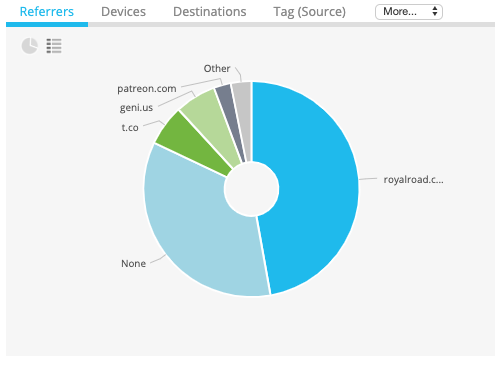
Geniuslink data for the last 30 days for Evolve: The Scourge Wars Book 1
I use GeniusLink to generate this data for the past 30 days. You can see that Royalroad, where I post my webserial, generates a little less than half (about 45%) of all recorded traffic to my book. All things being equal, this is a significant amount for a comparatively little amount of effort. Obviously, engagement is important just like in any other platform, but Royalroad has a handy feature that sets it apart when you post your webserial.
As soon as you post it hits the front page.
It’s free advertising and I think most indie authors underestimate how important that is.
MonetizationFinally, webfics and webserials can be a major source of income. Very few stories can reach the level where they generate sustainable income, but after looking at the top 10 best-rated stories on Royalroad, I found that on average, the stories earned $2,488.66 USD per month (after taxes) on Patreon. That’s a number that not many can turn their noses up at for posting chapters whenever you feel comfortable. Additionally, many webserials will release their work as volumes on Amazon and double (or even triple if you count audiobook) dip on their sales.
As a side note for new writers, be sure to check the platform’s Terms of Service and read their contracts carefully. Some platforms have restrictions on where you can market or publish outside of their platform.
In summary, I think it’s a great idea for indie authors to start their own webserial and I’ll leave you with one last thought. Pirateaba, the author of the Wandering Inn webserial has these stats:
$9497 a month on Patreon (after taxes)
530 reviews of combined reviews on Volumes 1 and 2 of her story on Amazon
#313 Amazon Best Sellers Rank for Volume 1’s audiobook
Let me know what you think in the comments below.
November 11, 2019
Social Obligations Make You A Better Writer
Social obligations make you a better writer. Here's how:
For those of you who don't know already, I'm an active duty Staff Sergeant in the Marine Corps. That's only important because the Marine Corps Birthday Ball for my unit was on Thursday night, which typically means that the next day we have off (Marine's love to celebrate their birthday). It just so happened that this year, our ball coincided with the Veteran's Day holiday. This meant we had a total of FIVE CONSECUTIVE days off.
As a part-time writer, I was ecstatic. I would get to write for five uninterrupted days. My word count would be through the roof! Well, not so much. I needed to create a website, began building my social media following, put out ads, and commission artwork. Generally, I needed to do all of the things that indie authors like myself have to do one their own because they don't have the benefit of a large publisher to do it for them. These administrative yet oh so essential tasks took up the majority of my Friday. It was a 2k word count kind of day. Alright, but not great for my standards.
On Saturday, I finally got into the business of writing. I pushed out an incredible 12k words. I say incredible because it was a personal best for me. I felt like I was finally getting where I needed to be on my word count for the holiday.
Fast forward to today. Today was Friendsgiving with the friend group that I've come to know and love over the past couple of years. This Friendsgiving was something of a tradition that we were creating together. It wasn't until 3pm, so I figured that if I woke up early and devoted myself to writing, I could get a respectable word count done for the day before we had to leave.
Unfortunately, life doesn't always fit into our plans. Instead of writing, I ended up fixing a power outlet in my living through that had melted through (I only shocked myself twice). When it was time to leave, I hadn't written a single word that I wanted to. I almost considered canceling on Friendsgiving because I was guilty that I didn't get the words on the page that I felt I needed to write.
I think that's the trap that authors fall in to. We're so wording about crafting our worlds in our books that we forget to live our lives in the world we're in. I almost made that mistake.
See, social obligations make you a better writer. They remind you that the worlds we create are figments of our imagination. They're a shared hallucination between the author and the reader. The dream is only as good as the author makes it, and if we take too much ourselves and put it on the page, we forget the events in our life that make those dreams convincing.
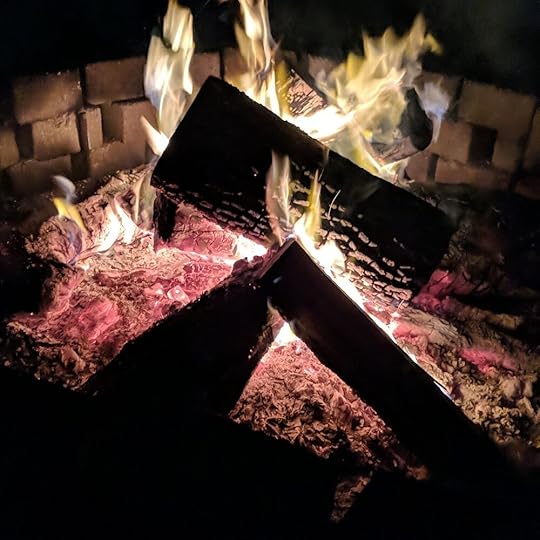
I ate good food and shared laughs with better friends around the campfire. We told stories, we joked, and we lived. Someday, when I try to capture the love and camaraderie of friends around a campfire, I'll remember this night, and I will have been better equipped to capture it for the reader. I will have been made a better writer by the social obligation I almost failed to keep.
I know many of you are worried about your word counts and the progress of your stories. I want to quickly remind you that you need to remember to live your life and to take care of yourself.
-DWB
Writing about Veterans
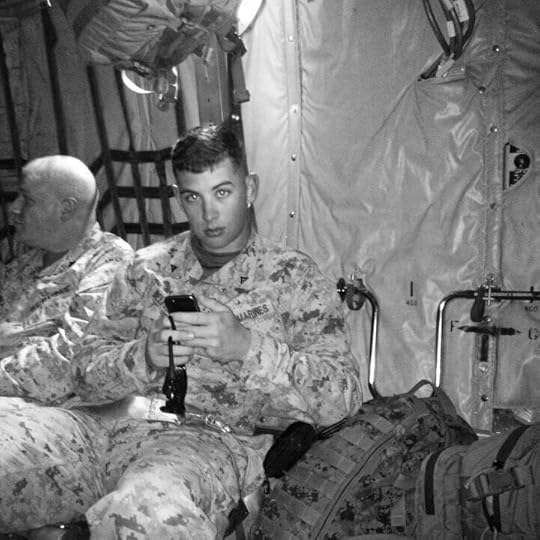
Photo of me in a C-130 on the way to visit Mt. Suribachi, the site of the famous photo of the Marines hosting the flag during WWII circa 2013.
As you’ve probably realized from the plethora of social media posts, the advertisements for businesses, and the scripted statements from politicians and figures in the public eye, today is a special day. It’s Veteran’s Day. I am not a veteran (at least not yet), I’m still active duty in the military, but I wanted to make a special blog post to talk about writing and about veterans in particular.
The American military has captured the imagination of the public with dramatized movies like Saving Private Ryan, Black Hawk Down, Lone Survivors, and more. The Special Operations personnel are the closest thing that we have to real-life superheroes. They have the ability to infiltrate secure locations without being detected, save prisoners or hostages, and defeat the bad guys. To us, it seems like it’s all in a day’s work. The dramatization of their work and the artistic liberty that creators take with the real stories means that the average person is wildly uninformed about the daily life of the average military member. This has real effects on society as a whole and how veterans are perceived.
There’s something to be said about the fact, the American public doesn’t really know how to treat their warriors. From being labeled “baby killers” and “murderers” in Vietnam, to the ever present “thank you for your service today.” Both have become a way of setting apart veterans from the normal population. In an interesting book Tribe by Sebastian Junger, dives into this subject and makes some startling revelations (at least startling to me) that perhaps the author didn’t intentionally make.
I learned that we don’t have a mechanism in the United States for returning veterans to the population at large. They become revered or denigrated depending upon the public opinion of their time. Most people forget that yes, while they’re veterans, they’re also fathers and husbands. They’re school teachers, mechanics, business professionals, and lawyers. Perhaps even more sadly, they’re also the homeless in the street, they’re the disabled and maimed, they’re the anxious and depressed men and women that can’t find the energy to go to work that day.
I humbly believe that the veterans that can’t acclimate back into society and talk about how much they miss the military are purely a product of that separation. They feel alone. There' isn’t anyone in their lives who know what its like to be in the military and when they’re told “thank you for your service” it’s just another reminder that they’re different. They’re set apart from the normal population. They sit on a shelf until every Veteran’s Day or Memorial Day and then they’re taken off the shelf and the dust is blown off by the American public.
Dear reader, I don’t tell you that to shame you. I just want to remind you that veterans are no different than anyone else. They volunteered for a life-altering occupation. Most of them didn’t go because they wanted to serve their country, that usually comes later. It’s hard to have such high ideals when you’re seventeen or eighteen and you’re fresh out of high school with an indeterminable desire to do something more with your life. No, the patriotism they feel comes somewhat later.
For the generation slightly before me, It came when they witnessed the falling of the twin towers. I was but a child when it happened, too young to understand the context of the attack. For my generation, it was something else. We had always been at war for as long as we could remember. For me, it was almost expected that I would join the military. I could feel its inevitability long before I stood upon the yellow footprints. It wasn’t until I hit the fleet and I met men and women from all different backgrounds, with different political beliefs, faiths, and dreams that I became a patriot. The military is just a sample of the American people at large. I was in a place where it didn’t matter what you looked like, what genitalia is between your legs, or what god you believed in. As long as you were willing to work and succeed, the military would give some back. I recognized that the military was just a small piece of America. I’m still waiting for American to realize that we’re just a small piece of them.
Now that I’ve become a writer, it has changed how I feel about the military. There’s a dark tendency to write military characters and veterans as caricatures of themselves. We’ve all read about the Navy SEAL-Ranger-Spaceship door gunner-Sniper from NASA that can kill the bad guys by flexing their perfectly chiseled and black belt trained chests. The reverse is present too. Veterans so damaged by the war and the conflict they’ve experienced that they become irredeemable villains or off-putting antiheroes. I know that veterans are neither of those things. They’re just people. They aren’t some monolithic category that can be placed neatly on a shelf. They’re individuals with unique wants and needs.
As a result, the military community can be a difficult one to write for. God forbid you forget that the bullet of a sniper round hits before the sound does (A fact that I learned in my new story). Also, the military community can be a harsh critic when a writer approaches any topic that even comes slightly within their purview. Many writers will hear the criticism, “I wish you would’ve talked to someone in the military before you published this.” I agree. Just like an author would do research on everything else they’re writing about (medieval siege warfare, anyone?), they should also do research on veterans before they try their to write their stories. Perhaps in the process, the veteran will feel like they’re part of society again. As for the writer, you will undoubtedly have a better product.
One final reminder, every veteran is just an alternate version of the person they would have otherwise become. If not for a set of choices and barring obvious externalities, they could’ve been just like you, and you could’ve been just like them. So on this Veteran’s Day, thank a veteran for making that choice, but remember that they’re a person and not a category. Treat this with the same respect and individual agency that you would grant to yourself.
-DWB