Frances Evelyn's Blog
November 5, 2020
Promoting an indie book launch
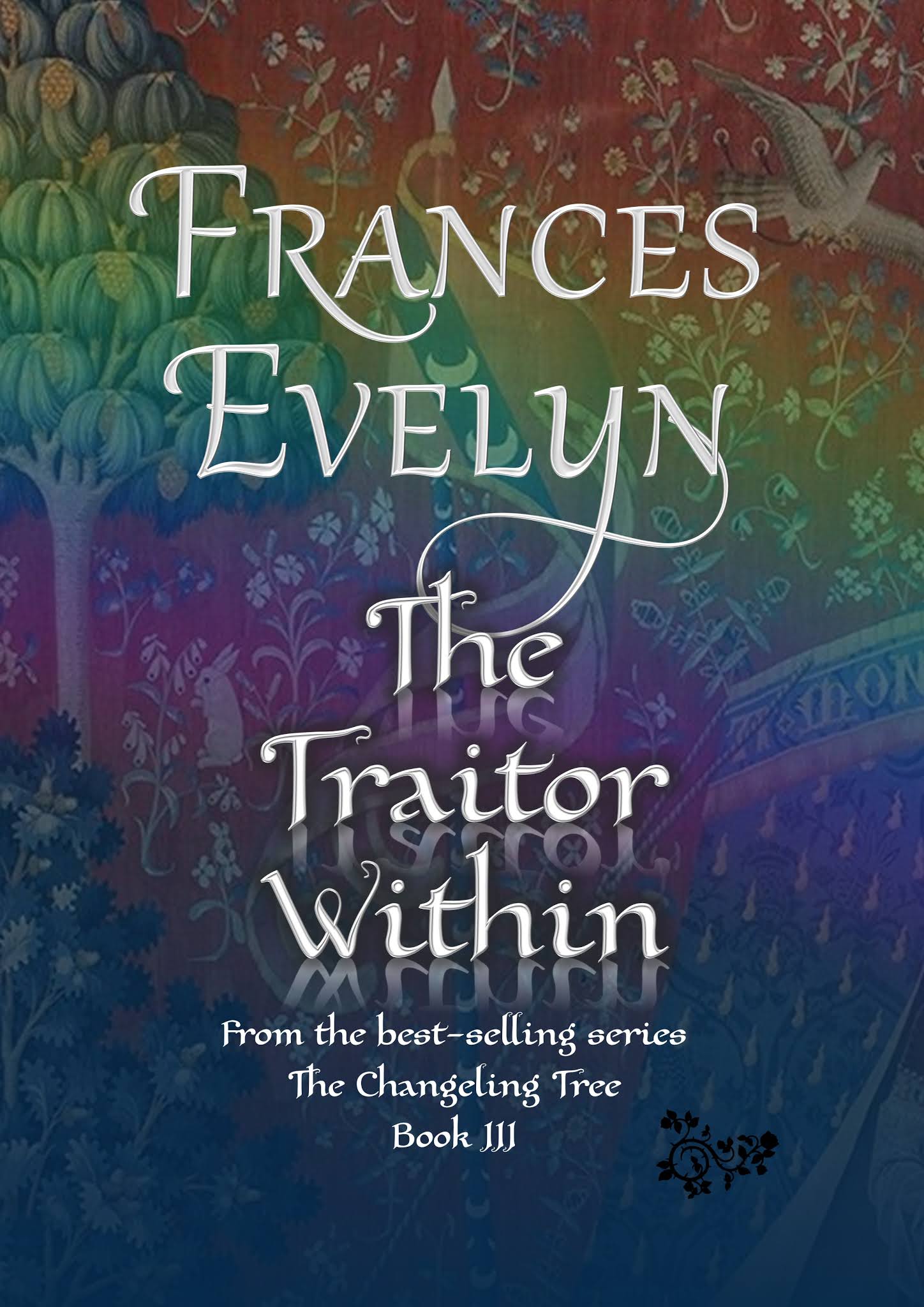 Partly for my own benefit and partly for anyone else who might find it useful, here's my experience of launching an indie book on Facebook. In this case, it's The Traitor Within, the third instalment in my real-world fantasy family saga series, The Changeling Tree.
I set up a week long launch event on Facebook, beginning when my book came out. I pushed it out to my followers and on book groups and so far 56 people have signed up, with a couple of new ones every day. It could have gone higher, I think, but because of the increased level of activity on my account, Facebook restricted me from posting, which was frustrating. I don't think I was spamming because I was only posting to people who'd signed up for info about new books and I was posting different things each time. It may be relevant that, at the same time as disabling my account, Facebook was offering me the opportunity to pay to have posts about the book boosted.
Despite that frustration, the launch seems to be going well. Each day, I'm posting a reading from the book on Facebook, and I've pushed these out through Twitter and Instagram too. If I do this again, I'll use YouTube as a repository so people accessing the videos from other social media don't have to go through Facebook to watch them.
In addition to the new extract each day, there was always something else to announce: a competition on the first day (to run throughout the week), a free download of earlier books in the series, a Kindle Countdown deal on the new book. They all bounced up the rankings as a consequence, if only temporarily, but the main benefit is the opportunity to encourage supportive readers to write and share reviews and to build up my followers on the various social media platforms.
One of the challenges of scheduling anything in advance is that there will be predictable and unpredictable newsworthy events going on. I suspect the date of the US election may have been predictable, and I might have avoided it if I'd connected the dots. However, I don't think it's been a problem. While some people will have been repeatedly checking for the latest update on the count, plenty of others will be looking for distractions. Let's assume that high levels of activity on social media might work in my favour, in that friends and followers might be more likely to scroll down to my post and share it. At a pinch, it's usually possible to make daily posts relevant to current events, though it's not hard to think of occasions when it would be distasteful to try.
The last event of my launch is a livestream at 8pm GMT on Saturday the 7th of November. I hadn't done one of these before, so I've spent a fair bit of time fiddling with the software. Most of the people who watch it live are likely to be friends this time round, but I want it to be as good as possible because it'll be saved on Facebook and also so I'm starting from a higher level for next time.
I'm using OBS Studio for streaming, which is free and fairly straightforward. I can put myself on-screen and/or display what's on my screen and I can flick between the two as required. There are lots of other possibilities, but that's the limit of my ambition for now. Rather than the awkwardness of sitting there waiting while people sign in, this is going to allow me to play a video of reviewers' comments at the beginning, using free stock music from Mixkit. When I'm reading, I'll switch off the screen view and have my book on-screen, and for the Q&A I'll have Facebook on my screen so I can read the comments. What could possibly go wrong?


November 2, 2020
Publicity for The Traitor Within

Creative Writing at the University of Leicester announce the publication of The Traitor Within, the third instalment in The Changeling Tree series.For video extracts, freebies, a competition and a livestream, join my online virtual launch.

October 1, 2020
Announcing The Traitor Within (spoiler alert!)

The third book in The Changeling Tree series will be released on the 31st of October. It continues the story of Rose Watts and Peggy Lightborne after they're separated by the mysterious door at Empey's Farm.Peggy is astonished to find that Rose was telling the truth. Time-travel really is possible. Ok, she's only gone forward a year, but it's the principle that's important. She could make a vital contribution to the war effort if only there was someone who didn't think she was insane. Dr Corrigan is the only person who'll take her seriously, and when he suggests coming up with another story to put her mother's mind at rest, it seems like a good idea.
In her haste to escape from Carrick's room in between, Rose didn't give much thought to where she'd end up, but if she had, she'd have chosen a time nearer to the present. She has to get back to Leicester, find her mum and save her life. But that's not how this works. Instead, Rose finds herself in the eighteenth century: a brutal enough time for those who lead respectable lives, but deadly for those who live on the edge of the law. What's Carrick doing as a highwayman and who's the boy travelling with him? More to the point, despite everything, why does Rose feel safe with them?
In the Faerie court, Queen Annis is losing any advantage she'd gained in her time as a human. New rivals rise through the hierarchy of the court to plot against her and Carrick's plans remain a mystery to her. Meanwhile, the Lord Herald grows tired of his duties. All he really wants is peace and bamboo.
Now available for pre-order

September 22, 2020
My offer to indie authors
 I've been reading books by indie authors this year and reviewing the best ones on GoodReads and, more lately, on this blog. The theory is that other indie authors will read and review my books in turn, so common sense dictates that if I don't like a book, I shouldn't review it.
 Here are some of the great books by indie authors I've read recently:
Hvaldi by K.J. SimpsonOil and Water by Lara Ann DominickAngie Baby by Terry KerrAngel of Mercy by Melina DrugaBucky and the Lukefahr Ladies by Shirley Gilmore
These (and many others) are of the same high quality as books published by traditional publishing houses. They tell imaginative and compelling stories with convincing characters and dialogue. The challenge for authors like these is to bring their books to the attention of appreciative readers.
Although all my reviews are honest, I haven't reviewed all the self-published books I've read. Sometimes it only takes a few pages to establish that a particular book isn't for me -- in which case my review probably wouldn't help anyone -- but more often than not, if I finish a book and don't review it, it'll be because of the technical quality of the writing.
As an indie author, you put a great deal of time and enormous energy into writing, publishing and marketing. When your book's written, there's still a lot of work to do and because you're not working with a publisher, you have to do it yourself or pay someone to do it for you. This can be expensive because it's skilled and labour-intensive work. Although we all want our books to be as good as they can be, there's no guarantee we'll ever recoup the cost.
There's no getting away from the fact that some great storytellers who self-publish aren't great at grammar, spelling or punctuation. They probably don't realise this and wouldn't be grateful to be told. These aren't the indie authors I'm addressing here. If you know how to put together a sentence already, you want to produce books of professional quality and you care about the details, I'm talking to you.
As your publication date draws near, time speeds up. You might go back to the text to re-read it, but if you do, you'll probably tinker and add new mistakes. It's hard to proofread your own work at the best of times, because you know what you meant to say, but when you're working under the pressure of a deadline, it's next to impossible to focus on the details.
Perhaps you'll ask a friend or relative to read it, just for reassurance, while you get on with one of the hundred other things you need to get done before your deadline. Unfortunately, proofreading is a specialised skill and helpful friends might catch a few typos, but they're unlikely to catch them all.
Even reputable presses sometimes publish books with typos, so it's not surprising that indie publications often include a few more. Usually it's obvious what was intended: a homophone has slipped in (e.g. yolk instead of yoke), an apostrophe is missing or inserted where it shouldn't be (e.g. it's for its, or vice versa), or the subject of a sentence has been changed (e.g. he becomes they) without the verb being changed to match. These aren't the mistakes of authors who can't write: they're typos arising from momentary and understandable lapses of concentration.
When you work with a publishing house, you have to conform to their house style. There are hundreds of possible variations in spelling and punctuation and the house style ensures consistency. While you're writing, you make decisions as you go along between:
judgement or judgmentgipsy or gypsyvictimise or victimizesingle or double inverted commas for speecha final apostrophe or 's for possessives ending in s (and so on)None of those decisions is wrong, but it's very hard to be consistent without an eagle-eyed editor checking them against a style-sheet.
Perhaps this is the moment for me to come out as a pedant. Although (perhaps because) I don't have a visual memory, I do notice details of language. If you say a character has red hair after describing them as blonde, there's a good chance that won't bother me because I don't have a mental picture of them. But if you miss out an essential comma or use British spellings in a letter from a speaker of American English, that will grate. If you start out using single inverted commas and switch to double halfway through, I'll notice. If you use different spellings of the same word, I'll spot it. If you accidentally put 20th century slang into the mouths of your 19th century characters, I'll grind my teeth down to the gums, I really will. Please know that this doesn't make me happy.
I'm 100% confident in my writing and proof-reading abilities. I'm a professor of English and I spent 20+ years studying and publishing on the history of English. I've corrected thousands of students' essays, acted as a consultant for eminent dictionary publishers and reviewed other academics' work for a wide range of publishing presses. This stuff is easy for me.
I'm less comfortable, as an indie author, with marketing and publicity, but maybe that's easy for you.
So, here's the deal:
I'll read your self-published book before publication to check you've caught all the typos. In return, you'll buy and review one of my books and spend a little of your time helping me to promote it.
What I'm offering is a final polish, not a full proofreading or copy-editing service. You'll need to believe your book's ready for publication already. If there are too many errors, it won't be worth my while to go through it, and my decision not to go ahead could be profoundly unsettling with your publication date hurtling towards you. I'm happy working with all varieties of English, but you need to be writing with native-speaker fluency in whichever variety it is, so that if I query a usage, you'll know whether what's on the page is correct.
In return, you'll buy, read and review one of my books and promote it to your social media networks. I want honest reviews, but it wouldn't make sense to put my time in for negative ones, so you'll need to read my book first to see if you like it. Meanwhile, I'll read a sample of yours to see if I can do the work needed in the time available. That way we'll both be happy with the bargain we're making.
If you're interested, please send me your email address by direct message on Twitter, Facebook or Instagram and I'll let you have the full T&Cs. Looking forward to hearing from you!

September 16, 2020
Hvaldi by KJ Simpson
 Hvaldi is set in a post-apocalyptic world where archaeology is banned, officially to control access to the technology which destroyed the world, but actually because ancient sites contain secrets to undermine the ruling order. There's a first person narrator, and her voice is convincing and engaging. The journey she undertakes is exciting and the main relationship that develops along the way is sweet and authentic. I also really liked her second travelling companion, but after that I struggled to distinguish and remember the other characters, who weren't drawn with the same level of detail. This is probably an unavoidable feature of a journey-story, because characters who were met on the way there (who I thought were minor characters) re-appeared on the way back.
The multiple realms were interesting and the dead city was, well, haunting. All in all, a thought-provoking and enjoyable read. I can happily recommend it.

September 14, 2020
Oil and Water by Lara Ann Dominick

I haven't read many vampire books (not even Twilight), so I'm not any kind of expert on the conventions of the genre, but it seems that Lara Ann Dominick takes useful freedoms with them. Her vampires have reflections, for example, and only need shades to protect them from sunlight. Going further still, her main vampire characters exist in a tension between humanity and monster, where they hunt as predators, with heightened senses, but make rational decisions about the greater good of their kind (if they give in to their blood lust, their existence will be revealed and humans will turn against them). Even the evilest vampire among them dispenses justice as she preys upon those who deserve it as well as those who won't be missed or are so messed up that their lives aren't worth living (!)
The connection between the different storylines didn't come as a surprise, but I liked that Elsie wasn't whiter than white. She's a normal imperfect modern woman, and that worked better than trying to have more of a contrast. I liked that the vampires have regulations and petty rivalries, but I wasn't sure what humans gained by donating their blood without the erotic thrill of the bite.
Do I recommend it? Yes. If you like vampire books or romance or both, this is definitely for you.

Angie Baby by Terry Kerr

I don't usually read horror. I find it irritating when people go into the forest at night or knock on the door of the abandoned castle or whatever, because you just wouldn't, would you? If you thought something weird was going on, you'd get the hell out of there or call for help.
So what I enjoyed about this book was that the characters' motivations made sense. They have reasons to do and say and believe the things they do, or to doubt or keep quiet or keep away. The setting was realistic, the dialogue was convincing and the emotions were real. In the midst of that, the unexplained occurrences were properly unsettling. I won't say what was behind it, because I don't want to spoil it, but, heck! It shouldn't be scary, once you know what it is, but my toes are still curling.
Would I recommend it? Absolutely. Just don't read it when you're on your own in the house.
See this review and others on GoodReads

September 2, 2020
Don't know much about history
 Image by Ylanite Koppens from PixabayThe main characters in The Changeling Tree series, Rose, Alison and Margaret disagree about whether, as a time-traveller, it's possible to change history, and one of the challenges of writing historical fiction is that readers may expect historical accuracy. The problem is that strict adherence to what can actually be documented to have happened leaves no scope at all for making things up. Another approach is to build a story around historical facts but to fill in the gaps with invented dialogue and events. For my historical fiction, the history is a background, and I try to get it right, but more or less everything in the foreground is made up. If I need to take liberties with historical and geographical reality to make my stories work, I do.
For example, The Changeling Tree series depends on an fictionalised version of Leicester, in which the area around what's now Western Park, off Hinckley Rd, continued in use as agricultural and forested land into the twentieth century. That allowed me to isolate Agnes Lightborne's cottage in a small patch of undeveloped ancient forest surrounded by fields. By the time Margaret inherited it, housing developments were encroaching on the fields and by the time Rose was born, there was just a small wood (called a spinney in this part of the world) among the houses. When Rose was sent back to her gran's at the beginning of The Changeling Tree, all that remained of the ancient forest were the trees in Margaret's garden.
There is an area called Dane Hills in Leicester and there's also a Spinney Hills Rd. I've requisitioned those names for slightly different areas just because they fitted with the story I was telling and with my fictional history for those areas, though I appreciate that this is likely to irritate and confuse people who know better.
The Leicestershire Asylum is now called the Fielding Johnson Building and belongs to the University of Leicester. It closed as an asylum in 1908, but I've chosen to keep it functioning into the 1950s as a haven for Agnes's brother Harry in The Time Before. Matron has a clear view, from her office in the Asylum, of the war memorial in Victoria Park because the later university buildings haven't been built. Anyone who's worked in the Attenborough Tower may agree that this wouldn't have been such a bad thing.
In general, if any of the historical or geographical details in the series are jarring, it's better to do your own research than to assume that what I've written is in any way reliable. If you know that I've got something wrong, my excuse is that it's fiction and I'm just making stuff up here.

July 7, 2020
The Changeling Tree: The Time Before
 Messy kitchen (not mine, honestly)image by Hans Braxmeier from PixabayWhen I finished my first re-run through the second book in the Changeling Tree series, I thought it was finished but I knew it wasn't satisfactory and at that stage I made a lot of changes to it. For example, I changed the title from The New Girl.
Additions at that stage included all of the Faerie story-line. Previously, there was only the one scene with Carrick near the end. The new Faerie scenes provided more depth to their world and show that, even though Annis failed in her attempt on Carrick's challenge, she's still trying to ensure he doesn't succeed. According to the terms of the game, it's only necessary for him to fail for victory to be hers.
I also fleshed out Agnes's story quite a lot. The bare bones were there, but I added more about her friendship with Florence and about her brothers. Her three wishes were a new addition and I made the parallels between herself and Mrs Somerbird more clear.
One thing I realised when I got to the bit where Robin left Agnes in the cottage in the woods was that I appear to be obsessed with cleaning. My characters always seem to be doing it or living in places that need to be cleaned. This isn't because I'm a keen cleaner myself (far from it), but it's probably got something to do with the fact that when the writing is flowing, it seems impossible to stop and switch the hoover on. It's one or the other: the book or a clean house. So the cleaning in the books is probably a sublimation of my own guilt.
I think it's interesting, though, that there's so little cleaning in books and on television. Ok. Wait. Hear me out. I know that reading about or watching someone wiping their kitchen down after three meals a day would be pretty damn boring, but cleaning is something that people (especially, but not exclusively, women) do a lot. For many women (and I'm not saying it's not the same for some men, but I'm not one, so I can't speak for them), cleaning is tied up with all kinds of emotions. There's why-the-hell-am-I-the-only-person-who-wipes-these-surfaces cleaning, there's aren't-I-the-uber-competent-superwoman cleaning, there's I-need-to-obliterate-every-trace-of-that-jerk-from-my-life cleaning, there's at-least-I-can-control-this cleaning, there's if-I-can't-make-this-place-look-at-least-hygienic-my-mother/mother-in-law/neighbours/mother-and-baby-group/workmates-will-know-I'm-a-failure-as-a-woman cleaning, there's (I'm guessing) look-at-me-isn't-my-life-perfect cleaning.
Cleaning is about bringing order from chaos or clinging on by your fingertips, but it's also about new beginnings: when you move into a new house, you clean; when you make resolutions about being a better human being, you change the place you live to reflect your new and better persona. And there's spring-cleaning, of course, for that moment in the year when the sun first shows up all the grubby marks and smears that you've lived in blissful ignorance of all winter. There are probably more positive emotions around cleaning too, but I suspect the people who could write about those convincingly are too busy sprucing up the back of their fridge to get anything down on paper.
For me, then, the cleaning scenes aren't really about cleaning. They're expressions of determination to make the best of things or to be useful or to hold it together. The really dirty or messy places are expressions of emotion or character too. Sometimes they're showing that someone's overwhelmed or that they've given up, but sometimes my characters are untidy because they have more interesting things to do. Emotions are messy things after all.
[Written on the 26th of June, 2019, when these reflections were fresh in my mind]

June 14, 2020
Dog-whistles, clairvoyants and frothing extremists
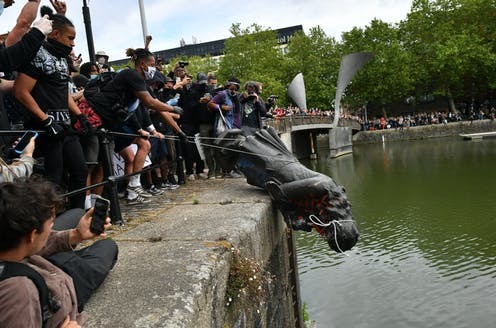 I don't generally write about political issues and I don't pretend to be unusually well-informed, but I followed links to an opinion column in The Daily Mail today and it's stayed with me. I'm not aiming to fact-check every detail of the article, but I felt moved to explore the dishonesty of its language.
The piece is headed 'From the lockdown to the destruction of statues, these febrile weeks show the pillars of our freedom and civilization are rotten. As the Left now controls every lever of power, we face nothing less than regime change.' The piece is written by Peter Hitchens.
For anyone unfamiliar with it, The Daily Mail is rated as a questionable source by MediaBiasFactCheck, with a right wing bias and low reliability with regard to fact-checking. On this occasion, though I don't make a habit of it, I've read it so you don't have to. If we're ever going to achieve rational dialogue on national issues, we have to address the perspectives of those who're persuaded by these arguments. There's little point engaging with frothing extremists, but I'm sure that some readers of The Daily Mail would be willing to engage in civil debate.
The piece was published at 1.09 am today (14th of June) and updated at 12.33. It could therefore have alluded to last night's 'racist thuggery', but doesn't mention it at all. Hitchens choses instead to focus on an amorphous and sinister threat from 'the new orthodoxy' of the 'radical left'.
Those supporting the Black Lives Matter movement are, according to the article, 'strange crowds', 'ignorant armies', who feel a 'vague rage' but 'do not know what they want, or understand what they are destroying'. They exist in a 'febrile' and 'feverish atmosphere' in this 'Covid frenzy'. Having 'willingly made a bonfire of our freedoms' in the Lockdown, the public have been 'scared into pathetic timidity' by a 'Dictatorship of Fear' (apparently the pandemic isn't a big deal at all really and the number of deaths in the UK 'are grossly inflated by an incredibly lax recording system', but that isn't the nonsense I want to focus on here).
As a result of these restrictions, we've been subject to 'house arrest' and will now be forced to wear 'muzzles' (=masks) on public transport. The British people have 'gone soft, accepting absurd and humiliating diktats, believing the most ridiculous claims' (as testament to personal experience of humiliation, the author alludes to the cap that formed part of his school uniform). The implication of all this is that the public in general, but particularly those who protest are infantile, irrational and easily led.
So why are they behaving like this? Through isolation and fear, they've become 'strained and suggestible' to 'forces hostile to our country, its history and nature' (an anti-immigrant dog-whistle). Although these forces are ill-defined, they appear to be 'the British radical left', which is 'militant', 'frothing' and 'intolerant'. Growing jealous of 'the surging crowds, the rioting and the looting in the USA', 'the British radical left' used them as the spark to ignite the simmering discontent of the people in the UK who weren't allowed to express their anger against its proper object (government policy in relation to COVID-19). During the Lockdown, we have 'bit by bit forgotten who we were before, how we lived, what we thought, what we expected of life' (the 'we' here is another emotive but characteristically ill-defined dog-whistle).
Against this sinister force, 'all the pillars of British freedom and civilisation are hollow and rotten'. The police are 'conquered slaves to the new god of woke', who negotiate with demonstrators 'rather than reclaiming the streets from them' (an allusion is made at this point to Cressida Dick's gender, either to undermine her authority or to imply that she's in league with The Feminists). Boarding up Winston Churchill's statue was 'an act of appeasement' and the dog-whistle wartime allusion is reinforced by the remark that perhaps we shall 'never again see the lights lit as they had been before'. The BBC is characterised by 'barefaced dishonesty and unlawful bias', though no evidence is given.
The political class are no better. Labour are variously, Trotskyite, Marxist or Blairite (the downing of statues is compared with the downfall of 'the Soviet Empire', though that 'was a matter for rejoicing'). In contrast, the Conservatives are 'in office but not in power', merely 'keeping Downing Street warm for Sir Keir and his Blairite Legions'.
Neither can science defend us. Hitchens asserts that government policy 'is now completely exploded by scientific experts'. Two such experts are alluded to, without any detail or links: Sunetra Gupta and John Lee posit views contrary to government policy and advocate further study and consideration of all available evidence. My understanding is that dealing with a new virus is complex and that new information is becoming available all the time. The scientific advice informs government policy, which will also be shaped by economic and ideological considerations. It would be odd if there weren't differences of opinion along the way.
Where should we turn in this turmoil of misinformation and malice? Well, the author has learnt 'to trust [his] instincts … [which] may be inherited from our forebears or learned by decades of experience.' Note the dog-whistle shift from singular to plural. It appears that this is a national and natural British ability to know what's right, though presumably only if we agree with Hitchens: 'we know more than we think we do', and we can even see into the future: 'As soon as this lockdown began I could see most of this coming', he writes.
Unfortunately, it is 'very hard' for this columnist in a national newspaper to express his 'traditional, normal, Christian conservative and patriotic opinions' because 'they' use social media 'as a form of discipline' and 'no actual debate can take place in these conditions'. By this stage in the argument, it's entirely unclear who 'they' are: are the 'they' who are protesting the same as the 'they' who shut down debate on social media? Are the sinister 'they' who're inciting the crowds the same as the 'they' who are infiltrating and undermining 'the pillars of British freedom and civilisation'? These groups are conflated as facets of an underlying conspiracy working towards a 'cultural revolution' in which 'regime change' has already been achieved. As before, no actual evidence is provided.
This piece is not, as the author implies 'carefully and generously' argued. Neither is my analysis an accusation of 'thought crime'. Hitchens is entitled to believe whatever he chooses, and I'm entitled to argue that using loose reasoning, emotive language and unevidenced claims in this way, he stokes the fearfulness he complains of and encourages 'ignorant armies' to a violent response.