Sharon Bazant's Blog
March 29, 2025
The Fog
THE FOG by Sharon Bazant
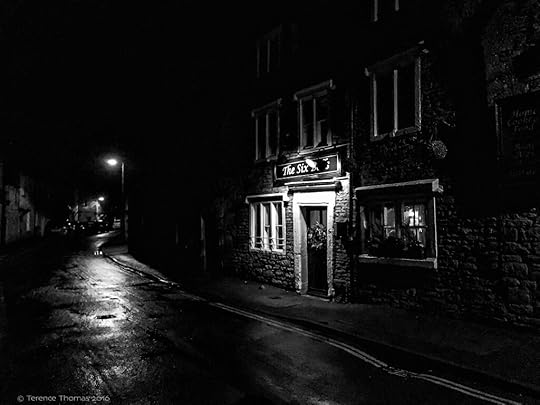
(My poem entitled “The Fog” placed second in the January Ekphrastic poetry contest in White Rock, B.C. It was inspired by the featured photo by Terence Thomas)
SHE WAKES AND REMEMBERS.
Trembling,
she parts the heavy curtains.
Fog has crept in.
The gunmetal ocean across the lane
is obscured in a sombre mist.
She slips on her boots, her coat.
Winter’s chill penetrates her bones.
She will confront the vaporous veil
that swirls around her arms, her legs
muffling her steps.
Early risers and dog walkers magically
appear and disappear
along the murky path.
Homes sit hushed behind
skeletons of tall trees
dissolving into a cloak of clouds.
Is this how it will be for her?
All the treasured memories
hiding, out of reach.
Slipping away.
A new baby amidst glittering January snow.
A gentle touch in the night.
Tart, succulent mango dripping down her chin.
Riding through springtime crocuses, buffalo beans.
The trusting, hopeful gaze of her beautiful boys.
Crying and laughing and dancing with her friends.
Will it all fade?
Appear and disappear?
Fall into a puddle of confusion?
Muddle into a haze?
She shakes her head, defiant!
Today, the fog will lift.
She will go home, light a fire
and bask in sunlit memories.
She knows
the fog will come again
to take them from her.
One by one
BUT NOT TODAY.


March 21, 2025
Bullies – Past and Present
Bully – A person who habitually seeks to harm or intimidate those they perceive as vulnerable. (definition according to Google/Oxford Languages)
I know something about bullies. I was introduced to the fine art of bullying at an early age. A close circle of friends in elementary school was constantly disrupted by one member who sought to divide us. She pitted the five of us against each other in various combinations, leaving at least one person out of fun activities on any given day. It was an equal-opportunity venture where we each got a turn at being the victim while she savoured the fruits of dominance.
Adventures in bullying didn’t end in the playground. They continued on the school bus. A boorish middle-schooler liked to prey upon the “little kids.” Each day, he would scan the seats and choose his victim. He had a knack for targeting the most vulnerable among us. We each got a turn in the never-ending cycle of abuse, primarily verbal, but sometimes with an added dose of shoving.
My high school years unfolded without incident, with civility and maturity. At least, that’s what I thought until the final half of my senior year. Two male classmates went on a wrecking rampage during lunch break one day. They smashed and destroyed most of the binders and notebooks left behind on classroom desks. Everyone knew who did this. The culprits brazenly laughed and bragged about it.
One of these offenders was popular with his fellow students, and many felt he should be protected. I did not. So, when the high school principal questioned us individually, I readily provided him with the guilty parties’ names. I made no secret of this as I firmly believed (and still do) that it was the right decision.
My decision bore torturous consequences. For the rest of the school year, I was yelled at, spit at, and called names by my classmates each time a teacher left the room. I didn’t fight back. I didn’t complain to anyone in authority. I just stared at the floor and prayed for the shouting to end. My parents had taught me to “turn the other cheek.” What good would it have done to shout back? I was outnumbered. If I had reported this behaviour, it would have escalated.
Those who didn’t participate in berating me stayed silent. Not one person, not even those I had counted as friends for most of my school years, stood by my side. This took a significant toll on my mental and emotional health.
I had always been a good student, but I sank into a depression, and my grades dropped. In the 1960s, no one talked about depression. If you felt despondent, the only solution was to “tough it out.” My mother was worried and asked if I would like to transfer to a school in Calgary for the rest of the school year. I declined as I, like many teenagers, felt that I could handle the situation. Outside of school, I had a caring group of friends, and I wanted to live at home in the final months before starting university in the big city. At least, I hoped to be accepted into university. If my grades continued to drop, how would I fare in upcoming departmental exams?
I weathered some harsh, painful days until the end of the school year, and that left me with some scars. I guess we all have our fair share of those. Thankfully, I qualified for university studies, and a new chapter of my life unfolded. All was forgotten—or was it?
There are bullies everywhere. They are embodied in the unforeseen speed bumps of life’s journey, rearing their ugly heads in the workplace, social settings, and at society’s lowest and highest levels. It took me a long time to understand how to deal with bullies. But bullies are only part of the equation. The much bigger problem is learning how to identify and understand their enablers.
I have recently watched two award-winning movies that broach this subject. I’m Still Here immerses the audience in the brutal years of repression, torture and “the disappeared” during the Brazilian dictatorship of the 1970s. The Seed of the Sacred Fig takes us to Iran and powerfully illustrates the consequences of living in a society strangled by tyranny.
Now, in 2025, many of us have watched a video clip of U.S. President Trump and his minions openly bullying President Zelinsky of Ukraine. Right before our eyes, we saw President Zelinsky attempt to use polite, rational responses, only to be loudly and rudely interrupted while others sat silently and watched. Also, we have seen President Trump dismantling government services, rounding people up and deporting them on military airplanes, and threatening to take over other countries.
Trump won a democratic election, and the Iranian revolution and the Brazilian dictatorship were popular initially. All of this should be a stark wake-up call. Dictators and tyrants are the ultimate bullies. But they aren’t formed in a vacuum. They are enabled and borne to great heights by the ignorance, need, and blindness of those around them. Cunning and narcissistic, bullies perceive a need, an emptiness that needs to be filled, and then shape-shift into a righteous saviour. They promise to solve your problems with an iron fist. They will eliminate the “other,” give you more money and protect you in exchange for your worship.
What can we do? I learned many years ago that turning the other cheek isn’t the answer. Bullies are cowards who must be confronted and challenged at every turn. My high school years and years of working overseas also taught me that many people are in denial and would instead choose to support a bully rather than identify the behaviour and stand up for themselves or other victims. Even long after the damage is done, these same people take little or no responsibility for their actions or silence.
Bullies are in full force at the highest levels around the world right now. Ultimately, no one will be impervious to this creeping malevolence. If we are naïve enough to believe that bullies, tyrants and dictators are just exhibiting strength, protecting us, or “not serious,” we need to take a closer look. As one, we must raise our voices. Silence in the face of tyranny will be our greatest downfall.
May 8, 2024
Here We Sit
Here we sit
Fat with opinion
Bloated with judgement
Inflamed with entitlement
We have popcorn
We understand.
We watch
On Facebook
On Instagram
On Tik Tok, on TV.
Those people are a problem.
These people are not.
We know this
We just know.
Do we know the woman
Who cries
For her
Kidnapped child?
Do we know the child
Who begs
For food
For a home?
Do we know the old man
Who screams
For mercy
From the bombs?
We know them not
But we take a stand.
The photos
Are so clear.
Meanwhile
In a gilded room
The suits and uniforms
Maneuver for a checkmate.
They have power
They understand.
These people are winners.
Those people are losers.
There they sit
Fat with decisions
Bloated with ideals
Inflamed with entitlement.
February 21, 2024
Mohamed
Today I have a short story to share with all of you. I hope you enjoy it.
In the fall of 1988, I met Mohamed… tall, whip-thin, features of chiselled ebony. He held his head high as he strode into my adult ESL classroom, exuding youthful confidence and determination. Flashing a brilliant smile, he turned and spoke in careful English.
“Hello teacher, I am Mohamed from Somalia. I am in Edmonton for two weeks. I am military pilot in my country.”
This was a higher-level English language class. All the students had mastered English to some extent, but the nuances of verb tenses, idioms, and other complicated grammatical inconsistencies that only native speakers can wrap their heads around required study and practice. Such was a language teacher’s dream: the opportunity to teach new material while at the same time being able to converse with the students and listen to their stories.
Mohamed’s story was a gripping tale indeed. He had announced his past career as a military pilot on the first day of class but never expanded on what was expected of him in that role. He might have been pressured to carry out orders he didn’t wish to enact or seen things he wanted to forget. Whatever the case, he was discontent and could no longer tolerate the state of affairs in his home country. (In the mid to late 1980s, Somalia was fragmenting and would eventually collapse into civil war.) During his first months in ESL class, Mohamed recounted the story of his journey from Somalia to Canada.
Mohamed and his fellow pilot, Hassan, always flew as a team. One day, they took off on a mission, abruptly changed course, landed in Nairobi, Kenya and asked for asylum. Mohamed implied that this plan had been executed quickly. They had told no one, not even their families. Mohamed lived with his in-laws, his young wife and their new baby. They must have been shocked when the news of his defection reached them. And it would have reached them quickly. Within hours, it was all over the airwaves and in the newspapers. It was an international incident.
Kenyan authorities were in a quandary. Somalia was an unstable neighbour at best. What should they do with these two pilots? Even more important, what was to be done about the airplane? The eyes of Africa and, ultimately, the world were upon them. Mohamed and Hassan were taken to a five-star hotel and given a luxurious room. Kenya wished to be seen as a charitable and compassionate country. As the days and weeks passed, Somalia and Kenya engaged in tense negotiations about the airplane’s fate. Journalists lined up outside the hotel, hoping to get the scoop on this dicey act of bravery (or foolhardiness, depending on your point of view). They had lots of questions:
“What possessed you two to fly a military plane into another country? Why did you do this? How did you succeed in staying under the radar?”
Hassan and Mohamed dodged most of the hard-hitting queries with vague answers. If the Kenyan government forced them to fly the plane back to Somalia, they would be in big trouble. It would be even worse if they revealed their secrets to the world. Mohamed told me their story had been featured in Time magazine, along with photos of the two of them and the plane. I’d never seen it, but I was a busy wife, mother and teacher.
Eventually, the two countries agreed to have a Kenyan pilot fly the plane back to Somalia. The Somalian pilots would be allowed to stay in Kenya and apply for refugee status elsewhere. This evoked many sighs of relief, especially for Mohamed and Hassan. Of course, they were relocated to much less luxurious digs once out of the spotlight. They bided their time and were granted entry into Canada in due course. When I met Mohamed, he and his fellow refugee had parted ways. Mohamed was working towards bringing his wife and baby to Canada while Hassan had adopted a single man’s lifestyle.
Months went by, and the seasons changed as my ESL students continued to share their narratives and learn the finer points of English. I was beginning to realize that even a strong young man like Mohamed, so determined and willing to take risks, could show fear and caution in the face of culture shock and new experiences. Edmonton is well-known as a deep-freeze city in the winter, and the cold arrived with a vengeance that year. I became concerned when Mohamed missed class three days in a row. On the fourth day, he appeared in a gigantic parka, and his skin had a greyish tinge. I asked if he was sick.
“No teacher, I am just cold, so so cold. I think I will die. Why is everyone going out in this killing weather? Even with this coat, I will not live through the winter. I will die, teacher. I am sure of it.”
I reassured him, “No, Mohamed. I promise you won’t die of the cold if you dress properly and care for yourself. Everyone is out and about because life continues, even in the winter. If people stayed home, nothing would get done. The city would have to shut down. Coming from a hot climate, I know this must be a big shock for you. Your body will adjust over time. It would be best to attend school every day as long as you are well. We will look after you.”
Mohamed was skeptical of my advice but came to school every day after that. I don’t think he ever wholly adjusted to the cold.
As he became more comfortable in the classroom, Mohamed often regaled his fellow students with tales of life in Somalia. He was sad that his beloved homeland was in such disarray. On one occasion, he told us that Somalia had done better under the rule of colonialism. Mohamed was equally distressed by some elements of the strict, authoritarian Muslim culture. His wife wasn’t allowed out of the house. He was anxious to bring her to Canada and set her free.
Mohamed was adjusting to Canadian customs and weather, but he seemed unaware of how deeply his cultural roots were ingrained. One day, we were talking about distinctive beauty standards around the world. Each student shared stories of how beauty was perceived in their country. When it was Mohamed’s turn, he looked down at the floor and squirmed in his seat. He started saying something about ankles and then shut down. He couldn’t continue. It was too shameful to speak of a woman’s body, even in the most respectful way.
Spring arrived, and Mohamed graduated from ESL. As usual, there was a certain sadness in saying goodbye to my students. We often kept in touch. So I wasn’t surprised when Mohamed called me towards the end of the summer to say that his wife, Amina, had arrived in Edmonton. Now that she was settled in, he wanted her to meet my family. I was more than happy to invite them to our house.
When Mohamed and Amina arrived, all my preconceived images of her flew out the open door. A beaming Mohamed stood next to this young slip of a girl who was visibly shaking, arms folded around her, staring at the ground. She was dressed like a young teen in a t-shirt, jeans, and sporty runners. There was no baby in sight.
Overcoming my disconcertion, I invited them to sit for some tea, soft drinks and snacks. Amina made herself small in the bosom of a big chair while Mohamed began chatting about his new job on a construction crew. Our 12-year-old daughter was outside on the deck playing with her Barbies. It wasn’t long before Amina quietly slipped out the patio doors and sat beside her. She stayed there for the duration of the visit, gently picking up the dolls and brushing out their hair.
Mohamed ignored Amina’s getaway as he blithely caught us up with all his news. I should say “me”. My husband and son sat quietly while Mohamed focused on his teacher.
“I have so much to tell you, teacher. Amina arrived from the airplane completely covered, as women do in my country. I told her that she must not do that here. Now she is in Canada, and she must follow the local customs. I gave her a shopping bag of clothes and marched her to the washrooms to change. She was crying like women do, but I told her that she had to adapt. I remembered that word from when you told me what to do in the cold weather. I also got a job for her. She will work night shifts at a downtown parkade. No need to speak much English. Just count the money!”
I was speechless. This young woman had lived in purdah for most of her life. She had interacted primarily with the women and children of her immediate family. It must have been traumatizing to be forced into (what she would consider) revealing clothes and work at a job that involved dealing with strangers. What was Mohamed thinking? Didn’t he understand the potential mental health consequences of his demands? How was his treatment of her much different from the forced strictures of extreme Islamic law? And what about the unthinkable danger to a woman working all night in a parkade? I didn’t know what to say to him. I understood that I would never change his mind. He had grown up in a patriarchal society, and he had never been one to take things slowly. Was it my place to give advice?
My mind was racing. All I could think of was to change the subject. I blurted out, “Mohamed, I thought you and Amina had a baby. Did you leave the baby with someone today? Is it a boy or a girl?”
Mohamed hung his head and sighed. “No, teacher. We don’t have our baby. It is a boy, Ahmed. We had to leave him in Somalia with his grandparents. It is the only way they would allow Amina to come to Canada. They knew they would never see us again. They bartered to keep the child in exchange for their daughter.” He looked up and smiled, “But it’s ok, teacher. We can have many more.”
Wow! I’d had a few curve balls thrown at me that afternoon. This one took my breath away. I’m sure Amina had some complex feelings about giving up her baby. But her husband was the master, and she was falling in line. What was to become of their relationship? This wasn’t Somalia, where she had a support group of women. My heart sank. As I waved goodbye to them that day, I hoped we could keep in touch and perhaps be a positive role model for them. But this was not to be.
That sunny afternoon was the last time we saw Mohamed and Amina. Summer mellowed into autumn, and our paths diverged. My husband and I relocated to Asia with our family, where we stayed for almost 15 years. We never moved back to Alberta.
Some days, when I catch memories in the misty corners of my mind, I wonder about Mohamed. Was Canada his “happily ever after”? Did he and Amina have more children? Is he still too cold?
February 7, 2024
Poems For Your Reading Pleasure
It has been a long time since I have posted here. Life intervened. I hope to be posting more frequently from now on. Today I would like to share a couple of Ekphrastic poems. Ekphrastic poetry vividly describes works of art using imagination to expand on their meaning. I attended our city’s annual photography exhibition and was inspired to write the following poems.
Red Stilettos
Red Stilettos
Beckon, glow
Fracture the light
Red stilettos and tango nights.
Red dress
Shimmering fire
A slit at the curve of her thigh.
Red Hibiscus
Scarlet lips, smoky eyes.
Red tie
Black silk
He grasps her hand
Enfolds her waist.
Music pulses
Their bodies meld
Pivot, spin in the moonlight.
Flick of knife-edge heels
Sweep of the leg.
Dance of oblivion
Wild, cunning
Passionate, controlled
Hearts full, hearts broken.
Dance of desire
Sheen of sweat
Mingled scents, slide and caress.
His thumb grazes her lip
Hearts race.
Violins soar
Music slows, stops
A touch to her cheek, he turns
Dissolves into the crowd.
She steps back
Hand to heart
A moment of longing.
Magical memories
Red stilettos and tango nights.
Red stilettos and tango nights.
Snow Covered
A veneer of white coats our world
The magical hush of fog and snowflake
Renders us silent by the fireplace.
We gaze wide-eyed from frosted windows
And slip away into wondrous dreams.
Shrouded in sparkling moonglow
Giant trees, stately homes, solemn SUVs,
Surrender to hypnotic radiance.
Frozen in stillness.
Frozen in time.
Is this God’s favourite sundae?
No extra toppings
Just sweet vanilla swirl
With layers of crunchy ice
An indulgent evening treat.
Tonight we will love, laugh
Grateful for the quiet, the glistening splendour
Feast on the beauty of nature
Tomorrow we curse the slick devil of the street.
March 31, 2023
Weaponizing Words
I’m not a linguist but I like to think that I know a few things about words. I have been a teacher of dramatic arts, English literature, English grammar, and English as a Second Language. As well, I’ve done my share of acting and directing over the years. Words matter to me.
Languages naturally evolve. English, the world’s most common language, is widely altered by the cultural environment in which it is spoken. Imagine a quick linguistic trip—touching down in various parts of the UK, USA, Canada, and Australia. The variations in English grammatical structure, spelling, word usage, and vocabulary would have your head spinning. You might decide that you didn’t know English at all!
Nevertheless, adaptation in languages is normal, as is the addition of new words to our vocabulary reflecting societal changes. One example of this would be “helicopter parent”. This phrase was added to English dictionaries around 2011 to describe overprotective/highly involved parents. More recently, we have seen some modifications in the usage of pronouns related to shifting perceptions around gender. I have also observed more swearing and vulgarization of language in North America. The latter feels like a disappointing deterioration in discourse but perhaps I am just getting too old. No matter how we feel about it, the transformative nature of languages will continue until the end of time.
Unfortunately, something deadly has seeped into this natural linguistic development. I think of it as word weaponization. Humans (I can only speak about English-speaking humans for the purposes of this blog post) have given themselves the right to mutate words into political and emotional weapons. An arrogant group of under-educated mad scientists appears to have a chokehold on our semantic future. Dictionary descriptions don’t matter to them. A perfectly innocent, positive word can become a twisted and sharpened weapon.
An excellent example of this phenomenon is the word “woke”, first popularized by the civil rights movement. According to Dictionary.com the meaning of woke is “having or marked by an active awareness of systemic injustices and prejudices, especially those involving the treatment of ethnic, racial or sexual minorities”. Another word for woke in this context might be “open-mindedness”. Word-weaponizing gremlins have retooled this word describing positive awareness into a sneer. According to them, being woke is characterized as being stupid and weak. They disparage the activism from which it sprang. As a result of this constant negative branding, being “woke” has become toxic, widely used by people who seek to demonize compassion and awareness.
What do we do about this? Do we push back by refusing to use weaponized words? Humans are easily tempted to adopt words designed to hurt and divide. Can we stay vigilant in identifying and calling out this practice before it becomes entrenched? I hope so.
Can you identify other weaponized words? What are they? I welcome your input.
January 29, 2023
The Six Bells
I recently submitted a poem to an Ekphrastic poetry contest and received an honorable mention. I was very happy with this as there were some amazing poems entered in the competition. I don’t consider myself a poet and this was the first time I had tried anything like this.
An Ekphrastic poem is a poem that vividly describes a work of art using imagination to expand on its meaning. I attended a photography exhibition and was especially struck by the atmospheric photo shown here. It inspired me to write the following poem. I hope you enjoy it.
Terence Thomas photograph – The Six Bells
 The Six Bells by Sharon BazantDarkness descends early in January. Overcast, no moon,Streets shrouded in shadowless mystery. “Take Molly out dear,”he says. I can walk, he can’t.Molly and I scurry alongin the penetrating chill. Blustery blackness,A taste of mist.Up ahead a streetlampcasts a circle of light. We bask there for a moment.I turn.A buttery glowspills from a window.Our ancient pub, The Six Bells. Not for us anymore.Old folks like us stay home.An image emerges through the rippled panes.Young lovers touch, Stars in their eyes.Life courses through them. Fish and chips half-eaten,Their hunger only for each other.I hurry home, breathless. Molly rushes past me.He is asleep by the fire. I lay my cheek on the warmth of his forehead. I whisper,“Let’s go for fish and chips at The Six Bells,maybe in the spring.”A tear rolls down his cheek. Six bells are for a sailor’s watch.Six bells ring in the church belfry. Tonight those six bells echo for the lovers.Six decades later.
January 26, 2023
His Story and My Story
There is a lot of passionate argument right now about Prince Harry’s memoir “Spare”. It seems that the book as well as the television interviews and Netflix episodes have all been incredibly polarizing. The world is lining up—for or against. Why?
Are we all experts in the history of British Royalty? Of course not. We read newspaper and magazine articles, watch TV series like “The Crown”, and sit through endless movies about Princess Diana. None of this leads to expertise. It simply means that most of us are captivated by wealth and celebrity. Regardless, it doesn’t stop us from loving, hating, or spouting smug opinions.
Gossip and judgment of others have been part of communal life since the beginning of humanity. Perhaps our early ancestors had less time to indulge their inner critic. Ironically, the civilization of mankind seems to have led to less civility. Now we have platforms that allow all of us to become keyboard critics and civility has flown out the window.
Generally, I can ignore the glut of self-satisfied judgment that permeates social media. But not this time. What is the reason for my ardent reaction to public remarks about Harry’s book? Well, he has written a memoir and I know a bit about memoirs, having written two of them. A memoir is personal. “Spare” is his story. “Nine Years in Bangkok” and “Geckos & Guns” are my stories.
Many readers enjoyed my first memoir about the Bangkok years and understood that this was my soul’s journey. They understood that part of my reason for writing it was to reach people who could identify with my struggles and perhaps find a path for themselves. Others cast aspersions. They accused me of writing a revenge book, of telling too much, of revealing things that should have been kept to myself. Some were uncomfortable with my forthright honesty.
At first, I was hurt by these critical comments. I couldn’t understand why people would be uncomfortable with my truth. I now realize that reactions to my book (or any book) are a reflection of whoever is reading it.
I wrote a memoir, my story. People revealed themselves in their reactions. Individuals chose either a negative or a positive lens through which to interpret my words. Harry wrote a memoir, his story. He has clearly stated that his main reason for writing it was to clear the air and document his experiences and perceptions. His story belongs to him. Those who dispute his words are free to write their story. Readers are free to be judgmental but those with greater insight will understand that each of us lives according to our unique experiences. We are all mistake-making beings. We can develop greater insight into the human condition by reading with compassion.
Those who write memoirs should be free to tell their truth. I wrote candidly and sincerely as does Prince Harry. We have both been criticized for that by some. Of course, Harry’s life is lived under a massive public spotlight. Some of the hate expressed towards him and his wife must have been very hard to take. I am grateful that I didn’t have to contend with that. I don’t have royal wealth or celebrity but, from my little corner of the world, I will defend anyone’s right to tell their truth. The following quote is an excellent reflection of my point of view:
“You own everything that happened to you. Tell your stories. If people wanted you to write warmly about them, they should have behaved better.” — Anne Lamont, Bird by Bird: Some Instructions on Writing and Life.
September 30, 2022
Are We Having Fun Yet?
My husband and I were avid globetrotters until COVID came along and shut the planet down. Recently, after 3 years of staying close to home, we decided to join the multitudes who’d determined that it was once again time to venture out into the big, wide world. Where did we choose to go? Las Vegas, Nevada of course.
In hindsight, this seems like an odd choice for senior Canadians after a long stretch of distancing, masks, and quiet home life. But our family was driving to Disneyland and we would meet them in Vegas. We could visit friends who live in the Vegas suburbs, it was our August wedding anniversary. We looked forward to an exhilarating adventure. And an adventure it was, just not always the kind we expected.
After hearing all the news of lost baggage, delays, and more in airports around the world this summer, we entered the international terminal ready for battle. We had done as much preparation as possible. Our fate would now be determined by the gods of airport bureaucracy. Luckily, despite having to navigate some long lines, we still had time to get a bite of breakfast before boarding the plane. We were thankful that we were in Vancouver instead of Toronto. Pearson has been dubbed the worst airport in the world in recent months.
We had a short, uneventful flight. Then we landed in Vegas and found ourselves among the masses—a sea of maskless people. What a shock! We had been wearing mandatory masks in the Vancouver airport and throughout the flight. Suddenly we had been transported from our little neighborhood of polite distancing people into a throng of bare faces, up close and personal. We quickly found a taxi to whisk us away to our hotel room.
Vegas has always been a town of relaxed rules and we found ourselves compelled to adjust to its post-COVID mentality. We had been to this city of lavish excess twice in the past—once in 1979 and again in 2013. Time and a global pandemic have changed the way of things in Sin City. In the seventies, Las Vegas was touted as a place to find abundant cheap food and well-appointed hotel rooms for a good price in exchange for spending lots of time in the casinos. We were overwhelmed by the size and opulence of Caesar’s Palace back then. Vegas was a dazzling 24-hour display of bright lights and pinging, whirring slot machines. Our 2013 anniversary trip revealed a more sophisticated city. We stayed at the Bellagio with a view of the fountains, took a helicopter over the Grand Canyon, ate at fine dining restaurants, and saw some amazing shows.
Late August of 2022 revealed yet another side of Vegas. We wound our way through packed crowds of people at almost every turn. Hotel receptions were overflowing with lines of cranky tourists due to staff shortages and multiple failures with automated check-in. Temperatures rose to 41 degrees Celsius as beleaguered parents attempted a family cool-down in teeming swimming pools. There were no ‘deals’. Souvenirs, food, clothing, shows… everything was expensive. Saturday morning we couldn’t find a place to have breakfast without waiting for more than an hour in line. In spite of all this, we managed to find our niche and enjoy ourselves—spending time with the family, enjoying some fine cuisine, and visiting with friends.
After we returned to Vancouver, I felt something gnawing at the pit of my stomach, a sadness. What was it? We’d had a pretty good trip. Then it came to me. If I looked past all of the ups and downs of our short visit to Las Vegas, I saw a disturbing picture—one of desperation. Yes, there was homelessness and drug addiction, perhaps more than ever. But this went beyond that. In Vegas, desperation had swirled around us no matter where we went. It was in the empty laughter, the glazed eyes, the need to find more fun or more money or more drinks, more, more, more.
I am still haunted by something I witnessed walking to dinner on our second day of vacation. A woman stepped to the side of the moving crowd, bent over, put her hand on the wall, and started sobbing. She had exited the merry-go-round.
We decided that this would be our last trip to Las Vegas.
September 11, 2022
Elvis and Me
Last night I watched Baz Luhrmann’s Elvis movie for the second time. As mesmerizing and engaging as it was the first time around, this biopic creatively captures the Elvis Presley so many of us remember. I never met Elvis nor, sadly, did I get the opportunity to attend any of his shows. But I grew up with his music, his movies, and his profound influence on the changing social norms of teenage culture. Elvis was my youth.
I was just 8 years old when Elvis made his historic appearance on the Ed Sullivan show. I’ll never forget that night. There had been a lot of talk about “this guy who sings and shakes his hips”. Back then, we tuned into our favourite radio stations for all the latest music and we had only seen photos of Elvis in magazines. Canadians of all ages waited in anticipation for his live television performance. Why was this Elvis person such a sensation?
My parents had invited friends over that night and we all gathered in the living room after Sunday dinner. Our little black and white television came to life and there he was—Elvis Presley. Wow! Even as a kid I could sense the energy and charisma emanating from this guy. He wasn’t just singing. With every twist and gyration, he was feeling the ecstasy of the music. I felt it too.
Of course, the adults weighed in with their official opinions.
“This guy will never last.” “He’s just a flash in the pan.” “He’s young and vulgar. No one wants to see that.” “His songs are silly and shallow.”
Oh, how wrong they were on every count. They never imagined that this boy would become the King of Rock and Roll. The 1950s saw the emergence of a distinct teenage culture and Elvis was a big part of that. His songs and his movies were woven into the fabric of our adolescence and beyond. We girls felt our hearts race at the flash of his crooked smile and the glint in his hooded blue eyes. Boys copied his hairstyle and his fashion—collars up, two-tone shoes, slim-fitting jeans. We flocked to his movies and bought all of his records. Even when the critics said his popularity was waning, he was still with us. One of his most iconic performances was that 1968 television special. He walked out dressed in black leather, ready to capture our hearts once again. He looked and sounded better than ever.
Then came the Las Vegas years with all the glitz, glamour, and bejewelled outfits. Audiences raved about these shows. He gave everything he had at each performance even as his health declined. He was no longer that sexy young boy but his voice was as powerful as ever. We could see that he was physically failing. He looked bloated, pale, and sickly. But he was only in his forties. We never imagined that he would leave us so soon.
The day he died, August 16, 1977, was my dad’s birthday. We had just blown out the candles on the birthday cake when the news came over the kitchen radio. Elvis was dead at 42. My stomach sank. A wave of shock and disbelief threatened to capsize me. I ran to the living room window and stared blankly at the golden prairie fields. I was 29 years old with two children—a two-year-old and a 10-month-old. I had been married for 9 years already and I was in complete control of my life, wasn’t I? I felt breathless, unsteady, and remarkably out of control at that moment. Something had shifted. “Nonsense,” I told myself. I tried to shake off these feelings of foreboding. A year and a month later my father died at the age of 63 and my life changed forever.
Elvis Presley marked the passage of my childhood, the exuberance of my teenage years, and the arc of my twenties. His influence can still be felt in modern pop culture. He broke the rules and blurred the lines of musical genres and gender. He was a part of all of us, a part of me. Thanks for the memories, Baz Luhrmann.