Abby Arthur's Blog
October 8, 2023
The First Dark Sorcerer Characters
 )
)I’ve had so much fun creating my characters across different forms of medium. From making them myself in Clip Studio to having AI do it for me. These are my favorite and I’m so excited to share them all here!
Check out all characters below.
But first, enjoy the book trailer in this video !
!Okay, onto the character images!Let’s start with Clyde Blitzkurr, the wizard/ sorcerer star of the bookView this post on Instagram
A post shared by Abby Arthur | YA Fantasy Books (@abbyarthurbooks)
View this post on Instagram
A post shared by Abby Arthur | YA Fantasy Books (@abbyarthurbooks)
You know that person in your life who always makes you feel special, loved, and just a little bit “normal”?
Meet Clyde, the adorable, awkward, and magical best friend you always wanted. With his blue magic and loveable personality, you’ll be glad he’s on your side.
He might be horrible with a dagger, and his grimoire might bite your hand off, but don’t worry when demons come at you! His magic won’t save him, but it WILL save the people he cares about the most!
Aylee Blitzkurr, Ballet dancer and sister to Clyde.View this post on Instagram
A post shared by Abby Arthur | YA Fantasy Books (@abbyarthurbooks)
Ever wonder what it’s like to be the sister of an awkward wizard?
Our Aylee in this the young adult fantasy gets a front row seat to her beloved brother’s ridiculously dangerous life.
She also gets the pleasure of being haunted by some (friendly?) ghosts, facing some villainous demons, and battling a powerful dark god (or two).
Even so, she still somehow has the dive to follow her dreams.
Here are four reasons why I love Aylee Blitzkurr:
1) She is an aspiring ballerina with a passion for the art and a drive to succeed.
2) She is a sweet and loving sister who always puts her family first.
3) She’s dedicated to her dreams and works hard each day to make them a reality.
4) She has a strong personality and is not afraid to stand up for what she believes in. (Even if that means facing the most powerful of evil beings … on their turf.)
Discover more of Aylee’s life and world and check out her book, “The First Dark Sorcerer“, – an adventure full of awkward heroes, dangerous villains, epic battles, and unexpected twists!
Sedric Taylo, Brooding soldier … with brilliant dagger skills…View this post on Instagram
A post shared by Abby Arthur | YA Fantasy Books (@abbyarthurbooks)
Meet Sedric: The brooding and mysterious soldier not afraid to draw your blood … only to make sure you’re not infected with demon poison, of course.
Back early from the Ghost War (where all his comrades were slaughtered), Sedric is a man of few words and lots of action.
The scar over his left eyebrow is one of many tokens brought back from the battlefield.
Oh, and he’s really rich. But I don’t want to give too much away, or he would no longer be mysterious, right!?
I’m honestly stoked to share this picture with you, because he’s the first non-main character image from the story. And, dude, he was a hard one to get right.
Have you read about Sedric in the YA fantasy, the First Dark Sorcerer, (on Amazon)? Do you love this rendering of him as much as I do!?
Mac Vandiir, Healer and ÈtâscènView this post on Instagram
A post shared by Abby Arthur | YA Fantasy Books (@abbyarthurbooks)
Orange eyes, neon orange highlights … and no, he’s not human.
Meet Mac, the Ètâscèn (A creature that’s soul purpose to to heal and protect mankind).
He might me 203 years old, but don’t let that fool you. In Ètâscèn years, he’s still an adolescents.
Mac is one of my favorite characters to write about. There’s just something about him that makes me smile. Maybe it has to do with one of these best qualities:
1) his sense of humor
2) how aloof he is to most happenings
3) his intense love of history. (He’s the type of guy to bring a book to a party …  )
)
Mac is also a writer, so maybe I can’t help but connect with him there.
Enjoy all his crazy antics in the action packed YA Fantasy book, “the First Dark Sorcerer”, where dangerous villains hide in the shadows, and somehow Mac manages to keep himself (and others) alive.
More to come. Follow me on Instagram for the weekly character post!
The post The First Dark Sorcerer Characters appeared first on ABBY ARTHUR.


May 12, 2023
Writer’s Group May 13, 2023
I have a writing routine, so that no matter what time I write, my brain can jump right into it.
This starts with me stating my writing affirmations, which I use these YouTube Videos for. (I usually walk on the treadmill and speak them. Takes about 10-15 min, and I get some extra steps in. BONUS!  )
)
If I’m having a down day, and find it hard to write, I do about 5 minutes of “object writing” which is a practice explained in “Writing Better Lyrics by Pat Pattison”, which I highly recommend checking out. The process is mentioned in chapter one, and you can read about it in the book’s sample.
“Object Writing” is how I break down my writer’s block whenever it might strike. It works like magic.
After that, I start typing. Usually takes me 2-4 hours to get 1000-2000 words out. And I’ll take walk breaks and food breaks and … mental breaks during that time.
One thing I like to do is try to stay in the world as much as possible, to help the story flow, so i have a musical playlist on my phone that I’ll listen to that’s just for the book I write. I always have a new one for every book.
A few of my best tips:
Schedule writing, and have a word count goal.
Map out your book goals as a guideline to keep you on track:
how many total words (ie 70k)how many word will you write a day (ie 1000-2000)how many chapters per act (ie. 7 in Act 1, 10 Act 2A, 10 Act 2B, 7 Act 3)I use sticky notes to track my writing progress:
[image error]My Top Writing Development Recommendations: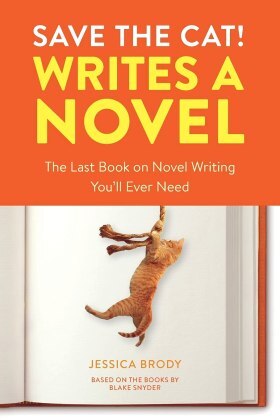
1 Save the Cat Writes a Novel by Jessica Brody
If you’re asking, what does ‘save the cat’ mean? It’s a saying in the writing community first created by Blake Snyder (a screen writer). In short, let’s say you have a nasty main character who nobody would like. It’s important to make him likeable to your reader or they won’t root for him and therefore, will give up on your story. So, have this unlikable character save a cat from a tree. Instant likeability.
That is pretty much what ‘save the cat’ means, but it does not in reach the depth of how awesome this book is. Jessica Brody is a multi-time New York Times best seller. And in this book, she teaches pansters (those who write without a plan) and plotters (those who write with a plan) how to write a novel that will steal their readers hearts every time.
If you read nothing else on this list of mine, author friend, read this book. It will make writing 100x easier!
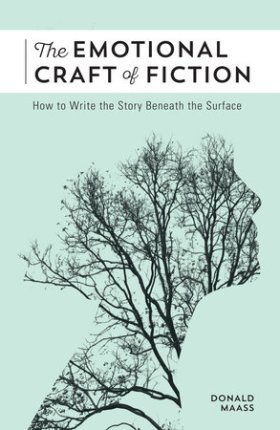
2 The Emotional Craft of Fiction by Donald Maass
This book will take what Jessica Brody teaches you in “Save the Cat Writes a Novel” and add that final layer. The Emotional Craft of Fiction will help you make your reader cry when you want them to cry, laugh when you want them to laugh, and fall for your character without fail.
For every book I write, I reference Jessica Brody’s book above and then listen to this one with my audible account. By incorporating both books, I know my stories are deep and emotional in all the right places!
3 Story Genius by Lisa Cron
![Story Genius: How to Use Brain Science to Go Beyond Outlining and Write a Riveting Novel (Before You Waste Three Years Writing 327 Pages That Go Nowhere) by [Lisa Cron]](https://i.gr-assets.com/images/S/compressed.photo.goodreads.com/hostedimages/1684091601i/34250834.jpg)
How to find the “heart” of your story, an make sure it beats throughout the book. This keeps your story engaging.
4. 7 Figure Fiction by T Taylor.
![7 FIGURE FICTION: How to Use Universal Fantasy to SELL Your Books to ANYONE (Universal Fantasy™: Butter Up Your Writing Book 1) by [T Taylor]](https://i.gr-assets.com/images/S/compressed.photo.goodreads.com/hostedimages/1684091601i/34250835.jpg)
How to put the “butter” into your story, the emotion that readers really care about.

5. Romancing the Beats by Gwen Hayes
I love this book because, as I’m not always writing a romance-focused story, Gwen helps you see how to make your side romances work, too. I don’t know why, but as I’ve delved deeper into writing, this one part has been my struggle. So if you know your romances aren’t as good as they could be (or your betas are telling you so) check out this book!
The post Writer’s Group May 13, 2023 appeared first on ABBY ARTHUR.
August 18, 2021
For Writers
Good for you! You’ve found a dream to pursue.
Now, how do you live it?
I hope you didn’t think it’s as easy as sitting down on a computer, plucking the keyboard, and throwing up that story in your head. There’s A LOT to do. Including:
 Learning the craft Growing your fanbase Showing people you exist And ultimately, keeping yourself motivated.
This page does not in any way contain everything you need to know for success. Being a professional writer is a life-long journey full of life-long lessons. BUT this page has something for everyone: from the beginner to the intermediate to the experienced.
With over twenty years of writing experience under my belt, I decided to make a condensed page to share all I’ve used to grow my business. It’s my hope that sharing my insights will help direct you on your path.
I will update this page periodically as I continue to grow, because I’m always learning, as I hope you will always develop yourself as well.
Now let’s get to it.
Full disclosure: I receive commissions for purchases made through links in this post, and I assure you, it will buy me lots of coffee so I can continue making great stories for you and sharing my insights along the way.
Content in this article:
Better Your Writing Craft
Grow Your Fanbase (Platform building)
Learn the Business/Marketing
Personal Development
What I tell everyone is that writing is a craft. It’s something you learn and get better at as you do it. My favorite analogy is an artist: to be an oil painter, you have to learn how to use oil paint. To clean your brushes in this case, you don’t use water, but a chemical thinner that’s poisonous if the painter doesn’t know how to ventilate the room properly.
Just as there are so many layers to mastering painting, there’s a myriad of layers to mastering writing.
Besides reading in the genera you write (which is so important because it helps you know what your reader is expecting from your book) you must study the craft. In this section, you’ll find my top favorite “how to write” books.
My Top Writing Development Recommendations: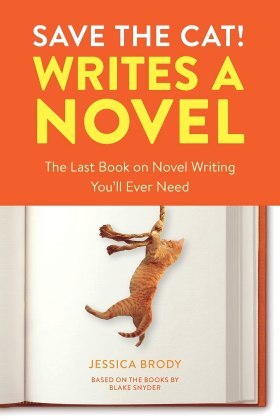
1 Save the Cat Writes a Novel by Jessica Brody
If you’re asking, what does ‘save the cat’ mean? It’s a saying in the writing community first created by Blake Snyder (a screen writer). In short, let’s say you have a nasty main character who nobody would like. It’s important to make him likeable to your reader or they won’t root for him and therefore, will give up on your story. So, have this unlikable character save a cat from a tree. Instant likeability.
That is pretty much what ‘save the cat’ means, but it does not in reach the depth of how awesome this book is. Jessica Brody is a multi-time New York Times best seller. And in this book, she teaches pansters (those who write without a plan) and plotters (those who write with a plan) how to write a novel that will steal their readers hearts every time.
If you read nothing else on this list of mine, author friend, read this book. It will make writing 100x easier!
2 The Emotional Craft of Fiction by Donald Maass
This book will take what Jessica Brody teaches you in “Save the Cat Writes a Novel” and add that final layer. The Emotional Craft of Fiction will help you make your reader cry when you want them to cry, laugh when you want them to laugh, and fall for your character without fail.
For every book I write, I reference Jessica Brody’s book above and then listen to this one with my audible account. By incorporating both books, I know my stories are deep and emotional in all the right places!
Other recommendations:
My YouTube Channel The Abby Arthur
You knew I’d have a selfless plug in here somewhere, right? But honestly, I have a few videos up explaining a way to approach short stories. If you didn’t know, short story writing can help with novel writing because you can complete a whole story faster, helping you learn the craft better.
I don’t have a plan currently to put out more videos (as I’m busy with the other parts of the business), but I hope to make more in the future. For now, the series on short stories that I have can be a nice starting point for you.
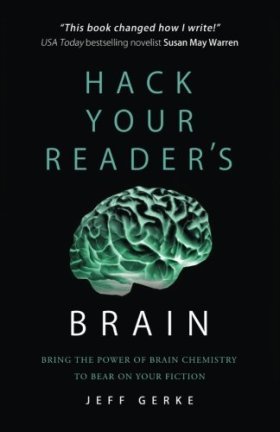
Hack Your Readers Brain by Jeff Gerke
This is a great, quick read that helped me see how human’s respond to story.

The Last Fifty Pages by James Scott Bell
Teaches you how to write endings that don’t suck. My favorite quote from this book is “The first five pages sell your current book, the last fifty pages sell your next book.”
If you don’t nail your ending (say it’s too predictable or too unexpected) your readers will be disappointed that they waisted all their time reading the story. This book by James Scott Bell will teach you to do it right.
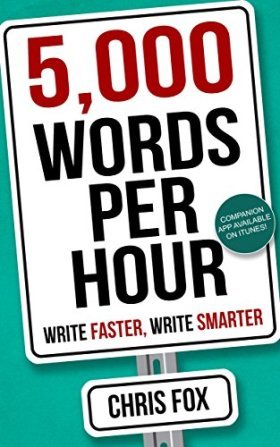
5,000 Words Per Hour by Chris Fox
This book teaches you how to step back in your mind and write like crazy. Sometimes, you’re holding yourself back by overthinking, so a great way to break out of that is to do writing sprints. This concept is where you write as much as you can, as fast as you can, without going back or editing for a set amount of time. Authors tend to do this anywhere from 5-20 minutes. They even get their writing buddies involved.
The concept is great because it gets that first draft out FAST.
Romancing the Beats by Gwen Hayes
I love this book because, as I’m not always writing a romance-focused story, Gwen helps you see how to make your side romances work, too. I don’t know why, but as I’ve delved deeper into writing, this one part has been my struggle. So if you know your romances aren’t as good as they could be (or your betas are telling you so) check out this book!
Grow Your Fanbase(Platform Building)
Growing your fanbase, or as you’ll often hear it called—building your platform—is fundamental to your author business. Think of it like a store trying to sell products, if they had no customers, nothing would sell. But if they had no returning customers, they would go out of business just as fast. Your fanbase are those returning customers, your superfans, the people who love you and will read every darned thing you write.
However, these fans aren’t just customers, in fact, don’t think of them as costumers from here on out, because they are your PEOPLE, the whole reason you write to make these people fall in love with your characters, and if you do everything right, they will!

Strangers to Superfans by David Gaughran
David is my favorite guy to study from. He’s so real and funny. I’m on his mailing list, and if you are an Indie author (the cool term for self-published), I recommend you join too! Here, I’ll make it easy for you, join David’s list here, you’ll even get his book, “Following: A Marketing Guide to Author Platform”. It’s exclusive to his email list, and free! (Can you tell how much I love this guy?  )
)
Anyway, he helps you see how selling a book to every single person in the world just isn’t the way to do business. You are writing for one tribe, your superfans. And they are where your success is. 
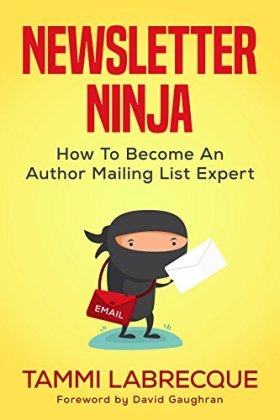
Newsletter Ninja by Tammi Labrecque
Let me take a moment and give a “Thank You” shout out to Tammi. This lady taught me how to get real, relax, and talk to my fans like a human being! She also kicked my butt and told me to treat my fans nicely no matter the size of my email list. Sometimes, we authors (me) get stuck on wanting a surplus of fans, and we forget that every fan is a real person, and they want to hear from us.
Read Tammi’s book to know how to grow your fanbase well, the first time.
Learn the Business/MarketingAt this point, I think it’s wise to say, becoming an author does not happen over night. And learning all aspects of it takes YEARS! Mastering writing alone can take a long long long time. But learning from the professionals will make it take much less time than if you go at it alone.
The good news, learning the business side of writing won’t take as long as mastering writing will. (Though, it’s not always as fun, let’s be honest.) There are many paid programs to teach you amazon ads and the lot. I am currently in those courses, and I’ll link to them here if they prove to be worth my time. For now, here are some of the books that helped me get on the right track.
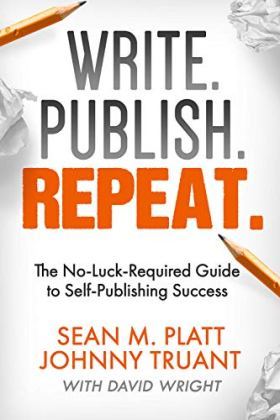
Write. Publish. Repeat. by Sean M. Platt and Johnny Truant with David Wright
This is a quick run down of how the business works. Read it for an overview in a funny, engaging voice. Sean and Johnny are trail blazers in this business, and were writing eBooks way before it was cool.

Writing Killer Blurbs and Hooks by Adam Croft
There’s a tone of content out there to help write blurbs and hooks. I personally love what you will find in the book above (Save the Cat Writes a Novel by Jessica Brody). However, this book is also good to mention because Adam knows his stuff, too. He writes amazing ads to help catch his readers attention, and let’s be honest, it’s good practice to study a topic from different people (I try to shoot for at least 3 perspectives  ). So read this book once you finish Save the Cat, and you’re in the marketing phase.
(Creating a mindset to persevere)
I know what you’re thinking. Writing is my life, I L-O-V-E it. I will never ever ever get burnt out.
I get it, I love writing, too! … But sometimes life gets to be too much, and that too much gets into your writing, and you sink into a black whole of yuk.
So, this section is important! Not just for when you’re in that black hole, but BEFORE you get stuck there. Personal Development will keep your brain sharp, your emotions lifted, and give you “anti-black-hole” powers when it tries to pull you in.

The Quote of the day show with Sean Croxton
Sean, my man! I’ve listened to him since his show was back in the early 100 episodes. And I listened to his show daily for a solid 3 years. Now I do it often, but find myself reading all the books he recommends. So Sean is a constant in my life.
The episodes are less than 15 minutes. So I fit them in when I’m getting ready for work, or when I’m driving to work. (Yes, I currently have a part time job. But I’m working towards changing that soon ).

My number one recommendation is episode 1221: Dr Srini Pillay “An exceptional life is a life of low probability”
All quote of the days are superb, so if one doesn’t jive with you, just listen to another. This podcast can be found on any place podcasts are listed.
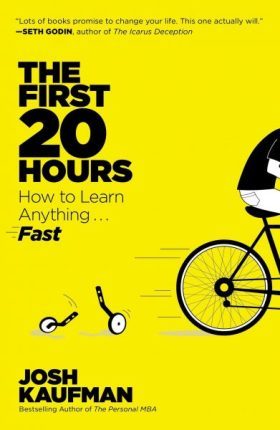
The First 20 Hours by Josh Kaufman
If you’re daunted by a task that seems too big (like this entire author career facing you) I highly recommend this book by Josh. The first three chapters of “The First 20 Hours” gave me understanding in how to face challenging tasks. In short, he explains how it’s natural for something new to make zero sense, and for us to give up because it seems too hard. However, our brains are amazing, and the more we work at something (even if it makes no sense) it will start to make sense because your brain is a genius and literally creates pathways within itself to help you learn. In that way, what was hard becomes bearable and then becomes doable. Check this book out. It will be such a help through any struggle you face trying to learn something new.
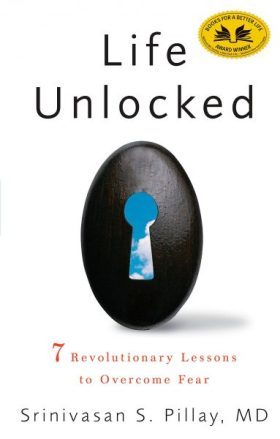
Life Unlocked by Srinivansan Pillay
This book shows you how unconscious fear (which we all have even without knowing) wants to hold us back from our dreams because our brains think they are protecting us. I just started this book at the time of writing this post, and it’s profound. I had to put it here already. If you’re trying to make a career out of your writing, and you think you are doing everything you can, yet you’re getting nowhere, read this book to find your breakthrough!
That’s all I have for now.
Good luck with your writing and work hard. You will get somewhere if you put the work in!
-AA
The post For Writers appeared first on ABBY ARTHUR.
August 17, 2020
Starr Davies Feature
Hello and welcome to the blog where I share writing tips and other cool things in the authoring world!
 Today I’m featuring Starr Davies, author of the ORDINARY series.
I asked her to share a bit about herself, her inspirations and what got her into writing the ORDINARY Duology. Please enjoy her response below!
Writing is in my bones
I wrote my first short story when I was in fourth grade.
In middle school, I spent a lot of time honing my creative skills by building unusual scenarios in my head and sharing them with others.
By high school, I was really into screenwriting—because I love movies—and I carried at least two or three notebooks around with me at all times. Each notebook was a different screenplay.
The stories were all garbage, but it spurred me on. In my “new adult” years, I wrote a couple of really dumb romance books. I’m not sure why. I don’t even like reading romance. The books were completely unsatisfying, and I quickly scrapped them.
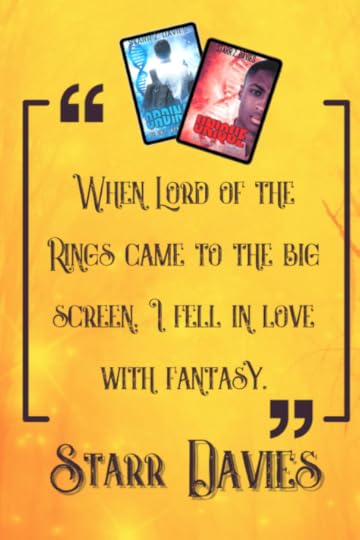 When Lord of the Rings came to the big screen, I fell in love with fantasy.
I knew I wanted to write something unique, but I wasn’t sure which direction to go.
Then I watched Lord of the Rings and read Dragonlance and it was like turning on a light. Now, if I read a book, it needs to have some sort of fantastic element. When I write, it has to bend or break the rules of reality in some way.
Robert Jordan’s The Wheel of Time series opened my eyes to stories that were about more than just characters and plot, but worlds so richly intricate that they almost felt real.
The series was an epic about lives and politics and purpose and so much more, and it had a profound effect on me. Saying that Robert Jordan changed my life would be an understatement.
Fantasy was not the only genre to catch my attention either.
I had a love for dystopian fiction as well.
Stories like 1984, The Hunger Games, and Divergent played off the concepts of oppression, social power, and capitalistic greed that I found relatable.
I also grew up loving superheroes like Batman and Spiderman. Michael Keaton’s Batman had a strong impact on me. It broke me out of the fairytale, everything is happy mode and showed me how strong characters can be.
My love for superheroes also drove me to ask, “What if the hero didn’t have a superpower but everyone else in the world did?”
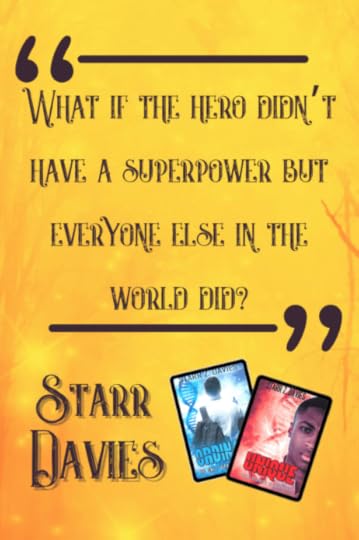
The concept for Ordinary took hold.
Early readers loved the reversal of the hero being someone without special powers instead of someone with them.
So I wrote the first draft—and it was terrible.
A total mess.
But I was determined to finish it, so I joined a writer’s group who helped me identify the problems and sort them out. Then I rewrote the book—twice—before I was satisfied.
I’ve read a lot of young adult and fantasy books, and in almost every one of them, the hero of the story has some greater power than the other characters.
Sometimes it’s based on magic or some sort of alteration to their DNA. Sometimes it just happens because of who their parents are. The characters are thrown into a situation outside of their comfort zone and have to find a way to survive.
While Ordinary isn’t so different from those stories, it also isn’t the same.
Ugene doesn’t throw himself out of his comfort zone. Instead, he uses his brain, finds the logic in various situations, and solves the puzzle to get out of those situations.
Early readers compared him to a post-apocalyptic teen Sherlock Holmes.
I also loved the idea that Ugene isn’t super powerful like most of the heroes in these sorts of stories tend to be.
He has no real power at all, yet he still has to find a way to escape his situation against all odds. After all, how does someone with no power stand up to those with powers?
I’m the sort of reader that loves great characters; they can make or break a book.
As I wrote Ordinary, I fell in love with the characters.
Ugene often made me laugh, bringing his clever wit to the table even in grim situations. He evolved and found his footing along the way. I enjoyed giving him the freedom to take the right path.
Miller is the snarky, distant guy who insists he wants to be left alone while simultaneously throwing himself into situations right alongside Ugene.
The cast in Ordinary and Unique is pretty big, and all of the characters within that cast have their own unique qualities to bring to the table. While most of them have nothing in common, they all trust in Ugene, even when he doesn’t trust himself.
I can’t imagine not writing anymore.
Writing a book is like taking a really long journey with a new group of people, only to discover you’re great friends at the end. But sadly, it’s the end.
I enjoyed a lot about writing this book: delving into this strange and different world; challenging myself to come up with unusual solutions to ordinary problems; forming a connection with the characters.
Ordinary changed my life.
Not just because I loved the characters and story so much, but because it rekindled my passion for writing when I was floundering.
Those who don’t write may not understand the pure joy and pain that comes from the process.
Writers establish a relationship with their stories that is often visceral.
We don’t just bond with characters; we help them grow and accept change.
We don’t just watch characters die; we feel the agony deep within our souls.
We don’t just follow the twists and turns of the story; we shape and mold them into a beautiful ending.
The joy of writing, for me, is imagining the places that my mind and character can go, taking them there, and feeling all of their emotions with them.
The sky is the limit.
-Starr Davies
Thank you Starr for sharing you’re journey. I absolutely relate with the rewriting process! I’ve done that a number of times to my own books.
For those of you wanting to get a copy of Starr’s amazing story here link’s to buy them!
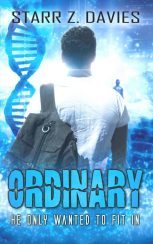
ORDINARY: https://starrzdavies.com/books/ordinary/
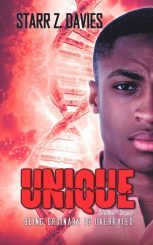
UNIQUE: https://starrzdavies.com/books/unique/
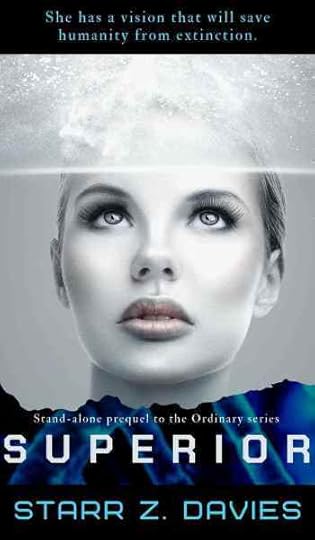
Starr also has a FREE book available on her site called SUPERIOR, which is a prequel to the duology. You can get a copy => here
About the books:
ORDINARY Description
Divinic. Somatic. Psionic. Naturalist. Who will you be?
Having a superpower is ordinary. Your power determines your job, social class, and future success.
But Ugene doesn’t have a Power. The only thing special about him is that he isn’t special at all. Ugene is Powerless.
Despite desperate self-inflicted research, he can find no traces of the Powers in him. Ugene’s prospects dwindle, and he learns that his father is suffering a degenerative disease that will soon kill him.
So when the most prominent biomedical research company in the city offers Ugene a solution, he jumps at the possibility to be ordinary. All he has to do is agree to allow them to use him in their research. But the longer he stays at the research facility, the more he realizes something isn’t right.
Friendships are forged. Trust is broken built and broken. And everything Ugene thought he understood and believed is called into question.
Who can Ugene trust in his search for answers? What is he willing to sacrifice for Powers?
Unique Description
He lost everything. His dad, his best friend, and the woman he loves.
Ugene and the other test subjects escaped Paragon. They thought they were finally safe. But the battle for freedom is far from over.
When a rouge group calling themselves the Protectorate offers to help Ugene, he worries that his friends are falling into another dangerous trap. The struggle for freedom becomes a desperate fight for survival. Ugene is determined to stand up for what’s right and save the oppressed citizens of Elpis from persecution by Paragon and the Directorate.
The deeper Ugene digs, the more he uncovers about the Directorate’s sinister secrets, the Protectorate’s true goals . . . and the dangerous game he is about to play.
It’s time for the deception to end. It’s time for the truth to finally come to the surface…
And it’s time for everyone to finally learn that being Powerless isn’t weakness.
The post Starr Davies Feature appeared first on ABBY ARTHUR.
July 6, 2020
6 Fantasy Short Story Writing MISTAKES TO AVOID!
Want to make sure you’re writing your short stories for optimal reader enjoyment?
In this video I will point out 6 fantasy short story writing mistakes to avoid so you write your best short story yet!

These 6 mistakes I’m about to share are what I’ve learned over my 20 years of writing. Knowing to avoid them has helped make me become a better writer.
Let’s dive in!
And as always, for the best fantasy writing advice, subscribe to my channel (Abby Arthur) and hit the bell to be notified when I post a new video every Tuesday.
Mistake to Avoid #1 A LENGTHY INTRO.
If you’ve been around the writing development world for any length of time, I’m sure you’ve heard that long, drawn out intros do not cut it for novels in today’s writing age.
You’re supposed to get right into setting up the plot, or as I like to think of it, “showing the reader why they should care about your character.”
For the short stories of today, I find this advice to be even more true. You have even less time than a novel to set up your short story’s plot.
So, what would take five pages to make a beautiful intro in a novel will take takes two to five paragraphs in a short story.
Don’t be shocked. It’s the beauty of short stories. Once you master the quick and intriguing short story intros, you’ll realize novel intros are a synch!
Once you master the quick and intriguing short story intros, you’ll realize novel intros are a synch!
Once you master the quick and intriguing short story intros, you’ll realize novel intros are a synch!
Bottom line, make your intro gripping, intriguing, and magical, and leave the long, boring intro slain in the battlefield to rot.
Mistake to Avoid #2 THE LACK OF A FOCUSED CONFLICT
A conflict makes a story interesting. But if you have too many conflicts going on, your story will become muddy and hard to follow.
Less is more in a short story, so choose one massive conflict, and write your short story about that!
If you’re curious about how to find your massive conflict, I explained more about it in my 4 Easy Short Story Writing Tips video. So go check that out!
Mistake to Avoid #3 EXCESSIVE DIALOGUE, epically during a fight scene.
Oh, the dialogue.
Some people love it, some people hate it. I gotta say, I’m a lover…
Because when you get it right, your story feels so well rounded and gorgeous that you just want to read it again and again!
But, too much dialogue, and readers get annoyed.
Like anything, in a short story, less is more. ONLY give your readers the bear minimum of what they need to understand your story and the direction it is going.
Fluff isn’t necessary.
The key to better dialogue is to first know your character inside and out.
The key to better dialogue is to first know your character inside and out.
Are they sarcastic, kind, rude, bubbly?
This will dictate how they speak, and therefore, help make your dialogue intriguing.
Bonus Tip* Don’t feel chained when you’re writing your first draft.
It’s good to know what you’re shorting for, but don’t let the need to be “short” put you in a box.
Let your inner writer work his or her magic. Then you can cut and refine the dialogue in the second draft.
If dialogue is your weakness, use your second draft to analyze what you’ve written and ask yourself, “Can my character say this better?” and “Is their comments even necessary?”
The sharper the dialogue, the better.
Mistake to Avoid #4 CLICHÉ CHARACTERS
Is there a time and a place for a cliché character? Arguably…Sure.
But if you’re goal is to write the best short story YOU’VE ever written, then leave that cliché character idea stabbed in the heart to die!
If you chose a prince, give him a trait that you’ve never seen in the books you’ve read.
If you chose a prince, give him a trait that you’ve never seen in the books you’ve read.
If you have a warrior princess, what makes her different than all the other princesses we’ve read about.
Note that I’m NOT saying DO NOT write about a prince or a warrior princess. (There’s no 100% original idea in the writing world, as we all eventually come to know.) I’m simply saying, don’t repeat what you’ve read or watched in a bunch of stories before.
Talk to your writing friends, your inner writer, and your muse about your character idea, and if it ends up being a cliché (like a damsel in distress who needs to be saved by a prince) how can you put a twist on that idea to make your story SWASHBUCKLING AWESOME!
On that note, what fantasy character type is your favorite? Tell me in the comments below!
I gotta say I’m a sucker for the handsome warrior guy. He can be a prince, but doesn’t have to be. Handsome warrior guy is my thing!
Mistake to Avoid #5 TOO PREDICABLE
It’s too easy to write a story that is obvious.
Have some fun with your story writing by give your readers the story they want, but in a way they don’t expect.
Keep your reader on their toes, and they will want to keep reading.
Mistake to Avoid #6 A “GOD” SOLVES THE PROBLEM
Don’t ever put your characters through hell, and then have your worlds god figure swoop in and make all the wrongs right.
We work hard to put our characters through hell. They need to work hard to get out of that hell, or all our effort was pointless.
The whole reason your reader is rooting for the character is because they want to see the character save themselves.
You can have a guide help, (In fact that’s probably expected) just don’t let the guide do all the work.
You’re reader will feel betrayed, and that’s the last thing we want!
Conclusion
There you have it, my 6 Fantasy Short Story Writing Mistakes to Avoid!
If they’ve helped inspire you in any way, tell me in the comments below! And share this post with your writing friends!
On a side note, be sure to get yourself a copy of my book, Twins of Shadows, which is three short stories made into one novella.
Use it as inspiration for your own short stories and enjoy your fantasy writing journey. You can download the book for free on my web site, AbbyArthur.com. A link is also in the description below.
If you liked this video, hit that like button, and be sure to subscribe so you never miss a new video from me!
And I’ll see you in the next post!
-AA
The post 6 Fantasy Short Story Writing MISTAKES TO AVOID! appeared first on ABBY ARTHUR.
June 29, 2020
8 Fantasy Short Story Writing Tips YOU MUST KNOW!
Need to beef up your short story writing? Or want to make your next fantasy short story the best one yet?
In this video, I show you the 8 writing tips YOU MUST KNOW to help you do just that. So stick around.
These 8 steps I’m about to share are ones I use in every short story I write, including my book, TWINS OF SHADOW, which is three short stories made into one a novella.
Let’s dive in!
And remember, For the best fantasy writing advice, subscribe to my channel (Abby Arthur) and hit the bell to be notified when I post a new video every Tuesday!
1 Super High Stakes
You HAVE to have super high stakes – and I don’t mean death.
You can risk the character’s life, but that’s not going to make a deep connection between your character and your reader.
Life and death is risked all the time, so take it deeper.
For Example
Let’s look at Harry Potter by JK Rowling. Yes, Harry’s life is on the line because “He who shall not be named” is after him. But is that why we care about him? NO!
We care about Harry because he is an orphan and his aunt’s family treats him horribly, so we are sympathetic towards him. We also want to root for his freedom from their tyranny.
The steaks, therefore, become more than life and death, but the question of whether Harry will break free from his miserable life and have a better future.
Do you see how the deeper risk makes the “stakes” higher? This in turn makes YOU become interested and start to care about the story line? Your readers feel the same!
So the more depth you can put into what your character is risking, the more HIGH your stakes end up being.

2 Awesome Main Character
This doesn’t mean they have to be a superhero figure. It means there must be something about them that’s special
Some Examples:
A prince with a disability that makes it difficult for him to talk with people – (I’d like to know how he saves the kingdom despite THAT obstacle!)
A blacksmith’s daughter who wants to be a scholar, but instead is forced to learn the skills of the blade.
This special trait can be a magical power in addition to the character’s desires, abilities or lack thereof.
Bottom line, I’m telling you to veer away from cliché. If you’ve read about it before, don’t copy the character idea, give it your own twist!
I what to read what you come up with! Your imagination is phenomenal, so let it take you to the depths of your amazing, not cliché, character.
3 Absolutely No Pointless Descriptions
In short stories, you don’t have a lot of time to tell you story. Therefore, you should not waist your precious word count on pointless descriptions like the color of a flower and the texture of its petals.
You also don’t need to tell me everything your character is wearing or describe ever scar on their body.
Some character descriptions are acceptable. So let me show you an example of good and bad descriptions:
Good Example
“His purple eyes turned to the sky,” could work because it’s super quick and included in the actual text of the story.
Bad Example
“He had black hair and pale skin, dressed in clothes as black as night with a long sword strapped to his side. A deep scar cut across the side of his face. The expression he bore drove daggers into the hearts of whoever saw him.”
This is a chunk that would take up too much space in your precious short story. What you should do instead is this:
Describe your character’s physical qualities (hair, eyes, clothes, etc.) in a way that drives your story forward.
Give the briefest information your reader needs for the story to make sense.
Here’s how I’d change the bad example:
“His black hair blew in the wind as he swung his long sword towards the demon.”
… and then continue on with description scattered through the story. It doesn’t waist your word count and makes the story smooth like caramel. YUM!
In this area of ABSOLUTELY NO POINTLESS DESCRIPTIONS, what we said about describing a character goes the same for settings.
Don’t spend a full paragraph or two explain what the setting is. Show it as you reveal the epic plot your short story is about.
I say all of that with love and no harsh feelings, btw. Short stories are like a drill, so I apologize if I sound like a drill sergeant here.
Mastering this point will sharpen up your stories and make them much more professional. And you want to be professional! No mediocre here!
4 Use Magic
It may seem obvious, but just in case it wasn’t, I’m pointing it out here.
Have you ever read a fantasy story without magic?
It’s a must in our genera, and if you are labeling you short story as fantasy, your readers are EXPECTING magic, so please, don’t let them down!
On that note, comment below and tell me what your favorite type of magical powers is! Mwahaha! (Evil laugh, why did you sneak in there?)
My favorite power, btw, is invisibility. I’d be so cool to hide whenever I want and move objects to freak people out! (Sorry, evil side coming out again!)
Let’s check out point 5.
5 Don’t Use Too Many Characters
I’m going to sound like a broken record here, but remember, you only have a short amount of time to tell your story. (Hence the word short, right? 
June 22, 2020
Short Story Writing Tips for Fantasy| 4 EASY STEP
Need help writing that fantasy short story?
That’s what this YouTube Video “Short Story Writing Tips for Fantasy| 4 EASY STEPS.” Is all about! Check it out here:
By the end of the video you will have 4 easy steps to make writing your short story SO easy, and help you greatly improve your short story writing skills!
I’ve used this exact 4 step formula to write my book, Twins of Shadow. Which is three short stories pieced together to make one novella. And now I use it for every short story I write.
So grab pen and note pad, or your phone and a note taking app, and let’s dive in!
But first!
For the best fantasy writing advice, be sure to subscribe to my channel (Abby Arthur) and hit the little bell so you are notified every time I post a new video every Tuesday.
And now it begins!
Here’s your first note:
Before you start writing your short story, there are a few things you need to figure out.
First off, your massive conflict.
MASSIVE CONFLICT.
This is the challenge your character is going to face.
The point of the massive conflict is to challenge your character so your story interesting. It also gives your story direction.
I like the word MASSIVE here because it’s not just a conflict or a minor plot.
This is the driving force of your story.
It HAS to be interesting AND has to risk everything your character holds dear. If it doesn’t do that, you need to pick a different Massive Conflict.
Let me give you some easy examples.
The queen is taken hostage, and the farmer boy who never knew he was her son, is now destined to save her.
The queen being taken hostage, that’s your massive conflict.
Here’s another example,
A fire breathing dragon comes to destroy the kingdom, and unwitting farmer boy is the only one who can save everyone.
In this story line, the dragon coming to destroying the kingdom is the massive conflict.
Word Count
The second thing you need to decide before you start writing is to decide how long your short story is going to be.
Specifically, what is your word count.
Short stories have such a wide word count range that they can be written in, but I recommended you choose about 4,000 words. This will help the for-step process be so much easier to implement.
Narrator
The last thing you need to do before we jump into the four parts process is decide who’s narrating.
For simplicity sake, I recommend you keep it down to one character narrating for your first short story. In that case, it won’t become too confusing for your reader.
Once you have writing one perspective mastered, then you could branch out to two characters narrating.
And of course, you don’t even have to do it in first person, you can write it in third.
You also never have to branch out beyond one character narrating, but for those writers out there like me who just can’t help themselves, you can work up to it.
If you do branch out to a dual narration, make sure you pay close attention to how the story flows and make sure it makes absolute sense from the reader’s perspective. If it doesn’t, go back to one perspective.
4 EASY STEPS
Alright! It’s time to reveal the four easy steps. I will simply list them here first, and then break them down over the rest of this post.
1 Intro/set up
2 The Chase
3 The Returned Chase
4 Confrontation
Since you know how long you want your story to be, you’re going to divide that number by four.
So if your writing 4000 words, each of these parts is going to be 1000 words.
Keep in mind that this is just a rough guide for your inner writer. Don’t stress about the word count. Your story parts can be slightly longer or shorter.
Knowing what your shooting for when you’re writing makes it so much faster and easier, trust me!
Now, Let’s go break these four parts down.
And at any point, if you have a question, be sure to post it in the comments below!
The Intro/ Set up.
This is where you show your reader who your main character is.
This is NOT where you show random facts that mean nothing to the story.
In fact, this is where you show me why the massive conflict is massive, even though you are not bringing in the massive conflict yet.
For example. Let’s go back to the dragon destroying the kingdom as the massive conflict.
Here in the intro, you will present farmer boy (or girl) and show us everything that is important to him or her.
His mom
His girlfriend
His little sister
His dream to start a new trade and help the villagers get ahead in life.
It’s important to give your main character traits that make your reader feel connect to your main character—cause the reader to feel the character’s compassion and real humanness.
Side note* When I say human, he doesn’t necessarily have to be of the human race, but he does have to have relatable qualities for the reader,
So the “humanness” comes from the way the person acts, not necessarily the race that the character is.
NOTE* This doesn’t mean the character has to be a “good person”. They can still be an assassin, but they just can’t be a total and absolute jackass, or your reader will not care about him or her.
In the intro, you will also HINT towards the massive conflict.
For example
Back to the dragon destroying the kingdom:
Our farmer boy could hear news that a dragon is attacking the kingdom, but it’s hasn’t come to the village yet.
This is because we are taking this time to establish what’s important to our character and it’s not time to have the massive conflict appear yet.
Bonus note*
Something you need when you are writing your story is an amazing first line.
The first line is you hook, and it better entice your reader IMEDIETLY!
Don’t give me a line like: the grass was green and the air was calm. Unless you’re going to match that with a sucker punch.
The grass was green the air was calm, laced with a deadly gas of poison wafting with the push of the wind.
So that’s the intro,
Let’s move on!
The Chase
This is where your MASSIVE CONFLICT appears. So after your first 1000 words, it shows it’s ugly head, and is the start of this quarter.
In detail, this is where the massive conflict appears and threatens everything you’ve just establish to be important to the main character.
His family
His business
His girlfriend
His dreams
WHATEVER you told me as the reader is important.
It’s not that the important thing is completely taken away yet, it’s just that it is threatened, and the main character now has to run away to survive.
For example:
The dragon arrives at farmer boys house, burns down house, threatens the village, severely injures his girlfriend. He runs away with said girlfriend and tries to find a way to heel her.
That now brings us to part three.
The retuned chase
This is where the main character now decided that his or her dreams (or whatever it is you told me is important to the main character) is now more important than his life, and he’s going to do something about the massive conflict.
Example:
This is where the farmer boy decides he needs to slay the dragon, and will therefore learn the skills to hunt down the dragon.
You have 1000 words to write here, so make it interesting.
The ending of this 1000 words or this part will bring us to the final part of the four step process.
The Confrontation
This is where our character has finally confronted the MASSIVE CONFLICT and we get our amazing, epic battle scene.
Example
So, with the farmer boy, he is fighting the dragon to take back what matters to him, and this part will end with him winning.
Bonus Note on the confrontation*
Think of your short story as if it was a chapter within a full novel. In that case, you know you don’t have time to close a bunch of plot twist.
You do, however, need to close the MASSIVE CONFLICT or you will not have happy readers.
And you WANT happy readers to be a successful writer. Because happy readers read more of your books.
Another Side Note
Short story series CAN carry on the massive conflict over the entire series, but in that case, you need to have a sub conflict (an issue keeping your character from defeating the massive conflict), and that sub conflict needs to be resolved by the end of each short story in your series.
This in turn means you will have a minor “massive conflict” in each short story of your series, and your final short story in your series would then close your major massive conflict.
Conclusion
Now you know my four easy steps to writing a short story. Want to see them in action and make the plan stick better? You know you do!
Well remember how I used this formula to write Twins of Shadows, which is three short stories made into one novella. You can download the book for free right here and use it as a reference. Click the image below to download the book!

If you found this post helpful, hit that like button, leave a comment below, and be sure subscribe to my YouTube channel for more fantasy writing tips posted every Tuesday.
Also, share this this post or video with your writing friends to help them improve writing skills.
Thanks for reading, and I’ll see you, my fantasy writing friend, in the next video!
The post Short Story Writing Tips for Fantasy| 4 EASY STEP appeared first on ABBY ARTHUR.
May 9, 2020
What You Didn’t Know About Albree Vaydmehn
Ever wish you could talk to your favorite character (and not seem like a crazy person)?
You’re in luck!
As an author, I get to talk to my characters all the time. No, it’s not because I’m nuts … or am I?
It’s a great exercise I use to get to know and understand my characters better. Since I do this periodically, I thought, heck, why not let you enjoy this experience too?
So, without further ado, let’s get on with the interview!
 Interview with Albree Vaydmehn from “Twins of Shadow”
Q – Albree, some of our readers already know who you are from your debut in the ya fantasy book for teens, TWINS OF SHADOW, but not everyone here has read the book yet. Can you tell us who you are?
A – Yeah. Sure. I’m seventeen years old. My name’s Albree Vaydmehn, and I’m twin brother to Tarrek Vaydmehn—
Yes, we’re identical. It’s a pain. He’s heir to the Jasikx throne, and I’m fortunately the hidden side kick.
Q – Quite literally hidden, if I’m not mistaken. You have a special ability?
A – I do. I can become shadows and walk in them. Great way to spy… kind of a lonely life though.
Q – What do you think people need to know about you when meeting you for the first time?
A – Oh gods, (rubbing the back of his head and blowing out a long sigh)
I guess I’d say it’s better if they didn’t run into me. But if we cross paths, I hope it’s because you’re waiting in line for my next show. Not because you’re my next target.
Q – As long as you’re not trying to kill me, I don’t think I’d mind you hunting me down.
A – (Silent stare) … (I’m not sure he wants to elaborate on this.)
Q – You mentioned waiting in line for your next show. Are you in a band?
A – Yes, with my sister, best friend, and cousin. It’s called Sheva and the Serenities. Sheva’s my little sister and the lead singer.
Q – Isn’t the music more of a hard rock sound?
A – Yes.
Q – Then what made you guys decided to call it “the Serenities”.
A – (Snorts in a cute way) Really, it was supposed to be an oxymoron. You’re right. There is nothing serine about our music.
Q – Do you write any of the songs?
A – Yes, some of them are coming out in the future books, if I’m not mistaken.
Q – You are correct. Do you know when people can expect to see you in more stories?
A – I can’t give a direct answer. Top secret stuff and all. But if I overheard right, there’s more coming out later this year.
Q – Are you in any of those upcoming young adult fantasy stories?
A – (Nervous chuckle.) So far, I’m in all of them.
Q – Any secrets that you can let slide for your readers?
A – Um… (giving me a lifted brow) I don’t want the author to kill me.
Q – Oh, just a little something, please!
A – You’ll get a glimpse at how my brother and I help capture some of those Jäyûns. [Magic wielding person—for those of you who don’t know]. And maybe learn how I first met Hinya.
(Looks nervously to the side)
That’s all I can say for now. I have to go.
(Seeps into the shadows and disappears)
Conclution
So there you have it, folks. A slight glimpse into your young prince and his magical powers. Don’t you love that he’s in a band? I can’t wait to hear his stuff! And see those fantasy stories he said will come out later in 2020, your time, of course, not his.
If you enjoyed this moment with Albree, let me know in the comments below. If you want another interview with him, please tell me what questions you want me to ask, and I’ll be sure to rope him into another interview!
Until next time, be sure to share “Twins of Shadows” with your friends so more people can be excited about the fantasy adventures, assassins, and magic just waiting to be explored!
Your author friend,
Abby Arthur
Join my VIP mailing list and get “Twins of Shadow” FREE
Join Now!
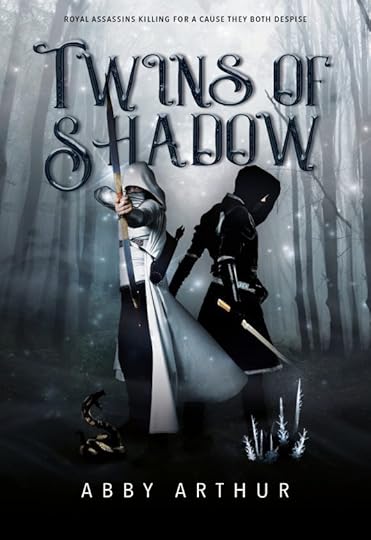
Twins of Shadow
Royal assassins killing for a cause they both despise.
By submitting this form, you agree to receive email marketing from Abby Arthur.
100% privacy guaranteed.
The post What You Didn’t Know About Albree Vaydmehn appeared first on ABBY ARTHUR.