
Elizabeth Suggs's Blog
November 5, 2025
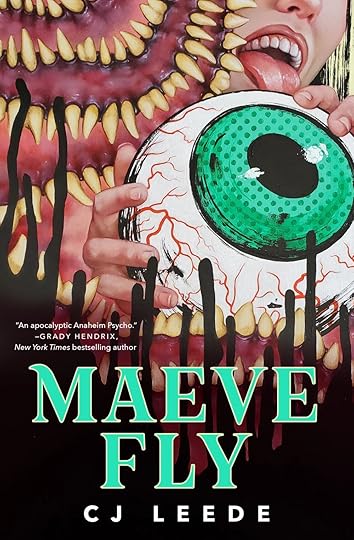
Book Review: Maeve Fly
By Elizabeth Suggs
Maeve Fly by CJ Leede isn’t just a horror novel—it’s a character study dressed in glitter and gore. It’s the kind of book that sits somewhere between a fairy tale and a fever dream, where every page feels both cinematic and personal. And, like the best horror, it asks the question we don’t always want to answer: what does liberation look like when it comes from the darkest parts of ourselves?
Maeve herself is intoxicating to read, not because she’s likable (she’s absolutely not), but because she’s written with such sharp clarity that you understand her. You feel the obsession. The hunger. The loneliness disguised as confidence. There’s a violence to the prose that feels intentional, almost poetic, as if every sentence is holding a knife under your chin and asking you to keep reading anyway.
I came into this book not knowing exactly what to expect, but the ride was well worth it. The writing is gorgeous, haunting, and full of a strange intimacy that sticks to your ribs. There’s a rhythm to Leede’s pacing that feels like descending slowly—almost gently—into madness. Maeve’s Los Angeles is neon-lit and rotting from the inside, and following her through it feels like walking through a carnival funhouse where every mirror reflects a more monstrous version of yourself.
But we have to talk about the ending.
*Spoilers
I’m giving this five stars for most of the book, but the finale nearly made me drop it to four and a half. Not because it wasn’t bold—it's bold. It’s unflinching. It’s exactly the direction a character like Maeve would go. But emotionally? I was rooting for Gideon. I wanted him to survive, or at least matter in a way that felt… aligned with the depth that had been built. His arc deserved more than a sharp, fast exit. I’ll say it: Gideon should have lived.
Yet even with that disappointment lingering, I can't deny how strong the novel is as a whole. This is horror with teeth. It’s messy, tragic, and magnetic. It’s not afraid to be ugly in ways that feel deeply human. There’s a confidence in Leede’s voice that makes me want to reread sentences just to feel them again.
Some standout elements for me:
The prose: lyrical without being flowery, visceral without being gratuitous.
The atmosphere: Los Angeles has never felt more haunted.
The emotional dive: Maeve’s interior world is disturbing, yes—but also painfully lonely.
This book won’t be for everyone. If you need your characters “redeemed,” you’ll struggle. If you need clean morality, look elsewhere. But if you’re drawn to stories that explore the thin line between love and obsession, identity and performance, desire and annihilation—Maeve Fly is absolutely worth your time.
It’s horror that lingers, not because of the blood, but because of the intimacy.
The real question is:
Did we witness a monster being made, or a monster laying herself bare?
Favorite Quotes:
“Los Angeles glitters like a jewel lost at the bottom of a lake—beautiful, decaying, unreachable.”
“I am the ghost in my own story. I am the haunting.”


May 5, 2025
Book Review: Captured
By Elizabeth Suggs
Captured, edited by Robin Knabel, isn’t just a horror anthology—it’s a love letter to a very specific form of nostalgia: the flickering light of a VHS tape, the maze of video rental shelves, and that sacred ritual of choosing the perfect Friday night movie. But it’s also a warning. These stories ask: what if the horror didn’t remain on the screen?

As someone who didn’t grow up in the ‘80s but still feels oddly attached to it through the pop culture it left behind, this collection really resonated with me. The stories here are soaked in that analog dread—the kind you can almost smell (tape sleeves, stale popcorn, and something else you can’t quite place). But what makes this anthology work isn’t just its setting. It’s how the authors use that nostalgic backdrop to explore deeper fears—about memory, karma, media, and the things we try to rewind but can’t.
Two stories stood out the most for me: Robin Knabel’s “The Bucket List” and Jonathan Reddoch’s “Vehicular Crash Report.” These weren’t just good horror stories—they lingered, long after I closed the book.
Robin’s story reads almost like a meditation on obsession, danger, and our relationship with media. It has this quiet, creeping dread, and the shark imagery brought me back to Jaws in the best way. It doesn’t scream “80s” in an obvious way, but it captures that era’s fascination with the line between real and recorded—especially when it comes to death. There’s a subtle nod to Faces of Death that ties it all together, and by the end, I felt like I’d just surfaced from deep water.
Jonathan’s “Vehicular Crash Report” takes a totally different tone—dry, darkly funny, and ultimately chilling. The format is clever, but it’s the story beneath that structure that really grabbed me. It’s a classic tale of karmic justice, but with enough originality and bite to make it feel fresh. That last line was so sharp it made me stop and reread it—one of those endings that just clicks.

Of course, the rest of the anthology has plenty to offer. Some stories lean more into traditional scares (“Raising Hell at Blockbuster” is pure rental-era chaos), while others dig into more psychological horror. “Cinema Vérité” brings cursed-object horror into the camcorder era, and “Skin Flicks” walks a fascinating line between gore and intimacy. The overall flow of the book is smooth, with each piece building on the atmosphere of the last.
What I appreciated most is that this isn’t just a trip down memory lane. It’s a reminder of how powerful stories—and the devices we use to tell them—can be. In the ‘80s, horror didn’t just live in theaters. It crept into living rooms, with the whir of a VCR, in the fuzzy image of a dubbed tape passed between friends. Captured taps into that fear and makes it feel immediate again.
If you’re someone who loves horror, especially the kind that makes you a little paranoid about the blinking light on your old electronics, this anthology is worth your time. It’s nostalgic, yes—but it’s also deeply unsettling in the best way.
The real question is: Are you afraid, or will you press play?
Favorite Quotes:
“The cage rubs against the boat with an orchestra of metallic screeches.”
(“Bucketlist”)
“And a few other appendages I won’t name.” (“Vehicular Report”)
November 8, 2024
Book Review: Horror Film Poetry
By Elizabeth Suggs
Horror Film Poetry is an electrifying love letter to the genre that sends chills down your spine and tickles your funny bone all at once. This unique collection features persona poems that take us through the chilling and hilarious realms of iconic horror films, showcasing both the terror and absurdity that define this beloved genre. Accompanied by striking artwork from Joel Amat Güell, this book is a visual and literary feast for horror enthusiasts.
From Alien to Zombieland, the table of contents reads like a curated film list for your next horror movie marathon. Each poem dives into the essence of its film, capturing the themes, emotions, and memorable moments with a sharp wit that resonates with fans. The shorter poems pack a punch, delivering impactful lines that linger long after reading. For example, in It Follows, the haunting line “We are natural selection haunting itself” speaks volumes about the film’s chilling premise.
One standout is the poem based on American Psycho, where the author mirrors the book's infamous name drops and music references. Lines like, “I then stab the corkscrew into her thighs, spread them and use her labor to pull off the cork,” evoke the visceral horror of the story while maintaining a twisted sense of humor. The tone across the poems feels familiar yet fresh, reflecting the essence of the films while adding a unique poetic flair.
The illustrations by Joel Amat Güell are a perfect match for the verses, enhancing the mood and atmosphere of each poem. Whether it’s a grotesque visual representing The Thing or a playful nod to Shaun of the Dead, the art amplifies the reading experience and brings the horror to life in vivid detail.
Horror Film Poetry does an exceptional job of balancing the chilling aspects of horror with humorous undertones. Lines like “The night ocean is champagne on my skin / Drunk men are jellyfish,” from the Jaws poem, evoke a sense of dread wrapped in a layer of dark humor, capturing the essence of both the film and the genre itself.
Favorite Quotes:American Psycho: “Her screams and whimpers are the most interesting things she has said all night.”
A Serbian Film: “God is a camera lens.”
The Beyond: “It’s easier for hell to pass through the eye of a needle, / Than for an innocent woman / To enter the kingdom of heaven.”
Evil Dead: “Evil is in my friend, / But my cleft chin and chainsaw / Are what the dead fear.”
Overall, Horror Film Poetry is a brilliant celebration of horror films, weaving together humor, terror, and art into a compelling collection that fans will love. It serves not only to entertain but also to provoke thought about the nature of horror and its reflection on society. Whether you're a die-hard horror aficionado or just looking for an engaging read, this book is sure to satisfy your cravings for both chills and laughs.
October 17, 2024
Book Review: What Immortal Hand
By Elizabeth Suggs
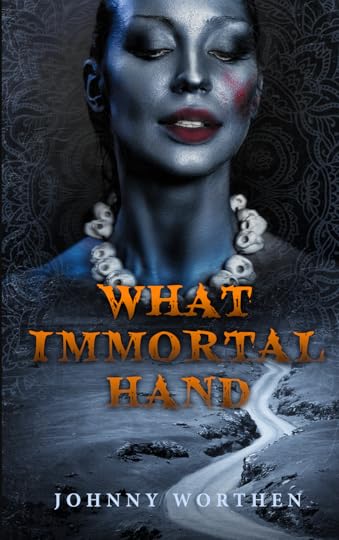
What Immortal Hand by Johnny Worthen is a gritty, immersive thriller that grips you from the very first page and doesn’t let go. The novel follows Michael Oswald, an insurance claim investigator, whose routine case searching for a missing truck spirals into a far deeper and more sinister reality. There’s mass murder, cults, a forgotten past, and more.
One of the things I loved most about this book is how seamlessly Worthen weaves together the story. Each clue Michael uncovers is like tugging at a thread that unravels an entire tapestry of dark secrets. The narrative starts off grounded, a bit mysterious, but as things progress, it turns into something much darker—both for Michael and for the reader. You can feel the weight of the unknown pressing down on him as he loses time and is called by strange names that aren’t his, and yet, somehow, they feel like they are.
Worthen’s portrayal of Michael’s journey is brilliantly done. The character’s progression from a man investigating a simple missing truck to someone questioning his very identity is captivating. You feel his confusion and fear as the truth slowly reveals itself—he’s investigating something far beyond his comprehension, yet it feels like he’s lived it before. This slow burn of realization, where the protagonist is just as lost as we are, kept me hooked the entire time.
What sets What Immortal Hand apart is the way it seamlessly blends elements of mystery, horror, and psychological thriller. The setting—isolated highways stretching across Nevada, Utah, and Northern California—adds to the sense of desolation and unease that pervades the story. It’s not just about the crimes Michael uncovers, but the eerie, almost forgotten parts of himself that resurface along the way.
The novel also touches on larger themes, such as the marriage of American culture and spirituality. There’s an underlying sense of questioning who we are and what we believe as Michael delves deeper into this strange world. It’s haunting and thought-provoking, making you wonder where the lines between sanity and madness, memory and identity, really lie.
There is some strong language and a few mature scenes, but they never feel out of place. Instead, they heighten the tension and serve the story’s darker tones.
Overall, What Immortal Hand is a riveting, chilling tale that will leave you questioning everything long after you finish. Worthen’s ability to combine a deeply personal psychological journey with a fast-paced thriller makes this a must-read for anyone who enjoys dark, intelligent fiction.
Here are my favorite quotes:
October 7, 2024
Book Review: The Forgetting Moon
By Elizabeth Suggs
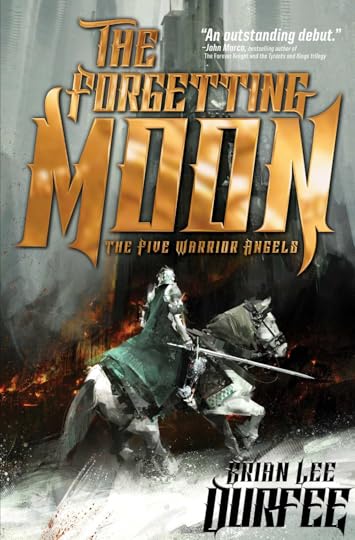
The Forgetting Moon by Brian Lee Durfee swept me into a world I thought I knew, only to turn those expectations upside down in the best way possible. Brian, who I have the pleasure of knowing personally, gifted me a copy of this epic—and let me just say, it didn’t disappoint.
Right from the start, I was hooked by the intricate world-building. The Five Isles are steeped in complex religious systems and political intrigue that makes every chapter feel like a fresh discovery. The depth Brian put into creating this world—especially the theology—was impressive and refreshing. You can tell he’s not just writing another cookie-cutter fantasy, but one that takes time to develop each culture, race, and belief system into something truly immersive.
The characters, too, are far from typical. You’ve got Gault, an elite knight who starts questioning everything about the crusade he’s leading, and then there’s Jondralyn, desperate to prove herself as a warrior in a kingdom that only values her beauty. And let's not forget Tala, her younger sister, digging into secrets that could unravel everything. Oh, and Hawkwood? The assassin sent to kill Jondralyn who falls in love with her instead? Yeah, I’m here for all that tension.
One of the things I appreciated most is how The Forgetting Moon blends grimdark elements with character growth. Brian doesn’t shy away from the brutal realities of war, loss, and betrayal, but the characters’ personal struggles to hold on to their faith, family, and identities give the story an emotional backbone.
At over 800 pages, it’s a massive read, but the pacing never felt slow. Every chapter has intention. Every twist feels earned. Brian teases us with mysteries—reminding us repeatedly that we shouldn’t trust anyone—and it’s so much fun trying to piece it all together.
This book is full of intrigue, conspiracies, and questions about identity that get under your skin. And knowing that Brian still has more to reveal? It makes me even more excited for the rest of the series. If you’re looking for a dark, character-driven epic fantasy that’s anything but predictable, grab The Forgetting Moon. It’s a ride, and I’m so glad Brian handed me this gem personally.
Quotes I loved:
“Without food, we’ll be reduced to stumbling skeletons in days.”
“These twining branches of water cascaded over the steep path like skeletal white fingers.”
“I owe every victory to you. You were my inspiration.”
August 11, 2024
Book Review: Max in the Capital of Spies
By Elizabeth Suggs
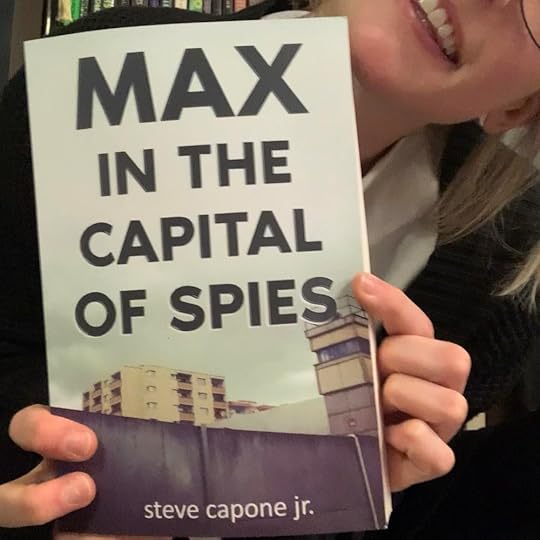
Steve Capone Jr.’s Max in the Capital of Spies is a thought-provoking and thrilling YA novel that captivated me from start to finish. Although this isn’t my usual genre, I found myself deeply engrossed in the story, which masterfully combines history, espionage, and time travel.
The novel follows Max, an American teenager with the extraordinary ability to travel back in time. Max finds himself navigating the tense and dangerous world of Cold War-era Germany. This unique twist adds an exciting layer to the narrative, allowing readers to experience pivotal moments in history firsthand through Max’s eyes.
Capone skillfully blends these historical details with a fast-paced narrative that kept me on the edge of my seat. The setting of Berlin isn’t just a backdrop; it’s a crucial element of the story, representing the broader human struggles of power, fear, and resistance.
What I particularly appreciate about Max in the Capital of Spies is how it makes history feel relevant and alive. Capone highlights the importance of Berlin’s history, reminding us that the city has been at the center of global events for centuries. Max’s ability to travel back in time ties these historical elements to the present day, making the story resonate on a deeper level.
Even though this book is packed with spy action and time-travel adventures, it’s also an educational experience. Capone hides his extensive research well within the narrative, allowing casual readers to enjoy the story while also offering detailed sources for those who want to delve deeper into the history behind the fiction.
Max in the Capital of Spies is an exciting, well-crafted novel that offers more than just entertainment—it’s a reflection on history and its continued relevance today. Whether you’re a fan of YA, espionage, time travel, or historical fiction, this book is a must-read. It surprised me in the best way possible, and I’m sure it will do the same for many others.
August 9, 2024
Book Review: Kim Jiyoung, Born 1982
By Elizabeth Suggs
Kim Jiyoung, Born 1982 by Cho Nam-joo isn’t just a story about one woman’s life in South Korea—it’s a mirror reflecting the struggles of women everywhere, including right here in the U.S. As I read this powerful novel, I couldn’t help but draw parallels between the experiences of Kim Jiyoung and the challenges faced by many women in America today.
The book meticulously weaves together Kim Jiyoung’s personal story with broader social statistics, illustrating how her life, seemingly ordinary, is shaped by the pervasive sexism embedded in society. This approach hit close to home for me. In the U.S., we often think of gender inequality as a distant issue, something that happens elsewhere or is confined to the past. But the truth is, the same systemic issues that affect women in South Korea—discrimination in the workplace, societal expectations, and the gradual erosion of identity—are all too familiar here.
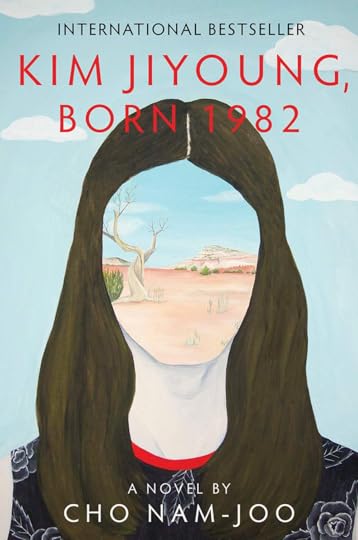
What struck me most about Kim Jiyoung’s story is how universal it is. The challenges she faces, from childhood to adulthood, are not unique to South Korea. They resonate with the experiences of many women in the U.S. who find themselves constantly battling against gender norms and expectations. Whether it’s being passed over for promotions, facing pressure to prioritize family over career, or simply not being taken seriously, these issues are deeply embedded in our own society.
The novel’s success, both in South Korea and internationally, speaks volumes about the shared struggles of women across the globe. It’s no wonder that "Kim Jiyoung, Born 1982" has sparked widespread discussion wherever it’s been read. Here in the U.S., where conversations about gender equality are ongoing and often heated, this book offers a stark reminder that the fight for women’s rights is far from over.
Reading this novel made me reflect on the cultural and societal pressures that women face in the U.S. today. The #MeToo movement, the gender wage gap, the ongoing debates about reproductive rights—all these issues are part of the larger narrative that "Kim Jiyoung, Born 1982" taps into. It’s a story that resonates with the American experience because it’s a story about the human experience.
If this book has left you thinking, as it did for me, I encourage you to explore more about the cultural context not just in South Korea, but here at home. Understanding how these issues play out in different parts of the world can deepen our awareness and strengthen our resolve to push for change. "Kim Jiyoung, Born 1982" is more than a novel—it’s a call to action, and it’s just as relevant in the U.S. as it is anywhere else.
October 1, 2023
Book Review: In Solitude's Shadow
By Elizabeth Suggs
In Solitude’s Shadow by David Green is a dark fantasy novel about Calene Alpenwood, a powerful warrior-mage gifted with Spark, and her mother Zanna, who had been banished for a terrible crime.
Green is a fantastic writer, and In Solitude’s Shadow is evidence of that. From war to love and trust, Green pulls you through a whirlwind of emotions and gives you some beautifully written sentences in the process.
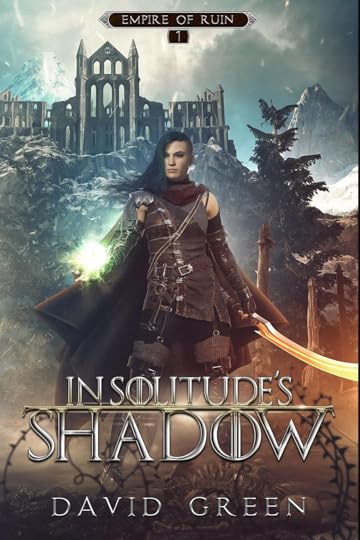
Also, can I just gush about the length of this novel? It’s super short! I could sit down and finish it up in an evening. I love a big fantasy novel like the next lady, but there’s an untapped market for short fantasy works, and Green’s tapped into this! Nothing about this feels rushed or forced. The novel is exactly as long as it needs to be to tell its narrative.
Favorite Quote:
"Magic is a partnership."
If you love dark fantasy and war, you’re gonna love this book.
Green has a ton of published works out already, and I’ve been fortunate enough to read and review Dead Man Walking last year, which was also fantastic. You can check out my review of that here.
January 12, 2023
Book Review: Let Me Die
By Elizabeth Suggs
Let Me Die by Virginia Babcock is a mixture of romance and gothic horror in the theme of Frankenstein, but this book isn’t just any Frankenstein story. This is a tale of love and loss and so much more.
There are two different perspectives in this novel, one being of Petre, who had been one of the meanest, toughest guys in the Net family crew, and the other of Nicoleta, who just relocated to Romania with her father. Nicoleta is still dealing with the trauma of her mother’s death when she’s given an antique bus that is more than meets the eye.
Babcock is skilled at writing complex, three-dimensional characters, in strictly romance settings and in something much darker. She has published more than twelve different works, but this novel is her first dive into the macabre, and I hope it won’t be her last!
My favorite quotes:
The disembodied mind fought reality.
They gushed and flowed, filling his consciousness like blood from a severed artery…
If you want to explore what more a Frankenstein tale has to offer, then read this. Babcock also plans to write more paranormal and horror in the future.
I previously reviewed her contemporary romance novel No Strings.
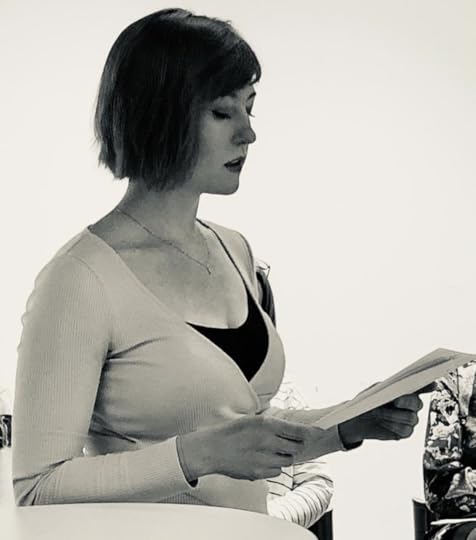
Elizabeth Suggs is the founder of the LUW Romance Writers Chapter, co-owner of the indie publisher Collective Tales Publishing, owner of Editing Mee, and is the author of a growing number of published stories, two of which were in a podcast and poetry journal. She is also a book reviewer (EditingMee.com), popular bookstagramer, and cosplayer (@ElizabethSuggsAuthor). When she’s not writing or reading, she’s playing video and board games or making cookies.
October 25, 2022
Book Review: Dead Stars and Stone Arches
By Elizabeth Suggs
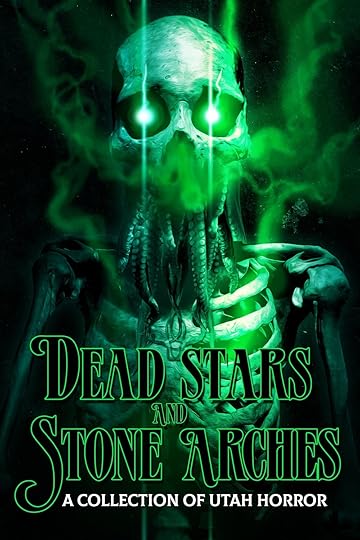
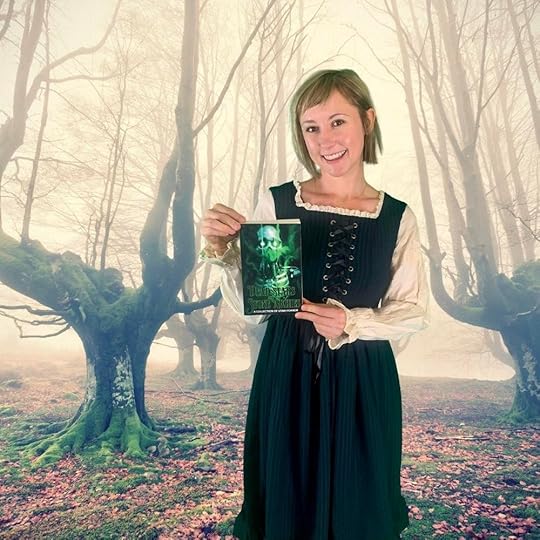
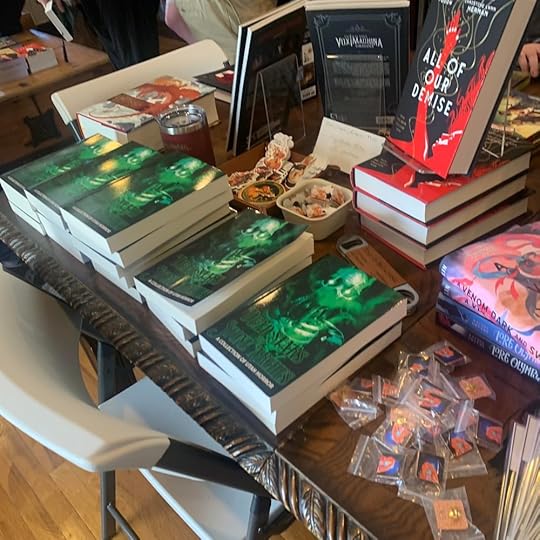
Dead Stars and Stone Arches is an anthology of Utah Horror with nearly three dozen talented local writers.
I love these sorts of anthologies—the ones that not only have fantastic stories, poems, and flash fiction pieces, but ones meant to help build writers up. This anthology is published by Timber Ghost Press in association with the Horror Writers Association Utah Chapter, a nonprofit group that encourages growth and community.
Another great thing, one I especially love about anthologies, is you get tons of new and unique stories and ideas. For instance, even the foreword by Betty Rocksteady kept me turning the page. I especially loved what she said here:
“Deep down, we know that anything is possible. We know that the shadows could come closer, the stars could rotate in the skies. We could wake up tomorrow, discard our virtual reality goggles and step into something entirely different. We could never wake up, remain locked in dream logic for eternity, turning, turning, turning forever.”
I felt like I was beginning a prophetic nightmare ride. I loved it, but let’s get to the meat of the book, shall we? There were some fantastic authors in here that I want to give a shout-out to:
Lehua Parker’s short story “This Once Was a Sea” is a mining horror story about Utah in a severe drought. I really liked some of the lines, but I wasn’t a fan of the internal thoughts. For me, it was too much.
Daniel Cureton’s poem “The Terror Begrudgined.” His poem leaves one looking over one’s shoulder, hoping that the uninvited don’t reemerge. I loved his line:
“To be in the terrored home.
There is no door closed for the
Uninvited.”
Jonathan Reddoch’s flash fiction “Eye of Europa”—a twisted cosmic horror that spells the doom for humanity’s achievements. Best line that sums up his story: “The universe is awakened, and it sees.”
C.R. Langille’s short story “In Absentia Lucis” is a horror adventure centered around a complicated protagonist named Evelyn. My favorite line: “If Evelyn had spent her life waiting for a knight in shining armor, she’d still be fighting for scraps in the streets, or worse.”
Paul Starkey’s short story “Tick Way” puts a twist on the usual teenage lovers. Plus, the main character is new and refreshing. I found the ending very satisfying. My favorite line: “As much as she loved Iceberg milkshakes, it wasn’t exactly a classy location for a date, but he’d driven them out to Orem all the same.”
Joshua P. Sorensen’s short story “Sour” is another Utah mine story in this collection, but what I liked about this one was its take on what could happen if Utah continued caring more about industry than its people and the earth. My favorite line: “The glowing fluid spilled towards us in laughing ripples.”
Joseph Hope’s poem “Skin deep—the City of Demons” is a captivating piece that kept my head spinning. Best line:
“A world torn apart & together.
Cell rooms for every crime.”
Michael Jess Alexander’s short story “Away Game” is an interesting take on a new kind of monster—one from within. Honestly, this story made my skin crawl—in the best way! Great line: “Desperate adults tended to misshapen lumps of flesh that flopped out of baseball attire.”
Steven Dee Kish’s flash fiction “Life of a Leper” has the sound and rhythm of a poem. My favorite two lines:
“I shed my old human skin and try to become one with nature.” and “Love could turn me back to the human I once knew.”
Carter Lappin’s short story “Deep Within” is yet another mine story, but I really enjoyed how this one focused on the character as if this story was a way to understand oneself. One of the best lines: “The air tastes like metal. No—like blood, coppery and warm in my mouth.”
Heidi Voss’s short story “Guardian” was one of my absolute favorites. It’s a sweet horror story about a guardian angel, and it shows that you don’t need to be beautiful to be loved.
I loved the mystery of it and want to know more. Great line: “They can’t see me, but their stomachs will turn, their hands will shake, and a sour taste will fill their mouths until they turn their attention elsewhere.”
There were some other great stories and authors I didn’t mention, but just with length and time, I’ll have to end the blog post for now.
You should definitely check out the anthology, and if you’re a horror writer, you should see how you can get involved with the HWA. Maybe you’ll get lucky enough to have one of your tales published!


