Elizabeth P. Fitzgerald's Blog
April 26, 2022
3 Revenue Streams: Outside the Box
Rental income – A small church in a small town knew their tithes would not cover their expenses, so they bought a duplex that has generated rental income for years. A chamber of commerce rents its boardroom to non-members.
Franchise – A school ran a franchise side business so students could attend at no charge.
Gift shop/merchandise – I know of several charity organizations that have thrift stores or bakeries as one of their revenue streams. If this idea fits your situation, look into Fiscal Trade Sponsorships as these side businesses can run under your nonprofit by way of a fiscal trade sponsorship.
As always, I am hoping for your every success!
The post 3 Revenue Streams: Outside the Box appeared first on Kronstadt Consulting.


February 13, 2022
What Can Bitcoin Mean for the Nonprofit Sector?
 Photo by Kanchanara on Unsplash
We’re witnessing the creative destruction of financial services, rearranging itself around the consumer. Who does this in the most relevant, exciting way using data and digital, wins! – Arvind Sankaran
Last month we celebrated the 15th anniversary of the iPhone. The iPhone was just one of many advances in technology that began years ago. The iPhone along with other similar handheld devices have begun to empower individuals and organizations as never seen before. In fact, they say that an iPhone today has more technological power than when NASA put the man on the moon.
Creative disruption, the impact of emerging technologies in recent years has entered yet another area. This new technology has the similar disruptive power to change the world perhaps even on a larger scale. What could be larger than communication?
Money!
The emergence of cryptocurrency, specifically Bitcoin once subtly entered our world, is now exploding globally due to both technology and timing.
What is Bitcoin and why is it important? As stated in bestselling author Chris Brady’s book Bitcoin Bride “One of bitcoins most important and perhaps biggest uses is as a store of value. Bitcoins like a digital version of gold, but with some advantages over gold. Some people call it ‘Gold 2.0’ meaning an improved version of gold.”
Why is this so important? All you have to do is watch how the value of the dollar has diminished. The value of a currency is also referred to as purchasing power. The more a currency is devalued, the less you can buy with it because the purchasing power decreases.
It is well known that the dollar has lost over 96% of its value, i.e., today’s dollar is worth less than 4 cents compared to its value back in 1913. What happened in 1913 that helped cause this devaluation? 1913 is when the Federal Reserve took over the US banking system a centralized system of control.
How is the value of currency devalued? By printing more money. Think about the trillions of dollars that were recently put into the economy due to the pandemic. The Federal Reserve literally printed money.
On the other hand, Bitcoin retains its value because its total supply is fixed. Like having a minimum supply of baseball cards, the value of each card becomes greater over time. This is unlike not only the US currency but that of Canada and Europe as well. Bitcoin also has the ability to be a global currency. Due to the fact that it’s digital and controlled by you and me, it can transfer from country to country faster than paper currency or even banks can transfer across town.
Another huge factor is Bitcoin currency is decentralized. This means that it would be significantly more difficult to manipulate the value of the currency than it would our current currency which is centralized in the hands of the government. This fact about Bitcoin is pretty well known and the reason Professor Saifedean Ammous, author the Bitcoin Standard, calls it “The Decentralized Alternative to Central Banking”.
Another appeal is the personal control and flexibility it provides people. According to Bitcoin Letter, “Digital Bitcoin wallets are free, have minimal transaction costs, have no minimum balance requirements, and are able to operate 24/7/365.” With smartphone adoption globally this makes Bitcoin transactions simple as banks are unnecessary to transfer money. Western Union for example charges an average of 10% just to send money home the next business day.
Let’s consider inflation. The annual inflation rate for the United States is over 7.0% for the 12 months ended December 2021 – the highest since June 1982. People seek alternatives to fiat currencies during inflation crises.
Lawrence Summers, a Harvard economist and former Secretary of the Treasury under President Bill Clinton and a top economic advisor to President Barack Obama, recently stated that the United States has a “serious inflation problem”.
We believe Bitcoin will provide more fund-raising opportunities not only locally but globally. More to come…
Article written for KronstadtConsult.com/blog by
Greg Johnson, Owner, Johnson Enterprises International, LLC
Douglas M. (Doug) DeWitt, Ph.D. (Chair: Dept of Education Leadership; Salisbury University.)
Elizabeth P. Fitzgerald, CFRE, IOM, Owner, Kronstadt Consulting
We give permission to share, republish, and repost this article including the source acknowledgment above.
The post What Can Bitcoin Mean for the Nonprofit Sector? appeared first on Kronstadt Consulting.
January 13, 2022
iPhone Turns 15 years old – What Can Nonprofits Learn?

Vision is the art of seeing what is invisible to others – Jonathan Swift
In an article by Daniel Uria, hereports that in just 74 days after the launch of the original iPhone, Apple had sold 1 million units with the phone remaining popular, selling 216.7 million units in 2018, a rate of roughly a million every 1.5 days. Propelled in part by the popularity of the iPhone, Apple’s market valuation has risen from $174.03 billion in 2007 to become the first publicly traded company to achieve a $3 trillion market valuation last week.
Airbnb launched in 2008 by three guys who turned renting an air mattress in their apartment and eventually persuaded strangers to sleep in one another’s homes. It was just an idea to make extra bucks and make rent. Fourteen years later Airbnb revenue was just under 40 billion dollars. They compete with the Major Hotel Chains but don’t own hotels, worry about building maintenance, or thousands of employees showing up to work.
Uber this coming March will celebrate 13 years and in 2021 their estimated revenue was over 17 billion dollars. As of today, the number of Uber drivers in the United States is 1 million. Worldwide, there are an estimated 3-4 million Uber drivers. Since January 2021, Uber has added 640,000 drivers and couriers to their Uber and Uber Eats platforms.
The iPhone is only 15 years old, and a 15-year-old is basically a High School Freshman or Sophomore. Airbnb at 14 years and Uber at 13 in essence are middle schoolers. These young companies have grown faster and more efficiently than most of their competitors.
The world is changing. What can we learn from these teenagers?
Perhaps we need a motivated group that embraces this new technology to take a different approach to fundraising.
Imagine nonprofit fundraising becoming more of a block of support than the current triangle within which your top 12% of donors provide 20% of your donations. What if the remaining 88% of your donors become empowered to give more and automatically?
Article written for KronstadtConsult.com/blog by
Greg Johnson, Owner, Johnson Enterprises International, LLC
Douglas M. (Doug) DeWitt, Ph.D. (Chair: Dept of Education Leadership; Salisbury University.)
Elizabeth P. Fitzgerald, CFRE, IOM, Owner, Kronstadt Consulting
We give permission to share, republish, and repost this article including the source acknowledgment above.
The post iPhone Turns 15 years old – What Can Nonprofits Learn? appeared first on Kronstadt Consulting.
November 25, 2021
Thanksgiving Play: “Turkey Hunt” – to read aloud together just for fun
Enjoy!

Turkey Hunt
A Musical Comic Tragedy
Enjoy this one-act play written by Elizabeth Fitzgerald for the Students of St. John’s School in 2005. (I didn’t write the songs.)
Synopsis: Indians and turkeys enjoy a fall morning. The Indians hunt the turkeys for their Thanksgiving Feast.
Cast:
Chief Swift Arrow
Hiawatha
Bright Stars
Little Turkey Hunter
Gobbles Turkey
Feather Turkey
Little-feather Turkey
Music:
“10 Little Indians”
“The Sweet Rosy Morn” by Richard Leveridge
“Indian Dance” by Katherine Bolt
“The Cuckoo”
“Three Fat Turkeys”
“O Give Thanks”
Script:
(Set in the forest with trees, pumpkins, leaves and a stump. Backdrop is painted with teepees and fall forest scenery. Indians, stage right, and turkeys, stage left, are asleep.)
Indians awake in their camp while turkeys awake in their nest. Both groups softly sing and do the motions to “The Sweet Rosy Morn” unaware of one another.
Indians and turkeys sing:
“The sweet rosy morning peeps over the hills,
With blushes adorning the meadows and fields;
The merry, merry, merry birds call, Come, come, come, away!
Awake from your slumber and hail the new day.”
(Turkeys preen, brush teeth & read the comics.)
Chief: “Good morning family! Today is the day of our turkey hunt. We will share a great feast with our neighbors, the white men, that will last for five days.”
Wife: “They had such a hard winter – so many of them died. We will celebrate with them the bountiful new harvest.”
Chief: “Let’s make sure we have all the children with us.” (Mother Indian points to each child as they skip by, silently counting them.)
Indians sing:
“One little, two little, three little Indians,
Four little, five little, six little Indians,
Seven little, eight little nine little Indians,
Ten little Indians here.”
Mother Indian: “Okay, we are all here.”
Little Indians: Let us go hunt the turkeys!
Indians and turkeys sing:
Indian Dance
(Dance of the Warm Spring Indians from Oregon)
Indians sing: “Brothers, let us dance;
Beat upon the drum.
Make the circle wider, wider!
Here we come.
We will stamp our feet,
Bend our heads down low,
Lift our knees up higher, higher!
Here we go.
Let us hunt the turkeys;
Bring them to the feast.
We will hunt the turkeys
Until we have three!
For the first two verses the
Turkeys sing:
Gobble, gobble, gobble:
Gobble, gobble, gobble.
Gobble, gobble, gobble, gobble;
Gobble, gobble, gobble!”
(Indians ready their bows and arrows.)
Feather: Remember family, gobble, this is the time of the year we must be very careful. Gobble.
Gobbles: Yes, gobble, the Indians will be hunting for us!
Little-feather Turkey: They shot Uncle Albert, gobble, last year!
All three turkeys: “Gulp.”
(Both groups move out into the forest, not seeing each other. Babies back into each other and scurry off during the Cuckoo song.)
(In the background a Cuckoo is heard.)
Indians and turkeys sing together:
“The Cuckoo”
Indians begin with:
“In forests far away we can hear the cuckoo.
From top of his great oak he is calling to the owl.
Turkeys begin with:
“Cuckoo, cuckoo, cuckoo, cuckoo, cuckoo, cuckoo, cuckoo, cuckoo, cuckoo, cuckoo.”
(The Indians see the turkeys but the turkeys don’t see the Indians. The Indians ready their bows.)
The turkeys finish the “Cuckoo” at the front left side of the stage.
Feather: “I don’t see any, gobble, Indians.” (Little-feather turkey pulls on Feather’s feathers, unnoticed.)
Gobbles: “Me either, gobble, I think we’re safe. Want to hear a joke?
Feather: Sure. (Little feather is still tugging at Feather to warn of the Indians, but ignored.)
Gobbles: Why did the turkey cross the football field?”
Feather: “I don’t know. Why?”
Gobbles: “Because someone called a foul.”
Feather: “I don’t get it.”
Gobbles: “Never mind, let’s sing”:
Turkeys only sing:
Three fat turkeys are we,
We hid all night in this tree
When the chief came around
We couldn’t be found
And that’s why we’re here
You see.
(At the end of each verse one of the turkeys is shot, Little-feather, and then Feather; then Gobbles. The Indians drag the turkeys off stage one by one as they are shot. The Indians stay back stage with the turkeys.)
Two fat turkeys are we,
We hid all night in this tree,
When the chief came around
We couldn’t be found
And that’s why we’re here
You see.
(In a trembling voice:)
One fat turkey am I
I sure wish that I could fly
When the chief comes around
I don’t want to be found
I’m afraid I’m going
To die!
Then Hiawatha and Gobbles come to the front together and say:
Indian Mother: This has been the story of how the turkey became the center of the annual thanksgiving feast.
Gobbles: The turkeys were thankful to be included.
Then they all come back on stage and sing “O Give Thanks”.
O Give Thanks
O give thanks, O give thanks, O give thanks unto the Lord;
He is gracious, His mercy endureth forever.
The post Thanksgiving Play: “Turkey Hunt” – to read aloud together just for fun appeared first on Kronstadt Consulting.
October 19, 2021
When Is Your Nonprofit/Charity Ready to Build an Endowment?
If you love the nonprofit you serve and are able to give a cornerstone gift of $250,000-500,000, or if you receive an unexpected gift in that range, it may be time to establish an endowment.
An endowment can help your charitable organization serve future generations with strength.
A financial planner told me that a $2,000,000 endowment could supply enough interest income to help support a small nonprofit. Ask the best financial person you know to make a real-time projection for your organization and set your first goal accordingly.
People want to feel that the organization they support with a major gift will be around long after they are gone.
So, before your organization is 7 – 10 years old use the following “soft asks”:
a note at the end of your newsletter
a line item on your pledge form
a box to check on your website
are appropriate ways of inviting donors to ask you for information on legacy gifts.
Then, after year 10, launch an endowment campaign. Offer campaign-style personal appointments with faithful donors to discuss legacy gifts.
Host a class led by an attorney and or financial planner on “how-to-make-major-gifts”. Invite other nonprofits to attend with their donors to make this event a fundraiser in itself.
Encourage your donors to talk over any major gifts with their personal financial advisors before finalizing any plans with your nonprofit. You build donor confidence when you encourage folks to be careful.
As always, I am hoping for your every success!
The post When Is Your Nonprofit/Charity Ready to Build an Endowment? appeared first on Kronstadt Consulting.
October 12, 2021
Consider Joining Rotary
My professional mentor, Dale Carpenter, invited me to join his Rotary Club. He knew that Rotary is an amazing place to build friendships as you work together for the benefit of others in your local and global communities.
The Rotary motto is “Service over self.” You don’t need a personal invitation; contact the club president or office and let them know you’d like to arrange a visit. If there is more than one club in your city, visit them all before you choose. Each club has its own personality.
If you work for a nonprofit, whether or not you join, ask if you can make a presentation about the organization you serve. You may find collaborative partnerships there for your cause.
My grandfather had been a longtime Rotarian when he passed away at age 93, more than 20 years after his retirement. There were two groups of people at his funeral, our family and his Rotary friends. What made his Rotary connections last a lifetime? Go and see.
As always, I am hoping for your every success!
The post Consider Joining Rotary appeared first on Kronstadt Consulting.
September 24, 2021
Refresh your Nonprofit/Charity Board

As a way to refresh your board, start a few board meetings with one or two of these questions:
What motivated you to serve on this board in the beginning? Why do you care enough to serve on the board today?What do you want to do for this organization in the next six months? What actually needs to be done first? Do our spoken desires align with our mission and vision?If we keep doing things the same way, will we be happy with the results?What can we do to help things go right before we find ourselves, later, fixing things that have gone wrong?Hearing each other’s answers and the conversations that follow can be inspiring and endearing. New ideas for progress may be introduced. Concerns or needs may surface prompting positive change.
As always, I am hoping for your every success!
The post Refresh your Nonprofit/Charity Board appeared first on Kronstadt Consulting.
September 16, 2021
Abundant Funding: 4 Important Mindsets
Mindset #1 – Most successful nonprofit organizations are fully funded because their board members and staff know what needs to be done and bravely do the work. They ask for donations, take the time to carefully hire and train the best, and they quickly fire if needed.
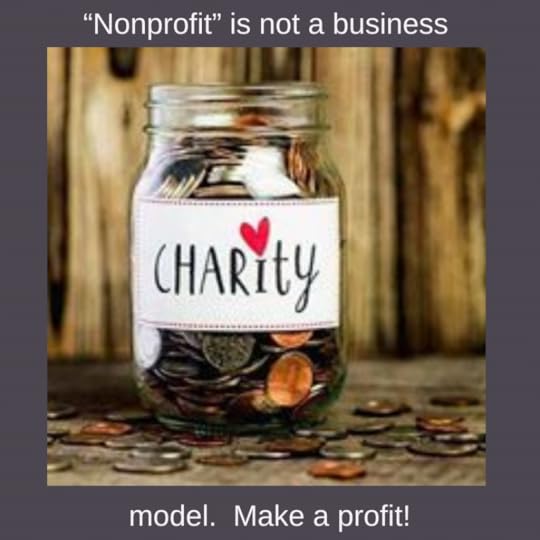
Mindset #2 – It’s okay to raise more money than the cost of meeting your budget. When you ask for donations or sponsorships for an event or program, raise more than your actual costs. “Nonprofit’ is a tax classification, not a goal.
Mindset #3 – Here are two equally important keys to nonprofit success – accomplishing your mission and running a fully-funded business. Toward succeeding at both, your budget should include a reserve fund. Build this emergency fund to equal three to six months of your operating expenses.
Mindset #4 – Be open to good advice. When we received our fundraising training at the little school, we had fully realized we would fail without help. We humbly did exactly what our consultant instructed us to do – with no “buts” or second guessing.
Plan for prosperity!
As always, I am hoping for your every success!
The post Abundant Funding: 4 Important Mindsets appeared first on Kronstadt Consulting.
September 10, 2021
Policy Manual – Why & How
 Your policy manual will help newcomers find and honor the direction you have set, grow and maintain a healthy organization, and maintain high-quality delivery of services. If you don’t already have one, you can easily get started today. Your board meeting minutes contain the decisions handed down from the beginning. Include board decisions that affect the way things are done in your manual. There may be a sample you can use to get started from a similar organization or a nonprofit consultant. If you are building a new manual or making big changes, ask your legal counsel to look things over before board approval. Your lawyer will know current best practices in many areas, and can add them for you.Your manual can guide you through difficult situations. For example, if you have an employee conflict to address, the task becomes easier when you can refer to a board-approved protocol that outlines action steps. When people are upset, having an established conflict resolution, or emergency management, policy can keep everyone safely working at their best. What else do you include? Include new or updated procedures your staff develops, job descriptions, and administrative checklists.What if you don’t have time for this? No problem. Ask your board to organize a short-term board member task force to complete the project or to find the right volunteer(s).
 When there is turnover, your manual helps with new employee orientation. The people who come after you will be glad you took the trouble to document all this.
As always, I am hoping for your every success!
The post Policy Manual – Why & How appeared first on Kronstadt Consulting.
September 2, 2021
Successful Solicitations – Ten Keys

Annually, over 80% of funding for US nonprofits comes from individuals.
Assuming you have sent a letter requesting a meeting, suggesting a gift range, it’s time to make the call.
1. Look over the information in your database on this donor, or start building a record. This helps you personalize your calls.
2. Based on your gift range calculation and donor ranking, ask for a specific amount. This helps your donor. (See my book or blog for posts on how to use these tools.)
3. Call within a week of the arrival of your letter.
4. Remember that you’re not calling a stranger. Your donor list came from referrals, so the people you call have a connection already with your organization.
5. Get past the dialing jitters by visualizing success. The person you’re calling may be looking forward to your call.
6. Follow your donor’s lead. Ask if you’ve called at a good time and if they want to remain on your calling list.
7. Most people will be ready to make a pledge by phone. When someone answers your call or you get an answering machine identify yourself and your organization, and suggest two specific meeting times.
8. Schedule your meeting. Take notes throughout the conversation to make sure you fulfill any promises and to build your date base.
9. After a person donates, send a thank you note within 24 hours.
10. Remember, you are giving someone an opportunity to experience joy. You and this donor may work together for this cause for a lifetime. Their first gift may be $10 and last gift may be in the millions.
As always, I am hoping for your every success!
The post Successful Solicitations – Ten Keys appeared first on Kronstadt Consulting.