Flora Baker's Blog
January 14, 2021
2020 Reading Challenge: The Year of All The Books
 Ah, 2020. What a strange year for reading.
Once the pandemic hit, the local library became one of my most visited (and only) destinations, and I coveted my pile of loaned books like treasure whenever a new lockdown caused the library to close. I regularly scrolled Amazon’s kindle deal page, joined my first ever book club – which, three books later, has still only taken place on Zoom – and managed to publish my first book, The Adult Orphan Club.
The unsettled and uncertain mood of global events made some books harder than usual to engage with though. I stop-started often, put quite a few books aside, and often had three on the go at once so I could choose what I was most in the mood for. I went through phases of reading obsessively, only to find that particular books seeped into my subconscious in ways I didn’t like. Nevertheless, I still managed to spend most evenings falling asleep between pages. It did wonders for my sleep pattern, if not for the occasional bruise on my nose from a falling hardback.
Basically, I lost myself in books this year. And I also found myself as a result. So even though I barely blogged in 2020, it’s only right that I publish a paean to the literature which saw me through the weirdest of years.
Pin me for later!

Number of books you read: Forty eight.
Number of re-reads: Zero.
Number of books you stopped reading: Three. The pandemic made me abandon books I wasn’t enjoying with more decisiveness than usual – so although I gave them a try, this year I wasn’t captivated enough by the following:
Priestdaddy by Patricia Lockwood. Topic wise I really enjoyed it, and Lockwood’s imagery is undoubtedly impressive, but the density of language made it too hard to continue wading through. I wonder whether I’d prefer her writing in essay form, or perhaps even poetry?
Blood & Sugar by Laura Shepherd-Robinson. When the book began I thought this 18th century historical fiction about the deadly sugar trade would work for me, but I wasn’t compelled by the characters and the storyline didn’t seem to hook me in.
Sweetbitter by Stephanie Danler. Stylistically, the book didn’t work for me, and I couldn’t engage with the lack of plot.
Genre you read the most from: lots of memoir, especially in my favoured topic of grief, and a healthy amount of fiction too. I developed something of a love for Victorian fiction as well.
Here’s the full list of everything I read in 2020:Things in Jars – Jess KiddShelf Life – Livia FranchiniThe Last Act of Love – Cathy RetzenbrinkMy Sister, the Serial Killer – Oyinkan BraithwaiteWhen Breath Becomes Air – Paul KalanithiThe Doll Factory – Elizabeth MacnealGhost Wall – Sarah MossThe Water Cure – Sophie MackintoshMy Mad Dad – Robin HollingworthHomesick for Another World – Ottessa MoshfeghLove – Hanne ØrstavikAll At Sea – Decca AitkenheadBlood & Sugar – Laura Shepherd-Robinson (DNF)Instructions for a Heatwave – Maggie O’FarrellBlack River – Will DeanHow to Murder Your Life – Cat MarnellAkin – Emma DonoghueThe Story Keeper – Anna MazzolaChase the Rainbow – Poorna BellQueenie – Candice Carty-WilliamsLittle Deaths – Emma FlintEverybody Died, So I Got a Dog – Emily DeanSmall Island – Andrea LevyThe Babysitter – Phoebe MorganCase Histories – Kate AtkinsonPromising Young Women – Caroline O’DonoghueA Half Baked Idea – Olivia PottsThe Mercies – Kiran Milwood HargraveSearching for Sylvie Lee – Jean KwokThe Penguin Lessons – Tom MichellDon’t Go Crazy Without Me – Deborah A. LottOne Good Turn – Kate AtkinsonOlive, Again – Elizabeth StroutMaid – Stephanie LandThe Cement Garden – Ian McEwanIt’s Ok to Laugh (Crying is Cool Too) – Nora McInernyPriestdaddy – Patricia Lockwood (DNF)The Five – Hallie RubenholdThe Binding – Bridget CollinsRough Magic – Lara Prior-PalmerSuch a Fun Age – Kiley ReidWintering – Katherine MaySweetbitter – Stephanie Danler (DNF)The Rules of Inheritance – Claire Bidwell SmithThe Man Who Saw Everything – Deborah LevyGlorious Rock Bottom – Bryony GordonOnce Upon a River – Diane SetterfieldThe Glass Castle – Jeannette Wells1. Best book you read in 2020?When it comes to books, 2020 felt like the longest year possible, so I’m answering this question with a three-way tie: Ghost Wall by Sarah Moss, Everybody Died, So I Got a Dog by Emily Dean, and Such a Fun Age by Kiley Reid.
I read Ghost Wall early on in the year and wish I’d saved it for later. It’s stunning. Creepy. Ethereal. Transportive. Every careful word pulls you deeper into the world of an Iron-Age obsessed father, his family, and a group of re-enactment students. I promise you’ve read nothing else like it.
Quite aside from the fact that Emily Dean finds wonderful humour in a memoir about experiencing multiple deaths, Everybody Died, So I Got a Dog is simply a beautifully written story of someone’s turbulent, loving, dramatic family, in all its ups and downs. I also have quite a few parallels to Dean so often gasped and shouted out loud (we had the same breed of cat for crying out loud – not to mention the deaths of both our theatrical parents). I basically want to be friends with Emily now.
Such a Fun Age is one of those books which perfectly toes the line between easy-to-read and intelligent. I had such a strong sense of who these characters were and couldn’t wait to find out what happened to them – and though I spent much of the book cringing at Alix’s behaviour I loved the steady unspooling of her relationship with Emira.
2. Book you were excited about & thought you were going to love more but didn’t?Rough Magic by Lara Prior-Palmer. I first spotted this female-narrated memoir about racing horses across the Mongolian steppe in the bookshop at the Hay-On-Wye Festival, and filed it under ‘books I know I’ll love’. Unfortunately it felt very self-conscious – as if an editor had repeatedly asked for strange similes and metaphors to be added on every page. It didn’t read naturally at all and I wasn’t particularly enamoured with the narrator either!
3. Most surprising (in a good way or bad way) book you read?In a good way: How to Murder Your Life by Cat Marnell. What makes this memoir about the fashion journalism industry in NYC so compelling is Marnell’s total lack of filter! She has no qualms about revealing her base desires, the seedy sides of her addictions, her distinct unlikeability – and this actually makes me like her all the more. It’s impossible to say how much of Marnell’s memoir is accurate or fabricated but there’s no denying she can tell a good story.
In a bad way: The Binding by Bridget Collins. I’m begrudgingly glad I stuck with this, but for the first 150 pages I was ridiculously close to stopping. In fact I only continued when I saw various reviewers mention how drastically the book changed later on. The three part structure segments the book in such an odd way, with each part containing totally different styles of writing, and I wish Collins’ editors had pushed for part one to mirror the same level of emotion and plot as the latter two.
4. Book you “pushed” the most people to read (and they did)?The Five by Hallie Rubenhold. This careful tracing of the lives of Jack the Ripper’s female victims was a pick for my new book club, and I adored it.
5. Best series you started in 2020?The Jackson Brodie series by Kate Atkinson. A shelf in my dad’s study contains at least six of Atkinson’s books but for some reason I’d never considered reading them. Then someone on Instagram mentioned the Jackson Brodie mystery novels – and I fell head over heels for Atkinson’s astonishing ability to weave multiple satisfying storylines together. This year I read Case Histories and One Good Turn, and I’m saving the final three books in the series for a time when I really need them!
6. Favourite new author you discovered in 2020?Kate Atkinson. The fact that she has a huge backlist makes the discovery even sweeter.
7. Best book from a genre you don’t typically read/was out of your comfort zone?Probably The Five. I love non-fiction but it’s usually in the memoir/narrative genres. I’m so glad to learn that I enjoy well-researched historical books like this though.
8. Most action-packed/thrilling/unputdownable book of the year?Little Deaths by Emma Flint. I can’t believe this is Flint’s debut; in theory it’s a crime novel but it reads like literary fiction, and while the pace is non-stop it also digs deep into the world of 1960s New York and the way anyone slightly different from the expected norm is treated.
9. Book you read in 2020 that you would be MOST likely to re-read next year?I don’t tend to re-read books, but typically I’m most likely to pick up a grief memoir again. Towards the end of the year I read Claire Bidwell Smith’s The Rules of Inheritance and was immediately captivated by her spare, simple prose exploring the total devastation of losing both her parents in her twenties. Clearly I’m biased in finding infinite parallels within my own life, but I’m also awed that she managed to parse her emotions so carefully and eloquently.
10. Favourite cover of a book you read in 2020?Wintering by Katherine May. I’m a sucker for an artistic cover.
11. Most memorable character of 2020?Probably Jeannette from The Glass Castle – although that could be because I read it most recently!
12. Most beautifully written book you read in 2020?Either Wintering or Once Upon a River.
13. Most thought-provoking/life-changing book of 2020?Chase the Rainbow by Poorna Bell. This memoir opened my eyes to living alongside an addict, the confines of modern masculinity and how to come to terms with the aftermath of suicide.
14. Book you can’t believe you waited UNTIL 2020 to finally read?When Breath Becomes Air by Paul Kalanithi. I gulped it down over a few days and finished it while sobbing quietly in a coffee shop in Clapham just before lockdown started.
15. Favourite passage/quote from a book you read In 2020?“Life meanders like a path through the woods. We have seasons when we flourish and seasons when the leaves fall from us, revealing our bare bones. Given time, they grow again.” ― Katherine May, Wintering
16.Shortest & longest book you read in 2020?Shortest: Love by Hanne Ørstavik at 111 pages.
Longest: Once Upon a River by Diane Setterfield at 464 pages. That was a weighty paperback to hoist over the covers when I read in bed throughout December!
17. Book that shocked you the most?Oof. The Cement Garden by Ian McEwan. As part of my own writing, I was researching books which use homes and houses almost like concrete characters when Cement Garden came up and I got it from the library soon after. Bloody hell though. I was not expecting a concise novella about orphanhood, familial dysfunction and incest…
18. Favourite non-romantic relationship of the year?In Last Act of Love, Cathy Rentzenbrink shares her relationship with her cheeky older teen brother who’s hit by a car and spends the remaining few years of his life bedridden and comatose. It’s an incredibly raw story told with love, warmth, and simplicity, and I hold Rentzenbrink in the highest regard because of it.
19. Favourite book you read in 2020 from an author you’ve read previously?I was introduced to Maggie O’Farrell and Ottessa Moshfegh in 2019, and was already a keen fan of Will Dean and Ian McEwan. I didn’t love O’Farrell’s Instructions for a Heatwave as much as her other books so I think Will Dean’s Black River was probably my favourite.
20. Best Book You Read In 2020 That You Read Based SOLELY On A Recommendation From Somebody Else?Plenty of this years reads were first spotted online but I actively borrowed Searching for Sylvie Lee from the library because a friend shared it in her IG Story!
21. Newest fictional crush from a book you read in 2020?No idea!
22. Best 2020 debut you read?Such a Fun Age by Kiley Reid. Well deserving of the accolades, this book covers race, privilege, class and what it means to be ‘woke’ in the social media era.
23. Best worldbuilding/most vivid setting you read this year?There are two: The Water Cure and The Mercies. Both focus almost exclusively on female characters; both are mysterious, almost mythical, and rather unsettling throughout.
I strangely loved The Water Cure. Sophie Mackintosh is really good at deliberately vague yet deeply evocative worlds and I’m intrigued to know whether her novels will be translated to film at some point.
I bought The Mercies as a 99p Kindle Deal and was swept away by Hargrave’s visceral descriptions of an Arctic whaling village where the men are wiped out by a rogue storm, leaving the women to reestablish themselves in a newly unstable world.
24. Book that put a smile on your face/was the most FUN to read?The Penguin Lessons by Tom Michell is a gorgeous little book – I laughed and cried!
25. Book that made you cry or nearly cry in 2020?Ok. I cry at a lot of books. But the books which made me cry *the most* were memoirs by Emily Dean, Cathy Rentzenbrink, and Claire Bidwell Smith. All grief writers, all women, all extremely good at telling their personal stories.
But also The Penguin Lessons. I would never have thought a small Argentine penguin could reduce me to tears?!
26. Hidden gem of the year?Shelf Life by Livia Franchini. This was my first or second read of the year so it feels like forever ago; it was an impulse borrow from the library and I was swept up in the strangely styled writing and this quiet pulse of desperation throughout.
27. Most unique book you read in 2020?The Man Who Saw Everything by Deborah Levy. This was our most recent book club read and certainly not something I’d ever have picked up on reading the blurb, but this book nonetheless blew me away! It starts out relatively tamely, flips a switch halfway through, and suddenly you’re frantically trying to assess what’s happening. The work Levy put into this deceivingly short novel is phenomenal. Highly recommend – especially if you’re a fan of hunting for Easter eggs in content.
28. Book that made you the most mad (doesn’t necessarily mean you didn’t like it)?The Glass Castle by Jeannette Wells. I was furious with her parents’ clear inability to care for their four children; mad at Jeannette for still caring about her parents; angry at myself for being so judgemental!
29. One book you didn’t get to in 2020 but will be your Number 1 priority in 2021?My Goodreads ‘to-read’ list is absolutely heaving. I’ll be picking up Girl, Woman, Other, The Vanishing Half, and Hamnet as soon as I can.
30. A 2021 debut you are most anticipating?The Last Thing to Burn by Will Dean. It’s his first standalone novel and a review I spotted on Twitter said, “tension strung so tight it’s a surprise the pages don’t squeak as you turn them.” If that doesn’t make you want to read it I don’t know what will!
What books did you love in 2020? Is there anything you can’t wait to read in 2021? I’d love all your recommendations – it already looks like we’ll be reading a lot this year!NB: This article contains affiliate links, but it won’t cost you anything to click on them – it just helps me with the cost of running this site. Many thanks also to Perpetual Page Turner for these challenge questions.
The post 2020 Reading Challenge: The Year of All The Books appeared first on Flora The Explorer.


September 12, 2020
Befriending the Locals in Lunenburg, Nova Scotia
 Canadians are famed for being ‘nice’.
But until last summer I’d never been to Canada before – so my first introduction to Canadian hospitality was actually in London’s West End, where I sat on the edge of my theatre seat and happily sobbed my way through ‘Come From Away’.
For those who haven’t seen it, this incredible musical tells the true story of what happened when 7,000 international passengers were stranded in the tiny town of Gander, Newfoundland & Labrador, in the week after the September 11th attacks. As I watched these characters welcoming complete strangers into their lives, I still couldn’t believe Canada was really THIS friendly.
Luckily I was about to experience it for myself.

Canada’s welcoming nature kicked in almost as soon as our plane landed in Halifax, the capital of Nova Scotia. First it was the eagerly helpful woman in the rental car queue who gave us speedy directions into town. Then it was the lovely staff at the hotel, who welcomed us with gift bags. And when Kim and I headed to a local bar that evening to see what Halifax’s night life was like, it didn’t take long before we were happily chatting to a guy in a palm-leaf-covered shirt about the best spots he recommended we visit in Nova Scotia. Cameron’s friends on the patio outside were equally welcoming, and soon we were drinking beers and cheering as our new group serenaded us with the Canadian national anthem.
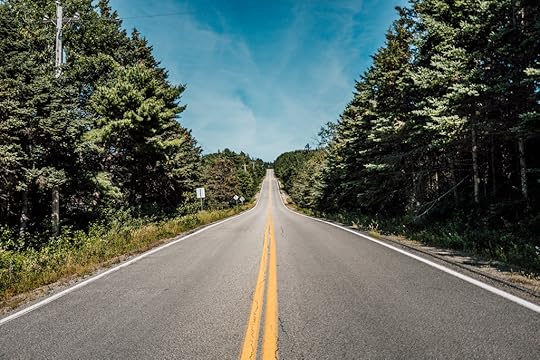
The next morning, we grabbed our bags and hit the road with only marginally aching heads for day one of our road trip through the province. I had Cameron’s hand-drawn map open in my notebook, his squiggly line leading us from Halifax down towards our next destination: Lunenburg (via Mahone Bay, Peggy’s Cove, two highways, and the nearby restaurant where his sister worked. He’d called ahead to make sure she was expecting us for lunch).
The little town of Lunenburg is a classic destination for Nova Scotia visitors. Situated on a gorgeous stretch of coastline and founded by the British in the 1750s as a colonial outpost, Lunenburg now holds UNESCO World Heritage status thanks to its beautifully preserved wooden buildings in a British-style street layout.
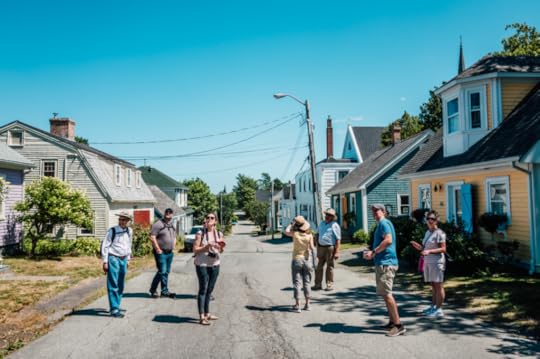
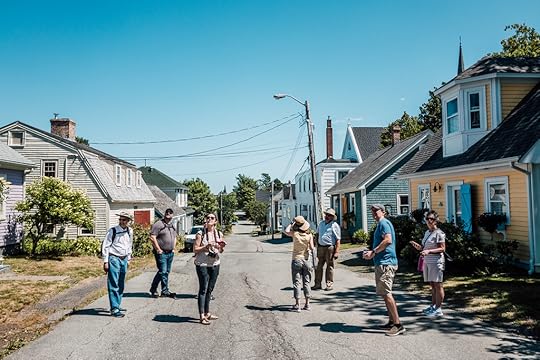
Our first stop was the Academy, a huge Gothic-like school building at the top of the hill where we met our tour guide, Ralph. Dressed in a wide brimmed hat to keep off the baking sun, he immediately launched into stories about his lifelong hometown, barely pausing for breath.
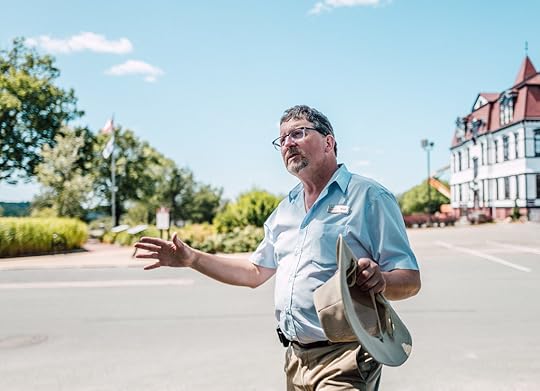
For the next hour Ralph led us through Lunenburg’s streets, stopping at tiny churches, innocuous doorways and curiously widened windows.
With every stop, he brought the history of Lunenburg to life: explaining the architectural quirks known as ‘Lunenburg Bumps’, the superstitions which led to people hiding old shoes in their walls to protect against evil, and the restoration process after a Halloween fire in 2001 destroyed St John’s Anglican Church.
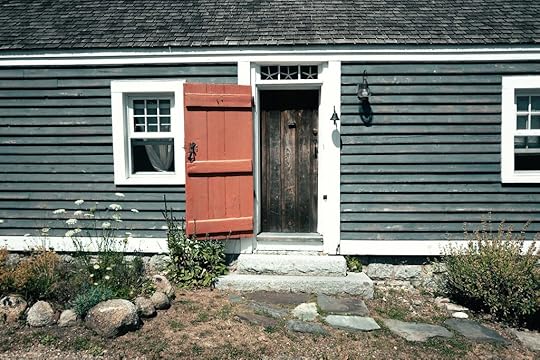
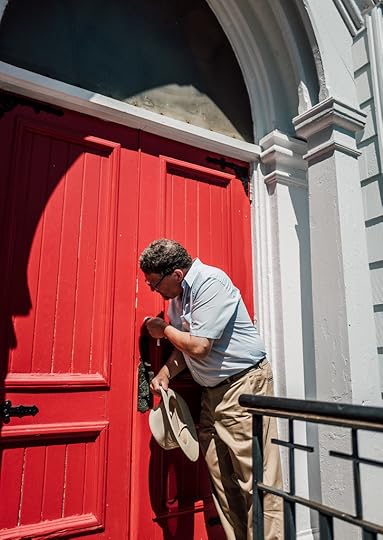
Occasionally Ralph pulled a bunch of keys from his pocket and let us inside a locked building. I stared up at the ceiling of St Johns Church, covered in painted stars, as Ralph told us that the fire prompted a local historian to research the constellations I was looking at. To her surprise, she discovered they matched the position of the stars on the night of Christ’s birth!
The tour ended at the fishermen’s memorial down by the harbour, and we said our goodbyes to Ralph before sidestepping the crowds of tourists and checking out the Fisheries Museum of the Atlantic. Inside was a wealth of interactive exhibits, as well as a sobering look at the reams of names lost to the ocean just steps away from the museum.

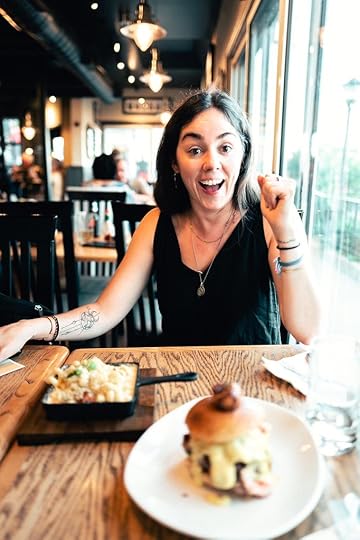
We spent a relaxing afternoon exploring the harbour – stopping for ice creams and an incredible dinner at Grand Banker’s Bar & Grill – then we headed out into the much emptier streets to see Lunenburg in an entirely different light.
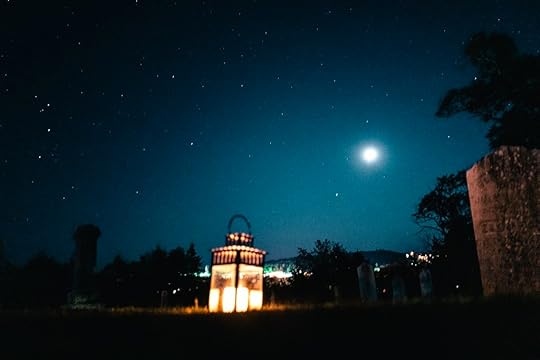
It’s been said that Lunenburg has more folklore, witches, superstitions and ghost stories than any other place in Nova Scotia. And when you stand in the town’s 300-year-old cemetery at the top of a street named Gallows Hill, you get the distinct feeling it could be true.
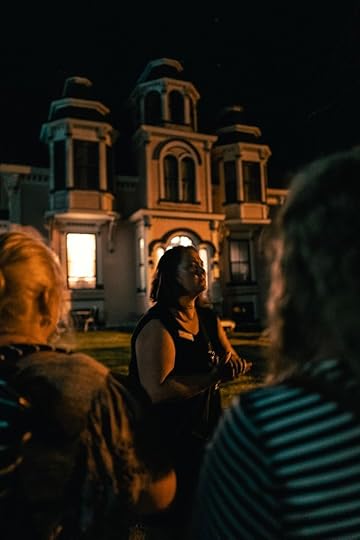
Ralph had already touched on many of the haunted happenings to take place in this town, but Kerriann, our guide for the evening, took it to another level. The next few hours were filled with stories of the ghosts who’ve been seen, heard and felt by dozens of people – along with a plethora of superstitions which absolutely fascinated me. Did you know it’s legal to spit in public in Lunenburg if you see a crow?
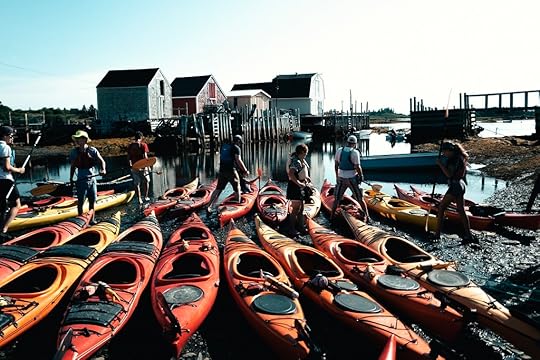
The next day dawned bright and sunny – perfect weather for a spot of kayaking at nearby Blue Rocks. Kim and I drove over along the coast until we saw a row of red and orange kayaks hauled up onto the shoreline. A guy with a bucket hat waved us over and introduced himself as Finn, who was leading our morning of kayaking.
When enough sun cream had been smeared across our cheeks and various belongings shoved into waterproof bags, we clumsily inserted ourselves into the kayaks along with a small group of others – and off we went.
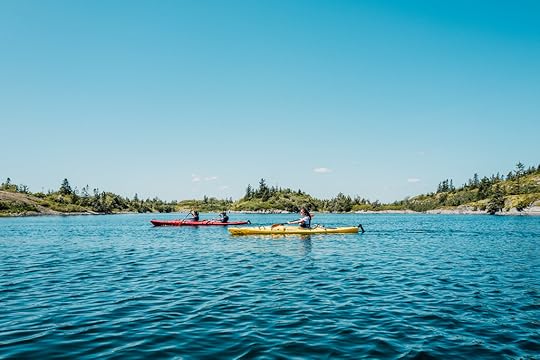
This is how I’d imagined rural Canada would look: sparkling light on smooth water, flanked by bright green banks of trees. We pulled on our oars and the narrow vessels slid onwards through the open sea. After yesterday’s walking tours it was a wonderfully different way to experience our surroundings.
Occasionally I’d come up alongside another kayaker, and naturally fall into conversation about the birds we occasionally saw swooping overhead, or the elusive promise of seals hiding in a cove nearby. But mostly I let myself relax into the rhythm of the activity: enjoying the peace and quiet of the Canadian coast.
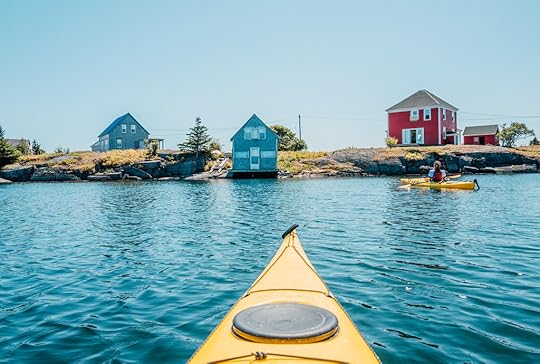
In just a few days, I was falling in love with Nova Scotia: the scenery, the stories, the friendliness of the locals. It felt like every person we’d met was eager and willing to chat about their home – and it felt like we’d been welcomed in from the start.
When the tour was over Finn waved us goodbye from amongst the kayaks, a smudge of celebratory ice cream on his cheek. We climbed into our car and headed for the little cable ferry across the river to Lahave, the next stop on our Nova Scotia road trip. And because it already felt like the norm, we struck up an easy conversation with the ferryman, offering him a frozen strawberry from our rapidly defrosting box of snacks.
Niceness begets niceness in Nova Scotia. And everywhere else.
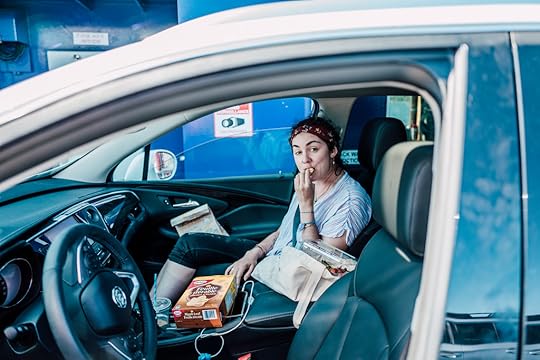

Lunenburg Walking Tours offers a selection of daily tours from June 1st to October 30th – ‘Essential Lunenburg’ at 10am & 2pm and ‘Haunted Lunenburg’ at 8.30pm. Their tours are also available year-round via reservation.
All the Lunenburg Walking Tours take about an hour and have the same prices:
Adult: $25Youth: $15Family: $75I can personally attest to the quality of both these tours – we received complimentary tickets for the Essential Lunenburg tour, and loved it so much that we immediately paid for the Haunted Lunenburg tour that same evening!
Our road trip around Nova Scotia was in paid partnership with Tourism Nova Scotia. All photos seen here were taken by Kim Leuenberger.
The post Befriending the Locals in Lunenburg, Nova Scotia appeared first on Flora The Explorer.
June 4, 2020
I’ve Written a Book – About Grief, Loss, and Becoming an Orphan
 The secret’s out. I’VE WRITTEN A BOOK!
Surprise! I’ve been working on this book for over a year: drafting, revising, editing, pulling my hair out, sending it to beta readers, working with editors and cover designers and proofreaders. And yet I haven’t spoken much about it online, aside from the occasional veiled tweet or Instagram caption. Perhaps because of the subject matter, I’ve needed to move through this process in my own private way.
And then when the global lockdown began, I took a definitive step back from blogging and posting on social media. Many of my heaviest grief moments mirror what’s been happening – a fear of stepping outside, a need for isolation, worries about uncertainty, too much time spent with your own thoughts. It’s been tough on everyone, in a myriad of different and unique ways.
I’ve had some internal struggle about whether it’s OK to publish a book in the midst of a pandemic, too. Particularly one about grief and loss – a topic that’s already pretty sad, but maybe more so during such a tense time.
But then again, I’m acutely aware of how many people’s grief has been amplified over the last months, be it fresh grief or years-old wounds opening up again. There’s been a rise in people messaging me with their own stories of loss, and I know, deep down, that personal stories of navigating grief are perhaps more necessary than ever now.
So during the last few months, while ‘isolation,’ ‘lockdown’ and ‘social distancing’ became mainstays in our vocabulary, I’ve been working frenziedly to get this book finished.
And now it’s here. My first ever book. I’m still a little bit in shock.
Introducing ‘The Adult Orphan Club’ – a book about learning to grieve the loss of your parents
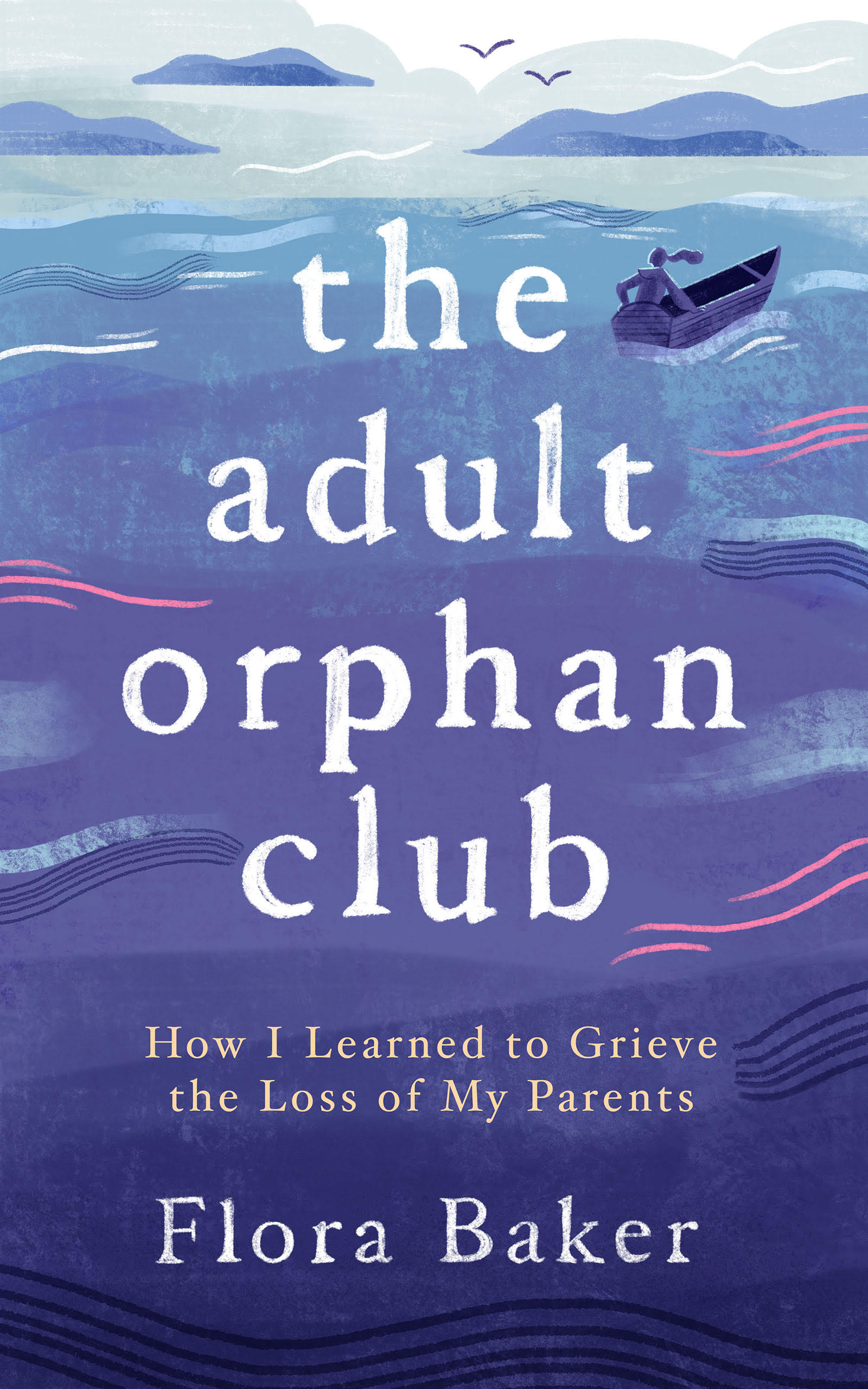
As the title may suggest, ‘The Adult Orphan Club’ is about what it’s like to become an orphan. Part memoir, part guide, the book takes you through the journey of grief. It combines practical advice with my own lived experiences about what to do before, during, and after the death of someone you love – along with all the emotional, mental and even physical overwhelm which kicks in, too.
Early Goodreads reviewers have said:
“It feels like Flora is gently but firmly taking you by the hand and leading you down the path she has already travelled, to show you that the journey will be hard beyond all else but you will survive.”
“Clearly-written and well-paced: a real guide to the worst of grief.”
“A vitally necessary book.”
Is ‘The Adult Orphan Club’ an upsetting read?It’s hard to say. I’ve written honestly about the experience of my parents dying, the emotional responses I’ve had, the difficulties which grief can throw at you, and the realisations that grief has eventually allowed me to understand. While I wouldn’t say it’s an upsetting read exactly, I’ve tried to maintain a level of clarity, truthfulness and sensitivity throughout. And sometimes that may hit hard.
Basically, if you’ve read any of my grief articles before, this book is written in the same style.
Who is the ideal reader of ‘The Adult Orphan Club’?I’ve written about the grief I know intimately, which stems from parental loss. But I think the experience of intense grieving is usually rooted in the same set of responses for all of us. We all go through the same overwhelm, confusion and sadness, even if the specifics of our grief are unique.
Many people have written to me over the years because they’ve been searching for stories which mirror theirs. These people have usually lost one or both of their parents. So while I’d say this book is written primarily with them in mind, I think anyone who’s suffered through grief will find parallels with their own experience. And I hope you’ll find comfort in it too.
What made you write ‘The Adult Orphan Club’?This is the book I needed to read when my parents died. It’s emotional and raw, and it digs really deep, but it’s necessary. The amount of unexpected trauma you struggle with during grief simply is not talked about – not enough, at least – and I really want that to change.
I’ve read many grief books with a psychological or therapeutic slant, and an absolute ton of grief memoirs. Although they’ve all been invaluable during my grief journey, I still felt that there was space for a book which combined personal experience with structured help – just without the psychoanalysis.
Plus I figured I’ve written enough blog articles about grief to warrant creating a much longer piece of writing!
But the biggest reason was because of the messages I still receive every week from those of you who’ve read those grief blogs. I tapped into something unexpected when I wrote about my parents dying before I turned thirty. I never expected that article to become the most-visited one on my site – but it opened my eyes to how many people needed a resource to help them feel less alone in grief.
Hopefully that’s what I’ve created with this book.
How can I read ‘The Adult Orphan Club’?The book was published on June 20th – which just so happens to be my mum’s birthday. It’s available both as an ebook and as a paperback on all platforms – just click the links below to buy your copy!
Order on Amazon UK Order on Amazon US Order on Kobo, iBooks, Google Play (and more!)A little note about reviews:If you’ve bought the book on any of the above platforms and enjoyed it, please consider leaving a review. It’s really helpful for allowing other readers to find my book – and it’s also a great way for me to prove to future publishers that I’m a good author to work with!
I’m also pretty active on Goodreads and would love a review there too – users can add ‘The Adult Orphan Club’ to their shelves here.
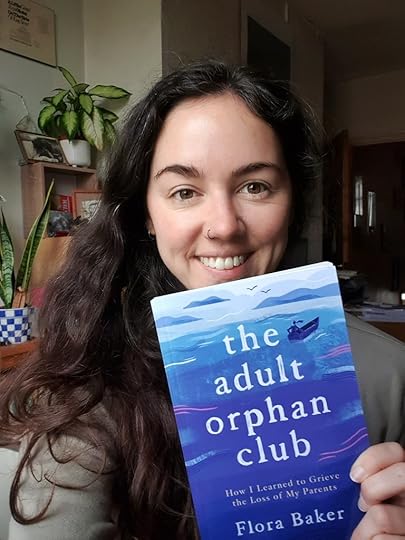
I’m really excited, nervous and proud to be publishing ‘The Adult Orphan Club’. I’ve built this book out of the hundreds of conversations I’ve had with other grieving people, all of whom needed a resource to accompany their grief. I firmly believe that it does those conversations justice.
I also wish I could tell my mum and dad about it – but then again, I couldn’t have written it if they were still here. Life is funny like that. Still, publishing it on my mum’s birthday means I’ll be giving her a present for the first time in eleven years, which is pretty special too.
Now the only thing left is for you to read it. I can’t wait to hear what you think!The post I’ve Written a Book – About Grief, Loss, and Becoming an Orphan appeared first on Flora The Explorer.
February 6, 2020
The Best Books I’ve Read To Help With Grief And Loss
 I’ve read a lot of grief books over the years.
That’s what happens when you lose your mum to cancer when you’re 20, and your dad to fibrosis when you’re 29. I’ve spent a full decade dealing with grief – and although writing has often been my catharsis, I’ve also found a lot of solace in reading other people’s words.
If you’re new to grieving, it might feel strange to actively seek out the same pain on hundreds of pages. But grief is a collective experience. Every person on the planet will go through it at some point. And one of the biggest lessons I’ve learned about grieving is that we’re honestly not alone in the process, however isolating it might feel.
In fact, it can be a huge help to see your own grief and loss mirrored in that of others; of the hundreds (probably thousands!) of authors who’ve channelled their pain into stories. Sharing what they’ve been through and what they’ve learned about grief becomes a motivation to help others. To help you.
At one point in the bestselling memoir When Breath Becomes Air, terminally ill author Paul Kalanithi begins to read all the literature he can find about mortality, “searching for a vocabulary with which to make sense of death, to find a way to begin defining (himself) again.”
I’d say this is just as valid as those of us coping with grief. We’re looking for a grief language; one that sadly we don’t have much access to until we’re already thrown headlong into the process.
So to make that search a little easier, here are some of the best books I’ve found to help me through grief.‘The Year of Magical Thinking’ by Joan Didion‘H is for Hawk’ by Helen Macdonald‘Splitting the Difference’ by Tre Rodriguez Miller‘The Iceberg’ by Marion Coutts‘A Grief Observed’ by C.S. Lewis‘I Am, I Am, I Am’ by Maggie O’Farrell‘A Manual For Heartache’ by Cathy Rentzenbrink‘Grief is the Thing with Feathers’ by Max Porter‘When Breath Becomes Air’ by Paul Kalanithi‘The Wild Other’ by Clover Stroud‘Travelling with Ghosts’ by Shannon Leone Fowler‘The Last Act of Love’ by Cathy RentzenbrinkThese books are all true-to-life experiences which feel as real on the page as they must have felt at the time. I hope you find them helpful in the same way that I have – and in case you’re concerned about being triggered into grief thoughts by any of these books, I’ve added a ‘grief trigger’ warning for each of them.
‘The Year of Magical Thinking’ by Joan Didion[image error] [image error]
The acclaimed American writer Joan Didion suffered two tragedies in in 2003: first her daughter Quintana Roo fell into a coma, then her husband John suffered a fatal heart attack just a few days later while Quintana was still in hospital. The Year of Magical Thinking follows the year after John’s sudden death as Joan attempts to reconcile her ‘magical thinking’ (i.e. all the ritualistic behaviours and thoughts which she imagined could feasibly bring John back) with what has actually happened.
The book is a confession of Joan’s most secret thoughts, and she writes in a precise, seemingly un-emotional style which does jar with some readers. But as someone who’s also experienced intense grief, I see her lack of sentimentality as a coping strategy. Joan’s trauma is simply too big to acknowledge – so this this book nudges repeatedly at the edges of the trauma instead. It’s just as much a portrait of Joan herself as it is about grief.
The Year of Magical Thinking is often regarded as a classic grief memoir and I honestly can’t recommend it highly enough. I actually read this between the deaths of my parents and now feel a strong urge to re-read it with the new clarity of my dad’s death in mind.
Grief triggers: It’s intensely personal, but because the language is quite factual and detached, it’s possible to read this without being particularly triggered. There are no detailed descriptions of death either.
Buy in the UK || Buy in the US
‘H is for Hawk’ by Helen Macdonald
On the surface, this book isn’t about grief. When we’re introduced to Helen, the protagonist, she’s just lost her father – but the plot quickly moves to her decision to train a goshawk, as Helen also explains her lifelong love for birds of prey and falconry. But as the book progresses, we realise that this training process is actually a way for her to cope with her father’s sudden death.
A surprising element of grief is its primal quality, something I’ve often felt keenly. Helen’s interpretation of the natural world mirrors her internal pain and anger in a way that’s bizarrely beautiful and almost cathartic for the reader. This book is nothing like the rest on this list, and I’d urge you to read it.
Grief triggers: H Is For Hawk is one of the least directly triggering books on this list, but it does occasionally delve into some self-imposed isolation behaviour in the latter half. As beautiful and evocative as Helen’s language is, it might also be a little intense for recent grievers.
Buy in the UK || Buy in the US
‘Splitting the Difference: A Heart-Shaped Memoir’ by Tre Miller Rodriguez[image error] [image error]
I first discovered Tre Miller Rodriguez years ago, when she was blogging about her husband Alberto’s sudden death. I remember feeling awed by her casual references to Alberto’s ashes; to the mundanity of death admin; to the impracticality of scattering Alberto’s ashes in a downwind. More than anything, I loved that she could make a story that focused so pivotally around death into something funny.
Reading Splitting the Difference felt like I was sitting in a coffee shop with Tre, having a conversation – and I love her for that. In fact, it’s also a book very much about love: I felt strongly that I knew how amazing Alberto had been because of how much she missed him. And I imagine that’s the exact legacy Tre wanted him to have on her readers.
Grief triggers: apart from a brief description of Alberto’s death, the book’s content takes place in the months and years afterward. Just be warned that ashes are described in detail a few times.
Buy in the UK || Buy in the US
‘The Iceberg’ by Marion Coutts[image error] [image error]
In The Iceberg, Marion Coutts details an eighteen month period with her art critic husband Tom Lubbock, as he’s diagnosed with a brain tumour and eventually passes away. Tom’s tumour greatly affected his speech and language skills and so it’s extremely apt that Marion uses stunningly poetic prose throughout the book – more so because the staccato rhythm directly reflects how surreal and disjointed I felt while both my parents were dying.
Marion doesn’t shy away from the grit and pain of watching a loved one slip away from her, and I loved this book for how honest and brave it is.
Grief triggers: as the entire book focuses on her husband’s decline, it’s safe to say that The Iceberg is graphic, detailed and pretty unflinching in its references to approaching death. I’d suggest avoiding this if you’re in the first year or so of grieving – or at least read a preview on Amazon and/or flick through the pages at a bookshop before committing.
Buy in the UK || Buy in the US
‘A Grief Observed’ by C.S. Lewis[image error] [image error]
C.S. Lewis knew his wife Joy was dying when they married. After her death in 1960, he wrote a short collection of meditations on life, death, faith, grief, love, and everything in between.
A commenter on Goodreads noted that these essays almost read like ‘an old-fashioned live blog’, and perhaps that’s why the oldest book on this list is also one of the most commonly suggested grief reads. A Grief Observed is a timeless classic because every grieving person can see themselves in his personal, vulnerable and loving words.
Grief triggers: A Grief Observed is a painful and raw book for those who’ve recently lost someone. If you’re affected by poetry/poetic language (an emotional trigger for some) then this might be too much for you.
Buy in the UK || Buy in the US
‘I Am, I Am, I Am’ by Maggie O’Farrell[image error] [image error]
Can a book about near-death experiences help with your grief process? This collection of essays about Maggie’s life – and her brushes with death – explores how trauma affects us in both our thinking and behaviour.
As a rather anxious person, I found this book to be a thought-provoking read. On the one hand, reminders of my mortality freak me out somewhat – but on the other, I Am, I Am, I Am essentially kickstarted my desire to live a full and impassioned life precisely because of that thought of mortality. (I also adore Maggie’s style of writing, so I’m a little biased!)
Grief level: I Am, I Am, I Am is probably the safest of all books mentioned here as it doesn’t theoretically involve any deaths. However, some of the scenarios might be somewhat triggering – her essay subjects include stalking, near-drowning and allergic reactions.
Buy in the UK || Buy in the US
‘A Manual For Heartache’ by Cathy Rentzenbrink
When Cathy’s brother died after eight years in a coma, she realised how much grief had shaped her life. So she decided to write about her experiences of grief, as well as how she managed to find joy in the world again. Although Cathy has also written a memoir about the story of her brother (which I’ve mentioned later in this article), A Manual For Heartache is the book to help others deal with their grief.
It’s a heartfelt and personal guide to the grieving process which is very easy to read – I think I got through it in a few hours. It’s probably worth having a physical copy too, as it’s a good book to flick through and turn down the page corners.
Grief triggers: definitely tame, soft and gentle enough to read in the first weeks after a bereavement. It’s also a good gift for someone you know who’s grieving.
Buy in the UK || Buy in the US
‘Grief is the Thing with Feathers’ by Max Porter
Grief is the Thing with Feathers tells the story of a recently widowed father, his two young sons, and ‘Crow’, who is the embodiment of their grief. The text is sparse, poetic, piecemeal: it’s a quick read in theory, but it stays with you long after you’ve closed the book.
I read this in one breathless evening at an Airbnb in Berlin but already know I need to buy my own copy. It’s haunting and lyrical and it gets under your skin. Most importantly, it concisely captures many of the turbulent emotions felt while grieving.
Grief triggers: It’s probably not something to read in the first few months of grief, as some of the imagery the book conjures up can be very evocative.
Buy in the UK || Buy in the US
NB: This is one of the only fiction books on this list, so if I write a fiction version of this article I’ll move it over there!
‘When Breath Becomes Air’ by Paul Kalanithi
Paul Kalanithi’s memoir about facing stage 4 lung cancer as a young neurosurgeon quickly became a global bestseller. The book moves through Paul’s early career, diagnosis, developing illness and death – and also includes a touching epilogue written by his wife.
Despite the subject being so acutely sad, I was somewhat surprised that I read this so quickly during a few hours in a coffee shop. The vaguely clinical and academic prose probably helps remove too much of an emotional connection with his story, but of course it’s heartbreaking nonetheless, not least that he died before the book was published. That said, Paul’s meditations on what it means to “face mortality and try to understand what made life worth living” are beautifully realised.
Grief triggers: There’s lots of medical vocabulary, and the first half of the book is all about trauma surgery so those descriptive passages could be explicitly triggering. There’s also references to organ/body donors, which could be difficult if you have experience of this with a loved one. In fact, When Breath Becomes Air was pretty triggering for me as one of my grief-related anxieties is thoughts about my own mortality and eventual death, which Paul discusses a lot.
Buy in the UK || Buy in the US
‘The Wild Other’ by Clover Stroud
When Clover is a teenager, her mother falls from her horse and suffers permanent brain damage. Although she lives for many years afterwards, Clover’s life is fundamentally affected by the accident – she faces a form of ‘living loss’ which follows every decision she makes.
The Wild Other is beautifully complex and combines travel narrative with Clover’s fierce determination to live as fully as she possibly can. I know too well how much of a shadow grief and loss can cast over your life, so I found Clover’s memoir particularly inspiring.
Grief triggers: Spiralling behaviour resulting from grief is a strong element to this book. Clover’s mother spends much of her later life in nursing homes so this language can also be triggering.
Buy in the UK || Buy in the US
‘Travelling with Ghosts’ by Shannon Leone Fowler[image error] [image error]
Shannon, a marine biologist, was celebrating her recent engagement with her Australian fiancé Sean in Thailand when he was stung on the leg by a box jellyfish. He died moments later – and the resulting trauma took her travelling around the world as she attempted to heal from the pain of her loss while memories of Sean abounded.
Shannon’s memoir is an unflinching glimpse into the sudden loss of a partner, but I also found Shannon’s emotional relationship with the ocean and its contents to be particularly interesting. Getting to grips with ‘the enemy’ – in Shannon’s case, both the species of jellyfish which killed Sean, and with the ocean in general – is an issue many grieving people have to contend with. I was rooting for Shannon to surmount her fear with an eventual return to the water, and knew from personal experience what a challenge this must have been for her.
Grief level: This book isn’t a great idea for the recently bereaved, as Shannon describes her emotional responses to Sean death in a lot of detail. If you’ve lost someone in a sudden accident, it might be best to avoid this book for a while too.
Buy in the UK || Buy in the US
‘The Last Act of Love’ by Cathy Rentzenbrink
When Cathy was a teenager, her younger brother Matty was hit by a car and left in a permanent vegetative state (PVS). Over the next eight years, she and her parents faced the daily struggle of coping with Matty’s condition and their own emotional responses. To lose a family member is horrific enough, but also watching them suffer for years is such a vulnerable way to live.
This story could easily be written as an incredibly depressing one, but Cathy’s light turn of phrase and loving, positive undertone throughout makes this a much easier read than you’d expect. I imagine she wrote this a substantial amount of time afterwards, as it feels like she’s healed from the raw intensity. The Last Act of Love is a wonderful example of how to come to terms with grief and eventually embrace the ways in which it affects your life.
Grief level: If you’ve cared for a loved one in a coma or with PVS then this book might be triggering – some of the carer-like vocabulary reminded me of my dad’s last few months, which I found quite difficult at times.
Buy in the UK || Buy in the US

I plan to update this article whenever I read anything relevant – and I might write a similar list of grief fiction too. So if you have suggestions (for both non-fiction and fiction), please leave them in the comments and I’ll check them out!
Pin this article if you enjoyed it!
NB: This article includes some affiliate links, but it won’t cost you anything to click on them – it just helps me with the cost of running this site.
The post The Best Books I’ve Read To Help With Grief And Loss appeared first on Flora The Explorer.
January 30, 2020
I’m An Anxious Flyer. This Is How I Cope With a Long Haul Flight.
 What do you do if you’re an anxious flyer who loves to travel?
To be perfectly honest, I’m still trying to feel my way through this one. Because every time I board a plane, I have to quell a near-constant flutter of panic in my stomach; a myriad of catastrophic thoughts careening through my mind; and a tendency to break out in a cold sweat at the tiniest hint of turbulence.
Also I need to pee literally all the time.
What’s weird is that I’m not alone in this. The more people I tell about my flight anxieties, the more I learn that it’s actually really common to feel nervous, anxious and generally scared when onboard a plane. It’s easy to blame anxious flyer syndrome on a never-ending news cycle which always has some kind of inexplicable plane crash in recent memory – but it goes deeper than that. A fear of flying is fundamentally about having a total lack of control: and for me, I panic the most about being helplessly stuck in a ‘high-octane situation’ like a plane crash or a terrorist attack.
For that reason, whenever I step inside a plane I feel like I’m reconciling myself to the very real possibility of never coming out alive.
The main thing which triggers my anxiety is turbulence.View this post on Instagram
A post shared by Flora The Explorer (@florabaker) on Oct 4, 2018 at 9:05am PDT
The first time I properly noticed my flight anxiety was after two difficult flights quite close together. One involved three hours of near-constant turbulence which rocked the plane so much the other passengers were screaming and crying. The other had a sudden drop which caused possessions to fly out of the seat pockets while people banged their heads on the panels – and we had to land the plane straight away because the windscreen was cracked.
Although neither of these flights were life threatening they clearly made a significant impact on me, because as soon as I feel turbulence I suddenly feel like the plane’s about to plummet, and I’m about to die.
How do I know I’m getting anxious? Because my chest gets tight and my breathing gets shallow. Because I find myself planting both feet firmly on the ground, gripping the armrests, tightening my seatbelt as I look around the cabin at other passengers. Because I crane my neck to see through the windows, as if the sight of white clouds and the plane’s wing will help calm me down.
The most frustrating thing about my anxiety attacks is that I don’t have any conscious handle on my reactions. It’s like my body responds before my mind has a chance to; jumping from zero to a hundred in less time than it takes for me to even register that we’re in a patch of turbulence!
Read more: how anxiety challenges the way I travel
[Image via Unsplash]
For a long time I employed my own ‘fail-safe’ tactics to alleviate my anxiety. Looking back, they’re more like superstitions than anything else – like having to whisper a particular mantra to myself as the plane took off, or sitting by the window because middle seats make me feel claustrophobic.
After a lot of therapy, I’ve understood that these behaviours actually make my flights feel more pressured and stressful, as there’s every chance that I’ll make myself more panicked if one of these ‘safety mechanisms’ hasn’t happened. I’ve also begrudgingly accepted that it doesn’t matter where my anxiety stems from (probably because it’s yet another thing I’d like to blame on the grief of my parents’ deaths). The origin of a fear doesn’t matter as much as actually working towards a solution.
Luckily, there are a lot of ways to counteract flight anxiety – so here are a few of my tried and tested tips.Pin me for later!

Now that I know how anxious flying can make me, I like to prepare for ‘my perfect flight’ – which is basically the calmest and most sleep-filled journey possible.
Don’t drink coffee on the day of the flight.Part of my airport ritual always used to include buying a coffee for the flight – I thought it’d help me get some work done onboard, but it only served to make me feel more jittery and panicked. As you might imagine, when I experimented with not drinking coffee on a flight I realised that having any caffeine in my system just makes it easier for my panic receptors to spike.
Now I actually take it a step further and avoid drinking coffee at all on a flight day – it could be a placebo, but it seems to help me!
Wear compression socks.My mum used to get varicose veins so she’d often wear compression socks on flights. Yet I’d never considered wearing them myself until a friend recommended I try it before my long-haul flight to Japan. Compressions socks increase blood flow and stop your legs from swelling, which is a good idea during twelve hours in the air – and weirdly enough I felt more secure when wearing them.
Get cosy.Being in constrictive clothing just makes me feel a bit more on edge, so I always wear leggings or tracksuit bottoms, a loose-fitting top and a comfy hoodie when I’m on a plane.
Comfy clothing also makes it easier to fall asleep – the ultimate goal for me on any flight, as I can just sleep straight through the anxiety! – but I usually get chilly when sleeping on planes. As a result, I make sure I can easily access extra layers like a coat or scarf so I can quickly grab them before I lose that dozy feeling.
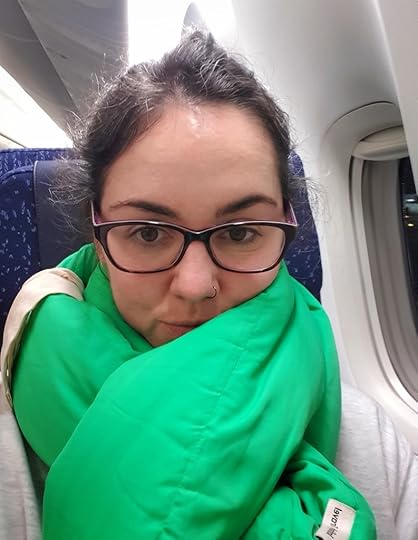
Get a good neck pillow.I’ve bought neck pillows at airports before and never found one I particularly liked (or one I didn’t end up losing). Just before my Japan trip I bought myself a Huzi Infinity Pillow and although it was a risky move and looks somewhat ridiculous I actually love it!
This pillow is basically an infinity scarf made of cushiony material. It can be used a dozen different ways: knotted up in a bundle, double-looped around your neck like a scarf, looped around your back for a bit of lower-back support – and you can even tuck your arms into it. The material is really soft, a bit like a duvet, and it also works as a substitute pillow for any nights of your trip where the provided pillows are less than appealing (which often seems to happen to me).
Seeing as I find it near-impossible to get comfy on flights and move positions all the time, this pillow really made sense for me. I’ve only used it on two long-haul flights so far but I got a good six hours sleep on each so it seems to do the trick!
As someone who needs silence to sleep properly, I can’t board a plane without knowing I have earplugs or in-ear headphones. Add an eye mask into the mix and there’s even more chance I’ll be able to drift off to sleep.
Make a calming music playlist.I used to just play my music on shuffle, but recently realised how much more therapeutic it can be to have solely calming music on a low volume as I’m drifting off to sleep on a plane.
Download some good podcasts.If I’m not tired enough for full sleep, listening to a podcast is a pretty good distraction from my anxiety: I’m involved in a storyline but can still look around the cabin. Plus I can listen with my eyes closed which is always a good thing!
What podcasts you listen to totally depends on your taste, but I find that either fascinating or funny podcasts are perfect for my flight anxiety. I got through multiple episodes of ‘My Dad Wrote A Porno’ when flying to Japan!
Download some meditation apps.There are so many meditation apps with recorded sessions specifically for flight anxiety – my preferred app is Headspace. Make sure you’ve set them up and downloaded your sessions beforehand as they often require an internet connection to work.
Do some research about your particular flight anxiety.Because turbulence is my main anxiety trigger, I’ve read numerous articles in an effort to debunk that fear. Turbulence is just like hitting speed bumps in a car, or sailing over rough waves in a boat. Most importantly, no planes have ever crashed due to turbulence. I try to keep that fact in mind as it does help to calm me down when I’m getting panicked.
Ask your doctor for anti-anxiety medication.After my dad died I found it really hard to sleep, so my doctor prescribed me a low dose of Diazepam. Turns out this pill is also really helpful for calming down pre-flight nerves, so if I’m getting really worried before a long-haul flight I’ll take a Diazepam just before boarding in the hopes that it’ll relax me.

[Image via Unsplash]
Dealing with anxiety during your flightChoose a good seat.For fellow turbulence-haters, sitting at the front of the plane is the least bumpy spot – and if you’re scared about a plane crash, seats near the wings are statistically the safest. I tend to feel claustrophobic in a middle seat so usually ask for a window, as looking out at the view helps to calm me down.
Watch calm movies.Most long haul flights have an extensive list of movies to watch during the flight. I tend to opt for the calmer end of the movie spectrum: the comedies, rom-coms and Pixar films like ‘Secret Life of Pets’ and ‘Inside Out’.
I used to watch anything which appealed to me, but on one flight I watched ‘The Hunger Games’ and we hit a patch of turbulence right when an explosively dramatic scene started. It took ages for my anxiety to calm down, and I even started imagining that dramatic movie scenes would invoke the turbulence… Not exactly a helpful thought.
Watch the flight attendants.One of my favourite tactics is to keep an eye on how the flight attendants are behaving during the flight. Chances are that while you’re interpreting a situation as panic-worthy they’re being calm and breezy, and noticing that should de-escalate your anxiety. (That said, the downside of focusing your attention on someone else’s behaviour is that when they actively look scared it could make your anxiety even worse..!)
I’ve also heard nervous flyers say they’ve mentioned their fears to the attendants. I’ve never done this but I imagine it’d be quite bolstering to feel like someone ‘official’ is keeping an eye on you.
Drink some alcohol!I know, I know – there are plenty of articles which say you should avoid alcohol on flights because it’s dehydrating. But there’s no denying that a couple of Bloody Marys makes my anxiety a lot easier to deal with. That way I still feel the turbulence but I just don’t care as much as before.

[Image via Unsplash]
What to do when your flight anxiety gets triggeredCome up with some mantras to help you.About an hour into my return flight from Japan we hit a bumpy patch of turbulence which took me by surprise. All the usual feelings bubbled up inside and I could sense the tears pricking my eyelids – but I looked at myself in the window reflection and began to whisper, “You have power over this.” I didn’t mean I actually had any power relating to the plane or the turbulence, but I did have power over my own mental thought process. It’s not necessary to feel that anxiety. And sometimes reminding yourself of that can be enough to bring you out.
Another mantra which really helped me was actually delivered by the captain over the intercom. I heard, “The turbulence will not affect the safety of the aircraft” four times during my long-haul Japan flights and I cannot tell you the relief it gave me. Turns out I really appreciate being told that someone has control over the situation even if I don’t!
Analyse the scene around you with the ‘54321 method’.There’s a grounding method called ‘54321’ which I’ve often used during a panic attack. By engaging with all five senses you essentially distract yourself from the thing that’s making you anxious: look for five things you can see, four things you can touch, three things you can hear, two things you can smell and one thing you can taste.
I try to take in as much detail as possible about the passengers around me – the colours and types of clothes they’re wearing, the books they’re reading, the way they’ve tied their shoes. The more I observe, the less prominent my anxious thoughts become. And the more often I practice this in the midst of feeling anxious, the more I’m training my brain to understand that it’s ok to relax!
Breathe through it.Like everything in mental health, coping with flight anxiety is all about the breath. Inhaling through your nose and exhaling through your mouth as slowly as possible is the easiest way to calm yourself down.
Read more: the self-care strategies I use to improve my mental health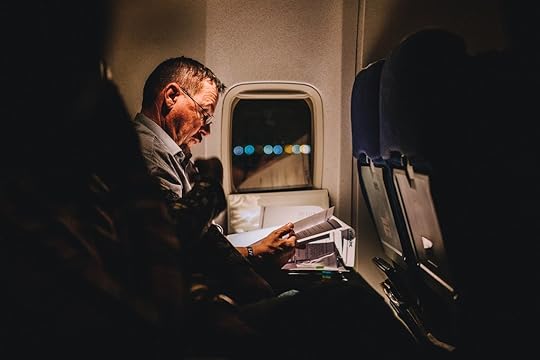
[Image via Unsplash]
Anxiety is worrying about the ‘what-if’. Don’t predict what hasn’t happened yet!The biggest learning curve for my flight anxiety actually happened on my return flight from Japan. As the plane bumped and shuddered its way through the turbulence I suddenly had a lightning bolt of realisation: that at some point in the past I’d convinced myself that turbulence equals disaster and death, and therefore I was predicting a totally hypothetical future with every jolt.
What I should be doing is focusing solely on the present. Nothing else. Until there’s actually a disaster to confront, I simply don’t need to engage with my catastrophic thoughts. Harder than it sounds, I know. But I’m getting there.
Do you have any tips to combat flight anxiety? Let me know in the comments!Pin this article if you found it helpful!
NB: This article contains affiliate links, but it won’t cost you anything to click on them – it just helps me with the cost of running this site!
The post I’m An Anxious Flyer. This Is How I Cope With a Long Haul Flight. appeared first on Flora The Explorer.
January 23, 2020
A Day Trip to Shibamata, Tokyo’s Retro Japanese Neighbourhood
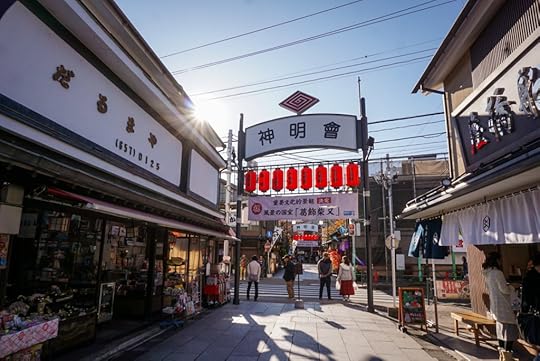 Welcome to Shibamata, the most nostalgic neighbourhood in Tokyo.
In fact, Shibamata’s nostalgic nature was pretty perfect for my first full day in Japan, because I felt like I was stuck in something of a time warp myself.
For those who don’t know, the direct flight from London to Tokyo takes twelve hours and crosses nine timezones. By the time I landed, I was in a state of delirium – and the bright lights and street-side chaos of central Tokyo only exacerbated my condition!
But when you’ve just arrived in Japan, there’s no time to waste. So the next morning, still jet lagged and unsure of what time my body thought it was, I jumped on a succession of subway trains, switched to a tiny above-ground carriage and stepped off at a platform marked by a beautifully classic hand-lettered sign. We’d arrived in Shibamata.
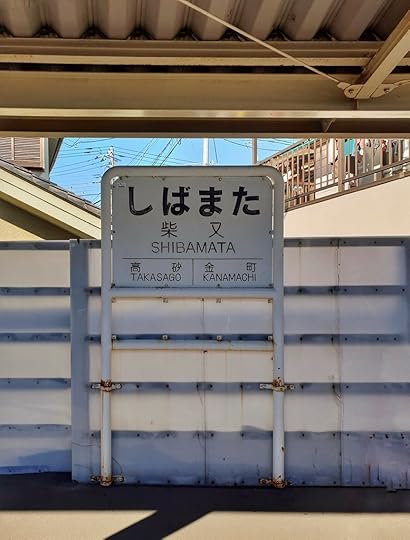
Shibamata is a neighbourhood in Katsushika Ward which is in the eastern part of Tokyo – an area pretty far away from the usual tourist routes, or so I was told. In Japan, Shibamata is most famous for being the hometown of the protagonist in an old Japanese film series called ‘Otoko wa Tsurai yo’ – in English, ‘It’s Tough Being a Man’. Filmed from 1969 to 1995, the series starred a man called Kiyoshi Atsumi who plays Tora-san, “a kind-hearted vagabond who is always unlucky in love”.
Although Tora-san travelled the length and breadth of Japan in his films, he always returned to Shibamata, where his sister, aunt and uncle lived. It gave Shibamata a lot of media exposure, and cemented the area’s reputation as a traditional neighbourhood emblematic of ‘old Tokyo’.
And as for Tora-san himself? Well, he’s become the mascot of Shibamata. When we stepped off the train, walked across the tracks and exited Shibamata station, the first thing we saw was the bronze statue of Tora-san, his hand outstretched towards another statue of his younger sister.
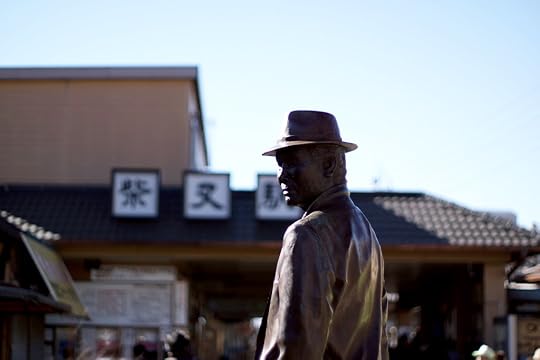
[Image via Flickr]
Pin me for later!
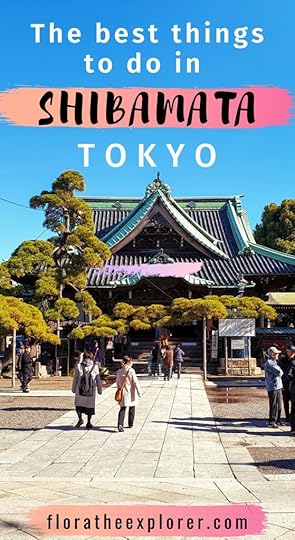
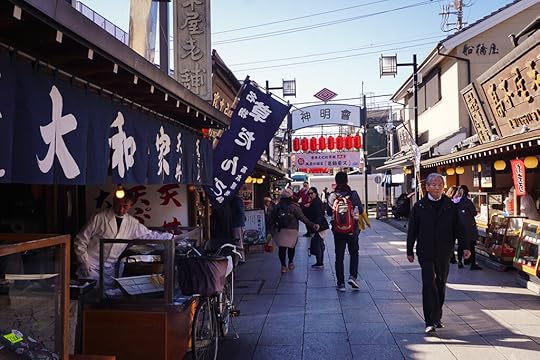
The central street in Shibamata, known as the Taishakuten Sando, is just 200 metres long but immediately evokes an old-world charm which is hard to find in modern-day Tokyo. It leads visitors directly from Shibamata station to the famous Taishakuten temple and is lined with shops selling all kinds of local specialties: traditional street food including doriyaki pancakes, Japanese crackers and sweet rice dumplings flavoured with mugwort.
Many of the kitchens making these snacks are easily visible from the street – easier still if you crane your neck a bit!
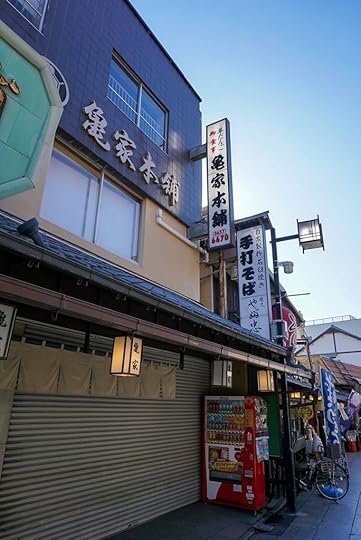
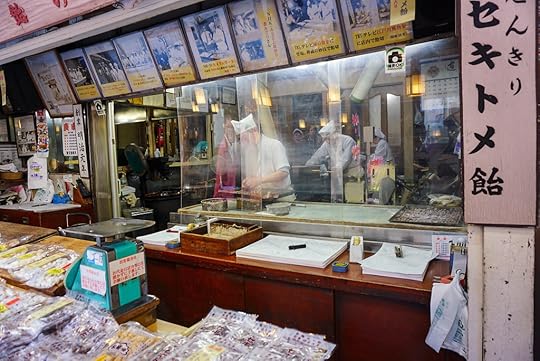
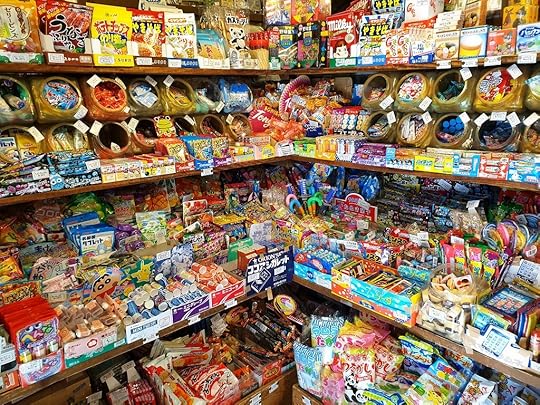
We stopped at a dagashiya shop, an old-school sweet shop which evoked a number of gasps from our Japanese companions. Apparently the shop displays their products in the exact same way – it reminded them of childhood, and a nostalgic memory they hadn’t been expecting!
As we left the shop and continued on our way, it made me look differently at the street scenes of Shibamata. How many Japanese visitors were here looking for that same feeling? Were they longing for a glimpse of a Tokyo which no longer seems to exist?
At the end of the Taishakuten Sando is Shibamata’s crowning glory: the Taishakuten Temple. Founded in 1629, the Taishakuten Temple has been rebuilt a couple of times but the current iteration survived the bombings of World War Two – an impressive feat, considering how much of the temple is carved from wood.
And your first step into the temple complex is right underneath the stunning Nitenmon Gate, built more than two centuries ago.
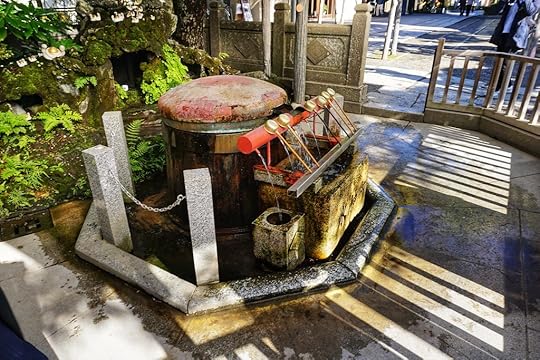
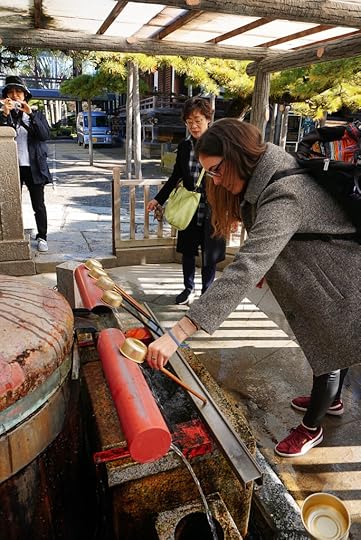
Once inside the temple grounds, we walked towards a water basin set in stone beneath a canopy. There’s a particular etiquette to follow when visiting a temple or shrine in Japan (which of course I had no idea about!) but thankfully our guide showed me the first part: how to wash my hands.
Pick up a wooden ladle in your right hand and fill it with running waterPour the water over your left handSwitch hands, fill the ladle again, and pour water over your right hand (ensuring your ‘cleansed’ left hand doesn’t touch your ‘dirty’ right hand!)Switch hands again so the ladle is in your right hand and refill itPour water into your cupped left hand and ‘drink’ (you can pretend to do this if you don’t feel comfortable actually drinking)Wash the ladle by allowing the running water to trickle down itBalance the ladle back on the basin, scoop side down, for the next userAlthough I tried my best to get this process right the first time, our recently-arrived temple guide (who was watching from the sidelines) told me to repeat the whole thing again because I didn’t do it perfectly…
Once our hands were adequately washed, we could advance to the entrance of the temple – but there, a second custom had to be followed.
I would’ve thought my ability to remove my own shoes was pretty easy by now, but as I looked around I realised there was a particular method everyone seemed to be employing… Well, everyone except me!
To be respectful at a temple, you’re supposed to face away from the temple entrance and slip off your shoes, taking care to step backwards onto the genkan (a little raised platform). Then you pick up your shoes and place them in the lockers provided, before entering the temple.
Gazing at the wooden carvings of Taishakuten Temple

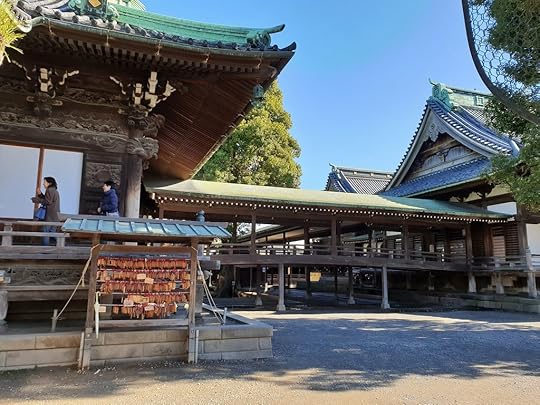
The exterior walls of the Taishakuten Temple are covered with intricately carved wooden panels depicting Buddhist scenes from the lotus sutra. The wooden carvings were first started in the 1920s but they took over twelve years to complete and required a number of different artists. As a result the skill level changes somewhat: guides can even point out sections where the same artist has improved over time!
A set of wooden walkways allow visitors to circumnavigate the entire building and get relatively close to the artwork – and there’s also a glass wall built around the walkway, protecting these precious carvings from any inclement weather.


As I skim-read the little English signs explaining the stories of each panel, our temple guide told us a few interesting facts about the wooden carvings – namely, that they’re too delicate to be properly cleaned. Staff have attempted using brushes and their finger tips, but now they only remove the tiniest of cobwebs once a year.
He also explained the significance of dragons at Shibamata Taishakuten. There are dozens of the beautifully carved beasts supporting the carving’s lower structure, there to both protect the temple and also to symbolise peace.
Apparently you’re able to distinguish between dragon nationalities by the number of claws they have. According to Japanese mythology, three-clawed dragons originated in Japan. When they migrated towards Korea they gained another claw, and by the time they reached China they’d developed five claws!

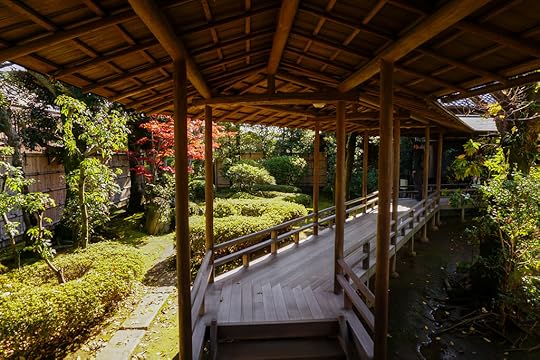
We made our way along the covered walkway towards the Japanese gardens just behind the temple. This serene little space is filled with elegant trees, shallow ponds, stone pagodas, and trickling fountains – and the same wooden walkways run throughout, so you can observe the gardens without disturbing the peace.
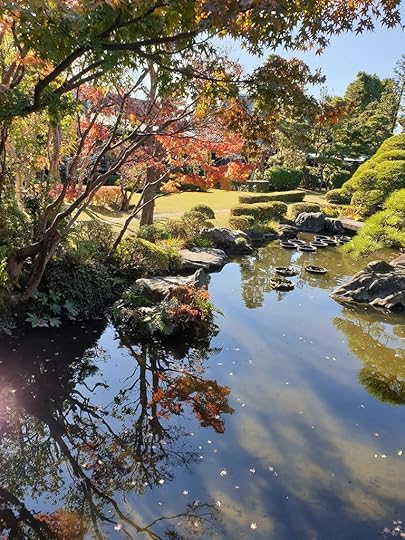
By the time we’d been walking for half an hour I realised my feet were utterly freezing. Walking on tatami mats and cold wooden planks in just your socks can be perilous for someone with awful circulation like me – and in Japan you spend a lot of time without your shoes!
I hopped along the covered walkway, repeatedly curling my toes under to try and warm them up – to no avail. Whenever I found a patch of sun on the walkway I raced towards it and let my chilly feet soak in the warmth for as long as possible.
The best way to avoid this in Japan? Always wear double socks!
Read more: Essential things to know before travelling to Japan
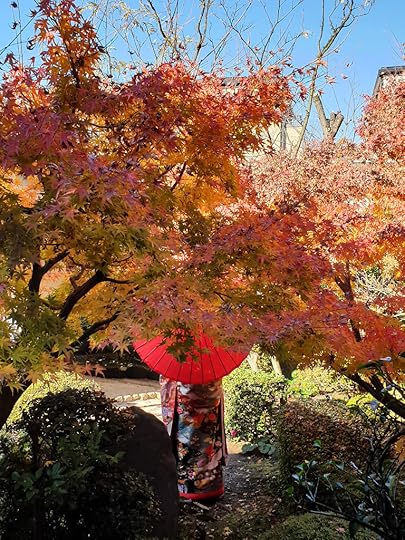
Apart from my poor circulation, wandering through the Japanese gardens was a beautiful experience. We watched the koi fish swimming lazily past the turtles, and even came across a woman posing for her wedding photographs wearing a traditional kimono and holding an open parasol.
Although I only saw her from behind, I immediately got a little snap-happy through the wooden fenceposts and conducted a little photoshoot of my own!
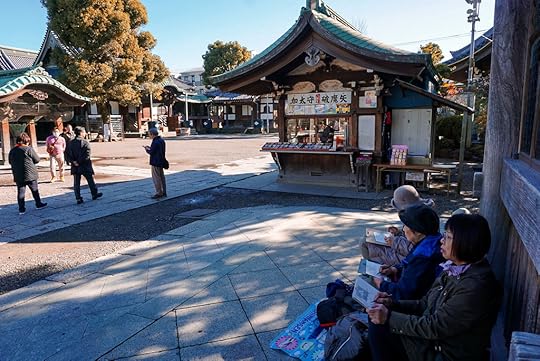
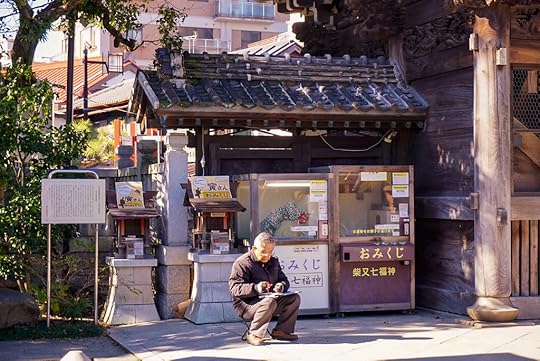
When we made our way back through the temple complex to grab our shoes, I kept getting waylaid by people-watching: the women painting watercolours of the temple’s facade; the couple watching a dancing dragon puppet sequestered inside a coin-operated machine; the man hunched over on a little stool while organising the souvenirs he was presumably selling.
I began to understand just how many snippets of stories I was going to keep seeing in Japan – and I loved it!
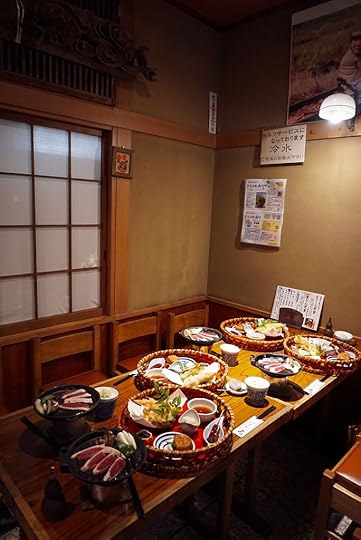
My first full lunch in Japan required a lavish meal, and I wasn’t disappointed. We walked intp Yabuchu Taishakuten Sando store and immediately saw a table laden with food in separate wicker baskets: prawn tempura, onigiri, seaweed salad, and slices of duck which we fried ourselves on little heated griddles.
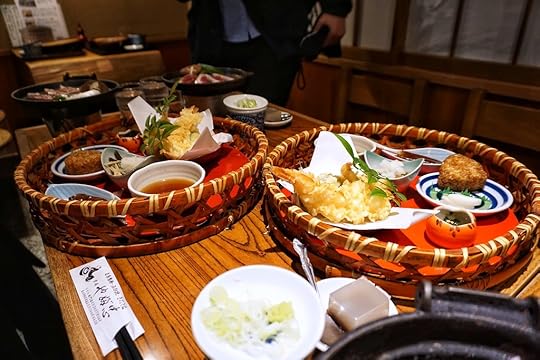
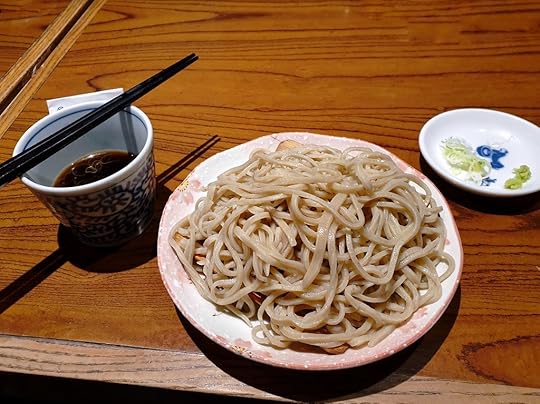
When we’d finished our tempura baskets, the second course arrived: cold soba noodles dipped in soy sauce, spring onions and wasabi. I’d never eaten soba noodles before and was really excited to try – but it was hard to ignore the family on the table next to ours, who were all making the most fantastic slurping-noodle-noises.
Stifling a giggle, our Tokyo guide explained why that noise was a positive thing – “It’s something we’re brought up doing, as a marker of how much we’re enjoying our soba!”
We walked back along the Taishakuten Sando in the early afternoon sun towards Shibamata station. I looked at the glinting light and thought again about how much nostalgia I already felt for a country I’d only just begun to explore.
If you’re looking for a classic introduction to old-school Japan, Shibamata is the perfect place to start.
Have you visited Shibamata? What other unknown neighbourhoods in Tokyo would you recommend?
– How do I get to Shibamata from central Tokyo?
First, take the Keisei Main Line (from Shimbashi Station) to Keisei Takasago Station. Next, take the Keisei Kanamachi Line to Shibamata Station. This is the main entrance to the town and all sights in Shibamata are within walking distance. A one way train journey takes about 25 minutes.
– How much does the Shibamata Taishakuten Temple cost?
The temple is open all year round, and admission is free. The carvings and garden are open 9am to 4pm, and admission costs 400 yen.
NB: my trip to Japan was supported by Tokyo Metropolitan Government and #KyushuxTokyo – but the observations about wooden carvings and frozen feet are all my own.
The post A Day Trip to Shibamata, Tokyo’s Retro Japanese Neighbourhood appeared first on Flora The Explorer.
January 10, 2020
16 Surprising Things I Learned From My First Time in Japan
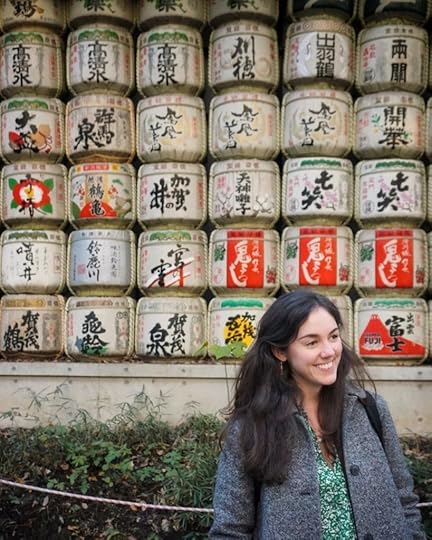 I barely remember my first time in Japan.
Although I was only eight years old to be fair.
In 1996, Japan was a world away from my childhood life in London – a place which had barely crossed my mind – but then my dad got a job directing a play in Tokyo, and that summer my mum and I flew out to join him. We spent a month exploring Japan as a family, and for a child who’d never been out of Europe before, my first time in Japan was nothing short of incredible.
Alas, my memories now are somewhat hazy. I can remember the sugar-fuelled excitement of Goofy’s bouncy house at Tokyo Disneyland; eating hot vending machine spaghetti on the grass at the base of Mount Fuji; staring wide-eyed at the perfect plastic food replicas outside restaurants.
I remember my dad’s joy at the high-speed trains which arrived the exact second they were expected, and my mum’s happiness when a group of Japanese businessmen sent over a bottle of sake to our restaurant table – followed by a bowl of ‘hot and cold ice cream’ for me to try. And of course I immediately fell in love with sushi.
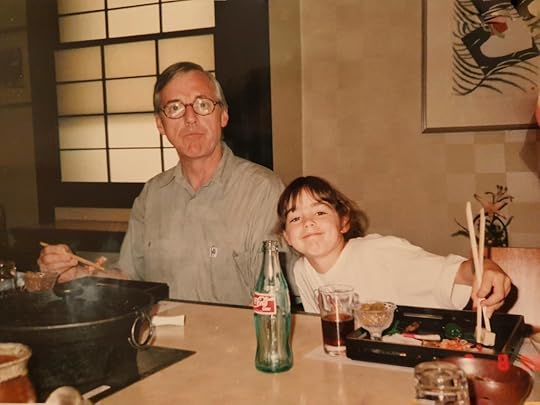
Japan was the first truly different country I ever travelled to, and ever since it’s been firmly lodged in my mind as the most wonderfully surreal place. So when I finally returned to Japan almost two decades after my first visit, I was over the moon to discover that it’s just as fascinating as I remembered!
But it’s different navigating a country as an adult. I also had to get to grips with a number of things, from following traditional rules about shoes, slippers and toilet etiquette to learning the correct way to wash my hands at temples and how to eat my noodles.
So if it’s your first time in Japan, here are some of the things you should know before you go.Pin me for later!
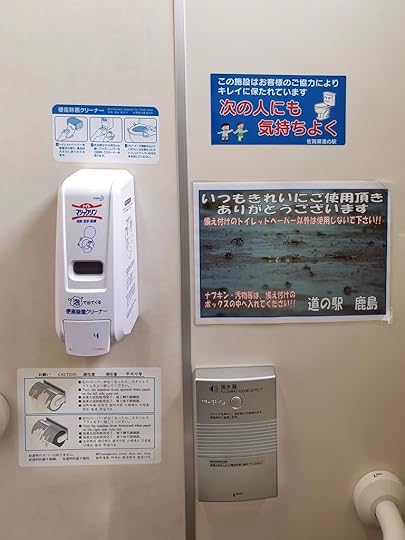
They speak, they clean themselves, they come with all manner of gadgets and gizmos – and the ultimate amazing factor? The toilet seat is heated. It seems like all of Japan’s toilets are amazingly high-tech, including public bathrooms in airports, at restaurants, and even on the street.
The full extent of Japan’s bathroom services can get a bit complicated for us tourists, so luckily there’s usually a sign (or five) on the wall to help you understand what to do. As long as there’s an English translation available, you can choose from a range of buttons on the wall-mounted control panel to invoke bidet-like water jets, a speaker playing birdsong, or the sound effect of running water to mask any noises you might be making.
The only downside? Normal temperature toilet seats will feel like something of a disappointment afterwards.
Read more: the worst toilets I’ve ever experienced on my travels
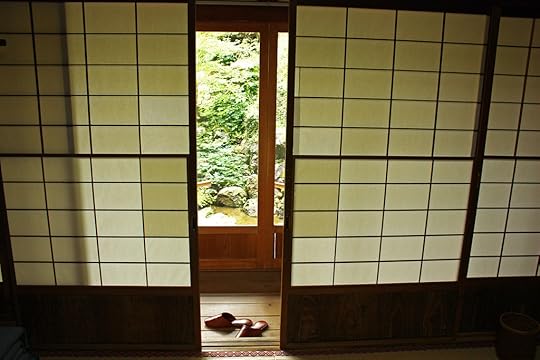
It’s considered impolite to wear shoes inside in Japan. Pretty much anywhere you go – hotels, temples, restaurants and tourist sites – you’ll be expected to remove your shoes at the small atrium just inside the door, a space known as ‘genkan‘.
As with many traditions in Japan, this one harks back over many generations. The floors of Japanese homes and buildings have long been laid with tatami mats (woven straw mats), and they’re really hard to clean if you’re tracking outside dirt onto them. When you combine this with the Japanese custom of eating and sleeping on the floor, it makes sense that outdoor shoes don’t belong there.
What’s more difficult to get used to is the specific method by which you have to remove your shoes – which goes something like this:
Step into the ‘genkan‘Walk towards the raised step which signifies the separation between ‘outdoor’ and ‘indoor’Turn back to face the door you’ve entered throughNudge your outdoor shoes off, making sure they remain pointing towards the outside worldStep backwards and up onto the step behind you, either in your socks or in slippers (which have been provided by the place you’re entering)Leave your outdoor shoes waiting patiently for when you returnMy top tip? Wear shoes which are easy to slip on and off when you’re in Japan – it’ll make your shoe-related life much easier.
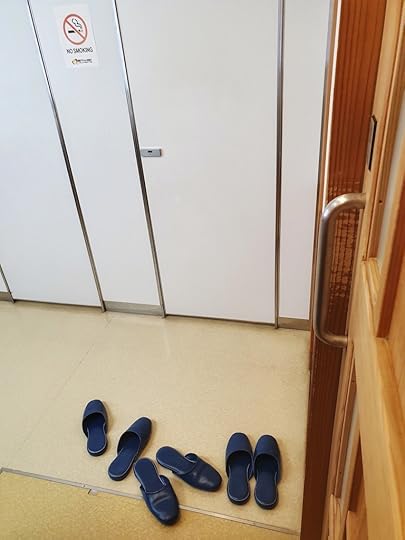
 3. Get used to wearing slippers everywhere indoors – except on tatami mats.
Generally speaking, slippers are worn everywhere indoors – except for when you encounter tatami mats. The soles of slippers are considered not clean enough to touch tatami, so you take your first set of slippers off and then continue walking in your socks.
This can get confusing.
Case in point: in one traditional hotel I stayed at, there were tatami mats in the restaurant but nowhere else in the building. That meant I removed my outdoor shoes at the genkan, put on hotel slippers to carry my suitcase to the lift, exited the lift and had to remove my slippers again because the lift had opened to tatami matting.
Thankfully nobody expected me to understand exactly when to switch from shoes to slippers to socked feet to slippers again – but it’s worth knowing the customs exist. Particularly when you come face to face with ‘bathroom only’ slippers…
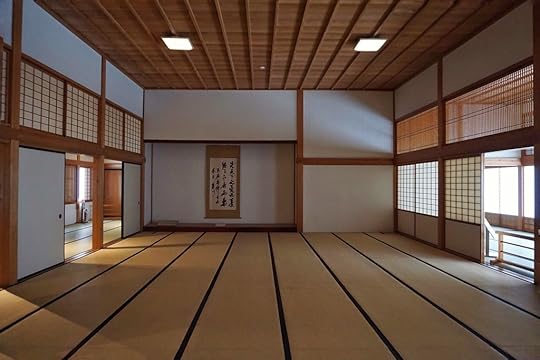
After taking my shoes off I spent so much time in castles, temples and shrines walking around on tatami mats, which don’t really retain any heat. If you also have terrible circulation in your feet like I do, this is a crucial thing: wear two pairs of socks in Japan!
The positive aspect of double socks is there’s less chance of revealing any unsightly sock holes. While it’s understandable that you wouldn’t intentionally put on worn-out socks, I often end up with toe holes and was a little nervous about this happening in Japan. Double socks = zero problems!
For a country so concerned with dirty shoes and foot hygiene etiquette, it seems conflicting that Japanese people are also keen to sit in public spaces and soak their legs in hot water.
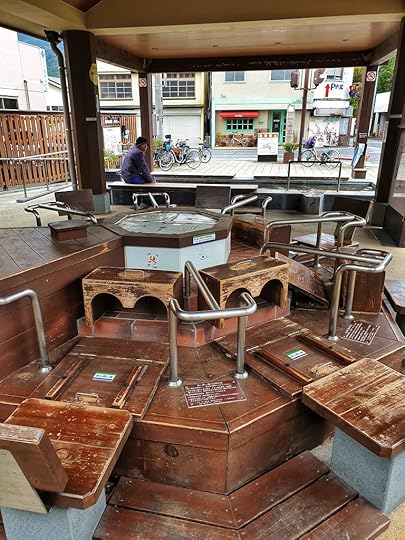
But thanks to the hot springs (‘onsen‘) which criss-cross Japan, the country is filled with public outdoor foot spas, known as ‘ashiyu‘. These shallow pools of hot volcanic water are usually placed at street corners and are free for anyone to use.
A particularly special version of an ashiyu is this wooden steam foot bath in Ureshino, Saga Prefecture. These aren’t a common sight and our Japanese guides were really excited that we tried it out!
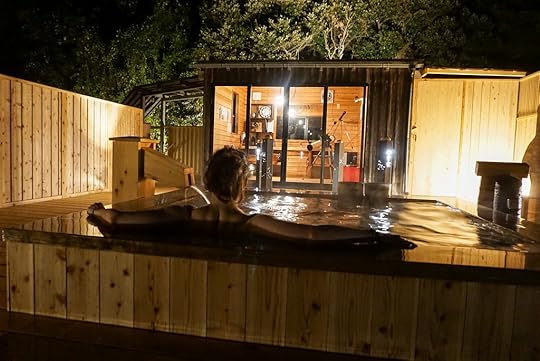
Japan’s volcanic landscape means there are hot springs (‘onsen’) all over the country – and understandably it’s resulted in a lot of onsen tourism, with entire towns clustered around a hot spring.
Public onsen is the most common way to experience the hot spring lifestyle, where both indoor and outdoor bath houses are separated by gender. Some of the rules for a public onsen include:
getting nakedwashing your body before getting innot using soap in the watertattoos are not usually allowed (although some places are OK with it)If you’re not too keen on being naked in a communal bath, there are also lots of ryokans (traditional Japanese guesthouses) which offer private onsen attached to your bedroom. Sometimes they’re even on the roof!
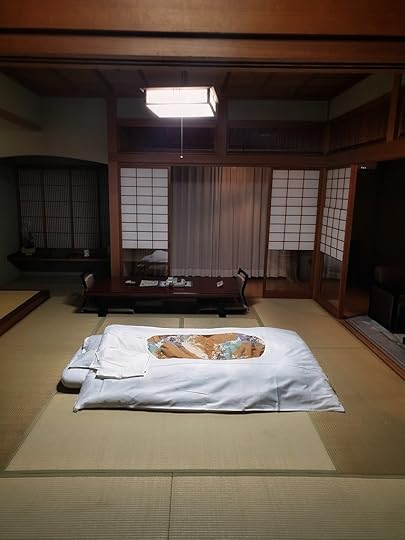
Many Japanese people sleep on a futon mattress laid out on the floor. The most common reason seems to be because it allows for more space: once you’ve woken up you can pack away your bedding and use the room for other activities. Sleeping this way can also save you money (as a futon is much cheaper than a bed frame and mattress!) and keeps your body in better alignment during the night.
If you stay in a ryokan (a traditional Japanese guesthouse) then you’ll most likely sleep in this traditional Japanese style (although they often have modern rooms available too). Don’t be surprised when you check into your room and don’t see a bed – staff will set up the futon while you’re at dinner.
Here’s a tip: if the futon mattress feels too thin for you, check behind the sliding wardrobe doors as there are often more mattresses hiding away. One night I had a ‘Princess and the Pea’ situation and eventually ended up sleeping on approximately four futons laid on top of each other – which was a lot more comfy.
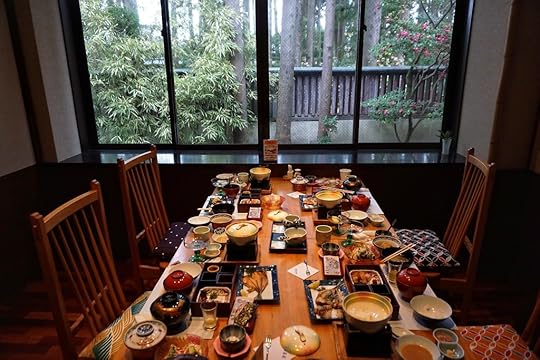
In all the countries I’ve travelled to, breakfast in Japan is the most lavish I’ve ever seen. It typically includes a bare minimum of steamed rice, grilled fish and miso soup but can involve dozens of components too: little dishes of sides like pickles, egg, cold noodles, tofu, vegetables like onion and pepper, and dried seaweed. It’s all washed down with a big pot of green tea.
The sheer number of different dishes means you can have little mouthfuls of everything in rotation. Perfect for a grazing type of eater like me!
Most ryokans will serve a traditional Japanese breakfast with local delicacies. However, just in case eating rice on an empty stomach every day is not your idea of a good breakfast, double-check if your chosen accommodations serve continental breakfasts too.
My absolute favourite memory from my first time in Japan? Standing with my nose pressed against restaurant windows, staring at the plates and bowls of perfectly detailed food – all of which was fake. But it looked so damn real!
Japan’s replica food industry began in the 1930s and is now worth $90m. These faithfully reproduced bowls of ramen, platters of sushi, tempura prawns and even pints of frothy beer are made from wax and plastic, and they allow foreign visitors to point at their chosen dishes instead of scrutinising a Japanese-only menu.
You can also buy mini versions of these models in the form of magnets, erasers, pencil sharpeners and key-rings – which is why I’m now the proud owner of a piece of prawn sushi stuck onto my fridge.
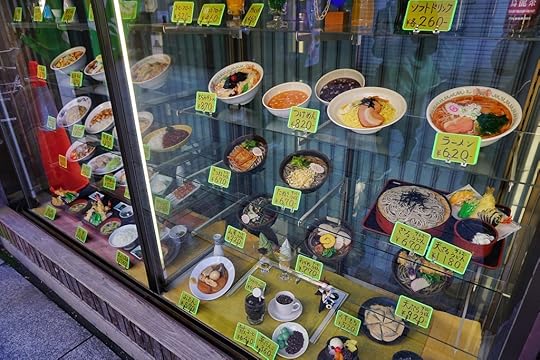
Back when I was eight years old, I used to boast smugly about how delicious I found ‘raw fish’ – yes, my love of sushi made me insufferable – but I hadn’t quite understood the extent of Japan’s adventurous eating.
Japan’s cuisine involves strong flavours, peculiar textures, and using every part of an animal. Often when it’s thinly sliced and raw, sashimi style. On this trip, I ate at a roadside restaurant where we grilled our own oysters, scallops, clams and sea urchins; I was offered raw beef tongue and a strange cheese made from sake run-off; but the pinnacle was one evening in Tokyo where I was presented with raw chicken sashimi. A lifetime of warnings about salmonella from my anxious mother meant I had a total inability to even contemplate eating it.
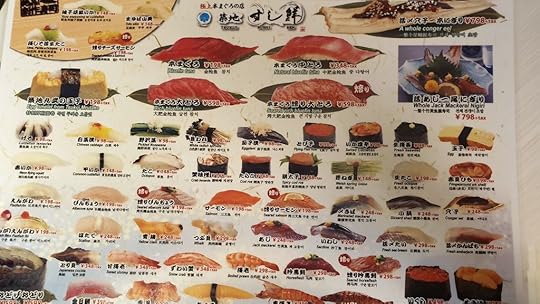
The delicious noodle broth dish known as ramen is everywhere in Japan, available both as a dried, pre-packaged option and at sit-down restaurants. The solo dining experience at Itchiran, a ramen-only chain, is amazing – but my crowning ramen-related moment was actually at a 7-Eleven.
I stood with my Japanese guide looking at the floor-to-ceiling shelves stacked with three dozen different kinds of packaged ramen and asked if she was familiar with all of them. Immediately she started pointing at different ones: “That one is my favourite,” she said, “and this is the spicier one… this one I always have in the cupboard but it’s a quick dinner… and that one I eat when I’m drunk…”
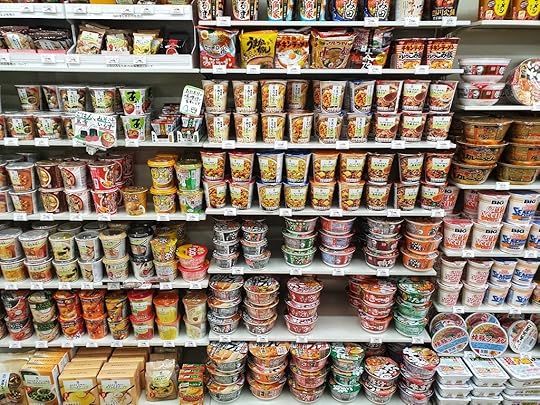
Given that Japan has a strong focus on politeness and etiquette, it’s a wonderful anomaly to sit in a restaurant and listen to your fellow diners noisily slurping their food. But in Japan, loudly sucking up your noodles is a sign of enjoyment – and there’s a logical reason too, as it allows air to circulate around the noodles and cool them down, enhancing the flavour.
Unfortunately, it’s also one of Japan’s cultural aspects which hasn’t translated well to foreign visitors. There’s even a name for it – nu hara – which sounds Japanese but is actually a shortened form of the phrase ‘noodle harassment’. Someone on Twitter mentioned it and the name spread like wildfire!
Japan has a nation-wide chain of ramen restaurants called Itchiran, which is famous for its complete lack of face-to-face interaction. The process goes as follows:
Pay for your ramen at the automated vending machinesStep into a narrow room divided into booths big enough for just one person eachSit down and order your chosen ramen dish by circling items on a paper menuThe hanging curtain in front of you rises upA pair of hands appears and quickly takes your paper menu awayAfter a few minutes, a steaming bowl of ramen is thrust onto the tableYou eat, happily slurping away in total privacy and anonymity!As a self conscious person, eating at Itchiran was absolutely incredible. And their ramen is pretty damn tasty too.
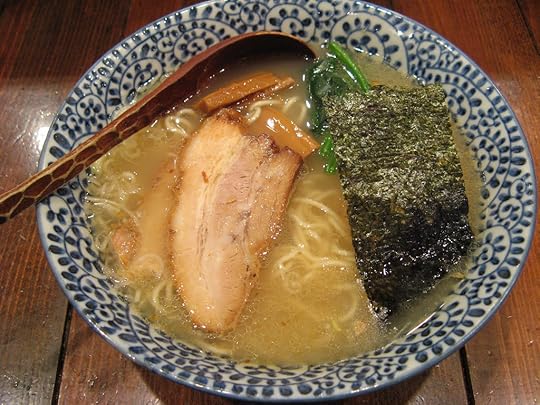 14. You can buy anything from a vending machine – even seaweed!
The Japanese love convenience, which might explain why you’ll see vending machines everywhere in Japan. Usually brightly painted and placed in stations and on the street, lots of Japanese vending machines stock typical stuff – like packaged snacks, sandwiches, and hot and cold drinks – but there’s more unusual machines too.
Take your pick from comic books, clothes, batteries, bananas and beer, and if you happen to fly through Saga airport you should keep your eye out for this nori vending machine I saw! Turns out the Japanese love dried seaweed so much that it needs to be available at all times.

Kit Kat chocolate bars are really popular in Japan – and a cursory Google search reveals why. The name sounds like ‘kitto katsu’, a common Japanese expression of good luck, so Kit Kats are often given to wish people luck.
In the last twenty years, Nestle has released more than 300 Kit Kat flavours including apple, chestnut, soy sauce, miso soup and wasabi. Some have only been available for a limited run, while others are specific to different regions of Japan – so when we left Saga in Kyushu Prefecture I was able to get my hands on Kyushu’s local Kit Kat, flavoured with purple sweet potato!
 16. The Japanese love giving gifts.
When I first visited Japan as a child, I was literally weighed down with gifts from my dad’s Japanese cast at the theatre: jointed puppets, my name artistically painted in katakana characters, and a Disney music box which I still have today.
It happened again on this trip too. Within hours of my arrival in Tokyo I’d already been gifted a box of beautifully hand-painted chopsticks from a sushi chef – and over the next few days I amassed little folded pieces of origami, a handful of badges, stickers, postcards, key rings, and a huge amount of food.
Along with the souvenirs I managed to cram in, my suitcase weighed an extra five kilos by the time I flew back back home. And when I checked in for my flight, the kindly airline staff even gave me a little bag filled with gifts and a note. How’s that for Japanese hospitality?!
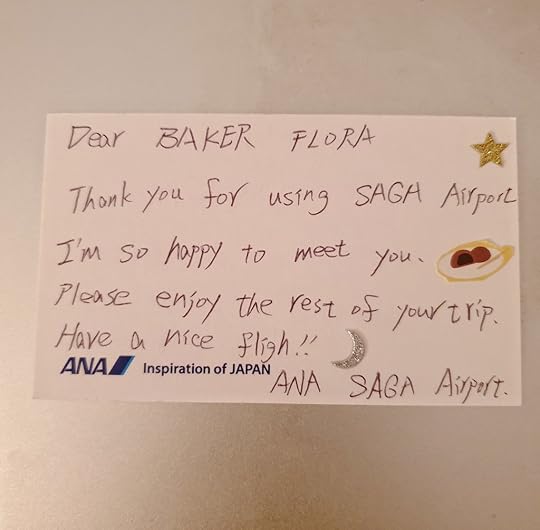
NB: my trip to Japan was supported by Tokyo Metropolitan Government and #KyushuxTokyo – but the observations about plastic food and talking toilets are all my own.
The post 16 Surprising Things I Learned From My First Time in Japan appeared first on Flora The Explorer.
January 5, 2020
2019 Reading Challenge: What Books Did I Read Last Year?
 2019 was the year I finally got myself back into reading.
It was the year I re-discovered the joys of owning a library card. The year when going to bed with a book became one of my most treasured ways to both fall asleep and practice a bit of self-care.
So when I read Candice’s 2019 reading challenge post I immediately wanted to write one for myself! I’ve never done one of these challenge summaries before, but I’ve spent the last few years becoming increasingly obsessed with adding books to my Goodreads account so it makes a lot of sense.
Besides, I’d like to write more blog posts which make me happy in 2020 – especially those I can write and publish in the same afternoon.
Pin me for later!

Number of books you read: Thirty three.
Number of re-reads: Zero.
Number of books you stopped reading: Six. I’ve only recently decided that if I don’t engage enough with a book after fifty odd pages then I’ll stop reading. This year that meant I abandoned Jog On by Bella Mackie, The Mermaid and Mrs. Hancock by Imogen Hermes Gowar, and Seven and a Half Deaths of Evelyn Hardcastle by Stuart Turton.
Genre you read the most from: A good mix of fiction and memoir. Quite a few relating to grief. A couple of travel narratives in there too – and a few crime novels!
Midnight Chicken & Other Recipes Worth Living For – Ella RisbridgerRed Snow – Will DeanMy Brilliant Friend – Elena FerranteA Manual for Heartache – Cathy RentzenbrinkThe Lucky Ones – Julianne PachicoI Am, I Am, I Am: Seventeen Brushes with Death – Maggie O’FarrellThe Brief History of the Dead – Kevin BrockmeierAll The Hidden Truths – Claire AskewGrief is the Thing with Feathers – Max PorterDepartures – Anna HartEverything I Never Told You – Celeste NgThe Gloaming – Kirstie LoganRoom – Emma DonoghueWe Are All Completely Beside Ourselves – Karen Joy FowlerThe Shock of the Fall – Nathan FilerEverything I Know About Love – Dolly AldertonEducated – Tara WestoverThis Must Be the Place – Maggie O’FarrellThe Fact of a Body: A Murder and a Memoir – Alexandria Marzano-LesnevichThe Strange and Beautiful Sorrows of Ava Lavender – Leslye WaltonElizabeth is Missing – Emma HealeyThis Is Going to Hurt: Secret Diaries of a Junior Doctor – Adam KayNormal People – Sally RooneyTraveling with Ghosts: A Memoir – Shannon Leone FowlerPlaces I Stopped on the Way Home – Meg FeeThe Other Sister – Elle CroftThe Chronology of Water – Lidia YuknavitchThe Immortalists – Chloe BenjaminCirce – Madeline MillerThe Lido – Libby PageA House Full of Daughters: A Memoir of Seven Generations – Juliet NicolsonGoodbye, Vitamin – Rachel KhongMy Year of Rest and Relaxation – Ottessa Moshfegh1. Best book you read in 2019?It’s a tie between Educated by Tara Westover and I Am, I Am, I Am by Maggie O’Farrell.
Educated was a book I thought about constantly. Westover’s style of writing is exactly what gets my creative juices flowing, and her story of a Mormon upbringing in the Idaho mountains with survivalist parents is simply extraordinary.
I Am, I Am, I Am is similarly extraordinary, in part thanks to O’Farrell’s imaginative structure. Each chapter focuses on one of her ‘seventeen brushes with death’ but they jump around in time, gradually building up an impression of how each moment has defined and redefined her life. Plus her language is utterly gorgeous.
2. Book you were excited about & thought you were going to love more but didn’t?My Brilliant Friend by Elena Ferrante. Even though my best friend had highly recommended it, I couldn’t see what was so compelling about the story.
Yes, the writing is lyrical and paints a good picture of Italian life in the 1950s, but that didn’t change the fact that I was completely apathetic to the progression of the girls’ lives and their relationships. It felt like the same idea spooled out multiple times: Lena wished for Lila’s approval in various situations and either got it or didn’t, and meanwhile various boys appeared on the scene (all of whom fell for Lila immediately).
I pushed through for a good 200 pages without any real desire to keep reading, then skimmed through the final 50 pages with no more enthusiasm than I’d had for the rest of the book.
3. Most surprising (in a good way or bad way) book you read?In a good way: Everything I Know About Love by Dolly Alderton. After seeing this mentioned repeatedly on Twitter I found a copy at the library, but made a snap decision that it would be quite a fluffy, Instagram-caption kind of book. Instead, I devoured most of it on a long coach journey (coincidentally, on route to visiting one of my best female friends) and kept finding myself nodding along with a smile on my face – I particularly loved that it was about female friendships rather than looking for a romantic relationship to make her ‘whole’.
In a bad way: Normal People by Sally Rooney. This book has such rave reviews that I kept rereading pages to see if I’d somehow missed the point. Strangely this is one of those books which does stay in your mind afterwards – and perhaps that’s part of its appeal – but overall the writing felt sparse, two-dimensional and disconnected.
4. Book you “pushed” the most people to read (and they did)?Educated by Tara Westover. I raved about this book to so many people (and often reminded them multiple times until they actually read it) because I felt so strongly that Westover’s story needed to be shared.
5. Best series you started in 2019?Will Dean’s Tuva Moodyson series. I practically inhaled Dark Pines and Red Snow – both of which take place in a remote Swedish town surrounded by creepy forests and alarming characters – and I’m chomping at the bit to read the third instalment of this deaf reporter’s exploits later in 2020. Black River, here I come!
6. Favourite new author you discovered in 2019?Maggie O’Farrell. I randomly picked up I Am, I Am, I Am off the library shelf because the subtitle of Seventeen Brushes With Death intrigued me. I quickly fell in love with her non-fiction writing, only to discover on finishing it that she has a lengthly back catalogue of fiction too. I’m trying hard to limit myself to one or two of her books each year so I don’t read them all too quickly!
7. Best book from a genre you don’t typically read/was out of your comfort zone?For some reason, I’ve always assumed that crime novels weren’t my kind of books. I thought they were cheap lit for reading on a flight – but this year I happily discovered that the crime genre can be complex and totally compelling.
Thanks to The Other Sister by Elle Croft, Red Snow by Will Dean and All The Hidden Truths by Claire Askew, I’m now properly converted to the crime and mystery genre!
8. Most action-packed/thrilling/unputdownable book of the year?This is a tricky one, as nothing I read this year was ‘action-packed’ per se – but there were a few books which felt utterly unputdownable.
I read Room by Emma Donoghue in a single afternoon, curled up on the sofa one Sunday, completely enthralled by the book’s young narrator and the horrific situation he and his mother find themselves in.
I daydreamed about My Year of Rest and Relaxation by Ottessa Moshfegh whenever the book wasn’t open in front of me, fascinated by the darkness, apathy and self-destructive nature of the central character.
And then there was The Fact of a Body by Alexandria Marzano-Lesnevich, which did strange things to my insides. A combined murder investigation and intensely vulnerable memoir, I still can’t believe what she achieved with this book. In terms of my favourite reads of this year, it’s probably a close third.
9. Book you read in 2019 that you would be MOST likely to re-read next year?Educated, hands down – but that’s probably so I can feel re-inspired with my own book writing!
10. Favourite cover of a book you read in 2019?Midnight Chicken by Ella Risbridger. I’ve followed Ella on Twitter for years and was so happy when she finally managed to publish this book of memoir-style recipes – and the hand-drawn cover is absolutely gorgeous. It really reflects her style of writing too; nourishing, detailed, and heartbreakingly humorous.
11. Most memorable character of 2019?My Year of Rest and Relaxation. I’ve never read a character like this unnamed woman before: someone I found immeasurably frustrating and yet also strangely familiar. In the year after my dad died I felt myself exhibiting many of the same behavioural quirks so I had a strong sense of empathy towards her.
But then there’s also Circe, from the book of the same name by Madeline Miller. Her retelling of the Odysseus story from Circe’s perspective is beautifully written, and although I started reading with the idea that it’d feel too historical to feel relatable, it didn’t take long before I was totally absorbed in her journey. Plus her solo lifestyle on the island is awesome.
12. Most beautifully written book read in 2019?Grief is the Thing With Feathers by Max Porter. I find it hard to get through a whole year of reading without at least a few grief-related texts, and this is one of the most highly reviewed – yet a little confounding – grief books around at the moment.
Grief is the Thing tells the story of a recently widowed father, his two young sons, and ‘Crow’, who is the embodiment of their grief. The text is sparse, poetic, piecemeal: it’s a quick read in theory, but it stays with you long after you’ve closed the book. I read this while at an Airbnb in Berlin but already know I need to buy my own copy.
13. Most thought-provoking/life-changing book of 2019?The Fact of a Body by Alexandria Marzano-Lesnevich. This book made my brain ache with the realisation of how many twists and turns the legal system – and the lawyers, police, friends and enemies of the accused – have to take when deciding on a single person’s guilt. Similarly, the ways in which my own opinion could change drastically depending on the facts I learned was surreal.
14. Book you can’t believe you waited until 2019 to finally read?This is Going to Hurt by Adam Kay. I went to school with his younger sister and I’d seen her sharing his memoir about working in the NHS on Facebook – but it’s such a popular book that the library was constantly out of copies. Despite being written with a comedic slant, Kay’s book is nonetheless a stark look at what’s happened to the UK’s healthcare system, and it’s something of a sobering read.
Nonetheless, everyone should read it.
15. Favourite passage/quote from a book you read in 2019?“Perhaps the point is not to resist death. Perhaps the point is that there’s no such thing. If Simon and Saul are contacting Klara, then consciousness survives the death of the body. If consciousness survives the death of the body, then everything she’s been told about death isn’t true. And if everything she’s been told about death isn’t true, maybe death is not death at all.”
– The Immortalists by Chloe Benjamin.
16.Shortest and longest book you read in 2019?Shortest: Grief Is The Thing With Feathers by Max Porter (114 pages)
Longest: This Must Be The Place by Maggie O’Farrell (496 pages)
17. Book that shocked you the most (plot twist, character death, etc)?The Lucky Ones by Julianne Pachico. Not because of a plot twist but simply because her set of loosely connected short stories set in the conflict years of Colombia took my breath away in a dozen different ways. This book stayed with me for a long time.
18. Favourite non-romantic relationship of the year?It’s a heart-wrenching relationship, but my most memorable is the connection between Maud and her sister in Elizabeth is Missing. And, in fact, the connection between Maud and the titular Elizabeth too. I didn’t expect this novel to hit me the way it did but I definitely cried at the end (and it’s probably just as worthy of the shock question above this!).
19. Favourite book you read in 2019 from an author you’ve read previously?I’d only read Will Dean and Celeste Ng previously – everyone else was a new author to me this year – and both of their books were fantastic.
20. Best book you read in 2019 that you read based SOLELY on a recommendation from somebody else?Probably Everything I Know About Love. Turns out constantly saving Twitter recommendations to my Goodreads account is a good idea after all!
21. Newest fictional crush from a book you read in 2019?Circe. That girl is COMPLEX, and I always wanted to know what she was going to do next. Also I just wanted to hang out in the island kitchen with her and learn about witchy herbs and potions.
22. Best 2019 debut you read?I don’t think anything was published in 2019 so I’ll go with The Other Sister by Elle Croft – a blogging friend who’s doing fantastical things in the crime genre. Her third book is out in 2020 and I can’t wait to delve into it.
23. Best worldbuilding/most vivid setting you read this year?The Gloaming by Kirsty Logan. I’m not hugely into fantasy but there was a lovely mix of reality and strange magical touches in this book – and the image of the cliff edge scattered with stone statues will stay with me for a long time.
Everything I Never Told You by Celeste Ng. Set in a small Ohio town in the 1970s, the intricacies of how a Chinese-American family cope with their daughter’s death had me hooked. There’s something about a ‘mundane’ book setting which, when written well, can be so much more compelling than a huge extravagant adventure narrative. Ng absolutely nails this in both novels of hers which I’ve read (like Little Fires Everywhere which blew my mind!).
24. Book that put a smile on your face/was the most FUN to read?This question made me realise I don’t often read ‘fun’ books..! Which is a bit of a downer.
That said, I really felt like Everything I Know About Love was a smile-inducing book – as was Goodbye, Vitamin by Rachel Khong. Despite the topic (a novel detailing how dementia affects a family), it’s a short, sweet and beautifully funny read.
25. Book that made you cry or nearly cry in 2019?Room by Emma Donoghue. I hadn’t seen the film so didn’t know the storyline, and there were multiple moments which both lifted and broke my heart.
26. Hidden gem of the year?The Fact of a Body by Alexandria Marzano-Lesnevich. I don’t think this book is getting the exposure it deserves!
27. Book that crushed your soul?Grief is the Thing with Feathers by Max Porter.
28. Most unique book you read in 2019?The Fact Of A Body. I’m still in awe of her ability to construct such a compelling narrative from little more than police reports and news footage.
29. One book you didn’t get to in 2019 but will be your number 1 priority in 2020?Trick Mirror by Jia Tolentino. These essays have been making the rounds on social media and my friend’s copy has sat beside my bed for months because I keep meaning to start it!
30. Book you are most anticipating for 2020?Will Dean’s third instalment of Tuva Moodyson’s Swedish adventures. I even made my first attempt at a Netgalley review copy for Black River but was sadly unsuccessful!
What books did you love in 2019? Anything you can’t wait to read in 2020? I’d love all your recommendations – and hopefully I’ll get through more than 33 books this year!
NB: This article contains affiliate links, but it won’t cost you anything to click on them – it just helps me with the cost of running this site! Also, many thanks to Perpetual Page Turner for these challenge questions, and to Christin Hume who shot the feature image for this article.
The post 2019 Reading Challenge: What Books Did I Read Last Year? appeared first on Flora The Explorer.
December 22, 2019
One Day in Palma de Mallorca | Free Things to Do on This Spanish Island
 I wanted to find the best things to do in Palma de Mallorca. The problem? I only had twelve hours to do it in.
Palma de Mallorca is the capital city of the Spanish island of Mallorca, as well as the capital of the Balearic islands (made up predominantly of Menorca, Mallorca, Ibiza and Formentera). Although I could easily assume Mallorca’s attractiveness as a beach destination, I didn’t know much about Palma itself.
After my eighteen month adventure through South America I now jump at any chance to visit any country that speaks Spanish. So when I was invited on a sailing trip around the Mediterranean sea which departed from Palma de Mallorca, I made sure I had an extra day at my disposal: twelve hours or so to get an idea of what this city was like.
How do you see Palma de Mallorca in one day? Let’s find out.Pin me for later!
Travelling carry-on to Mallorca is a great idea. I don’t waste any time waiting for bags at baggage claim; instead, I heave my backpack on my back and saunter through passport control towards the airport exit.
12.10pm: take the public bus from the airport into Palma’s city centreI cleverly did some transport research before arriving in Mallorca, and Google reliably told me that the #1 bus departs from Palma Airport every 15 minutes and takes 30 minutes to reach the city centre.
I exit the airport to a blast of hot air and walk along a covered walkway to the bus stops. A little blue, green and white bus pulls up and an amicable driver takes my €5 note in return for a ticket. I sit in a pleasantly air-conditioned bus watching a digital display telling me where I’m going – but eventually I begin to stare out the window at orange-hued high rises, palm trees, and blue skies. I sit back and relax…
Ok, so I’m not too relaxed when I realise we’re almost at my stop. I gesture to an old lady that she should sit in my seat and I stand beside my backpack, half-dreading the weight of it. Luckily it’s not overly humid outside.
I step off the bus and take a breath of fresh Spanish air. Thanks to data roaming I can use my internet from home and I’ve already loaded Google maps with the area surrounding my hostel. My trainers slide around on the shiny marble pavements and I almost trip at the crosswalk. Who knew Mallorca’s streets would be so slippery?
12.45pm: check into your hostelI spot my hostel – a place called Brick – down a little side street which has been closed off to traffic. There’s a little bar outside, and I squeeze past a table with an adorably small dog panting eagerly up at me to go inside.
As soon as I reach the reception desk, I know by the guy queuing in front of me that check-in isn’t available yet. The receptionist says not until 3PM. Why do I always forget this about hostels?!
I check the time and realise it’s already too warm to stay in the clothes I’m wearing – so I begin unpacking my Osprey backpack on the reception floor and find the black linen Uniqlo overalls I bought last week. Together with my Birkenstocks I head to the bathroom and change.
1pm: head out to explore Palma de MallorcaAs I walk out of the hostel I can hear bagpipes. On a nearby wall there’s intriguing graffiti of a fishbowl with a child’s dummy sinking to the bottom, so I walk in that general direction.
I’ve been in Mallorca for an hour so far, and I don’t have a plan. Sometimes this can make me a little anxious – but not today. One of my favourite activities in a new city is to wander with no real destination in mind. So I get lost. Purposefully, meanderingly lost.
With no plan and no idea of where I am, I’m free to take my walking direction from the slightest of hints: a rickety balcony, a warm pool of sunshine on the hotchpotch of slim cobbles, the promise of a garden behind someone’s gated doorway.
At some point I find myself outside a beautifully ornate entrance to a small church. The streets are strangely quiet: it’s a Monday in mid-June, so perhaps people are already at lunch or anticipating their siesta?
I stand in the shade of the church to type some notes, and a couple walk past with portable speakers throwing out heavy drum and bass. Maybe it’s not so quiet.
1.30pm: Walk to Plaza MayorIt’s 1.30pm and I’ve just felt a hunger pang. The Pret a Manger sandwich I bought at the airport and ate on the plane is a distant memory – especially as the time difference means its 2.30pm in the UK. I can hear the dulcet tunes of ‘My Way’ on the accordion. Either someone loves shmaltzy music on the radio, or I’m reaching the busker territory of Mallorca.
I realise if I stop for lunch I can do some Palma research at the same time – but I know from experience that all the lunch places in the city centre are probably too busy and will almost certainly be too expensive.
Nevertheless I make my way to Plaza Mayor, the city’s main square. I have a feeling that checking out the side streets will probably offer a good place to eat.
This large plaza is the heart of Palma’s Old Town: a wide open square filled with street stalls and lined with restaurants and bars housed beneath the archways.
Unfortunately, the tourist crowds thronging the Plaza Mayor make it too busy for me. I cut down a side street and it’s immediately empty. A few elderly Spaniards joke about a hissing ginger tomcat who’s following their friend as if he belongs to her. Maybe he does?
Read more: Speaking Spanish (and nothing else) while walking the Camino de Santiago
I’m looking happily at a plate of tortilla, pan con tomate and a dozen fat green olives in front of me. Cafe Verde, built in a tiny plaza beside a tall church wall, has a dozen outdoor tables scattered outside – and they’re filled with Spanish speakers, which I take to be a good sign.
A suave, elegant Spanish guy sits at the next table, using a battered old English book to practice my native language with his girlfriend. I spend a while half-listening to their conversation. It’s these tiny snippets of real-life stories which I find intoxicating about travel. I’ll never know who these people are or what they do – but I’ve had a tantalising glimpse, and sometimes that’s enough.
By the time I’ve finished my lunch I’ve decided I want to head towards the water. The city’s famous La Seu cathedral sits a block away from the beach: there’s a stunning medieval garden next door and the Arab Quarter runs right behind – a mass of narrow alleys which my photographer brain is already excited by.
I can hear the roar of a football game playing on the cafe’s TV. It’s time to move.
3pm: Wander the narrow streets of Palma’s Old TownPalma has a beautiful historic quarter with plenty of pedestrianised streets making it an easy place to explore. I move through tangled, tight streets towards the Can Forteza Rey, an Art Nouveau building which must have been inspired by Gaudi.
It was originally designed as a block of apartments in the early 1900s but now houses various businesses including a dentist’s practice, the name of which has been incorporated into the facade’s design.
Eventually I arrive at the S’hort del Rei gardens just opposite the Cathedral. They’re like a green oasis: gently cascading water fountains, orange and lemon trees, an occasional flurry of bright leaves falling from the canopy above.
The medieval gardens sit at the bottom of the Almudaina Palace and date back to the 18th century. Nowadays they’re a beautiful spot to hide from the mid-afternoon sun – and they also play host to enterprising hawkers selling handbags, key-rings, sunglasses and hats.
I stare up at the impressive cathedral towering above me. Officially named ‘the Cathedral of Santa Maria de Palma’, it’s more commonly known as ‘La Seu’ which means ‘Cathedral of Light’ in Catalan.
Begun in the 14th century, this sandstone cathedral took almost 600 years to build. Antoni Gaudi was invited to oversee the project at one point but he argued with the contractors and eventually quit. It’s probably Palma de Mallorca’s most well-known tourist attraction, not least because of its size. The cathedral costs €7 to look around inside – but I chose to simply wander the facade outdoors. It took a fair amount of time to circumnavigate!


I’ve unexpectedly hit a slump. The summer sun is relentlessly strong and it’s making me tired, so I decide to walk back to my hostel through the shadier streets, paying a visit to some other spots along the way.
4pm: walk along Passeig des BornI wander down Passeig des Born (or ‘Paseo del Born’ in Spanish), a shady central boulevard lined with trees which runs parallel to the cathedral. The surrounding buildings all seem to house the fanciest of designer shops – I spot Louis Vuitton, Mulberry and Rolex – but thankfully you don’t have to spend tons of cash to sit on one of the many benches on this pedestrianised street.
I sink gratefully onto a spare seat and people-watch for a while until the heat dies down. Then I have to stop for a posed photo with a giant panda bear who is altogether too hysterical to avoid.
In an attempt to leave Palma’s touristy centre, I take to the backstreets and quickly find myself amidst closed shutters and brightly coloured graffiti. Occasionally, I come across other tourists looking similarly displaced.
I’m increasingly in need of a siesta but still have a spot on my list which I want to visit: the Arabic Baths, the only remaining monuments of the Arab city of Medina Mayurqa (now known as Palma). It’s a tiny historical site which sits within a walled garden, complete with chairs, tables and little shaded alcoves.
Although impossible to date precisely, historians have agreed The Arab Baths were most likely built in the tenth century – and they’re identical to baths in other Islamic cities around the world.


By 5pm I’m back at my hostel, finally checked in and immediately napping on my bunk. The heat’s taken it out of me somewhat!
6pm: head back into Palma’s early evening atmosphereI start walking again – this time heading straight through Plaza Mayor, past the crowds of buskers, and onward towards a more suburban neighbourhood.
Ok, I’ll admit it: the real reason I came to Palma a day early was to attend a women’s circle held by Lisa Lister, a woman I follow on Instagram. She’s hosting the circle at a yoga studio called Ra Ma Institute, and I’ve decided it’s what I need to help me with my grief.
Thankfully the heat’s died down, so I follow Google map’s directions in less of a sweaty haze.
The women’s circle runs for two hours, and by 10pm I’m walking back towards my hostel. Spurred by hunger (and a headache because I didn’t drink enough in the heat today) I’ve chosen a roadside restaurant – purely on the basis that two middle aged Spanish women were drinking wine and eating pizza. I reckon they know if the food’s good here.
I sit by myself at a table and order a pizza of my own. As ever, I find it extraordinary to think that just twelve hours ago I was waking up in London with no knowledge of what Palma de Mallorca was like. And now? Now I’m wandering the streets with a confidence borne of spending these last hours on my feet.
Twelve hours is all it takes to learn a new city from scratch. It’s a beginning. It’s the start of a story.
Would you recommend any other things to do in Palma de Mallorca? Let me know in the comments!
This post is part of a paid campaign to promote the Balearic and Canary Islands as part of their #SpanishIslands campaign. All views are my own – especially my desire to spend as little money as possible!
The post One Day in Palma de Mallorca | Free Things to Do on This Spanish Island appeared first on Flora The Explorer.
December 17, 2019
Helpful Ways to Volunteer with the Homeless in London
 There are currently 170,000 people homeless in London.
Over the last ten years, a succession of drastic cuts means rough sleeping in the UK has increased 165% since 2010. By the end of this year, there will be more vulnerable people sleeping on England’s streets than ever before – an estimated 9,000.
Yet homelessness is not just sleeping rough. You can be homeless if you’ve been evicted; if you’re sofa-surfing; if you’re escaping a problematic or abusive relationship; if you’re a refugee. In fact, at this moment:
There are 14.3 million people are living in poverty in the UK. (Source)Nearly 1 million young children will go without central heating or fresh food this Christmas. (Source) 1.2 million people in the UK use food banks. (Source)That’s a hell of a lot of people relying on services like food banks, hostels, night shelters, donated clothing, housing associations and charitable organisations for help.
Maintaining homeless services in the UK is absolutely vital. There’s simply no way around it. Yet the Conservative party victory in the UK’s general election on December 13th 2019 means five years under a government which has repeatedly slashed funding to public services.
What can you do to help the homeless?
Just remember every single one of you is closer to using a food bank than you will ever be to having a billion quid.
— mil (@milupton) December 11, 2019
Many of us are scared about what the future holds for the UK after a decade of austerity – but there also seems to be a collective realisation occurring that now’s the time to support each other through what’s next.
The fact that you clicked on this article means you’re probably looking to be part of that support system. To help the homeless and vulnerable, you can start with the following ways:
You can donate your money.Set up a direct debit to a chosen charity each month, or pool your spare change for a one-off donation. Whatever you choose, your money will be appreciated.
You can volunteer your time.Sign up to a weekly shift at your local night shelter, do occasional shifts at the nearest food bank, or volunteer at Crisis at Christmas every December to get a first-hand perspective of the homelessness crisis in the UK.
You can utilise your skills.Specific help is often needed in charity organisations. Offer your skills in social media, IT, legal experience, CV writing, and healthcare.
You can be knowledgeable.Read widely about the issues affecting homeless people in the news.
You can voice your support.Talk to your work colleagues, share information on social media, get involved in fundraising and campaigning drives.
And you can talk to those who are homeless.For many people, it doesn’t seem to come naturally to say hello, to smile or even to make eye contact with someone sitting on the pavement. Get over your awkwardness. Make connections – ask how their day’s going, or if they want something from the nearby shop. Ask their name. It’s really not that difficult.
The use of foodbanks in the UK has risen steeply due to Conservative party policies – over 23% in the last year alone – and in the days following the general election, food banks reported a huge spike in donations.
There are over 2,000 foodbanks in the UK. The Trussell Trust is the UK’s biggest foodbank charity. They run a network of food banks across the UK which provide emergency support and food parcels to those in crisis. (Find the Trussell Trust online via their main website, Facebook, Instagram and Twitter.) There are also many independent food banks across the country which aren’t affiliated with Trussell Trust (have a look here).
Aside from financial donations, food banks obviously require food donations to operate. There are three main way to donate food:
Make direct donations to your local food bank ( check The Trussell Trust’s network here )Leave food donations at collection points in supermarkets like Sainsburys and Tesco (there’s usually a ‘food bank’ trolley just past the cash registers)Hosting collections and food drives at your local school, church, or officeIt’s also worth getting in touch with your local food bank first to find out what they’re lacking. Suggested foodstuffs often include tinned meat/fish, tinned pulses, tinned tomatoes, soup, tea and coffee, sugar, fruit juice, cereals, rice and pasta.

I googled ‘foodbank near me’ and found that my local foodbank is operated by an organisation called Pecan. They offer introductory sessions, so after I filled out the online form I was invited to a local church hall where they explained the volunteer roles on offer: helping at weekend collections in supermarkets; helping out at fundraising and charity events; restocking shelves and sorting donated items in the warehouse; welcoming clients to the food bank.
NB: there’s an app called ‘Foodbank’ which has been doing the rounds on Twitter – but according to multiple sources it’s run by a newly-elected Conservative MP and charges food banks £180 to include a shopping list of items they’re in need of. As a result of this app’s attempt to profit from food poverty, I’d highly recommend not downloading it, and doing your own research and getting in touch with your local food banks directly instead.
Donate to hygiene banksHygiene banks are a real necessity, but they’re often woefully overlooked. In the same vein as food banks, they provide essential personal care and beauty items to rough sleepers and vulnerable people in an attempt to tackle hygiene poverty – because being clean shouldn’t be a luxury.
Call-outs for donations usually include hairbrushes, nail clippers, toothbrushes, baby wipes, tampons and sanitary towels.

The Hygiene Bank is a national charity which recognises the trauma and anxiety caused by not having access to essential hygiene products. They provide toiletries, beauty, grooming and hygiene essentials to people who can’t afford them, via charity partners across the UK.
Find The Hygiene Bank online via their main website, Facebook, Instagram and Twitter.Beauty BanksStarted by journalist Sali Hughes, ‘Beauty Banks’ is a non-profit which collects, re-packages and distributes parcels to registered foodbanks and shelters who ensure donations get to those who need them.
You can read more from founder Sali Hughes here.
Find Beauty Banks online via their main website, Facebook and Instagram.Volunteer with food outreach organisationsSoup kitchens and food outreach organisations have long been a part of London’s history, offering hot, freshly prepared meals to people in need.
These organisations are usually looking for food donations, monetary donations and volunteers to cook, clean, serve food, and collect surplus food from donation points. Many ask for a regular volunteering commitment but there are usually some working on a shift-by-shift basis.
There’s an extensive list of all food distribution organisations and their operating times on the London Homeless site here.
I googled “soup kitchen near me’ and quickly discovered Foodcycle, an organisation which combines surplus food and available kitchen spaces to prepare three-course meals for the local community.
There were a few different shifts available – either as a kitchen volunteer, a meet and greeter, or someone willing to drive around the area and collect donated food. As I don’t have a car I signed up for the former and arrived at a church hall on a Wednesday afternoon. Over the next hour, a dozen volunteers and I looked through the day’s donated ingredients (an assortment of pasta, potatoes and vegetables, crates of bananas and pears, along with an absolute ton of day-old bread) and set to work preparing a meal for around thirty people.
FoodCycle operates across the UK in 39 different locations and currently feeds over 1,400 people a week using surplus food. You can sign up for one-off shifts so it’s a great way to dip your toe into volunteering.
Find FoodCycle online via their main website, Facebook, Instagram and Twitter.Streets KitchenStreets Kitchen is a grassroots group providing daily outreaches of food, clothes and information. They currently run ten outreach events each week, primarily in places like Clapham, Hackney and Camden. Check the locations here – each ‘Streets Kitchen’ has its own Facebook group too.
They’re also responsible for ‘Streets Fest’, a free festival for the homeless, which launched in September 2018 in Harringay.
Find Streets Kitchen online via their main website, Facebook, Instagram and Twitter.The Sock MobThe Sock Mob are perhaps the easiest to get involved with. Each fortnight, they send out groups in areas like King’s Cross, Victoria, and Charing Cross Road, and chat to people sleeping rough – using pairs of socks, gloves, thermal layers as conversation starters.
I’ve attended a number of Sock Mob evenings, and it’s really simple. Just sign up to that evening’s event on Meetup.com and arrive at the pre-arranged spot to meet the rest of the group.
NB: After researching their channels, I’m not sure if Sock Mob is currently running. Any further info on this would be appreciated!
Find Sock Mob online via their main website, Facebook, and Twitter.Brixton Soup KitchenThis community space in South London is for homeless people or those in desperate need. The Brixton Soup Kitchen aspires to provide food, drink and companionship, and runs every weekday from 10am to 2pm. They’re always looking for donations and volunteers.
Find Brixton Soup Kitchen online via their main website, Instagram and Twitter. Refugee KitchenRefugee Community Kitchen serves hot, nourishing meals to displaced people in the UK and France. I met these guys when I volunteered at the refugee camps in Calais and their tireless efforts in the kitchen were nothing short of incredible.
The charity often works in conjunction with Streets Kitchen and are usually found outside Camden Town Tube Station between 7.30pm – 9.00pm on Wednesday and Sunday evenings. Help is always needed to serve meals and to chat to the clients!
Find The Refugee Kitchen online via their main website, Facebook and Twitter.Volunteer with a homeless charityThere are a number of ‘big name’ homeless charities in the UK. All these homeless charities have a range of voluntary roles on offer, both client-facing and non-client-facing.
They can include:
accommodation-based supportfirst responsein the communitymental healthphysical supportservices supportskills and employmentyouth servicesfundraisingThe bigger charities like Crisis and Shelter also have dedicated charity shops on the high street — if you shop there you’re actively making donations to these charities. You can also volunteer to work a couple of shifts a week or each month.
Crisis is the national charity for homeless people. They’re always looking for donations but their biggest volunteering push is during the Christmas week (23rd-29th December), when volunteer centres are open in Edinburgh, London, Oxford, Birmingham, Newcastle, Coventry and South Wales. As a long-term volunteer I can highly recommend doing this!
There are other volunteer opportunities throughout the year too – particularly at Crisis retail shops and the Crisis Skylight centres.
Find Crisis online via their main website, Facebook, Instagram and Twitter. You can also read about my experiences volunteering with Crisis at Christmas here.St MungosSt Mungos are the most forward-facing of UK homeless charities, sending out seventeen outreach teams each night to speak to rough sleepers and help them. St Mungos have plenty of volunteering opportunities, namely with projects in London, Bath, Brighton, Bristol, Oxford and Reading.
Find St Mungos online via their main website, Facebook, Instagram and Twitter.CentrepointCentrepoint is the country’s leading youth homelessness charity which supports more than 9,200 young people aged 16-25 in London, Manchester, Yorkshire and the North East of England. It also provides more than 1,000 bed spaces for young people from the 60 accommodation services it runs in Sunderland, Bradford, Manchester, Barnsley and 14 boroughs in London.
Centrepoint also hold ‘sleep out’ events each year to raise awareness and vital funds – and these events need both participants and volunteers. Find out where and when here.
Find Centrepoint online via their main website, Facebook, Instagram and Twitter.ShelterShelter helps people in housing need by providing advice and practical assistance, and fights for better investment in housing and for laws and policies to improve the lives of homeless and badly housed people.
Volunteering with Shelter can be at their fundraising events, in one of their shops or in various roles at their offices throughout the country.
Find Shelter online via their main website, Facebook, Instagram and Twitter.NightstopNightstop provides emergency overnight accommodation for young homeless people who are facing a night on the streets or sleeping in an unsafe place. Communities and charities run Nightstops in more than 31 locations around the UK, led and supported by the Nightstop team at Depaul UK.
You can volunteer to become a host, and offer your spare room to someone at risk of homelessness. You can also volunteer as a driver or a chaperone to accompany a young person to their accommodation for the night.
Find Nightstop online via their main website and Twitter.

Volunteering at a night shelter is a really rewarding thing to do. You’ll probably be asked to commit to a weekly, biweekly or monthly shift for a set amount of time (i.e. six months) so it’s a good role for someone who has a regular schedule.
You can read much more about London’s winter night shelters here, and check out these night shelters which are looking for volunteers:
Shelter From the Storm. This is a completely free emergency night shelter in Islington, North London, providing bed, dinner and breakfast for 38 homeless people every night of the year. Hackney Winter Night Shelter. Based in Lower Clapton, East London, this shelter is particularly in need of overnight volunteers. The Connection in St Martins In The Fields . They operate a day shelter and a night shelter in central London – the latter can accommodate 75-80 homeless people each night. They also require a six month commitment from volunteers. Glass Door . They run various overnight shelters in Southwest London from November to April, providing beds for about 170 people each night. The Passage. Based in Southwest London, The Passage is a long running resource charity for vulnerable people. They primarily operate as a day centre, but they also run a 40 bed hostel and 16 self-contained studio flats for long-term rough sleepers. There are usually plenty of short volunteering shifts available – anything from driving and reception work to helping in the kitchen. Robes . They operate a winter shelter which offers beds in a range of locations around London from November to April. Have a look at which shelters are looking for volunteers here. Other ways to help the homelessThere are plenty of other ways in which you can help the homeless in daily life.
SWEP (the Severe Weather Emergency Protocol)There’s a nation-wide policy in the UK known as SWEP (the Severe Weather Emergency Protocol) which is activated when nighttime temperatures drop below zero for three nights in a row. At this time, all local councils are obligated to provide emergency accommodation for rough sleepers.
You can keep track of when SWEP is activated on Twitter here – and if you think someone on the street isn’t aware of what SWEP means for them, either have a chat with them or get in touch with Streetlink.
StreetlinkStreetlink is a website, mobile app and phone line which enables the public to alert Local Authorities about people sleeping rough in England and Wales. If you see someone sleeping rough, it offers you a way to act and hopefully help connect them to local services and support available to them.
Other unique ways to help the homeless in London include:
Buy original artwork from Cafe Art (currently displayed in twelve independent cafes around London) Buy coffee at a ‘Change Please’ coffee cart Eat at restaurants which collaborate with StreetSmart – it adds a £1 donation onto your bill Pay it forward by buying ‘suspended coffees’ at cafes all over the world – there’s at least 500 locations in the UK. Spend your cash in charity shops run by Crisis, Shelter or Emmaus Donate your coats to coat collection racks like the one from ‘Take One Leave One (or set up your own!)
Follow all of these organisations on social media. I’ve left the relevant links to Facebook, Twitter and Instagram accounts for each. Keep up to date on what they’re doing, when they need help. Share that info with the people you know.
Make noise. Every time you donate your time or your money, email your MP to tell them what you’re doing independently to combat homelessness and food poverty. Ask them what they’re planning to do to eliminate these crucial
Start small. Smile and say hello to the people you see sitting on the pavement. Buy a Big Issue. Ask someone on the street if they’d like you to buy them some food from the local shop.
Remember – you don’t need to be part of an organisation to make a difference. You just need to care about other people.

To search for homelessness services across England, please use the search tool provided by homeless.org – they’re the national charity for homeless organisations, and they campaign for policy changes to help end homelessness.
NB: All images in this article are sourced from Unsplash.
The post Helpful Ways to Volunteer with the Homeless in London appeared first on Flora The Explorer.